Cody Schoenmann
-
Posts
768 -
Joined
-
Last visited
-
Days Won
1
Content Type
Profiles
News
Minnesota Twins Videos
2026 Minnesota Twins Top Prospects Ranking
2022 Minnesota Twins Draft Picks
Minnesota Twins Free Agent & Trade Rumors, Notes, & Tidbits
Guides & Resources
2023 Minnesota Twins Draft Picks
The Minnesota Twins Players Project
2024 Minnesota Twins Draft Picks
2025 Minnesota Twins Draft Pick Tracker
2026 Minnesota Twins Draft Tracker: Picks & Bonuses
Forums
Blogs
Events
Store
Downloads
Gallery
Everything posted by Cody Schoenmann
-
 Eighty-six games into the 2026 MLB regular season, Trevor Larnach has started 58 games in left field for the Minnesota Twins, accounting for roughly 68% of starts at the position. At first glance, this development comes as a moderate surprise. Entering the season, Larnach wasn’t expected to occupy a full-time role at either corner outfield spot, evidenced by him splitting time in left with platoon partner Austin Martin and Matt Wallner being the full-time right fielder early this spring. Yet, given Wallner’s demotion to Triple-A, Martin’s subsequent move to right field (and eventual demotion back to a bench bat), and the organization’s younger, inexperienced corner outfield options Alan Roden, Gabriel Gonzalez, Emmanuel Rodriguez, Walker Jenkins, and Hendry Mendez not yet receiving extended opportunities in the majors, Larnach has become the club’s full-time left fielder. Circumstance isn’t the only reason for Larnach’s unexpected full-time role. Hitting .288/.381/.437 (good for a 131 wRC+), The 29-year-old’s bat has become a mainstay, often hitting in the upper-third of the club’s lineup. He has become an irreplaceable piece in Minnesota’s ability to succeed this season offensively. That being the case, he has received extended opportunities in the field. Unlike his sustained success at the plate, however, Larnach hasn’t improved defensively, despite how hard those in the Twins.TV broadcast booth try to persuade you otherwise. Over 139 attempts in left field, Larnach has manufactured -4 Outs Above Average (OAA), tying him for the second-lowest rating at the position alongside Isaac Collins and Yohendrick Piñango. Larnach’s downfall, in particular, is that he struggles getting to balls hit both to his left and right. He’s servicable on balls hit in front of and behind him. However, the quality of a corner outfielder comes in their ability to chase down balls in the gaps and corners—Larnach struggles at both. Let’s take a look at some examples. QndSUDlfWGw0TUFRPT1fVkZOWkFWUUZWZ0FBQ1FBQ1hnQUhDRkJVQUFOV1VWa0FDbFpVQ1FjQVZRUlRBUUFI.mp4 What do you think the catch probability was of this ball? Close your eyes and think about it for a second before continuing to read this piece. Okay—are you ready? Have you regrouped? Okay, it was 99%. Larnach had 4.1 seconds to travel the 48 feet necessary to catch that ball. Instead, he stood flat-footed for multiple seconds as the bloop off Max Muncy’s bat traveled through the air before landing for a single. That’s not what a plus fielder does, Cory Provus! Let’s take a look at a more challenging ball put into play. eUx3M2VfWGw0TUFRPT1fVlFoWkJnRU5Wd0FBQ1Z0VFZRQUhWUUVIQUZrRVZWVUFCUUFHQUFJRlUxSlRWQXNB.mp4 Let’s play the same game. Close your ey—It had a 95% catch probability. Larnach had 5.4 seconds to travel the 68 feet necessary to catch the ball hit off rookie icon Kevin McGonigle’s bat. Instead, he took a poor route and misplayed, allowing McGonigle to course into second with a double. That's not what an improved left fielder does, Justin Morneau! Finally, let’s take a look at a play that appears incredible, but should have been much less dramatic. WU9WbERfWGw0TUFRPT1fVWdOVFZWUlFWUUVBQUFFQkF3QUhDQVplQUZrQ0FWTUFWbFFFQXdSV0JRTUhCZ05R.mp4 The ball hit by Sam Antonacci had a 55% catch probability, with Larnach trekking 82 feet in 4.9 seconds to make the catch. Again, this was a nice play by the long-time Twin, and he deserves credit for making the tough catch. That being said, more agile left fielders likely would have gotten under that ball, removing the theatrics entirely. Larnach is slightly faster this season, improving from a 26.1 ft/sec sprint speed in 2025 to 26.9 ft/sec this season. It is also true that his arm value and strength have improved mightily in 2026. Still, he’s clunky— often getting poor jumps and failing to reach balls hit to his left and right that average left fielders catch with ease. Again, Larnach has been an incredible surprise at the plate for the Twins this season, but we need to stay measured. He isn’t a good defensive left fielder—In fact, he’s one of the worst in the league. View full article
 -
are you actually Andy MacPhail?
-
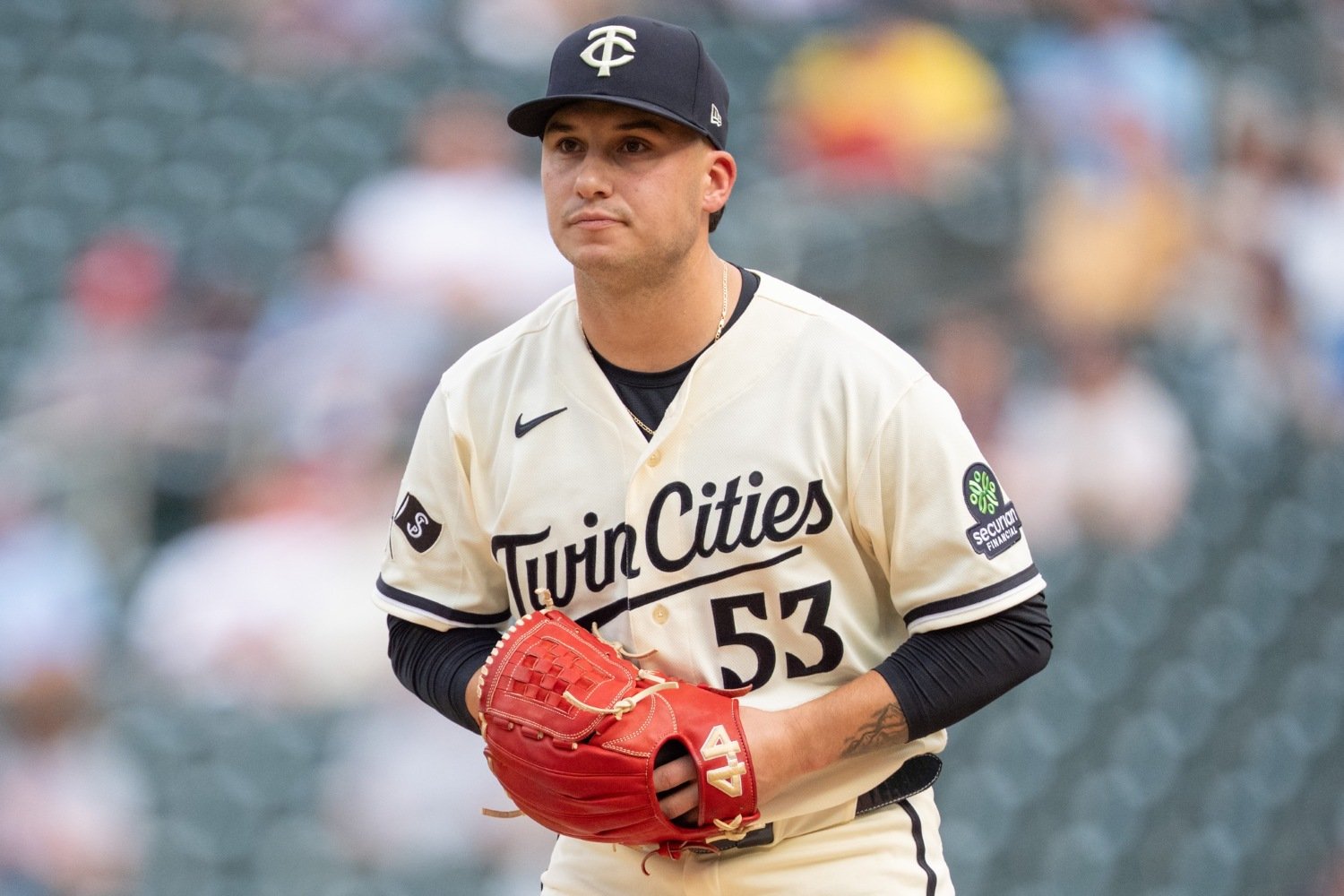 Since having his contract purchased from Triple-A St. Paul on May 31, Mike Paredes has played an integral role in the Minnesota Twins’ efforts to stay in postseason contention this summer. Unexpectedly, he operated as the club’s fifth starter in June. Paredes’s rise to his newfound role with the parent club was unanticipated on many fronts. The 25-year-old began his 2026 campaign as part of Double-A Wichita’s starting rotation. Besides, Minnesota was rich in starting pitching depth to begin the regular season, with 10 (or more) starters above Paredes on the organizational depth chart. However, after injuries to Pablo López, David Festa, Mick Abel, Kendry Rojas, and Bailey Ober, and Simeon Woods Richardson unexpectedly getting designated for assignment in late May, Twins decision-makers were more or less forced to hand Paredes a spot on the club’s 13-pitcher staff. Surprisingly, the inexperienced righty has been serviceable, netting a 4.26 ERA, 5.44 FIP, and a 13-to-9 strikeout-to-walk ratio over 25 1/3 innings pitched. Those numbers don’t pop off the page. In fact, his 11.8% strikeout rate is rather alarming. Still, his serviceability has saved Minnesota’s starting rotation, helping the club stay in postseason contention as the All-Star break nears. Despite Paredes’s honorable service, Ober is nearing a return from the 15-day IL, rejoining Minnesota's five-pitcher starting rotation. With Joe Ryan, Taj Bradley, Zebby Matthews, and Connor Prielipp being the other four pitchers in the quintet, Paredes will be the odd starting pitcher out, signaling the 25-year-old could soon be demoted to Triple-A St. Paul. Instead, the front office and coaching staff should reward Paredes's upside with a change of role, rather than level. Operating out of the bullpen, Paredes could again serve as a bulk reliever, helping Ober ease back from the IL or pitching multiple innings if one of the other starters is pulled from a start early due to injury or poor performance. Given that the Twins bullpen continues to struggle mightily, however, Paredes could also transition into a short reliever, fortifying a unit in dire need of dependable arms. In his six appearances this month, Paredes’s most effective pitch has been his cutter, with hitters generating a modest .159 wOBA against it. However, his best pitch from a movement and stuff perspective is his sweeper, on which he's generated a 26.9% strikeout rate while throwing it 21.3% of the time. His sweeper would play up in a short relief role, generating higher velocity and greater horizontal break in short bursts. Paredes could fortify his sweeper and turn it into an above-average complementary pitch alongside his four-seam when facing right-handed hitters, while relying more on his change as an out pitch against left-handed hitters. Assuming he’s able to elevate his sweeper and change while adding velocity to his four-seam in a short relief role, Paredes should be more of a strikeout guy in the pen. Paredes has been an incredible development story, playing a vital role in keeping Minnesota’s playoff hopes from sinking in June. However, hes walking a thin line as a starter and could soon implode, given his inability to miss bats over multiple innings pitched. When Ober returns, Minnesota would be wise to transition Paredes to the bullpen, providing him an opportunity to solidify a role in a unit desperate for reliable arms. He's not good enough for their rotation, but he's more than good enough for their struggling relief unit.
 -
Having his contract purchased from Triple-A St. Paul on May 31, Mike Paredes has played an integral role in the Minnesota Twins’ ability to stay in postseason contention this summer, unexpectedly operating as the club’s fifth starter in June. Paredes’s rise to his newfound role with the parent club was unanticipated on many fronts. The 25-year-old began his 2026 campaign as a part of Double-A Wichita’s starting rotation. Also, Minnesota was rich in starting pitching depth to begin the regular season, with ten or more starters above Paredes on the organizational depth chart. Given extended injuries to Pablo López, David Festa, Mick Abel, Kendry Rojas, and Bailey Ober, and Simeon Woods Richardson unexpectedly getting designated for assignment in late May, Twins decision-makers were more or less forced to hand Paredes a spot on the club’s 13-pitcher staff. Surprisingly, the inexperienced righty has been serviceable, netting a 4.26 ERA, 5.44 FIP, and a 13-to-9 strikeout to walk ratio over 25 1/3 innings pitched. Again, Paredes’s numbers don’t pop off the page—his 11.8% strikout rate is rather alarming. Still, his serviceability has saved Minnesota’s starting rotation, helping the club stay in postseason contention as the All-Star break nears. Despite Paredes’s honorable service, Ober is nearing a return from the 10-day IL, rejoining Minnesota's five-pitcher starting rotation. With Joe Ryan, Taj Bradley, Zebby Matthews, and Connor Prielipp being the other four pitchers in the quintet, Paredes will be the odd starting pitcher out, signaling the 25-year-old could soon be demoted to Triple-A St. Paul. That said, Paredes has impressed in his first cup of coffee in the majors, meaning Twins decision-makers could opt to transition him into a relief role. Operating out of the bullpen, Paredes could again operate as a bulk reliever, helping Ober ease back from the 10-day IL or pitching multiple innings if one of the other starters is pulled from a start early due to injury or poor performance. Given that the Twins bullpen continues to struggle mightily, however, the right-handed arm could transition into a short reliever, helping fortify a unit in dire need of dependable arms. In his six appearances this month, Paredes’s most effective pitch has been his cutter, with hitters generating a modest .159 wOBA against it. However, his best pitch from a movement and stuff perspective is his sweeper, generating a 26.9% strikeout rate while throwing it 21.3% of the time. His sweeper would likely play up in a short relief role, generating higher velocity and greater horizontal break in short bursts. Paredes could fortify his sweeper and turn it into an above-average complementary pitch alongside his four-seam when facing right-handed hitters, while relying more on his change as an out-pitch against left-handed hitters. Assuming he’s able to elevate his sweeper and change while adding velocity to his four-seam in a short relief role, Paredes should be more of a strikeout pitcher, meaning he could improve his presently well-below-average 11.8% strikeout rate as a starter. Paredes has been an incredible development story, playing a vital role in keeping Minnesota’s playoff hopes from sinking in June. However, he is walking a thin line as a starter and could soon implode, given his inability to miss bats over multiple innings pitched. When Ober returns from the 10-day IL, Minnesota would be wise to transition Paredes to the bullpen, providing him an opportunity to solidify a role in a unit desperate for reliable arms. View full article
-
Byron Buxton Has Become an AL MVP Contender
Cody Schoenmann replied to Cody Schoenmann's topic in Twins Daily Front Page News
To reiterate the points made in my piece, Buxton is seventh if you filter this to AL-only, and he’s only 0.3 points of fWAR away from placing fourth. There’s a really good chance he surpasses Montgomery, McGonigle, Dingler, and even Kurtz if he sustains this performance. Witt Jr. and Alvarez are all but guaranteed to finish with more fWAR than Buxton. But what good is 9.0 fWAR for Witt Jr. if his team finishes 20 games under .500 and is out of playoff contention come August? Also, Buxton has been a meaningfully better hitter than Witt Jr. this season. Alvarez is a DH, and i highly doubt he ends the season with a wRC+ above even 170. Not to mention the Twins are more likely to make the playoffs than any club on this list other than the A’s. I’m a broken record at this point but there’s a clear path for Buxton to win. -
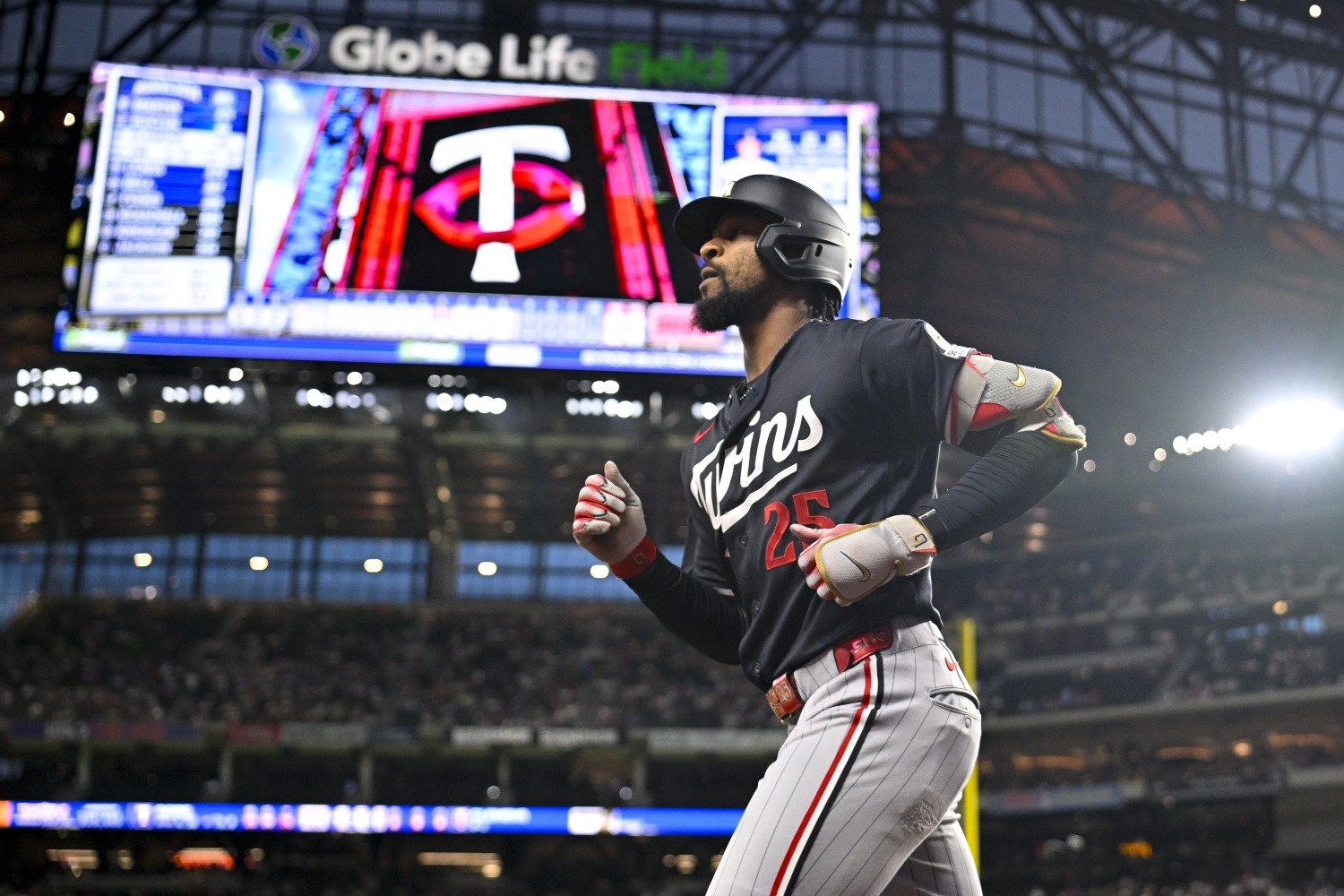 On June 5, New York Yankees outfielder Aaron Judge was placed on the 10-day IL with a right rib stress fracture, sidelining the perennial All-Star for six to eight weeks. Before hitting the shelf, the 34-year-old was hitting .248/.375/.533 with 17 home runs and a 148 wRC+. Performing 48% better than league average, Judge was clearly one of the best hitters in the league. However, he was meaningfully worse than in 2024 and 2025, when he generated a combined 212 wRC+ and 111 home runs over 1,383 plate appearances, winning back-to-back AL MVP awards. Given the downtime he faces, the future first-ballot Hall of Famer is all but guaranteed not to earn his third consecutive MVP, opening the door for a new winner. At first glance, Kansas City Royals shortstop Bobby Witt Jr. and Houston Astros designated hitter Yordan Alvarez appear to be the co-favorites. Headlined by his Platinum Glove-caliber defense at shortstop, Witt has generated the most Wins Above Replacement at Fangraphs (fWAR) among position players in baseball, with 4.5. Putting together a Judge-esque season himself (24 home runs over 327 plate appearances; 190 wRC+), Alvarez is close behind Witt, generating 3.6 fWAR. West Sacramento (occasionally Las Vegas) Athletics first baseman Nick Kurtz has generated the third-most fWAR in the AL, with 3.3, and a pair of Detroit Tigers in Dillon Dingler and Kevin McGonigle round out the top five, each at 3.1. Colson Montgomery of the White Sox is sixth, at 3.0. Coming in with the seventh-most fWAR, however, is Minnesota Twins center fielder Byron Buxton. Earning AL Player of the Week honors for the week of June 8-14, Buxton has been one of the hottest hitters in baseball this month, hitting .340/.389/.760 with six home runs and three doubles over 54 plate appearances. Buxton’s performance this June has been the peak of his best offensive season in the majors, wherein the 32-year-old has hit .275/.336/.601 with 23 home runs (third-most in MLB) and a 154 wRC+ over 283 plate appearances. Buxton hasn’t been the same caliber of hitter as Alvarez or Kurtz this season. Kurtz has been phenomenally consistent in the OBP department, and Alvarez, as mentioned earlier, is the only AL batter with more home runs than Buxton this season, while also hitting for average. What separates Buxton from Kurtz and Alvarez, however, is that he's playing solid defense at an up-the-middle position, while Kurtz plays first base and Alvarez is almost exclusively a DH. If Buxton can continue his elite performance at the plate while being a plus defensive center fielder, he could surpass Kurtz and Alvarez in this race over the second half of the year. As mentioned earlier, Dingler and McGonigle have generated more fWAR than Buxton. Yet, Buxton is outhitting both Tigers' position players. McGonigle is a rookie who has consistently been one of baseball’s best hitters this season. Dingler has undergone a recent offensive renaissance while catching almost every game, helping him jump up the fWAR leaderboard. Still, given that McGonigle is the heavy-favorite to win the AL Rookie of the Year Award, and Dingler should regress at the plate soon, the Tigers' star duo likely aren’t legitimate AL MVP Award contenders. Witt has meaningfully outperformed Buxton in terms of fWAR. However, a significant portion of his fWAR accumulation has come from his stellar defense at shortstop. Witt might be the best defensive shortstop in the league right now. Still, just like how hitting alone likely won’t be enough for Alvarez to win with just his bat, it's going to be exceptionally difficult for Witt to do so based primarily on his elite defense. Through 335 plate appearances, Witt Jr. has hit .290/.365/.451, which is good for a 128 wRC+. The 26-year-old has performed well offensively, but he hasn’t been a world-class hitter, which is a trait that should be necessary for any MVP award winner. It's a relative dearth of power slowing Witt at the moment. He's only hit 10 home runs. There's a chance Witt turns on the jets offensively and hits closer to the 169 wRC+ over 709 plate appearances he put together in 2024. If so, he could run away with this—literally, since he also leads the big leagues with 28 steals. The difference in how much value the two provide is probably being overstated a bit by fWAR, though—and Witt left the Royals' game Thursday after tweaking his knee, so another injury could be opening the door for Buxton. The final consideration when discussing potential MVP award winners is team performance. Right now, the Twins have better playoff odds than the Royals and Astros. The Tigers have better playoff odds than Minnesota, according to FanGraphs. The Twins are still five games up on Detroit in the AL Central and Wild Card standings, however. Only 1.5 games out from the third AL Wild Card spot, Minnesota is very much in postseason contention. If Minnesota does make the postseason, Buxton will have had to play a significant role, meaning he avoided any serious injuries while maintaining his elite production at the plate. Again, a lot has to go right for both Buxton and the club. Still, given that Judge is hurt; Alvarez doesn’t play the field; Witt hasn't hit for great power, and may now be hurt; Dingler, and McGonigle are likely due for regression while playing on a worse club; and Kurtz plays a position much lower on the defensive spectrum while hitting for less power than Buxton, the long-time Twins star could win his first AL MVP award this season. However slim the chances, if that does happen, it would be a triumphant display of perseverance for a player who was once one of the most injury-riddled players in the sport.
 -
Image courtesy of © Jesse Johnson-Imagn Images Before being demoted to Triple-A St. Paul a month ago, Royce Lewis was the Minnesota Twins’ primary third baseman, starting at the position nearly every game regardless of the opposing starting pitcher’s handedness. After he was quickly recalled on June 6, however, the 27-year-old was informed that he would be playing a much different role in the field, moving to the right side of the infield, primarily playing second and first base while occasionally mixing in at third. Ten games into his return with the parent club, Lewis has almost exclusively played first base, starting seven games there, two at second, and one at third. He also eventually moved over to first base in two of the three games at other positions. At the same time, Luke Keaschall has continued operating as Minnesota’s primary second baseman, starting seven of the past 10 games at the position. On the surface, this development shouldn’t come as a surprise. Keaschall has been Minnesota’s primary second baseman since early August 2025, and no other infielder has received substantial time at the position during that span. However, when Lewis was preparing to transition to second and first base at Triple-A, Keaschall was partaking in extended pregame work at first base: Despite undergoing pregame work at first, Keaschall has yet to appear at the position, signaling that Minnesota prefers him at second base over Lewis. Should they? Let’s take a look. Last season, Keaschall generated -2 Outs Above Average (OAA) at second base over 156 attempts. The then-22-year-old demonstrated poor range and a weak arm, but he wasn’t a trainwreck, leading club decision-makers to believe he could make the necessary adjustments to blossom into a serviceable-to-slightly above-average defensive second baseman in 2026—especially as he got another year of distance from the Tommy John surgery he underwent in August 2024. Unfortunately, that hasn’t been the case. Over 237 attempts at second base this season, Keaschall has netted -4 OAA, continuing to display poor range at the position while sporting one of the worst arms in the sport. Keaschall often struggles to field what should be routine plays to his right: Vndaa09fWGw0TUFRPT1fQlZKUVVWWUJWRkFBRDFFQVZnQUhBZ1FGQUZnRFdsSUFDd2NIQlZBRFZGZFhWbEJY.mp4 And his left: OTdQWFZfWGw0TUFRPT1fRGdGWkFRVUdVd3NBQUFBQUFnQUhCVmNIQUFBQUFGY0FWbHhSVVZZQ0FGY0hWZ0FI.mp4 His poor arm also often negates Minnesota’s ability to turn double plays, shown below: NHlLMUJfWGw0TUFRPT1fVndnQVVWRUFVUUVBWGxaWFhnQUhVRkJmQUFNQ1ZsUUFDd2NDQWdBTkFGWUhVUVFD.mp4 This call was overturned, as Luis Rengifo was confirmed safe at first base. Given how routine the play looked, it is fair to assume most second basemen with serviceable arms would have successfully turned the double play. Keaschall, however, has demonstrated that he is unable to convert routine double plays time and time again. As mentioned earlier, Minnesota moved Lewis off third base, moving him to the right side of the infield. Still, he has barely played second base. Although that’s been the trend to this point, Lewis is probably a better defensive baseman than Keaschall, and could be inserted as an instant improvement at the position, fortifying the club’s middle infield defense alongside plus defensive shortstop Ryan Kreidler. Kody Clemens, Tristan Gray, and Kreidler could also mix in at the position, replacing Keaschall in the aggregate, similar to what the club did with Brooks Lee at shortstop earlier this season. Keaschall has consistently demonstrated poor range, shaky fielding, and one of the worst arms in baseball at second base for nearly a full season, confirming he won’t be the Twins' long-term answer at the position. That being the case, Minnesota would be wise to move him off the position and provide him opportunities in the corner outfield and/or first base, while keeping him in the lineup on a game-to-game basis. (Yes, a noodle arm is a problem in the outfield, too, but most players are capable of throwing better out there, where a crow hop and a longer arm action are often available to them. The difference-making throws on the infield require a quick release and easy power generation that are missing for Keaschall; he could still prove adequate as an outfield thrower.) Keaschall’s bat plays. There’s a strong chance he’s part of Minnesota’s short-, medium-, and long-term plans. Unfortunately, he isn’t a major league-caliber second baseman. That being the case, team decision-makers should be proactive and move Keaschall off second base. They can have him split time in the corner outfield and at first base (and potentially at designated hitter), while providing Lewis, Clemens, Gray, and Kreidler with more opportunities at second. View full article
-
There's Still Time to Move Luke Keaschall Off Second Base
Cody Schoenmann posted an article in Twins
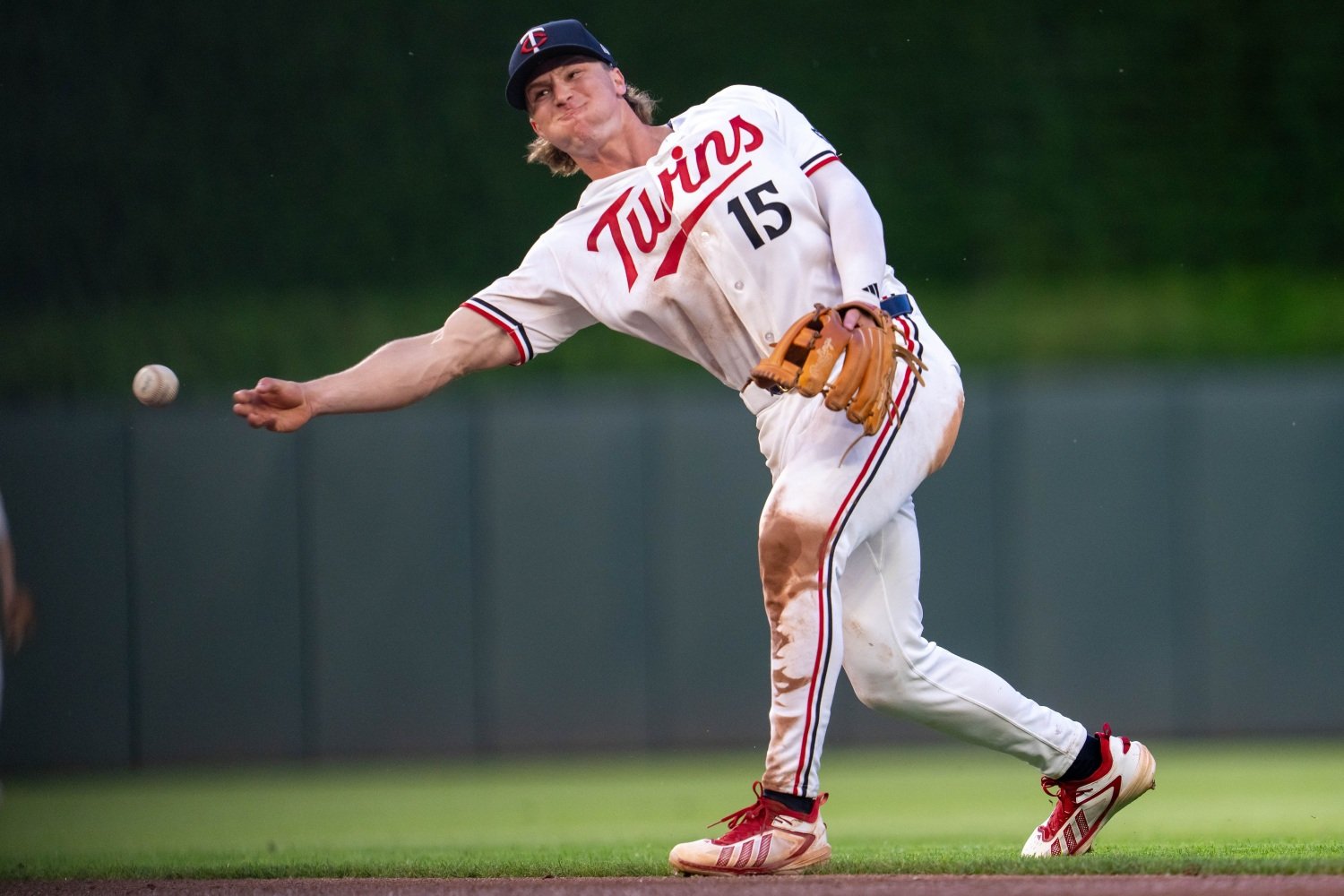 Before being demoted to Triple-A St. Paul a month ago, Royce Lewis was the Minnesota Twins’ primary third baseman, starting at the position nearly every game regardless of the opposing starting pitcher’s handedness. After he was quickly recalled on June 6, however, the 27-year-old was informed that he would be playing a much different role in the field, moving to the right side of the infield, primarily playing second and first base while occasionally mixing in at third. Ten games into his return with the parent club, Lewis has almost exclusively played first base, starting seven games there, two at second, and one at third. He also eventually moved over to first base in two of the three games at other positions. At the same time, Luke Keaschall has continued operating as Minnesota’s primary second baseman, starting seven of the past 10 games at the position. On the surface, this development shouldn’t come as a surprise. Keaschall has been Minnesota’s primary second baseman since early August 2025, and no other infielder has received substantial time at the position during that span. However, when Lewis was preparing to transition to second and first base at Triple-A, Keaschall was partaking in extended pregame work at first base: Despite undergoing pregame work at first, Keaschall has yet to appear at the position, signaling that Minnesota prefers him at second base over Lewis. Should they? Let’s take a look. Last season, Keaschall generated -2 Outs Above Average (OAA) at second base over 156 attempts. The then-22-year-old demonstrated poor range and a weak arm, but he wasn’t a trainwreck, leading club decision-makers to believe he could make the necessary adjustments to blossom into a serviceable-to-slightly above-average defensive second baseman in 2026—especially as he got another year of distance from the Tommy John surgery he underwent in August 2024. Unfortunately, that hasn’t been the case. Over 237 attempts at second base this season, Keaschall has netted -4 OAA, continuing to display poor range at the position while sporting one of the worst arms in the sport. Keaschall often struggles to field what should be routine plays to his right: Vndaa09fWGw0TUFRPT1fQlZKUVVWWUJWRkFBRDFFQVZnQUhBZ1FGQUZnRFdsSUFDd2NIQlZBRFZGZFhWbEJY.mp4 And his left: OTdQWFZfWGw0TUFRPT1fRGdGWkFRVUdVd3NBQUFBQUFnQUhCVmNIQUFBQUFGY0FWbHhSVVZZQ0FGY0hWZ0FI.mp4 His poor arm also often negates Minnesota’s ability to turn double plays, shown below: NHlLMUJfWGw0TUFRPT1fVndnQVVWRUFVUUVBWGxaWFhnQUhVRkJmQUFNQ1ZsUUFDd2NDQWdBTkFGWUhVUVFD.mp4 This call was overturned, as Luis Rengifo was confirmed safe at first base. Given how routine the play looked, it is fair to assume most second basemen with serviceable arms would have successfully turned the double play. Keaschall, however, has demonstrated that he is unable to convert routine double plays time and time again. As mentioned earlier, Minnesota moved Lewis off third base, moving him to the right side of the infield. Still, he has barely played second base. Although that’s been the trend to this point, Lewis is probably a better defensive baseman than Keaschall, and could be inserted as an instant improvement at the position, fortifying the club’s middle infield defense alongside plus defensive shortstop Ryan Kreidler. Kody Clemens, Tristan Gray, and Kreidler could also mix in at the position, replacing Keaschall in the aggregate, similar to what the club did with Brooks Lee at shortstop earlier this season. Keaschall has consistently demonstrated poor range, shaky fielding, and one of the worst arms in baseball at second base for nearly a full season, confirming he won’t be the Twins' long-term answer at the position. That being the case, Minnesota would be wise to move him off the position and provide him opportunities in the corner outfield and/or first base, while keeping him in the lineup on a game-to-game basis. (Yes, a noodle arm is a problem in the outfield, too, but most players are capable of throwing better out there, where a crow hop and a longer arm action are often available to them. The difference-making throws on the infield require a quick release and easy power generation that are missing for Keaschall; he could still prove adequate as an outfield thrower.) Keaschall’s bat plays. There’s a strong chance he’s part of Minnesota’s short-, medium-, and long-term plans. Unfortunately, he isn’t a major league-caliber second baseman. That being the case, team decision-makers should be proactive and move Keaschall off second base. They can have him split time in the corner outfield and at first base (and potentially at designated hitter), while providing Lewis, Clemens, Gray, and Kreidler with more opportunities at second.
 -
On June 5, New York Yankees outfielder Aaron Judge was placed on the 10-day IL with a right rib stress fracture, sidelining the perennial All-Star for six to eight weeks. Before fracturing his right rib, the 34-year-old was hitting .248/.375/.533 with 17 home runs and a 148 wRC+. Performing 48% better than league average, Judge was performing like one of the best hitters in the league. However, he was performing meaningfully worse than in 2024 and 2025, when he generated a combined 212 wRC+ and 111 home runs over 1,383 plate appearances, winning back-to-back AL MVP awards. Unfortunately, due to his six-to-eight absence and slow start (again, relative to previous seasons from Judge) to his 2026 campaign, the future first-ballot Hall-of-Famer is all but guaranteed not to earn his third consecutive AL MVP Award, opening the door for a new winner. At first glance, Kansas City Royals shortstop Bobby Witt Jr. and Houston Astros designated hitter Yordan Alvarez appear to be the co-favorites to earn the award this season. Headlined by his platinum glove-caliber defense at shortstop, Witt Jr. has generated the most Wins Above Replacement at Fangraphs (fWAR) among position players in baseball, with 4.0. Putting together a Judge-esque season himself (24 home runs over 318 plate appearances; 194 wRC+), Alvarez is close behind Witt Jr., generating 3.7 fWAR. West Sacramento (occasionally Las Vegas) Athletics first baseman Nick Kurtz has generated the third most fWAR in the AL, with 3.4, and a pair of Detroit Tigers in Dillon Dingler (3.2) and Kevin McGonigle (3.0) round out the top-five. Coming in with the sixth-most fWAR, however, is Minnesota Twins centerfielder Byron Buxton. Earning AL player of the week honors for the week of June 8-14, Buxton has been one of the hottest hitters in baseball this month, hitting .348/.388/.804 with six home runs and three doubles over 49 plate appearances. Buxton’s performance this June has been the peak of his best offensive season in the majors, wherein the 32-year-old has hit .276/.335/.606 with 23 home runs (the third most home runs hit in MLB) and a 154 wRC+ over 278 plate appearances. Buxton hasn’t been the same caliber of hitter as Alvarez or Kurtz this season. Kurtz has generated a 173 wRC+ and 18 home runs over 325 plate appearances, and Alvarez, as mentioned earlier, is the only AL batter with more home runs than Buxton this season, while also manufacturing 40 more points of wRC+. What separates Buxton from Kurtz and Alvarez, however, is that he is playing well above-average defense at an up-the-middle position in centerfield, while Kurtz plays first base and Alvarez exclusively hits. If Buxton can continue his elite performance at the plate while being a plus defensive centerfielder, he could surpass Kurtz and Alvarez as AL MVP favorites. As mentioned earlier, Dingler and McGonigle have generated more fWAR than Buxton. Yet, Buxton is outhitting both Tigers' position players, netting 16 more points of wRC+ than Dingler and 23 more than McGonigle. McGonigle is a rookie who has consistently been one of baseball’s best hitters this season. Dingler, on the other hand, has undergone a recent offensive renaissance while catching almost every game, helping him jump up the fWAR leaderboard. Still, however, given that McGonigle is the heavy-favorite to win the AL Rookie of the Year Award, and Dingler should regress at the plate soon, the Tigers' star duo likely aren’t legitimate AL MVP Award contenders. Witt Jr. has meaningfully outperformed Buxton in terms of fWAR. However, a significant portion of his fWAR accumulation has come from his stellar defense at shortstop. Witt Jr. might be the best defensive shortstop ever. Still, just like how hitting alone likely won’t be enough for Alvarez to don AL MVP honors, it is going to be exceptionally difficult for Witt Jr. to win the AL MVP primarily on his elite defense. Through 325 plate appearances, Witt Jr. has hit .284/.357/.450, which is good for a 120 wRC+. The 26-year-old has performed well offensively, but he hasn’t been a world-class hitter, which is a trait that should be necessary for any MVP award winner. The primary reason for Witt Jr.’s lackluster season at the plate (again, relative to Witt Jr.’s career norms) is that he has hit only nine home runs, resulting in a modest .450 slugging percentage (SLG). There is a chance Witt Jr. turns things around offensively and hits closer to the 169 wRC+ over 709 plate appearances performance he put together in 2024. If that occurs, he will likely win AL MVP honors. That said, though, if he doesn’t pick things up offensively and Buxton continues to perform at the rate he has, an argument could be made that Buxton’s elite offense and above-average defense are more valuable than Witt Jr.’s elite defense and above-average offense. The final consideration when discussing potential MVP award winners is team performance. Right now, the Twins have better playoff odds than the Royals and Astros. The Tigers have better playoff odds than Minnesota, according to FanGraphs. The Twins are still three games up on Detroit in the AL Central and Wild Card standings, however. Only two games out from the third AL Wild Card spot, Minnesota is very much in postseason contention and should continue to remain in contention late into the season. If Minnesota does make the postseason, Buxton will have had to play a significant role, meaning he avoided any serious injuries while maintaining his elite production at the plate. Again, a lot has to go right for both Buxton and the club. Still, given that Judge is hurt; Alvarez doesn’t play the field; Witt Jr. has performed much worse than Buxton offensively; Dingler, and McGonigle are likely due for regression while playing on a worse club; and Kurtz plays a position much lower on the defensive spectrum while hitting for less power than Buxton, the long-time Twins could win his first AL MVP award this season, signifying a triumphant display of perseverance for a player who was once one of the most injury-riddled players in the sport. View full article
-
1 1/2 games out from the third wild card spot.
-
every front office makes moves like these over a 162-game season. we need to recalibrate how we view microtransactions for relievers.
-
Image courtesy of © Jeff Curry-Imagn Images Last Friday, Pittsburgh Pirates starting pitcher Jared Jones returned to the PNC Park mound, making his first major league start since undergoing Tommy John surgery in May 2025. The home crowd celebrated Jones’s return, as the 24-year-old pitched 4 1/3 innings against the Minnesota Twins, surrendering five earned runs over 21 batters faced. However, the hard-throwing righty’s return to Pittsburgh’s five-pitcher rotation was partially overshadowed by how Carmen Mlodzinski (who held Pittsburgh’s fifth rotation spot for most of 2026) responded to Pirates decision-makers informing him that he would be transitioned back into the bullpen upon Jones’s return. “(I’m) still communicating with the organization and the people in my corner, whether that’s my family or my agency, about what is next,” Mlodzinski said, when asked about transitioning back to the bullpen during a media scrum last Thursday. Unsurprisingly, Mlodzinski’s quote took off among national baseball media, with many criticizing the 27-year-old’s dejected response to returning to the bullpen. Many of those critiquing Mlodzinski are doing so solely to profit from the salaciousness of a conflict between player and team, but for those viewing the situation more clearly, it's easy to see why Mlodzinski would be upset about the change in roles. Through 55 innings pitched, Mlodzinski has generated a 3.76 ERA, 3.31 FIP, and a 19.3% strikeout rate, while making nine proper starts. According to Wins Above Replacement at FanGraphs (fWAR), the righty has been Pittsburgh's fourth-most valuable starting pitcher, coming in behind Braxton Ashcraft, Paul Skenes, and Mitch Keller. Mlodzinski is firmly above the Pirates’ fifth-most valuable starting pitcher, Bubba Chandler, earning 1.0 fWAR over 44 innings pitched as a starter compared to Chandler’s 0.2 fWAR over 52 innings. Still, Pittsburgh opted to keep Chandler in the rotation over Mlodzinski, seemingly due to Chandler’s far superior raw stuff and higher ceiling as a starter. Pittsburgh placed Mlodzinski on the restricted list on Sunday, citing the pitcher expressing that he wasn’t ready to pitch in the series finale against Minnesota. Big-leaguers are unpaid while on the restricted list. However, the 24-year-old’s stint on the list was short-lived, as he was reinstated Monday night. In effect, they suspended him for two days and docked his pay for the missed time. According to Jason Mackey of MLB.com, Mlodzinski didn’t request a trade, and is expected to pitch out of the bullpen in a bulk role during the club’s Tuesday night contest against the Houston Astros. Still, animosity between Mlodzinski and Pittsburgh lingers, making a trade of the 27-year-old likely before the trade deadline on August 3. If that is the case, Twins top baseball executive Jeremy Zoll should aggressively pursue an early-June trade for Mlodzinski, handing the talented righty a solidified role in Minnesota’s five-pitcher starting rotation. Like Pittsburgh, Minnesota entered the 2026 campaign with a surplus of high-end starting pitching talent, headlined by Joe Ryan, Bailey Ober, and budding stars Taj Bradley and Mick Abel. However, injuries have quickly decimated the club’s rotation depth, with Ober, Abel, and talented, young lefty Kendry Rojas on the 15-day IL for the foreseeable future. Losing these three arms, Minnesota is down to a four-pitcher rotation, headlined by Ryan, Bradley, a struggling Connor Prielipp, and an inconsistent Zebby Matthews. Mike Paredes is on the 26-man roster as a long reliever, at least for the moment, but even after the team picked up another Pirate (Justin Lawrence, a short reliever) in a cash deal Monday night, it's not clear who will start Thursday evening against the Royals. Minnesota is still in dire need of starting pitching depth, particularly if the club wants to remain in postseason contention as the dog days of summer near. ""Yeah, I think everything needs to be on the table," Zoll told reporters Monday about the apparent hole in the rotation. "We've worked through all the considerations ... but I think when you go true bullpen games, that can be challenging, but we probably need to see how we get through the next day or two and the state of the bullpen before we finalize any plans." Primarily throwing a four-seamer, splitter, sinker, and curve, Mlodzinski would instantly slot in as a valuable member of Minnesota’s starting rotation, likely filling the third spot behind Ryan and Bradley. Even if Ober, Abel, and/or Rojas return soon, Mlodzinski would be in position to retain a rotation spot, given Prileipp’s, Matthews’s, and Rojas’s inconsistency this season and the team's desire to keep Prielipp and Rojas from taking on too large a workload too quickly. Though it's hardly ideal, the team might well switch to a six-man rotation for some stretches, giving their young starters an extra day between appearances to both optimize recovery and slow their accumulation of innings. Any team that acquires Mlodzinski would want to avoid recreating the awkward series of events that has led to the promising righty’s falling out with Pittsburgh’s decision-makers. Given the injuries Twins starting pitchers have sustained this season, Mlodzinski would be all but guaranteed a rotation spot with Minnesota for the rest of the 2026 season, potentially playing an integral role in the club’s ability to return to the postseason for the first time since 2023. Besides, there's one person we know likes Mlodzinski as a starter, and who gave him that job for the first time at the end of spring training last year: then-Pirates manager Derek Shelton. "I think through the spring, we saw him not only increase in velocity, but saw him maintain the velocity, which was something that really made us feel confident that he can be a starting pitcher,” Shelton said after Mlodzinski returned to the rotation last March, having spent the previous two seasons working in relief. “It wasn't one time through the order; we saw it maintain in the fourth inning, fifth inning in Spring Training." There's familiarity between the manager and this prospective addition—and a history of the kind of trust and faith the pitcher clearly needs to feel from his superiors. There's also a glaring need. Presumably, the Pirates won't give up Mlodzinski for nothing—he remains under team control through 2029 and isn''t even arbitration-eligible until this winter. If the cost of acquiring him has been dramatically reduced by the tension between employers and employee, though, the Twins should swoop in. View full article
-
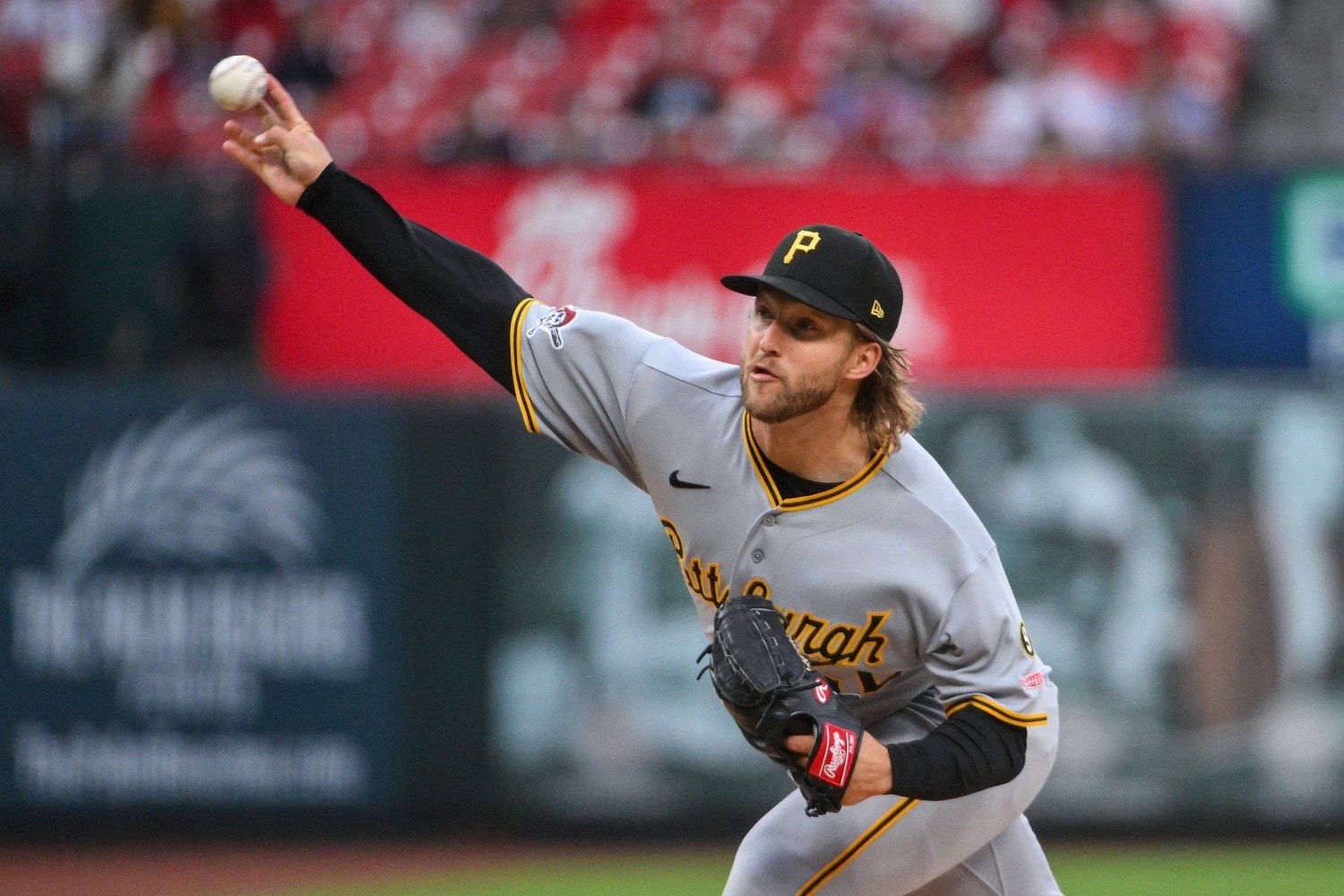 Last Friday, Pittsburgh Pirates starting pitcher Jared Jones returned to the PNC Park mound, making his first major league start since undergoing Tommy John surgery in May 2025. The home crowd celebrated Jones’s return, as the 24-year-old pitched 4 1/3 innings against the Minnesota Twins, surrendering five earned runs over 21 batters faced. However, the hard-throwing righty’s return to Pittsburgh’s five-pitcher rotation was partially overshadowed by how Carmen Mlodzinski (who held Pittsburgh’s fifth rotation spot for most of 2026) responded to Pirates decision-makers informing him that he would be transitioned back into the bullpen upon Jones’s return. “(I’m) still communicating with the organization and the people in my corner, whether that’s my family or my agency, about what is next,” Mlodzinski said, when asked about transitioning back to the bullpen during a media scrum last Thursday. Unsurprisingly, Mlodzinski’s quote took off among national baseball media, with many criticizing the 27-year-old’s dejected response to returning to the bullpen. Many of those critiquing Mlodzinski are doing so solely to profit from the salaciousness of a conflict between player and team, but for those viewing the situation more clearly, it's easy to see why Mlodzinski would be upset about the change in roles. Through 55 innings pitched, Mlodzinski has generated a 3.76 ERA, 3.31 FIP, and a 19.3% strikeout rate, while making nine proper starts. According to Wins Above Replacement at FanGraphs (fWAR), the righty has been Pittsburgh's fourth-most valuable starting pitcher, coming in behind Braxton Ashcraft, Paul Skenes, and Mitch Keller. Mlodzinski is firmly above the Pirates’ fifth-most valuable starting pitcher, Bubba Chandler, earning 1.0 fWAR over 44 innings pitched as a starter compared to Chandler’s 0.2 fWAR over 52 innings. Still, Pittsburgh opted to keep Chandler in the rotation over Mlodzinski, seemingly due to Chandler’s far superior raw stuff and higher ceiling as a starter. Pittsburgh placed Mlodzinski on the restricted list on Sunday, citing the pitcher expressing that he wasn’t ready to pitch in the series finale against Minnesota. Big-leaguers are unpaid while on the restricted list. However, the 24-year-old’s stint on the list was short-lived, as he was reinstated Monday night. In effect, they suspended him for two days and docked his pay for the missed time. According to Jason Mackey of MLB.com, Mlodzinski didn’t request a trade, and is expected to pitch out of the bullpen in a bulk role during the club’s Tuesday night contest against the Houston Astros. Still, animosity between Mlodzinski and Pittsburgh lingers, making a trade of the 27-year-old likely before the trade deadline on August 3. If that is the case, Twins top baseball executive Jeremy Zoll should aggressively pursue an early-June trade for Mlodzinski, handing the talented righty a solidified role in Minnesota’s five-pitcher starting rotation. Like Pittsburgh, Minnesota entered the 2026 campaign with a surplus of high-end starting pitching talent, headlined by Joe Ryan, Bailey Ober, and budding stars Taj Bradley and Mick Abel. However, injuries have quickly decimated the club’s rotation depth, with Ober, Abel, and talented, young lefty Kendry Rojas on the 15-day IL for the foreseeable future. Losing these three arms, Minnesota is down to a four-pitcher rotation, headlined by Ryan, Bradley, a struggling Connor Prielipp, and an inconsistent Zebby Matthews. Mike Paredes is on the 26-man roster as a long reliever, at least for the moment, but even after the team picked up another Pirate (Justin Lawrence, a short reliever) in a cash deal Monday night, it's not clear who will start Thursday evening against the Royals. Minnesota is still in dire need of starting pitching depth, particularly if the club wants to remain in postseason contention as the dog days of summer near. ""Yeah, I think everything needs to be on the table," Zoll told reporters Monday about the apparent hole in the rotation. "We've worked through all the considerations ... but I think when you go true bullpen games, that can be challenging, but we probably need to see how we get through the next day or two and the state of the bullpen before we finalize any plans." Primarily throwing a four-seamer, splitter, sinker, and curve, Mlodzinski would instantly slot in as a valuable member of Minnesota’s starting rotation, likely filling the third spot behind Ryan and Bradley. Even if Ober, Abel, and/or Rojas return soon, Mlodzinski would be in position to retain a rotation spot, given Prileipp’s, Matthews’s, and Rojas’s inconsistency this season and the team's desire to keep Prielipp and Rojas from taking on too large a workload too quickly. Though it's hardly ideal, the team might well switch to a six-man rotation for some stretches, giving their young starters an extra day between appearances to both optimize recovery and slow their accumulation of innings. Any team that acquires Mlodzinski would want to avoid recreating the awkward series of events that has led to the promising righty’s falling out with Pittsburgh’s decision-makers. Given the injuries Twins starting pitchers have sustained this season, Mlodzinski would be all but guaranteed a rotation spot with Minnesota for the rest of the 2026 season, potentially playing an integral role in the club’s ability to return to the postseason for the first time since 2023. Besides, there's one person we know likes Mlodzinski as a starter, and who gave him that job for the first time at the end of spring training last year: then-Pirates manager Derek Shelton. "I think through the spring, we saw him not only increase in velocity, but saw him maintain the velocity, which was something that really made us feel confident that he can be a starting pitcher,” Shelton said after Mlodzinski returned to the rotation last March, having spent the previous two seasons working in relief. “It wasn't one time through the order; we saw it maintain in the fourth inning, fifth inning in Spring Training." There's familiarity between the manager and this prospective addition—and a history of the kind of trust and faith the pitcher clearly needs to feel from his superiors. There's also a glaring need. Presumably, the Pirates won't give up Mlodzinski for nothing—he remains under team control through 2029 and isn''t even arbitration-eligible until this winter. If the cost of acquiring him has been dramatically reduced by the tension between employers and employee, though, the Twins should swoop in.
 -
Kyler Fedko? The Triple-A Slugger?
-
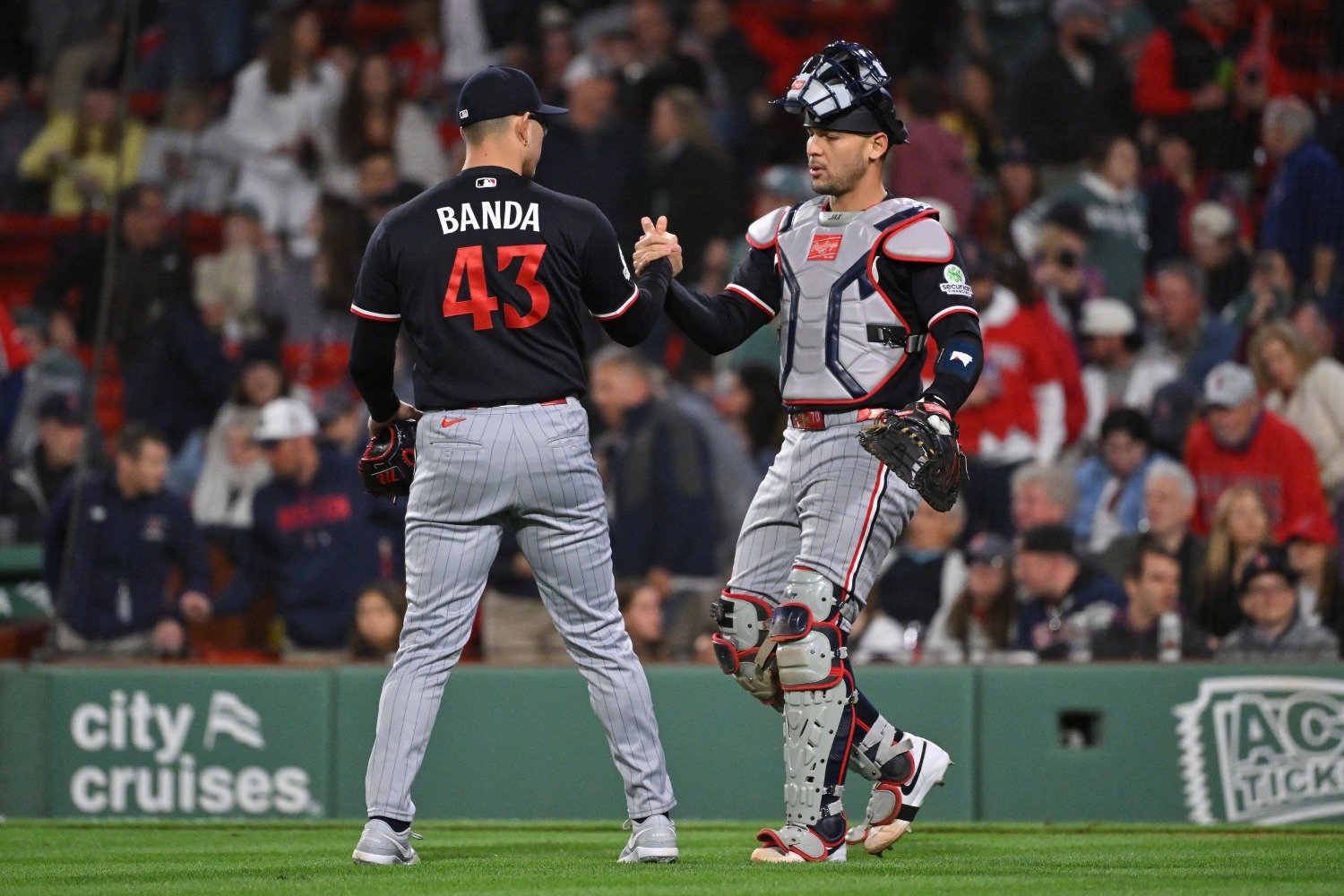 Since the beginning of the 2015 MLB regular season, the Minnesota Twins have had 23 different catchers attempt a throw to second base. Of those 23 catchers, Caleb Hamilton had the slowest average pop time, averaging 2.13 seconds over three attempts in 2022. On the flip side, Ben Rortvedt averaged the fastest pop time among Twins catchers during that stretch, averaging 1.92 seconds over eight attempts in 2021. That was until Alex Jackson made his first start behind the plate as a member of the Twins last Friday. In the bottom of the third inning of last Friday night’s contest between the Twins and the Boston Red Sox, Andruw Monasterio attempted to steal second base on Connor Prielipp. Monasterio’s steal attempt was snuffed, however, as Jackson threw him out to end the bottom half of the inning. On that play, Jackson generated the quickest pop time of any Twins catcher in the Statcast era, getting the ball from his glove to that of second baseman Luke Keaschall in 1.87 seconds. Vndaa09fWGw0TUFRPT1fQUFkUUJnZFhVUWNBWGxVRVV3QUhWQU5mQUZoV1cxWUFBbEFHVWdVSFZRWUJWQVpY.mp4 Jackson netting this record (if we can call it that; the timeframe for which we have hard data on this is still pretty short) shouldn’t come as a surprise to those who follow the sport. In 2025, Jackson tied for the sixth-fastest pop time of all catchers in baseball while with the Baltimore Orioles. The backstop made minimal appearances behind the plate from 2022 through 2024, due to his offensive shortcomings. However, he also tied for the fifth-fastest pop time (tied with Rortvedt, funny enough) of all major-league catchers in 2021. Most of that speed comes from elite sheer arm strength. Jackson’s throw to second base came in at 82.6 MPH, which is the 13th-fastest throw of all catchers this season. Unsurprisingly, the veteran backstop had the 15th-fastest throw down to second base last season, coming in at 83.4 MPH. Combining Jackson’s elite arm with his plus exchange time (he tied for the 12th-fastest exchange time in 2025), Minnesota has one of the best run-game mitigating catchers in baseball. This is not a strength of Ryan Jeffers or Victor Caratini. It's also worth paying some attention to the accuracy of the peg. Jackson's throw took Keaschall right to the sliding runner, tailing but strong and low. In the modern game, this is the ideal throw by a catcher. Teams want them to lead the tagger into the slider, allowing the fielder to get the ball onto the body of the runner as early as possible. Before replay could fix umpire errors, throws like this risked letting a runner be called safe due to a "high" tag, with more of the runner's body past the tagged part than we think of as ideal. Now, though, throwing into the space just to the first-base side of second is optimal; replay will catch whatever an ump might miss in real time. This is a skill at which Jackson excels, too. He rates in the top quintile of the league in throwing accuracy since the start of 2025, according to Statcast. Here's a sampling of infielders catching his throws, with the one Friday in prime position. Jackson’s addition to the 26-man roster came at the unfortunate expense of losing Jeffers (who was in the midst of a career year offensively) to the 10-day IL with a broken left hamate bone. Still, while Jackson won’t be able to make up for Jeffers’s absence in the batter’s box, he will add value behind the plate, likely being Minnesota’s best run-stopping catcher since Joe Mauer transitioned into a full-time first baseman in 2014.
 -
Since the beginning of the 2015 MLB regular season, the Minnesota Twins have had 23 different catchers attempt a throw to second base. Of those 23 catchers, Caleb Hamilton had the slowest average pop time, averaging 2.13 seconds over three attempts in 2022. On the flip side, Ben Rortvedt averaged the fastest pop time among Twins catchers during that stretch, averaging 1.92 seconds over eight attempts in 2021. That was until Alex Jackson made his first start behind the plate as a member of the Twins last Friday. In the bottom of the third innings of last Friday night’s contest between the Twins and the Boston Red Sox, Andruw Monasterio attempted to steal second base on Connor Prielipp. Monasterio’s steal attempt was snuffed, however, as Jackson threw him out to end the bottom half of the inning. Upon throwing Monasterio out, Jackson generated the quickest pop time of any Twins catcher in the Statcast era, exchanging the ball from his glove to second base in 1.87 seconds. Vndaa09fWGw0TUFRPT1fQUFkUUJnZFhVUWNBWGxVRVV3QUhWQU5mQUZoV1cxWUFBbEFHVWdVSFZRWUJWQVpY.mp4 Jackson netting this record, if you will, shouldn’t come as a surprise to those who follow the sport. In 2025, Jackson tied for the sixth-fastest pop time of all catchers in baseball while with the Baltimore Orioles. The backstop made minimal appearances behind the plate from 2022 through 2024, due to his offensive shortcomings. However, he also tied for the fifth-fastest pop time (tied with Rortvedt, funny enough) of all major league catchers in 2021. The driving force behind his long-standing top-of-the-league pop time, however, has been his elite arm. Jackson’s throw to second base came in at 82.6 MPH, which is the 13th-fastest throw of all catchers this season. Unsurprisingly, the veteran backstop had the 15th-fastest throw down to second base last season, coming in at 83.4 MPH. Combining Jackson’s elite arm with his plus exchange time (he tied for the 12th-fastest exchange time in 2025), Minnesota has one of the best run-game mitigating catchers in baseball. Jackson’s addition to the 26-man roster came at the unfortunate expense of losing Ryan Jeffers (who was in the midst of a career year offensively) to the 10-day IL with a broken left hamate bone. Still, while Jackson won’t be able to make up for Jeffers’s absence in the batter’s box, he will add value behind the plate, likely being Minnesota’s best defensive catcher since Joe Mauer transitioned into a full-time first baseman in 2014. View full article
-
An Altered Arsenal Has Led to Success for Travis Adams in 2026
Cody Schoenmann posted an article in Twins
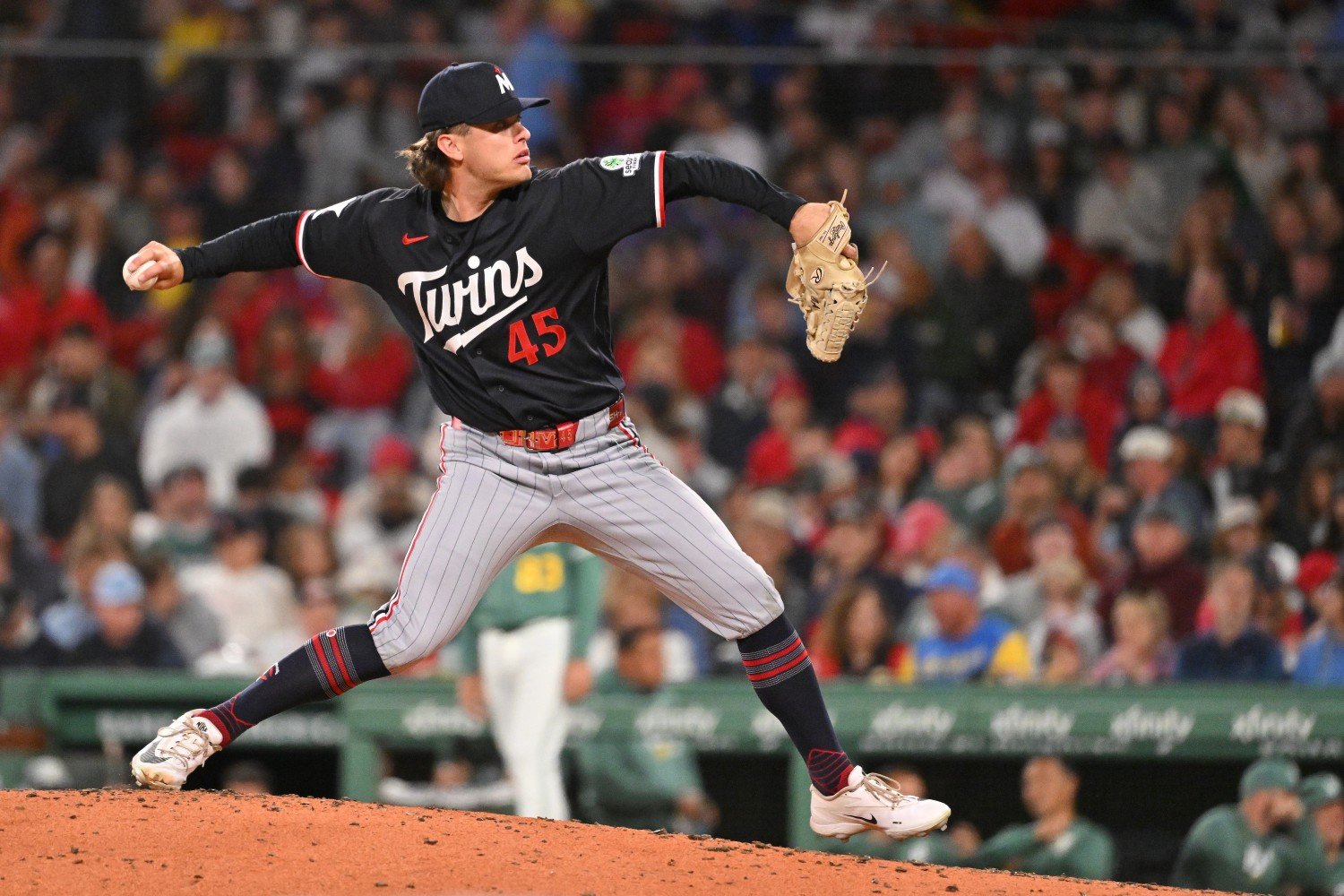 After making his major-league debut on Jul. 5, 2025, Travis Adams struggled in his first cup of coffee in the majors, generating a 7.49 ERA, a 5.39 FIP, and a 31-to-17 strikeout to walk ratio over 33 2/3 innings pitched. The then-25-year-old navigated an unpredictable role, jumping between starting games and coming in as a stretch or short reliever on an appearance-to-appearance basis. Given his late struggles, Adams failed to solidify a spot on Minnesota’s 26-man roster late last season, meaning the now-26-year-old would need to compete for a spot in the club’s eight-pitcher bullpen this spring training. Unfortunately, Adams pitched only 2 2/3 innings this spring before being sidelined with right elbow inflammation in mid-March. Luckily, the righty’s elbow sustained no structural damage, and he returned to the mound on a rehab assignment at Single-A Fort Myers in mid-April, before joining the Triple-A St. Paul Saints later that month. Upon his return to St. Paul, Adams’s surface stats were uninspiring, including a 9.00 ERA over six innings pitched. Still, his 2.69 FIP suggested the right-hander had been unlucky, and that maybe something new was happening. Due to 40-man roster constraints, Minnesota promoted the struggling Adams to the parent club on May 9 when Taj Bradley was placed on the 15-day IL with right pec muscle inflammation. The former mid-level prospect made two appearances for the Twins over a four-day stretch, earning a 7.36 ERA over 3 2/3 innings pitched. Again, however, his underlying metrics suggested he was pitching better than his counting stats. Over that exceptionally small sample, Adams netted a 2.01 FIP and 25% strikeout rate, suggesting he had again been the victim of poor luck. Still, Minnesota demoted him on May 14 to make room for starting pitcher Zebby Matthews on the 26-man roster. Interestingly, Twins decision-makers were quick to provide him another opportunity, recalling him five days later after designating veteran right-handed reliever Justin Topa for assignment. (Technically, he replaced Ryan Jeffers, who was placed on the 10-day IL, but he took Topa’s spot in the bullpen.) In two appearances since May 19, Adams has been unhittable over 14 batters faced, posting a 0.00 ERA, 1.85 FIP, and 30.8% strikeout rate. The righty has generated these results over two separate two-inning appearances, against the Houston Astros on May 19 and the Boston Red Sox on May 22. Adams particularly played an integral role in Minnesota’s 8-6 comeback win against Boston, which was arguably their most impressive win of the season. He then earned his first career save against the Red Sox on Sunday. Again, I am analyzing a very small sample. Still, it appears that Adams has made meaningful strides toward becoming an effective short reliever in a bullpen desperate for serviceable internal options. Adams’s early-season success appears to be the product of an altered arsenal, highlighted by a shift in his change and cutter usage. In 2025, the righty used his changeup only 17% of the time. He's raised his usage rate to 30% this season. The pitch has an average movement profile. However, he's using it more effectively, almost exclusively throwing it low in the zone to left-handed hitters. It's posted a .104 expected batting average against (xBA) and a .108 expected slugging average against (xSLG), showcasing its effectiveness against lefties. bGJ3TDdfWGw0TUFRPT1fVWdKUlhWTUVVZ0lBWFFjTEFBQUhWUU5VQUFBTlVGa0FWMWNHQkFzQ1Z3RURBUU5m.mp4 His cutter has also made strides, with Adams using it 22% of the time this season, up from 19% in 2025. It's a truer cutter this season than last, with more backspin and less blending with his slider. Attacking hitters high in the zone, the pitch has netted a similarly impressive .166 xBA and .185 xSLG in 2026. The cutter and change have gotten more exercise, while he's all but shelved his curveball and sinker. Adams’s fastball still needs work; it has below-average velocity and an unimpressive movement profile. Yet, it appears that Adams has refined his arsenal against both left- and right-handed hitters this season. As improbable as it would have sounded even a few weeks ago, he could remain effective and finally solidify a long-term role in Minnesota’s bullpen.
 -
Image courtesy of © Eric Canha-Imagn Images After making his major-league debut on Jul. 5, 2025, Travis Adams struggled in his first cup of coffee in the majors, generating a 7.49 ERA, a 5.39 FIP, and a 31-to-17 strikeout to walk ratio over 33 2/3 innings pitched. The then-25-year-old navigated an unpredictable role, jumping between starting games and coming in as a stretch or short reliever on an appearance-to-appearance basis. Given his late struggles, Adams failed to solidify a spot on Minnesota’s 26-man roster late last season, meaning the now-26-year-old would need to compete for a spot in the club’s eight-pitcher bullpen this spring training. Unfortunately, Adams pitched only 2 2/3 innings this spring before being sidelined with right elbow inflammation in mid-March. Luckily, the righty’s elbow sustained no structural damage, and he returned to the mound on a rehab assignment at Single-A Fort Myers in mid-April, before joining the Triple-A St. Paul Saints later that month. Upon his return to St. Paul, Adams’s surface stats were uninspiring, including a 9.00 ERA over six innings pitched. Still, his 2.69 FIP suggested the right-hander had been unlucky, and that maybe something new was happening. Due to 40-man roster constraints, Minnesota promoted the struggling Adams to the parent club on May 9 when Taj Bradley was placed on the 15-day IL with right pec muscle inflammation. The former mid-level prospect made two appearances for the Twins over a four-day stretch, earning a 7.36 ERA over 3 2/3 innings pitched. Again, however, his underlying metrics suggested he was pitching better than his counting stats. Over that exceptionally small sample, Adams netted a 2.01 FIP and 25% strikeout rate, suggesting he had again been the victim of poor luck. Still, Minnesota demoted him on May 14 to make room for starting pitcher Zebby Matthews on the 26-man roster. Interestingly, Twins decision-makers were quick to provide him another opportunity, recalling him five days later after designating veteran right-handed reliever Justin Topa for assignment. (Technically, he replaced Ryan Jeffers, who was placed on the 10-day IL, but he took Topa’s spot in the bullpen.) In two appearances since May 19, Adams has been unhittable over 14 batters faced, posting a 0.00 ERA, 1.85 FIP, and 30.8% strikeout rate. The righty has generated these results over two separate two-inning appearances, against the Houston Astros on May 19 and the Boston Red Sox on May 22. Adams particularly played an integral role in Minnesota’s 8-6 comeback win against Boston, which was arguably their most impressive win of the season. He then earned his first career save against the Red Sox on Sunday. Again, I am analyzing a very small sample. Still, it appears that Adams has made meaningful strides toward becoming an effective short reliever in a bullpen desperate for serviceable internal options. Adams’s early-season success appears to be the product of an altered arsenal, highlighted by a shift in his change and cutter usage. In 2025, the righty used his changeup only 17% of the time. He's raised his usage rate to 30% this season. The pitch has an average movement profile. However, he's using it more effectively, almost exclusively throwing it low in the zone to left-handed hitters. It's posted a .104 expected batting average against (xBA) and a .108 expected slugging average against (xSLG), showcasing its effectiveness against lefties. bGJ3TDdfWGw0TUFRPT1fVWdKUlhWTUVVZ0lBWFFjTEFBQUhWUU5VQUFBTlVGa0FWMWNHQkFzQ1Z3RURBUU5m.mp4 His cutter has also made strides, with Adams using it 22% of the time this season, up from 19% in 2025. It's a truer cutter this season than last, with more backspin and less blending with his slider. Attacking hitters high in the zone, the pitch has netted a similarly impressive .166 xBA and .185 xSLG in 2026. The cutter and change have gotten more exercise, while he's all but shelved his curveball and sinker. Adams’s fastball still needs work; it has below-average velocity and an unimpressive movement profile. Yet, it appears that Adams has refined his arsenal against both left- and right-handed hitters this season. As improbable as it would have sounded even a few weeks ago, he could remain effective and finally solidify a long-term role in Minnesota’s bullpen. View full article
-
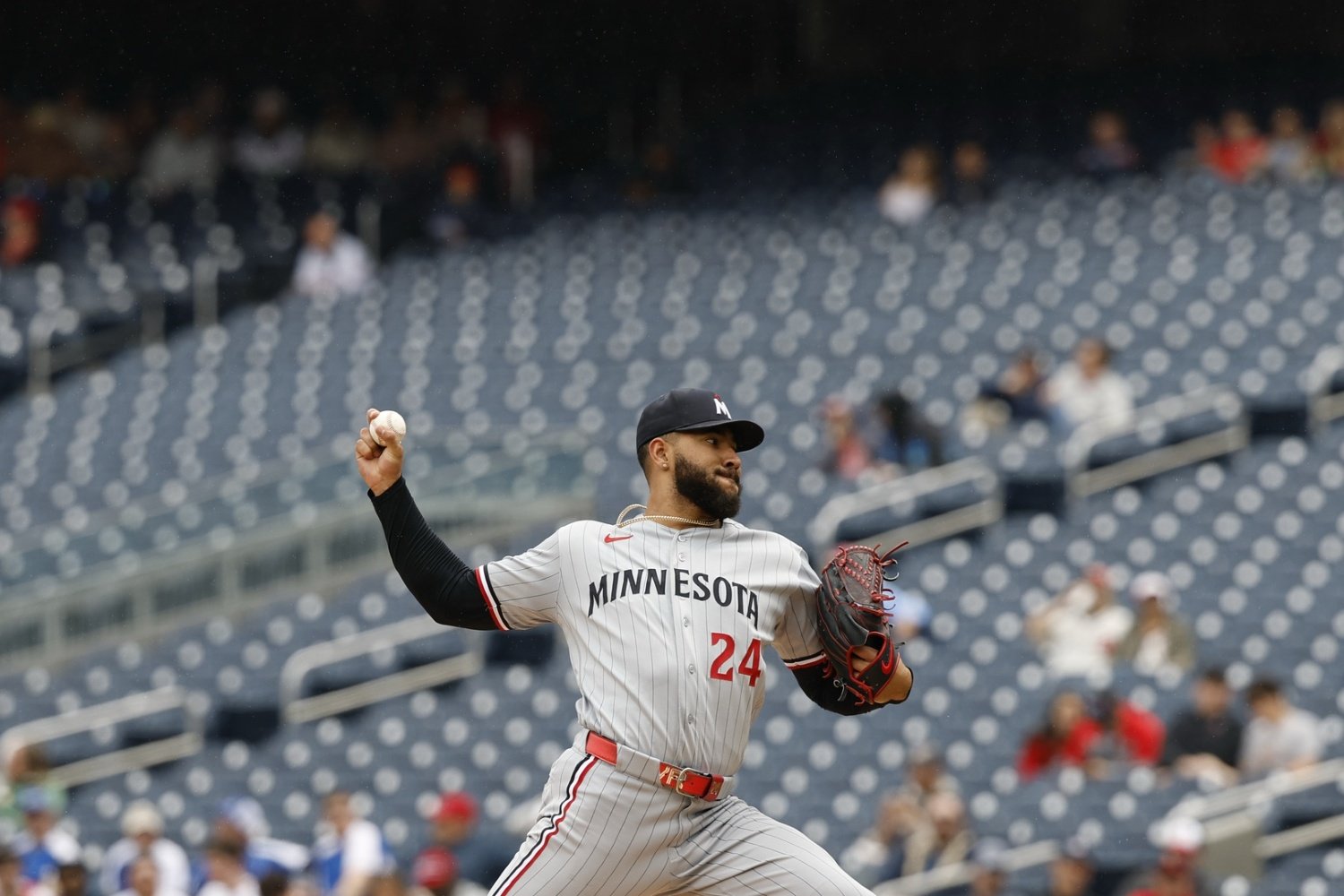 Forty-four games into the 2026 MLB regular season, multiple Minnesota Twins position players are overperforming preseason expectations. Byron Buxton is tied for the third-most home runs in baseball with 15, alongside Chicago White Sox rookie Munetaka Murakami. Ryan Jeffers is on track to earn his first All-Star nod. Austin Martin is reaching base in roughly 45% of his plate appearances, and Brooks Lee appears to have finally developed into an average regular. There have been numerous success stories on the mound, too. Mick Abel and Taj Bradley look like stalwarts atop future Twins rotations. Connor Prielipp has impressed in his first cup of coffee in the majors, and Joe Ryan continues to pitch like a top-20 starting pitcher in the sport. Despite the aforementioned positive early-season surprises, though, Minnesota has a 20-24 record, leaving the club with an uninspiring 21.8% chance of making the playoffs, according to FanGraphs. A significant portion of the club’s early-season struggles can be attributed to them fielding the fifth-worst bullpen in baseball, according to Wins Above Replacement at FanGraphs (fWAR). Despite the Twins having one of the worst bullpen collectives in the sport, specific position players and starting pitchers have also played key roles in dragging the club down over the first two months of the season. No two players have made a greater negative impact than outfielder Matt Wallner and starting pitcher Simeon Woods Richardson. Wallner, 28, entered the 2026 regular season expected to be the club’s full-time right fielder, netting most starts against right- and left-handed starters. Through 135 plate appearances, however, the left-handed hitting corner outfielder hit .167/.259/.292 with a 58 wRC+. Wallner also struck out 39.3% of the time while producing minimal damage upon contact, evidenced by the should-be slugger netting only four home runs and a below-average .125 Isolated Power (ISO). As a result, Wallner possesses the 10th-lowest wRC+ of all qualified hitters. At the same time, he generated the second-lowest fWAR (-0.8) among qualified position players in the sport, with only Tampa Bay Rays centerfielder Cedric Mullins residing below him. The Southern Miss product was also one of the worst fielders in baseball, netting -8 Defensive Runs Saved (DRS) over 284 innings played in right field. According to FanGraphs, only Junior Caminero, Jake Bauers, and Bryce Harper have delivered more negative value based on their fielding and positional assignments. He’s tied for the lowest DRS in the sport, alongside Oneil Cruz. Given that Wallner is inarguably a bottom-ten hitter and bottom-five fielder in the sport, it is not hyperbolic to opine that he regressed into the worst position player in baseball. In response, the Twins optioned him to Triple-A St. Paul early Thursday morning. As mentioned earlier, Woods Richardson hasn’t been much better on the mound. Among starting pitchers with at least 40 innings pitched, Woods Richardson has the highest ERA in the sport, coming in at 7.71. He also sports the fourth-highest FIP (6.51) and second-lowest Skill Interactive ERA (SIERA), coming in at 5.91. The 25-year-old is tied with Washington Nationals starting pitcher Zack Littell for the lowest strikeout rate (10.1%) among starting pitchers with at least 40 innings pitched and the 10th-worst hard-hit rate (40.4%). Woods Richardson has served the ball on a silver platter to hitters, and they are unsurprisingly excelling. Unsurprisingly, Woods Richardson’s arsenal grades out very, very poorly. According to Run Value at Baseball Savant, Woods Richardson has the worst splitter in baseball, with the pitch netting a -13 run value over 206 pitches thrown. He also possesses the worst slider among starting pitchers, with the pitch netting a -6 run value over 178 pitches thrown. On a positive note, his fastball has been serviceable, generating 0 run value over 323 pitches. Still, the former top prospect’s pitches have been abysmal this season, making his poor start to the season unsurprising. (Author’s note: I’m not having fun writing this article. I’ve been frowning like Florence Pugh in Midsommar for 20 minutes now.) Given his inability to suppress runs and poor pitch grade, it would not be hyperbolic to opine that Woods Richardson is the worst starting pitcher in baseball. Again, many factors have played into Minnesota’s slow start to the season. Still, no two players have been more consequential than Wallner and Woods Richardson. With Martin and Trevor Larnach performing well as the new primary corner outfielders and Walker Jenkins, Emmanuel Rodriguez, Gabriel Gonzalez, Hendry Mendez, and Alan Roden waiting in the wings at Triple-A St. Paul, Wallner may never play for the Twins again. Woods Richardson’s days in the rotation are numbered if he is unable to quickly change course, given Bradley, Abel, Ryan, and Prielipp’s aforementioned early-season success and Kendry Rojas, Zebby Matthews, Ryan Gallagher, and others awaiting extended opportunities in the rotation. Minnesota is transitioning to a new era. Unfortunately, it appears as though Wallner and Woods Richardson won’t be part of it.
 -
43 games into the 2026 MLB regular season, multiple Minnesota Twins position players are overperforming preseason expectations. Byron Buxton is tied for the third-most home runs in baseball with 15 alongside Chicago White Sox rookie Munetaka Murakami. Ryan Jeffers is on track to earn his first All-Star nod. Austin Martin is reaching base roughly 45% of his plate appearances and Brooks Lee appears to have finally developed into an above-average regular. There have been numerous success stories on the mound, too. Mick Abel and Taj Bradley look like stalwarts atop future Twins rotations. Connor Prielipp has impressed in his first cup of coffee in the majors and Joe Ryan continues to pitch like a Top-20 starting pitcher in the sport. Despite the aforementioned positive early-season surprises, Minnesota has a 19-24 record, leaving the club with an uninspiring 21.8% chance of making the playoffs, according to FanGraphs. A significant portion of the club’s early-season struggles can be attributed to them fielding the fifth-worst bullpen in baseball, according to Wins Above Replacement at FanGraphs (fWAR). Despite the Twins having one of the worst bullpen collectives in the sport, specific position players and starting pitchers have also played key roles in dragging the club down over the first two months of the season. Interestingly, however, no two players have made a greater negative impact than outfielder Matt Wallner and starting pitcher Simeon Woods Richardson. Wallner, 28, entered the 2026 regular season expected to be the club’s full-time right fielder, netting most starts against right- and left-handed starters. Through 135 plate appearances, however, the left-handed hitting corner outfielder hit .167/.259/.292 with a 58 wRC+. Wallner also struck out 39.3% of the time while producing minimal damage upon contact, evidenced by the expected slugger netting only four home runs and a below-average .125 Isolated Power (ISO). As a result, Wallner possesses the 10th-lowest wRC+ of all qualified hitters. At the same time, he generated the second-lowest fWAR (-0.8) among qualified position players in the sport, with only Tampa Bay Rays centerfielder Cedric Mullins residing below him. The Southern Miss product was also one of the worst fielders in baseball, with him netting -4.9 Defensive Runs Above Average (DEF) and -8 Defensive Runs Saved (DRS) over 284 innings played in right field this season. As a result, Wallner manufactured the fourth-lowest DEF in baseball, slotting in above only Junior Caminero, Jake Bauers, and Bryce Harper. He’s also tied for the lowest DRS in the sport alongside Oneil Cruz. Unsurprisingly, he's also tied with Kerry Carpenter, Luke Raley, and James Wood for the second-worst Outs Above Average (OAA) in right field this season, with -3. Given that Wallner is inarguably a bottom-ten hitter and bottom-five fielder in the sport, it is not hyperbolic to opine that he regressed into the worst position player in baseball. In response, the Twins optioned him to Triple-A St. Paul early Thursday morning. As mentioned earlier, Woods Richardson hasn’t been much better on the mound. Among starting pitchers with at least 40 innings pitched, Woods Richardson has the highest ERA in the sport, coming in at 7.71. He also sports the fourth-highest FIP (6.51) and second-lowest Skill Interactive ERA (SIERA), coming in at 5.91 . To add on, the 25-year-old is tied with Washington Nationals starting pitcher Zack Littell for the lowest strikeout rate (10.1%) among starting pitchers with at least 40 innings pitched and the 10th-worst hard hit rate (40.4%). Woods Richardson has served the ball on a silver platter to hitters over 42 innings, and they are unsurprisingly excelling. Unsurprisingly, Woods Richardson’s arsenal grades out very, very poorly. According to Run Value at Baseball Savant, Woods Richardson has the worst splitter in baseball, with the pitch netting a -13 run value over 206 pitches thrown. He also possesses the worst slider among starting pitchers, with the pitch netting a -6 run value over 178 pitches thrown. On a positive note, his fastball has been serviceable, generating 0 run value over 323 pitches. Still, the former top prospect’s pitches have been abysmal this season, making his poor start to the season unsurprising (Author’s note: I’m not having fun writing this article. I’ve been frowning like Florence Pugh in Midsommar for 20 minutes now). Given his inability to suppress runs and poor pitch grade, it would not be hyperbolic to opine that Woods Richardson is the worst starting pitcher in baseball. Again, many factors have played into Minnesota’s slow start to the season. Still, no two players have been more consequential than Wallner and Woods Richardson. With Martin and Trevor Larnach performing well as the new primary corner outfielders and Walker Jenkins, Emmanuel Rodriguez, Gabriel Gonzalez, Hendry Mendez, and Alan Roden waiting in the wings at Triple-A St. Paul, Wallner may never play for the Twins again. Woods Richardson’s days in the rotation are numbered if he is unable to quickly change course, given Bradley, Abel, Ryan, and Prielipp’s aforementioned early-season success and Kendry Rojas, Zebby Matthews, Ryan Gallagher, and others awaiting extended opportunities in the rotation. Minnesota is transitioning to a new era. Unfortunately, it appears as though Wallner and Woods Richardson won’t be part of it. View full article
-
Image courtesy of © Pablo Robles-Imagn Images Last Wednesday, the Minnesota Twins traded for Yoendrys Gómez from the Tampa Bay Rays, for cash considerations. Bouncing between the New York Yankees, Los Angeles Dodgers, Chicago White Sox, Tampa Bay, and now Minnesota since the beginning of the 2025 season, Gómez has embodied the nomadic reliever trope, being vaguely desired by many clubs but rostered long-term by none. Despite hopping between clubs, the 26-year-old finished his 2025 campaign relatively strongly, netting a 4.84 ERA, 4.85 FIP, and 22.6% strikeout rate over 48 1/3 innings pitched for the White Sox. Chicago flipped Gómez to the Rays this offseason alongside fellow right-handed reliever Steven Wilson, for outfielder Everson Pereira and utility prospect Tanner Murray. Unfortunately, he struggled to begin his 2026 campaign with Tampa Bay, posting a 6.23 ERA, 7.28 FIP, and a less impressive 15.9% strikeout rate over 17 1/3 innings. Tampa Bay had Gómez using a five-pitch mix, which isn’t unique for a right-handed reliever. The righty primarily utilized his four-seam fastball and sweeper, both of which graded out as true plus pitches. Yet, he also often used his sinker, cutter, and changeup, all of which graded out below average. Opposing hitters generated a 142 wRC+ against his sinker this season and a 303 wRC+ against his cutter while Gómez was with Tampa Bay. To preface, hitters also excelled against Gómez’s four-seamer when he pitched for Tampa Bay, with a 186 wRC+. As noted earlier, the pitch graded out well above average (121 Stuff+ at FanGraphs), suggesting his struggles were the product of bad luck rather than a low-quality pitch, but there are things to clean up. Command will be crucial. Gómez did, however, excel at throwing his sweeper with Tampa Bay, netting an elite -100 wRC+ and 125 Stuff+ at FanGraphs with the pitch. So far, albeit in a sample so small as to be almost meaningless, Minnesota has effectively cut his sinker, cutter, and changeup from his repertoire entirely, with him using his four-seamer and sweeper in 14 of his 17 pitches thrown with the Twins. Again, I am analyzing a 17-pitch sample. Still, Gómez has excelled with a two-pitch mix for the Twins, posting a 0.00 ERA, 3.13 FIP, and plus grades on both pitches through 1 2/3 innings. Gómez also earned his first save with the club on Sunday, mowing through Daniel Schneeman, Angel Martínez, and Travis Bazzana on 10 pitches. The newly acquired relief arm has been stellar in his first three appearances for Minnesota, functioning as a breath of fresh air for what has been the fourth-worst bullpen in baseball, according to Wins Above Replacement at FanGraphs (fWAR). dnZ3REtfV0ZRVkV3dEdEUT09X1VnWllBUUlBVUZFQURGSUtWZ0FIQmdGUUFBTlJWbFVBVTFJTkJBb0JVMVVEVlZBQw==.mp4 Given that Cody Laweryson, Garrett Acton, and Cole Sands are on the 15-day IL; Kody Funderburk was surprisingly demoted to Triple-A St. Paul on Sunday; and Justin Topa, Taylor Rogers, and Anthony Banda have struggled mightily to begin their respective 2026 campaigns. Minnesota’s bullpen is arguably the most volatile in the sport. Yet, with volatility comes opportunity. Andrew Morris has capitalized on his opportunities in various roles. Eric Orze has impressed despite blowing a save against the Seattle Mariners in late April. And 39-year-old Luis García has been thrust into high-leverage situations despite joining the club on Apr. 28. Given that Minnesota targeted Gómez from Tampa Bay and that he has immediately succeeded in high-leverage situations, the 26-year-old could quickly become Minnesota’s preferred high-leverage arm. View full article
-
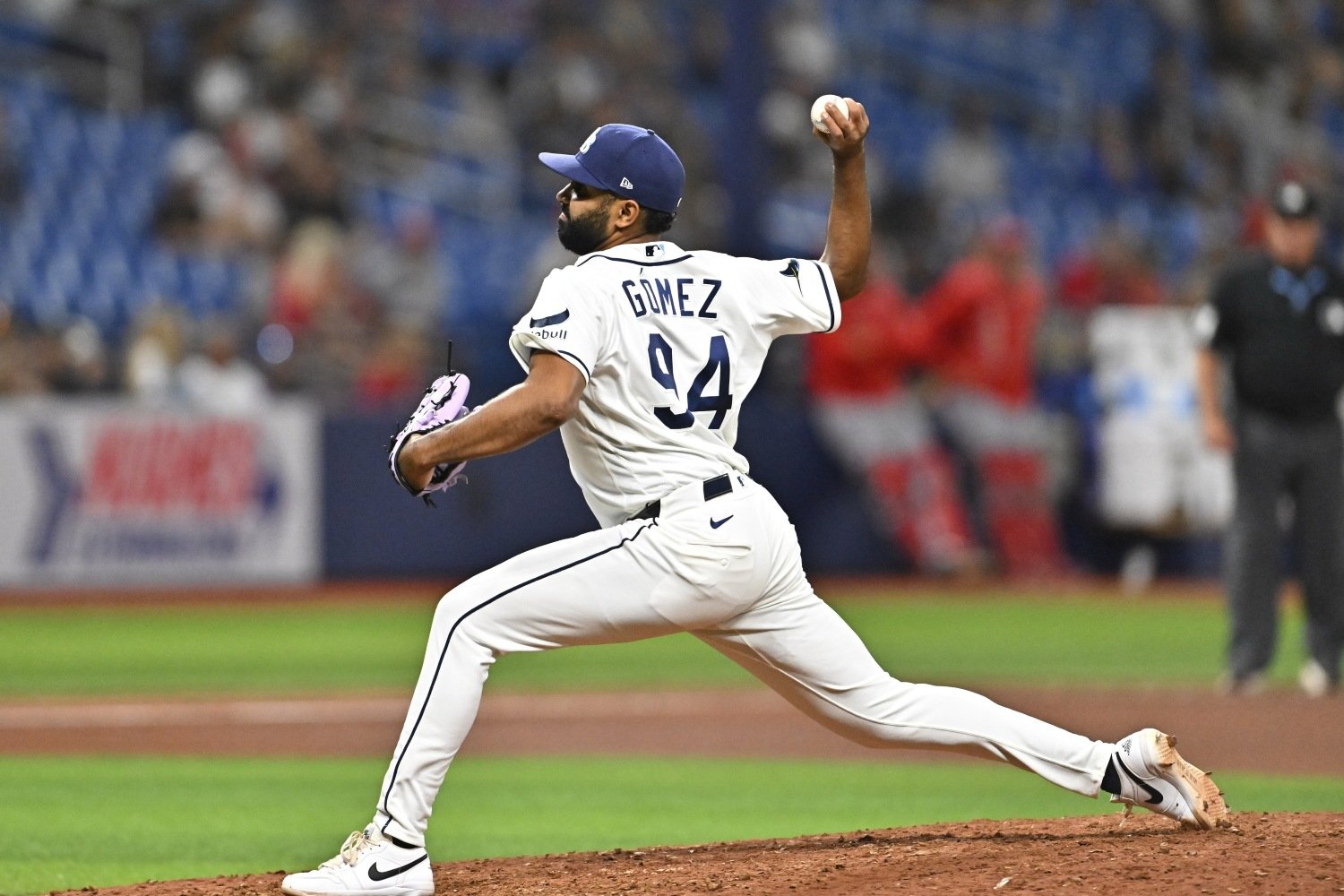 Last Wednesday, the Minnesota Twins traded for Yoendrys Gómez from the Tampa Bay Rays, for cash considerations. Bouncing between the New York Yankees, Los Angeles Dodgers, Chicago White Sox, Tampa Bay, and now Minnesota since the beginning of the 2025 season, Gómez has embodied the nomadic reliever trope, being vaguely desired by many clubs but rostered long-term by none. Despite hopping between clubs, the 26-year-old finished his 2025 campaign relatively strongly, netting a 4.84 ERA, 4.85 FIP, and 22.6% strikeout rate over 48 1/3 innings pitched for the White Sox. Chicago flipped Gómez to the Rays this offseason alongside fellow right-handed reliever Steven Wilson, for outfielder Everson Pereira and utility prospect Tanner Murray. Unfortunately, he struggled to begin his 2026 campaign with Tampa Bay, posting a 6.23 ERA, 7.28 FIP, and a less impressive 15.9% strikeout rate over 17 1/3 innings. Tampa Bay had Gómez using a five-pitch mix, which isn’t unique for a right-handed reliever. The righty primarily utilized his four-seam fastball and sweeper, both of which graded out as true plus pitches. Yet, he also often used his sinker, cutter, and changeup, all of which graded out below average. Opposing hitters generated a 142 wRC+ against his sinker this season and a 303 wRC+ against his cutter while Gómez was with Tampa Bay. To preface, hitters also excelled against Gómez’s four-seamer when he pitched for Tampa Bay, with a 186 wRC+. As noted earlier, the pitch graded out well above average (121 Stuff+ at FanGraphs), suggesting his struggles were the product of bad luck rather than a low-quality pitch, but there are things to clean up. Command will be crucial. Gómez did, however, excel at throwing his sweeper with Tampa Bay, netting an elite -100 wRC+ and 125 Stuff+ at FanGraphs with the pitch. So far, albeit in a sample so small as to be almost meaningless, Minnesota has effectively cut his sinker, cutter, and changeup from his repertoire entirely, with him using his four-seamer and sweeper in 14 of his 17 pitches thrown with the Twins. Again, I am analyzing a 17-pitch sample. Still, Gómez has excelled with a two-pitch mix for the Twins, posting a 0.00 ERA, 3.13 FIP, and plus grades on both pitches through 1 2/3 innings. Gómez also earned his first save with the club on Sunday, mowing through Daniel Schneeman, Angel Martínez, and Travis Bazzana on 10 pitches. The newly acquired relief arm has been stellar in his first three appearances for Minnesota, functioning as a breath of fresh air for what has been the fourth-worst bullpen in baseball, according to Wins Above Replacement at FanGraphs (fWAR). dnZ3REtfV0ZRVkV3dEdEUT09X1VnWllBUUlBVUZFQURGSUtWZ0FIQmdGUUFBTlJWbFVBVTFJTkJBb0JVMVVEVlZBQw==.mp4 Given that Cody Laweryson, Garrett Acton, and Cole Sands are on the 15-day IL; Kody Funderburk was surprisingly demoted to Triple-A St. Paul on Sunday; and Justin Topa, Taylor Rogers, and Anthony Banda have struggled mightily to begin their respective 2026 campaigns. Minnesota’s bullpen is arguably the most volatile in the sport. Yet, with volatility comes opportunity. Andrew Morris has capitalized on his opportunities in various roles. Eric Orze has impressed despite blowing a save against the Seattle Mariners in late April. And 39-year-old Luis García has been thrust into high-leverage situations despite joining the club on Apr. 28. Given that Minnesota targeted Gómez from Tampa Bay and that he has immediately succeeded in high-leverage situations, the 26-year-old could quickly become Minnesota’s preferred high-leverage arm.
 -
i’ve long thought 3B is Brooks’s best position.
-
Image courtesy of © Geoff Burke-Imagn Images Brooks Lee hit the ground running faster than Cole Thomas Allen down a Washington Hilton hallway over the first week of his major league career, hitting .458/.462/.625 with a 206 wRC+ over 26 plate appearances. The switch-hitting infielder quickly cooled off, however, hitting a far less impressive .182/.233/.270 in 159 plate appearances over the final three months of the season. The eighth overall pick in the 2022 MLB Amateur Draft sputtered last season, too, hitting a modest .236/.285/.370 over 527 plate appearances. Netting a well-below-league-average 75 wRC+ over his first season-and-a-half in the majors, Lee also struggled in the field, netting -6 Outs Above Average (OAA) during that stretch, causing those who follow the club to question if he was playing his way out of the Minnesota Twins' long-term plans. Through 36 games played this season, however, the 25-year-old has broken out at the plate, rekindling the flame of optimism surrounding the former top prospect. Over 136 plate appearances, Lee is hitting .278/.331/.437 with a 114 wRC+. The Cal Poly product has also hit five home runs, continuing the plus-power profile he flashed during his sophomore campaign last season, in which he hit 16 dingers. Some of the same weaknesses remain in Lee’s player profile, particularly defensively, despite last night's heroics. Minnesota’s shortstop has netted -4 OAA, making him the fifth-worst defender at the position this season. He also has one of the weaker arms of all middle infielders in baseball, continuing a career-long trend. Still, Lee performing like one of the best offensive shortstops in the sport has largely offset his defensive shortcomings, making him one of Minnesota’s steadiest presences early this season. The past two seasons, Lee struggled from the left side of the plate, posting a 68 wRC+ over 482 plate appearances. The switch-hitting shortstop has performed dramatically better while hitting left-handed in 2026, hitting .291/.333/.456 with a 119 wRC+ over 84 plate appearances against righties this season. Right-handed pitchers are throwing Lee more strikes this season. At the same time, Lee has been more aggressive on balls in the zone than in the past two seasons, often pulling the ball hard and in the air. Lee excelling as a left-handed hitter while holding his own from the right-handed batter’s box (106 wRC+ over 52 plate appearances) has resulted in the best month-and-a-half stretch of his young career, signaling he has finally blossomed into an above-average regular. The 2026 Twins are not a good baseball club. In fact, they might be one of sport’s worst. Still, there will be a time when the seeds of the next Good Twins Team poke their head out of the dirt, germinate, and blossom into a postseason-contending 26-player collective. It just won’t be this season—or next; and maybe not even the next after that. Yet, if the progress Lee has demonstrated at the plate this season proves sustainable, he could be a core member of that club. View full article
-
Brooks Lee Might Be Part of the Next Good Twins Team After All
Cody Schoenmann posted an article in Twins
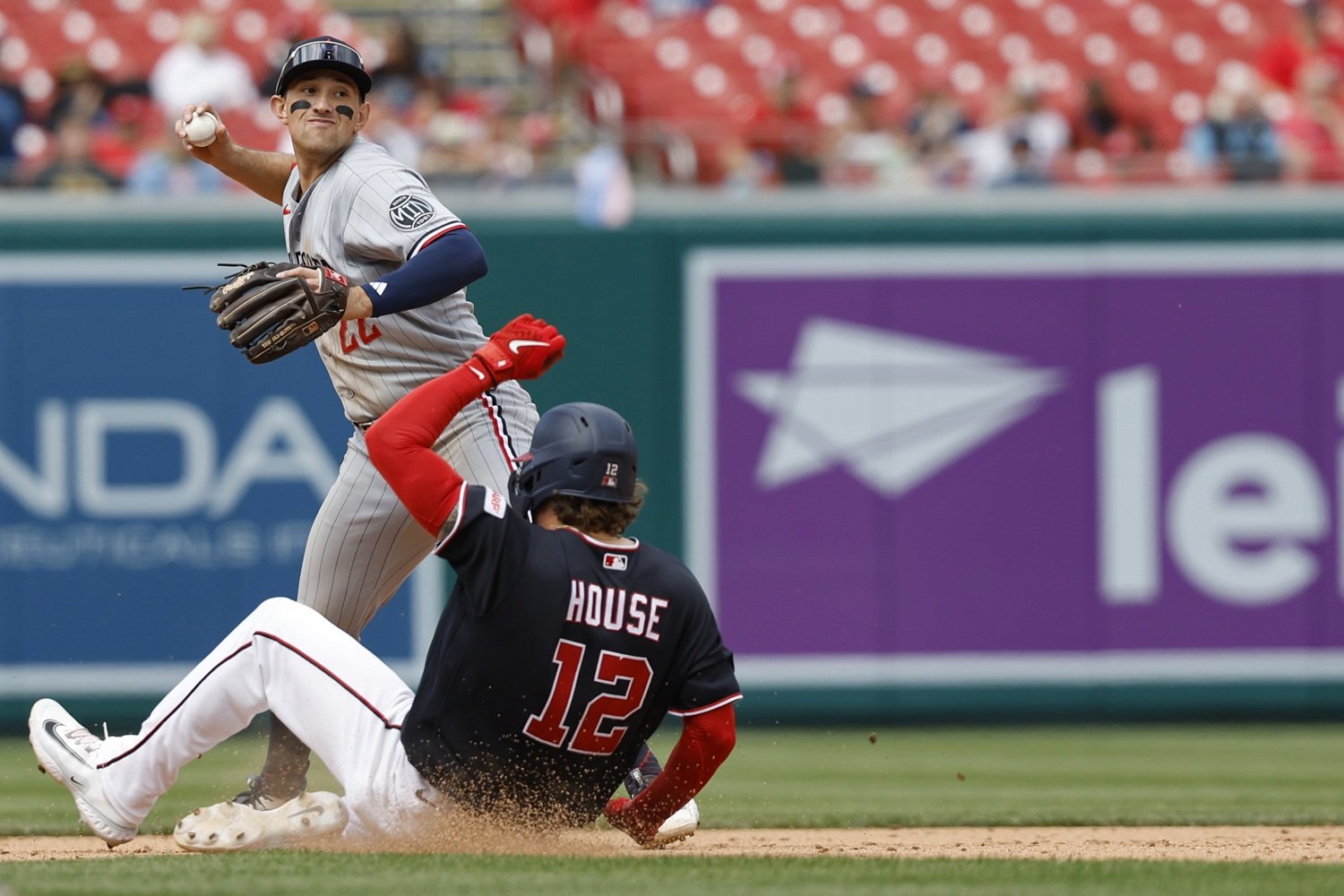 Brooks Lee hit the ground running faster than Cole Thomas Allen down a Washington Hilton hallway over the first week of his major league career, hitting .458/.462/.625 with a 206 wRC+ over 26 plate appearances. The switch-hitting infielder quickly cooled off, however, hitting a far less impressive .182/.233/.270 in 159 plate appearances over the final three months of the season. The eighth overall pick in the 2022 MLB Amateur Draft sputtered last season, too, hitting a modest .236/.285/.370 over 527 plate appearances. Netting a well-below-league-average 75 wRC+ over his first season-and-a-half in the majors, Lee also struggled in the field, netting -6 Outs Above Average (OAA) during that stretch, causing those who follow the club to question if he was playing his way out of the Minnesota Twins' long-term plans. Through 36 games played this season, however, the 25-year-old has broken out at the plate, rekindling the flame of optimism surrounding the former top prospect. Over 136 plate appearances, Lee is hitting .278/.331/.437 with a 114 wRC+. The Cal Poly product has also hit five home runs, continuing the plus-power profile he flashed during his sophomore campaign last season, in which he hit 16 dingers. Some of the same weaknesses remain in Lee’s player profile, particularly defensively, despite last night's heroics. Minnesota’s shortstop has netted -4 OAA, making him the fifth-worst defender at the position this season. He also has one of the weaker arms of all middle infielders in baseball, continuing a career-long trend. Still, Lee performing like one of the best offensive shortstops in the sport has largely offset his defensive shortcomings, making him one of Minnesota’s steadiest presences early this season. The past two seasons, Lee struggled from the left side of the plate, posting a 68 wRC+ over 482 plate appearances. The switch-hitting shortstop has performed dramatically better while hitting left-handed in 2026, hitting .291/.333/.456 with a 119 wRC+ over 84 plate appearances against righties this season. Right-handed pitchers are throwing Lee more strikes this season. At the same time, Lee has been more aggressive on balls in the zone than in the past two seasons, often pulling the ball hard and in the air. Lee excelling as a left-handed hitter while holding his own from the right-handed batter’s box (106 wRC+ over 52 plate appearances) has resulted in the best month-and-a-half stretch of his young career, signaling he has finally blossomed into an above-average regular. The 2026 Twins are not a good baseball club. In fact, they might be one of sport’s worst. Still, there will be a time when the seeds of the next Good Twins Team poke their head out of the dirt, germinate, and blossom into a postseason-contending 26-player collective. It just won’t be this season—or next; and maybe not even the next after that. Yet, if the progress Lee has demonstrated at the plate this season proves sustainable, he could be a core member of that club.