



Cody Schoenmann
-
Posts
800 -
Joined
-
Last visited
-
Days Won
1
Content Type
Profiles
Minnesota Twins News, Rumors & Analysis
Minnesota Twins Videos
2026 Minnesota Twins Top Prospect Rankings
2022 Minnesota Twins Draft Picks & Signing Bonuses
Minnesota Twins Trade & Free Agent Rumors
Minnesota Twins Fan Guides & Resources
2023 Minnesota Twins Draft Picks & Signing Bonuses
2024 Minnesota Twins Draft Picks & Signing Bonuses
2025 Minnesota Twins Draft Picks & Signing Bonuses
2026 Minnesota Twins Draft Picks & Signing Bonuses
Forums
Blogs
Events
Store
Downloads
Gallery
Everything posted by Cody Schoenmann
-
 I agree that his development is an important aspect as to why they should give Kirilloff more opportunity versus LHP, and the same goes for Julien versus LHP and Lewis versus RHP. As it pertains to right-handed options that take his place in the lineup that are an upgrade, Donovan Solano is a significant upgrade when they face LHP. I am in no way saying the Twins shouldn't be playing Solano at 1B when they face LHP, because, especially as of late, Solano has been extremely valuable for the Twins offensively. With that said, I do think the Twins should seriously consider playing Kirilloff over Gallo, Larnach, or Kepler in either LF or RF when they face a LHP.
-
With Alex Kirilloff being one of the few consistently productive hitters in the lineup, can the Twins afford to keep benching Kirilloff when they face left-handed pitchers? Image courtesy of Gary A. Vasquez-USA TODAY Sports With Alex Kirilloff being one of the few consistently productive hitters in the lineup, can the Twins afford to keep benching Kirilloff when they face left-handed pitchers? If a Twins fan were granted three Twins-centric wishes that would come true for the 2023 Major League season, wish number one would be to end the 18-game playoff losing streak that has plagued this franchise for 19 years, wish number two would be that the Twins win their third World Series, and wish number three would be that the Twins organization and fans alike would finally get to see Alex Kirilloff and Royce Lewis play out the rest of the season with an outstanding bill of health. In reality, wishes number one and two look very suspect right now, but wish number three appears to be on track to happen, which is a blessing in itself. Whether it be Lewis tearing his ACL twice in two years or Kirilloff undergoing wrist surgeries in consecutive seasons, these once highly touted Twins prospects have endured immense physical and emotional hurdles that they have been able to power through every single time. Lewis has solidified himself as the everyday third baseman for at least the rest of the season. In contrast, Kirilloff has solidified himself as an almost-every-game starter who plays either left field, right field, designated hitter, or his best defensive position, first base, during any given game. Lewis and Kirilloff are finally able to showcase the talents that had them both ranked as unanimous Top 50 prospects in Major League Baseball. Although Lewis and Kirilloff contribute to the Twins on a near-every-game basis, their situations differ. Lewis is in the starting lineup whether the starting pitcher throws left or right-handed. Kirilloff, on the other hand, is not. The Twins love to deploy platoon lineups as well as utilize in-game substitutions to get what is perceived to be the upper hand in every situation, even if the advantage is incremental. One of the more controversial ways the Twins deploy a platoon is by benching Kirilloff when they face left-handed starting pitchers and pinch-hitting for him whenever a left-handed reliever comes out of the opposing team's bullpen. Some platoon players are performing well, as right-handed hitting specialist Donovan Solano is hitting .321/.357/.472 (.829) with 17 hits, three walks, and eight strikeouts in 56 plate appearances against left-handed pitching and left-handed hitting specialist Edouard Julien is hitting .279/.383/.544 (.927) with 19 hits, 11 walks, and 27 strikeouts in 82 plate appearances, but most are underperforming their career-split numbers. For example, utility player Kyle Farmer, who has a career OPS of .829 versus left-handed pitching, has generated an OPS of just .730 versus left-handed pitching this year, a 99-point drop. Also, outfielder Trevor Larnach, who the Twins organization and fans alike had hoped would develop into a hitter that would hit right-handed pitching at an above average level, has only been able to muster an OPS of .728 this season, which is on par with his career OPS versus right-handed pitching of .726. With hitters who the Twins assumed would be effective platoon players struggling to thrive against the type of pitching handedness they were supposed to, one must ask themselves, should they stop benching one of their best hitters in Kirilloff every time they face a left-handed pitcher? First, to add some context, it appears that the Twins are using games when they face a left-handed starting pitcher as a subsequent "off day" for Kirilloff so he doesn't put too much strain on his twice surgically repaired right wrist. Although this practice makes sense in a vacuum, why does Kirilloff often get pinch-hit whenever a left-handed reliever comes in? Let's take a look. Through his first 125 plate appearances, Kirilloff is hitting .288/.408/.442 (.850) with a wRC+ of 144 and an fWAR of 0.6, which ranks tied for sixth on the team for position players just behind Taylor (1.2 fWAR), Buxton (0.9 fWAR), Jeffers (0.8 fWAR), Castro (0.7 fWAR), and Farmer (0.7 fWAR). Within those 125 plate appearances, Kirilloff has faced a right-handed pitcher for 113 and a left-handed pitcher for 16. In the 113 plate appearances against a right-handed pitcher, Kirilloff is hitting .301/.425/.441 (.866) with 28 hits, two of them being home runs, 18 walks, and 27 strikeouts. In the 16 plate appearances against left-handed pitchers, Kirilloff is hitting .154/.313/.385 (.698) with two hits, one of them being a home run, one walk, and three strikeouts. Although 16 plate appearances is a minor enough sample size to the point where making any absolute judgments could be viewed as ignorant, it is hard not to notice the considerable discrepancy that is present. Kirilloff is a much better hitter against right-handed pitchers. Still, subtracting the player who is arguably the most consistent and overall best hitter from your lineup whenever a left-handed pitcher is set to start or come in for relief is hard to justify. The Twins have notoriously long leashes with some players (i.e., Max Kepler and Emilio Pagán) to the point where one starts to ponder if that metaphorical leash even exists. At the same time, the Twins have irrationally short leashes with other players, specifically younger players Edouard Julien, Alex Kirilloff, and, most recently, Royce Lewis. This phenomenon has been played out twice in grand fashion. First, during a game against the San Francisco Giants on May 11th, when manager Rocco Baldelli decided to pinch-hit right-handed hitting Solano for the left-handed hitting Julien in the bottom of the second inning and right-handed hitting Garlick for left-handed hitting Kirilloff in the bottom of the third, and second on June 13th when Baldelli decided to pinch hit the left-handed hitting Kepler for the right-handed hitting Lewis in the bottom of the ninth against Brewers and star closer Devin Williams. Baldelli and the Twins front office's decision was justifiably instantly critiqued by Twins fans and reporters alike. These moves illustrated that the Twins highly value the marginal advantage platooning gives teams to what could be seen as a stubborn extent and that the Twins don't trust their young prospects to perform against same-handedness pitchers. This philosophy feels like a failure, and the Twins should look into reanalyzing their approach to handling platooning as it pertains to young talented prospects who many see as future career franchise cornerstones. Julien, Lewis, and Kirilloff should be trusted to perform against same-handed pitching, and if given an adequate opportunity, they more likely than not will. Correa and Buxton are immune to platooning. They are in the lineup whether the Twins face a left-handed or right-handed starting pitcher, and they don't get pinch-hit for if a same-handed relief pitcher comes in to face them. It is time to start thinking about doing the same with Julien, Lewis, and, most notably, Kirilloff. Should the Twins stop benching Kirilloff when they face left-handed pitching? What do you think of the Twins philosophy on platooning? View full article
-
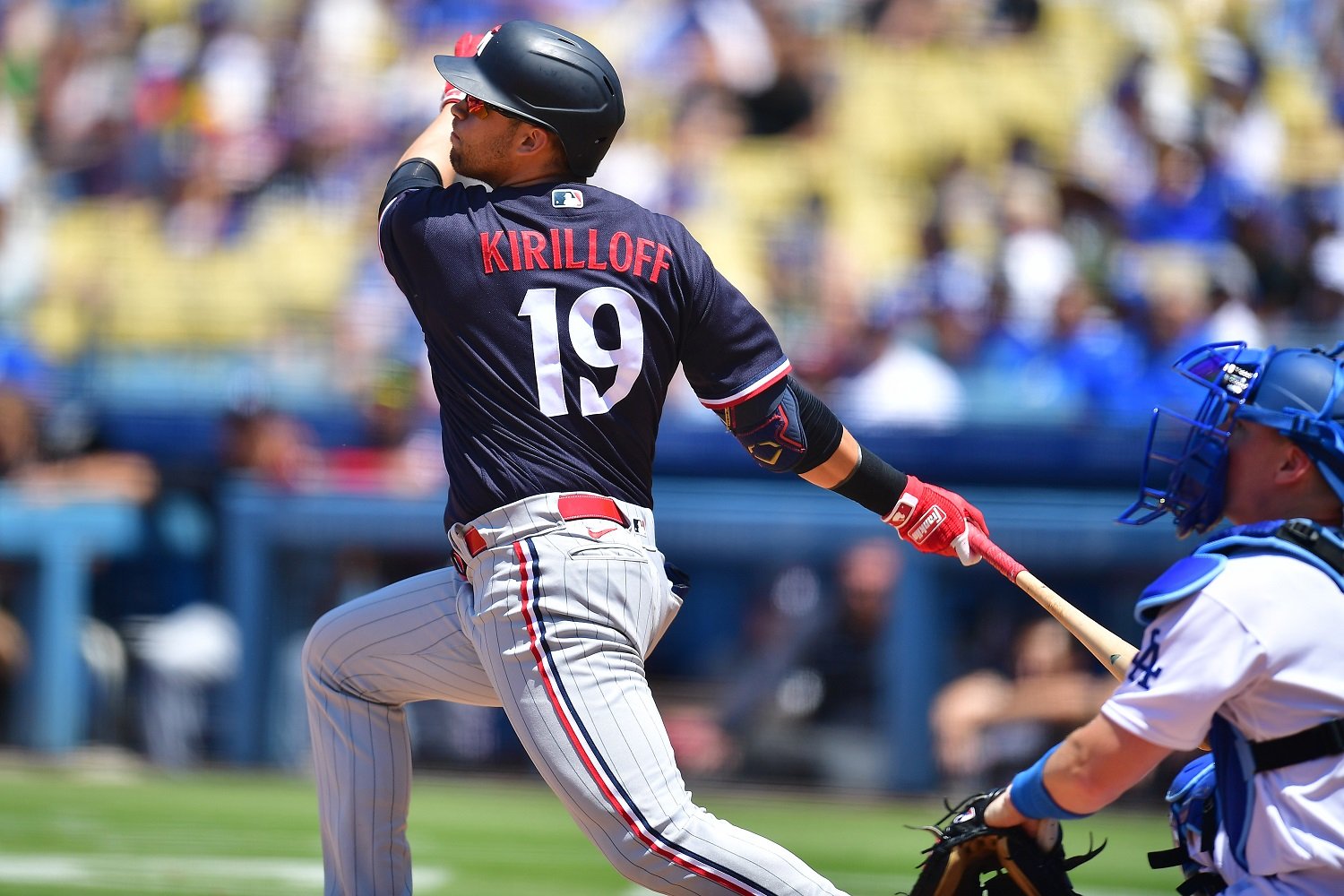 If a Twins fan were granted three Twins-centric wishes that would come true for the 2023 Major League season, wish number one would be to end the 18-game playoff losing streak that has plagued this franchise for 19 years, wish number two would be that the Twins win their third World Series, and wish number three would be that the Twins organization and fans alike would finally get to see Alex Kirilloff and Royce Lewis play out the rest of the season with an outstanding bill of health. In reality, wishes number one and two look very suspect right now, but wish number three appears to be on track to happen, which is a blessing in itself. Whether it be Lewis tearing his ACL twice in two years or Kirilloff undergoing wrist surgeries in consecutive seasons, these once highly touted Twins prospects have endured immense physical and emotional hurdles that they have been able to power through every single time. Lewis has solidified himself as the everyday third baseman for at least the rest of the season. In contrast, Kirilloff has solidified himself as an almost-every-game starter who plays either left field, right field, designated hitter, or his best defensive position, first base, during any given game. Lewis and Kirilloff are finally able to showcase the talents that had them both ranked as unanimous Top 50 prospects in Major League Baseball. Although Lewis and Kirilloff contribute to the Twins on a near-every-game basis, their situations differ. Lewis is in the starting lineup whether the starting pitcher throws left or right-handed. Kirilloff, on the other hand, is not. The Twins love to deploy platoon lineups as well as utilize in-game substitutions to get what is perceived to be the upper hand in every situation, even if the advantage is incremental. One of the more controversial ways the Twins deploy a platoon is by benching Kirilloff when they face left-handed starting pitchers and pinch-hitting for him whenever a left-handed reliever comes out of the opposing team's bullpen. Some platoon players are performing well, as right-handed hitting specialist Donovan Solano is hitting .321/.357/.472 (.829) with 17 hits, three walks, and eight strikeouts in 56 plate appearances against left-handed pitching and left-handed hitting specialist Edouard Julien is hitting .279/.383/.544 (.927) with 19 hits, 11 walks, and 27 strikeouts in 82 plate appearances, but most are underperforming their career-split numbers. For example, utility player Kyle Farmer, who has a career OPS of .829 versus left-handed pitching, has generated an OPS of just .730 versus left-handed pitching this year, a 99-point drop. Also, outfielder Trevor Larnach, who the Twins organization and fans alike had hoped would develop into a hitter that would hit right-handed pitching at an above average level, has only been able to muster an OPS of .728 this season, which is on par with his career OPS versus right-handed pitching of .726. With hitters who the Twins assumed would be effective platoon players struggling to thrive against the type of pitching handedness they were supposed to, one must ask themselves, should they stop benching one of their best hitters in Kirilloff every time they face a left-handed pitcher? First, to add some context, it appears that the Twins are using games when they face a left-handed starting pitcher as a subsequent "off day" for Kirilloff so he doesn't put too much strain on his twice surgically repaired right wrist. Although this practice makes sense in a vacuum, why does Kirilloff often get pinch-hit whenever a left-handed reliever comes in? Let's take a look. Through his first 125 plate appearances, Kirilloff is hitting .288/.408/.442 (.850) with a wRC+ of 144 and an fWAR of 0.6, which ranks tied for sixth on the team for position players just behind Taylor (1.2 fWAR), Buxton (0.9 fWAR), Jeffers (0.8 fWAR), Castro (0.7 fWAR), and Farmer (0.7 fWAR). Within those 125 plate appearances, Kirilloff has faced a right-handed pitcher for 113 and a left-handed pitcher for 16. In the 113 plate appearances against a right-handed pitcher, Kirilloff is hitting .301/.425/.441 (.866) with 28 hits, two of them being home runs, 18 walks, and 27 strikeouts. In the 16 plate appearances against left-handed pitchers, Kirilloff is hitting .154/.313/.385 (.698) with two hits, one of them being a home run, one walk, and three strikeouts. Although 16 plate appearances is a minor enough sample size to the point where making any absolute judgments could be viewed as ignorant, it is hard not to notice the considerable discrepancy that is present. Kirilloff is a much better hitter against right-handed pitchers. Still, subtracting the player who is arguably the most consistent and overall best hitter from your lineup whenever a left-handed pitcher is set to start or come in for relief is hard to justify. The Twins have notoriously long leashes with some players (i.e., Max Kepler and Emilio Pagán) to the point where one starts to ponder if that metaphorical leash even exists. At the same time, the Twins have irrationally short leashes with other players, specifically younger players Edouard Julien, Alex Kirilloff, and, most recently, Royce Lewis. This phenomenon has been played out twice in grand fashion. First, during a game against the San Francisco Giants on May 11th, when manager Rocco Baldelli decided to pinch-hit right-handed hitting Solano for the left-handed hitting Julien in the bottom of the second inning and right-handed hitting Garlick for left-handed hitting Kirilloff in the bottom of the third, and second on June 13th when Baldelli decided to pinch hit the left-handed hitting Kepler for the right-handed hitting Lewis in the bottom of the ninth against Brewers and star closer Devin Williams. Baldelli and the Twins front office's decision was justifiably instantly critiqued by Twins fans and reporters alike. These moves illustrated that the Twins highly value the marginal advantage platooning gives teams to what could be seen as a stubborn extent and that the Twins don't trust their young prospects to perform against same-handedness pitchers. This philosophy feels like a failure, and the Twins should look into reanalyzing their approach to handling platooning as it pertains to young talented prospects who many see as future career franchise cornerstones. Julien, Lewis, and Kirilloff should be trusted to perform against same-handed pitching, and if given an adequate opportunity, they more likely than not will. Correa and Buxton are immune to platooning. They are in the lineup whether the Twins face a left-handed or right-handed starting pitcher, and they don't get pinch-hit for if a same-handed relief pitcher comes in to face them. It is time to start thinking about doing the same with Julien, Lewis, and, most notably, Kirilloff. Should the Twins stop benching Kirilloff when they face left-handed pitching? What do you think of the Twins philosophy on platooning?
-
Twins Should Extend Tyler Mahle
Cody Schoenmann replied to Cody Schoenmann's topic in Twins Daily Front Page News
I do like the idea of giving Mahle an incentive-laden deal that includes a third year! Although it may benefit Mahle to accept an extension offer with longer term (i.e., three or four years), I don't know if he, his agent, or the Twins would be inclined to do so as it would limit Mahle's earning potential and it would lock the Twins in with a pitcher who is recovering from Tommy John Surgery and has had chronic shoulder issues to a long term deal. Personally, I think a short-term two year deal would be ideal for both sides, and I think that is the route both parties would prefer to go down. Also, if Mahle hypothetically performs well and stays healthy in 2025, the Twins could offer him the Qualifying Offer in 2026. -
Twins Should Extend Tyler Mahle
Cody Schoenmann replied to Cody Schoenmann's topic in Twins Daily Front Page News
For me, I don't think it would be smart for the Twins to put that much trust in Paddack and Varland. Paddack has had Tommy John Surgery twice, so we don't know if he is going to be able to maintain the velocity and movement that he possessed before his second surgery and Varland is still an unknown commodity who has struggled during his past two starts against the Rays and Blue Jays while sporting a HR/FB rate of 21.6%, which is very concerning. López, Ryan, and Ober are relatively known commodities who will be mainstays in the Twins rotation for a long time, but I don't think the Twins have much guaranteed beyond those three. It appears Gray is likely going to leave after this season, Varland has a HR issue, and once promising prospect Simeon Woods Richardson is struggling mightily in Triple-A. Extending Mahle gives the Twins, at the very least, another fall-back option who has shown that he can be a top of the rotation starting pitcher when healthy. -
Twins Should Extend Tyler Mahle
Cody Schoenmann replied to Cody Schoenmann's topic in Twins Daily Front Page News
I agree with everything you wrote and I appreciate your insight. I didn't mention Paddack's situation in my article, which I probably should have, so thank you for adding that context. Paddack and Mahle's situations are very different, and Mahle, as you wrote, not only has made more money than Paddack during his playing but has also performed at a higher level. Mahle will for sure cost more money than Paddack and even Pineda, but I think it is worth the risk. -
Twins Should Extend Tyler Mahle
Cody Schoenmann replied to Cody Schoenmann's topic in Twins Daily Front Page News
I would love if the Twins were able to sign Mahle to a, as you proposed, four year $25 million or two years $12 million contract, but I don't think either of those are realistic. Hypothetically, if Mahle pitched the rest of this season healthy and stayed on the trajectory he was on, he would have been given a four or five year deal north of $20 million per year this off-season. Also, the Twins would have more likely than not offered Mahle the Qualifying Offer, which is valued at $19.65 million. Mahle and his agent will take a discount for 2024, as he will be recovering, but I don't think it will be for less than five million dollars, and he for sure won't accept an extremely discounted offer for 2025, as he and his agent plan on him being healthy for that season. Extending Mahle would be an expensive gamble, but I think it is an expensive gamble that would be worth it. -
Although the Tyler Mahle trade has been deemed a failure, the Twins shouldn't cut the cord just yet. Image courtesy of Nick Wosika-USA TODAY Sports Although the Tyler Mahle trade has been deemed a failure, the Twins shouldn't cut the cord just yet. On August 2, 2022, the Minnesota Twins traded Spencer Steer (7th-ranked prospect), Christian Encarnacion-Strand (23rd-ranked prospect), and Steve Hajjar (18th-ranked prospect) to the Cincinnati Reds for starting pitcher Tyler Mahle. At the time, fans and analysts almost unanimously viewed the trade as a win for the Twins. Ten months later, the trade is considered one of the worst in Twins history. Steer has become an everyday utility player for the Reds, hitting .286/.365/.482 (.861) and a wRC+ of 124. Steer also sports an fWAR of 0.8 which is higher than every Twins position player not named Ryan Jeffers (1.0 fWAR), Michael A. Taylor (1.0 fWAR), Byron Buxton (0.9 fWAR), Willi Castro (0.8 fWAR), or Alex Kirilloff (0.8 fWAR). As he did in the Twins system last year, Encarnacion-Strand has skyrocketed through the Cincinnati Reds minor league system and is hitting .353/.413/.706 (1.11) with a wRC+ of 172 with the Triple-A Louisville Bats, and Hajjar has since been traded to the Cleveland Guardians as part of the Will Benson trade between the Reds and Guardians on March 25. Meanwhile, Mahle started nine games and pitched 42.0 innings before the Twins announced that Mahle would need to undergo Tommy John surgery on May 11. The Twins lost this trade. There is no more room for interpretation. Steer has been incredible, Encarnacion-Strand looks like he will be incredible, and Twins fans will inevitably be upset when Hajjar throws seven scoreless innings against the Twins while pitching for the Guardians in 2026. Although the Twins gave away three talented prospects that fans will have to watch perform well for other teams for what could be the next decade, those who follow the Twins shouldn't be too upset with the organization as the process the front office took in trading for Mahle was sound and the right move at the time, as the Twins were in first place and contending for a division title, it just happened not to work out. That said, the Twins should not be done with Mahle just yet. Instead, they should extend him to a multiyear contract. It may seem like I am falling victim to the sunk-cost fallacy, but Mahle is an above-average pitcher that the Twins should look to sign while his perceived value is relatively low. Through nine games with the Twins, Mahle has achieved a 3.64 ERA, 1.05 WHIP, and 4.73 FIP while giving up nine walks, 35 hits, and 40 strikeouts. When looking at Mahle's performance as a Twin, the number that catches one's eye is his elite WHIP of just 1.05. Mahle is elite when it comes to limiting baserunners, which is a skill that every franchise values highly. Mahle throws an above-average slider and splitter to confuse both left and right-handed batters, but what makes Mahle truly special is his elite fastball. Mahle, who stands at six-foot-three, pointedly bends his knee at the end of his wind-up, creating a rising effect on his fastball, similar to fellow Twins pitcher Joe Ryan and Cleveland Guardians pitcher Triston McKenzie. Mahle's ability to generate what is essentially a "rising fastball," which is an optical illusion in itself, is evidenced by Mahle's 80th-percentile extension rate and 76th-percentile Fastball Spin rate. Mahle's elite fastball, which sits around 93-94 MPH, led to him generating a K% of 27.5% and a BB% of just 4.9%, both elite numbers on each end of the spectrum. Mahle, like any pitcher, is not perfect. Mahle is a fly-ball pitcher, and although this archetype tends to work well while pitching most of one’s games at Target Field, it does mean that Mahle is prone to giving up home runs, especially on the road, which was evidenced during his start against the Yankees on April 15, when he gave up two home runs through only 4.1 innings pitched. Although Mahle occasionally struggles with home runs, he is an above-average pitcher who, if given more opportunities while healthy, would greatly benefit from throwing most of his starts at Target Field, where Ballpark Pal currently ranks as the tenth hardest ballpark to hit home runs. What would Mahle's contract extension look like? Although signing a pitcher who recently underwent Tommy John surgery feels like something that would be complicated to work through, this iteration of the Twins front office has done this more than once. In December 2017, the Twins signed Michael Pineda, who had undergone Tommy John surgery in July of that year, to a two-year, $10 million contract that paid him $2 million while he recovered during the 2018 season and eight million dollars during what was expected to be Pineda's first full year back from surgery. Also, the Twins recently signed Chris Paddack, who underwent Tommy John surgery in May 2022, to a three-year, $12 million contract on January 14, 2023. Using Pineda and Paddack's contract as reference points, it would be fair to assume that Mahle's hypothetical contract would be in a similar ballpark. Mahle is a better pitcher than Pineda and Paddack were when they signed their respective contracts, so it is fair to assume that Mahle would require more of an investment if the Twins wanted to extend him. To predict, Mahle would likely request a contract somewhere in the two-year $20 million range that would pay him five million dollars to recover with the Twins in 2024 and then $15 million to pitch in what would hopefully be his first completely healthy season since his surgery in 2025. Evidently, the Twins find value in signing or extending high-variance starting pitchers whose value is low since they recently underwent Tommy John surgery. Many fans will label this as the Twins shopping in the "bargain section" for pitchers, but, on the flip side, this process could be seen as a savvy process in accruing low-cost pitching talent, especially when it comes to an above-average pitcher like Mahle. Should the Twins extend Mahle? What do you think Mahle's contract would look like? View full article
-
 On August 2, 2022, the Minnesota Twins traded Spencer Steer (7th-ranked prospect), Christian Encarnacion-Strand (23rd-ranked prospect), and Steve Hajjar (18th-ranked prospect) to the Cincinnati Reds for starting pitcher Tyler Mahle. At the time, fans and analysts almost unanimously viewed the trade as a win for the Twins. Ten months later, the trade is considered one of the worst in Twins history. Steer has become an everyday utility player for the Reds, hitting .286/.365/.482 (.861) and a wRC+ of 124. Steer also sports an fWAR of 0.8 which is higher than every Twins position player not named Ryan Jeffers (1.0 fWAR), Michael A. Taylor (1.0 fWAR), Byron Buxton (0.9 fWAR), Willi Castro (0.8 fWAR), or Alex Kirilloff (0.8 fWAR). As he did in the Twins system last year, Encarnacion-Strand has skyrocketed through the Cincinnati Reds minor league system and is hitting .353/.413/.706 (1.11) with a wRC+ of 172 with the Triple-A Louisville Bats, and Hajjar has since been traded to the Cleveland Guardians as part of the Will Benson trade between the Reds and Guardians on March 25. Meanwhile, Mahle started nine games and pitched 42.0 innings before the Twins announced that Mahle would need to undergo Tommy John surgery on May 11. The Twins lost this trade. There is no more room for interpretation. Steer has been incredible, Encarnacion-Strand looks like he will be incredible, and Twins fans will inevitably be upset when Hajjar throws seven scoreless innings against the Twins while pitching for the Guardians in 2026. Although the Twins gave away three talented prospects that fans will have to watch perform well for other teams for what could be the next decade, those who follow the Twins shouldn't be too upset with the organization as the process the front office took in trading for Mahle was sound and the right move at the time, as the Twins were in first place and contending for a division title, it just happened not to work out. That said, the Twins should not be done with Mahle just yet. Instead, they should extend him to a multiyear contract. It may seem like I am falling victim to the sunk-cost fallacy, but Mahle is an above-average pitcher that the Twins should look to sign while his perceived value is relatively low. Through nine games with the Twins, Mahle has achieved a 3.64 ERA, 1.05 WHIP, and 4.73 FIP while giving up nine walks, 35 hits, and 40 strikeouts. When looking at Mahle's performance as a Twin, the number that catches one's eye is his elite WHIP of just 1.05. Mahle is elite when it comes to limiting baserunners, which is a skill that every franchise values highly. Mahle throws an above-average slider and splitter to confuse both left and right-handed batters, but what makes Mahle truly special is his elite fastball. Mahle, who stands at six-foot-three, pointedly bends his knee at the end of his wind-up, creating a rising effect on his fastball, similar to fellow Twins pitcher Joe Ryan and Cleveland Guardians pitcher Triston McKenzie. Mahle's ability to generate what is essentially a "rising fastball," which is an optical illusion in itself, is evidenced by Mahle's 80th-percentile extension rate and 76th-percentile Fastball Spin rate. Mahle's elite fastball, which sits around 93-94 MPH, led to him generating a K% of 27.5% and a BB% of just 4.9%, both elite numbers on each end of the spectrum. Mahle, like any pitcher, is not perfect. Mahle is a fly-ball pitcher, and although this archetype tends to work well while pitching most of one’s games at Target Field, it does mean that Mahle is prone to giving up home runs, especially on the road, which was evidenced during his start against the Yankees on April 15, when he gave up two home runs through only 4.1 innings pitched. Although Mahle occasionally struggles with home runs, he is an above-average pitcher who, if given more opportunities while healthy, would greatly benefit from throwing most of his starts at Target Field, where Ballpark Pal currently ranks as the tenth hardest ballpark to hit home runs. What would Mahle's contract extension look like? Although signing a pitcher who recently underwent Tommy John surgery feels like something that would be complicated to work through, this iteration of the Twins front office has done this more than once. In December 2017, the Twins signed Michael Pineda, who had undergone Tommy John surgery in July of that year, to a two-year, $10 million contract that paid him $2 million while he recovered during the 2018 season and eight million dollars during what was expected to be Pineda's first full year back from surgery. Also, the Twins recently signed Chris Paddack, who underwent Tommy John surgery in May 2022, to a three-year, $12 million contract on January 14, 2023. Using Pineda and Paddack's contract as reference points, it would be fair to assume that Mahle's hypothetical contract would be in a similar ballpark. Mahle is a better pitcher than Pineda and Paddack were when they signed their respective contracts, so it is fair to assume that Mahle would require more of an investment if the Twins wanted to extend him. To predict, Mahle would likely request a contract somewhere in the two-year $20 million range that would pay him five million dollars to recover with the Twins in 2024 and then $15 million to pitch in what would hopefully be his first completely healthy season since his surgery in 2025. Evidently, the Twins find value in signing or extending high-variance starting pitchers whose value is low since they recently underwent Tommy John surgery. Many fans will label this as the Twins shopping in the "bargain section" for pitchers, but, on the flip side, this process could be seen as a savvy process in accruing low-cost pitching talent, especially when it comes to an above-average pitcher like Mahle. Should the Twins extend Mahle? What do you think Mahle's contract would look like?
-
Seven Pitchers Who Can Still Help the Twins
Cody Schoenmann replied to Cody Schoenmann's topic in Twins Daily Front Page News
I agree that if, say, Aaron Sanchez pitches for the Twins this year, then something will have gone wrong, but I think Headrick (for the second time), Balazovic, and Henriquez will inevitably pitch for the Twins this season. -
Seven Pitchers Who Can Still Help the Twins
Cody Schoenmann replied to Cody Schoenmann's topic in Twins Daily Front Page News
Initially I had Dobnak on this list, but after really delving into how he has performed this year with the Triple-A St. Paul Saints and seeing that he has consistently struggled, I came to the conclusion that there’s really no path for Dobnak to pitch for the Twins this year. Not only is he below the seven pitchers I listed, but I think he is below Ortega, Funderburk, Murphy, Schulfer, and maybe even Enlow and Festa as well. -
Seven Pitchers Who Can Still Help the Twins
Cody Schoenmann replied to Cody Schoenmann's topic in Twins Daily Front Page News
I like Murphy, but I'm skeptical on if we will see him make an appearance for the Twins this season. I think Murphy is in the same spot as Saints pitchers Kody Funderburk, Cody Laweryson, and Austin Schulfer. They could get called up by the Twins, but that likely means a multitude of injuries have occurred or multiple relievers have not performed well, which are situations that want to be avoided at all costs. -
Seven Pitchers Who Can Still Help the Twins
Cody Schoenmann replied to Cody Schoenmann's topic in Twins Daily Front Page News
I think Ortega will pitch for the Twins this year. I put Sadzeck above Ortega only because Sadzeck has the ability to be a long and short reliever while Ortega only has the ability to be a short reliever. Hypothetically, if I were expand my list I would have Ortega at #8. -
Seven Pitchers Who Can Still Help the Twins
Cody Schoenmann replied to Cody Schoenmann's topic in Twins Daily Front Page News
I like your inclusion of Enlow! If he was with the Saints right now I probably would have placed him above Sadzeck and possibly Sanchez, but with Enlow recently being DFA'd and in Double-A Wichita I think he is still below Sadzeck and Sanchez on the totem pole. Another Double-A pitcher I am intrigued by is David Festa. Festa has struggled so far at Double-A, and I don't think he will contribute for the Twins this season, but if he improves I could see Festa getting promoted to the Triple-A St. Paul Saints before the end of the minor league season. -
 According to Fangraphs, the Twins have had the best starting rotation in baseball and the seventeenth-best bullpen, which, if you combine the two, means the Twins have had the third-best pitching staff in baseball, just behind the Seattle Mariners and Houston Astros. Although the Twins have been fortunate enough to rely on star pitchers like starting pitchers Sonny Gray and Joe Ryan and reliever Jhoan Duran, their ability to fill out their staff with complimentary pieces has been just as, if not more, important. As the season continues, the Twins depth will continue to get tested as pitchers getting injured is one of the few inevitabilities of baseball. Luckily, the Twins have an abundance of options across the Mississippi River with the Triple-A St. Paul Saints. Let's examine how the options rank for the rest of the season: #7. RHP Connor Sadzeck - St. Paul Saints - 18 G, 3.91 ERA, 1.58 WHIP, 25.1 IP, 21 H, 18 BB, 30 K Although Sadzeck could take on a long relief role as he has started two games for the Triple-A St. Paul Saints and has made starts at the Major League level, his pitching repertoire, highlighted by a sinker that sits at 95-96 MPH, likely plays best in a short relief role. The Twins have been able to find success with veteran relievers signed to minor league contracts in the form of Brock Stewart and José De León. Sadzeck, if given the opportunity, could be next. #6. RHP Aaron Sanchez - St. Paul Saints - 11 G, 3.72 ERA, 1.59 WHIP, 46.0 IP, 43 H, 30 BB, 16 K The one-time pitching phenom for the Toronto Blue Jays, who was wrongfully sent down to Single-A during his breakout 2016 all-star season, Aaron Sanchez, has spent the better part of the last two seasons with the Twins organization. Sanchez was serviceable in the handful of games he started last year for the Twins and could start a game or games this year if injuries pile up. Sanchez could take on a long relief role, but he likely profiles better as a spot starter. #5. RHP Josh Winder - St. Paul Saints - 14 G, 5.63 ERA, 1.71 WHIP, 24.0 IP, 26 H, 15 BB, 26 K During his rookie season in 2022, Winder showed flashes of the potential that led to him playing in the 2021 MLB All-star futures game, but his fastball played much worse than many expected it to, plus he battled a shoulder impingement throughout the entirety of the season and is now working primarily as a reliever. He struggled in a lone appearance earlier this season with the Twins, and hasn't been much better with the Triple-A St. Paul Saints. He appears to have fallen in the pecking order. #4. RHP Simeon Woods Richardson - St. Paul Saints - 9 G, 7.38 ERA, 1.85 WHIP, 39.0 IP, 50 H, 22 BB, 33 K Regarding struggles, Simeon Woods Richardson's 2023 campaign has not been kind. Although excelling through Double-A and Triple-A and making his first Major League start during the 2022 season, Woods Richardson has yet to mimic that performance. Looking at Eno Sarris' Triple-A pitching report, Woods Richardson ranks as the 27th-best pitcher at the Triple-A level with a Stuff+ of 102.7, Location+ of 98, and a Pitching+ of 97 through 631 pitches in eight appearances. When looking at advanced metrics, Woods Richardson seems to have stuff that will work at the Major League level, but it is hard to have faith in any right-handed pitcher who can only touch 90-91 MPH with their fastball. Woods Richardson might get another chance at long relief with the Twins this season, as he is on the 40-man roster and still has potential. Still, if he ever wants to join the rotation mix, like one-time prospect Louie Varland successfully has, Woods Richardson will have to add velocity to his fastball. Luckily, Woods Richardson is 22 years old, so making strides in certain parts of his game is still a reasonable possibility. #3. Ronny Henriquez - St. Paul Saints - 10 G, 5.82 ERA, 1.82 WHIP, 17.0 IP, 20 H, 11 BB, 14 K Henriquez entered Spring Training this year with hopes of competing with Trevor Megill, Danny Coulombe, Cole Sands, and others for the last bullpen spot. Unfortunately, Henriquez was placed on the 15-day IL on March 30th with right posterior elbow soreness and couldn't pitch during Spring Training. But on May 12th, Henriquez was activated from the 15-day IL and was sent to the Triple-A St. Paul Saints. Since joining the Saints, Henriquez has struggled. Although Henriquez sports a slightly above-average K% of 21.2%, he possesses a below-average BB% of 8.0%, resulting in him giving up far too many base runners. Henriquez's slider and changeup are his best pitches but don't dismiss his fastball that sits around 96-97 MPH. Although Henriquez came up through the minors as a starter for the Texas Rangers organization, his stuff likely plays better as a short relief pitcher. More likely than not, Henriquez will appear for the Twins later this season; whether it be as a short or long reliever is yet to be decided. #2. Jordan Balazovic - St. Paul Saints - 11 G, 4.45 ERA, 1.41 WHIP, 28.1 IP, 26 H, 14 BB, 33 K Once ranked the 97th overall prospect in Major League Baseball by MLB.com's Jonathan Mayo in 2021, Jordan Balazovic has, to put it lightly, fallen from grace. During his 2022 campaign, Balazovic looked below replacement level while pitching himself to a 7.39 ERA, 1.93 WHIP, and a 6.61 FIP while giving up 102 hits and 35 walks to 76 strikeouts. Balazovic also sported a 29.0% home-run-to-fly-ball (HR/FB) ratio, which is beyond awful. I don't enjoy writing such negative things about Balazovic as I have been a big fan of his for quite some time now, but his 2022 campaign was objectively uninspiring. Fortunately, Balazovic has appeared to have turned the corner. During his 2023 campaign, Balazovic has been able to cut all of his metrics in half and, most notably, is sporting a HR/FB ratio of 13.3%, which is still less than ideal but much, much better than 29.0%. I think 2023 will be the year Twins fans finally get to see Balazovic pitch in a Twins uniform. I still think he has starter potential, but if he makes it to the Major Leagues this year, it will be as a long reliever. #1. Brent Headrick - St. Paul Saints - 8 G, 4.54 ERA, 1.41 WHIP, 37.2 IP, 43 H, 10 BB, 48 K While making his Twins debut against the Boston Red Sox on April 19th, Headrick impressed the Twins organization and fans. Through three innings pitched, Headrick gave up one hit and two walks while striking out three and earning his first career save. Headrick's subsequent two appearances versus the Washington Nationals and New York Yankees, respectively, were just as impressive as Headrick was able to limit runners while also suppressing runs and opportunities for hitters. Through 8.1 innings pitched with the Twins, Headrick pitched himself to a 3.24 ERA, 0.96 WHIP, four hits, four walks, and twelve strikeouts. Headrick sports an impressive K% of 36.4% and BB% of 12.1%. Headrick, while with the Twins, used his fastball over 52% of th+e time, while using his slider roughly 42% of the time, and his changeup just 5.3%. Headrick has excellent command over the zone, so he is currently next in line to make a start if one of the five starting pitchers gets injured or needs to sit for a start. At the moment, Headrick is the Twins’ best option at the Triple-A level. As such, Headrick will likely make another appearance for the Twins this year; whether it be as a spot starter or as the long reliever is yet to be seen. With the front office prioritizing adding and retaining pitching depth this off-season, the Twins have an abundance of serviceable veteran and prospect arms that could come up and adequately fill in for the rotation or bullpen if need be. Which pitcher intrigues you the most? What roles do you think fit best?
-
St. Paul still has some arms that could impact the Twins this year. Image courtesy of © Nathan Ray Seebeck-USA TODAY Sports St. Paul still has some arms that could impact the Twins this year. According to Fangraphs, the Twins have had the best starting rotation in baseball and the seventeenth-best bullpen, which, if you combine the two, means the Twins have had the third-best pitching staff in baseball, just behind the Seattle Mariners and Houston Astros. Although the Twins have been fortunate enough to rely on star pitchers like starting pitchers Sonny Gray and Joe Ryan and reliever Jhoan Duran, their ability to fill out their staff with complimentary pieces has been just as, if not more, important. As the season continues, the Twins depth will continue to get tested as pitchers getting injured is one of the few inevitabilities of baseball. Luckily, the Twins have an abundance of options across the Mississippi River with the Triple-A St. Paul Saints. Let's examine how the options rank for the rest of the season: #7. RHP Connor Sadzeck - St. Paul Saints - 18 G, 3.91 ERA, 1.58 WHIP, 25.1 IP, 21 H, 18 BB, 30 K Although Sadzeck could take on a long relief role as he has started two games for the Triple-A St. Paul Saints and has made starts at the Major League level, his pitching repertoire, highlighted by a sinker that sits at 95-96 MPH, likely plays best in a short relief role. The Twins have been able to find success with veteran relievers signed to minor league contracts in the form of Brock Stewart and José De León. Sadzeck, if given the opportunity, could be next. #6. RHP Aaron Sanchez - St. Paul Saints - 11 G, 3.72 ERA, 1.59 WHIP, 46.0 IP, 43 H, 30 BB, 16 K The one-time pitching phenom for the Toronto Blue Jays, who was wrongfully sent down to Single-A during his breakout 2016 all-star season, Aaron Sanchez, has spent the better part of the last two seasons with the Twins organization. Sanchez was serviceable in the handful of games he started last year for the Twins and could start a game or games this year if injuries pile up. Sanchez could take on a long relief role, but he likely profiles better as a spot starter. #5. RHP Josh Winder - St. Paul Saints - 14 G, 5.63 ERA, 1.71 WHIP, 24.0 IP, 26 H, 15 BB, 26 K During his rookie season in 2022, Winder showed flashes of the potential that led to him playing in the 2021 MLB All-star futures game, but his fastball played much worse than many expected it to, plus he battled a shoulder impingement throughout the entirety of the season and is now working primarily as a reliever. He struggled in a lone appearance earlier this season with the Twins, and hasn't been much better with the Triple-A St. Paul Saints. He appears to have fallen in the pecking order. #4. RHP Simeon Woods Richardson - St. Paul Saints - 9 G, 7.38 ERA, 1.85 WHIP, 39.0 IP, 50 H, 22 BB, 33 K Regarding struggles, Simeon Woods Richardson's 2023 campaign has not been kind. Although excelling through Double-A and Triple-A and making his first Major League start during the 2022 season, Woods Richardson has yet to mimic that performance. Looking at Eno Sarris' Triple-A pitching report, Woods Richardson ranks as the 27th-best pitcher at the Triple-A level with a Stuff+ of 102.7, Location+ of 98, and a Pitching+ of 97 through 631 pitches in eight appearances. When looking at advanced metrics, Woods Richardson seems to have stuff that will work at the Major League level, but it is hard to have faith in any right-handed pitcher who can only touch 90-91 MPH with their fastball. Woods Richardson might get another chance at long relief with the Twins this season, as he is on the 40-man roster and still has potential. Still, if he ever wants to join the rotation mix, like one-time prospect Louie Varland successfully has, Woods Richardson will have to add velocity to his fastball. Luckily, Woods Richardson is 22 years old, so making strides in certain parts of his game is still a reasonable possibility. #3. Ronny Henriquez - St. Paul Saints - 10 G, 5.82 ERA, 1.82 WHIP, 17.0 IP, 20 H, 11 BB, 14 K Henriquez entered Spring Training this year with hopes of competing with Trevor Megill, Danny Coulombe, Cole Sands, and others for the last bullpen spot. Unfortunately, Henriquez was placed on the 15-day IL on March 30th with right posterior elbow soreness and couldn't pitch during Spring Training. But on May 12th, Henriquez was activated from the 15-day IL and was sent to the Triple-A St. Paul Saints. Since joining the Saints, Henriquez has struggled. Although Henriquez sports a slightly above-average K% of 21.2%, he possesses a below-average BB% of 8.0%, resulting in him giving up far too many base runners. Henriquez's slider and changeup are his best pitches but don't dismiss his fastball that sits around 96-97 MPH. Although Henriquez came up through the minors as a starter for the Texas Rangers organization, his stuff likely plays better as a short relief pitcher. More likely than not, Henriquez will appear for the Twins later this season; whether it be as a short or long reliever is yet to be decided. #2. Jordan Balazovic - St. Paul Saints - 11 G, 4.45 ERA, 1.41 WHIP, 28.1 IP, 26 H, 14 BB, 33 K Once ranked the 97th overall prospect in Major League Baseball by MLB.com's Jonathan Mayo in 2021, Jordan Balazovic has, to put it lightly, fallen from grace. During his 2022 campaign, Balazovic looked below replacement level while pitching himself to a 7.39 ERA, 1.93 WHIP, and a 6.61 FIP while giving up 102 hits and 35 walks to 76 strikeouts. Balazovic also sported a 29.0% home-run-to-fly-ball (HR/FB) ratio, which is beyond awful. I don't enjoy writing such negative things about Balazovic as I have been a big fan of his for quite some time now, but his 2022 campaign was objectively uninspiring. Fortunately, Balazovic has appeared to have turned the corner. During his 2023 campaign, Balazovic has been able to cut all of his metrics in half and, most notably, is sporting a HR/FB ratio of 13.3%, which is still less than ideal but much, much better than 29.0%. I think 2023 will be the year Twins fans finally get to see Balazovic pitch in a Twins uniform. I still think he has starter potential, but if he makes it to the Major Leagues this year, it will be as a long reliever. #1. Brent Headrick - St. Paul Saints - 8 G, 4.54 ERA, 1.41 WHIP, 37.2 IP, 43 H, 10 BB, 48 K While making his Twins debut against the Boston Red Sox on April 19th, Headrick impressed the Twins organization and fans. Through three innings pitched, Headrick gave up one hit and two walks while striking out three and earning his first career save. Headrick's subsequent two appearances versus the Washington Nationals and New York Yankees, respectively, were just as impressive as Headrick was able to limit runners while also suppressing runs and opportunities for hitters. Through 8.1 innings pitched with the Twins, Headrick pitched himself to a 3.24 ERA, 0.96 WHIP, four hits, four walks, and twelve strikeouts. Headrick sports an impressive K% of 36.4% and BB% of 12.1%. Headrick, while with the Twins, used his fastball over 52% of th+e time, while using his slider roughly 42% of the time, and his changeup just 5.3%. Headrick has excellent command over the zone, so he is currently next in line to make a start if one of the five starting pitchers gets injured or needs to sit for a start. At the moment, Headrick is the Twins’ best option at the Triple-A level. As such, Headrick will likely make another appearance for the Twins this year; whether it be as a spot starter or as the long reliever is yet to be seen. With the front office prioritizing adding and retaining pitching depth this off-season, the Twins have an abundance of serviceable veteran and prospect arms that could come up and adequately fill in for the rotation or bullpen if need be. Which pitcher intrigues you the most? What roles do you think fit best? View full article
-
It really is the worst timing lol, he had such a great May. It's a right forearm strain too, which is always concerning. I hope he is able to pitch again soon.
- 10 replies
-
- 1
-

-
- john stankiewicz
- oliver ortega
- (and 3 more)
-
here is a really interesting article that goes in-depth on Dalatri's career and personal life: https://www.thegazette.com/minor-league-sports/gianluca-dalatri-determined-to-take-advantage-of-second-chance/
- 10 replies
-
- 1
-
-
- john stankiewicz
- oliver ortega
- (and 3 more)
-
I agree. I think Stankiewicz is due for a promotion to Double-A Wichita.
-
thank you!
-
Twins Minor League Relief Pitcher of the Month - May 2023
Cody Schoenmann posted an article in Minor Leagues
 Being a minor league relief pitcher is arguably the most peculiar position a professional baseball player could find themselves in. Typically, minor league pitchers find themselves as either being supplanted as starting pitchers who are working on their craft with hopes of making it to the big leagues, or they are in a complex transitional phase where they are being converted from starters to relievers, as being a reliever gives them a more straightforward path to contributing to their respective Major League club. Very few are just relief pitchers. Some on this list fit the mold of a pure relief pitcher, and some fit the mold of a former starter transitioning into a relief role with hopes of making the Major League club. To begin, let's take a look at the honorable mentions. RHP Austin Schulfer - St. Paul Saints - 8 G, 2.53 ERA, 1.41 WHIP, 10.2 IP, 8 H, 7 BB, 8 K RHP Regi Grace - Cedar Rapids Kernels - 8 G, 2.00 ERA, 1.11 WHIP, 9.0 IP, 8 H, 2 BB, 10 K RHP Patrick Murphy - St. Paul Saints - 9 G, 0.69 ERA, 1.46 WHIP, 13.0 IP, 7 H, 12 BB, 13 K Top Five Relief Pitchers for May 2023: #5. LHP Zach Veen - Fort Myers Mighty Mussels - 7 G, 0.00 ERA, 1.30 WHIP, 10.0 IP, 11 H, 2 BB, 10 K We start the Top Five list with the homonymic adjacent named relief pitcher of prized Colorado Rockies prospect Zac Veen. Despite not being the #30 ranked prospect on MLB.com like his homonymic doppelganger Zac, Veen, in his second year of professional baseball, has impressed enough that a Major League baseball career just might be in his future. Through seven appearances in May, Veen pitched himself to a perfect ERA of 0.00, a WHIP of 1.30, and, as he did in April, the same amount of strikeouts as the number of innings pitched with ten. Veen has dominated at the Low-A level as a top reliever for the Mighty Mussels throughout the first two months of the minor-league season, and that is why he has made the Top 5 Twins Minor League Reliever of the Month list in back-to-back months. #4. LHP Kody Funderburk - St. Paul Saints - 9 G, 3.86 ERA, 1.37 WHIP, 11.2 IP, 12 H, 4 BB, 18 K Speaking of homonyms, number four on this list comes in the form of Kody Funderburk. Despite having same-sounding first names, our German last names couldn't be much different if they tried. Funderburk translates to "the dweller near a rocky mountain, or beside the bank of a river," while my last name, Schoenmann, translates to "beautiful man." Although Funderburk's ancestors spent time dwelling by a river, while mine spent time looking beautiful, our situations are much different nowadays. Kody spends his time pitching for the Triple-A St. Paul Saints, while I last played organized baseball when I graduated high school in 2018. Also, Kody is much more handsome than I am. To discuss Funderburk's pitching, the first number that pops out is that he has 18 strikeouts through 11 2/3 innings pitched. If Caleb Theilbar's return to the Twins weren't imminent, it wouldn't be beyond rational to think that Funderburk could be a contributing left-handed bullpen arm for the Twins at this very moment. Funderburk needs to lower his walk and hit rates if he wants to pitch for the Twins this season. 3. RHP Gianluca Dalatri - Cedar Rapids Kernels - 6 G, 1.17 ERA, 0.78 WHIP, 7.2 IP, 3 H, 3 BB, 7 K Gianluca Dalatri's unique professional baseball career has made its way to the Twins organization after signing a minor-league contract on May 4th. Dalatri was drafted by the Detroit Tigers in the 40th round of the 2019 draft out of the University of North Carolina-Chapel Hill. Dalatri never appeared for the Tigers organization and instead started his professional career with the Palm Beach Cardinals of the St. Louis Cardinals organization in 2021. Dalatri stayed with the Cardinals organization through 2022 and got as high as Double-A before being released by the Cardinals at the beginning of the 2023 MLB season. On May 4th, Dalatri signed with the Minnesota Twins and was assigned to the High-A Cedar Rapids Kernels. Since joining the Kernels, Dalatri has done nothing but impress. Dalatri has used a three-pitch repertoire that contains a 94-95 MPH fastball, an 87-88 MPH cutter, and an 80-81 MPH slider to dominate Single-A hitting while generating a 0.78 WHIP and seven strikeouts in 7 2/3 innings pitched during May. It will be interesting to see if Dalatri can continue to impress and work his way up through the Twins organization. 2. RHP Oliver Ortega - St. Paul Saints - 8 G, 0.00 ERA, 0.97 WHIP, 10.1 IP, 6 H, 4 BB, 10 K Ortega, who the Twins claimed off of waivers from the Los Angeles Angels, a move that led to the recently breaking out Blayne Enlow getting designated for assignment, has impressed during his time with the Triple-A St. Paul Saints. On April 6th, Ortega was placed on the 7-day injured list with a right shoulder strain and couldn't return to game action until nearly a month later, on May 3rd. After missing a month, Ortega bounced back by putting up a 0.00 ERA, 0.97 WHIP, and ten strikeouts to four walks through 10 1/3 innings pitched. Ortega's pitching repertoire includes a fastball that tops out around 95-96 MPH and, according to Baseball Savant, was in the 84th percentile in fastball velocity and 64th percentile in fastball spin during his 2022 stint with the Angels, an 80-81 MPH curveball that challenges right-handed hitters, and a sinker and cutter that he uses to change pace and establish his fastball. If Ortega continues to perform, he, like Funderburk, could make his Twins debut later this season. 1. RHP John Stankiewicz - Cedar Rapids Kernels - 7 G, 0.71 ERA, 0.63 WHIP, 12.2 IP, 5 H, 3 BB, 12 K John Stankiewicz, a 6-foot-4, 24-year-old from Fordham University, was signed as an undrafted free agent after the shortened COVID five-round 2020 MLB Draft. Last year, Stankiewicz won the Twins Daily Minor League Starting Pitcher of the Month award for April, and this year he is winning the Twins Daily Minor League Reliever of the Month award for May. Admittedly, this was a hard one, as I wanted to give the award to Ortega, but Stankiewicz's performance was too good to be topped. During May, Stankiewicz switched between stretch relief and single-inning relief, but no matter his role, he dominated. In seven appearances, Stankiewicz earned himself a 0.71 ERA, 0.63 WHIP, and he had twelve strikeouts to three walks in 12 2/3 innings pitched. Rob Friedman's post shows that Stankiewicz's pitching repertoire includes a fastball that hovers around 92-93 MPH and a curveball, slider, and changeup that he uses as a useful offspeed pitch. Friedman even dubbed Stankiewicz's curveball "The Stankhammer." Stankiewicz's highlight performance for May occurred on the 21st while the Kernels were facing the Peoria Chiefs. Through 3 2/3 innings of long relief, Stankiewicz retired all eleven hitters he faced and struck out four. As the season continues, if Stankiewicz can continue to build off his success as both a stretch and short reliever in May, he might be rewarded with a promotion to Double-A Wichita. Congratulations to each of these Twins minor-league relievers on a strong month. Leave your thoughts in the Comments below.
- 10 comments
-
- 4
-
-
- john stankiewicz
- oliver ortega
- (and 3 more)
-
Let's kick off our Twins Daily minor-league awards for the month of May by looking at several of the top relief pitcher performances this past month. Being a minor league relief pitcher is arguably the most peculiar position a professional baseball player could find themselves in. Typically, minor league pitchers find themselves as either being supplanted as starting pitchers who are working on their craft with hopes of making it to the big leagues, or they are in a complex transitional phase where they are being converted from starters to relievers, as being a reliever gives them a more straightforward path to contributing to their respective Major League club. Very few are just relief pitchers. Some on this list fit the mold of a pure relief pitcher, and some fit the mold of a former starter transitioning into a relief role with hopes of making the Major League club. To begin, let's take a look at the honorable mentions. RHP Austin Schulfer - St. Paul Saints - 8 G, 2.53 ERA, 1.41 WHIP, 10.2 IP, 8 H, 7 BB, 8 K RHP Regi Grace - Cedar Rapids Kernels - 8 G, 2.00 ERA, 1.11 WHIP, 9.0 IP, 8 H, 2 BB, 10 K RHP Patrick Murphy - St. Paul Saints - 9 G, 0.69 ERA, 1.46 WHIP, 13.0 IP, 7 H, 12 BB, 13 K Top Five Relief Pitchers for May 2023: #5. LHP Zach Veen - Fort Myers Mighty Mussels - 7 G, 0.00 ERA, 1.30 WHIP, 10.0 IP, 11 H, 2 BB, 10 K We start the Top Five list with the homonymic adjacent named relief pitcher of prized Colorado Rockies prospect Zac Veen. Despite not being the #30 ranked prospect on MLB.com like his homonymic doppelganger Zac, Veen, in his second year of professional baseball, has impressed enough that a Major League baseball career just might be in his future. Through seven appearances in May, Veen pitched himself to a perfect ERA of 0.00, a WHIP of 1.30, and, as he did in April, the same amount of strikeouts as the number of innings pitched with ten. Veen has dominated at the Low-A level as a top reliever for the Mighty Mussels throughout the first two months of the minor-league season, and that is why he has made the Top 5 Twins Minor League Reliever of the Month list in back-to-back months. #4. LHP Kody Funderburk - St. Paul Saints - 9 G, 3.86 ERA, 1.37 WHIP, 11.2 IP, 12 H, 4 BB, 18 K Speaking of homonyms, number four on this list comes in the form of Kody Funderburk. Despite having same-sounding first names, our German last names couldn't be much different if they tried. Funderburk translates to "the dweller near a rocky mountain, or beside the bank of a river," while my last name, Schoenmann, translates to "beautiful man." Although Funderburk's ancestors spent time dwelling by a river, while mine spent time looking beautiful, our situations are much different nowadays. Kody spends his time pitching for the Triple-A St. Paul Saints, while I last played organized baseball when I graduated high school in 2018. Also, Kody is much more handsome than I am. To discuss Funderburk's pitching, the first number that pops out is that he has 18 strikeouts through 11 2/3 innings pitched. If Caleb Theilbar's return to the Twins weren't imminent, it wouldn't be beyond rational to think that Funderburk could be a contributing left-handed bullpen arm for the Twins at this very moment. Funderburk needs to lower his walk and hit rates if he wants to pitch for the Twins this season. 3. RHP Gianluca Dalatri - Cedar Rapids Kernels - 6 G, 1.17 ERA, 0.78 WHIP, 7.2 IP, 3 H, 3 BB, 7 K Gianluca Dalatri's unique professional baseball career has made its way to the Twins organization after signing a minor-league contract on May 4th. Dalatri was drafted by the Detroit Tigers in the 40th round of the 2019 draft out of the University of North Carolina-Chapel Hill. Dalatri never appeared for the Tigers organization and instead started his professional career with the Palm Beach Cardinals of the St. Louis Cardinals organization in 2021. Dalatri stayed with the Cardinals organization through 2022 and got as high as Double-A before being released by the Cardinals at the beginning of the 2023 MLB season. On May 4th, Dalatri signed with the Minnesota Twins and was assigned to the High-A Cedar Rapids Kernels. Since joining the Kernels, Dalatri has done nothing but impress. Dalatri has used a three-pitch repertoire that contains a 94-95 MPH fastball, an 87-88 MPH cutter, and an 80-81 MPH slider to dominate Single-A hitting while generating a 0.78 WHIP and seven strikeouts in 7 2/3 innings pitched during May. It will be interesting to see if Dalatri can continue to impress and work his way up through the Twins organization. 2. RHP Oliver Ortega - St. Paul Saints - 8 G, 0.00 ERA, 0.97 WHIP, 10.1 IP, 6 H, 4 BB, 10 K Ortega, who the Twins claimed off of waivers from the Los Angeles Angels, a move that led to the recently breaking out Blayne Enlow getting designated for assignment, has impressed during his time with the Triple-A St. Paul Saints. On April 6th, Ortega was placed on the 7-day injured list with a right shoulder strain and couldn't return to game action until nearly a month later, on May 3rd. After missing a month, Ortega bounced back by putting up a 0.00 ERA, 0.97 WHIP, and ten strikeouts to four walks through 10 1/3 innings pitched. Ortega's pitching repertoire includes a fastball that tops out around 95-96 MPH and, according to Baseball Savant, was in the 84th percentile in fastball velocity and 64th percentile in fastball spin during his 2022 stint with the Angels, an 80-81 MPH curveball that challenges right-handed hitters, and a sinker and cutter that he uses to change pace and establish his fastball. If Ortega continues to perform, he, like Funderburk, could make his Twins debut later this season. 1. RHP John Stankiewicz - Cedar Rapids Kernels - 7 G, 0.71 ERA, 0.63 WHIP, 12.2 IP, 5 H, 3 BB, 12 K John Stankiewicz, a 6-foot-4, 24-year-old from Fordham University, was signed as an undrafted free agent after the shortened COVID five-round 2020 MLB Draft. Last year, Stankiewicz won the Twins Daily Minor League Starting Pitcher of the Month award for April, and this year he is winning the Twins Daily Minor League Reliever of the Month award for May. Admittedly, this was a hard one, as I wanted to give the award to Ortega, but Stankiewicz's performance was too good to be topped. During May, Stankiewicz switched between stretch relief and single-inning relief, but no matter his role, he dominated. In seven appearances, Stankiewicz earned himself a 0.71 ERA, 0.63 WHIP, and he had twelve strikeouts to three walks in 12 2/3 innings pitched. Rob Friedman's post shows that Stankiewicz's pitching repertoire includes a fastball that hovers around 92-93 MPH and a curveball, slider, and changeup that he uses as a useful offspeed pitch. Friedman even dubbed Stankiewicz's curveball "The Stankhammer." Stankiewicz's highlight performance for May occurred on the 21st while the Kernels were facing the Peoria Chiefs. Through 3 2/3 innings of long relief, Stankiewicz retired all eleven hitters he faced and struck out four. As the season continues, if Stankiewicz can continue to build off his success as both a stretch and short reliever in May, he might be rewarded with a promotion to Double-A Wichita. Congratulations to each of these Twins minor-league relievers on a strong month. Leave your thoughts in the Comments below. Image courtesy of McKenzie Short (Cedar Rapids Kernels), graphics by Thieres Rabelo View full article
-
What Will The Twins Do in Center Field?
Cody Schoenmann replied to Cody Schoenmann's topic in Twins Daily Front Page News
I'm just speculating. I think the Twins plan is to have Buxton healthy and in the lineup as often as possible, and if he plays CF I feel as if it is inevitable that he will end up on the IL. Buxton was incredible on the base paths while the Twins were out west during their series with the Dodgers and Angels a handful of weeks ago, but, as you probably saw as well, almost every time he stole second or went from first to third he was in obvious pain while getting up. If he is struggling that much while trying to get back up after sliding into second or third base, I feel like standing in centerfield for nine innings and chasing after balls in the gap is just a non-starter. I wish Buxton could play CF, stay healthy, and contribute both offensively and defensively but I just don't think that's an option for 2023. -
What Will The Twins Do in Center Field?
Cody Schoenmann replied to Cody Schoenmann's topic in Twins Daily Front Page News
Paul Skenes would be my number one choice as well! -
What Will The Twins Do in Center Field?
Cody Schoenmann replied to Cody Schoenmann's topic in Twins Daily Front Page News
I appreciate you bringing up where the Twins rank in the AL as it pertains to both DH and CF in the AL as it puts into perspective how much the Twins have been struggling in CF and also why Taylor might not be a good option for next year if he continues to struggle at the plate as much as he actively is. When you wrote, "What a shame it will be if that's his career going forward," I think we are already at that point. The three options the Twins have at this point are to have Buxton be the full-time DH, have Buxton be a rotational DH, or have Buxton not play at all. Sadly, I don't think centerfield is even an option at this point.