



Cody Schoenmann
-
Posts
765 -
Joined
-
Last visited
-
Days Won
1
Content Type
Profiles
News
Minnesota Twins Videos
2026 Minnesota Twins Top Prospects Ranking
2022 Minnesota Twins Draft Picks
Minnesota Twins Free Agent & Trade Rumors, Notes, & Tidbits
Guides & Resources
2023 Minnesota Twins Draft Picks
The Minnesota Twins Players Project
2024 Minnesota Twins Draft Picks
2025 Minnesota Twins Draft Pick Tracker
2026 Minnesota Twins Draft Tracker: Picks & Bonuses
Forums
Blogs
Events
Store
Downloads
Gallery
Everything posted by Cody Schoenmann
-
 I agree that a player's offensive game matters when voters consider who should win the Gold Glove award for any given position. Another example of this phenomenon occurring was last year when Arraez finished top three in Gold Glove Award voting for first base, although there, as I stated in my story, technically no runner-ups for Gold Glove voting. I think Arraez finishing top three in AL Gold Glove voting for first base had a lot more to do with the fact that he hit .316 more than his defensive prowess.
 -
I agree that Gold Glove voting, for the most part, tends to be a popularity contest and I think that might work in Correa's favor. If the Twins are able to finish off the season relatively strong and Correa stays healthy and keeps improving offensively while continuing to be a plus defender, then I think Correa winning the Gold Glove could be a real possibility, At the same time, the fact that Gold Glove voting tends to be a popularity contest might hinder Correa's chances of winning since the Rays are the "it" team in baseball right now and Wander Franco is the face of their franchise and one of the future stars at baseball. Also, Franco has been better than Correa in almost every aspect of the game, so that helps his case as well.
-
I agree that watching Correa play shortstop has been one of the more enjoyable parts of the 2023 season. He makes what should look like incredible tough plays to make look rather routine, plus he is one of the more sure-handed and strongest throwing infielders I have ever seen. This is why I think the "eye test" element of Correa's play at shortstop may sway some voters towards voting for him. Correa also won the Platinum Glove in 2021 while playing shortstop for the Astros, so his combination of pedigree plus the fact that he is so fun to watch might benefit his case for winning. We shall see!
-
Good call! I falsely claimed that OAA values positioning when I meant to write that it values skill. Thanks for letting me know. My point still stands with how speedier and more agile shortstops get favored more often when it comes to OAA since they have a greater ability to get to certain balls in play.
-
Despite enduring a frustrating start to the season offensively, Correa has maintained an elite level of play at shortstop. Is Correa on track to win his second career Gold Glove and first as a Twin? Image courtesy of Jesse Johnson-USA TODAY Sports Through 69 games, the Minnesota Twins have the 19th-ranked offense in baseball while hitting a combined .232/.313/.403 (.716) with wRC+ of 100. Whether it be having a league-leading K% of 27%, the inability to score with the bases loaded, or veteran players expected to produce at an average or above-average clip not producing, the Twins offense has been the main reason why they haven't been able to significantly separate themselves from other teams in what is considered to be one of the worst divisions in baseball history. The most notable veteran player yet to produce as expected is the recently signed-to-a-six-year-$200-million-guaranteed-contract star shortstop Carlos Correa. Despite hitting only .219/.304/.424 (.728) with a wRC+ of 101 and K% of 24.5%, which is on track to be the highest of his career, Correa's offensive performance seems to be trending upward after hitting a go-ahead eighth-inning grand slam against the Toronto Blue Jays on June 10 and a walk-off two-run home run against the Milwaukee Brewers on June 13 while also hitting .292/.370/.750 (1.120) over his last seven games. When Correa struggles to contribute for the Twins at the plate, he can still create immense value at baseball's most challenging position. Through 57 games played, Carlos Correa has been nothing short of incredible this year while playing shortstop. Let's begin by looking at Correa's 2023 numbers so far. Through 479 1/3 innings played, Correa has had 190 defensive chances, which takes into account putouts, assists, and errors. In those 190 chances, Correa has 78 putouts, 109 assists, and only three errors, generating a fielding percentage of .984, slightly higher than his career average of .981. Correa has also generated 20 double plays, with nine started and 11 turned. To look at more advanced defensive metrics, Correa currently possesses an Ultimate Zone Rating (UZR) of -0.9, which measures slightly below average. UZR is a stat that measures how many runs, better or worse, that player is relative to the average player at that position, so in Correa's case, UZR measures how well Correa has performed compared to other shortstops in baseball. UZR, like Outs Above Average (OAA), and Defensive Runs Saved (DRS), should not be taken as objective truth, primarily because they can only provide a partial story. With this in mind, let's look at how Correa's main competitors for the 2023 American League Gold Glove Award for Shortstop look when it comes to UZR. Correa's top four competitors appear to be Bobby Witt Jr., Wander Franco, Javier Baez, and Jorge Mateo. Witt Jr. has a UZR of -0.6, Franco has a UZR of 2.0, Baez has a UZR of -3.2, and Mateo has a UZR of 4.6. Correa ranks behind three out of the four shortstops listed above in UZR, but that doesn't necessarily mean that he is a worse defensive shortstop than them. Another important defensive metric to consider is Outs Above Average, or OAA. Correa has an OAA of one, which currently ranks 14th in baseball. OAA, similarly to UZR, should not be taken as an objectively quantifiable metric. OAA, when discussing infielders, considers how far an infielder must travel to get the ball, how long it takes them to get there, and how far he is from the base the runner is heading to. Witt Jr. has an OAA of six, Franco has an OAA of eight, Baez has an OAA of seven, and Mateo has an OAA of two. Although Correa's top four competitors all have higher OAAs, that, once again, doesn't necessarily mean they are better defensive shortstops than Correa. Since OAA highly values the skill of shortstops and how long it takes them to get to the ball, it would make sense to assume that speedier shortstops tend to have higher OAA than those who are less fast. When looking at Correa's competitors, all four have higher sprint speeds, with Witt Jr., whose sprint speed is in the 100th percentile, and Mateo, whose sprint speed is in the 99th percentile, having significantly higher sprint speeds. Correa defensive prowess appears to be devalued, while players such as Baez, Witt Jr., and Mateo's perceived defensive aptitude is getting boosted by their speed and ability to cover ground. Lastly, Defensive Runs Saved, or DRS, attempts to quantify how many runs a defender has saved by considering a player's entire defensive performance. Specifically, DRS considers errors, range, arm strength, and one's ability to start and turn double plays. Essentially, DRS and UZR are the same, which is illustrated in how Correa compares to his competitors' DRS rankings. Correa currently owns a DRS of two, which ranks 18th in all of baseball. Witt Jr. owns a DRS of -3, Franco owns a DRS of 10, Baez owns a DRS of three, and Mateo owns a DRS of six. Correa ranks four out of five in DRS, beating out only Witt Jr. If Gold Glove voting came down to exclusively sabermetric rankings, it would be nearly impossible for Correa to win this year's Gold Glove award for AL shortstops. However, defensive sabermetrics only tell part of the story regarding how good of a defender a particular player may or may not be. Correa has an elite glove as well as what may be the best arm of all shortstops in baseball. Correa may have a shorter range than shortstops like Franco and Mateo, but he makes up for it by having immense skill and an excellent sense of where to be at any given moment. With this taken into account, voters, many of whom place a tremendous amount of value on the "eye test," may be more inclined to vote for Correa simply because he plays the position so smoothly. If voting occurred today for who would be the American League Gold Glove winner for shortstop, I think Tampa Bay Rays shortstop Wander Franco would win, with Correa finishing in the top three of voting, although there technically are no runner-ups for Gold Glove voting, alongside Baltimore Orioles shortstop Jorge Mateo. Franco currently sports a UZR of 2.0, an OAA of eight, which leads AL shortstops, and a DRS of ten, which are all better numbers than what Correa owns. Also, Franco has played in 542 1/3 innings, which is 63 more innings than what Correa has played this season. Wishfully thinking, if Correa can stay healthy by managing his plantar fasciitis, avoid other forms of injury, and accrue a larger sample size while performing the way he has all year defensively, then there could be an opportunity for Correa to win the 2023 AL Gold Glove Award for shortstops. Until then, Correa needs to make up ground if he wants to usurp shortstops the likes of Franco and Mateo. Do you think Correa is on track to win his first Gold Glove as a Twin? Who would you vote for? View full article
-
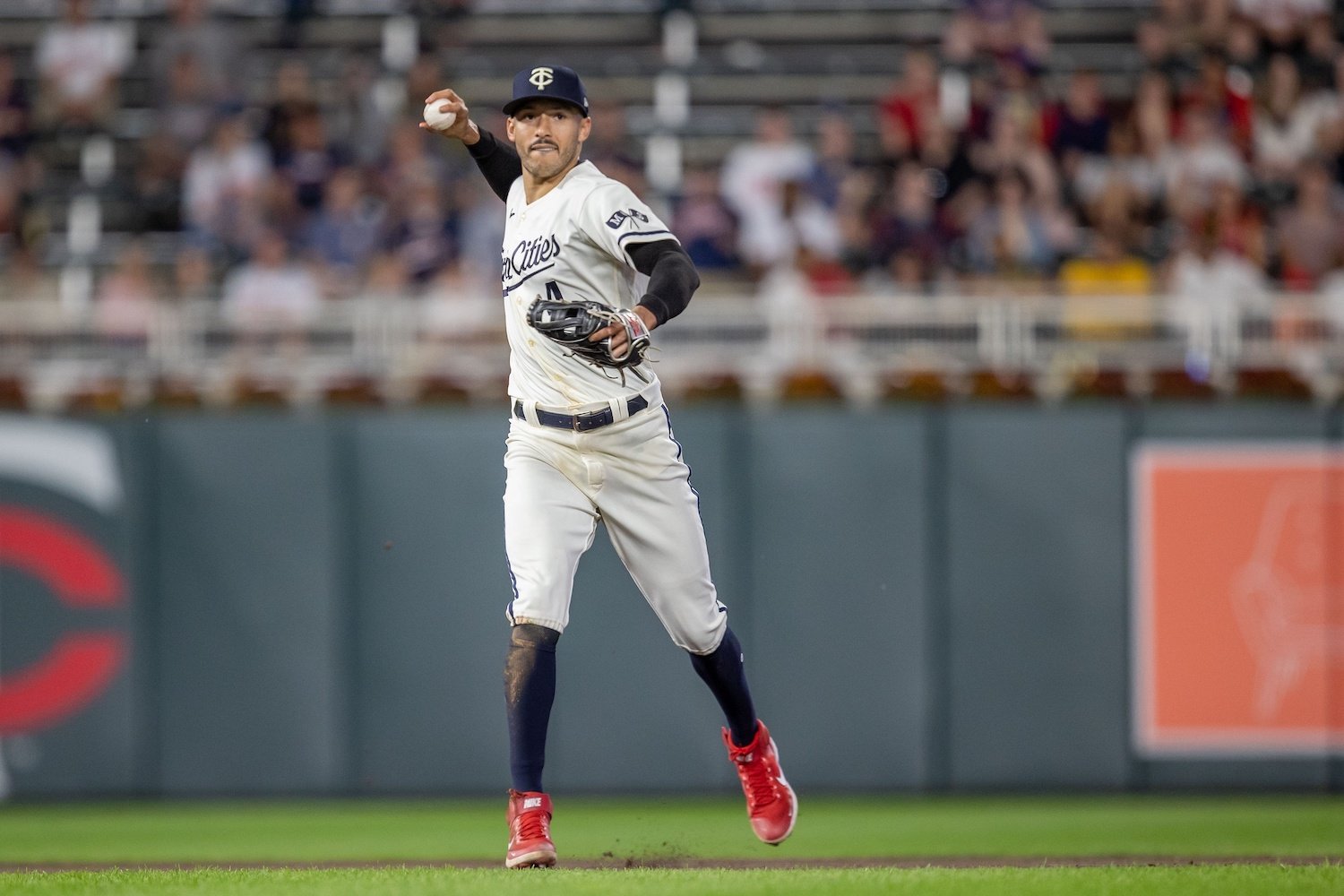 Through 69 games, the Minnesota Twins have the 19th-ranked offense in baseball while hitting a combined .232/.313/.403 (.716) with wRC+ of 100. Whether it be having a league-leading K% of 27%, the inability to score with the bases loaded, or veteran players expected to produce at an average or above-average clip not producing, the Twins offense has been the main reason why they haven't been able to significantly separate themselves from other teams in what is considered to be one of the worst divisions in baseball history. The most notable veteran player yet to produce as expected is the recently signed-to-a-six-year-$200-million-guaranteed-contract star shortstop Carlos Correa. Despite hitting only .219/.304/.424 (.728) with a wRC+ of 101 and K% of 24.5%, which is on track to be the highest of his career, Correa's offensive performance seems to be trending upward after hitting a go-ahead eighth-inning grand slam against the Toronto Blue Jays on June 10 and a walk-off two-run home run against the Milwaukee Brewers on June 13 while also hitting .292/.370/.750 (1.120) over his last seven games. When Correa struggles to contribute for the Twins at the plate, he can still create immense value at baseball's most challenging position. Through 57 games played, Carlos Correa has been nothing short of incredible this year while playing shortstop. Let's begin by looking at Correa's 2023 numbers so far. Through 479 1/3 innings played, Correa has had 190 defensive chances, which takes into account putouts, assists, and errors. In those 190 chances, Correa has 78 putouts, 109 assists, and only three errors, generating a fielding percentage of .984, slightly higher than his career average of .981. Correa has also generated 20 double plays, with nine started and 11 turned. To look at more advanced defensive metrics, Correa currently possesses an Ultimate Zone Rating (UZR) of -0.9, which measures slightly below average. UZR is a stat that measures how many runs, better or worse, that player is relative to the average player at that position, so in Correa's case, UZR measures how well Correa has performed compared to other shortstops in baseball. UZR, like Outs Above Average (OAA), and Defensive Runs Saved (DRS), should not be taken as objective truth, primarily because they can only provide a partial story. With this in mind, let's look at how Correa's main competitors for the 2023 American League Gold Glove Award for Shortstop look when it comes to UZR. Correa's top four competitors appear to be Bobby Witt Jr., Wander Franco, Javier Baez, and Jorge Mateo. Witt Jr. has a UZR of -0.6, Franco has a UZR of 2.0, Baez has a UZR of -3.2, and Mateo has a UZR of 4.6. Correa ranks behind three out of the four shortstops listed above in UZR, but that doesn't necessarily mean that he is a worse defensive shortstop than them. Another important defensive metric to consider is Outs Above Average, or OAA. Correa has an OAA of one, which currently ranks 14th in baseball. OAA, similarly to UZR, should not be taken as an objectively quantifiable metric. OAA, when discussing infielders, considers how far an infielder must travel to get the ball, how long it takes them to get there, and how far he is from the base the runner is heading to. Witt Jr. has an OAA of six, Franco has an OAA of eight, Baez has an OAA of seven, and Mateo has an OAA of two. Although Correa's top four competitors all have higher OAAs, that, once again, doesn't necessarily mean they are better defensive shortstops than Correa. Since OAA highly values the skill of shortstops and how long it takes them to get to the ball, it would make sense to assume that speedier shortstops tend to have higher OAA than those who are less fast. When looking at Correa's competitors, all four have higher sprint speeds, with Witt Jr., whose sprint speed is in the 100th percentile, and Mateo, whose sprint speed is in the 99th percentile, having significantly higher sprint speeds. Correa defensive prowess appears to be devalued, while players such as Baez, Witt Jr., and Mateo's perceived defensive aptitude is getting boosted by their speed and ability to cover ground. Lastly, Defensive Runs Saved, or DRS, attempts to quantify how many runs a defender has saved by considering a player's entire defensive performance. Specifically, DRS considers errors, range, arm strength, and one's ability to start and turn double plays. Essentially, DRS and UZR are the same, which is illustrated in how Correa compares to his competitors' DRS rankings. Correa currently owns a DRS of two, which ranks 18th in all of baseball. Witt Jr. owns a DRS of -3, Franco owns a DRS of 10, Baez owns a DRS of three, and Mateo owns a DRS of six. Correa ranks four out of five in DRS, beating out only Witt Jr. If Gold Glove voting came down to exclusively sabermetric rankings, it would be nearly impossible for Correa to win this year's Gold Glove award for AL shortstops. However, defensive sabermetrics only tell part of the story regarding how good of a defender a particular player may or may not be. Correa has an elite glove as well as what may be the best arm of all shortstops in baseball. Correa may have a shorter range than shortstops like Franco and Mateo, but he makes up for it by having immense skill and an excellent sense of where to be at any given moment. With this taken into account, voters, many of whom place a tremendous amount of value on the "eye test," may be more inclined to vote for Correa simply because he plays the position so smoothly. If voting occurred today for who would be the American League Gold Glove winner for shortstop, I think Tampa Bay Rays shortstop Wander Franco would win, with Correa finishing in the top three of voting, although there technically are no runner-ups for Gold Glove voting, alongside Baltimore Orioles shortstop Jorge Mateo. Franco currently sports a UZR of 2.0, an OAA of eight, which leads AL shortstops, and a DRS of ten, which are all better numbers than what Correa owns. Also, Franco has played in 542 1/3 innings, which is 63 more innings than what Correa has played this season. Wishfully thinking, if Correa can stay healthy by managing his plantar fasciitis, avoid other forms of injury, and accrue a larger sample size while performing the way he has all year defensively, then there could be an opportunity for Correa to win the 2023 AL Gold Glove Award for shortstops. Until then, Correa needs to make up ground if he wants to usurp shortstops the likes of Franco and Mateo. Do you think Correa is on track to win his first Gold Glove as a Twin? Who would you vote for?
 -
To add on to this, I believe the Twins might be hindering the development of Trevor Larnach and Matt Wallner. Larnach and Wallner keep having to live in this state of limbo where they are stuck behind underperforming corner outfielders in the form of Max Kepler and Joey Gallo while they continue to crush Triple-A pitching. Larnach is 26 and Wallner is 25, they aren't young prospects anymore, yet I feel like the Twins continue to treat them as such. I do believe that Larnach and Wallner will supplant Kepler and Gallo on the roster, but I don't think it will happen until next season when Gallo and Kepler are more likely than not gone.
-
I agree that with a larger sample size Kirilloff's splits should more closely resonate what they were when he was coming up through the minors! 16 plate appearances is a very very small sample size.
-
I feel like his answer would be Larnach. What do you think?
-
Yeah, I think it is too. What did you ask about Kepler?
-
Thanks for letting me know. I'm going to go check it out!
-
Just saw that! He's batting third too, which is promising. Very timely article lol
-
Was this on The Athletic Baseball Podcast?
-
In the latest Gleeman and the Geek episode, Gleeman talked about how Morneau was worse against LHP, but he wasn't platooned for. Now, that is likely due to Gardenhire not knowing what a platoon was, but it adds to your point of how great left-handed hitters, which Kirilloff could become, don't need to get benched against LHP.
-
Okay, I see. I agree with you that the proximity of his OPS against lefties shows that there isn't much of a discrepancy versus his ability against right-handed pitchers. There isn't a large enough sample size to make any rational judgments, and in my article I said that it could be seen as ignorant to make any real judgments off of just 16 PAs. When discussing the argument for platooning young guys, I think with Kirilloff in particular the reason they have him in a platoon role is so he can have off days to rest his wrist, and having those off days be when they face LHP makes the most sense. Although this is likely the case, then why do they pinch-hit for him when a LH reliever comes in? That is where I am struggling to agree with their philosophy and overall process. I agree that Kirilloff and Lewis need ABs to work on fixing holes they have when they face same-handed pitchers, but, to be honest, I think Julien is already a very good hitter against LHP, and Kirilloff can be if given a real opportunity.
-
Thank you for letting me know! I just corrected it. When discussing Kirilloff's career OPS versus right-handed pitcher and left-handed pitchers, I believe that a lot of those numbers, especially his career OPS of .738 against RHP, are construed by Kirilloff constantly battling injuries from 2021-2022. I think Kirilloff's numbers this year, especially his OPS versus RHP, are a more accurate indicator of the player he truly is as he is finally healthy. Nonetheless, I appreciate your insight and, although you didn't directly say this, I agree that Kirilloff should be "platoon proof." Also, I think Julien and Lewis should be "platoon proof" as well, but I don't see that happening very soon unfortunately.
-
It is true that all of the offense in that game came from the bench moves, but I think that can be attributed to the randomness of baseball more than anything else. For example, Kyle Garlick hit a home run off of a right-handed pitcher. That rarely ever happens. I think the way they approached that game as an organization was flawed, and I don't think it is worth it to pinch-hit for two of your best young hitters in the second and third inning of a game in May.
-
I agree that his development is an important aspect as to why they should give Kirilloff more opportunity versus LHP, and the same goes for Julien versus LHP and Lewis versus RHP. As it pertains to right-handed options that take his place in the lineup that are an upgrade, Donovan Solano is a significant upgrade when they face LHP. I am in no way saying the Twins shouldn't be playing Solano at 1B when they face LHP, because, especially as of late, Solano has been extremely valuable for the Twins offensively. With that said, I do think the Twins should seriously consider playing Kirilloff over Gallo, Larnach, or Kepler in either LF or RF when they face a LHP.
-
With Alex Kirilloff being one of the few consistently productive hitters in the lineup, can the Twins afford to keep benching Kirilloff when they face left-handed pitchers? Image courtesy of Gary A. Vasquez-USA TODAY Sports If a Twins fan were granted three Twins-centric wishes that would come true for the 2023 Major League season, wish number one would be to end the 18-game playoff losing streak that has plagued this franchise for 19 years, wish number two would be that the Twins win their third World Series, and wish number three would be that the Twins organization and fans alike would finally get to see Alex Kirilloff and Royce Lewis play out the rest of the season with an outstanding bill of health. In reality, wishes number one and two look very suspect right now, but wish number three appears to be on track to happen, which is a blessing in itself. Whether it be Lewis tearing his ACL twice in two years or Kirilloff undergoing wrist surgeries in consecutive seasons, these once highly touted Twins prospects have endured immense physical and emotional hurdles that they have been able to power through every single time. Lewis has solidified himself as the everyday third baseman for at least the rest of the season. In contrast, Kirilloff has solidified himself as an almost-every-game starter who plays either left field, right field, designated hitter, or his best defensive position, first base, during any given game. Lewis and Kirilloff are finally able to showcase the talents that had them both ranked as unanimous Top 50 prospects in Major League Baseball. Although Lewis and Kirilloff contribute to the Twins on a near-every-game basis, their situations differ. Lewis is in the starting lineup whether the starting pitcher throws left or right-handed. Kirilloff, on the other hand, is not. The Twins love to deploy platoon lineups as well as utilize in-game substitutions to get what is perceived to be the upper hand in every situation, even if the advantage is incremental. One of the more controversial ways the Twins deploy a platoon is by benching Kirilloff when they face left-handed starting pitchers and pinch-hitting for him whenever a left-handed reliever comes out of the opposing team's bullpen. Some platoon players are performing well, as right-handed hitting specialist Donovan Solano is hitting .321/.357/.472 (.829) with 17 hits, three walks, and eight strikeouts in 56 plate appearances against left-handed pitching and left-handed hitting specialist Edouard Julien is hitting .279/.383/.544 (.927) with 19 hits, 11 walks, and 27 strikeouts in 82 plate appearances, but most are underperforming their career-split numbers. For example, utility player Kyle Farmer, who has a career OPS of .829 versus left-handed pitching, has generated an OPS of just .730 versus left-handed pitching this year, a 99-point drop. Also, outfielder Trevor Larnach, who the Twins organization and fans alike had hoped would develop into a hitter that would hit right-handed pitching at an above average level, has only been able to muster an OPS of .728 this season, which is on par with his career OPS versus right-handed pitching of .726. With hitters who the Twins assumed would be effective platoon players struggling to thrive against the type of pitching handedness they were supposed to, one must ask themselves, should they stop benching one of their best hitters in Kirilloff every time they face a left-handed pitcher? First, to add some context, it appears that the Twins are using games when they face a left-handed starting pitcher as a subsequent "off day" for Kirilloff so he doesn't put too much strain on his twice surgically repaired right wrist. Although this practice makes sense in a vacuum, why does Kirilloff often get pinch-hit whenever a left-handed reliever comes in? Let's take a look. Through his first 125 plate appearances, Kirilloff is hitting .288/.408/.442 (.850) with a wRC+ of 144 and an fWAR of 0.6, which ranks tied for sixth on the team for position players just behind Taylor (1.2 fWAR), Buxton (0.9 fWAR), Jeffers (0.8 fWAR), Castro (0.7 fWAR), and Farmer (0.7 fWAR). Within those 125 plate appearances, Kirilloff has faced a right-handed pitcher for 113 and a left-handed pitcher for 16. In the 113 plate appearances against a right-handed pitcher, Kirilloff is hitting .301/.425/.441 (.866) with 28 hits, two of them being home runs, 18 walks, and 27 strikeouts. In the 16 plate appearances against left-handed pitchers, Kirilloff is hitting .154/.313/.385 (.698) with two hits, one of them being a home run, one walk, and three strikeouts. Although 16 plate appearances is a minor enough sample size to the point where making any absolute judgments could be viewed as ignorant, it is hard not to notice the considerable discrepancy that is present. Kirilloff is a much better hitter against right-handed pitchers. Still, subtracting the player who is arguably the most consistent and overall best hitter from your lineup whenever a left-handed pitcher is set to start or come in for relief is hard to justify. The Twins have notoriously long leashes with some players (i.e., Max Kepler and Emilio Pagán) to the point where one starts to ponder if that metaphorical leash even exists. At the same time, the Twins have irrationally short leashes with other players, specifically younger players Edouard Julien, Alex Kirilloff, and, most recently, Royce Lewis. This phenomenon has been played out twice in grand fashion. First, during a game against the San Francisco Giants on May 11th, when manager Rocco Baldelli decided to pinch-hit right-handed hitting Solano for the left-handed hitting Julien in the bottom of the second inning and right-handed hitting Garlick for left-handed hitting Kirilloff in the bottom of the third, and second on June 13th when Baldelli decided to pinch hit the left-handed hitting Kepler for the right-handed hitting Lewis in the bottom of the ninth against Brewers and star closer Devin Williams. Baldelli and the Twins front office's decision was justifiably instantly critiqued by Twins fans and reporters alike. These moves illustrated that the Twins highly value the marginal advantage platooning gives teams to what could be seen as a stubborn extent and that the Twins don't trust their young prospects to perform against same-handedness pitchers. This philosophy feels like a failure, and the Twins should look into reanalyzing their approach to handling platooning as it pertains to young talented prospects who many see as future career franchise cornerstones. Julien, Lewis, and Kirilloff should be trusted to perform against same-handed pitching, and if given an adequate opportunity, they more likely than not will. Correa and Buxton are immune to platooning. They are in the lineup whether the Twins face a left-handed or right-handed starting pitcher, and they don't get pinch-hit for if a same-handed relief pitcher comes in to face them. It is time to start thinking about doing the same with Julien, Lewis, and, most notably, Kirilloff. Should the Twins stop benching Kirilloff when they face left-handed pitching? What do you think of the Twins philosophy on platooning? View full article
-
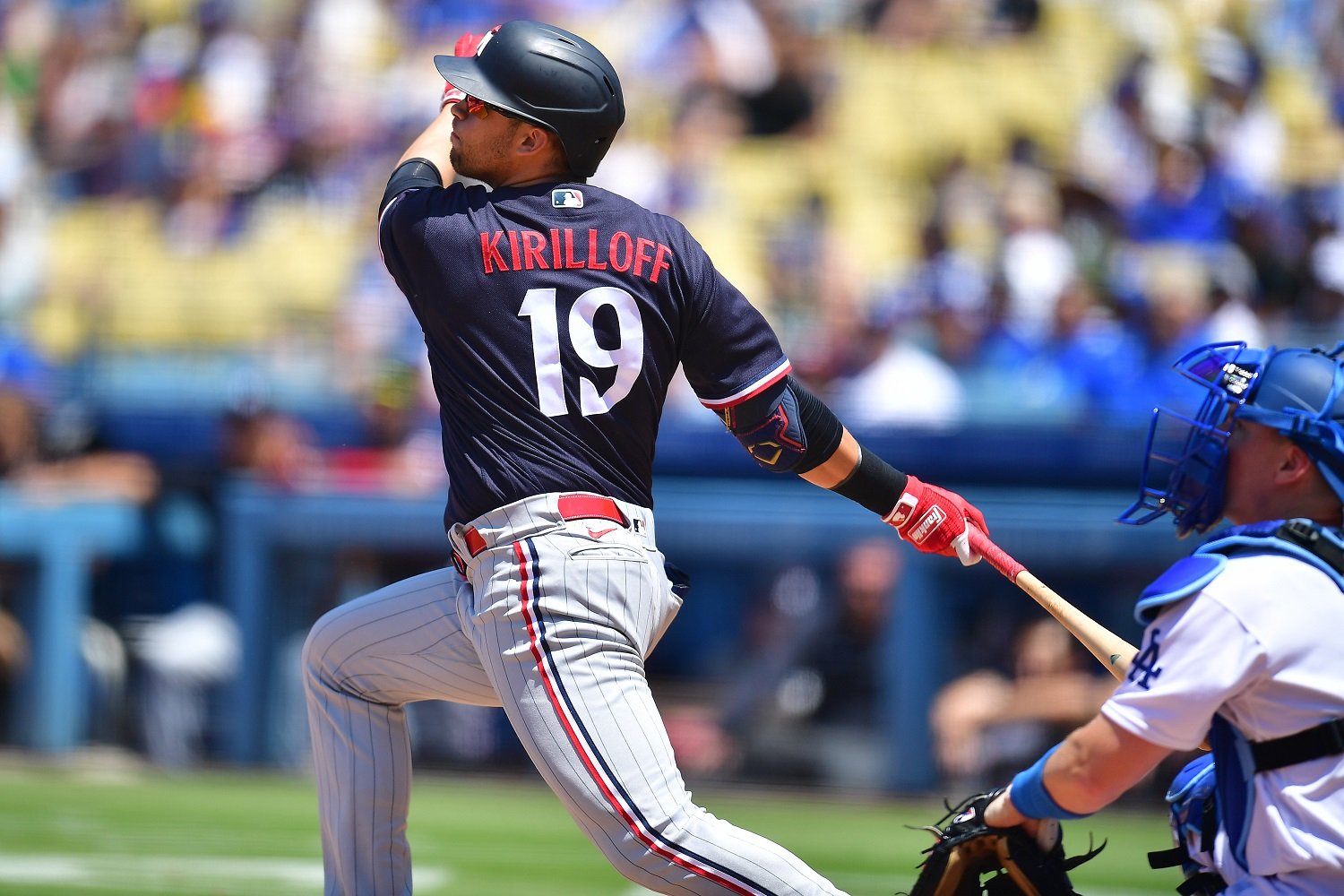 If a Twins fan were granted three Twins-centric wishes that would come true for the 2023 Major League season, wish number one would be to end the 18-game playoff losing streak that has plagued this franchise for 19 years, wish number two would be that the Twins win their third World Series, and wish number three would be that the Twins organization and fans alike would finally get to see Alex Kirilloff and Royce Lewis play out the rest of the season with an outstanding bill of health. In reality, wishes number one and two look very suspect right now, but wish number three appears to be on track to happen, which is a blessing in itself. Whether it be Lewis tearing his ACL twice in two years or Kirilloff undergoing wrist surgeries in consecutive seasons, these once highly touted Twins prospects have endured immense physical and emotional hurdles that they have been able to power through every single time. Lewis has solidified himself as the everyday third baseman for at least the rest of the season. In contrast, Kirilloff has solidified himself as an almost-every-game starter who plays either left field, right field, designated hitter, or his best defensive position, first base, during any given game. Lewis and Kirilloff are finally able to showcase the talents that had them both ranked as unanimous Top 50 prospects in Major League Baseball. Although Lewis and Kirilloff contribute to the Twins on a near-every-game basis, their situations differ. Lewis is in the starting lineup whether the starting pitcher throws left or right-handed. Kirilloff, on the other hand, is not. The Twins love to deploy platoon lineups as well as utilize in-game substitutions to get what is perceived to be the upper hand in every situation, even if the advantage is incremental. One of the more controversial ways the Twins deploy a platoon is by benching Kirilloff when they face left-handed starting pitchers and pinch-hitting for him whenever a left-handed reliever comes out of the opposing team's bullpen. Some platoon players are performing well, as right-handed hitting specialist Donovan Solano is hitting .321/.357/.472 (.829) with 17 hits, three walks, and eight strikeouts in 56 plate appearances against left-handed pitching and left-handed hitting specialist Edouard Julien is hitting .279/.383/.544 (.927) with 19 hits, 11 walks, and 27 strikeouts in 82 plate appearances, but most are underperforming their career-split numbers. For example, utility player Kyle Farmer, who has a career OPS of .829 versus left-handed pitching, has generated an OPS of just .730 versus left-handed pitching this year, a 99-point drop. Also, outfielder Trevor Larnach, who the Twins organization and fans alike had hoped would develop into a hitter that would hit right-handed pitching at an above average level, has only been able to muster an OPS of .728 this season, which is on par with his career OPS versus right-handed pitching of .726. With hitters who the Twins assumed would be effective platoon players struggling to thrive against the type of pitching handedness they were supposed to, one must ask themselves, should they stop benching one of their best hitters in Kirilloff every time they face a left-handed pitcher? First, to add some context, it appears that the Twins are using games when they face a left-handed starting pitcher as a subsequent "off day" for Kirilloff so he doesn't put too much strain on his twice surgically repaired right wrist. Although this practice makes sense in a vacuum, why does Kirilloff often get pinch-hit whenever a left-handed reliever comes in? Let's take a look. Through his first 125 plate appearances, Kirilloff is hitting .288/.408/.442 (.850) with a wRC+ of 144 and an fWAR of 0.6, which ranks tied for sixth on the team for position players just behind Taylor (1.2 fWAR), Buxton (0.9 fWAR), Jeffers (0.8 fWAR), Castro (0.7 fWAR), and Farmer (0.7 fWAR). Within those 125 plate appearances, Kirilloff has faced a right-handed pitcher for 113 and a left-handed pitcher for 16. In the 113 plate appearances against a right-handed pitcher, Kirilloff is hitting .301/.425/.441 (.866) with 28 hits, two of them being home runs, 18 walks, and 27 strikeouts. In the 16 plate appearances against left-handed pitchers, Kirilloff is hitting .154/.313/.385 (.698) with two hits, one of them being a home run, one walk, and three strikeouts. Although 16 plate appearances is a minor enough sample size to the point where making any absolute judgments could be viewed as ignorant, it is hard not to notice the considerable discrepancy that is present. Kirilloff is a much better hitter against right-handed pitchers. Still, subtracting the player who is arguably the most consistent and overall best hitter from your lineup whenever a left-handed pitcher is set to start or come in for relief is hard to justify. The Twins have notoriously long leashes with some players (i.e., Max Kepler and Emilio Pagán) to the point where one starts to ponder if that metaphorical leash even exists. At the same time, the Twins have irrationally short leashes with other players, specifically younger players Edouard Julien, Alex Kirilloff, and, most recently, Royce Lewis. This phenomenon has been played out twice in grand fashion. First, during a game against the San Francisco Giants on May 11th, when manager Rocco Baldelli decided to pinch-hit right-handed hitting Solano for the left-handed hitting Julien in the bottom of the second inning and right-handed hitting Garlick for left-handed hitting Kirilloff in the bottom of the third, and second on June 13th when Baldelli decided to pinch hit the left-handed hitting Kepler for the right-handed hitting Lewis in the bottom of the ninth against Brewers and star closer Devin Williams. Baldelli and the Twins front office's decision was justifiably instantly critiqued by Twins fans and reporters alike. These moves illustrated that the Twins highly value the marginal advantage platooning gives teams to what could be seen as a stubborn extent and that the Twins don't trust their young prospects to perform against same-handedness pitchers. This philosophy feels like a failure, and the Twins should look into reanalyzing their approach to handling platooning as it pertains to young talented prospects who many see as future career franchise cornerstones. Julien, Lewis, and Kirilloff should be trusted to perform against same-handed pitching, and if given an adequate opportunity, they more likely than not will. Correa and Buxton are immune to platooning. They are in the lineup whether the Twins face a left-handed or right-handed starting pitcher, and they don't get pinch-hit for if a same-handed relief pitcher comes in to face them. It is time to start thinking about doing the same with Julien, Lewis, and, most notably, Kirilloff. Should the Twins stop benching Kirilloff when they face left-handed pitching? What do you think of the Twins philosophy on platooning?
 -
Twins Should Extend Tyler Mahle
Cody Schoenmann replied to Cody Schoenmann's topic in Twins Daily Front Page News
I do like the idea of giving Mahle an incentive-laden deal that includes a third year! Although it may benefit Mahle to accept an extension offer with longer term (i.e., three or four years), I don't know if he, his agent, or the Twins would be inclined to do so as it would limit Mahle's earning potential and it would lock the Twins in with a pitcher who is recovering from Tommy John Surgery and has had chronic shoulder issues to a long term deal. Personally, I think a short-term two year deal would be ideal for both sides, and I think that is the route both parties would prefer to go down. Also, if Mahle hypothetically performs well and stays healthy in 2025, the Twins could offer him the Qualifying Offer in 2026. -
Twins Should Extend Tyler Mahle
Cody Schoenmann replied to Cody Schoenmann's topic in Twins Daily Front Page News
For me, I don't think it would be smart for the Twins to put that much trust in Paddack and Varland. Paddack has had Tommy John Surgery twice, so we don't know if he is going to be able to maintain the velocity and movement that he possessed before his second surgery and Varland is still an unknown commodity who has struggled during his past two starts against the Rays and Blue Jays while sporting a HR/FB rate of 21.6%, which is very concerning. López, Ryan, and Ober are relatively known commodities who will be mainstays in the Twins rotation for a long time, but I don't think the Twins have much guaranteed beyond those three. It appears Gray is likely going to leave after this season, Varland has a HR issue, and once promising prospect Simeon Woods Richardson is struggling mightily in Triple-A. Extending Mahle gives the Twins, at the very least, another fall-back option who has shown that he can be a top of the rotation starting pitcher when healthy. -
Twins Should Extend Tyler Mahle
Cody Schoenmann replied to Cody Schoenmann's topic in Twins Daily Front Page News
I agree with everything you wrote and I appreciate your insight. I didn't mention Paddack's situation in my article, which I probably should have, so thank you for adding that context. Paddack and Mahle's situations are very different, and Mahle, as you wrote, not only has made more money than Paddack during his playing but has also performed at a higher level. Mahle will for sure cost more money than Paddack and even Pineda, but I think it is worth the risk. -
Twins Should Extend Tyler Mahle
Cody Schoenmann replied to Cody Schoenmann's topic in Twins Daily Front Page News
I would love if the Twins were able to sign Mahle to a, as you proposed, four year $25 million or two years $12 million contract, but I don't think either of those are realistic. Hypothetically, if Mahle pitched the rest of this season healthy and stayed on the trajectory he was on, he would have been given a four or five year deal north of $20 million per year this off-season. Also, the Twins would have more likely than not offered Mahle the Qualifying Offer, which is valued at $19.65 million. Mahle and his agent will take a discount for 2024, as he will be recovering, but I don't think it will be for less than five million dollars, and he for sure won't accept an extremely discounted offer for 2025, as he and his agent plan on him being healthy for that season. Extending Mahle would be an expensive gamble, but I think it is an expensive gamble that would be worth it. -
Although the Tyler Mahle trade has been deemed a failure, the Twins shouldn't cut the cord just yet. Image courtesy of Nick Wosika-USA TODAY Sports On August 2, 2022, the Minnesota Twins traded Spencer Steer (7th-ranked prospect), Christian Encarnacion-Strand (23rd-ranked prospect), and Steve Hajjar (18th-ranked prospect) to the Cincinnati Reds for starting pitcher Tyler Mahle. At the time, fans and analysts almost unanimously viewed the trade as a win for the Twins. Ten months later, the trade is considered one of the worst in Twins history. Steer has become an everyday utility player for the Reds, hitting .286/.365/.482 (.861) and a wRC+ of 124. Steer also sports an fWAR of 0.8 which is higher than every Twins position player not named Ryan Jeffers (1.0 fWAR), Michael A. Taylor (1.0 fWAR), Byron Buxton (0.9 fWAR), Willi Castro (0.8 fWAR), or Alex Kirilloff (0.8 fWAR). As he did in the Twins system last year, Encarnacion-Strand has skyrocketed through the Cincinnati Reds minor league system and is hitting .353/.413/.706 (1.11) with a wRC+ of 172 with the Triple-A Louisville Bats, and Hajjar has since been traded to the Cleveland Guardians as part of the Will Benson trade between the Reds and Guardians on March 25. Meanwhile, Mahle started nine games and pitched 42.0 innings before the Twins announced that Mahle would need to undergo Tommy John surgery on May 11. The Twins lost this trade. There is no more room for interpretation. Steer has been incredible, Encarnacion-Strand looks like he will be incredible, and Twins fans will inevitably be upset when Hajjar throws seven scoreless innings against the Twins while pitching for the Guardians in 2026. Although the Twins gave away three talented prospects that fans will have to watch perform well for other teams for what could be the next decade, those who follow the Twins shouldn't be too upset with the organization as the process the front office took in trading for Mahle was sound and the right move at the time, as the Twins were in first place and contending for a division title, it just happened not to work out. That said, the Twins should not be done with Mahle just yet. Instead, they should extend him to a multiyear contract. It may seem like I am falling victim to the sunk-cost fallacy, but Mahle is an above-average pitcher that the Twins should look to sign while his perceived value is relatively low. Through nine games with the Twins, Mahle has achieved a 3.64 ERA, 1.05 WHIP, and 4.73 FIP while giving up nine walks, 35 hits, and 40 strikeouts. When looking at Mahle's performance as a Twin, the number that catches one's eye is his elite WHIP of just 1.05. Mahle is elite when it comes to limiting baserunners, which is a skill that every franchise values highly. Mahle throws an above-average slider and splitter to confuse both left and right-handed batters, but what makes Mahle truly special is his elite fastball. Mahle, who stands at six-foot-three, pointedly bends his knee at the end of his wind-up, creating a rising effect on his fastball, similar to fellow Twins pitcher Joe Ryan and Cleveland Guardians pitcher Triston McKenzie. Mahle's ability to generate what is essentially a "rising fastball," which is an optical illusion in itself, is evidenced by Mahle's 80th-percentile extension rate and 76th-percentile Fastball Spin rate. Mahle's elite fastball, which sits around 93-94 MPH, led to him generating a K% of 27.5% and a BB% of just 4.9%, both elite numbers on each end of the spectrum. Mahle, like any pitcher, is not perfect. Mahle is a fly-ball pitcher, and although this archetype tends to work well while pitching most of one’s games at Target Field, it does mean that Mahle is prone to giving up home runs, especially on the road, which was evidenced during his start against the Yankees on April 15, when he gave up two home runs through only 4.1 innings pitched. Although Mahle occasionally struggles with home runs, he is an above-average pitcher who, if given more opportunities while healthy, would greatly benefit from throwing most of his starts at Target Field, where Ballpark Pal currently ranks as the tenth hardest ballpark to hit home runs. What would Mahle's contract extension look like? Although signing a pitcher who recently underwent Tommy John surgery feels like something that would be complicated to work through, this iteration of the Twins front office has done this more than once. In December 2017, the Twins signed Michael Pineda, who had undergone Tommy John surgery in July of that year, to a two-year, $10 million contract that paid him $2 million while he recovered during the 2018 season and eight million dollars during what was expected to be Pineda's first full year back from surgery. Also, the Twins recently signed Chris Paddack, who underwent Tommy John surgery in May 2022, to a three-year, $12 million contract on January 14, 2023. Using Pineda and Paddack's contract as reference points, it would be fair to assume that Mahle's hypothetical contract would be in a similar ballpark. Mahle is a better pitcher than Pineda and Paddack were when they signed their respective contracts, so it is fair to assume that Mahle would require more of an investment if the Twins wanted to extend him. To predict, Mahle would likely request a contract somewhere in the two-year $20 million range that would pay him five million dollars to recover with the Twins in 2024 and then $15 million to pitch in what would hopefully be his first completely healthy season since his surgery in 2025. Evidently, the Twins find value in signing or extending high-variance starting pitchers whose value is low since they recently underwent Tommy John surgery. Many fans will label this as the Twins shopping in the "bargain section" for pitchers, but, on the flip side, this process could be seen as a savvy process in accruing low-cost pitching talent, especially when it comes to an above-average pitcher like Mahle. Should the Twins extend Mahle? What do you think Mahle's contract would look like? View full article

