



Parker Hageman
-
Posts
4,152 -
Joined
-
Last visited
-
Days Won
6
Content Type
Profiles
Minnesota Twins News, Rumors & Analysis
Minnesota Twins Videos
2026 Minnesota Twins Top Prospect Rankings
2022 Minnesota Twins Draft Picks & Signing Bonuses
Minnesota Twins Trade & Free Agent Rumors
Minnesota Twins Fan Guides & Resources
2023 Minnesota Twins Draft Picks & Signing Bonuses
The Minnesota Twins Players Project
2024 Minnesota Twins Draft Picks & Signing Bonuses
2025 Minnesota Twins Draft Picks & Signing Bonuses
2026 Minnesota Twins Draft Picks & Signing Bonuses
Forums
Blogs
Events
Store
Downloads
Gallery
Everything posted by Parker Hageman
-
Age: 21 (DOB: 05/09/1991) 2012 Stats (A+/AA): .320/.388/.539, 17 HR, 98 RBI, 76 R, 4/9 SB ETA: 2013 It has been a while since the Minnesota Twins had major league ready offensive talent in their farm system knocking on the door of the big club. Outfielder Oswaldo Arcia appears to be wiping his feet at the welcome mat. Of course, there are just a few more steps - and players - ahead of him. One of the few areas of surplus in the Twins’ organization has been center field talent. In addition to Denard Span and Ben Revere, looming at the upper levels were Joe Benson and Aaron Hicks. Behind those two is Byron Buxton, the 2012 number two overall draft choice. If one were monitoring the pipeline, it became clear that for one position, some players were either going to move out of the middle of the outfield or be moved out of the organization. The Twins front office cleared some room quickly when they dealt Span and Revere this offseason, opening up a vacancy in both center and right. While Benson and Hicks will audition for the role of center this spring, Chris Parmelee, a first baseman by trade but an outfielder by necessity, is the front-runner to start in right field. Parmelee’s tenure in right appears to be a less-than-permanent job placement if Arcia continues to club the ball as well as he has the past two seasons. Arcia’s progress through the pipeline was stymied in 2011 when in early May, pain in his throwing elbow called for clean-up surgery that sidelined him for two months. Coming off of a season in which he tore through Appalachian League pitching in 2010, this injury abbreviated what should have been his first full season. Undeterred, the Venezuelan outfielder continued where he left off the previous year and mashed his way from the Gulf Coast League to the Florida State League – with a brief stop off in the Midwest League. In all, he accumulated just over 300 plate appearances and posted a respectable .866 OPS as a 20-year-old. Asked to repeat the 2012 season back at Fort Myers, this gave Arcia some additional at-bats in the offensively-challenged Florida State League. For some, the FSL can be a humbling experience for young hitters. Between the heat, humidity, the size of the ballparks and the advanced college pitchers, players who were putting up eye-popping numbers in the rookie and low-A leagues are often brought back down to Earth upon landing in America’s coastal swamps. It’s largely an environment where the men are separated from the boys and the prospects from the pretenders. Arcia’s half-season with the Miracle reaffirmed that he was definitely a legitimate prospect. While the average hitter in the league held a .373 slugging percentage, Arcia was one of five players in the league to have a slugging percentage over .500. Pushed up to New Britain and Double-A ball, as a 21-year-old in a league with an average age of 24, Arcia simply raked and emerged as a genuine run producer. At one point, he drove in 67 runs over the course of 69 games. The Good: Thick in the truck and stout in the upper body, Arcia has a bulldog-like build that consumes the left-handed batter’s box. Coupled with a strong hip transition, he is able to repeatedly make solid contact and power by keeping his hands close to his body and thereby creating leverage, as shown below: This is an example of a pitch on the middle-to-outer third of the plate. Arcia is able to keep his hands close to his body and drive that pitch to the left-center gap for a double. With the spacious Target Field the ultimate goal for any Twins prospect, having line drive power to all fields – particularly in the expansive gap-to-gap region on the ballpark – is a very coveted skill. The Bad: Like most left-handed hitters at his age, Arcia has struggled some against same-sided pitching. Over the past two years, his OPS has been two hundred points lower when facing left-handers versus right-handers. Are the Twins concerned about his splits? Not entirely says Twins’ Director of Minor League Operations, Brad Steil. “Not concerned, but as with many young left-handed hitters, we know it’s an area he’ll need to keep working on. He did show improvement in the second half with New Britain last season.” That’s very true. After hitting .210/.286/.306 in 70 plate appearances against southpaws with Fort Myers, Arcia hit .319/.400/.464 over his next 80 plate appearances against lefties while in New Britain. Is this small sample size success or a sign of progress? The Bottom Line: Will Arcia get the call at some point this year? “Any potential contribution in the major leagues will depend on his progression and performance and an available opportunity,” Steil answered diplomatically. Obviously there is not a need for a corner outfielder at this point. That said, could certain moves in-season prompt an opening? Perhaps trading a soon-to-be free agent first baseman or moving the current starting left fielder into a full-time designated hitter role would make room. If Arcia continues to produce at the same pace as he did last season, it may be a “when” not “if” scenario for the Minnesota Twins. [TD’s Top Ten Prospects: #10: Max Kepler] [TD’s Top Ten Prospects: #9: Trevor May] [TD's Top Ten Prospects: #8: J. O. Berrios] [TD's Top Ten Prospects: #7 Eddie Rosario] [TD's Top Ten Prospects: #6 Kyle Gibson] [TD's Top Ten Prospects; #5 Alex Meyer]
-

Reusse: Hudson Boyd In Better Shape
Parker Hageman replied to John Bonnes's topic in Twins Minor League Talk
Here's a photo Reusse took of him on his Twitter feed, saying he was down 30 pounds from last year.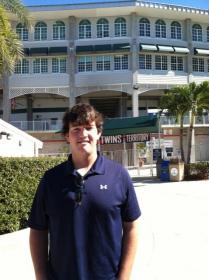
-
Article: TD Top Prospects: #7 Eddie Rosario
Parker Hageman replied to Parker Hageman's topic in Twins Daily Front Page News
I just wanted to address this super quick as I saw it in your write-up on the For Better Or Worse on Rosario. I just want to make sure we are not projecting Rosario's potential numbers to be like Span's numbers based on a few similarities between the two. The initial hand position and the lack of a east-west load in particular are shared among Span and Rosario. However, with Rosario, you see a much longer swing - albeit just has quick - whereas Span is much more of a point A-to-B type of swinger. And, unlike Span, Rosario has a pronounced stride where Span does not. Rosario, as you said, has the tendency to uncork vicious swings on occasion. This is something Span really has never done. So, unless the Twins/Rosario make some changes to reduce the hand/stride movement, I would expect Rosario to project to have greater power and less connectivity than Span. It could be that the evaluations of Rosario were based on the curve set by Hicks/Benson/Buxton but because the reports were coming from Baseball America, I am assuming they either spoke to scouts or someone in the organization when they said that Rosario did not have the speed for center or the arm for a corner OF position. A man can dream but I don't think he will be as good as Hall of Famer Rod Carew. -
You can view the page at http://twinsdaily.com/content.php?r=1357-TD-Top-Prospects-7-Eddie-Rosario
-
Age: 21 (DOB: 09/28/1991) 2012 Stats (RK/A): .299/.347/.499, 13 HR, 74 RBI, 62 R, 11/22 SB ETA: 2015 So far, Eddie Rosario’s minor league career has been largely overshadowed by Miguel Sano. It’s a common phenomenon with any pairing. One emerges as the fan favorite and the other continues doing valuable if underappreciated work. Maris had Mantle. Oates had Hall. Colmes had Hannity. The guy on the left of Milli Vanilli had the guy on the right of Milli Vanilli. Having been teammates dating back to 2010 when both players joined the organization, it is Sano who has been grabbing the headlines and basking in the attention of the national prospect junkies. It starts physically where, unlike the imposing physique of Sano which casts a big shadow, Rosario’s six-foot-nothing, buck-seventy frame does not garner as much attention. Nevertheless, Rosario has put together an auspicious start to his professional career – thanks to remarkable bat speed and square contact. In 2011, he slammed 21 home runs to lead the Appalachian League as a 19-year-old. It had been eight years since someone had socked more than 20 home runs in the short-season league. “Since I was a kid, I’ve always hit the ball hard,” Rosario told reporters prior to the 2012 season. “Now that I’m a professional player, I realize that it’s because I have a really fast swing; I have quick hands, and usually hit the ball on the barrel. I’m aware of that now. When I was a kid, I just knew I always hit the ball hard.” Evaluators noted that Rosario lacked the speed to continue to play at center field and did not possess the arm for a corner outfield position like right field. Recognizing the pipeline was filled with high quality outfield talent coupled with a dearth of middle infield candidates, the Twins requested that he grab an infielder’s glove. This transition could be very advantageous to Rosario and the Twins. Without many options head of him, his path to the major may have been shorten – provided he learns the position in a timely manner. The Good: Rosario has proven that he is an above-average hitter in his three seasons thus far. In addition to strong numbers stateside, he turned heads while playing in Puerto Rico this winter. In fact, MLB.com’s Peter Gammons tweeted that one general manager rated Rosario as the top prospect within that league based on his performance. Mechanically speaking, Rosario, who keeps his hands low in his set, exhibits a small, downward hitch in his swing at his load point (he has a north-south load rather than an east-west one). This added movement will likely need to be reduced in order to avoid being exploited but to this juncture of his career, he’s succeeded. More than that, his strikeout totals dropped noticeably – from 20% in 2011 to 16% in 2012 – even while moving up a level. His level swing allows the bat to stay through the hitting zone extremely well and, because of his plus bat speed, he is able to get the ball to jump hard off of the lumber. The Bad: Rosario didn’t match the output in 2012 when advancing to the Midwest League, but that was expected. After all, his approach is not a basher like Sano rather Rosario is a line drive, gap-to-gap guy with a high average potential. This trend will likely continue as he graduates to the Florida State League – a place where the heat oppresses the offense – so temper expectation accordingly. In the field, he will need to make strides at the keystone and grow more comfortable around the base during double-plays and going to his backhand. That said, reports from the fall instruct league were mostly positive. “He made improvements last season, but it’s still a work in progress, since he doesn’t have a lot of experience there,” commented Brad Steil, the Twins’ Director of Minor League Operations. “He’ll need to continue working on all aspects of his defense. His instincts and feel around second base will improve with experience.” Asked to participate on Puerto Rico’s World Baseball Classic team, Rosario will shift back to the outfield during the exhibition event. The Bottom Line: As a high average hitter with good pop, his bat projects extremely well as at second base - a position that has slowly transformed into an offensive-oriented one. Consider this: Since 2000, the Minnesota Twins’ collection of second basemen has produced a baseball-worst .672 OPS. With little ahead of him in terms of middle infield talent, a strong 2013 season could make Rosario one of the organization’s top movers-and-shakers. [TD’s Top Ten Prospects: #10: Max Kepler] [TD’s Top Ten Prospects: #9: Trevor May] [TD's Top Ten Prospects: #8: J. O. Barrios]
-
-
TD Top Prospects: #7 Eddie Rosario
Parker Hageman commented on Parker Hageman's blog entry in Over the Baggy
Age: 21 (DOB: 09/28/1991) 2012 Stats (RK/A): .299/.347/.499, 13 HR, 74 RBI, 62 R, 11/22 SB ETA: 2015[ATTACH=CONFIG]3214[/ATTACH] So far, Eddie Rosario’s minor league career has been largely overshadowed by Miguel Sano. It’s a common phenomenon with any pairing. One emerges as the fan favorite and the other continues doing valuable if underappreciated work. Maris had Mantle. Oates had Hall. Colmes had Hannity. The guy on the left of Milli Vanilli had the guy on the right of Milli Vanilli. Having been teammates dating back to 2010 when both players joined the organization, it is Sano who has been grabbing the headlines and basking in the attention of the national prospect junkies. It starts physically where, unlike the imposing physique of Sano which casts a big shadow, Rosario’s six-foot-nothing, buck-seventy frame does not garner as much attention. Nevertheless, Rosario has put together an auspicious start to his professional career – thanks to remarkable bat speed and square contact. In 2011, he slammed 21 home runs to lead the Appalachian League as a 19-year-old. It had been eight years since someone had socked more than 20 home runs in the short-season league. “Since I was a kid, I’ve always hit the ball hard,” Rosario told reporters prior to the 2012 season. “Now that I’m a professional player, I realize that it’s because I have a really fast swing; I have quick hands, and usually hit the ball on the barrel. I’m aware of that now. When I was a kid, I just knew I always hit the ball hard.” Evaluators noted that Rosario lacked the speed to continue to play at center field and did not possess the arm for a corner outfield position like right field. Recognizing the pipeline was filled with high quality outfield talent coupled with a dearth of middle infield candidates, the Twins requested that he grab an infielder’s glove. This transition could be very advantageous to Rosario and the Twins. Without many options head of him, his path to the major may have been shorten – provided he learns the position in a timely manner. The Good: Rosario has proven that he is an above-average hitter in his three seasons thus far. In addition to strong numbers stateside, he turned heads while playing in Puerto Rico this winter. In fact, MLB.com’s Peter Gammons tweeted that one general manager rated Rosario as the top prospect within that league based on his performance. Mechanically speaking, Rosario, who keeps his hands low in his set, exhibits a small, downward hitch in his swing at his load point (he has a north-south load rather than an east-west one). This added movement will likely need to be reduced in order to avoid being exploited but to this juncture of his career, he’s succeeded. More than that, his strikeout totals dropped noticeably – from 20% in 2011 to 16% in 2012 – even while moving up a level. His level swing allows the bat to stay through the hitting zone extremely well and, because of his plus bat speed, he is able to get the ball to jump hard off of the lumber. The Bad: Rosario didn’t match the output in 2012 when advancing to the Midwest League, but that was expected. After all, his approach is not a basher like Sano rather Rosario is a line drive, gap-to-gap guy with a high average potential. This trend will likely continue as he graduates to the Florida State League – a place where the heat oppresses the offense – so temper expectation accordingly. In the field, he will need to make strides at the keystone and grow more comfortable around the base during double-plays and going to his backhand. That said, reports from the fall instruct league were mostly positive. “He made improvements last season, but it’s still a work in progress, since he doesn’t have a lot of experience there,” commented Brad Steil, the Twins’ Director of Minor League Operations. “He’ll need to continue working on all aspects of his defense. His instincts and feel around second base will improve with experience.” Asked to participate on Puerto Rico’s World Baseball Classic team, Rosario will shift back to the outfield during the exhibition event. The Bottom Line: As a high average hitter with good pop, his bat projects extremely well as at second base - a position that has slowly transformed into an offensive-oriented one. Consider this: Since 2000, the Minnesota Twins’ collection of second basemen has produced a baseball-worst .672 OPS. With little ahead of him in terms of middle infield talent, a strong 2013 season could make Rosario one of the organization’s top movers-and-shakers. [TD’s Top Ten Prospects: #10: Max Kepler] [TD’s Top Ten Prospects: #9: Trevor May] [TD's Top Ten Prospects: #8: J. O. Barrios] -
You can view the page at http://twinsdaily.com/content.php?r=1350-TD-Top-Prospects-9-Trevor-May
-
Age: 23 (DOB: 09/23/1989) 2012 Stats (AA): 10-13, 149.2 IP, 4.87 ERA, 1.45 WHIP, 151/78 K/ BB ETA: 2014 On paper, Trevor May has all the makings of an elite pitcher. At six-foot-five and 215 pounds, the 22-year-old right-hander has the stature of a legit workhorse. “Just his build, he is built just like a pitcher,” remarked Dusty Wathan, May’s manager at Reading (AA) last year. “If you were going to build a starting pitcher you would start with a body like that.” [PRBREAK][/PRBREAK] Beyond his physical presence, May fires low-to-mid 90s bullets and has a decent curveball, a developing changeup and has been working on a hard slider. Based on this pedigree, May would find himself a frequent guest in the top five when Baseball America would generate the Phillies’ annual Top 10 Prospects list. In fact, heading into the 2012 season, May was the baseball periodical’s choice for Philadelphia’s number one prospect. Sure, an assist goes to a Phillie farm system which had been harvested to allow May to ascend to the head of the class but the fact remained he got there by doing what he has done so well: strike fools out. Of course, along with the high totals of missed bats comes an unhealthy amount of missed strike zones as well. His mechanics reportedly have been inconsistent and off-balanced leading to the heartburn-inducing walk totals. After five years in the Phillies’ system, the organization may have soured on the idea that he would ever be able to make the adjustments necessary to reach his projected potential. Void of power-armed pitchers in their system, the Minnesota Twins are willing to gamble that they will see more of the former and less of the latter after they traded Ben Revere – one of their own Baseball America top five prospect graduates – to acquire May. The Good In 2011, May led the Florida State League (high-A) in strikeouts with 208 in 151 innings pitched. To put this into context, in the past 12 years only he and Tampa starter Matt Moore (208 in 2010) have registered more than 200 strikeouts in that league. May would follow that performance by leading the Eastern League too, a league in which he was two years younger than the average age. Based on those figures, it is hard to not dwell on the potential upside. What would be a good comparable? May envisions himself to be a Matt Cain-type of pitcher, as he told reporters at TwinsFest: After six consecutive seasons of 200+ innings and ERA+ of 126 in that time, certainly any team would take a Matt Cain duplicate. The Bad “All I’ve got to do is get his command and I think I’ll be OK,” May had self-evaluated. Will that be like Delmon Young saying: “All I’ve got to do is just stop swinging so much and I think I’ll be OK”? After making improvements to his control-based numbers in 2011, May’s walk totals trended the other way in 2012. So, in addition to leading the Eastern League in strikeouts, May also took home the dubious honor for most free passes issued (78). Last year the walks seemed to sneak up on him. After posting an 88-to-39 strikeout-to-walk ratio through the end of June, May sudden posted a 21-to-25 strikeout-to-walk ratio in the month of July, completely skewing his numbers. To make matters worse his home run total took a significant jump from his previous season (8 in 151.1 innings with Clearwater) to this past year (22 in 149.2 innings with Reading) as well. The Bottom Line May has the stuff to quickly ascend in the Twins system – especially given the relatively lack of talent ahead of him on the depth chart. Still, he has plenty of refining to do. While the Twins have been short on strikeout pitchers, as an organization they still thrive on precision and will likely want to see improvements out of May in that department. [TD’s Top Ten Prospects: #10: Max Kepler.]
-
-
TD Top Prospects: #9 Trevor May
Parker Hageman commented on Parker Hageman's blog entry in Over the Baggy
Age: 23 (DOB: 09/23/1989) 2012 Stats (AA): 10-13, 149.2 IP, 4.87 ERA, 1.45 WHIP, 151/78 K/ BB ETA: 2014 [ATTACH=CONFIG]3190[/ATTACH] On paper, Trevor May has all the makings of an elite pitcher. At six-foot-five and 215 pounds, the 22-year-old right-hander has the stature of a legit workhorse. “Just his build, he is built just like a pitcher,” remarked Dusty Wathan, May’s manager at Reading (AA) last year. “If you were going to build a starting pitcher you would start with a body like that.” Beyond his physical presence, May fires low-to-mid 90s bullets and has a decent curveball, a developing changeup and has been working on a hard slider. Based on this pedigree, May would find himself a frequent guest in the top five when Baseball America would generate the Phillies’ annual Top 10 Prospects list. In fact, heading into the 2012 season, May was the baseball periodical’s choice for Philadelphia’s number one prospect. Sure, an assist goes to a Phillie farm system which had been harvested to allow May to ascend to the head of the class but the fact remained he got there by doing what he has done so well: strike fools out. Of course, along with the high totals of missed bats comes an unhealthy amount of missed strike zones as well. His mechanics reportedly have been inconsistent and off-balanced leading to the heartburn-inducing walk totals. After five years in the Phillies’ system, the organization may have soured on the idea that he would ever be able to make the adjustments necessary to reach his projected potential. Void of power-armed pitchers in their system, the Minnesota Twins are willing to gamble that they will see more of the former and less of the latter after they traded Ben Revere – one of their own Baseball America top five prospect graduates – to acquire May. The Good In 2011, May led the Florida State League (high-A) in strikeouts with 208 in 151 innings pitched. To put this into context, in the past 12 years only he and Tampa starter Matt Moore (208 in 2010) have registered more than 200 strikeouts in that league. May would follow that performance by leading the Eastern League too, a league in which he was two years younger than the average age. Based on those figures, it is hard to not dwell on the potential upside. What would be a good comparable? May envisions himself to be a Matt Cain-type of pitcher, as he told reporters at TwinsFest: After six consecutive seasons of 200+ innings and ERA+ of 126 in that time, certainly any team would take a Matt Cain duplicate. The Bad “All I’ve got to do is get his command and I think I’ll be OK,” May had self-evaluated. Will that be like Delmon Young saying: “All I’ve got to do is just stop swinging so much and I think I’ll be OK”? After making improvements to his control-based numbers in 2011, May’s walk totals trended the other way in 2012. So, in addition to leading the Eastern League in strikeouts, May also took home the dubious honor for most free passes issued (78). Last year the walks seemed to sneak up on him. After posting an 88-to-39 strikeout-to-walk ratio through the end of June, May sudden posted a 21-to-25 strikeout-to-walk ratio in the month of July, completely skewing his numbers. To make matters worse his home run total took a significant jump from his previous season (8 in 151.1 innings with Clearwater) to this past year (22 in 149.2 innings with Reading) as well. The Bottom Line May has the stuff to quickly ascend in the Twins system – especially given the relatively lack of talent ahead of him on the depth chart. Still, he has plenty of refining to do. While the Twins have been short on strikeout pitchers, as an organization they still thrive on precision and will likely want to see improvements out of May in that department. [TD’s Top Ten Prospects: #10: Max Kepler.] -
Twins interested in Jose Contreras?
Parker Hageman replied to Parker Hageman's topic in Minnesota Twins Talk
How would this be a "no reward" deal? Essentially, if he's healthy, Contreras winds up as second-level of insurance if arms start to fall apart at the major league level. If he's terrible in spring, he's cut. If he performs well, he hangs around in Rochester as a spare part-insurance policy. -
Twins interested in Jose Contreras?
Parker Hageman replied to Parker Hageman's topic in Minnesota Twins Talk
(1) You can never (EVER) have enough pitching. (2) It would be a minor league deal. -
1500ESPN’s Patrick Reusse reports that reliever Jose Contreras, who missed almost all of last season with a torn UCL ligament, has been working out in Fort Myers with some key people in the Minnesota Twins’ organization: Cedar Rapids (low-A) hitting coach Tommy Watkins and Tony Oliva. Contreras, who tore the vital ligament in June of last year and never underwent Tommy John surgery to repair, is interested in playing again. The question is, can his elbow hold up? As Ben Lindbergh discussed in his 2010 piece in Baseball Prospectus, a torn ligament never heals on its own, but there are two methods this can be improved upon without requiring surgery. The first is building up strength in the elbow so the muscles pick up the lack of ligament stability and the second is having scar tissue build up. Of course, by his research, approximately 55% of pitchers who have done some resting and rehabbing for a tear have eventually required Tommy John. The Cuban pitcher will be 41 years old next year so there’s no reason to go under the knife just to eke out one more season. Prior to the injury, Contreras was still bringing it in his fourth decade on earth, transitioning well to the bullpen in the National League. He averaged 92 on his fastball – and getting hitters to miss at a high frequency (career 9.3% swinging strike rate). On a minor league deal, Contreras, if proven healthy, could add some depth to the Minnesota Twins’ bullpen for a minimal investment. UPDATE: 1500ESPN's Darren Wolfson inquired with a front office member if the fact that Contreras working with some members of the Twins signified anything and the person said it was "random."
-
This is an excellent segment on MLB's Clubhouse Confidential that examines both the statistical side of the value of pitch framing (with Baseball Prospectus's Ben Lindbergh) and the practice of pitch framing (with former MLB catcher Dave Valle). Watch this when you get the opportunity.
-
Confirmed with a Twins source: It is not the local team.
-
Last September, I took a look at Hendriks and what his issues were at the major league level. Part of it was because he was getting obliterated by right-handed opponents -- the results of not pitching inside and attempting to hit the outer-half of the plate while throwing across his body: Twins Daily - What's hindering Hendriks?
-
You can view the page at http://twinsdaily.com/content.php?r=1347-The-Progress-of-Miguel-Sano
-
There is no shortage in interest of Miguel Sano among Minnesota Twins fans. Last weekend, extended lines stretched around the Dome of people waiting to secure an autograph of a player who is still several years away from making his big league debut. This week, MLB.com announced their Top 100 prospects and labeled Sano the best third base prospect in baseball as well as the 12th overall in the game. He’s all the rage. Rarely do I field any question more from Twins fans these days than “When do you think that Sano will be ready?” Pronunciations of his last name will vary but the curiosity for the kid who has pummeled pitching at the lowest levels of the minors is growing rapidly in the Twin Cities and beyond. Defensively the mission is clear: Cut down on the errors. As a player just learning the position, this should be improved upon by time and repetition. Offensively, his obvious strong suit, there are a few wrinkles to smooth out prior to making it to Minnesota. Those who have followed his development on a regular basis have seen the unbelievable scouting grades on his power. This past August, former Baseball Prospectus prospect maven and current Houston Astros front office member Kevin Goldstein reiterated that he viewed Sano’s power potential as an 80 on the 20-to-80 scouting scale. Sano’s first season in the Midwest League (low-A), certainly did nothing but possibly make scouts think about adding a few more numbers on to that scale to account for his pop. In addition to leading the league with 28 home runs (nine more than the next closest), he also led the league in isolated power average (.263) as well. That is an impressive statistic considering the league’s average for isolated power is around .120. And, the Midwest League, while favorable to hitters is not nearly the launching pad as compared to other leagues such as the California and Carolina leagues. While playing like a man among boys thus far in his career, at just age 19, Sano has plenty of adjustment to be made before launching shots into the third left field deck at Target Field. For example, not striking out so damn much. Analysts like to compare Sano’s potential to that of Miguel Cabrera. With Sano’s large frame that has not matured fully, one can see where the comparison comes from. Yet one key difference is that Cabrera struck out in about half of the minor league plate appearances that the Twins prospect has. Cabrera, who was called up by the Marlins as a 20-year-old, whiffed in just 16% of his minor league plate appearances. Meanwhile Sano, in 500 fewer professional plate appearances, has struck out 26% of the time. One correction the Twins and Sano have made since his Gulf Coast League days is quieting his noisy hands. In 2010, still a raw player fresh from the Dominican, Sano demonstrated a healthy bit of waggle to his bat – that is the constant movement of his hands prior to and when the pitch was being delivered. http://apps.startribune.com/blogs/user_images/theeight_1359731313_Sano1.gif Fast forward to the 2012 season with Beloit, Sano’s swing is much steadier, keeping his hands and bat still, which should lead to better contact and a quicker point A-to-B swing. http://apps.startribune.com/blogs/user_images/Sano2.gif Obviously, this change does not appear to have influenced his strikeout totals -- as that total rose again from 2011 to 2012 – but the difference was that he saw a noticeable reduction in the amount of strikeouts swinging (from 21% in ’11 to 18% in ’12) and an increase in the strikeouts looking (from 5% in ’11 to 8% in ’12). Incremental but perhaps an important step in Sano’s development. In addition to his strikeout rate, another area of his game to watch in 2013 is his line drive rate. Line drive rate is an important indicator which shows if a hitter is making solid, square contact. Likewise, among the three methods of putting the ball in play, line drives have the highest percentage of turning into a hit. Sano’s line drive rate has declined over the last three years while his fly ball rate has spiked, particularly from 2011 to 2012. According to minorleaguecentral.com, Sano held a 38% fly ball rate in 2011 but witnessed that rate jump to 48% last year. Not surprising, Sano’s batting average also dropped sharply from .292 to .258. Unless you are a player who can hit out a vast majority of their fly balls and while Sano led the Midwest League in the amount of flies to leave the park, there are still a high number that stay in the confines and those are turned into outs at a very favorable percentage to the defense. Without having watched him play on a regular basis, the compilation of videos available on the internets show somewhere around 15-to-20 of his swings. This reveals a player who is extremely susceptible to chasing after the low ball. As opponents’ reports spread from the Appy League to the Midwest League – not to mention pitchers’ ability to locate better -- Sano likely has seen a high dosage of pitches down. This tendency may explain the spike in his fly balls (as well as his hefty strikeout rate). When going after a pitch down in the zone, Sano will drop the bat at an angle which causes hitters to elevate the ball more frequently. As mentioned before, a good amount of those knee-high fastballs can be lifted up and out of the park but an even high total will be turned into outs in the outfield. Sano, who will start the 2013 season with the Ft Myers Miracle, will almost certainly experience a drop in his power numbers – particularly his home run totals. Ignore it. The Florida State League squelches offensive output. Rather, focus on the peripheral numbers (is he striking out more or less) and his batted ball tendencies (is he producing more line drives). Most of all: Show patience. There’s no question that Miguel Sano has a bright future ahead of him but he has a couple more years of work ahead of him.
-
The Progress of Miguel Sano
Parker Hageman commented on Parker Hageman's blog entry in Over the Baggy
There is no shortage in interest of Miguel Sano among Minnesota Twins fans. Last weekend, extended lines stretched around the Dome of people waiting to secure an autograph of a player who is still several years away from making his big league debut. This week, MLB.com announced their Top 100 prospects and labeled Sano the best third base prospect in baseball as well as the 12th overall in the game. He’s all the rage. Rarely do I field any question more from Twins fans these days than “When do you think that Sano will be ready?” Pronunciations of his last name will vary but the curiosity for the kid who has pummeled pitching at the lowest levels of the minors is growing rapidly in the Twin Cities and beyond. Defensively the mission is clear: Cut down on the errors. As a player just learning the position, this should be improved upon by time and repetition. Offensively, his obvious strong suit, there are a few wrinkles to smooth out prior to making it to Minnesota. Those who have followed his development on a regular basis have seen the unbelievable scouting grades on his power. This past August, former Baseball Prospectus prospect maven and current Houston Astros front office member Kevin Goldstein reiterated that he viewed Sano’s power potential as an 80 on the 20-to-80 scouting scale. Sano’s first season in the Midwest League (low-A), certainly did nothing but possibly make scouts think about adding a few more numbers on to that scale to account for his pop. In addition to leading the league with 28 home runs (nine more than the next closest), he also led the league in isolated power average (.263) as well. That is an impressive statistic considering the league’s average for isolated power is around .120. And, the Midwest League, while favorable to hitters is not nearly the launching pad as compared to other leagues such as the California and Carolina leagues. While playing like a man among boys thus far in his career, at just age 19, Sano has plenty of adjustment to be made before launching shots into the third left field deck at Target Field. For example, not striking out so damn much. Analysts like to compare Sano’s potential to that of Miguel Cabrera. With Sano’s large frame that has not matured fully, one can see where the comparison comes from. Yet one key difference is that Cabrera struck out in about half of the minor league plate appearances that the Twins prospect has. Cabrera, who was called up by the Marlins as a 20-year-old, whiffed in just 16% of his minor league plate appearances. Meanwhile Sano, in 500 fewer professional plate appearances, has struck out 26% of the time. One correction the Twins and Sano have made since his Gulf Coast League days is quieting his noisy hands. In 2010, still a raw player fresh from the Dominican, Sano demonstrated a healthy bit of waggle to his bat – that is the constant movement of his hands prior to and when the pitch was being delivered. http://apps.startribune.com/blogs/user_images/theeight_1359731313_Sano1.gif Fast forward to the 2012 season with Beloit, Sano’s swing is much steadier, keeping his hands and bat still, which should lead to better contact and a quicker point A-to-B swing. http://apps.startribune.com/blogs/user_images/Sano2.gif Obviously, this change does not appear to have influenced his strikeout totals -- as that total rose again from 2011 to 2012 – but the difference was that he saw a noticeable reduction in the amount of strikeouts swinging (from 21% in ’11 to 18% in ’12) and an increase in the strikeouts looking (from 5% in ’11 to 8% in ’12). Incremental but perhaps an important step in Sano’s development. In addition to his strikeout rate, another area of his game to watch in 2013 is his line drive rate. Line drive rate is an important indicator which shows if a hitter is making solid, square contact. Likewise, among the three methods of putting the ball in play, line drives have the highest percentage of turning into a hit. Sano’s line drive rate has declined over the last three years while his fly ball rate has spiked, particularly from 2011 to 2012. According to minorleaguecentral.com, Sano held a 38% fly ball rate in 2011 but witnessed that rate jump to 48% last year. Not surprising, Sano’s batting average also dropped sharply from .292 to .258. Unless you are a player who can hit out a vast majority of their fly balls and while Sano led the Midwest League in the amount of flies to leave the park, there are still a high number that stay in the confines and those are turned into outs at a very favorable percentage to the defense. Without having watched him play on a regular basis, the compilation of videos available on the internets show somewhere around 15-to-20 of his swings. This reveals a player who is extremely susceptible to chasing after the low ball. As opponents’ reports spread from the Appy League to the Midwest League – not to mention pitchers’ ability to locate better -- Sano likely has seen a high dosage of pitches down. This tendency may explain the spike in his fly balls (as well as his hefty strikeout rate). When going after a pitch down in the zone, Sano will drop the bat at an angle which causes hitters to elevate the ball more frequently. As mentioned before, a good amount of those knee-high fastballs can be lifted up and out of the park but an even high total will be turned into outs in the outfield. Sano, who will start the 2013 season with the Ft Myers Miracle, will almost certainly experience a drop in his power numbers – particularly his home run totals. Ignore it. The Florida State League squelches offensive output. Rather, focus on the peripheral numbers (is he striking out more or less) and his batted ball tendencies (is he producing more line drives). Most of all: Show patience. There’s no question that Miguel Sano has a bright future ahead of him but he has a couple more years of work ahead of him. -
There is no shortage in interest of Miguel Sano among Minnesota Twins fans. Last weekend, extended lines stretched around the Dome of people waiting to secure an autograph of a player who is still several years away from making his big league debut. This week, MLB.com announced their Top 100 prospects and labeled Sano the best third base prospect in baseball as well as the 12th overall in the game. He’s all the rage. Rarely do I field any question more from Twins fans these days than “When do you think that Sano will be ready?” Pronunciations of his last name will vary but the curiosity for the kid who has pummeled pitching at the lowest levels of the minors is growing rapidly in the Twin Cities and beyond. Defensively the mission is clear: Cut down on the errors. As a player just learning the position, this should be improved upon by time and repetition. Offensively, his obvious strong suit, there are a few wrinkles to smooth out prior to making it to Minnesota. Those who have followed his development on a regular basis have seen the unbelievable scouting grades on his power. This past August, former Baseball Prospectus prospect maven and current Houston Astros front office member Kevin Goldstein reiterated that he viewed Sano’s power potential as an 80 on the 20-to-80 scouting scale. Sano’s first season in the Midwest League (low-A), certainly did nothing but possibly make scouts think about adding a few more numbers on to that scale to account for his pop. In addition to leading the league with 28 home runs (nine more than the next closest), he also led the league in isolated power average (.263) as well. That is an impressive statistic considering the league’s average for isolated power is around .120. And, the Midwest League, while favorable to hitters is not nearly the launching pad as compared to other leagues such as the California and Carolina leagues. While playing like a man among boys thus far in his career, at just age 19, Sano has plenty of adjustment to be made before launching shots into the third left field deck at Target Field. For example, not striking out so damn much. Analysts like to compare Sano’s potential to that of Miguel Cabrera. With Sano’s large frame that has not matured fully, one can see where the comparison comes from. Yet one key difference is that Cabrera struck out in about half of the minor league plate appearances that the Twins prospect has. Cabrera, who was called up by the Marlins as a 20-year-old, whiffed in just 16% of his minor league plate appearances. Meanwhile Sano, in 500 fewer professional plate appearances, has struck out 26% of the time. One correction the Twins and Sano have made since his Gulf Coast League days is quieting his noisy hands. In 2010, still a raw player fresh from the Dominican, Sano demonstrated a healthy bit of waggle to his bat – that is the constant movement of his hands prior to and when the pitch was being delivered. http://apps.startribune.com/blogs/user_images/theeight_1359731313_Sano1.gif Fast forward to the 2012 season with Beloit, Sano’s swing is much steadier, keeping his hands and bat still, which should lead to better contact and a quicker point A-to-B swing. http://apps.startribune.com/blogs/user_images/Sano2.gif Obviously, this change does not appear to have influenced his strikeout totals -- as that total rose again from 2011 to 2012 – but the difference was that he saw a noticeable reduction in the amount of strikeouts swinging (from 21% in ’11 to 18% in ’12) and an increase in the strikeouts looking (from 5% in ’11 to 8% in ’12). Incremental but perhaps an important step in Sano’s development. In addition to his strikeout rate, another area of his game to watch in 2013 is his line drive rate. Line drive rate is an important indicator which shows if a hitter is making solid, square contact. Likewise, among the three methods of putting the ball in play, line drives have the highest percentage of turning into a hit. Sano’s line drive rate has declined over the last three years while his fly ball rate has spiked, particularly from 2011 to 2012. According to minorleaguecentral.com, Sano held a 38% fly ball rate in 2011 but witnessed that rate jump to 48% last year. Not surprising, Sano’s batting average also dropped sharply from .292 to .258. Unless you are a player who can hit out a vast majority of their fly balls and while Sano led the Midwest League in the amount of flies to leave the park, there are still a high number that stay in the confines and those are turned into outs at a very favorable percentage to the defense. Without having watched him play on a regular basis, the compilation of videos available on the internets show somewhere around 15-to-20 of his swings. This reveals a player who is extremely susceptible to chasing after the low ball. As opponents’ reports spread from the Appy League to the Midwest League – not to mention pitchers’ ability to locate better -- Sano likely has seen a high dosage of pitches down. This tendency may explain the spike in his fly balls (as well as his hefty strikeout rate). When going after a pitch down in the zone, Sano will drop the bat at an angle which causes hitters to elevate the ball more frequently. As mentioned before, a good amount of those knee-high fastballs can be lifted up and out of the park but an even high total will be turned into outs in the outfield. Sano, who will start the 2013 season with the Ft Myers Miracle, will almost certainly experience a drop in his power numbers – particularly his home run totals. Ignore it. The Florida State League squelches offensive output. Rather, focus on the peripheral numbers (is he striking out more or less) and his batted ball tendencies (is he producing more line drives). Most of all: Show patience. There’s no question that Miguel Sano has a bright future ahead of him but he has a couple more years of work ahead of him.
-
Fangraphs.com's Jeff Sullivan re-examines Ryan Doumit's career and his catching abilities. The results, like Mike Fast's framing study which started this line of thinking, are not good. Using CERA (minus the "earned" portion), Sullivan found that dating back to 2005 when Doumit was catching his team allowed 5.37 runs per game (CRA). When he wasn't catching, his team allowed 5.00 runs per game. Here's Sullivan's analysis:
-
Fun fact: Alexi Casilla had the number "12" etched into the rims of his Porsche Cayenne. See, that was fun.
-
Worst Twins of All-Time Series: Dave McCarty
Parker Hageman commented on Cody Christie's blog entry in North Dakota Twins Fan
Yup, expectations were really high on McCarty. Look at this Sid Hartman write-up in 1991: https://twitter.com/OverTheBaggy/status/293790838364966912/photo/1 The Twins said he was "ahead of Chuck Knoblauch" in terms of development when Knobby was at low-A. Hartman concluded the paragraph with "McCarty is sure to be a major-league star." -
RE: Arcia. The only knock I see against Arcia at this juncture in his career is his ability to handle lefties. The past two years he's posted a 952 OPS v RHP but a 739 OPS v LHP. That's very Jason Kubel-like. Now, he could certainly improve upon that - especially as he catches up to the competition - but because he is going to face far more right-handed opponents over the course of his career, this is not necessarily something to be overly concerned over.
