



Parker Hageman
-
Posts
4,152 -
Joined
-
Last visited
-
Days Won
6
Content Type
Profiles
Minnesota Twins News, Rumors & Analysis
Minnesota Twins Videos
2026 Minnesota Twins Top Prospect Rankings
2022 Minnesota Twins Draft Picks & Signing Bonuses
Minnesota Twins Trade & Free Agent Rumors
Minnesota Twins Fan Guides & Resources
2023 Minnesota Twins Draft Picks & Signing Bonuses
The Minnesota Twins Players Project
2024 Minnesota Twins Draft Picks & Signing Bonuses
2025 Minnesota Twins Draft Picks & Signing Bonuses
2026 Minnesota Twins Draft Picks & Signing Bonuses
Forums
Blogs
Events
Store
Downloads
Gallery
Everything posted by Parker Hageman
-
 All pitches.
-
Just an FYI, ESPNtrumedia's stats has -5.5 inches as the MLB average vertical drop for a curveball but they maintain the same -2.9 for the Twins. While Mackey's point is well taken, it is a bit skewed because of Scott Diamond's struggles with his curve. By far, Diamond threw the bulk of the curveballs on the staff (26%) and had a break of 1.1, meaning it stayed up in the zone (a year prior it was at 0.1 and very effective). Frankly, I attribute to his elbow issues. Why is it misleading? Pelfrey, Correia and Deduno were three of the four starters who threw the most pitches...
-
Right and that might be a part of it. There is also the element of variation and pattern which may have led to what we see in the chart above. Did they fall behind in the count and -- instead of trying to sneak a fastball past in a fastball count -- simply spin an off-speed pitch up there? Lots of additional questions. I like velocity a lot and definitely think the Twins should continue their pursuit of power arms in the draft and, hopefully, in free agency. I would add, however, that velocity does not necessarily equate to strikeouts. The Twins' rotation had a fastball velocity (90.0 mph) that finished 25th out of the 30 teams. The five teams behind them on the velocity leaderboard had varying levels of success but they all maintained strikeout rates much higher than the Twins' rotation based on their ability to miss bats by keeping their secondary offerings out of the middle of the zone. Braves...89.9...3.51...7.4 Angels...89.9...4.30...6.9 A's.......89.9....3.72...6.9 Blue Jays...89.5...4.81...7.0 Giants....89.4...4.37....7.8 PS, as statistically-oriented people, let's agree to stop referencing K/9, m'kay? Stop using K/9 and BB/9! - Beyond the Box Score
-
You can view the page at http://twinsdaily.com/content.php?r=2453-Velocity-to-blame-That-s-not-Twins-rotation-s-biggest-problem
-
As plain as the nose on your face, the Twins could clearly see that a sizeable portion of their 2013 troubles was a direct result of the team’s rotation. “Not missing bats and big impact” could have been a mantra of the starting five, or at least a bestselling bumper sticker for a select number of the fan base, which thrives on the pessimism. The evidence of the staff’s lack of strikeouts is clear to anyone who does a cursory search of Fangraphs or Baseball-Reference. However, one telling stat that does not show up on the regular sites is the “well-hit average” which ESPNtrumedia carries. This statistic measures how well-struck a ball was and is an indication of whether a pitcher is able to keep hitters from shooting rockets all over the field. In 2013, major league pitchers carried a well-hit average of .164 while the league’s best staff in this category, the Pittsburgh Pirates, maintained a season low of .141. On the opposite end of the spectrum was the Minnesota Twins, who carried a girthy .194 well-hit average. One reason behind this obliteration could involve the staff’s approach. It should come as no surprise to those who watched any of the Twins pitchers last year and kept an eye on the radar gun readings that the speed numbers did not impress anyone. The Twins starters averaged 90 on their fastball. Just a tick below them was the Atlanta Braves’ staff that averaged 89.9 with the cheese. Yet, unlike the Twins, the Braves’ staff held a pristine .150 well-hit average – the fifth-best in the game last year. So the pitching woes cannot be entirely explained simply by lack of velocity – but it could possibly be explained by the lack of velocity in critical locations. Graham Goldbeck, a data analyst from Sportsvision (the company that runs the F/X systems – Pitch, Hit and Field), has culled through the 600,000-odd ball-in-play results captured by the Hit F/X technology and shared some of his findings with the SABR conference this past March. What Goldbeck found was that the vast majority of home run contact is produced out in front of the plate. Intuitively, Goldbeck’s findings found that fastball contact occurs later in the zone while off-speed contact happens further in front. Strategically, pitchers typically locate their off-speed and breaking balls most often on the lower-half or outside of the strike zone to avoid the type of contact that would result in souvenirs (save for the occasional get-me-over curves). Be it because they were attempting to pump strikes or simply because they failed to spot their secondary offerings (as seemed the case with Scott Diamond and Vance Worley) the Minnesota Twins allowed a league-high .461 slugging percentage on “soft” pitches (those that average 81-mph). Below is the velocity heat map for the entire major leagues, the well-hit average-leading Pittsburgh Pirates and, finally, the Twins, with the worst well-hit average in the game. (MLB) (Pittsburgh Pirates) (Minnesota Twins) What you see with the Twins’ velocity heat map is that a high percentage of the “slow” offerings (curves, changes, etc as indicated by the green coloring), are falling in the middle of the zone. This, when considered in conjunction with Goldbeck’s findings, is some dangerous living. One metric that examines, at a glance, how frequently a pitcher is in or out of the zone with a pitch is ESPNtrumedia’s “Paint” statistic. Basically, paint will measure the shortest distance in inches from a pitch to the edge of the strike zone (in any direction). On average, MLB pitchers keep their “slow” offerings approximately one inch outside of the zone. Pittsburgh’s staff – led by breaking ball enthusiasts in AJ Burnett and Francisco Liriano – threw their soft pitches an inch-and-a-half away from the zone (-1.6). Meanwhile the Twins starters threw their soft offerings less than an inch away (-0.9). This means that a significant portion of these pitches were located in a very hittable region. As the Twins attempt to fix the rotation this winter, a key component of that could be identifying talent which has different approach than last year’s staff had. Namely, pitchers able to keep their “soft” pitches out of the middle of the zone. Those available include the likes of Ervin Santana and Scott Kazmir – both of whom attack the strike zone with their fastball and supplement it with below-the-zone breaking pitches. On the other hand, pitchers like Ricky Nolasco and Phil Hughes tend to allow their “soft” offerings to hang up in the zone, leading to above-average well-hit averages in 2013.
-
Velocity to blame? That's not Twins rotation's biggest problem.
Parker Hageman posted a blog entry in Over the Baggy
-
Baseball America reports that one of the Twins’ top pitching prospects in the Arizona Fall League continues to impress scouts and onlookers. In five starts, the six-foot-nine 23-year-old has compiled a solid line going 2-0 with a 3.63 ERA and 18-to-3 strikeouts-to-walks ratio in 17.1 innings pitched for the Desert Dogs. According to BA writer Bill Mitchell, Meyer has been working on improving his changeup at the behest of the Twins’ organization: The Twins are an organization whose starters have relied heavily on changing speeds so it comes as no surprise that the team would like Meyer to add this offering to coincide with his upper-90s no-seam fastball and plus knuckle-slider (which people refer to as his curveball). Speaking of the breaking pitch, Fangraphs.com’s Enos Sarris pulled some Trackman data of Meyer’s performance to show why his breaking ball is more than just a show-me pitch. Trackman, which unlike Pitch F/X’s camera system, this captures the ball using radar and is able to give a better read of a spin rate. Sarris says that Meyer’s spin rate is 2697 RPM – whereas pitchers in the majors who had curveballs over 2700 RPM had a swinging strike rate of 13%. Terry Ryan, has he discussed in the Offseason Handbook, is expecting significant contributions from Meyer and was on-hand to witness Meyer’s outing during the Arizona Fall League’s Fall Stars Game.
-
Jack Goin, the Twins' Manager of Major League Administration and Baseball Research, has been kind enough to field question from the Twins Daily community. Naturally, Mr. Goin cannot answer any specifics regarding payroll, player movement and free agents -- so don't bother asking if the Twins will sign Ervin Santana, as an example -- but if you have questions about functions of the front office, analytics or processes, he will do his best to answer them here. Feel free to leave your questions in the thread below and stop back soon.
-
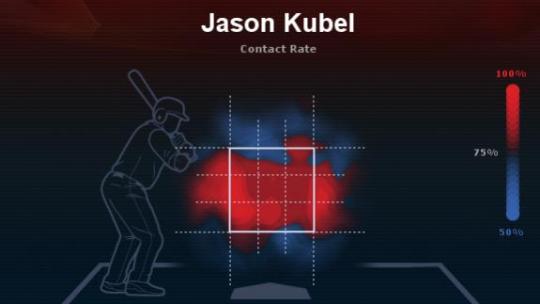
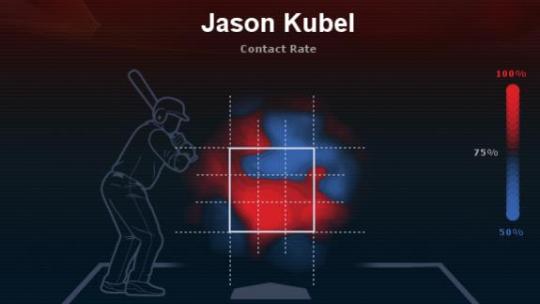
According to the Pioneer Press's Mike Berardino, outfielder Jason Kubel, who was released by the Cleveland Indians earlier in the day, said he would be interested in a reunion with the Minnesota Twins. One of Kubel's biggest issues in 2013 was his inability to handle fastballs. According to ESPN Stats & Info, in 2012 Kubel hit .298/.368/.616 with 20 home runs and a whopping .309 well-hit average. That dropped considerably in 2013 when he finished the year hitting .261/.315/.400 with just 3 home runs and a well-hit average of .171 off of fastballs. (2012) (2013) Opponents attacked the upper portion of the zone more in 2013 (37% versus 30% in 2012) and Kubel’s lack of bat speed resulted in far less contact and power output. While Kubel may be a bounce back candidate after his 2013 season, the Twins are not in need of a corner outfielder or designated hitter at this point. Oswaldo Arcia, in theory, can provide just as much production as the former Twin can.
-
Wolfson: Starting pitching on the Twins' radar
Parker Hageman replied to Brock Beauchamp's topic in Minnesota Twins Talk
1500ESPN.com’s Darren Wolfson writes that league sources have told him that the Twins are already active in the free agent market, showing interest in pitchers Jason Vargas (9-8, 150 IP, 109/46 K/BB and 4.29 xFIP), Ubaldo Jimenez (13-9, 182.2 IP, 194/80 K/BB and 3.62 xFIP) and Ricky Nolasco (13-11, 199.1 IP, 165/46 K/BB and 3.58 xFIP). Wolfson also says that the Twins are believed to have Ervin Santana (9-10, 211 IP, 161/51 K/BB and 3.69 xFIP) on their radar. (For more TwinsDaily.com thoughts on these impending free agents, be sure to pick up a copy of our 2014 Offseason Handbook) In the event of signing Jimenez or Santana, the team would need to forfeit their second round draft pick, a move that General Manager Terry Ryan had said he was willing to make in order to improve the team. How would you rank these targets? Twins plan to be aggressive in free agency, have targeted starters | 1500 ESPN Twin Cities ? Minnesota Sports News & Opinion (Twins, Vikings, Wolves, Wild, Gophers) | Sportswire: Minnesota Twins -
Minnesota Twins announce Diamond Award winners
Parker Hageman posted a topic in Minnesota Twins Talk
The Minnesota Twins announced their annual Diamond Award winners today as voted on by the Twin Cities members of the BBWAA. Among those receiving honors were: Joe Mauer (MVP), Glen Perkins (Pitcher of the Year), Caleb Thielbar (Most Outstanding Rookie), Brian Dozier (Most Improved Twin and Media Good Guy), Pedro Florimon (Defensive Player of the Year) and Justin Morneau (Bob Allison Award for all-around contribution on and off the field). In the minor leagues, Byron Buxton takes home the Minor League Player of the Year award while Andrew Albers receives the Minor League Pitcher of the Year award. The ninth annual Diamond Awards will be held on January 23rd at Target Field. The Diamond Awards is an event whose proceeds goes to support the University of Minnesota's innovative research and patient care focused on ALS (Lou Gehrig's Disease), ataxia, muscular dystrophy, multiple sclerosis and Parkinson's disease. For more information on the event: Diamond Awards | Minnesota Medical Foundation & Minnesota Twins -
You can view the page at http://twinsdaily.com/content.php?r=2410-Revisiting-October-Gladden-Powers-Twins-In-Game-One
-
Revisiting October: Gladden Powers Twins In Game One
Parker Hageman posted a blog entry in Over the Baggy
-
With tickets and Homer Hankies sold out for days, Minnesota Twins fans were more than ready for the main event to start. However the World Series did not start off in the Twins’ favor. Not immediately anyway. The Cardinals clung to a one-nothing lead through the first three innings. Jim Lindeman, a former roommate of Kirby Puckett’s at Bradley University, reached on a double after his old roomie misjudged what should have been a caught popup to shallow center and later scored on an RBI groundout by Tony Pena. [PRBREAK][/PRBREAK] Shortstop Greg Gagne, who fielded the Pena bouncer that allowed Lindeman to score, drew criticism from ABC’s analyst Tim McCarver for the play. McCarver’s analysis, as the Star Tribune’s Bob Lundgaard pointed out, was wrong -- which is surprising considering the color man’s usually spot-on takes. As it turns out, the run proved to be as harmless as a minnow bite. Although the left-handed Joe Magrane, a former Minnesota resident himself, had kept the potent Twins hitless through the first three innings, the Twins offense came alive in the fourth inning. Gary Gaetti, the American League Championship Series MVP, led off the bottom of the fourth with a single. Prior to the game, Gaetti had chatted with reporters in the clubhouse about the Twins’ chances of winning the Series. After Gaetti’s single, Don Baylor did the same. Ditto for Tom Brunansky. Kent Hrbek followed suit with a chopper up the middle and drove in the team’s first two runs of the Series. People worried about Hrbek. After all, he had gone 1-for-20 in the ALCS against Detroit. The single, even if it was just a chopper, helped reassure fans he was OK. Later, he talked about that at-bat to the Star Tribune’s Tony Moton. When Steve Lombardozzi walked, the fifth consecutive Twins hitter to reach base, Whitey Herzog emerged to tell Magrane his night was over. Magrane exited to a chorus of “Happy Trails” by Twins fans. Herzog called on veteran Bob Forsch. Catcher Tim Launder promptly started the singles parade again to score another run and reload the bases. That's when outfielder Dan Gladden came to the plate. During the regular season, the mulleted Gladden had seven plate appearances with the bases loaded. He had managed just a single in those at-bats. Earlier in the game Gladden had grounded into a fielder’s choice, eliminating Tim Laudner, who had walked in front of him, at second. With one out, Magrane decided to pay extra attention to the Twins’ outfielder, throwing over to first nine consecutive times reported one Star Tribune blurb. (Nevertheless, on the next batter, Gladden promptly stole second.) Magrane admitted after the game he focused too much on Gladden, wrote Star Tribune staff writer Jon Roe. Now, with the bases loaded and Magrane out of the game, Gladden launched a 1-2 Forsch offering over the left field plexiglass for the first grand slam in a World Series game since 1970 and put the Twins squarely ahead 7 to 1. The noise at the Dome registered 118 decibels -- the same as a jet taking off -- when the ball cleared the fence. Twins shortstop Greg Gagne said afterwards that the volume of the crowd was unbelievable at that moment. Sid Hartman later talked to then-Twins general manager Andy McPhail regarding the process of acquiring Gladden late in spring training that year. After the game Steve Lombardozzi, who would be the recipient of a Gladden punch a season later, raved about the outfielder’s contributions to reporter Dennis Brackin. The Twins’ starting pitcher Frank Viola, who had to forgo being the best man at his brother’s wedding, was unsolvable for the majority of the game. Having a 10-1 lead didn’t hurt either. Outside of the Puckett misplay that led to the Cardinals’ only run, his results were virtually flawless. Prior to being pulled after eight innings, he retired 12 of the last 14 batters he faced and did not allow a baserunner past first from the fourth inning on. If things had gone differently and the Twins were inclined to shop Viola during the lean years, he may have been in the other dugout, wrote the Star Tribune’s Steve Aschburner. The action off the field was just as intense, particularly for the wife of one Cardinal player. Booker was also three months pregnant at the time and was deemed by the hospital to be in fair condition afterward. Her husband, Rod, was actually a former Twins draft pick who had spent three seasons in the organization, reaching AAA in 1982, but was purchased by the Cardinals shortly after the 1983 season began. Booker was left off the World Series roster in 1987. A few sections away from Booker’s knockout, Chip and Wendy Lantz had donned a tuxedo and a white dress. The Anoka couple had wed just hours before the first pitch and found themselves with tickets to the biggest game of the year. It almost didn’t happen -- the game, not the wedding. The bride had a ticket, the groom did not. She told columnist Jim Klobuchar she was ready to go the game -- on her wedding night -- minus the new hubby. That is, until her two brothers gave them a surprise wedding gift. The newlyweds’ good fortune finding a pair of tickets was not the norm around the area. That morning, the Twins placed 11,200 tickets for games 6 and 7 and the seats could only be ordered by phone from Dayton’s. The rush of calls overwhelmed the phone grid, Northwestern Bell’s agents told the Star Tribune’s Mary Jane Smetanka, knocking out service as far west as Bismarck, North Dakota as well as parts of South Dakota, Iowa and Wisconsin. While the inconvenience lasted just a few hours, it was enough to irk some residents of the state. Oh. I'm sure watching Joe Magrane throw over to first nine times in a row to keep Dan Gladden close didn't help the pace. **** More Revisiting October: October 12, 1987: Twins Top Tigers October 16, 1987: Twins Mania Grips Minnesota
-
You can view the page at http://twinsdaily.com/content.php?r=2409-Revisiting-October-Twins-Mania-Grips-Minnesota
-
Beneath the fold of the October 17 edition of the Star Tribune was a story that may have grabbed larger headlines anywhere outside of this market. On the morning of October 14, an eighteen-month-old little girl by the name of Jessica had horrifically fallen 22 feet into a well in the backyard of a Midland home in West Texas. Improbably, she lasted two days and change without food and water while rescuers dug through bedrock to reach her. [PRBREAK][/PRBREAK] When she was lifted out of the narrow hole on October 16, she was caked in dirt but retrived without a scratch. It was nothing short of miraculous. On a far less life-threatening level, Minnesota baseball fans had witnessed their own miracle and the citizens reacted with the same jubilation and exuberance. Pitted against a Detroit Tigers’ team which had won more games than anyone in baseball while scoring nearly six runs per game -- a team which had won 8 of 12 and outscored them 83-to-58 -- the Twins had somehow emerged victorious. On October 16, World Series fever had a full-out stranglehold on the Twin Cities. It would be, after all, the first World Series played in Minnesota in 22 years. This Minneapolis-St Paul was completely different from the sleepy town that hosted its first Series in 1965. When the Dodgers came to Minnesota that year, the rivalry between the Twin Cities was still going strong to the point where a disagreement on daylight savings time resulted in an hour difference between the two metropolitan cities divided by a river. The area’s population had exploded in the 1980s and the new inhabitants were elated to be on baseball’s grand stage. Nothing else mattered. The night before, the NBA made a preseason appearance at the Met Center. The Milwaukee Bucks hosted the Seattle SuperSonics in front of a crowd of 5,350 -- a lowly number even by preseason standards. Met Center officials admitted they were anticipating 7,500 to 9,500 but when the World Series forced the University of Minnesota to reschedule their football game from Saturday, October 16 to Friday, October 15 it creating a head-to-head with the exhibition game. But David Shama, the Met Center’s marketing director, told the Star Tribune’s Tom Moton that the real reason for the sparse crowd was the Twins mania that had swept the area since clinching the American League pennant in Detroit. Nicollet Mall was freshened up with 150 new banners inscribed with “How ‘bout Them Twins?” Northwest Airlines reported that the four daily nonstop flights between Minneapolis and St. Louis with 422 seats were sold out for the impending games in St. Louis. Juan Berenguer, Tony Oliva Les Straker and Al Newman took to Prince’s Chanhassen studio to record “The Berenguer Boogie”, an anthem and video created in what seemed to be 15 minutes to capture the flame-thrower’s patented move. Street vendors had flooded the downtown areas of Minneapolis and St. Paul, peddling their fresh World Series wears that people happily snapped up quickly. On the popular culture front, the Kirby Puckett haircut was suddenly (and inexplicably) a thing. The Star Tribune, who had created and distributed the Homer Hanky, announced that they were completed sold out even before to the biggest game of the decade. On the front page, Tom Culligan, the paper’s Vice President of Marketing, informed readers that there were “four factories working around the clock producing hankies” but there would be a limited number of the wildly popular handkerchief available at the Star Tribune’s headquarters that afternoon. Columnist Jim Klobuchar documented the scene. Everyone wanted one. Those who were unable to get one at the Star Tribune headquarters that day were forced to wait weeks for mail order delivery. The main event, Game One, was just a day away. ABC, who covered the World Series in odd-number years, had the privilege of broadcasting the series between two teams from fly-over land. The network would be pulling out all the stops when it comes to coverage by using 12 cameras. This is quaint compared by modern standards. In 2012, Fox employed 38 cameras total including five new slo-mo high speed cameras. But that would be for those who were not fortunate enough to score tickets to the actual game. And there were plenty who did not. Even Twins owner Carl Pohlad was not immuned to the mania gripping the fanbase - his phone wouldn’t stop ringing with ticket requests from long-lost acquaintances he told staff writers Rob Hotskainen and Randy Furst. In preparation for next day’s game, focus shifted towards the two men who would climb the mound. For Minnesota, that would be the left-handed Frank Viola. The 27-year-old Viola had finished the year 17-10 with a solid 2.90 ERA (a career-best 159 ERA+) but was facing a significant off-field ordeal: His younger brother had scheduled his wedding for October 17 and Frank was supposed to be the best man. Naturally, as much as it pained him, Frank was not going to cancel his first World Series visit for his brother’s wedding, writes Steve Aschburner. As for the match-up on the field, it was the cliched power versus speed. The Twins had slugged 196 home runs in the season while the Cardinals finished last with 97. First baseman Kent Hrbek had led the Twins with 34 home runs and could out-mash anybody on the Cards’ roster, save for the injured Jack Clark (35), but would be hard-pressed to beat any of them in a foot race around the bases with a five minute head start. The Cardinals, meanwhile, excelled in the National League thanks to strong on-base presence (.340 OBP - 4th in MLB) then robbing the next base (248 steals). They also had a stalwart pitching who allowed just 4.4 runs per game compared to the Twins’ 5 runs. Doug Grow summarized the clubs. The 1987 World Series would mark the first time baseball would play the game under a roof. The game’s purists lambasted the notion. before the Series, Peter Gammons, then with Sports Illustrated, wrote that “There’s the matter of taking any team seriously that makes its living in the Metrodome. Humpball is the name of the game played there.” Jay Weiner, who would later go on to pen Stadium Boondoggles after his coverage of the Twins’ stadium plea in the late 1990s, defended the Dome’s honor and pointed out that purists hated all changes about the game and the transition to indoor ball was a natural evolution. No one will blame Weiner for his miss on that one.
-
Revisiting October: Twins Mania Grips Minnesota
Parker Hageman posted a blog entry in Over the Baggy
-
You can view the page at http://twinsdaily.com/content.php?r=2402-Revisiting-October-Twins-top-Detroit
-
Not long ago, we had to sell my grandmother’s house. As part of the purging process, a box filled with newspapers from the Minnesota Twins’ championship seasons in 1987 and 1991 were discovered. The newspapers, still reeking of the stale cigarette smoke that saturated her entire dwelling, are pure gold.(1) As the resident family baseball-phile, the archive was entrusted to me. Without much to do with the box, other than keep it away from fire - paper’s worst enemy - the only other thing I could think about doing with them is sharing the important snippets. [PRBREAK][/PRBREAK]Today we go back to the happenings of October 12, 1987, as reported from the October 13, 1987 Star Tribune. **** When closer Jeff Readon corralled the Matt Nokes comebacker and ran it towards the looming Kent Hrbek before flipping him the ball and then following his throw into his first baseman’s arms, the Twins were poised to return to baseball’s biggest stage 22 years after being beaten by the Los Angeles Dodgers. In the Twins clubhouse at Tiger Stadium, Star Tribune staff writer Doug Grow followed the team’s alcohol-soaked celebration. Gaetti would finish the championship series 6-for-20 (.300) but have two home runs in the first game of the series(2). Those two were collected off Detroit’s starter and big mid-season acquisition, Doyle Alexander, who cost the Tigers one John Smoltz. Following the game, staff writers Mark Vancil and Dennis Brackin got Kirby Puckett and Kent Hrbek’s feelings on being one step away from being the best in baseball: The disbelief in a team that had squeaked out an 85-77 season - one that had gone 29-52 away from the covered stadium - and had somehow conquered the 98-win Tigers, on their turf no less, permeated everywhere. Columnist Jim Klobuchar summarized the thoughts on this ragtag bunch nicely: Neat. Outdated fat jokes. As for Gaetti, yes, he had one of his worst offensive months of the season in September, finishing the final month with a .243/.287/.393 slash after hitting .260/.307/.505 prior to that. Certainly, the Twins stunned plenty of people including former sports columnist turned radio host Dan Barreiro. This Barreiro had been incredibly incredulous that this assortment could withstand the onslaught of the favored Tigers - specifically because of the Twins’ tendency of being “domesick” when away from the home confines. Barreiro lists twenty reasons why this series victory was improbable including: Barreiro, always the instigator, would also point out that manager Tom Kelly’s gamble to move starter Bert Blyleven up to Game 5 rather than go with Joe Niekro or Les Straker paid off. Had it backfired and the Tigers come away with a win, Kelly would have been forced to use either Niekro or Straker in Game 6 and have Frank Viola as the insurance policy in the event of Game 7, rather than just set his rotation for a more conventional Blyleven/Viola combination for the series’ last two games. The moral of the story? Tom Kelly has balls. Another one of Barreiro’s reasons for the improbable win was the pick-off of the Tigers’ veteran Darrell Evans at third during the sixth inning of Game 4 (the Tigers would lose 5-3). The sports page’s most tenured columnist, Sid Hartman, wrote a lot of notes(4), including one that had quoted (for some reason, I guess) legendary Michigan football coach Bo Schembechler who defended the Tigers’ Darrell Evans’ play. Gaetti explained how the play went down to Hartman: But what about the celebration back in the Twin Cities? Everyone knows that the Twins returned home from Detroit to a Metrodome that was filled to the brim with rabid fans, eager to cheer on the hometown team. Star Tribune reporters Norman Draper and Kurt Chandler documented the pandamonium. The Twins landed at the airport at 10:05 PM and were police escorted downtown to the stadium. The team’s postseason coordinator Jaime Lowe, said that they anticipated 4,000 to 6,000 people when they started planning the event - and there was even a bit of concern there would be no one to greet them. How wrong they were. Prior to letting the gates open, a crush of fans descended to the gates and the raucous mob waved Homer Hankies and screamed while a Dixieland Band played “Take Me Out to the Ballgame.” Officials allowed people in an hour earlier than expected to allow an estimated 55,000 fans stream in. Elsewhere, at Champp’s Sports Cafe(5) in Richfield, where the venue was overflowing with fans watching the clinching game and enjoying what is assumed to be adult beverages. The interviews with patrons reveal some of the enduring Minnesota mindset that has plagued citizens of the states through the ages. Yup. Loserville. What was the scene like inside the bar when the Twins got that final out in Detroit? For the impending World Series, whose National League challenger had yet to be determined, fans lit up the Twins ticket office to get their hands on the state’s most sought after seats since 1965. Employees, however, had to inform the callers that they would need to go to Dayton’s department store in order to procure tickets.(6) This sales process is unfathomable to the younger generation. Think about it. Instead of being able to log into the team’s website from the comfort of your own home (let alone pay over the phone), you had to physically go to a building and wait in line. With other people. Germs and awkward conversation. The horror. That night, the temperature dropped to a crisp 35-degrees as fans camped out in front of one of seven area Dayton’s locations. In play, reports Jon Jeter and Norman Draper, were tickets mainly for upper deck outfield and a few lower level locations. $20 or $30? Twenty-six years later, SeatGeek.com says you can purchased hypothetical Detroit Tigers World Series tickets for a small fee of $300. Times have a-changed. **** (1) The discovery of the box also made me realize that when I am forced out of my home or go tits-up and my kids and grandkids come to clean the clutter, no one will find any newspapers. At best? Tons of crappy DVDs which I haven’t figured out how to get rid of and the sight of which makes me furious for being so frivolous with my money. Who the hell needs to own two copies of American Pie 2? (2) It was somewhat of an odd decision to choose Gaetti considering the numbers Brunansky had put up. Bruno matched The Rat’s home run total (2) but had driven in nine to Gaetti’s five and gone 7-for-17 (.412). Star Tribune staff writer Dennis Brackin would point to Gaetti’s intangibles, including the call for the Darrell Evans pick-off in Game 4 and acting as a sparkplug for initiating the scoring in Game 1 by homering in his first two series at-bats. Still, while he got to drink out of the same trophy, Bruno missed out on the added $25,000 bonus Gaetti received for winning the award. (3) The left-handed Dan Schatzeder, who the Twins had acquired in June for Tom Schwarz and Danny Clay, had been atrocious in Minnesota. In 43.2 innings, he allowed 64 hits and 37 runs. The reason why his four and a third scoreless ball was so remarkable is that in his 30 appearances for the Twins, he only had 13 clean innings. Oh, and left-handed hitters had hit .353/.405/.515 off of him in that time as well making people question why Anderson was afraid to turn to his lefty bench bats. (4) Another one of Hartman’s notes included the Twins desire to bring back impending free agents in reliever Juan Berenguer and designated hitter Don Baylor. Hartman pointed out that Berenguer took a “$200,000” pay cut to sign with the Twins while GM Andy McPhail was quoted as wanting to pursue Baylor but admitted the team wouldn’t be able to match his $850,000 salary in 1988. In the end, the Twins re-signed Berenguer to a three-year, $1.875M contract while Baylor walked, later signing with Oakland for $495,000. Berenger pitched in 164 games during that contract and had a 3.61 ERA. Baylor would hit just .220/.332/.326 with the A’s in 92 games (he would get hit by a pitch 12 times at the plate). (5) Ask John Bonnes about their special dipping sauce and watch his face light up like it is effin’ Christmas morning. (6) Kids, once upon a time Macy’s was once called Dayton’s.
-
-
Article: Did You Know?
Parker Hageman replied to Parker Hageman's topic in Twins Daily Front Page News
Disagree. It is two outs - one more than one out - on one play. Think about that. But the point is valid, GIDP is not a predictor for anything nor is it the means to determine if a hitter is successful in a given season too. After all, Billy Butler led the AL with 28 and was still a very productive hitter. A lot of that has to do batting regularly with runners on base. In the end, it is simply statement of fact -- not any sort of analysis behind it -- Twins did not hit into many double-plays. -
Article: Did You Know?
Parker Hageman replied to Parker Hageman's topic in Twins Daily Front Page News
And nobody here gives Bruno any credit... -
Sid: Pohlads Ready To Spend
Parker Hageman replied to Parker Hageman's topic in Minnesota Twins Talk
I do like what Cleveland did this past offseason but I think they were successful by waiting for the market to develop rather than attack it. Swisher was signed in November but Bourne was signed mid-February (credit the Indians for letting the CF market run dry and getting him at a reduced rate, I guess). However, the Indians had a strong core and high-upside arms in the rotation (a huge difference between the Twins and Indians). If you are the Twins, you just are going to sell free agents on the two-year plan -- building towards 2014/2015. -
Article: Did You Know?
Parker Hageman replied to Parker Hageman's topic in Twins Daily Front Page News
Bad, yes, but not as bad as bouncing into a double-play. -
In keeping with the line that has been conveyed to the media and season ticket holders, Minnesota Twins owner Jim Pohlad reaffirmed that he will be allowing for more spending in 2013 – suggesting that he will go beyond the 54% of gross revenue that has been typical of teams. In conversation with the Star Tribune’s Sid Hartman, Pohlad said: Pohlad then reiterated that the team would not be handing out long-term contracts to aging players: This issue, of course, is that the majority of free agents tend to be later in their careers and anyone after 30 years is in decline or approaching decline anyways. Still, could they sign a guy like Tim Lincecum, Phil Hughes, Josh Johnson or Ricky Nolasco to a multi-year deal? For that type of talent, the Twins may need to invest $15M a year for four years, similar to the contract that Anibal Sanchez signed with Detroit. With less than $50M in payroll heading into 2013, it should be easily feasible. In all, Pohlad is saying the right things in his talking points – the team is frustrated and the willingness to spend (within reason) is there. We’ll see how it works out in practice.

