



Seth Stohs
-
Posts
25,909 -
Joined
-
Last visited
-
Days Won
109
Content Type
Profiles
News
Minnesota Twins Videos
2026 Minnesota Twins Top Prospects Ranking
2022 Minnesota Twins Draft Picks
Minnesota Twins Free Agent & Trade Rumors, Notes, & Tidbits
Guides & Resources
2023 Minnesota Twins Draft Picks
The Minnesota Twins Players Project
2024 Minnesota Twins Draft Picks
2025 Minnesota Twins Draft Pick Tracker
2026 Minnesota Twins Draft Tracker: Picks & Bonuses
Forums
Blogs
Events
Store
Downloads
Gallery
Everything posted by Seth Stohs
-
Zulgad: Does Schafer have a chance to steal CF
Seth Stohs replied to Seth Stohs's topic in Minnesota Twins Talk
I tend to agree... most likely he's best suited as a speed/defense fourth outfielder, but he was once a top prospect and is still just 28 or so. Maybe he just needed an opportunity and he's matured to the point where now he's ready. That would be awesome for the Twins. Of course, we all want Hicks to become what we think that Hicks can become... -
Wetmore: Catchers were too easy to run on
Seth Stohs replied to Seth Stohs's topic in Minnesota Twins Talk
I've never said that pitch framing isn't a thing. I was a catcher for a few years. Pitch framing is a big part of the game, it's absolutely a coachable skill. I question that statistic Pitch Framing, as I believe there is too much human error that goes into that skill. Who the hitter is, who the pitcher is, who the catcher is, who the umpire is, etc. -
Phil Mackey and Judd Zulgad are in Ft. Myers this week for Twins spring training. Their 9 to 1 radio show is being done live from there with special guests each day. Zulgad wrote up an article asking whether Jordan Schafer could steal the center field position this spring. With Aaron Hicks in the possible plans, and Byron Buxton in the picture, and Danny Santana seemingly as a fall-back plan, few are talking about Schafer as a potential starting option. His speed is apparent in the outfield and on the basepaths and can be a valuable commodity for the team. He is certainly in the conversation.
-
1500 ESPN's Derek Wetmore is in Ft. Myers this week. He wrote about how easy it was to run off of the Twins catchers last year. Or, at least they did not throw out many base stealers. Some of that, of course, is on the pitchers as well. Paul Molitor plans to fix that, pointing out that power is down, so base stealing may be up again.
-
40 man roster: Non-Roster invites
-
Article: Catching Up With The Klaw: Part 1
Seth Stohs replied to Seth Stohs's topic in Twins Daily Front Page News
I guess I didn't really read that at all... -
Interesting Reusse article about Eddie Rosario
Seth Stohs replied to glunn's topic in Twins Minor League Talk
If they think he should be at AAA, he's not going to be held back. They'll make room for him. If they have some reasons (patience at plate, something else) to keep him in AA for a month, they'll move him up there. The prospects, like Rosario, will move on their time. Each level presents something different. The 28-30 year old pitchers with the polish and pitch mix will be good for him. -
I remember trying to figure it out, and if they doubled the monthly salary for each minor leaguer not on the 40 man roster and not yet a minor league free agent, it would add up to less than $2 million a year. I guess as an MLB team, I would look at that - in today's economics - as a great way to help make the lives of your minor leaguers more comfortable. I see no negative in that. I do think that the academy in Ft. Myers is a great thing and helps a lot for guys at Instructs or during spring training when they don't make anything but a little per diem.
-
Article: Catching Up With The Klaw: Part 1
Seth Stohs replied to Seth Stohs's topic in Twins Daily Front Page News
Personal opinion, but I think you'll enjoy Part 2 also. I'm the same way though, looking through old Twins rosters and wanting to remember and learn more about the history of this organization. -
I love this stuff! I think it speaks volumes about the need for minor leaguers to make even a little bit more money. AJ is a wonderful person and always happy to talk baseball. We'll have to keep up with his Chanhassen baseball team throughout their season!!
-
Article: Catching Up With The Klaw: Part 1
Seth Stohs replied to Seth Stohs's topic in Twins Daily Front Page News
I'm curious how many Twins Daily readers remember this story. I was 9, and I remember hearing about it... but I'm old! Ha! Part 2 is fun too. Terrific guy! -
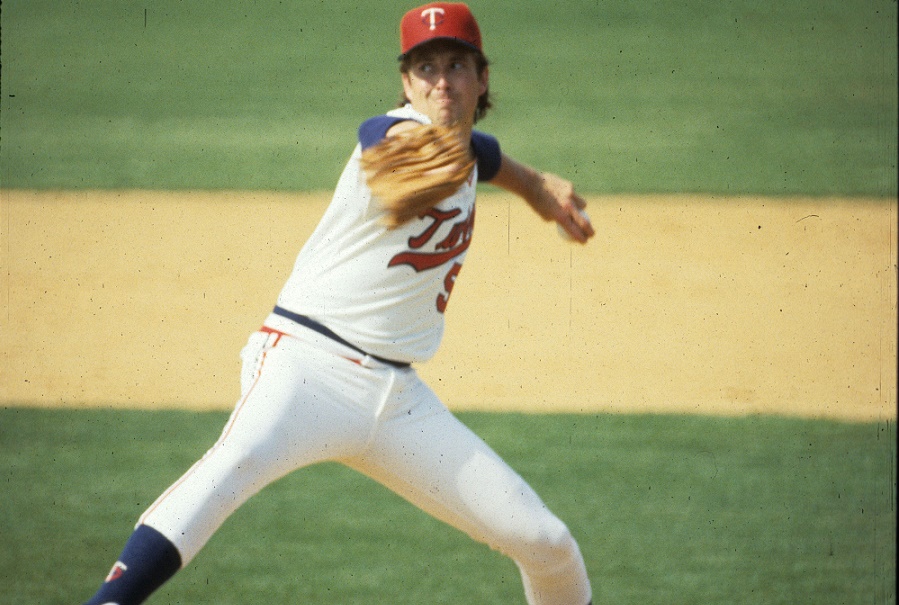
Thirty years ago, a pitcher arrived at Tinker Field in Orlando for Minnesota Twins spring training as a non-roster invitee. He was left-handed. He had a last name conducive to a classic nickname. He took advantage of his opportunities, and he made the 1985 Twins Opening Day roster. Tom Klawitter lived a dream held by anyone who has ever picked up a bat and a ball.Anything can happen. Dreams can come true. Tom Klawitter’s big league career may not have been real long. Many Twins die-hards may not even remember it. However, his story is one worth telling. It’s worth telling to Minnesota Twins fans. It’s worth telling to Minnesota Twins minor leaguers, and minor leaguers across baseball. It’s also worth telling to kids who dream of getting to the big leagues. Klawitter was born in 1958 in LaCrosse, Wisconsin. Asked if he was a Twins fan, Klawitter said, “It’s kind of funny. As a kid, I was kind of a front-runner. Back in the late-60s, I was an Orioles fan, and then I became a Dodgers fan after I got drafted. I did have a connection to the Twins with (former Twins 3B) Craig Kusick being from LaCrosse.” He wasn’t drafted out of high school, and then he stayed home for college. He spent four years at the University of Wisconsin, in LaCrosse. It was there that, despite being a northern school, he started to get the attention of area scouts. “I got to my senior year. I was 5-0, and the guys down south were 15-and-whatever, so I didn’t expect (to get drafted).” In June of 1980, Klawitter was the 19th round draft pick of the Los Angeles Dodgers. At the time, the Dodgers were one of the most popular teams in baseball. They had players such as Steve Garvey, Fernando Valenzuela, Ron Cey and more household names. Klawitter said, “It was obviously a great opportunity for me. That was quite an experience being around all those great ballplayers. When I got up there early, it was Ron Cey and Valenzuela and those guys that were in the majors at the time. Garvey. Tommy Lasorda. In ’81 I went to camp there. It was quite an experience to see those guys. I was pretty spoiled at the time. The Dodgers were a first-class, top-of-the-line organization. Vero Beach was the place to be. You got treated pretty well down there.” In 1980, he had the second most starts for a Lethbridge (Rookie League) team that went 52-18. In 1981, he won 11 games for Lodi of the California League. In 1982, he made the jump to AA San Antonio. The then-24-year-old went 9-14 with a 5.30 ERA that year. The next spring he returned to San Antonio, but his stay there was short. After just seven games, he was released by the Dodgers. It was a tough time for Klawitter, but good came from it. “That’s a tough thing. It’s like being let go from your job. Obviously it’s pretty tough on you. Fortunately, I was able to come back pretty close to home and got picked up by the Twins.” The Twins signed him and sent him to Low Class A Wisconsin Rapids, a town less than a two-hour drive from his hometown of LaCrosse. “That was just what the doctor ordered. I was back in my old stomping grounds, where I had a lot of success. It seemed to pump in a lot of confidence, and I pitched pretty well. So that was kind of the start of it.” Over 23 appearances (21 starts) with Wisconsin Rapids, Klawitter went 10-5 with a 2.99 ERA in 156.1 innings. The next season, 1984, he jumped all the way up to AAA Toledo. “Being in AAA with the Mudhens is another great experience, and I had a pretty good year there too.” He made 26 starts and went 10-6 with a 3.59 ERA for the Mudhens. The roster was made up of several of the players who would become big pieces of the Minnesota Twins 1987 championship team. Playing for manager Cal Ermer, the team went 74-63. The Minnesota Twins 1984 team went late into the season before falling out of playoff contention, but prior to the age of social media, most of the players in Toledo weren’t really keeping tabs on the big league club, including Klawitter. “For me, I was so happy to be there that I didn’t even notice that some of the guys were really pressing to get to the big leagues or back to the big leagues or whatever. It was a really good time, and I was pitching well. When you’re playing well, it’s a lot more fun. I was right in the rotation, and Cal Ermer had a lot of confidence in me. The dynamics of the team were, I mean, we had a pretty close group of guys. I think that’s why we were successful. We did pretty well right up to the end. We had a good mix of guys that had had a taste of it and guys that were just trying to get a part of it. It was pretty neat.” Klawitter continued, “I’m not even sure we had anyone called up that year from our team. Brad Havens might have been. We were kind of in the thick of what we were doing. Scott Ullger was one of our outfielders. Bobby Mitchell, who came over from the Dodgers, I knew. It was just a bunch of great guys who, I mean, I really felt that we played for our team and not so much for ourselves. You don’t find that a lot in pro ball.” He truly enjoyed the opportunity. “It was a phenomenal opportunity at the time. That’s when I first started my friendship with Kirby. He was in AAA for a month and then he got called up right after that.” Klawitter performed, and because of it, he received a non-roster invitation to major league spring training with the Twins. He was excited about the news and another opportunity. “I was surprised and obviously very thankful. I took whatever I could get. I wasn’t disappointed that I wasn’t on the 40-man roster. I was thankful for the opportunity to get that chance. They sent me my contract, and it said this, but you’re a non-roster player, and come down with the big club in Orlando. We did pretty much what everyone was doing, just the fact that we were not on the roster. We went about our business and just hoped for an opportunity. I got down there and made the best of it.” He was also realistic about his chances of making the big league club out of spring training. “I thought I could have gone back to Toledo, and I would have been fine with that. I was playing pro ball, and I guess you can look at it any way you want to. It was a lot of us non-roster guys throwing batting practice and doing this or that and that’s part of everything.” In fact, his first spring training outing wasn’t really even supposed to happen, or at least not likely. “I believe somebody was looking out for me,” Klawitter explained. “The coaches told me to go warm up, that I had the ninth. We were on the road and down by I don’t know how many runs. The chances of me getting in the game were not good. Sure enough, we came back and went ahead. I went out there and shut them down in the ninth.” He believes that the coaches thought to themselves, “Wow! Maybe this guy can pitch.” One outing became two, and then three, and so on. “I didn’t really watch who else was pitching, but a couple of other guys weren’t getting the job done. I had a pretty good spring.” With the last name of Klawitter, it was clear that his nickname since his young years was The Klaw. As spring went along, and he was experiencing success, his nickname became a big part of his story At the same time, Baron von Raschke was very popular among pro wrestling fans. His signature move was The Claw. The match only made too much sense, and it just took off, with the help of one of his teammates. “(Twins Hall of Famer Kent) Hrbek was fun-loving, and he was kind of into this wrestling with Baron von Raschke, and it was just perfect timing for me.” “It was absolutely a blast. It took some of the pressure off. It just kind of kept building. You get Hrbek feeding off it, and (Gary) Gaetti started saying stuff. Then all of a sudden (manager Billy) Gardner, I don’t know why, stuck his hand out and started doing The Claw and it worked on its own,” Klawitter continued, “Like I said, someone was looking after me and it was a perfect opportunity for me. In the right place at the right time. It was definitely a high spot in my career, I’ll tell you that.” Instead of pitching when the games were out of hand, Klawitter started pitching in the seventh inning or in more important game situations. That’s when he figured he had a chance to make the team. Even toward the end of spring training, he was pretty certain that he would head back to Toledo. It wasn’t until very late in camp that somebody told him that he had made the Twins opening day roster. Klawitter recalled, “That was such an honor. I can’t even remember how it happened.” The first phone calls he made were to his family. “You’d like to call everybody. It’s more of a conversation like, ‘you won’t believe this, but I’m breaking with the big club.’” Tom Klawitter was the story of Twins spring training thirty years ago. His story did not end when he was called up to the Twins. In Part 2 of this Tom Klawitter story, we discuss his brief time in a Twins uniform. We will also tell you what has kept him busy, competitive and successful since his retirement. Please feel free to leave your questions and comments below. Click here to view the article
-
 Anything can happen. Dreams can come true. Tom Klawitter’s big league career may not have been real long. Many Twins die-hards may not even remember it. However, his story is one worth telling. It’s worth telling to Minnesota Twins fans. It’s worth telling to Minnesota Twins minor leaguers, and minor leaguers across baseball. It’s also worth telling to kids who dream of getting to the big leagues. Klawitter was born in 1958 in LaCrosse, Wisconsin. Asked if he was a Twins fan, Klawitter said, “It’s kind of funny. As a kid, I was kind of a front-runner. Back in the late-60s, I was an Orioles fan, and then I became a Dodgers fan after I got drafted. I did have a connection to the Twins with (former Twins 3B) Craig Kusick being from LaCrosse.” He wasn’t drafted out of high school, and then he stayed home for college. He spent four years at the University of Wisconsin, in LaCrosse. It was there that, despite being a northern school, he started to get the attention of area scouts. “I got to my senior year. I was 5-0, and the guys down south were 15-and-whatever, so I didn’t expect (to get drafted).” In June of 1980, Klawitter was the 19th round draft pick of the Los Angeles Dodgers. At the time, the Dodgers were one of the most popular teams in baseball. They had players such as Steve Garvey, Fernando Valenzuela, Ron Cey and more household names. Klawitter said, “It was obviously a great opportunity for me. That was quite an experience being around all those great ballplayers. When I got up there early, it was Ron Cey and Valenzuela and those guys that were in the majors at the time. Garvey. Tommy Lasorda. In ’81 I went to camp there. It was quite an experience to see those guys. I was pretty spoiled at the time. The Dodgers were a first-class, top-of-the-line organization. Vero Beach was the place to be. You got treated pretty well down there.” In 1980, he had the second most starts for a Lethbridge (Rookie League) team that went 52-18. In 1981, he won 11 games for Lodi of the California League. In 1982, he made the jump to AA San Antonio. The then-24-year-old went 9-14 with a 5.30 ERA that year. The next spring he returned to San Antonio, but his stay there was short. After just seven games, he was released by the Dodgers. It was a tough time for Klawitter, but good came from it. “That’s a tough thing. It’s like being let go from your job. Obviously it’s pretty tough on you. Fortunately, I was able to come back pretty close to home and got picked up by the Twins.” The Twins signed him and sent him to Low Class A Wisconsin Rapids, a town less than a two-hour drive from his hometown of LaCrosse. “That was just what the doctor ordered. I was back in my old stomping grounds, where I had a lot of success. It seemed to pump in a lot of confidence, and I pitched pretty well. So that was kind of the start of it.” Over 23 appearances (21 starts) with Wisconsin Rapids, Klawitter went 10-5 with a 2.99 ERA in 156.1 innings. The next season, 1984, he jumped all the way up to AAA Toledo. “Being in AAA with the Mudhens is another great experience, and I had a pretty good year there too.” He made 26 starts and went 10-6 with a 3.59 ERA for the Mudhens. The roster was made up of several of the players who would become big pieces of the Minnesota Twins 1987 championship team. Playing for manager Cal Ermer, the team went 74-63. The Minnesota Twins 1984 team went late into the season before falling out of playoff contention, but prior to the age of social media, most of the players in Toledo weren’t really keeping tabs on the big league club, including Klawitter. “For me, I was so happy to be there that I didn’t even notice that some of the guys were really pressing to get to the big leagues or back to the big leagues or whatever. It was a really good time, and I was pitching well. When you’re playing well, it’s a lot more fun. I was right in the rotation, and Cal Ermer had a lot of confidence in me. The dynamics of the team were, I mean, we had a pretty close group of guys. I think that’s why we were successful. We did pretty well right up to the end. We had a good mix of guys that had had a taste of it and guys that were just trying to get a part of it. It was pretty neat.” Klawitter continued, “I’m not even sure we had anyone called up that year from our team. Brad Havens might have been. We were kind of in the thick of what we were doing. Scott Ullger was one of our outfielders. Bobby Mitchell, who came over from the Dodgers, I knew. It was just a bunch of great guys who, I mean, I really felt that we played for our team and not so much for ourselves. You don’t find that a lot in pro ball.” He truly enjoyed the opportunity. “It was a phenomenal opportunity at the time. That’s when I first started my friendship with Kirby. He was in AAA for a month and then he got called up right after that.” Klawitter performed, and because of it, he received a non-roster invitation to major league spring training with the Twins. He was excited about the news and another opportunity. “I was surprised and obviously very thankful. I took whatever I could get. I wasn’t disappointed that I wasn’t on the 40-man roster. I was thankful for the opportunity to get that chance. They sent me my contract, and it said this, but you’re a non-roster player, and come down with the big club in Orlando. We did pretty much what everyone was doing, just the fact that we were not on the roster. We went about our business and just hoped for an opportunity. I got down there and made the best of it.” He was also realistic about his chances of making the big league club out of spring training. “I thought I could have gone back to Toledo, and I would have been fine with that. I was playing pro ball, and I guess you can look at it any way you want to. It was a lot of us non-roster guys throwing batting practice and doing this or that and that’s part of everything.” In fact, his first spring training outing wasn’t really even supposed to happen, or at least not likely. “I believe somebody was looking out for me,” Klawitter explained. “The coaches told me to go warm up, that I had the ninth. We were on the road and down by I don’t know how many runs. The chances of me getting in the game were not good. Sure enough, we came back and went ahead. I went out there and shut them down in the ninth.” He believes that the coaches thought to themselves, “Wow! Maybe this guy can pitch.” One outing became two, and then three, and so on. “I didn’t really watch who else was pitching, but a couple of other guys weren’t getting the job done. I had a pretty good spring.” With the last name of Klawitter, it was clear that his nickname since his young years was The Klaw. As spring went along, and he was experiencing success, his nickname became a big part of his story At the same time, Baron von Raschke was very popular among pro wrestling fans. His signature move was The Claw. The match only made too much sense, and it just took off, with the help of one of his teammates. “(Twins Hall of Famer Kent) Hrbek was fun-loving, and he was kind of into this wrestling with Baron von Raschke, and it was just perfect timing for me.” “It was absolutely a blast. It took some of the pressure off. It just kind of kept building. You get Hrbek feeding off it, and (Gary) Gaetti started saying stuff. Then all of a sudden (manager Billy) Gardner, I don’t know why, stuck his hand out and started doing The Claw and it worked on its own,” Klawitter continued, “Like I said, someone was looking after me and it was a perfect opportunity for me. In the right place at the right time. It was definitely a high spot in my career, I’ll tell you that.” Instead of pitching when the games were out of hand, Klawitter started pitching in the seventh inning or in more important game situations. That’s when he figured he had a chance to make the team. Even toward the end of spring training, he was pretty certain that he would head back to Toledo. It wasn’t until very late in camp that somebody told him that he had made the Twins opening day roster. Klawitter recalled, “That was such an honor. I can’t even remember how it happened.” The first phone calls he made were to his family. “You’d like to call everybody. It’s more of a conversation like, ‘you won’t believe this, but I’m breaking with the big club.’” Tom Klawitter was the story of Twins spring training thirty years ago. His story did not end when he was called up to the Twins. In Part 2 of this Tom Klawitter story, we discuss his brief time in a Twins uniform. We will also tell you what has kept him busy, competitive and successful since his retirement. Please feel free to leave your questions and comments below.
-
Article: Real Stories: Cole DeVries
Seth Stohs replied to Parker Hageman's topic in Twins Daily Front Page News
Good point! I love this stuff, the memories, good and bad and the life. DeVries had a very solid, unexpectedly good career for a non-drafted free agent from Minnesota! -
I think this is the lineup I would go with (obviously Suzuki most of the time over Pinto. I'd keep Santana at the top of the order for a couple of months to start the season and see how it goes. I like Mauer in the #2 spot a lot for many reasons. I'd start Dozier hitting third due to his OBP skills and power. I might flip-flop Vargas and Arcia versus lefties. If Plouffe's a 7-hitter, you definitely have a chance to score some runs. And yeah, if Hicks can hit for any average, he should be able to keep that OBP where it is. Keep him at 9 until he's had a couple of really good months.
- 208 replies
-
- 1
-

-
- danny santana
- joe mauer
- (and 1 more)
-
Interesting Reusse article about Eddie Rosario
Seth Stohs replied to glunn's topic in Twins Minor League Talk
In interviews all offseason, Molitor has mentioned Rosario as a possible darkhorse in the CF position battle. After his struggles in AA last year, I think it's a longshot, but he could make the roster if several things break for him. Most likely, he'll start in AAA, though there is a chance he could start in AA for a month too. Definitely a good CF though. If he's on the same team as Buxton, though, Rosario will not play much CF. -
Day 1 of pitchers and catchers is going on right now... Who was there? What were your observations? Share them here, or post your own Blog with pictures and thoughts! I'm so excited that things are starting up again!
-
Gleeman's Top 40 Twins Prospects Lists
Seth Stohs replied to Seth Stohs's topic in Twins Minor League Talk
Posted link to prospects 11-15. -
Gardy declines position in Twins' organization -- taking year off
Seth Stohs replied to glunn's topic in Minnesota Twins Talk
Yup, I don't blame him. He needs a year to just get away. I wouldn't be surprised to see him do some TV work nationally, maybe ESPN or something. I think he'd be terrific! -
I'll never understand Thrylos's disdain for Fien and Thielbar. All Thielbar has done for two seasons is find a way to get people out. Same thing for Fien, with the exception of last September. That's not to say they'll be great, or even good, in 2015. No way to know that with any certainty. But they have been pretty strong the last two years.
-
I would take Matt Guerrier in his prime in the 7th inning any time. Also, regarding his K-rate, it's been close to or just over 9 per 9 the last two years strictly out of the bullpen. Without looking, I'm guessing he didn't face a ton of pitchers coming out of the bullpen.
-
But... What If he is back at 100% and throwing 97-98 with good secondary stuff? That's a guy I would certainly want to keep around. It's worth a shot. I don't know if he's a long shot or what, but we should get a couple of weeks of bullpens and a handful of spring outings before we come up with any definitives.
-
Article: Push Candidate: Travis Harrison
Seth Stohs replied to Shane Wahl's topic in Twins Daily Front Page News
I tend to agree with that... -
Sorry, I just couldn't figure out who it might be and figured I missed some late signing. Stauffer will be fine. He's been solid for awhile. Assuming health, he can be a decent reliever. I don't know what to expect. ERA in the low 3s, decent K rate.
-
Why skeptical about Stauffer? He's absolutely a given. Who is Powell?
