



Seth Stohs
-
Posts
25,912 -
Joined
-
Last visited
-
Days Won
109
Content Type
Profiles
News
Minnesota Twins Videos
2026 Minnesota Twins Top Prospects Ranking
2022 Minnesota Twins Draft Picks
Minnesota Twins Free Agent & Trade Rumors, Notes, & Tidbits
Guides & Resources
2023 Minnesota Twins Draft Picks
The Minnesota Twins Players Project
2024 Minnesota Twins Draft Picks
2025 Minnesota Twins Draft Pick Tracker
2026 Minnesota Twins Draft Tracker: Picks & Bonuses
Forums
Blogs
Events
Store
Downloads
Gallery
Everything posted by Seth Stohs
-
Where Are They Now? 2011 Top-10 Prospects
Seth Stohs replied to Cody Christie's topic in Twins Daily Front Page News
Plouffe was one of those prospects that bounced a little bit, up and down. Span was another. -
Where Are They Now? 2011 Top-10 Prospects
Seth Stohs replied to Cody Christie's topic in Twins Daily Front Page News
I thought I'd share my 2011 Top 10 Twins Prospects list as well (since Cody mocked my 2008 Top 4, I figured it was fair...)... Note - you can find all of our Top 30s from previous books. I have mine back to 2005, in the Minnesota Twins Prospect Handbook. -
LaMonte Wade turned 22 years old on New Years Day. He was the Twins ninth- round pick just last year out and had a terrific pro debut in Elizabethton before joining the Cedar Rapids Kernels for their deep playoff run. Recently, he spent some time chatting with us, and letting us Get To Know him. Image courtesy of Becky Evans / Cedar Rapids Kernels LaMonte Wade turned 22 years old on New Years Day. He was the Twins ninth- round pick just last year out and had a terrific pro debut in Elizabethton before joining the Cedar Rapids Kernels for their deep playoff run. Recently, he spent some time chatting with us, and letting us Get To Know him. Wade grew up in Maryland and was one of the best baseball players in the state coming out of high school. He went undrafted and stayed home, choosing to play for the Maryland Terrapins. He played mostly first base his first two college seasons. Coming into his junior season, he looked to be a Top 5 type of pick and was playing his more natural centerfield, but a broken hamate bone cost him a lot of playing time. He returned late in the year and played well. The Twins were fortunate to be able to select him in the ninth round. He began his pro career in Elizabethton. In 64 games, he hit .312/.428/.506 (.934) with eight doubles, five triples and nine home runs. He was also 12-13 in stolen base attempts. However, in his final 31 games with the E-Twins, he hit .333/.478/.514 (.993) with three doubles, two triples and four home runs. One of the most impressive things, however, was that in that time, he walked 31 times and struck out just 13 times. Following the Elizabethton season, Wade moved up and played in four games for Cedar Rapids. He also played in the outfield for the Kernels throughout their playoff run and had a couple of big hits. Thank you to LaMonte Wade for taking time to give us such thoughtful answers. -------------------------------------- Seth Stohs (SS): Growing up in Maryland, who was your favorite team to follow? Who were some of your favorite players? LaMonte Wade (LW): My favorite team to follow growing up was the Baltimore Orioles. I would watch their games when I would return home from school every day and occasionally get to a game or two. My favorite player to follow was Ken Griffey Jr.SS: You had a fantastic high school career. What are some of your best memories from those days? LW: My best memory from high school happened my senior year when my brother and I both were a part of the varsity team. Being able to play alongside my brother was a very special moment for me and my family.SS: You made the decision to stay at home and play at the University of Maryland. Was that a difficult decision? LW: The decision for me to attend the University of Maryland was an easy choice simply because I always wanted to be a Terp. My dad attended the university and would always take my brother and me to basketball games. I fell in love with the university at a young age so when the time came for me to choose a school it was an easy call.SS: How frustrating was it to miss weeks of your junior season with injury? LW: When I broke my hamate bone in the middle of the season, I was very disappointed because I knew I was going to miss a lot of games during a point in the season where we were playing a lot of good teams. Being sidelined, not able to help contribute on the field and not traveling with the team was the worst experience of my baseball career.SS: Did you have the chance to speak with scouts before the draft? Did you have a sense for where you might be drafted? What was your interaction with the Twins scout? LW: I did have the chance to speak with scouts before the draft, however, I did not really know where I might be or if I would get drafted. The conversation never came down to that question and answer. I had a meeting with Mr. Wilson (Twins scout, John) before the season and then didn't hear from him again until the draft.SS: The Twins took you in the 9th round. How did you find out that you had been drafted? How busy was your phone at that moment? LW: I found out that I had been drafted by the Twins when Mr. Wilson (Twins scout) called and told me, and I was also following the draft online. My phone was constantly ringing from scouts, my agent, and my parents.SS: What was the adjustment like for you from the amateur/college game to the professional game, both on and off the field? LW: Going from college ball to pro ball, I would say, the biggest adjustment was getting used to playing every day of the week. In college, we played three games on the weekend, along with one game during the week. Whereas in pro ball, we would play every night so my mind and body had to adjust quickly. As far as off the field, I had to get use to communicating with Latin players which was new to me, along with getting used to living with a host family for such an extended period of time.SS: You put up remarkable numbers at Elizabethton, walking a lot and showing power. Then you got the opportunity to play with the Cedar Rapids Kernels in their playoff run. How would you assess your professional debut? LW: My first year with the Twins I would say was very enjoyable and exciting. I met a lot of good people from players to coaches and staff. I was able to be apart of a playoff run in my first year and learned a lot along the way.SS: At this very early stage of your career, what would you say is your strength? LW: I would say my biggest strength is to be able to have a short memory and never get too high or too low after a good performance or a not-so-good one.SS: What is the area of your game that you would like to spend time working to improve? LW: I will like to improve on every aspect of my game and become a better all-around player that can help contribute to his team in a variety of ways on a consistent basis.SS: Who are some of the people who have helped you get to this point in your career? LW: My parents, first and foremost. Without them, I wouldn't be where I am today. They have always supported me and given me the best opportunities to succeed on and off the field. Also, my college coaches I feel have really prepared me and coached me to become a better player and person.SS: How has the offseason been? What do you do when you’re not playing baseball? LW: The offseason has been great. I work out with my brother every day, preparing for spring training. When I am not playing baseball, I like to spend time with friends and family, playing basketball and ping-pong.SS: At what point do you start your preparation for the 2016 season? LW: I took two weeks off after instructs, and from that point on, the preparation begins. I look forward to this upcoming season.SS: Favorite Baseball Movie? LW: My favorite baseball movie is Angels in the Outfield.Again, a big Thank You to LaMonte Wade. He is certainly one to watch in 2016! Feel free to comment and discuss below. View full article
-
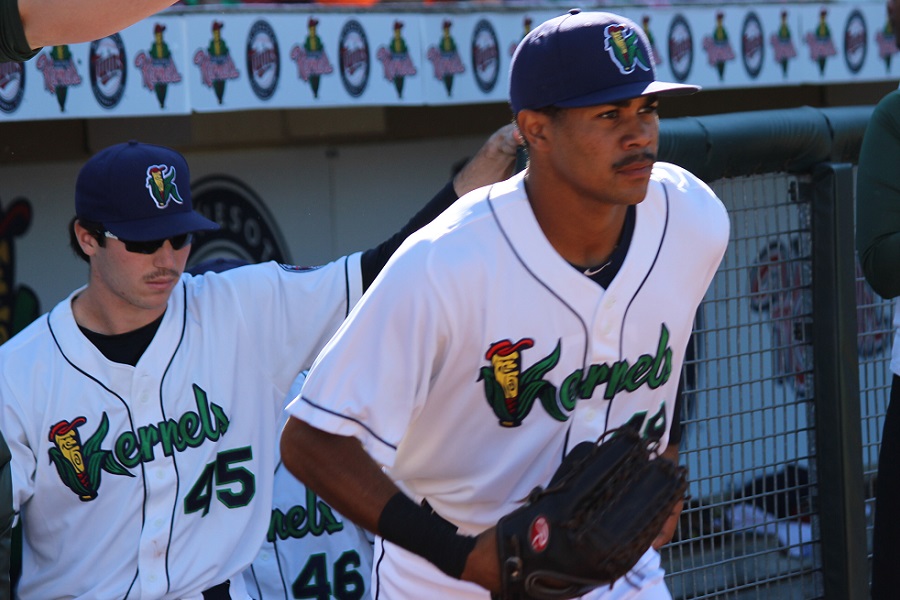 Wade grew up in Maryland and was one of the best baseball players in the state coming out of high school. He went undrafted and stayed home, choosing to play for the Maryland Terrapins. He played mostly first base his first two college seasons. Coming into his junior season, he looked to be a Top 5 type of pick and was playing his more natural centerfield, but a broken hamate bone cost him a lot of playing time. He returned late in the year and played well. The Twins were fortunate to be able to select him in the ninth round. He began his pro career in Elizabethton. In 64 games, he hit .312/.428/.506 (.934) with eight doubles, five triples and nine home runs. He was also 12-13 in stolen base attempts. However, in his final 31 games with the E-Twins, he hit .333/.478/.514 (.993) with three doubles, two triples and four home runs. One of the most impressive things, however, was that in that time, he walked 31 times and struck out just 13 times. Following the Elizabethton season, Wade moved up and played in four games for Cedar Rapids. He also played in the outfield for the Kernels throughout their playoff run and had a couple of big hits. Thank you to LaMonte Wade for taking time to give us such thoughtful answers. -------------------------------------- Seth Stohs (SS): Growing up in Maryland, who was your favorite team to follow? Who were some of your favorite players? LaMonte Wade (LW): My favorite team to follow growing up was the Baltimore Orioles. I would watch their games when I would return home from school every day and occasionally get to a game or two. My favorite player to follow was Ken Griffey Jr. SS: You had a fantastic high school career. What are some of your best memories from those days? LW: My best memory from high school happened my senior year when my brother and I both were a part of the varsity team. Being able to play alongside my brother was a very special moment for me and my family. SS: You made the decision to stay at home and play at the University of Maryland. Was that a difficult decision? LW: The decision for me to attend the University of Maryland was an easy choice simply because I always wanted to be a Terp. My dad attended the university and would always take my brother and me to basketball games. I fell in love with the university at a young age so when the time came for me to choose a school it was an easy call. SS: How frustrating was it to miss weeks of your junior season with injury? LW: When I broke my hamate bone in the middle of the season, I was very disappointed because I knew I was going to miss a lot of games during a point in the season where we were playing a lot of good teams. Being sidelined, not able to help contribute on the field and not traveling with the team was the worst experience of my baseball career. SS: Did you have the chance to speak with scouts before the draft? Did you have a sense for where you might be drafted? What was your interaction with the Twins scout? LW: I did have the chance to speak with scouts before the draft, however, I did not really know where I might be or if I would get drafted. The conversation never came down to that question and answer. I had a meeting with Mr. Wilson (Twins scout, John) before the season and then didn't hear from him again until the draft. SS: The Twins took you in the 9th round. How did you find out that you had been drafted? How busy was your phone at that moment? LW: I found out that I had been drafted by the Twins when Mr. Wilson (Twins scout) called and told me, and I was also following the draft online. My phone was constantly ringing from scouts, my agent, and my parents. SS: What was the adjustment like for you from the amateur/college game to the professional game, both on and off the field? LW: Going from college ball to pro ball, I would say, the biggest adjustment was getting used to playing every day of the week. In college, we played three games on the weekend, along with one game during the week. Whereas in pro ball, we would play every night so my mind and body had to adjust quickly. As far as off the field, I had to get use to communicating with Latin players which was new to me, along with getting used to living with a host family for such an extended period of time. SS: You put up remarkable numbers at Elizabethton, walking a lot and showing power. Then you got the opportunity to play with the Cedar Rapids Kernels in their playoff run. How would you assess your professional debut? LW: My first year with the Twins I would say was very enjoyable and exciting. I met a lot of good people from players to coaches and staff. I was able to be apart of a playoff run in my first year and learned a lot along the way. SS: At this very early stage of your career, what would you say is your strength? LW: I would say my biggest strength is to be able to have a short memory and never get too high or too low after a good performance or a not-so-good one. SS: What is the area of your game that you would like to spend time working to improve? LW: I will like to improve on every aspect of my game and become a better all-around player that can help contribute to his team in a variety of ways on a consistent basis. SS: Who are some of the people who have helped you get to this point in your career? LW: My parents, first and foremost. Without them, I wouldn't be where I am today. They have always supported me and given me the best opportunities to succeed on and off the field. Also, my college coaches I feel have really prepared me and coached me to become a better player and person. SS: How has the offseason been? What do you do when you’re not playing baseball? LW: The offseason has been great. I work out with my brother every day, preparing for spring training. When I am not playing baseball, I like to spend time with friends and family, playing basketball and ping-pong. SS: At what point do you start your preparation for the 2016 season? LW: I took two weeks off after instructs, and from that point on, the preparation begins. I look forward to this upcoming season. SS: Favorite Baseball Movie? LW: My favorite baseball movie is Angels in the Outfield. Again, a big Thank You to LaMonte Wade. He is certainly one to watch in 2016! Feel free to comment and discuss below.
-
Thrylos's Top 40 Twins Prospect Countdown
Seth Stohs replied to Seth Stohs's topic in Twins Minor League Talk
I don't know over what time period he grew, but I have it from two good sources, one being Lewis Thorpe and the other being Lachlan Wells... I was mistaken though... 6-0, 185.... not 6-1, 180... And, I have it from someone who would know as to why Graterol came to Ft. Myers as well. -
Thrylos's Top 40 Twins Prospect Countdown
Seth Stohs replied to Seth Stohs's topic in Twins Minor League Talk
Just FYI - Graterol came to the States in July, not because of how he was pitching, but because they were running some tests on his elbow. Also, Lachlan Wells is 6-1, 180 now. -
2016 Twins Roster Projections: The First Basemen
Seth Stohs replied to Seth Stohs's topic in Twins Daily Front Page News
I think they've had such a focus on pitching in the last 2-3 drafts. Also, They have Mauer, Park, Sano, Plouffe and probably others who can play 1B. I'd say, unless you get a great, great hitter, might as well wait. Get the athletes, hope a couple can stick at SS or CF and move the rest around. -
2016 Twins Roster Projections: The First Basemen
Seth Stohs replied to Seth Stohs's topic in Twins Daily Front Page News
Morneau won a batting title in his 3rd year back from a concussion. That's where Mauer will be in 2016, third season. And, why object to numbers? They're just numbers.- 26 replies
-
- 3
-

-
- joe mauer
- byungho park
- (and 3 more)
-
2016 Twins Roster Projections: The First Basemen
Seth Stohs replied to Seth Stohs's topic in Twins Daily Front Page News
Vargas was never much of a prospect for a reason - several reasons - offensively or defensively. He can get a hold of one at times. We may have seen his peak in that final two months of 2014. But just 25, no reason to just drop him. Good depth.- 26 replies
-
- 3
-
-
- joe mauer
- byungho park
- (and 3 more)
-
2016 Twins Roster Projections: The First Basemen
Seth Stohs replied to Seth Stohs's topic in Twins Daily Front Page News
Realistic season from Mauer is probably .300/.375/.450 (.825) with 40 doubles and 12-15 HR. He'll continue to likely be rested more because of his age and legs. More likely... .280/.355/.415 (.770) with 35 doubles and 10 homers.- 26 replies
-
- 1
-
-
- joe mauer
- byungho park
- (and 3 more)
-
2016 Twins Roster Projections: The First Basemen
Seth Stohs replied to Seth Stohs's topic in Twins Daily Front Page News
He should probably have been included here. I included him with the corner outfielders, but he did play quite a bit of first base. He'll be in Chattanooga, so he'll be in that mix. -
Top 10: Why to Buy the Prospect Handbook
Seth Stohs replied to Jeremy Nygaard's topic in Twins Daily Front Page News
Very kind of you to say! Thank you! If others want to share their comments/thoughts on the Prospect Handbook, that would be great! -
Yesterday, I began posting my thoughts on the 2016 Twins Roster Projections by considering the catchers in the Twins organization. Today, we move from behind the plate to first base. The Twins first baseman is set through the 2018 season, and with Byung Ho Park signed through 2019 (with an option for 2020), it’s possible the Twins have their first baseman set for the next five years. Image courtesy of Jerome Miron, USA Today (photo of Kennys Vargas) Yesterday, I began posting my thoughts on the 2016 Twins Roster Projections by considering the catchers in the Twins organization. Today, we move from behind the plate to first base. The Twins first baseman is set through the 2018 season, and with Byung Ho Park signed through 2019 (with an option for 2020), it’s possible the Twins have their first baseman set for the next five years. If anything goes off of plan, who are some of the options to fill in at first base in the coming years, and are there any prospects with the potential to be impact players down the line? Read on and see what you think, and then let’s discuss below in the comments. MAJOR LEAGUES Joe Mauer enters his third season as the Twins first baseman. The last two years have been frustrating for the St. Paul native. In his first ten seasons, Mauer caught. He was a six-time All-Star, a five-time Silver Slugger, a three-time Gold Glove winner, a three-time batting champ and the 2009 MVP. In those ten years, he combined to hit .323/.405/.468 (.873), an OPS 35% better than the average player. His last two seasons, he hit a combined .270/.348/.376 (.715), the OPS is just 1% better than average. Defensively, most of his metric would call him an average or slightly better than average first baseman. Byung Ho Park will be the primary DH, though he was a Gold Glove winner at first base in the Korean Baseball Organization (KBO). He will likely get some time at first base as well. We have learned that the Gold Glove in Korea is more of an offensive award. The Twins brought Park in for his bat. In the last two years, he has hit a combined 105 homers and driven in 270 runs. Over his last four seasons in the KBO, his OPS were .954, 1.039, 1.119, and 1.150. He will turn 30 in May. There is likely to be a learning curve early in his season. MINOR LEAGUES Rochester Red Wings Kennys Vargas is kind of the odd man out with the signing of Park. He is a first baseman and a DH. Vargas came up from AA on August 1st of 2014 and hit ten doubles and nine homers in 53 games, mostly as the Twins cleanup hitter and DH. 2015 was a frustrating season for the slugger. He began the season in the big leagues. He was sent down to AA. He came back up, but at the end of June, he was sent back to AA, and Miguel Sano was called up. Vargas played well the rest of the way and moved to AAA and came back to the Twins in September. In 58 total games, he hit .240/.277/.349 (.626) with four doubles and five homers. There were rumors about him being sold to Korea, but that would make little sense. He’s still just 25 years old and has an option year remaining. With injury possibilities, and the possibility of Park needing a little time in the minor leagues, having depth will be important. Vargas can also be an intimidating bench bat, due to his size. Reynaldo Rodriguez is 29 years old and 2016 will mark his 11th professional season. After spending time in the Red Sox and Yankees, this will be his fourth in the organization. It will be the first time he has an invitation to big league spring training. In Rochester in 2015, he hit .255/.307/.446 (.753) with 34 doubles, 16 homers and 80 RBI. Chattanooga Lookouts Dalton Hicks was the Twins 17th round pick in 2012 out of Central Florida. He was in AA with the Lookouts in 2015. In fact, he was our choice for Hitter of the Month in April. However, he was hurt most of the rest of the season. He spent it in Ft. Myers rehabbing. He did return to the Lookouts late in the season. He will be 26 years old at the start of the 2016 season. In 2013, he led minor league baseball in RBI with 110 (1 more than teammate Adam Brett Walker). At 6-5 and nearly 250 pounds, Hicks has good power. Bryan Haar was the Twins 34th round pick in 2012 out of the University of San Diego where he played third base before moving to first base to accommodate a third baseman named Kris Bryant. At 6-3 and 220 pounds, Haar is a good athlete with some pop in his bat. He played in just 68 games in Ft. Myers in 2015, largely due to injury. Ft. Myers Miracle Trey Vavra played less than two months of the 2015 season, but he was very good with the Kernels. In fact, when he was hurt in late May, he was leading (or top three) the organization in most offensive categories. However, he suffered an ankle injury that later was determined to be a broken bone in his foot. He had surgery and missed the rest of the season. He has spent this offseason playing for the Melbourne Aces in the ABL, alongside his brother Tanner and playing for his father, Joe. It was an opportunity for him to make up some at bats. Assuming he gets to spring training and 100%, he should be pushed to Ft. Myers. Minnesotan Blake Schmit will also likely be given an opportunity to start the year with the Miracle. A late-round pick in 2014 out of Maryland, Schmit began 2013 in EST. He moved up to Cedar Rapids, but he was hit in the face with a pitch and missed a couple of months. He returned in a utility role for the Miracle. He can play all four infield spots. Cedar Rapids Kernels Zander Wiel will turn 23 next week. He played for three years at Vanderbilt. Last year, he hit .316/.406/.571 (.977) with 19 doubles and 15 homers. The Twins took him in the 12th round and he signed following the College World Series. Wiel is a very good athlete, tall and strong. After signing, he played in just a couple of games before being hit in the hand with a pitch. He missed a month. He is an advanced hitter and should jump straight to Cedar Rapids. Amaurys Minier was the Twins big international signing in 2012. He signed for about $1.5 million. He spent 2013 and 2014 in the GCL and improved his OPS from .707 to .925. He began 2015 in the GCL, but just two games before moving up to Elizabethton. The only reason for that is because he was again hurt late in spring training and rehabbed through extended spring training. He hit just .194/.279/.280 (.559) with nine doubles and two homers in E-Town. Don’t be surprised if he starts in EST again, but he should spend time in Cedar Rapids. Extended Spring Training In July of 2013, the Twins big international signing was outfielder/first baseman Lewin Diaz. His body type is often compared to David Ortiz and Ryan Howard, so first base was always the place he would most likely play. He spent 2014 in the Dominican Summer League. He came to the States in 2015. He played in 33 games for the GCL and hit .261/.354/.369 (.724) with seven doubles and a homer. He moved up to Elizabethton for the final 14 games and hit just .167 but hit three home runs. Power will be his game. He is most likely to spend the year in Elizabethton. Kolton Kendrick was the Twins eighth round pick in 2015 out of high school. He was regarded as the most powerful high school bat in the draft, compared to the likes of Mark McGwire and Josh Hamilton by Baseball America. He’ll strike out a bit, and may not hit for real high average, but his power potential is great. Unfortunately, after signing, he came down with mono and played just 24 games. He hit .200/.371/.271 (.642) with three doubles and a triple while regaining strength. He will go to extended spring training and could go either to Elizabethton or stay in the GCL. SUMMARY Joe Mauer is the first baseman. Byung Ho Park is the designated hitter. They can flip-flop once or twice a week as needed. If either gets hurt, Kennys Vargas is just Rochester away. In the lower levels, there is a lot of big power potential. Hopefully Dalton Hicks and Trey Vavra can return to their early 2015, pre-injury forms. Zander Wiel has power potential. Amaurys Minier, Lewin Diaz and Kolton Kendrick are all very raw, but have very big power potential. First Base Prospect Rankings: Byung Ho Park, Lewin Diaz Amaurys Minier Kolton Kendrick Trey Vavra View full article
-
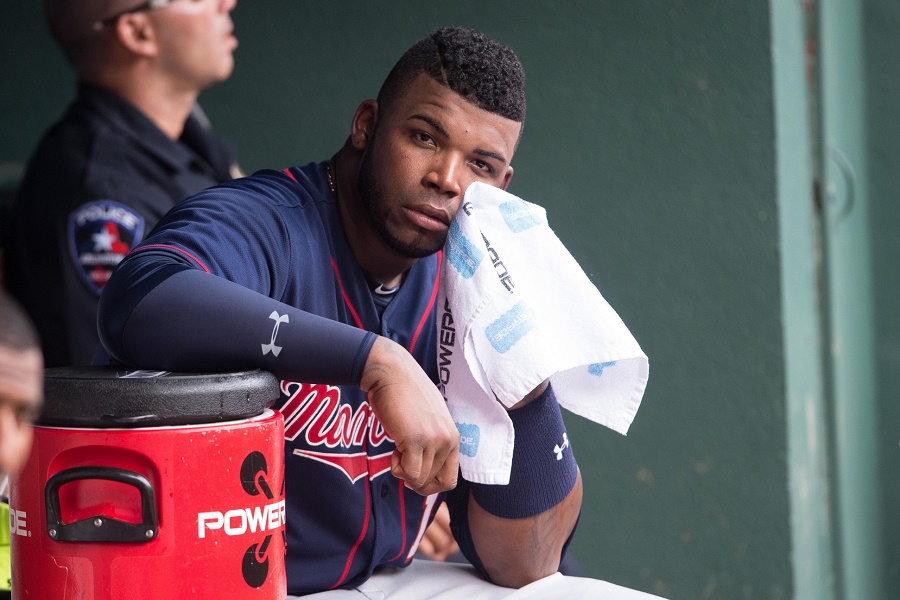 If anything goes off of plan, who are some of the options to fill in at first base in the coming years, and are there any prospects with the potential to be impact players down the line? Read on and see what you think, and then let’s discuss below in the comments. MAJOR LEAGUES Joe Mauer enters his third season as the Twins first baseman. The last two years have been frustrating for the St. Paul native. In his first ten seasons, Mauer caught. He was a six-time All-Star, a five-time Silver Slugger, a three-time Gold Glove winner, a three-time batting champ and the 2009 MVP. In those ten years, he combined to hit .323/.405/.468 (.873), an OPS 35% better than the average player. His last two seasons, he hit a combined .270/.348/.376 (.715), the OPS is just 1% better than average. Defensively, most of his metric would call him an average or slightly better than average first baseman. Byung Ho Park will be the primary DH, though he was a Gold Glove winner at first base in the Korean Baseball Organization (KBO). He will likely get some time at first base as well. We have learned that the Gold Glove in Korea is more of an offensive award. The Twins brought Park in for his bat. In the last two years, he has hit a combined 105 homers and driven in 270 runs. Over his last four seasons in the KBO, his OPS were .954, 1.039, 1.119, and 1.150. He will turn 30 in May. There is likely to be a learning curve early in his season. MINOR LEAGUES Rochester Red Wings Kennys Vargas is kind of the odd man out with the signing of Park. He is a first baseman and a DH. Vargas came up from AA on August 1st of 2014 and hit ten doubles and nine homers in 53 games, mostly as the Twins cleanup hitter and DH. 2015 was a frustrating season for the slugger. He began the season in the big leagues. He was sent down to AA. He came back up, but at the end of June, he was sent back to AA, and Miguel Sano was called up. Vargas played well the rest of the way and moved to AAA and came back to the Twins in September. In 58 total games, he hit .240/.277/.349 (.626) with four doubles and five homers. There were rumors about him being sold to Korea, but that would make little sense. He’s still just 25 years old and has an option year remaining. With injury possibilities, and the possibility of Park needing a little time in the minor leagues, having depth will be important. Vargas can also be an intimidating bench bat, due to his size. Reynaldo Rodriguez is 29 years old and 2016 will mark his 11th professional season. After spending time in the Red Sox and Yankees, this will be his fourth in the organization. It will be the first time he has an invitation to big league spring training. In Rochester in 2015, he hit .255/.307/.446 (.753) with 34 doubles, 16 homers and 80 RBI. Chattanooga Lookouts Dalton Hicks was the Twins 17th round pick in 2012 out of Central Florida. He was in AA with the Lookouts in 2015. In fact, he was our choice for Hitter of the Month in April. However, he was hurt most of the rest of the season. He spent it in Ft. Myers rehabbing. He did return to the Lookouts late in the season. He will be 26 years old at the start of the 2016 season. In 2013, he led minor league baseball in RBI with 110 (1 more than teammate Adam Brett Walker). At 6-5 and nearly 250 pounds, Hicks has good power. Bryan Haar was the Twins 34th round pick in 2012 out of the University of San Diego where he played third base before moving to first base to accommodate a third baseman named Kris Bryant. At 6-3 and 220 pounds, Haar is a good athlete with some pop in his bat. He played in just 68 games in Ft. Myers in 2015, largely due to injury. Ft. Myers Miracle Trey Vavra played less than two months of the 2015 season, but he was very good with the Kernels. In fact, when he was hurt in late May, he was leading (or top three) the organization in most offensive categories. However, he suffered an ankle injury that later was determined to be a broken bone in his foot. He had surgery and missed the rest of the season. He has spent this offseason playing for the Melbourne Aces in the ABL, alongside his brother Tanner and playing for his father, Joe. It was an opportunity for him to make up some at bats. Assuming he gets to spring training and 100%, he should be pushed to Ft. Myers. Minnesotan Blake Schmit will also likely be given an opportunity to start the year with the Miracle. A late-round pick in 2014 out of Maryland, Schmit began 2013 in EST. He moved up to Cedar Rapids, but he was hit in the face with a pitch and missed a couple of months. He returned in a utility role for the Miracle. He can play all four infield spots. Cedar Rapids Kernels Zander Wiel will turn 23 next week. He played for three years at Vanderbilt. Last year, he hit .316/.406/.571 (.977) with 19 doubles and 15 homers. The Twins took him in the 12th round and he signed following the College World Series. Wiel is a very good athlete, tall and strong. After signing, he played in just a couple of games before being hit in the hand with a pitch. He missed a month. He is an advanced hitter and should jump straight to Cedar Rapids. Amaurys Minier was the Twins big international signing in 2012. He signed for about $1.5 million. He spent 2013 and 2014 in the GCL and improved his OPS from .707 to .925. He began 2015 in the GCL, but just two games before moving up to Elizabethton. The only reason for that is because he was again hurt late in spring training and rehabbed through extended spring training. He hit just .194/.279/.280 (.559) with nine doubles and two homers in E-Town. Don’t be surprised if he starts in EST again, but he should spend time in Cedar Rapids. Extended Spring Training In July of 2013, the Twins big international signing was outfielder/first baseman Lewin Diaz. His body type is often compared to David Ortiz and Ryan Howard, so first base was always the place he would most likely play. He spent 2014 in the Dominican Summer League. He came to the States in 2015. He played in 33 games for the GCL and hit .261/.354/.369 (.724) with seven doubles and a homer. He moved up to Elizabethton for the final 14 games and hit just .167 but hit three home runs. Power will be his game. He is most likely to spend the year in Elizabethton. Kolton Kendrick was the Twins eighth round pick in 2015 out of high school. He was regarded as the most powerful high school bat in the draft, compared to the likes of Mark McGwire and Josh Hamilton by Baseball America. He’ll strike out a bit, and may not hit for real high average, but his power potential is great. Unfortunately, after signing, he came down with mono and played just 24 games. He hit .200/.371/.271 (.642) with three doubles and a triple while regaining strength. He will go to extended spring training and could go either to Elizabethton or stay in the GCL. SUMMARY Joe Mauer is the first baseman. Byung Ho Park is the designated hitter. They can flip-flop once or twice a week as needed. If either gets hurt, Kennys Vargas is just Rochester away. In the lower levels, there is a lot of big power potential. Hopefully Dalton Hicks and Trey Vavra can return to their early 2015, pre-injury forms. Zander Wiel has power potential. Amaurys Minier, Lewin Diaz and Kolton Kendrick are all very raw, but have very big power potential. First Base Prospect Rankings: Byung Ho Park, Lewin Diaz Amaurys Minier Kolton Kendrick Trey Vavra
-
Thrylos's Top 40 Twins Prospect Countdown
Seth Stohs replied to Seth Stohs's topic in Twins Minor League Talk
Yup, it's fun to create lists and everyone has different criteria, and that's fine. It's all part of the debate. I go with MLB's, and Baseball America's and pretty much everyone else's definition of prospect, which is remaining Rookie-Eligible. I don't include DSL guys in my rankings because I just don't take the time to dig in on that level. The stats in the DSL are almost meaningless (same can be said of GCL, of course). We did decide for the prospect handbook to include Wander Javier and BH Park because there was a lot of information on both. I talked to several people with knowledge of Javier, so I felt ok ranking him. But, again, that's why I've included the links and think we should engage and discuss Thrylos's rankings. He will mention players I don't in my Top 30 or so. This is a good group of prospects (31-35). -
2016 Minnesota Twins Top 15 Prospects
Seth Stohs commented on Ted Schwerzler 's blog entry in Off The Baggy
I always enjoy prospect lists... They're fun to debate... For instance... you have Jay at #3. I have him at #9... I can say you have him too high... you can tell me I have him too low. Ha! There's no way I could have Jay ahead of Kepler. I considered Kepler for #2 but went with Berrios again. 1-3 (Buxton, Berrios and Kepler, are all elite in my mind. I think Gordon is close to a Top 50 guy as well. I have Rogers at about 17-18 because as a starter, he's a #5... but as a reliever, he could be good, more than just a LOOGY. That's valuable. So, in that case, it might be the case where you rank him a little high and I rank him a little low. Mine is also a little different because I included Park and Javier as well. Good list! -
Top 10: Why to Buy the Prospect Handbook
Seth Stohs replied to Jeremy Nygaard's topic in Twins Daily Front Page News
Uffdah, I'll have to give that some thought... I know Chargois had an interesting mustache at times last year. We'll have to check. -
Running Down The Hall (Of Fame)
Seth Stohs replied to Cody Christie's topic in Twins Daily Front Page News
If I had a ballot, these ten players would be checked: Barry Bonds, Rogers Clemens, Ken Griffey, Jr., Mike Mussina, Tim Raines, Mike Piazza, Gary Sheffield, Curt Schilling, Mark McGwire and Jeff Bagwell. I feel that there is a great case to be made for, but because I'm limited to ten, I can't put them ahead of others: Nomar Garciaparra, Trevor Hoffman, Jeff Kent, Fred McGriff, Sammy Sosa I think these guys will get in: Griffey is an easy choice. Piazza should finally get in. And I think Raines will be right there, very close to 75% Could go either way. -
Thrylos has started to countdown his Top 40 Twins prospects. Earlier this week, he explained his criteria for who is included in his prospect lists, and it is a little different than most. Once a player gets to the major leagues, even for just one at bat, he no longer considers them a prospect. Here are the links to his prospect articles (will update as articles are posted): Prospects 36-40 Prospects 31-35 Prospects 26-30 Prospects 21-25 Prospects 16-20 Prospects 11-15 Prospects 6-10 Prospects 1-5 Feel free to discuss. Ask Thrylos questions, etc.
-
Throughout the offseason, we have posted several Q&As with Twins minor league players in an attempt to help our readers get to know the people beyond the box scores and stat lines. Today, we have an interview with outfielder Roberto Gonzalez, a young player and a very good athlete. Image courtesy of Seth Stohs (photo of Roberto Gonzalez) Throughout the offseason, we have posted several Q&As with Twins minor league players in an attempt to help our readers get to know the people beyond the box scores and stat lines. Today, we have an interview with outfielder Roberto Gonzalez, a young player and a very good athlete. From the 2016 Minnesota Twins Prospect Handbook: “Scouting Report: The Twins selected Nick Gordon with the 5th overall pick in the 2014 draft out of high school in Orlando. The Twins didn’t draft another prep player until the 15th round when they took another great athlete, Roberto Gonzalez, from Orlando. Gordon called Gonzalez a great athlete and when asked if Gonzalez could be a five-tool talent, he immediately responded, “Oh yeah!” In 2014 in the GCL, Gonzalez played just 13 games before breaking his kneecap and missing the rest of the season. He is a hard worker. He has good speed and profiles more in the corner outfield. He is a good outfielder with a strong arm. He has a strong left-handed swing which could develop some power. Former Cardinals outfielder Oscar Taveras, who passed away in October of 2014, was a cousin of Gonzalez.”Recently, Gonzalez answered several questions for us. Continue reading to learn more about this very talented, young prospect in the Twins system. ------------------------------------------------------ Seth Stohs (SS): Growing up in Orlando, who was your favorite team to follow, and who were some of your favorite players? Roberto Gonzalez (RG): Growing up in Orlando was a big change for me, especially moving from New York when I was 7. While I was in Florida, my two favorite players to watch were Ken Griffey and Hanley Ramirez. I never really did have a team, but if I did have a team, it would probably be the Marlins because of Hanley.SS: What were some of your favorite high school memories, from baseball or other activities you were involved in? RG: Some of my favorite high school memories are when I had to travel for all the showcases and all of the workouts. It was a very humbling experience. Probably one of my favorite memories was hitting at Safeco Park and going to watch my very first Minnesota Twins game.SS: Drafted by the Twins in the 15th round in 2014. Is that about where you thought you might be selected coming into the draft? RG: I honestly thought I would go high, but to me it didn't matter. I just wanted to have an opportunity to play and show my talent.SS: What were your thoughts when you heard your name called by the Twins? RG: When I was drafted by the Twins, I had a lot of thoughts going through my head. It was so surreal when you hear your name being called no matter where you are in the rounds. You just have that huge weight lifted off of your shoulders, and I couldn't wait to get started.SS: You spent the end of your 2014 season rehabbing an injury. How frustrating was it for you to have signed and then not be able to play? RG: It was very frustrating. It was also more of a mental game than a physical game. Physically, I knew I would recover, but mentally it discourages you because you start to think how many at-bats you missed and also how many other opportunities you are missing out on.SS: What was the biggest adjustment you had to make, going from high school or amateur ball to the pro game? On or off the field? RG: There weren't any major adjustments, just probably being away from home for a long period of time without going back was the biggest adjustment I had to make.SS: How would you describe yourself as a player? What are your strengths at this time? RG: I would describe myself as a little of an undeveloped player. I have all the tools, I just need to put it together. My biggest strength is being able to put the ball in play.SS: What are the things that you feel you need to improve over the offseason and going forward? RG: There's not just one thing I need to improve. I need to improve on everything as a whole to continue to become a better baseball player.SS: How has your offseason been? (Have you started your baseball training, but also what do you enjoy doing away from the game of baseball?) RG: I never really had an offseason. Just because the game is over doesn't mean I don't need to continue working hard but the time I do spend off I spend it with family and my girlfriend enjoying the time that I do get to spend with them when I am home.SS: Can you talk a little bit about Oscar Taveras and the relationship the two of you had, and how he has impacted you on and off the field? RG: Oscar was like a role model to me. Whenever I had questions about the game or life in general, he was always there for me. Practicing with him, and just being around him, made me want to do so much better. Even if he is not here, I still can feel him here with me every step of the way.SS: Who are some of the coaches and others who have helped you get to this point in your career? RG: Mostly my parents got me to where I am. Also my neighbor Frank Fields, who gave me the best opportunity to meet Ken Griffey Jr. and learn from his ways as well.SS: Favorite Baseball Movie? RG: My favorite baseball movie would have to be The Sandlot with Squints and Wendy Peffercorn! That was one of my favorite parts of the movie.-------------------------------------------------------------- In a follow up, Roberto insists that he has not tried Squints’ move on Wendy Peffercorn. Gonzalez is likely to remain in extended spring training, but he should move up to Elizabethton when their season starts in June. Thank you very much to Roberto Gonzalez for taking time to answer our questions. Please feel free to comment or ask questions below. View full article
-
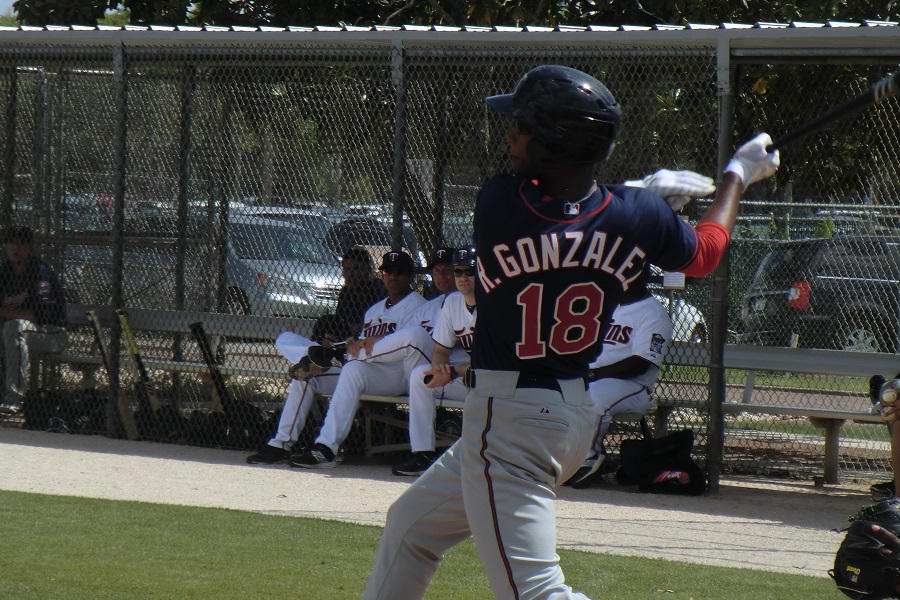 From the 2016 Minnesota Twins Prospect Handbook: “Scouting Report: The Twins selected Nick Gordon with the 5th overall pick in the 2014 draft out of high school in Orlando. The Twins didn’t draft another prep player until the 15th round when they took another great athlete, Roberto Gonzalez, from Orlando. Gordon called Gonzalez a great athlete and when asked if Gonzalez could be a five-tool talent, he immediately responded, “Oh yeah!” In 2014 in the GCL, Gonzalez played just 13 games before breaking his kneecap and missing the rest of the season. He is a hard worker. He has good speed and profiles more in the corner outfield. He is a good outfielder with a strong arm. He has a strong left-handed swing which could develop some power. Former Cardinals outfielder Oscar Taveras, who passed away in October of 2014, was a cousin of Gonzalez.” Recently, Gonzalez answered several questions for us. Continue reading to learn more about this very talented, young prospect in the Twins system. ------------------------------------------------------ Seth Stohs (SS): Growing up in Orlando, who was your favorite team to follow, and who were some of your favorite players? Roberto Gonzalez (RG): Growing up in Orlando was a big change for me, especially moving from New York when I was 7. While I was in Florida, my two favorite players to watch were Ken Griffey and Hanley Ramirez. I never really did have a team, but if I did have a team, it would probably be the Marlins because of Hanley. SS: What were some of your favorite high school memories, from baseball or other activities you were involved in? RG: Some of my favorite high school memories are when I had to travel for all the showcases and all of the workouts. It was a very humbling experience. Probably one of my favorite memories was hitting at Safeco Park and going to watch my very first Minnesota Twins game. SS: Drafted by the Twins in the 15th round in 2014. Is that about where you thought you might be selected coming into the draft? RG: I honestly thought I would go high, but to me it didn't matter. I just wanted to have an opportunity to play and show my talent. SS: What were your thoughts when you heard your name called by the Twins? RG: When I was drafted by the Twins, I had a lot of thoughts going through my head. It was so surreal when you hear your name being called no matter where you are in the rounds. You just have that huge weight lifted off of your shoulders, and I couldn't wait to get started. SS: You spent the end of your 2014 season rehabbing an injury. How frustrating was it for you to have signed and then not be able to play? RG: It was very frustrating. It was also more of a mental game than a physical game. Physically, I knew I would recover, but mentally it discourages you because you start to think how many at-bats you missed and also how many other opportunities you are missing out on. SS: What was the biggest adjustment you had to make, going from high school or amateur ball to the pro game? On or off the field? RG: There weren't any major adjustments, just probably being away from home for a long period of time without going back was the biggest adjustment I had to make. SS: How would you describe yourself as a player? What are your strengths at this time? RG: I would describe myself as a little of an undeveloped player. I have all the tools, I just need to put it together. My biggest strength is being able to put the ball in play. SS: What are the things that you feel you need to improve over the offseason and going forward? RG: There's not just one thing I need to improve. I need to improve on everything as a whole to continue to become a better baseball player. SS: How has your offseason been? (Have you started your baseball training, but also what do you enjoy doing away from the game of baseball?) RG: I never really had an offseason. Just because the game is over doesn't mean I don't need to continue working hard but the time I do spend off I spend it with family and my girlfriend enjoying the time that I do get to spend with them when I am home. SS: Can you talk a little bit about Oscar Taveras and the relationship the two of you had, and how he has impacted you on and off the field? RG: Oscar was like a role model to me. Whenever I had questions about the game or life in general, he was always there for me. Practicing with him, and just being around him, made me want to do so much better. Even if he is not here, I still can feel him here with me every step of the way. SS: Who are some of the coaches and others who have helped you get to this point in your career? RG: Mostly my parents got me to where I am. Also my neighbor Frank Fields, who gave me the best opportunity to meet Ken Griffey Jr. and learn from his ways as well. SS: Favorite Baseball Movie? RG: My favorite baseball movie would have to be The Sandlot with Squints and Wendy Peffercorn! That was one of my favorite parts of the movie. -------------------------------------------------------------- In a follow up, Roberto insists that he has not tried Squints’ move on Wendy Peffercorn. Gonzalez is likely to remain in extended spring training, but he should move up to Elizabethton when their season starts in June. Thank you very much to Roberto Gonzalez for taking time to answer our questions. Please feel free to comment or ask questions below.
-
Top 10: Why to Buy the Prospect Handbook
Seth Stohs replied to Jeremy Nygaard's topic in Twins Daily Front Page News
By the way... #UtahBuyTheBook... HA! -
2016 Twins Roster Projections: The Catchers
Seth Stohs replied to Seth Stohs's topic in Twins Daily Front Page News
They move him around to keep his bat in the lineup. Catchers just can't, don't catch every day, so it keeps him in the lineup.- 16 replies
-
- 1
-
-
- kurt suzuki
- john ryan murphy
- (and 3 more)
-
Top 10: Why to Buy the Prospect Handbook
Seth Stohs replied to Jeremy Nygaard's topic in Twins Daily Front Page News
I can also confirm the "Seth is Tired" part. -
2016 Twins Roster Projections: The Catchers
Seth Stohs replied to Seth Stohs's topic in Twins Daily Front Page News
I've watched Turner hit quite a bit over the last couple of years. He has the strength and the approach at the plate that I believe he can be a good hitter. Maybe never a great hitter, but I think he should be able to hold his own. Will he? We'll see.- 16 replies
-
- 1
-
-
- kurt suzuki
- john ryan murphy
- (and 3 more)
