



Seth Stohs
-
Posts
25,912 -
Joined
-
Last visited
-
Days Won
109
Content Type
Profiles
News
Minnesota Twins Videos
2026 Minnesota Twins Top Prospects Ranking
2022 Minnesota Twins Draft Picks
Minnesota Twins Free Agent & Trade Rumors, Notes, & Tidbits
Guides & Resources
2023 Minnesota Twins Draft Picks
The Minnesota Twins Players Project
2024 Minnesota Twins Draft Picks
2025 Minnesota Twins Draft Pick Tracker
2026 Minnesota Twins Draft Tracker: Picks & Bonuses
Forums
Blogs
Events
Store
Downloads
Gallery
Everything posted by Seth Stohs
-
2016 Roster Projections: The Outfielders (Part 2)
Seth Stohs replied to Seth Stohs's topic in Twins Daily Front Page News
He played mostly LF in 2014 and mostly RF last year. He's a solid OF defensively. He doesn't have a ton of range, but he knows how to play there. He played mostly OF in high school too. -
2016 Roster Projections: The Outfielders (Part 2)
Seth Stohs replied to Seth Stohs's topic in Twins Daily Front Page News
Arias can be on this list next year, but definitely one to watch. Palka should have been #4 on this list, after Walker, before Harrison. Minier was an OF in 2014 but not good, so they moved him to 1B in 2015... maybe they'll move him back to the OF though. I tend to doubt it. -
2016 Roster Projections: The Outfielders (Part 2)
Seth Stohs replied to Seth Stohs's topic in Twins Daily Front Page News
Probably bigger for Granite. He'll have to get on base a little more in Ft. Myers and make that move up to Chattanooga. English needs to play like he did in the 2nd half last year before the injury. He's really good defensively which will really help him. He's got the range, takes good reads and has a very strong arm. Could both be 4th OF in the big leagues? I think so, but as you say, we'll likely know a lot more in 9 months. -
2016 Roster Projections: The Outfielders (Part 2)
Seth Stohs replied to Seth Stohs's topic in Twins Daily Front Page News
Most think that Wade would have been a 3rd/4th round pick if he wouldn't have missed more than half of the season with the broken hamate bone. -
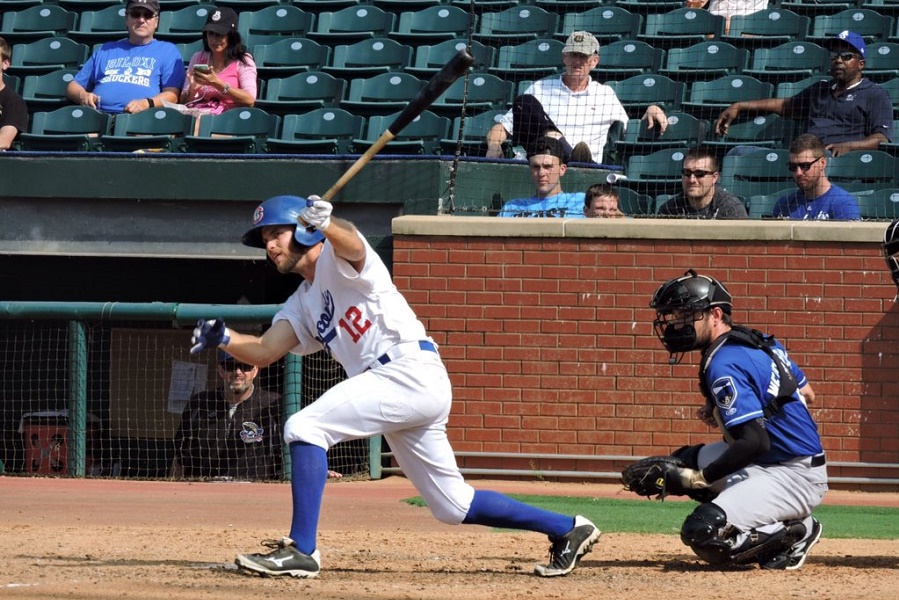
Wickens grew up in Ontario. His baseball path took him to Ft. Myers out of high school where he attended Florida Gulf Coast University. He was a teammate for three seasons with White Sox ace Chris Sale. He was the Twins 33rd round pick in 2011, and since then he has gradually moved up the system. In 2015, he was a contributor to the Southern League champions, the Chattanooga Lookouts. Wickens is a very versatile player. In 2015, he played all four infield positions as well as left field and center field. He doesn’t just fill the space, he plays them well defensively. Offensively, he is a line drive, doubles hitter. He has a very good approach at the plate. Image courtesy of Craig Gordon (Photo of Stephen Wickens) Wickens grew up in Ontario. His baseball path took him to Ft. Myers out of high school where he attended Florida Gulf Coast University. He was a teammate for three seasons with White Sox ace Chris Sale. He was the Twins 33rd round pick in 2011, and since then he has gradually moved up the system. In 2015, he was a contributor to the Southern League champions, the Chattanooga Lookouts. Wickens is a very versatile player. In 2015, he played all four infield positions as well as left field and center field. He doesn’t just fill the space, he plays them well defensively. Offensively, he is a line drive, doubles hitter. He has a very good approach at the plate. In 2013, Wickens was honored with a Harmon Killebrew Award for Community Service for his efforts in Ft. Myers. At the time, Wickens said, "Harmon was a killer on the field and a gentleman off of it, and I think that’s how the Twins organization wants their players to be." Recently, Wickens sat down and answered several questions. Enjoy the Q&A, and feel free to comment or ask questions below. ----------------------------------------------------- Seth Stohs (SS): Being from Ontario, I assume we have the ability to guess who your favorite team was growing up? Who were some of your favorite players? Stephen Wickens (SW): My favorite team growing up was obviously the Blue Jays. The players I loved to cheer for were usually the grinders, which always ended up being fan favorites, players like Reed Johnson and John MacDonald. Obviously every little kid loves the long ball, so it was always nice seeing Carlos Delgado hit a few into the stands.SS: Let’s go back to your high school days. Did you play other sports, or were you involved in other activities? SW: When I was younger, I basically played every school sport you could. Whether it was baseball, hockey, volleyball, cross-country or wrestling, I tried to stay as active as I could while loving any form of competition. But as I got later into high school, I stuck with just baseball and hockey. I then had to make a decision on what sport I thought I could get the most out of because they were becoming too time consuming and also way too expensive with all of the equipment and traveling. I stuck with baseball, but sometimes wonder what it would be like to play hockey at a higher level. Who wouldn’t love to play hockey, 82 games instead of 162, while also playing in the winter and getting to sit back and relax during the summer.SS: How did you go about going from Ontario to Florida Gulf Coast University to play college baseball? SW: In my last year of high school, I joined a program called the Ontario Blue Jays. In the fall we would travel all over the Atlantic Coast playing various DI, DII, and NAIA schools. We ended up playing against Florida Gulf Coast before a Perfect Game tournament and the rest was history. They offered me a scholarship the next day, and I basically accepted right then and there. Being a baseball player from Canada, I don’t think there was a better place to go to school. Going from playing baseball for 6-7 months of the year to now being able to play all year round, couldn’t ask for anything more.SS: What were the highlights of your time in FGCU? Were you a big fan of Dunk City? SW: The highlight of my time at FGCU was winning our conference (Atlantic Sun) for three consecutive years. We weren’t eligible for post-season play in my first two years because we were in a transition period, going from DII to DI. My Junior year was kind of a disappointment because we won our conference but ended up losing in the conference tournament, so did not get a bid to a regional. We thought we may get a bid because Chris Sale was our Friday night starter and anyone we played first round we could have definitely played spoiler. But that never came into fruition. As for “Dunk City” that came about after I had already graduated. I loved to go watch the basketball games though. Our women’s team was always very good, but I’m jealous I never got to experience one of the men’s basketball games when they made their NCAA Sweet 16 run.SS: Describe the type of player that you are to the fans? What makes you successful? SW: I see myself as a smart, hard-working player, who battles for everything he’s earned. I am the type of player who is going to put the team first, and also understand what kind of player I am. I’m obviously not a guy who’s going to go out and hit a bunch of home runs, but I can get hits, walks, steal bases, score runs, make plays, and I think any player can be successful when they understand what their role is and what type of player they are. Being able to make adjustments day-by-day, pitch-by-pitch, is the most important tool any player can have, and being a guy who doesn’t necessarily play every day, I take pride in making those adjustments as best I can.SS: What are those things that you feel you needed to spend the offseason working on? What will be the keys to you taking the “next step?” SW: You can obviously never stop working in any area of your game. I think being more consistent in every aspect of my game is the key to taking the next step. I think the guys you see in the MLB are there for a reason, and that’s because they play at a higher level on a consistent basis. I have no doubt in my mind that I have the skill level to play in the major leagues, I just need to take advantage of opportunities when they come my way.SS: You played 1B, 2B, 3B, SS, LF and CF for Chattanooga in 2015. How many gloves do you bring to the ballpark, and what does being versatile mean for you? SW: I take pride in being a versatile player. I believe I can play at a high level at most positions in the field. It’s obviously an asset being able to play multiple positions as you are not limiting yourself, as you now have multiple ways of getting into the lineup as well as getting to the MLB.SS: What was it like being part of a really strong Lookouts roster all season, and being a guy who often hit near the top of the order on such a successful team? Did you ever find yourself watching the game and saying “Wow!” when a teammate (someone like Sano, Buxton, Kepler, Walker, Berrios, etc.) did something? SW: Being a part of that Chattanooga roster was awesome. The coaches and players were great. It was the most fun I’ve had in my baseball career. The chemistry between the guys on the team was the best I’ve been a part of, even with the roster changes. Guys came up and down, but the atmosphere never changed. We always knew we were going to win, we always felt like we were going to win, and we did win. Playing with Sano, Buxton, Kepler, Walker, Berrios etc. is always fun to watch. There were a lot of loud noises in that ballpark. And I may have kinked my neck a few times. But it;s not really new to me, I’ve been watching these guys do these things for years. Now it’s everyone else’s turn to join in on the fun and watch and hear it happen up in Minneapolis.SS: How do you balance wanting to win with wanting to keep advancing through the organization? SW: I think they come hand in hand. I think every organization wants players on their team that are hungry and understand that there is a difference between winning and losing. If you can be fortunate enough to be part of some winning teams, I think you can stick around for a long time.SS: When you get away from baseball, what do you enjoy doing? SW: During the off-season I keep it pretty simple. Movies, TV, cards/board games, and just hanging out with friends and family. You miss out on a lot of things when you’re away at baseball all year. So just enjoying your free time is nice.SS: What are your goals for the 2016 season? Are there certain numbers/stats you’d like to focus on? SW: Coming out of spring training I’d love to start out in Rochester. I’ll be ready to compete for a job and hopefully perform the way I know I can, and the rest will take care of itself. I try not to pay attention to numbers/stats too much because it will only get you in trouble. I’m in the mindset that if I do my job to help the team, then good things will happen and my year will be reflected correctly.SS: Who are some of the people who have helped you get to this point in your career? SW: There have been tons of people who have played a major role in getting me to where I am today. Obviously my mom and dad who drove countless hours, taking me to practice and games; doing all the research on colleges and universities; or just giving me the opportunity to play baseball. I’ve had the opportunity to play under a lot of different coaches. I credit each one of them with my development. I think having an open mind in any sport is key to having success because there isn’t just one way of doing things. I tried to take everything I could from each coach. Whether the advice was good or bad, it didn’t really matter because you’re just getting to learn the game from a different set of eyes. The more knowledge you have the better, and whatever worked for me I kind of just stuck with.SS: What would it mean to you and your family to put on the Minnesota Twins uniform and play a regular season game in the big leagues? SW: Getting an opportunity to put on a Twins uniform would be a great honor. There are only so many people who can say they had a chance to play in the MLB. I think every kid dreams about being that “hero” they grew up watching. And if I ever get that opportunity to play in the MLB, I feel like I will have reached some sort of immortality. Whether it’s one game, 100 games or 1,000 games, no one will ever be able to take that away from me. Being able to achieve a lifelong goal in anything would be very rewarding and satisfying.--------------------------------------------------- Again, a big Thank You to Stephen Wickens for taking his time to respond to our questions. Best wishes for a strong 2016 season. View full article
-
 In 2013, Wickens was honored with a Harmon Killebrew Award for Community Service for his efforts in Ft. Myers. At the time, Wickens said, "Harmon was a killer on the field and a gentleman off of it, and I think that’s how the Twins organization wants their players to be." Recently, Wickens sat down and answered several questions. Enjoy the Q&A, and feel free to comment or ask questions below. ----------------------------------------------------- Seth Stohs (SS): Being from Ontario, I assume we have the ability to guess who your favorite team was growing up? Who were some of your favorite players? Stephen Wickens (SW): My favorite team growing up was obviously the Blue Jays. The players I loved to cheer for were usually the grinders, which always ended up being fan favorites, players like Reed Johnson and John MacDonald. Obviously every little kid loves the long ball, so it was always nice seeing Carlos Delgado hit a few into the stands. SS: Let’s go back to your high school days. Did you play other sports, or were you involved in other activities? SW: When I was younger, I basically played every school sport you could. Whether it was baseball, hockey, volleyball, cross-country or wrestling, I tried to stay as active as I could while loving any form of competition. But as I got later into high school, I stuck with just baseball and hockey. I then had to make a decision on what sport I thought I could get the most out of because they were becoming too time consuming and also way too expensive with all of the equipment and traveling. I stuck with baseball, but sometimes wonder what it would be like to play hockey at a higher level. Who wouldn’t love to play hockey, 82 games instead of 162, while also playing in the winter and getting to sit back and relax during the summer. SS: How did you go about going from Ontario to Florida Gulf Coast University to play college baseball? SW: In my last year of high school, I joined a program called the Ontario Blue Jays. In the fall we would travel all over the Atlantic Coast playing various DI, DII, and NAIA schools. We ended up playing against Florida Gulf Coast before a Perfect Game tournament and the rest was history. They offered me a scholarship the next day, and I basically accepted right then and there. Being a baseball player from Canada, I don’t think there was a better place to go to school. Going from playing baseball for 6-7 months of the year to now being able to play all year round, couldn’t ask for anything more. SS: What were the highlights of your time in FGCU? Were you a big fan of Dunk City? SW: The highlight of my time at FGCU was winning our conference (Atlantic Sun) for three consecutive years. We weren’t eligible for post-season play in my first two years because we were in a transition period, going from DII to DI. My Junior year was kind of a disappointment because we won our conference but ended up losing in the conference tournament, so did not get a bid to a regional. We thought we may get a bid because Chris Sale was our Friday night starter and anyone we played first round we could have definitely played spoiler. But that never came into fruition. As for “Dunk City” that came about after I had already graduated. I loved to go watch the basketball games though. Our women’s team was always very good, but I’m jealous I never got to experience one of the men’s basketball games when they made their NCAA Sweet 16 run. SS: Describe the type of player that you are to the fans? What makes you successful? SW: I see myself as a smart, hard-working player, who battles for everything he’s earned. I am the type of player who is going to put the team first, and also understand what kind of player I am. I’m obviously not a guy who’s going to go out and hit a bunch of home runs, but I can get hits, walks, steal bases, score runs, make plays, and I think any player can be successful when they understand what their role is and what type of player they are. Being able to make adjustments day-by-day, pitch-by-pitch, is the most important tool any player can have, and being a guy who doesn’t necessarily play every day, I take pride in making those adjustments as best I can. SS: What are those things that you feel you needed to spend the offseason working on? What will be the keys to you taking the “next step?” SW: You can obviously never stop working in any area of your game. I think being more consistent in every aspect of my game is the key to taking the next step. I think the guys you see in the MLB are there for a reason, and that’s because they play at a higher level on a consistent basis. I have no doubt in my mind that I have the skill level to play in the major leagues, I just need to take advantage of opportunities when they come my way. SS: You played 1B, 2B, 3B, SS, LF and CF for Chattanooga in 2015. How many gloves do you bring to the ballpark, and what does being versatile mean for you? SW: I take pride in being a versatile player. I believe I can play at a high level at most positions in the field. It’s obviously an asset being able to play multiple positions as you are not limiting yourself, as you now have multiple ways of getting into the lineup as well as getting to the MLB. SS: What was it like being part of a really strong Lookouts roster all season, and being a guy who often hit near the top of the order on such a successful team? Did you ever find yourself watching the game and saying “Wow!” when a teammate (someone like Sano, Buxton, Kepler, Walker, Berrios, etc.) did something? SW: Being a part of that Chattanooga roster was awesome. The coaches and players were great. It was the most fun I’ve had in my baseball career. The chemistry between the guys on the team was the best I’ve been a part of, even with the roster changes. Guys came up and down, but the atmosphere never changed. We always knew we were going to win, we always felt like we were going to win, and we did win. Playing with Sano, Buxton, Kepler, Walker, Berrios etc. is always fun to watch. There were a lot of loud noises in that ballpark. And I may have kinked my neck a few times. But it;s not really new to me, I’ve been watching these guys do these things for years. Now it’s everyone else’s turn to join in on the fun and watch and hear it happen up in Minneapolis. SS: How do you balance wanting to win with wanting to keep advancing through the organization? SW: I think they come hand in hand. I think every organization wants players on their team that are hungry and understand that there is a difference between winning and losing. If you can be fortunate enough to be part of some winning teams, I think you can stick around for a long time. SS: When you get away from baseball, what do you enjoy doing? SW: During the off-season I keep it pretty simple. Movies, TV, cards/board games, and just hanging out with friends and family. You miss out on a lot of things when you’re away at baseball all year. So just enjoying your free time is nice. SS: What are your goals for the 2016 season? Are there certain numbers/stats you’d like to focus on? SW: Coming out of spring training I’d love to start out in Rochester. I’ll be ready to compete for a job and hopefully perform the way I know I can, and the rest will take care of itself. I try not to pay attention to numbers/stats too much because it will only get you in trouble. I’m in the mindset that if I do my job to help the team, then good things will happen and my year will be reflected correctly. SS: Who are some of the people who have helped you get to this point in your career? SW: There have been tons of people who have played a major role in getting me to where I am today. Obviously my mom and dad who drove countless hours, taking me to practice and games; doing all the research on colleges and universities; or just giving me the opportunity to play baseball. I’ve had the opportunity to play under a lot of different coaches. I credit each one of them with my development. I think having an open mind in any sport is key to having success because there isn’t just one way of doing things. I tried to take everything I could from each coach. Whether the advice was good or bad, it didn’t really matter because you’re just getting to learn the game from a different set of eyes. The more knowledge you have the better, and whatever worked for me I kind of just stuck with. SS: What would it mean to you and your family to put on the Minnesota Twins uniform and play a regular season game in the big leagues? SW: Getting an opportunity to put on a Twins uniform would be a great honor. There are only so many people who can say they had a chance to play in the MLB. I think every kid dreams about being that “hero” they grew up watching. And if I ever get that opportunity to play in the MLB, I feel like I will have reached some sort of immortality. Whether it’s one game, 100 games or 1,000 games, no one will ever be able to take that away from me. Being able to achieve a lifelong goal in anything would be very rewarding and satisfying. --------------------------------------------------- Again, a big Thank You to Stephen Wickens for taking his time to respond to our questions. Best wishes for a strong 2016 season.
-
Why not have Duda play RF instead of Mauer. At least Duda has played a lot of outfield in his life. None the last two years, but he came up and played several years in the outfield. Arcia to Milwaukee makes so much sense because of Orlando being there. Together, those two could really be good. My assumption is that Polanco would have to be part of any deal to Milwaukee, but a team that needs pitching would likely be thrilled to get offered Gonsalves. Eduardo del Rosario isn't a big enough third piece, and it would likely take a fourth, but I'd give up a lot to get Will Smith too. Anyone else and I wouldn't give up much. I want to be a fly on the wall with those conversations with scouts! Fun article!
-
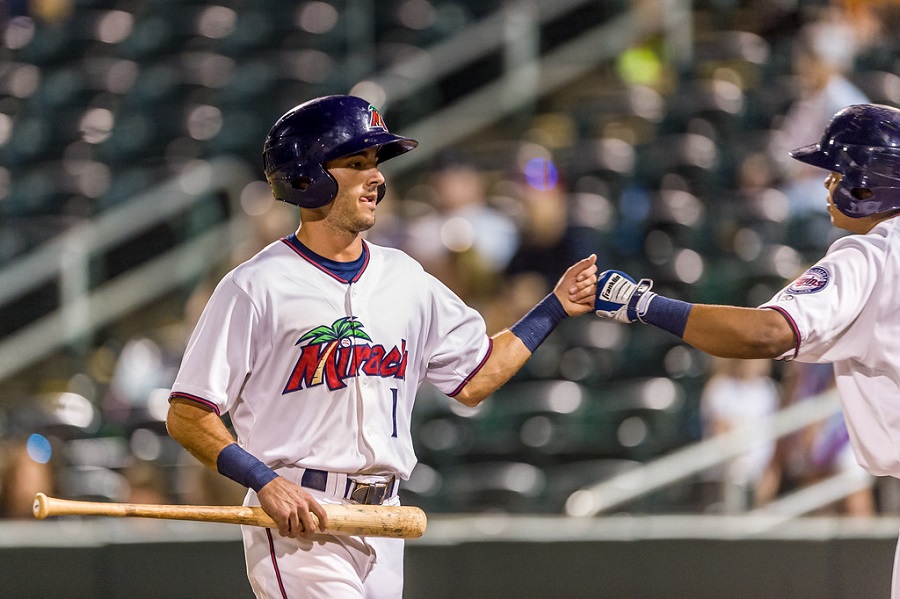
Today we continue to look at the Minnesota Twins organizational depth at all of the positions. Previously, we have reviewed the Catchers, First Basemen, Middle Infielders and Third Basemen. Earlier this week, we learned more about the Outfielders in the system who I project to be in the big leagues, AAA or AA to start the season. Today, we’ll look into those in the lower levels, those who will likely start the season in Ft. Myers, Cedar Rapids or in extended spring training. Image courtesy of Linwood Ferguson (photo of Zach Granite) Today we continue to look at the Minnesota Twins organizational depth at all of the positions. Previously, we have reviewed the Catchers, First Basemen, Middle Infielders and Third Basemen. Earlier this week, we learned more about the Outfielders in the system who I project to be in the big leagues, AAA or AA to start the season. Today, we’ll look into those in the lower levels, those who will likely start the season in Ft. Myers, Cedar Rapids or in extended spring training. Of course, next week, we’ll consider the pitchers. But first, let’s finish the roster projections for hitters. Ft. Myers Miracle Zach Granite was the Twins 14th-round pick in 2013. After playing just 25 games in 2014, he came back strong in 2016. He dominated in a month in Cedar Rapids before moving up to Ft. Myers. Granite is 6-1 and 175 pounds and speed is his game. He could be an ideal top-of-order hitter as he has a good approach and understands who he is as a hitter. (Learn more about Zach Granite here) Tanner English was the Twins 11th-round pick in 2014 out of South Carolina. He got off to a slow start, but he really came on strong at the end. Not tall, English is strong and has some pop in his bat. He has very good speed on the bases and especially covering ground in center field. (Learn more about Tanner English here) Edgar Corcino was a draft pick of the Tigers way back in 2009. In 2012, he played in the rookie leagues, the Midwest League, the Florida State League and even a couple of games in AAA, but he was let go and went the independent baseball route the last couple of seasons. He works out with his good friend JO Berrios and the Twins signed him last winter. He began in extended spring, but came up to Cedar Rapids and hit in the middle of their lineup. He plays good defense at all three spots. He’s still just 23. (Learn more about Edgar Corcino here) Max Murphy made a strong impression in his pro debut after being selected in the 9th round in 2014 out of Bradley. He dominated the Appy League in half of a season and was named the league’s MVP despite being called up with a month of season to play. He moved up to Cedar Rapids. Unfortunately, that is where he spent the entire 2015 season. At 5-11 and 195 pounds, Murphy is capable of producing good power. (Learn more about Max Murphy here) Zack Larson is was the Twins 20th-round pick in the 2012 draft. The Twins happily signed him for above slot. He hit very well in the rookie leagues in 2013 and started well with the Kernels in 2014 before hamstring problems curtailed his season. He returned to Cedar Rapids and struggled mightily with the bat. He was 16-17 in stolen base attempts. (This story on Zack Larson is remarkable!) Cedar Rapids Kernels LaMonte Wade was the Twins ninth-round pick in 2015 out of Maryland. With the E-Twins, he hit .312/.428/.506 (.934). When they were eliminated from playoff contention, Wade moved up and started for the Kernels in their playoff run. The 22-year-old has a tremendous eye at the plate and good pop. (Get to know LaMonte Wade here) Likewise, Chris Paul moved up to Cedar Rapids late in the season and started for the Kernels in the playoffs. He was the team’s sixth-round pick in 2015 out of California. He plays the corner outfield positions as well as first base. Daniel Kihle was the Twins 18th round pick in 2015 out of Wichita State. He debuted in Elizabethton by hitting .273/.404/.392 (.796) with seven doubles, two triples and two homers. He’ll be 22 throughout the 2016 season. (Get to know Daniel Kihle here) Austin Diemer spent the first half of the 2015 season in extended spring training. He got called up to the Kernels and played most every day. Known for his speed and defense, Diemer hit a big home run in the Kernels run to the Midwest League championship series. The 22-year-old was the Twins 28th round pick in 2014 out of Cal State Fullerton. Drafted in the 21st round last year Cal State Dominguez Hills, Kamran Young debuted in the Appalachian League last year. He hit .219/.301/.339 (.640) with seven doubles, two triples and four homers. After four years of college, he will be 23 throughout the 2016 season. Extended Spring Training Roberto Gonzalez was the Twins 15th-round pick in 2014 out of high school in Orlando. That summer, he broke his kneecap which delayed the start of his 2015 season. When healthy, he has speed, some power, good defense and a strong arm. (Get to know Roberto Gonzalez here) Tyree Davis was signed Straight Outta Compton as the Twins 37th-round pick in 2014. He signed and has spent the two seasons in the GCL where he has unfortunately been hurt. His 2015 season came to an end early with a shoulder injury. He has great speed. He has a nice line drive swing from both sides of the plate. Could develop some power. Very good defense in centerfield. (Learn more about Davis here.) Jaylin Davis was the Twins 24th-round pick in 2015 out of Appalachian State. A tremendous athlete, he missed most of his final college season due to a torn shoulder labrum. He’s been rehabbing in Ft. Myers since signing. He has power potential and good speed. He can be a good outfielder though his recovery from surgery will affect his arm in the short-term. Christian Cavaness went undrafted last year after an All-American season at Lindenwood University Belleville (in Illinois). He went to play in a wood bat summer league in Oregon when the Twins signed him as an undrafted free agent. The 21-year-old went to the GCL where he hit .333/.429/.556 (.984). He finished the season with four games in Elizabethton. He is a candidate to go to Cedar Rapids as well. Rowan Ebersohn signed with the Twins out of South Africa in July of 2014. He came to the States this year. Very raw, he hit .193 in his debut in the GCL. He’ll likely remain in the GCL in 2016. (Get to know Rowan Ebersohn.) Luis Martinez came to the States after a season in the DSL. He hit just .140, but he is a good athlete who plays very good outfield defense. He’ll also likely return to the GCL. SUMMARY On Wednesday, we learned about the Twins outfielders in the big leagues, AAA and AA (projected). Today, we covered the outfielders that could start the season in Ft. Myers, Cedar Rapids or in Extended Spring Training. While the big names are in the upper levels, there are some players with real good potential in these lower levels too. Outfield Prospect Rankings: Byron Buxton Max Kepler Adam Brett Walker Travis Harrison LaMonte Wade Next week, we’ll continue to make our roster projections by looking at the pitching depth, from big league to the extended spring training rosters. Feel free to discuss and ask questions. View full article
-
 Of course, next week, we’ll consider the pitchers. But first, let’s finish the roster projections for hitters. Ft. Myers Miracle Zach Granite was the Twins 14th-round pick in 2013. After playing just 25 games in 2014, he came back strong in 2016. He dominated in a month in Cedar Rapids before moving up to Ft. Myers. Granite is 6-1 and 175 pounds and speed is his game. He could be an ideal top-of-order hitter as he has a good approach and understands who he is as a hitter. (Learn more about Zach Granite here) Tanner English was the Twins 11th-round pick in 2014 out of South Carolina. He got off to a slow start, but he really came on strong at the end. Not tall, English is strong and has some pop in his bat. He has very good speed on the bases and especially covering ground in center field. (Learn more about Tanner English here) Edgar Corcino was a draft pick of the Tigers way back in 2009. In 2012, he played in the rookie leagues, the Midwest League, the Florida State League and even a couple of games in AAA, but he was let go and went the independent baseball route the last couple of seasons. He works out with his good friend JO Berrios and the Twins signed him last winter. He began in extended spring, but came up to Cedar Rapids and hit in the middle of their lineup. He plays good defense at all three spots. He’s still just 23. (Learn more about Edgar Corcino here) Max Murphy made a strong impression in his pro debut after being selected in the 9th round in 2014 out of Bradley. He dominated the Appy League in half of a season and was named the league’s MVP despite being called up with a month of season to play. He moved up to Cedar Rapids. Unfortunately, that is where he spent the entire 2015 season. At 5-11 and 195 pounds, Murphy is capable of producing good power. (Learn more about Max Murphy here) Zack Larson is was the Twins 20th-round pick in the 2012 draft. The Twins happily signed him for above slot. He hit very well in the rookie leagues in 2013 and started well with the Kernels in 2014 before hamstring problems curtailed his season. He returned to Cedar Rapids and struggled mightily with the bat. He was 16-17 in stolen base attempts. (This story on Zack Larson is remarkable!) Cedar Rapids Kernels LaMonte Wade was the Twins ninth-round pick in 2015 out of Maryland. With the E-Twins, he hit .312/.428/.506 (.934). When they were eliminated from playoff contention, Wade moved up and started for the Kernels in their playoff run. The 22-year-old has a tremendous eye at the plate and good pop. (Get to know LaMonte Wade here) Likewise, Chris Paul moved up to Cedar Rapids late in the season and started for the Kernels in the playoffs. He was the team’s sixth-round pick in 2015 out of California. He plays the corner outfield positions as well as first base. Daniel Kihle was the Twins 18th round pick in 2015 out of Wichita State. He debuted in Elizabethton by hitting .273/.404/.392 (.796) with seven doubles, two triples and two homers. He’ll be 22 throughout the 2016 season. (Get to know Daniel Kihle here) Austin Diemer spent the first half of the 2015 season in extended spring training. He got called up to the Kernels and played most every day. Known for his speed and defense, Diemer hit a big home run in the Kernels run to the Midwest League championship series. The 22-year-old was the Twins 28th round pick in 2014 out of Cal State Fullerton. Drafted in the 21st round last year Cal State Dominguez Hills, Kamran Young debuted in the Appalachian League last year. He hit .219/.301/.339 (.640) with seven doubles, two triples and four homers. After four years of college, he will be 23 throughout the 2016 season. Extended Spring Training Roberto Gonzalez was the Twins 15th-round pick in 2014 out of high school in Orlando. That summer, he broke his kneecap which delayed the start of his 2015 season. When healthy, he has speed, some power, good defense and a strong arm. (Get to know Roberto Gonzalez here) Tyree Davis was signed Straight Outta Compton as the Twins 37th-round pick in 2014. He signed and has spent the two seasons in the GCL where he has unfortunately been hurt. His 2015 season came to an end early with a shoulder injury. He has great speed. He has a nice line drive swing from both sides of the plate. Could develop some power. Very good defense in centerfield. (Learn more about Davis here.) Jaylin Davis was the Twins 24th-round pick in 2015 out of Appalachian State. A tremendous athlete, he missed most of his final college season due to a torn shoulder labrum. He’s been rehabbing in Ft. Myers since signing. He has power potential and good speed. He can be a good outfielder though his recovery from surgery will affect his arm in the short-term. Christian Cavaness went undrafted last year after an All-American season at Lindenwood University Belleville (in Illinois). He went to play in a wood bat summer league in Oregon when the Twins signed him as an undrafted free agent. The 21-year-old went to the GCL where he hit .333/.429/.556 (.984). He finished the season with four games in Elizabethton. He is a candidate to go to Cedar Rapids as well. Rowan Ebersohn signed with the Twins out of South Africa in July of 2014. He came to the States this year. Very raw, he hit .193 in his debut in the GCL. He’ll likely remain in the GCL in 2016. (Get to know Rowan Ebersohn.) Luis Martinez came to the States after a season in the DSL. He hit just .140, but he is a good athlete who plays very good outfield defense. He’ll also likely return to the GCL. SUMMARY On Wednesday, we learned about the Twins outfielders in the big leagues, AAA and AA (projected). Today, we covered the outfielders that could start the season in Ft. Myers, Cedar Rapids or in Extended Spring Training. While the big names are in the upper levels, there are some players with real good potential in these lower levels too. Outfield Prospect Rankings: Byron Buxton Max Kepler Adam Brett Walker Travis Harrison LaMonte Wade Next week, we’ll continue to make our roster projections by looking at the pitching depth, from big league to the extended spring training rosters. Feel free to discuss and ask questions.
-
Yeah, the Twins Twitter site has been posting pictures from their various stops. There were pictures of them curling, and with Paul Bunyan and on Detroit Lake... as well as the other group that's been in ND.
-
Charting The Competition: Detroit Tigers
Seth Stohs replied to Nick Nelson's topic in Twins Daily Front Page News
Nope, he doesn't. -
ESPN.com posted an article with their 10 Most Intriguing Players in the AL Central in 2016. Miguel Sano came in at #1. Another Twins player came in at #9. A case could likely be made for several others. What do you think about the list?
-
Catching Up With LHP Stephen Gonsalves
Seth Stohs replied to Seth Stohs's topic in Twins Daily Front Page News
The cutter is such a tough pitch to hit, much less to lay off of. A slider may move 6 inches whereas a cutter only moves about 2 inches, but that's just enough to miss the good part of the bat and you don't make good contact. I remember telling myself to lay off it, but it's hard to pick up and the next thing you know, you're 0-2 with two weak groundouts back to the pitcher. I've always said that, for me, the two toughest pitches to hit were a good changeup and a good cutter. -
Anyone else been to one of the Twins Winter Caravan events during Week 1?? Will they be making a stop near you in Week 2? Keep the stories/memories coming.
-
Thrylos's Top 40 Twins Prospect Countdown
Seth Stohs replied to Seth Stohs's topic in Twins Minor League Talk
Here's a quick question to get you thinking, Thrylos... If you did include the "prospects" that you choose not to include, where would you put them? (Buxton, Meyer, Polanco, Kepler, Park, etc.) -
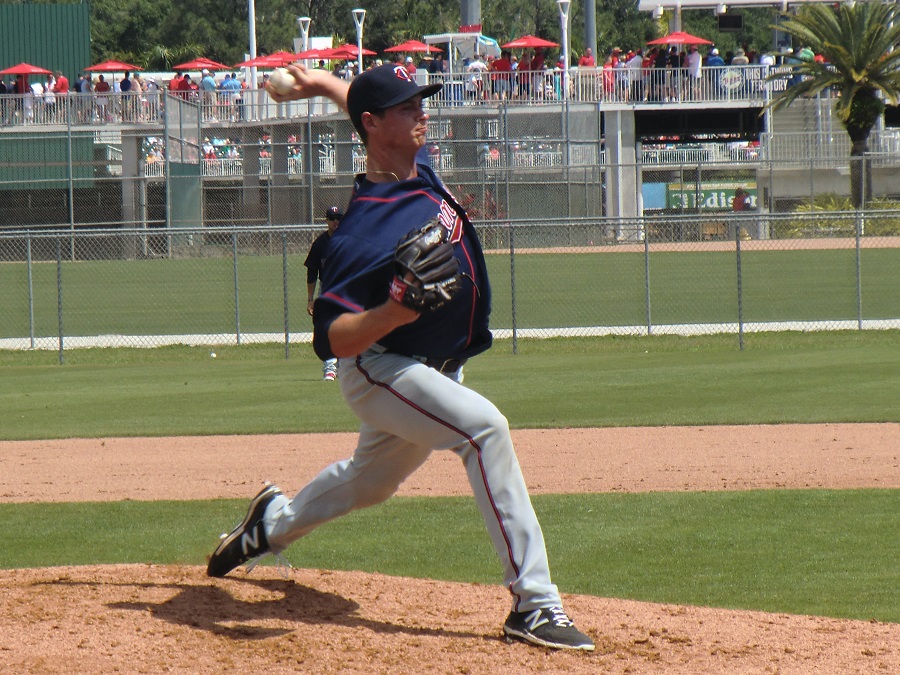
Stephen Gonsalves had a very strong 2015 season. If not for one Jose Orlando Berrios, Gonsalves was the likely winner of the Twins Daily Minor League Starting Pitcher of the Year. Today, we catch up with the talented, 21-year-old pitching prospect and learn more about what has made him successful, what he’s worked on this offseason. Find out how he feels about leaving San Diego next week to come to Minnesota for Twins Fest. Image courtesy of Seth Stohs (photo of Stephen Gonsalves) Stephen Gonsalves had a very strong 2015 season. If not for one Jose Orlando Berrios, Gonsalves was the likely winner of the Twins Daily Minor League Starting Pitcher of the Year. Today, we catch up with the talented, 21-year-old pitching prospect and learn more about what has made him successful, what he’s worked on this offseason. Find out how he feels about leaving San Diego next week to come to Minnesota for Twins Fest. He had a terrific 2015 season. It began with nine starts in Cedar Rapids where he went 6-1 with a 1.15 ERA. He finished the season with 15 starts in Ft. Myers. There he went 7-2 with a 2.61 ERA. It was a very successful season. He saw his name rising up prospect rankings. Thank you to Stephen Gonsalves for taking time to respond to our questions today! If you enjoy this Q&A, be sure to thank Stephen for doing this when getting his autograph at Twins Fest in a week! ----------------------------------------- Seth Stohs (SS): Being from San Diego, can we assume you grew up as a Padres fan, or will you surprise us with another favorite team? Who were some of your favorite players? Stephen Gonsalves (SG): Yes, being from San Diego, I was raised a Padres fan, although I took a trip to Boston in third grade and went to the ballpark and absolutely fell in love with Fenway. My favorite player to watch growing up was, no doubt, Trevor Hoffman. Coming in to Hells Bells to close out the game, Petco Park lighting up in flames with Trevor Time, greatest experience at a ballpark you can have.SS: Let’s go back to your high school days. Did you play other sports, or were you involved in other activities? SG: The only other sport I played in high school was basketball, but I only played through my sophomore year. I was planning on playing all four years until one of my buddies snapped his ankle right in front of me right after we made the Team USA cuts, and that's when I decided I can't risk missing a baseball season from injury in another sport.SS: After making eight starts in Cedar Rapids at the end of last season, you went back there to start this season and made another nine starts. Dominant, would be the word. What were you able to accomplish and gain personally through that time in 2015 with the Kernels? SG: In Cedar Rapids, I want to say that my mindset was key. I needed to feel like I will dominate and no one here can beat me. That was one of the first times I wanted to be arrogant on the hill and display dominance, and in the end, I feel that helped gain my confidence in all my pitches just by saying “You’re not going to hit this pitch and I'm going to beat you.”SS: You hit a couple of early bumps in Ft. Myers. What was the adjustment like from the Midwest League to the Florida State League? SG: Once I got to Florida, it was an adjustment just to the weather. I went from pitching in 40-50 degrees in Cedar Rapids to getting my first six of seven starts in Florida being day games in the middle of summer where it was 90-100 with humidity. That's where it felt like I got winded early. Then the difference in batters was they waited for what they knew they could hit. In Cedar Rapids, once I got ahead 0-1, they were on their heels and would swing at a bad pitch to quickly make it 0-2. In ft. Myers when I was 0-1 and make that same pitch, they were able to spit on it make it 1-1. Which then 1-1 they have seen my best two pitches. Then 1-1, I would like to go to my best offspeed which was my change-up and throw that again and try to make it a bit better, and in the beginning, I was beating myself up and trying to make it perfect which always makes it worse. Then I'd be 2-1 to where he's ready to hit, seen my best pitches, and has a good idea of what was coming.SS: When you are at your best, what are you doing on the mound? What’s working? SG: I'm best on the mound when I can locate my fastball in. That is my favorite to throw, right at the knees first pitch maybe a ball in off the plate to make him dance a little to where he's uncomfortable. Then I know I can beat him up by just throwing my change-up on the outside half for an easy ground out.SS: What are those things that you feel you needed to spend the offseason working on? What will be the keys to you taking the “next step?” SG: Well this offseason in bullpens, I will be spending a lot of time on my cutter/slider. My curve ball is a serious weapon now, thanks to this last year where that's all we spent my time. So now to the next pitch where I flashed it a couple times in Instructs, and I got a lot of great feedback by coaches thinking that it might be my best pitch this year. So hopefully I can have this as a serious weapon this year.SS: Last offseason, you worked out with the likes of James Shields, Stephen Strasburg and others. What has your offseason work and throwing program consisted of this year? SG: I am fortunate to be working with all those guys again, Chris Young, Stephen Strasburg, and in the pen James Shields. They are awesome guys to share what they share with me whether it be showing me stuff on the mound or grips or even mental side on what they get from the game.SS: When you get away from baseball, what do you enjoy doing? SG: While I'm not playing baseball, I am either in the water or on the golf course. I love to go spearfishing! My cousin got me started on it about six years ago, and it is my favorite thing to do out here.SS: In Cedar Rapids, you tweeted about never pitching below 60 degrees. Then you did, barely. So, how much are you looking forward to braving a Minneapolis winter for Twins Fest? SG: Haha! Well, I have had the weather app on my phone locked on Minneapolis once I first got the invite, and I watch day-by-day it (temperature) dropping. All I have to say is, I will be signing all my autographs next to a fire, wrapped in a blanket.(Seth Note - I will be attempting to obtain photographic evidence of this to post on Twins Daily as well as all forms of social media.) SS: You’ve had cards since you were drafted in 2013. What is it like having your own baseball card and having people ask you for an autograph? SG: Having people ask for your autograph is such a cool feeling to have. In high school, I would get fans sending me my cards during my senior year in class. It something special for me because, in my mind, I haven't done anything yet. I'm just a 21-year-old kid that still feels like I'm 15 playing in those tournaments and chasing after my dream.SS: As a player, do you look at prospect rankings? What does it mean for you to be trickling into the Twins Top 10 prospect lists this offseason? SG: Yes. I can honestly say I'm a victim to checking it out once in a while because I see it as motivation. That list is saying that I'm not the best and someone out there is better, and I don't want it to sound bad, but if you want to succeed you need to have that thought in your mind that no one will beat you. No one will out-work you, and I will climb to the top.SS: What are your goals for the 2016 season? Are there certain numbers/stats you’d like to focus on? SG: My goal for this season is to make the Futures Game in Petco Park in San Diego to represent the Twins. That would be very special for me and to my friends and family that cheer for me every day. Numbers-wise, the only one I'm focused on are the walks. Those need to be pretty much cut in half.SS: Who are some of the people who have helped you get to this point in your career? SG: I have a great family base here in San Diego that is the best support I can possibly have. All my aunts and uncles and cousins listening to every game, sending me little messages after every game, has helped me get this far and fuel me to keep going.SS: Probably not in 2016, but looking to 2017 or 2018, what would it mean to you and your family to put on the Minnesota Twins uniform and pitch in the big leagues? SG: It would mean the world to me and my family, to reach my dreams of getting to the MLB whenever that may be, and I couldn't be happier to do it with this organization.Again, a big Thank You to Stephen Gonsalves for taking time to respond to our questions. Best wishes for a 2016 season! View full article
-
 He had a terrific 2015 season. It began with nine starts in Cedar Rapids where he went 6-1 with a 1.15 ERA. He finished the season with 15 starts in Ft. Myers. There he went 7-2 with a 2.61 ERA. It was a very successful season. He saw his name rising up prospect rankings. Thank you to Stephen Gonsalves for taking time to respond to our questions today! If you enjoy this Q&A, be sure to thank Stephen for doing this when getting his autograph at Twins Fest in a week! ----------------------------------------- Seth Stohs (SS): Being from San Diego, can we assume you grew up as a Padres fan, or will you surprise us with another favorite team? Who were some of your favorite players? Stephen Gonsalves (SG): Yes, being from San Diego, I was raised a Padres fan, although I took a trip to Boston in third grade and went to the ballpark and absolutely fell in love with Fenway. My favorite player to watch growing up was, no doubt, Trevor Hoffman. Coming in to Hells Bells to close out the game, Petco Park lighting up in flames with Trevor Time, greatest experience at a ballpark you can have. SS: Let’s go back to your high school days. Did you play other sports, or were you involved in other activities? SG: The only other sport I played in high school was basketball, but I only played through my sophomore year. I was planning on playing all four years until one of my buddies snapped his ankle right in front of me right after we made the Team USA cuts, and that's when I decided I can't risk missing a baseball season from injury in another sport. SS: After making eight starts in Cedar Rapids at the end of last season, you went back there to start this season and made another nine starts. Dominant, would be the word. What were you able to accomplish and gain personally through that time in 2015 with the Kernels? SG: In Cedar Rapids, I want to say that my mindset was key. I needed to feel like I will dominate and no one here can beat me. That was one of the first times I wanted to be arrogant on the hill and display dominance, and in the end, I feel that helped gain my confidence in all my pitches just by saying “You’re not going to hit this pitch and I'm going to beat you.” SS: You hit a couple of early bumps in Ft. Myers. What was the adjustment like from the Midwest League to the Florida State League? SG: Once I got to Florida, it was an adjustment just to the weather. I went from pitching in 40-50 degrees in Cedar Rapids to getting my first six of seven starts in Florida being day games in the middle of summer where it was 90-100 with humidity. That's where it felt like I got winded early. Then the difference in batters was they waited for what they knew they could hit. In Cedar Rapids, once I got ahead 0-1, they were on their heels and would swing at a bad pitch to quickly make it 0-2. In ft. Myers when I was 0-1 and make that same pitch, they were able to spit on it make it 1-1. Which then 1-1 they have seen my best two pitches. Then 1-1, I would like to go to my best offspeed which was my change-up and throw that again and try to make it a bit better, and in the beginning, I was beating myself up and trying to make it perfect which always makes it worse. Then I'd be 2-1 to where he's ready to hit, seen my best pitches, and has a good idea of what was coming. SS: When you are at your best, what are you doing on the mound? What’s working? SG: I'm best on the mound when I can locate my fastball in. That is my favorite to throw, right at the knees first pitch maybe a ball in off the plate to make him dance a little to where he's uncomfortable. Then I know I can beat him up by just throwing my change-up on the outside half for an easy ground out. SS: What are those things that you feel you needed to spend the offseason working on? What will be the keys to you taking the “next step?” SG: Well this offseason in bullpens, I will be spending a lot of time on my cutter/slider. My curve ball is a serious weapon now, thanks to this last year where that's all we spent my time. So now to the next pitch where I flashed it a couple times in Instructs, and I got a lot of great feedback by coaches thinking that it might be my best pitch this year. So hopefully I can have this as a serious weapon this year. SS: Last offseason, you worked out with the likes of James Shields, Stephen Strasburg and others. What has your offseason work and throwing program consisted of this year? SG: I am fortunate to be working with all those guys again, Chris Young, Stephen Strasburg, and in the pen James Shields. They are awesome guys to share what they share with me whether it be showing me stuff on the mound or grips or even mental side on what they get from the game. SS: When you get away from baseball, what do you enjoy doing? SG: While I'm not playing baseball, I am either in the water or on the golf course. I love to go spearfishing! My cousin got me started on it about six years ago, and it is my favorite thing to do out here. SS: In Cedar Rapids, you tweeted about never pitching below 60 degrees. Then you did, barely. So, how much are you looking forward to braving a Minneapolis winter for Twins Fest? SG: Haha! Well, I have had the weather app on my phone locked on Minneapolis once I first got the invite, and I watch day-by-day it (temperature) dropping. All I have to say is, I will be signing all my autographs next to a fire, wrapped in a blanket. (Seth Note - I will be attempting to obtain photographic evidence of this to post on Twins Daily as well as all forms of social media.) SS: You’ve had cards since you were drafted in 2013. What is it like having your own baseball card and having people ask you for an autograph? SG: Having people ask for your autograph is such a cool feeling to have. In high school, I would get fans sending me my cards during my senior year in class. It something special for me because, in my mind, I haven't done anything yet. I'm just a 21-year-old kid that still feels like I'm 15 playing in those tournaments and chasing after my dream. SS: As a player, do you look at prospect rankings? What does it mean for you to be trickling into the Twins Top 10 prospect lists this offseason? SG: Yes. I can honestly say I'm a victim to checking it out once in a while because I see it as motivation. That list is saying that I'm not the best and someone out there is better, and I don't want it to sound bad, but if you want to succeed you need to have that thought in your mind that no one will beat you. No one will out-work you, and I will climb to the top. SS: What are your goals for the 2016 season? Are there certain numbers/stats you’d like to focus on? SG: My goal for this season is to make the Futures Game in Petco Park in San Diego to represent the Twins. That would be very special for me and to my friends and family that cheer for me every day. Numbers-wise, the only one I'm focused on are the walks. Those need to be pretty much cut in half. SS: Who are some of the people who have helped you get to this point in your career? SG: I have a great family base here in San Diego that is the best support I can possibly have. All my aunts and uncles and cousins listening to every game, sending me little messages after every game, has helped me get this far and fuel me to keep going. SS: Probably not in 2016, but looking to 2017 or 2018, what would it mean to you and your family to put on the Minnesota Twins uniform and pitch in the big leagues? SG: It would mean the world to me and my family, to reach my dreams of getting to the MLB whenever that may be, and I couldn't be happier to do it with this organization. Again, a big Thank You to Stephen Gonsalves for taking time to respond to our questions. Best wishes for a 2016 season!
-
Per Jon Heyman, Antonio Bastardo has an agreement with...
Seth Stohs replied to Seth Stohs's topic in Other Baseball
I agree on Melotakis and Rogers. They need to get Melotakis at least a month, maybe 2-3 to see how he comes back from TJ surgery. But Rogers is ready for that role. I think that Bastardo got a fair deal in the sense that if the Twins would have given it to him, I woudln't have been completely against it. I preferred one year, and thought three years was way too much. -
Per Jon Heyman, Antonio Bastardo has an agreement with...
Seth Stohs replied to Seth Stohs's topic in Other Baseball
Per Robert Murray: -
Jon Heyman just tweeted two things: It was followed shortly by: I'm personally perfectly comfortable with the Twins not going that number of years...
-
The Cases Against Signing Antonio Bastardo Long-Term
Seth Stohs replied to Seth Stohs's topic in Twins Daily Front Page News
I think the answers to that were fairly clear in the article. -
2016 Roster Projections: The Outfielders (Part 1)
Seth Stohs replied to Seth Stohs's topic in Twins Daily Front Page News
No question he can play the position well... But obviously that makes him better in the corner and with Buxton in CF, that's elite. -
There are definitely options for the various positions, which if good. If Abad struggles, Darnell and O'Rourke can step in. If they deem Tonkin or Fien expendable, they can go with Pressly, Graham, Chargois or others. I think Burdi and Reed will be options, but not at the start. If Buxton needs a couple of months, you've got Santana, and Rosario and even Kepler. If a couple of starters get hurt, there are options. And if they add a couple of pieces now via trade or whatever, it's even more depth.
-
Thanks Doug! Very kind of you to write this up. We definitely see the Prospect Handbook as beneficial for Twins fans in many ways. Learning about the prospects. Giving the prospects some recognition for all the work they put in. As a coffee table book for Twins fans when they hear a name of a prospect, or to impress their friends. And honestly, as someone who hated reading when I was in elementary school, a book that young Twins fans can get into and make them interested in reading. We're proud of this year's book, and the previous books... so it's nice to hear that people see the benefit in it.
-
Thrylos's Top 40 Twins Prospect Countdown
Seth Stohs replied to Seth Stohs's topic in Twins Minor League Talk
Just looking at some compilation lists... some names missing (though I may have missed them) that showed up on more than one other list: Stuart Turner - Randy Rosario - Brian Navarreto -

