



Seth Stohs
-
Posts
25,870 -
Joined
-
Last visited
-
Days Won
109
Content Type
Profiles
News
Minnesota Twins Videos
2026 Minnesota Twins Top Prospects Ranking
2022 Minnesota Twins Draft Picks
Minnesota Twins Free Agent & Trade Rumors, Notes, & Tidbits
Guides & Resources
2023 Minnesota Twins Draft Picks
The Minnesota Twins Players Project
2024 Minnesota Twins Draft Picks
2025 Minnesota Twins Draft Pick Tracker
2026 Minnesota Twins Draft Tracker: Picks & Bonuses
Forums
Blogs
Events
Store
Downloads
Gallery
Everything posted by Seth Stohs
-
 On Monday, the Chattanooga Lookouts announced their Opening Day roster for the 2015 season. Although it is hard to predict how many wins a team will have (though many on this roster were part of the 2014 Florida State League champion Ft. Myers Miracle), Doug Mientkiewicz’s roster is as prospect-strong as any team in minor league baseball. The roster is loaded with bats and arms. It should be a fun season for the Lookouts in their first season as a Minnesota Twins affiliate. The top three Twins prospects by most rankings are members of the Lookouts. Byron Buxton, Miguel Sano and JO Berrios all begin their 2015 season in Tennessee. Who will join them?Here is a look at the Opening Day roster of the Lookouts in some detail: Starting Pitchers: DJ Baxendale, JO Berrios, Tyler Duffey, Greg Peavey, Alex Wimmers JO Berrios is arguably the top starting pitcher prospect in the Twins organization. The righty from Puerto Rico was named the Twins minor league starting pitcher of the year in 2014. He made eight starts in New Britain and one in Rochester. Tyler Duffey pitched at three levels in 2014 and got a little better at each level. He could be the first starter promoted to Rochester if needed. Baxendale has struggled with injuries that last two seasons. If healthy, he has some very good stuff. Peavey was the Twins minor league Rule 5 draft pick this year from the New York Mets organization where he pitched in AA and AAA. Wimmers, the Twins first-round pick in 2010, pitched out of the bullpen in 2014, his first season after Tommy John surgery. He is going to be given an opportunity to start again in 2015. Bullpen: Nick Burdi, Dallas Gallant, Cole Johnson, DJ Johnson, Zack Jones, Ryan O’Rourke (LHP), Jake Reed, Adrian Salcedo This bullpen has the potential to be dominant. Nick Burdi was the Twins second-round pick in 2014 out of Louisville. He is known for his triple-digit fastball, but don’t forget that upper-80s slider that goes with it. Jake Reed was the Twins fifth-round pick last year out of Oregon. He dominated at Cedar Rapids and pitched very well in the Arizona Fall League. Because of it, he is skipping the Florida State League and jumping straight to AA. The same can be said for Dallas Gallant who was finally healthy late last year and dominant. Zack Jones missed most of last season with an aneurysm and blood clots, but he returned to the mound late in the Miracle’s playoff run and was hitting 97 mph again. He also pitched in the AFL. Adrian Salcedo participated in his first big league spring training this year. He throws hard. DJ Johnson was playing independent league ball at this time last year, but the righty with the mid-90s fastball was big for Ft. Myers late last year too. Cole Johnson struck out more than a batter an inning last year for New Britain. Lone left-hander Ryan O’Rourke is probably the only member of this bullpen who does not hit 94 mph (or more) regularly. He dominates left-handed bats. All of the right-handers averaged more than a strikeout per inning in 2014. Catchers: Carlos Paulino, Stuart Turner Turner is currently deemed the “Catcher of the Future” by many, and he will get the chance to make the majority of starts for the Lookouts. Known for his defense, he hit well in 2014 after a rough first month in Ft. Myers. Paulino comes to the Twins organization from the Pirates where he spent time in AA and AAA. Infielders: Michael Gonzales, DJ Hicks, Heiker Meneses, Levi Michael, Jorge Polanco, Miguel Sano, Stephen Wickens I can’t imagine many teams in baseball have two first baseman with the combined size of Michael Gonzales and Dalton Hicks. Gonzales is 6-6 and 264 pounds. He hit 12 home runs between Ft. Myers and New Britain. Hicks is listed at 6-5 and 257 pounds and hit 11 homers with the Miracle. When healthy, Levi Michael put together a very good 2014 season. He hit .305 in Ft. Myers before hitting .340 over the final month-plus at New Britain. Jorge Polanco got some time with the Twins last year, but he returns to AA where he finished the 2014 season. He hit .281 with the Rock Cats. Slugging Miguel Sano missed all of the 2014 season after having Tommy John surgery in March. He had 35 home runs between Ft. Myers and New Britain in 2013. Heiker Meneses was a 23-year-old minor league free agent signed by the Twins this offseason. He went to big league camp and will play all three infield spots for the Lookouts. Wickens is healthy again in 2015 and will play all over the infield and the outfield. Outfielders: Byron Buxton, Travis Harrison, Max Kepler, Adam Brett Walker Byron Buxton had a long, frustrating, injury-plagued 2014 season. He hurt both wrists and his season came to an end on the day of his Double-A debut after a collision in the outfield. Baseball’s top prospect (by many sources) returned to the AFL and hurt his finger, requiring surgery. He begins 2015 at Double-A, and like Sano, he’ll be looking to shake off some rust and get back to his 2013 level of performance. Walker has as much power as anyone in the organization – yes, including Miguel Sano. He needs to make more contact because when he does, he has the ability to hit a lot of extra-base hits. Kepler needs to get a full season of at-bats and stay healthy. He had a terrific showing in the Arizona Fall League in 2014. He could get time at first base too. Harrison didn’t show power in Ft. Myers, but he said he learned a lot about hitting from Doug Mientkiewicz. Expect him to hit more home runs in 2015 again. Disabled List: Mason Melotakis (LHP – Tommy John), Jason Adam, BJ Hermsen (Tommy John), David Hurlbut (LHP – Shoulder), Matt Summers Manager/Coaching Staff: Doug Mientkiewicz (MGR), Chad Allen (Hitting Coach), Stu Cliburn (Pitching Coach). After accumulating a record of 161-113 in his two seasons in Ft. Myers, Doug Mientkiewicz is taking over duties as the manager in Chattanooga. He was a strong candidate for the open Twins managerial job this offseason. When Paul Molitor was named manager, Mientkiewicz was put in charge of this immensely talented Lookout roster. Chad Allen begins his third season as the Twins AA hitting coach. Stu Cliburn enters his 14th season as the Twins AA pitching coach (interrupted by three seasons as pitching coach in Rochester). WHO ARE THE TOP PROSPECTS? Twins Daily Prospects: #1 Byron Buxton, #2 Miguel Sano, #3 JO Berrios, #7 Jorge Polanco, #10 Nick Burdi, #12 Max Kepler, #14 Adam Brett Walker, #16 Tyler Duffey, #17 Stuart Turner, #18 Jake Reed, #19 Travis Harrison Seth: #1 Byron Buxton, #2 Miguel Sano, #3 JO Berrios, #7 Jorge Polanco, #10 Nick Burdi, #13 Max Kepler, #14 Adam Brett Walker, #16 Tyler Duffey, #18 Jake Reed, #19 Stuart Turner, #23 Travis Harrison, #24 Zack Jones Cody: #1 Byron Buxton, #2 Miguel Sano, #4 JO Berrios, #7 Jorge Polanco, #10 Nick Burdi, #12 Max Kepler, #14 Travis Harrison, #15 Stuart Turner, #16 Adam Brett Walker, #20 Tyler Duffey, #24 Jake Reed, #25 Zack Jones Jeremy: #1 Byron Buxton, #2 JO Berrios, #3 Miguel Sano, #6 Jorge Polanco, #10 Nick Burdi, #12 Tyler Duffey, #13 Jake Reed, #14 Max Kepler, #16 Adam Brett Walker, #18 Stuart Turner, #21 Zack Jones, #25 Levi Michael, #27 Travis Harrison *** If you didn’t get your copy of the Minnesota Twins Prospect Handbook 2015, be sure to order yours today. You can order a hardcopy or order an electronic copy for immediate download. Click here to view the article
- 54 replies
-
- 1
-

-
- byron buxton
- miguel sano
- (and 3 more)
-
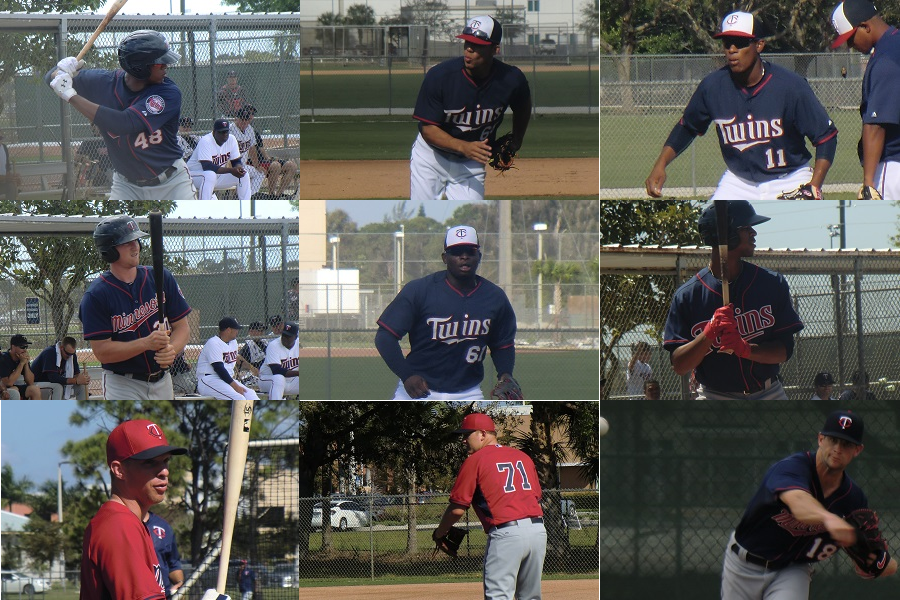 Here is a look at the Opening Day roster of the Lookouts in some detail: Starting Pitchers: DJ Baxendale, JO Berrios, Tyler Duffey, Greg Peavey, Alex Wimmers JO Berrios is arguably the top starting pitcher prospect in the Twins organization. The righty from Puerto Rico was named the Twins minor league starting pitcher of the year in 2014. He made eight starts in New Britain and one in Rochester. Tyler Duffey pitched at three levels in 2014 and got a little better at each level. He could be the first starter promoted to Rochester if needed. Baxendale has struggled with injuries that last two seasons. If healthy, he has some very good stuff. Peavey was the Twins minor league Rule 5 draft pick this year from the New York Mets organization where he pitched in AA and AAA. Wimmers, the Twins first-round pick in 2010, pitched out of the bullpen in 2014, his first season after Tommy John surgery. He is going to be given an opportunity to start again in 2015. Bullpen: Nick Burdi, Dallas Gallant, Cole Johnson, DJ Johnson, Zack Jones, Ryan O’Rourke (LHP), Jake Reed, Adrian Salcedo This bullpen has the potential to be dominant. Nick Burdi was the Twins second-round pick in 2014 out of Louisville. He is known for his triple-digit fastball, but don’t forget that upper-80s slider that goes with it. Jake Reed was the Twins fifth-round pick last year out of Oregon. He dominated at Cedar Rapids and pitched very well in the Arizona Fall League. Because of it, he is skipping the Florida State League and jumping straight to AA. The same can be said for Dallas Gallant who was finally healthy late last year and dominant. Zack Jones missed most of last season with an aneurysm and blood clots, but he returned to the mound late in the Miracle’s playoff run and was hitting 97 mph again. He also pitched in the AFL. Adrian Salcedo participated in his first big league spring training this year. He throws hard. DJ Johnson was playing independent league ball at this time last year, but the righty with the mid-90s fastball was big for Ft. Myers late last year too. Cole Johnson struck out more than a batter an inning last year for New Britain. Lone left-hander Ryan O’Rourke is probably the only member of this bullpen who does not hit 94 mph (or more) regularly. He dominates left-handed bats. All of the right-handers averaged more than a strikeout per inning in 2014. Catchers: Carlos Paulino, Stuart Turner Turner is currently deemed the “Catcher of the Future” by many, and he will get the chance to make the majority of starts for the Lookouts. Known for his defense, he hit well in 2014 after a rough first month in Ft. Myers. Paulino comes to the Twins organization from the Pirates where he spent time in AA and AAA. Infielders: Michael Gonzales, DJ Hicks, Heiker Meneses, Levi Michael, Jorge Polanco, Miguel Sano, Stephen Wickens I can’t imagine many teams in baseball have two first baseman with the combined size of Michael Gonzales and Dalton Hicks. Gonzales is 6-6 and 264 pounds. He hit 12 home runs between Ft. Myers and New Britain. Hicks is listed at 6-5 and 257 pounds and hit 11 homers with the Miracle. When healthy, Levi Michael put together a very good 2014 season. He hit .305 in Ft. Myers before hitting .340 over the final month-plus at New Britain. Jorge Polanco got some time with the Twins last year, but he returns to AA where he finished the 2014 season. He hit .281 with the Rock Cats. Slugging Miguel Sano missed all of the 2014 season after having Tommy John surgery in March. He had 35 home runs between Ft. Myers and New Britain in 2013. Heiker Meneses was a 23-year-old minor league free agent signed by the Twins this offseason. He went to big league camp and will play all three infield spots for the Lookouts. Wickens is healthy again in 2015 and will play all over the infield and the outfield. Outfielders: Byron Buxton, Travis Harrison, Max Kepler, Adam Brett Walker Byron Buxton had a long, frustrating, injury-plagued 2014 season. He hurt both wrists and his season came to an end on the day of his Double-A debut after a collision in the outfield. Baseball’s top prospect (by many sources) returned to the AFL and hurt his finger, requiring surgery. He begins 2015 at Double-A, and like Sano, he’ll be looking to shake off some rust and get back to his 2013 level of performance. Walker has as much power as anyone in the organization – yes, including Miguel Sano. He needs to make more contact because when he does, he has the ability to hit a lot of extra-base hits. Kepler needs to get a full season of at-bats and stay healthy. He had a terrific showing in the Arizona Fall League in 2014. He could get time at first base too. Harrison didn’t show power in Ft. Myers, but he said he learned a lot about hitting from Doug Mientkiewicz. Expect him to hit more home runs in 2015 again. Disabled List: Mason Melotakis (LHP – Tommy John), Jason Adam, BJ Hermsen (Tommy John), David Hurlbut (LHP – Shoulder), Matt Summers Manager/Coaching Staff: Doug Mientkiewicz (MGR), Chad Allen (Hitting Coach), Stu Cliburn (Pitching Coach). After accumulating a record of 161-113 in his two seasons in Ft. Myers, Doug Mientkiewicz is taking over duties as the manager in Chattanooga. He was a strong candidate for the open Twins managerial job this offseason. When Paul Molitor was named manager, Mientkiewicz was put in charge of this immensely talented Lookout roster. Chad Allen begins his third season as the Twins AA hitting coach. Stu Cliburn enters his 14th season as the Twins AA pitching coach (interrupted by three seasons as pitching coach in Rochester). WHO ARE THE TOP PROSPECTS? Twins Daily Prospects: #1 Byron Buxton, #2 Miguel Sano, #3 JO Berrios, #7 Jorge Polanco, #10 Nick Burdi, #12 Max Kepler, #14 Adam Brett Walker, #16 Tyler Duffey, #17 Stuart Turner, #18 Jake Reed, #19 Travis Harrison Seth: #1 Byron Buxton, #2 Miguel Sano, #3 JO Berrios, #7 Jorge Polanco, #10 Nick Burdi, #13 Max Kepler, #14 Adam Brett Walker, #16 Tyler Duffey, #18 Jake Reed, #19 Stuart Turner, #23 Travis Harrison, #24 Zack Jones Cody: #1 Byron Buxton, #2 Miguel Sano, #4 JO Berrios, #7 Jorge Polanco, #10 Nick Burdi, #12 Max Kepler, #14 Travis Harrison, #15 Stuart Turner, #16 Adam Brett Walker, #20 Tyler Duffey, #24 Jake Reed, #25 Zack Jones Jeremy: #1 Byron Buxton, #2 JO Berrios, #3 Miguel Sano, #6 Jorge Polanco, #10 Nick Burdi, #12 Tyler Duffey, #13 Jake Reed, #14 Max Kepler, #16 Adam Brett Walker, #18 Stuart Turner, #21 Zack Jones, #25 Levi Michael, #27 Travis Harrison *** If you didn’t get your copy of the Minnesota Twins Prospect Handbook 2015, be sure to order yours today. You can order a hardcopy or order an electronic copy for immediate download.
 -
Article: 2015 Rochester Red Wings Roster Preview
Seth Stohs replied to Seth Stohs's topic in Twins Daily Front Page News
Three players will be placed on the Disabled List before Thursday's first game. -
On Monday, the Rochester Red Wings announced their Opening Day roster for the 2015 season. The team from western New York will play its 13th season as the Triple-A affiliate of the Minnesota Twins. A year ago, they went 77-67, just missing the International League playoffs.Here is a look at the Opening Day roster of the Red Wings in some detail: 16 of these players have spent time in the major leagues. Starting Pitchers: Trevor May, Alex Meyer, Taylor Rogers (LHP), Jason Wheeler (LHP), Mark Hamburger This is a pretty strong group of prospects. Hamburger is the “old man” having turned 28 years old in February. May and Meyer pitched pretty well with the Red Wings in 2015 and their time with the team could be short-lived if they get off to a fast start in April and May. Hamburger impressed in spring training and will likely pitch as a starter but also can be successful out of the bullpen. Rogers spent the 2014 season in New Britain and pitched quite well. Jason Wheeler spent the first half of 2014 in Ft. Myers with the Miracle before he was promoted to New Britain. He was added to the Twins 40-man roster after the season and had a terrific spring. Bullpen: AJ Achter, Logan Darnell (LHP), Pat Dean (LHP), Lester Oliveros, Ryan Pressly, Stephen Pryor, Caleb Thielbar (LHP), Michael Tonkin. This is another interesting group of guys, several having big league experience. Caleb Thielbar and Ryan Pressly have spent significant time with the Twins the last two seasons. Tonkin has made the flight from Rochester to Minneapolis many times the last two seasons. Pryor and Oliveros both cleared waivers this spring after being removed from the 40-man roster. AJ Achter, former 46th round draft pick, made his well-earned major league debut in September. Darnell and Dean are left-handers who have spent their careers as starters. Both will begin the season in the bullpen. Catchers: Allan de San Miguel, Eric Fryer, Josmil Pinto, Dan Rohlfing Josmil Pinto and Eric Fryer were in big-league camp right until the end. Pinto likely would have made the Opening Day Twins roster if not for a concussion suffered two weeks ago. He had hit pretty well with the Red Wings the last couple of seasons. Fryer is liked by his pitchers for his work behind the plate. He also hit very well this spring. Rohlfing returned to the only organization he has played for since 2007 when the Twins made him their 14th round pick. He also was a late cut from spring training. De San Miguel signed with the Twins in 2004 from Australia and stayed in the organization through the 2011 season. He spent 2012 and 2013 in the Orioles organization before playing independent league baseball in 2014. He was signed by the Twins before spring training. Infielders: Doug Bernier, James Beresford, Argenis Diaz, Nate Hanson, Jose Martinez, Brock Peterson, Reynaldo Rodriguez Bernier was the final man sent to minor league camp for the Twins. The utility infielder played all over the diamond for the Red Wings in 2014 before his September call-up to the Twins. The still just 26-year-old Beresford signed with the Twins in 2005 from Australia. He returns for his third season with the Red Wings. Brock Peterson was a 49th round pick of the Twins way back in 2002. He played for Rochester from 2008 through 2010. He played independent league ball before the Cardinals gave him a chance, a chance that turned into time with the big league club in 2013. He returns to the Twins organization. Argenis Diaz and Jose Martinez signed with the organization as minor league free agents. They received spring training invites. Nate Hanson and Reynaldo Rodriguez return to the Twins. They have no more to prove in AA and hope to spend the full season with the Red Wings. Hanson has spent time each of the past two years in Rochester while Rodriguez got a brief showing with the team a year ago. Outfielders: Eric Farris, Aaron Hicks, Danny Ortiz, Eddie Rosario Aaron Hicks is likely disappointed to be with the Red Wings after being the Twins Opening Day center fielder the last two seasons. However, the 25-year-old will use his time with the Red Wings at the start of this season to try to re-establish himself as a big league center fielder. Eddie Rosario had a very disappointing 2014 season, but a decent showing at Twins spring training this year means that he advances to the Red Wings as well. Eric Farris and Danny Ortiz each were non-roster invites to big league camp as well. All four outfielders will play, and each will likely play all three outfield spots. Disabled List: Dan Turpen Manager/Coaching Staff: Mike Quade (MGR), Tim Doherty (Hitting Coach), Marty Mason (Pitching Coach). The one-time Chicago Cubs manager Mike Quade takes over as the Red Wings manager. He replaced Gene Glynn who turned around a losing culture with the Red Wings during his short stint. Doherty and Mason return for their third year in the organization. WHO ARE THE TOP PROSPECTS? Twins Daily Prospects: #5 Alex Meyer, #8 Eddie Rosario, #9 Trevor May, #15 Taylor Rogers Seth: #6 Alex Meyer, #8 Eddie Rosario, #9 Trevor May, #11 Taylor Rogers, #21 Jason Wheeler, #30 Logan Darnell Cody: #6 Alex Meyer, #8 Trevor May, #9 Eddie Rosario, #19 Taylor Rogers, #29 Jason Wheeler Jeremy: #5 Alex Meyer, #9 Eddie Rosario, #11 Trevor May, #15 Taylor Rogers *** If you didn’t get your copy of the Minnesota Twins Prospect Handbook 2015, be sure to order yours today. You can order a hardcopy or order an electronic copy for immediate download. Click here to view the article
-
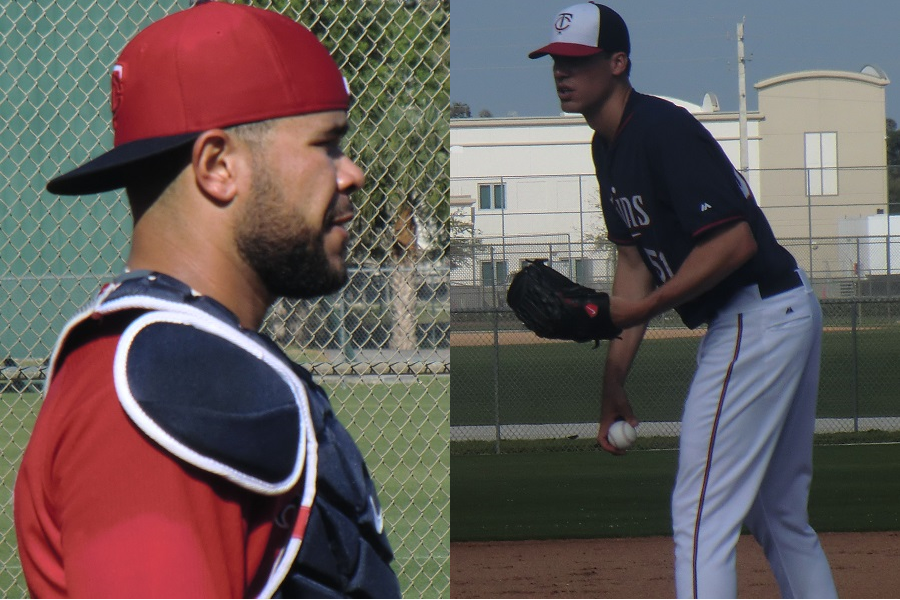 Here is a look at the Opening Day roster of the Red Wings in some detail: 16 of these players have spent time in the major leagues. Starting Pitchers: Trevor May, Alex Meyer, Taylor Rogers (LHP), Jason Wheeler (LHP), Mark Hamburger This is a pretty strong group of prospects. Hamburger is the “old man” having turned 28 years old in February. May and Meyer pitched pretty well with the Red Wings in 2015 and their time with the team could be short-lived if they get off to a fast start in April and May. Hamburger impressed in spring training and will likely pitch as a starter but also can be successful out of the bullpen. Rogers spent the 2014 season in New Britain and pitched quite well. Jason Wheeler spent the first half of 2014 in Ft. Myers with the Miracle before he was promoted to New Britain. He was added to the Twins 40-man roster after the season and had a terrific spring. Bullpen: AJ Achter, Logan Darnell (LHP), Pat Dean (LHP), Lester Oliveros, Ryan Pressly, Stephen Pryor, Caleb Thielbar (LHP), Michael Tonkin. This is another interesting group of guys, several having big league experience. Caleb Thielbar and Ryan Pressly have spent significant time with the Twins the last two seasons. Tonkin has made the flight from Rochester to Minneapolis many times the last two seasons. Pryor and Oliveros both cleared waivers this spring after being removed from the 40-man roster. AJ Achter, former 46th round draft pick, made his well-earned major league debut in September. Darnell and Dean are left-handers who have spent their careers as starters. Both will begin the season in the bullpen. Catchers: Allan de San Miguel, Eric Fryer, Josmil Pinto, Dan Rohlfing Josmil Pinto and Eric Fryer were in big-league camp right until the end. Pinto likely would have made the Opening Day Twins roster if not for a concussion suffered two weeks ago. He had hit pretty well with the Red Wings the last couple of seasons. Fryer is liked by his pitchers for his work behind the plate. He also hit very well this spring. Rohlfing returned to the only organization he has played for since 2007 when the Twins made him their 14th round pick. He also was a late cut from spring training. De San Miguel signed with the Twins in 2004 from Australia and stayed in the organization through the 2011 season. He spent 2012 and 2013 in the Orioles organization before playing independent league baseball in 2014. He was signed by the Twins before spring training. Infielders: Doug Bernier, James Beresford, Argenis Diaz, Nate Hanson, Jose Martinez, Brock Peterson, Reynaldo Rodriguez Bernier was the final man sent to minor league camp for the Twins. The utility infielder played all over the diamond for the Red Wings in 2014 before his September call-up to the Twins. The still just 26-year-old Beresford signed with the Twins in 2005 from Australia. He returns for his third season with the Red Wings. Brock Peterson was a 49th round pick of the Twins way back in 2002. He played for Rochester from 2008 through 2010. He played independent league ball before the Cardinals gave him a chance, a chance that turned into time with the big league club in 2013. He returns to the Twins organization. Argenis Diaz and Jose Martinez signed with the organization as minor league free agents. They received spring training invites. Nate Hanson and Reynaldo Rodriguez return to the Twins. They have no more to prove in AA and hope to spend the full season with the Red Wings. Hanson has spent time each of the past two years in Rochester while Rodriguez got a brief showing with the team a year ago. Outfielders: Eric Farris, Aaron Hicks, Danny Ortiz, Eddie Rosario Aaron Hicks is likely disappointed to be with the Red Wings after being the Twins Opening Day center fielder the last two seasons. However, the 25-year-old will use his time with the Red Wings at the start of this season to try to re-establish himself as a big league center fielder. Eddie Rosario had a very disappointing 2014 season, but a decent showing at Twins spring training this year means that he advances to the Red Wings as well. Eric Farris and Danny Ortiz each were non-roster invites to big league camp as well. All four outfielders will play, and each will likely play all three outfield spots. Disabled List: Dan Turpen Manager/Coaching Staff: Mike Quade (MGR), Tim Doherty (Hitting Coach), Marty Mason (Pitching Coach). The one-time Chicago Cubs manager Mike Quade takes over as the Red Wings manager. He replaced Gene Glynn who turned around a losing culture with the Red Wings during his short stint. Doherty and Mason return for their third year in the organization. WHO ARE THE TOP PROSPECTS? Twins Daily Prospects: #5 Alex Meyer, #8 Eddie Rosario, #9 Trevor May, #15 Taylor Rogers Seth: #6 Alex Meyer, #8 Eddie Rosario, #9 Trevor May, #11 Taylor Rogers, #21 Jason Wheeler, #30 Logan Darnell Cody: #6 Alex Meyer, #8 Trevor May, #9 Eddie Rosario, #19 Taylor Rogers, #29 Jason Wheeler Jeremy: #5 Alex Meyer, #9 Eddie Rosario, #11 Trevor May, #15 Taylor Rogers *** If you didn’t get your copy of the Minnesota Twins Prospect Handbook 2015, be sure to order yours today. You can order a hardcopy or order an electronic copy for immediate download.
 -
Sure, ESPN 2 gave us the Cardinals and Cubs and called it Opening Night. That’s fair, but it’s not Opening Day. There is just one Opening Day in baseball, and it’s today! Happy Opening Day, Twins fans!!It has been 190 days since the 2014 Minnesota Twins came to an end with a 3-0 loss to the Detroit Tigers. The team spent more than six weeks down in Ft. Myers for spring training, preparing for the real thing. That starts today, ironically right where last season ended, in Detroit, against the Tigers. The Twins hitters will get to face lefty David Price, a tough task, to be certain. Opening Day means different things to different people. Through much of the past decade, Opening Day for Twins fans meant hope that the team might advance to the playoffs and maybe it would be the year when the Twins would win their third World Series title. In recent years, it has meant hope that the Twins would show improvement. For some, Opening Day simply means hope that some minor leaguers will get an opportunity with the big league. For those minor leaguers, there is hope that they will get to reach for and achieve a dream of a lifetime. There is a word that you read several times in the previous paragraph, hope. As the saying goes, “Hope springs eternal.” It isn’t a coincidence that the start of the baseball season comes with the start of spring. The grass is starting to turn green. There is new life. There is reborn optimism. On a deeper level, it’s quite appropriate that the start of the 2015 season is in line with Easter, the holiday which provides many with a renewed hope. The Twins were dealt a gut punch last Friday when MLB announce that Ervin Santana will miss the season’s first 80 games due to his suspension for testing positive for a PED. For many Twins fans, that hope we talk about vanished. There’s no question, it is a blow to the Twins. Ervin Santana has been a solid big league starter for a decade. Those 15-16 starts that he will not make will now be started by Mike Pelfrey, or possible Trevor May at some point. Either way, it is a big step down in the short term. No question, it hurts. But it’s still Opening Day. Weird things happen in baseball. That’s why they play the games, right? No one expected the Twins to do anything in 1987, and they certainly weren’t expected to go from worst-to-first in 1991. Much of last decade, they were not preseason picks to win the AL Central. This year, most prognosticators tell us that the Twins will again finish in fifth place in the five-team American League Central division. Frankly, it’s what my prediction is, and it’s probably the most likely scenario. My hope continues to be in the phrase, “You just never know.” My hope is that Phil Hughes will remain a solid starter in 2015. Maybe he won’t be a top 10 starter in baseball, but he will solidify himself as a solid starter. My hope is that Kyle Gibson will take the lessons from his 2014 season and instead of being really good in about half of his starts, maybe he’ll be really good in three-quarters of his starts. Maybe his strikeout rate does increase and he continues to get ground balls at a strong rate. There’s reason for optimism with Gibson. My hope is that Torii Hunter can show that us 39 year olds can still be productive members of society. In my case, being almost a month older than Hunter, I hope to maintain my energy for my daily life. I’m not quite the athlete that Mr. Hunter is. For Hunter, he certainly has lost a step or three from when he last patrolled ground in the outfield for the Twins, but he’ll still make the plays he gets to, throw to the right bases and yes, lead his teammates. Offensively, I think we’d all be happy if he duplicates the numbers he put up in Detroit a season ago. And, I believe that is possible. My hope is that Joe Mauer is fully recovered from his 2013 concussion. The numbers he put up after returning from the oblique injury last summer indicate that he’s got a lot more in the tank. His work with Tom Brunansky this spring on pulling the ball might mean more hits and driving the ball to more areas of the field. I have little concern that Mauer will be better in 2015 than he was in 2014. How much better? Well, that’s why they play the games. My hope is that Danny Santana and Kennys Vargas will avoid the dreaded sophomore slump. I was surprised by their productivity in the big leagues in their 2014 rookie seasons. I don’t expect great numbers, but again, it would be wonderful if they both proved to be guys the team can count on for the next five to ten years. My hope is that guys like Tommy Milone and Mike Pelfrey can put up numbers. They won’t put up sub-3.00 ERAs. They're not going to strike out a batter an inning. However, can they give the Twins an opportunity to win the games that they start. Maybe that means the Twins are competing. Possibly it means that they could be trade candidates in June and July. My hope if that Ricky Nolasco is significantly better than he was in 2014. I have little concern that he will be much better. His long-time track record indicates he'll be solid. My hope is that the bullpen isn’t terrible. A huge part of that being possible would be the starting pitching being able to go seven innings pretty consistently. There was a much better chance of that with Santana in the rotation, but it remains a goal nevertheless. The hope is that Glen Perkins remains healthy after last year’s scare. Casey Fien has proven himself two straight years, and Brian Duensing’s track record has been solid. The hope is that Tim Stauffer pitches like he has for the Padres the last two years, not like he did in spring training. The hope is that JR Graham continues to pump 96 mph fastballs and get hitters out. My hope is in Oswaldo Arcia being able to make more contact and put up competitive at bats more frequently against left-handers. If he makes more contact, he has an elite power that could be huge for the Twins lineup. My hope is that Brian Dozier takes another step forward in 2015. My hope is that he can raise his batting average by 20 to 30 points without it affecting his on-base skills or his power production. My hope is that Kurt Suzuki gets more time off throughout the season so that he can perform like he did in last season’s first half. My hope is that Paul Molitor doesn’t over-think things and keeps things simple. My biggest hope is that the top prospects in the minor leagues are much healthier than they were in 2014. I personally hope that we will get to see Trevor May and Alex Meyer by June. I hope that we get to see Aaron Hicks, Eddie Rosario and Miguel Sano by July. In August, I want to see Nick Burdi and Jake Reed. I want to see Jorge Polanco, Adam Brett Walker, Max Kepler, Travis Harrison, Levi Michael, Tyler Duffey, Taylor Rogers, JT Chargois and Zack Jones in September. We may even see Byron Buxton and JO Berrios in 2015! The Twins have worked hard in recent years to develop one of baseball’s best minor league organizations. It’s fun to read about them (and you’ll be able to get daily minor league reports here at Twins Daily throughout the season again), but it’s also time to start seeing more and more of them with the big league club. I hope we get to see that in 2015 so that we can be really excited on Opening Day 2016. The offseason is complete. Spring training is complete. For the next six months, we will be able to watch Twins regular season games nearly every day. And, hopefully for most of the season, we will be able to have some hope. Most likely, two or three players will get hurt or disappoint. Just as likely, a couple of players will take big steps forward in their carees. Who will those players be? That's why they play the games. And now, it’s time to: Click here to view the article
- 24 replies
-
- 2
-
-
- brian dozier
- phil hughes
- (and 3 more)
-
 It has been 190 days since the 2014 Minnesota Twins came to an end with a 3-0 loss to the Detroit Tigers. The team spent more than six weeks down in Ft. Myers for spring training, preparing for the real thing. That starts today, ironically right where last season ended, in Detroit, against the Tigers. The Twins hitters will get to face lefty David Price, a tough task, to be certain. Opening Day means different things to different people. Through much of the past decade, Opening Day for Twins fans meant hope that the team might advance to the playoffs and maybe it would be the year when the Twins would win their third World Series title. In recent years, it has meant hope that the Twins would show improvement. For some, Opening Day simply means hope that some minor leaguers will get an opportunity with the big league. For those minor leaguers, there is hope that they will get to reach for and achieve a dream of a lifetime. There is a word that you read several times in the previous paragraph, hope. As the saying goes, “Hope springs eternal.” It isn’t a coincidence that the start of the baseball season comes with the start of spring. The grass is starting to turn green. There is new life. There is reborn optimism. On a deeper level, it’s quite appropriate that the start of the 2015 season is in line with Easter, the holiday which provides many with a renewed hope. The Twins were dealt a gut punch last Friday when MLB announce that Ervin Santana will miss the season’s first 80 games due to his suspension for testing positive for a PED. For many Twins fans, that hope we talk about vanished. There’s no question, it is a blow to the Twins. Ervin Santana has been a solid big league starter for a decade. Those 15-16 starts that he will not make will now be started by Mike Pelfrey, or possible Trevor May at some point. Either way, it is a big step down in the short term. No question, it hurts. But it’s still Opening Day. Weird things happen in baseball. That’s why they play the games, right? No one expected the Twins to do anything in 1987, and they certainly weren’t expected to go from worst-to-first in 1991. Much of last decade, they were not preseason picks to win the AL Central. This year, most prognosticators tell us that the Twins will again finish in fifth place in the five-team American League Central division. Frankly, it’s what my prediction is, and it’s probably the most likely scenario. My hope continues to be in the phrase, “You just never know.” My hope is that Phil Hughes will remain a solid starter in 2015. Maybe he won’t be a top 10 starter in baseball, but he will solidify himself as a solid starter. My hope is that Kyle Gibson will take the lessons from his 2014 season and instead of being really good in about half of his starts, maybe he’ll be really good in three-quarters of his starts. Maybe his strikeout rate does increase and he continues to get ground balls at a strong rate. There’s reason for optimism with Gibson. My hope is that Torii Hunter can show that us 39 year olds can still be productive members of society. In my case, being almost a month older than Hunter, I hope to maintain my energy for my daily life. I’m not quite the athlete that Mr. Hunter is. For Hunter, he certainly has lost a step or three from when he last patrolled ground in the outfield for the Twins, but he’ll still make the plays he gets to, throw to the right bases and yes, lead his teammates. Offensively, I think we’d all be happy if he duplicates the numbers he put up in Detroit a season ago. And, I believe that is possible. My hope is that Joe Mauer is fully recovered from his 2013 concussion. The numbers he put up after returning from the oblique injury last summer indicate that he’s got a lot more in the tank. His work with Tom Brunansky this spring on pulling the ball might mean more hits and driving the ball to more areas of the field. I have little concern that Mauer will be better in 2015 than he was in 2014. How much better? Well, that’s why they play the games. My hope is that Danny Santana and Kennys Vargas will avoid the dreaded sophomore slump. I was surprised by their productivity in the big leagues in their 2014 rookie seasons. I don’t expect great numbers, but again, it would be wonderful if they both proved to be guys the team can count on for the next five to ten years. My hope is that guys like Tommy Milone and Mike Pelfrey can put up numbers. They won’t put up sub-3.00 ERAs. They're not going to strike out a batter an inning. However, can they give the Twins an opportunity to win the games that they start. Maybe that means the Twins are competing. Possibly it means that they could be trade candidates in June and July. My hope if that Ricky Nolasco is significantly better than he was in 2014. I have little concern that he will be much better. His long-time track record indicates he'll be solid. My hope is that the bullpen isn’t terrible. A huge part of that being possible would be the starting pitching being able to go seven innings pretty consistently. There was a much better chance of that with Santana in the rotation, but it remains a goal nevertheless. The hope is that Glen Perkins remains healthy after last year’s scare. Casey Fien has proven himself two straight years, and Brian Duensing’s track record has been solid. The hope is that Tim Stauffer pitches like he has for the Padres the last two years, not like he did in spring training. The hope is that JR Graham continues to pump 96 mph fastballs and get hitters out. My hope is in Oswaldo Arcia being able to make more contact and put up competitive at bats more frequently against left-handers. If he makes more contact, he has an elite power that could be huge for the Twins lineup. My hope is that Brian Dozier takes another step forward in 2015. My hope is that he can raise his batting average by 20 to 30 points without it affecting his on-base skills or his power production. My hope is that Kurt Suzuki gets more time off throughout the season so that he can perform like he did in last season’s first half. My hope is that Paul Molitor doesn’t over-think things and keeps things simple. My biggest hope is that the top prospects in the minor leagues are much healthier than they were in 2014. I personally hope that we will get to see Trevor May and Alex Meyer by June. I hope that we get to see Aaron Hicks, Eddie Rosario and Miguel Sano by July. In August, I want to see Nick Burdi and Jake Reed. I want to see Jorge Polanco, Adam Brett Walker, Max Kepler, Travis Harrison, Levi Michael, Tyler Duffey, Taylor Rogers, JT Chargois and Zack Jones in September. We may even see Byron Buxton and JO Berrios in 2015! The Twins have worked hard in recent years to develop one of baseball’s best minor league organizations. It’s fun to read about them (and you’ll be able to get daily minor league reports here at Twins Daily throughout the season again), but it’s also time to start seeing more and more of them with the big league club. I hope we get to see that in 2015 so that we can be really excited on Opening Day 2016. The offseason is complete. Spring training is complete. For the next six months, we will be able to watch Twins regular season games nearly every day. And, hopefully for most of the season, we will be able to have some hope. Most likely, two or three players will get hurt or disappoint. Just as likely, a couple of players will take big steps forward in their carees. Who will those players be? That's why they play the games. And now, it’s time to: https://www.youtube.com/watch?v=gPGdzxktan4
 -
Article: Get To Know 'Em: Zaino Henriquez
Seth Stohs replied to Jeremy Nygaard's topic in Twins Daily Front Page News
Remarkable! I'm always amazed when players from Latin America do interviews in English. I know I wouldn't do well if I was interviewed there in Spanish. -
My thoughts, hours after the announcement... Terry Ryan can't be blamed for this. It's silly to go there. It's on Santana... that's it. Santana has not been a #4 through most of his career. He's been a very solid, effective #3 most of the time. I have no problem with starting out with Pelfrey. He was next-in-line and did well this spring (not that the numbers matter.). May needs to be stretched out anyway. Jeffrey is healthy. Here's his one last chance. Nothing wrong with that. I prone Ted the Twins at 73 wins before... with a shot to flirt with .500. Now hoping for 70 wins.
-
So you think they should release Vargas too?
-
It’s the last of our hitter predictions today as we look at Kennys Vargas and the other AL Central designated hitters. Sure, Vargas will get some time at first base too, but primarily he will be the DH. Below, read about Vargas, but be sure to review and make your predictions for the other Minnesota Twins hitters. We can look back at the end of the season and see how we all did.MINNESOTA TWINS – KENNYS VARGAS Kennys Vargas had not even been drafted out of high school in Puerto Rico when the Twins were able to sign him as a free agent. He was big, and he was raw. It took him two years in the Gulf Coast League and a year at Elizabethton to get out of rookie league ball. A 50-game suspension delayed the start of his 2012 season which he spent in Beloit. In 2013, he 33 doubles and 19 home runs in Ft. Myers. He began the 2014 season in New Britain where he was very streaky. He was named to the World Team and played first base at Target Field. On July 31, the Twins traded Josh Willingham and promoted Vargas to the big leagues despite him being on a cold streak. He came up directly from Double-A and made a good showing. In 53 games, he hit .274/.316/.456 (.772) with 10 doubles and nine home runs. The Twins named him their Minor League Hitter of the Year. So, what can he do for the Twins in 2015? Can he avoid the dreaded sophomore slump? Can he continue to be a run producer in the middle of the lineup? We shall see. Here are the Twins Daily writers’ predictions: Seth – .261/.326/.431 (.726) with 23 doubles and 18 HR. Nick – .255/.320/.460 (.780) with 20 doubles and 25 HR. Parker – John – AL CENTRAL DESIGNATED HITTERS Opponent – Player – 2015 Age – 2014 Statistics Chicago – Adam LaRoche – 35 - .259/.362/.455 (.817) with 19 doubles, 26-HR Cleveland – Nick Swisher – 34 - .208/.278/.331 (.608) with 20 doubles, 8-HR Detroit – Victor Martinez – 36 - .335/.409/.565 (.974) with 33 doubles, 32-HR Kansas City – Kendrys Morales – 32 - .218/.274/.338 (.612) with 20 doubles, 8-HR AL CENTRAL DESIGNATED HITTER RANKINGS #1 – Victor Martinez – Detroit #2 – Adam LaRoche – Chicago #3 – Kennys Vargas – Minnesota #4 – Kendrys Morales – Kansas City #5 – Nick Swisher – Cleveland NOW IT’S YOUR TURN Give it a little thought and then go to the comments section below and post two things. First, make your statistical projection for Kennys Vargas in 2015. Second, how would you rank the AL Central DHs? Then discuss your thoughts with the rest of the Twins Daily community on the Twins DH position. How will it play out throughout the season? Check back throughout this next week as we’ll do these same things for each of the positions. PREVIOUS PREDICTIONS AND RANKINGS Kurt Suzuki Joe Mauer Brian Dozier Trevor Plouffe Danny Santana Oswaldo Arcia Jordan Schafer Torii Hunter Click here to view the article
-
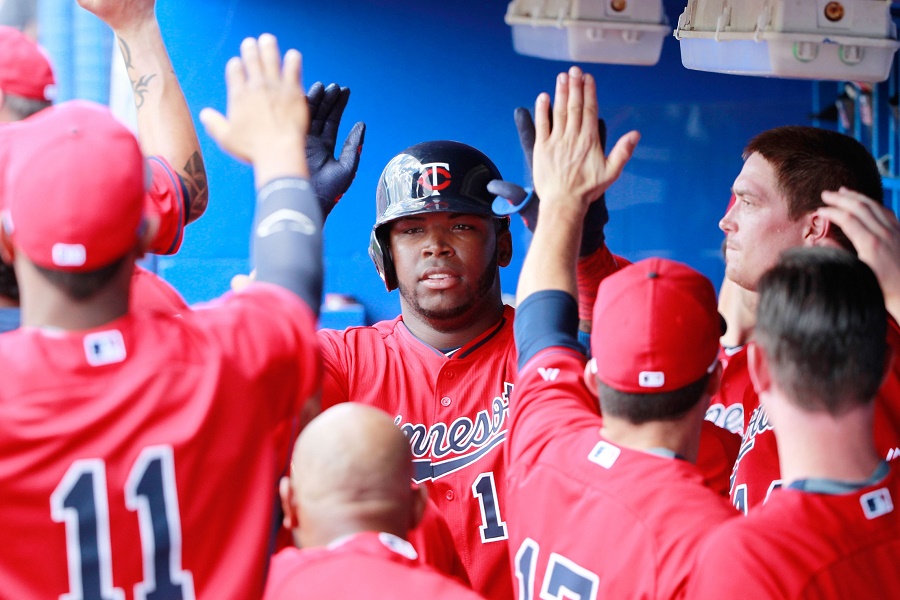 MINNESOTA TWINS – KENNYS VARGAS Kennys Vargas had not even been drafted out of high school in Puerto Rico when the Twins were able to sign him as a free agent. He was big, and he was raw. It took him two years in the Gulf Coast League and a year at Elizabethton to get out of rookie league ball. A 50-game suspension delayed the start of his 2012 season which he spent in Beloit. In 2013, he 33 doubles and 19 home runs in Ft. Myers. He began the 2014 season in New Britain where he was very streaky. He was named to the World Team and played first base at Target Field. On July 31, the Twins traded Josh Willingham and promoted Vargas to the big leagues despite him being on a cold streak. He came up directly from Double-A and made a good showing. In 53 games, he hit .274/.316/.456 (.772) with 10 doubles and nine home runs. The Twins named him their Minor League Hitter of the Year. So, what can he do for the Twins in 2015? Can he avoid the dreaded sophomore slump? Can he continue to be a run producer in the middle of the lineup? We shall see. Here are the Twins Daily writers’ predictions: Seth – .261/.326/.431 (.726) with 23 doubles and 18 HR. Nick – .255/.320/.460 (.780) with 20 doubles and 25 HR. Parker – John – AL CENTRAL DESIGNATED HITTERS Opponent – Player – 2015 Age – 2014 Statistics Chicago – Adam LaRoche – 35 - .259/.362/.455 (.817) with 19 doubles, 26-HR Cleveland – Nick Swisher – 34 - .208/.278/.331 (.608) with 20 doubles, 8-HR Detroit – Victor Martinez – 36 - .335/.409/.565 (.974) with 33 doubles, 32-HR Kansas City – Kendrys Morales – 32 - .218/.274/.338 (.612) with 20 doubles, 8-HR AL CENTRAL DESIGNATED HITTER RANKINGS #1 – Victor Martinez – Detroit #2 – Adam LaRoche – Chicago #3 – Kennys Vargas – Minnesota #4 – Kendrys Morales – Kansas City #5 – Nick Swisher – Cleveland NOW IT’S YOUR TURN Give it a little thought and then go to the comments section below and post two things. First, make your statistical projection for Kennys Vargas in 2015. Second, how would you rank the AL Central DHs? Then discuss your thoughts with the rest of the Twins Daily community on the Twins DH position. How will it play out throughout the season? Check back throughout this next week as we’ll do these same things for each of the positions. PREVIOUS PREDICTIONS AND RANKINGS Kurt Suzuki Joe Mauer Brian Dozier Trevor Plouffe Danny Santana Oswaldo Arcia Jordan Schafer Torii Hunter
 -
Article: Minnesota Twins Set Opening Day Roster
Seth Stohs replied to Seth Stohs's topic in Twins Daily Front Page News
I agree with a lot of this, but why do we think that Meyer is on an innings limit? No one has said anything about that, have they? His pitch count in limited innings might be an issue, but he's not on an innings limit... Maybe others have heard that and I just missed it?- 70 replies
-
- 2
-
-
- chris herrmann
- josmil pinto
- (and 3 more)
-
I might disagree with that. I think Bernier is pretty solid for a utility infielder, and he's not going to complain about not playing very often. he's absolutely a future coach, but his baseball talent shouldn't be underestimated. He hasn't just hung around this long by not being really good. And, for me at least, a utility infielder's job (especially when the 3B, SS and 2B are all pretty established every day players) is defense first, and Bernier is terrific with the glove.
- 50 replies
-
- 1
-
-
- shane robinson
- chris herrmann
- (and 1 more)
-
Our Minnesota Twins prediction series continues today as we close out the outfield by considering Torii Hunter and the AL Central right fielders. That’s right. After four years with the Angels and the past two season in Detroit, Torii Hunter returns to the Twins for what may be his final season.MINNESOTA TWINS – TORII HUNTER Hunter may not be the defensive whiz that he was when he won seven Gold Glove Awards as the Twins centerfielder, but the 39-year-old can still play ball. Although he took his offensive game to another level after leaving the Twins, few may remember that he put up some offensive numbers in his time with the team too. Hunter won a Silver Slugger in 2013 for his offense. Last year, he hit .286/.319/.446 (.765) with 33 doubles, two triples and 17 home runs. Hunter is currently in the top ten Minnesota Twins career list in the following categories: games, at-bats, runs, hits, total bases, doubles, home runs, RBI and stolen bases. If Hunter were to hit 20 home runs this year, he would jump into fifth place in the Twins career mark. So, what can he do for the Twins in 2015? Well, that is to be seen. Here are the Twins Daily writers’ predictions: Seth – .274/.306/.420 (.726) with 28 doubles and 13 HR. Nick – .275/.325/.390 (.715) with 25 doubles and 10 HR. Parker – John – AL CENTRAL RIGHT FIELDERS Opponent – Player – 2015 Age – 2014 Statistics Chicago – Avisail Garcia – 24 - .244/.305/.413 (.718) with 8 doubles, 7-HR Cleveland – Brandon Moss – 31 - .234/.334/.438 (.772) with 23 doubles, 25-HR Detroit – JD Martinez – 27 - .315/.358/.553 (.912) with 30 doubles, 23-HR Kansas City – Alexis Rios – 34 - .280/.311/.398 (.709) with 30 doubles, 4-HR AL CENTRAL RIGHT FIELD RANKINGS #1 – JD Martinez – Detroit #2 – Brandon Moss – Cleveland #3 – Avisail Garcia – Chicago #4 – Torii Hunter – Minnesota #5 – Alexis Rios – Kansas City NOW IT’S YOUR TURN Give it a little thought and then go to the comments section below and post two things. First, make your statistical projection for Torii Hunter in 2015. Second, how would you rank the AL Central right fielders? Then discuss your thoughts with the rest of the Twins Daily community on the Twins right field position. How will it play out throughout the season? Check back throughout this next week as we’ll do these same things for each of the positions. PREVIOUS PREDICTIONS AND RANKINGS Kurt Suzuki Joe Mauer Brian Dozier Trevor Plouffe Danny Santana Oswaldo Arcia Jordan Schafer Click here to view the article
-
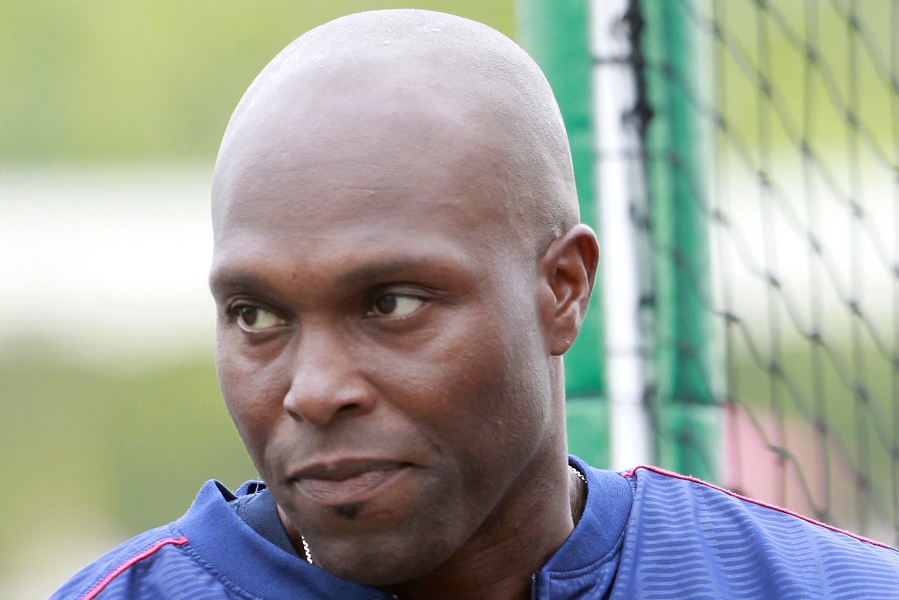 MINNESOTA TWINS – TORII HUNTER Hunter may not be the defensive whiz that he was when he won seven Gold Glove Awards as the Twins centerfielder, but the 39-year-old can still play ball. Although he took his offensive game to another level after leaving the Twins, few may remember that he put up some offensive numbers in his time with the team too. Hunter won a Silver Slugger in 2013 for his offense. Last year, he hit .286/.319/.446 (.765) with 33 doubles, two triples and 17 home runs. Hunter is currently in the top ten Minnesota Twins career list in the following categories: games, at-bats, runs, hits, total bases, doubles, home runs, RBI and stolen bases. If Hunter were to hit 20 home runs this year, he would jump into fifth place in the Twins career mark. So, what can he do for the Twins in 2015? Well, that is to be seen. Here are the Twins Daily writers’ predictions: Seth – .274/.306/.420 (.726) with 28 doubles and 13 HR. Nick – .275/.325/.390 (.715) with 25 doubles and 10 HR. Parker – John – AL CENTRAL RIGHT FIELDERS Opponent – Player – 2015 Age – 2014 Statistics Chicago – Avisail Garcia – 24 - .244/.305/.413 (.718) with 8 doubles, 7-HR Cleveland – Brandon Moss – 31 - .234/.334/.438 (.772) with 23 doubles, 25-HR Detroit – JD Martinez – 27 - .315/.358/.553 (.912) with 30 doubles, 23-HR Kansas City – Alexis Rios – 34 - .280/.311/.398 (.709) with 30 doubles, 4-HR AL CENTRAL RIGHT FIELD RANKINGS #1 – JD Martinez – Detroit #2 – Brandon Moss – Cleveland #3 – Avisail Garcia – Chicago #4 – Torii Hunter – Minnesota #5 – Alexis Rios – Kansas City NOW IT’S YOUR TURN Give it a little thought and then go to the comments section below and post two things. First, make your statistical projection for Torii Hunter in 2015. Second, how would you rank the AL Central right fielders? Then discuss your thoughts with the rest of the Twins Daily community on the Twins right field position. How will it play out throughout the season? Check back throughout this next week as we’ll do these same things for each of the positions. PREVIOUS PREDICTIONS AND RANKINGS Kurt Suzuki Joe Mauer Brian Dozier Trevor Plouffe Danny Santana Oswaldo Arcia Jordan Schafer
 -
The roster doesn't have an exciting bench or back-end of the bullpen, but I thought Nick told the story well. Herrmann will catch maybe one out of 4 games until Pinto is deemed at 100% He probably won't show his versatility as much since he's the backup catcher. Boyer's looked fine, and as Parker showed in his story earlier in the week, there's reason to believe that he could be pretty solid.Obviously we'll find out. As for Robinson, I expect he'll make one start most weeks (maybe a 2nd start some weeks), and he'll be a late-inning defensive replacement a couple times each week. The key to the Twins success isn't on the Fringes (As Nick calls them)... it's that starting lineup being able to score runs and help limit runs. And it's the starting pitchers being able to complete 7 innings most of the time so that just Duensing, Fien and Perkins need to be relied upon as Boyer, Pelfrey, Stauffer and Graham adjust to their roles.
- 50 replies
-
- 6
-
-
- shane robinson
- chris herrmann
- (and 1 more)
-
Article: Minnesota Twins Set Opening Day Roster
Seth Stohs replied to Seth Stohs's topic in Twins Daily Front Page News
Hicks does have upside, so he could play every day and get better. As for the Hunter comment, it's just not right. He certainly has a purpose. He can still hit. He can still make all the routine plays and catch what he gets to. He'll be a solid bat in the middle of the lineup.- 70 replies
-
- 4
-
-
- chris herrmann
- josmil pinto
- (and 3 more)
-
Article: Minnesota Twins Set Opening Day Roster
Seth Stohs replied to Seth Stohs's topic in Twins Daily Front Page News
There's reason to believe that if Hicks has a good April, he could be up and starting in May. I personally feel good about Schafer getting 4-6 weeks to just see what he can be. Hopefully he can build upon what he did with the Twins last season. If not, Hicks is still there. I think the same is true for Pinto. He's played in two minor league games (hitting only) and two MLB games (3 innings of catching?)... Let him get his legs back under him after the brain injury first. Herrmann is just find as the #2 catcher, much less for a short term. -
Article: Minnesota Twins Set Opening Day Roster
Seth Stohs replied to Seth Stohs's topic in Twins Daily Front Page News
Buxton and Sano are coming off missed seasons, so I think they'll be late-season (July or August) call-ups at best. Berrios may fit into that same time. Meyer and May should be up by June or sooner. That could be Rosario's timeline too. I think Burdi could be up by August. Tonkin, Pressly and Achter could be up any time. Darnell could come up and be ready any time. Then guys like Reed, Chargois and Zack Jones could be up early next year.- 70 replies
-
- 4
-
-
- chris herrmann
- josmil pinto
- (and 3 more)
-
Article: Minnesota Twins Set Opening Day Roster
Seth Stohs replied to Seth Stohs's topic in Twins Daily Front Page News
My sense would be no. I think they prefer Graham and his upside. Oliver is older. He has been available to the Twins (and all other teams) several times in recent years.- 70 replies
-
- 2
-
-
- chris herrmann
- josmil pinto
- (and 3 more)
-
Following the Minnesota Twins spring training game against Boston on Thursday night, the Twins finalized their Opening Day roster. Josmil Pinto was optioned to Rochester. Eric Fryer was reassigned to minor league camp. Doug Bernier was told that he will be reassigned to minor league camp at the end of spring training.So here is your Minnesota Twins opening day roster under the tutelage of manager Paul Molitor: STARTING PITCHERS Phil HughesErvin SantanaRicky NolascoKyle GibsonTommy MiloneRELIEF PITCHERS Glen PerkinsCasey FienBrian DuensingMike PelfreyBlaine BoyerTim StaufferJR GrahamCATCHERS Kurt SuzukiChris HerrmannJosmil Pinto was the favorite to be the backup catcher, but he just needs to get some at-bats down in Rochester. Missing over a week with the concussion really hurt his chances of making the roster. INFIELDERS Joe MauerBrian DozierTrevor PlouffeDanny SantanaEduardo EscobarEduardo NunezKennys VargasOUTFIELDERS Oswaldo ArciaJordan SchaferTorii HunterShane RobinsonThe Twins will play on Friday night and Saturday afternoon before packing up and heading to Detroit where they will take on David Price and the Tigers on Monday. Click here to view the article
-
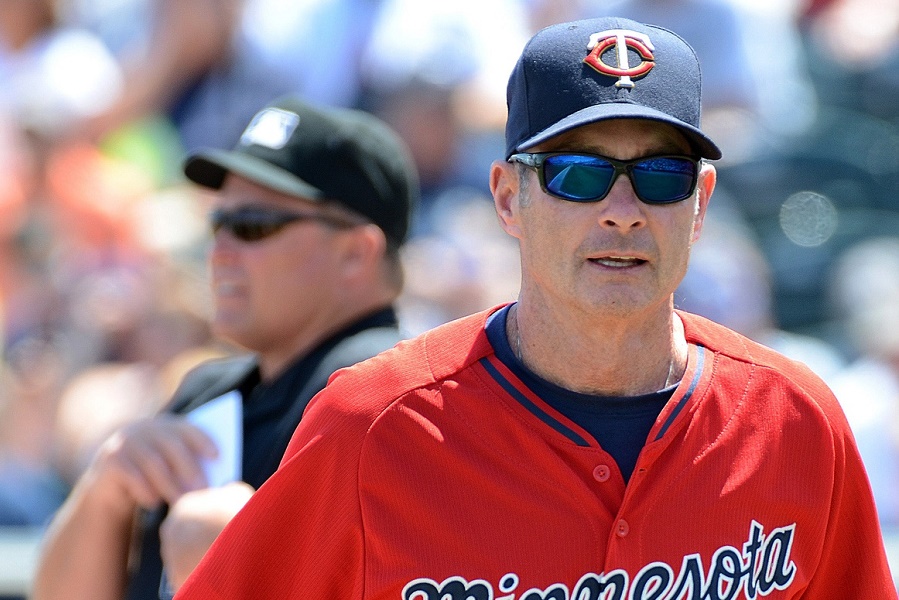 So here is your Minnesota Twins opening day roster under the tutelage of manager Paul Molitor: STARTING PITCHERS Phil Hughes Ervin Santana Ricky Nolasco Kyle Gibson Tommy Milone RELIEF PITCHERS Glen Perkins Casey Fien Brian Duensing Mike Pelfrey Blaine Boyer Tim Stauffer JR Graham CATCHERS Kurt Suzuki Chris Herrmann Josmil Pinto was the favorite to be the backup catcher, but he just needs to get some at-bats down in Rochester. Missing over a week with the concussion really hurt his chances of making the roster. INFIELDERS Joe Mauer Brian Dozier Trevor Plouffe Danny Santana Eduardo Escobar Eduardo Nunez Kennys Vargas OUTFIELDERS Oswaldo Arcia Jordan Schafer Torii Hunter Shane Robinson The Twins will play on Friday night and Saturday afternoon before packing up and heading to Detroit where they will take on David Price and the Tigers on Monday.
 -
yeah, if Schafer plays enough to get 21 doubles, he'd have closer to 40 steals. The big question is how long he'll be the starter and how much he's the 4th OF.
-
In the last few days, we reviewed and made predictions about the 2015 seasons of the Twins infielders. Today, we continue to make our projections and rankings of the Twins outfielders by looking at the center field position. Jordan Schafer will go into the season as the Twins starting center fielder. At some point in the season, we may see Aaron Hicks getting another opportunity. And, by the end of the season, there is some chance that we could get our first glimpse of Byron Buxton. Today, we’ll make predictions for Jordan Schafer.MINNESOTA TWINS – JORDAN SCHAFER Once a top prospect in all of baseball, Jordan Schafer has been through some personal demons. However, he got another chance with the Braves in 2013 and became a solid fourth outfielder. He began 2014 with the Braves. However, through the midway point in the season, he had just 93 plate appearances in 63 games played. He was basically just a late-innings defensive replacement and pinch runner. It would be difficult for anyone to put up decent numbers with that infrequent playing time. The Braves designated Schafer for assignment. The Twins had just traded outfielder Sam Fuld at the trade deadline and wanted another outfielder. Schafer fits the Sam Fuld mold, probably a fourth outfielder, but capable of starting for a period of time too. In the season’s final two months, he played most every day. In 41 games (and 147 plate appearances), he hit .285/.345/.362 (.707) with 30 stolen bases. Did playing every day allow him to play well, or should we only note that in his 1,398 total big league plate appearances, he has a .229/.311/.310 (.621) slash line? The reality is that it’s probably somewhere in the middle. Schafer is a different person, more mature and more experienced at age 28 than when he first came to the big leagues. What he did as a 23- or 24- or 25- year-old isn’t necessarily what he is today. And yes, playing every day should be better for him (or most anyone) than playing in one of two games and maybe getting four or five plate appearances each week. Our Twins Daily writers make their predictions: Seth – .268/.324/.351 (.675) with 16 doubles and 4 HR. Nick – .250/.315/.340 (.655) with 15 doubles and 3 HR. Parker – .260/.330/.350 (.690) with 10 doubles and 1 HR John – .250/.330/.340 (.690) with 18 doubles and 2 HR (and 30+ SB). AL CENTRAL CENTER FIELDERS Opponent – Player – 2015 Age – 2014 Statistics Chicago – Adam Eaton – 26 - .300/.362/.401 (.763) with 26 doubles, 1-HR Cleveland – Michael Bourn – 32 - .257/.314/.360 (.674) with 17 doubles, 3-HR Detroit – Anthony Gose – 24 - .226/.311/.293 (.604) with 8 doubles, 2-HR Kansas City – Lorenzo Cain – 29 - .301/.339/.412 (.751) with 29 doubles, 5-HR AL CENTRAL CENTER FIELD RANKINGS #1 – Adam Eaton - Chicago #2 – Lorenzo Cain – Kansas City #3 – Michael Bourn – Cleveland #4 – Jordan Schafer – Minnesota #5 – Anthony Gose – Detroit NOW IT’S YOUR TURN Give it a little thought and then go to the comments section below and post two things. First, make your statistical projection for Jordan in 2015. Second, how would you rank the AL Central center fielders? Then discuss your thoughts with the rest of the Twins Daily community on the Twins center field position. How will it play out throughout the season? Check back throughout this next week as we’ll do these same things for each of the positions. PREVIOUS PREDICTIONS AND RANKINGS Kurt Suzuki Joe Mauer Brian Dozier Trevor Plouffe Danny Santana Oswaldo Arcia Click here to view the article
