



Seth Stohs
-
Posts
25,870 -
Joined
-
Last visited
-
Days Won
109
Content Type
Profiles
News
Minnesota Twins Videos
2026 Minnesota Twins Top Prospects Ranking
2022 Minnesota Twins Draft Picks
Minnesota Twins Free Agent & Trade Rumors, Notes, & Tidbits
Guides & Resources
2023 Minnesota Twins Draft Picks
The Minnesota Twins Players Project
2024 Minnesota Twins Draft Picks
2025 Minnesota Twins Draft Pick Tracker
2026 Minnesota Twins Draft Tracker: Picks & Bonuses
Forums
Blogs
Events
Store
Downloads
Gallery
Everything posted by Seth Stohs
-
 I noticed that too, but I think he does do that a lot, just to shake it out, keep it loose.
 -
Update: WxMan17 - DJ Baxendale SD Buhr - James Beresford curt1965 - JO Berrios Steve Lein - Nick Burdi Hrbowski - Byron Buxton 2wins87 - Michael Cederoth Peanutsfromheaven - JT Chargois JunkWaxTwins - Ryan Eades Jeff Reboulet - Tanner English tyomoth - Mitch Garver MinnFan4Life - Stephen Gonsalves lightfoot789 - Niko Goodrum RollingOaks - Nick Gordon gunnarthor - Travis Harrison curt1965 - Aaron Hicks nicksaviking - Dalton Hicks JaleelWhiteFanClub - Chih-Wei Hu Hrbowski - Zack Jones blue chipper - Max Kepler Jeff Reboulet - Yorman Landa Joe Mulligan - Zack Larson James - Brett Lee Joe Mulligan - Trevor May markos - Alex Meyer teekz - Levi Michael AM. - Amaurys Minier TJG - Max Murphy Shane Wahl - Brian Navarreto scottz - Greg Peavey TheDean - Brandon Peterson milldaddy35 - Jorge Polanco Bill Tanner - Jake Reed bulldozier14 - Eddie Rosario nytwinsfan - Miguel Sano Dance with Disco Dan - Kohl Stewart Stringer Bell - Alex Swim nate10s - Stuart Turner Shane Wahl - Adam Brett Walker always 33 - Luke Westphal Secondary User - Jason Wheeler
-
I've posted that pronunciation a few times in various articles that have mentioned him lately just so that people get used to it.
-
From what I've seen, they just need to not swing at the sliders down and away... which is the scouting report on guys like Sano and Walker coming into the season. Buxton just looks really rusty, which of course is understandable. Also, let's see what happens when they start seeing teams' #3, #4, #5 starters.
-
I don't think he'll ever add a ton of power, maybe 10-12 home run potential... but you never know. He is just solid all around. Scouting reports basically say that none of his tools are elite, but he isn't really weak at any either.
- 41 replies
-
- 2
-

-
- jorge polanco
- jose berrios
- (and 3 more)
-
Opening Day was exciting in the Twins farm system, but Friday was a good day throughout the organization. Rochester had their game postponed, but Chattanooga, Ft. Myers and Cedar Rapids all won. Not only that, but there were a couple of very impressive performances by some pitchers on this night. Offensively, a couple of top middle infield prospects had terrific nights and clutch base hits to help their teams to wins. Oh, and the parent club, the Minnesota Twins… They notched their first win of the season with a 6-0 win over the Chicago White Sox. Check out the rest of the article for all the scores and highlights.Jeremy Nygaard, Cody Christie and I are excited about the start of the 2015 Minor League season and are offering the 2015 Minnesota Twins Prospect Handbook in paperback right now at a 15% discount. Get your copy today, if you haven’t already. It’s also available as an electronic book which is available for immediate download. We have had two days’ worth of Twins Daily readers participating in this year’s Adopt-A-Prospect. At this point, feel free to adopt more players – whether you have or haven’t – and start by posting their initial bio/profile in the Adopt-A-Prospect 2015 forum. Let’s get to today’s report. First things first. BJ Hermsen had his Tommy John surgery earlier in the week. On Friday, lefty Lewis Thorpe had his Tommy John surgery. Both will now begin that long road back. RED WINGS REPORT Rochester, Buffalo (PPD) Box Score The Rochester Red Wings were set to make their home debut of 2015, but the weather was what won on Friday afternoon. The two teams will make up the missed game as part of a doubleheader in late May. They return to action on Saturday afternoon. CHATTANOOGA CHATTER Chattanooga 6, Montgomery 2 Box Score As has been written many times, this Chattanooga roster is full of incredible talent and prospects. I do recall talking to Kyle Gibson when he was the organization’s top prospect earlier this decade. I asked him what it meant to him to be considered a top prospect. He said (paraphrasing): It’s nice and I appreciate it, but being a prospect means that I haven’t done anything yet. This Lookouts group is talented, but they’re not all big league ready, and they all have things that they can continue to improve upon. But man, the talent is remarkable. Things always start on the mound, and on this night, JO Berrios made his 2015 debut and came through with an excellent start. He went 6.1 innings and gave up just one run on six hits and a walk. He struck out 11 batters. He threw 89 pitches, and 63 of them were strikes. DJ Johnson came on in relief and got the next five batters out. Zack Jones came on for the ninth inning. He gave up a run on two hits in the inning, but he also struck out three. The Lookouts didn’t generate a lot of offense, but Jorge Polanco generated all the power they would need on this night. Polanco came to the plate in the fifth inning with no score and the bases loaded. He proceeded to blast a long home run, a grand slam, which gave the team a 4-0 lead. Polanco went 3-5 with a double and a stolen base in addition to the big blast. Dalton Hicks was 3-4 with a walk and a double in the game. Mike Gonzales went 2-4. On the other side of the spectrum, there were some tough games as well. Byron Buxton went 0-5 with three strikeouts. Travis Harrison was 0-5 with four strikeouts. Adam Brett Walker went 1-5 but struck out three times. Miguel Sano went 0-3 with two strikeouts, though he also walked twice. MIRACLE MATTERS Ft. Myers 3, Charlotte 0 Box Score Earlier in the day, David Dorsey of the News-Press talked to Aaron Slegers about several topics. In the article, we learned that the 6-10 Slegers was actually cut from his high school basketball team as a sophomore, but he was just fine with that. Baseball was his first love. He had the honor of making the start for the Miracle on Friday night in their home opener. He responded well. He threw six shutout innings. He gave up just two hits, walked none and struck out three to record his first win of the year. Alex Muren came on and threw a scoreless inning. Brian Gilbert walked two, but he didn’t give up a run in his inning. Finally, JT Chargois entered the game in the ninth and pitched a perfect inning, including two strikeouts. It had to be a special moment for Chargois (pronounced SHA-gwa). It was his first appearance in a regular season game since 2012 in Elizabethton. That is the year he was drafted. The last two years, he has been rehabbing elbow issues and had Tommy John. He returned to the mound at Instructional League last fall, but this had to be a special outing for the triple-digit throwing right-hander. In my Ft. Myers Miracle Roster Preview, I wrote that I thought that repeating at Ft. Myers was the best thing for Niko Goodrum. He did all right with the Miracle last year. The hope is that having that year of experience and learning, he will be able to perform better and more consistently in 2015. With that, more confidence could be developed and he could take the next step in his career. He’s off to a good start so far. After having two hits on Opening Night, Goodrum had two more hits on Friday night. His early two-run home run gave the team a lead they were able to hold on to. Later, he added his first double of the season. Alex Swim also went 2-4 in the game. KERNELS NUGGETS Cedar Rapids 6, Kane County 4 Box Score The Kernels improved to 2-0 on the very young season with a 6-4 win. Nick Gordon had a second straight strong game. He went 3-5 with two RBI and is now 5-9 (.556) on the season. Jorge Fernandez made his first appearance for the Kernels. He went 3-5 with an RBI double. Zack Larson and TJ White also doubled for the Kernels. If you look at John Curtiss’s baseball-reference page, it shows that he only pitched for Elizabethton in 2014 after being the Twins sixth-round pick out of Texas. However, Friday night was not his first start for the Kernels. He made a start for the team in the second round of the Midwest League playoffs a season ago. In that game, he got a no decision despite giving up just one hit in five shutout innings. On this night, he received a decision, his first win. He was charged with four runs (three earned) on nine hits over 5.2 innings. He didn’t walk anyone, and he struck out seven. Mike Theofanopoulos came on and shut the door over the next 2.1 innings. He gave up a hit and a walk, but no runs. CK Irby recorded the save. He struck out three and gave up one hit in the ninth inning. TWINS DAILY PLAYERS OF THE DAY Twins Daily Minor League Pitcher of the Day – Aaron Slegers, Ft. Myers Miracle Twins Daily Minor League Hitter of the Day – Jorge Polanco, Chattanooga Lookouts SATURDAY’S PROBABLE STARTERS Buffalo @ Rochester (12:35 CST) – LHP Taylor Rogers Chattanooga @ Montgomery (7:05 CST) – RHP Greg Peavey Charlotte @ Ft. Myers (5:05 CST) – RHP Chih-Wei Hu Cedar Rapids @ Kane County (1:00 CST) – LHP Stephen Gonsalves Please feel free to ask any questions and discuss the Friday games. Click here to view the article
- 41 replies
-
- 1
-
-
- jorge polanco
- jose berrios
- (and 3 more)
-
Twins Minor League Report (4/10): Pitching and Polanco
Seth Stohs posted an article in Minor Leagues
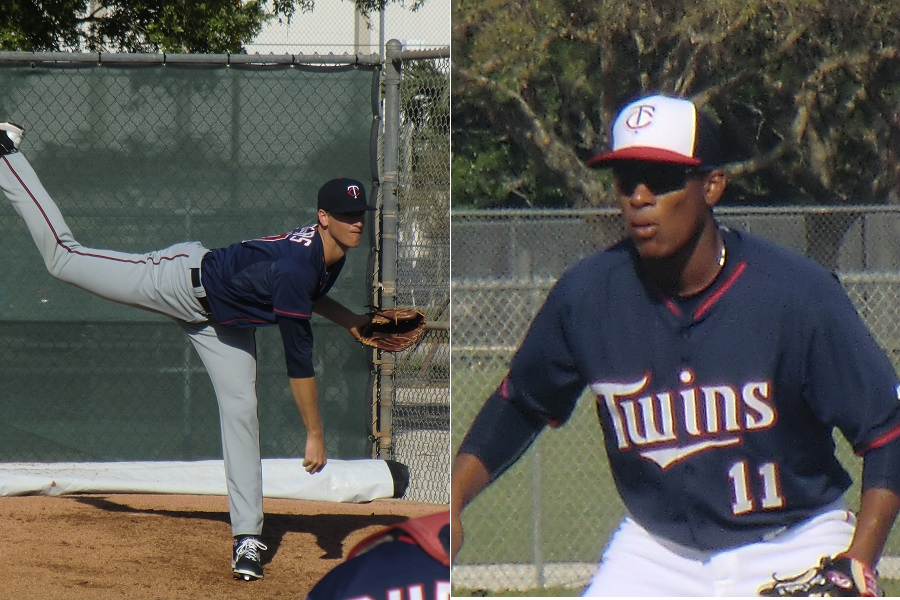 Jeremy Nygaard, Cody Christie and I are excited about the start of the 2015 Minor League season and are offering the 2015 Minnesota Twins Prospect Handbook in paperback right now at a 15% discount. Get your copy today, if you haven’t already. It’s also available as an electronic book which is available for immediate download. We have had two days’ worth of Twins Daily readers participating in this year’s Adopt-A-Prospect. At this point, feel free to adopt more players – whether you have or haven’t – and start by posting their initial bio/profile in the Adopt-A-Prospect 2015 forum. Let’s get to today’s report. First things first. BJ Hermsen had his Tommy John surgery earlier in the week. On Friday, lefty Lewis Thorpe had his Tommy John surgery. Both will now begin that long road back. RED WINGS REPORT Rochester, Buffalo (PPD) Box Score The Rochester Red Wings were set to make their home debut of 2015, but the weather was what won on Friday afternoon. The two teams will make up the missed game as part of a doubleheader in late May. They return to action on Saturday afternoon. CHATTANOOGA CHATTER Chattanooga 6, Montgomery 2 Box Score As has been written many times, this Chattanooga roster is full of incredible talent and prospects. I do recall talking to Kyle Gibson when he was the organization’s top prospect earlier this decade. I asked him what it meant to him to be considered a top prospect. He said (paraphrasing): It’s nice and I appreciate it, but being a prospect means that I haven’t done anything yet. This Lookouts group is talented, but they’re not all big league ready, and they all have things that they can continue to improve upon. But man, the talent is remarkable. Things always start on the mound, and on this night, JO Berrios made his 2015 debut and came through with an excellent start. He went 6.1 innings and gave up just one run on six hits and a walk. He struck out 11 batters. He threw 89 pitches, and 63 of them were strikes. DJ Johnson came on in relief and got the next five batters out. Zack Jones came on for the ninth inning. He gave up a run on two hits in the inning, but he also struck out three. The Lookouts didn’t generate a lot of offense, but Jorge Polanco generated all the power they would need on this night. Polanco came to the plate in the fifth inning with no score and the bases loaded. He proceeded to blast a long home run, a grand slam, which gave the team a 4-0 lead. Polanco went 3-5 with a double and a stolen base in addition to the big blast. Dalton Hicks was 3-4 with a walk and a double in the game. Mike Gonzales went 2-4. On the other side of the spectrum, there were some tough games as well. Byron Buxton went 0-5 with three strikeouts. Travis Harrison was 0-5 with four strikeouts. Adam Brett Walker went 1-5 but struck out three times. Miguel Sano went 0-3 with two strikeouts, though he also walked twice. MIRACLE MATTERS Ft. Myers 3, Charlotte 0 Box Score Earlier in the day, David Dorsey of the News-Press talked to Aaron Slegers about several topics. In the article, we learned that the 6-10 Slegers was actually cut from his high school basketball team as a sophomore, but he was just fine with that. Baseball was his first love. He had the honor of making the start for the Miracle on Friday night in their home opener. He responded well. He threw six shutout innings. He gave up just two hits, walked none and struck out three to record his first win of the year. Alex Muren came on and threw a scoreless inning. Brian Gilbert walked two, but he didn’t give up a run in his inning. Finally, JT Chargois entered the game in the ninth and pitched a perfect inning, including two strikeouts. It had to be a special moment for Chargois (pronounced SHA-gwa). It was his first appearance in a regular season game since 2012 in Elizabethton. That is the year he was drafted. The last two years, he has been rehabbing elbow issues and had Tommy John. He returned to the mound at Instructional League last fall, but this had to be a special outing for the triple-digit throwing right-hander. In my Ft. Myers Miracle Roster Preview, I wrote that I thought that repeating at Ft. Myers was the best thing for Niko Goodrum. He did all right with the Miracle last year. The hope is that having that year of experience and learning, he will be able to perform better and more consistently in 2015. With that, more confidence could be developed and he could take the next step in his career. He’s off to a good start so far. After having two hits on Opening Night, Goodrum had two more hits on Friday night. His early two-run home run gave the team a lead they were able to hold on to. Later, he added his first double of the season. Alex Swim also went 2-4 in the game. KERNELS NUGGETS Cedar Rapids 6, Kane County 4 Box Score The Kernels improved to 2-0 on the very young season with a 6-4 win. Nick Gordon had a second straight strong game. He went 3-5 with two RBI and is now 5-9 (.556) on the season. Jorge Fernandez made his first appearance for the Kernels. He went 3-5 with an RBI double. Zack Larson and TJ White also doubled for the Kernels. If you look at John Curtiss’s baseball-reference page, it shows that he only pitched for Elizabethton in 2014 after being the Twins sixth-round pick out of Texas. However, Friday night was not his first start for the Kernels. He made a start for the team in the second round of the Midwest League playoffs a season ago. In that game, he got a no decision despite giving up just one hit in five shutout innings. On this night, he received a decision, his first win. He was charged with four runs (three earned) on nine hits over 5.2 innings. He didn’t walk anyone, and he struck out seven. Mike Theofanopoulos came on and shut the door over the next 2.1 innings. He gave up a hit and a walk, but no runs. CK Irby recorded the save. He struck out three and gave up one hit in the ninth inning. TWINS DAILY PLAYERS OF THE DAY Twins Daily Minor League Pitcher of the Day – Aaron Slegers, Ft. Myers Miracle Twins Daily Minor League Hitter of the Day – Jorge Polanco, Chattanooga Lookouts SATURDAY’S PROBABLE STARTERS Buffalo @ Rochester (12:35 CST) – LHP Taylor Rogers Chattanooga @ Montgomery (7:05 CST) – RHP Greg Peavey Charlotte @ Ft. Myers (5:05 CST) – RHP Chih-Wei Hu Cedar Rapids @ Kane County (1:00 CST) – LHP Stephen Gonsalves Please feel free to ask any questions and discuss the Friday games.
 -
Update: WxMan17 - DJ Baxendale SD Buhr - James Beresford curt1965 - JO Berrios Steve Lein - Nick Burdi Hrbowski - Byron Buxton 2wins87 - Michael Cederoth Peanutsfromheaven - JT Chargois JunkWaxTwins - Ryan Eades Jeff Reboulet - Tanner English tyomoth - Mitch Garver MinnFan4Life - Stephen Gonsalves lightfoot789 - Niko Goodrum RollingOaks - Nick Gordon gunnarthor - Travis Harrison curt1965 - Aaron Hicks nicksaviking - Dalton Hicks JaleelWhiteFanClub - Chih-Wei Hu Hrbowski - Zack Jones blue chipper - Max Kepler Jeff Reboulet - Yorman Landa Joe Mulligan - Zack Larson James - Brett Lee Joe Mulligan - Trevor May markos - Alex Meyer teekz - Levi Michael TJG - Max Murphy Shane Wahl - Brian Navarreto scottz - Greg Peavey TheDean - Brandon Peterson milldaddy35 - Jorge Polanco Bill Tanner - Jake Reed bulldozier14 - Eddie Rosario nytwinsfan - Miguel Sano Dance with Disco Dan - Kohl Stewart Stringer Bell - Alex Swim nate10s - Stuart Turner Shane Wahl - Adam Brett Walker always 33 - Luke Westphal
-
Twitter is possible. Otherwise, go to the affiliate's web page and find an address and send a letter/note. Ask if you can ask them some questions... Not all will want to or even respond... but just some ideas for what people could do.
- 124 replies
-
- 1
-
-
- alex meyer
- jose berrios
- (and 3 more)
-
Update: WxMan17 - DJ Baxendale SD Buhr - James Beresford curt1965 - JO Berrios Steve Lein - Nick Burdi Hrbowski - Byron Buxton 2wins87 - Michael Cederoth Peanutsfromheaven - JT Chargois JunkWaxTwins - Ryan Eades Jeff Reboulet - Tanner English tyomoth - Mitch Garver MinnFan4Life - Stephen Gonsalves lightfoot789 - Niko Goodrum RollingOaks - Nick Gordon gunnarthor - Travis Harrison nicksaviking - Dalton Hicks JaleelWhiteFanClub - Chih-Wei Hu blue chipper - Max Kepler Jeff Reboulet - Yorman Landa James - Brett Lee Joe Mulligan - Trevor May markos - Alex Meyer teekz - Levi Michael TJG - Max Murphy Shane Wahl - Brian Navarreto scottz - Greg Peavey milldaddy35 - Jorge Polanco Bill Tanner - Jake Reed bulldozier14 - Eddie Rosario nytwinsfan - Miguel Sano Dance with Disco Dan - Kohl Stewart Stringer Bell - Alex Swim nate10s - Stuart Turner Shane Wahl - Adam Brett Walker always 33 - Luke Westphal
-
Burdi threw 32 pitches. That's definitely a limit. Probably more than the limit.
-
I write my articles elsewhere, like Word or something like that so that I have it. Then bring it over to the site when you're ready. I'm sorry that happened!
- 124 replies
-
- 1
-
-
- alex meyer
- jose berrios
- (and 3 more)
-
Here's where we are starting Friday. For those reading these comments, if you selected a player yesterday, you may now select another player today. If you didn't select a player yesterday, you can select TWO players today. And that can start now. You don't have to adopt the top names and prospects. Sometimes the stories of the other minor leaguers that don't get talked up enough are the most interesting. Ideally, we will have a forum for every minor league player, fully of stories and stats. You can even try reaching out to those players and do Q&As or that kind of thing. It can and should be a lot of fun! curt1965 - JO Berrios Steve Lein - Nick Burdi Hrbowski - Byron Buxton Peanutsfromheaven - JT Chargois JunkWaxTwins - Ryan Eades tyomoth - Mitch Garver MinnFan4Life - Stephen Gonsalves lightfoot789 - Niko Goodrum RollingOaks - Nick Gordon gunnarthor - Travis Harrison nicksaviking - Dalton Hicks JaleelWhiteFanClub - Chih-Wei Hu blue chipper - Max Kepler Joe Mulligan - Trevor May markos - Alex Meyer teekz - Levi Michael TJG - Max Murphy scottz - Greg Peavey milldaddy35 - Jorge Polanco bulldozier14 - Eddie Rosario nytwinsfan - Miguel Sano Dance with Disco Dan - Kohl Stewart Stringer Bell - Alex Swim nate10s - Stuart Turner Shane Wahl - Adam Brett Walker always 33 - Luke Westphal
- 124 replies
-
- 1
-
-
- alex meyer
- jose berrios
- (and 3 more)
-
I'm with you... There are a ton of very interesting prospects and all deserve to be recognized.
-
He's a very interesting story. It was fun chatting with him in Ft. Myers last month. I hope he does very well. A good outing tonight!
- 124 replies
-
- 1
-
-
- alex meyer
- jose berrios
- (and 3 more)
-
Any mention of Berrios starting on Thursday was purely speculation.
-
curt1965 - JO Berrios Steve Lein - Nick Burdi Hrbowski - Byron Buxton Peanutsfromheaven - JT Chargois JunkWaxTwins - Ryan Eades tyomoth - Mitch Garver MinnFan4Life - Stephen Gonsalves lightfoot789 - Niko Goodrum RollingOaks - Nick Gordon gunnarthor - Travis Harrison nicksaviking - Dalton Hicks JaleelWhiteFanClub - Chih-Wei Hu Joe Mulligan - Trevor May markos - Alex Meyer teekz - Levi Michael TJG - Max Murphy scottz - Greg Peavey milldaddy35 - Jorge Polanco bulldozier14 - Eddie Rosario nytwinsfan - Miguel Sano Dance with Disco Dan - Kohl Stewart Stringer Bell - Alex Swim nate10s - Stuart Turner Shane Wahl - Adam Brett Walker
-
The Twins gave their fans little to cheer about in their three-game, season-opening series in Detroit. Hopefully that changes this weekend. In the meantime, Thursday was minor league Opening Day, so the Twins four, full-season affiliates played in their first games of the year. Ironically, all four affiliates began their season on the road. The Twins have a new affiliate this year in Chattanooga, Tennessee. We need a new header for the Lookouts section. I have a couple of options there tonight, but if you would like to vote for one of them or offer up another suggestion, we’ll have one for that section soon. Until then, be sure to make Twins Daily your daily stop for Twins minor league coverage. Every day throughout the season, we’ll provide our readers with scores and highlights from each game.Remember also that there are plenty of Twins minor leaguers available in this year’s Adopt-A-Prospect. As of Friday morning at 9:00 central time, you can adopt a second prospect, if you haven’t already adopted a first prospect. Let’s get to today’s report. RED WINGS REPORT Rochester 6, Buffalo 3 Box Score The Rochester Red Wings began their 2015 season by heading west to Buffalo. They saw some familiar faces and came away with a win. The starter for the Bisons was former Twins pitcher Andrew Albers. The Wings touched up Albers for four runs on eight hits and two walks in 4.2 innings. Bobby Korecky pitched the ninth inning for Buffalo and gave up two runs on two hits and a walk. At the plate, Chris Colabello batted fourth and went 0-3 with a walk. Much of the offense came from the bats of Aaron Hicks and Brock Peterson. Hicks led off and went 2 for 3 with two walks and a home run. He also made a sprawled-out, diving catch early in the game. Brock Peterson batted cleanup. He went 3 for 4 with a walk, a home run and three RBI. Reynaldo Rodriguez also added two hits. Josmil Pinto added a double. Alex Meyer got the win for the Red Wings on Opening Day, though he would likely tell you it wasn’t his finest outing. The right-hander went five innings and gave up three earned runs on four hits and six walks. He struck out three batters, but clearly, his control was not where it needs to be. Just 44 of his 87 pitches were strikes. He left the game after the first two batters of the 6th inning reached against him. Logan Darnell came on and allowed both runs to score, but he maintained a 4-3 lead. AJ Achter was perfect for the seventh and eighth innings. Michael Tonkin got the save. He struck out two and walked one in the ninth inning. LOOKOUTS LOOK-INS or CHATTANOOGA CHATTER Chattanooga 3, Montgomery 4 Box Score This was a solid performance for the Lookouts right up until the bottom of the ninth inning. They entered the inning with a 3-0 lead thanks to an insurance, solo home run by Miguel Sano. Nick Burdi came on for the save opportunity. Unfortunately, that’s when things got weird. Burdi walked the first two batters before giving up a single to load the bases. There was hope when Burdi struck out the next two batters. However, he walked the next two men and the lead was cut to 3-2. Cole Johnson was summoned from the bullpen. He gave up a bloop single to center field. Byron Buxton came up throwing, but the winning run scored just ahead of his throw. A 3-0 lead became a 4-3 loss in a hurry. Pitching wins, right? Well, usually, and if that’s true, then Tyler Duffey did a great job of giving his team a good chance to win on Thursday night. The right-hander, who ended the 2014 season with three starts in Rochester, went the first 6.2 innings for the Lookouts. He gave up no runs on four hits. He walked just one and struck out ten batters. Duffey left the game with a runner on third base and two outs. Lefty Ryan O’Rourke was brought into the game to face a lefty, and as he did time and again in 2014, he struck out that batter. O’Rourke got one out in the 8th inning as well, also on a strikeout. That’s when Jake Reed came on. Stuart Turner threw out a would-be base stealer for the second out, and Reed got the third out himself, a strikeout on a nasty slider. That got the team to the ninth inning, and I don’t need to go through that again, do I? Of course, people want to talk about the potential of the Lookouts offense, too. Though it wasn’t a great offensive night for the team, Miguel Sano did hit his first home run of the season, a long blast over the wall. It was his first hit of the game. He had three strikeouts coming into that at-bat. There were a lot of strikeouts. Byron Buxton and Adam Brett Walker each struck out three times, and Mike Gonzales took the golden sombrero, with four strikeouts. On the positive side, Jorge Polanco and Dalton Hicks both had two hits. Hicks had a double and an RBI. Polanco had the other RBI. MIRACLE MATTERS Ft. Myers 0, Charlotte 2 Box Score The Miracle made the trek north to Charlotte to open their season against the Stone Crabs. The team faced Rays starter Drew Smyly who is on a rehab assignment. Smyly set down the six Miracle batters he faced, and yet, he wasn’t even the best pitcher for the Stone Crabs in this one. Lefty Blake Snell was the Rays’ supplemental first-round pick in 2011 out of high school. He came on and struck out ten Miracle batters in six shutout, three-hit innings. Brad Schreiber (a one-time Twins draft pick – who didn’t sign) made things interesting in the ninth inning, but held the Miracle scoreless for the save. Kohl Stewart was awarded the Opening Day start for the Miracle. He came through with a quality start. The strong-armed right-hander worked six innings and gave up just two runs. He gave up five hits, walked four and struck out five. He had just one perfect inning. He was consistently hitting 94 and 95 mph. Luke Westphal made his affiliated baseball debut. The left-hander from LaCrosse who played independent ball the last two seasons before going to Australia to play this winter worked a perfect seventh inning, striking out one. Minnesotan Madison Boer also worked a perfect inning with a strikeout. Unfortunately, due to some impressive pitching, the Miracle bats were unable to put much together. Niko Goodrum led off. He had two hits in four at-bats. The rest of the lineup added just three more hits. KERNELS NUGGETS Cedar Rapids 7, Kane County 2 Box Score It may be hard to believe when you see that final score, but this was a pitcher’s duel for much of the game. Through four innings, the two teams combined for just one hit. The Kernels took the lead with three runs in the sixth inning and then broke things open with three more in the ninth. Mat Batts was tremendous on the mound, and Nick Gordon had an impressive Midwest League debut. Batts, the left-hander from UNC-Wilmington, gave up just one run on two hits and two walks in 5.2 innings. He struck out seven. At one point, he went 14 batters between base runners. Jared Wilson came on and got four outs without any further damage. Wilson is scheduled to start on Tuesday. Cameron Booser came on and threw two innings. He walked one and struck out one in the 8th inning. In the ninth, he gave up a run, though he also had to get four outs when a strikeout went to the backstop and the runner got on base. It is his first save. He struck out three in two innings. Nick Gordon made his Midwest League debut. He got on base his first two plate appearances, a walk and reached on an error. Soon after, he hit a triple down the right field line, and in the ninth, he singled in a run. He was 2-4 with a walk on the day. Zach Larson was 2-4, but he also got hit by a pitch. He stole two bases. Trey Vavra, Jhonatan Hinojosa and Brian Navarreto all went 2-4 as well. TWINS DAILY PLAYERS OF THE DAY Twins Daily Minor League Pitcher of the Day – Tyler Duffey, Chattanooga Lookouts Twins Daily Minor League Hitter of the Day – Brock Peterson, Rochester Red Wings FRIDAY’S PROBABLE STARTERS Rochester @ Buffalo (1:05 CST) – LHP Taylor Rogers Chattanooga @ Montgomery (7:05 CST) – RHP JO Berrios Charlotte @ Ft. Myers (6:05 CST) – RHP Aaron Slegers Cedar Rapids @ Kane County (6:30 CST) – RHP John Curtiss Please feel free to ask any questions and discuss the Thursday games. Click here to view the article
- 42 replies
-
- 1
-
-
- aaron hicks
- brock peterson
- (and 3 more)
-
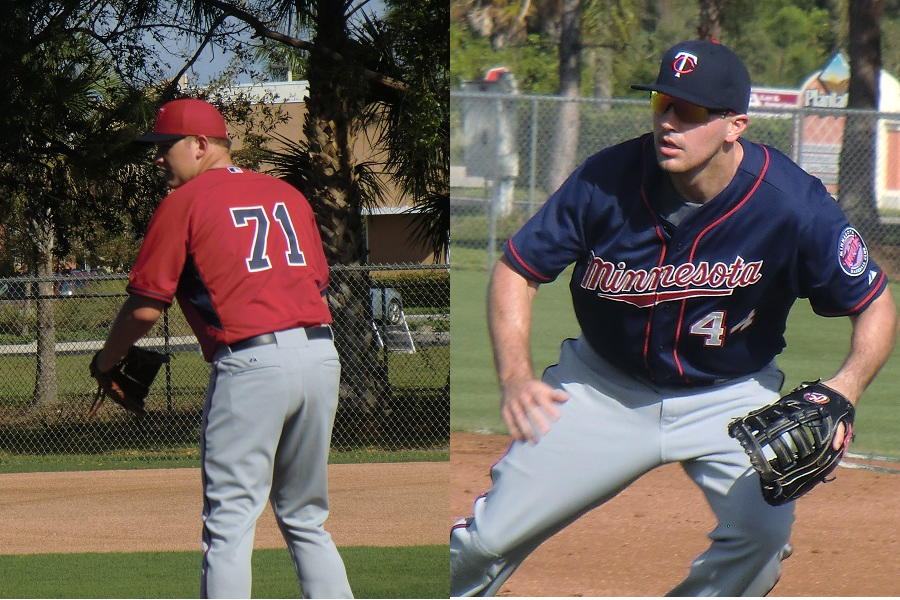 Remember also that there are plenty of Twins minor leaguers available in this year’s Adopt-A-Prospect. As of Friday morning at 9:00 central time, you can adopt a second prospect, if you haven’t already adopted a first prospect. Let’s get to today’s report. RED WINGS REPORT Rochester 6, Buffalo 3 Box Score The Rochester Red Wings began their 2015 season by heading west to Buffalo. They saw some familiar faces and came away with a win. The starter for the Bisons was former Twins pitcher Andrew Albers. The Wings touched up Albers for four runs on eight hits and two walks in 4.2 innings. Bobby Korecky pitched the ninth inning for Buffalo and gave up two runs on two hits and a walk. At the plate, Chris Colabello batted fourth and went 0-3 with a walk. Much of the offense came from the bats of Aaron Hicks and Brock Peterson. Hicks led off and went 2 for 3 with two walks and a home run. He also made a sprawled-out, diving catch early in the game. Brock Peterson batted cleanup. He went 3 for 4 with a walk, a home run and three RBI. Reynaldo Rodriguez also added two hits. Josmil Pinto added a double. Alex Meyer got the win for the Red Wings on Opening Day, though he would likely tell you it wasn’t his finest outing. The right-hander went five innings and gave up three earned runs on four hits and six walks. He struck out three batters, but clearly, his control was not where it needs to be. Just 44 of his 87 pitches were strikes. He left the game after the first two batters of the 6th inning reached against him. Logan Darnell came on and allowed both runs to score, but he maintained a 4-3 lead. AJ Achter was perfect for the seventh and eighth innings. Michael Tonkin got the save. He struck out two and walked one in the ninth inning. LOOKOUTS LOOK-INS or CHATTANOOGA CHATTER Chattanooga 3, Montgomery 4 Box Score This was a solid performance for the Lookouts right up until the bottom of the ninth inning. They entered the inning with a 3-0 lead thanks to an insurance, solo home run by Miguel Sano. Nick Burdi came on for the save opportunity. Unfortunately, that’s when things got weird. Burdi walked the first two batters before giving up a single to load the bases. There was hope when Burdi struck out the next two batters. However, he walked the next two men and the lead was cut to 3-2. Cole Johnson was summoned from the bullpen. He gave up a bloop single to center field. Byron Buxton came up throwing, but the winning run scored just ahead of his throw. A 3-0 lead became a 4-3 loss in a hurry. Pitching wins, right? Well, usually, and if that’s true, then Tyler Duffey did a great job of giving his team a good chance to win on Thursday night. The right-hander, who ended the 2014 season with three starts in Rochester, went the first 6.2 innings for the Lookouts. He gave up no runs on four hits. He walked just one and struck out ten batters. Duffey left the game with a runner on third base and two outs. Lefty Ryan O’Rourke was brought into the game to face a lefty, and as he did time and again in 2014, he struck out that batter. O’Rourke got one out in the 8th inning as well, also on a strikeout. That’s when Jake Reed came on. Stuart Turner threw out a would-be base stealer for the second out, and Reed got the third out himself, a strikeout on a nasty slider. That got the team to the ninth inning, and I don’t need to go through that again, do I? Of course, people want to talk about the potential of the Lookouts offense, too. Though it wasn’t a great offensive night for the team, Miguel Sano did hit his first home run of the season, a long blast over the wall. It was his first hit of the game. He had three strikeouts coming into that at-bat. There were a lot of strikeouts. Byron Buxton and Adam Brett Walker each struck out three times, and Mike Gonzales took the golden sombrero, with four strikeouts. On the positive side, Jorge Polanco and Dalton Hicks both had two hits. Hicks had a double and an RBI. Polanco had the other RBI. MIRACLE MATTERS Ft. Myers 0, Charlotte 2 Box Score The Miracle made the trek north to Charlotte to open their season against the Stone Crabs. The team faced Rays starter Drew Smyly who is on a rehab assignment. Smyly set down the six Miracle batters he faced, and yet, he wasn’t even the best pitcher for the Stone Crabs in this one. Lefty Blake Snell was the Rays’ supplemental first-round pick in 2011 out of high school. He came on and struck out ten Miracle batters in six shutout, three-hit innings. Brad Schreiber (a one-time Twins draft pick – who didn’t sign) made things interesting in the ninth inning, but held the Miracle scoreless for the save. Kohl Stewart was awarded the Opening Day start for the Miracle. He came through with a quality start. The strong-armed right-hander worked six innings and gave up just two runs. He gave up five hits, walked four and struck out five. He had just one perfect inning. He was consistently hitting 94 and 95 mph. Luke Westphal made his affiliated baseball debut. The left-hander from LaCrosse who played independent ball the last two seasons before going to Australia to play this winter worked a perfect seventh inning, striking out one. Minnesotan Madison Boer also worked a perfect inning with a strikeout. Unfortunately, due to some impressive pitching, the Miracle bats were unable to put much together. Niko Goodrum led off. He had two hits in four at-bats. The rest of the lineup added just three more hits. KERNELS NUGGETS Cedar Rapids 7, Kane County 2 Box Score It may be hard to believe when you see that final score, but this was a pitcher’s duel for much of the game. Through four innings, the two teams combined for just one hit. The Kernels took the lead with three runs in the sixth inning and then broke things open with three more in the ninth. Mat Batts was tremendous on the mound, and Nick Gordon had an impressive Midwest League debut. Batts, the left-hander from UNC-Wilmington, gave up just one run on two hits and two walks in 5.2 innings. He struck out seven. At one point, he went 14 batters between base runners. Jared Wilson came on and got four outs without any further damage. Wilson is scheduled to start on Tuesday. Cameron Booser came on and threw two innings. He walked one and struck out one in the 8th inning. In the ninth, he gave up a run, though he also had to get four outs when a strikeout went to the backstop and the runner got on base. It is his first save. He struck out three in two innings. Nick Gordon made his Midwest League debut. He got on base his first two plate appearances, a walk and reached on an error. Soon after, he hit a triple down the right field line, and in the ninth, he singled in a run. He was 2-4 with a walk on the day. Zach Larson was 2-4, but he also got hit by a pitch. He stole two bases. Trey Vavra, Jhonatan Hinojosa and Brian Navarreto all went 2-4 as well. TWINS DAILY PLAYERS OF THE DAY Twins Daily Minor League Pitcher of the Day – Tyler Duffey, Chattanooga Lookouts Twins Daily Minor League Hitter of the Day – Brock Peterson, Rochester Red Wings FRIDAY’S PROBABLE STARTERS Rochester @ Buffalo (1:05 CST) – LHP Taylor Rogers Chattanooga @ Montgomery (7:05 CST) – RHP JO Berrios Charlotte @ Ft. Myers (6:05 CST) – RHP Aaron Slegers Cedar Rapids @ Kane County (6:30 CST) – RHP John Curtiss Please feel free to ask any questions and discuss the Thursday games.
 -
curt1965 - JO Berrios Steve Lein - Nick Burdi Hrbowski - Byron Buxton Peanutsfromheaven - JT Chargois JunkWaxTwins - Ryan Eades tyomoth - Mitch Garver MinnFan4Life - Stephen Gonsalves lightfoot789 - Niko Goodrum RollingOaks - Nick Gordon gunnarthor - Travis Harrison JaleelWhiteFanClub - Chih-Wei Hu markos - Alex Meyer teekz - Levi Michael TJG - Max Murphy scottz - Greg Peavey milldaddy35 - Jorge Polanco bulldozier14 - Eddie Rosario nytwinsfan - Miguel Sano Dance with Disco Dan - Kohl Stewart Stringer Bell - Alex Swim nate10s - Stuart Turner Shane Wahl - Adam Brett Walker
-
yes.
-
He was, but now you've got him.
-
Update: curt1965 - JO Berrios Steve Lein - Nick Burdi Hrbowski - Byron Buxton JunkWaxTwins - Ryan Eades tyomoth - Mitch Garver MinnFan4Life - Stephen Gonsalves lightfoot789 - Niko Goodrum gunnarthor - Travis Harrison JaleelWhiteFanClub - Chih-Wei Hu markos - Alex Meyer teekz - Levi Michael scottz - Greg Peavey milldaddy35 - Jorge Polanco bulldozier14 - Eddie Rosario nytwinsfan - Miguel Sano Dance with Disco Dan - Kohl Stewart Stringer Bell - Alex Swim nate10s - Stuart Turner Shane Wahl - Adam Brett Walker
-
Let the Adoptions Begin!! (listed alphabetically by player) curt1965 - JO Berrios Steve Lein - Nick Burdi Hrbowski - Byron Buxton JunkWaxTwins - Ryan Eades tyomoth - Mitch Garver MinnFan4Life - Stephen Gonsalves lightfoot789 - Niko Goodrum gunnarthor - Travis Harrison markos - Alex Meyer teekz - Levi Michael milldaddy35 - Jorge Polanco bulldozier14 - Eddie Rosario nytwinsfan - Miguel Sano Dance with Disco Dan - Kohl Stewart nate10s - Stuart Turner Shane Wahl - Adam Brett Walker
- 124 replies
-
- 1
-
-
- alex meyer
- jose berrios
- (and 3 more)
-
Less than ONE hour until the players can be adopted. It will open up about 5-7 minutes early, so have your list of guys ready!
