



Seth Stohs
-
Posts
25,911 -
Joined
-
Last visited
-
Days Won
109
Content Type
Profiles
News
Minnesota Twins Videos
2026 Minnesota Twins Top Prospects Ranking
2022 Minnesota Twins Draft Picks
Minnesota Twins Free Agent & Trade Rumors, Notes, & Tidbits
Guides & Resources
2023 Minnesota Twins Draft Picks
The Minnesota Twins Players Project
2024 Minnesota Twins Draft Picks
2025 Minnesota Twins Draft Pick Tracker
2026 Minnesota Twins Draft Tracker: Picks & Bonuses
Forums
Blogs
Events
Store
Downloads
Gallery
Everything posted by Seth Stohs
-
Manager, Coaching staff,pitching staff ,lineup,Free Agents
Seth Stohs replied to Brandon27's topic in Minnesota Twins Talk
Check here: http://twinsdaily.com/articles.html/_/minnesota-twins-news/minnesota-twins-minor-leagues/rule-5-addition-discussion-r5921 -
Minnesota Nice!!
-
The Minnesota Twins season came to an end on Tuesday night at the hands of the New York Yankees. Let me know if you've heard that one before. It was the Twins 13th straight postseason loss. Many of them have been to the Yankees and that trend continued despite the Twins seven-season hiatus from the playoffs. The Twins' season came to an end. It was a tremendous turnaround and yet another loss to the hated Yankees leaves a bad taste in our mouths. Image courtesy of Brad Penner, USA Today The Minnesota Twins season came to an end on Tuesday night at the hands of the New York Yankees. Let me know if you've heard that one before. It was the Twins 13th straight postseason loss. Many of them have been to the Yankees and that trend continued despite the Twins seven-season hiatus from the playoffs. The Twins' season came to an end. It was a tremendous turnaround and yet another loss to the hated Yankees leaves a bad taste in our mouths. Coming into the game, there were several things that the Twins needed to do to give themselves a chance to advance to the AL Division Series against Cleveland. A couple happened. A couple did not. Fast Start We all know about the Yankees bullpen. We knew how dominant they could be. Luis Severino was one of baseball's best starting pitchers in 2017, but he struggled against the Twins in a start two weeks ago and at 23, you never know how he would handle the spotlight. Many believed that the Twins would need to be aggressive to try to get ahead early. Well, Brian Dozier led off the game for the Twins. He was patient and on a 3-1 pitch, he hit a home run to give the Twins a 1-0 lead. With one out and Jorge Polanco on first base, Eddie Rosario came up and rocketed a hanging, spinning slider just over the fence in right field. 3-0 lead Twins. Fast Start - Successful! Score Runs When Possible Severino gave up a single to Eduardo Escobar and a double to Max Kepler. That was the end of the night for Severino. Chad Green came on with runners on second and third and just one out. He struck out the next two batters, and the Twins had their 3-0 lead after 1/2 inning, but it could have been worse. In radio interviews earlier on Tuesday, I thought runs would be at a premium in this game and that any time they had the opportunity to score runs, they needed to. They needed to find a way to score runners from third base with less than two outs. In the above situation, the Twins really needed to find a way to score at least one more run. At game's end, the Twins had left six runners on base. Twins Needed A Strong Start The Twins didn't need Ervin Santana to throw a complete game shutout, while that would certainly have been just fine too. They just needed him to get them to the sixth and preferably the seventh inning having given up two or less runs. Santana was the easy choice for the Twins and Paul Molitor to start. With his 2017 numbers, he earned it. He showed good stuff, and he was throwing harder down the stretch. He was the one Twins starter that we felt would be able to handle the pressure of Yankees Stadium and keep them in the game despite his lack of playoff success or lack of success in Yankees Stadium. Well, after being given a 3-0 lead in the top of the first, Santana gave up a three-run homer to Didi Gregorius in the bottom of the first inning. Sure, Aaron Judge reached out and muscled a blooper into center field. Sure, a 2-2 pitch was shown by technology to be a strike three and when it was called a ball instead, Santana gave up the home run. In other words, he could have been out of the inning with a two- or three-run lead. Santana then gave up a solo homer to Brett Gardner in the second inning. He got through the second inning, but Todd Frazier crushed a ball to dead center that Byron Buxton leaped and caught before banging into the wall. Santana didn't give the Twins what they really needed. Berrios Get Them to the 7th Jose Berrios was in the bullpen for the Wild Card game, and if Santana had a short start, or even a five-inning start, I felt it was important for Berrios to get them through the seventh inning. Well, he went three innings, and gave up three runs, and got them only through the fifth inning. He sure impressed the ESPN broadcasters with the movement on his fastball, but like Santana, his slider was often more of a spinner. And Then There's More Trevor Hildenberger had a 1-2-3 sixth inning, but he left with one out in the seventh inning and the bases loaded. Taylor Rogers struck out the one batter he faced. Alan Busenitz was brought in and walked the first batter he faced on four pitches to give the Yankees another run. He came back with a strikeout. Zack Granite had to replace Byron Buxton who left the game a couple of innings after slamming into the center field wall. He stole a base and came up twisting his back. It affected his swing, so he had to come out. That felt like a dagger as much as anything. Granite did well. In his first at-bat, he singled. In his second at-bat, he grounded toward first. The first baseman flipped to the pitcher who dropped the ball. The ball went to second baseman Starlin Castro who was backing up the play. Castro tagged Granite who was called out. Had he turned the wrong way? No. He inexplicably did not touch first base. I'd offer some explanation, but as I noted, it was inexplicable. While some may say that it is some sort of sign that Granite 'gave up,' I don't think that's fair. No one was giving up. This was a resilient team and a bunch of gritty players. Granite wasn't giving up, but somehow his footwork got messed up to completely miss the bag. It's something that does happen, but you don't want it to happen in a playoff game, and unfortunately, it ends up being almost a microcosm of the Twins/Yankees situation. The Twins lost 8-4 in New York and the streak continues. Unfortunately, the Twins season comes to an end, but it's hard to look at the Twins 2017 season as anything but a huge success. The Twins improved by 26 wins, jumping from 59 to 85. While some may choose to say that this team just could not match up with the top four teams in the AL (Cleveland, Houston, Boston, New York), they were able to beat all of the rest of the teams in the league by five games. So yes, they are "just" the fifth best team in the American League, but when they were the worst team in all of baseball in 2016, being the fifth best team in their league is pretty good. There are a lot of questions for Derek Falvey and Thad Levine to consider. One is will they be more active than last year. Their first decision will have to be whether or not to keep manager Paul Molitor or bring in their own manager. How will that affect the rest of the coaching staff. Many more front office decisions are likely, and that's all before even getting to the on-field decisions they have to make. Derek Falvey and Thad Levine deserve a lot of credit. They've begun to implement their systems and a new culture. It's clear that it is much more analytical than a year earlier and it will continue to emerge as more analytical. The coaches and players will have more and more information. But Terry Ryan and Bill Smith and Rob Antony deserve a lot of credit too. They brought in much of the core of the 2017 and helped their development by being patient and pushing them at an appropriate pace. Brad Steil and his staff deserve credit for the player development in recent years that brought this team of young core players . The managers and coaching staffs in the minor leagues deserve a lot of credit as well for developing these players. James Rowson has earned and been given a lot of credit for his work with the young hitters, especially Eddie Rosario, Jorge Polanco and Byron Buxton. Jeff Pickler worked with the outfielders, but part of his job title involved being a liaison between player development and the big league coaching staff. It will be a fun, interesting offseason. We encourage that you continue to have Twins Daily as your go-to site every morning. We will continue to provide new content each day on this site. And there's more. Twins Daily is already far along the path to offering our Offseason Handbook again. As we have in the past, the document will illustrate for the reader what some of the options are for the Twins this offseason, looking at key issues, available free agents, trade targets, depth charts and more. Also, we have now begun to work on the 2018 Twins Prospect Handbook. We will post player profiles for over 160 Twins minor leaguers, share our prospect rankings, write articles and much more. This will be the 10th annual Prospect Handbook, which is hard to believe. Thank you to all of our readers, writers and browsers. We appreciate that you take time during your day to peruse our site, read the content and participate in the forums. It will be a fun offseason and Twins Daily will do our best to give you a quality site, full of information and opinion. View full article
- 52 replies
-
- 3
-

-
- ervin santana
- jose berrios
- (and 3 more)
-
Twins Fall To Yankees... Again. Looking Back, Looking Forward.
Seth Stohs posted an article in Minor Leagues
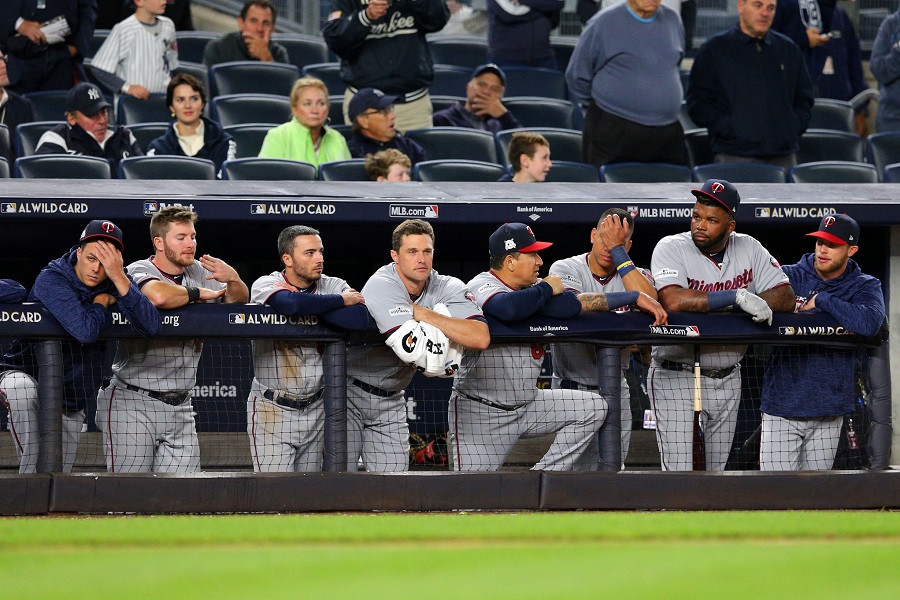 Coming into the game, there were several things that the Twins needed to do to give themselves a chance to advance to the AL Division Series against Cleveland. A couple happened. A couple did not. Fast Start We all know about the Yankees bullpen. We knew how dominant they could be. Luis Severino was one of baseball's best starting pitchers in 2017, but he struggled against the Twins in a start two weeks ago and at 23, you never know how he would handle the spotlight. Many believed that the Twins would need to be aggressive to try to get ahead early. Well, Brian Dozier led off the game for the Twins. He was patient and on a 3-1 pitch, he hit a home run to give the Twins a 1-0 lead. With one out and Jorge Polanco on first base, Eddie Rosario came up and rocketed a hanging, spinning slider just over the fence in right field. 3-0 lead Twins. Fast Start - Successful! Score Runs When Possible Severino gave up a single to Eduardo Escobar and a double to Max Kepler. That was the end of the night for Severino. Chad Green came on with runners on second and third and just one out. He struck out the next two batters, and the Twins had their 3-0 lead after 1/2 inning, but it could have been worse. In radio interviews earlier on Tuesday, I thought runs would be at a premium in this game and that any time they had the opportunity to score runs, they needed to. They needed to find a way to score runners from third base with less than two outs. In the above situation, the Twins really needed to find a way to score at least one more run. At game's end, the Twins had left six runners on base. Twins Needed A Strong Start The Twins didn't need Ervin Santana to throw a complete game shutout, while that would certainly have been just fine too. They just needed him to get them to the sixth and preferably the seventh inning having given up two or less runs. Santana was the easy choice for the Twins and Paul Molitor to start. With his 2017 numbers, he earned it. He showed good stuff, and he was throwing harder down the stretch. He was the one Twins starter that we felt would be able to handle the pressure of Yankees Stadium and keep them in the game despite his lack of playoff success or lack of success in Yankees Stadium. Well, after being given a 3-0 lead in the top of the first, Santana gave up a three-run homer to Didi Gregorius in the bottom of the first inning. Sure, Aaron Judge reached out and muscled a blooper into center field. Sure, a 2-2 pitch was shown by technology to be a strike three and when it was called a ball instead, Santana gave up the home run. In other words, he could have been out of the inning with a two- or three-run lead. Santana then gave up a solo homer to Brett Gardner in the second inning. He got through the second inning, but Todd Frazier crushed a ball to dead center that Byron Buxton leaped and caught before banging into the wall. Santana didn't give the Twins what they really needed. Berrios Get Them to the 7th Jose Berrios was in the bullpen for the Wild Card game, and if Santana had a short start, or even a five-inning start, I felt it was important for Berrios to get them through the seventh inning. Well, he went three innings, and gave up three runs, and got them only through the fifth inning. He sure impressed the ESPN broadcasters with the movement on his fastball, but like Santana, his slider was often more of a spinner. And Then There's More Trevor Hildenberger had a 1-2-3 sixth inning, but he left with one out in the seventh inning and the bases loaded. Taylor Rogers struck out the one batter he faced. Alan Busenitz was brought in and walked the first batter he faced on four pitches to give the Yankees another run. He came back with a strikeout. Zack Granite had to replace Byron Buxton who left the game a couple of innings after slamming into the center field wall. He stole a base and came up twisting his back. It affected his swing, so he had to come out. That felt like a dagger as much as anything. Granite did well. In his first at-bat, he singled. In his second at-bat, he grounded toward first. The first baseman flipped to the pitcher who dropped the ball. The ball went to second baseman Starlin Castro who was backing up the play. Castro tagged Granite who was called out. Had he turned the wrong way? No. He inexplicably did not touch first base. I'd offer some explanation, but as I noted, it was inexplicable. While some may say that it is some sort of sign that Granite 'gave up,' I don't think that's fair. No one was giving up. This was a resilient team and a bunch of gritty players. Granite wasn't giving up, but somehow his footwork got messed up to completely miss the bag. It's something that does happen, but you don't want it to happen in a playoff game, and unfortunately, it ends up being almost a microcosm of the Twins/Yankees situation. The Twins lost 8-4 in New York and the streak continues. Unfortunately, the Twins season comes to an end, but it's hard to look at the Twins 2017 season as anything but a huge success. The Twins improved by 26 wins, jumping from 59 to 85. While some may choose to say that this team just could not match up with the top four teams in the AL (Cleveland, Houston, Boston, New York), they were able to beat all of the rest of the teams in the league by five games. So yes, they are "just" the fifth best team in the American League, but when they were the worst team in all of baseball in 2016, being the fifth best team in their league is pretty good. There are a lot of questions for Derek Falvey and Thad Levine to consider. One is will they be more active than last year. Their first decision will have to be whether or not to keep manager Paul Molitor or bring in their own manager. How will that affect the rest of the coaching staff. Many more front office decisions are likely, and that's all before even getting to the on-field decisions they have to make. Derek Falvey and Thad Levine deserve a lot of credit. They've begun to implement their systems and a new culture. It's clear that it is much more analytical than a year earlier and it will continue to emerge as more analytical. The coaches and players will have more and more information. But Terry Ryan and Bill Smith and Rob Antony deserve a lot of credit too. They brought in much of the core of the 2017 and helped their development by being patient and pushing them at an appropriate pace. Brad Steil and his staff deserve credit for the player development in recent years that brought this team of young core players . The managers and coaching staffs in the minor leagues deserve a lot of credit as well for developing these players. James Rowson has earned and been given a lot of credit for his work with the young hitters, especially Eddie Rosario, Jorge Polanco and Byron Buxton. Jeff Pickler worked with the outfielders, but part of his job title involved being a liaison between player development and the big league coaching staff. It will be a fun, interesting offseason. We encourage that you continue to have Twins Daily as your go-to site every morning. We will continue to provide new content each day on this site. And there's more. Twins Daily is already far along the path to offering our Offseason Handbook again. As we have in the past, the document will illustrate for the reader what some of the options are for the Twins this offseason, looking at key issues, available free agents, trade targets, depth charts and more. Also, we have now begun to work on the 2018 Twins Prospect Handbook. We will post player profiles for over 160 Twins minor leaguers, share our prospect rankings, write articles and much more. This will be the 10th annual Prospect Handbook, which is hard to believe. Thank you to all of our readers, writers and browsers. We appreciate that you take time during your day to peruse our site, read the content and participate in the forums. It will be a fun offseason and Twins Daily will do our best to give you a quality site, full of information and opinion.
 -
And here's the Yankees roster for your enjoyment...
-
Here is the official roster for the Twins in the AL Wild Card game tonight...
-
Hahahaha... might have meant NINE voters... though most of them are nice most of the time too.
-
You can still cast your vote here in the Comments for discussion purposes.
-
Personal opinion... greatest invention for sports fans ever... after the internet, of course.
-
Might have been some bad math...
-
The Minnesota Twins 2017 season is done. 162 games down and somewhere between one and 14 postseason games left to play. As the BBWAA does, our Twins Daily writers were asked to vote by the end of the regular season (Sunday) for our annual postseason awards. As we have in recent years, we vote for four Twins awards; Most Valuable Player, Pitcher of the Year, Rookie of the Year and Most Improved. Our winners will be announced in the days following the Twins postseason run, right here at TwinsDaily.com. Twins Daily founders and regular writers vote for the award. Image courtesy of David Richard, USA Today The Minnesota Twins 2017 season is done. 162 games down and somewhere between one and 14 postseason games left to play. As the BBWAA does, our Twins Daily writers were asked to vote by the end of the regular season (Sunday) for our annual postseason awards. As we have in recent years, we vote for four Twins awards; Most Valuable Player, Pitcher of the Year, Rookie of the Year and Most Improved. Our winners will be announced in the days following the Twins postseason run, right here at TwinsDaily.com. Twins Daily founders and regular writers vote for the award. Today, we would like to announce our finalists for the Twins Daily awards. We would appreciate it if you would give each of the awards some thought and vote for who you think should win the award. Of course, the results of the Twins Daily Twitter awards vote may or may not match up with the results of the Twins Daily vote. Be sure to follow Twins Daily on Twitter throughout the season as well as to vote in our polls. The finalists are the players who finished in the top three or four in the voting. As we did with the minor league awards, we vote our choices for the Top 3-5 Twins players (depending on the award) and a very basic point system is used to tabulate the results. For instance, for the Rookie of the Year, voters were asked to submit their rankings for the top 3 rookies in 2017 for the Twins. For each ballot, the player with a first place vote got three points. Two points for the second place choice, and one point for the third place choice. Nine people voted for the award. Twins Daily founders Seth Stohs, Nick Nelson, John Bonnes and Parker Hageman all voted. Twins Daily writers Tom Froemming, Cody Christie, Jeremy Nygaard, Steve Lien and Ted Schwerzler also cast their votes. With that as the background, here are the finalists for the 2017 Twins Daily Awards: MOST IMPROVED How do we go about judging improvement? Is it improvement from 2016 to 2017? Is it improvement from first half to second half? Is it some combination of the two? Like an MVP vote, we choose to make it a thinker for our voters. The nine voters were asked to vote for their top three selections. A total of eight players received votes. That speaks to a roster of two types of players. There are some veterans who either have had some struggles in recent years and succeeded again in 2017. There were also young players who took their fair share of knocks in 2016, or even early in 2017, and came on to put up surprising numbers. The finalists are (in alphabetical order): JOSE BERRIOS: While fans wanted him up late in 2015, Berrios really struggled in his MLB debut in 2016. He began 2017 back in Rochester, but he soon came up and established himself as a regular and sometimes dominant starting pitcher for the Twins. BYRON BUXTON: Buxton had been up and down from the minors to the big leagues in 2015 and 2016. His 2017 started out rough as well, but he continued to work with James Rowson and ended the season with some solid numbers, especially considering where he started. His defense deserves a Gold Glove, but his bat became a threat at times. JOE MAUER: Since the day his 2013 season came to an abrupt end in 2013, Joe Mauer has struggled to return to form. After a disappointing April, Joe Mauer went on to put up Mauer-esque numbers again, topping the .300 mark again and leading the Twins in doubles. He also improved his defense and should be considered for a Gold Glove. EDDIE ROSARIO: Rosario can be fun or frustrating to watch at times, and that was again the case. However, he improved his strike zone judgment in 2017, not to Mauer-like numbers but better, and became a force in the middle of the Twins lineup. Easily put up his best offensive season and carried the Twins lineup at various times throughout the season. Vote for your choice in our Twitter Poll, and also comment how you would rank these players. https://twitter.com/twinsdaily/status/914856563885711361 ROOKIE OF THE YEAR The Twins had a whole bunch of players make their major league debut in 2017. Several of them became key contributors to the Twins. Like Most Improved, this is a category that can include pitchers and hitters, which can make it difficult. But which Twins rookie has had the biggest impact on the Twins this season? Voters were asked to rank their top three, and only four players received votes. Here are the four finalists (in alphabetical order): ALAN BUSENITZ: The hard-throwing right-hander came to the Twins at the trade deadline a year ago from the Angels. He pitched well in Rochester to start the season and earned a promotion to the Twins in June. He moved up and down a couple of times, but in the final two months of the season, he became a reliable bullpen option for Paul Molitor. ZACK GRANITE: He hit over .450 in Rochester in June, and he came up to the Twins before the All Star break. When Byron Buxton went on the disabled list, Granite played a solid center field and was an instigator in the Twins lineup for a month. He returned to the Red Wings but he added his first MLB homer in September. TREVOR HILDENBERGER: The right-handed reliever has been the Twins Daily Minor League Relief Pitcher of the Year the last two seasons as he quickly rose through the Twins system. He made his MLB debut in late June. After spending a month pitching periodically in lower-leverage situations, he became the go-to reliever for the Twins in high-leverage, late-innings situations for the season's final two months. ADALBERTO MEJIA: Many were surprised when Mejia made the Opening Day starting rotation, but the left-hander remained in the starting rotation throughout the year, until a scare with his arm later in the season. Fortunately, he was able to use an extended DL stint and some rehab starts in the minor leagues and returned to the rotation for a couple of starts at season's end. Again, please vote for your choice for Twins Rookie of the Year in our Twitter poll below, and in the comments, rank the four finalists and discuss. https://twitter.com/twinsdaily/status/914856981835468805 PITCHER OF THE YEAR Our voters were asked to vote for their top four Twins pitchers in 2017. Nine players received votes. There were starters, closers and middle innings guys who got votes. Here are the four finalists. JOSE BERRIOS: Given another shot in the Twins rotation before May, Berrios took off. He was dominant for most of the first half. He slowed some in the second half, but he remains a potentially dominant starting pitcher for years to come. Unlike most Twins starters, Berrios has (and shows) the ability to miss bats. TREVOR HILDENBERGER: As mentioned above, Hildenberger came up in late May. It wasn't long before he started getting high-leverage, late-inning outings for Paul Molitor, often coming in three or four games in a row. BRANDON KINTZLER: While fans often questioned his ability to be a closer, his career took off the moment he was given that role halfway through the 2016 season. He carried his success through the Twins first half and earned a spot and pitched in the 2017 All-Star Game. He was traded at July trade deadline to the Nationals. ERVIN SANTANA: Early in the season, not only was he the Twins top starter, but he was one of the best starting pitchers in the league. For a while, there were some asking if he should start the All-Star Game. While he had a tough June, Santana earned his All-Star spot. He's led the league in complete games. So, of the four finalists, who gets your vote for Twins Pitcher of the Year, and again, discuss how you would vote for the Top 4 Twins pitchers in 2017, whether they were a finalist of not. https://twitter.com/twinsdaily/status/914857375152115712 MOST VALUABLE PLAYER The term "valuable" always sparks debate. That is especially true when talking about the league awards, but it also comes to play with the Twins MVP vote. Is it about stats, or specifically a stat like WAR, or do other things factor in like leadership or carrying a team for an extended period. Voters were asked to rank their top five for MVP. You might expect more variability, but just seven players received votes. Here are the top 4 finalists for Twins MVP (in alphabetical order). Be sure to vote on our Twitter poll, and then discuss in the comments what your vote would look like and why. BYRON BUXTON: After a slow start, Byron Buxton started putting up some numbers offensively. Combined with his defensive abilities and stats, he put up surprisingly good Wins Above Replacement numbers. Add in his base running and base stealing, as well as some power, and you can see how Buck can accumulate value. BRIAN DOZIER: He had a slow-ish first two months of the season (though nowhere near as slow as his 2016 start), but he took off again offensively after the All-Star break. While he didn't hit 42 homers, he did add 34 home runs to his resume. He also scored over 100 runs for the fourth straight season. He played most days. He was clearly the leader of the clubhouse. JOE MAUER: His returned, or at least got closer, to his old self with the bat. His patience at the plate should be lauded for his on-base skills and allowing the rest of the lineup to see a pitcher's pitch mix. He led the team in doubles. He was still a good base runner. And he greatly improved his defense at first base. More and more, we are hearing about his leadership in the clubhouse, particularly with the younger players. ERVIN SANTANA: The right-hander got the Twins off to a good start early in the season by pitching as well as he has at any time in his career. He provided innings throughout the season. His limited his short starts. He also was a leader to the young pitchers on the starting staff. So who would your vote one-through-five for Twins MVP? First, vote in our Twitter poll, and then discuss your vote in the comments section. https://twitter.com/twinsdaily/status/914857928582221827 So there you have it. Congratulations to the finalists in each of these four categories on terrific seasons. Congratulations to all that received votes. The nice thing about this 2017 season is that there are a lot of players deserving of recognition, even more than are on these lists. Please vote in our Twitter polls and discuss in the comments. Again, our awards will be handed out when the Twins postseason run ends, so be sure to stop back and see how our votes lined up with yours. View full article
-
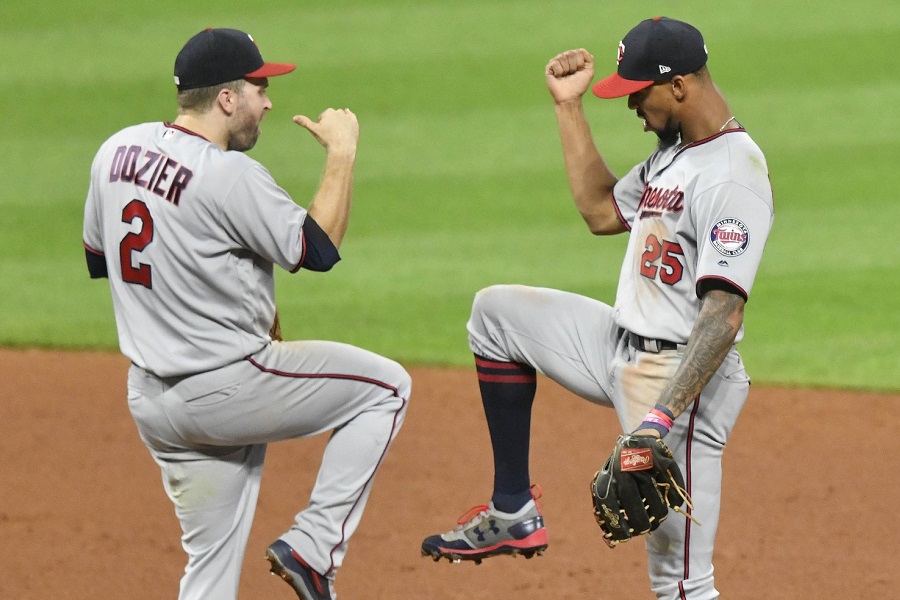 Today, we would like to announce our finalists for the Twins Daily awards. We would appreciate it if you would give each of the awards some thought and vote for who you think should win the award. Of course, the results of the Twins Daily Twitter awards vote may or may not match up with the results of the Twins Daily vote. Be sure to follow Twins Daily on Twitter throughout the season as well as to vote in our polls. The finalists are the players who finished in the top three or four in the voting. As we did with the minor league awards, we vote our choices for the Top 3-5 Twins players (depending on the award) and a very basic point system is used to tabulate the results. For instance, for the Rookie of the Year, voters were asked to submit their rankings for the top 3 rookies in 2017 for the Twins. For each ballot, the player with a first place vote got three points. Two points for the second place choice, and one point for the third place choice. Nine people voted for the award. Twins Daily founders Seth Stohs, Nick Nelson, John Bonnes and Parker Hageman all voted. Twins Daily writers Tom Froemming, Cody Christie, Jeremy Nygaard, Steve Lien and Ted Schwerzler also cast their votes. With that as the background, here are the finalists for the 2017 Twins Daily Awards: MOST IMPROVED How do we go about judging improvement? Is it improvement from 2016 to 2017? Is it improvement from first half to second half? Is it some combination of the two? Like an MVP vote, we choose to make it a thinker for our voters. The nine voters were asked to vote for their top three selections. A total of eight players received votes. That speaks to a roster of two types of players. There are some veterans who either have had some struggles in recent years and succeeded again in 2017. There were also young players who took their fair share of knocks in 2016, or even early in 2017, and came on to put up surprising numbers. The finalists are (in alphabetical order): JOSE BERRIOS: While fans wanted him up late in 2015, Berrios really struggled in his MLB debut in 2016. He began 2017 back in Rochester, but he soon came up and established himself as a regular and sometimes dominant starting pitcher for the Twins. BYRON BUXTON: Buxton had been up and down from the minors to the big leagues in 2015 and 2016. His 2017 started out rough as well, but he continued to work with James Rowson and ended the season with some solid numbers, especially considering where he started. His defense deserves a Gold Glove, but his bat became a threat at times. JOE MAUER: Since the day his 2013 season came to an abrupt end in 2013, Joe Mauer has struggled to return to form. After a disappointing April, Joe Mauer went on to put up Mauer-esque numbers again, topping the .300 mark again and leading the Twins in doubles. He also improved his defense and should be considered for a Gold Glove. EDDIE ROSARIO: Rosario can be fun or frustrating to watch at times, and that was again the case. However, he improved his strike zone judgment in 2017, not to Mauer-like numbers but better, and became a force in the middle of the Twins lineup. Easily put up his best offensive season and carried the Twins lineup at various times throughout the season. Vote for your choice in our Twitter Poll, and also comment how you would rank these players. https://twitter.com/twinsdaily/status/914856563885711361 ROOKIE OF THE YEAR The Twins had a whole bunch of players make their major league debut in 2017. Several of them became key contributors to the Twins. Like Most Improved, this is a category that can include pitchers and hitters, which can make it difficult. But which Twins rookie has had the biggest impact on the Twins this season? Voters were asked to rank their top three, and only four players received votes. Here are the four finalists (in alphabetical order): ALAN BUSENITZ: The hard-throwing right-hander came to the Twins at the trade deadline a year ago from the Angels. He pitched well in Rochester to start the season and earned a promotion to the Twins in June. He moved up and down a couple of times, but in the final two months of the season, he became a reliable bullpen option for Paul Molitor. ZACK GRANITE: He hit over .450 in Rochester in June, and he came up to the Twins before the All Star break. When Byron Buxton went on the disabled list, Granite played a solid center field and was an instigator in the Twins lineup for a month. He returned to the Red Wings but he added his first MLB homer in September. TREVOR HILDENBERGER: The right-handed reliever has been the Twins Daily Minor League Relief Pitcher of the Year the last two seasons as he quickly rose through the Twins system. He made his MLB debut in late June. After spending a month pitching periodically in lower-leverage situations, he became the go-to reliever for the Twins in high-leverage, late-innings situations for the season's final two months. ADALBERTO MEJIA: Many were surprised when Mejia made the Opening Day starting rotation, but the left-hander remained in the starting rotation throughout the year, until a scare with his arm later in the season. Fortunately, he was able to use an extended DL stint and some rehab starts in the minor leagues and returned to the rotation for a couple of starts at season's end. Again, please vote for your choice for Twins Rookie of the Year in our Twitter poll below, and in the comments, rank the four finalists and discuss. https://twitter.com/twinsdaily/status/914856981835468805 PITCHER OF THE YEAR Our voters were asked to vote for their top four Twins pitchers in 2017. Nine players received votes. There were starters, closers and middle innings guys who got votes. Here are the four finalists. JOSE BERRIOS: Given another shot in the Twins rotation before May, Berrios took off. He was dominant for most of the first half. He slowed some in the second half, but he remains a potentially dominant starting pitcher for years to come. Unlike most Twins starters, Berrios has (and shows) the ability to miss bats. TREVOR HILDENBERGER: As mentioned above, Hildenberger came up in late May. It wasn't long before he started getting high-leverage, late-inning outings for Paul Molitor, often coming in three or four games in a row. BRANDON KINTZLER: While fans often questioned his ability to be a closer, his career took off the moment he was given that role halfway through the 2016 season. He carried his success through the Twins first half and earned a spot and pitched in the 2017 All-Star Game. He was traded at July trade deadline to the Nationals. ERVIN SANTANA: Early in the season, not only was he the Twins top starter, but he was one of the best starting pitchers in the league. For a while, there were some asking if he should start the All-Star Game. While he had a tough June, Santana earned his All-Star spot. He's led the league in complete games. So, of the four finalists, who gets your vote for Twins Pitcher of the Year, and again, discuss how you would vote for the Top 4 Twins pitchers in 2017, whether they were a finalist of not. https://twitter.com/twinsdaily/status/914857375152115712 MOST VALUABLE PLAYER The term "valuable" always sparks debate. That is especially true when talking about the league awards, but it also comes to play with the Twins MVP vote. Is it about stats, or specifically a stat like WAR, or do other things factor in like leadership or carrying a team for an extended period. Voters were asked to rank their top five for MVP. You might expect more variability, but just seven players received votes. Here are the top 4 finalists for Twins MVP (in alphabetical order). Be sure to vote on our Twitter poll, and then discuss in the comments what your vote would look like and why. BYRON BUXTON: After a slow start, Byron Buxton started putting up some numbers offensively. Combined with his defensive abilities and stats, he put up surprisingly good Wins Above Replacement numbers. Add in his base running and base stealing, as well as some power, and you can see how Buck can accumulate value. BRIAN DOZIER: He had a slow-ish first two months of the season (though nowhere near as slow as his 2016 start), but he took off again offensively after the All-Star break. While he didn't hit 42 homers, he did add 34 home runs to his resume. He also scored over 100 runs for the fourth straight season. He played most days. He was clearly the leader of the clubhouse. JOE MAUER: His returned, or at least got closer, to his old self with the bat. His patience at the plate should be lauded for his on-base skills and allowing the rest of the lineup to see a pitcher's pitch mix. He led the team in doubles. He was still a good base runner. And he greatly improved his defense at first base. More and more, we are hearing about his leadership in the clubhouse, particularly with the younger players. ERVIN SANTANA: The right-hander got the Twins off to a good start early in the season by pitching as well as he has at any time in his career. He provided innings throughout the season. His limited his short starts. He also was a leader to the young pitchers on the starting staff. So who would your vote one-through-five for Twins MVP? First, vote in our Twitter poll, and then discuss your vote in the comments section. https://twitter.com/twinsdaily/status/914857928582221827 So there you have it. Congratulations to the finalists in each of these four categories on terrific seasons. Congratulations to all that received votes. The nice thing about this 2017 season is that there are a lot of players deserving of recognition, even more than are on these lists. Please vote in our Twitter polls and discuss in the comments. Again, our awards will be handed out when the Twins postseason run ends, so be sure to stop back and see how our votes lined up with yours.
 -
DET 3, MIN 2: Twins Lose In Romine Sideshow Game
Seth Stohs replied to Tom Froemming's topic in Twins Daily Front Page News
Slegers was making a spot start. Regardless of how he did, it wasn't going to make a difference. He's behind several guys on the "prospect charts" still, but he's near the top of the board for opening day next season spots. He will (or could, pending transactions) go to spring training with an opportunity, probably ahead of some of the other prospects because of where he ended this season. -
Harmon Killebrew leads the Minnesota Twins organization in several career statistics including games played, home runs, RBI, walks and OPS. He was also a leader off the field. When he passed away back in 2011, his off-field leadership and service was praised by the Twins and people around the game of baseball. The Twins initiated the Harmon Killebrew Award for Community Service given annually to one player from each of the four Twins minor league affiliates. Today we highlight the 2017 Harmon Killebrew Award winner from the Chattanooga Lookouts, outfielder Travis Harrison. Image courtesy of Chattanooga Lookouts (photo of Travis Harrison) Harmon Killebrew leads the Minnesota Twins organization in several career statistics including games played, home runs, RBI, walks and OPS. He was also a leader off the field. When he passed away back in 2011, his off-field leadership and service was praised by the Twins and people around the game of baseball. The Twins initiated the Harmon Killebrew Award for Community Service given annually to one player from each of the four Twins minor league affiliates. Today we highlight the 2017 Harmon Killebrew Award winner from the Chattanooga Lookouts, outfielder Travis Harrison. Travis Harrison was one of two supplemental first-round picks by the Twins in 2011. He spent 2012 in Elizabethton where he won a championship. He was part of the first season of the Cedar Rapids Kernels as a Twins affiliate in 2013. In 2014, he moved from third base to the outfield and advanced to Ft. Myers where he was a key cog in the Miracle’s Florida State League championship. In 2015, he was part of the Southern League champion Chattanooga Lookouts. He’s remained with the Lookouts the last two years and is currently a free agent. Off the field, Harrison is a really good, giving person. He was very involved with several youth programs. He’s done that and more in the community every year and in the offseasons as well. One area he got quite involved with was the Hydrocephalus Association. According to Dan Kofp, Lookouts PR director, “This year Travis served as the team's ambassador for the Hydrocephalus Association. Along with appearing in their campaign videos Travis also led a clinic for kids with Hydrocephalus. He was also an integral part in bringing awareness to their brand new national "No More Brain Surgeries" campaign.” It was something that meant a lot to Harrison. “I was involved deeply with the Hydrocephalus Association and got very close with some kids that have it.” https://twitter.com/Travharrison17/status/890653741162020865 https://twitter.com/Travharrison17/status/893964449555640320 But he stayed even more busy. Kopf added, “The outfielder also was the first to volunteer for any community event and even played catch with Tennessee Congressman Chuck Fleischmann when he was in town.” As I noted, working in the community and enjoying time with children is something Harrison has always done. As Harrison said recently, “I appreciate the award, but I don't do those things for an award. I don't think anybody does. I just love seeing people happy, especially people that are not as blessed as I am. When I see an opportunity where I can help make somebody happy or even make there day a little better, i'll do it every time. Whether it's signing and autograph and helping a kid who can barely walk to the batter's box with with me, I really enjoy it.” Kopf summarized the effect that Travis Harrison had in the Chattanooga community, and it likely echoes the feelings of those he worked closely within each of the cities he has lived and played in. “2017 marked Travis' third season with the Lookouts and his third year as a member of the Chattanooga community. Overall Travis was an outstanding liaison to Chattanooga and his presence will be missed by the local community.” Cedar Rapids Kernels: Hector Lujan Ft. Myers Miracle: Kevin Garcia Chattanooga Lookouts: Travis Harrison Rochester Red Wings: DJ Baxendale View full article
-
2017 Killebrew Award Winner: Travis Harrison (Chattanooga)
Seth Stohs posted an article in Minor Leagues
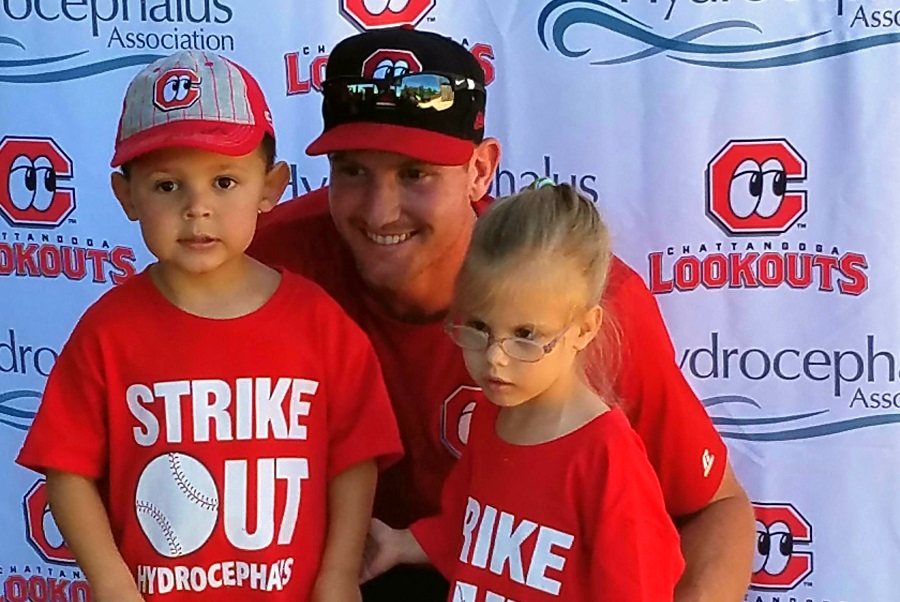 Travis Harrison was one of two supplemental first-round picks by the Twins in 2011. He spent 2012 in Elizabethton where he won a championship. He was part of the first season of the Cedar Rapids Kernels as a Twins affiliate in 2013. In 2014, he moved from third base to the outfield and advanced to Ft. Myers where he was a key cog in the Miracle’s Florida State League championship. In 2015, he was part of the Southern League champion Chattanooga Lookouts. He’s remained with the Lookouts the last two years and is currently a free agent. Off the field, Harrison is a really good, giving person. He was very involved with several youth programs. He’s done that and more in the community every year and in the offseasons as well. One area he got quite involved with was the Hydrocephalus Association. According to Dan Kofp, Lookouts PR director, “This year Travis served as the team's ambassador for the Hydrocephalus Association. Along with appearing in their campaign videos Travis also led a clinic for kids with Hydrocephalus. He was also an integral part in bringing awareness to their brand new national "No More Brain Surgeries" campaign.” It was something that meant a lot to Harrison. “I was involved deeply with the Hydrocephalus Association and got very close with some kids that have it.” https://twitter.com/Travharrison17/status/890653741162020865 https://twitter.com/Travharrison17/status/893964449555640320 But he stayed even more busy. Kopf added, “The outfielder also was the first to volunteer for any community event and even played catch with Tennessee Congressman Chuck Fleischmann when he was in town.” As I noted, working in the community and enjoying time with children is something Harrison has always done. As Harrison said recently, “I appreciate the award, but I don't do those things for an award. I don't think anybody does. I just love seeing people happy, especially people that are not as blessed as I am. When I see an opportunity where I can help make somebody happy or even make there day a little better, i'll do it every time. Whether it's signing and autograph and helping a kid who can barely walk to the batter's box with with me, I really enjoy it.” Kopf summarized the effect that Travis Harrison had in the Chattanooga community, and it likely echoes the feelings of those he worked closely within each of the cities he has lived and played in. “2017 marked Travis' third season with the Lookouts and his third year as a member of the Chattanooga community. Overall Travis was an outstanding liaison to Chattanooga and his presence will be missed by the local community.” Cedar Rapids Kernels: Hector Lujan Ft. Myers Miracle: Kevin Garcia Chattanooga Lookouts: Travis Harrison Rochester Red Wings: DJ Baxendale
 -
DET 3, MIN 2: Twins Lose In Romine Sideshow Game
Seth Stohs replied to Tom Froemming's topic in Twins Daily Front Page News
My thoughts... Good to see Sano get four at bats. Good to see him get a hit and jog a bit on the bases. Good to see him take some pitches, some with velocity and some without. Loved seeing Romine get to play all nine positions. He's an appropriate guy for such a game. This year for Detroit, he's played 123 games now, and he'd played at least 9 games at each position, except catcher, and he'd even pitched once. While I would think that having him start and face one or two batters, I don't care when he was used. If the game had meant anything, they wouldn't have done it. It meant little... and even facing Sano, he got to see 4-5 pitches, and that's all that matters. I thought it was fun. He deserved it. That's it. Loved seeing Perk come in for that final out. Great to see the emotion. That should shut up anyone who thought he didn't work hard or didn't care to get back. When I talked to him about 18 months ago he reiterated his hope to finish out this contract and then be done. If he'd have pitched well enough to get the option picked up, he would have pitched next year, but he seemed content on this being his last contract. He said he admired Brad Radke doing that. Radke could have had some surgery and maybe pitched another 5 years, but time his his family and young kids was more important to him, and Perkins wanted to do the same. Having missed so much time, I wouldn't blame him for trying to go one more year... but if this was it, love the moment.- 21 replies
-
- 3
-
-
- miguel sano
- glen perkins
- (and 3 more)
-
Eight times in his Hall of Fame career Harmon Killebrew hit over 40 home runs. Six times he led his league in homers. He played on 11 All Star teams. However, it was off the field where Killebrew made a name for himself during and after his career. His kindness was evident during his career, and he worked tirelessly after his career as well to help those in need. When Killebrew passed away in 2011, the Twins initiated the Harmon Killebrew Award for Community Service. Each of the Twins four full-season affiliates would have one recipient each year. Today, we will share the story of the Rochester Red Wings 2017 recipient, DJ Baxendale. Image courtesy of Seth Stohs, Twins Daily (photo of DJ Baxendale) Eight times in his Hall of Fame career Harmon Killebrew hit over 40 home runs. Six times he led his league in homers. He played on 11 All Star teams. However, it was off the field where Killebrew made a name for himself during and after his career. His kindness was evident during his career, and he worked tirelessly after his career as well to help those in need. When Killebrew passed away in 2011, the Twins initiated the Harmon Killebrew Award for Community Service. Each of the Twins four full-season affiliates would have one recipient each year. Today, we will share the story of the Rochester Red Wings 2017 recipient, DJ Baxendale. DJ Baxendale was the Twins 11th round draft pick in 2012 out of Arkansas. After pitching in the College World Series that year, he pitched out of the bullpen at Elizabethton and Cedar Rapids. He spent the next three seasons as a starting pitcher. He made the Southern League All Star team in 2016 as a starter, but following the All Star game, he moved up to Rochester and worked primarily out of the bullpen. While he didn’t get invited to big league camp, Baxendale pitched a couple of times for the Twins in spring training. He even got to pitch against the Twins, for Team USA, in an exhibition game. He spent most of this season in Rochester this year where he posted a 2.98 ERA in 54.1 innings. He was sent back to Chattanooga late in the season where he did some spot starting and helped the Lookouts to a share of the Southern League championship. Baxendale also assisted his community in Rochester and for his efforts, he earned a 2017 Harmon Killebrew Award. When told of the honor, Baxendale told Twins Daily, “Harmon Killebrew was not only a great baseball player but also one of, if not the greatest humans to ever play the game of baseball. To be honored with an award that accompanies his name is truly one of the greatest honors I could ever receive. He epitomized what it means to be a Minnesota Twin and to play the game on and off the field the ‘Twins Way.’” According to Dan Mason, the GM of the Rochester Red Wings, Baxendale was one of many members of the Red Wings roster that kept busy in the community. “It was a tough call this year because we had some other guys that did a lot of work in the community as well but he did more than anyone.” Baxendale said that he participated in many community service events, “ranging from baseball camps at the field to player appearances throughout the city.” He added, “Some of the most memorable experiences for me were working with the local Miracle League in camps and events with special needs children and adults. It really puts into perspective how lucky we are to play baseball professionally, a game that all people enjoy and love.” Mason described even more of the activities that Baxendale did in Rochester. “DJ was a tremendous representative for the Red Wings in the community participating in countless events around town including but not limited to visits to schools, area hospitals, client events, youth baseball clinics, fundraisers for non-profits, our Challenger Baseball event, and the City of Rochester Clean Sweep where he volunteered to pick up debris around town. He treated his adopted hometown (Rochester ) as if it were his own and gave back to so many people and organizations in our community. We were fortunate to have many outstanding baseball players like DJ on the Red Wings this season but even more fortunate to have some phenomenal PEOPLE represent us, the Twins, and the game of baseball in such an incredibly positive manner.” Baxendale understands the role he has and has a strong perspective on what he can do with it. “I feel that it is important for me to give back because of my platform. I have the unique ability to be able to reach out to people because I am a professional baseball player. All of our fans stay loyal to the team regardless of who is playing and I want to show them that we care about them and their community as much as they care about us. Life is all about reciprocity. I want to always give back as much if not more as people give to me.” It’s a good lesson for all of us. We all have a platform, whether it’s 10s of thousands of twitter followers or family and friends in your community. We too need to find ways to be helpful in our communities. Cedar Rapids Kernels: Hector Lujan Ft. Myers Miracle: Kevin Garcia Chattanooga Lookouts: Rochester Red Wings: DJ Baxendale View full article
-
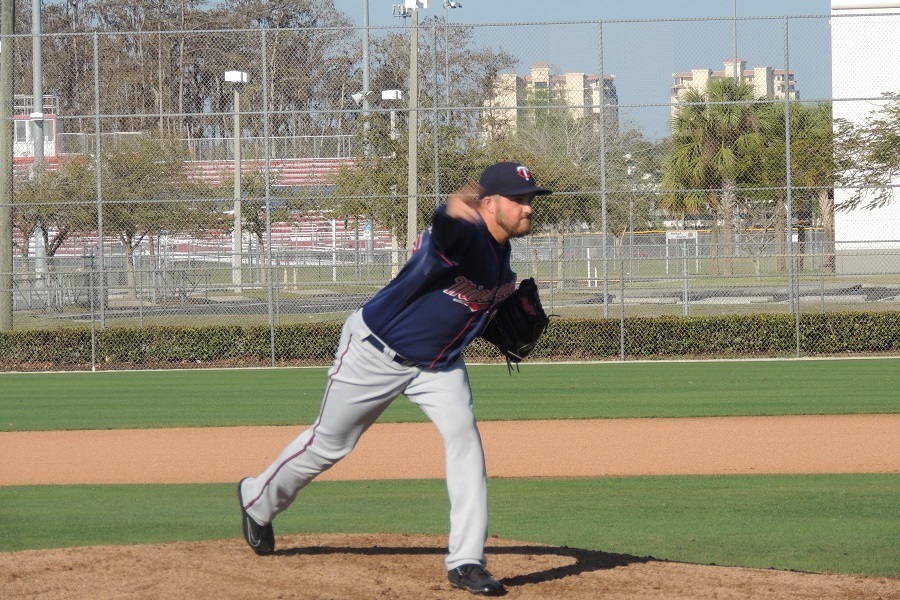 DJ Baxendale was the Twins 11th round draft pick in 2012 out of Arkansas. After pitching in the College World Series that year, he pitched out of the bullpen at Elizabethton and Cedar Rapids. He spent the next three seasons as a starting pitcher. He made the Southern League All Star team in 2016 as a starter, but following the All Star game, he moved up to Rochester and worked primarily out of the bullpen. While he didn’t get invited to big league camp, Baxendale pitched a couple of times for the Twins in spring training. He even got to pitch against the Twins, for Team USA, in an exhibition game. He spent most of this season in Rochester this year where he posted a 2.98 ERA in 54.1 innings. He was sent back to Chattanooga late in the season where he did some spot starting and helped the Lookouts to a share of the Southern League championship. Baxendale also assisted his community in Rochester and for his efforts, he earned a 2017 Harmon Killebrew Award. When told of the honor, Baxendale told Twins Daily, “Harmon Killebrew was not only a great baseball player but also one of, if not the greatest humans to ever play the game of baseball. To be honored with an award that accompanies his name is truly one of the greatest honors I could ever receive. He epitomized what it means to be a Minnesota Twin and to play the game on and off the field the ‘Twins Way.’” According to Dan Mason, the GM of the Rochester Red Wings, Baxendale was one of many members of the Red Wings roster that kept busy in the community. “It was a tough call this year because we had some other guys that did a lot of work in the community as well but he did more than anyone.” Baxendale said that he participated in many community service events, “ranging from baseball camps at the field to player appearances throughout the city.” He added, “Some of the most memorable experiences for me were working with the local Miracle League in camps and events with special needs children and adults. It really puts into perspective how lucky we are to play baseball professionally, a game that all people enjoy and love.” Mason described even more of the activities that Baxendale did in Rochester. “DJ was a tremendous representative for the Red Wings in the community participating in countless events around town including but not limited to visits to schools, area hospitals, client events, youth baseball clinics, fundraisers for non-profits, our Challenger Baseball event, and the City of Rochester Clean Sweep where he volunteered to pick up debris around town. He treated his adopted hometown (Rochester ) as if it were his own and gave back to so many people and organizations in our community. We were fortunate to have many outstanding baseball players like DJ on the Red Wings this season but even more fortunate to have some phenomenal PEOPLE represent us, the Twins, and the game of baseball in such an incredibly positive manner.” Baxendale understands the role he has and has a strong perspective on what he can do with it. “I feel that it is important for me to give back because of my platform. I have the unique ability to be able to reach out to people because I am a professional baseball player. All of our fans stay loyal to the team regardless of who is playing and I want to show them that we care about them and their community as much as they care about us. Life is all about reciprocity. I want to always give back as much if not more as people give to me.” It’s a good lesson for all of us. We all have a platform, whether it’s 10s of thousands of twitter followers or family and friends in your community. We too need to find ways to be helpful in our communities. Cedar Rapids Kernels: Hector Lujan Ft. Myers Miracle: Kevin Garcia Chattanooga Lookouts: Rochester Red Wings: DJ Baxendale
 -
Sox Win, Twins Clinch Playoff Berth
Seth Stohs replied to Seth Stohs's topic in Twins Daily Front Page News
5 innings, 57 pitches is it... I like it. It's what it should be. Make sure he's strong going into Tuesday. -
The Minnesota Twins lost 4-2 in Cleveland on Wednesday night. Then they sat in the visitor's clubhouse for a couple of hours watching the Los Angeles Angels and the Chicago White Sox. In the 10th inning, Nick Delmonico launched a two-run home run to give the White Sox a 6-4 win. The Twins Magic Number is now ZERO meaning that they will not need a Game 163, and they will be playing in the playoffs! The Minnesota Twins lost 4-2 in Cleveland on Wednesday night. Then they sat in the visitor's clubhouse for a couple of hours watching the Los Angeles Angels and the Chicago White Sox. In the 10th inning, Nick Delmonico launched a two-run home run to give the White Sox a 6-4 win. The Twins Magic Number is now ZERO meaning that they will not need a Game 163, and they will be playing in the playoffs! For the first time since 2010, the Minnesota Twins will play in the playoffs. Most likely, they will be playing in New York against the Yankees next Tuesday. When Delmonico's home run landed, the Twins players erupted into a celebration. You have to feel good for these players and the coaching staff. Many of them were part of the 103-loss 2016 season. This group of men become the first team to have lost more than 97 games one season and advance to the playoffs the next year! The Twins now will play a game starting in less than 12 hours, but they are in, and that's all that matters right now!! Be proud, Twins fans!! Be proud! Be proud, Twins players!! Be proud. And Congratulations!! Thank you for an incredible six months to this season! View full article
-
 For the first time since 2010, the Minnesota Twins will play in the playoffs. Most likely, they will be playing in New York against the Yankees next Tuesday. When Delmonico's home run landed, the Twins players erupted into a celebration. You have to feel good for these players and the coaching staff. Many of them were part of the 103-loss 2016 season. This group of men become the first team to have lost more than 97 games one season and advance to the playoffs the next year! The Twins now will play a game starting in less than 12 hours, but they are in, and that's all that matters right now!! Be proud, Twins fans!! Be proud! Be proud, Twins players!! Be proud. And Congratulations!! Thank you for an incredible six months to this season!
 -
475 of his 573 career home runs came while wearing a Minnesota Twins uniform. Harmon Killebrew had a major impact on many teams and many playoff teams. He also is well known for the impact that he had on people in the community. When the Hall of Famer passed away in 2011, the Minnesota Twins announced that they would award one player from each of their four full-season affiliates the Harmon Killebrew Award for Community Service. After writing about the Ft. Myers Miracle recipient yesterday, we today highlight the choice for the Cedar Rapids Kernels. Image courtesy of Cedar Rapids Kernels 475 of his 573 career home runs came while wearing a Minnesota Twins uniform. Harmon Killebrew had a major impact on many teams and many playoff teams. He also is well known for the impact that he had on people in the community. When the Hall of Famer passed away in 2011, the Minnesota Twins announced that they would award one player from each of their four full-season affiliates the Harmon Killebrew Award for Community Service. After writing about the Ft. Myers Miracle recipient yesterday, we today highlight the choice for the Cedar Rapids Kernels. Today we wish to highlight the Harmon Killebrew Award for Community Service for the Cedar Rapids Kernels, right-handed pitcher Hector Lujan. Lujan was born and grew up in Mira Loma, California, a city just east of Anaheim. He began his college career by pitching at UC-Santa Barbara before finishing out his college years at Westmont College. The Twins use their 35th round pick in 2015 to select the hard-throwing right-hander. He spent the remainder of that season in the GCL. Last year, he pitched in Elizabethton, though he also pitched once for Ft. Myers in an emergency outing. This season, he spent the year in Cedar Rapids. He began the year getting some work, but as the season wore on, he got into more and more high leverage situations. By midseason, he was Tommy Watkins’ closer. In 42 games (and 54 innings), Lujan posted a 1.33 ERA and a 0.91 WHIP. He walked just eight while striking out 54. He ended the year with 17 saves and finished fourth in Twins Daily’s Minor League Relief Pitcher of the Year voting. As you can see, he was an impact player on the Kernels playoff roster this season. As important, he had a huge impact on the Cedar Rapids community as well. Ryne George is the Kernels Community Relations Manager. He goes out with the players into the community. Here he describes one of their programs that Lujan was very active with. “Hector has a passion for helping the community, especially when it comes to education programming for children. He helped me promote reading to over a dozen schools in the Cedar Rapids and Iowa City area. Most players are shy when it comes to being in front of a gym full of kids, but not Hector. He had no problem acting out the story I read to the kids called “The Purple Kangaroo” by doing cartwheels, hula-hooping, and dancing all while wearing a kangaroo suit!” The reading program was definitely something that Hector Lujan enjoyed participating in and supporting. He said, “The summer reading program involved me playing a skit in a kangaroo costume, following along with a book that someone else would read. I was pretty much trying to find a monkey called Ernesto. So the skit was me just doing movements like with what the book was saying. You know kids would get a laugh out of it, and they seem to just have fun seeing me do the dab, the hula hoop, and kind of just playing along, holding a sign that said ‘Where is Ernesto?’ and it seemed all the kids would engage in those events.” But Lujan did much more than dress like a kangaroo to make kids and adults alike happy around Cedar Rapids. He added, “Other events involved going to an elderly home playing bingo and also going to children's with special needs center to spend sometime with them by playing catch or even just talking about baseball.” According to Ryne George, Lujan helped launch the Kernels “Catch with a Cop” youth program. https://twitter.com/CRKernels/status/906209282466734081 Lujan noted, “That was pretty cool to see kids getting involved with baseball players and police officers.” Lujan found out last week that he had been recognized for all of his hard work in the community as the Kernels Harmon Killebrew Award recipient. He was excited and humbled by the award. “It's an honor to receive an award named after Hall of Famer, Harmon Killebrew. It is also an honor to be a part of an organization that has such an impact on their community. I can only hope that throughout my baseball career and life, I can leave a mark on the community as he did. I want to be known as someone that gave all I had, both on and off the field.” Asked why it was important for him to give back in the communities in which he lives and work, Lujan recently told Twins Daily that there were several reasons. “I think it's important to give back to communities and kids just because it means a lot to kids knowing that there are others out there that enjoy spending time with them and are willing to make them feel special even if it's just a small gesture of playing catch or even just talking to them.” “Growing up,I would always appreciate people that would take the time to spend their time with me and show me new things and talk about my baseball or other things - whether it's baseball or not - just the fact that having someone there to listen to you when you share your ideas or even having someone to play with can mean a lot.” “Another big thing was having my mom work for an elementary school and having older kids come in and spend some time with us back when I was in elementary school. I always thought that was you cool! I just feel it’s always good to give back too because you never know how you can impact someone's life by words of motivation you give them even if it's an adult or a young kid.” While there were a lot of deserving Kernels players this year who served their community well, Lujan was the right choice. According to Ryne George, “The Minnesota Twins are very lucky to have a person like Hector Lujan in their organization, both as a player and as a person. Hector has a passion for helping the community, especially when it comes to education programming for children,” He continued. “I would like to thank Hector on behalf of the Cedar Rapids Kernels organization for his time and dedication to our community!” The 2017 Killebrew Award Winners Cedar Rapids Kernels: Hector Lujan Ft. Myers Miracle: Kevin Garcia Chattanooga Lookouts: Rochester Red Wings: *all photos courtesy of the Cedar Rapids Kernels View full article
-
2017 Killebrew Award Winner: Hector Lujan (Cedar Rapids)
Seth Stohs posted an article in Minor Leagues
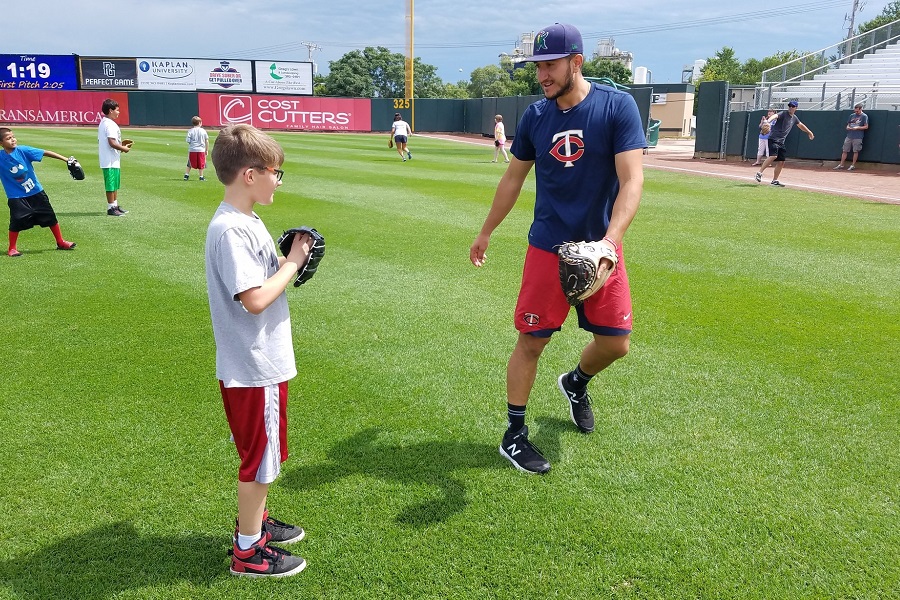 Today we wish to highlight the Harmon Killebrew Award for Community Service for the Cedar Rapids Kernels, right-handed pitcher Hector Lujan. Lujan was born and grew up in Mira Loma, California, a city just east of Anaheim. He began his college career by pitching at UC-Santa Barbara before finishing out his college years at Westmont College. The Twins use their 35th round pick in 2015 to select the hard-throwing right-hander. He spent the remainder of that season in the GCL. Last year, he pitched in Elizabethton, though he also pitched once for Ft. Myers in an emergency outing. This season, he spent the year in Cedar Rapids. He began the year getting some work, but as the season wore on, he got into more and more high leverage situations. By midseason, he was Tommy Watkins’ closer. In 42 games (and 54 innings), Lujan posted a 1.33 ERA and a 0.91 WHIP. He walked just eight while striking out 54. He ended the year with 17 saves and finished fourth in Twins Daily’s Minor League Relief Pitcher of the Year voting. As you can see, he was an impact player on the Kernels playoff roster this season. As important, he had a huge impact on the Cedar Rapids community as well. Ryne George is the Kernels Community Relations Manager. He goes out with the players into the community. Here he describes one of their programs that Lujan was very active with. “Hector has a passion for helping the community, especially when it comes to education programming for children. He helped me promote reading to over a dozen schools in the Cedar Rapids and Iowa City area. Most players are shy when it comes to being in front of a gym full of kids, but not Hector. He had no problem acting out the story I read to the kids called “The Purple Kangaroo” by doing cartwheels, hula-hooping, and dancing all while wearing a kangaroo suit!” The reading program was definitely something that Hector Lujan enjoyed participating in and supporting. He said, “The summer reading program involved me playing a skit in a kangaroo costume, following along with a book that someone else would read. I was pretty much trying to find a monkey called Ernesto. So the skit was me just doing movements like with what the book was saying. You know kids would get a laugh out of it, and they seem to just have fun seeing me do the dab, the hula hoop, and kind of just playing along, holding a sign that said ‘Where is Ernesto?’ and it seemed all the kids would engage in those events.” But Lujan did much more than dress like a kangaroo to make kids and adults alike happy around Cedar Rapids. He added, “Other events involved going to an elderly home playing bingo and also going to children's with special needs center to spend sometime with them by playing catch or even just talking about baseball.” According to Ryne George, Lujan helped launch the Kernels “Catch with a Cop” youth program. https://twitter.com/CRKernels/status/906209282466734081 Lujan noted, “That was pretty cool to see kids getting involved with baseball players and police officers.” Lujan found out last week that he had been recognized for all of his hard work in the community as the Kernels Harmon Killebrew Award recipient. He was excited and humbled by the award. “It's an honor to receive an award named after Hall of Famer, Harmon Killebrew. It is also an honor to be a part of an organization that has such an impact on their community. I can only hope that throughout my baseball career and life, I can leave a mark on the community as he did. I want to be known as someone that gave all I had, both on and off the field.” Asked why it was important for him to give back in the communities in which he lives and work, Lujan recently told Twins Daily that there were several reasons. “I think it's important to give back to communities and kids just because it means a lot to kids knowing that there are others out there that enjoy spending time with them and are willing to make them feel special even if it's just a small gesture of playing catch or even just talking to them.” “Growing up,I would always appreciate people that would take the time to spend their time with me and show me new things and talk about my baseball or other things - whether it's baseball or not - just the fact that having someone there to listen to you when you share your ideas or even having someone to play with can mean a lot.” “Another big thing was having my mom work for an elementary school and having older kids come in and spend some time with us back when I was in elementary school. I always thought that was you cool! I just feel it’s always good to give back too because you never know how you can impact someone's life by words of motivation you give them even if it's an adult or a young kid.” While there were a lot of deserving Kernels players this year who served their community well, Lujan was the right choice. According to Ryne George, “The Minnesota Twins are very lucky to have a person like Hector Lujan in their organization, both as a player and as a person. Hector has a passion for helping the community, especially when it comes to education programming for children,” He continued. “I would like to thank Hector on behalf of the Cedar Rapids Kernels organization for his time and dedication to our community!” The 2017 Killebrew Award Winners Cedar Rapids Kernels: Hector Lujan Ft. Myers Miracle: Kevin Garcia Chattanooga Lookouts: Rochester Red Wings: *all photos courtesy of the Cedar Rapids Kernels
 -
A Gedankenexperiment: Beating The Yankees
Seth Stohs replied to John Bonnes's topic in Twins Daily Front Page News
They had to be in the organization by midnight 8/31. -
2017 Killebrew Award Winner: Kevin Garcia (Ft. Myers)
Seth Stohs replied to Seth Stohs's topic in Twins Daily Front Page News
He's pretty impressive...- 6 replies
-
- 2
-
-
- kevin garcia
- harmon killebrew
- (and 1 more)
