Seth Stohs
-
Posts
25,909 -
Joined
-
Last visited
-
Days Won
109
Content Type
Profiles
News
Minnesota Twins Videos
2026 Minnesota Twins Top Prospects Ranking
2022 Minnesota Twins Draft Picks
Minnesota Twins Free Agent & Trade Rumors, Notes, & Tidbits
Guides & Resources
2023 Minnesota Twins Draft Picks
The Minnesota Twins Players Project
2024 Minnesota Twins Draft Picks
2025 Minnesota Twins Draft Pick Tracker
2026 Minnesota Twins Draft Tracker: Picks & Bonuses
Forums
Blogs
Events
Store
Downloads
Gallery
Everything posted by Seth Stohs
-
 Friday is another one of those important dates in an offseason baseball calendar. It is the date that teams need to determine if they are going to offer their arbitration-eligible players a contract for 2025. (Article will be updated if and when any news breaks throughout the day. If you see reports of agreements, leave a comment.) Image courtesy of © Jesse Johnson-Imagn Images Friday night is the deadline for offering a 2025 contract to players eligible for arbitration. The Minnesota Twins currently have 11 players who are arbitration-eligible. This article will be a quick summary of the 11 players, and ultimately the questions for each player will be: Tender (a contract) - Means that the two sides (player and team) will present each other with numbers, and if they can’t come to terms by sometime in January or February, they will make their cases in front of a group of three arbiters. What that person decides is what that player will make. In between, the two sides can continue to negotiate. Often that means an agreement around the midpoint. Sometimes they work out long-term deals. Non-Tender - Means that the Twins are not offering the player a major-league contract for 2025 and he becomes a free agent. The Twins have one less player on their 40-man roster. Reach an Agreement - Often, the teams are close enough to agree on a 2025 contract before needing to exchange numbers. We have already seen a couple of players from other organizations avoid arbitration by reaching an agreement. Throughout the day, there will be reports of players and teams that have agreed to terms. After the deadline, teams will send out a press release summarizing their day. These players were tendered a contract. These players were not tendered 2025 contracts, etc. Players without enough service time to be arbitration-eligible are either offered a contract or not. If you look at yesterday’s article by Cody Christie in which he mentioned four players who could be non-tendered, two of them are not eligible for arbitration yet. (Side Note: I will be surprised, and potentially a little annoyed if either of those two players are non-tendered!) A quick note: Initially, the Twins could have had 13 arbitration-eligible players. Alex Kirilloff would have been arbitration eligible with just shy of four years of service time. Instead, he abruptly retired last month. Also, the Twins picked up the $1.5 million club option that they had on him. Had they declined it, he would have been arbitration eligible. UPDATE (5:21 pm): To see the Twins decisions, scroll to the bottom. Willi Castro MLB Trade Rumor Projection: $6.2 million. bWAR: 1.6, fWAR: 3.1. Potential Fit for 2025 Twins? Castro was an All-Star in 2024, a replacement added when Jose Altuve opted out of the game. In 96 games before the All Star break, he hit .266/.352/.422 (.774) with 22 doubles, five triples, and seven homers. After the All Star break, he hit like Willi Castro, .219/.298/.329 (.627) with nine doubles and five homers. That said, Castro’s ability to play solid defense at two outfield positions and three infield positions is valuable to an MLB roster. He played in 158 of 162 Twins games. Is the money right? If you look at his overall numbers (.247 with a .717 OPS), you would be happy with your utility infielder hitting like that. But you would pay that guy about $2-3 million, not $6.2 million. What would Seth do? With an infield that potentially includes Lewis, Miranda, Julien, Correa, Lee, and an outfield that has Wallner and Larnach on either side of Buxton, with Martin, Keirsey, and Emmanuel Rodriguez getting closer, I would non-tender, unless they think they can get anything in trade for him at that cost. What Seth thinks the Twins will do? They’ll tender him a contract. What actually happens: Tendered Ryan Jeffers MLB Trade Rumor Projection: $4.7 million bWAR: 2.1, fWAR: 1.7. Potential Fit for 2025 Twins? Starting Catcher. If Christian Vazquez is still around, it can continue to be a 50-50 split. When he is hitting well, he can be a middle-of-the-lineup hitter, and if he’s going through a slump, he’s just find at the back of the lineup. Is the money right? For a guy who catches half of the time (or a little more) and can also DH at times throughout the season, the money is just fine. What would Seth do? I would call up Scott Boras and ask how possible a four-year deal is and try to make that happen. If it could be somewhere in the neighborhood of four years and $32 million with a $12 million option for year five, I’d jump all over it. If not, going year to year is safer from the Twins side. What Seth thinks the Twins will do? He’ll be tendered. No question. What actually happens: Tendered Michael Tonkin MLB Trade Rumor Projection: $1.5 million bWAR: -0.1, fWAR: 0.6. Potential Fit for 2025 Twins? As we have seen, bullpen quality and bullpen depth is very important in a long season. The last few years, the Twins have had a reliever who is out of options that they can have in the big leagues, then DFA, knowing he would clear waivers, and they could call him up and down as needed. Tonkin doesn’t fit that. Look at his 2024. He pitched for Mets, then the Twins, then the Mets again, then the Yankees, and then the Twins for the final month of the season. So, can his value as a back-of-the-bullpen depth option who can eat innings in a veteran, professional manner worth the 40-man roster spot? Is the money right? The money is fine. $1.5 million for what he’s done in the big leagues the last two years isn’t excessive by any means. I mean, it’s not even double the new MLB minimum salary. What would Seth do? I’d non-tender him and try to sign him on a minor-league deal so that he can compete with the likes of Scott Blewett, Jovani Moran, and others for spot stretches in the big leagues. What Seth thinks the Twins will do? Non-Tender. What actually happens: Reached an agreement, $1 million. Justin Topa MLB Trade Rumor Projection: $1.3 million bWAR: 0.2, fWAR: 0.1. Potential Fit for 2025 Twins? Came to the Twins as part of the return for Jorge Polanco last offseason. Then he missed all but the final week of the season with knee injuries and setbacks. He ended the year in the Twins bullpen and worked 2 1/3 innings over three games. The Twins were excited about him when they acquired him a year ago after a strong, 75-game season with the Mariners in 2023. A lost season due to a knee issue shouldn’t alter that at all. Is the money right? $1.3 million is just fine. In addition, if things go well, he would have two more seasons of arbitration-eligibility before becoming a free agent. What would Seth do? Easy choice. Tender him and go into the season with him as a 7th and 8th inning option. What Seth thinks the Twins will do? Tender. What actually happens: Reached an agreement, terms not known yet. Bailey Ober MLB Trade Rumor Projection: $4.3 million bWAR: 2.9, fWAR: 2.9. Potential Fit for 2025 Twins? #2 starting pitcher behind Pablo Lopez. Potential All-Star. After three big-league seasons in which they limited his innings and pitch counts, he hit 178 2/3 innings over 31 starts last year. Is the money right? Absolutely. What would Seth do? I have read a few times this offseason that Ober could be a trade candidate. That would really, really bother me, even understanding that he could bring back a huge haul of talent. Again, instead, I would reach out to Ballangee and see if they would be interested in a four or five year deal with some option years. I’m thinking something in the neighborhood of four years and $40 million with another option year at like $20 million in 2029. What Seth thinks the Twins will do? Easy choice. Tendered. What actually happens: Tendered. Brock Stewart MLB Trade Rumor Projection: $800,000 bWAR: -0.1, fWAR: 0.1. Potential Fit for 2025 Twins? Stewart has fought arm injuries throughout his entire career, but in 2023, we got to see him as one of the most dominant relievers that we have seen over a short period of time. Coupled with Duran and Jax, they can be locked down given a late lead. Unfortunately, in 2024, he was limited to just 16 games before the injury bug caught up to him again. So it’s impossible to know what Stewart will be able to provide, but simply for the price, keep him around! Is the money right? For $40,000 over the league minimum, it’s very fair. What would Seth do? Easily tender. But, as a fan of long-term deals, I’d throw out an offer of four years and $3.8 million to him. If they have any confidence in his health coming into the 2025 season and don’t think his arm will fall off for at least three years, there’s little risk. Can be DFAd and you’re only out a million per year. For the upside here, I’m willing to take that risk. What would Stewart and Sterling Sports Management think? What Seth thinks the Twins will do? Tender. And, they’re smarter than me, so they will just go year to year. What actually happens: Reached an Agreement at $870K. Griffin Jax MLB Trade Rumor Projection: $2.6 million bWAR: 2.8, fWAR: 2.6. Potential Fit for 2025 Twins? In my mind, he would continue being one of the best relief pitchers in baseball, working the key parts of games anytime after the sixth inning. In his mind, and maybe in the mind of some with the Twins, he could be moved back to the starting rotation. It’s certainly intriguing because he is a completely different pitcher than when he posted a 6.37 ERA over 82 games in 2021. But he can’t air it out as a starter like he does as a reliever, so what does that starter look like? That said, I get it. There is a lot more money in starting pitching. Is the money right? Absolutely deserved. What would Seth do? Tender. Today is his 30th birthday which means that he won’t be a free agent until before his age-33 season, so it makes sense to go year-to-year with him. That said, because I love long-term deals and cost-certainty, I’d throw a four-year, $20 million offer to Ballangee and Jax and see if it leads to something. What Seth thinks the Twins will do? Tender. What actually happens: Tendered Joe Ryan MLB Trade Rumor Projection: $3.8 million bWAR: 2.3, fWAR: 3.1. Potential Fit for 2025 Twins? Co-#2 starters in the Twins rotation with Ober, behind Lopez. Ryan was on his way to his best season in 2024 when he was hurt in mid-August. Not to overplay it, but in my opinion, that was the biggest loss of the Twins season. Over his three years in the rotation, he’s had 10 K/9 with just 2.1 BB/9. His WHIP over 135 innings in 2024 was 0.99 which is rare for a starting pitcher. His injury wasn’t elbow related, and it really wasn’t the concerning areas of the shoulder, so hopefully an offseason will bring him rest to have him a full-go by spring training. Is the money right? Absolutely. What would Seth do? I have read a few times this offseason that Ryan could be a trade candidate. That would really, really bother me, even understanding that he could bring back a huge haul of talent. Again, instead, I would reach out to CAA Spots and see if they would be interested in a four or five year deal with some option years. I’m thinking something in the neighborhood of five years and $55 million with another option year at like $20 million in 2030. What Seth thinks the Twins will do? Tender. What actually happens: Tendered Trevor Larnach MLB Trade Rumor Projection: $2.1 million bWAR: 1.3, fWAR: 1.5. Potential Fit for 2025 Twins? Starting left fielder most games, or left field in a platoon situation. Is the money right? Certainly. Expectations were probably a little low for Larnach when the season started, and he was on the Injured List. However, when he was deemed ready, he was brought right to the Twins and placed in the middle of the lineup, and he came through. He hit .259/.338/.434 (.771) with 17 doubles and 15 home runs in 112 games. He returned to his old self at the plate. After striking out over 31% in his three previous, partial seasons, he reduced his K% to 22.3% while maintaining a 10% BB%. Definitely something to build upon. What would Seth do? Tender. I’d probably wait a year to reach out to The Bledsoe Agency about a long-term deal, but I also feel that if he has the breakout season that I think he is capable of, that long-term deal will be much, much more expensive. What Seth thinks the Twins will do? Tender. What actually happens: Tendered. Jhoan Duran MLB Trade Rumor Projection: $3.7 million bWAR: 0.2, fWAR: 1.2. Potential Fit for 2025 Twins? Closer. While 2024 was a somewhat disappointing season for Duran, his size and strength are still there. He still struck out 10.9 per nine innings. He dropped his walk rate and his home run rate. His hard hit % and exit velocity again were down too. His BABIP was .321, so there's certainly some bad luck involved. My bigger concern has to do with his velocity. That’s a weird thing to say when his average fastball was 100.5 mph and his sprinkler was 97.0 mph. Both of those numbers were over 1.3 mph slower than the previous year. His curveball was down 1.6 mph, though that doesn’t concern me. Is the money right? Yes. he’s been one of the more dominant relievers in baseball over the past three seasons. What would Seth do? Easy tender. I wouldn’t hang up the phone if some team called asking about his availability. But like others, I would only deal Duran if completely overwhelmed. What Seth thinks the Twins will do? Tender. What actually happens: Tendered. Royce Lewis MLB Trade Rumor Projection: $2.3 million bWAR: 0.7, fWAR: 1.2. Potential Fit for 2025 Twins? Starting third baseman (or second base, just decide now and let him get ready either way) and middle-of-the-order hitter. While he struggled down the stretch, we have seen plenty of moments and extended stretches of his potential and game-changing abilities. The power is legit. He has come up in some big moments and come through with big hits, including in the 2023 playoffs. Is the money right? Lewis has 2.142 service years which makes him a Super 2. In other words, assuming he remains on the roster, he will have four years of arbitration. What would Seth do? Tender, and try to get Mr. Boras to consider a long-term deal. What Seth thinks the Twins will do? Tender. What actually happens: Tendered. So, what do you think? If you were to Replace “Seth” with “Your Name” in this document, how might the article look different? If I was making the decisions (for the record, I am not), I would non-tender Willi Castro and Michael Tonkin. I’d prefer to trade Castro, but $6.2 million is just too much. I think that Tonkin is the only one that the Twins actually will non-tender. Being a fan of long-term deals, I would reach out to at least half of these players in an attempt to sign them long term. Now, that doesn’t have to happen by Friday’s deadline, but since each would be tendered, they would have months to work on that. UPDATE (5:21 pm): View full article
- 53 replies
-
- 1
-

-
- willi castro
- ryan jeffers
- (and 5 more)
-
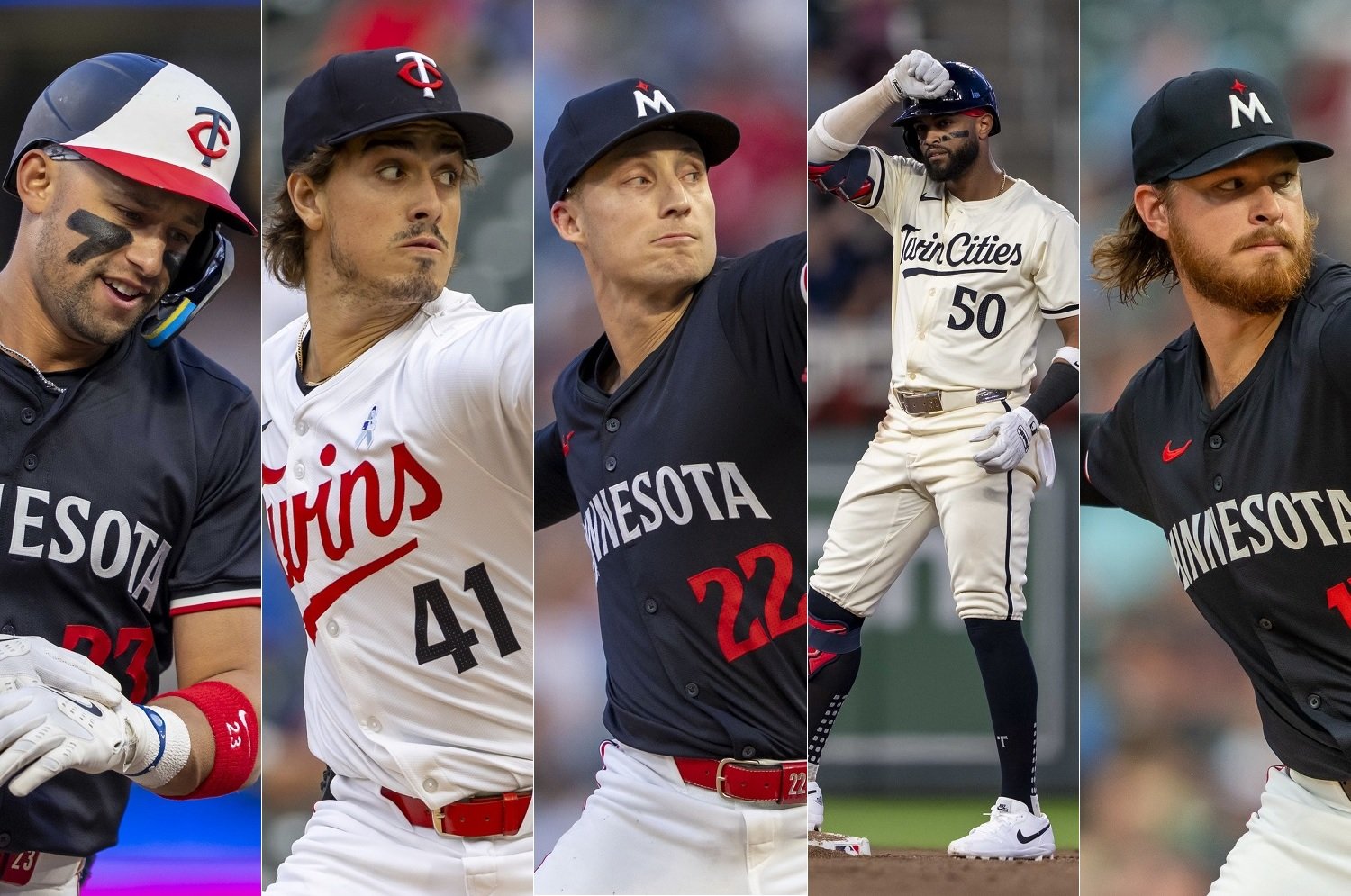 Friday night is the deadline for offering a 2025 contract to players eligible for arbitration. The Minnesota Twins currently have 11 players who are arbitration-eligible. This article will be a quick summary of the 11 players, and ultimately the questions for each player will be: Tender (a contract) - Means that the two sides (player and team) will present each other with numbers, and if they can’t come to terms by sometime in January or February, they will make their cases in front of a group of three arbiters. What that person decides is what that player will make. In between, the two sides can continue to negotiate. Often that means an agreement around the midpoint. Sometimes they work out long-term deals. Non-Tender - Means that the Twins are not offering the player a major-league contract for 2025 and he becomes a free agent. The Twins have one less player on their 40-man roster. Reach an Agreement - Often, the teams are close enough to agree on a 2025 contract before needing to exchange numbers. We have already seen a couple of players from other organizations avoid arbitration by reaching an agreement. Throughout the day, there will be reports of players and teams that have agreed to terms. After the deadline, teams will send out a press release summarizing their day. These players were tendered a contract. These players were not tendered 2025 contracts, etc. Players without enough service time to be arbitration-eligible are either offered a contract or not. If you look at yesterday’s article by Cody Christie in which he mentioned four players who could be non-tendered, two of them are not eligible for arbitration yet. (Side Note: I will be surprised, and potentially a little annoyed if either of those two players are non-tendered!) A quick note: Initially, the Twins could have had 13 arbitration-eligible players. Alex Kirilloff would have been arbitration eligible with just shy of four years of service time. Instead, he abruptly retired last month. Also, the Twins picked up the $1.5 million club option that they had on him. Had they declined it, he would have been arbitration eligible. UPDATE (5:21 pm): To see the Twins decisions, scroll to the bottom. Willi Castro MLB Trade Rumor Projection: $6.2 million. bWAR: 1.6, fWAR: 3.1. Potential Fit for 2025 Twins? Castro was an All-Star in 2024, a replacement added when Jose Altuve opted out of the game. In 96 games before the All Star break, he hit .266/.352/.422 (.774) with 22 doubles, five triples, and seven homers. After the All Star break, he hit like Willi Castro, .219/.298/.329 (.627) with nine doubles and five homers. That said, Castro’s ability to play solid defense at two outfield positions and three infield positions is valuable to an MLB roster. He played in 158 of 162 Twins games. Is the money right? If you look at his overall numbers (.247 with a .717 OPS), you would be happy with your utility infielder hitting like that. But you would pay that guy about $2-3 million, not $6.2 million. What would Seth do? With an infield that potentially includes Lewis, Miranda, Julien, Correa, Lee, and an outfield that has Wallner and Larnach on either side of Buxton, with Martin, Keirsey, and Emmanuel Rodriguez getting closer, I would non-tender, unless they think they can get anything in trade for him at that cost. What Seth thinks the Twins will do? They’ll tender him a contract. What actually happens: Tendered Ryan Jeffers MLB Trade Rumor Projection: $4.7 million bWAR: 2.1, fWAR: 1.7. Potential Fit for 2025 Twins? Starting Catcher. If Christian Vazquez is still around, it can continue to be a 50-50 split. When he is hitting well, he can be a middle-of-the-lineup hitter, and if he’s going through a slump, he’s just find at the back of the lineup. Is the money right? For a guy who catches half of the time (or a little more) and can also DH at times throughout the season, the money is just fine. What would Seth do? I would call up Scott Boras and ask how possible a four-year deal is and try to make that happen. If it could be somewhere in the neighborhood of four years and $32 million with a $12 million option for year five, I’d jump all over it. If not, going year to year is safer from the Twins side. What Seth thinks the Twins will do? He’ll be tendered. No question. What actually happens: Tendered Michael Tonkin MLB Trade Rumor Projection: $1.5 million bWAR: -0.1, fWAR: 0.6. Potential Fit for 2025 Twins? As we have seen, bullpen quality and bullpen depth is very important in a long season. The last few years, the Twins have had a reliever who is out of options that they can have in the big leagues, then DFA, knowing he would clear waivers, and they could call him up and down as needed. Tonkin doesn’t fit that. Look at his 2024. He pitched for Mets, then the Twins, then the Mets again, then the Yankees, and then the Twins for the final month of the season. So, can his value as a back-of-the-bullpen depth option who can eat innings in a veteran, professional manner worth the 40-man roster spot? Is the money right? The money is fine. $1.5 million for what he’s done in the big leagues the last two years isn’t excessive by any means. I mean, it’s not even double the new MLB minimum salary. What would Seth do? I’d non-tender him and try to sign him on a minor-league deal so that he can compete with the likes of Scott Blewett, Jovani Moran, and others for spot stretches in the big leagues. What Seth thinks the Twins will do? Non-Tender. What actually happens: Reached an agreement, $1 million. Justin Topa MLB Trade Rumor Projection: $1.3 million bWAR: 0.2, fWAR: 0.1. Potential Fit for 2025 Twins? Came to the Twins as part of the return for Jorge Polanco last offseason. Then he missed all but the final week of the season with knee injuries and setbacks. He ended the year in the Twins bullpen and worked 2 1/3 innings over three games. The Twins were excited about him when they acquired him a year ago after a strong, 75-game season with the Mariners in 2023. A lost season due to a knee issue shouldn’t alter that at all. Is the money right? $1.3 million is just fine. In addition, if things go well, he would have two more seasons of arbitration-eligibility before becoming a free agent. What would Seth do? Easy choice. Tender him and go into the season with him as a 7th and 8th inning option. What Seth thinks the Twins will do? Tender. What actually happens: Reached an agreement, terms not known yet. Bailey Ober MLB Trade Rumor Projection: $4.3 million bWAR: 2.9, fWAR: 2.9. Potential Fit for 2025 Twins? #2 starting pitcher behind Pablo Lopez. Potential All-Star. After three big-league seasons in which they limited his innings and pitch counts, he hit 178 2/3 innings over 31 starts last year. Is the money right? Absolutely. What would Seth do? I have read a few times this offseason that Ober could be a trade candidate. That would really, really bother me, even understanding that he could bring back a huge haul of talent. Again, instead, I would reach out to Ballangee and see if they would be interested in a four or five year deal with some option years. I’m thinking something in the neighborhood of four years and $40 million with another option year at like $20 million in 2029. What Seth thinks the Twins will do? Easy choice. Tendered. What actually happens: Tendered. Brock Stewart MLB Trade Rumor Projection: $800,000 bWAR: -0.1, fWAR: 0.1. Potential Fit for 2025 Twins? Stewart has fought arm injuries throughout his entire career, but in 2023, we got to see him as one of the most dominant relievers that we have seen over a short period of time. Coupled with Duran and Jax, they can be locked down given a late lead. Unfortunately, in 2024, he was limited to just 16 games before the injury bug caught up to him again. So it’s impossible to know what Stewart will be able to provide, but simply for the price, keep him around! Is the money right? For $40,000 over the league minimum, it’s very fair. What would Seth do? Easily tender. But, as a fan of long-term deals, I’d throw out an offer of four years and $3.8 million to him. If they have any confidence in his health coming into the 2025 season and don’t think his arm will fall off for at least three years, there’s little risk. Can be DFAd and you’re only out a million per year. For the upside here, I’m willing to take that risk. What would Stewart and Sterling Sports Management think? What Seth thinks the Twins will do? Tender. And, they’re smarter than me, so they will just go year to year. What actually happens: Reached an Agreement at $870K. Griffin Jax MLB Trade Rumor Projection: $2.6 million bWAR: 2.8, fWAR: 2.6. Potential Fit for 2025 Twins? In my mind, he would continue being one of the best relief pitchers in baseball, working the key parts of games anytime after the sixth inning. In his mind, and maybe in the mind of some with the Twins, he could be moved back to the starting rotation. It’s certainly intriguing because he is a completely different pitcher than when he posted a 6.37 ERA over 82 games in 2021. But he can’t air it out as a starter like he does as a reliever, so what does that starter look like? That said, I get it. There is a lot more money in starting pitching. Is the money right? Absolutely deserved. What would Seth do? Tender. Today is his 30th birthday which means that he won’t be a free agent until before his age-33 season, so it makes sense to go year-to-year with him. That said, because I love long-term deals and cost-certainty, I’d throw a four-year, $20 million offer to Ballangee and Jax and see if it leads to something. What Seth thinks the Twins will do? Tender. What actually happens: Tendered Joe Ryan MLB Trade Rumor Projection: $3.8 million bWAR: 2.3, fWAR: 3.1. Potential Fit for 2025 Twins? Co-#2 starters in the Twins rotation with Ober, behind Lopez. Ryan was on his way to his best season in 2024 when he was hurt in mid-August. Not to overplay it, but in my opinion, that was the biggest loss of the Twins season. Over his three years in the rotation, he’s had 10 K/9 with just 2.1 BB/9. His WHIP over 135 innings in 2024 was 0.99 which is rare for a starting pitcher. His injury wasn’t elbow related, and it really wasn’t the concerning areas of the shoulder, so hopefully an offseason will bring him rest to have him a full-go by spring training. Is the money right? Absolutely. What would Seth do? I have read a few times this offseason that Ryan could be a trade candidate. That would really, really bother me, even understanding that he could bring back a huge haul of talent. Again, instead, I would reach out to CAA Spots and see if they would be interested in a four or five year deal with some option years. I’m thinking something in the neighborhood of five years and $55 million with another option year at like $20 million in 2030. What Seth thinks the Twins will do? Tender. What actually happens: Tendered Trevor Larnach MLB Trade Rumor Projection: $2.1 million bWAR: 1.3, fWAR: 1.5. Potential Fit for 2025 Twins? Starting left fielder most games, or left field in a platoon situation. Is the money right? Certainly. Expectations were probably a little low for Larnach when the season started, and he was on the Injured List. However, when he was deemed ready, he was brought right to the Twins and placed in the middle of the lineup, and he came through. He hit .259/.338/.434 (.771) with 17 doubles and 15 home runs in 112 games. He returned to his old self at the plate. After striking out over 31% in his three previous, partial seasons, he reduced his K% to 22.3% while maintaining a 10% BB%. Definitely something to build upon. What would Seth do? Tender. I’d probably wait a year to reach out to The Bledsoe Agency about a long-term deal, but I also feel that if he has the breakout season that I think he is capable of, that long-term deal will be much, much more expensive. What Seth thinks the Twins will do? Tender. What actually happens: Tendered. Jhoan Duran MLB Trade Rumor Projection: $3.7 million bWAR: 0.2, fWAR: 1.2. Potential Fit for 2025 Twins? Closer. While 2024 was a somewhat disappointing season for Duran, his size and strength are still there. He still struck out 10.9 per nine innings. He dropped his walk rate and his home run rate. His hard hit % and exit velocity again were down too. His BABIP was .321, so there's certainly some bad luck involved. My bigger concern has to do with his velocity. That’s a weird thing to say when his average fastball was 100.5 mph and his sprinkler was 97.0 mph. Both of those numbers were over 1.3 mph slower than the previous year. His curveball was down 1.6 mph, though that doesn’t concern me. Is the money right? Yes. he’s been one of the more dominant relievers in baseball over the past three seasons. What would Seth do? Easy tender. I wouldn’t hang up the phone if some team called asking about his availability. But like others, I would only deal Duran if completely overwhelmed. What Seth thinks the Twins will do? Tender. What actually happens: Tendered. Royce Lewis MLB Trade Rumor Projection: $2.3 million bWAR: 0.7, fWAR: 1.2. Potential Fit for 2025 Twins? Starting third baseman (or second base, just decide now and let him get ready either way) and middle-of-the-order hitter. While he struggled down the stretch, we have seen plenty of moments and extended stretches of his potential and game-changing abilities. The power is legit. He has come up in some big moments and come through with big hits, including in the 2023 playoffs. Is the money right? Lewis has 2.142 service years which makes him a Super 2. In other words, assuming he remains on the roster, he will have four years of arbitration. What would Seth do? Tender, and try to get Mr. Boras to consider a long-term deal. What Seth thinks the Twins will do? Tender. What actually happens: Tendered. So, what do you think? If you were to Replace “Seth” with “Your Name” in this document, how might the article look different? If I was making the decisions (for the record, I am not), I would non-tender Willi Castro and Michael Tonkin. I’d prefer to trade Castro, but $6.2 million is just too much. I think that Tonkin is the only one that the Twins actually will non-tender. Being a fan of long-term deals, I would reach out to at least half of these players in an attempt to sign them long term. Now, that doesn’t have to happen by Friday’s deadline, but since each would be tendered, they would have months to work on that. UPDATE (5:21 pm):
- 53 comments
-
- 10
-
-
- willi castro
- ryan jeffers
- (and 5 more)
-
Unranked coming into the season, Andrew Morris has solidified himself as one of the Twins top pitching prospects going into the 2025 season. Image courtesy of Ed Bailey, Wichita Wind Surge Zebby Matthews was Twins Daily's #20 prospect coming into the 2024 season. He pitched at three minor-league levels (Cedar Rapids, Wichita, and St. Paul) before joining the Twins starting rotation in mid-August. Matthews was arguably the fastest-rising Twins prospect of 2024, and one of the highest climbers in all of affiliated baseball. However, there was another pitcher who started the season in the Kernels rotation who followed closely behind Matthews at each level. Andrew Morris started the season outside of the Twins Daily Top 20 prospect rankings, just one spot behind Matthews. Matthews was selected in the eighth round of the 2022 draft. Morris was the Twins' fourth-round pick in the same draft, out of Texas Tech. They both participated in a pre-draft college workout in mid-June that year. They both signed in Fort Myers on the same late-July day. They both made one appearance for the FCL Twins that season. Matthews made one appearance for the Mighty Mussels. Morris made an appearance for them in the playoffs. After one start in 2023, Morris went on the Injured List with some right bicep tendinitis, so he missed about six weeks before rejoining the Mussels in mid-May. At that time, Matthews was putting up video-game numbers for Fort Myers and was promoted to Cedar Rapids in late May. He spent the rest of the season with the Kernels. Morris was promoted to the Midwest League near the end of July and joined their rotation. They were both instrumental in bringing the Kernels their first Midwest League championship in over two decades. Let's jump to 2024. Both of these pitchers start the season back in Cedar Rapids. The two pitchers dominated the competition and quickly moved up. Matthews moved up on May 6th. Morris moved up on May 21st. Again, both pitchers were dominant in Double-A. Matthews was promoted to Triple-A St. Paul on Jul. 19. Morris was promoted to the Saints on Aug. 13. That's the day that Matthews was called up to the big leagues, after Joe Ryan went on the injured list. Matthews made his debuts, recorded many firsts, and experienced the ups and downs of MLB. Seeing how these two work, it just might not be too long before Andrew Morris jumps up to the big leagues and gets to experience all those things. Background Andrew Burke Morris was born in New York City on Sept. 1, 2001. He moved all over the place. Lived in Alaska for awhile. Spent his high school years in Colorado. He chose to attend Division II Colorado St. in Mesa. He was pitching fall ball games when he was still 16, since he is a year younger than his high school graduation class. After three solid years there (18-2), he transferred to Texas Tech where he went 8-2. The Twins made him their fourth-round pick in 2022. Signed him for $500,000, and I bet they remain completely thrilled to have made that selection. Some Basic Stats Morris has put up some incredible numbers in the Twins' minor leagues the past two seasons. At Fort Myers in 2023, he went 3-1 with a 2.59 ERA and a 1.05 WHIP. He moved up to Cedar Rapids and went 5-1 with a 3.28 ERA. In a combined 84 1/3 innings, he had 79 strikeouts and just 19 walks. In seven Kernels starts early this season, he went 3-1 with a 2.15 ERA and a 1.11 WHIP. In 12 games for Wichita (10 starts), he went 6-3 with a save, a 1.90 ERA, and a 1.02 WHIP. With the Saints, he made seven starts to end his season. He went 1-1 with a 3.48 ERA and a 1.13 WHIP. In 133 combined innings, he had 133 strikeouts and just 32 walks. Simply put, most years, he would run away with the Twins Minor League Pitcher of the Year award with those numbers. He spent a lot of 2024 in Matthews's shadow, and understandably so. But his performance, at three levels, didn't go unnoticed by Twins Daily writers, as he jumps up to become our sixth-ranked Twins prospect (and this writer's #4). Obviously the coaches and the front office noticed. They don't jump push players up unless they are deemed ready. Morris proved them right. The Stuff I spent far too much time staring at Morris's Statcast data from his final three starts. I had too much to do to dig deeply into all seven of his Saints starts, so I decided to check out the last three games. Why? because by then, he was approaching 120 innings pitched and had to be tiring late in the season. Right? Well, I came away from that research incredibly impressed, and here are some reasons why. The Pitches Morris primarily throws four pitches. He has a four-seam fastball, a slider, a change up and a curveball. Each pitch is unique, and there may even be a third breaking ball in there as well, which is obviously intriguing. The Fastball - His fastball averages about 94 mph, but he throws it anywhere between 92 and 97. It is a pitch that rides in on a right-handed batter, so you can see why it might be a potentially great pitch used up above the zone. The Slider - He throws his slider almost as much as he throws his fastball. In fact, in one of the three games I reviewed, he threw nine more sliders than fastballs. His slider is intriguing to me because of the variance in its velocity. Of course, it should be noted that it is possible that a few calls each game give the wrong pitch type and may not always get corrected. But in each of his games, he slider came in anywhere from 82-92 mph. The slider gives about the same amount of horizontal break away from a right-handed hitter as the fastball moves toward them. Enough to keep the ball off of an opponent's barrel. The Curveball - Morris throws from a high, over-the-top release point. He is able to generate a lot of spin, and his slow curveball drops off of the proverbial table. He only threw 9-13 of these pitches in each of the three games I dug into. The velocity ranged from 73-77 mph But it is crazy how much drop it gets. Something In Between - I mentioned earlier that there just might be a third breaking ball potentially. I saw that because, as you look at his movement charts, the slider and curveball are joined by a pitch that has its own distinct area. This chart comes from his September 12th star in Columbus. There are three pockets of breaking pitches. Obviously the slow curve gets the -54+ drop (blue), but there are two different pockets deemed "sliders." Is one a cutter? Is one a slider that he just takes a little something off of, decreases the velo a couple of ticks, and gets 10-12 more inches of drop? The clusters thee are a bit too distinct (and the velocity gap a bit too big) to think of it as one pitch he's just tweaking, I think. When you look at the relationship between movement on the pitch and velocity, some of the mystery burns off. It sure looks like he has what we'd generally call a cutter, sitting around 90 MPH and with much more lift than a slider usually has. Then, he has the true slider, which sits more like 83-85. That's exciting. If you consider them distinct, both of these pitches grade out really well. There were 196 pitchers who threw at least 80 cutters at Triple A, according to Baseball Prospectus. THey have pitch-modeling grades for that level, and Morris's cutter ranked seventh among them in PitchPro, which takes into account release point, velocity, movement, handedness, count, and location. There were a whopping 455 pitchers who threw at least 50 sliders, and Morris's ranked fourth. That suggests he could have two elite offerings packed into what we first thought was just one pitch tyoe. The Changeup - In the final three games, Morris threw his changeup 14, 17 and then 10 times. The velocity of that pitch was between 85-91. Frankly, if there is a pitch that could use some work, it might be the changeup. Typically, you'd like to see at least an 8-10 mph lower velocity than the fastball. He is generally closer to maybe 4-6 mph slower than the fastball. If he can take just a little bit of velocity off of the changeup, it might be more of a swing-and-miss pitch and really keep a hitter off-balance. However, I am also very much intrigued by this pitch. Go back to the charts above and look how much arm-side run he gets on the changeup (green dots in the Baseball Savant image, purple in the one from TruMedia). The Mix - With this four- or five-pitch mix, I think Morris has a chance to be a big-league starter. He has enough velocity. He gets the movement needed to work his fastball up in the zone. He has, apparently, a slider and a cutter, and he can really keep a hitter guessing when he throws them a low-70s curveball. The changeup is arguably the pitch he can most work on, but it already has shown a ton of potential. How to use his pitch mix to his advantage will always be the question, and something to work each game to figure out with his catchers. The Release Point - This is the other thing from looking at the Statcast numbers that excites me about the potential of Andrew Morris. In looking at Morris's release point, it shows what pitchers and pitching coaches mean when they talk about tunneling. Morris releases his pitches over the top, and his point of release is within a small range. In other words, when the ball comes out of Morris's hand, the batter can't tell from the release point if he's going to get a 97-mph fastball or an 87-mph changeup or an 89-mph cutter or a 74-mph curveball. Control & Command - In Cedar Rapids, Morris struck out 27.9% of batters faced. In Wichita, the number dropped a bit, to 25.2% and in his time in St. Paul, he struck out 19.6% of batters. That is certainly to be expected as a young player moves up and starts facing much more experienced hitters. In addition, his walk rate jumped from 4.5% in Cedar Rapids, to 5.6% in Cedar Rapids, to 8.0% in St. Paul. In Cedar Rapids, he threw 71.1% strikes. In Wichita, that number fell to 67.1% strikes. In St. Paul, it was a still solid 67.2% strikes. He clearly has very good control and doesn't hurt himself with walks. If anything, it'll be a matter of cleaning up his command a bit. Being a bit more consistent with location inside or just outside the strike zone. What to Expect in 2025? By pitching at three levels in 2024, including the highest minor-league level, Morris has put himself into consideration for a call-up at any point during the 2025 season. What the Twins do this offseason in terms of their pitching staff will be a huge factor. Will Pablo Lopez, Bailey Ober, and Joe Ryan all be back? Will the Twins trade Chris Paddack? Would they really move Griffin Jax into the rotation? Is Louie Varland going to the bullpen? Can Simeon Woods Richardson duplicate, or maybe even improve upon his 2024 rookie stats? Matthews and Brent Headrick will likely get opportunities to start. The Twins also just added Marco Raya and Travis Adams to their stable of potential starters that are already on the 40-man roster. That said, if Morris shows more improvement and starts out the season strong at Triple-A, he can force the Twins' hand a bit. And, I'm sure the Twins would love for him to make their decisions difficult! For much more Twins Daily content on Andrew Morris, click here. View full article
-
Twins Daily Top 20 Minnesota Twins Prospects: #6 Andrew Morris, RHP
Seth Stohs posted an article in Minor Leagues
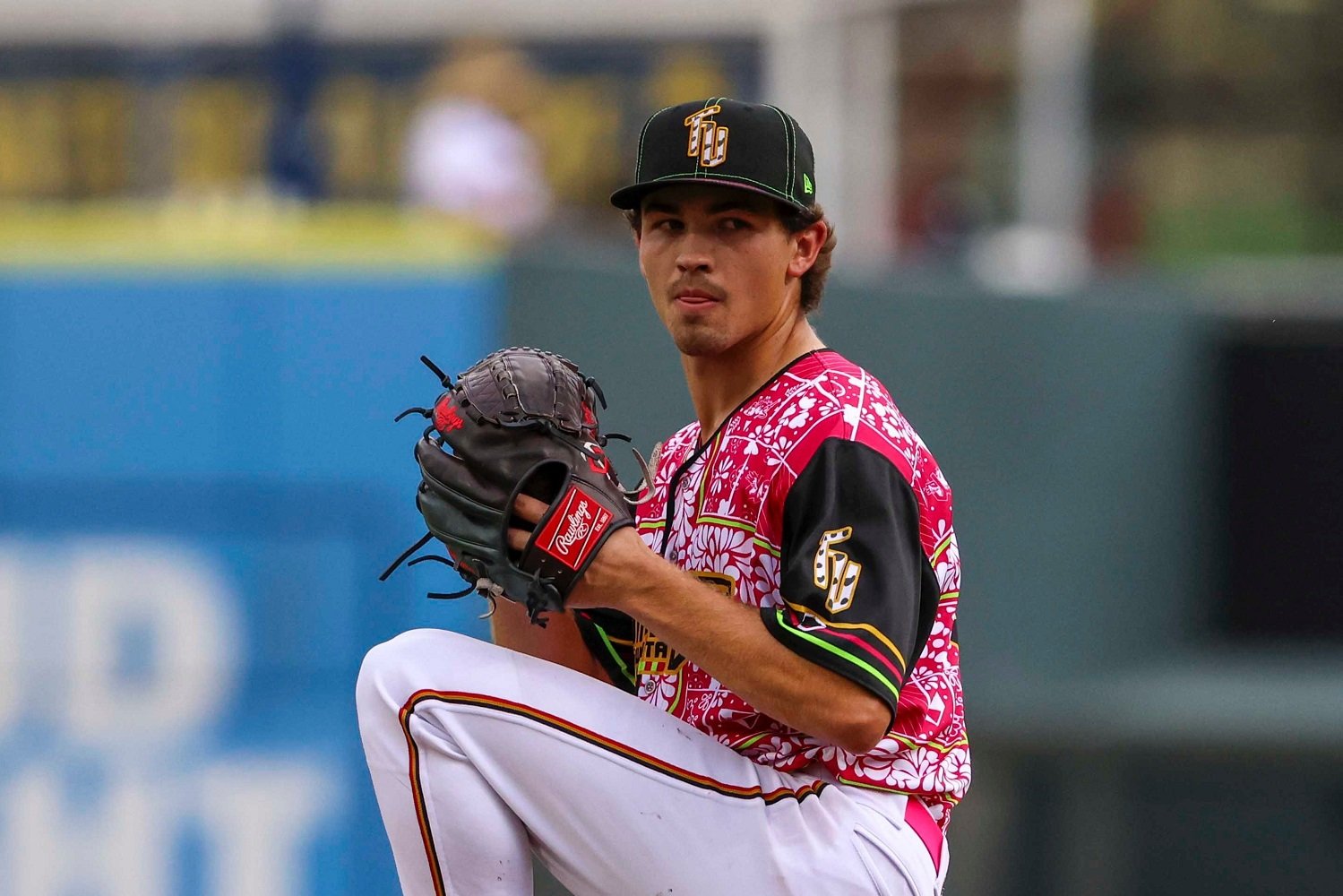 Zebby Matthews was Twins Daily's #20 prospect coming into the 2024 season. He pitched at three minor-league levels (Cedar Rapids, Wichita, and St. Paul) before joining the Twins starting rotation in mid-August. Matthews was arguably the fastest-rising Twins prospect of 2024, and one of the highest climbers in all of affiliated baseball. However, there was another pitcher who started the season in the Kernels rotation who followed closely behind Matthews at each level. Andrew Morris started the season outside of the Twins Daily Top 20 prospect rankings, just one spot behind Matthews. Matthews was selected in the eighth round of the 2022 draft. Morris was the Twins' fourth-round pick in the same draft, out of Texas Tech. They both participated in a pre-draft college workout in mid-June that year. They both signed in Fort Myers on the same late-July day. They both made one appearance for the FCL Twins that season. Matthews made one appearance for the Mighty Mussels. Morris made an appearance for them in the playoffs. After one start in 2023, Morris went on the Injured List with some right bicep tendinitis, so he missed about six weeks before rejoining the Mussels in mid-May. At that time, Matthews was putting up video-game numbers for Fort Myers and was promoted to Cedar Rapids in late May. He spent the rest of the season with the Kernels. Morris was promoted to the Midwest League near the end of July and joined their rotation. They were both instrumental in bringing the Kernels their first Midwest League championship in over two decades. Let's jump to 2024. Both of these pitchers start the season back in Cedar Rapids. The two pitchers dominated the competition and quickly moved up. Matthews moved up on May 6th. Morris moved up on May 21st. Again, both pitchers were dominant in Double-A. Matthews was promoted to Triple-A St. Paul on Jul. 19. Morris was promoted to the Saints on Aug. 13. That's the day that Matthews was called up to the big leagues, after Joe Ryan went on the injured list. Matthews made his debuts, recorded many firsts, and experienced the ups and downs of MLB. Seeing how these two work, it just might not be too long before Andrew Morris jumps up to the big leagues and gets to experience all those things. Background Andrew Burke Morris was born in New York City on Sept. 1, 2001. He moved all over the place. Lived in Alaska for awhile. Spent his high school years in Colorado. He chose to attend Division II Colorado St. in Mesa. He was pitching fall ball games when he was still 16, since he is a year younger than his high school graduation class. After three solid years there (18-2), he transferred to Texas Tech where he went 8-2. The Twins made him their fourth-round pick in 2022. Signed him for $500,000, and I bet they remain completely thrilled to have made that selection. Some Basic Stats Morris has put up some incredible numbers in the Twins' minor leagues the past two seasons. At Fort Myers in 2023, he went 3-1 with a 2.59 ERA and a 1.05 WHIP. He moved up to Cedar Rapids and went 5-1 with a 3.28 ERA. In a combined 84 1/3 innings, he had 79 strikeouts and just 19 walks. In seven Kernels starts early this season, he went 3-1 with a 2.15 ERA and a 1.11 WHIP. In 12 games for Wichita (10 starts), he went 6-3 with a save, a 1.90 ERA, and a 1.02 WHIP. With the Saints, he made seven starts to end his season. He went 1-1 with a 3.48 ERA and a 1.13 WHIP. In 133 combined innings, he had 133 strikeouts and just 32 walks. Simply put, most years, he would run away with the Twins Minor League Pitcher of the Year award with those numbers. He spent a lot of 2024 in Matthews's shadow, and understandably so. But his performance, at three levels, didn't go unnoticed by Twins Daily writers, as he jumps up to become our sixth-ranked Twins prospect (and this writer's #4). Obviously the coaches and the front office noticed. They don't jump push players up unless they are deemed ready. Morris proved them right. The Stuff I spent far too much time staring at Morris's Statcast data from his final three starts. I had too much to do to dig deeply into all seven of his Saints starts, so I decided to check out the last three games. Why? because by then, he was approaching 120 innings pitched and had to be tiring late in the season. Right? Well, I came away from that research incredibly impressed, and here are some reasons why. The Pitches Morris primarily throws four pitches. He has a four-seam fastball, a slider, a change up and a curveball. Each pitch is unique, and there may even be a third breaking ball in there as well, which is obviously intriguing. The Fastball - His fastball averages about 94 mph, but he throws it anywhere between 92 and 97. It is a pitch that rides in on a right-handed batter, so you can see why it might be a potentially great pitch used up above the zone. The Slider - He throws his slider almost as much as he throws his fastball. In fact, in one of the three games I reviewed, he threw nine more sliders than fastballs. His slider is intriguing to me because of the variance in its velocity. Of course, it should be noted that it is possible that a few calls each game give the wrong pitch type and may not always get corrected. But in each of his games, he slider came in anywhere from 82-92 mph. The slider gives about the same amount of horizontal break away from a right-handed hitter as the fastball moves toward them. Enough to keep the ball off of an opponent's barrel. The Curveball - Morris throws from a high, over-the-top release point. He is able to generate a lot of spin, and his slow curveball drops off of the proverbial table. He only threw 9-13 of these pitches in each of the three games I dug into. The velocity ranged from 73-77 mph But it is crazy how much drop it gets. Something In Between - I mentioned earlier that there just might be a third breaking ball potentially. I saw that because, as you look at his movement charts, the slider and curveball are joined by a pitch that has its own distinct area. This chart comes from his September 12th star in Columbus. There are three pockets of breaking pitches. Obviously the slow curve gets the -54+ drop (blue), but there are two different pockets deemed "sliders." Is one a cutter? Is one a slider that he just takes a little something off of, decreases the velo a couple of ticks, and gets 10-12 more inches of drop? The clusters thee are a bit too distinct (and the velocity gap a bit too big) to think of it as one pitch he's just tweaking, I think. When you look at the relationship between movement on the pitch and velocity, some of the mystery burns off. It sure looks like he has what we'd generally call a cutter, sitting around 90 MPH and with much more lift than a slider usually has. Then, he has the true slider, which sits more like 83-85. That's exciting. If you consider them distinct, both of these pitches grade out really well. There were 196 pitchers who threw at least 80 cutters at Triple A, according to Baseball Prospectus. THey have pitch-modeling grades for that level, and Morris's cutter ranked seventh among them in PitchPro, which takes into account release point, velocity, movement, handedness, count, and location. There were a whopping 455 pitchers who threw at least 50 sliders, and Morris's ranked fourth. That suggests he could have two elite offerings packed into what we first thought was just one pitch tyoe. The Changeup - In the final three games, Morris threw his changeup 14, 17 and then 10 times. The velocity of that pitch was between 85-91. Frankly, if there is a pitch that could use some work, it might be the changeup. Typically, you'd like to see at least an 8-10 mph lower velocity than the fastball. He is generally closer to maybe 4-6 mph slower than the fastball. If he can take just a little bit of velocity off of the changeup, it might be more of a swing-and-miss pitch and really keep a hitter off-balance. However, I am also very much intrigued by this pitch. Go back to the charts above and look how much arm-side run he gets on the changeup (green dots in the Baseball Savant image, purple in the one from TruMedia). The Mix - With this four- or five-pitch mix, I think Morris has a chance to be a big-league starter. He has enough velocity. He gets the movement needed to work his fastball up in the zone. He has, apparently, a slider and a cutter, and he can really keep a hitter guessing when he throws them a low-70s curveball. The changeup is arguably the pitch he can most work on, but it already has shown a ton of potential. How to use his pitch mix to his advantage will always be the question, and something to work each game to figure out with his catchers. The Release Point - This is the other thing from looking at the Statcast numbers that excites me about the potential of Andrew Morris. In looking at Morris's release point, it shows what pitchers and pitching coaches mean when they talk about tunneling. Morris releases his pitches over the top, and his point of release is within a small range. In other words, when the ball comes out of Morris's hand, the batter can't tell from the release point if he's going to get a 97-mph fastball or an 87-mph changeup or an 89-mph cutter or a 74-mph curveball. Control & Command - In Cedar Rapids, Morris struck out 27.9% of batters faced. In Wichita, the number dropped a bit, to 25.2% and in his time in St. Paul, he struck out 19.6% of batters. That is certainly to be expected as a young player moves up and starts facing much more experienced hitters. In addition, his walk rate jumped from 4.5% in Cedar Rapids, to 5.6% in Cedar Rapids, to 8.0% in St. Paul. In Cedar Rapids, he threw 71.1% strikes. In Wichita, that number fell to 67.1% strikes. In St. Paul, it was a still solid 67.2% strikes. He clearly has very good control and doesn't hurt himself with walks. If anything, it'll be a matter of cleaning up his command a bit. Being a bit more consistent with location inside or just outside the strike zone. What to Expect in 2025? By pitching at three levels in 2024, including the highest minor-league level, Morris has put himself into consideration for a call-up at any point during the 2025 season. What the Twins do this offseason in terms of their pitching staff will be a huge factor. Will Pablo Lopez, Bailey Ober, and Joe Ryan all be back? Will the Twins trade Chris Paddack? Would they really move Griffin Jax into the rotation? Is Louie Varland going to the bullpen? Can Simeon Woods Richardson duplicate, or maybe even improve upon his 2024 rookie stats? Matthews and Brent Headrick will likely get opportunities to start. The Twins also just added Marco Raya and Travis Adams to their stable of potential starters that are already on the 40-man roster. That said, if Morris shows more improvement and starts out the season strong at Triple-A, he can force the Twins' hand a bit. And, I'm sure the Twins would love for him to make their decisions difficult! For much more Twins Daily content on Andrew Morris, click here.
-
Maybe, but they did call up Keirsey and Helman in September, and both of them could fill utility-type roles in 2025. David Festa would have been added today, but he got called up earlier. Zebby Matthews wouldn't have to be protected until next offseason, but they didn't hold him back.
- 53 replies
-
- 1
-
-
- travis adams
- marco raya
- (and 5 more)
-
The Twins selected two players from their minor-league system to add to their 40-man roster. Right-handed pitchers Marco Raya and Travis Adams were added to the roster, protecting them from being selected in the Rule 5 draft next month. Image courtesy of Ed Bailey (Wichita photos), Seth Stohs (Olivar photo) Every year, the Minnesota Twins add some players to their 40-man roster in order to protect them from being eligible for the Rule 5 draft in December. Each and every year, we as fans panic about who was left off of the 40-man roster and therefore could be lost to another organization. This year's selections will again create both scenarios. Let's start with the positive. The Minnesota Twins selected two right-handed pitchers and added their to the 40-man roster. They added Marco Raya and Travis Adams who both ended their season with the St. Paul Saints after spending most of the season with the Double-A Wichita Wind Surge. Marco Raya was the Twins fourth-round draft pick in the Covid-shortened 2020 draft. Since then, he has missed some time with arm issues but never significant enough for surgery. And when he has pitched, he has been very good. In 24 starts for the Wind Surge this year, he went 3-4 with a 4.27 ERA and a 1.38 WHIP. In 92 2/3 innings, he had 44 walks and 99 strikeouts. When the Surge season ended, he made one more start, his Triple-A debut. In that game, he worked five innings and did not allow a run. He gave up five hits, walked none and had four strikeouts. Raya is very young. He has been treated with kid gloves, and that has him on the brink of the big leagues. He was limited each of the past two years to just 50 or 60 pitches most outings. In his 25 starts, he threw exactly 70 pitches twice. In four other starts, he surpassed 60 pitches. As he continues to mature, those numbers could increase. The Twins were cautious with Bailey Ober in the minor leagues and into the big leagues, and that strategy appears to have worked with him. Also, as the game continues to change, it's possible that they will just look for him to throw 60-70 pitches every four or five days in a newfangled way of getting through nine innings every day. The other addition is right-hander Travis Adams. He was the Twins sixth-round pick in 2021 out of Sacramento State where he was known for his pinpoint control. He spent all of 2023 in Wichita where he went 4-10 with a 5.66 ERA and a 1.47 WHIP. In 109 2/3 innings, he gave up 118 hits, 43 walks and had 97 strikeouts. He remained in Wichita in 2024. He made 19 starts and worked out of the bullpen three times. He went 5-7 with a much-improved 3.67 ERA and 1.14 WHIP. Over 108 innings, he gave up 95 hits, 28 walks and recorded 109 strikeouts. He finished the season with four games (3 starts) in St. Paul. The 24-year old went 0-2 with a 5.21 ERA. Adams numbers are fairly pedestrian, but he does fit a mold for Twins pitchers. Since the draft, he has added significant velocity. He is now hitting 97 mph fairly regularly even as a starter. He also has solid breaking pitches and a willingness to adapt and be coachable and try out new pitches. He still has very good control. He also had one really big Save during spring training this year. Who Was Left Unprotected? As mentioned, many will spend far too many hours worrying about which players will be lost in the Rule 5 draft. There are certainly a few players that should or could have a chance to be selected. It just takes one team to have interest. The first name that most people will mention is Kala'i Rosario. The Twins fifth-round pick in 2020 out of Hawaii, he has incredible light-tower power. He missed two months this season with an elbow injury but certainly held his own at Double-A Wichita. The 22-year old hit .235/.321/.405 (.726) with 19 doubles and eight homers in 67 games for the Wind Surge. He did have 91 strikeouts in 299 plate appearances, so there is plenty of swing-and-miss. He he two home runs in his two rehab games before returning to the Surge. He then returned to the Arizona Fall League and hit .291/.383/.430 (.813) with a triple and three homers for the AFL champion Salt River Rafters. He is Twins Daily's #13 Twins prospect. There was some minimal concern about losing now-23-year-old Ricardo Olivar in the Rule 5 draft a year ago after the catcher-slash-outfielder had a breakout season in Fort Myers. He spent most of the 2024 season in Cedar Rapids. In 81 games, he hit .287/.393/.473 (.867) with 17 doubles, three triples, and 11 home runs. He earned a late-season promotion to Double-A Wichita. In 19 games, he hit .224/.325/.299 (.623) with two doubles and a homer. In his second game with the Wind Surge, he went 5-for-5 with two doubles. So you won't want to look at his numbers over those final 17 games, but Olivar has offensive potential. Defensively, he is solid behind the plate. He is also a good athlete... for a catcher. Yes, he has played some left field. He catches what he gets to, and obviously has a strong arm. He isn't likely to get a lot of playing time in the outfield in the big leagues. He returned to the Twins Daily Top 20 after this season at that #20 spot. Another catcher left unprotected is Patrick Winkel. The 24-year-old was the Twins ninth-round pick in 2021 out of Connecticut. Very solid behind the plate, but he hit just .228/.380/.362 (.642) with 16 doubles and seven homers in 78 games for the Saints this year. And there is also a trio of lefties that could be lost if the right (or wrong?) team is interested. They are all a little different. First, Jovani Moran has already shown what he can do in the big leagues when he is healthy. He came off of the Twins 40-man roster a year ago about this time and we learned he had Tommy John surgery. He could be ready around Opening Day to contribute. Could a team take a shot? Christian MacLeod was the Twins fifth-round pick in 2021 out of Mississippi State. He is a starting pitcher with solid pitches all around. He doesn't throw real hard, but he had a nice return to the mound in 2024 after coming back from Tommy John surgery in 2022. He began his season with 12 starts in Cedar Rapids. He went 3-1 with a 2.77 ERA and had 58 strikeouts in 48 2/3 innings. He moved up to Wichita where he was 1-2 with a 3.72 ERA in eight games (7 starts). He had 44 strikeouts in 38 2/3 innings. He made one spot-start for the Saints and gave up four earned runs in five innings but did have five strikeouts. Overall, he had an impressive 107 strikeouts in 92 1/3 innings, but he also had 46 walks. Jaylen Nowlin was the Twins 19th round pick in 2021 out of Chipola College. The 23-year-old lefty is blessed with a mid-90s fastball. He pitched in 21 games for Double-A Wichita this year and went 5-7 with a 4.67 ERA and 1.43 WHIP. In 96 1/3 innings, he had 97 strikeouts, but he had 48 walks. He also ended the season at St. Paul where he had two innings pitched over three appearances. When he's throwing strikes and forcing contact, he had more success. In a mid-June start, he gave up just one hit over eight scoreless innings. He had just four strikeouts but walked none. He needed just 84 pitches. Many believe his future is more likely in the bullpen. Who am I missing? Did the Twins protect the right players? The right amount of players? Who else might the Twins lose in the Rule 5 draft? Or, are you not worried at all? Remember, not only would a player need to be selected by another organization, but he would need to be offered back to the Twins if he doesn't stick with that team's big-league club all season. View full article
-
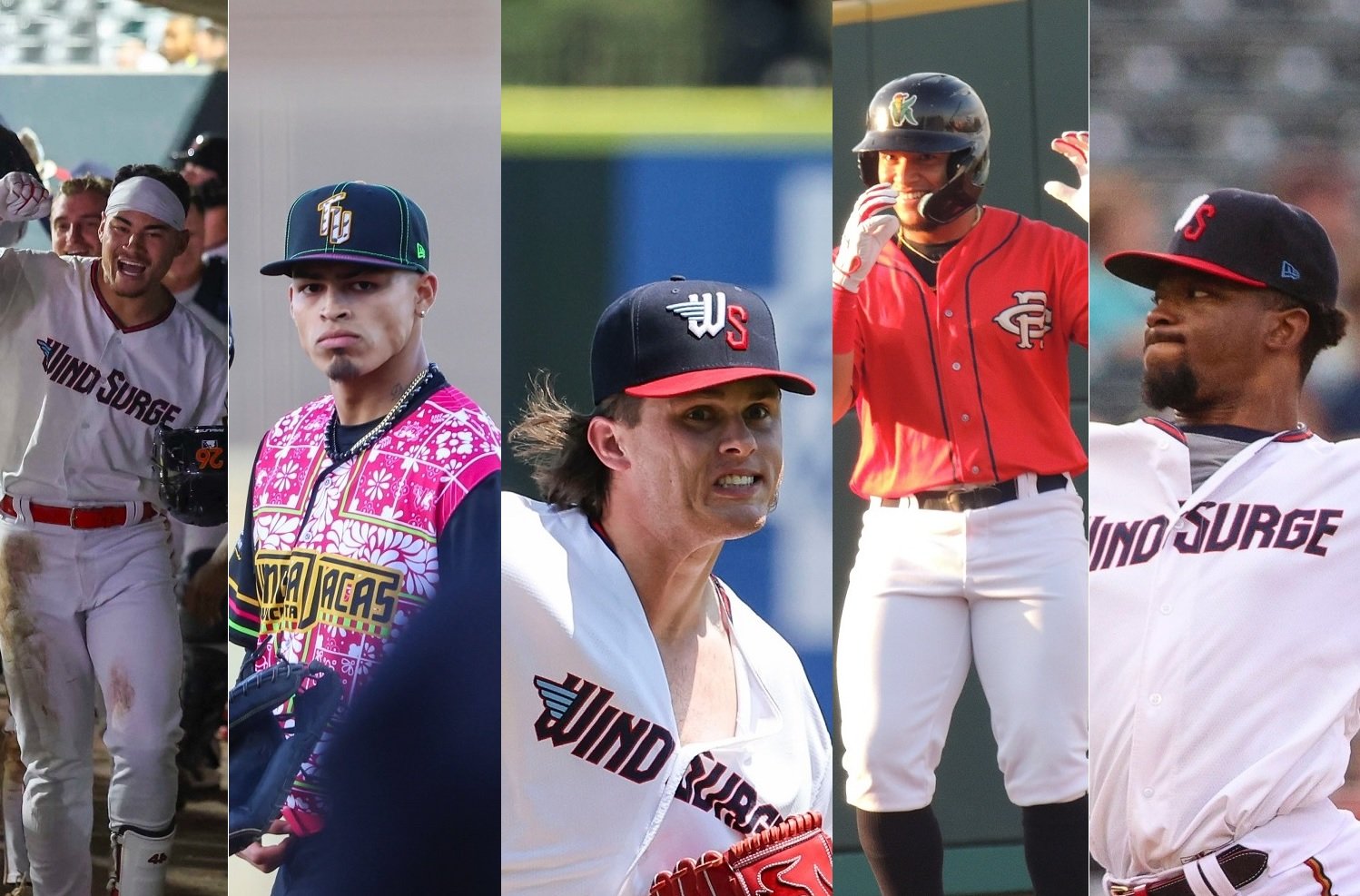 Every year, the Minnesota Twins add some players to their 40-man roster in order to protect them from being eligible for the Rule 5 draft in December. Each and every year, we as fans panic about who was left off of the 40-man roster and therefore could be lost to another organization. This year's selections will again create both scenarios. Let's start with the positive. The Minnesota Twins selected two right-handed pitchers and added their to the 40-man roster. They added Marco Raya and Travis Adams who both ended their season with the St. Paul Saints after spending most of the season with the Double-A Wichita Wind Surge. Marco Raya was the Twins fourth-round draft pick in the Covid-shortened 2020 draft. Since then, he has missed some time with arm issues but never significant enough for surgery. And when he has pitched, he has been very good. In 24 starts for the Wind Surge this year, he went 3-4 with a 4.27 ERA and a 1.38 WHIP. In 92 2/3 innings, he had 44 walks and 99 strikeouts. When the Surge season ended, he made one more start, his Triple-A debut. In that game, he worked five innings and did not allow a run. He gave up five hits, walked none and had four strikeouts. Raya is very young. He has been treated with kid gloves, and that has him on the brink of the big leagues. He was limited each of the past two years to just 50 or 60 pitches most outings. In his 25 starts, he threw exactly 70 pitches twice. In four other starts, he surpassed 60 pitches. As he continues to mature, those numbers could increase. The Twins were cautious with Bailey Ober in the minor leagues and into the big leagues, and that strategy appears to have worked with him. Also, as the game continues to change, it's possible that they will just look for him to throw 60-70 pitches every four or five days in a newfangled way of getting through nine innings every day. The other addition is right-hander Travis Adams. He was the Twins sixth-round pick in 2021 out of Sacramento State where he was known for his pinpoint control. He spent all of 2023 in Wichita where he went 4-10 with a 5.66 ERA and a 1.47 WHIP. In 109 2/3 innings, he gave up 118 hits, 43 walks and had 97 strikeouts. He remained in Wichita in 2024. He made 19 starts and worked out of the bullpen three times. He went 5-7 with a much-improved 3.67 ERA and 1.14 WHIP. Over 108 innings, he gave up 95 hits, 28 walks and recorded 109 strikeouts. He finished the season with four games (3 starts) in St. Paul. The 24-year old went 0-2 with a 5.21 ERA. Adams numbers are fairly pedestrian, but he does fit a mold for Twins pitchers. Since the draft, he has added significant velocity. He is now hitting 97 mph fairly regularly even as a starter. He also has solid breaking pitches and a willingness to adapt and be coachable and try out new pitches. He still has very good control. He also had one really big Save during spring training this year. Who Was Left Unprotected? As mentioned, many will spend far too many hours worrying about which players will be lost in the Rule 5 draft. There are certainly a few players that should or could have a chance to be selected. It just takes one team to have interest. The first name that most people will mention is Kala'i Rosario. The Twins fifth-round pick in 2020 out of Hawaii, he has incredible light-tower power. He missed two months this season with an elbow injury but certainly held his own at Double-A Wichita. The 22-year old hit .235/.321/.405 (.726) with 19 doubles and eight homers in 67 games for the Wind Surge. He did have 91 strikeouts in 299 plate appearances, so there is plenty of swing-and-miss. He he two home runs in his two rehab games before returning to the Surge. He then returned to the Arizona Fall League and hit .291/.383/.430 (.813) with a triple and three homers for the AFL champion Salt River Rafters. He is Twins Daily's #13 Twins prospect. There was some minimal concern about losing now-23-year-old Ricardo Olivar in the Rule 5 draft a year ago after the catcher-slash-outfielder had a breakout season in Fort Myers. He spent most of the 2024 season in Cedar Rapids. In 81 games, he hit .287/.393/.473 (.867) with 17 doubles, three triples, and 11 home runs. He earned a late-season promotion to Double-A Wichita. In 19 games, he hit .224/.325/.299 (.623) with two doubles and a homer. In his second game with the Wind Surge, he went 5-for-5 with two doubles. So you won't want to look at his numbers over those final 17 games, but Olivar has offensive potential. Defensively, he is solid behind the plate. He is also a good athlete... for a catcher. Yes, he has played some left field. He catches what he gets to, and obviously has a strong arm. He isn't likely to get a lot of playing time in the outfield in the big leagues. He returned to the Twins Daily Top 20 after this season at that #20 spot. Another catcher left unprotected is Patrick Winkel. The 24-year-old was the Twins ninth-round pick in 2021 out of Connecticut. Very solid behind the plate, but he hit just .228/.380/.362 (.642) with 16 doubles and seven homers in 78 games for the Saints this year. And there is also a trio of lefties that could be lost if the right (or wrong?) team is interested. They are all a little different. First, Jovani Moran has already shown what he can do in the big leagues when he is healthy. He came off of the Twins 40-man roster a year ago about this time and we learned he had Tommy John surgery. He could be ready around Opening Day to contribute. Could a team take a shot? Christian MacLeod was the Twins fifth-round pick in 2021 out of Mississippi State. He is a starting pitcher with solid pitches all around. He doesn't throw real hard, but he had a nice return to the mound in 2024 after coming back from Tommy John surgery in 2022. He began his season with 12 starts in Cedar Rapids. He went 3-1 with a 2.77 ERA and had 58 strikeouts in 48 2/3 innings. He moved up to Wichita where he was 1-2 with a 3.72 ERA in eight games (7 starts). He had 44 strikeouts in 38 2/3 innings. He made one spot-start for the Saints and gave up four earned runs in five innings but did have five strikeouts. Overall, he had an impressive 107 strikeouts in 92 1/3 innings, but he also had 46 walks. Jaylen Nowlin was the Twins 19th round pick in 2021 out of Chipola College. The 23-year-old lefty is blessed with a mid-90s fastball. He pitched in 21 games for Double-A Wichita this year and went 5-7 with a 4.67 ERA and 1.43 WHIP. In 96 1/3 innings, he had 97 strikeouts, but he had 48 walks. He also ended the season at St. Paul where he had two innings pitched over three appearances. When he's throwing strikes and forcing contact, he had more success. In a mid-June start, he gave up just one hit over eight scoreless innings. He had just four strikeouts but walked none. He needed just 84 pitches. Many believe his future is more likely in the bullpen. Who am I missing? Did the Twins protect the right players? The right amount of players? Who else might the Twins lose in the Rule 5 draft? Or, are you not worried at all? Remember, not only would a player need to be selected by another organization, but he would need to be offered back to the Twins if he doesn't stick with that team's big-league club all season.
- 53 comments
-
- 6
-
-
- travis adams
- marco raya
- (and 5 more)
-
I definitely agree with your general point that we make a huge deal about potentially losing a player since so few are taken and those that are taken rarely become stars. But... I think you'd also have to look at which position players were protected and how they're doing. Of course, another side of the conversation is that a ton of players get added way before they have to be. (Example, Zebby Matthews didn't have to be added until after the 2025 season.)
- 44 replies
-
- 1
-
-
- marco raya
- ricardo olivar
- (and 3 more)
-
Certainly. You see that a few times a year around the league.
- 44 replies
-
- 2
-
-
- marco raya
- ricardo olivar
- (and 3 more)
-
Here are my ratings and percentages for addition to the 40-man roster: 1.) RHP Marco Raya 100% Pretty easy call. 2.) C Ricardo Olivar 80% Dude can hit. He's solid behind the plate. Decent athlete. Very similar to Jair Camargo, without the power yet. Definitely not a catcher-slash-left fielder the way like Chris Herrmann was. If he plays OF in MLB, something went wrong on that day, but he can be out there. 3.) C Patrick Winkel 75% Gotta protect catchers, and as noted, with the likelihood that Vazquez gets dealt (I'm not ready for them to trade Jeffers!), having depth in the upper levels is huge. The Twins really love Winkel, especially behind the plate. Didn't hit a ton at St. Paul this year, but he is a capable offensive player. 4.) OF Kala'i Rosario 55% I think he will be added, but due to the swing-and-miss, the percentage drops a little closer to 50-50. But, he's got special power, and he's right-handed. He produces. 5.) LHP Jovani Moran 50% We know he's in Ft. Myers working his way back from Tommy John surgery which he had November 1, 2023. That really puts him at about 16-17 months post-surgery in spring training. He just might be ready to compete for an opening day spot. And, when healthy, and when throwing strikes, he can be devastating out of the bullpen. 6.) LHP Christian MacLeod 45% Another lefty, MacLeod returned from Tommy John surgery in 2023 and showed, especially in the second half of 2024, that he could be an intriguing prospect. Unlike Moran, Kody Funderburk, or the next guy on my list, MacLeod is a starting pitcher. He wouldn't be an opening day option, but by end of year, he could make himself a candidate for call up. 7.) LHP Jaylen Nowlin 25% Continuing the LHP them, Nowlin has started and he had come out of the bullpen. Earlier he racked up a lot of strikeouts. Not so much in 2024. But he's left handed and sits in the mid-90s. Plus, it's his turn... he played high school ball with Braves OF Michael Harris and A's OF Lawrence Butler, so maybe it's his turn to break out. 8.) RHP Travis Adams 10% While the numbers haven't always looked great, the stuff has a lot of potential. Adams has great control and he works 93-96 with the fastball. He's a starter, so he's got multiple pitches and can provided length. It's more a numbers game. I can't see the Twins adding more than 5-6 players, but I think Adams is one of a few guys who could see MLB time in 2025.
- 44 replies
-
- 9
-
-
- marco raya
- ricardo olivar
- (and 3 more)
-
What does that have to do with Rule 5 protection?
- 44 replies
-
- 12
-
-
- marco raya
- ricardo olivar
- (and 3 more)
-
Minor League Transactions (Offseason 2024-25)
Seth Stohs replied to Seth Stohs's topic in Twins Minor League Talk
Twins Re-Signed LHP Gabriel Yanez. He spent the season at Cedar Rapids. The 25-year-old went 4-4 with 10 saves. He had a 2.26 ERA and a 1.19 WHIP over 55 2/3 innings. He did well most of the season. He could potentially be a late bloomer. Or not, we'll see. -
Griffin Jax to Move to the Rotation?
Seth Stohs replied to Matthew Lenz's topic in Minnesota Twins Talk
I don't care what Jax did in his first 15 or 18 or however many/few starts as a rookie. He's a completely different pitcher now. But I tend to agree with the "why mess with success?" thinking. I wonder how he would have to change his approach to be able to throw 75-95 pitches in a game. He's so valuable out of the bullpen because he airs it out for 1 innings at a time. He thrives on that adrenaline. You just can't be that hyped for 4-6 innings as a starter. Just can't. So, I think there are challenges and concerns that are fair. -
With a tweet, Twins President Dave St. Peter announced that after 22 years in the organization, he is stepping down as team president and taking on an advisory role. The chain reaction will shift key responsibilities on the baseball side, too. Image courtesy of Brad Rempel-USA TODAY Sports A lot is happening in the Twins offices already this offseason. First, after a disappointing final six weeks, the team fired four of their MLB coaches. Next, it was announced that GM Thad Levine would not be back and is seeking other professional opportunities. Soon after that, the Pohlad family announced that they have started the process of selling the team. They have owned the franchise since 1984. And now, Dave St. Peter, the long-time team president, is stepping down after 22 seasons. St. Peter has been very active with the Twins and in the community. He actually began working for the Twins 35 years ago. In 1990, he started as an intern. He held jobs such as Pro Shop Manager, Communications Manager, VP of Corporate Communications, and Senior VP of Business Affairs. As president, he has been involved in the work to make Target Field a reality, to make it continue to be a stadium admired around the league for the fan experience, but also for its benefits to the environment. A native of North Dakota, he graduated from the University of North Dakota in 1989. New Roles For Falvey and Zoll St. Peter will transition to a Strategic Advisor role in the organization. Derek Falvey, who has served as President, Baseball Operations, will now be President, Baseball & Business Operations. Jeremy Zoll has been promoted from Vice President, Assistant General Manager to the role of Senior Vice President, General Manager. These moves are effective immediately. “Twins fans, players, staff and certainly our family are better for the 35 years that Dave St. Peter has brought his truly one-of-a-kind leadership to our team and community," wrote team chairman Joe Pohlad, in the family's statement. "I have had the good fortune to work alongside Dave for the past 18 years and experience firsthand how he leads with integrity, compassion and an unmatched dedication to our organization and fans. I will always admire Dave’s commitment to do right by the Twins." "Dave St. Peter is a very special person, friend and leader," said Jim Pohlad. "Our family and the Minnesota Twins would not be where we are without Dave's skill and lifelong commitment." Their praise was met by the same tone from the (essentially) demoted St. Peter, whose side of the organization has been mired in turmoil for multiple years recently. Amid a mishandled TV rights transition and multiple years of missed attendance targets, poor community engagement and frustration with the team's communication with its fans, this move might have been foreseeable, but St. Peter and the Pohlads have always seemed to operate as a unified front. That didn't change Tuesday. "I look forward to shifting into an advisory role for the family in the months to come, while I am equally excited about partnering with Joe and Derek Falvey to move our business forward and ensure a seamless transition," St. Peter said. "Derek has universal respect across our organization and industry, he is ready for this additional challenge and can help push the Twins to new heights. He is the right leader at the right time." The Pohlads and St. Peter were breathless in their expressed admiration for one another, and for Falvey, who becomes one of the few executives in baseball with top-level authority in both business and baseball decision-making. Ditto for Zoll, who came to the Twins organization seven years ago as the Director of Player Development after being part of the Dodgers organization. "I am tremendously excited to elevate Jeremy Zoll to the position of Senior Vice President, General Manager to help me lead our baseball operation,” said Falvey. “Jeremy has been an invaluable part of our leadership team, helping shape a player development system that is widely respected across the league. His relationships with our players and staff, from the majors through our minor league clubs, speak to his commitment to the Minnesota Twins organization and our people." Needless to say, this is a big change, even though the most salient fact for many fans—that Falvey is the top baseball decision-maker—will remain the same. The timing of the move seems conspicuous, amid the possible change in ownership and with St. Peter having been so safely ensconced in the job as recently as the announcement of the family's intention to sell. Now, at least, the team has clarity about its leadership structure heading into the hot stove season. Zoll is a promising front office luminary whose promotion will make it easier to keep him around, and Falvey's consolidated powers might give him more control over his own payroll budget in future seasons. In the meantime, this move underscores the extent to which a new era is afoot for the entire organization. View full article
-
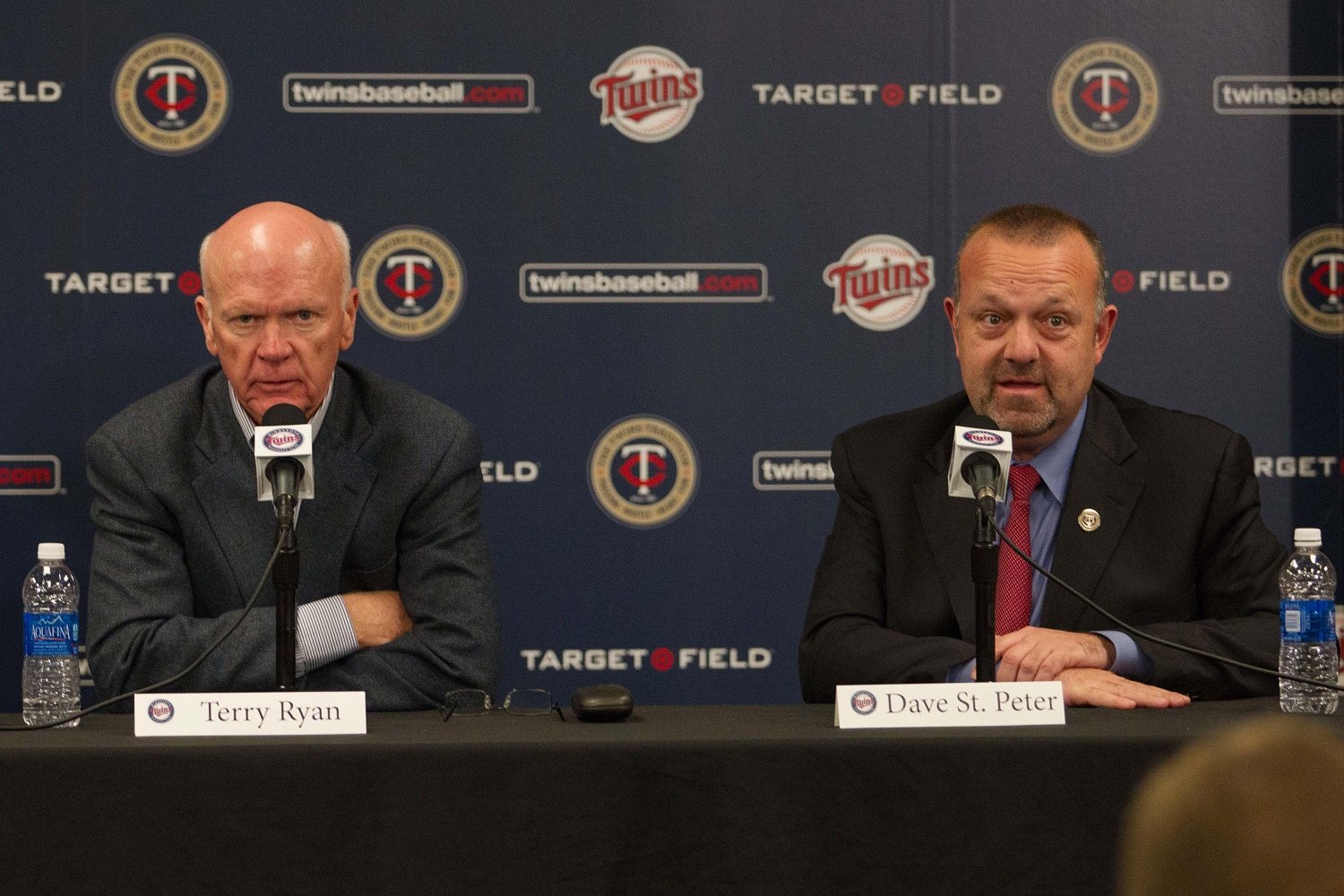 A lot is happening in the Twins offices already this offseason. First, after a disappointing final six weeks, the team fired four of their MLB coaches. Next, it was announced that GM Thad Levine would not be back and is seeking other professional opportunities. Soon after that, the Pohlad family announced that they have started the process of selling the team. They have owned the franchise since 1984. And now, Dave St. Peter, the long-time team president, is stepping down after 22 seasons. St. Peter has been very active with the Twins and in the community. He actually began working for the Twins 35 years ago. In 1990, he started as an intern. He held jobs such as Pro Shop Manager, Communications Manager, VP of Corporate Communications, and Senior VP of Business Affairs. As president, he has been involved in the work to make Target Field a reality, to make it continue to be a stadium admired around the league for the fan experience, but also for its benefits to the environment. A native of North Dakota, he graduated from the University of North Dakota in 1989. New Roles For Falvey and Zoll St. Peter will transition to a Strategic Advisor role in the organization. Derek Falvey, who has served as President, Baseball Operations, will now be President, Baseball & Business Operations. Jeremy Zoll has been promoted from Vice President, Assistant General Manager to the role of Senior Vice President, General Manager. These moves are effective immediately. “Twins fans, players, staff and certainly our family are better for the 35 years that Dave St. Peter has brought his truly one-of-a-kind leadership to our team and community," wrote team chairman Joe Pohlad, in the family's statement. "I have had the good fortune to work alongside Dave for the past 18 years and experience firsthand how he leads with integrity, compassion and an unmatched dedication to our organization and fans. I will always admire Dave’s commitment to do right by the Twins." "Dave St. Peter is a very special person, friend and leader," said Jim Pohlad. "Our family and the Minnesota Twins would not be where we are without Dave's skill and lifelong commitment." Their praise was met by the same tone from the (essentially) demoted St. Peter, whose side of the organization has been mired in turmoil for multiple years recently. Amid a mishandled TV rights transition and multiple years of missed attendance targets, poor community engagement and frustration with the team's communication with its fans, this move might have been foreseeable, but St. Peter and the Pohlads have always seemed to operate as a unified front. That didn't change Tuesday. "I look forward to shifting into an advisory role for the family in the months to come, while I am equally excited about partnering with Joe and Derek Falvey to move our business forward and ensure a seamless transition," St. Peter said. "Derek has universal respect across our organization and industry, he is ready for this additional challenge and can help push the Twins to new heights. He is the right leader at the right time." The Pohlads and St. Peter were breathless in their expressed admiration for one another, and for Falvey, who becomes one of the few executives in baseball with top-level authority in both business and baseball decision-making. Ditto for Zoll, who came to the Twins organization seven years ago as the Director of Player Development after being part of the Dodgers organization. "I am tremendously excited to elevate Jeremy Zoll to the position of Senior Vice President, General Manager to help me lead our baseball operation,” said Falvey. “Jeremy has been an invaluable part of our leadership team, helping shape a player development system that is widely respected across the league. His relationships with our players and staff, from the majors through our minor league clubs, speak to his commitment to the Minnesota Twins organization and our people." Needless to say, this is a big change, even though the most salient fact for many fans—that Falvey is the top baseball decision-maker—will remain the same. The timing of the move seems conspicuous, amid the possible change in ownership and with St. Peter having been so safely ensconced in the job as recently as the announcement of the family's intention to sell. Now, at least, the team has clarity about its leadership structure heading into the hot stove season. Zoll is a promising front office luminary whose promotion will make it easier to keep him around, and Falvey's consolidated powers might give him more control over his own payroll budget in future seasons. In the meantime, this move underscores the extent to which a new era is afoot for the entire organization.
- 86 comments
-
- 7
-
-
- dave st peter
- jeremy zoll
- (and 1 more)
-
Twins Trade Candidate Breakdown: Royce Lewis
Seth Stohs replied to Cody Christie's topic in Twins Daily Front Page News
There is approximately a 0.05% chance that the Twins trade Lewis. It's not happening and it shouldn't happen. But, it's still wise to have an article like this just to be able to discuss what the team might be able to get in return. -
Over the next couple of weeks, we will be counting down our Top 20 Twins Prospects. Today, we'll discuss 10 other players who received votes but fell just outside of the Top 20. Image courtesy of David Malamut (@MWLArchives on X) - photo of Rayne Doncon In the past, we have always waited until about February to update the Twins Daily Top 20 prospect rankings. However, there is no reason to wait until there to update our lists. This list contains players added to the organization (mostly from the draft) in the season's second half. We have also been able to see some of those 2024 draft picks make their (limited) professional debuts. We have likely read much more on the players selected. We also have more information on players who have been in the organization a little longer. Of course, several players also come off of our previous rankings due to graduation. Ultimately, the goal is to get these players to the big leagues and to be ready when they get there. This list is different in large part because three of the top seven prospects come off of the list. Brooks Lee, Zebby Matthews and David Festa come off the list as they have surpassed rookie limits in 2024. With the offseason now fully underway, several players are now out of the organization as minor league-free agents. For instance, the following players became free agents for the first time in their careers: pitchers Regi Grace, Miguel Rodriguez, Danny Moreno, Rafael Marcano, Gabriel Yanez, catchers Chris Williams and Wilfri Castro, and outfielders Agustin Ruiz and Carlos Aguiar. In addition, the Twins signed first baseman Rixon Wingrove days after the Phillies released him in late May. He had originally signed with Philadelphia in 2018 from Australia. The Twins could bring some of them back, as they did with lefty Samuel Perez. If they sign back with the Twins, they can be eligible for this list again. But you want to see which 10 players fell just outside of our top 20. Let's do that. Who is Next? In the case that someone from the Top 20 gets traded, or is otherwise unable to fulfill his duties, who would fill that #20 spot? Well, surprisingly, this is actually not a singular answer. In the voting, first baseman Yunior Severino came in at #21. In 2023, he hit a minor-league leading 35 home runs between Double-A and Triple-A. He spent the full season at St. Paul in 2024. He started out very slow, but in 128 total games, he hit .254/.342/.434 (.775) with 21 doubles and 21 home runs. However, he also had 154 strikeouts in 565 plate appearances (27.3%). Last week, the Twins took him off of their 40-man roster. He went unclaimed and was outrighted to St. Paul. Because he originally signed with Atlanta way back in July of 2016, he was able to become a free agent and did just that. So, our actual #21 is going to be infielder Rayne Doncon. The 21-year-old came to the Twins from the Dodgers last offseason, along with Manuel Margot, in exchange for shortstop prospect Noah Miller. The Dominican started the season with Fort Myers. In 38 games, he hit .283/.374/.464 (.838). Soon after an IL stint, he moved up to Cedar Rapids where, in 56 games, he hit .235/.320/.410 (.730). Combined, he hit 24 doubles, three triples, and 11 home runs. data:image/gif;base64,R0lGODlhAQABAPABAP///wAAACH5BAEKAAAALAAAAAABAAEAAAICRAEAOw== Prospect Story of the Year Payton Eeles went from unknown, early-season, minor-league signing from an independent league, a placeholder needed, in part, because the Twins have been very pitcher-heavy in recent drafts. Eeles has an incredible story. The 5-5 infielder spent four years at Division II Cedarville University (Ohio). As a graduate senior, he chose to attend Division I Coastal Carolina where he hit .374/.500/.492 (.992) with 17 doubles and four homers. Yet, he again went undrafted. He spent that summer with the American Association's Chicago Dogs. He began the 2024 season with the Atlantic League's Southern Maryland Blue Crabs but after just six games, the Twins signed him. He began at Fort Myers and, in 34 games, he hit .331/.448/.517 (.965). He earned a promotion to High-A Cedar Rapids and hit .275/.473/.425 (.898) in just 13 games. At that point, the Twins had several injuries and needed to take several infielders from the Saints. Eeles was moved direct to Triple-A, presumably just to help fill the lineup with solid defense and competent plate appearance until reinforcements arrived (either back from the Twins or in minor-league trades). However, Eeles played so well that he kept himself in the lineup nearly every day, often hitting at the top of the lineup. In 64 Saints games, he hit .299/.419/.500 (.919). Combined, in 111 games, he hit .307/.435/.497 (.932) with 19 doubles, eight triples, 12 homers and 60 RBI. He also was 41-for-51 in stolen base attempts. data:image/gif;base64,R0lGODlhAQABAPABAP///wAAACH5BAEKAAAALAAAAAABAAEAAAICRAEAOw== One year ago at this time, Payton Eeles was trying to find a team to play for, likely in an independent league. As of right now, he finds himself a 40-man roster spot and one call away from the big leagues. What a story! And, to be fair to our voters and others who rank prospects... if we're being honest, it's hard to know exactly where he should be ranked. With Severino removed from the rankings, we currently have Eeles at #22. Prospect Story of the Year 2 Eeles and Carson McCusker are very different players. Eeles stands 5-5 while McCusker measures in at 6-8. Eeles has elite on-base skills and plus speed. McCusker has elite power (and some of the best exit velocities in minor-league baseball). Eeles is a line-drive, contact hitter. McCusker strikes out a lot, but did we mention he crushes baseballs when he does make contact? McCusker was drafted in the 26th round pick of the Milwaukee Brewers in 2017 out of Folsom Lake College. Instead of signing, he chose to play for Robin Ventura at Oklahoma State where his hitting coach was Matt Holliday for a couple of years. Despite a solid college career, he went undrafted. He played for for Tri-City in the independent Frontier League in 2021, 2022, and that is where he began the 2023 season. Upon joining the organization, he went to Fort Myers for 25 games and hit seven homers. In 21 games in Cedar Rapids, he hit another seven home runs. McCusker ranks #28. data:image/gif;base64,R0lGODlhAQABAPABAP///wAAACH5BAEKAAAALAAAAAABAAEAAAICRAEAOw== He began the 2024 season at Double-A Wichita. In 98 games, he hit .281/.357/.489 (.846) with 26 doubles and 15 home runs. He earned a late-season promotion to St. Paul where he hit .286/.337/.484 (.820) with four doubles and four homers in 24 games. Overall, he had 150 strikeouts in 518 plate appearances (29.0%). With his height, the obvious player comp is former Brewers All Star Richie Sexson who hit a lot of homers and struck out a lot. If he have a similar career. Granted, Sexson debuted at 22 years old while McCusker signed with the Twins in his age 25 season. Finally... DaShawn Keirsey set single-season Saints records in hits, triples, and RBI. He showed on base skills and he hit for power. All the while, he has played tremendous defense in center field. In September, he finally got The Call. He played in just six games, he had a couple of great defensive plays and in the final game of the season, he launched his first big-league home run. He comes in as the #27 Twins prospect. Maybe it is because he turned 27 in May. Or maybe it is, in part, because he is viewed as a #4 outfield, mostly a defensive specialist and pinch running option, but his 2024 season should show that he is potentially capable of being more if needed. data:image/gif;base64,R0lGODlhAQABAPABAP///wAAACH5BAEKAAAALAAAAAABAAEAAAICRAEAOw== Don't Forget About Me... I believe. I still believe. I believe that Matt Canterino will still have a very good major-league career. Sure, with health, maybe he would have been able to debut by age 24. Instead, Canterino has throw just 85 innings in professional baseball since signing in 2019 after being the Twins second-round pick out of Rice University. When he has pitched, he has been dominant. In 2021, he had 43 strikeouts in just 21 innings. In 2022, he had a combined 54 strikeouts in 37 innings. When he got some opportunities to pitch in spring training 2024 games, he dominated. data:image/gif;base64,R0lGODlhAQABAPABAP///wAAACH5BAEKAAAALAAAAAABAAEAAAICRAEAOw== However, injuries have cost him a lot of time. He missed much of the 2021 season rehabbing. In 2022, they tried a plan of slowly increasing his innings - similar to what they have done with Marco Raya. Unfortunately, his arm still wasn't right and late in that summer, he had Tommy John which cost him the 2023 season as well. He looked ready to go this spring, hitting 97 with the fastball and showing potentially-dominant secondary pitches. Unfortunately, late in spring training, his shoulder bothered him, so they slowed down his return. A nagging shoulder strain lasted through most of the season. No, he didn't have surgery, and he again heads into the offseason healed and ready and excited for spring training. Maybe he won't become a top-of-rotation starter, but he can certainly still become a dominant back-of-the-bullpen option. He will spent the entire 2025 season at age 27. Maybe there is a potential mid-season call up, and he can figure out a way to stay healthy in the bullpen for six years, or more. We can hope. I will hope. For now, he remains in our Top 30, sitting at #26. We've Seen That Name Before... Outfielder Jose Rodriguez arrived on the Twins seen in January of 2022 when he signed from the Dominican Republic. He made his pro debut that summer in the Dominican Summer League where, in 55 games, he hit .290/.361/.605 (.966) with 15 doubles, three triples and 13 home runs. After the showing, he showed up on several Twins Top 20 lists. He came to the States as an 18-year-old in 2023. In 49 games, he hit .262/.325/.412 (.737) with 10 doubles and six home runs. Not great, but certainly more than held his own. He showed the Twins brass enough that they pushed him up to Low-A Fort Myers in 2024. In 43 games, he struggled and hit just .178/.235/.319 (.554) with eight doubles and five home runs. He missed most of June, all of July and half of August with an injury. But he did still have some really exciting moments, and he's still got a ton of potential. data:image/gif;base64,R0lGODlhAQABAPABAP///wAAACH5BAEKAAAALAAAAAABAAEAAAICRAEAOw== A Right-Handed Luis Arraez? The Twins signed infielder Dameury Pena in January of 2023. He debuted that summer in the DSL where he hit .382/.453/.496 (.949) with eight doubles and three triples in 39 games as a 17-year-old. He came to the States in 2024 and in 36 FCL games, he hit .282/.386/.410 (.796) with four doubles, a triple and three home runs. Over his two seasons, he has 33 walks and just 18 strikeouts. Pena is a line-drive, whole-field hitter who has a knack for finding barrels. Again, he held his own in his transition to the States and should get the opportunity to join the Mussels in 2025. Ending the Season Strong! The Twins signed shortstop Daiber De Los Santos in January to a bonus just shy of $1.9 million, the highest by the Twins in 2024. The Dominican turned 18 in early October. He made his pro debut in the DSL this year. In 47 games, he hit .301/.384/.460 (.844) with 11 doubles, a triple, and five home runs. Of course, the further from the big leagues a player is, the less stats matter and the more tools and potential will be mentioned. De Los Santos has the tools. He was signed as a shortstop, and that's where he made 39 of his 47 starts. He played three games each at second base, third base and in center field. He's got the speed, the range, the arm. He had 15 errors, but a .912 fielding percentage at shortstop in the DSL is encouraging. Offensively, you can see the average. He showed solid on-base skills in his pro debut, and he hit with a bit of pop. All encouraging, but obviously there's a long way to go. data:image/gif;base64,R0lGODlhAQABAPABAP///wAAACH5BAEKAAAALAAAAAABAAEAAAICRAEAOw== On the season, he had 14 multi-hit games. Seven came in just 12 games played in September. He ended the season with an eight-game hitting streak and had multiple hits in six of the last seven games. In the team's second-to-last (penultimate, if you prefer) game, he went 3-for-5. In the season's final game, he went 5-for-5 to put his batting average over .300 for the season. He crushed left-handed pitching, hitting .405 (1.193) off of them. His OPS in those 12 August games was 1.070 with a .431 average. The sky is the limit. He ranks #24. We Hardly Know Ye In the second round of the 2024 MLB draft, the Minnesota Twins selected third baseman Billy Amick out of the University of Tennessee. A South Carolina native, he stayed in-state and went to Clemson to begin his college career. In 2022, he played in just nine games as a freshman. He came back for his sophomore season in 2023 and in 46 games he hit .413/.464/.773 (1.236) with 17 doubles, two triples, and 13 home runs. For his junior season, he transferred to the University of Tennessee. In 65 games, he hit .306/.387/.639 (1.026) with 14 doubles and 23 home runs. He helped lead the Volunteers to the 2024 College World Series championship. data:image/gif;base64,R0lGODlhAQABAPABAP///wAAACH5BAEKAAAALAAAAAABAAEAAAICRAEAOw== After signing with the Twins, he played in 18 games for the Fort Myers Mighty Mussels. He hit .222/.351/.413 (.763) with three doubles and three home runs. He went on the Injured List for the final week of the season. Not an overly impressive debut, but 18 games at the end of the season after not playing for a month or so are pretty meaningless to the big picture. The assumption is that Amick will start 2025 in Cedar Rapids. He should hit in the middle of their lineup and provide a ton of power, doubles and homers. He came in at #23 in our rankings. So there you have it, a quick look at the 10 Twins prospects who received votes but fell outside of the Top 20. Again, Yunior Severino would have been #21, but he is currently a free agent. #29: 2B Dameury Pena, #28: Carson McCusker, #27: OF DaShawn Keirsey, #26: RHP Matt Canterino, #25: OF Jose Rodriguez, #24: SS Daiber De Los Santos, #23: 3B Billy Amick, #22: IF Payton Eeles, #21: IF Rayne Doncon. Please feel free to discuss these players and ask any questions you like. View full article
- 13 replies
-
- 1
-
-
- payton eeles
- carson mccusker
- (and 5 more)
-
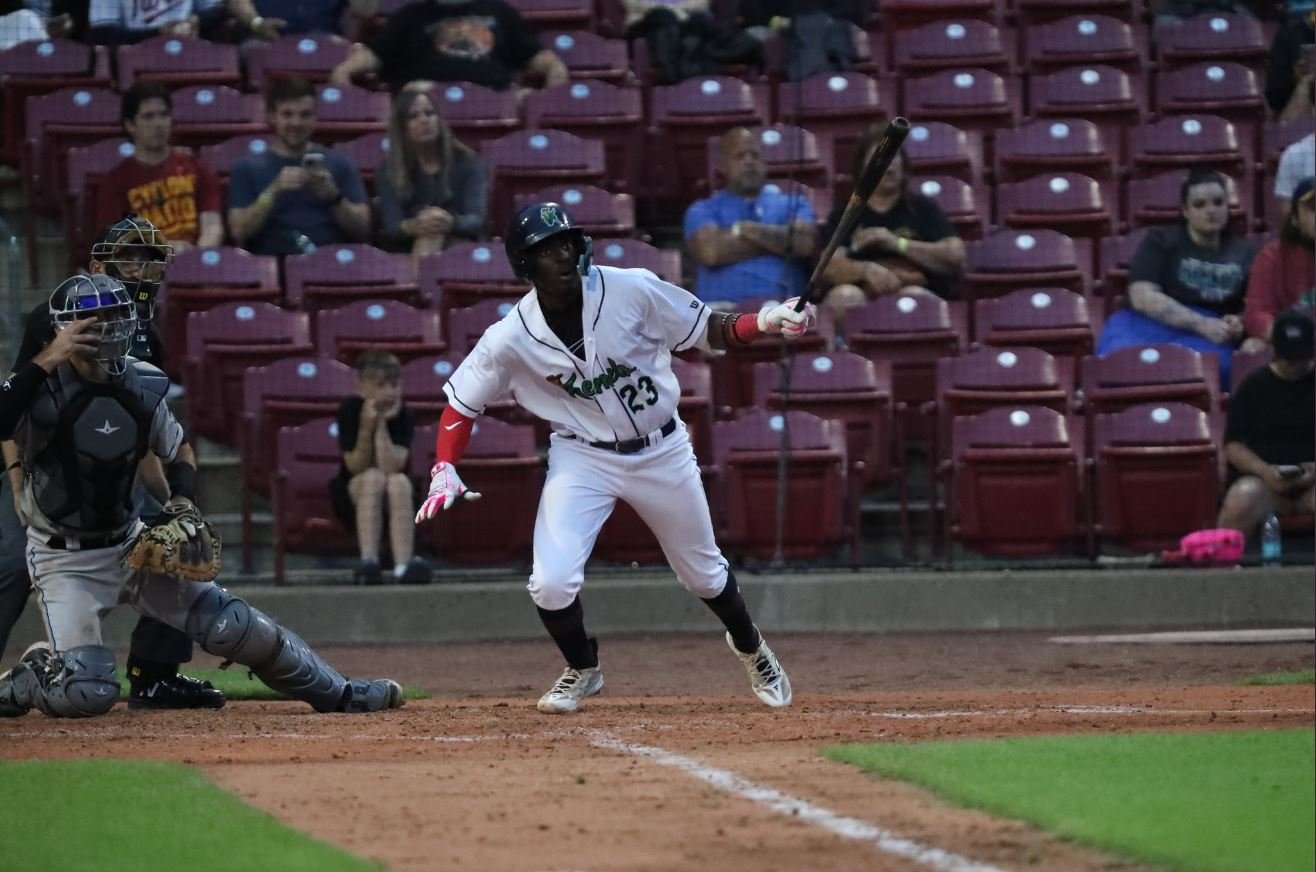 In the past, we have always waited until about February to update the Twins Daily Top 20 prospect rankings. However, there is no reason to wait until there to update our lists. This list contains players added to the organization (mostly from the draft) in the season's second half. We have also been able to see some of those 2024 draft picks make their (limited) professional debuts. We have likely read much more on the players selected. We also have more information on players who have been in the organization a little longer. Of course, several players also come off of our previous rankings due to graduation. Ultimately, the goal is to get these players to the big leagues and to be ready when they get there. This list is different in large part because three of the top seven prospects come off of the list. Brooks Lee, Zebby Matthews and David Festa come off the list as they have surpassed rookie limits in 2024. With the offseason now fully underway, several players are now out of the organization as minor league-free agents. For instance, the following players became free agents for the first time in their careers: pitchers Regi Grace, Miguel Rodriguez, Danny Moreno, Rafael Marcano, Gabriel Yanez, catchers Chris Williams and Wilfri Castro, and outfielders Agustin Ruiz and Carlos Aguiar. In addition, the Twins signed first baseman Rixon Wingrove days after the Phillies released him in late May. He had originally signed with Philadelphia in 2018 from Australia. The Twins could bring some of them back, as they did with lefty Samuel Perez. If they sign back with the Twins, they can be eligible for this list again. But you want to see which 10 players fell just outside of our top 20. Let's do that. Who is Next? In the case that someone from the Top 20 gets traded, or is otherwise unable to fulfill his duties, who would fill that #20 spot? Well, surprisingly, this is actually not a singular answer. In the voting, first baseman Yunior Severino came in at #21. In 2023, he hit a minor-league leading 35 home runs between Double-A and Triple-A. He spent the full season at St. Paul in 2024. He started out very slow, but in 128 total games, he hit .254/.342/.434 (.775) with 21 doubles and 21 home runs. However, he also had 154 strikeouts in 565 plate appearances (27.3%). Last week, the Twins took him off of their 40-man roster. He went unclaimed and was outrighted to St. Paul. Because he originally signed with Atlanta way back in July of 2016, he was able to become a free agent and did just that. So, our actual #21 is going to be infielder Rayne Doncon. The 21-year-old came to the Twins from the Dodgers last offseason, along with Manuel Margot, in exchange for shortstop prospect Noah Miller. The Dominican started the season with Fort Myers. In 38 games, he hit .283/.374/.464 (.838). Soon after an IL stint, he moved up to Cedar Rapids where, in 56 games, he hit .235/.320/.410 (.730). Combined, he hit 24 doubles, three triples, and 11 home runs. data:image/gif;base64,R0lGODlhAQABAPABAP///wAAACH5BAEKAAAALAAAAAABAAEAAAICRAEAOw== Prospect Story of the Year Payton Eeles went from unknown, early-season, minor-league signing from an independent league, a placeholder needed, in part, because the Twins have been very pitcher-heavy in recent drafts. Eeles has an incredible story. The 5-5 infielder spent four years at Division II Cedarville University (Ohio). As a graduate senior, he chose to attend Division I Coastal Carolina where he hit .374/.500/.492 (.992) with 17 doubles and four homers. Yet, he again went undrafted. He spent that summer with the American Association's Chicago Dogs. He began the 2024 season with the Atlantic League's Southern Maryland Blue Crabs but after just six games, the Twins signed him. He began at Fort Myers and, in 34 games, he hit .331/.448/.517 (.965). He earned a promotion to High-A Cedar Rapids and hit .275/.473/.425 (.898) in just 13 games. At that point, the Twins had several injuries and needed to take several infielders from the Saints. Eeles was moved direct to Triple-A, presumably just to help fill the lineup with solid defense and competent plate appearance until reinforcements arrived (either back from the Twins or in minor-league trades). However, Eeles played so well that he kept himself in the lineup nearly every day, often hitting at the top of the lineup. In 64 Saints games, he hit .299/.419/.500 (.919). Combined, in 111 games, he hit .307/.435/.497 (.932) with 19 doubles, eight triples, 12 homers and 60 RBI. He also was 41-for-51 in stolen base attempts. data:image/gif;base64,R0lGODlhAQABAPABAP///wAAACH5BAEKAAAALAAAAAABAAEAAAICRAEAOw== One year ago at this time, Payton Eeles was trying to find a team to play for, likely in an independent league. As of right now, he finds himself a 40-man roster spot and one call away from the big leagues. What a story! And, to be fair to our voters and others who rank prospects... if we're being honest, it's hard to know exactly where he should be ranked. With Severino removed from the rankings, we currently have Eeles at #22. Prospect Story of the Year 2 Eeles and Carson McCusker are very different players. Eeles stands 5-5 while McCusker measures in at 6-8. Eeles has elite on-base skills and plus speed. McCusker has elite power (and some of the best exit velocities in minor-league baseball). Eeles is a line-drive, contact hitter. McCusker strikes out a lot, but did we mention he crushes baseballs when he does make contact? McCusker was drafted in the 26th round pick of the Milwaukee Brewers in 2017 out of Folsom Lake College. Instead of signing, he chose to play for Robin Ventura at Oklahoma State where his hitting coach was Matt Holliday for a couple of years. Despite a solid college career, he went undrafted. He played for for Tri-City in the independent Frontier League in 2021, 2022, and that is where he began the 2023 season. Upon joining the organization, he went to Fort Myers for 25 games and hit seven homers. In 21 games in Cedar Rapids, he hit another seven home runs. McCusker ranks #28. data:image/gif;base64,R0lGODlhAQABAPABAP///wAAACH5BAEKAAAALAAAAAABAAEAAAICRAEAOw== He began the 2024 season at Double-A Wichita. In 98 games, he hit .281/.357/.489 (.846) with 26 doubles and 15 home runs. He earned a late-season promotion to St. Paul where he hit .286/.337/.484 (.820) with four doubles and four homers in 24 games. Overall, he had 150 strikeouts in 518 plate appearances (29.0%). With his height, the obvious player comp is former Brewers All Star Richie Sexson who hit a lot of homers and struck out a lot. If he have a similar career. Granted, Sexson debuted at 22 years old while McCusker signed with the Twins in his age 25 season. Finally... DaShawn Keirsey set single-season Saints records in hits, triples, and RBI. He showed on base skills and he hit for power. All the while, he has played tremendous defense in center field. In September, he finally got The Call. He played in just six games, he had a couple of great defensive plays and in the final game of the season, he launched his first big-league home run. He comes in as the #27 Twins prospect. Maybe it is because he turned 27 in May. Or maybe it is, in part, because he is viewed as a #4 outfield, mostly a defensive specialist and pinch running option, but his 2024 season should show that he is potentially capable of being more if needed. data:image/gif;base64,R0lGODlhAQABAPABAP///wAAACH5BAEKAAAALAAAAAABAAEAAAICRAEAOw== Don't Forget About Me... I believe. I still believe. I believe that Matt Canterino will still have a very good major-league career. Sure, with health, maybe he would have been able to debut by age 24. Instead, Canterino has throw just 85 innings in professional baseball since signing in 2019 after being the Twins second-round pick out of Rice University. When he has pitched, he has been dominant. In 2021, he had 43 strikeouts in just 21 innings. In 2022, he had a combined 54 strikeouts in 37 innings. When he got some opportunities to pitch in spring training 2024 games, he dominated. data:image/gif;base64,R0lGODlhAQABAPABAP///wAAACH5BAEKAAAALAAAAAABAAEAAAICRAEAOw== However, injuries have cost him a lot of time. He missed much of the 2021 season rehabbing. In 2022, they tried a plan of slowly increasing his innings - similar to what they have done with Marco Raya. Unfortunately, his arm still wasn't right and late in that summer, he had Tommy John which cost him the 2023 season as well. He looked ready to go this spring, hitting 97 with the fastball and showing potentially-dominant secondary pitches. Unfortunately, late in spring training, his shoulder bothered him, so they slowed down his return. A nagging shoulder strain lasted through most of the season. No, he didn't have surgery, and he again heads into the offseason healed and ready and excited for spring training. Maybe he won't become a top-of-rotation starter, but he can certainly still become a dominant back-of-the-bullpen option. He will spent the entire 2025 season at age 27. Maybe there is a potential mid-season call up, and he can figure out a way to stay healthy in the bullpen for six years, or more. We can hope. I will hope. For now, he remains in our Top 30, sitting at #26. We've Seen That Name Before... Outfielder Jose Rodriguez arrived on the Twins seen in January of 2022 when he signed from the Dominican Republic. He made his pro debut that summer in the Dominican Summer League where, in 55 games, he hit .290/.361/.605 (.966) with 15 doubles, three triples and 13 home runs. After the showing, he showed up on several Twins Top 20 lists. He came to the States as an 18-year-old in 2023. In 49 games, he hit .262/.325/.412 (.737) with 10 doubles and six home runs. Not great, but certainly more than held his own. He showed the Twins brass enough that they pushed him up to Low-A Fort Myers in 2024. In 43 games, he struggled and hit just .178/.235/.319 (.554) with eight doubles and five home runs. He missed most of June, all of July and half of August with an injury. But he did still have some really exciting moments, and he's still got a ton of potential. data:image/gif;base64,R0lGODlhAQABAPABAP///wAAACH5BAEKAAAALAAAAAABAAEAAAICRAEAOw== A Right-Handed Luis Arraez? The Twins signed infielder Dameury Pena in January of 2023. He debuted that summer in the DSL where he hit .382/.453/.496 (.949) with eight doubles and three triples in 39 games as a 17-year-old. He came to the States in 2024 and in 36 FCL games, he hit .282/.386/.410 (.796) with four doubles, a triple and three home runs. Over his two seasons, he has 33 walks and just 18 strikeouts. Pena is a line-drive, whole-field hitter who has a knack for finding barrels. Again, he held his own in his transition to the States and should get the opportunity to join the Mussels in 2025. Ending the Season Strong! The Twins signed shortstop Daiber De Los Santos in January to a bonus just shy of $1.9 million, the highest by the Twins in 2024. The Dominican turned 18 in early October. He made his pro debut in the DSL this year. In 47 games, he hit .301/.384/.460 (.844) with 11 doubles, a triple, and five home runs. Of course, the further from the big leagues a player is, the less stats matter and the more tools and potential will be mentioned. De Los Santos has the tools. He was signed as a shortstop, and that's where he made 39 of his 47 starts. He played three games each at second base, third base and in center field. He's got the speed, the range, the arm. He had 15 errors, but a .912 fielding percentage at shortstop in the DSL is encouraging. Offensively, you can see the average. He showed solid on-base skills in his pro debut, and he hit with a bit of pop. All encouraging, but obviously there's a long way to go. data:image/gif;base64,R0lGODlhAQABAPABAP///wAAACH5BAEKAAAALAAAAAABAAEAAAICRAEAOw== On the season, he had 14 multi-hit games. Seven came in just 12 games played in September. He ended the season with an eight-game hitting streak and had multiple hits in six of the last seven games. In the team's second-to-last (penultimate, if you prefer) game, he went 3-for-5. In the season's final game, he went 5-for-5 to put his batting average over .300 for the season. He crushed left-handed pitching, hitting .405 (1.193) off of them. His OPS in those 12 August games was 1.070 with a .431 average. The sky is the limit. He ranks #24. We Hardly Know Ye In the second round of the 2024 MLB draft, the Minnesota Twins selected third baseman Billy Amick out of the University of Tennessee. A South Carolina native, he stayed in-state and went to Clemson to begin his college career. In 2022, he played in just nine games as a freshman. He came back for his sophomore season in 2023 and in 46 games he hit .413/.464/.773 (1.236) with 17 doubles, two triples, and 13 home runs. For his junior season, he transferred to the University of Tennessee. In 65 games, he hit .306/.387/.639 (1.026) with 14 doubles and 23 home runs. He helped lead the Volunteers to the 2024 College World Series championship. data:image/gif;base64,R0lGODlhAQABAPABAP///wAAACH5BAEKAAAALAAAAAABAAEAAAICRAEAOw== After signing with the Twins, he played in 18 games for the Fort Myers Mighty Mussels. He hit .222/.351/.413 (.763) with three doubles and three home runs. He went on the Injured List for the final week of the season. Not an overly impressive debut, but 18 games at the end of the season after not playing for a month or so are pretty meaningless to the big picture. The assumption is that Amick will start 2025 in Cedar Rapids. He should hit in the middle of their lineup and provide a ton of power, doubles and homers. He came in at #23 in our rankings. So there you have it, a quick look at the 10 Twins prospects who received votes but fell outside of the Top 20. Again, Yunior Severino would have been #21, but he is currently a free agent. #29: 2B Dameury Pena, #28: Carson McCusker, #27: OF DaShawn Keirsey, #26: RHP Matt Canterino, #25: OF Jose Rodriguez, #24: SS Daiber De Los Santos, #23: 3B Billy Amick, #22: IF Payton Eeles, #21: IF Rayne Doncon. Please feel free to discuss these players and ask any questions you like.
- 13 comments
-
- 9
-
-
- payton eeles
- carson mccusker
- (and 5 more)
-
Carlos Correa Trade Buzz Is Heating Up
Seth Stohs replied to Nick Nelson's topic in Twins Daily Front Page News
Gotta make that phone call... and if so, gotta start the conversation with Luis Gil... and then you ask for Jasson Dominguez and "settle" for either Spencer Jones or George Lombard... and then add two flyers from the lower levels. -
Outfielder DaShawn Keirsey put together a record-breaking season with the St. Paul Saints which earned him his first promotion to the Minnesota Twins. Seth chatted with him after the season about his terrific 2024 season. Image courtesy of Sep 29, 2024; Minneapolis, Minnesota, USA; Minnesota Twins center fielder DaShawn Keirsey Jr. (89) celebrates his first career home run with third base coach Tommy Watkins (40) as he runs the bases during the third inning against the Baltimore Orioles at Target Field. Mandatory Credit: Matt Krohn-Imagn Images The Minnesota Twins selected outfielder DaShawn Keirsey out of the University of Utah in the 2018 MLB draft. The path to the big leagues was complete with peaks and valleys, winding left and right. After missing time early in his career with injuries, Keirsey has been healthy the last few seasons and with that, he has really elevated his play. He put together a terrific season in St. Paul. In 111 games, he hit .300/.368/.476 (.845) with 22 doubles, seven triples, 14 home runs, and 81 RBI. He also stole 36 bases. The triples and RBI were single-season Saints records, while his 133 hits also set the new mark for the Twins Triple-A affiliate. In early September, the Twins placed Max Kepler on the Injured List and called up Keirsey. He played in five games in center field before Byron Buxton returned, and Keirsey was optioned. On the final day of the season, Keirsey was called back up to play in that game. He recorded the first home run of his career. Recently, I chatted with the athletic 27 year old from southern California about his whole season. Here are some of the highlights. 1:20: Excited for Michael Helman. Assumed that he wasn't going to get called up. Two days later, he unexpectedly received The Call. Find out how he found out. 4:00: What kind of support did he get from the guys in the Saints clubhouse, from his Twins teammates, the coaching staffs, and from past teammates? 6:40: Keirsey was an official non-roster invite to Twins spring training in 2024. What was the experience like, anything stand out from the veterans or others? 8:15: He started the season fast, offensively. He was hitting anywhere in the Top 5 of the lineup, providing on-base skills and enough power. Was there something that just clicked technically with his swing or with his approach? 9:44: What mechanical change did he observe from Royce Lewis and the two worked on together that he also thinks helped his overall offensive game? 13:25: We watched one of Keirsey's at-bats and discussed his thought process on the AB. He spoke of committing himself to have an approach going into every single plate appearance. 16:00: Like Max Kepler in his last couple of minor-league seasons, Keirsey filled up the stat sheet. He is an all-around player, something he has always wanted to be. Keirsey considers himself an athlete who can play baseball. 20:00: He can play a great center field, but he has also spent a lot of time playing in the corners. When he was younger, he didn't like playing the corners, but now he is really glad that he has had plenty of time at both corners. 23:10: Who were the first phone calls when you got The Call? 26:10: Calling his dad was a huge, emotional deal. When he didn't get called up right away in September, they weren't expecting the call three days later, which might have made it even more special. 27:20: MLB debut in Tampa. He came in as a defensive replacement in center field late in the game. Immediately the ball found him. He had to run a LONG ways to try to catch the ball. He almost made the catch, a back-hand attempt in which the ball hit his glove and his glove hit the wall simultaneously. He later found out that the odds of that ball being caught was 0% 29:30: We look at a diving catch that he made in support of Pablo Lopez at Target Field. We discussed reaction and getting a good jump and the mentality to do what's needed. 32:00: With so many young players and the team's philosophy on platooning, did he know his role coming to the club? 34:05: Do you know who Keirsey got his first MLB hit off of? Does he? (also, here Keirsey mention the comedy of Matt Wallner for the second time.) 36:25: Do you remember who Keirsey hit his first home run off of? Do you think he did? His memory of that moment are pretty special too. Just as important, the support and the love that he got from his teammates meant the world. 39:30: We dig deeper into the timing mechanism that he worked with Royce Lewis on during spring training. "I'm not doing it for the looks. I'm doing it for the functionality." 41:03: Have you had a chance to reflect on the season? Did he have a moment when it all just sunk in? 44:30: Any fun offseason plans? Travel? "I live in a place that most people come to vacation." I hope you enjoyed the back-and-forth conversation. It was a lot of fun to live vicariously through Keirsey's memories from his 2024 season. Keirsey has previously done interviews for Twins Daily: March 3, 2021: Twins Spotlight (Get to Know 'Em) June 27, 2023: DaShawn Keirsey: Twins Most Underrated Prospect View full article
-
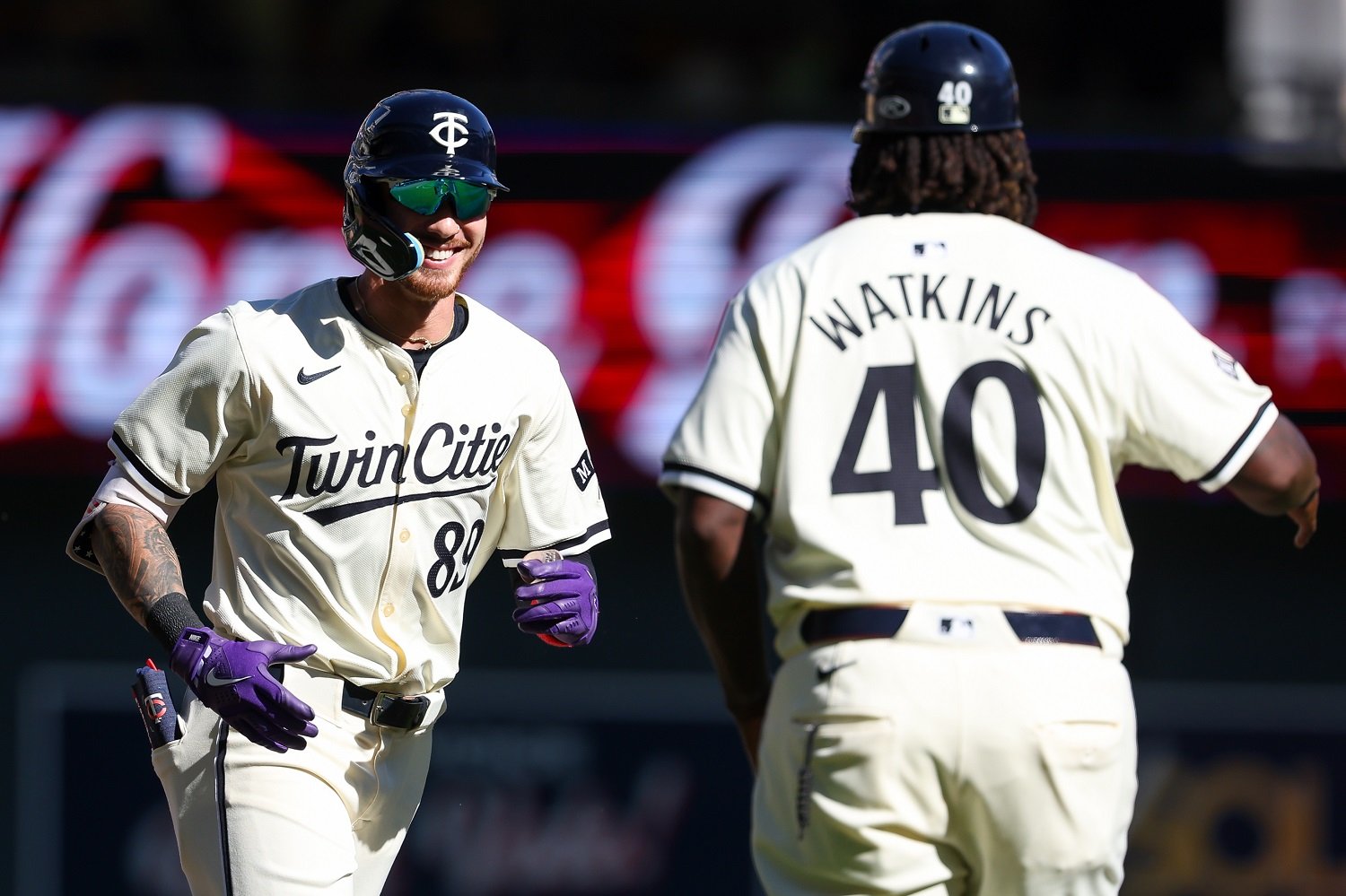 The Minnesota Twins selected outfielder DaShawn Keirsey out of the University of Utah in the 2018 MLB draft. The path to the big leagues was complete with peaks and valleys, winding left and right. After missing time early in his career with injuries, Keirsey has been healthy the last few seasons and with that, he has really elevated his play. He put together a terrific season in St. Paul. In 111 games, he hit .300/.368/.476 (.845) with 22 doubles, seven triples, 14 home runs, and 81 RBI. He also stole 36 bases. The triples and RBI were single-season Saints records, while his 133 hits also set the new mark for the Twins Triple-A affiliate. In early September, the Twins placed Max Kepler on the Injured List and called up Keirsey. He played in five games in center field before Byron Buxton returned, and Keirsey was optioned. On the final day of the season, Keirsey was called back up to play in that game. He recorded the first home run of his career. Recently, I chatted with the athletic 27 year old from southern California about his whole season. Here are some of the highlights. 1:20: Excited for Michael Helman. Assumed that he wasn't going to get called up. Two days later, he unexpectedly received The Call. Find out how he found out. 4:00: What kind of support did he get from the guys in the Saints clubhouse, from his Twins teammates, the coaching staffs, and from past teammates? 6:40: Keirsey was an official non-roster invite to Twins spring training in 2024. What was the experience like, anything stand out from the veterans or others? 8:15: He started the season fast, offensively. He was hitting anywhere in the Top 5 of the lineup, providing on-base skills and enough power. Was there something that just clicked technically with his swing or with his approach? 9:44: What mechanical change did he observe from Royce Lewis and the two worked on together that he also thinks helped his overall offensive game? 13:25: We watched one of Keirsey's at-bats and discussed his thought process on the AB. He spoke of committing himself to have an approach going into every single plate appearance. 16:00: Like Max Kepler in his last couple of minor-league seasons, Keirsey filled up the stat sheet. He is an all-around player, something he has always wanted to be. Keirsey considers himself an athlete who can play baseball. 20:00: He can play a great center field, but he has also spent a lot of time playing in the corners. When he was younger, he didn't like playing the corners, but now he is really glad that he has had plenty of time at both corners. 23:10: Who were the first phone calls when you got The Call? 26:10: Calling his dad was a huge, emotional deal. When he didn't get called up right away in September, they weren't expecting the call three days later, which might have made it even more special. 27:20: MLB debut in Tampa. He came in as a defensive replacement in center field late in the game. Immediately the ball found him. He had to run a LONG ways to try to catch the ball. He almost made the catch, a back-hand attempt in which the ball hit his glove and his glove hit the wall simultaneously. He later found out that the odds of that ball being caught was 0% 29:30: We look at a diving catch that he made in support of Pablo Lopez at Target Field. We discussed reaction and getting a good jump and the mentality to do what's needed. 32:00: With so many young players and the team's philosophy on platooning, did he know his role coming to the club? 34:05: Do you know who Keirsey got his first MLB hit off of? Does he? (also, here Keirsey mention the comedy of Matt Wallner for the second time.) 36:25: Do you remember who Keirsey hit his first home run off of? Do you think he did? His memory of that moment are pretty special too. Just as important, the support and the love that he got from his teammates meant the world. 39:30: We dig deeper into the timing mechanism that he worked with Royce Lewis on during spring training. "I'm not doing it for the looks. I'm doing it for the functionality." 41:03: Have you had a chance to reflect on the season? Did he have a moment when it all just sunk in? 44:30: Any fun offseason plans? Travel? "I live in a place that most people come to vacation." I hope you enjoyed the back-and-forth conversation. It was a lot of fun to live vicariously through Keirsey's memories from his 2024 season. Keirsey has previously done interviews for Twins Daily: March 3, 2021: Twins Spotlight (Get to Know 'Em) June 27, 2023: DaShawn Keirsey: Twins Most Underrated Prospect
-
Starting a new MILB Transactions thread for the offseason. We know the big leaguers who became free agents with the conclusion of the World Series. Now we know which minor leaguers have officially become free agents too. That list is just below. This thread should be a place to talk about the minor-league free agents the Twins lost and when we learn about a player signing a minor-league contract with the Twins. Normally those won't garner a full article, though at times it could, but we want to track them here. In addition, feel free to discuss former Twins and Twins minor leaguers and where they sign too. I will try to compile that list as well in coming days. But let's start the thread with the players who have spent time in the Twins organization (some going back as far as 2017-2018) and others who just spent some time in 2024. RHP: Jeff Brigham, Daniel Duarte, Giovanny Gallegos, Adam Plutko, Zack Weiss, Hobie Harris, Regi Grace, Miguel Rodriguez, Danny Moreno. LHP: Rafael Marcano, Gabriel Yanez. C: Wilfri Castro, Chris Williams IF: Rixon Wingrove, Rylan Bannon, OF: Carlos Aguiar, Agustin Ruiz. My assumption is within coming days, this will also include IF Yunior Severino, RHPs Josh Winder and Scott Blewett (unless they re-sign with the Twins right away). In addition, last month, the Twins released LHP Jordan Carr and RHP Mason Fox, making them free agents. And, if you go to the very beginning of October, LHPs Cole Irvin and Scott Okert, RHP Trevor Richards, and both Diego Castillo's (IF and RHP) chose to become free agents after being outrighted. There have also been several DSL players released since their season ended: Infielders Luis Rodriguez and Ruben Velasquez, and RHPs Neftali Rodriguez and Ledwin Taveras. In late September, right after the minor league seasons ended, the Twins released the following players (in case you missed them): RHP Ben Ethridge, RHP Tomas Cleto, RHP Hector Garcia, catchers Matthew Clayton and Cole Elvis, and infielder Omari Daniel. Oh, and RHP Sean Mooney retired. As he said, just wasn't able to get and stay healthy. That should have us all caught up.
-
After a humbling rookie season, how much should the Minnesota Twins bet on and rely upon Brooks Lee in 2025? Image courtesy of © Jesse Johnson-Imagn Images Welcome to the 2025 Offseason Handbook! This year, we’re offering the format online only through our Caretakers program. The Offseason Handbook is a comprehensive look at what challenges the Twins face in the coming winter to field a competitive team in 2025. To become a Caretaker, visit this page. On top of receiving exclusive access to the Offseason Handbook, Caretakers also receive in-depth analysis from national writers you cannot find anywhere else. You will also receive exclusive access to events and an ad-free browsing option. In celebration of the Offseason Handbook’s release, we’re offering 20% off all Caretaker programs for the next week. Use the code HANDBOOK at checkout to receive 20% off your purchase! The old saying in sports goes something like this. “A starter should not lose his job because of injury.” Vikings linebacker Blake Cashman joined the organization this offseason, playing for his home state team. He was leading the team in tackles, but he has missed time in recent weeks due to injury. When he comes back, it shouldn’t be as a bench player. He will come back and take over his spot. Karl Anthony Towns missed a lot of the 2023-2024 NBA season with injury, but as soon as he was healthy, he returned to the Minnesota Timberwolves starting lineup. Carlos Correa missed two months of the 2024 season with a second bout of plantar fasciitis. When he returned to the lineup, he was playing shortstop and batting in the middle of the Twins lineup. Similarly, the way an organization feels about a prospect should not change based solely on injury either. When Royce Lewis first tore his ACL a few years ago, it altered his timeline to the big leagues, but I can’t imagine anyone in the organization worrying about Lewis’s long-term future. When Miguel Sano and Alex Kirilloff missed seasons in the minor leagues due to Tommy John surgery, they remained top 20 global prospects. Likewise, Twins fans need to look beyond the offensive struggles of Brooks Lee in the big leagues in 2024. Yes, the numbers weren’t “good.” There is no denying that. In his first six big-league games, the Twins prospect went 11-for-24 (.458) with one double and one home run. Over his next 20 games, he went 14-for-75 (.187) with one double and one home run. He missed more time with injury, and he returned to play 24 games in September. He went 13-for-78 (.178), though he had four doubles, a triple, and a home run. Fortunately, that isn’t the full story of Brooks Lee, baseball player. As we all know, the Twins were thrilled when Lee fell to them with the eight-overall pick in the 2022 draft out of Cal-Poly, San Luis Obispo. The coach’s kid, he was called by many the most pure overall hitter in that year’s draft. After signing, he reached Double-A Wichita for their playoff run that season. That’s where he started the 2023 season, and when he was promoted to Triple-A later in the season, he was leading all Double-A hitters in doubles. In 125 combined games (between Double-A and Triple-A), he hit .275/.347/.461 (.808) with 39 homers, three triples, and 16 home runs. While his numbers in St. Paul dropped, it really was just the batting average. His walk rate dropped 1%, and his strikeout rate increased by 0.8% His Isolated Discipline and his Isolated Power both remained strong. In fairness, he appeared to be just months away from being big-league ready. He was invited to big-league spring training again and really impressed coaches and teammates. Unfortunately, just days before the start of the season, he was optioned to St. Paul. When the Saints announced their Opening Day roster, we saw Lee on the Injured List. Originally the injury was called back spasms. After further evaluation, he was diagnosed with a herniated disc. According to Twins Daily’s resident physical therapist Lucas Seehafer (click here to review much more detail on the particular injury and rehab), non-surgical recovery averages around six months. In baseball, there is a program that is designed for eight weeks. Lee worked through that program, and began a rehab assignment on May 20th. He played five games in the Florida Complex League. Then he played five rehab games for Low-A Fort Myers. On June 5, he returned to the Saints. In 20 games, he hit .329/.394/.635 (1.029) with five doubles and seven home runs. He appeared to be back in form. At that point, Royce Lewis was injured and Lee was promoted to the big leagues. On July 3rd, he made his debut. After those first six games, it was a struggle for the talented switch-hitter. He wasn’t himself at the plate, His walk rate dropped to just 5.9% His strikeout rate dropped just under 15% The goal isn’t to walk, but it is to have an approach at the plate where you don’t go outside of the zone and attack strikes. It’s an example of the phrase that a player needs for the game to slow down. You hear about that with quarterbacks often. The pass rushers get to him a lot quicker. Holes that he easily ran through in college close much quicker. And open receivers just don’t stay open quite as long. How a quarterback responds to the changes and how quickly he can slow the game down in his mind, the better. How quickly can Brooks Lee slow the game down? His reputation as a professional hitter, even long before he was actually a professional hitter speaks to his ability to make adjustments. Unfortunately, because his season was broken apart by a two-month injury at the beginning of the season, and another month of missed time meant that he never really got real extended, consecutive time to make needed adjustment. In 2011, Mike Trout played in his first 40 games with the Angels. He hit .220/.281/.390 (.672) with 11 extra base hits in 135 plate appearances. Fair to see that the game slowed down for him the next year when he was an All Star, Silver Slugger, the AL Rookie of the Year, and finished second in MVP voting. That was Trout’s Age-19 season. 2024 was Brooks Lee’s Age-23, so we aren’t comparing apples to apples. But it’s important to point out that you certainly can’t judge a player's career and potential by their first 40 or 50 games, good or bad. What Would I Do? Let’s just pretend for a moment that Derek Falvey hired me as an assistant general manager. On Day 1, my responsibility was to make a case for one transaction for this offseason. For me, I would try to lock up Brooks Lee to a long-term contract. The comparison I would use would be the contract that the Detroit Tigers signed Colt Keith to a year ago. Colt Keith was the fifth round pick of the Tigers in the 2020 draft out of high school in Biloxi, Mississippi. Always a solid prospect, Keith made big strides in 2023. That season, Keith, like Lee, split the season between Double-A and Triple-A. It’s fair to say that Keith arrived in Triple-A about six weeks before Lee did. In 126 games combined, he hit .306/.380/.552 (.932) with 38 doubles, three triples, and 27 home runs. Before the 2024 season, Colt Keith ranked in the top 30 overall prospects by Baseball America (#28), MLB Pipeline (#22), and Baseball Prospectus (#22). Brooks Lee ranked #35 at Baseball America, #18 at MLB Pipeline, and #52 at Baseball Prospectus. Before the start of this season, the Tigers and Keith agreed to a six-year, $28,642,500 deal that includes options for up to three more seasons. If those are picked up, it would be worth up to about $65 million over nine years. He got a $2 million signing bonus. He made $2.5 million in 2024, $3.5 million in 2025. He will make $4 million in both 2026 and 2027. Then he’ll make $5 million in 2028 and 2029. The minimum salary in MLB was up to $740,000 in 2024 (he got $4.5 million). The minimum salary moves up to $760,000 in 2025 and to $780,000 in 2026. Instead of making about $2.4 million over those first three years, he will make $12 million over that time. Then for his three arbitration seasons, he will play for a combined $14 million. If things go well, they could make $4-10 million more than that. But then the Tigers will have options to keep him for up to three of his free agent seasons at very reasonable amounts. Because of that signing, the Tigers called Keith up to the big-leagues for Opening Day and kept him up all season. In 148 games, he hit .260/.309/.380 (.689) with 15 doubles, four triples and 13 home runs. He played second base. He walked just 6.5% of his plate appearances and struck out 19.8% of the time. It was a year of ups and downs. He hit .154 with a .387 OPS in March/April. Then in May he hit .343 with a .881 OPS in May. In June, he hit .220 with a .567 OPS. Then in July he hit .322 with a 1.048 OPS. In that month, he hit seven of his 13 home runs. Then his OPS was .628 and .664 in September/October. If Brooks Lee is open to a similarly-constructed contract signed by Colt Keith, I would sign it, feel great about it and hand him the Twins second base job. Lee’s track record of offensive prowess is much longer than Keith’s, and if they believe in him like they have said all along that they believe about him, the contract would pay for itself with a solid Return on Investment. Let him work through any of those ups and downs. How concerned are you about the rookie struggles of Brooks Lee? How do you see him fitting into the Twins plans moving forward? Is the idea of locking him up to a long-term contract logical at this point? View full article
-
 Welcome to the 2025 Offseason Handbook! This year, we’re offering the format online only through our Caretakers program. The Offseason Handbook is a comprehensive look at what challenges the Twins face in the coming winter to field a competitive team in 2025. To become a Caretaker, visit this page. On top of receiving exclusive access to the Offseason Handbook, Caretakers also receive in-depth analysis from national writers you cannot find anywhere else. You will also receive exclusive access to events and an ad-free browsing option. In celebration of the Offseason Handbook’s release, we’re offering 20% off all Caretaker programs for the next week. Use the code HANDBOOK at checkout to receive 20% off your purchase! The old saying in sports goes something like this. “A starter should not lose his job because of injury.” Vikings linebacker Blake Cashman joined the organization this offseason, playing for his home state team. He was leading the team in tackles, but he has missed time in recent weeks due to injury. When he comes back, it shouldn’t be as a bench player. He will come back and take over his spot. Karl Anthony Towns missed a lot of the 2023-2024 NBA season with injury, but as soon as he was healthy, he returned to the Minnesota Timberwolves starting lineup. Carlos Correa missed two months of the 2024 season with a second bout of plantar fasciitis. When he returned to the lineup, he was playing shortstop and batting in the middle of the Twins lineup. Similarly, the way an organization feels about a prospect should not change based solely on injury either. When Royce Lewis first tore his ACL a few years ago, it altered his timeline to the big leagues, but I can’t imagine anyone in the organization worrying about Lewis’s long-term future. When Miguel Sano and Alex Kirilloff missed seasons in the minor leagues due to Tommy John surgery, they remained top 20 global prospects. Likewise, Twins fans need to look beyond the offensive struggles of Brooks Lee in the big leagues in 2024. Yes, the numbers weren’t “good.” There is no denying that. In his first six big-league games, the Twins prospect went 11-for-24 (.458) with one double and one home run. Over his next 20 games, he went 14-for-75 (.187) with one double and one home run. He missed more time with injury, and he returned to play 24 games in September. He went 13-for-78 (.178), though he had four doubles, a triple, and a home run. Fortunately, that isn’t the full story of Brooks Lee, baseball player. As we all know, the Twins were thrilled when Lee fell to them with the eight-overall pick in the 2022 draft out of Cal-Poly, San Luis Obispo. The coach’s kid, he was called by many the most pure overall hitter in that year’s draft. After signing, he reached Double-A Wichita for their playoff run that season. That’s where he started the 2023 season, and when he was promoted to Triple-A later in the season, he was leading all Double-A hitters in doubles. In 125 combined games (between Double-A and Triple-A), he hit .275/.347/.461 (.808) with 39 homers, three triples, and 16 home runs. While his numbers in St. Paul dropped, it really was just the batting average. His walk rate dropped 1%, and his strikeout rate increased by 0.8% His Isolated Discipline and his Isolated Power both remained strong. In fairness, he appeared to be just months away from being big-league ready. He was invited to big-league spring training again and really impressed coaches and teammates. Unfortunately, just days before the start of the season, he was optioned to St. Paul. When the Saints announced their Opening Day roster, we saw Lee on the Injured List. Originally the injury was called back spasms. After further evaluation, he was diagnosed with a herniated disc. According to Twins Daily’s resident physical therapist Lucas Seehafer (click here to review much more detail on the particular injury and rehab), non-surgical recovery averages around six months. In baseball, there is a program that is designed for eight weeks. Lee worked through that program, and began a rehab assignment on May 20th. He played five games in the Florida Complex League. Then he played five rehab games for Low-A Fort Myers. On June 5, he returned to the Saints. In 20 games, he hit .329/.394/.635 (1.029) with five doubles and seven home runs. He appeared to be back in form. At that point, Royce Lewis was injured and Lee was promoted to the big leagues. On July 3rd, he made his debut. After those first six games, it was a struggle for the talented switch-hitter. He wasn’t himself at the plate, His walk rate dropped to just 5.9% His strikeout rate dropped just under 15% The goal isn’t to walk, but it is to have an approach at the plate where you don’t go outside of the zone and attack strikes. It’s an example of the phrase that a player needs for the game to slow down. You hear about that with quarterbacks often. The pass rushers get to him a lot quicker. Holes that he easily ran through in college close much quicker. And open receivers just don’t stay open quite as long. How a quarterback responds to the changes and how quickly he can slow the game down in his mind, the better. How quickly can Brooks Lee slow the game down? His reputation as a professional hitter, even long before he was actually a professional hitter speaks to his ability to make adjustments. Unfortunately, because his season was broken apart by a two-month injury at the beginning of the season, and another month of missed time meant that he never really got real extended, consecutive time to make needed adjustment. In 2011, Mike Trout played in his first 40 games with the Angels. He hit .220/.281/.390 (.672) with 11 extra base hits in 135 plate appearances. Fair to see that the game slowed down for him the next year when he was an All Star, Silver Slugger, the AL Rookie of the Year, and finished second in MVP voting. That was Trout’s Age-19 season. 2024 was Brooks Lee’s Age-23, so we aren’t comparing apples to apples. But it’s important to point out that you certainly can’t judge a player's career and potential by their first 40 or 50 games, good or bad. What Would I Do? Let’s just pretend for a moment that Derek Falvey hired me as an assistant general manager. On Day 1, my responsibility was to make a case for one transaction for this offseason. For me, I would try to lock up Brooks Lee to a long-term contract. The comparison I would use would be the contract that the Detroit Tigers signed Colt Keith to a year ago. Colt Keith was the fifth round pick of the Tigers in the 2020 draft out of high school in Biloxi, Mississippi. Always a solid prospect, Keith made big strides in 2023. That season, Keith, like Lee, split the season between Double-A and Triple-A. It’s fair to say that Keith arrived in Triple-A about six weeks before Lee did. In 126 games combined, he hit .306/.380/.552 (.932) with 38 doubles, three triples, and 27 home runs. Before the 2024 season, Colt Keith ranked in the top 30 overall prospects by Baseball America (#28), MLB Pipeline (#22), and Baseball Prospectus (#22). Brooks Lee ranked #35 at Baseball America, #18 at MLB Pipeline, and #52 at Baseball Prospectus. Before the start of this season, the Tigers and Keith agreed to a six-year, $28,642,500 deal that includes options for up to three more seasons. If those are picked up, it would be worth up to about $65 million over nine years. He got a $2 million signing bonus. He made $2.5 million in 2024, $3.5 million in 2025. He will make $4 million in both 2026 and 2027. Then he’ll make $5 million in 2028 and 2029. The minimum salary in MLB was up to $740,000 in 2024 (he got $4.5 million). The minimum salary moves up to $760,000 in 2025 and to $780,000 in 2026. Instead of making about $2.4 million over those first three years, he will make $12 million over that time. Then for his three arbitration seasons, he will play for a combined $14 million. If things go well, they could make $4-10 million more than that. But then the Tigers will have options to keep him for up to three of his free agent seasons at very reasonable amounts. Because of that signing, the Tigers called Keith up to the big-leagues for Opening Day and kept him up all season. In 148 games, he hit .260/.309/.380 (.689) with 15 doubles, four triples and 13 home runs. He played second base. He walked just 6.5% of his plate appearances and struck out 19.8% of the time. It was a year of ups and downs. He hit .154 with a .387 OPS in March/April. Then in May he hit .343 with a .881 OPS in May. In June, he hit .220 with a .567 OPS. Then in July he hit .322 with a 1.048 OPS. In that month, he hit seven of his 13 home runs. Then his OPS was .628 and .664 in September/October. If Brooks Lee is open to a similarly-constructed contract signed by Colt Keith, I would sign it, feel great about it and hand him the Twins second base job. Lee’s track record of offensive prowess is much longer than Keith’s, and if they believe in him like they have said all along that they believe about him, the contract would pay for itself with a solid Return on Investment. Let him work through any of those ups and downs. How concerned are you about the rookie struggles of Brooks Lee? How do you see him fitting into the Twins plans moving forward? Is the idea of locking him up to a long-term contract logical at this point?
-
In his 15th major-league season, first baseman Carlos Santana earned his first Gold Glove for his terrific play at first base for the 2024 Minnesota Twins. Image courtesy of © Nathan Ray Seebeck-Imagn Images When Carlos Santana made his MLB debut way back in 2010, he was a hit-first catcher. Yes, he was a catcher, but he was in the big leagues because he could hit. Over the course of the next four seasons, he got more and more playing time at first base in Cleveland. Santana was very reliable with the bat early in his career, nearly guaranteed to hit 19 or more home runs and drive in a bunch of runs. He also walked over 90 times most seasons. But, he was a bat-first first baseman which works when you are providing as much offense as he typically did. On Sunday night, after the conclusion of his 15th season in the big leagues, and at 38 years old, Santana won his first Gold Glove Award. And he was the clear choice at the position. While the overall Twins defense was very poor at many positions throughout the season, Santana really stood out for his great defense. It was the first Gold Glove won by a Twins player since Byron Buxton and Brian Dozier were recipients in 2017. However, he has continued to work on his defense, and was rewarded for those efforts with the Gold Glove. Ryan Mountcastle of the Orioles and Nathaniel Lowe of the Rangers were the other two finalists for the award. No one looks simply at Fielding Percentage, but Santana had just four errors and a .996 fielding percentage. Mountcastle was at .997, and Low was at .995. No AL first baseman played more than the 1,250 innings that Santana played. Santana accumulated 14 Outs Above Average (OOA). In the AL, Lowe was second with 7 OAA. Mountcastle had just 2 OAA. Do you prefer Defensive Runs Saved? Santana and Mountcastle tied for the AL lead at 7 DRS. Another FanGraphs defensive stat, "Range," finds Carlos Santana tops among all MLB first baseman. His "11" is one better than Arizona's Christian Walker. Number 3 on that list are Bryce Harper and Nathaniel Lowe at just "5." Gone are the days when offensive numbers played a factor in Gold Glove voting. Over about the past decade, as defensive metrics have vastly improved, these are truly defensive awards. Gone are the days - like 1999 - when Rafael Palmeiro won his third straight AL Gold Glove at first base despite playing just 28 games at the position. That year, Palmeiro hit .324/.420/.630 (1.050) with 30 doubles, 47 RBI, and 148 RBI. Of course, Twins fans remember Doug Mientkiewicz playing the season at first base, with a .997 fielding percentage, a very high Range Factor, and Web Gems galore. Of course, he hit just .229/.324/.330 (.655) with 21 doubles and two home runs. FYI - Mientkiewicz was the last Twins first baseman to win a Gold Glove. He earned it in 2001. Vic Power of the Twins was the AL Gold Glove winning first baseman in 1962 and 1963. It is a great thing that the Gold Gloves are now handed out based on defensive abilities! Over the past four seasons, Carlos Santana has been a bit of a nomad. He has spent time with the Royals, the Mariners, the Pirates, and the Brewers before joining the Twins on a one-year deal before the 2024 season. As of last week, at the conclusion of the World Series, Santana again became a free agent. With last week's abrupt retirement by Alex Kirilloff due to a back injury, the Twins have an early-offseason hole at first base. Could that increase the likelihood of Santana returning to the Twins? Should it? We shall see. Join us in congratulation Carlos Santana on his well-deserved Gold Glove! View full article