



Seth Stohs
-
Posts
25,909 -
Joined
-
Last visited
-
Days Won
109
Content Type
Profiles
News
Minnesota Twins Videos
2026 Minnesota Twins Top Prospects Ranking
2022 Minnesota Twins Draft Picks
Minnesota Twins Free Agent & Trade Rumors, Notes, & Tidbits
Guides & Resources
2023 Minnesota Twins Draft Picks
The Minnesota Twins Players Project
2024 Minnesota Twins Draft Picks
2025 Minnesota Twins Draft Pick Tracker
2026 Minnesota Twins Draft Tracker: Picks & Bonuses
Forums
Blogs
Events
Store
Downloads
Gallery
Everything posted by Seth Stohs
-
 On Thursday night (5:30 central time), Seth will be chatting with the wives of three Twins players in an all-new episode of Twins Spotlight. The discussion was live on the Twins Daily social media platforms, Twitter, Facebook or YouTube pages. Something a little different on tonight's Twins Spotlight. Instead of talking to some Twins player, we will be talking with some player's wives. Maci Blankenhorn watched her husband Travis make his major-league debut last September while finalizing wedding plans. The couple got married this winter. Lexi Jeffers was in St. Paul when her husband Ryan made his debut in 2021. Of course, she still couldn't go to Target Field for the game. They had been married the previous offseason. Jordan Kirilloff married her husband Alex in October of 2016, months after he was the Twins first-round pick. The couple welcomed their first child, a daughter, to the world just over one year ago. We will get to know a little more about each and find out what it is like to be married to a professional baseball player. Certainly there are several good things, but it isn't all easy. There certainly are challenges as well. We'll talk about some of their experiences in and around the game, but also find out their thoughts on some of their husband's professional achievements. And, each has their own achievements to celebrate as well. This should be a fun show, and we welcome your questions. Join us live at 5:30 tonight to watch, and participate by sending your questions. We'll cover a ton of topics. ------------------------------------------------------------------- Please watch LIVE at 5:30 pm (central time) Thursday night on the Twins Daily Twitter, Facebook or YouTube pages live. Also feel free to ask questions in the comments below or on those platforms during the show and we'll ask them. Subscribe to the Twins Daily podcast on Libsyn, Apple iTunes or anywhere you download podcasts. Here is the YouTube link where you can watch the show. Previous Episodes Click here to see more previous episodes of Twins Spotlight. Episode 19: Regi Grace Episode 20: Louie Varland Episode 21: Max Smith Episode 22: Zander Wiel Episode 23: Blayne Enlow Episode 24: Royce Lewis Episode 25: Trey Cabbage Episode 26: Keoni Cavaco Episode 27: Casey Legumina Episode 28: DaShawn Keirsey Episode 29: Twins Wives (Maci Blankenhorn, Lexi Jeffers, Jordan Kirilloff) View full article
 -
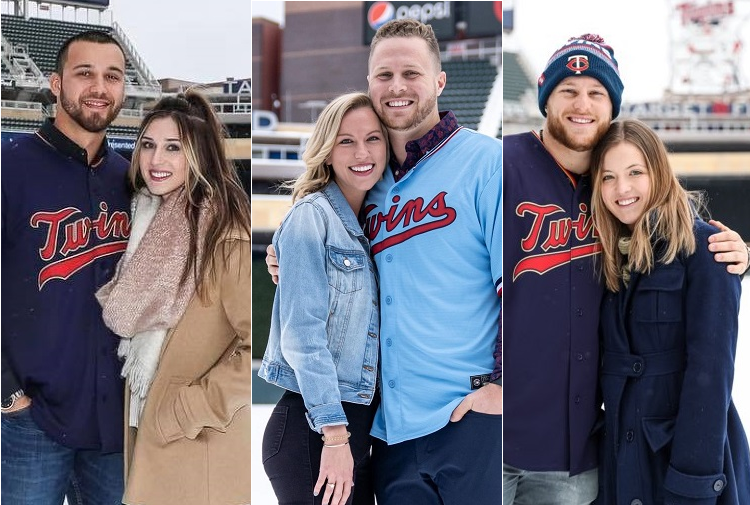 Something a little different on tonight's Twins Spotlight. Instead of talking to some Twins player, we will be talking with some player's wives. Maci Blankenhorn watched her husband Travis make his major-league debut last September while finalizing wedding plans. The couple got married this winter. Lexi Jeffers was in St. Paul when her husband Ryan made his debut in 2021. Of course, she still couldn't go to Target Field for the game. They had been married the previous offseason. Jordan Kirilloff married her husband Alex in October of 2016, months after he was the Twins first-round pick. The couple welcomed their first child, a daughter, to the world just over one year ago. We will get to know a little more about each and find out what it is like to be married to a professional baseball player. Certainly there are several good things, but it isn't all easy. There certainly are challenges as well. We'll talk about some of their experiences in and around the game, but also find out their thoughts on some of their husband's professional achievements. And, each has their own achievements to celebrate as well. This should be a fun show, and we welcome your questions. Join us live at 5:30 tonight to watch, and participate by sending your questions. We'll cover a ton of topics. ------------------------------------------------------------------- Please watch LIVE at 5:30 pm (central time) Thursday night on the Twins Daily Twitter, Facebook or YouTube pages live. Also feel free to ask questions in the comments below or on those platforms during the show and we'll ask them. Subscribe to the Twins Daily podcast on Libsyn, Apple iTunes or anywhere you download podcasts. Here is the YouTube link where you can watch the show. Previous Episodes Click here to see more previous episodes of Twins Spotlight. Episode 19: Regi Grace Episode 20: Louie Varland Episode 21: Max Smith Episode 22: Zander Wiel Episode 23: Blayne Enlow Episode 24: Royce Lewis Episode 25: Trey Cabbage Episode 26: Keoni Cavaco Episode 27: Casey Legumina Episode 28: DaShawn Keirsey Episode 29: Twins Wives (Maci Blankenhorn, Lexi Jeffers, Jordan Kirilloff)
 -
Patrick Reusse wrote a really good article on Ben Rortvedt. The article discusses him missing time due to a knee injury. He went to spring training last year but pulled an oblique so didn't play in a game. Then came COVID, and then he wasn't on the 60-player pool last year. However, the Twins did add him to the Twins 40-man roster last November.
-
I think that is very much more realistic. Had there been a season in 2020, he would have started in High-A and maybe moved up to AA at the end of the year. There's a chance he starts this year in AA, but he could go to High-A for a little while too, if needed. I think his big-league opportunity for 2021 is a Buxton injury, just a 10-day variety where they don't want to add anyone (or subtract anyone) from the 40-man roster. He can play defense and bat ninth. But yeah, mid-2022 is his much more realistic timeline.
-
In an organization with such great corner outfielder depth, the Twins may also have a center field prospect to compliment them. The Twins acquired Gilberto Celestino in a 2018 trade with the Astros, and he is developing into a very intriguing prospect. The same day that the Twins signed infielder Wander Javier (July 2, 2015), the Astros signed Gilberto Celestino to a $2.25 million signing bonus. Celestino ranked as a top ten international prospect. At the time, he was known for his defense but also had a polish to his game. A great athlete, the Twins acquired him along with reliever Jorge Alcala in exchange for reliever Ryan Pressly. Alcala has made his mark already after a strong rookie showing in 2020. It’s entirely possible that Celestino will join him at some point in 2021. Celestino has already impressed many throughout the organization in a number of ways including his spring training manager. Rocco Baldelli spoke glowingly of the 22-year-old, “Celly’s an easy guy to say some positive things about on both sides of the ball. I’ll start though with talking about him and his makeup and his character. He’s a young man, but he has some wisdom to him. I would say he’s wise beyond his years. He’s got a great relaxed heartbeat. He’s got great feel. He’s a sharp young man, too. There’s a ton in the clubhouse that I think his teammates respect and enjoy about him.” Celestino was added to the Twins 40-man roster in November of 2019. That season, he had played in 117 games at Low-A Cedar Rapids before finishing the season with eight games in High-A Ft. Myers. Combined, he hit .277/.349/.410 (.759) with 28 doubles and ten home runs. He also had 14 stolen bases. But, let’s start with the defense. Celestino has made his mark on an international level. After the 2018 season, he represented the Dominican Republic in the U23 World Cup. He made a couple of incredible highlight-reel plays in center field. Celestino noted, “I think I take pride in my defense. It makes me proud. Not just here, but any team that I am playing with, I take pride in my defense as well. I consider myself a good outfielder.” The following catch is the one that caught the attention of a huge audience, and it is the one that he considers his favorite catch to date. He recalled the play, “The leap, going back. When the ball left the bat, I knew it was over my head, and I just put a lot of effort and concentration into catching that ball. At the end, I had to leap and it was in my glove. It was a great feeling, having that opportunity to make that play and represent my country.” Wearing the uniform of the Dominican Republic is something that Celestino has done going back even before signing a professional contract. It’s something he doesn’t take for granted. “It feels really good. It’s pride. One always is proud when you go out there and represent your country.” Here is one more great defensive play by Celestino. This one was from November of 2019 at the Premier12 tournament. Baldelli, who was a very good center fielder in his playing days, said of Celestino, “Defensively, he can play all three outfield positions. You have no hesitation putting him in center field. Once again, he’s got good feel out there. He looks like a very good outfielder with his movements, with his actions. And he’s very comfortable on a baseball field. He never looks like the game speeds up on him.” And in spring training, Celestino gets to work with Gold Glover winner Byron Buxton. “I talk to him every day. I try to pick his brain. He’s obviously a great defender, so when I go out there with him, I ask him questions. One of the things that impressed me is his first step defensively, reading the ball. The first step is the most important one and he does a great job at that, and that’s why I think he’s a great outfielder. So I pick his brain on that, and I want to be like that too. Looking forward to that and keep learning from him.” Offensively, Celestino has been a little more streaky, but he has a lot of potential with the bat too. In 2019, he began the season by really struggling in the cold weather of Cedar Rapids. In April, he hit just .203 with a .506 OPS. In May, he hit .229 with a .644 OPS. He hit .240 in June, but he started hitting the ball with more authority, posting a .694 OPS thanks to ten extra base hits. Then in July, things clicked. Celestino hit .369/.430/.563 (.993) with seven doubles, two triples and three home runs. In August, he hit .327/.396/.500 (.896) with eight doubles and three homers. That included his final eight games in Ft. Myers. Celestino describes himself as “a line drive hitter that is developing more power in the future.” Baldelli agreed, “At the plate, he’s got really good contact skills. He can have a really good at-bat, the kind of at-bats you might expect a more veteran player to have. But he has those kinds of at-bats. I’d call it a line drive, doubles type bat. There’s some pop in there. He really does find a way to put the bat on the ball.” His offense was something that Celestino focused much of his time working on, especially at the Twins alternate site in St. Paul last summer. “During summer camp last year, I was focused on hitting, my mechanics, slowing down the movements and recognizing pitches. Those were my main focus last summer during that camp.” The time spent in St. Paul last year wasn’t easy, but it was time that Celestino appreciated and took advantage of. He said, “The way I looked at it, it was a great opportunity for me for growth, and taking advice from veteran players that were at camp as well. Learning a little bit from those guys and picking their brains. It was a good opportunity for me to be there.” Celestino is now in his second big-league spring training. He said, “I think last year I came into camp, and I wanted to do things right and learn. This year, I want to keep learning obviously and leave a good impression.” His goals for the upcoming season? “It doesn’t matter where I start, but I want to end up in the big leagues in 2021. Rather than thinking about any statistics, that will be my main goal for 2021, to make the big leagues.” Like most of us, getting to the big leagues is something Celestino has dreamed about. “I’ve imagined it before. I’ve been thinking about it. If it happens, it’ll be a dream come true, not just for me, but also for my family and the people who have surrounded me in my career and the people who have been there for me. It will be important for them too. It’s not only my dream, but it’s also their dream. Like my parents, they’ve always been there supporting me. It’ll be a dream come true for me. I’m looking forward to it ” Baldelli sums it up well, “We’re excited about Celly.” Twins fans should be excited about the potential impact that Gilberto Celestino can have on the Twins. Special thanks to Elvis Martinez (Twins Communications Coordinator and Spanish Interpreter) for translating the interview with Celestino. For more information on Gilberto Celestino: Twins Daily 2021 Top Prospects: 11-15 (February 2021) Twins Future Position Analysis: Centerfield (Dec 2020) Trade Retrospective: How did the Twins do in the Ryan Pressly Trade? (Aug 2020) Break Glass in Case of Emergency: Could Celestino Cover Center in Case Injury (Feb 2020) View full article
-
Celestino Looking to Impress this Spring, Debut this Summer(?)
Seth Stohs posted an article in Minor Leagues
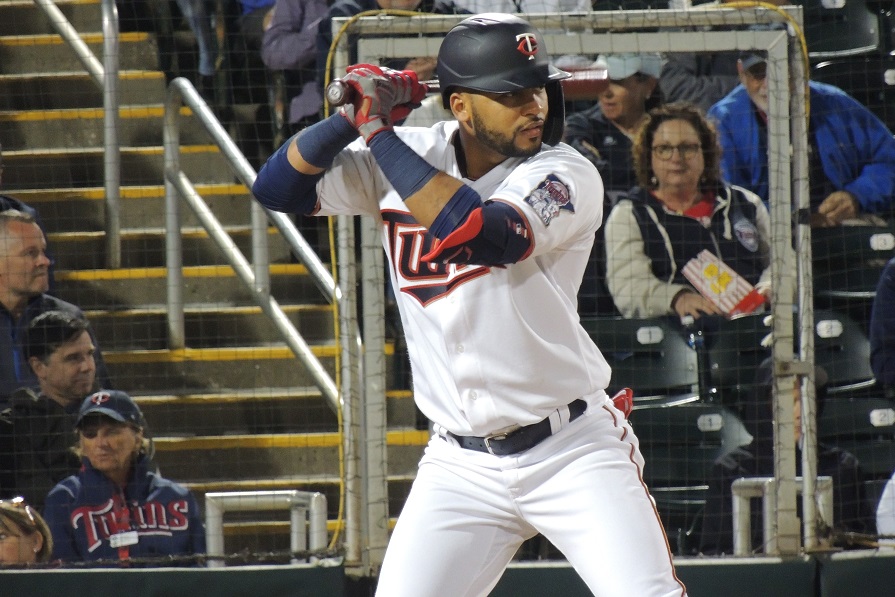 The same day that the Twins signed infielder Wander Javier (July 2, 2015), the Astros signed Gilberto Celestino to a $2.25 million signing bonus. Celestino ranked as a top ten international prospect. At the time, he was known for his defense but also had a polish to his game. A great athlete, the Twins acquired him along with reliever Jorge Alcala in exchange for reliever Ryan Pressly. Alcala has made his mark already after a strong rookie showing in 2020. It’s entirely possible that Celestino will join him at some point in 2021. Celestino has already impressed many throughout the organization in a number of ways including his spring training manager. Rocco Baldelli spoke glowingly of the 22-year-old, “Celly’s an easy guy to say some positive things about on both sides of the ball. I’ll start though with talking about him and his makeup and his character. He’s a young man, but he has some wisdom to him. I would say he’s wise beyond his years. He’s got a great relaxed heartbeat. He’s got great feel. He’s a sharp young man, too. There’s a ton in the clubhouse that I think his teammates respect and enjoy about him.” Celestino was added to the Twins 40-man roster in November of 2019. That season, he had played in 117 games at Low-A Cedar Rapids before finishing the season with eight games in High-A Ft. Myers. Combined, he hit .277/.349/.410 (.759) with 28 doubles and ten home runs. He also had 14 stolen bases. But, let’s start with the defense. Celestino has made his mark on an international level. After the 2018 season, he represented the Dominican Republic in the U23 World Cup. He made a couple of incredible highlight-reel plays in center field. Celestino noted, “I think I take pride in my defense. It makes me proud. Not just here, but any team that I am playing with, I take pride in my defense as well. I consider myself a good outfielder.” The following catch is the one that caught the attention of a huge audience, and it is the one that he considers his favorite catch to date. He recalled the play, “The leap, going back. When the ball left the bat, I knew it was over my head, and I just put a lot of effort and concentration into catching that ball. At the end, I had to leap and it was in my glove. It was a great feeling, having that opportunity to make that play and represent my country.” Wearing the uniform of the Dominican Republic is something that Celestino has done going back even before signing a professional contract. It’s something he doesn’t take for granted. “It feels really good. It’s pride. One always is proud when you go out there and represent your country.” Here is one more great defensive play by Celestino. This one was from November of 2019 at the Premier12 tournament. Baldelli, who was a very good center fielder in his playing days, said of Celestino, “Defensively, he can play all three outfield positions. You have no hesitation putting him in center field. Once again, he’s got good feel out there. He looks like a very good outfielder with his movements, with his actions. And he’s very comfortable on a baseball field. He never looks like the game speeds up on him.” And in spring training, Celestino gets to work with Gold Glover winner Byron Buxton. “I talk to him every day. I try to pick his brain. He’s obviously a great defender, so when I go out there with him, I ask him questions. One of the things that impressed me is his first step defensively, reading the ball. The first step is the most important one and he does a great job at that, and that’s why I think he’s a great outfielder. So I pick his brain on that, and I want to be like that too. Looking forward to that and keep learning from him.” Offensively, Celestino has been a little more streaky, but he has a lot of potential with the bat too. In 2019, he began the season by really struggling in the cold weather of Cedar Rapids. In April, he hit just .203 with a .506 OPS. In May, he hit .229 with a .644 OPS. He hit .240 in June, but he started hitting the ball with more authority, posting a .694 OPS thanks to ten extra base hits. Then in July, things clicked. Celestino hit .369/.430/.563 (.993) with seven doubles, two triples and three home runs. In August, he hit .327/.396/.500 (.896) with eight doubles and three homers. That included his final eight games in Ft. Myers. Celestino describes himself as “a line drive hitter that is developing more power in the future.” Baldelli agreed, “At the plate, he’s got really good contact skills. He can have a really good at-bat, the kind of at-bats you might expect a more veteran player to have. But he has those kinds of at-bats. I’d call it a line drive, doubles type bat. There’s some pop in there. He really does find a way to put the bat on the ball.” His offense was something that Celestino focused much of his time working on, especially at the Twins alternate site in St. Paul last summer. “During summer camp last year, I was focused on hitting, my mechanics, slowing down the movements and recognizing pitches. Those were my main focus last summer during that camp.” The time spent in St. Paul last year wasn’t easy, but it was time that Celestino appreciated and took advantage of. He said, “The way I looked at it, it was a great opportunity for me for growth, and taking advice from veteran players that were at camp as well. Learning a little bit from those guys and picking their brains. It was a good opportunity for me to be there.” Celestino is now in his second big-league spring training. He said, “I think last year I came into camp, and I wanted to do things right and learn. This year, I want to keep learning obviously and leave a good impression.” His goals for the upcoming season? “It doesn’t matter where I start, but I want to end up in the big leagues in 2021. Rather than thinking about any statistics, that will be my main goal for 2021, to make the big leagues.” Like most of us, getting to the big leagues is something Celestino has dreamed about. “I’ve imagined it before. I’ve been thinking about it. If it happens, it’ll be a dream come true, not just for me, but also for my family and the people who have surrounded me in my career and the people who have been there for me. It will be important for them too. It’s not only my dream, but it’s also their dream. Like my parents, they’ve always been there supporting me. It’ll be a dream come true for me. I’m looking forward to it ” Baldelli sums it up well, “We’re excited about Celly.” Twins fans should be excited about the potential impact that Gilberto Celestino can have on the Twins. Special thanks to Elvis Martinez (Twins Communications Coordinator and Spanish Interpreter) for translating the interview with Celestino. For more information on Gilberto Celestino: Twins Daily 2021 Top Prospects: 11-15 (February 2021) Twins Future Position Analysis: Centerfield (Dec 2020) Trade Retrospective: How did the Twins do in the Ryan Pressly Trade? (Aug 2020) Break Glass in Case of Emergency: Could Celestino Cover Center in Case Injury (Feb 2020)
 -
On Wednesday night (6:00 central time), Seth will be chatting with Twins minor league outfield prospect DaShawn Keirsey on a new episode of Twins Spotlight. The discussion was live on the Twins Daily social media platforms, Twitter, Facebook or YouTube pages. DaShawn Keirsey was the Twins fourth-round draft pick in 2018 out of the University of Utah where he starred for three seasons. His sophomore season, he hit .327/.388/.461 (.848) with 10 doubles, five triples and three homers in 50 games. His junior season, he hit .386/.440/.609 (1.049) with 23 doubles, five triples and four homers. As impressive as he was with the bat, his speed and athleticism have made him a very good defensive centerfielder as well. He played in Cedar Rapids and fought some injuries in 2019. Obviously 2020 was a missed season for nearly everyone. we'll talk to DaShawn about the strange 2020 season and find out what goals he has for 2021. Join us live at 6:00 tonight to watch, and participate by sending your questions. We'll cover a ton of topics and take your questions as well. ------------------------------------------------------------------- Please watch LIVE at 6:00 pm (central time) Wednesday night on the Twins Daily Twitter, Facebook or YouTube pages live. Also feel free to ask questions in the comments below or on those platforms during the show and we'll ask them. Subscribe to the Twins Daily podcast on Libsyn, Apple iTunes or anywhere you download podcasts. Here is the YouTube link where you can watch the show. For more on DaShawn Keirsey: Follow DaShawn on Instagram at @dk.breeezy. Previous Episodes Click here to see more previous episodes of Twins Spotlight. Episode 19: Regi Grace Episode 20: Louie Varland Episode 21: Max Smith Episode 22: Zander Wiel Episode 23: Blayne Enlow Episode 24: Royce Lewis Episode 25: Trey Cabbage Episode 26: Keoni Cavaco Episode 27: Casey Legumina Episode 28: DaShawn Keirsey View full article
-
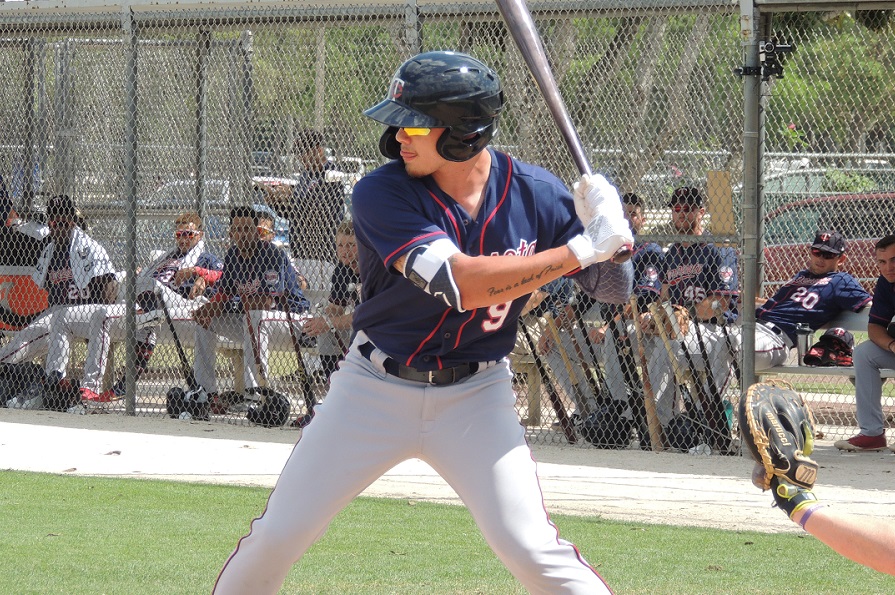 DaShawn Keirsey was the Twins fourth-round draft pick in 2018 out of the University of Utah where he starred for three seasons. His sophomore season, he hit .327/.388/.461 (.848) with 10 doubles, five triples and three homers in 50 games. His junior season, he hit .386/.440/.609 (1.049) with 23 doubles, five triples and four homers. As impressive as he was with the bat, his speed and athleticism have made him a very good defensive centerfielder as well. He played in Cedar Rapids and fought some injuries in 2019. Obviously 2020 was a missed season for nearly everyone. we'll talk to DaShawn about the strange 2020 season and find out what goals he has for 2021. Join us live at 6:00 tonight to watch, and participate by sending your questions. We'll cover a ton of topics and take your questions as well. ------------------------------------------------------------------- Please watch LIVE at 6:00 pm (central time) Wednesday night on the Twins Daily Twitter, Facebook or YouTube pages live. Also feel free to ask questions in the comments below or on those platforms during the show and we'll ask them. Subscribe to the Twins Daily podcast on Libsyn, Apple iTunes or anywhere you download podcasts. Here is the YouTube link where you can watch the show. For more on DaShawn Keirsey: Follow DaShawn on Instagram at @dk.breeezy. Previous Episodes Click here to see more previous episodes of Twins Spotlight. Episode 19: Regi Grace Episode 20: Louie Varland Episode 21: Max Smith Episode 22: Zander Wiel Episode 23: Blayne Enlow Episode 24: Royce Lewis Episode 25: Trey Cabbage Episode 26: Keoni Cavaco Episode 27: Casey Legumina Episode 28: DaShawn Keirsey
 -
Is There Any Hope For Royce Lewis?
Seth Stohs replied to Matt Braun's topic in Twins Daily Front Page News
Of course there is hope for Lewis... 1.) Only looking at #1 overall picks doesn't tell us anything. Making it to the big leagues within a certain amount of time doesn't tell us anything. Looking at a list of maybe Top 50 or Top 100 prospects who missed a full season and how they did. Buxton - missed most of a season... Turned out really good. Sano - missed all of a season... Turned out really good. Kubel - missed all of a season... Turned out really good. Alex Kirilloff ... missed all of a season... we certainly think he'll be pretty good. Luis Arraez ... missed almost all of a season with a torn ACL... turned out pretty good. Chipper Jones missed all of a season... Turned out pretty good. -
One year ago, Twins Daily’s #3 prospect Trevor Larnach participated in his first MLB spring training as a non-roster invite, just hoping to make a good impression. He succeeded, and now, he appears to be on the brink, working while waiting for his big-league opportunity.Before we look forward, let’s quickly look back. Larnach was the Twins first-round draft pick in 2018, the 20th player selected overall. He then went to Omaha and helped lead the Oregon State Beavers to the College World Series championship. After signing, he split that season between Elizabethton and Cedar Rapids. In 2019, he was the Twins (and Twins Daily’s) Minor League Player/Hitter of the Year. He was the Florida State League Most Valuable Player after hitting .316/.382/.459 (.842) with 26 doubles and six homers in 84 games, impressive numbers in the notoriously pitcher-friendly Florida State League. He moved up to Double-A Pensacola for 43 late-season games. He hit .295/.387/.455 (.842) with four doubles and seven homers. He moved up many national prospect rankings, but The Athletic’s Keith Law wrote this about him in his February 2020 Twins rankings. “Larnach has plus power the other way, which is usually a very positive indicator for a hitter, but he doesn’t pull the ball except to roll over to the second baseman, so scouts are left wondering if he can adjust as pitchers work him on the inner half.” When I talked to Larnach in December of 2019 for his Minor League Hitter of the Year article in the 2020 Minnesota Twins Prospect Handbook, it was something that Larnach focused on that offseason. He said, “It’s not only being able to drive the ball from left field to center field, but to be able to hit it out of the park from center to right field. It’s something that’s been in development, and I'm feeling really good about now. It didn’t necessarily come within a couple of swings, but it’s taken four years and continues to be put to the test.” Hitting is Larnach’s calling card. On a recent , fellow top prospect , “I know a hitter that would be a great hitting coach is Trevor Larnach. He knows how to dissect a baseball swing and really go into it, and he really knows how to talk to you about your swing and dive deeply into it.” Overall, his work paid off. He was invited to big-league spring training as a Non-Roster Invite in 2020 and made a great impression. While he was limited to DHing due to some shoulder tightness, he mashed the ball in his opportunities. In 24 at-bats, Larnach hit .333/.467/.708 (1.175) and three home runs. He had the opportunity to work with Twins Hall of Famer and former MVP Justin Morneau, something he gained a lot from. “He helped me out a lot in a lot of ways, whether it came down to drills, approach, scouting reports. Everything that you could possibly think of, he helped me out. It was so cool, because a guy like that, he’s willing to help guys and continuously talk hitting. It was super awesome, and I can’t thank him enough for that.” Unfortunately, Spring Training 2020 was cut short due to the COVID-19 pandemic. “When spring training stopped, it was a bit of a shock because you didn’t really understand what was happening. We went from playing, and not having a relationship with the fans at one point, to completely just packing up and going home.” A delayed season. Then the cancellation of the 2020 minor league season. Fortunately for Larnach, he was invited to participate with the Twins at their alternate site in St. Paul late in the year. It was certainly a different experience, filled with challenges, but he took advantage of the opportunity. “That was tough, you only had a limited amount of pitches. You only had a limited number of at-bats each week. But at the same time, you’re competing and still trying to develop at the same time but also try to stay locked in for any type of game scenario. The staff did the best they could in the circumstances that they had, so it was good.” Regarding his work on hitting the ball with authority to the pull-side of the field, Larnach said that he was seeing those results. “When I was at St. Paul, the majority of my home runs were pull side. So I thought I did a pretty good job before last season. During spring training I think that kind of showed me, because I was able to get that pitch out more consistently with the right spin, along with more pitches middle-in, away. So it helped out a lot. To have little at-bats and see that kind of development over at the alternate site was pretty exciting for me.” Larnach was not called up to the Twins during the season, but the organization is very high on him. He returned to Ft. Myers last week as a non-roster invite again. However, this time, he’s looking to do more than just make a good impression. Spring Training games begin on Sunday afternoon when the Twins host the Red Sox at Hammond Stadium in Ft. Myers. Like many games early on the spring schedule, it will be a seven-inning game. Larnach, who turned 24 on Friday, should expect to get a lot of at-bats throughout the spring schedule. While it is unlikely that he will make the Twins Opening Day roster, it is very likely that Larnach will make his major-league debut sometime during the 2021 season. So his mindset for spring is to prepare himself for the season and for the big leagues, whenever that time comes. “I’d say first off, the goal is always to make it up there, and always compete and win, and help the team win championships. But as of right now, I’m more or less focused on my process and getting ready for any type of season that’s thrown at me. So getting ready for major league pitching I’m about to be seeing, which would be great, and learn from the guys in this camp, all the older guys, all the vets. So that’s my mindset right now.” He learned a lot from his first big-league spring training a year ago. This spring, he is much more comfortable in the clubhouse, with the veterans, and the atmosphere. Being able to focus on what he needs to do to prepare is the key to his spring, in part, because the Twins have a lot of options in the corner outfield positions. There is a bit of a talent-filled log jam, and that isn’t a bad thing. “It’s out of my control. The only thing I can do is really get my work in, do the best thing I can, be the best human I can. At the end of the day, if you don’t make the team, or if you do, all that matters is that when you’re up there, it’s how you affect the team, how you produce, how you are as a teammate. Because the whole goal is just to win, to win championships. I know what I bring to the table, I know what a lot of other guys bring to the table. All the other outfielders are great guys and great players. And yeah, it’s a logjam, but it also makes it fun because you compete with each other, but you also play with each other. It’s a good thing.” Last summer, Larnach worked mostly in the corner outfield spots. He also got to spend a little bit of time at first base. This spring, he will be working exclusively in the outfield according to manager Rocco Baldelli. “Trevor’s going to play on the corners in the outfield. We’re not going to move him around to first base. Going forward, you never know, but right now, we’re going to let him get his work in the outfield.” On Saturday, Larnach talked about how he is working to improve this season. “I’m always trying to improve, every way that I can. I’m always looking for something I can do, whether it’s defensively, offensively, as a teammate, anything to help improve and help the chemistry in the team.” Larnach has a focus on all aspects of the game, but as you can see from several of his responses above, he always does so with the idea of winning, and winning championships in mind. It’s something that was instilled within him at Oregon State. In the Prospect Handbook article, Larnach said, “What they instill there is a lot of culture stuff with teammates, and building bonds, and caring about your team more than yourself. When you have that kind of culture set at a certain standard, regardless if you’re at practice or in a game. You’re always working to get better, but you’re working to reach a goal with your teammates because you’re built such an awesome bond. I was fortunate to learn that from them, and to experience that.” One of his teammates at Oregon State was Nick Madrigal. He was the fourth overall pick in that 2018 draft by the Chicago White Sox. In 2020, he made his major-league debut and hit .340/.376/.369 (.745) with three doubles in 29 games. While White Sox shortstop Tim Anderson continues to speak very publicly about Chicago’s athleticism, and calling them the best team in the American League, Larnach and Madrigal have started a little trash talk amongst themselves. It sounds pretty harmless. “I’m pretty close with Nick. It’s hard not to be close with a guy like that, and a teammate like that, when you’ve won a championship in college. We’re constantly talking trash to each other. We’re always in touch here and there. He’s a great dude. He’s a great competitor. I wish he was on our team because I know what he can do, but as far as us playing each other, it’s an exciting thing. I keep telling him ‘I’m coming, I’m coming for you.’ It’s going to be fun when that matchup comes. I can’t wait to see how it all pans out.” Neither can Twins fans. While Alex Kirilloff will, and understandably so, receive many of the headlines this spring, Twins fans should also be very excited about the future of Trevor Larnach. He too has a chance to be a very special player. Click here to view the article
-
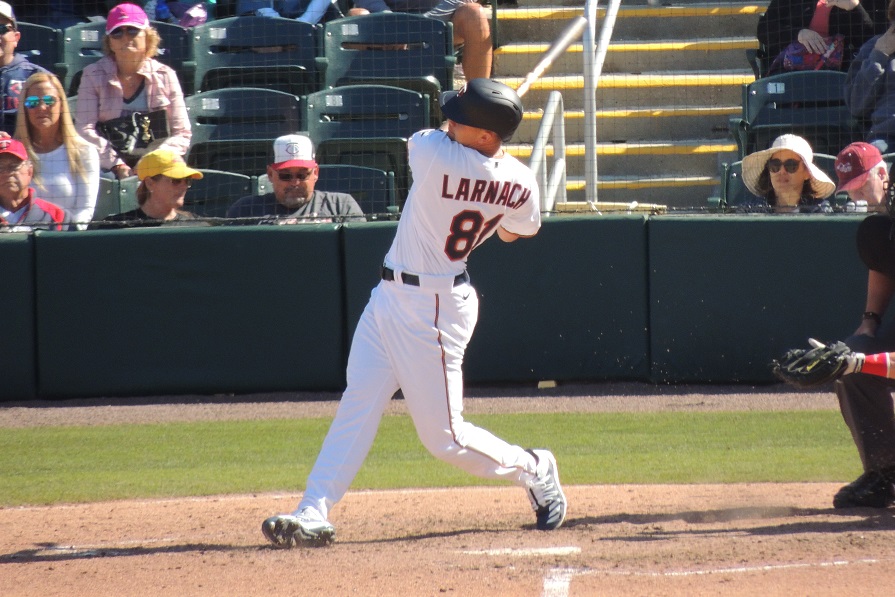 Before we look forward, let’s quickly look back. Larnach was the Twins first-round draft pick in 2018, the 20th player selected overall. He then went to Omaha and helped lead the Oregon State Beavers to the College World Series championship. After signing, he split that season between Elizabethton and Cedar Rapids. In 2019, he was the Twins (and Twins Daily’s) Minor League Player/Hitter of the Year. He was the Florida State League Most Valuable Player after hitting .316/.382/.459 (.842) with 26 doubles and six homers in 84 games, impressive numbers in the notoriously pitcher-friendly Florida State League. He moved up to Double-A Pensacola for 43 late-season games. He hit .295/.387/.455 (.842) with four doubles and seven homers. He moved up many national prospect rankings, but The Athletic’s Keith Law wrote this about him in his February 2020 Twins rankings. “Larnach has plus power the other way, which is usually a very positive indicator for a hitter, but he doesn’t pull the ball except to roll over to the second baseman, so scouts are left wondering if he can adjust as pitchers work him on the inner half.” When I talked to Larnach in December of 2019 for his Minor League Hitter of the Year article in the 2020 Minnesota Twins Prospect Handbook, it was something that Larnach focused on that offseason. He said, “It’s not only being able to drive the ball from left field to center field, but to be able to hit it out of the park from center to right field. It’s something that’s been in development, and I'm feeling really good about now. It didn’t necessarily come within a couple of swings, but it’s taken four years and continues to be put to the test.” Hitting is Larnach’s calling card. On a recent , fellow top prospect , “I know a hitter that would be a great hitting coach is Trevor Larnach. He knows how to dissect a baseball swing and really go into it, and he really knows how to talk to you about your swing and dive deeply into it.” Overall, his work paid off. He was invited to big-league spring training as a Non-Roster Invite in 2020 and made a great impression. While he was limited to DHing due to some shoulder tightness, he mashed the ball in his opportunities. In 24 at-bats, Larnach hit .333/.467/.708 (1.175) and three home runs. He had the opportunity to work with Twins Hall of Famer and former MVP Justin Morneau, something he gained a lot from. “He helped me out a lot in a lot of ways, whether it came down to drills, approach, scouting reports. Everything that you could possibly think of, he helped me out. It was so cool, because a guy like that, he’s willing to help guys and continuously talk hitting. It was super awesome, and I can’t thank him enough for that.” Unfortunately, Spring Training 2020 was cut short due to the COVID-19 pandemic. “When spring training stopped, it was a bit of a shock because you didn’t really understand what was happening. We went from playing, and not having a relationship with the fans at one point, to completely just packing up and going home.” A delayed season. Then the cancellation of the 2020 minor league season. Fortunately for Larnach, he was invited to participate with the Twins at their alternate site in St. Paul late in the year. It was certainly a different experience, filled with challenges, but he took advantage of the opportunity. “That was tough, you only had a limited amount of pitches. You only had a limited number of at-bats each week. But at the same time, you’re competing and still trying to develop at the same time but also try to stay locked in for any type of game scenario. The staff did the best they could in the circumstances that they had, so it was good.” Regarding his work on hitting the ball with authority to the pull-side of the field, Larnach said that he was seeing those results. “When I was at St. Paul, the majority of my home runs were pull side. So I thought I did a pretty good job before last season. During spring training I think that kind of showed me, because I was able to get that pitch out more consistently with the right spin, along with more pitches middle-in, away. So it helped out a lot. To have little at-bats and see that kind of development over at the alternate site was pretty exciting for me.” Larnach was not called up to the Twins during the season, but the organization is very high on him. He returned to Ft. Myers last week as a non-roster invite again. However, this time, he’s looking to do more than just make a good impression. Spring Training games begin on Sunday afternoon when the Twins host the Red Sox at Hammond Stadium in Ft. Myers. Like many games early on the spring schedule, it will be a seven-inning game. Larnach, who turned 24 on Friday, should expect to get a lot of at-bats throughout the spring schedule. While it is unlikely that he will make the Twins Opening Day roster, it is very likely that Larnach will make his major-league debut sometime during the 2021 season. So his mindset for spring is to prepare himself for the season and for the big leagues, whenever that time comes. “I’d say first off, the goal is always to make it up there, and always compete and win, and help the team win championships. But as of right now, I’m more or less focused on my process and getting ready for any type of season that’s thrown at me. So getting ready for major league pitching I’m about to be seeing, which would be great, and learn from the guys in this camp, all the older guys, all the vets. So that’s my mindset right now.” He learned a lot from his first big-league spring training a year ago. This spring, he is much more comfortable in the clubhouse, with the veterans, and the atmosphere. Being able to focus on what he needs to do to prepare is the key to his spring, in part, because the Twins have a lot of options in the corner outfield positions. There is a bit of a talent-filled log jam, and that isn’t a bad thing. “It’s out of my control. The only thing I can do is really get my work in, do the best thing I can, be the best human I can. At the end of the day, if you don’t make the team, or if you do, all that matters is that when you’re up there, it’s how you affect the team, how you produce, how you are as a teammate. Because the whole goal is just to win, to win championships. I know what I bring to the table, I know what a lot of other guys bring to the table. All the other outfielders are great guys and great players. And yeah, it’s a logjam, but it also makes it fun because you compete with each other, but you also play with each other. It’s a good thing.” Last summer, Larnach worked mostly in the corner outfield spots. He also got to spend a little bit of time at first base. This spring, he will be working exclusively in the outfield according to manager Rocco Baldelli. “Trevor’s going to play on the corners in the outfield. We’re not going to move him around to first base. Going forward, you never know, but right now, we’re going to let him get his work in the outfield.” On Saturday, Larnach talked about how he is working to improve this season. “I’m always trying to improve, every way that I can. I’m always looking for something I can do, whether it’s defensively, offensively, as a teammate, anything to help improve and help the chemistry in the team.” Larnach has a focus on all aspects of the game, but as you can see from several of his responses above, he always does so with the idea of winning, and winning championships in mind. It’s something that was instilled within him at Oregon State. In the Prospect Handbook article, Larnach said, “What they instill there is a lot of culture stuff with teammates, and building bonds, and caring about your team more than yourself. When you have that kind of culture set at a certain standard, regardless if you’re at practice or in a game. You’re always working to get better, but you’re working to reach a goal with your teammates because you’re built such an awesome bond. I was fortunate to learn that from them, and to experience that.” One of his teammates at Oregon State was Nick Madrigal. He was the fourth overall pick in that 2018 draft by the Chicago White Sox. In 2020, he made his major-league debut and hit .340/.376/.369 (.745) with three doubles in 29 games. While White Sox shortstop Tim Anderson continues to speak very publicly about Chicago’s athleticism, and calling them the best team in the American League, Larnach and Madrigal have started a little trash talk amongst themselves. It sounds pretty harmless. “I’m pretty close with Nick. It’s hard not to be close with a guy like that, and a teammate like that, when you’ve won a championship in college. We’re constantly talking trash to each other. We’re always in touch here and there. He’s a great dude. He’s a great competitor. I wish he was on our team because I know what he can do, but as far as us playing each other, it’s an exciting thing. I keep telling him ‘I’m coming, I’m coming for you.’ It’s going to be fun when that matchup comes. I can’t wait to see how it all pans out.” Neither can Twins fans. While Alex Kirilloff will, and understandably so, receive many of the headlines this spring, Twins fans should also be very excited about the future of Trevor Larnach. He too has a chance to be a very special player.
 -
Do-hyoung Park penned an absolutely fantastic article on Lewis Thorpe. https://www.mlb.com/twins/news/lewis-thorpe-reports-to-twins-in-better-shape-physically-mentally Check out the article, but Thorpe appears to have spent his offseason altering a lot of his lifestyle, habits, etc., He's bigger, stronger, more engaged and more. If so, he's exciting. His fastball was faster in his first spring opportunity to face batters the other day and he's feeling good.
-
The SB Nation site, Let's Go Tribe, they're doing some over-unders for their players. Today they discuss Eddie Rosario. I mainly just liked their Tweet about it... https://twitter.com/LetsGoTribe/status/1365315753159843841 https://www.letsgotribe.com/2021/2/26/22301007/over-under-2021-preview-eddie-rosario
-
Twins Daily 2021 Top Prospects: #1 OF Alex Kirilloff
Seth Stohs replied to Nick Nelson's topic in Twins Minor League Talk
Sounds like a great idea for a blog!! -
Notebook: Twins Sellouts and Prospect Peril
Seth Stohs replied to Ted Schwerzler 's topic in Twins Daily Front Page News
Royce said it was a little sore doing some side-by-sides while working out. Nothing much. Then he slipped on some ice in Dallas during their bad weather. Happened somewhere in there. -
A Good Comp for Jhoan Duran and His Splinker
Seth Stohs replied to Matthew Trueblood's topic in Twins Minor League Talk
I really like this comp and think it makes a lot of sense. Big, strong, hard-throwing, occasionally wild. Hopefully Duran will be able to stay healthy! -
Report from The Fort: Out of Left Field
Seth Stohs replied to John Bonnes's topic in Twins Daily Front Page News
It probably doesn't mean anything. Falvey and Levine are going to do what's best for the organization short-term and long-term. Right now, that probably means he plays 15 games in St. Paul. And that's absolutely justifiable because the difference between Kirilloff and Cave is probably miniscule over 15-18 games. -
Twins Daily 2021 Top Prospects: #1 OF Alex Kirilloff
Seth Stohs replied to Nick Nelson's topic in Twins Minor League Talk
We polled the rest of the Twins Daily writers... -
On Thursday night (5:30 central time), Seth will be chatting with Twins minor league right-handed pitching prospect Casey Legumina on a new episode of Twins Spotlight. The discussion was live on the Twins Daily social media platforms, Twitter, Facebook or YouTube pages. Casey Legumina was the Twins eighth-round draft pick in 2019 out of Gonzaga University. A native of Arizona, Legumina, he was drafted out of high school by Toronto. He went to college and was Cleveland's 35th round pick in 2018 after he went 3-3 with 13 saves in 26 games out of the bullpen. He went back to school and shifted to being a starter. He made four starts before a forearm injury ended his season. Unfortunately, he didn't pitch for the Twins that summer, and with the missed 2020 season, he is looking forward to making his professional debut. We'll talk to him about what has kept him busy, what he's been working on, a little on his youth ball days and much more. Join us live at 5:30 tonight to watch, and participate by sending your questions. We'll cover a ton of topics and take your questions as well. ------------------------------------------------------------------- Please watch LIVE at 5:30 pm (central time) Thursday night on the Twins Daily Twitter, Facebook or YouTube pages live. Also feel free to ask questions in the comments below or on those platforms during the show and we'll ask them. Subscribe to the Twins Daily podcast on Libsyn, Apple iTunes or anywhere you download podcasts. Here is the YouTube link where you can watch the show. For more on Casey Legumina: Follow Casey on Instagram at @casey_legumina4. Follow Casey on Twitter at @casey_legumina4. Previous Episodes Click here to see more previous episodes of Twins Spotlight. Episode 19: Regi Grace Episode 20: Louie Varland Episode 21: Max Smith Episode 22: Zander Wiel Episode 23: Blayne Enlow Episode 24: Royce Lewis Episode 25: Trey Cabbage Episode 26: Keoni Cavaco Episode 27: Casey Legumina View full article
-
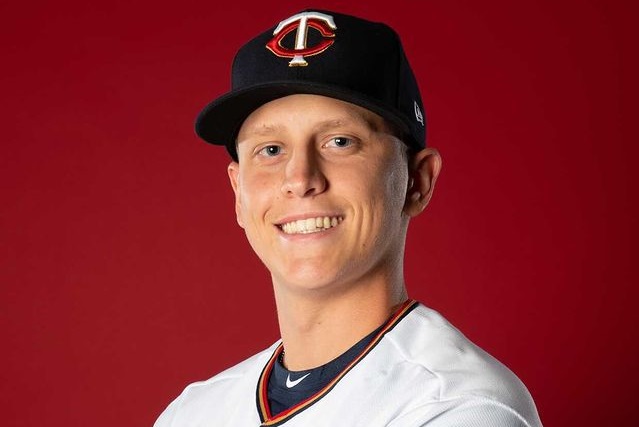 Casey Legumina was the Twins eighth-round draft pick in 2019 out of Gonzaga University. A native of Arizona, Legumina, he was drafted out of high school by Toronto. He went to college and was Cleveland's 35th round pick in 2018 after he went 3-3 with 13 saves in 26 games out of the bullpen. He went back to school and shifted to being a starter. He made four starts before a forearm injury ended his season. Unfortunately, he didn't pitch for the Twins that summer, and with the missed 2020 season, he is looking forward to making his professional debut. We'll talk to him about what has kept him busy, what he's been working on, a little on his youth ball days and much more. Join us live at 5:30 tonight to watch, and participate by sending your questions. We'll cover a ton of topics and take your questions as well. ------------------------------------------------------------------- Please watch LIVE at 5:30 pm (central time) Thursday night on the Twins Daily Twitter, Facebook or YouTube pages live. Also feel free to ask questions in the comments below or on those platforms during the show and we'll ask them. Subscribe to the Twins Daily podcast on Libsyn, Apple iTunes or anywhere you download podcasts. Here is the YouTube link where you can watch the show. For more on Casey Legumina: Follow Casey on Instagram at @casey_legumina4. Follow Casey on Twitter at @casey_legumina4. Previous Episodes Click here to see more previous episodes of Twins Spotlight. Episode 19: Regi Grace Episode 20: Louie Varland Episode 21: Max Smith Episode 22: Zander Wiel Episode 23: Blayne Enlow Episode 24: Royce Lewis Episode 25: Trey Cabbage Episode 26: Keoni Cavaco Episode 27: Casey Legumina
 -
Report from The Fort: Out of Left Field
Seth Stohs replied to John Bonnes's topic in Twins Daily Front Page News
Sano is an average-at-best (or, average, if kind) third baseman defensively. Josh Donaldson is a plus-defensive shortstop. Arraez is average-at-best defensively at second base, much less first base. Sano is actually a pretty solid first baseman. Donaldson also is one of their top 2 or 3 hitters. -
Twins Daily 2021 Top Prospects: #1 OF Alex Kirilloff
Seth Stohs replied to Nick Nelson's topic in Twins Minor League Talk
Our Rankings: Seth: 2 Nick: 1 Tom: 2 Cody: 1 -
Twins Daily 2021 Top Prospects: #1 OF Alex Kirilloff
Seth Stohs replied to Nick Nelson's topic in Twins Minor League Talk
This was Deron Johnson's last draft as the Director of Scouting. He got promoted after that year and Sean Johnson was promoted to the position. Most of the scouts are the same (plus and minus a few). The scouting leadership is the same. I think the biggest difference, from what I've heard, is the amount of communication and info/video shared between the scouts and the front office, the minor league coaches/coordinators, the big league coaches and others. -
Service Time: Fixing What Is Clearly Broken
Seth Stohs replied to Jeremy Nygaard's topic in Twins Daily Front Page News
yeah, while I like this idea, it's clear that (as with any deal) details would have to be worked out. Maybe there are more age breakdowns. 21-year-old: 9 years. 22-year-old: 8 years. 23-year-old and older 7 years. I'm sure if a study was done looking at MLB players who reach 8+ years in professional baseball and determine an average longevity for those players to reach free agency, probably since the current CBA details have been in effect... a huge percentage of those don't get to 9 or 10 years, or never do become free agents... but for those that do, it'd be interesting to know. I'm sure someone could do some study on that. -
Service Time: Fixing What Is Clearly Broken
Seth Stohs replied to Jeremy Nygaard's topic in Twins Daily Front Page News
I actually really like this idea... I do think the number of years would be an issue. That said, the idea of - as in your Soto example - of a guy having six years of arbitration is intriguing. And also, teams may have tough decisions on whether or not to tender (or non-tender) guys in those years as well. That would allow them to become free agents earlier.

