



Andrew Thares
-
Posts
653 -
Joined
-
Last visited
Content Type
Profiles
News
Minnesota Twins Videos
2026 Minnesota Twins Top Prospects Ranking
2022 Minnesota Twins Draft Picks
Minnesota Twins Free Agent & Trade Rumors, Notes, & Tidbits
Guides & Resources
2023 Minnesota Twins Draft Picks
The Minnesota Twins Players Project
2024 Minnesota Twins Draft Picks
2025 Minnesota Twins Draft Pick Tracker
2026 Minnesota Twins Draft Tracker: Picks & Bonuses
Forums
Blogs
Events
Store
Downloads
Gallery
Everything posted by Andrew Thares
-
As we continue our countdown of the Top 50 Prospects in the 2018 MLB Draft Class, we will look at the players that I have ranked from 31-40. Among these ten players, we have two guys each from Stanford and the University of Kentucky, three high school players from the state of Georgia and three high school catchers. As we continue our countdown of the Top 50 Prospects in the 2018 MLB Draft Class, we will look at the players that I have ranked from 31-40. Among these ten players, we have two guys each from Stanford and the University of Kentucky, three high school players from the state of Georgia and three high school catchers. 40. Tristan Pompey, Kentucky Pos: OF | B/T: S/R | Height: 6’4” | Weight: 200 | Age: 21 Previously Drafted: 31st Round, 2015 (MIN) Scouting Grades Hit: 55 Power: 50 Run: 55 Arm: 45 Field: 45 Overall: 50 The Kentucky outfield prospect Tristan Pompey is one of the better hitting prospects in this draft. Pompey doesn’t hit for a lot of power, but he isn’t exactly lacking in that department either. Pompey brings the combination of speed and power to potentially become a 20-20 guy. Pompey brings a patient eye to the plate as well. After finishing third in the SEC with a .464 On-Base Percentage in 2017, Pompey has followed that up with a .453 On-Base Percentage this year, which ranks third in the SEC this year. Pompey plays most of his games in left field at Kentucky, and that is likely where he will stay as a professional. Pompey does have above average athleticism for a corner outfielder, but he isn’t quite good enough for center. Additionally, Pompey doesn’t have the arm to play in right field. 39. Noah Naylor, St. Joan of Arc (Ont.) Pos: C | B/T: L/R | Height: 6’1” | Weight: 195 | Age: 18 Commitment: Texas A&M Scouting Grades Hit: 50 Power: 55 Run: 40 Arm: 55 Field: 45 Overall: 50 Noah Naylor is undoubtedly the best hitting catcher in the high school ranks in this year’s class. Naylor has the potential to be a catcher who has the rare ability to hit for both average and power. That power was on display last summer when he won the High School Home Run Derby as part of the MLB All-Star Weekend festivities last summer. Naylor’s defensive abilities behind the plate aren’t as highly regarded as his hitting abilities are beside the plate. However, Naylor does feature an above average arm from the behind the plate that helps him control the run game. Overall, Noah Naylor reminds me of a left-handed hitting only Carlos Santana when he first came up as a catcher. He will never provide a lot of value defensively behind the plate, and if he isn’t able to stick at catcher as he ages he could have the bat to be productive as a corner infielder. 38. Kris Bubic, Stanford Pos: LHP | Height: 6’3” | Weight: 180 | Age: 20 Previously Drafted: Never Scouting Grades Fastball: 55 Curveball: 50 Changeup: 60 Control: 55 Overall: 50 The second of three Stanford Cardinal to make my top 50, Kris Bubic is a left-handed pitcher who has had tremendous production during his time in college. In not quite three seasons at Stanford he has a career 2.89 ERA over 205 2/3 innings. Bubic was also named the Cape Cod League Pitcher of the Year last summer after posting a 1.65 ERA while striking out 41 in 32.2 innings. From a stuff perspective, Bubic’s changeup is easily his best pitch. The changeup serves as his go to strikeout pitch and is right up there as one of the best changeups in the class. His fastball receives a plus grade, though that mostly comes from the excellent control that he has with it, as the velocity tends to sit around 90. When you watch him pitch, it is obvious that Bubic models his left-handed delivery after Clayton Kershaw, and, well, who could blame him, Kershaw has been the best pitcher in the game for the past decade and is known for his deceptive delivery. 37. Anthony Seigler, Catersville (GA) Pos: C | B/T: S/S | Height: 5’11” | Weight: 200 | Age: 18 Commitment: Florida Scouting Grades Hit: 55 Power: 40 Run: 45 Arm: 55 Field: 55 Overall: 50 No, Anthony Seigler being both a switch-hitter and a switch-thrower is not a typo. Seigler has gained a reputation as being high school baseball’s Pat Venditte because he can pitch with both his right hand and his left hand. Unlike Venditte, however, Seigler will make his money in pro ball not as a pitcher, but as a catcher. Seigler is probably the most well-rounded catching prospect in this draft. He doesn’t possess the raw power like Noah Naylor, but he is a much better defensive catcher, and can hit for average. Baseball skills aside, Seigler is one of those players in this draft that you can’t help but root for. He is a hard-working a well-spoken young man who one day could be the face of Major League Baseball for the Native American community. Just watch this video and tell me that he isn’t a player you would want to represent the Minnesota Twins for years to come. 36. Jordan Groshans, Magnolia (TX) Pos: SS/3B | B/T: R/R | Height: 6’4” | Weight: 190 | Age: 18 Commitment: Kansas Scouting Grades Hit: 55 Power: 50 Run: 50 Arm: 55 Field: 50 Overall: 50 Jordan Groshans has primarily played shortstop through his high school career, but as he fills out his 6’4” frame scouts believe that he will transition into a third baseman. At the same time, however, Groshans filling out will help him become one of the better all-around hitters in this draft. In the box, Groshans has a wide stance, and features a big leg kick that helps him generate his power. To me it resembles the swing of Josh Donaldson, though Groshans doesn’t crouch down to the extent that Donaldson does. In the field, Groshans shouldn’t have any troubles moving over to third full time. He is an athletic kid who fields his position well. He does have a big arm that will play at third, however his throwing motion is too long for an infielder. Groshans will need to work on shortening that up as he moves up through the minors. 35. Cole Wilcox, Heritage (GA) Pos: RHP | Height: 6’5” | Weight: 220 | Age: 18 Commitment: Georgia Scouting Grades Fastball: 60 Slider: 55 Changeup: 60 Control: 50 Overall: 50 A high school pitcher with three plus pitches is more of the exception rather than the rule, but that is exactly what Cole Wilcox has. His fastball will sit in the low to mid-90s with some sink. His best secondary offering is his changeup, though his slider isn’t that far behind. At 6’5” and 220, Wilcox has the projectable frame that scouts rave over. As he continues to develop, adding a couple more ticks to his fastball isn’t out of the question. Where teams are wary of Wilcox is in his delivery, that he brings back far behind his back and then comes through at more of a three-quarters arm slot. This is what helps Wilcox get the movement on his fastball, but at the same time could lead to both control and injury concerns down the road. 34. Xavier Edwards, North Broward (FL) Pos: 2B/SS | B/T: S/R | Height: 5’10” | Weight: 155 | Age: 18 Commitment: Vanderbilt Scouting Grades Hit: 50 Power: 40 Run: 70 Arm: 50 Field: 55 Overall: 50 When talking about the best athletes in this year’s class, you would be remiss to leave Xavier Edwards off that list. Edwards’ speed is game-changing on both the offensive and defensive sides of the ball. He will never be a guy with much power, but Edwards does have a compact swing that helps him line the ball all over the field. Defensively, the range will never be the question for Edwards. What will be the question is his arm strength, which could force a move over to second. Edwards is a silky-smooth defender and with his range he should turn in his fair share of highlight reel defensive plays in the middle-infield. To me Edwards is a much better comp to Dee Gordon than Nick Gordon ever was. His speed is higher end than Nick Gordon’s, and while Nick Gordon has shown more signs of pop in his bat, Edwards will likely remain a singles and doubles hitter like Dee Gordon. 33. Tristan Beck, Stanford Pos: RHP | Height: 6’4” | Weight: 165 | Age: 21 Previously Drafted: 28th Round, 2017 (NYY) Scouting Grades Fastball: 55 Curveball: 50 Slider: 50 Changeup: 60 Control: 55 Overall: 50 The third and final Stanford Cardinal on the list, Tristan Beck is the Friday Night Ace of the Cardinal rotation. Beck was a highly acclaimed prospect as a draft-eligible sophomore last season but suffered a back injury that cause him to miss all of 2017. Beck has returned to form this year with a 2.90 ERA and 59 strikeouts over 71 1/3 innings for the third ranked Stanford Cardinal. Beck’s control at Stanford has been impeccable, as he has walked just 7.5 percent of the batters he has faced in his career. Beck’s fastball will sit in the low 90’s but it is a pitch that he has great control of. Beck features a big 12-6 curveball along with a sharp breaking slider. His best off-speed pitch is his changeup that gives Beck a complete four-pitch mix. 32. Will Banfield, Brookwood (GA) Pos: C | B/T: R/R | Height: 6’1” | Weight: 200 | Age: 18 Commitment: Vanderbilt Scouting Grades Hit: 45 Power: 50 Run: 35 Arm: 70 Field: 55 Overall: 50 I have already touched on Noah Naylor (the power hitting catcher) and Anthony Seigler (the all-around catcher), but there is a third highly regarded high school catching prospect in this year’s draft, Will Banfield. Banfield has built himself a reputation as being one of the best defensive catchers in recent draft history. Not only is Banfield an excellent backstop, but he also has a cannon of an arm attached to his right shoulder. Banfield is not slouch at the plate either. While he doesn’t have the hitting ability of Naylor or Seigler, he still has the potential to be an above average hitter for a catcher. If Banfield can take some of the swing and miss out of his bat he could be a star for years to come. 31. Sean Hjelle, Kentucky Pos: RHP | Height: 6’11” | Weight: 215 | Age: 21 Previously Drafted: Never Scouting Grades Fastball: 55 Curveball: 60 Slider: 50 Changeup: 50 Control: 55 Overall: 50 It might be easy to compare Sean Hjelle to former Twins pitcher Alex Meyer. They are both tall (Hjelle is two-inches taller than Meyer) right-handers who come out of the University of Kentucky. However, that is where the similarities stop. While Meyer is a pitcher with electric stuff but has some serious control issues, Hjelle is more of a pitch to contact pitcher with excellent command. Despite being 6’11” Hjelle’s fastball only sits in the low 90’s (occasionally touching the mid-90’s). His best pitch is his power 12-6 curveball. Hjelle does have a slider and a changeup as well, but neither pitch flashes all that much. Hjelle is a wiry pitcher at just 215 pounds and will need to keep putting on more weight as he matures. Hjelle projects to be more of a three or four starter in an MLB rotation but if he can add some more velocity as he fills out that could change. Rest of the 2018 MLB Draft Top 50 2018 MLB Draft Top 50 Prospect: 41-50 View full article
-
 40. Tristan Pompey, Kentucky Pos: OF | B/T: S/R | Height: 6’4” | Weight: 200 | Age: 21 Previously Drafted: 31st Round, 2015 (MIN) Scouting Grades Hit: 55 Power: 50 Run: 55 Arm: 45 Field: 45 Overall: 50 The Kentucky outfield prospect Tristan Pompey is one of the better hitting prospects in this draft. Pompey doesn’t hit for a lot of power, but he isn’t exactly lacking in that department either. Pompey brings the combination of speed and power to potentially become a 20-20 guy. Pompey brings a patient eye to the plate as well. After finishing third in the SEC with a .464 On-Base Percentage in 2017, Pompey has followed that up with a .453 On-Base Percentage this year, which ranks third in the SEC this year. Pompey plays most of his games in left field at Kentucky, and that is likely where he will stay as a professional. Pompey does have above average athleticism for a corner outfielder, but he isn’t quite good enough for center. Additionally, Pompey doesn’t have the arm to play in right field. 39. Noah Naylor, St. Joan of Arc (Ont.) Pos: C | B/T: L/R | Height: 6’1” | Weight: 195 | Age: 18 Commitment: Texas A&M Scouting Grades Hit: 50 Power: 55 Run: 40 Arm: 55 Field: 45 Overall: 50 Noah Naylor is undoubtedly the best hitting catcher in the high school ranks in this year’s class. Naylor has the potential to be a catcher who has the rare ability to hit for both average and power. That power was on display last summer when he won the High School Home Run Derby as part of the MLB All-Star Weekend festivities last summer. Naylor’s defensive abilities behind the plate aren’t as highly regarded as his hitting abilities are beside the plate. However, Naylor does feature an above average arm from the behind the plate that helps him control the run game. Overall, Noah Naylor reminds me of a left-handed hitting only Carlos Santana when he first came up as a catcher. He will never provide a lot of value defensively behind the plate, and if he isn’t able to stick at catcher as he ages he could have the bat to be productive as a corner infielder. 38. Kris Bubic, Stanford Pos: LHP | Height: 6’3” | Weight: 180 | Age: 20 Previously Drafted: Never Scouting Grades Fastball: 55 Curveball: 50 Changeup: 60 Control: 55 Overall: 50 The second of three Stanford Cardinal to make my top 50, Kris Bubic is a left-handed pitcher who has had tremendous production during his time in college. In not quite three seasons at Stanford he has a career 2.89 ERA over 205 2/3 innings. Bubic was also named the Cape Cod League Pitcher of the Year last summer after posting a 1.65 ERA while striking out 41 in 32.2 innings. From a stuff perspective, Bubic’s changeup is easily his best pitch. The changeup serves as his go to strikeout pitch and is right up there as one of the best changeups in the class. His fastball receives a plus grade, though that mostly comes from the excellent control that he has with it, as the velocity tends to sit around 90. When you watch him pitch, it is obvious that Bubic models his left-handed delivery after Clayton Kershaw, and, well, who could blame him, Kershaw has been the best pitcher in the game for the past decade and is known for his deceptive delivery. 37. Anthony Seigler, Catersville (GA) Pos: C | B/T: S/S | Height: 5’11” | Weight: 200 | Age: 18 Commitment: Florida Scouting Grades Hit: 55 Power: 40 Run: 45 Arm: 55 Field: 55 Overall: 50 No, Anthony Seigler being both a switch-hitter and a switch-thrower is not a typo. Seigler has gained a reputation as being high school baseball’s Pat Venditte because he can pitch with both his right hand and his left hand. Unlike Venditte, however, Seigler will make his money in pro ball not as a pitcher, but as a catcher. Seigler is probably the most well-rounded catching prospect in this draft. He doesn’t possess the raw power like Noah Naylor, but he is a much better defensive catcher, and can hit for average. Baseball skills aside, Seigler is one of those players in this draft that you can’t help but root for. He is a hard-working a well-spoken young man who one day could be the face of Major League Baseball for the Native American community. Just watch this video and tell me that he isn’t a player you would want to represent the Minnesota Twins for years to come. 36. Jordan Groshans, Magnolia (TX) Pos: SS/3B | B/T: R/R | Height: 6’4” | Weight: 190 | Age: 18 Commitment: Kansas Scouting Grades Hit: 55 Power: 50 Run: 50 Arm: 55 Field: 50 Overall: 50 Jordan Groshans has primarily played shortstop through his high school career, but as he fills out his 6’4” frame scouts believe that he will transition into a third baseman. At the same time, however, Groshans filling out will help him become one of the better all-around hitters in this draft. In the box, Groshans has a wide stance, and features a big leg kick that helps him generate his power. To me it resembles the swing of Josh Donaldson, though Groshans doesn’t crouch down to the extent that Donaldson does. In the field, Groshans shouldn’t have any troubles moving over to third full time. He is an athletic kid who fields his position well. He does have a big arm that will play at third, however his throwing motion is too long for an infielder. Groshans will need to work on shortening that up as he moves up through the minors. 35. Cole Wilcox, Heritage (GA) Pos: RHP | Height: 6’5” | Weight: 220 | Age: 18 Commitment: Georgia Scouting Grades Fastball: 60 Slider: 55 Changeup: 60 Control: 50 Overall: 50 A high school pitcher with three plus pitches is more of the exception rather than the rule, but that is exactly what Cole Wilcox has. His fastball will sit in the low to mid-90s with some sink. His best secondary offering is his changeup, though his slider isn’t that far behind. At 6’5” and 220, Wilcox has the projectable frame that scouts rave over. As he continues to develop, adding a couple more ticks to his fastball isn’t out of the question. Where teams are wary of Wilcox is in his delivery, that he brings back far behind his back and then comes through at more of a three-quarters arm slot. This is what helps Wilcox get the movement on his fastball, but at the same time could lead to both control and injury concerns down the road. 34. Xavier Edwards, North Broward (FL) Pos: 2B/SS | B/T: S/R | Height: 5’10” | Weight: 155 | Age: 18 Commitment: Vanderbilt Scouting Grades Hit: 50 Power: 40 Run: 70 Arm: 50 Field: 55 Overall: 50 When talking about the best athletes in this year’s class, you would be remiss to leave Xavier Edwards off that list. Edwards’ speed is game-changing on both the offensive and defensive sides of the ball. He will never be a guy with much power, but Edwards does have a compact swing that helps him line the ball all over the field. Defensively, the range will never be the question for Edwards. What will be the question is his arm strength, which could force a move over to second. Edwards is a silky-smooth defender and with his range he should turn in his fair share of highlight reel defensive plays in the middle-infield. To me Edwards is a much better comp to Dee Gordon than Nick Gordon ever was. His speed is higher end than Nick Gordon’s, and while Nick Gordon has shown more signs of pop in his bat, Edwards will likely remain a singles and doubles hitter like Dee Gordon. 33. Tristan Beck, Stanford Pos: RHP | Height: 6’4” | Weight: 165 | Age: 21 Previously Drafted: 28th Round, 2017 (NYY) Scouting Grades Fastball: 55 Curveball: 50 Slider: 50 Changeup: 60 Control: 55 Overall: 50 The third and final Stanford Cardinal on the list, Tristan Beck is the Friday Night Ace of the Cardinal rotation. Beck was a highly acclaimed prospect as a draft-eligible sophomore last season but suffered a back injury that cause him to miss all of 2017. Beck has returned to form this year with a 2.90 ERA and 59 strikeouts over 71 1/3 innings for the third ranked Stanford Cardinal. Beck’s control at Stanford has been impeccable, as he has walked just 7.5 percent of the batters he has faced in his career. Beck’s fastball will sit in the low 90’s but it is a pitch that he has great control of. Beck features a big 12-6 curveball along with a sharp breaking slider. His best off-speed pitch is his changeup that gives Beck a complete four-pitch mix. 32. Will Banfield, Brookwood (GA) Pos: C | B/T: R/R | Height: 6’1” | Weight: 200 | Age: 18 Commitment: Vanderbilt Scouting Grades Hit: 45 Power: 50 Run: 35 Arm: 70 Field: 55 Overall: 50 I have already touched on Noah Naylor (the power hitting catcher) and Anthony Seigler (the all-around catcher), but there is a third highly regarded high school catching prospect in this year’s draft, Will Banfield. Banfield has built himself a reputation as being one of the best defensive catchers in recent draft history. Not only is Banfield an excellent backstop, but he also has a cannon of an arm attached to his right shoulder. Banfield is not slouch at the plate either. While he doesn’t have the hitting ability of Naylor or Seigler, he still has the potential to be an above average hitter for a catcher. If Banfield can take some of the swing and miss out of his bat he could be a star for years to come. 31. Sean Hjelle, Kentucky Pos: RHP | Height: 6’11” | Weight: 215 | Age: 21 Previously Drafted: Never Scouting Grades Fastball: 55 Curveball: 60 Slider: 50 Changeup: 50 Control: 55 Overall: 50 It might be easy to compare Sean Hjelle to former Twins pitcher Alex Meyer. They are both tall (Hjelle is two-inches taller than Meyer) right-handers who come out of the University of Kentucky. However, that is where the similarities stop. While Meyer is a pitcher with electric stuff but has some serious control issues, Hjelle is more of a pitch to contact pitcher with excellent command. Despite being 6’11” Hjelle’s fastball only sits in the low 90’s (occasionally touching the mid-90’s). His best pitch is his power 12-6 curveball. Hjelle does have a slider and a changeup as well, but neither pitch flashes all that much. Hjelle is a wiry pitcher at just 215 pounds and will need to keep putting on more weight as he matures. Hjelle projects to be more of a three or four starter in an MLB rotation but if he can add some more velocity as he fills out that could change. Rest of the 2018 MLB Draft Top 50 2018 MLB Draft Top 50 Prospect: 41-50
 -

2018 MLB Draft Top 50 Prospects: 41-50
Andrew Thares replied to Andrew Thares's topic in Twins Daily Front Page News
I haven't really seen much about him being much of a draft prospect for this years draft. My guess is he is a guy that some team will draft in one of the later rounds, and he will end up going to Georgia. It's not that he isn't a good talent, but unless he is a guy taken in the first few rounds, most high school prospects tend to slip for sign ability reasons, but he could fit in nicely with a Georgia team that is going to be really good for the next few years. -
Believe it or not the 2018 MLB Draft is just three weeks away. With that being said, it is time to ramp up the pre-draft coverage here at Twins Daily. Over the next few weeks I will be releasing my Top 50 Draft Prospect Rankings, along with other draft related content to help get you prepared for the draft. Believe it or not the 2018 MLB Draft is just three weeks away. With that being said, it is time to ramp up the pre-draft coverage here at Twins Daily. Over the next few weeks I will be releasing my Top 50 Draft Prospect Rankings, along with other draft related content to help get you prepared for the draft. 50. Nico Hoerner, Stanford Pos: 2B/SS | B/T: R/R | Height: 5’11” | Weight: 195 | Age: 20 Previously Drafted: Never Scouting Grades Hit: 55 Power: 40 Run: 50 Arm: 50 Field: 50 Overall: 50 The Stanford Cardinal have been a top 5 team in the country all season, and Junior shortstop Nico Hoerner has had a lot to do with that. Hoerner has a been one of the offensive leaders for the Cardinal with a .335/.385/.492 slash line this year. Despite playing short at the college level, Hoerner profiles more as a second-baseman in the professional ranks. Hoerner is a solid player defensively, but his range and arm strength are what will force the move to second. As a hitter, Hoerner doesn’t feature the power bat that has become more common than not at second base of late. However, he can still be an above average player offensively with his plus-plus contact ability, having struck out just 10% of the time in over 700 career plate appearances at Stanford. Hoerner has also developed the ability to steal bases this year, going 13 for 17 after just three stolen bases in his first two years combined. 49. Alek Thomas, Mount Carmel (Ill.) Pos: OF | B/T: L/L | Height: 5’11” | Weight: 175 | Age: 18 Commitment: TCU Scouting Grades Hit: 55 Power: 45 Run: 60 Arm: 40 Field: 60 Overall: 50 When compared to other high school prospects, Alek Thomas is more of a high floor and low ceiling type of player. His speed and defense will play right away at the highest levels and will make him a valuable player even if the bat is a little bit slow to develop. Thomas also has above average contact ability, but his small frame will keep him from ever being much of a power hitter. Thomas’s best chance of success offensively is developing a patient eye at the plate and becoming a high on-base guy that can take advantage of his speed. Personally, I give Thomas a Zack Granite with a little bit more upside comp. His defense might not be quite as elite as Granite’s, but if he continues to grow a little more he will add at least some power potential, as opposed to the next to none that Granite has. 48. Jameson Hannah, Dallas Baptist Pos: OF | B/T: L/L | Height: 5’9” | Wight: 184 | Age: 20 Previously Drafted: Never Scouting Grades Hit: 55 Power: 45 Run: 60 Arm: 40 Field: 55 Overall: 50 Keeping up with the trend of undersized position players so far, Jameson Hannah fits that mold as well. A few years older, than Alek Thomas, Hannah has developed into the kind of player at Dallas Baptist that you would hope Thomas becomes as he ages. Hannah doesn’t have the power to hit the ball out of the park with any regularity (just 3 HR in 45 games this season) but he does have enough power and speed to be a good doubles hitter. Hannah also has plus contact ability along with a patient eye at the plate that helps him draw his share of walks without striking out much. So far this season, Hannah has drawn 29 walks while only striking out 29 times. 47. Lineras Torres Jr., Beacon (N.Y.) Pos: RHP | Height: 6’2” | Weight: 185 | Age: 17 Commitment: St. John’s Scouting Grades Fastball: 60 Slider: 50 Changeup: 45 Control: 50 Overall: 50 Lineras Torres Jr. is one of the more raw pitching talents in this year’s draft. He features a high velocity fastball that sits in the mid 90s and has touched as high as 98 MPH. Torres also throws a slider and a changeup, but both pitches are still pretty underdeveloped. His lack of a plus secondary offering has many worried that he won’t be able to stick as a starter long term. There is some potential in his slider, but his changeup is still a shot in the dark. If teams don’t see him making a long term run at the rotation, it will cause him to drop on their boards. One thing Torres has going for him is his young age, even for a high school prospect, as he won’t turn 18 until October. If you recall when Royce Lewis was drafted last year, one thing many people loved was how young he was having just turned 18 right before he was drafted, and Torres will be a full 4 months younger than that. 46. Seth Beer, Clemson Pos: 1B/OF | B/T: L/R | Height: 6’2” | Weight: 195 | Age: 21 Previously Drafted: Never Scouting Grades Hit: 50 Power: 55 Run: 20 Arm: 45 Field: 35 Overall: 50 Seth Beer brings one of the top college power bats that is available this year. Now in his junior year at Clemson, Beer has belted 50 career home runs, including 16 this year. Unlike many power hitters these days, strikeouts aren’t much of a concern for Beer as he has just an 11 percent career strikeout rate. Additionally, Beer is a guy who will draw his fair share of walks and hit-by-pitches, having walked over 20 percent of the time in his career and drawn an additional 39 hit-by-pitches. The biggest concern for Beer is his lack of athletic ability. While he has played both outfield and first base during his time at Clemson, many scouts don’t see him being able to stick at either position, and will most likely become a DH at the highest levels. 45. Griffin Conine, Duke Pos: OF | B/T: L/R | Height: 6’1” | Weight: 195 | Age: 20 Previously Drafted: Never Scouting Grades Hit: 45 Power: 55 Run: 40 Arm: 55 Field: 50 Overall: 50 2017 was a breakout year for Griffin Conine (son of Jeff Conine). After hitting 13 of Duke’s 38 home runs during the college season, Conine went to the Cape Code League where he hit a league leading nine home runs in 42 games with a wood bat. Conine has hit another 12 home runs for Duke so far this year, but his contact numbers have dipped, as both his batting average and on-base percentage have dropped off by 40 points this season. Defensively, Conine projects to stay in right field, as he doesn’t have the range of a centerfielder, but his big arm will allow him to make the long throw from right to third. 44. Griffin Roberts, Wake Forrest Pos: RHP | Height: 6’3” | Weight: 210 | Age: 21 Previously Drafted: 29th Round, 2017 (MIN) Scouting Grades Fastball: 55 Slider: 70 Changeup: 50 Control: 50 Overall: 50 After being selected as a reliever in the 29th round by the Minnesota Twins in last year’s draft, Griffin Roberts decided to go back to Wake Forrest for another season to transition into a starting role, and boy has that paid off for him. Roberts has vaulted up the prospect rankings this year and should get an early enough round selection to potentially sign for seven figures. On the mound, Roberts’ has one of the best pitches in this draft in his 70-grade slider. Roberts also features a plus fastball as well. This dominant two-pitch mix made him one of college baseball’s most effective relief pitchers in baseball over his first two years at Wake Forrest, where he struck out a school record 13.5 batters per 9 innings last season. If teams think Roberts can develop his changeup into an effective third offering he has a chance to become a starter. If not, Roberts is a guy who could move up quickly through a farm system as a reliever and could potentially help a big-league team toward the end of the 2019 season. 43. Nick Schnell, Roncalli (Ind.) Pos: OF | B/T: L/R | Height: 6’2” | Weight: 180 | Age: 18 Commitment: Louisville Scouting Grades Hit: 55 Power: 50 Run: 60 Arm: 60 Field: 60 Overall: 50 Coming out of the Indiana prep ranks, Nick Schnell has the ability to become a five-tool player if his bat continues to develop. He doesn’t flash a lot of home run power now, but as he continues to grow into his body the power should come with it. In the outfield, Schnell has both the range to possibly stick at center, but if he loses a step as he continues to fill out his body, he has the arm to be a plus defensive outfielder in right. While he isn’t the most perfect comp in the world, I do see Schnell developing into a Max Kepler type of player. By that I mean as an outfielder he doesn’t have any one skill that jumps off the map but could have average or better skills everywhere across the board. 42. Joe Gray Jr., Hattiesburg (Miss.) Pos: OF | B/T: R/R | Height: 6’3” | Weight: 195 | Age: 18 Commitment: Ole Miss Scouting Grades Hit: 45 Power: 55 Run: 55 Arm: 70 Field: 55 Overall: 50 Joe Gray Jr. might be the biggest gamble pick of any player in the draft. He features two tools in his power and arm that could make Gray an all-star caliber player, but the questions around his hitting ability could make it hard for him to make it to the big leagues all together. At the plate, Gray has a lot of movement in his hands and it creates an unnatural looking swing with a lot of holes in it. For whichever team drafts him, Gray’s swing will become a long-term project for their hitting coaches. Gray has the athletic ability to start in center, but if he needs to move to right that won’t be a concern as he has maybe the biggest arm of any outfielder in this draft. 41. J.T. Ginn, Brandon (Miss.) Pos: RHP | Height: 6’2” | Weight: 199 | Age: 19 Commitment: Mississippi St. Scouting Grades Fastball: 70 Slider: 60 Changeup: 50 Control: 50 Overall: 50 Just like Joe Gray Jr., J.T. Ginn is another Mississippi high school prospect with a large amount of upside potential, though Ginn’s potential comes on the mound. Ginn’s fastball and breaking ball combo is one of the best two-pitch mixes from a high school pitcher in the class. There are, however, a few hesitations with Ginn that are preventing him from being considered a potential Top 10 pick in the draft. The first is his lack of a third offering. Ginn has been working on a changeup, but he hasn’t really shown it in game use. The other concern is his delivery, which while deceptive to opposing hitters, can be hard to repeat. If Ginn can clean up his delivery and add a decent changeup to his repertoire, he could be an impact starter at the major league level. If not, his dominant fastball-breaking ball combo could make him an ideal fit in the back end of the bullpen. https://www.youtube.com/watch?v=LuDiQ67cXvI View full article
-
 50. Nico Hoerner, Stanford Pos: 2B/SS | B/T: R/R | Height: 5’11” | Weight: 195 | Age: 20 Previously Drafted: Never Scouting Grades Hit: 55 Power: 40 Run: 50 Arm: 50 Field: 50 Overall: 50 The Stanford Cardinal have been a top 5 team in the country all season, and Junior shortstop Nico Hoerner has had a lot to do with that. Hoerner has a been one of the offensive leaders for the Cardinal with a .335/.385/.492 slash line this year. Despite playing short at the college level, Hoerner profiles more as a second-baseman in the professional ranks. Hoerner is a solid player defensively, but his range and arm strength are what will force the move to second. As a hitter, Hoerner doesn’t feature the power bat that has become more common than not at second base of late. However, he can still be an above average player offensively with his plus-plus contact ability, having struck out just 10% of the time in over 700 career plate appearances at Stanford. Hoerner has also developed the ability to steal bases this year, going 13 for 17 after just three stolen bases in his first two years combined. 49. Alek Thomas, Mount Carmel (Ill.) Pos: OF | B/T: L/L | Height: 5’11” | Weight: 175 | Age: 18 Commitment: TCU Scouting Grades Hit: 55 Power: 45 Run: 60 Arm: 40 Field: 60 Overall: 50 When compared to other high school prospects, Alek Thomas is more of a high floor and low ceiling type of player. His speed and defense will play right away at the highest levels and will make him a valuable player even if the bat is a little bit slow to develop. Thomas also has above average contact ability, but his small frame will keep him from ever being much of a power hitter. Thomas’s best chance of success offensively is developing a patient eye at the plate and becoming a high on-base guy that can take advantage of his speed. Personally, I give Thomas a Zack Granite with a little bit more upside comp. His defense might not be quite as elite as Granite’s, but if he continues to grow a little more he will add at least some power potential, as opposed to the next to none that Granite has. 48. Jameson Hannah, Dallas Baptist Pos: OF | B/T: L/L | Height: 5’9” | Wight: 184 | Age: 20 Previously Drafted: Never Scouting Grades Hit: 55 Power: 45 Run: 60 Arm: 40 Field: 55 Overall: 50 Keeping up with the trend of undersized position players so far, Jameson Hannah fits that mold as well. A few years older, than Alek Thomas, Hannah has developed into the kind of player at Dallas Baptist that you would hope Thomas becomes as he ages. Hannah doesn’t have the power to hit the ball out of the park with any regularity (just 3 HR in 45 games this season) but he does have enough power and speed to be a good doubles hitter. Hannah also has plus contact ability along with a patient eye at the plate that helps him draw his share of walks without striking out much. So far this season, Hannah has drawn 29 walks while only striking out 29 times. 47. Lineras Torres Jr., Beacon (N.Y.) Pos: RHP | Height: 6’2” | Weight: 185 | Age: 17 Commitment: St. John’s Scouting Grades Fastball: 60 Slider: 50 Changeup: 45 Control: 50 Overall: 50 Lineras Torres Jr. is one of the more raw pitching talents in this year’s draft. He features a high velocity fastball that sits in the mid 90s and has touched as high as 98 MPH. Torres also throws a slider and a changeup, but both pitches are still pretty underdeveloped. His lack of a plus secondary offering has many worried that he won’t be able to stick as a starter long term. There is some potential in his slider, but his changeup is still a shot in the dark. If teams don’t see him making a long term run at the rotation, it will cause him to drop on their boards. One thing Torres has going for him is his young age, even for a high school prospect, as he won’t turn 18 until October. If you recall when Royce Lewis was drafted last year, one thing many people loved was how young he was having just turned 18 right before he was drafted, and Torres will be a full 4 months younger than that. 46. Seth Beer, Clemson Pos: 1B/OF | B/T: L/R | Height: 6’2” | Weight: 195 | Age: 21 Previously Drafted: Never Scouting Grades Hit: 50 Power: 55 Run: 20 Arm: 45 Field: 35 Overall: 50 Seth Beer brings one of the top college power bats that is available this year. Now in his junior year at Clemson, Beer has belted 50 career home runs, including 16 this year. Unlike many power hitters these days, strikeouts aren’t much of a concern for Beer as he has just an 11 percent career strikeout rate. Additionally, Beer is a guy who will draw his fair share of walks and hit-by-pitches, having walked over 20 percent of the time in his career and drawn an additional 39 hit-by-pitches. The biggest concern for Beer is his lack of athletic ability. While he has played both outfield and first base during his time at Clemson, many scouts don’t see him being able to stick at either position, and will most likely become a DH at the highest levels. 45. Griffin Conine, Duke Pos: OF | B/T: L/R | Height: 6’1” | Weight: 195 | Age: 20 Previously Drafted: Never Scouting Grades Hit: 45 Power: 55 Run: 40 Arm: 55 Field: 50 Overall: 50 2017 was a breakout year for Griffin Conine (son of Jeff Conine). After hitting 13 of Duke’s 38 home runs during the college season, Conine went to the Cape Code League where he hit a league leading nine home runs in 42 games with a wood bat. Conine has hit another 12 home runs for Duke so far this year, but his contact numbers have dipped, as both his batting average and on-base percentage have dropped off by 40 points this season. Defensively, Conine projects to stay in right field, as he doesn’t have the range of a centerfielder, but his big arm will allow him to make the long throw from right to third. 44. Griffin Roberts, Wake Forrest Pos: RHP | Height: 6’3” | Weight: 210 | Age: 21 Previously Drafted: 29th Round, 2017 (MIN) Scouting Grades Fastball: 55 Slider: 70 Changeup: 50 Control: 50 Overall: 50 After being selected as a reliever in the 29th round by the Minnesota Twins in last year’s draft, Griffin Roberts decided to go back to Wake Forrest for another season to transition into a starting role, and boy has that paid off for him. Roberts has vaulted up the prospect rankings this year and should get an early enough round selection to potentially sign for seven figures. On the mound, Roberts’ has one of the best pitches in this draft in his 70-grade slider. Roberts also features a plus fastball as well. This dominant two-pitch mix made him one of college baseball’s most effective relief pitchers in baseball over his first two years at Wake Forrest, where he struck out a school record 13.5 batters per 9 innings last season. If teams think Roberts can develop his changeup into an effective third offering he has a chance to become a starter. If not, Roberts is a guy who could move up quickly through a farm system as a reliever and could potentially help a big-league team toward the end of the 2019 season. 43. Nick Schnell, Roncalli (Ind.) Pos: OF | B/T: L/R | Height: 6’2” | Weight: 180 | Age: 18 Commitment: Louisville Scouting Grades Hit: 55 Power: 50 Run: 60 Arm: 60 Field: 60 Overall: 50 Coming out of the Indiana prep ranks, Nick Schnell has the ability to become a five-tool player if his bat continues to develop. He doesn’t flash a lot of home run power now, but as he continues to grow into his body the power should come with it. In the outfield, Schnell has both the range to possibly stick at center, but if he loses a step as he continues to fill out his body, he has the arm to be a plus defensive outfielder in right. While he isn’t the most perfect comp in the world, I do see Schnell developing into a Max Kepler type of player. By that I mean as an outfielder he doesn’t have any one skill that jumps off the map but could have average or better skills everywhere across the board. 42. Joe Gray Jr., Hattiesburg (Miss.) Pos: OF | B/T: R/R | Height: 6’3” | Weight: 195 | Age: 18 Commitment: Ole Miss Scouting Grades Hit: 45 Power: 55 Run: 55 Arm: 70 Field: 55 Overall: 50 Joe Gray Jr. might be the biggest gamble pick of any player in the draft. He features two tools in his power and arm that could make Gray an all-star caliber player, but the questions around his hitting ability could make it hard for him to make it to the big leagues all together. At the plate, Gray has a lot of movement in his hands and it creates an unnatural looking swing with a lot of holes in it. For whichever team drafts him, Gray’s swing will become a long-term project for their hitting coaches. Gray has the athletic ability to start in center, but if he needs to move to right that won’t be a concern as he has maybe the biggest arm of any outfielder in this draft. 41. J.T. Ginn, Brandon (Miss.) Pos: RHP | Height: 6’2” | Weight: 199 | Age: 19 Commitment: Mississippi St. Scouting Grades Fastball: 70 Slider: 60 Changeup: 50 Control: 50 Overall: 50 Just like Joe Gray Jr., J.T. Ginn is another Mississippi high school prospect with a large amount of upside potential, though Ginn’s potential comes on the mound. Ginn’s fastball and breaking ball combo is one of the best two-pitch mixes from a high school pitcher in the class. There are, however, a few hesitations with Ginn that are preventing him from being considered a potential Top 10 pick in the draft. The first is his lack of a third offering. Ginn has been working on a changeup, but he hasn’t really shown it in game use. The other concern is his delivery, which while deceptive to opposing hitters, can be hard to repeat. If Ginn can clean up his delivery and add a decent changeup to his repertoire, he could be an impact starter at the major league level. If not, his dominant fastball-breaking ball combo could make him an ideal fit in the back end of the bullpen. https://www.youtube.com/watch?v=LuDiQ67cXvI
 -
Romero has thrown 40.2 percent of his pitches in the zone and opposing hitters have a 26.7 percent chase rate on his pitches out of the zone. League average for these numbers are roughly 43.5 percent of pitches in the zone and roughly a 30 percent chase rate on pitches outside of the zone.
-
Personally, I don't think they will have him pitch past the 6th much this year, unless his pitch count is very low. The most innings he has ever pitched in a season is 125 last year, so I wouldn't be surprised if he is on an innings limit this year. The most important thing for Romero this year is still his long term health and development.
-
The first two starts of Fernando Romero’s big-league career have been nothing short of spectacular. So far, through 11 2/3 innings pitched, Romero has already struck out 14 batters, and allowed just seven hits, while walking six. However, the most important number is the zero runs that he has given up. Image courtesy of © Jeff Curry-USA TODAY Sports The first two starts of Fernando Romero’s big-league career have been nothing short of spectacular. So far, through 11 2/3 innings pitched, Romero has already struck out 14 batters, and allowed just seven hits, while walking six. However, the most important number is the zero runs that he has given up. Not only has Romero not given up any runs, but neither the Blue Jays nor the Cardinals have really come all that close. In the two starts, Romero has allowed just one baserunner to reach third base, and even that was with two outs in the inning. We have been hearing a lot about Fernando Romero’s excellent stuff for the past couple of years, but now that we can see that it plays at the major league level, it gives us a whole new perspective. Another benefit of Romero pitching in the majors is we get access to his Statcast data that isn’t publicly available for minor league players. So, let’s look at that data to see if we can get a better understanding of Romero’s pitches. Two-Seam Fastball Fernando Romero’s two-seam fastball has been electric. The combination of high velocity and extreme arm-side run that the pitch has is giving opposing hitters troubles. Here is a two-seamer that he threw in the Toronto start. As you can see this pitch starts out over the heart of the plate but ends up six-inches off the plate inside. https://twitter.com/PitchingNinja/status/991738982248669184 One downside to Romero’s two-seamer having so much movement, is it makes the pitch hard for him to control. So far, Romero is throwing the pitch for a strike just over 58 percent of the time. He is getting away with that for now, but once MLB hitters start to adjust Romero will need to become more consistent with that pitch. Romero has also shown that he favors his two-seamer when facing right-handed batters. Against righties, Romero has thrown his two-seamer 50 percent of the time, while that number drops off to just 24 percent of the time when facing left-handed hitters. Four-Seam Fastball In addition to a two-seam fastball, Fernando Romero also features a four-seam fastball. As you might expect, his four-seam doesn’t have as much run as the two-seamer. This makes it easier for him to control, as you can see by his strike percentage being 10 percent higher. While Romero clearly prefers the two-seam fastball when he is facing right-handed hitters, it appears that he slightly favors the four-seamer against left-handed hitters as he throws it 33 percent of the time, as opposed to just 22 percent of the time against righties. According to the expected stats generated by Statcast, Romero’s four-seam fastball has been his most effective pitch so far, as his expected batting average, expected slugging percentage and expected weighted on-base average against his four-seamer are all the lowest of any of his pitches. This is mostly due to the 74 MPH average exit velocity hitters are getting off it, easily the lowest mark of his four pitches. Slider In addition to his high velocity fastball, Romero also features a nasty slider. Much like Romero’s two-seam fastball, it is his slider’s combination of both high velocity and movement that makes it so deadly. The slider’s 87.1 MPH average velocity ranks in the 81st percentile among sliders in the majors, with a majority of those ranked above him coming from relievers. Additionally, Romero has an average spin rate of 2466 RPM on his slider, which ranks in the 67th percentile among sliders in the majors this season. That effective combination is what has led to opposing hitters making contact just 41 percent of the time when they swing at it. Here is a look at just how nasty Romero’s slider is. https://twitter.com/PitchingNinja/status/993815426579779584 Changeup The final pitch in Romero’s repertoire is his changeup. The pitch is already causing some debate among Twins fans centered around its high velocity. Usually you would like to see a seven MPH or greater difference between a pitcher’s fastball and changeup velocity. However, Romero’s average difference is just 5.3 MPH. Overall, his average changeup velocity ranks second among pitchers who have thrown at least 10 so far this season and is 0.6 MPH faster than Noah Syndergaard’s. Increasing the gap between his fastball and changeup velocity is something Romero is going to need to work on in order to keep hitters off balance and have any sustained success with that pitch. In the mean time we can be in awe of a 92 MPH pitch that moves like this. https://twitter.com/PitchingNinja/status/993662317677162501 However, the thing that makes Romero’s changeup so nasty isn’t the velocity, but it’s the spin rate, or should I say lack thereof. When it comes to spin rate, it is usually only discussed regarding a pitcher having a high rate of spin on either a fastball or on a breaking pitch, but the truth is the spin rate on a changeup can be just as important. Unlike high velocity fastballs and breaking pitches, however, for a changeup the goal is to have as little spin as possible. This gives the pitch the sharp downward movement as it approaches the plate because the ball doesn’t have as much backspin keeping it in the air. The average spin rate on Romero’s changeup sits at just above 1600 RPM, which is roughly 200 RPM below the average major league changeup. Hopefully, this is sometime that will continue as time progresses, as it will be an important pitch for Romero to get left-handed hitters out. It is safe to say that Fernando Romero’s stuff is filthy, and we didn’t need the Statcast information to tell us that. But that doesn’t take away from the fun of seeing a Twins pitcher who has the potential to top so many of the Statcast leaderboards for years to come. All Data is Courtesy of Baseball Savant. View full article
-
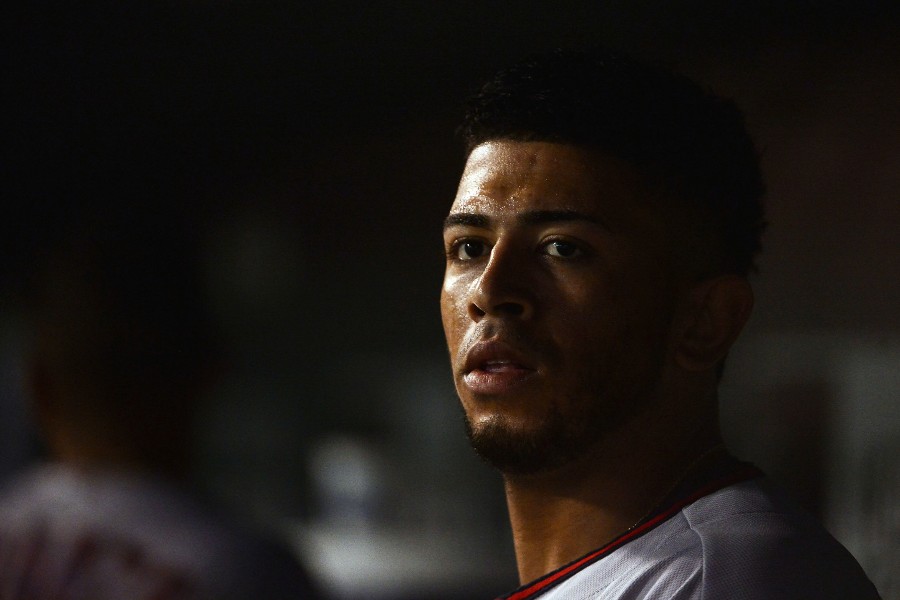 Not only has Romero not given up any runs, but neither the Blue Jays nor the Cardinals have really come all that close. In the two starts, Romero has allowed just one baserunner to reach third base, and even that was with two outs in the inning. We have been hearing a lot about Fernando Romero’s excellent stuff for the past couple of years, but now that we can see that it plays at the major league level, it gives us a whole new perspective. Another benefit of Romero pitching in the majors is we get access to his Statcast data that isn’t publicly available for minor league players. So, let’s look at that data to see if we can get a better understanding of Romero’s pitches. Two-Seam Fastball Fernando Romero’s two-seam fastball has been electric. The combination of high velocity and extreme arm-side run that the pitch has is giving opposing hitters troubles. Here is a two-seamer that he threw in the Toronto start. As you can see this pitch starts out over the heart of the plate but ends up six-inches off the plate inside. https://twitter.com/PitchingNinja/status/991738982248669184 One downside to Romero’s two-seamer having so much movement, is it makes the pitch hard for him to control. So far, Romero is throwing the pitch for a strike just over 58 percent of the time. He is getting away with that for now, but once MLB hitters start to adjust Romero will need to become more consistent with that pitch. Romero has also shown that he favors his two-seamer when facing right-handed batters. Against righties, Romero has thrown his two-seamer 50 percent of the time, while that number drops off to just 24 percent of the time when facing left-handed hitters. Four-Seam Fastball In addition to a two-seam fastball, Fernando Romero also features a four-seam fastball. As you might expect, his four-seam doesn’t have as much run as the two-seamer. This makes it easier for him to control, as you can see by his strike percentage being 10 percent higher. While Romero clearly prefers the two-seam fastball when he is facing right-handed hitters, it appears that he slightly favors the four-seamer against left-handed hitters as he throws it 33 percent of the time, as opposed to just 22 percent of the time against righties. According to the expected stats generated by Statcast, Romero’s four-seam fastball has been his most effective pitch so far, as his expected batting average, expected slugging percentage and expected weighted on-base average against his four-seamer are all the lowest of any of his pitches. This is mostly due to the 74 MPH average exit velocity hitters are getting off it, easily the lowest mark of his four pitches. Slider In addition to his high velocity fastball, Romero also features a nasty slider. Much like Romero’s two-seam fastball, it is his slider’s combination of both high velocity and movement that makes it so deadly. The slider’s 87.1 MPH average velocity ranks in the 81st percentile among sliders in the majors, with a majority of those ranked above him coming from relievers. Additionally, Romero has an average spin rate of 2466 RPM on his slider, which ranks in the 67th percentile among sliders in the majors this season. That effective combination is what has led to opposing hitters making contact just 41 percent of the time when they swing at it. Here is a look at just how nasty Romero’s slider is. https://twitter.com/PitchingNinja/status/993815426579779584 Changeup The final pitch in Romero’s repertoire is his changeup. The pitch is already causing some debate among Twins fans centered around its high velocity. Usually you would like to see a seven MPH or greater difference between a pitcher’s fastball and changeup velocity. However, Romero’s average difference is just 5.3 MPH. Overall, his average changeup velocity ranks second among pitchers who have thrown at least 10 so far this season and is 0.6 MPH faster than Noah Syndergaard’s. Increasing the gap between his fastball and changeup velocity is something Romero is going to need to work on in order to keep hitters off balance and have any sustained success with that pitch. In the mean time we can be in awe of a 92 MPH pitch that moves like this. https://twitter.com/PitchingNinja/status/993662317677162501 However, the thing that makes Romero’s changeup so nasty isn’t the velocity, but it’s the spin rate, or should I say lack thereof. When it comes to spin rate, it is usually only discussed regarding a pitcher having a high rate of spin on either a fastball or on a breaking pitch, but the truth is the spin rate on a changeup can be just as important. Unlike high velocity fastballs and breaking pitches, however, for a changeup the goal is to have as little spin as possible. This gives the pitch the sharp downward movement as it approaches the plate because the ball doesn’t have as much backspin keeping it in the air. The average spin rate on Romero’s changeup sits at just above 1600 RPM, which is roughly 200 RPM below the average major league changeup. Hopefully, this is sometime that will continue as time progresses, as it will be an important pitch for Romero to get left-handed hitters out. It is safe to say that Fernando Romero’s stuff is filthy, and we didn’t need the Statcast information to tell us that. But that doesn’t take away from the fun of seeing a Twins pitcher who has the potential to top so many of the Statcast leaderboards for years to come. All Data is Courtesy of Baseball Savant.
 -
Something Has Clicked with Eduardo Escobar
Andrew Thares replied to Andrew Thares's topic in Twins Daily Front Page News
No, increasing launch angle doesn't necessarily increase your average because you hit more flyballs. However, increasing you average isn't the goal. The goal is increasing your overall production, and the best way to do that is increasing your power numbers, and a great way to do that is optimizing your launch angle. -
There have not been a lot of good things to say about the Minnesota Twins of late. The team has lost 9 of 10 (entering Tuesday), and it is hard to find much to be positive about here at Twins Daily, deservedly so. So, I think everyone could use a short little break from all the misery and read about one of the few bright spots on the Twins, and that is of course shortstop Eduardo Escobar. Image courtesy of © Kim Klement-USA TODAY Sports There have not been a lot of good things to say about the Minnesota Twins of late. The team has lost 9 of 10 (entering Tuesday), and it is hard to find much to be positive about here at Twins Daily, deservedly so. So, I think everyone could use a short little break from all the misery and read about one of the few bright spots on the Twins, and that is of course shortstop Eduardo Escobar. Throughout his time with the Minnesota Twins, Eduardo Escobar has always served in the role of a backup utility infielder. However, with the Twins inconsistency on the left-side of the infield over that time, Escobar has seen plenty of playing time. In his last two seasons Escobar has been called to step up in a big way at both shortstop and third base. Last season, when Miguel Sano went down with a leg injury with a month and a half left in the season, Escobar filled in nicely for him at third. Now this year Escobar has been called upon to fill the void at short after an 80-game suspension was handed down to Jorge Polanco. In his time filling in, Escobar has been one of the Twins best hitters in a lineup that has had some success. At the end of 2017, after Sano went down with his injury, Escobar had an OPS of .826, which was not far off the .859 OPS Sano himself had put up last season. Escobar did have some struggles at third defensively, but considering the guy he was replacing, it didn’t make that much of a difference. This year, Escobar has gotten off to an even hotter start with the bat, leading all Twins hitters with a .926 OPS. A big part of Escobar’s success has come from his ability to hit doubles. So far this year, Escobar has already hit 11 doubles, which is just one behind Ozzie Albies and Miguel Andujar for the major league lead. The thing with Escobar is, his breakout didn’t just begin when Miguel Sano went down with his injury. In fact, Escobar actually started to heat up a couple months prior to that at the beginning of June. Since June 1st, Escobar has accumulated an OPS of .819 across 483 plate appearances. Escobar’s biggest turnaround over that time has come in the power department. In the time that amounts to almost exactly one month shy of a full season, Escobar has hit 21 home runs to go along with 23 doubles and 5 triples. So, what has caused this sudden turnaround from a below average hitter, to a guy the Twins can count on in the middle of their lineup? One change Escobar has made over the last two years is his aggressiveness on pitches in the zone. Here is a chart illustrating how Eduardo Escobar’s aggressiveness towards pitches in the zone has evolved over the last few years. As you can see, Escobar has taken a nearly eight percent jump in attack pitches in the zone over the last four years. Perhaps the most encouraging part about this increased aggressiveness for Escobar is it has not expanded much into chasing pitches outside of the zone. Over that same time, Escobar’s chase rate has only increased by a little over two percent. One of the biggest talking points during the “Statcast Era” has been circled around hitters seeing improved results from increasing their launch angle. There have been many players like Ryan Zimmerman or Yonder Alonso, who have received some publicity for their improvements as a result of increasing their launch angle, but one player who has flown under the radar after also doing this is Eduardo Escobar. Over the past four seasons, Escobar has seen his average launch angle steadily increase every year from 13.5°, to 15°, to 17.5°, and all the way up to 21.6° so far this year. This has played a big part in Escobar’s power production over that time. Because of these changes in his approach, Eduardo Escobar has seen an increased ability to swing the bat from the left side of the plate. Leading up to that same June 1st date of last year, Escobar had a career OPS as a lefty of .640, or a wRC+ of 73. Since then, Escobar has been one of the best left-handed hitters in the game. Among the exactly 100 hitters with at least 300 plate appearances as a left-handed hitter since June 1st, 2017, Escobar’s .887 OPS ranks 13th, and his 130 wRC+ ranks 16th. This is all great news for Escobar, who at 29, will be hitting the free agent market this winter. Given the way things played out in free agency this past offseason, it could be a rough scene for a player like Escobar who has never been a full-time regular in the bigs. Hopefully, for both Escobar and the Twins, he can keep up his impressive performance for the rest of the season and give himself a shot at a multi-year contract this winter. View full article
-
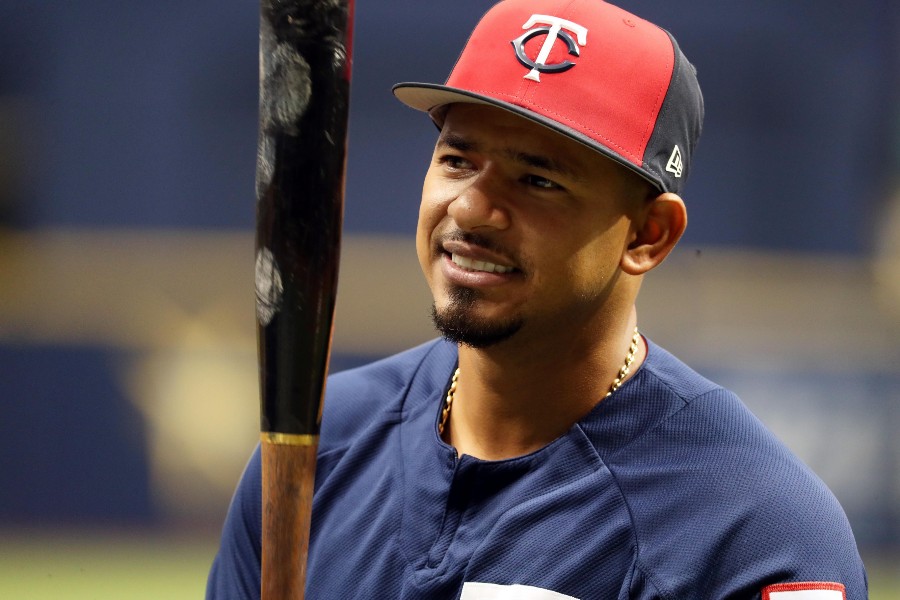 Throughout his time with the Minnesota Twins, Eduardo Escobar has always served in the role of a backup utility infielder. However, with the Twins inconsistency on the left-side of the infield over that time, Escobar has seen plenty of playing time. In his last two seasons Escobar has been called to step up in a big way at both shortstop and third base. Last season, when Miguel Sano went down with a leg injury with a month and a half left in the season, Escobar filled in nicely for him at third. Now this year Escobar has been called upon to fill the void at short after an 80-game suspension was handed down to Jorge Polanco. In his time filling in, Escobar has been one of the Twins best hitters in a lineup that has had some success. At the end of 2017, after Sano went down with his injury, Escobar had an OPS of .826, which was not far off the .859 OPS Sano himself had put up last season. Escobar did have some struggles at third defensively, but considering the guy he was replacing, it didn’t make that much of a difference. This year, Escobar has gotten off to an even hotter start with the bat, leading all Twins hitters with a .926 OPS. A big part of Escobar’s success has come from his ability to hit doubles. So far this year, Escobar has already hit 11 doubles, which is just one behind Ozzie Albies and Miguel Andujar for the major league lead. The thing with Escobar is, his breakout didn’t just begin when Miguel Sano went down with his injury. In fact, Escobar actually started to heat up a couple months prior to that at the beginning of June. Since June 1st, Escobar has accumulated an OPS of .819 across 483 plate appearances. Escobar’s biggest turnaround over that time has come in the power department. In the time that amounts to almost exactly one month shy of a full season, Escobar has hit 21 home runs to go along with 23 doubles and 5 triples. So, what has caused this sudden turnaround from a below average hitter, to a guy the Twins can count on in the middle of their lineup? One change Escobar has made over the last two years is his aggressiveness on pitches in the zone. Here is a chart illustrating how Eduardo Escobar’s aggressiveness towards pitches in the zone has evolved over the last few years. As you can see, Escobar has taken a nearly eight percent jump in attack pitches in the zone over the last four years. Perhaps the most encouraging part about this increased aggressiveness for Escobar is it has not expanded much into chasing pitches outside of the zone. Over that same time, Escobar’s chase rate has only increased by a little over two percent. One of the biggest talking points during the “Statcast Era” has been circled around hitters seeing improved results from increasing their launch angle. There have been many players like Ryan Zimmerman or Yonder Alonso, who have received some publicity for their improvements as a result of increasing their launch angle, but one player who has flown under the radar after also doing this is Eduardo Escobar. Over the past four seasons, Escobar has seen his average launch angle steadily increase every year from 13.5°, to 15°, to 17.5°, and all the way up to 21.6° so far this year. This has played a big part in Escobar’s power production over that time. Because of these changes in his approach, Eduardo Escobar has seen an increased ability to swing the bat from the left side of the plate. Leading up to that same June 1st date of last year, Escobar had a career OPS as a lefty of .640, or a wRC+ of 73. Since then, Escobar has been one of the best left-handed hitters in the game. Among the exactly 100 hitters with at least 300 plate appearances as a left-handed hitter since June 1st, 2017, Escobar’s .887 OPS ranks 13th, and his 130 wRC+ ranks 16th. This is all great news for Escobar, who at 29, will be hitting the free agent market this winter. Given the way things played out in free agency this past offseason, it could be a rough scene for a player like Escobar who has never been a full-time regular in the bigs. Hopefully, for both Escobar and the Twins, he can keep up his impressive performance for the rest of the season and give himself a shot at a multi-year contract this winter.
 -
Game Thread: Twins v Reds, 4/27 @ 7:10pm CT
Andrew Thares replied to Riverbrian's topic in Twins Daily Front Page News
The Reds seem to be getting some of their lineup back together. Joey Voto has homered in 3 straigt games, and Eugenio Suarez was just activated of the DL yesterday. -
What's Going On With Logan Morrison?
Andrew Thares replied to Parker Hageman's topic in Twins Daily Front Page News
Even at those numbers he would be worth the $6M that the Twins paid him. -
Life, Death and getting my heart broken by the Damn New York Yankees
-
It’s Time to End the Tyler Kinley Experiment
Andrew Thares replied to Andrew Thares's topic in Twins Daily Front Page News
The thing with Morrison at $6M is they didn't need a career year from him to make the investment worth it, all they needed was what he had been prior to 2017 (a career 104 OPS+ through 2016) and he would have been worth it. That's the difference between him and Kinley, there was a track record of at least mild success at the MLB level. -
It’s Time to End the Tyler Kinley Experiment
Andrew Thares replied to Andrew Thares's topic in Twins Daily Front Page News
xFIP is literally FIP except it controls for HR/FB% being off from the league average. This makes it the perfect stat to correct for a 40% HR/FB%. That is why Kinley's FIP is 12.17 while his xFIP is a more realistic 6.70. -
It’s Time to End the Tyler Kinley Experiment
Andrew Thares replied to Andrew Thares's topic in Twins Daily Front Page News
I completely agree. The new front office has done an excellent job in my opinion, and no you can't expect them to give everything right, because well that's just not how the world works. -
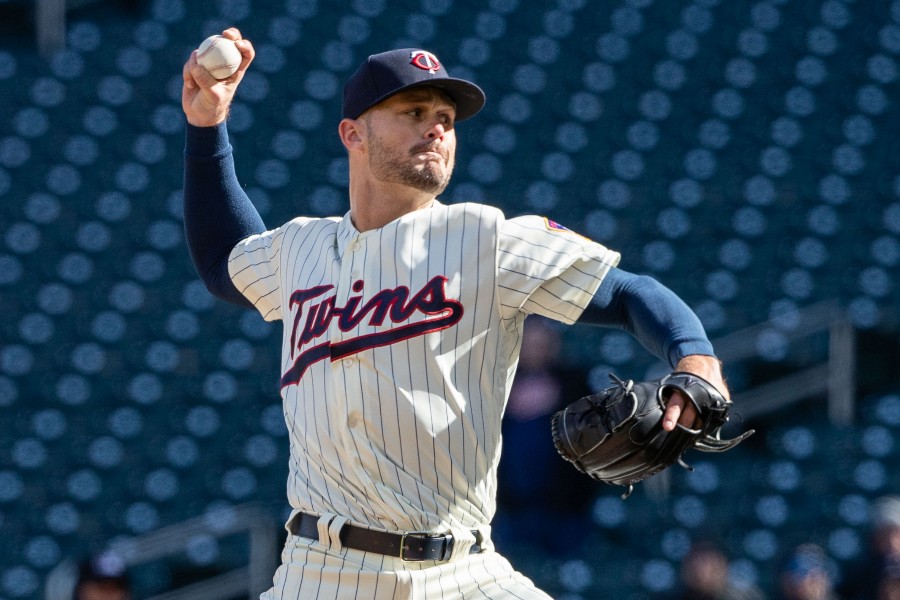
There were some eyebrows raised last December when the Twins left Nick Burdi and Luke Bard exposed to the Rule 5 Draft so they could select Marlins prospect Tyler Kinley. At the time, Kinley was a relatively no-name relief prospect who had only accumulated 9 2/3 career innings at Triple-A. What was interesting about Kinley to the Twins was his out of this world stuff. He has a fastball that can reach triple digits, and a slider that sits in the upper 80s with an above average amount of spin (averaging 2479 RPM this year). Image courtesy of © Jordan Johnson-USA TODAY Sports There were some eyebrows raised last December when the Twins left Nick Burdi and Luke Bard exposed to the Rule 5 Draft so they could select Marlins prospect Tyler Kinley. At the time, Kinley was a relatively no-name relief prospect who had only accumulated 9 2/3 career innings at Triple-A. What was interesting about Kinley to the Twins was his out of this world stuff. He has a fastball that can reach triple digits, and a slider that sits in the upper 80s with an above average amount of spin (averaging 2479 RPM this year). However, the problem with Kinley has always been his inability to control his pitches. Over his five-year minor league career, Kinley had averaged 3.5 BB/9. It is quite apparent, early on, that Tyler Kinley is not a major league-ready pitcher, and that Paul Molitor has zero trust to use him in a game unless it is already out of reach. His control has been awful, having thrown just 59.8% of his pitches for strikes. In an era where most major league hitters are seeing pitchers with an upper 90s fastball paired with a wicked breaking pitch on a nightly basis, Tyler Kinley’s stuff isn’t exactly blowing them away. In fact, opposing hitters are hitting .474 off him with a double and two home runs. Kinley does have a 10.80 K/9 rate, but that is a little misleading with all the batters he has faced. In total his strikeout rate sits at just 17.4%, which is well below the league average, especially for a reliever. So, what is keeping the Twins from cutting ties with Tyler Kinley? The biggest hang-up is that since Kinley was a Rule 5 draft pick, the Twins would have to either DFA him or offer him back to the Marlins if they don’t want to keep him on their 25-man roster. So, if the organization still has faith that Kinley can one day be a presence in the Twins bullpen they are hesitant to get rid of him. While that reasoning makes sense, there are plenty of other reasons why getting rid of Tyler Kinley now makes sense too. With the Twins in the hunt for another playoff berth in 2018, every roster spot is valuable, and to waste one on a pitcher who has zero impact on meaningful games only hurts their chances. His roster spot could easily be taken by other relievers like Alan Busenitz (who was sent back down to Rochester and replaced by Tyler Duffey on Tuesday), John Curtiss, Jake Reed or D.J. Baxendale. Both Reed and Baxendale would need to be added to the Twins 40-man roster, which isn’t an issue since they can just replace Kinley’s spot. Another reason why it would make sense to move on from Tyler Kinley is his age. At 27, his potential upside for the Twins is limited, even if he does figure out his control issues. Relief pitchers have a very sharp aging curve that starts to show real decline from the age of 25. Here is a comparison what starting pitcher aging curves look like compared to relief pitcher aging curves. Aging Curves courtesy of FanGraphs. As you can see from these graphs the aging process for relief pitchers is a lot more drastic than it is for starting pitchers. Stats like BB/9, BABIP, HR/9 and FIP all see sharp increases around the age of 27 for relievers, while stats like K/9, velocity and swinging strikes all see declines at that same age. With Kinley already at that 27-year-old threshold it might be too late for the Twins to sit around and hope he becomes something that he has never even been as a minor leaguer. At the end of the day, running a baseball team is just like running a business. Sometimes you make good investments and sometimes you make bad investments, and what separates good businesses from bad businesses is the good businesses understand when it is time to get out from under on a bad investment. That is exactly what the Twins need to do with Kinley. SEE ALSO Is it Time for a Roster Reshuffle? View full article
-
 However, the problem with Kinley has always been his inability to control his pitches. Over his five-year minor league career, Kinley had averaged 3.5 BB/9. It is quite apparent, early on, that Tyler Kinley is not a major league-ready pitcher, and that Paul Molitor has zero trust to use him in a game unless it is already out of reach. His control has been awful, having thrown just 59.8% of his pitches for strikes. In an era where most major league hitters are seeing pitchers with an upper 90s fastball paired with a wicked breaking pitch on a nightly basis, Tyler Kinley’s stuff isn’t exactly blowing them away. In fact, opposing hitters are hitting .474 off him with a double and two home runs. Kinley does have a 10.80 K/9 rate, but that is a little misleading with all the batters he has faced. In total his strikeout rate sits at just 17.4%, which is well below the league average, especially for a reliever. So, what is keeping the Twins from cutting ties with Tyler Kinley? The biggest hang-up is that since Kinley was a Rule 5 draft pick, the Twins would have to either DFA him or offer him back to the Marlins if they don’t want to keep him on their 25-man roster. So, if the organization still has faith that Kinley can one day be a presence in the Twins bullpen they are hesitant to get rid of him. While that reasoning makes sense, there are plenty of other reasons why getting rid of Tyler Kinley now makes sense too. With the Twins in the hunt for another playoff berth in 2018, every roster spot is valuable, and to waste one on a pitcher who has zero impact on meaningful games only hurts their chances. His roster spot could easily be taken by other relievers like Alan Busenitz (who was sent back down to Rochester and replaced by Tyler Duffey on Tuesday), John Curtiss, Jake Reed or D.J. Baxendale. Both Reed and Baxendale would need to be added to the Twins 40-man roster, which isn’t an issue since they can just replace Kinley’s spot. Another reason why it would make sense to move on from Tyler Kinley is his age. At 27, his potential upside for the Twins is limited, even if he does figure out his control issues. Relief pitchers have a very sharp aging curve that starts to show real decline from the age of 25. Here is a comparison what starting pitcher aging curves look like compared to relief pitcher aging curves. Aging Curves courtesy of FanGraphs. As you can see from these graphs the aging process for relief pitchers is a lot more drastic than it is for starting pitchers. Stats like BB/9, BABIP, HR/9 and FIP all see sharp increases around the age of 27 for relievers, while stats like K/9, velocity and swinging strikes all see declines at that same age. With Kinley already at that 27-year-old threshold it might be too late for the Twins to sit around and hope he becomes something that he has never even been as a minor leaguer. At the end of the day, running a baseball team is just like running a business. Sometimes you make good investments and sometimes you make bad investments, and what separates good businesses from bad businesses is the good businesses understand when it is time to get out from under on a bad investment. That is exactly what the Twins need to do with Kinley. SEE ALSO Is it Time for a Roster Reshuffle?
 -
The Twins are looking to bounce back after getting swept over the weekend against the Rays. Unfortunately, the Twins now must travel to New York to play a four-game set against the Yankees. The lack of success, to put it mildly, against the Yankees over the years will loom large as the Twins look to take a few games during this series. Image courtesy of © Brad Penner-USA TODAY Sports The Twins are looking to bounce back after getting swept over the weekend against the Rays. Unfortunately, the Twins now must travel to New York to play a four-game set against the Yankees. The lack of success, to put it mildly, against the Yankees over the years will loom large as the Twins look to take a few games during this series. Series at a Glance *Win Odds from FiveThirtyEight Minnesota Twins The inconsistency in the Twins lineup has lead to a lot of struggles so far this year. A lot of their struggles have come with runners in scoring position, where as a team they are batting just .207. Byron Buxton is expected to return to the lineup when his is eligible to come off the disabled list on Wednesday. Brian Dozier will be taking a 23-game hitting streak into the series (dating back to 2017), while Eddie Rosario is working on a more modest 7-game hitting streak. Probable Starting Pitchers RHP Jake Odorizzi In his last time out, Jake Odorizzi was pitching well against the Indians, having given up just three baserunners through 4 2/3, but then the wheels fell off. He gave up a two-out double, followed by a home run to Francisco Lindor. He gave up two more home runs to begin the sixth and that was the end of his night. In Odorizzi’s two starts against the Yankees last season, he gave up nine runs (five earned), and struck-out nine over 9 2/3 innings of work. RHP Jose Berrios What more can be said about the start that Jose Berrios has had to the year. So far this season, Berrios has allowed just 1 walk and 15 base hits, to go along with 29 strikeouts through 27 2/3 innings. Berrios has quickly established himself as the ACE of the Twins rotation. The next step will be rising-up to prominence as an ACE on the national scale. Berrios made two starts against the Yankees last season, where he gave up four runs across 10 innings. RHP Lance Lynn Lance Lynn’s control issues have been very apparent, having walked 15 batters in just 15 innings of work this season. His 21.7% walk rate is the highest of among all qualified starting pitchers. Lynn has done an excellent job, however, at both striking out opposing hitters and keep the ball in the ballpark. Lynn has struck out 27.5% of the batters that he has faced, and has allowed just one home run, the grand slam to Colin Moran in his first start against Pittsburgh. RHP Kyle Gibson Kyle Gibson’s incredible string of run support (dating back to last season) ran dry on Saturday night against Tampa Bay. Gibson was having a strong start, aided by spectacular defense, until the seventh inning when things blew up on both him and Gabriel Moya. New York Yankees The New York Yankees have been playing better as of late, taking 3 out of 4 over the weekend against the Toronto Blue Jays. The Twins will be fortunate to avoid facing Luis Severino as he pitched in the Yankees game on Sunday. This is a welcome break for the Twins who seemingly have faced the top of the rotation against every team they have played thus far. Probable Starting Pitchers RHP Masahiro Tanaka Masahiro Tanaka’s struggles with the long ball from last season have carried over into 2018. Last year, Tanaka gave up 1.77 home runs per nine innings pitched, which was the third highest mark among qualified starters. This year that number has gone up even higher, to 2.01 home runs per nine innings pitched. Look for the Twins to take advantage of this in Tanaka’s start against them on Monday night. LHP CC Sabathia He might be getting up there in age, but CC Sabathia is still a quality pitcher for the Yankees. Last season Sabathia pitched well enough to earn himself a 1-year $10 million deal to rejoin the Yankees for 2018. Sabathia has been pitching well this year, despite the fact that his strikeout numbers are way down. Sabathia made one start against the Twins in 2017, where he gave up two runs, and had five strikeouts paired with one walk over six innings. RHP Sonny Gray Much like Tanaka, Sonny Gray has gotten off to a slow start in 2018. There is some concern that Sonny Gray might be dealing with an injury after his velocity was down during his last start. As of now Gray is still scheduled to make his start on Wednesday, but that could be something to monitor if he does indeed make his start. LHP Jordan Montgomery Jordan Montgomery has impressed a lot of people with his success since being called up in 2017. While Montgomery won’t strike fear in the heart of a lineup, he is still a quality starter coming out of the Yankees fifth spot in the rotation. Given the Twins struggles with left-handed pitching, this could be a difficult matchup. Players to Watch Giancarlo Stanton, OF It has been a slow start for the reigning NL MVP Giancarlo Stanton, having made the New York headlines for the reasons he didn’t want to. Stanton is striking out at a 35% clip and has a slash line of just .195/.295/.416 entering play on Sunday. Hopefully he doesn’t find his stride during this four-game series against the Twins. Didi Gregorius, SS Some people are calling this hot start for Didi Gregorius a breakout, but the truth is Didi has been a quality player for the last couple of seasons. His swing is perfect for the short right field porch in Yankee Stadium, which has escalated Didi from a doubles hitter up to a 20+ home run a year guy. Gleyber Torres, 2B The New York Yankees highly touted infield prospect Gleyber Torres made his MLB debut on Sunday, going 0-4, and leaving seven runners on base in the Yankees 5-1 victory over the Blue Jays. Torres has been ranked as one of the top prospects in baseball for a couple of years now, and may have made his debut sooner had he not had to have Tommy John surgery on his non-throwing elbow last summer. Bullpen Comparison Addison Reed showed his first kink in the armor Sunday afternoon, giving up a walk-off home run to Carlos Gomez. Other than that, he and Ryan Pressly have been about the only two reliable options for the Twins out of the pen. The Fernando Rodney experience has been, well just that, an experience. The big question with the bullpen going forward is how long of a leash will the front office have on Rule 5 Draft pick Tyler Kinley. Paul Molitor obviously doesn’t trust him unless the game is out of reach, and at this point he is just wasting a roster spot. Coming into the season, the Yankees bullpen was viewed as perhaps the best bullpen ever assembled. However, the Yankee bullpen hasn’t gotten off to the great start they were expecting too. Tommy Kahnle’s velocity had been notably down, and now he is expected to miss the next few weeks with bicep and shoulder tendinitis. Dellin Betances has been uncharacteristically hit around. In 2017, Betances gave up just 29 hits over 59 2/3 innings of work, but so far this year he has already given up 11 hits in just 8 2/3 innings. Chad Green is quickly becoming one of the best relief options in the game and gives the Yankees some length in their bullpen with his ability to go multiple innings. Zone Charts courtesy of BaseballSavant,com. View full article
- 4 replies
-
- 1
-

-
- jake odorizzi
- jose berrios
- (and 2 more)
-
 Series at a Glance *Win Odds from FiveThirtyEight Minnesota Twins The inconsistency in the Twins lineup has lead to a lot of struggles so far this year. A lot of their struggles have come with runners in scoring position, where as a team they are batting just .207. Byron Buxton is expected to return to the lineup when his is eligible to come off the disabled list on Wednesday. Brian Dozier will be taking a 23-game hitting streak into the series (dating back to 2017), while Eddie Rosario is working on a more modest 7-game hitting streak. Probable Starting Pitchers RHP Jake Odorizzi In his last time out, Jake Odorizzi was pitching well against the Indians, having given up just three baserunners through 4 2/3, but then the wheels fell off. He gave up a two-out double, followed by a home run to Francisco Lindor. He gave up two more home runs to begin the sixth and that was the end of his night. In Odorizzi’s two starts against the Yankees last season, he gave up nine runs (five earned), and struck-out nine over 9 2/3 innings of work. RHP Jose Berrios What more can be said about the start that Jose Berrios has had to the year. So far this season, Berrios has allowed just 1 walk and 15 base hits, to go along with 29 strikeouts through 27 2/3 innings. Berrios has quickly established himself as the ACE of the Twins rotation. The next step will be rising-up to prominence as an ACE on the national scale. Berrios made two starts against the Yankees last season, where he gave up four runs across 10 innings. RHP Lance Lynn Lance Lynn’s control issues have been very apparent, having walked 15 batters in just 15 innings of work this season. His 21.7% walk rate is the highest of among all qualified starting pitchers. Lynn has done an excellent job, however, at both striking out opposing hitters and keep the ball in the ballpark. Lynn has struck out 27.5% of the batters that he has faced, and has allowed just one home run, the grand slam to Colin Moran in his first start against Pittsburgh. RHP Kyle Gibson Kyle Gibson’s incredible string of run support (dating back to last season) ran dry on Saturday night against Tampa Bay. Gibson was having a strong start, aided by spectacular defense, until the seventh inning when things blew up on both him and Gabriel Moya. New York Yankees The New York Yankees have been playing better as of late, taking 3 out of 4 over the weekend against the Toronto Blue Jays. The Twins will be fortunate to avoid facing Luis Severino as he pitched in the Yankees game on Sunday. This is a welcome break for the Twins who seemingly have faced the top of the rotation against every team they have played thus far. Probable Starting Pitchers RHP Masahiro Tanaka Masahiro Tanaka’s struggles with the long ball from last season have carried over into 2018. Last year, Tanaka gave up 1.77 home runs per nine innings pitched, which was the third highest mark among qualified starters. This year that number has gone up even higher, to 2.01 home runs per nine innings pitched. Look for the Twins to take advantage of this in Tanaka’s start against them on Monday night. LHP CC Sabathia He might be getting up there in age, but CC Sabathia is still a quality pitcher for the Yankees. Last season Sabathia pitched well enough to earn himself a 1-year $10 million deal to rejoin the Yankees for 2018. Sabathia has been pitching well this year, despite the fact that his strikeout numbers are way down. Sabathia made one start against the Twins in 2017, where he gave up two runs, and had five strikeouts paired with one walk over six innings. RHP Sonny Gray Much like Tanaka, Sonny Gray has gotten off to a slow start in 2018. There is some concern that Sonny Gray might be dealing with an injury after his velocity was down during his last start. As of now Gray is still scheduled to make his start on Wednesday, but that could be something to monitor if he does indeed make his start. LHP Jordan Montgomery Jordan Montgomery has impressed a lot of people with his success since being called up in 2017. While Montgomery won’t strike fear in the heart of a lineup, he is still a quality starter coming out of the Yankees fifth spot in the rotation. Given the Twins struggles with left-handed pitching, this could be a difficult matchup. Players to Watch Giancarlo Stanton, OF It has been a slow start for the reigning NL MVP Giancarlo Stanton, having made the New York headlines for the reasons he didn’t want to. Stanton is striking out at a 35% clip and has a slash line of just .195/.295/.416 entering play on Sunday. Hopefully he doesn’t find his stride during this four-game series against the Twins. Didi Gregorius, SS Some people are calling this hot start for Didi Gregorius a breakout, but the truth is Didi has been a quality player for the last couple of seasons. His swing is perfect for the short right field porch in Yankee Stadium, which has escalated Didi from a doubles hitter up to a 20+ home run a year guy. Gleyber Torres, 2B The New York Yankees highly touted infield prospect Gleyber Torres made his MLB debut on Sunday, going 0-4, and leaving seven runners on base in the Yankees 5-1 victory over the Blue Jays. Torres has been ranked as one of the top prospects in baseball for a couple of years now, and may have made his debut sooner had he not had to have Tommy John surgery on his non-throwing elbow last summer. Bullpen Comparison Addison Reed showed his first kink in the armor Sunday afternoon, giving up a walk-off home run to Carlos Gomez. Other than that, he and Ryan Pressly have been about the only two reliable options for the Twins out of the pen. The Fernando Rodney experience has been, well just that, an experience. The big question with the bullpen going forward is how long of a leash will the front office have on Rule 5 Draft pick Tyler Kinley. Paul Molitor obviously doesn’t trust him unless the game is out of reach, and at this point he is just wasting a roster spot. Coming into the season, the Yankees bullpen was viewed as perhaps the best bullpen ever assembled. However, the Yankee bullpen hasn’t gotten off to the great start they were expecting too. Tommy Kahnle’s velocity had been notably down, and now he is expected to miss the next few weeks with bicep and shoulder tendinitis. Dellin Betances has been uncharacteristically hit around. In 2017, Betances gave up just 29 hits over 59 2/3 innings of work, but so far this year he has already given up 11 hits in just 8 2/3 innings. Chad Green is quickly becoming one of the best relief options in the game and gives the Yankees some length in their bullpen with his ability to go multiple innings. Zone Charts courtesy of BaseballSavant,com.
 -
TB 10, MIN 1: Snell Stifles Twins Bats
Andrew Thares replied to Andrew Thares's topic in Twins Daily Front Page News
First, like you mentioned, despite Morrison's modest numbers against lefties he is still an upgrade over what the Twins had on the roster, and second the biggest reason for the Morrison signing has to be the incredibly low price they signed him for. I would be surprised if he was on their radar much at all to begin the offseason, but when free agent prices plummeted the Twins saw an opportunity to take advantage of it and they did. -
It was a rough night for the Minnesota Twins, as they were walloped 10-1 by the Tampa Bay Rays. For the better part of seven innings, this game was a pitchers’ dual, but it quickly turned into a route in favor of the Rays. Image courtesy of Douglas Defelice, USA Today It was a rough night for the Minnesota Twins, as they were walloped 10-1 by the Tampa Bay Rays. For the better part of seven innings, this game was a pitchers’ dual, but it quickly turned into a route in favor of the Rays. Snapshot (chart via FanGraphs) Blake Snell was dealing tonight for the Rays. The Twins played some small ball to put up a run on him in the first, but then Snell shutdown the Twins for the next six-innings before he stranded Robbie Grossman on third to end his night in the seventh. Snell was one of the Rays more highly touted pitching prospects as he was coming up through the minors, but he struggled with control issues during his first two seasons in the majors. However, Snell appears to have found his form in 2018, and is showing off his nasty stuff with pitches like this one to strikeout Eddie Rosario in the second. https://twitter.com/PitchingNinja/status/987823886766084096 Kyle Gibson was having a strong start, having given up just a two-run home run through his first six innings of work. However, things unraveled in the seventh, where Gibson and Gabriel Moya combined to give up five runs to let the Rays blow the game open. C.J. Cron had himself a day, belting two two-run home runs, one in third and the other in the five-run seventh. Both home runs were carbon copies of each other, as the second lander just four seats over from where the first one ended up. Denard Span came up big for the Rays again tonight after he came up with a two-out, two-RBI base hit up-the-middle during the seventh inning to expand the Rays lead to 5-1, the Rays would late expand the score to 7-1 in the seventh off Cron’s second home run of the night. The Twins tried to get a rally going in the eighth, getting the first two runners on with the top of the order coming up. However, Rays reliever Matt Andriese quickly shut the door by striking out Brian Dozier and getting Joe Mauer to ground into an inning-ending double play. The Rays added onto their lead in the bottom half of the eighth when Daniel Robertson blasted a 431- foot bomb to centerfield off Tyler Kinley bring the score to 8-1. That was followed by a walk and three more singles, including another RBI single from Denard Span. When all was said and done the score stood at 10-1 in favor of the Rays. The Twins did have a sparkling night defensively. First, Ehire Adrianza robbed Denard Span in each of his first two at-bats with defensive web gems at short. Here was the second one during the third inning. https://twitter.com/fsnorth/status/987828546369347584 During the 4th inning Miguel Sano showed off his rocket of an arm to nab Daniel Robertson to get the second out of the inning. Then Mauer followed it up by spearing a ground ball off the bat of Wilson Ramos to end the inning. Next Three Games Sun at TB 12:10 pm CT Mon at NYY 6:05 pm CT Tues at NYY 5:35 pm CT View full article
- 9 replies
-
- 1
-
-
- kyle gibson
- denard span
- (and 3 more)

