



Tom Froemming
-
Posts
5,260 -
Joined
-
Last visited
-
Days Won
22
Content Type
Profiles
News
Minnesota Twins Videos
2026 Minnesota Twins Top Prospects Ranking
2022 Minnesota Twins Draft Picks
Minnesota Twins Free Agent & Trade Rumors, Notes, & Tidbits
Guides & Resources
2023 Minnesota Twins Draft Picks
The Minnesota Twins Players Project
2024 Minnesota Twins Draft Picks
2025 Minnesota Twins Draft Pick Tracker
2026 Minnesota Twins Draft Tracker: Picks & Bonuses
Forums
Blogs
Events
Store
Downloads
Gallery
Everything posted by Tom Froemming
-
Twins in the 2000s: The 2000 Season
Tom Froemming replied to Nick Nelson's topic in Twins Daily Front Page News
I love that you included the nod to Denny Hocking. In the show How I Met Your Mother, Barney uses the "Ewok Line" to determine the general age range of a woman. The theory is anyone born in 1973 or earlier is not a fan of Ewoks, while anyone younger than that generally thinks they're cute and fun. At one point, there was a Denny Hocking line in Twins fandom. Most people paying attention to the Twins in 2000 developed a certain appreciation of Hocking, while others who jumped on the bandwagon later as the team started winning really ragged on the guy and couldn't fathom how in the world he continued to get playing time. It's not that Hocking's 2000 season was amazing or anything, but he was the third or fourth best hitter on the team that year and made 10+ appearances at all seven positions in the field. And, of course, he was pretty terrible after that, so some of the razzing of Denny was valid. Another fun fact: Five guys made 10+ starts at catcher this season. I can't remember if that was the first time that had ever happened, the first time in franchise history or just the first time in a long time, but I remember that being a fun piece of trivia at the time. It was basically an open audition. Matt LeCroy, Marcus Jensen, Chad Moeller and Danny Ardoin were all eventually bested by A.J. Pierzynski, who established himself as the catcher of the future late in this season and, of course, went on to stabilize the position. -
I hadn't thought about this, but I think it should be early. Whenever the transaction freeze is over, I agree that there needs to be an open time frame for trades and then a deadline, but I don't want to see that coming too close to the start of the ... whatever it is we'll potentially be getting.
-
Agreed. Doesn't get much cooler than Rosie.
-
Twins All-Decade Team, the '10s (The Pitchers)
Tom Froemming replied to Seth Stohs's topic in Twins Daily Front Page News
I think I'd lean Liriano over Baker. Bonus relief guy I had completely forgot about: Jared Burton. Can't make the case for him to crack this list, but he'd be in the mix if you expanded the pen another couple spots. -
Ranking the AL/NL Central Teams: 10-6
Tom Froemming replied to Cooper Carlson's topic in Twins Daily Front Page News
Man, I forgot how many departures the Brew Crew had this offseason. They'd better hope they have some internal pieces coming through the system that can step up. Bums me out the Pirates stink, like almost always. For some reason I've always kinda liked them, but now that Shelton's over there I feel like it's extra incentive to pay attention. -
Something I don't get is if there aren't going to be fans, why is it important for the games to be played in the home stadiums? Even with sticking to only playing teams in the same region, that still seems like a lot of extra needless travel.
-
Everyone Hits as Baseball Embraces the DH
Tom Froemming replied to Ted Schwerzler 's topic in Twins Daily Front Page News
My guess is once every NL fan has a year or two to get accustomed to the DH they'll never want to go back.- 11 replies
-
- 2
-

-
- nelson cruz
- minnesota twins
- (and 1 more)
-
Which 1960's Minnesota Twins Team Was the Best?
Tom Froemming replied to Nate Palmer's topic in Twins Daily Front Page News
The easy knee-jerk reaction would be to say "1965, duh!" but of course that '69 team was great, and looking at this it's a wonder how the '67 team didn't fare any better than 91-71. Seems appropriate there was a mid-season managerial change. Jim Kaat was snake bit that season. Somehow the Twins were just 17-20 in games he started. In late August of that year, Kaat gave up one earned run over eight innings in back-to-back starts and the Twins lost both of them. Ugh. Seems like it was just a year where nothing synced up like it could have. -
Proposing to base salaries off revenues is a joke. I'm shocked the owners have the nerve to even go public with this.
-
Which Player Do You Love to Hate?
Tom Froemming replied to Tom Froemming's topic in Twins Daily Front Page News
He's kinda a swaggy dude too. That's always a lot more fun when they're on your team. It's baseball hate, not big Hate. Thank you! I knew I wouldn't be the only one. THIS! Good call on Konerko. Nothing really rubbed me the wrong way about him, either, but he was a great player on a division rival, so the shoe fits. Man, he was with the White Sox for 16 years!? Wow. What's football? A-Rod was my runner up to Jeter, mainly because he was both really good and a Yankee. He is a very solid broadcaster, but it's still weird to me he's so embedded in the game. The league seems a lot more embarrassed of some of the other guys from the steroid era, some of whom were never even suspended. I'll be curious to see what kind of support he gets once eligible for the Hall of Fame. -
Earlier today, MLB.com released a list of each team’s fan base’s favorite nemesis -- the player who gets under their skin, who they love to hate. The guy selected for the Twins? A.J. Pierzynski. Uh ... come again?I’m not sure what methodology they used for this article, but here’s how they led into the conversation: “For every Major League fan base, there are certain rival players who incite an uncommon level of animosity. Whether it’s because they consistently excel, because they’ve done something controversial or because of how they carry themselves, some players have a knack for getting under an entire fan base’s skin, and the bad blood can carry on for years or even decades. These are the players each team's fans love to hate.” There’s no way A.J. is the favorite nemesis of Twins fans. Maybe I’m way off base here, but I’d be surprised if any Twins fans would list him atop the opposing players who most got under their skin or who they most loved to hate. Yes, as an opposing player with the White Sox he was obnoxious, but he provided some memorable moments during his time in Minnesota. What’s the most-recent display of late-inning postseason heroics in Twins history? This bomba by Pierzynski, which effectively sunk the Moneyball Oakland A’s in Game 5 of the 2002 ALDS: Boo this man? More like buy this man a beer! The A’s get an entire damn book written about them and A.J. somehow gets saddled with being labeled as the guy Twins fans love to boo? Get outta here with that junk. I love A.J. Pierzynski. There, I said it. I’ll shout it from the top of Buck Hill if I have to!!! If not A.J., then who really is the player Twins fans love to hate? My answer is below, but I can’t speak on behalf of all of Twins Territory. Please let me know your favorite player to boo in the comments. Pause and think about it for a moment. We need a legit answer to this question, and what better way to settle this than an informal poll in the Twins Daily forums? My pick: Derek Jeter That’s right, The Captain gets no Re2pect from me. What’s to hate? The fact he was such a central figure on the Yankees during the time they authored so much Twins pain is definitely the biggest motivating factor. It’s easy to hate the players who crush your dreams. Jeter and the Yankees bounced the Twins from the postseason four times, and he was 20-for-57 (.351) with three home runs in the 14 playoff games he played against them. Jeets also beat up the Twins in the regular season, of course. In 604 plate appearances against Minnesota, Jeter hit .323/.384/.465 (.849). This may seem unfair, considering it’s out of Jeter’s control, but the way he was covered his entire career was also nauseating. I think he’s the most overrated player of my lifetime. That’s not to say he wasn’t a great ballplayer, you still have to be very good to be overrated. Still, the way the national media swooned over every little thing he did was excruciating. Among the worst defensive shortstops of his generation, Jeter still boasts five Gold Gloves to his credit thanks to writers getting it wrong. Baseball media swooned over everything he did. Everything he did made me wanna vomit. But to be completely honest, had Jeter played for another team he probably wouldn’t even crack my top-50 most hated players. The fact that he’s smothered in Yankee scum has so much to do with why I loved rooting against him. But, again, I can’t speak on behalf of Twins Territory. There’s no shortage of other options out there, who’s the player you love to hate? MORE FROM TWINS DAILY — Latest Twins coverage from our writers — Recent Twins discussion in our forums — Follow Twins Daily via Twitter, Facebook or email Click here to view the article
-
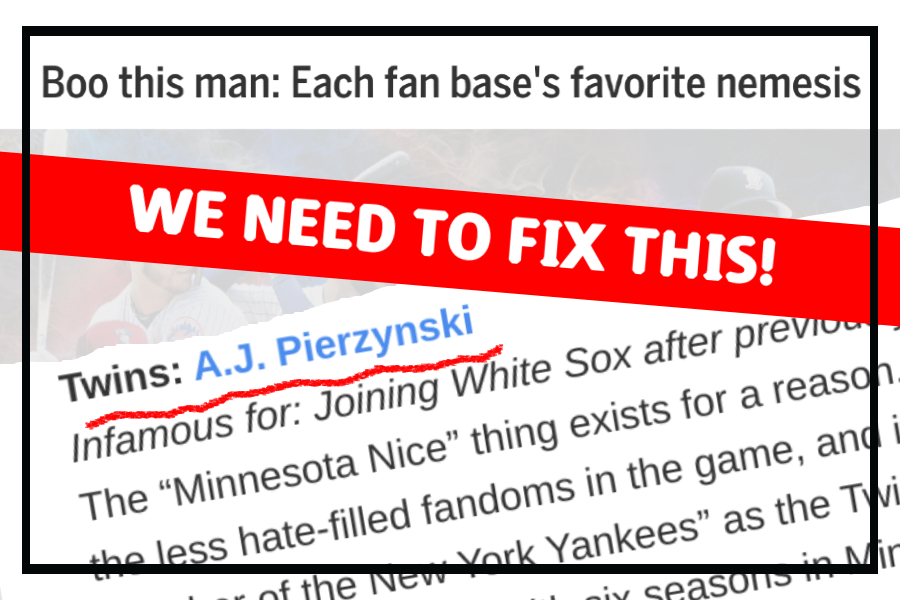 I’m not sure what methodology they used for this article, but here’s how they led into the conversation: “For every Major League fan base, there are certain rival players who incite an uncommon level of animosity. Whether it’s because they consistently excel, because they’ve done something controversial or because of how they carry themselves, some players have a knack for getting under an entire fan base’s skin, and the bad blood can carry on for years or even decades. These are the players each team's fans love to hate.” There’s no way A.J. is the favorite nemesis of Twins fans. Maybe I’m way off base here, but I’d be surprised if any Twins fans would list him atop the opposing players who most got under their skin or who they most loved to hate. Yes, as an opposing player with the White Sox he was obnoxious, but he provided some memorable moments during his time in Minnesota. What’s the most-recent display of late-inning postseason heroics in Twins history? This bomba by Pierzynski, which effectively sunk the Moneyball Oakland A’s in Game 5 of the 2002 ALDS: Boo this man? More like buy this man a beer! The A’s get an entire damn book written about them and A.J. somehow gets saddled with being labeled as the guy Twins fans love to boo? Get outta here with that junk. I love A.J. Pierzynski. There, I said it. I’ll shout it from the top of Buck Hill if I have to!!! If not A.J., then who really is the player Twins fans love to hate? My answer is below, but I can’t speak on behalf of all of Twins Territory. Please let me know your favorite player to boo in the comments. Pause and think about it for a moment. We need a legit answer to this question, and what better way to settle this than an informal poll in the Twins Daily forums? My pick: Derek Jeter That’s right, The Captain gets no Re2pect from me. What’s to hate? The fact he was such a central figure on the Yankees during the time they authored so much Twins pain is definitely the biggest motivating factor. It’s easy to hate the players who crush your dreams. Jeter and the Yankees bounced the Twins from the postseason four times, and he was 20-for-57 (.351) with three home runs in the 14 playoff games he played against them. Jeets also beat up the Twins in the regular season, of course. In 604 plate appearances against Minnesota, Jeter hit .323/.384/.465 (.849). This may seem unfair, considering it’s out of Jeter’s control, but the way he was covered his entire career was also nauseating. I think he’s the most overrated player of my lifetime. That’s not to say he wasn’t a great ballplayer, you still have to be very good to be overrated. Still, the way the national media swooned over every little thing he did was excruciating. Among the worst defensive shortstops of his generation, Jeter still boasts five Gold Gloves to his credit thanks to writers getting it wrong. Baseball media swooned over everything he did. Everything he did made me wanna vomit. But to be completely honest, had Jeter played for another team he probably wouldn’t even crack my top-50 most hated players. The fact that he’s smothered in Yankee scum has so much to do with why I loved rooting against him. But, again, I can’t speak on behalf of Twins Territory. There’s no shortage of other options out there, who’s the player you love to hate? MORE FROM TWINS DAILY — Latest Twins coverage from our writers — Recent Twins discussion in our forums — Follow Twins Daily via Twitter, Facebook or email
 -
Scott Boras has become the latest person to call for baseball's return. A growing number of people are starting to kick the back of the driver's seat, for better or worse.
-
As it pertains to baseball’s return, we seem to have more clouds than concrete timetables. With so many variables, is it even worth starting to speculate when the Twins may be back at Target Field?Dr. Anthony S. Fauci, top infectious disease expert of the federal government, told the New York Times “there are certain parts of the country — in the Mountain region and in the Midwest and in some of the places where there is very little infection and they’re developing the capability of responding — I think they’re getting back to some form of more normality.” Sounds to me like baseball could safely return sans fans and with teams isolated to a few tight-knit communities. The issue is Major League Baseball doesn’t seem too keen on that plan. Marc Topkin of the Tampa Bay Times reported the “preferred plan” is to start play in late June or early July with as many teams as possible playing in home parks. He also wrote that the idea of isolating teams to hub sites is now “being downplayed or dismissed.” Perhaps the most intriguing information of all comes from our old friend Trevor Plouffe, who passed this along Monday evening on Twitter: It seems to me the fly in the ointment is if the MLB insists upon each team playing in its home stadium, they’re going to need approval from 30 different state and local government agencies. Is that realistic? It seems to be impossible to say at this time. No, we're not there yet, and don't ask again! HA! Baseball is secondary at the moment, of course. Safety and control of the spread of coronavirus comes first. Still, we have to at lease be getting closer to baseball's return, right? I don't know. Either way, despite the sunny forecast from Plouffe, more clouds remain. MORE FROM TWINS DAILY — Latest Twins coverage from our writers — Recent Twins discussion in our forums — Follow Twins Daily via Twitter, Facebook or email Click here to view the article
-
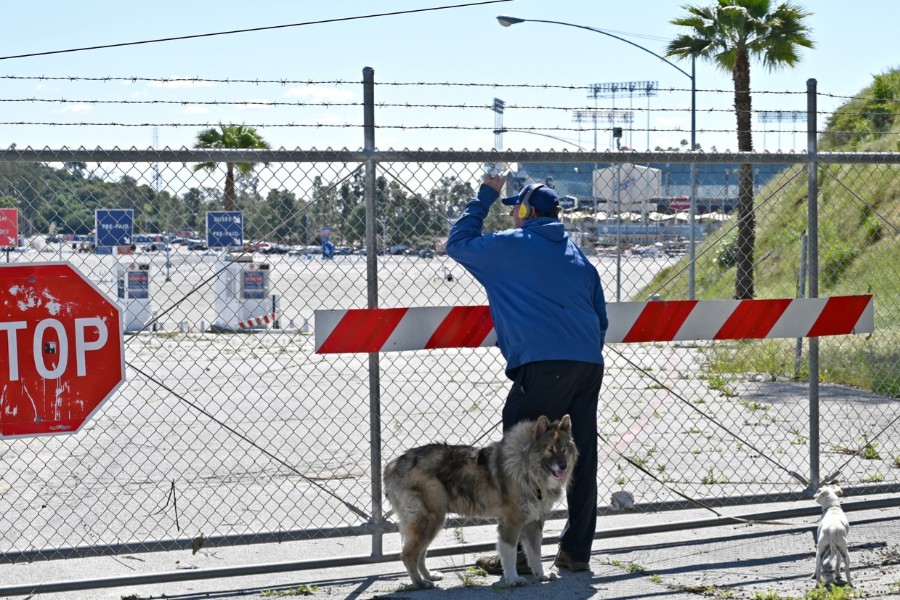 Dr. Anthony S. Fauci, top infectious disease expert of the federal government, told the New York Times “there are certain parts of the country — in the Mountain region and in the Midwest and in some of the places where there is very little infection and they’re developing the capability of responding — I think they’re getting back to some form of more normality.” Sounds to me like baseball could safely return sans fans and with teams isolated to a few tight-knit communities. The issue is Major League Baseball doesn’t seem too keen on that plan. Marc Topkin of the Tampa Bay Times reported the “preferred plan” is to start play in late June or early July with as many teams as possible playing in home parks. He also wrote that the idea of isolating teams to hub sites is now “being downplayed or dismissed.” Perhaps the most intriguing information of all comes from our old friend Trevor Plouffe, who passed this along Monday evening on Twitter: https://twitter.com/trevorplouffe/status/1257422311772360706 Teams back together and training in a little over a month? Opening Day July 1? In home ballparks!?!?!? Some good baseball news, indeed, but is it realistic? It’s important to point out that at this time Plouffe’s report doesn’t appear to be confirmed by any other sources. Actually, quite the opposite. From The Athletic’s Keith Law: https://twitter.com/keithlaw/status/1257444114687197185 It seems to me the fly in the ointment is if the MLB insists upon each team playing in its home stadium, they’re going to need approval from 30 different state and local government agencies. Is that realistic? It seems to be impossible to say at this time. No, we're not there yet, and don't ask again! HA! Baseball is secondary at the moment, of course. Safety and control of the spread of coronavirus comes first. Still, we have to at lease be getting closer to baseball's return, right? I don't know. Either way, despite the sunny forecast from Plouffe, more clouds remain. MORE FROM TWINS DAILY — Latest Twins coverage from our writers — Recent Twins discussion in our forums — Follow Twins Daily via Twitter, Facebook or email
 -
While Twins fans were getting swept up in pennant fever for the first time in nearly a decade, a development down on the farm flew somewhat under the radar. The 2019 Pensacola Blue Wahoos assembled what may have been the most talented minor league team in franchise history.Just take a look at this lineup the Blue Wahoos rolled out for a playoff game in early September. Could the marquee names on this roster represent the next nucleus of homegrown Twins talent? Download attachment: Pensacola.png Jhoan Duran was also with the Blue Wahoos at the time, meaning all six of Twins Daily’s current top prospects in the system were on the same roster. FanGraphs listed five members of this group inside their top 75 prospects. This team was stacked. If you’re interested in connecting the names to faces, check out this video I recently posted on the starting lineup being introduced at Blue Wahoos Stadium. As a side note, I just want to point out what great company Ryan Costello was keeping in what turned out to be his final season. Costello, who passed away in November, ranked second in the entire system with 63 walks, posted an .826 OPS in 40 games with Pensacola and slugged a home run in this playoff game. Anyway, as was also pointed out in that video, it wasn’t just the final roster in Pensacola that was impressive. Luis Arraez started his incredible 2019 season in Pensacola. Randy Dobnak made one of his many stops there. Several other players who made their MLB debuts in 2019 appeared for the Blue Wahoos, including Devin Smeltzer, Cody Stashak, Brusdar Graterol, Sean Poppen, Jorge Alcala and Jaylin Davis (who made his with the Giants). Pensacola was spoiled in its first year as a Twins affiliate. The big clubealso sent some familiar names there to rehab from injuries, including Miguel Sano and Mitch Garver. This got me thinking about another affiliate that was absolutely loaded with talent just four years earlier. Check out this Chattanooga Lookouts lineup from 2015: Download attachment: Chattanooga.png Wow. That’s five of the top eight players on the 2019 Twins (in terms of fWAR) who were all at the same place at the same time in their development. As Twins fans, we’ve been treated to some really rewarding experiences watching winning teams develop from within. Still, that ‘15 Lookouts roster is pretty incredible. Maybe the most talented group of prospects on any minor league team in franchise history. Both Joe Mauer and Justin Morneau played for the 2003 New Britain Rock Cats, but if I’m remembering correctly, not at the same time. Mauer started that season in Fort Myers and Morneau had moved up to Rochester by the time Joe arrived in Double A. Looking back a bit further to the team who saved baseball (in Minnesota, at least), the 1998 New Britain Rock Cats really stand out. That Double-A squad featured Doug Mientkiewicz, Cristian Guzman, Jacque Jones, Torii Hunter and A.J. Pierzynski, among others. What about the World Series teams? Many of the homegrown players of that era spent very little time developing down on the farm. Kirby Puckett, Kent Hrbek and Frank Viola, in particular, made very short work of the minor leagues, so it’s tough to point to one standout minor league team of that era. Looking at the second World Series team, both Chuck Knoblauch and Scott Erickson were teammates on the Double-A Orlando Sun Rays in 1990. That’s impressive. What about those great 1969 & ‘70 teams? Rod Carew started his minor league career the same season Tony Oliva was voted the American League’s Rookie of the Year, so no minor league overlap with those two. The 1965 American League champion team? Most of that club’s roots trace back to the Washington Senators days. With that being said, I think it’s possible the group of prospects we saw go through Pensacola in 2019 will go down as one of the deepest pools of talent to ever appear together in Twins history. The big question is, considering how much of a winning core is already in place, how many of those players will end up making their mark with the Twins? The three biggest trades the front office made in the past 12 months all included marquee members of the 2019 Blue Wahoos: Lewin Diaz, Jaylin Davis and Brusdar Graterol. With the Twins in a competitive window, how many more top prospects will be traded away? Don’t get me wrong, this is a great problem to have. Both a competitive major league team and a healthy farm system is obviously ideal, I’m just saying it may impact how many of these highlight players from the 2019 Blue Wahoos end up in other organizations. The potential that the 2020 season may be completely wiped out is a painful thing to reconcile with as a Twins fan. This was expected to be a great season, but try not to lose sight that the future also looks bright. Whenever baseball does return, a tremendously built Twins organization is coming back along with it. I'm sure there was a great Twins minor league team I missed. If you dig one up, please share it in the comments. MORE FROM TWINS DAILY — Latest Twins coverage from our writers — Recent Twins discussion in our forums — Follow Twins Daily via Twitter, Facebook or email Click here to view the article
-
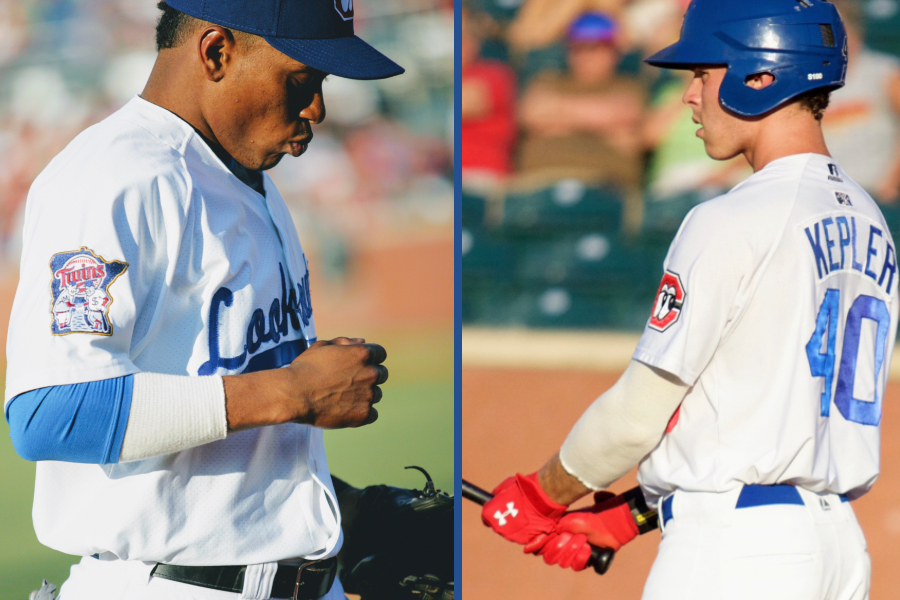 Just take a look at this lineup the Blue Wahoos rolled out for a playoff game in early September. Could the marquee names on this roster represent the next nucleus of homegrown Twins talent? Jhoan Duran was also with the Blue Wahoos at the time, meaning all six of Twins Daily’s current top prospects in the system were on the same roster. FanGraphs listed five members of this group inside their top 75 prospects. This team was stacked. If you’re interested in connecting the names to faces, check out this video I recently posted on the starting lineup being introduced at Blue Wahoos Stadium. As a side note, I just want to point out what great company Ryan Costello was keeping in what turned out to be his final season. Costello, who passed away in November, ranked second in the entire system with 63 walks, posted an .826 OPS in 40 games with Pensacola and slugged a home run in this playoff game. Anyway, as was also pointed out in that video, it wasn’t just the final roster in Pensacola that was impressive. Luis Arraez started his incredible 2019 season in Pensacola. Randy Dobnak made one of his many stops there. Several other players who made their MLB debuts in 2019 appeared for the Blue Wahoos, including Devin Smeltzer, Cody Stashak, Brusdar Graterol, Sean Poppen, Jorge Alcala and Jaylin Davis (who made his with the Giants). Pensacola was spoiled in its first year as a Twins affiliate. The big clubealso sent some familiar names there to rehab from injuries, including Miguel Sano and Mitch Garver. This got me thinking about another affiliate that was absolutely loaded with talent just four years earlier. Check out this Chattanooga Lookouts lineup from 2015: Wow. That’s five of the top eight players on the 2019 Twins (in terms of fWAR) who were all at the same place at the same time in their development. As Twins fans, we’ve been treated to some really rewarding experiences watching winning teams develop from within. Still, that ‘15 Lookouts roster is pretty incredible. Maybe the most talented group of prospects on any minor league team in franchise history. Both Joe Mauer and Justin Morneau played for the 2003 New Britain Rock Cats, but if I’m remembering correctly, not at the same time. Mauer started that season in Fort Myers and Morneau had moved up to Rochester by the time Joe arrived in Double A. Looking back a bit further to the team who saved baseball (in Minnesota, at least), the 1998 New Britain Rock Cats really stand out. That Double-A squad featured Doug Mientkiewicz, Cristian Guzman, Jacque Jones, Torii Hunter and A.J. Pierzynski, among others. What about the World Series teams? Many of the homegrown players of that era spent very little time developing down on the farm. Kirby Puckett, Kent Hrbek and Frank Viola, in particular, made very short work of the minor leagues, so it’s tough to point to one standout minor league team of that era. Looking at the second World Series team, both Chuck Knoblauch and Scott Erickson were teammates on the Double-A Orlando Sun Rays in 1990. That’s impressive. What about those great 1969 & ‘70 teams? Rod Carew started his minor league career the same season Tony Oliva was voted the American League’s Rookie of the Year, so no minor league overlap with those two. The 1965 American League champion team? Most of that club’s roots trace back to the Washington Senators days. With that being said, I think it’s possible the group of prospects we saw go through Pensacola in 2019 will go down as one of the deepest pools of talent to ever appear together in Twins history. The big question is, considering how much of a winning core is already in place, how many of those players will end up making their mark with the Twins? The three biggest trades the front office made in the past 12 months all included marquee members of the 2019 Blue Wahoos: Lewin Diaz, Jaylin Davis and Brusdar Graterol. With the Twins in a competitive window, how many more top prospects will be traded away? Don’t get me wrong, this is a great problem to have. Both a competitive major league team and a healthy farm system is obviously ideal, I’m just saying it may impact how many of these highlight players from the 2019 Blue Wahoos end up in other organizations. The potential that the 2020 season may be completely wiped out is a painful thing to reconcile with as a Twins fan. This was expected to be a great season, but try not to lose sight that the future also looks bright. Whenever baseball does return, a tremendously built Twins organization is coming back along with it. I'm sure there was a great Twins minor league team I missed. If you dig one up, please share it in the comments. MORE FROM TWINS DAILY — Latest Twins coverage from our writers — Recent Twins discussion in our forums — Follow Twins Daily via Twitter, Facebook or email
 -
The Twins had to fight to the finish to earn their first win of the 2009 season, overcoming a 5-3 deficit despite being down to their final out. Three-consecutive walks followed by singles from Denard Span and Alexi Casilla gave the Twins a walk-off win.Twins 6, Seattle 5 | Box Score Blackburn: 5 IP, 8 H, 4 R, 4 ER, 3 BB, 1 K Home Runs: None Multi-Hit Games: Span (3-for-5), Cuddyer (2-for-4) Top 3 WPA: Casilla .529, Span .214, Guerrier .114 Chart via FanGraphs Download attachment: chart.png After retiring the first two batters of the bottom of the ninth inning, it appeared Brandon Morrow was going to close out a 5-3 Seattle victory. Instead, he lost his command. Morrow walked Carlos Gomez, Jason Kubel and Brian Buscher to load the bases before being removed from the game. Denard Span kept the rally rolling with a run-scoring infield single before Casilla finished it off with a two-run single to center field to clinch victory from the jaws of defeat. The Mariners bullpen had retired 11 batters in a row prior to Morrow issuing the ninth-inning walks. “It felt like we beat the White Sox,” Denard Span joked with reporters, alluding to Game 163 the prior season. “I was expecting champagne to be in the air when I got in the clubhouse, but it was only the first one of the season.” FLASHBACKS April 6: Oliva Becomes First DH to HR, Blyleven Goes the Distance on 22nd Birthday (1973) April 5: Stewart Hits Walk-Off Homer, Mauer Shines in MLB Debut (2004) MORE FROM TWINS DAILY — Latest Twins coverage from our writers — Recent Twins discussion in our forums — Follow Twins Daily via Twitter, Facebook or email Click here to view the article
-
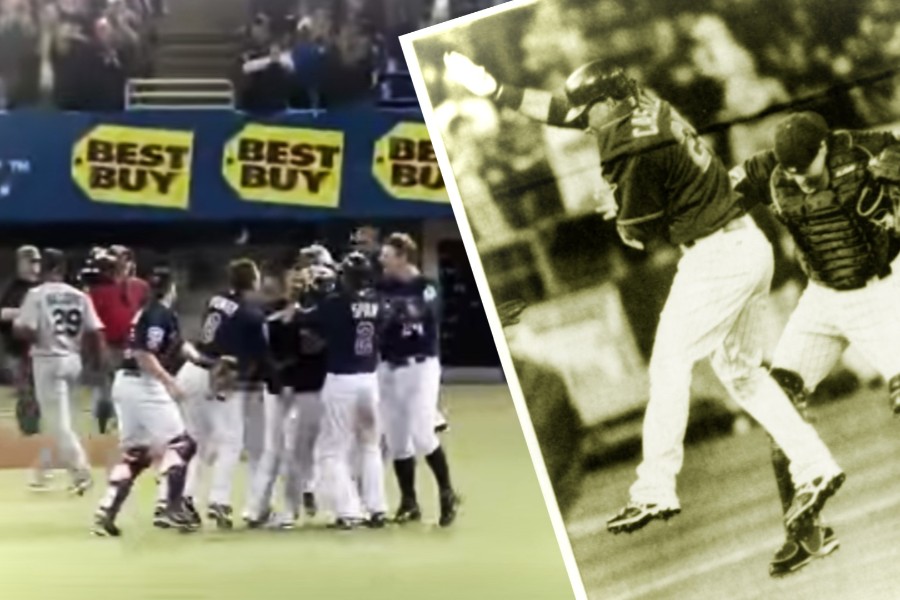 Twins 6, Seattle 5 | Box Score Blackburn: 5 IP, 8 H, 4 R, 4 ER, 3 BB, 1 K Home Runs: None Multi-Hit Games: Span (3-for-5), Cuddyer (2-for-4) Top 3 WPA: Casilla .529, Span .214, Guerrier .114 Chart via FanGraphs After retiring the first two batters of the bottom of the ninth inning, it appeared Brandon Morrow was going to close out a 5-3 Seattle victory. Instead, he lost his command. Morrow walked Carlos Gomez, Jason Kubel and Brian Buscher to load the bases before being removed from the game. Denard Span kept the rally rolling with a run-scoring infield single before Casilla finished it off with a two-run single to center field to clinch victory from the jaws of defeat. The Mariners bullpen had retired 11 batters in a row prior to Morrow issuing the ninth-inning walks. “It felt like we beat the White Sox,” Denard Span joked with reporters, alluding to Game 163 the prior season. “I was expecting champagne to be in the air when I got in the clubhouse, but it was only the first one of the season.” FLASHBACKS April 6: Oliva Becomes First DH to HR, Blyleven Goes the Distance on 22nd Birthday (1973) April 5: Stewart Hits Walk-Off Homer, Mauer Shines in MLB Debut (2004) MORE FROM TWINS DAILY — Latest Twins coverage from our writers — Recent Twins discussion in our forums — Follow Twins Daily via Twitter, Facebook or email
 -
It's funny to look back at how sour some of the coverage surrounding the DH was. I saw an article that referred to the Twins outfielders from that game as "designated fielders," so salty.
-
The defending World Series champion Oakland Athletics and ace pitcher Catfish Hunter had their Opening Day spoiled by the Minnesota Twins. Bert Blyleven, who was celebrating his 22nd birthday, held the A’s offense to three runs, two earned, in a complete game effort.Download attachment: 0406chart.png Twins 8, Oakland 3 Box Score Blyleven: 9 IP, 10 H, 3 R, 2 ER, 2 BB, 7 K Home Runs: Oliva (1), Holt (1), Hisle (1) Multi-hit games: Hisle (4-for-5, HR, 2B), Oliva (2-for-4, HR), Carew (2-for-5, 2B) Top 3 WPA: Hisle .182, Oliva .170, Blyleven .135 Chart via Baseball-Reference There’s possibly no better poster boy for the American League’s new designated hitter position than Minnesota’s Tony Oliva, so it’s fitting he became the first player to hit a home run as a DH. Oliva, 34, played just 10 games last season and is still recovering from knee surgery and a twisted ankle. Had he been required to play the outfield, it’s unlikely Oliva would have been penciled into the lineup. Instead, Oliva cracked a homer to put the Twins up 3-0 in the top of the first inning. The Twins added a pair of runs in the second, and chased Hunter, who was credited with two victories in last year's Fall Classic, out of the game after just three innings. The rubber-armed Blyleven, who ranked seventh in the majors with 287 1/3 innings pitched last season, was the beneficiary of all that offense. He successfully negotiated the dangerous Oakland lineup, recording a clean inning in eight of his nine frames. “The change up saved me until I could get the curve over the plate,” Blyleven told Minneapolis Star staff writer Dan Stoneking. “Even then it wasn’t a good curve.” Blyleven capped a memorable 22nd birthday by striking out Joe Rudi and Reggie Jackson in succession to close out the game. LINKS Read more on Oliva’s historic home run from the man himself via the Pioneer Press’ Bob Sansevere.Choose Your MVP: Re-evaluating the 1965 MVP Race | Matthew Taylor91/19 World Series, Game 7: Metrodome Madness Goes Extra Innings | Steve LeinSnubbed: Revisiting: Johan Santana's One and Done Hall of Fame Case | Cody PirklTwins Flashback Recap: Stewart Hits Walk-Off Homer, Mauer Shines in MLB Debut (4/5/2004)MORE FROM TWINS DAILY— Latest Twins coverage from our writers — Recent Twins discussion in our forums — Follow Twins Daily via Twitter, Facebook or email Click here to view the article
-
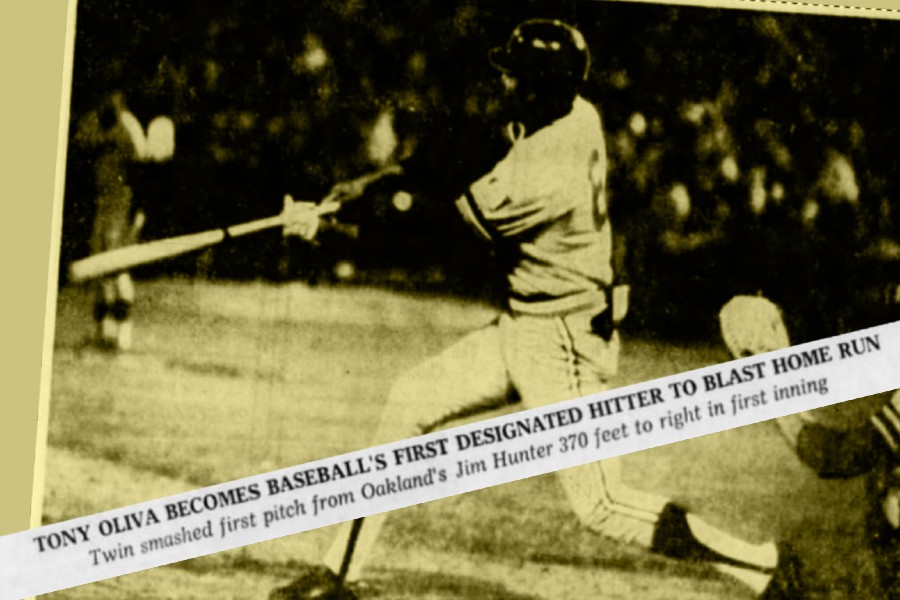 Twins 8, Oakland 3 Box Score Blyleven: 9 IP, 10 H, 3 R, 2 ER, 2 BB, 7 K Home Runs: Oliva (1), Holt (1), Hisle (1) Multi-hit games: Hisle (4-for-5, HR, 2B), Oliva (2-for-4, HR), Carew (2-for-5, 2B) Top 3 WPA: Hisle .182, Oliva .170, Blyleven .135 Chart via Baseball-Reference There’s possibly no better poster boy for the American League’s new designated hitter position than Minnesota’s Tony Oliva, so it’s fitting he became the first player to hit a home run as a DH. Oliva, 34, played just 10 games last season and is still recovering from knee surgery and a twisted ankle. Had he been required to play the outfield, it’s unlikely Oliva would have been penciled into the lineup. Instead, Oliva cracked a homer to put the Twins up 3-0 in the top of the first inning. The Twins added a pair of runs in the second, and chased Hunter, who was credited with two victories in last year's Fall Classic, out of the game after just three innings. The rubber-armed Blyleven, who ranked seventh in the majors with 287 1/3 innings pitched last season, was the beneficiary of all that offense. He successfully negotiated the dangerous Oakland lineup, recording a clean inning in eight of his nine frames. “The change up saved me until I could get the curve over the plate,” Blyleven told Minneapolis Star staff writer Dan Stoneking. “Even then it wasn’t a good curve.” Blyleven capped a memorable 22nd birthday by striking out Joe Rudi and Reggie Jackson in succession to close out the game. LINKS Read more on Oliva’s historic home run from the man himself via the Pioneer Press’ Bob Sansevere. Choose Your MVP: Re-evaluating the 1965 MVP Race | Matthew Taylor 91/19 World Series, Game 7: Metrodome Madness Goes Extra Innings | Steve Lein Snubbed: Revisiting: Johan Santana's One and Done Hall of Fame Case | Cody Pirkl Twins Flashback Recap: Stewart Hits Walk-Off Homer, Mauer Shines in MLB Debut (4/5/2004) MORE FROM TWINS DAILY — Latest Twins coverage from our writers — Recent Twins discussion in our forums — Follow Twins Daily via Twitter, Facebook or email
 -
Just to piggyback on something you already touched on, Mauer doing what he did in '09 as a catcher is really remarkable. There's an argument that's the greatest season any catcher has ever had. Johnny Bench and Mike Piazza are the two guys who immediately come to mind as the top challengers to for that honor.
-
In case anybody is wondering, yes, the Mientkiewicz quote is real.
-
Shannon Stewart’s first Opening Day as a Minnesota Twin sure was a memorable one. Stewart sent Twins fans home happy after delivering a walk-off three-run homer in the 11th inning. Hometown phenom Joe Mauer made his major league debut, and reached base in four of his five plate appearances.Box Score Radke: 6 IP, 11 H, 4 R, 2 ER, 0 BB, 3 K Home Runs: Stewart (1) Multi-hit games: Stewart (2-for-5, HR, BB), Mauer (2-for-3, 2 BB), Mientkiewicz (2-for-5, 2B) Top 3 WPA: Mauer .314, Stewart .267, Koskie .187 *Chart via FanGraphs The Twins entered the bottom of the eighth inning trailing 4-0, but Mauer led off the inning with a walk. Base hits from Cristian Guzman, Michael Cuddyer, Doug Mientkiewicz, Corey Koskie and Torii Hunter resulted in the Twins knotting things up at 4-4. The Twins’ bullpen opened its season in sterling fashion, pitching in five shutout innings. Jacque Jones and Michael Cuddyer also provided relief with their arms, as they combined on a relay to throw out former Twin Matt Lawton at home plate to end the top of the 10th inning. Matt LeCroy got things started in the 11th inning with a one-out walk and Mauer followed with a single up the middle. Guzman struck out swinging to bring Stewart up with two outs. He did not disappoint. Stewart, who was acquired from Toronto last July, also had a single and a walk. "It's amazing when a 20-year-old kid like Mauer walks to the plate, and you expect big things," Mientkiewicz told Star Tribute reporter Jim Souhan after the game. "And with Shannon, honestly, I'm surprised when he doesn't come through." Mauer collected his first major league hit to lead off the bottom of the ninth inning. Brad Radke made his team-record eighth Opening Day start, but unfortunately that experience didn’t work to his benefit tonight. The 31-year-old gave up 11 hits, three of them home runs, in his six innings of work. Due to a Guzman error, however, just two of his four runs surrendered were earned. LINKS For more on this game, check out Aaron’s Baseball Blog. Mauer’s Myths: The Hero Minnesota Didn’t Deserve | Cody Christie The Five Most Underrated Players in Twins History | Ted Schwerzler Reminiscing About the Shannon Stewart Trade | Tom Froemming MORE FROM TWINS DAILY — Latest Twins coverage from our writers — Recent Twins discussion in our forums — Follow Twins Daily via Twitter, Facebook or email Click here to view the article
