



Tom Froemming
-
Posts
5,260 -
Joined
-
Last visited
-
Days Won
22
Content Type
Profiles
News
Minnesota Twins Videos
2026 Minnesota Twins Top Prospects Ranking
2022 Minnesota Twins Draft Picks
Minnesota Twins Free Agent & Trade Rumors, Notes, & Tidbits
Guides & Resources
2023 Minnesota Twins Draft Picks
The Minnesota Twins Players Project
2024 Minnesota Twins Draft Picks
2025 Minnesota Twins Draft Pick Tracker
2026 Minnesota Twins Draft Tracker: Picks & Bonuses
Forums
Blogs
Events
Store
Downloads
Gallery
Everything posted by Tom Froemming
-
 Take a look at the American League -- not just the Central -- and ask yourself if the Twins could realistically build a World Series contender for 2019. Is the next real competitive window now, or sometime in the future? I’m of the mind that there’s no place worse to be than in the middle of the road. I also believe the foundation of a World Series team is in this Twins organization right now, but to realize that potential the front office and developmental departments are going to have to play their cards just right.The way I see it, the Twins have two options: 1) Try and go for it again in 2019 and build around the current roster, or 2) work to set things up better for 2020 and beyond. Sure, there are some moves that would accomplish both of those things, but I don’t envision the Twins signing a Bryce Harper or Manny Machado. Instead, I believe the best way to realize that eventual World Series potential is to continue to stockpile depth for 2020 and beyond while at the same time creating more opportunities for the young players who either debuted in 2018 or were in the high minors showing signs that they were close. I can already hear the groans as I’m typing this. I understand why a lot of Twins fans won’t take kindly to this blueprint. When the rebuilding will ever stop? I’m more curious if it ever truly started in the first place. The most frustrating thing about the Twins under Derek Falvey so far has been all the half measures taken. The first offseason, the team’s biggest need was addressed in the signing of a catcher, but there were no other efforts to upgrade the club. Then there was the buy/sell move at the trade deadline later that season, one of the biggest examples of indecisiveness I can ever recall by any front office. Last winter (and even into spring), there was another honest effort to upgrade the team, but primarily in the short term. Given that was the case, it was all too easy to tear down the roster at the deadline. Even how they’ve treated the manager situation has been very half-hearted up to this point. Falvey had no choice but to accept Paul Molitor as manager, but the three-year deal he signed after the 2017 season appeared to have been a commitment to stability in that spot. We all know how that turned out. I’m not saying I disagreed with all those moves, but taking a look at the big picture, you’re certainly left with an image of a leadership group that’s done a very poor job at committing to anything. Flexibility can be a valuable attribute, but at some point this front office is going to need to pick a lane and stay in it. The next big wave of Twins talent is topped by Alex Kirilloff, Royce Lewis and Brusdar Graterol. It’s conceivable all three could be September callups this coming season, but it is more reasonable to expect all three arrive in 2020. But those are just the headliners. There will be plenty of other prospects who will blossom between now and then. There will be a ton of seeds all continuing to germinate in the high minors next season. Not all of them are going to maturate, but It seems likely the foundation of the next great Twins team will come from that crop of players. As we’ve seen with the current wave of homegrown Twins, there will be some who surprise and some who experience more growing pains than we expect. But where does that leave the current team? The great news is several of the players on the team right now will still be under team control long enough for there to be some overlap with the next wave. Eddie Rosario and Miguel Sano will be around through 2021. Jose Berrios, Jorge Polanco, Max Kepler, Byron Buxton and Taylor Rogers will be around through 2022. Before we get going, this blueprint is in some ways a companion piece to the article I wrote for the Offseason Handbook. You may understand where I’m coming from a little better if you read that piece. OK, let’s get into my moves. Brace yourself, this might hurt. Love me tender. Everybody gets tendered a contract! I'm going to be both removing some outfield depth and some veteran leadership, so Robbie Grossman still makes plenty of sense on a one-year deal projected to be around $4 million. With Ehire Adrianza, the Twins are so shallow in the infield right now that I think he’s worth hanging on to for the projected $2 million. Free agency? No thank you. I’m going thrift shopping, and not for the Lance Lynn/Logan Morrison types. We’re talking bottom of the barrel. There have been some real valuable pieces acquired over the past several offseasons among the players who were non-tendered or became minor league free agents. The Twins saw both sides on the coin in terms of minor league free agents last year. They lost Dereck Rodriguez to the Giants, but added Willians Astudillo. You’re really mining for diamonds in the rough in this universe of players, but when you hit it’s an incredible value. You get multiple years of team control on a player who’s going to be affordable. You’re probably not going to find stars among the guys in this market (though it does happen), but a multi-year role player or bullpen piece would be a really savvy pickup. We don't know who will be non-tendered yet and I haven't scoured the list of minor league free agents to be, so I don't have specific names, but this is definitely an area in which the Twins should be aggressive. Trade away Max Kepler, Kyle Gibson and Jake Odorizzi. Here’s the knockout blow. This would hurt. Gibson was a rare bright spot from the 2018 season and one of the most likable guys on the team. That level of attachment isn’t there with Odorizzi, but he had a very nice season and turning over two-thirds of the established rotation would be very tough. On the other hand, Gibson, Odorizzi and Michael Pineda (more on him in a minute) are all set to become free agents after this upcoming season. Dealing away Kepler has the kind of disaster potential that could get somebody fired. It could end up being Aaron Hicks all over again. So why deal him? Well there’s already an argument to be made that Jake Cave deserves regular playing time over Kepler in 2019, but this has as much to do with making room for Alex Kirilloff than anything. It seems highly likely Kepler will be passed up one way or another. Why Max? Eddie Rosario is already what I think we all believe Kepler could be at his peak and trading Byron Buxton has even more disaster potential, mainly because his value is so low right now. Cave showed promise, but his track record is too short to garner any real trade value at this point. Trading Kepler has the best balance of potential risk vs. potential reward among the current crop of outfielders. The Twins have invested more than 1,600 plate appearances in Kepler and have seen very little progress at the plate. Being a strong and versatile defensive outfielder who is affordable and has upside, Kepler still figures to have plenty of trade value despite his lack of progress to this point. Make sure you grab a copy of the Twins Daily Offseason Handbook, which features an excellent article on Kepler written by Aaron Gleeman. The primary reason for listing these guys as trade bait is because they’re valuable. This isn’t a knock against them, if anything it’s quite the opposite. I think they could be flipped for additional pieces that help usher in a glory run in Twins Territory. So what would I be looking to acquire in these deals? Primarily infielders and high-velocity pitchers. The closer to the majors the better. The Twins don't really have a second baseman right now and I'm not sure anybody believes that Miguel Sano is going to stay at third base long term. On the pitching need, velocity isn’t everything but it sure helps. Plenty of pitchers are effective in the low 90s, but if you watched the postseason you know the Twins are seriously lacking in high-velocity options. Throughout the entire year, only a grand total of four pitches were thrown 98.5 mph or harder by the Twins staff, three of which came from guys who are no longer in the organization (two from Pressly and one each from Fernando Rodney). In the five World Series games there was a grand total of 97 pitches thrown at least 98.5 mph. Alright, let’s get into specifics. It’s nearly impossible for me to sit here and try come up with actual trades that make sense. The trade market is a mysterious beast. I did my best. My general theory was to take what I think the Twins could get, then lower that expectation a bit. Max Kepler to the Angels for Jahmai Jones, Keynan Middleton and Jake Jewell A consensus top 100 prospect last offseason, Jones hit .239/.337/.380 (.717) between High A and Double A. He was primarily a center fielder prior to being converted to second base last season. He still has some things to iron out at the keystone, but I love the fact that he has some flexibility. Jones doesn’t have a single tool that projects to be below average. He’s currently turning heads in the Arizona Fall League. Middleton, a right-handed reliever, has the ability to sit 96 mph and topped out at 99 for the Angels last year. He has a 3.43 ERA, 9.4 K/9 and has even racked up nine saves in 76 major league innings over the past two seasons. He's a guy that could finish off games for years to come. The catch? He had Tommy John surgery in May. Another right-handed reliever, Jewell is also coming off an injury. He suffered a fractured fibula while covering home plate, but should be recovered sometime in December. He made his MLB debut for the Angels this year and topped out at 97 mph. He hasn’t posted big strikeout rates in the minors despite the velo, but Jewell gets a ton of ground balls with his hard sinker. Every year you have a Mike Trout in your organization is a year you need to be going for it, so the Angels have that incentive to improve. Shohei Ohtani had Tommy John surgery, but for now they’re expecting him to be available to DH next season. It’ll be interesting to see how that goes. The Angels do have Jo Adell, one of the top outfield prospects in baseball, but Kepler is a guy they can bank on to at the very least deliver similar production to what he’s given the Twins the past three seasons. There’s a lot of value in that to a team like the Angels who have question marks. Kyle Gibson to Milwaukee for Lucas Erceg Erceg, a left-handed hitting third baseman, is coming off a disappointing 2018 season in which he had a .688 OPS for the Brewers Double-A affiliate. He dealt with back issues in spring training, then was hit in the head by a pitch in April. Not sure if those things caused a slow start but they certainly couldn’t have had a positive impact. He played much better over his final 57 games of the season, posting a .761 OPS while slugging eight of his 13 homers on the season. In more than 500 plate appearances, Erceg had just 82 strikeouts, and there are no questions about his defense or especially his arm strength at third base. I think he’s also going to hit for power. Milwaukee had an incredible run this past season, but they need starting pitching help. Erceg is among their better prospects, but even with Mike Moustakas hitting free agency they still have Travis Shaw to play third base. Again, Gibby's only under contract for one more season. Jake Odorizzi to Oakland for Eli White White posted an .838 OPS in Double A last year while playing second base, shortstop, third base and even a little bit of center field. He has an advanced approach at the plate, but his tools aren't loud. Seems like the type of guy who, if he develops, could be a nice utility player. He's putting together a strong run in the AFL right now. Oakland’s already pretty stacked on the infield, but they could really use some more starting pitching. Billy Bean has indicated that payroll room won’t be an issue for the A’s in 2019, so they should have no trouble finding room for Odorizzi’s salary. This would be the fourth time Odorizzi would be traded. Trade Jason Castro, Michael Pineda and Addison Reed at the deadline. Unlike the names I mentioned above, this trio needs to build up value before teams are going to give up anything of significance to acquire them. All three need to prove that they’re healthy. Castro needs to show his knee is fully repaired and ready for the rigors of catching. Pineda’s arm should be recovered, but he’s now coming off knee surgery. Reed ended last season on the active roster, but his velocity dip is a huge red flag. All those question marks may dissolve with a few good months, and if that happens these guys could be hot commodities at the 2019 trade deadline. Depending on how things are progressing, at some point it would probably also make a lot of sense to trade away Trevor May, who’s only under team control through 2020. Ouch. That hurt to say too. What about all that money coming off the books? The big concern with implementing a plan like this is the message you’re sending to the guys you want to keep around. The best way to ease their minds would be to engage in extension talks with virtually every player you see fitting into the big picture, long term. You’re not going to work out a deal with all of them in one winter, but if you sign a couple extensions and at least show the other players you’re willing to invest in them further, I think the tear down becomes an easier pill to swallow. With this blueprint, it would definitely be possible to front load some extensions, providing guys with significant raises right away. I'd have to think that would be a nice motivational tool. I'm going to avoid throwing out any specifics here. If the trade market is a mysterious beast then projecting extensions is a mythical creature. With that said, let’s take a look at my projected 2019 Opening Day roster: Rotation: Jose Berrios, Michael Pineda, Adalberto Mejia, Fernando Romero and the winner of the fifth starter spring training battle royale. Bullpen: Trevor May, Taylor Rogers, Trevor Hildenberger, Addison Reed, Oliver Drake, Gabriel Moya and Jake Jewell. C: Jason Castro 1B: Tyler Austin 2B: Nick Gordon 3B: Miguel Sano SS: Jorge Polanco LF: Eddie Rosario CF: Byron Buxton RF: Jake Cave DH: Robbie Grossman Bench: Mitch Garver, Ehire Adrianza, Willians Astudillo Among the candidates for the fifth starter would be Kohl Stewart, Stephen Gonsalves, Zack Littell, Chase De Jong, Aaron Slegers, Lewis Thorpe and any of the bargain free agents. Out in the bullpen, Tyler Duffey, Alan Busenitz, John Curtiss, Matt Magill and Andrew Vasquez would all also be in the mix plus any of the thrift shop additions. This team might honestly get the Twins into hot water with the MLB because the payroll would be so ridiculously low. At the same time, I also think this team could probably still finish second in the AL Central in 2019. If Cleveland collapses and this team somehow finds itself in first place at the deadline, the front office would have both the payroll room and prospect capital to make some massive moves if they saw fit. Yes, I'm basically going to dare Nick Gordon to take over as the everyday second baseman. I know he had a terrible end to 2018, but that seems to be a bit of a trend for him. Adrianza is there and in this scenario you'd also go out and acquire another bargain bin insurance option a la Gregrio Petit. New additions Jahmai Jones and Eli White would be back in the high minors to start the year, but could pushing for promotions in the second half. If Gordon falters, one of those guys is next up. If nobody sticks come July ... Royce Lewis time?!?! Lucas Erceg would also be knocking at the door and would push Miguel Sano to a 1B/DH role upon his arrival. Out in the bullpen, Keynan Middleton would join that unit sometime in the second half once he was recovered from TJ. Even with trading away Kepler, there's still enough outfield depth that allows LaMonte Wade to start the year back in the minors. Brent Rooker would also be waiting in the wings for a shot at 1B/DH. This team would look a heck of a lot different after the trade deadline. There’s no way the Twins would do anything similar to what I’m suggesting here, right? Well, two moves made later this past season indicate to me that this front office already has 2020 vision. If they thought this team was going to be a legit contender next season, I don’t think they would have traded away Ryan Pressly and they would have prioritized getting Buxton more plate appearances in September over gaining another year of team control. Throughout the coming days there will be more blueprints offered up by others here at Twins Daily. I bargain that most of them will focus on how to build this team up to compete in 2019. I’m looking forward to seeing what everybody comes up with, and it’s possible that I’ll fall in love with someone else’s blueprint even above my own. Again, the one thing I want to see from the Twins going forward more than anything else is decisiveness. If they’re going to go for it, dive in head first. No more half measures. Please let me know what you think of this blueprint. If you’d like to take a crack at building a blueprint of your own, I think I speak for the entire Twins Daily community in saying we would love to read it. The best place to do that would be in the blog section or in the forum thread Nick started. Click here to view the article
- 89 replies
-
- 6
-

-
- max kepler
- kyle gibson
- (and 1 more)
-
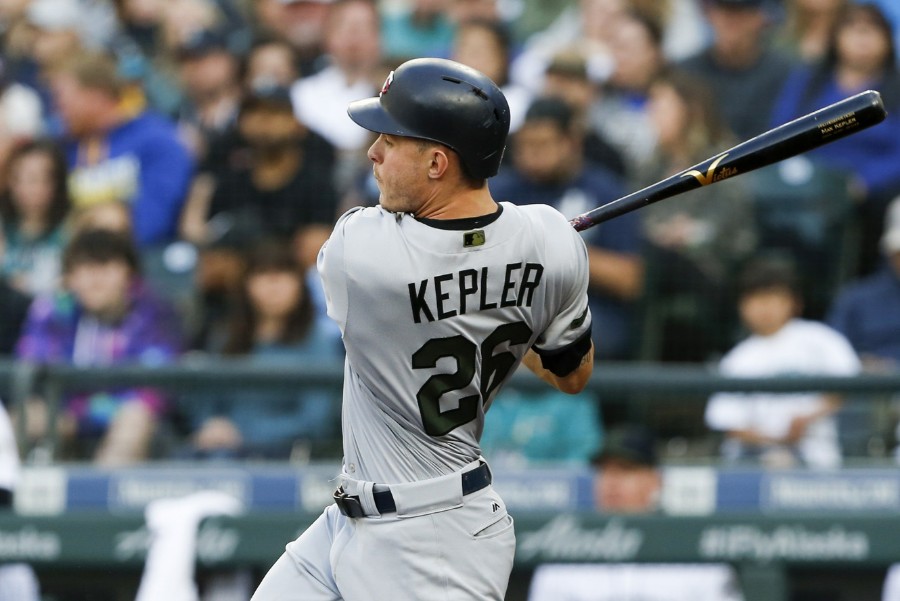 The way I see it, the Twins have two options: 1) Try and go for it again in 2019 and build around the current roster, or 2) work to set things up better for 2020 and beyond. Sure, there are some moves that would accomplish both of those things, but I don’t envision the Twins signing a Bryce Harper or Manny Machado. Instead, I believe the best way to realize that eventual World Series potential is to continue to stockpile depth for 2020 and beyond while at the same time creating more opportunities for the young players who either debuted in 2018 or were in the high minors showing signs that they were close. I can already hear the groans as I’m typing this. I understand why a lot of Twins fans won’t take kindly to this blueprint. When the rebuilding will ever stop? I’m more curious if it ever truly started in the first place. The most frustrating thing about the Twins under Derek Falvey so far has been all the half measures taken. The first offseason, the team’s biggest need was addressed in the signing of a catcher, but there were no other efforts to upgrade the club. Then there was the buy/sell move at the trade deadline later that season, one of the biggest examples of indecisiveness I can ever recall by any front office. Last winter (and even into spring), there was another honest effort to upgrade the team, but primarily in the short term. Given that was the case, it was all too easy to tear down the roster at the deadline. Even how they’ve treated the manager situation has been very half-hearted up to this point. Falvey had no choice but to accept Paul Molitor as manager, but the three-year deal he signed after the 2017 season appeared to have been a commitment to stability in that spot. We all know how that turned out. I’m not saying I disagreed with all those moves, but taking a look at the big picture, you’re certainly left with an image of a leadership group that’s done a very poor job at committing to anything. Flexibility can be a valuable attribute, but at some point this front office is going to need to pick a lane and stay in it. The next big wave of Twins talent is topped by Alex Kirilloff, Royce Lewis and Brusdar Graterol. It’s conceivable all three could be September callups this coming season, but it is more reasonable to expect all three arrive in 2020. But those are just the headliners. There will be plenty of other prospects who will blossom between now and then. There will be a ton of seeds all continuing to germinate in the high minors next season. Not all of them are going to maturate, but It seems likely the foundation of the next great Twins team will come from that crop of players. As we’ve seen with the current wave of homegrown Twins, there will be some who surprise and some who experience more growing pains than we expect. But where does that leave the current team? The great news is several of the players on the team right now will still be under team control long enough for there to be some overlap with the next wave. Eddie Rosario and Miguel Sano will be around through 2021. Jose Berrios, Jorge Polanco, Max Kepler, Byron Buxton and Taylor Rogers will be around through 2022. Before we get going, this blueprint is in some ways a companion piece to the article I wrote for the Offseason Handbook. You may understand where I’m coming from a little better if you read that piece. OK, let’s get into my moves. Brace yourself, this might hurt. Love me tender. Everybody gets tendered a contract! I'm going to be both removing some outfield depth and some veteran leadership, so Robbie Grossman still makes plenty of sense on a one-year deal projected to be around $4 million. With Ehire Adrianza, the Twins are so shallow in the infield right now that I think he’s worth hanging on to for the projected $2 million. Free agency? No thank you. I’m going thrift shopping, and not for the Lance Lynn/Logan Morrison types. We’re talking bottom of the barrel. There have been some real valuable pieces acquired over the past several offseasons among the players who were non-tendered or became minor league free agents. The Twins saw both sides on the coin in terms of minor league free agents last year. They lost Dereck Rodriguez to the Giants, but added Willians Astudillo. You’re really mining for diamonds in the rough in this universe of players, but when you hit it’s an incredible value. You get multiple years of team control on a player who’s going to be affordable. You’re probably not going to find stars among the guys in this market (though it does happen), but a multi-year role player or bullpen piece would be a really savvy pickup. We don't know who will be non-tendered yet and I haven't scoured the list of minor league free agents to be, so I don't have specific names, but this is definitely an area in which the Twins should be aggressive. Trade away Max Kepler, Kyle Gibson and Jake Odorizzi. Here’s the knockout blow. This would hurt. Gibson was a rare bright spot from the 2018 season and one of the most likable guys on the team. That level of attachment isn’t there with Odorizzi, but he had a very nice season and turning over two-thirds of the established rotation would be very tough. On the other hand, Gibson, Odorizzi and Michael Pineda (more on him in a minute) are all set to become free agents after this upcoming season. Dealing away Kepler has the kind of disaster potential that could get somebody fired. It could end up being Aaron Hicks all over again. So why deal him? Well there’s already an argument to be made that Jake Cave deserves regular playing time over Kepler in 2019, but this has as much to do with making room for Alex Kirilloff than anything. It seems highly likely Kepler will be passed up one way or another. Why Max? Eddie Rosario is already what I think we all believe Kepler could be at his peak and trading Byron Buxton has even more disaster potential, mainly because his value is so low right now. Cave showed promise, but his track record is too short to garner any real trade value at this point. Trading Kepler has the best balance of potential risk vs. potential reward among the current crop of outfielders. The Twins have invested more than 1,600 plate appearances in Kepler and have seen very little progress at the plate. Being a strong and versatile defensive outfielder who is affordable and has upside, Kepler still figures to have plenty of trade value despite his lack of progress to this point. Make sure you grab a copy of the Twins Daily Offseason Handbook, which features an excellent article on Kepler written by Aaron Gleeman. The primary reason for listing these guys as trade bait is because they’re valuable. This isn’t a knock against them, if anything it’s quite the opposite. I think they could be flipped for additional pieces that help usher in a glory run in Twins Territory. So what would I be looking to acquire in these deals? Primarily infielders and high-velocity pitchers. The closer to the majors the better. The Twins don't really have a second baseman right now and I'm not sure anybody believes that Miguel Sano is going to stay at third base long term. On the pitching need, velocity isn’t everything but it sure helps. Plenty of pitchers are effective in the low 90s, but if you watched the postseason you know the Twins are seriously lacking in high-velocity options. Throughout the entire year, only a grand total of four pitches were thrown 98.5 mph or harder by the Twins staff, three of which came from guys who are no longer in the organization (two from Pressly and one each from Fernando Rodney). In the five World Series games there was a grand total of 97 pitches thrown at least 98.5 mph. Alright, let’s get into specifics. It’s nearly impossible for me to sit here and try come up with actual trades that make sense. The trade market is a mysterious beast. I did my best. My general theory was to take what I think the Twins could get, then lower that expectation a bit. Max Kepler to the Angels for Jahmai Jones, Keynan Middleton and Jake Jewell A consensus top 100 prospect last offseason, Jones hit .239/.337/.380 (.717) between High A and Double A. He was primarily a center fielder prior to being converted to second base last season. He still has some things to iron out at the keystone, but I love the fact that he has some flexibility. Jones doesn’t have a single tool that projects to be below average. He’s currently turning heads in the Arizona Fall League. Middleton, a right-handed reliever, has the ability to sit 96 mph and topped out at 99 for the Angels last year. He has a 3.43 ERA, 9.4 K/9 and has even racked up nine saves in 76 major league innings over the past two seasons. He's a guy that could finish off games for years to come. The catch? He had Tommy John surgery in May. Another right-handed reliever, Jewell is also coming off an injury. He suffered a fractured fibula while covering home plate, but should be recovered sometime in December. He made his MLB debut for the Angels this year and topped out at 97 mph. He hasn’t posted big strikeout rates in the minors despite the velo, but Jewell gets a ton of ground balls with his hard sinker. Every year you have a Mike Trout in your organization is a year you need to be going for it, so the Angels have that incentive to improve. Shohei Ohtani had Tommy John surgery, but for now they’re expecting him to be available to DH next season. It’ll be interesting to see how that goes. The Angels do have Jo Adell, one of the top outfield prospects in baseball, but Kepler is a guy they can bank on to at the very least deliver similar production to what he’s given the Twins the past three seasons. There’s a lot of value in that to a team like the Angels who have question marks. Kyle Gibson to Milwaukee for Lucas Erceg Erceg, a left-handed hitting third baseman, is coming off a disappointing 2018 season in which he had a .688 OPS for the Brewers Double-A affiliate. He dealt with back issues in spring training, then was hit in the head by a pitch in April. Not sure if those things caused a slow start but they certainly couldn’t have had a positive impact. He played much better over his final 57 games of the season, posting a .761 OPS while slugging eight of his 13 homers on the season. In more than 500 plate appearances, Erceg had just 82 strikeouts, and there are no questions about his defense or especially his arm strength at third base. I think he’s also going to hit for power. Milwaukee had an incredible run this past season, but they need starting pitching help. Erceg is among their better prospects, but even with Mike Moustakas hitting free agency they still have Travis Shaw to play third base. Again, Gibby's only under contract for one more season. Jake Odorizzi to Oakland for Eli White White posted an .838 OPS in Double A last year while playing second base, shortstop, third base and even a little bit of center field. He has an advanced approach at the plate, but his tools aren't loud. Seems like the type of guy who, if he develops, could be a nice utility player. He's putting together a strong run in the AFL right now. Oakland’s already pretty stacked on the infield, but they could really use some more starting pitching. Billy Bean has indicated that payroll room won’t be an issue for the A’s in 2019, so they should have no trouble finding room for Odorizzi’s salary. This would be the fourth time Odorizzi would be traded. Trade Jason Castro, Michael Pineda and Addison Reed at the deadline. Unlike the names I mentioned above, this trio needs to build up value before teams are going to give up anything of significance to acquire them. All three need to prove that they’re healthy. Castro needs to show his knee is fully repaired and ready for the rigors of catching. Pineda’s arm should be recovered, but he’s now coming off knee surgery. Reed ended last season on the active roster, but his velocity dip is a huge red flag. All those question marks may dissolve with a few good months, and if that happens these guys could be hot commodities at the 2019 trade deadline. Depending on how things are progressing, at some point it would probably also make a lot of sense to trade away Trevor May, who’s only under team control through 2020. Ouch. That hurt to say too. What about all that money coming off the books? The big concern with implementing a plan like this is the message you’re sending to the guys you want to keep around. The best way to ease their minds would be to engage in extension talks with virtually every player you see fitting into the big picture, long term. You’re not going to work out a deal with all of them in one winter, but if you sign a couple extensions and at least show the other players you’re willing to invest in them further, I think the tear down becomes an easier pill to swallow. With this blueprint, it would definitely be possible to front load some extensions, providing guys with significant raises right away. I'd have to think that would be a nice motivational tool. I'm going to avoid throwing out any specifics here. If the trade market is a mysterious beast then projecting extensions is a mythical creature. With that said, let’s take a look at my projected 2019 Opening Day roster: Rotation: Jose Berrios, Michael Pineda, Adalberto Mejia, Fernando Romero and the winner of the fifth starter spring training battle royale. Bullpen: Trevor May, Taylor Rogers, Trevor Hildenberger, Addison Reed, Oliver Drake, Gabriel Moya and Jake Jewell. C: Jason Castro 1B: Tyler Austin 2B: Nick Gordon 3B: Miguel Sano SS: Jorge Polanco LF: Eddie Rosario CF: Byron Buxton RF: Jake Cave DH: Robbie Grossman Bench: Mitch Garver, Ehire Adrianza, Willians Astudillo Among the candidates for the fifth starter would be Kohl Stewart, Stephen Gonsalves, Zack Littell, Chase De Jong, Aaron Slegers, Lewis Thorpe and any of the bargain free agents. Out in the bullpen, Tyler Duffey, Alan Busenitz, John Curtiss, Matt Magill and Andrew Vasquez would all also be in the mix plus any of the thrift shop additions. This team might honestly get the Twins into hot water with the MLB because the payroll would be so ridiculously low. At the same time, I also think this team could probably still finish second in the AL Central in 2019. If Cleveland collapses and this team somehow finds itself in first place at the deadline, the front office would have both the payroll room and prospect capital to make some massive moves if they saw fit. Yes, I'm basically going to dare Nick Gordon to take over as the everyday second baseman. I know he had a terrible end to 2018, but that seems to be a bit of a trend for him. Adrianza is there and in this scenario you'd also go out and acquire another bargain bin insurance option a la Gregrio Petit. New additions Jahmai Jones and Eli White would be back in the high minors to start the year, but could pushing for promotions in the second half. If Gordon falters, one of those guys is next up. If nobody sticks come July ... Royce Lewis time?!?! Lucas Erceg would also be knocking at the door and would push Miguel Sano to a 1B/DH role upon his arrival. Out in the bullpen, Keynan Middleton would join that unit sometime in the second half once he was recovered from TJ. Even with trading away Kepler, there's still enough outfield depth that allows LaMonte Wade to start the year back in the minors. Brent Rooker would also be waiting in the wings for a shot at 1B/DH. This team would look a heck of a lot different after the trade deadline. There’s no way the Twins would do anything similar to what I’m suggesting here, right? Well, two moves made later this past season indicate to me that this front office already has 2020 vision. If they thought this team was going to be a legit contender next season, I don’t think they would have traded away Ryan Pressly and they would have prioritized getting Buxton more plate appearances in September over gaining another year of team control. Throughout the coming days there will be more blueprints offered up by others here at Twins Daily. I bargain that most of them will focus on how to build this team up to compete in 2019. I’m looking forward to seeing what everybody comes up with, and it’s possible that I’ll fall in love with someone else’s blueprint even above my own. Again, the one thing I want to see from the Twins going forward more than anything else is decisiveness. If they’re going to go for it, dive in head first. No more half measures. Please let me know what you think of this blueprint. If you’d like to take a crack at building a blueprint of your own, I think I speak for the entire Twins Daily community in saying we would love to read it. The best place to do that would be in the blog section or in the forum thread Nick started.
 -
Article: Twins Fans, Welcome to the Offseason
Tom Froemming replied to Nick Nelson's topic in Twins Daily Front Page News
This is a good talker. Machado is the one guy who would represent the biggest upgrade for the Twins in my opinion, but it would definitely be difficult to root for him. I think he lost himself a little bit of money with his play and personality in the postseason, but I still think he's going to make plenty enough where we won't have to worry about the Twins signing him. Who would I avoid? Among the guys I could see the Twins pursuing, Dallas Keuchel is the guy who I fear could end up being a poor investment. Where he's at right now reminds me a little bit of Jordan Zimmermann when he signed with Detroit. While the team has money to spend, the Twins still can't afford to make a bad investment like that one. -
Among the best reasons to keep following the Twins over the course of the season was to see Joe Mauer, in possibly is final season, take aim at the record book. Joe’s legacy has already long been secure, but in 2018 he put his name atop several categories, surpassing some of the greatest and most beloved players in Twins history.The latest in the season the Twins held a record over .500 was April 21 when they were 8-7. Being basically a non-factor for so much of the summer put a strain on a fan base hungry for a contender. While the team never really found its footing, Mauer provided some nice alternate story lines to follow in his race to the top of several lists. A lot of the season’s brightest moments were provided courtesy of No. 7, but there was a time earlier in the season when I wasn’t convinced Mauer was ever going to play again. Joe made a few dives in the field on May 11, one of them particularly jarring, but passed concussion tests after that game. A little over a week later, he was experiencing balance issues and light sensitivity. Mauer was placed on the disabled list May 19 with what the team described as a cervical strain and concussion-like symptoms. The team made it sound like it was a precautionary move, but brain injuries are so mysterious and elusive. Even the team didn’t have a solid grasp on why the symptoms were ongoing. With his history of concussions, expiring contract and a growing family, I thought there was a chance that was the last we were going to see Joe in uniform. Looking from the outside in, it was easy to see plenty of reasons why he might just hang ‘em up right there and then. Thankfully, the issues subsided and Mauer was able to return to the Twins June 15. It took him some time to get back up to speed, but he went on to hit .298/.342/.411 (.753) over his final 78 games of the season. He capped it all off by hitting .379/.455/.488 (.903) over an emotional final home stand in which Twins Territory made sure it’s homegrown star knew he was appreciated. Here’s a quick look back at some of the milestone moments and big hits Mauer provided in 2018: More 2018 Highlights Walk-Off Wins Super Rosario and La Tortuga Top Pitching Performances Longest Home Runs Click here to view the article
-
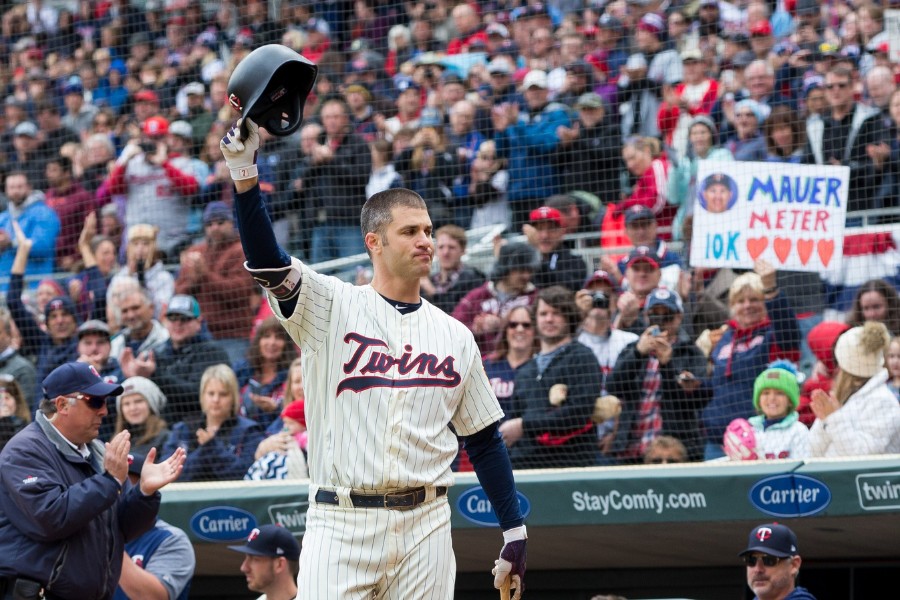 The latest in the season the Twins held a record over .500 was April 21 when they were 8-7. Being basically a non-factor for so much of the summer put a strain on a fan base hungry for a contender. While the team never really found its footing, Mauer provided some nice alternate story lines to follow in his race to the top of several lists. A lot of the season’s brightest moments were provided courtesy of No. 7, but there was a time earlier in the season when I wasn’t convinced Mauer was ever going to play again. Joe made a few dives in the field on May 11, one of them particularly jarring, but passed concussion tests after that game. A little over a week later, he was experiencing balance issues and light sensitivity. Mauer was placed on the disabled list May 19 with what the team described as a cervical strain and concussion-like symptoms. The team made it sound like it was a precautionary move, but brain injuries are so mysterious and elusive. Even the team didn’t have a solid grasp on why the symptoms were ongoing. With his history of concussions, expiring contract and a growing family, I thought there was a chance that was the last we were going to see Joe in uniform. Looking from the outside in, it was easy to see plenty of reasons why he might just hang ‘em up right there and then. Thankfully, the issues subsided and Mauer was able to return to the Twins June 15. It took him some time to get back up to speed, but he went on to hit .298/.342/.411 (.753) over his final 78 games of the season. He capped it all off by hitting .379/.455/.488 (.903) over an emotional final home stand in which Twins Territory made sure it’s homegrown star knew he was appreciated. Here’s a quick look back at some of the milestone moments and big hits Mauer provided in 2018: Oh man, it just got really dusty in here. What? I’m not crying, you’re crying. This feels like a great moment to drop in a joke to lighten the mood, but unfortunately I’m fresh out. Instead, here’s a collection of light-hearted moments from the 2018 season guaranteed to put a smile on your face: More 2018 Highlights Walk-Off Wins Super Rosario and La Tortuga Top Pitching Performances Longest Home Runs
 -
Wow. This gives some new weight to everybody calling the team's higher ups "boy geniuses." Very happy for Baldelli, he's certainly a feel-good story. It makes me a little nervous that he's never managed, mainly because that mean's he's never handled a bullpen, but I'm positive he was grilled about that subject at length throughout the interview process. I look forward to seeing this club become Rocco's Modern Baseball Team.
-
No video, but just for fun here are the top five fastest pitches thrown from the Twins this season: 4. 98.4 mph - Fernando Romero, Alan Busenitz, Tyler Kinley 3. 98.5 mph - Ryan Pressly, John Curtiss 2. 98.6 mph - Fernando Rodney 1. 98.9 mph - Ryan Pressly
- 14 replies
-
- 2
-
-
- miguel sano
- tyler austin
- (and 3 more)
-
Eddie Rosario led the Twins with 24 home runs, followed by Max Kepler with 20 and Brian Dozier with 16, but neither of those three are represented among the players who slugged the five longest home runs for the Twins in 2018. Who made the list? Come check it out.Here are the top-five longest home runs hit by Twins batters in 2018, as measured by Statcast’s projected distance: 5. Logan Morrison, 442 feet off Glenn Sparkman on Aug. 4 It’s no surprise to see Sano and Austin top this list, but neither of them led the team in average home run distance this year. That title goes to Cave, whose 13 homers traveled an averaged distance of 419 feet. The runner-up was Mitch Garver, who averaged 408 feet on his seven home runs. Previous installments of the 2018 Highlights Series: Walk-Off Wins | I took a look back at all six of the Twins’ walk-off wins from 2018. Super Rosario and La Tortuga | Eddie Rosario and Willians Astudillo provided excitement in an otherwise down season. Here I reviewed some of their most entertaining moments. Top Pitching Performances | Here’s a look back at the top five outings of the season as rated by Game Score 2.0. Click here to view the article
- 14 replies
-
- 1
-
-
- miguel sano
- tyler austin
- (and 3 more)
-
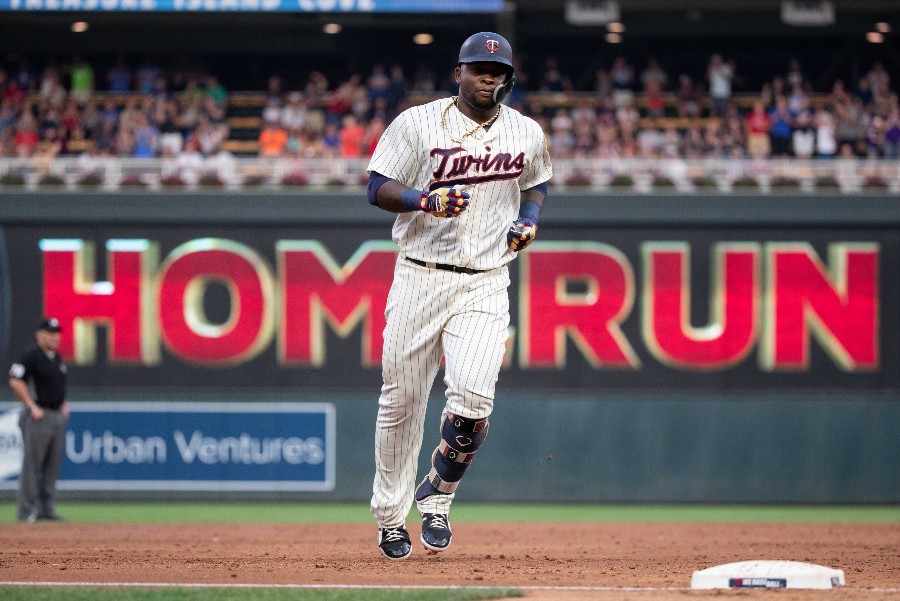 Here are the top-five longest home runs hit by Twins batters in 2018, as measured by Statcast’s projected distance: 5. Logan Morrison, 442 feet off Glenn Sparkman on Aug. 4 https://twitter.com/TwinsHighlights/status/1053450878412308480 4. Jake Cave, 443 feet off Yovani Gallardo on Sept. 1 https://twitter.com/TwinsHighlights/status/1053451247410442240 3. Eduardo Escobar, 443 feet off Josh Tomlin on June 1 *I used exit velocity as the tiebreaker between this and Cave’s bomb. https://twitter.com/TwinsHighlights/status/1053451482111135745 2. Tyler Austin, 451 feet off Matthew Boyd on Aug. 17 https://twitter.com/TwinsHighlights/status/1053451695194279937 1. Miguel Sano, 455 feet off Mike Fiers on Aug. 25 https://twitter.com/TwinsHighlights/status/1053451938149351424 It’s no surprise to see Sano and Austin top this list, but neither of them led the team in average home run distance this year. That title goes to Cave, whose 13 homers traveled an averaged distance of 419 feet. The runner-up was Mitch Garver, who averaged 408 feet on his seven home runs. Previous installments of the 2018 Highlights Series: Walk-Off Wins | I took a look back at all six of the Twins’ walk-off wins from 2018. Super Rosario and La Tortuga | Eddie Rosario and Willians Astudillo provided excitement in an otherwise down season. Here I reviewed some of their most entertaining moments. Top Pitching Performances | Here’s a look back at the top five outings of the season as rated by Game Score 2.0.
 -
One of the strange things about the 2018 season for the Twins was that the one thing that seems to be a constant organizational weakness — starting pitching — was an area they actually improved upon from the prior year. Join me as I take a look back at the best performances turned in by Twins starting pitchers this season.If you read the game recaps here at Twins Daily you should at least have some familiarity with the term Game Score. It’s a fun stat originally created by Bill James as a way to evaluate a starter’s performance. Tom Tango then built on that idea and developed Game Score 2.0. Here’s a link to some more information on how it works. On the downside, Game Score isn’t the most scientific of stats, but on the other hand it’s fairly simple and straightforward. Without further adieu, here are the top five Twins pitching performances of 2018 per Game Score 2.0: 5. Jose Berrios, 85 Game Score vs. STL on May 15 7.1 IP, 2 H, 1 ER, 1 BB, 10 K That’s right, Berrios had all five of the best starts for the Twins as measured by Game Score 2.0. Kyle Gibson was the more consistent pitcher, but it was Berrios’ ability to go out and toss a gem that helped him earn a narrow victory in the voting for Twins Daily Pitcher of the Year. Speaking of Gibson, he just missed the cut, topping out at 84. He achieved that score on July 12 against Tampa Bay when he pitched eight innings of one-run ball with five hits, no walks and nine strikeouts. Jake Odorizzi’s best Game Score was a 78. That was the game where he carried a no-hitter late into the game, but ended up giving up a run on one hit and three walks over 7 1/3 innings, picking up five strikeouts in the process. In case you missed them, here are the previous installments of the 2018 Highlights Series: Walk-Off Wins | I took a look back at all six of the Twins’ walk-off wins from 2018. Super Rosario and La Tortuga | Eddie Rosario and Willians Astudillo provided excitement in an otherwise down season. Here I reviewed some of their most entertaining moments. Click here to view the article
- 6 replies
-
- 3
-
-
- jose berrios
- kyle gibson
- (and 1 more)
-
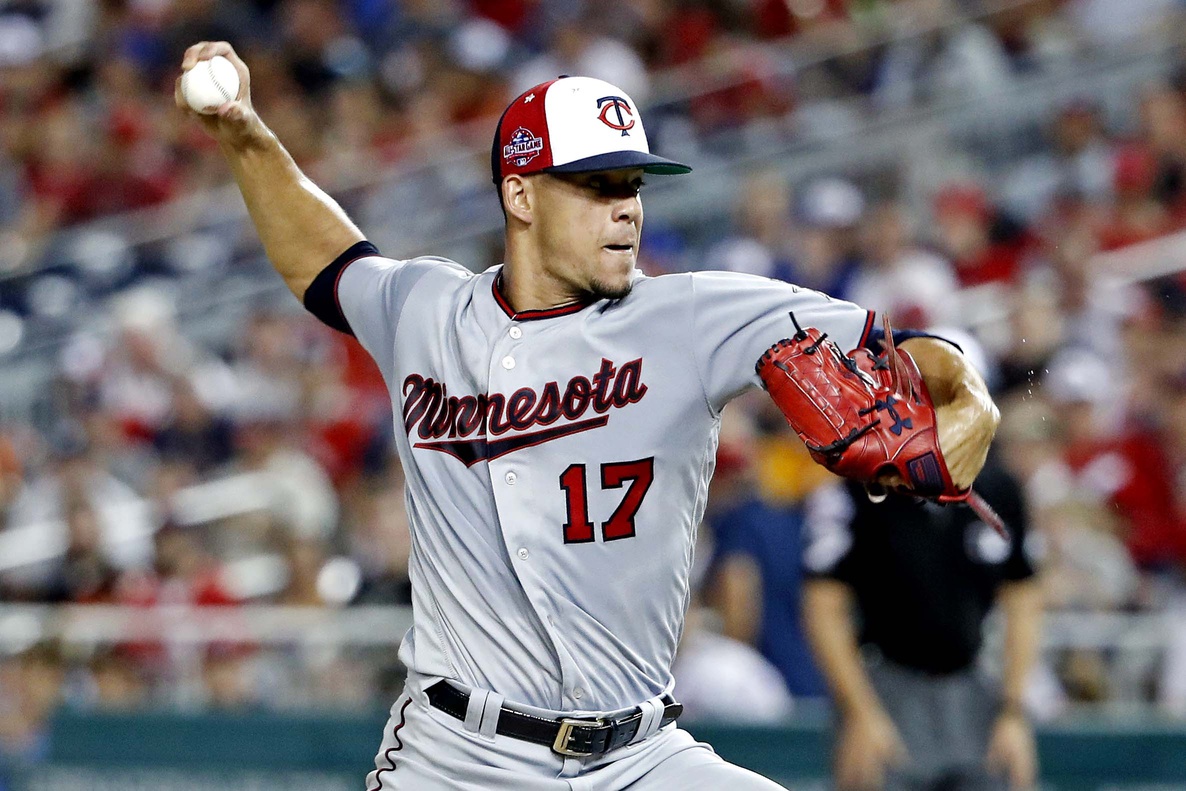 If you read the game recaps here at Twins Daily you should at least have some familiarity with the term Game Score. It’s a fun stat originally created by Bill James as a way to evaluate a starter’s performance. Tom Tango then built on that idea and developed Game Score 2.0. Here’s a link to some more information on how it works. On the downside, Game Score isn’t the most scientific of stats, but on the other hand it’s fairly simple and straightforward. Without further adieu, here are the top five Twins pitching performances of 2018 per Game Score 2.0: 5. Jose Berrios, 85 Game Score vs. STL on May 15 7.1 IP, 2 H, 1 ER, 1 BB, 10 K https://twitter.com/TwinsHighlights/status/1053467856732676096 4. Jose Berrios, 86 Game Score vs. TEX on June 24 7.0 IP, 2 H, 0 ER, 2 BB, 12 K https://twitter.com/TwinsHighlights/status/1053468139558723585 3. Jose Berrios, 86 Game Score vs. CHW on June 7 9.0 IP, 6 H, 2 ER, 0 BB, 10 K *I used total outs recorded as the tiebreaker between this and the the other 86 score. https://twitter.com/TwinsHighlights/status/1053468435261349890 2. Jose Berrios, 87 Game Score vs. CHW on April 12 7.0 IP, 3 H, 0 ER, 0 BB, 11 K https://twitter.com/TwinsHighlights/status/1053468772135288832 1. Jose Berrios, 92 Game Score at BAL on April 1 9.0 IP, 3 H, 0 ER, 1 BB, 6 K https://twitter.com/TwinsHighlights/status/1053469711588118529 That’s right, Berrios had all five of the best starts for the Twins as measured by Game Score 2.0. Kyle Gibson was the more consistent pitcher, but it was Berrios’ ability to go out and toss a gem that helped him earn a narrow victory in the voting for Twins Daily Pitcher of the Year. Speaking of Gibson, he just missed the cut, topping out at 84. He achieved that score on July 12 against Tampa Bay when he pitched eight innings of one-run ball with five hits, no walks and nine strikeouts. Jake Odorizzi’s best Game Score was a 78. That was the game where he carried a no-hitter late into the game, but ended up giving up a run on one hit and three walks over 7 1/3 innings, picking up five strikeouts in the process. In case you missed them, here are the previous installments of the 2018 Highlights Series: Walk-Off Wins | I took a look back at all six of the Twins’ walk-off wins from 2018. Super Rosario and La Tortuga | Eddie Rosario and Willians Astudillo provided excitement in an otherwise down season. Here I reviewed some of their most entertaining moments.
 -
You're right, you certainly wouldn't want to go out of your way to put Max at first base, where his athleticism would be wasted to some degree, but here's a scenario in which I could see it making sense: Twins sign Andrew McCutchen and Nelson Cruz. Cruz plugs up the DH, Cutch takes over as the primary right fielder, forcing Max into a sort of super utility role between all three OF positions, 1B and DH. He's there as Buxton insurance, he's there as Austin insurance, he's there as injury insurance. I think even if everyone plays well and stays healthy you could still find Max plenty of reps in that role. It may seem like overkill, but this is basically what the Brewers did last offseason when they acquired two outfielders despite that not appearing to be a big area of need. The biggest problem the 2018 Twins had was injuries. Their next biggest problem was having insufficient depth to cover for those injuries. I think it would be ideal to aim for offensive overkill in an effort to be prepared for the worst.
- 139 replies
-
- 9
-
-
- joe mauer
- tyler austin
- (and 3 more)
-
Scoop runs saved is what you're looking for, it's essentially successful scoop percentage. I don't believe that's available online, though I could be wrong. I think it's in the Fielding Bible, which is available in print each year. Scoop runs saved is a component of Defensive Runs Saved, which is available at FanGraphs. I'm not out to debate with anybody on whether or not Joe Mauer is a good defensive first baseman. He is. No doubt in my mind. And the metrics back that up, rating him a +3 in DRS last season, so above average. He didn't rank among the top guys in the league at the position, but a big part of that was because he only made 85 starts at first. My question is how much more valuable is a good defensive player at first base compared to one that may be slightly below average? I'm not sure what the exact answer would be, but there's certainly a point in where a guy can provide enough with the bat to make up for any defensive shortcomings.
- 139 replies
-
- 1
-
-
- joe mauer
- tyler austin
- (and 3 more)
-
Correct, it's any throw that hits the dirt prior to reaching the first baseman. I get what you're saying, I think if you were to ask me to predict how many balls Mauer dug out of the dirt last season I'd probably have guessed double what their number is. But that data comes from Baseball Info Solutions, who assign someone to track that kind of stuff for every MLB game. I have not been able to audit that information myself/didn't track scoops, so that's the best I've got to go off of. I'll be working on some defensive stuff for a future installment of the 2018 highlights series I've been running. I know I've got a bunch of Mauer scoops in those, I'm interested in tallying them up. After thinking about how few plays there are on the infield these days, however, that low frequency of scoops doesn't really surprise me all too much. I think on average there are only 10 or 11 ground balls hit per team per game and a couple of those are going to go for hits. That doesn't leave a whole lotta plays to be made in the first place.
- 139 replies
-
- 2
-
-
- joe mauer
- tyler austin
- (and 3 more)
-
Last season Joe Mauer had 20 scoops in 753 2/3 innings played at first base, per FanGraphs. That's basically one scoop per every four games he played there. Copy/pasted this over from the comments of the Polanco article I recently wrote. Sorry to those who already saw it, but I feel like it's worth mentioning again. Yes, you'd much rather have a good defensive player at first, but I'd certainly be willing to sacrifice on defense if it meant more offensive production. While first basemen are involved in a great number of plays throughout a game, the vast majority of them are routine.
- 139 replies
-
- 6
-
-
- joe mauer
- tyler austin
- (and 3 more)
-
There was a six-year run in between that was mostly filled by Twins greats Scott Stahoviak and Ron Coomer. Maybe it's for the best that we just block that part out of our memories ...
- 139 replies
-
- 5
-
-
- joe mauer
- tyler austin
- (and 3 more)
-
The Twins are still waiting for the official word from Joe Mauer on whether or not he’d like to continue his playing career, but anybody who saw the final game of 2018 knows the writing’s on the wall. And it’s in big, bold letters. Again, nothing’s been decided yet, but let’s just assume Mauer calls it a career. Then what? First base might be the one spot on the diamond in which teams can get the most creative. Just take a look at how a couple of the teams still alive in the postseason treated the position this year.The Twins Daily Offseason Handbook can be yours on this coming Tuesday if you preorder here for just $10. Not a lot of players who end up at first start their careers there. Mauer’s the perfect example of that himself. These days, it’s also becoming more and more common that teams use some kind of a timeshare at the position. There are a couple of good examples on teams still playing in October. Yuli Gurriel was the primary guy at first for Houston, making 99 starts there, but he also started 13 games at third base, another 11 at second and even made a start at shortstop. His flexibility helped the Astros cover for injuries to their other infielders and allowed slugger Tyler White to come up from the minors for regular time at first base. Cody Bellinger started 85 games at first base for the Dodgers, but he also made another 50 starts in center field, of all places. That allowed Los Angeles to find playing time for incredible diamond in the rough pickup Max Muncy and his .973 OPS. Muncy made 58 starts at first base. In Wednesday night’s NLCS game, the Dodgers used two different first basemen, neither of them Bellinger, and four different players at second base. That team has some pretty incredible flexibility. Keeping those two examples in mind, let’s take a look at how the Twins might fill the potential opening at first base. Taking a look back at 2018, the player with the most innings at first base behind Mauer was actually Logan Morrison. I guess it’s worth mentioning that the Twins do hold an $8 million option for LoMo with a $1 million buyout, but there are much better investments to be made. Tyler Austin was the only other player to see as many as 100 innings at first base for Minnesota last year. He showed impressive power, but he’s also struck out in 36.6 percent of his plate appearances in the majors. On the other hand, Austin has a .937 OPS against lefties, making him at the very least an attractive platoon partner. He played much more outfield than first over his minor league career, but Austin didn’t play a single inning out there in 2018. After Austin you’ve got Miguel Sano, who played 87 innings of first base this season. He’s certainly someone to keep in mind, but shifting him across the diamond just creates another hole at third base, which is already a weak spot in the org. With Jason Castro expected to return to health and Willians Astudillo establishing himself as a player of interest, there’s a chance the Twins could roll with three catchers next year. In that case, Mitch Garver could be a candidate for regular time at first base. He has some experience there. Max Kepler is a very strong defensive outfielder and hasn’t seen time at first since he played there regularly for Chattanooga back in 2015, but he’s a candidate. If Byron Buxton finds his footing and the Twins add another outfielder, Kepler could make a lot of sense as someone who forms a left-right platoon with Austin. Yes, Max did much better against same-sided pitchers last year, but his career splits still show a fairly significant split (.776 OPS vs. RHP, .605 OPS vs. LHP). Robbie Grossman’s never played an inning of infield in his entire pro career — majors or minors — but he does throw left handed. Considering how uninspiring his defense is in the outfield, maybe someone ought to buy him a first baseman’s mitt ... Down on the farm, Brent Rooker is the big name at the position. It wouldn’t be a shock to see him knocking down the door next season, though he’s certainly not a realistic option for Opening Day. Zander Wiel isn’t as big a name in prospect circles, but he actually had a higher OPS than Rooker last year. Both Rooker and Wiel played quite a bit of outfield, as well. If you really want to go outside the box, LaMonte Wade played a lot of first base in his early years at Maryland, but he’s only played outfield these past four years in the Twins org. So, as you can see, even if we focus solely on internal options there’s no shortage of options. Since first base is the bottom position on the defensive spectrum, in reality anybody could be thrown out there. This is the first time in a very long time that the Twins (appear to) have an opening at first base. Mauer took the reins from Justin Morneau, who succeeded Doug Mientkiewicz. That’s an impressive run of stability — three guys covering 18 seasons — but my suggestion is to end it here. Don’t get me wrong, offensive upgrades are needed, but the front office should simply be focused first on adding a bat. They have enough in-house options and players with defensive flexibility to figure out positioning. How should the Twins fill the (potential) first base opening? They shouldn’t feel the need to. Here’s a look back at what we’ve covered in these Offseason Primers so far: Offseason Primer: Corner Infield Free Agents Offseason Primer: Twins Need to Be Prepared to Pivot from Buxton and Sano Offseason Primer: Building a Badass Bullpen Offseason Primer: Twins Should Stick With Jorge Polanco at Shortstop Offseason Primer: Can Minnesota Mimic Milwaukee's Success? Offseason Primer: The Core Seven (?) If you like what you’ve been reading at the site so far, you’re going to LOVE the handbook. One of the key features included is a full organization depth analysis for not just first base, but every position on the diamond plus the pitching staff. Also included are profile on all the free agent options, a discussion regarding potential trade targets and much more. Click here for more on the handbook, a sneak peek at the cover and the list of special guest contributors. Click here to view the article
- 139 replies
-
- 3
-
-
- joe mauer
- tyler austin
- (and 3 more)
-
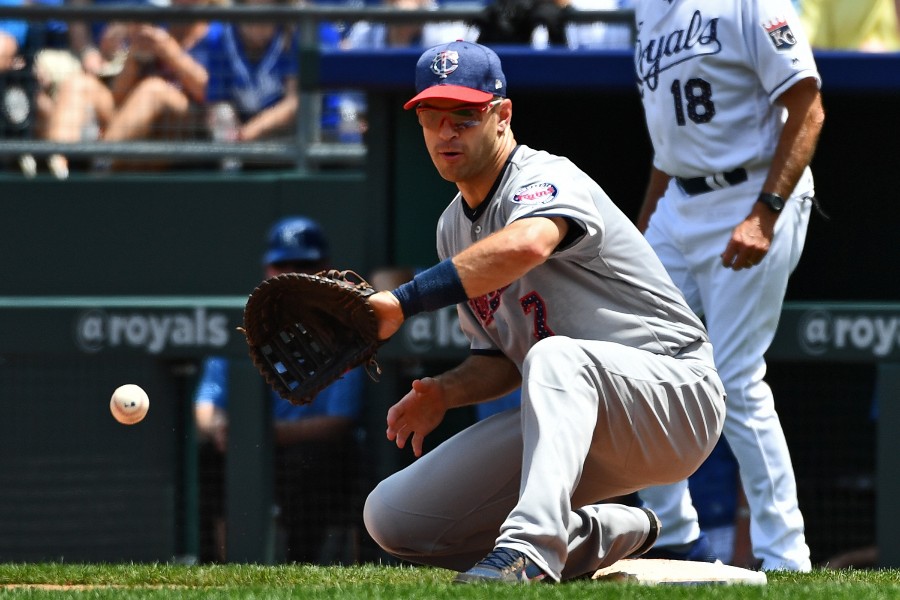 The Twins Daily Offseason Handbook can be yours on this coming Tuesday if you preorder here for just $10. Not a lot of players who end up at first start their careers there. Mauer’s the perfect example of that himself. These days, it’s also becoming more and more common that teams use some kind of a timeshare at the position. There are a couple of good examples on teams still playing in October. Yuli Gurriel was the primary guy at first for Houston, making 99 starts there, but he also started 13 games at third base, another 11 at second and even made a start at shortstop. His flexibility helped the Astros cover for injuries to their other infielders and allowed slugger Tyler White to come up from the minors for regular time at first base. Cody Bellinger started 85 games at first base for the Dodgers, but he also made another 50 starts in center field, of all places. That allowed Los Angeles to find playing time for incredible diamond in the rough pickup Max Muncy and his .973 OPS. Muncy made 58 starts at first base. In Wednesday night’s NLCS game, the Dodgers used two different first basemen, neither of them Bellinger, and four different players at second base. That team has some pretty incredible flexibility. Keeping those two examples in mind, let’s take a look at how the Twins might fill the potential opening at first base. Taking a look back at 2018, the player with the most innings at first base behind Mauer was actually Logan Morrison. I guess it’s worth mentioning that the Twins do hold an $8 million option for LoMo with a $1 million buyout, but there are much better investments to be made. Tyler Austin was the only other player to see as many as 100 innings at first base for Minnesota last year. He showed impressive power, but he’s also struck out in 36.6 percent of his plate appearances in the majors. On the other hand, Austin has a .937 OPS against lefties, making him at the very least an attractive platoon partner. He played much more outfield than first over his minor league career, but Austin didn’t play a single inning out there in 2018. After Austin you’ve got Miguel Sano, who played 87 innings of first base this season. He’s certainly someone to keep in mind, but shifting him across the diamond just creates another hole at third base, which is already a weak spot in the org. With Jason Castro expected to return to health and Willians Astudillo establishing himself as a player of interest, there’s a chance the Twins could roll with three catchers next year. In that case, Mitch Garver could be a candidate for regular time at first base. He has some experience there. Max Kepler is a very strong defensive outfielder and hasn’t seen time at first since he played there regularly for Chattanooga back in 2015, but he’s a candidate. If Byron Buxton finds his footing and the Twins add another outfielder, Kepler could make a lot of sense as someone who forms a left-right platoon with Austin. Yes, Max did much better against same-sided pitchers last year, but his career splits still show a fairly significant split (.776 OPS vs. RHP, .605 OPS vs. LHP). Robbie Grossman’s never played an inning of infield in his entire pro career — majors or minors — but he does throw left handed. Considering how uninspiring his defense is in the outfield, maybe someone ought to buy him a first baseman’s mitt ... Down on the farm, Brent Rooker is the big name at the position. It wouldn’t be a shock to see him knocking down the door next season, though he’s certainly not a realistic option for Opening Day. Zander Wiel isn’t as big a name in prospect circles, but he actually had a higher OPS than Rooker last year. Both Rooker and Wiel played quite a bit of outfield, as well. If you really want to go outside the box, LaMonte Wade played a lot of first base in his early years at Maryland, but he’s only played outfield these past four years in the Twins org. So, as you can see, even if we focus solely on internal options there’s no shortage of options. Since first base is the bottom position on the defensive spectrum, in reality anybody could be thrown out there. This is the first time in a very long time that the Twins (appear to) have an opening at first base. Mauer took the reins from Justin Morneau, who succeeded Doug Mientkiewicz. That’s an impressive run of stability — three guys covering 18 seasons — but my suggestion is to end it here. Don’t get me wrong, offensive upgrades are needed, but the front office should simply be focused first on adding a bat. They have enough in-house options and players with defensive flexibility to figure out positioning. How should the Twins fill the (potential) first base opening? They shouldn’t feel the need to. Here’s a look back at what we’ve covered in these Offseason Primers so far: Offseason Primer: Corner Infield Free Agents Offseason Primer: Twins Need to Be Prepared to Pivot from Buxton and Sano Offseason Primer: Building a Badass Bullpen Offseason Primer: Twins Should Stick With Jorge Polanco at Shortstop Offseason Primer: Can Minnesota Mimic Milwaukee's Success? Offseason Primer: The Core Seven (?) If you like what you’ve been reading at the site so far, you’re going to LOVE the handbook. One of the key features included is a full organization depth analysis for not just first base, but every position on the diamond plus the pitching staff. Also included are profile on all the free agent options, a discussion regarding potential trade targets and much more. Click here for more on the handbook, a sneak peek at the cover and the list of special guest contributors.
 -
I didn't get a chance to see him, but some of his numbers -- triples, stolen base success rate -- would appear to support that theory. One thing that sticks out in terms of his on-base ability is he gets hit by a comical amount of pitches. Only one other player in Double A was hit more often last season than Raley (24). He's been plunked 53 times in his young career! To put that in perspective, in the same number of games (though 98 fewer plate appearances), Jaylin Davis has been hit by 20 pitches in his career. I thought Travis Blankenhorn got hit a ton, and he "only" has 35 HBPs in about 100 more PAs than Raley. Safe to say this guy's not afraid of the ball, lol.
- 9 replies
-
- 2
-
-
- luke raley
- jaylin davis
- (and 3 more)
-
Nice to see Raley make some noise early. A good showing could be big for him. There are already so many other corner OF/1B types in the system, but obviously the front office saw something they liked in him. I'll be interested to see how everything shakes out.
-
What a great moment for him! That, and Rosie's walk-off, were both featured on the first "episode" of this series. Check it out: 2018 Twins Highlights: Walk-Off Wins Will be laying down another round of highlights later this week.
-
Yes, please. That's a fact! LIFETIME CONTRACT!!! Now that I've had baseball with Willians Astudillo, I'm not sure if I can ever go back to baseball without Willians Astudillo
-
With the baseball season being so long, a down year can really drag on a fan. On the plus side, playing 162 games generates plenty of memorable moments, even in a forgettable season. Over the next few weeks, I’ll be taking a look back and sharing some of my favorite highlights from the 2018 season. Today we’ll take a look back at a couple guys who provided plenty of excitement: Eddie Rosario and Willians Astudillo.Both Rosario and Astudillo were already featured in the first installment of this 2018 Twins Highlights series, which took a look back at the walk-off wins. The 2018 season may eventually be remembered as the year Joe Mauer hung ‘em up (don’t worry, I’ll get to him in this series a little later), but the one player who consistently made me glad that I kept tuning in was Eddie Rosario. Earlier this month, we crowned Rosario Twins Daily’s 2018 Most Valuable Player, he was also the team’s most electric player to watch this season. Super Rosario, as he was portrayed on a T-shirt from Sota Stick, led the team in virtually every offensive statistic and was a superhero on the bases and in the field. Rosario is among the most aggressive players in the league, and sometimes that risk-taking mentality gets him burnt, but he seems to be getting a better feel for when to put the pedal to the medal as his career has progressed. Get your popcorn ready. Here’s a look back at some of his memorable plays on the bases … I don’t have a highlight package to share for him, but I feel Eduardo Escobar deserves an honorable mention in this sort of highlight player of the year conversation we’re having. Prior to being dealt to the Diamondbacks, Esky was a joy to watch. He was cracking doubles at a historic pace and battled his tail off every day. That does it for this week’s look back at 2018, make sure to let me know in the comments who your favorite player was to watch this season. Click here to view the article
-
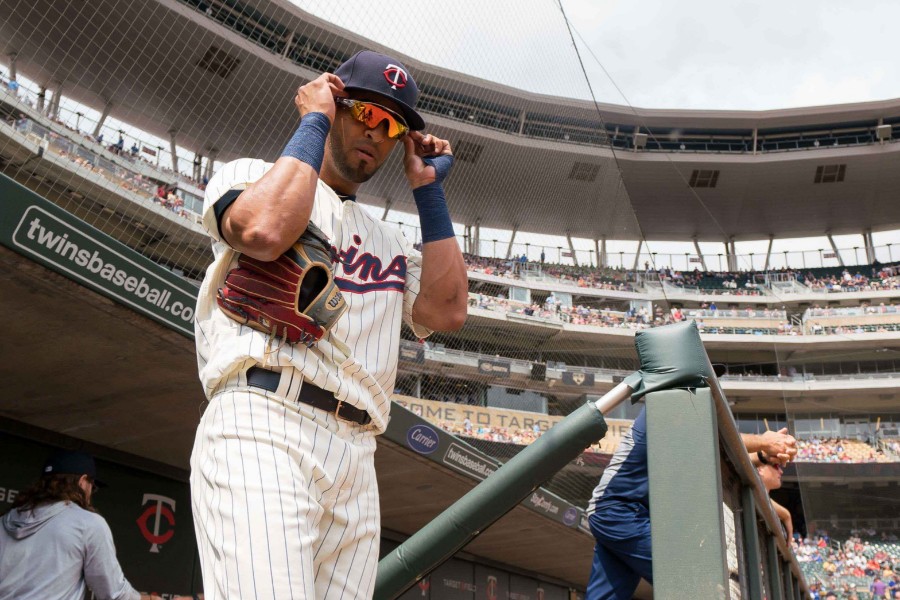 Both Rosario and Astudillo were already featured in the first installment of this 2018 Twins Highlights series, which took a look back at the walk-off wins. The 2018 season may eventually be remembered as the year Joe Mauer hung ‘em up (don’t worry, I’ll get to him in this series a little later), but the one player who consistently made me glad that I kept tuning in was Eddie Rosario. Earlier this month, we crowned Rosario Twins Daily’s 2018 Most Valuable Player, he was also the team’s most electric player to watch this season. Super Rosario, as he was portrayed on a T-shirt from Sota Stick, led the team in virtually every offensive statistic and was a superhero on the bases and in the field. Rosario is among the most aggressive players in the league, and sometimes that risk-taking mentality gets him burnt, but he seems to be getting a better feel for when to put the pedal to the medal as his career has progressed. Get your popcorn ready. Here’s a look back at some of his memorable plays on the bases … https://twitter.com/TwinsHighlights/status/1050570082341011456 … in the field … https://twitter.com/TwinsHighlights/status/1050579099041890304 … and a collection of all his best throws from the outfield. https://twitter.com/TwinsHighlights/status/1050583986521759744 Unfortunately, Rosario’s year was cut short in mid-September by a quad injury, but by then a new, unlikely hero had emerged: La Tortuga. Willians Astudillo appeared in fewer than 30 games with the Twins this season, but somehow managed to amass the equivalent of a full year’s worth of highlights. Here's a couple minutes of Astudillo that's sure to brighten up your day. https://twitter.com/TwinsHighlights/status/1050923958881722368 I don’t have a highlight package to share for him, but I feel Eduardo Escobar deserves an honorable mention in this sort of highlight player of the year conversation we’re having. Prior to being dealt to the Diamondbacks, Esky was a joy to watch. He was cracking doubles at a historic pace and battled his tail off every day. That does it for this week’s look back at 2018, make sure to let me know in the comments who your favorite player was to watch this season.
