



Ted Schwerzler
-
Posts
5,149 -
Joined
-
Last visited
Content Type
Profiles
News
Minnesota Twins Videos
2026 Minnesota Twins Top Prospects Ranking
2022 Minnesota Twins Draft Picks
Minnesota Twins Free Agent & Trade Rumors, Notes, & Tidbits
Guides & Resources
2023 Minnesota Twins Draft Picks
The Minnesota Twins Players Project
2024 Minnesota Twins Draft Picks
2025 Minnesota Twins Draft Pick Tracker
2026 Minnesota Twins Draft Tracker: Picks & Bonuses
Forums
Blogs
Events
Store
Downloads
Gallery
Everything posted by Ted Schwerzler
-
Coming into the 2017 Major League Baseball season, the Minnesota Twins biggest question mark was exactly how their pitching staff would respond. After being at the bottom of the big leagues a year prior, Minnesota needed a turnaround to return to competitiveness. They've seen a good enough start through the first 30 games or so, but staving of regression will be best accomplished by continuing to raise the water level. As things stand on May 16, the Twins own the 9th best starting ERA in MLB. Ervin Santana has been great, Hector Santiago has been surprising, and Phil Hughes has been serviceable. Jose Berrios is here now, and the 5th starter will remain in flux until someone separates themselves from the pack. The bullpen has been a bit of a different story however. Through their first 120 innings pitches, Minnesota checks in with the 23rd best relief ERA in MLB (4.73). The 7.43 K/9 ranks 28th out of 30 big league teams and the 3.75 BB/9 checks out in the middle of the pack. Largely unaddressed this offseason (Matt Belisle being the only signing of note), the pen remained a major question mark. While it hasn't yet gone off the rails, the goal would be to address things before it gets to that point. Looking at what's out there, you can see some definite pieces. Brandon Kintzler is a solid reliever, even if he toes the questionable line when it comes to working as a closer. Taylor Rogers fits, and Tyler Duffey looks like a real weapon. I still believe Ryan Pressly is more than his funk suggests, and Justin Haley being carried makes sense. While that leaves both Matt Belisle and Craig Breslow, you have to wonder if Minnesota isn't in a position to push for more on their own. Triple-A Rochester has some intriguing arms worthy of a shot. Adding Drew Rucinski to the 40 man roster for a brief call up comes as confusing, if only because there's other options. Trevor Hildenberger, D.J. Baxendale, Aaron Slegers, and even Jason Wheeler could all use a look. If we're really trying to push the envelop though, it's at Double-A where the Twins greatest assets lie. Both Mason Melotakis and Nick Burdi have been lights out to start 2017. Melotakis owns a 1.17 ERA across 15.1 IP. He has compiled a 7.0 K/9 while offering free passes at a rate of 2.3 BB/9. The former 2nd round pick has been at Double-A since 2014, albeit missing the 2015 season. He's compiled just under 50.0 IP across the last two years and he's shown an ability to strike batters out, while reducing the walks in 2017. Another 2nd round pick, Burdi has come out guns blazing this season as well. He can push his fastball into triple digits, and seeing him healthy after throwing just three innings last year is a major plus. Across 13.2 IP this season, he's struck out 11.9 per nine innings, and he's walking batters at a very strong 2.6 BB/9. While command has always been Burdi's shortcoming, it's something he seems to have honed in this campaign. I have no idea whether or not the Twins would promote either arm from Double-A, but I would lean towards them not doing so. Both have velocity, and wanting to see them pitch, more than just throw, at the next level might be worthwhile for a stop in Triple-A. Neither guy is going to be able to rely solely on speed at the big league level, and making sure they can get big league hitters out is a must. Regardless of how they get to the Target Field bullpen, both Melotakis and Burdi have an argument to be there by early summer at the latest. I'd expect at least a brief stop for both in Triple-A, but guys like Breslow or even Adam Wilk, shouldn't stand in their way for a big league opportunity. Unlike a starting prospect, I'd argue that relievers don't necessarily need the long stay at the highest level of the farm. Give them a taste and move them on. J.T. Chargois put forth just 12.1 IP in AAA after 11.2 IP at AA prior to his promotion last year. A similar path could be had for both of these guys. When they arrive, there's little reason to suggest it wouldn't be an immediate boost to the bullpen. Throw in a healthy J.T. Chargois or Jake Reed, and maybe a flier on one of those other names, and Minnesota will have reworked their relief corps from within. Right now, there's some question marks as to how it will come together, and what guys can get healthy, but what Minnesota doesn't have in starting options, they have in relief. Both Burdi and Melotakis can lead the charge, and the dice will fall from there as they may. For more from Off The Baggy, click here. Follow @tlschwerz
-
Twins Can Make Wright Choice In Draft
Ted Schwerzler commented on Ted Schwerzler 's blog entry in Off The Baggy
It'd be different if that prep pitcher had been throwing 95+ for two years, or had lights out secondary stuff, or threw more than 28 innings this year. Greene is exciting, but he's not generational. He may end up being as much, but drafting right now, that's a large assumption. -
Twins Can Make Wright Choice In Draft
Ted Schwerzler commented on Ted Schwerzler 's blog entry in Off The Baggy
Greene's hype train has gotten a bit out of control. He's not near the best HS pitcher ever, let alone the best player ever... -
The Minnesota Twins hold the number one overall pick in the upcoming Major League Baseball amateur draft. That much has been true since the conclusion of the 2016 season. What remains up in the air, is exactly who will hear their name called first on June 12. While we've heard about high school phenom Hunter Greene, and Louisville star Brendan McKay, it could be Vandy pitcher Kyle Wright that was the correct choice all along. Much has been made about both Hunter Greene and Brendan McKay in the months leading up to the draft. Greene has a fastball that has topped out at triple digits, and he can play a solid shortstop as well. McKay may be the best college pitcher, as well as hitter, and a team has to decide what way to develop him. Both have some serious concerns though. The flame out rate for high school arms is incredible, and while Greene has the velocity, the development arc for his body, let alone his repertoire, is an immense uphill battle. For McKay, the dominance on the mound comes more in the form of pitchability, as he doesn't have lightning stuff. He's also great at the plate, but suggesting either player with the notion that they have two-way abilities is a fool's errand. Reality says that both will be selected as pitchers, and banking on what they can do at that plate is a fall back option you shouldn't even be considering with a pick that high. If Greene has a ceiling that's at the top of this class, he has a floor that is somewhere below the basement. McKay is a nice choice and could be a very solid pro, but he's probably never going to justify being tabbed at one overall. If you want to grab someone that splits things down the middle, Vanderbilt's Kyle Wright may absolutely be the Twins best bet. Wright, a Junior at Vanderbilt from Huntsville, Alabama, had a tough start to his 2017 season. He's since been on a tear, giving up just 12 hits, five earned runs, and a 51/7 K/BB ratio over his last five starts (39.2 IP). On the season, Wright owns a 3.06 ERA across 13 starts (82.1 IP) and owns a 93/26 K/BB ratio. Opposing hitters are batting just .206 off of him, and he's been the premier arm for one of the best baseball programs in the country. Where McKay throws low 90s on the mound, Wright can sit 95-97 mph with good secondary pitches as well. He has a strong breaking ball and does compliment his fastball with a serviceable changeup. At this point, scouts seem to agree that Wright would have no less than three capable pitches at the next level, a must if he's going to continue as a starter. Regardless of what decision any team makes during the MLB draft, a lot of expectations are based upon projections becoming reality. If you have to live with that notion, finding a good mix of ceiling, floor, and belief is a must. Whereas Hunter Greene has a very high probability of flaming out, and Brendan McKay has a low probability of being something extraordinary, Wright could give the Twins the option they would most covet. Never in baseball do teams draft for need. The developmental arc for amateur players is too significant to make decisions looking for immediate impact. There's never going to be a time that pitching isn't at a premium though, and Minnesota adding a potential top tier arm to the organization is hardly a bad step. The decision will remain fluid right up until the day of the draft (which is now less than a month away), but if I'm the Twins, Kyle Wright is who I want. For more from Off The Baggy, click here. Follow @tlschwerz
-
Last season was anything but glorious for the Minnesota Twins' Phil Hughes. He broke a bone on a comebacker, and ultimately watched his season end after just 59 innings. While shelved, he had a rib removed (undergoing thoracic outlet surgery) and the 2016 campaign turned into a giant recovery stint. Fast forward a year and the Twins hurler is learning to embrace his new realityHughes has never been a burner. Even at his best with the Twins in 2014, he threw his fastball just an average of 92 mph. What he always has been in Minnesota however, is a guy who issues very few free passes, and watches his strikeouts play off that notion. After setting an all-time major league record in K/BB rate during the 2014 season, Hughes has watched his effectiveness slip. Regardless of whether or not the injuries mounted last year, it's fair to wonder if he wouldn't have needed to adapt anyway. This season though, it's been all about adaptation for Hughes. Working as the Twins number four starter out of the gate, he had some pressure lifted with how good both Ervin Santana and Hector Santiago have been. Despite an ugly start against the Indians, it's hard to argue that Hughes has been anything but acceptable. Through his first six turns in the rotation, Hughes owns a 4.32 ERA that's backed by a 4.35 FIP (his best mark since 2014). His 5.7 K/9 is also the best total since 2014, and he's issuing fewer free passes at just 1.6 BB/9. Home runs continue to be a bugaboo for him, but that's virtually always been the case, and something you almost have to accept at this point. What is most interesting about Hughes this season is how he is going about getting results. Both his changeup and knuckle curve have seen a slight dip in velocity, but he's utilizing them quite often. Thus far, Hughes has thrown fastballs only 22.5% of the time (per Fangraphs) while pushing knuckle curves across one-fifth of the time (20.6%) and using changeups 18.8% of the time. In breaking down his offerings, it's the changeup number that jumps off the page. At 18.8%, Hughes is more than tripling the frequency of his change, from a career rate of 4.9%. Given the roughly 10 mph dip from his fastball, it keeps hitters out front of and off his pitches. It also shouldn't go unsaid that pitching coach Neil Allen is a noted chanegup guru, and that has likely played a significant role here. Hughes is allowing a higher hard hit rate (43.6% in 2017 up from 37.7% and 31.2% the past two years), but he's giving up fewer line drives and his 9.3% HR/FB ratio is actually the lowest it's been since bottoming out at 6.2% in 2014. He's forcing hitters to stay off his fastball, and deal with the offspeed stuff which in turn has shifted the thinking about what type of pitcher he is. The level of confidence and trust in both the knuckle curve and changeup also flesh out very high in counts when he's ahead. When batters are facing 0-1, 0-2, or 1-2 counts, they are seeing nearly a 50% mix of chanegups and knuckle curves. But when Hughes finds himself down in the count, he's still going with that same mix, throwing changeups and knuckle curves 47.2% of the time. Whether a by-product of the surgery, or a simple adjustment to style, Hughes has transformed himself from a two-seam/cutter guy into a changeup/knuckle curve thrower. He's finessing players out, and relies on balls being hit in the air, as the Twins now employ one of the best outfield defenses in all of baseball. It should be noted that Father Time is undefeated and that regardless of the number of procedures a body undergoes, a level of adaptation is required. When a veteran continues to roll towards the latter half of their career, there will be a point that a renaissance is needed. Whether by changing one's philosophy or finding something else that works, a new level of effectiveness can be achieved. It appears Phil Hughes has embraced this head on and right now is reaping the rewards. For more from Off The Baggy, click here. Follow @tlschwerz Click here to view the article
-
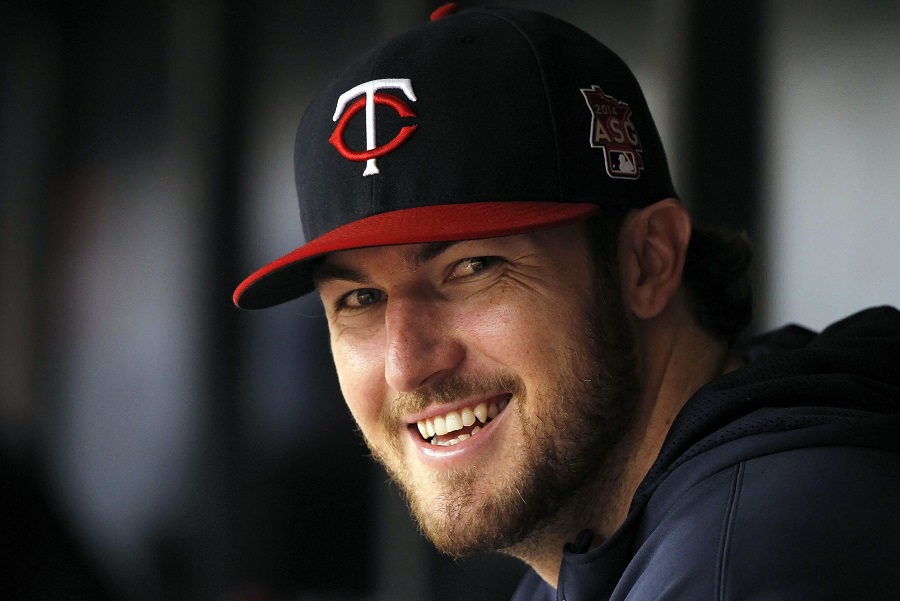 Hughes has never been a burner. Even at his best with the Twins in 2014, he threw his fastball just an average of 92 mph. What he always has been in Minnesota however, is a guy who issues very few free passes, and watches his strikeouts play off that notion. After setting an all-time major league record in K/BB rate during the 2014 season, Hughes has watched his effectiveness slip. Regardless of whether or not the injuries mounted last year, it's fair to wonder if he wouldn't have needed to adapt anyway. This season though, it's been all about adaptation for Hughes. Working as the Twins number four starter out of the gate, he had some pressure lifted with how good both Ervin Santana and Hector Santiago have been. Despite an ugly start against the Indians, it's hard to argue that Hughes has been anything but acceptable. Through his first six turns in the rotation, Hughes owns a 4.32 ERA that's backed by a 4.35 FIP (his best mark since 2014). His 5.7 K/9 is also the best total since 2014, and he's issuing fewer free passes at just 1.6 BB/9. Home runs continue to be a bugaboo for him, but that's virtually always been the case, and something you almost have to accept at this point. What is most interesting about Hughes this season is how he is going about getting results. Both his changeup and knuckle curve have seen a slight dip in velocity, but he's utilizing them quite often. Thus far, Hughes has thrown fastballs only 22.5% of the time (per Fangraphs) while pushing knuckle curves across one-fifth of the time (20.6%) and using changeups 18.8% of the time. In breaking down his offerings, it's the changeup number that jumps off the page. At 18.8%, Hughes is more than tripling the frequency of his change, from a career rate of 4.9%. Given the roughly 10 mph dip from his fastball, it keeps hitters out front of and off his pitches. It also shouldn't go unsaid that pitching coach Neil Allen is a noted chanegup guru, and that has likely played a significant role here. Hughes is allowing a higher hard hit rate (43.6% in 2017 up from 37.7% and 31.2% the past two years), but he's giving up fewer line drives and his 9.3% HR/FB ratio is actually the lowest it's been since bottoming out at 6.2% in 2014. He's forcing hitters to stay off his fastball, and deal with the offspeed stuff which in turn has shifted the thinking about what type of pitcher he is. The level of confidence and trust in both the knuckle curve and changeup also flesh out very high in counts when he's ahead. When batters are facing 0-1, 0-2, or 1-2 counts, they are seeing nearly a 50% mix of chanegups and knuckle curves. But when Hughes finds himself down in the count, he's still going with that same mix, throwing changeups and knuckle curves 47.2% of the time. Whether a by-product of the surgery, or a simple adjustment to style, Hughes has transformed himself from a two-seam/cutter guy into a changeup/knuckle curve thrower. He's finessing players out, and relies on balls being hit in the air, as the Twins now employ one of the best outfield defenses in all of baseball. It should be noted that Father Time is undefeated and that regardless of the number of procedures a body undergoes, a level of adaptation is required. When a veteran continues to roll towards the latter half of their career, there will be a point that a renaissance is needed. Whether by changing one's philosophy or finding something else that works, a new level of effectiveness can be achieved. It appears Phil Hughes has embraced this head on and right now is reaping the rewards. For more from Off The Baggy, click here. Follow @tlschwerz
 -
Last season was anything but glorious for the Minnesota Twins' Phil Hughes. He broken a bone on a comebacker, and ultimately watched his season end after just 59.0 IP. While shelved, he had a rib removed (undergoing Thoracic Outlet surgery), and the 2016 campaign turned into a giant recovery stint. Fast forward a year and the Twins hurler is learning to embrace his new reality. It's fair to suggest that Hughes has never been much of a burner. Even at his best with the Twins in 2014, he threw just an average of 92 mph on his fastball. What he always has been in Minnesota however, is a guy that issues very few free passes, and watches his strikeouts play off of that notion. After setting an all-time major league record in K/BB rate during the 2014 season, Hughes has watched his effectiveness slip. Regardless of whether or not the injuries mounted last year, it's fair to wonder if he wouldn't need to adapt. This season though, it's been all about adaptation for Hughes. Working as the Twins number three starter out of the gate, he had some pressure lifted off of him with how good both Ervin Santana and Hector Santiago have been. Despite an ugly start against the Indians, it's hard to argue that Hughes has been anything but acceptable. Through his first six turns in the rotation, Hughes owns a 4.32 ERA that's backed by a 4.35 FIP (his best mark since 2014). His 5.7 K/9 is also the best total since 2014, and he's issuing less free passes at just 1.6 BB/9. Home runs continue to be a bugaboo for him, but that's virtually always been the case, and something you almost have to live with at this point. What is most interesting about Hughes this season, is how he is going about getting results. Both his changeup and knuckle curve have seen a slight dip in velocity, but he's actually utilizing them quite often. Thus far, Hughes has thrown fastballs only 22.5% of the time (per Fangraphs) while pushing knuckle curves across one-fifth of the time (20.6%) and using changeups 18.8% of the time. In breaking down his offerings, it's the changeup number that jumps off the page. At 18.8% of the time, Hughes is relying on his changeup nearly 14% more often than his career average of 4.9%. Given the roughly 10 mph dip from his fastball, it keeps hitters out front and off of his pitches. It also shouldn't go unsaid that pitching coach Neil Allen, is a noted chanegup guru, and that has likely played a significant role here. Hughes is allowing a higher hard hit rate (43.6% in 2017 up from 37.7% and 31.2% the past two years), but he's giving up less line drives and his 9.3% HR/FB ratio is actually the lowest it's been since bottoming out at 6.2% in 2014. He's forcing hitters to stay off of his fastball, and deal with the offspeed stuff, which in turn, has shifted thinking about what type of pitcher he is. The level of confidence and trust in both the knuckle curve and changeup also flesh out very high in situations where he's ahead. When batters are facing 0-1,0-2, or 1-2 counts, they are seeing nearly a 50% mix of chanegups and knuckle curves. Conversely, when Hughes finds himself down in the count, he's going with that same mix, throwing changeups and knuckle curves 47.2% of the time. Whether a by-product of the surgery, or a simple adjustment to style, Hughes has transformed himself from a two-seam/cutter guy, into a changeup/knuckle curve thrower. He's finessing players out, and feels ok about balls being hit in the air, as the Twins now employ one of the best outfield defenses in all of baseball. It should be noted that Father Time is undefeated, and that regardless of the amount of procedures a body undergoes, a level of adaptation is required. When a veteran continues to roll towards the latter half of their career, there will be a point that a renaissance is needed. In changing your philosophy, or finding something else that works, a new level of effectiveness can be achieved. It appears Phil Hughes has embraced this head on, and right now, the results are rewarding him for it. For more from Off The Baggy, click here. Follow @tlschwerz
-
I just don't see much benefit to him going down. He's a pretty lackluster 11 innings or so. He remains among the Twins highest upside pen arms. If they had more talent in relief in general, you could probably change your usage a bit more. At this point, I'd let him pitch through it and have a pretty significant belief that the tide will turn. If you can get Melotakis, Burdi, Hildenberger, Chargois, etc in there too, then sure, you have ample guys with opportunity to do more. Removing Pressly and leaving it Duffey/Rogers and the misfits doesn't do much for me.
-
NOTE: View the images and breakdowns included in this article at it's original source here. The date is April 20, 2017, and Byron Buxton has just played in his 15th game for the Minnesota Twins this season. To show for his efforts, he's compiled a .082/.135/.122 slash line across 49 at bats, and nothing looks to be going right for the one-time uber-prospect. If there was a rock bottom for the Georgia native in the early going this season, that was most definitely it. Since however, the Twins centerfielder has turned a corner, and the results are worth taking note of. Over the course of the 2017 slate to date, it's been noted that Buxton would remain an asset given his exceptional centerfield defense. He covers ground at an elite level, and is among the best in the game at taking away would be run producing plays. What was always the question, is how long the Twins would have to punt on him in the lineup, solely to keep his glove in the outfield. Although just a small sample size, the time he's spent on the field from April 21 onwards suggests we may be seeing him turn a corner. As of May 10, Buxton has played 12 games for the Twins since April 21. He owns a .333/.442/.500 slash line, while contributing a double, triple, and home run. After fanning 24 times and drawing just two walks in his first 15 games, he's compiled a very solid 9/7 K/BB ratio since. Buxton has halved his K% (46.2% down to 20.9% split between both samples), and he's multiplied a 4.3 LD% ten-fold (41.7 LD% since 4/21). There's virtually no numerical value that doesn't suggest a massive turnaround for the Twins young outfielder. Maybe most promising of all, the process at the plate appears to be driving the results. Early on, Buxton was swinging through pitches all over the zone, but he was chasing outside of it an incredible amount as well. Per Baseball Savant, Buxton swung through 22 (of 204 pitches seen) balls outside of the zone prior to April 21. Fast forwarding through his most recent 12 games, he's swung and missed at just eight (of 179 pitches seen) balls out of the zone. He's holding back on inside pitches, and darting out at breaking balls away much less. Also, when making contact, we can visibly see just how much better the bat is meeting the ball. Buxton is swinging through the centerpoint of the ball more often, allowing a higher percentage of strong contact. It's also important to note that most of what Buxton has changed has been a result of his own doing. Opposing pitchers haven't attacked him too incredibly different of late either. The book on him has been to bust him in, as well as getting him to flail away. Having seen a high portion of balls down and away, Buxton is seeing less pitches over the middle of the plate. Generally a pull hitter, pitchers have tried to neutralize his tendency by forcing him to deal with the outside pitch. Looking at swings roughly a month a part, there's some slight tweaks happening there as well. Facing the White Sox on April 7. Stepping into the box, it appears that Buxton has more of a straight forward plan lef. There's a slight openness to it, but his stance is squared off by definition. The bat is cocked back with his hands flexed. Looking at his process on May 9, the stance has an open plant leg, with hands resting a bit more upright and the bat head remaining high. Buxton's first movement is to drop his hands and create somewhat of an upward lean with his torso. In the image from May 9, his hands stay cocked, while the upper body hovers still in an upright position. While pitch locations differ, the follow through follows a drastically different path as well. In the first image, Buxton's ankle rollover is drastic, his head has pulled off the pitch, and his high finish has him looking anywhere but at the ball. When making contact on May 9, Buxton stares down at his swing path, has his head at the point of contact, and keeps a strong plant leg without any real significant rollover. Sure, it's fair to suggest that putting any instances in a vacuum will result in a desirable outcome. What seems to be at play here, as a whole, is a guy that's made some minor tweaks and is seeing some major results. I still don't think that Byron Buxton is a .300 hitter at the big league level, but expecting him to push for .280 with power is a pretty safe bet in my eyes. This is a young hitter still trying to find his way, but if these changes continue to hold up, it won't take until September 2017 for them to be on full display. For more from Off The Baggy, click here. Follow @tlschwerz
-
Through the first month of the big league season, Twins reliever Ryan Pressly has had a rough time. A right-hander who profiled well for a high leverage role in the late innings, he's staring at an ERA just south of 9.00 has been searching for answers. However, a bit deeper dive suggests all is not lost.Currently, the Twins former Rule 5 selection owns a 8.74 ERA across 11.1 IP. He's surrendered three homers, and owns a 5.56 FIP. There's no way to look at those numbers and find a whole heap of positive. Looking beyond the surface a little bit though, we can see this start has the potential to be a small blip on the radar in what can turn out to be a nice season. Maybe most easily visible, Pressly is actually striking out 8.7 per nine, up from his career high a year ago. He's also walking slightly more than in 2016 (3.2 BB/9 as opposed to 2.7 BB/9), but it's not incredibly far off from his career norms. His offerings have stayed the same, and he's actually seen velocity increases on all three of his pitches (including a two mph jump with his slider). So what gives? The reality is that Pressly's results have been shaken by roughly three pitches to three relative no-name hitters. He's given up homers to Avisail Garcia, Matt Davidson, and John Hicks. None of those three are big league stalwarts, and their homers came off of a good fastball and two hanging sliders. From a results standpoint, Pressly has generated virtually the same amount of groundballs, line drives and fly balls as he has in the past. He also has a similar (albeit slightly down) chase rate, with a similar swinging strike percentage. There's not a massive spike in contact, or contact being made within the zone either. If there's a spike, it's in how hard balls are being put into play, and what is happening in those instances. Pressly is allowing hard hit contact 40.5% of the time, up from 31.8% a year ago. His home run to fly ball rate has skyrocketed from 9.5% in 2016 to 21.4% this season. The hard hit rate has also produced a .353 BABIP, up from his career .300 mark, and .311 last season. Of the 185 pitches Pressly has thrown, 14 have been put in play with an exit velocity north of 95 mph. Of those 14 balls in play, 10 of them have resulted in base hits. Hard contact resulting in runners on base isn't news by any means. It makes sense that a ball being put in play with solid contact would result in a good outcome more often than not. What's unfortunate is that the hard contact is coming in just under half of the time for the Twins reliever. It's likely in part a by product of throwing with increased velocity, but also likely due to batters being more able to hit the Twins reliever. At this point, I'm not sure if Pressly has tipped pitches, or shown any hints to opposing hitters that would give his stuff away. As things stand, he's doing everything he always has done, but three balls in the seats have inflated his overall numbers. Opposing hitters making hard contact are forcing him to really work through his outings, but for a guy with his stuff, it shouldn't be an obstacle he's incapable of overcoming. When at his best, Pressly is among the best arms in the Twins pen. Clearly that time is not now, but there's not much to suggest he can't get back to it either. For more from Off The Baggy, click here. Follow @tlschwerz Click here to view the article
-
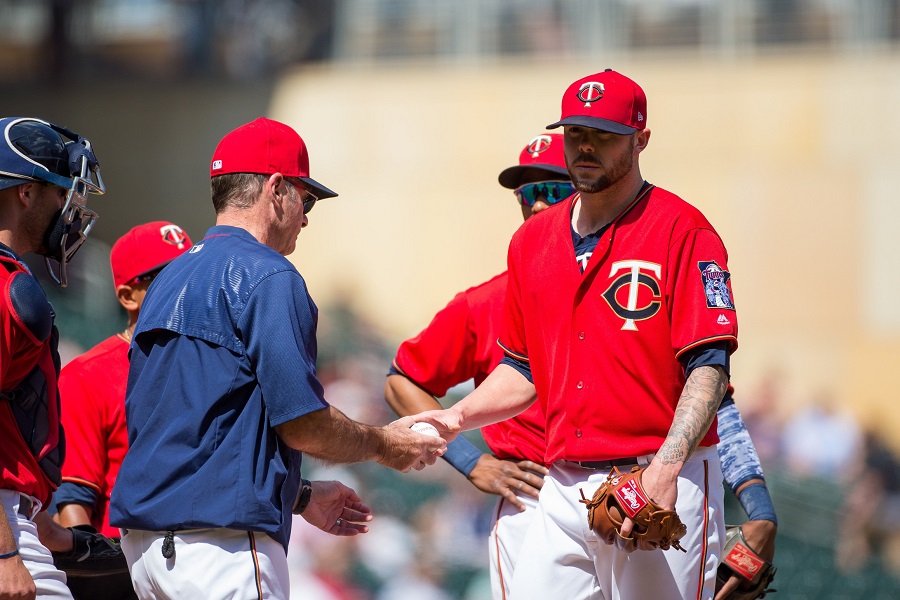 Currently, the Twins former Rule 5 selection owns a 8.74 ERA across 11.1 IP. He's surrendered three homers, and owns a 5.56 FIP. There's no way to look at those numbers and find a whole heap of positive. Looking beyond the surface a little bit though, we can see this start has the potential to be a small blip on the radar in what can turn out to be a nice season. Maybe most easily visible, Pressly is actually striking out 8.7 per nine, up from his career high a year ago. He's also walking slightly more than in 2016 (3.2 BB/9 as opposed to 2.7 BB/9), but it's not incredibly far off from his career norms. His offerings have stayed the same, and he's actually seen velocity increases on all three of his pitches (including a two mph jump with his slider). So what gives? The reality is that Pressly's results have been shaken by roughly three pitches to three relative no-name hitters. He's given up homers to Avisail Garcia, Matt Davidson, and John Hicks. None of those three are big league stalwarts, and their homers came off of a good fastball and two hanging sliders. From a results standpoint, Pressly has generated virtually the same amount of groundballs, line drives and fly balls as he has in the past. He also has a similar (albeit slightly down) chase rate, with a similar swinging strike percentage. There's not a massive spike in contact, or contact being made within the zone either. If there's a spike, it's in how hard balls are being put into play, and what is happening in those instances. Pressly is allowing hard hit contact 40.5% of the time, up from 31.8% a year ago. His home run to fly ball rate has skyrocketed from 9.5% in 2016 to 21.4% this season. The hard hit rate has also produced a .353 BABIP, up from his career .300 mark, and .311 last season. Of the 185 pitches Pressly has thrown, 14 have been put in play with an exit velocity north of 95 mph. Of those 14 balls in play, 10 of them have resulted in base hits. Hard contact resulting in runners on base isn't news by any means. It makes sense that a ball being put in play with solid contact would result in a good outcome more often than not. What's unfortunate is that the hard contact is coming in just under half of the time for the Twins reliever. It's likely in part a by product of throwing with increased velocity, but also likely due to batters being more able to hit the Twins reliever. At this point, I'm not sure if Pressly has tipped pitches, or shown any hints to opposing hitters that would give his stuff away. As things stand, he's doing everything he always has done, but three balls in the seats have inflated his overall numbers. Opposing hitters making hard contact are forcing him to really work through his outings, but for a guy with his stuff, it shouldn't be an obstacle he's incapable of overcoming. When at his best, Pressly is among the best arms in the Twins pen. Clearly that time is not now, but there's not much to suggest he can't get back to it either. For more from Off The Baggy, click here. Follow @tlschwerz
 -
Reset Button May Be Pressly's Best Friend
Ted Schwerzler commented on Ted Schwerzler 's blog entry in Off The Baggy
I wouldn't send him down. 11.2 innings is a really small sample, and I don't think that would do much for his confidence. -
Through the first month of the big league season, Ryan Pressly has had a rough time out of the Minnesota Twins bullpen. A reliever that profiled well for a high leverage role in the late innings, he's staring at an ERA just south of 9.00 and at times, has been searching for answers. A bit deeper dive suggests all is not lost however. Currently, the Twins former Rule 5 selection owns a 8.74 ERA across 11.1 IP. He's surrendered three homers, and owns a 5.56 FIP. There's no way to look at those numbers and suggest that there's a whole heap of positive to be had. Looking beyond the surface a little bit though, we can see this start has the ability to be a small blip on the radar in what can turn out to be a nice season. Maybe most easily visible, Pressly is actually striking out 8.7 per nine, up from his career high a year ago. He's also walking slightly more than in 2016 (3.2 BB/9 as opposed to 2.7 BB/9), but it's not incredibly far off from his career norms. His offerings have stayed the same, and he's actually seen velocity increases on all three of his pitches (including a 2 mph jump with his slider). So what gives then right? Well, the reality is that Pressly has seen his confidence shaken in roughly three pitches, by three relative no name hitters. He's given up homers this season to Avisail Garcia, Matt Davidson, and John Hicks. None of those three are big league stalwarts, and they came off of a good fastball, and two hanging sliders. From a results standpoint, Pressly has generated virtually the same amount of groundballs, line drives, and fly balls. He also has a similar (albeit slightly down) chase rate, with a similar swinging strike percentage. There's not a massive spike in contact, or contact being made within the zone either. If there's a spike, it's in how hard balls are being put into play, and what is happening in those instances. During 2017, Pressly is allowing hard hit contact 40.5% of the time, up from 31.8% a year ago. Also, his home run to fly ball rate has skyrocketed from 9.5% in 2016 to 21.4% this season. The hard hit rate has also produced a .353 BABIP, up from his career .300 mark, and .311 last season. Of the 185 pitches Pressly has thrown, 14 have been put in play with an exit velocity north of 95 mph. Of those 14 balls in play, 10 of them have resulted in base hits. Hard contact resulting in runners on base isn't groundbreaking by any means. It would make sense that a ball being put in play with solid contact would result in a good outcome more often than not. What's unfortunate, is that the hard contact is coming just under half of the time for the Twins reliever. It's likely in part a by product of throwing with increased velocity, but also likely in part, due to batters being more able to hit the Twins reliever. At this point, I'm not sure if Pressly has tipped pitches, or shown any hints to opposing hitters that would give his stuff away. As things stand, he's doing everything he always has done, but three balls in the seats have inflated his overall numbers. Opposing hitters making hard contact are forcing him to really work through his outings, but for a guy with his stuff, it shouldn't be an obstacle he's incapable of overcoming. When at his best, Pressly is among the best arms in the Twins pen. Clearly that time is not now, but there's not much to suggest he can't get back to it either. For more from Off The Baggy, click here. Follow @tlschwerz
-
In the past few days, the Minnesota Twins have made more than a few roster shakeups. With Nick Tepesch hanging out on the 25 man roster waiting for his first big league start since 2016, the club also sent Danny Santana and Michael Tonkin packing. While those moves each have implications of their own, it's the corresponding moves that are telling for this club. To separate from what was, the organization must begin to do things differently. Starting Tepesch against the Boston Red Sox during a weekend series, the Twins decided that Jose Berrios wasn't quite ready for the big leagues in 2017. Despite owning a 1.09 ERA .157 BAA and 9.5 K/9 with a 2.2 BB/9 in 33 innings prior to the tilt with Boston, Minnesota apparently needed more. Instead, Tepesch was sent out, having not worked since April 20, and having not been a real big league starter since 2014. The results don't justify the question, although Tepesch lasted just 1.2 IP, but it was a curious move at the time. With Berrios, the idea has always been that he needed to work on more than just surface level production. Given that he's all but dominated the Triple-A level, pitch economy as well as command was always going to be the areas he needed to hone in on. However, it would appear that it's something he's done well to grasp this season, and could be a real asset to the Twins starting rotation. Sticking with pitching, Minnesota DFA'd Michael Tonkin. In doing so, they opened up a 40 man roster spot, and chose to go with veteran reliever Drew Rucinski. At 28, Rucinski hadn't pitched in the big leagues since 2015, and had totaled just 14.1 IP at the highest level in his career. Across 277.2 IP at Triple-A, Rucinski had compiled a lackluster 5.74 ERA, hardly worth getting excited about. Despite Minnesota not having top arms like Mason Melotakis or Nick Burdi at Triple-A, they passed over names such as Trevor Hildenberger, D.J. Baxendale, or Aaron Slegers, who are in Rochester. Not unexpectedly, Rucinski didn't fool many big league hitters, and gave up two runs on five hits over 3.1 IP in his Twins debut. It wasn't disastrous, but there's little reason to believe that the water level is much higher there. Given the fact he was added to the 40 man roster for that level of production, you'd hope the club could do more. Rounding out the trio of moves was the expected DFA of Danny Santana. Much to the chagrin of Paul Molitor, Santana always seemed destined to be moved as soon as offseason acquisition Ehire Adrianza was healthy. As that came to fruition, the move was made, and Santana can now be had by any team in the big leagues. Adrianza presents a clear upgrade with the glove, although he doesn't hit. That's probably a net positive over Santana, who couldn't field or hit, but Ehire is a weird peg for this club. Given Eduardo Escobar's role as the utility man for this team, watching the two coexist is somewhat of a puzzling ask. While Escobar doesn't possess a glove to the same capability, he's arguably the superior player, and Minnesota could definitely be better off with a more focused hitter off the bench (namely a right-handed bat). What we can summarize though from the moves the Twins initially made, is a very real hope that this club isn't done. Drew Rucinski doesn't do much for a big league club, and Nick Tepesch seems all but washed out as well. Adrianza has value, but less so to this club, and the organization needs to work through a more ideal fit. These moves really signify the shuffling of deck chairs, and there's not much advancement made in any of the callups. If the Twins are going to differentiate themselves from the previous regime, it's going to take place in raising the water level. Gone must be the days of replacing mediocrity with more mediocrity. Players like Jose Berrios don't grow on tress, but there's higher level talent on the farm than the likes of a Rucinski or Tepesch type, and giving those guys run is what needs to be seen. As things stand now, I'd view (and hope) some of these moves as very short term or temporary. Given that notion, it's hard to be too up in arms about them currently. However, the shift towards more talent absolutely must take place. Minnesota can't continue to cycle in the same types of players and think change is going to come. Restack the deck and give yourself more opportunity, rather than simply reshuffling it and hoping that the cards fall differently. For more from Off The Baggy, click here. Follow @tlschwerz
-
Everything, the more information the better. Baseball Ref, Fangraphs, Baseball Savant, Brooks, etc
-
Over the offseason, there was no such thing as Twins talk that didn't include the discussion surrounding Brian Dozier. After launching 42 (43) homers, Minnesota was out for a king's ransom in return for their prized second basemen. When the Dodgers eventually bowed out in favor of Logan Forsythe, Minnesota took their toys and went home. It's worth wondering though, is Dozier even the most valuable trade chip that Derek Falvey and Thad Levine possess? He's not a true number one starter by any means, but the Twins ace Ervin Santana has gotten off to a blistering pace in 2017. He currently owns a big league leading 0.66 ERA. He's 5-0 through six starts, and has already tallied a complete game shutout. His 0.707 WHIP is nearly half of his career 1.268 mark and both his K/9 and BB/9 fall right in line with his career averages. Now, you'd be silly to extrapolate a six start sample size to the duration of the season. However, for a starting pitcher, six games equates to roughly 20% of the expected workload. While it's still just the beginning, it's a more significant piece of the puzzle than anything a hitter has compiled through one month of meaningful action. I wrote about Santana a bit ago, and that this season isn't all that out of nowhere for him. Of course predicting him to be this good is a stretch, but the reality is that he's been good for a while, and a few small tweaks, along with good defense has helped him immensely. Santana owns a 2.98 FIP to date, nearly a full run better than at any other point in his career. He's also generated more weak contact than any starting pitcher not named Andrew Triggs. This sample size can be extended back even a bit further as well. Dating back to July 2016, Santana has posted a 1.93 ERA along with a 3.22 FIP. Opposing hitters have batted just .184 off of him in those 22 starts, and his WHIP rests at 0.95. Behind him, he's had an outfield composed mainly of Eddie Rosario, Byron Buxton, and Max Kepler. If and when he's allowing contact to the grass, it's generally falling into leather. Attempting to put some sort of a bow on it, Santana has elevated himself slightly, and has also enjoyed some very strong defense behind him. He's been the Twins ace, and among the best pitcher's in the game. It's really not a small sample size at this point, and you can bet other teams are taking notice. So with those other teams, the Twins could find themselves in the driver's seat. Last offseason, Minnesota was tasked with attempting to get fair value for a second basemen that hit 14 more homers than his previous career best, and posted an OPS over .100 points north of the season before. Brian Dozier was, and remains, a regression candidate in every sense of the word. That's not to sell Dozier short, even at a .760 OPS and 25 home run total, he's a very nice big leaguer, the problem is the market has a good deal of those. Arguably moreso now than at any point in recent memory, the second base position in the big leagues is stacked. From Altuve to Cano, and Kinsler to Murphy, there's at least 10 (or one-third) legitimate star two baggers. With that being the reality, the position remains both a luxury, and one that many top teams have accounted for. When talking to the Dodgers, Minnesota targeted Jose De Leon in exchange for Dozier. They also asked for names like Cody Bellinger and Walker Buehler, neither of whom could've ever been had even straight up. De Leon entered 2017 averaging somewhere around the 30th best prospect, and he's yet to pitch this season after dealing with injury troubles. Minnesota was wise to want more for a player that means so much to their franchise, but getting a fair return for Dozier is likely always going to be an uphill battle. That leads us to this; what if Ervin Santana is actually the more valuable piece? Pitching is always going to be at a premium, and Santana comes controllable at $27.m over the next two seasons. For a guy that's been anywhere close to what he's produced, that's larceny. On the flip side, Dozier's team control ends after next season, and he's due for a raise well above the $9m he's slated to make. If the Twins can continue to hover around .500, it probably makes more sense for them to hold onto everything, make a splash in the offseason, and go for it in 2018 and beyond. If they don't see that window ready to break open however, it very well could be Santana that restocks the farm, and that wasn't likely the case even a few months ago. For more from Off The Baggy, click here. Follow @tlschwerz
-
Through the first month of the 2017 Major League Baseball season, the Minnesota Twins have been as some would've expected. Sure, coming off a franchise worst 103 losses, .500 may have seemed incredible to most, but they remained largely the same team that was competitive during 2015. After a winning April, Minnesota has more than a handful of players doing some good things. While it's worth breaking down individual performances, gleaning too much from under 100 at bats is a pretty tough ask. For the purpose of this post, examining where some of the Twins are leading the way is the goal. There's ample examples, and the names come from all over the lineup. Let's get into it. Ervin Santana With a 0.77 ERA, Santana is pacing MLB in the category. He also holds the best WHIP (0.66) and batting average against (.116) in the game. With four wins under his belt, he's well on his way to eclisping the 2016 total of seven. Santana is generating soft contact 23% of the time (21st in MLB) and is really enjoying a strong defense behind him. Miguel Sano No one in all of baseball has a higher average exit velocity than Miguel Sano's 99+ mph total. He is absolutely destroying baseballs this season, and it's led to a .450 BABIP. Haven taken 18 walks (2nd in AL), Sano has really honed in his discipline at the plate, and he's punishing pitchers for allowing him to make contact. His 2.1% soft contact rating is the lowest in MLB. Although it doesn't mean much of anything, Sano is also leading the American League with 25 RBIs. Joe Mauer If there's a guy that is destined to turn things around to a certain extent for the Twins, it's Mauer. He's batting just .225, but owns the lowest swinging strike rate in MLB (2.1%). Mauer is hitting the ball harder this season than in any since 2013, and his fly ball rate has doubled (41.9%) from a year ago. At some point, he's going to see more balls drop for base hits. Jorge Polanco While you may expect Mauer not to fan on too many pitches, Jorge Polanco is right there with him. With just a 3.9% swinging strike rate, Polanco owns the third best tally in the big leagues (behind only Mauer and Rockies D.J. LeMahieu). Also somewhat surprisingly, it's Polanco with 4 DRS at short that is pacing the Twins defensively. As recently as April 30, that was among the top numbers in the big leagues. Brandon Kintzler Maybe flying somewhat under the radar, the Minnesota closer owns the second highest save total (7) in the American League. Kintzler is a perfect 7-7 in save opportunities, and owns just a 0.79 ERA across 11.1 IP. Sustainability is worrisome as he's walking more and striking out fewer, but for now, he's making it work. Right now, the season is still in it's infancy. Given what the Twins are coming off of though, it's nice to see the club playing .500 baseball, and with a realistic path to see that same level of competency continue throughout the summer. For more from Off The Baggy, click here. Follow @tlschwerz
-
Twins Sano Punishing Baseballs
Ted Schwerzler commented on Ted Schwerzler 's blog entry in Off The Baggy
.450 BABIP in a vacuum is absolutely unsustainable. Even with his secondary numbers he won't hit that, however, if the power continues to play it will remain high. David Ortiz led MLB in hard hit rate in 2016 (45.9%). His BABIP was .312. That said, he hit 38 homers which hurts that number. -
Through the first month of the 2017 Major League Baseball season, it's hard to argue against Miguel Sano being the Minnesota Twins most valuable player. Ervin Santana has been incredible on the mound (and he's benefited from improved defense) but Sano has really come into his own, and it's been fun to watch. Why trying to find answers as to why, Sano is quite simply destroying baseballs. With the first month behind him, Miguel Sano has been worth 1.5 fWAR and owns a .316/.443/.684 slash line. It's a far cry better than his .235/.356/.388 mark a year ago through April, and his seven homers put him on pace for right around 40 at season's end. The Twins third basemen is drawing walks (an MLB best 18), while striking out just a bit less often as well. Digging beyond the surface numbers, the biggest thing bolstering Sano's production is just how hard he is hitting the baseball. Generating hard contact 55.3% of the time, he's over 13% higher than his career average. Fly ball, line drive, and ground ball rates all remain relatively in tact, but Sano is depositing balls in the air over the fence 33.3% of the time (with a career mark of 23.9%). Hard hit contact generally produces around a .700 batting average, and that helps to explain why Sano is currently enjoying a .450 BABIP. Noted earlier, Sano is drawing a few more walks and commanding the zone a bit better. His swinging strike rate is at 14.0% (replicating 2016), but he's chased pitches out of the zone 2% less of the time, and he has raised his contact rate by just over 1%. It's not a significant or massive boost, but it helps to paint the bigger picture. Everything continues to point back to how hard Sano is putting the ball in play however. When looking at Fangraphs calculations for hard hit rate, only Nick Castallanos (56.7%) has a higher hard hit rate than Sano's 55.3%. When diving into Statcast at Baseball Savant, Sano's 99.3 average exit velocity is nearly 4 mph harder than the number two, Khris Davis (95.8). When generating hard contact, it obviously comes from solid bat to ball connection points, and Sano has barreled 12 baseballs this year, good enough for 5th in MLB. There's virtually no reason to believe that Sano is going to keep up the pace he's currently on. Expecting the Twins hulking third basemen to finish with an average north of .300 is a fool's errand. Digging down to OBP or OPS can tell us a bit more, but this seems a good time to referring wOBA (weighted on base average). Where OBP and OPS try to tell us more about how a batter is getting on base, and the weight of those bases, neither completely encompasses how valuable one hit is over another. With wOBA, we have a more accurate way to evaluate hits in relation to their expected run value. You can read more on the concept here, but a general rule of thumb is .320 hovers around league average, while great is anything north of .400. After the first month of the season, the Nationals have the top two spots accounted for when sorting MLB hitters by wOBA (Zimmerman .553 Harper .521). You only have to go down to the 7th spot to find the Twins Miguel Sano however, as his .466 puts him well into the excellent category. Sano's career wOBA is .369, and his 2015 season produce a .392 mark. While he continues to get on base, he's routinely doing so for multiple bags at a time, and it's a by product of how hard he is hitting the ball. It's always been an expected reality that Miguel Sano was going to strike out. When at his best, Sano is fending off those strikeouts by generating extra base hits (namely homers), as well as drawing walks. He's made strides in plate discipline this season, and in turn, that's allowed him to square up the pitches he chooses to go after. Fast forwarding a few months down the road, we'll likely see Sano's average (and numbers as a whole) dip. What should sustain however, is the overall results. As long as Miguel continues to be patient and square up the pitches he puts swings on, he'll find sustained success. Soft contact isn't something he's going to produce, and fielding the balls he's roping into play over half the time will continue to be a difficult task for defenders. The Twins knew Sano would hit for years, but I can't imagine they expected him to destroy baseballs at the pace he's currently on. For more from Off The Baggy, click here. Follow @tlschwerz
-
From Korea With Success: Thames Paves For Park
Ted Schwerzler commented on Ted Schwerzler 's blog entry in Off The Baggy
I'm of the belief he should've gotten that chance out of Spring Training. Needs to get the hammy right, get going, and get up here now. -
The Minnesota Twins have seen a nice turnaround to start the 2017 Major League Baseball season. Hovering around the .500 mark, Paul Molitor's squad looks much more reflective of their true talent level than the team did just a season ago. You could argue that the club's main attraction thus far has been their ace Ervin Santana. This go round though, he's not just the Twins ace, but is currently pitching better than anyone in baseball. A couple of years ago, I wrote a piece on Ervin Santana and what he needed to do in order to be effective in Minnesota. The crux of the discussion is that on his own, Santana has had a solid career, and his best years have come with good outfields behind him. Up until this point, that's something the Twins ace hasn't been able to say. Now with Byron Buxton, Max Kepler, and Eddie Rosario behind him on a nightly basis, he's enjoying the returns. Through five starts, Santana owns a 42.4% fly ball rate. That's the highest mark of his career since 2010 with the Los Angeles Angels. His ground ball rate is on par with his career averages, and his line drive rate is actually reduced. Summarizing the balls put in play. Santana is getting more fly outs, and combining that with the fact they aren't being hit as hard (his 24.1% hard hit rate is a career low). When it comes to stuff, Santana isn't rewritting his book by any means. He's still throwing fastballs, sliders, and changeups all at the same relative velocity. In fact, outside of his changeup, which he's relied on a bit more, Santana is utilizing his repertoire in roughly the same fashion as well. He's not getting opposing hitters to chase that much more (33.1% is a career high, but just up from 31.4% in 2016), and he's actually generating less swinging strikes (8.4%). Batters are being allowed to put the ball in play (82.3% contact rate is a career high), but Ervin is also striking out just over one-fifth of the batters he faces (21.1% K rate). Again, it's not some reinvention of the wheel, but rather a solid pitcher that's been given exceptional circumstances. We also see the evidence in looking at Santana's FIP mark to date, 3.06. With a sparkling 0.77 ERA, it's actually been the fielding that has helped to significantly elevate the overall results. When broken down to results, Santana finds himself atop the proverbial mountain for the time being. He's 4-0 through five starts. His 35.0 IP have yielded just three earned runs, and he's got a serviceable 2.6 K/BB ratio. Leading the league in WHIP (0.657) as well as hits per nine (3.3), the Dominican has himself positioned to benefit exponentially from good defense behind him. There's been plenty of talk regarding what to do with Byron Buxton. He's scuffled to start 2017, and his bat has lagged behind his glove. Although that's turned somewhat recently, it will remain a question how much Minnesota can give up offensively to keep their outfield defense in tact. I'd imagine if the club asked Ervin Santana of his preference, it'd be that those behind him in the field stay the same. Unlike volatile signings like Phil Hughes and Ricky Nolasco, players that had a pretty wide variety of potential outcomes, Ervin Santana always appeared to be a safe, high floor pitcher for the Twins.He's proving as much at this point, and the strong defensive effort is elevating him to new heights. As the year draws on, the Twins will find themselves with a decision to make. Minnesota is on the hook to pay Santana $13.5 million in 2018, with a $14m team option in 2019, or a $1m buyout. If the club continues to tread water around the .500 mark, it makes sense to keep Santana and pair him with a top tier arm for a playoff push a year from now. Should the timeline look farther off, they could have arguably the most valuable trade chip on the market come the middle of the summer. It's a good problem to have, and for an organization that has been pitching starved for so long, a welcomed one. It could've been expected that a focus on catching and defense would raise the ability of the pitching staff, but Santana is making that work to perfection. By and large, he's the same guy he's always been, and the sum of Minnesota's parts has turned him into a gem to start the year. Now, it's up to the entire collection to keep it rolling. For more from Off The Baggy, click here. Follow @tlschwerz
-
The Minnesota Twins inked ByungHo Park to a 4 year, $12 million deal prior to the 2016 Major League Baseball season. Park's first year stateside didn't go well, and I believe a lot can be attributed to a nagging wrist injury. In 2017 however, fellow KBO slugger Eric Thames is taking the league by storm, and it's fair to wonder what the difference is. Thames came up with the Toronto Blue Jays, making his debut in 2011 at the age of 24. He was a 7th round pick out of Pepperdine, and his first two big league seasons (he also spent time with the Mariners) equated to just a .727 OPS and 21 total homers. After struggling to grab hold in the big leagues, Thames took his talents overseas. Both Thames and Park were in the KBO during the 2014 and 2015 seasons. The Twins slugger totaled 105 homers in those two years, and posted back to back seasons of OPS numbers north of 1.100. If there was a detractor, it was that Park also fanned a whopping 303 times in 268 games. For Thames, there power was there also, as he hit 84 dingers in that time span. Like Park, Thames also posted back-to-back years with an OPS north of 1.100 but he struck out just 190 times in 267 games (Thames actually had a 91/103 K/BB in 2015). While both Eric Thames and ByungHo Park were gargantuan power hitters in the KBO, it was Thames who was showing a bit more underlying sustainability. The Californian was more locked in at the plate, and it was his discipline that helped to foster his power. Fast forward to 2017, and Thames is continuing that same narrative at the big league level. When Thames debuted, he was more of a free swinger with a powerful hack. He owned a 175/38 K/BB ratio across his first 181 MLB games. In 2017 however, the Brewers slugger has struck out just 18 times while drawing 13 walks. On top of that, Thames owns just an 8.8% swinging strike rate, and he's chased pitches out of the zone just 20.6% of the time. His contact rates are on par with his career numbers (77.4% in 2017, 75.6% career), but he's simply going after more quality pitches. Across the 10 homers Thames has to his credit thus far, we see that he's victimized all pitches in all zones. He has hit fastballs, changeups, curveballs, and sliders over the fence. He's also taken pitches inside, outside, and down out of the yard. Somewhat surprisingly, the one type of pitch he's yet to homer on is the ball up in the zone. Waiting out his pitch however, has put Thames in the driver's seat when it comes to dictating an at bat. With no data to speak of in 2017, Park's numbers come from his debut season. It was apparent that he struggled with velocity, and reading breaking pitches seemed to be a challenge at times as well. I'd wager that a good deal of the problem was his wrist injury, but he displayed a much lesser ability to wait pitchers out than the aforementioned Thames. Although the 26.7% chase rate isn't terrible, Park had a poor 15% swinging strike rate. Right now, the Twins slugger is on the shelf, but his 2017 production is reliant upon two key abilities. One, he absolutely needs to be right and healthy. The wrist injury was probably more than he let on a year ago, and that needs to be behind him. Secondly, Park needs to dictate more while at the plate. The strikeouts probably are going to continue, but if he can develop a stronger ability to command the zone, he should find plenty more opportunity to put the ball over the fence. Just as the expectation shouldn't be that Thames continues his torrid pace, it's probably fair to assume Park has quite a bit more in the tank than he initially showed. Regardless, it would be fun to see both of these guys contributing at the highest level sooner rather than later, and there's no doubt the Twins would be better for it. For more from Off The Baggy, click here. Follow @tlschwerz
-
Where Does Buxton Go From Here?
Ted Schwerzler commented on Ted Schwerzler 's blog entry in Off The Baggy
As much as you shouldn't make determinations off 50 at bats, you shouldn't do so off of 15 games. The Twins should stick around .500 for a while, but pitching isn't going to remain top tier. Sending him down simply because "we're relevant" isn't a good move. -
Where Does Buxton Go From Here?
Ted Schwerzler commented on Ted Schwerzler 's blog entry in Off The Baggy
Solid point. He never belonged in the three hole, but Molitor has since doubled down. He seems to contradict his own thought process quite often. -
Through his first 15 games of the 2017 Major League Baseball season, Byron Buxton owns a .082/.135/.122 slash line. He's just 4-52 and has struck out in 24 of his at bats. There's no one who wants to see things turnaround more than Buxton, but the question is, where do we go from here? First, we have to take a look at what isn't working. The reality is that Buxton is striking out 46.2% of the time, up from 35.6% a season ago, and easily the worst mark of his career. Despite his success at Triple-A, he posted a 27.8% strikeout rate in 49 games during 2016, and that number has only increased at the big league level. On top of the strikeouts, Buxton seems to be guessing far more often than not at the plate. His hard hit rate of 24% is a career low, and his 20.1% swinging strike rate is worse than every qualified big leaguer not named Paulo Orland (21.2%) or Danny Espinosa (23.1%). As would be expected with all of the whiffs, Buxton's contact percentage comes in at just 61%, down from 67.9% a year ago, and easily a career worst mark. That number is the second worst among qualified hitters, thanks again to Danny Espinosa (58.5%). While I don't expect Buxton to hit for the average he's posted in the minors, he appears to revert into a complete guess hitter while struggling. The belief that his average will be left on the farm is mainly rooted in the idea that I see power being more a part of his game at the big league level. If things are working, an average somewhere around .240-.260 seems to make sense, as long as there's 20 or so homers with it. The most concerning thing at this stage is Buxton's ability, or lack thereof, to put the bat on the ball. Through April 20, he's seen 240 pitches. 34 of them have been called strikes, while he's swung through another 40 or so. Although he does have problems with breaking pitches, there's been more than a handful of fastballs that the Twins centerfielder's bat has avoided. Looking at his swing and miss chart to this point, the book appears to be targeting him down and away. A guy that chases and already struggles to make contact, is going to have a real rough go with that type of pitch. Parker Hageman, from Twins Daily, compared Buxton's swing from last September to where it is now. His plant foot has virtually closed him off to the inside pitch, and it leaves at least a third of the zone that he's unable to do anything productive with. This could be an effort to reach the outside edge, but data tells us that those pitches aren't being executed on either. In striding directly back towards the pitcher, Buxton would have a much more realistic view of not only the zone, but ability to spray pitches from where they are pitched. Of the nearly 50 at bats Buxton has had this season, the Twins youngster has had two strikes on him in 30 of those instances. He's been behind in the count roughly half of the time (23 ABs), and has faced 0-2 or 1-2 counts in 19 at bats. If you're going to close off the hitting zone, guess through pitch sequences, and fail to drive your hands through the ball, none of those additional factors will set you up for success. Now, why shouldn't we worry? First and foremost, this sample is based off of less than 50 at bats. Right now, the White Sox Avisail Garcia (a career .260 hitter), leads MLB with a .423 average. There's also 12 big leaguers batting sub .150, and they include names like Napoli, Story, Granderson, Swanson, Bautista, Reyes, and Martin (no wonder why the Blue Jays are off to a slow start eh?). On top of that, Buxton is still just 23 years old. It's absolutely fair to groan a bit when looking at the reasons for positivity when it comes to Buxton, we've heard them plenty of times before. That doesn't change the reality however. Most big leaguers don't truly show what they are as a hitter until right around 1,000 career at bats (Buxton has 474). In total, across three seasons, Buxton has played just 152 major league games as well (he debuted at 21). Looking back at some former Twins greats, Buxton is already quite advanced. Kirby Pucket was at Single-A as a 23 year old, Torii Hunter had just 17 at bats in the big leagues prior to his 23rd birthday, and really, Joe Mauer is last the last true success story at an age younger than Byron (Mauer had a .297/.371/.440 slash line in 166 G prior to his 23rd birthday). With Buxton still being among the youngest players at the highest level of the game, it's not incredibly surprising that he's still trying to find his footing. If the two biggest reasons to pause on concern for Buxton remain related to his age and lack of experience, repetition would continue to be the biggest remedy in my book. As the Twins carry on through the 2017 season, there's little to gain by jettisoning Buxton back to a level he's dominated any time before the summer. Continuing to allow him to learn and hone his craft against the level he must succeed at seems like a logical plan. Unfortunately, it's not one I'm certain the Twins go with. Recently, Paul Molitor pinch hit Eduardo Escobar for Buxton late in a game against the Cleveland Indians. There wasn't much reason for the move, it took an at bat from Buxton, and the Twins short bench forced Escobar out of position into left field. It's moves like these that beg the question as to whether or not Molitor understands how to develop the organization's future. When evaluating whether the Twins skipper is the right man for the role, Derek Falvey and Thad Levine could be compelled to look no further than Buxton. It's one thing to not have a first round pick to work out, but when you have the consensus number one prospect in baseball, failure really isn't an option. Molitor hasn't gotten any measurable success from Buxton's development, and his trust in him would seem uncertain as well, as witnessed by a move such as the pinch hit scenario. Regardless of who the Twins sign or trade for, the reality is the future rests on the shoulders of players like Buxton, Miguel Sano, and Jose Berrios. To summarize, there's nothing that hasn't been frustrating about Byron Buxton's start through the first two weeks of the season. He knows that, and anyone watching him play knows that. There also is plenty of reason for pause when it comes to writing him off, it's been two weeks. The best remedy to get him right is continued repetition, and fine tuning what isn't working. His manager also needs to remain committed to that goal, and the talk of any demotion needs to be shelved in lieu of consistent playing time for at least the next month. Right now, nothing is going right, but the mixed messages don't help the process either. Byron Buxton may not hit at the big league level, but we shouldn't be anywhere near that question at this point. For more from Off The Baggy, click here. Follow @tlschwerz

