



Ted Schwerzler
-
Posts
5,149 -
Joined
-
Last visited
Content Type
Profiles
News
Minnesota Twins Videos
2026 Minnesota Twins Top Prospects Ranking
2022 Minnesota Twins Draft Picks
Minnesota Twins Free Agent & Trade Rumors, Notes, & Tidbits
Guides & Resources
2023 Minnesota Twins Draft Picks
The Minnesota Twins Players Project
2024 Minnesota Twins Draft Picks
2025 Minnesota Twins Draft Pick Tracker
2026 Minnesota Twins Draft Tracker: Picks & Bonuses
Forums
Blogs
Events
Store
Downloads
Gallery
Everything posted by Ted Schwerzler
-
After the debacle that was the Minnesota Twins series with the Houston Astros, it was apparent that a lackluster bullpen needed and overhaul. The club had shuffled deck chairs too often this season, and there wasn't much room for error to begin with. In one of the moves that was made, we might be able to get a better understanding for what could be to come in regards to roster construction. When the dust settled as Houston left town, the Twins bullpen had given up 28 runs (27 earned) on 29 hits in just nine innings. They struck out only three opposing hitters and issued 10 free passes. Any way you cut it, that's an implosion. Jason Wheeler was DFA'd, and Ryan Pressly was optioned to Triple-A Rochester. With two open spots, the Twins needed some revamping. The brain trust turned to Alex Wimmers, and a surprise, Randy Rosario. To be fair, Wimmers represents the same deck chair philosophy that I referenced above. Not meant as a shot at him whatsoever, he's a feel good story to be sure, he's just not going to move the needle in a big league pen. Wimmers is a failed starter, and a bust of a former first round pick. He threw 17.1 IP for the Twins in 2016, and posted a 4.15 ERA combined with a 7.3 K/9 and 5.7 BB/9. Expecting him to come into the pen and provide much of a boost is probably a stretch. It's in the second transaction, the promotion of Randy Rosario, that is one of serious intrigue. Rosario was added to the 40 man roster prior to the 2016 season. He's a 23 year old lefty, and can push his fastball into the mid-90s. Over the course of seven minor league seasons, he's worked at least as a part-time starter all but this year. To his name however, he has thrown just 29.2 IP above Single-A, with 23.2 IP of that coming in 2017. At Double-A Chattanooga this year, Rosario has posted a 1.90 ERA. He's limited damage by walking batters at just a 2.3 BB/9 clip, and he's tallied strikeouts at a 7.6 K/9 rate. Hits have been hard to come by off of him as well, regardless of the batter's handedness, given he's allowed just a .486 OPS to righties and a .490 OPS to lefties. In short, he's among the most promising arms the Twins have had in relief this season. When Mariana Guzman of Twins Latinos broke the Rosario call up news, it came as a surprise. Sure, he's on the 40 man roster, but for a guy with such limited experience in higher levels of the minors, it could be classified as an aggressive move. Given the pairing with Wimmers however, it's worth speculating if Derek Falvey and Thad Levine gave Molitor one of his guys (Wimmers) and one of their choosing (Rosario). There was a few reports out of Fort Myers that Molitor had campaigned for Wimmers to make the 25 man roster. He had a nice spring, and Molitor apparently preferred him over Michael Tonkin. Making the move at the same time, it's certainly worth wondering if Falvey and Levine are picking their spots with this group. It probably could be argued that the expectation for extra arms would include one of Trevor Hildenberger or Alan Busenitz. Both have been very good at Triple-A, and seemingly could provide an upgrade at the big league level. Dipping down to Double-A though, maybe John Curtiss enters the picture sooner rather than later, and there's plenty of big name starters to keep an eye on now. Fernando Romero and Stephen Gonsalves could be inserted in the rotation sooner rather than later, and if the Rosario move is any indication, when Falvey and Levine deem they're ready, it won't matter what level they are at. Coming into 2017, Molitor is under a lame-duck contract. He's being felt out by the front office, and it's much less about the results, than it is the process, that will eventually determine his future. As he continues to champion for certain players, make in game decisions, and interact with his new bosses, his fate going forward will be etched out. For now, that's too far off to be thinking about. What's in front of us though, is a GM that's not unwilling to get help from talent at whatever rung oif the organization it may reside. Randy Rosario could be just the start, and the move is a linchpin into a narrative that's worth dissecting as the summer draws on. For more from Off The Baggy, click here. Follow @tlschwerz
-
The Beat Without A Sound For Twins
Ted Schwerzler commented on Ted Schwerzler 's blog entry in Off The Baggy
That about hits the nail on the head sir! -
The Beat Without A Sound For Twins
Ted Schwerzler commented on Ted Schwerzler 's blog entry in Off The Baggy
Tom- As I said on Twitter, you get it. It's not at all about disparaging someone or ripping a necessary profession. I just think there's an unfortunate line that is really difficult to be crossed. You're trying to do your job, while providing useful information, and also striving to differentiate. I, like you, see little value of gamers and post game quotes that are all virtually boiler plate and recaps of what is publicly available. Also as you noted, it's what guys like Berardino so that separate themselves from the pack. The extra tweets of dug up info, unique stories, etc. That's what makes him among the best. Brandon- Also as I said on Twitter, the point wasn't to disparage, call out, or throw shade. It's about wondering whether or not more can be asked without crossing a line. The intention of a "tough question" isn't to rip Molitor or any other manager, but to ask why you didn't do something, as opposed to hearing a blanket answer or cliche as to why something did take place. There's no real need or benefit to strip me down with very little being added to the discussion. -
The Beat Without A Sound For Twins
Ted Schwerzler commented on Ted Schwerzler 's blog entry in Off The Baggy
Platoon, first off, it seems like it's been awhile. Nice to see your name again! Secondly, I agree completely. I think that the beat guys are stuck in a tough spot and don't necessarily fault them. Nothing they get from the access offers much clarity, but they can't ask those questions without jeopardizing their standing (assuming they wanted to.) I think the differentiator for good beat guys is what they offer outside of the game stories. Mike is great on Twitter, and despite being critical in return for this piece, Warne has a great podcast. Rhett is the statcast master, and I enjoy that. Those three get my interest for those reasons, not what they are able to all similarly quote after a contest. -
On May 29, the Minnesota Twins suffered one of the most embarrassing losses in club history. Leading 8-2 in the top of the 8th inning, the bullpen went on to allow 14 runs en route to a 16-8 defeat. At the center of the debacle was manager Paul Molitor's decision making, but there was no one around to hold him accountable. The day following the meltdown, Star Tribune columnist Chip Scoggins was there. He called the game as it was, and lit Molitor up. Despite Minnesota bringing in Jason Wheeler, who was scheduled to pitch that day for Triple-A Rochester, Molitor went to a taxed bullpen and was given results that you may expect. Scoggins isn't a beat reporter, and he didn't need access to call the situation like it was. There's no way around it, Paul Molitor came up short. It's been rehashed plenty, but for descriptive purposes, Molitor chose to go to Ryan Pressly with his six run lead. Pressly had thrown 51 pitches encompassing three of the clubs last four games. He was a part of a 15 inning marathon the day prior as well. He blew up for five runs. Craig Breslow and Matt Belisle then each allowed another three runs of their own despite also both participating in the marathon game a day prior. Wheeler, the healthy and scheduled arm, was never turned to, and heads were scratched. In the days since, narratives from those on the Twins beat have been nothing short of excuses. There's been talk that Wheeler was nothing more than blowout insurance. Plenty have suggested that big league relievers should be able to get six outs, regardless of being tired. The general gist has been in defense of Molitor, a man that's made bullpen mismanagement the expectation rather than the exception. It has has added up to pose the question: Where does the beat actually fall short? Newspaper outlets and online media alike have their guys that go into the clubhous and bring an extended version of access to the fans. While that's a great thing on the surface, there's a pretty clear conflict of interest at play as well. Despite Molitor being worthy of criticism and questioning, there was none to be found. We were given excuses and boiler plate remarks, and virtually the same information was conveyed no matter where you turn to for your daily reading. Accountability falls by the wayside, because the limits of the job come into play. How can a beat writer go into the clubhouse and ask Paul Molitor why he stumbled on his bullpen usage, didn't turn to the right guy, and left his team out to dry? That same writer is going to have 50 something more games in which they are required to get quotes and interact for the purpose of their job. In ticking off a player or coach, that job becomes inherently more difficult to complete I'd imagine. Instead of being able to ask questions that produce real answers, the beat filters out the same boiler plate quotes across any number of writer to any number of outlets. We aren't given much in the way of insight, and there isn't any real thought provoked when prodding for answers. Interestingly enough, the Star Tribune was at it again in another form just a day later. Patrick Reusse, another columnist and a guy not on the beat, called out Derek Falvey for simply shuffling deck chairs in the bullpen. Despite having arms with some sort of upside, the Twins have turned to the likes of Drew Rucinski, Buddy Boshers, and even Nick Tepesch. Reusse notes names such as Hildenberger, Curtiss, Busenitz, and Melotakis as options. These are players that could have a future in the Minnesota pen, but they've been spurned in favor of putting band-aids on bullet wounds. In this scenario, Reusse takes aim at a bullpen that needed help going into the season, and one that has done less with more thus far. There hasn't been a slew of questions from those on the beat regarding why the Twins are playing with half the deck, or what those arms need to do to be in consideration. It's relatively clear to those watching the game closely that there's multiple options available, but right now, the Twins haven't called upon them. To question the strategy however, once again would open a beat reporter to scrutiny that could in turn hurt their job positioning. At the end of the day, I think there's a need and a place for beat reporters in sports. They disperse information that is integral for the club to get out, and they are they immediately to garner reaction following competition. The unfortunate side of it is that there's a handful of journalists spouting the same quotes that have answers telling us little, and there's no one there to ask the questions needing to be addressed. Outside of an abrasive relationship with those you cover, there's probably not much to be done in order to get around this reality. There's no doubt though that a fresh perspective or a well appointed prodding question, no matter how it's received, is a breath of fresh air at times. For more from Off The Baggy, click here. Follow @tlschwerz
-
None of the mentioned arms would qualify as a rental (aside from Darvish, who they'd need to resign). I'm not a huge fan of dealing prospects, but if you're getting Darvish in return, go for it to an extent. Of the guys you mentioned, only Dozier has any real value. Grossman is an OBP machine only, Rosario may have to go down, most teams have an Escobar, and Vargas is a big league bench at at best.
-
Rosario may be at Triple-A by July unfortunately. I'm not sure how to peg Gray's value after last year.
-
Earlier this month, I wrote about why I believe the Minnesota Twins must trade Ervin Santana. Sure, regardless of his 2017 output, he's not some reinvented pitcher that's going to command a teams top prospects. However, he's more valuable long term to the Twins if the organization can flip him for some solid pieces. What's worth wondering though, is if Minnesota's winning ways have the organization positioned to be buyer's this summer. Conventional wisdom suggests that the Twins current level of play isn't going to be sustainable, or at least result in a playoff berth. If the club is still in the thick of things this summer though, an argument could be made to buy with an eye on the future. Rather than mortgaging your upcoming window for instant gratification, Derek Falvey and Thad Levine could add some pieces to help in 2017 and beyond. Looking at the current construction of both the 25 and 40 man roster, the biggest deficiency remains on the mound. Minnesota is starved for starting pitching depth, and the bullpen is a pieced together hodgepodge. The Twins could take on some arms, with the intention of retaining them for 2018 and beyond, and feel much better about whatever they must give up. So, who are some candidates in this scenario? Let's take a look: Sonny Gray- Oakland Athletics Gray is a name that I believe the former regime had some interest in. He was pretty awful a season ago, and then he got hurt. Through five turns in the rotation this season however, Gray has been an asset for the Athletics, and has posted the best K/9 (8.5) and BB/9 (2.4) numbers of his career. When right, he can be counted on for 200 innings, and his strikeout numbers would be a lift to a Minnesota rotation void of them. At 27, he's not a free agent until 2020, meaning Minnesota would have to part with some decent pieces. I'm not certain he's a one, or even a two starter, but he'd help in Minnesota to be sure. Matt Shoemaker- Los Angeles Angels There's little denying that Los Angeles may have the worst farm system in all of baseball, and they don't have much at the big league level either. The Angels should be trying to pair Mike Trout with talent in his prime, and dealing a 30 year old like Shoemaker could help. He's not a top tier starter by any means, but a career 3.82 ERA would fit for the Twins. He's a middle-of-the-road strikeout guy (Much like Gray), and he doesn't issue many free passes (2.1 career BB/9). He's 30 now, and isn't a free agent until 2021. Again, Minnesota would need to return assets, but that's a controllable pitcher you'd be happy with. Ivan Nova- Pittsburgh Pirates This is a tricky situation, as I'm not really sure what to believe Nova is. He's been nothing short of spectacular since arriving in Pittsburgh, but this season, he hasn't struck anyone (4.8 K/9) out and has limited damage by not walking anyone (0.6 BB/9). He's on an incredibly affordable deal making just $26m through 2019. The Pirates may be inclined to deal Gerrit Cole, who has significantly more upside, but he's going to command quite a haul. If Nova could be had for a modest price, he's a middle-of-the-rotation option that the Twins could key in on. Yu Darvish- Texas Rangers The lone rental of this foursome, Darvish is a name I think makes a lot of sense for Minnesota, the question is when. If the Twins deal during the season, they'd need the Rangers to fall back out of contention. There's obviously history there with Thad Levine, and Darvish being a free agent in 2018, he's a name I hope Minnesota seriously pursues. Darvish is a true ace, and the Twins have money to spend this offseason. He's a strikeout machine, and he's responded well (3.23 ERA 10.8 K/9 3.2 BB/9) since undergoing Tommy John surgery and missing 2015. Darvish would be a great feature atop the Twins rotation, and at just 30 years old, he's a guy they could ink to one more, big, long-term deal. I'm still not convinced, even with a winning record, that the Twins should be looking at adding significant pieces in season. Nova is really the only name mentioned above that shouldn't command at least one strong prospect. However, if Minnesota is going to make the move with a long term focus, there's reasons to argue for it. Over the winter, there's plenty of different names that could be on the Twins radar. The club could also consider someone like the Giants Johnny Cueto, depending upon how he chooses to navigate his contract and opt out scenario. At the end of the day, no winning in 2017 should deter the focus from 2018 being a true window. This club has money to spend, and bringing in a couple of top tier arms is something that could set them over the top. Dealing for them hurts the farm, but if you bring in somewhat of a sure thing that will help you down the road and make the end of the season interesting, so be it. For more from Off The Baggy, click here. Follow @tlschwerz
-
There's no getting around how bad Byron Buxton was to start off the 2017 Major League Baseball season. Through his first 15 games, he was batting under .100 and owns a 24/2 strikeout to walk ratio. If there was a doomsday scenario, this was it. Given the setback that cause, it's overshadowed just how good he's been of late though, and it's probably better than you'd think. Since April 21, Buxton has played in 25 games for the Twins. He has had 86 plate appearances and compiled 73 at bats. They've come together to produce a .260/.365/.384 slash line, complete with four extra base hits, and a 23/12 K/BB ratio. For a prospect with otherworldly expectations, that may not seem glamorous, but it is, and he's not done yet. Despite having the speed of a prototypical leadoff hitter, I'm not sure Buxton's on base skills will ever translate to hitting out of that lineup position. He's going to hit for more power than his wiry frame may suggest, and batting out of the three hole, as Paul Molitor started him at in 2017, may be a more realistic long-term prognosis. That gives us reason to believe the slugging numbers should go up, further bolstering his OPS production. While scuffling early on, Buxton had a chase rate of 38.3% and swung through 201.% of pitches. Guessing and rolling over plenty, Buxton made hard contact just 24% of the time through his first 15 games. Since making adjustments over the last 25 games, the Twins centerfielder has dropped the chase rate to 27.8% while swinging through just 13.5% of pitches. The hard contact rate has actually slipped some (21.6%), but Buxton's BABIP is likely always going to be more reflective of his speed than his exit velocity. You've been handed a few numbers to suggest why Buxton isn't done climbing the ladder yet, but now, it's important to contextualize where he is currently. The question as to what Minnesota needs from him offensively to continue to rely solely on defense, has come up more than a few times. If this latest sample size is any indication, the answer is really nothing. As the numbers indicate right now, this current level of production, has Buxton not only playing at a Gold Glove defensive caliber, but among the best outfielders in the big leagues from an all around standpoint. Looking at his last 25 games, Buxton has compiled a .748 OPS. On the year, he has also contributed six DRS (defensive runs saved), which by the way, is second among MLB center fielders (thanks to the Rays having a good one in Kevin Kiermaier). Looking at those numbers, we are able to come up with a pretty focused group of big leaguers. Among qualified hitters, there's just 41 outfielders in baseball with an OPS north of .750. There's also just eight outfielders with a DRS of six or more to this point. Combining those two pools, we see a crossover of just three players (outside of Buxton) that have both a .750+ OPS and have been worth at least six DRS in 2017. There names: Aaron Judge, Brett Gardner, and Mookie Betts. That's a trio of players that includes a Rookie of the Year front runner, a solid 10 year vet and one time All Star, and a one time All Star that happened to be last year's runner up in the MVP voting. Any way you cut it, that's a pretty strong group for Buxton to be included in. Now, as with the 15 games before, a 25 game sample size is hardly anything to begin writing checks off of. What's noteworthy however, is it doesn't just appear to be a hot streak for Buxton, he's made fundamental changes. Having worked with James Rowson and heard from a few others, Buxton's swing is a tighter, more well oiled machine right now. He's got the confidence in the box to let the bat play, and that the ball will carry thanks to the process he's taken prior to contact. At just 23 years old, Buxton also remains the youngest of that group of aforementioned dual threat talents. His defense is going to remain at an elite level for years to come, and the expectation that the offensive water level raises is a pretty solid one. Each jump the bat makes, will only elevate Buxton as a whole, and even at this early stage, it's easy to see why his ceiling is so high, and excitement level so real. It's still early for him, but even while still coming into his own, Byron Buxton is among the best dual threat outfielders in all of major league baseball. Imagine what happens as his game continues to evolve. For more from Off The Baggy, click here. Follow @tlschwerz
-
Through their first 41 games, Miguel Sano has been nothing short of a monster for the Minnesota Twins. He's been every bit the offensive stalwart he was expected to be, and he's taken it to a whole new level. He's been the most impressive player on the club, and in terms of WAR, Fangraphs quantifies him as the best player in baseball not named Mike Trout. The question is, how much of it is a mirage?There are a couple of different scenarios. He's easily defined as a three-true -outcomes (the hits that aren't dependent on defense: strikeout, walk, or home run) player. Sano also is flirting with sustainability when it comes to BABIP (batting average on balls in play) from which home runs are excluded. So, when looking at those two scenarios, the question becomes how much should we believe in his current .319/.439/.638 slash line? In answering that question, we can present the notion that it's both a mirage and sustainable at the same time. When the dust settles in 2017, I think it'd be foolish to expect Miguel Sano to hit above .300. He simply strikes out far too often for that to happen. However, he's not a traditional three-true-outcomes batter. Let's look at what the numbers tell us. 34.5% of the time in 2017, Miguel Sano is striking out. That is the 5th worst percentage in the big leagues, and behind a group that includes Keon Broxton, Joey Gallo, Chris Davis, and Byron Buxton. On the flip side, Sano walks a ridiculous 17.5% of the time, good enough for third best in the big leagues. In generating free passes, he is able to sustain his on base percentage, even before looking at what happens when he makes contact. That contact is where things get interesting. As of May 23, Sano has generated 82 batted ball events, or balls in play. 43 of those have been hit at 98 mph or more. His 98.2 mph average exit velocity leads the big leagues, and is nearly 4 mph above the second place finisher, Yankees Aaron Judge. Breaking down the 43 balls put in play above 98 mph, Sano has generated 32 hits and barreled 20 balls (5th most in MLB). To summarize, and as I wrote on May 1, Miguel Sano is crushing the ball. So, is it a problem that Sano strikes out in nearly one third of his plate appearances? Sure, it's not ideal. Is it likely that the Twins third basemen is going to sustain a .439 BABIP and continue to bat above .300? No, probably not. What is worth noting however, is that the results are a by-product of an approach that has Sano swinging with all he has in virtually every plate appearance. Production for Sano is a result of consistent hard contact. He has generated hard contact 52.4% of the time (first in MLB) while making soft contact just 3.7% of the time (lowest in MLB by nearly 5%). Those numbers suggest that while his BABIP will flatten out (and his average will follow suit) the decline will not nearly be as stark as it would be in a different scenario. Realistically, the decline for Sano will come more from a lack of swing power on his own accord, as opposed to the numbers normalizing from an inflated level. Just two months into the season, it's hard to suggest that Miguel Sano is going to be consistently able to swing as hard in September as he is right now. His legs, torso and upper body will undoubtedly go through wear and tear as the season goes on and it'll be worth monitoring to see if his swing loses oomph because of it. Should things stay consistent though, Miguel Sano is going to consistently experience inflated BABIP numbers, and will remain a non-traditional three-true- outcomes player because of the quality of the balls being put in play. Until Sano is consistently fooled on pitches, or can no longer catch up to heat, he's going to get the upper hand on opposing pitchers every time the ball hits his bat. The results are there to prove that, and while they'll level off some, we aren't watching Adam Dunn (even in his prime) here. For more from Off The Baggy, click here. Follow @tlschwerz Click here to view the article
-
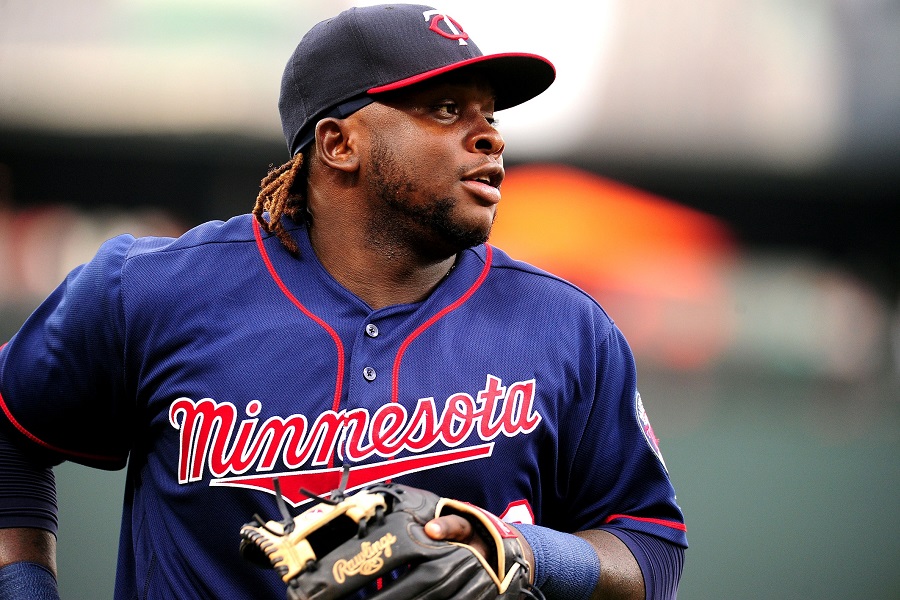 There are a couple of different scenarios. He's easily defined as a three-true -outcomes (the hits that aren't dependent on defense: strikeout, walk, or home run) player. Sano also is flirting with sustainability when it comes to BABIP (batting average on balls in play) from which home runs are excluded. So, when looking at those two scenarios, the question becomes how much should we believe in his current .319/.439/.638 slash line? In answering that question, we can present the notion that it's both a mirage and sustainable at the same time. When the dust settles in 2017, I think it'd be foolish to expect Miguel Sano to hit above .300. He simply strikes out far too often for that to happen. However, he's not a traditional three-true-outcomes batter. Let's look at what the numbers tell us. 34.5% of the time in 2017, Miguel Sano is striking out. That is the 5th worst percentage in the big leagues, and behind a group that includes Keon Broxton, Joey Gallo, Chris Davis, and Byron Buxton. On the flip side, Sano walks a ridiculous 17.5% of the time, good enough for third best in the big leagues. In generating free passes, he is able to sustain his on base percentage, even before looking at what happens when he makes contact. That contact is where things get interesting. As of May 23, Sano has generated 82 batted ball events, or balls in play. 43 of those have been hit at 98 mph or more. His 98.2 mph average exit velocity leads the big leagues, and is nearly 4 mph above the second place finisher, Yankees Aaron Judge. Breaking down the 43 balls put in play above 98 mph, Sano has generated 32 hits and barreled 20 balls (5th most in MLB). To summarize, and as I wrote on May 1, Miguel Sano is crushing the ball. So, is it a problem that Sano strikes out in nearly one third of his plate appearances? Sure, it's not ideal. Is it likely that the Twins third basemen is going to sustain a .439 BABIP and continue to bat above .300? No, probably not. What is worth noting however, is that the results are a by-product of an approach that has Sano swinging with all he has in virtually every plate appearance. Production for Sano is a result of consistent hard contact. He has generated hard contact 52.4% of the time (first in MLB) while making soft contact just 3.7% of the time (lowest in MLB by nearly 5%). Those numbers suggest that while his BABIP will flatten out (and his average will follow suit) the decline will not nearly be as stark as it would be in a different scenario. Realistically, the decline for Sano will come more from a lack of swing power on his own accord, as opposed to the numbers normalizing from an inflated level. Just two months into the season, it's hard to suggest that Miguel Sano is going to be consistently able to swing as hard in September as he is right now. His legs, torso and upper body will undoubtedly go through wear and tear as the season goes on and it'll be worth monitoring to see if his swing loses oomph because of it. Should things stay consistent though, Miguel Sano is going to consistently experience inflated BABIP numbers, and will remain a non-traditional three-true- outcomes player because of the quality of the balls being put in play. Until Sano is consistently fooled on pitches, or can no longer catch up to heat, he's going to get the upper hand on opposing pitchers every time the ball hits his bat. The results are there to prove that, and while they'll level off some, we aren't watching Adam Dunn (even in his prime) here. For more from Off The Baggy, click here. Follow @tlschwerz
 -
Miguel Sano Could Really Make This Work
Ted Schwerzler commented on Ted Schwerzler 's blog entry in Off The Baggy
This truly is a predicament. I mean, he's incredibly prone to the strikeout, but he can hit both breaking pitches and heat. You better not miss a spot I suppose. -
Miguel Sano Could Really Make This Work
Ted Schwerzler commented on Ted Schwerzler 's blog entry in Off The Baggy
Right, the K rate is absolutely going to force regression. However, the hard hit rate and exit velocity are going to force it to be at a lesser rate than another player with similar strikeout tendencies. It's pretty remarkable how he's producing right now. -
Through their first 41 games, Miguel Sano has been nothing short of a monster for the Minnesota Twins. He's been every bit the offensive stalwart he was expected to be, and he's taken it to a whole new level. Right now, he's been the most impressive player on the club, and in terms of WAR, Fangraphs quantifies him as the best player in baseball not named Mike Trout. The question is, how much of it is a mirage? There's a couple of different scenarios at play with it comes to Sano. He's easily defined as a three true outcomes player (Strikeout, Walk, or Home Run). Sano also is flirting with sustainability when it comes to BABIP (Batting average on balls in play...note: HRs are excluded). So, when looking at those two scenarios, the question becomes how much should we believe in his current .319/.439/.638 slash line? In answering that question, we can present the notion that it's both a mirage and sustainable at the same time. When the dust settles in 2017, I think it'd be foolish to expect Miguel Sano to hit above .300, he simply strikes out far too often for that to happen. However, he's not a tradition three true outcomes batter in that he absolutely crushes the baseball. Let's look at what the numbers tell us. 34.5% of the time in 2017, Miguel Sano is striking out. That is the 5th worst percentage in the big leagues, and behind a group that includes Keon Broxton, Joey Gallo, Chris Davis, and Byron Buxton. On the flip side, Sano walks a ridiculous 17.5% of the time, good enough for third best in the big leagues. In generating free passes, he is able to even out, and sustain his on base percentage, even before looking at what happens when he makes contact. It's in that contact that things get interesting as well. As of May 23, Sano has generated 82 batted ball events, or balls in play. 43 of those have been hit at 98 mph or more. His 98.2 mph average exit velocity leads the big leagues, and is nearly 4 mph above the Yankees Aaron Judge. Breaking down the 43 balls put in play above 98 mph, Sano has generated 32 hits and barreled 20 balls (5th most in MLB). To summarize, and as I wrote on May 1, Miguel Sano is crushing the ball. So, is it a problem that Sano strikes out in nearly one third of his plate appearances? Sure, it's not ideal. Is it likely that the Twins 3rd basemen is going to sustain a .439 BABIP and continue to bat above .300? No, probably not. What is with noting however, is that the results are a by-product of an approach that has Sano swinging with all he has in virtually every plate appearance. Production for Sano is a result of consistent hard contact. He has generated hard contact 52.4% of the time (1st in MLB) while making soft contact just 3.7% of the time (lowest in MLB by nearly 5%). Those numbers suggest that while his BABIP will flatten out (and his average will follow suit) the decline will not nearly be as stark as it would be in a different scenario. Realistically, the decline for Sano will come more from a lack of swing power on his own accord, as opposed to the numbers normalizing from an inflated level. Just two months into the season, it's hard to suggest that Miguel Sano is going to be consistently able to swing as hard in September as he is right now. His legs, torso, and upper body will undoubtedly go through wear and tear as the season goes on and it'll be worth monitoring to see if his swing loses oomph because of it. Should things stay consistent though, Miguel Sano is going to consistently experience inflated BABIP numbers, and will remain a non-traditional three true outcomes player because of the quality of the balls being put in play. Until Sano is consistently fooled on pitches, or can no longer catch up to heat, he's going to get the upper hand on opposing pitchers every time the ball hits his bat. The results are there to prove that, and while they'll level off some, we aren't watching Adam Dunn even in his prime here. For more from Off The Baggy, click here. Follow @tlschwerz
-
After being recalled following a two-start stint at Triple-A, Kyle Gibson was back in the Twins rotation. Against the Orioles on May 22, Gibson surrendered six earned runs on seven hits while walking four and striking out five. He got the win (pitcher wins are stupid), but there was a clear picture of a pitcher in over his head. For now, he'll remain in the rotation, but during the game, it was worth wondering what would happen next for Minnesota? In an ideal world, Stephen Gonsalves, Fernando Romero, and Felix Jorge are all ready to compete at a significant level. That reality isn't one we're living in though. All three are at Double-A, and none are ready to make the jump to Triple-A or the big leagues any time soon. There's still a long term gameplan there, but expecting them to help Minnesota before late summer at the earliest is a fool's errand. That leads us to upstate New York, and deciding what is available in Rochester. We have seen Nick Tepesch once this season. He lasted just 1.2 IP and while six of the seven runs he surrendered were unearned, it was an uninspiring performance unlikely to challenge big league hitters. If Kyle Gibson isn't the guy, and it's beginning to look like he may need more time figuring it out on the farm, then who is? Derek Falvey and Thad Levine would likely be tasked with deciding between Aaron Slegers, David Hurlbut, and Jason Wheeler at Rochester. None of them are 40 man players, and of the trio, Slegers is arguably pitching the best this season. While Wheeler has been in big spots previously, and pitched well in 2016, he hasn't gotten off to a great start this season. Slegers was a 5th round pick back in 2013 out of the University of Indiana. He's now 24 years old, and a relative non-prospect. What he's done however, is put forth a consistent track record at every stop through the Minnesota farm system. His professional ERA stands at 3.57 across 494.2 IP. In 2017, he's totaled a 4.25 ERA over 42.1 IP and rarely issues walks (1.9 BB/9). He's never going to be a high velocity guy, and his career 6.5 K/9 is probably lofty at the next level. While the peripherals aren't flashy, there's reason to believe he's capable. Thus far, the Twins have used seven starters, and there's a strong likelihood that number trends towards 10 by the time the dust settles. There's nothing more coveted in the game of baseball than starting pitcher, and even moreso, that of the quality variety. It's not fair to assume that every arm called up to the big league rotation is going to be an impact prospect, but if there's a place the Twins organization is starved, it's there. At multiple points this season, the question as to whether or not Minnesota should deal Ervin Santana has come up. If there's something that highlights the necessity, it could be this. Should the Twins be presented with an offer that returns a solid pitching prospect or two, close to big league ready, there's a lot of appeal there. Right now, this team is much more exciting than many would have imagined, but there's no staying power in the starting pitching. Over the winter, it makes a lot of sense for the Twins to supplement their offensive youth with an impact starter. There's a few names out there that make sense, and the club has money to spend. If the organization can roll out a rotation that includes a big name or two, along with Jose Berrios and Adalberto Mejia being internal options, they'll be well positioned a year from now. It may have to be Aaron Slegers in the short term, and if Kyle Gibson continues to struggle, there's no reason not to give him a shot. Pinning your hopes to that level of prospect for the future though, doesn't make a lot of sense. The Twins have some top prospect arms in the system, but they'll need a safety net regardless, and having more impact arms is never going to be a bad thing. For more from Off The Baggy, click here. Follow @tlschwerz
-
At Twins Daily, we write about the Minnesota Twins and their minor league system. But we also celebrate baseball in Minnesota. We have had articles with Minnesota Gophers players, and we have articles on the St. Paul Saints at times. We would love to see readers start their own blogs for their favorite Minnesota high school, college, wood bat summer league team or more. We also cover the MLB draft thoroughly. The Minnesota Twins have the number one pick, but Burnsville high school senior RHP/OF Sam Carlson is also very possibly going to be be drafted in the first round. We want to celebrate that as well. In fact, we want to enough that both Off the Baggy and Seth have had Q&As with the talented, hard-throwing right-hander. Fortunately, the interviews contained different questions, and so we are going to have two separate Q&As with Sam Carlson. Today, we share Ted's Q&A with Sam Carlson. Later this week, Seth will post his Q&A with Carlson.Right now, Sam Carlson is a senior at Burnsville High School. In a matter of a couple of weeks, he'll very likely be able to call himself a professional baseball player. On top of being tabbed as a first-round pick in the upcoming major league baseball draft, Carlson is expected to be the first prep pitcher ever taken that high from the state of Minnesota. That level of hype comes with big shoes to fill, but Carlson appears ready. I had the privilege of speaking with Carlson as his final high school season winds down. He's done pitching in the regular season for Burnsville, but obviously has postseason aspirations. With a busy next few weeks ahead, he'll have plenty on his plate, but if there's someone that can take it all in stride, it appears to be him. Covering a handful of different baseball related topics, here's how our discussion went. Off The Baggy: Starting off with your senior season at Burnsville, how much has it felt like a whirlwind? You've had a great season, managed school, and have had a large audience each time you've taken the mound. Sam Carlson: My senior season has been one to remember. Our playoffs begin soon and we are looking to make a run. It is my last time playing with some of my friends who I have played with since I was 10 years old. Between balancing school, baseball and my personal life, it hasn't been too bad. I have really enjoyed it and wouldn't change it for anything. OTB: Looking ahead to college, I know you've committed to Florida. What drew you to the SEC and ultimately landed you with the Gators? SC: I wanted to play for the Florida Gators since I was a kid. For one reason or another, it was my dream school. Seeing Logan Shore go there, who played for the same club team I did growing up, gave me hope that I could do the same one day. After going through the recruiting process and taking my visits I felt like it was the best fit for me, with an outstanding baseball program, great academics and intriguing weather for a Minnesotan. Everything seemed to fall in place for me and I knew I made the right decision committing to Florida. OTB: Obviously the MLB draft has to come up. Have you thought at all about being the first ever first-round prep pitcher from Minnesota? What would that mean to you? SC: It has been pretty cool to see stuff like that. Whatever happens I want to represent Minnesota the best I can and prove to people around the country that we have talent up here, it is just sometimes overlooked. I want to make people from our state proud with whatever the next step I take is. OTB: When looking at the next level, college or pro, what separates you? What do you think puts you in the best position to compete and excel? SC: What I think separates me at the next level is my ability to pitch. I am able to use my change-up in a way that a lot of players don't figure out for a long time. I also think that my maturity and self-control on the mound give me an advantage at the next level. OTB: A lot is always going to be made about velocity on the mound, but tell me about your pitch offerings and your style in attacking opposing hitters? SC: I have a three pitch mix with my fastball, slider and change-up. I am able to throw all three pitches for strikes especially when I am down in the count. My style is not to blow it by hitters, but rather to learn from them throughout the game and pitch to them in an effective way. I think my secondary offerings are pitches that are above average which leads to my unique style of pitching. OTB: How has the draft process been for you? Have you enjoyed the extra attention, or has it been something you've used to motivate yourself and just continue to go about your game? SC: The draft process has been fun for me. When I am between the lines I don't worry about anything going on in the stands. It is very motivating seeing all of my hard work pay off, but in the end it just motivates me even more. Hopefully this is just the beginning. It indeed feels like this is just the beginning for Sam. Whatever path he chooses, there's sure to be plenty of success ahead. Likely with the Twins out of the picture, Carlson will create fans for a new organization from all over the state. He has the chops to pitch in the big leagues one day, and he's well on his way there. For more from Off The Baggy, click here. Follow @tlschwerz Click here to view the article
-
Part 1: Q&A With Sam Carlson (Ready For The National Stage)
Ted Schwerzler posted an article in Minor Leagues
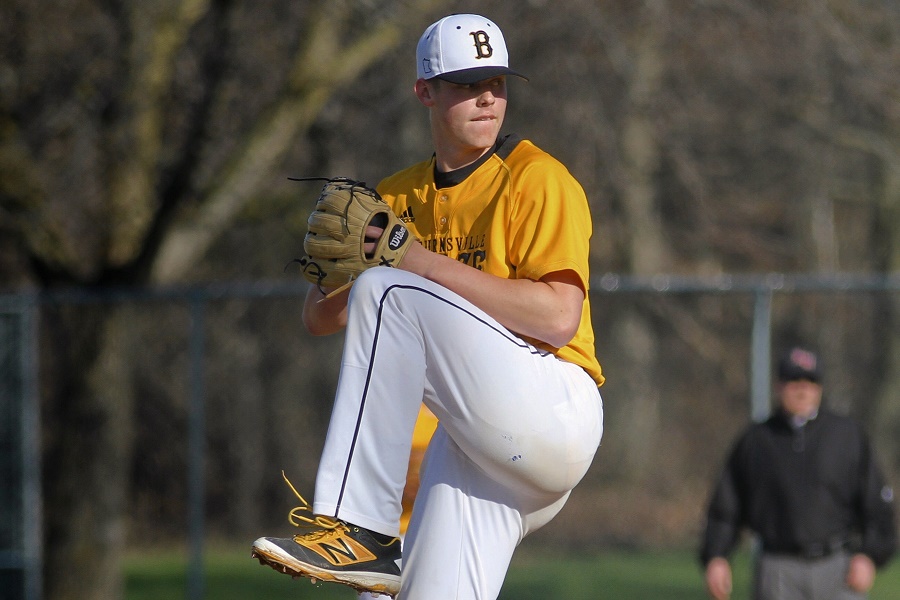 Right now, Sam Carlson is a senior at Burnsville High School. In a matter of a couple of weeks, he'll very likely be able to call himself a professional baseball player. On top of being tabbed as a first-round pick in the upcoming major league baseball draft, Carlson is expected to be the first prep pitcher ever taken that high from the state of Minnesota. That level of hype comes with big shoes to fill, but Carlson appears ready. I had the privilege of speaking with Carlson as his final high school season winds down. He's done pitching in the regular season for Burnsville, but obviously has postseason aspirations. With a busy next few weeks ahead, he'll have plenty on his plate, but if there's someone that can take it all in stride, it appears to be him. Covering a handful of different baseball related topics, here's how our discussion went. Off The Baggy: Starting off with your senior season at Burnsville, how much has it felt like a whirlwind? You've had a great season, managed school, and have had a large audience each time you've taken the mound. Sam Carlson: My senior season has been one to remember. Our playoffs begin soon and we are looking to make a run. It is my last time playing with some of my friends who I have played with since I was 10 years old. Between balancing school, baseball and my personal life, it hasn't been too bad. I have really enjoyed it and wouldn't change it for anything. OTB: Looking ahead to college, I know you've committed to Florida. What drew you to the SEC and ultimately landed you with the Gators? SC: I wanted to play for the Florida Gators since I was a kid. For one reason or another, it was my dream school. Seeing Logan Shore go there, who played for the same club team I did growing up, gave me hope that I could do the same one day. After going through the recruiting process and taking my visits I felt like it was the best fit for me, with an outstanding baseball program, great academics and intriguing weather for a Minnesotan. Everything seemed to fall in place for me and I knew I made the right decision committing to Florida. OTB: Obviously the MLB draft has to come up. Have you thought at all about being the first ever first-round prep pitcher from Minnesota? What would that mean to you? SC: It has been pretty cool to see stuff like that. Whatever happens I want to represent Minnesota the best I can and prove to people around the country that we have talent up here, it is just sometimes overlooked. I want to make people from our state proud with whatever the next step I take is. OTB: When looking at the next level, college or pro, what separates you? What do you think puts you in the best position to compete and excel? SC: What I think separates me at the next level is my ability to pitch. I am able to use my change-up in a way that a lot of players don't figure out for a long time. I also think that my maturity and self-control on the mound give me an advantage at the next level. OTB: A lot is always going to be made about velocity on the mound, but tell me about your pitch offerings and your style in attacking opposing hitters? SC: I have a three pitch mix with my fastball, slider and change-up. I am able to throw all three pitches for strikes especially when I am down in the count. My style is not to blow it by hitters, but rather to learn from them throughout the game and pitch to them in an effective way. I think my secondary offerings are pitches that are above average which leads to my unique style of pitching. OTB: How has the draft process been for you? Have you enjoyed the extra attention, or has it been something you've used to motivate yourself and just continue to go about your game? SC: The draft process has been fun for me. When I am between the lines I don't worry about anything going on in the stands. It is very motivating seeing all of my hard work pay off, but in the end it just motivates me even more. Hopefully this is just the beginning. It indeed feels like this is just the beginning for Sam. Whatever path he chooses, there's sure to be plenty of success ahead. Likely with the Twins out of the picture, Carlson will create fans for a new organization from all over the state. He has the chops to pitch in the big leagues one day, and he's well on his way there. For more from Off The Baggy, click here. Follow @tlschwerz
 -
Right now, Sam Carlson is a senior at Burnsville High School. In a matter of a couple weeks, he'll very likely be able to call himself a professional baseball player. On top of being tabbed as a first round pick in the upcoming Major League Baseball draft, Carlson is expected to be the first prep pitcher ever taken that high from the state of Minnesota. That level of hype comes with big shoes to fill, but Carlson appears ready. I had the privilege of speaking with Carlson as his final high school season winds down. He's done pitching in the regular season for Burnsville, but obviously has postseason aspirations. With a busy next few weeks ahead, he'll have plenty on his plate, but if there's someone that can take it all in stride, it appears to be him. Covering a handful of different baseball related topics, here's how our discussion went. Off The Baggy: Starting off with your senior season at Burnsville, how much has felt like a whirlwind? You've had a great season, managed school, and have had a large audience each time you've taken the mound. Sam Carlson: My senior season has been one to remember. Our playoffs begin soon and we are looking to make a run. It is my last time playing with some of my friends who I have played with since I was 10 years old. Between balancing school, baseball and my personal life, it hasn't been too bad. I have really enjoyed it and wouldn't change it for anything. OTB: Looking ahead to college, I know you've committed to Florida. What drew you to the SEC and ultimately landed you with the Gators? SC: I wanted to play for the Florida Gators since I was a kid. For one reason or another, it was my dream school. After seeing Logan Shore go there, who played for the same club team I did growing up, gave me hope that I could do the same one day. After going through the recruiting process and taking my visits I felt like it was the best fit for me, with an outstanding baseball program, great academics and intriguing weather for a Minnesotan. Everything seemed to fall in place for me and I knew I made the right decision committing to Florida. OTB: Obviously the MLB Draft has to come up. Have you thought at all about being the first ever 1st round prep pitcher from Minnesota? What would that mean to you? SC: It has been pretty cool to see stuff like that. Whatever happens I want to represent Minnesota the best I can and prove to people around the country that we have talent up here, it is just sometimes overlooked. I want to make people from our state proud with whatever the next step I take is. OTB: When looking at the next level, college or pro, what separates you? What do you think puts you in the best position to compete and excel? SC: What I think separates me at the next level is my ability to pitch. I am able to use my change-up in a way that a lot of players don't figure out for a long time. I also think that my maturity and self control on the mound gives me an advantage at the next level. OTB: A lot is always going to be made about velocity on the mound, but tell me about your pitch offerings and your style in attacking opposing hitters? SC: I have a three pitch mix with my fastball, slider and change-up. I am able to throw all three pitches for strikes especially when I am down in the count. My style is not to blow it by hitters, but rather to learn from them throughout the game and pitch to them in an effective way. I think my secondary offerings are pitches that are above average which leads to my unique style of pitching. OTB: How has the draft process been for you? Have you enjoyed the extra attention, or has it been something you've used to motivate yourself and just continue to go about your game? SC: The draft process has been fun for me. When I am between the lines I don't worry about anything going on in the stands. It is very motivating seeing all of my hard work pay off, but in the end it just motivates me even more. Hopefully this is just the beginning. It indeed feels like this is just the beginning for Sam. Whatever path he chooses, there's sure to be plenty of success ahead. Likely with the Twins out of the picture, Carlson will create fans for a new organization from all over the state. He has the chops to pitch in the big leagues one day, and he's well on his way there. For more from Off The Baggy, click here. Follow @tlschwerz
-
In his second start of the 2017 Major League Baseball season, Jose Berrios looked like a well tested veteran for the Minnesota Twins. Not only was he taking on one of baseball's best teams in the Colorado Rockies, but he thoroughly and completely dominated them. Sure, there was the 11 strikeouts. Yeah, he lasted into the 8th inning, working 7.2 IP. And economical, definitely, as he needed just 106 pitches to get that work in. More than the surface numbers though, Berrios' results were punctuated by some truly exceptional moments.Over the course of his outing, he got 20 swinging strikes. To put that into context, he threw 72 strikes in total. That means 28% of the pitches he threw for strikes had Rockies batters swinging right through. Truly an incredible amount, it's not all that surprising given the movement on his pitches. There was the frisbee of a curveball that he tossed to Ian Desmond. The Rockies first basemen was quoted postgame suggesting that Berrios reminded him of the late Jose Fernandez on the mound. It wasn't just the curveball that Berrios had working though, his fastball has some seriously incredible move. In a pitch to Raimel Tapia, that turned into a strike em' out, throw em' out double play, Berrios' fastball got more movement than anything I've seen since Ubaldo Jimenez's magical season with Colorado. The ball starts on the edge of the plate, and Tapia literally has no chance as the ball casually darts away from his bat. When looking at what it was that cause Rockies hitters to swing and miss, Berrios didn't discriminate. He was generating whiffs on three of his four pitches (excluding his changeup) and the curveball consistently was getting batters to chase way out of the zone. Download attachment: Schwerzler_berrios_pic1.png That bender is something Berrios is obviously confident in as well. He threw it in a handful of different counts, and the 36 curveballs he tossed accounted for 34% of his total on the night. In fact, Berrios virtually operated with a two pitch mix. His fastball (which he does throw both a four and two seam) was used right around 50% of the time. That curve was really his only other offering, as he used his changeup on just six different occasions. It's been a pretty incredible two start sample size, especially considering how his first 14 career starts went. While it's unfair to assume this level of dominance as the norm going forward, we've now seen why Berrios has had such a long hype train following him through the minor leagues. He should safely settle in as a third starter for the Twins, and he has the ability and drive to push the envelope. Download attachment: Schwerzler_berrios_pic2.png As he continues to take the ball every 5th day, the keys to focus in on will remain pitch economy as well as just how impressive the movement he gets on his pitches is. Short in stature, it is in that movement that hitters are deceived, and that will help to allow Berrios opportunity to stay ahead of opposing batters. The pitch plane isn't ever going to work in his favor, but when his ball darts the distance of the zone, even the best big leaguers are going to struggle. May 18, 2017 was among the best starting pitching efforts ever recorded in a Twins uniform. For an organization void of strikeouts for so long, it appears Berrios will pile them up in bunches. If he's going to continue bringing a frisbee to the ballpark, this should be a lot of fun. For more from Off The Baggy, click here. Follow @tlschwerz Click here to view the article
-
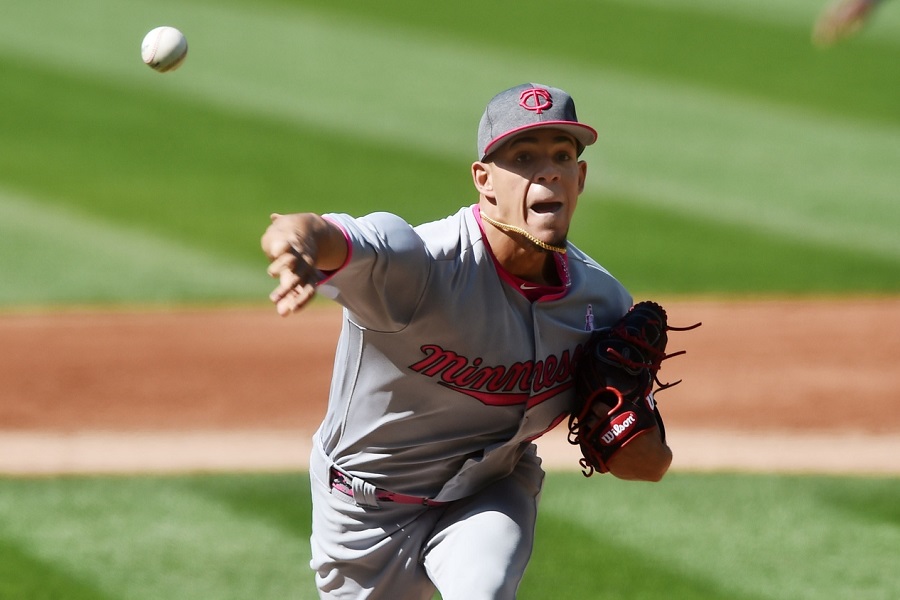 Over the course of his outing, he got 20 swinging strikes. To put that into context, he threw 72 strikes in total. That means 28% of the pitches he threw for strikes had Rockies batters swinging right through. Truly an incredible amount, it's not all that surprising given the movement on his pitches. There was the frisbee of a curveball that he tossed to Ian Desmond. The Rockies first basemen was quoted postgame suggesting that Berrios reminded him of the late Jose Fernandez on the mound. It wasn't just the curveball that Berrios had working though, his fastball has some seriously incredible move. In a pitch to Raimel Tapia, that turned into a strike em' out, throw em' out double play, Berrios' fastball got more movement than anything I've seen since Ubaldo Jimenez's magical season with Colorado. The ball starts on the edge of the plate, and Tapia literally has no chance as the ball casually darts away from his bat. When looking at what it was that cause Rockies hitters to swing and miss, Berrios didn't discriminate. He was generating whiffs on three of his four pitches (excluding his changeup) and the curveball consistently was getting batters to chase way out of the zone. That bender is something Berrios is obviously confident in as well. He threw it in a handful of different counts, and the 36 curveballs he tossed accounted for 34% of his total on the night. In fact, Berrios virtually operated with a two pitch mix. His fastball (which he does throw both a four and two seam) was used right around 50% of the time. That curve was really his only other offering, as he used his changeup on just six different occasions. It's been a pretty incredible two start sample size, especially considering how his first 14 career starts went. While it's unfair to assume this level of dominance as the norm going forward, we've now seen why Berrios has had such a long hype train following him through the minor leagues. He should safely settle in as a third starter for the Twins, and he has the ability and drive to push the envelope. As he continues to take the ball every 5th day, the keys to focus in on will remain pitch economy as well as just how impressive the movement he gets on his pitches is. Short in stature, it is in that movement that hitters are deceived, and that will help to allow Berrios opportunity to stay ahead of opposing batters. The pitch plane isn't ever going to work in his favor, but when his ball darts the distance of the zone, even the best big leaguers are going to struggle. May 18, 2017 was among the best starting pitching efforts ever recorded in a Twins uniform. For an organization void of strikeouts for so long, it appears Berrios will pile them up in bunches. If he's going to continue bringing a frisbee to the ballpark, this should be a lot of fun. For more from Off The Baggy, click here. Follow @tlschwerz
 -
In his second start of the 2017 Major League Baseball season, Jose Berrios looked like some sort of well tested veteran for the Minnesota Twins. Not only was he taking on one of baseball's best teams in the Colorado Rockies, but he thoroughly and completely dominated them. Sure, there was the 11 strikeouts. Yeah, he lasted into the 8th inning, working 7.2 IP. And economical, definitely, as he needed just 106 pitches to get that work in. More than the surface numbers though, Berrios' results were punctuated by some truly exceptional moments. Over the course of his outing, he got 20 swinging strikes. To put that into context, he threw 72 strikes in total. That means 28% of the pitches he threw for strikes had Rockies batters swinging right through. Truly an incredible amount, it's not all that surprising given the movement on his pitches. There was the frisbee of a curveball that he tossed to Ian Desmond. The Rockies first basemen was quoted postgame suggesting that Berrios reminded him of the late Jose Fernandez on the mound. It wasn't just the curveball that Berrios had working though, his fastball has some seriously incredible move. In this pitch to Raimel Tapia, that turned into a strike em' out, throw em' out double play, Berrios' fastball gets more movement than anything I've seen since Ubaldo Jimenez's magical season with Colorado. The ball starts on the edge of the plate, and Tapia literally has no chance as the ball casually darts away from his bat. When looking at what it was that cause Rockies hitters to swing and miss, Berrios didn't discriminate. He was generating whiffs on three of his four pitches (excluding his changeup) and the curveball consistently was getting batters to chase way out of the zone. That bender is something Berrios is obviously confident in as well. He threw it in a handful of different counts, and the 36 curveballs he tossed accounted for 34% of his total on the night. In fact, Berrios virtually operated with a two pitch mix. His fastball (which he does throw both a four and two seam) was used right around 50% of the time. That curve was really his only other offering, as he used his changeup on just six different occasions. It's been a pretty incredible two start sample size, especially considering how his first 14 career starts went. While it's unfair to assume this level of dominance as the norm going forward, we've now seen why Berrios has had such a long hype train following him through the minor leagues. He should safely settle in as a third starter for the Twins, and he has the ability and drive to push the envelope. As he continues to take the ball every 5th day, the keys to focus in on will remain pitch economy as well as just how impressive the movement he gets on his pitches is. Short in stature, it is in that movement that hitters are deceived, and that will help to allow Berrios opportunity to stay ahead of opposing batters. The pitch plane isn't ever going to work in his favor, but when his ball darts the distance of the zone, even the best big leaguers are going to struggle. May 18, 2017 was among the best starting pitching efforts ever recorded in a Twins uniform. For an organization void of strikeouts for so long, it appears Berrios will pile them up in bunches. If he's going to continue bringing a frisbee to the ballpark, this should be a lot of fun. For more from Off The Baggy, click here. Follow @tlschwerz
-
Gordon Commanding Spotlight Among Twins Prospects
Ted Schwerzler commented on Ted Schwerzler 's blog entry in Off The Baggy
That's the breakdown I'd expect as well. Also, Mauer will cede 1B to Sano at that point as well. -
Gordon Commanding Spotlight Among Twins Prospects
Ted Schwerzler posted a blog entry in Off The Baggy
Selected 5th overall by the Minnesota Twins in the 2014 Major League Baseball draft, Nick Gordon was immediately among the organizations best prospects. With a strong family pedigree, and plenty of talent on his own, the expectations were sky high for the high school shortstop. Now, fast forward four seasons, and he's proving himself at Double-A with the Chattanooga Lookouts. In 2016, Gordon got his first taste of High-A ball. Spending the whole season in Fort Myers, after making a compelling case to end 2015 there, Gordon slashed a solid .291/.335/.386. Power wasn't ever really expected to be a big part of his game, but his average hovered around .300 for the bulk of the summer, and his on base skills were solid. If there was a knock on him a year ago, it was the poor defensive showing, and a less than ideal baserunning ability. While Gordon doesn't possess the straight-line speed of his brother Dee, he's a burner in his own right. However, he was caught stealing 13 times for the Miracle, swiping just 19 successful bases. Reading pitchers, getting jumps, and picking his spots was something he'd definitely need to hone in on. Then, touted as a glove first prospect when drafted, Gordon took a pretty big step back in the field. Errors are far from the be-all-end-all when evaluating defensive prowess, but Gordon racked them up in bunches. After 18 in Cedar Rapids the year prior (all at SS), he tallied 26 in 2016 (24 at SS). They were split between throwing and fielding, but for a guy that was seen as so fluid at the position, it wasn't a welcomed addition to his game. Coming into the 2017 season, Gordon had fans across the national landscape. He was ranked among the top 50 prospects in the country by both MLB Pipeline and Baseball Prospectus. A handful of publications tabbed him as the Twins top prospect, and now at 21, it was somewhat expected that the youngster was beginning to grow into his body. Through the first 36 games at the Double-A level, Gordon has done nothing but impress. He's slashing a robust .322/.383/.507. While power likely won't ever show up in a considerable amount, the's tallied 16 extra base hits, three of which have left the yard. Gordon hasn't used much of his speed in the running game, as he's stolen just one base while being caught twice, but it's played to his favor in the form of doubles (8) and triples (5). As a non-roster invitee to spring training, Gordon saw time with the Twins in a handful of big league games. Paul Molitor played him in both spots up the middle, giving him more time at second base than I would have preferred to see. Thus far in 2017, Gordon has started 20 games at short, and 14 at second for the lookouts. Right now, it seems the organization isn't sure where he'll stick, and they also have some decisions to make at the upper levels. He's fared ok defensively, chalking up eight errors across those 34 games (3 at 2B, 5 at SS). Looking at a realistic timeline on Gordon, who again is just 21 years old, 2018 seems to be the year to circle. He's over three years younger than the competition at the current level, and while he could push for a late season promotion to Triple-A, the Twins could decide to keep the same path and have him spend the year in Tennessee. If that's the way they go, a mid-summer or early-fall callup could be in the cards a year from now. Knowing where the Twins stand roster wise, that leaves some questions to be answered on the 25 man roster. Brian Dozier is signed through the 2018 season, at which point he will hit free agency (Minnesota only bought out his arbitration years). If he isn't traded, and that probably hinges on the direction of the team, the middle of the infield would appear occupied. Gordon isn't the sure-thing shortstop he was once touted as, but he's probably a better bet there than Jorge Polanco. No matter how you cut it, Nick Gordon could force the Twins into a situation where they have three mouths to feed, and only two positions to hand out. As a rotational guy ending the 2018 season on the big league roster, Gordon could help to ease the transition for Minnesota if Brian Dozier is cast off prior to 2019. Figuring out how the pieces fit is getting ahead of ourselves for the most part at this point anyways however. What's worth taking note of in the here and now, is that Nick Gordon is absolutely emerging as a strong two way talent for the Twins. His bat has become a weapon, and he's displaying offensive prowess beyond his years. As he continues to compete through the Double-A season this year, and sets his sights on whatever is next, the Twins seem to have a very solid player on the way. Having gone from big name, to uncertain top 100 guy, to a prospect that could find himself in the top 25 a year from now, Gordon continues to battle. For all the picks that haven't worked out in recent years, it appears the son of Flash is absolutely cut from a different cloth. For more from Off The Baggy, click here. Follow @tlschwerz -
Article: Finding A Jolt For The Bullpen
Ted Schwerzler posted a topic in Twins Daily Front Page News
Coming into 2017, the Minnesota Twins biggest question mark was their pitching staff. After being at the bottom of the big leagues last year, Minnesota needed a turnaround to return to competitiveness. They've seen a good enough start through the first 30 games or so, with the Twins own the ninth best starting ERA in MLB. the bullpen, however, is still a cause for concern.Through their first 120 innings pitches, Minnesota checks in with the 23rd best relief ERA in MLB (4.73). The 7.43 K/9 ranks 28th out of 30 big league teams and the 3.75 BB/9 checks out in the middle of the pack. Largely unaddressed this offseason (Matt Belisle being the only signing of note), the goal should be to address the bullpen before it goes off the rails. Looking at what's out there, you can see some definite pieces. Brandon Kintzler is a solid reliever, even if his "stuff" remains questionable for working as a closer. Taylor Rogers fits, and Tyler Duffey looks like a real weapon. I still believe Ryan Pressly is more than his funk suggests, and Justin Haley being carried makes sense. That leaves both Matt Belisle and Craig Breslow, and you have to wonder if Minnesota isn't in a position to push for more on their own being promoted. Triple-A Rochester has some intriguing arms worthy of a shot. Adding Drew Rucinski to the 40-man roster for a brief call up was confusing, if only because there were other options. Trevor Hildenberger, D.J. Baxendale, Aaron Slegers, and even Jason Wheeler could all use a look. If we're really trying to push the envelop though, Double-A is where the Twins greatest assets lie. Both Mason Melotakis and Nick Burdi have been lights out to start 2017. Melotakis owns a 1.17 ERA across 15.1 IP. The 25-year-old southpaw has compiled a 7.0 K/9 while offering free passes at a rate of 2.3 BB/9. The former second-round pick has been at Double-A since 2014, albeit missing the 2015 season. He's compiled just under 50.0 IP across the last two years and he's shown an ability to strike batters out, while reducing the walks in 2017. Another second-round pick, Burdi has come out with guns blazing this season as well. The 24-year-old right-hander can push his fastball into triple digits, and seeing him healthy after throwing just three innings last year is a major plus. Across 13.2 IP this season, he's struck out 11.9 per nine innings, and he's walking batters at a very strong 2.6 BB/9. While command has always been Burdi's shortcoming, it's something he seems to have honed in this campaign. I have no idea whether or not the Twins would promote either arm straight from Double-A, but I would lean towards them not doing so. Both have velocity and wanting to see them pitch, more than just throw, at the next level might be worth a stop in Triple-A. Neither guy is going to be able to rely solely on speed at the big league level, and seeing evidence they could get big league hitters out is a must. Regardless of how they get to the Target Field bullpen, both Melotakis and Burdi could be there by early summer. I'd expect at least a brief stop for both in Triple-A, but guys like Breslow, or even Adam Wilk, shouldn't stand in their way. Unlike a starting prospect, relievers don't necessarily need a long stay at the highest level of the farm system; give them a taste and move them on. J.T. Chargois put forth just 12.1 IP in AAA after 11.2 IP at AA prior to his promotion last year. A similar path could be had for both of these guys. When they arrive, there's little reason to suggest it wouldn't be an immediate boost to the bullpen. Throw in a healthy J.T. Chargois or Jake Reed, and maybe a flier on one of those other names, and Minnesota will have reworked their relief corps from within. Right now, there are some question marks as to how it will come together, and which guys can get healthy, but what Minnesota doesn't have in starting options, they have in relief. Both Burdi and Melotakis can lead the charge and let the dice fall as they may. Click here to view the article -
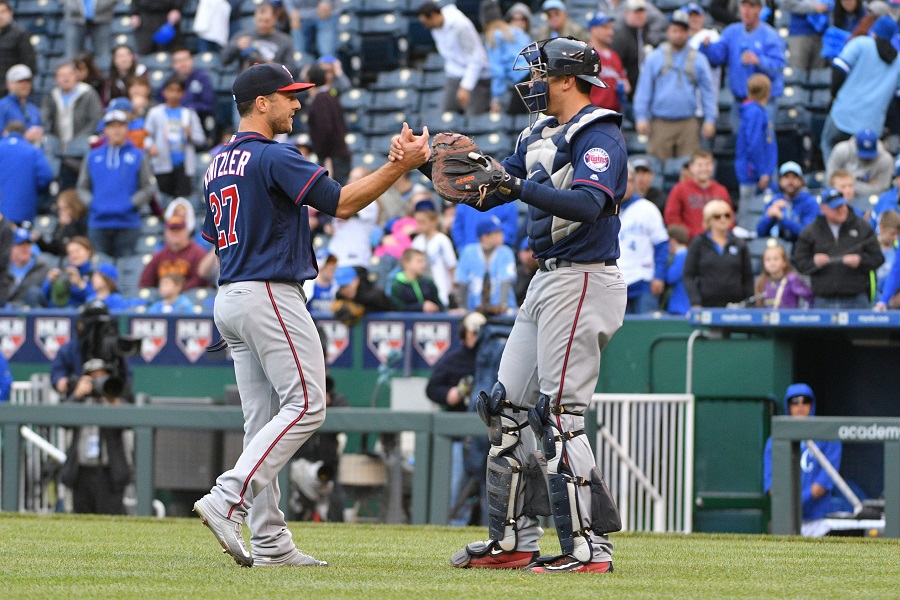 Through their first 120 innings pitches, Minnesota checks in with the 23rd best relief ERA in MLB (4.73). The 7.43 K/9 ranks 28th out of 30 big league teams and the 3.75 BB/9 checks out in the middle of the pack. Largely unaddressed this offseason (Matt Belisle being the only signing of note), the goal should be to address the bullpen before it goes off the rails. Looking at what's out there, you can see some definite pieces. Brandon Kintzler is a solid reliever, even if his "stuff" remains questionable for working as a closer. Taylor Rogers fits, and Tyler Duffey looks like a real weapon. I still believe Ryan Pressly is more than his funk suggests, and Justin Haley being carried makes sense. That leaves both Matt Belisle and Craig Breslow, and you have to wonder if Minnesota isn't in a position to push for more on their own being promoted. Triple-A Rochester has some intriguing arms worthy of a shot. Adding Drew Rucinski to the 40-man roster for a brief call up was confusing, if only because there were other options. Trevor Hildenberger, D.J. Baxendale, Aaron Slegers, and even Jason Wheeler could all use a look. If we're really trying to push the envelop though, Double-A is where the Twins greatest assets lie. Both Mason Melotakis and Nick Burdi have been lights out to start 2017. Melotakis owns a 1.17 ERA across 15.1 IP. The 25-year-old southpaw has compiled a 7.0 K/9 while offering free passes at a rate of 2.3 BB/9. The former second-round pick has been at Double-A since 2014, albeit missing the 2015 season. He's compiled just under 50.0 IP across the last two years and he's shown an ability to strike batters out, while reducing the walks in 2017. Another second-round pick, Burdi has come out with guns blazing this season as well. The 24-year-old right-hander can push his fastball into triple digits, and seeing him healthy after throwing just three innings last year is a major plus. Across 13.2 IP this season, he's struck out 11.9 per nine innings, and he's walking batters at a very strong 2.6 BB/9. While command has always been Burdi's shortcoming, it's something he seems to have honed in this campaign. I have no idea whether or not the Twins would promote either arm straight from Double-A, but I would lean towards them not doing so. Both have velocity and wanting to see them pitch, more than just throw, at the next level might be worth a stop in Triple-A. Neither guy is going to be able to rely solely on speed at the big league level, and seeing evidence they could get big league hitters out is a must. Regardless of how they get to the Target Field bullpen, both Melotakis and Burdi could be there by early summer. I'd expect at least a brief stop for both in Triple-A, but guys like Breslow, or even Adam Wilk, shouldn't stand in their way. Unlike a starting prospect, relievers don't necessarily need a long stay at the highest level of the farm system; give them a taste and move them on. J.T. Chargois put forth just 12.1 IP in AAA after 11.2 IP at AA prior to his promotion last year. A similar path could be had for both of these guys. When they arrive, there's little reason to suggest it wouldn't be an immediate boost to the bullpen. Throw in a healthy J.T. Chargois or Jake Reed, and maybe a flier on one of those other names, and Minnesota will have reworked their relief corps from within. Right now, there are some question marks as to how it will come together, and which guys can get healthy, but what Minnesota doesn't have in starting options, they have in relief. Both Burdi and Melotakis can lead the charge and let the dice fall as they may.

