



Ted Schwerzler
-
Posts
5,149 -
Joined
-
Last visited
Content Type
Profiles
News
Minnesota Twins Videos
2026 Minnesota Twins Top Prospects Ranking
2022 Minnesota Twins Draft Picks
Minnesota Twins Free Agent & Trade Rumors, Notes, & Tidbits
Guides & Resources
2023 Minnesota Twins Draft Picks
The Minnesota Twins Players Project
2024 Minnesota Twins Draft Picks
2025 Minnesota Twins Draft Pick Tracker
2026 Minnesota Twins Draft Tracker: Picks & Bonuses
Forums
Blogs
Events
Store
Downloads
Gallery
Everything posted by Ted Schwerzler
-
On July 7, the Minnesota Twins announced that they had signed Bartolo Colon to a minor league deal. He had been DFAd by the Atlanta Braves after signing a one-year, $12.5 million deal this past offseason. Through 13 starts, he had been nothing short of horrid, and even the non-contending Braves had no place for him on their roster. The Twins needed arms however and Colon had one.In a surprising move, Minnesota ended up being the team to give Colon another chance. By July 7, Paul Molitor’s squad had already run out ten different starters. The team was competing, but there was a revolving door on the mound. Needing more than a second wave of starting depth, Derek Falvey and Thad Levine were virtually without options. Bartolo was a surprising choice, but he made some sense. Despite being 44, Colon was just a year removed from an all-star appearance with the New York Mets. He posted a 3.43 ERA and had a solid 3.99 FIP. Long gone were the days of blowing the ball by hitters, but he remained a control artist who limited walks. On his signing, I wondered if what the Twins offered him didn’t present a chance for something very good to materialize as a result of improved receiving behind the plate, and an exceptional defense in the field. At this point, I think it’s fair to say it has worked out swimmingly. Now through eight starts for the Twins Colon owns a 4.04 ERA and has posted three quality starts. He’s still not striking anyone out, but he’s shaved a full walk off his free pass rate since coming to Minnesota. The most critical change he’s made however is how well he’s attacked the strike zone. As Colon has gotten older, he’s eaten innings by pounding the strike zone. While still throwing 90 mph, he’s gotten by through changing speeds, looks, and pitches all while staying in the zone. That is something he had gotten away from in Atlanta, and it was at a point where framing didn’t much matter. Since joining the Twins, he’s once again the number one starter in baseball when it comes to percentage of pitches in the zone. Combining that with an above average defender and framer behind the plate he’s seen an incredible boost to his overall numbers. Download attachment: Webp.net-gifmaker.gif Behind him, Colon has gotten even more help. With the Braves, the longtime vet posted a 5.07 FIP and has actually been worse in Minnesota, owning a 5.64 FIP. That increase has been mitigated however by the extremely solid defensive prowess the Twins possess. As things stand in 2017, Atlanta owns a -34 DRS score which ranks 28th in all of baseball. Minnesota on the other hand, has +20 DRS coming in at the seventh best mark in the sport. While there are weak spots defensively, having a center fielder who has posted 24 DRS patrolling the outfield is hardly a bad thing. The numbers continue to point towards Minnesota being a great answer for Colon when taking a deeper dive. Despite still allowing an OPS of .881 to opposing hitters as a Twin, Colon is allowing just a .299 BABIP as opposed to a .360 mark with his previous team. He’s actually generating about 7% fewer ground balls with the Twins, but his strand rate has jumped from 48.2% all the way to 88.1%. Simply put, baserunners who were once piling up runs are now either not reaching, or simply being a footnote in an otherwise low-stress inning. There’s no denying that, long term, Father Time is undefeated and Bartolo Colon is nearing the end of his journey. Whether this season, the next, or soon thereafter, Colon will need to hang up his cleats. The Twins needed a steadying presence in their starting rotation, and the Dominican native has been that and more. Instead of being another so-so addition to the rising number of starting pitchers for the club, he’s been a predictable, better-than-expected starter every fifth day. Whether or not the Twins make the postseason isn’t going to rest on Colon’s shoulders. It is certain though, that without him, their chances dwindle substantially. At 44 years old, Bartolo Colon has continued to show the importance of throwing strikes, and that much alone has given new life to a season that had appeared to be on life support. If players talk, and it's a good assumption that they do, Colon will have plenty to sell regarding the allure of the Minnesota Twins. For an organization that will need to add a few arms over the winter, the draw to Target Field has gotten a whole lot stronger. Click here to view the article
-
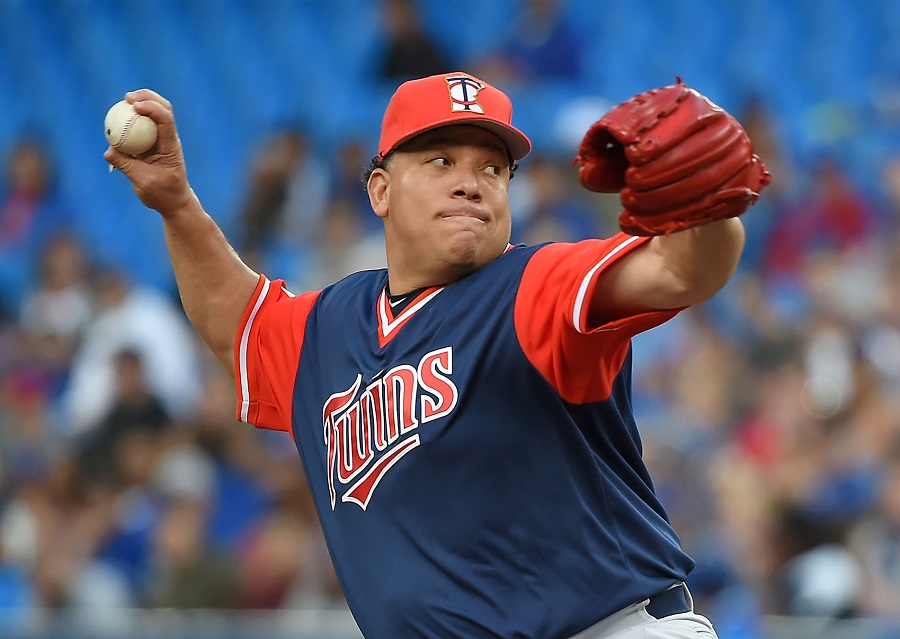 In a surprising move, Minnesota ended up being the team to give Colon another chance. By July 7, Paul Molitor’s squad had already run out ten different starters. The team was competing, but there was a revolving door on the mound. Needing more than a second wave of starting depth, Derek Falvey and Thad Levine were virtually without options. Bartolo was a surprising choice, but he made some sense. Despite being 44, Colon was just a year removed from an all-star appearance with the New York Mets. He posted a 3.43 ERA and had a solid 3.99 FIP. Long gone were the days of blowing the ball by hitters, but he remained a control artist who limited walks. On his signing, I wondered if what the Twins offered him didn’t present a chance for something very good to materialize as a result of improved receiving behind the plate, and an exceptional defense in the field. At this point, I think it’s fair to say it has worked out swimmingly. Now through eight starts for the Twins Colon owns a 4.04 ERA and has posted three quality starts. He’s still not striking anyone out, but he’s shaved a full walk off his free pass rate since coming to Minnesota. The most critical change he’s made however is how well he’s attacked the strike zone. As Colon has gotten older, he’s eaten innings by pounding the strike zone. While still throwing 90 mph, he’s gotten by through changing speeds, looks, and pitches all while staying in the zone. That is something he had gotten away from in Atlanta, and it was at a point where framing didn’t much matter. Since joining the Twins, he’s once again the number one starter in baseball when it comes to percentage of pitches in the zone. Combining that with an above average defender and framer behind the plate he’s seen an incredible boost to his overall numbers. Behind him, Colon has gotten even more help. With the Braves, the longtime vet posted a 5.07 FIP and has actually been worse in Minnesota, owning a 5.64 FIP. That increase has been mitigated however by the extremely solid defensive prowess the Twins possess. As things stand in 2017, Atlanta owns a -34 DRS score which ranks 28th in all of baseball. Minnesota on the other hand, has +20 DRS coming in at the seventh best mark in the sport. While there are weak spots defensively, having a center fielder who has posted 24 DRS patrolling the outfield is hardly a bad thing. The numbers continue to point towards Minnesota being a great answer for Colon when taking a deeper dive. Despite still allowing an OPS of .881 to opposing hitters as a Twin, Colon is allowing just a .299 BABIP as opposed to a .360 mark with his previous team. He’s actually generating about 7% fewer ground balls with the Twins, but his strand rate has jumped from 48.2% all the way to 88.1%. Simply put, baserunners who were once piling up runs are now either not reaching, or simply being a footnote in an otherwise low-stress inning. There’s no denying that, long term, Father Time is undefeated and Bartolo Colon is nearing the end of his journey. Whether this season, the next, or soon thereafter, Colon will need to hang up his cleats. The Twins needed a steadying presence in their starting rotation, and the Dominican native has been that and more. Instead of being another so-so addition to the rising number of starting pitchers for the club, he’s been a predictable, better-than-expected starter every fifth day. Whether or not the Twins make the postseason isn’t going to rest on Colon’s shoulders. It is certain though, that without him, their chances dwindle substantially. At 44 years old, Bartolo Colon has continued to show the importance of throwing strikes, and that much alone has given new life to a season that had appeared to be on life support. If players talk, and it's a good assumption that they do, Colon will have plenty to sell regarding the allure of the Minnesota Twins. For an organization that will need to add a few arms over the winter, the draw to Target Field has gotten a whole lot stronger.
 -
Who Are The Twins Adding In September?
Ted Schwerzler commented on Ted Schwerzler 's blog entry in Off The Baggy
I mean really, you could 60 day Castro if you don't think he's going to be back. That's a pretty tough trio though. Grossman is another option. The Twins 40 man is going to need some shuffling if they want to bring guys up though. -
Who Are The Twins Adding In September?
Ted Schwerzler commented on Ted Schwerzler 's blog entry in Off The Baggy
I guess I don't ever think there's a reason NOT to call up a position player on the 40 man roster. That said, Vielma hasn't done anything to earn it either. Know it's a different front office, but Adam Brett Walker should've been called up last year and wasn't. -
Who Are The Twins Adding In September?
Ted Schwerzler commented on Ted Schwerzler 's blog entry in Off The Baggy
Molitor has made a habit of putting guys in bad spots (see Taylor Rogers usage vs RHB). Boshers isn't great, and probably gets bumped off the 40 man for next year, but he absolutely should be called up. -
As the summer draws to a close, the Major League Baseball season is again set to throw us a roster shakeup. With teams having their rosters expand from 25 players to 40, there will be a host of additions to big league clubs across the sport. For a team like the Twins in the midst of a Postseason race, each call up could prove integral when it comes to squeaking out an extra win or two. The question is, who's on their way up? To refresh, virtually the only stipulation for September roster expansion is that any player called up must be on the team's 40 man roster. While clubs are being given an additional 15 roster spots, they obviously will not have that many openings on their 40 man. For example, the Twins currently have a full 40 man roster, so anyone promoted that's not currently on it, would make another move necessary. First, let's take a look at how the Twins can clear some space. There's not a ton of options for the club, but the most likely would be transferring players on the 10-day DL to the 60-day. The problem for Minnesota is that there isn't a ton of options. Both Adalberto Mejia and Dietrich Enns could be shifted to the longer DL if the club doesn't expect them back. J.T. Chargois has had virtually a lost season, but he's not on the MLB DL, so there's no way to clear a spot involving him outside of a DFA, which isn't logical. The Twins could clear space by DFA'ing players like Buddy Boshers or Hector Santiago, but none of those instances seem entirely likely either. So from a top down view, the Twins are looking at maybe one or two spots on the 40 man being open. To fill those spots, I'd wager Jake Reed and Stephen Gonsalves appear the most likely. The Rochester Red Wings are currently battling for a playoff spot, and with the likelihood that both would be used out of the pen for Minnesota, I can't imagine a promotion prior to the Triple-A season coming to an end. Reed can definitely help the big club in relief, and should've been up a long time ago if not for an injury to start the year. Gonsalves is going to be a difference maker in the coming years, and while his value is as a starter, getting his feet wet in 2017 is hardly a bad thing. Looking at what's currently available on the 40 man roster, there seems to be a few more candidates worthy of a promotion. Boshers seems much more certain to rejoin the big club than to be DFA'd, and both Aaron Slegers and Nik Turley should join him. Slegers could be a spot starter down the stretch, while Turley profiles well in relief. Despite being on the 40 man and previously making the jump, I'm not sure there's much allure to bringing either Felix Jorge or Randy Rosario back up. Like Gonsalves, Fernando Romero is an impact starter for the Twins future, but with a workload well above previous seasons, and slowing of late, I'd just call his season quits. From a position player perspective, there's only two players not on the active roster that are possibilities. Engelb Vielma is a glove first shortstop in the same vein as Ehire Adrianza. With Adrianza already used sparingly, and Vielma hitting just .212 in 84 Triple-A games, I can't imagine it worthwhile to ask him to sit on the Twins bench. From a bat perspective, Daniel Palka makes some sense. He's an outfielder by trade, but survives as a slugging hitter. He's a lefty, not the righty that the Twins need, but he owns a .272/.324/.428 slash line in 78 games for Rochester this year. He's a power threat, and adding another pinch hitter for the final month is hardly a big issue. The way I see it, Minnesota has very little space to create room, and they don't have a ton of candidates needing a call up either. I think we see more players return to the big league club, than we see fresh faces. Also, despite the big league club taking precedence, I'd be far from shocked if we don't see a few players hold out at Triple-A until and Postseason run is concluded. If I had to handicap things right now, here's who I see coming up, and the likelihood that they do: Buddy Boshers 100% Nik Turley 100% Aaron Slegers 80% Jake Reed 60% Stephen Gonsalves 55% Daniel Palka 50%
-
The Twins have a league avg hitting catcher that's well above average behind the dish. Zero reason to replace that. Pitching and a bat, I'm all for adding.
-
Article: Gold Glove Is Mauer Or Miss
Ted Schwerzler replied to Ted Schwerzler 's topic in Twins Daily Front Page News
Haven't done nearly enough research to see what other platoon options are out there, but yeah, that's why it won't be Valencia. -
Article: Gold Glove Is Mauer Or Miss
Ted Schwerzler replied to Ted Schwerzler 's topic in Twins Daily Front Page News
I think Moreland getting it last year suggests the voters are doing better about not completely going offensive. -
August has been an exciting month for the Minnesota Twins. While they have continued to command the second American League Wild Card spot, they've also watched Byron Buxton continue an incredible breakout. Despite all of the praise he's garnering, there's another youngster commanding your attention. Enter 24 year-old, Jorge Polanco. On June 7, the Twins placed Polanco on the bereavement list. His grandfather had passed away, and the Minnesota shortstop was set to return home to be with family. There's been plenty written about the relationship Polanco had with his grandfather. A close friend, Polanco leaned on his elder as a father figure, and respected him very much. Upon returning to the diamond, it was almost as if the emotions were continuing to take their toll on him. In 32 games following his return to the lineup, Polanco had hit the skids. He posted a .146/.205/.214 slash line, and he had just five extra base hits over that time frame. For a guy who's bat had always been his calling card, his line had bottomed out at .213/.265/.308. Then, as the calendar turned to August, Polanco had also seemingly turned a page. Over the course of his last 24 games dating back to August 2, the Twins shortstop owns a .378/.411/.656 line with 15 extra base hits and four longballs. He has been a catalyst for a Twins lineup that is surging, and he's seen his efforts rewarded being bumped up to the third spot in the order. A bat first player, Polanco had once again regained his swagger. It's incredibly hard to deduce what, if any, impact the passing of his grandfather had on his game. It is fair to note that baseball is an extremely mental sport, and for a guy struggling at his profession, there was probably other things weighing on his mind. Out of minor league options, Polanco was likely spared from a fate that could have had him back at Triple-A Rochester. Instead, he wrestled through his own struggles, and has gotten back to the player Minnesota has always expected him to be. On the season now, Polanco owns a .253/.300/.390 slash line. While the .689 OPS still sags behind the .757 mark from a year ago, it's a microcosm of how far he had fallen off the wagon. After looking like a player that may need some seasoning to get things back in line, he now appears to be the impact bat that can continue to help Minnesota stave off regression. What's maybe most impressive when it comes to Polanco, is that he's gotten back on the horse while never truly falling off with the glove. There hasn't ever been much concern with Polanco's ability to hit, but him sticking at short in the big leagues has always been met with skepticism. Now through 130 games in 2017, Polanco has played 860.2 innings at short. In total, he's been worth an even 0 DRS while improving his UZR to -3.7 (from -10.9 in 2016) and increasing his RngR to 1.7 after a -5.5 mark a year ago. Given the inefficiencies of defensive metrics, numbers aren't nearly the be-all-end-all. What they do tell us however, is that Polanco is hardly a detriment. He doesn't cover the ground you'd necessarily hope for from a shortstop, but his range is above average, and he is hovering right at replacement level when it comes to runs saved. Given the demands of the shortstop position, and the amount of elite gloves that play there, he's been far more an asset than a detriment. With just over 30 games left for Minnesota, Polanco is putting it together at the right time. His bat is scalding, and while it will see some slowing down the stretch, expecting it to level off to career norms is hardly a negative. On defense, he's continued to toe the line, and that's probably a bit better than was expected. Over the course of his career, whether or not he has to make a move to second base, the trajectory continues to be an upwards one. Polanco is a guy that should continue to be mentioned among the core of Buxton and Sano. The youth movement has not only begun, but has taken shape, and allows the Twins to be thought of in a different light for the immediate future. This team is going to make waves in the AL Central and beyond; this 2017 run is only the beginning. For more from Off The Baggy, click here. Follow @tlschwerz
-
Article: Gold Glove Is Mauer Or Miss
Ted Schwerzler replied to Ted Schwerzler 's topic in Twins Daily Front Page News
Given that Torii got 1yr/$10m while being a black hole defensively, I'd imagine Joe could command something in the 2yr/$15-18m range. -
Article: Gold Glove Is Mauer Or Miss
Ted Schwerzler replied to Ted Schwerzler 's topic in Twins Daily Front Page News
I'd resign him without hesitation. Give him a one or two year deal to finish out his career. The only difference I'd make is that he should be platooned the rest of the way. At this point, he can't hit lefties but mashes righties. Go get a guy like Danny Valencia (ick) and turned the position into a big asset. -
Article: Gold Glove Is Mauer Or Miss
Ted Schwerzler replied to Ted Schwerzler 's topic in Twins Daily Front Page News
Hadn't considered that angle, but it definitely doesn't hurt. Catchers generally don't have the athleticism Joe does. -
Article: Gold Glove Is Mauer Or Miss
Ted Schwerzler replied to Ted Schwerzler 's topic in Twins Daily Front Page News
As of right now, the finalists should be Mauer, Moreland and either LoMo or Carlos Santana -
If you’ve watched even a handful of Twins games in 2017, you’ve no doubt witnessed Joe Mauer make difficult plays look routine at first base. He’s an incredible athlete that has transformed himself into an elite fielder at a new position. While there may be some question as to whether or not a Gold Glove push is coming solely from Twins Territory, I’m here to tell you it’s a discussion that should be taking place on the national stage.Getting this out of the way early, Joe Mauer went 89 games into 2017 before making an error. He had put together an incredible streak that included something like 600 chances. While those numbers are great, his fielding percentage and lack of errors is just about the last thing you should take into account when understanding why the Minnesota first basemen in Gold Glove worthy. For those that shy away from sabermetrics, understand this is your warning. For an award that is doled out in relation to defensive prowess, the best measurements of effectiveness are quite a ways down the rabbit hole. While defensive sabermetrics are far from flawless, they go a long way towards explaining what the eye tells us, and are significantly more effective than anything else we have at our disposal. With that disclaimer out of the way, let’s get into it. First and foremost, let’s take a look at what nabbed the award a year ago. Mitch Moreland grabbed a Gold Glove, and despite the sometimes poor decisions for the award (I’m looking at you Eric Hosmer), was a deserving recipient. Moreland posted 7 DRS (2nd), 6.4 UZR (1st), 9.2 UZR/150 (1st), and a 5.0 RngR (1st) a season ago. While Chris Davis had a solid season of his own, Moreland was clearly the best AL first basemen. Sadly, we again see the flawed process as Hosmer wound up the third finalist. Across the board, he was the worst defensive 1B among qualified players. So, with 2016 as a bench mark for understanding, let’s take a look at Mauer’s numbers in 2017. For Minnesota, Mauer owns 5 DRS (3rd), 6.5 UZR (1st), 10.6 UZR/150 (1st), 3.9 RngR (1st). Not only is Mauer pacing the American League in virtually every important category, but his numbers are also in line with or better than Moreland’s a season ago. In fact, expanding things a bit further, the only qualified first basemen with better numbers than Mauer in 2017 is the Giants Brandon Belt (who should run away with the NL award). At this point, we can see what the numbers tell us, it’s also important to understand what they mean. Defensive runs saved (DRS) for first basemen are generally a lower amount and less indicative of effectiveness. Given their opportunities on the field, pushing that number to swell in the same vein as an outfielder like Byron Buxton can accomplish is a difficult task. Ultimate zone rating and range runs are where first basemen can truly separate themselves however. UZR is blanket stat that values defensive ability as a whole. It’s composed (for a first basemen) of DPR (double-play runs), RngR (range runs), and ErrR (error runs). As the total number rises, it signifies the overall ability of a certain player. As the sum of all components, we have a numerical measurement of how well the player does everything being demanded of them at their position. Range runs are a separating metric at first because it helps to quantify reactions and athleticism. As fangraphs puts it “Is the player an Ozzie Smith or an Adam Dunn.” While virtually all first basemen should be able to make the play charging in, Mauer has shown an exceptional ability to react laterally, as well as cover ground. For most baseball fans, it’s been relatively easy to see that Joe Mauer is playing well above an average level just simply by watching a game. Whether a Twins fan or not, there’s little room for bias when it comes to just how exceptional the body of work has proven to be. When you dive into the numbers a bit further, it only helps to make the argument stronger and quantify what you should already know. Over the years, the Gold Glove has become a tainted award criticized for the inclusion of offensive prowess and the marketable name. As mentioned above, Eric Hosmer won three straight from 2013-15, despite never being a top three candidate any of those years. That being said, whether or not Mauer ends bring the award back to Minnesota, he should be considered the frontrunner without a shadow of a doubt. We can only hope that the voting contingent make the correct decision and award the trophy properly. If they do so, Mauer would join Darin Erstad and Placido Polanco as the only three players to win a Gold Glove at multiple positions. He would obviously be the first to do so at catcher and first base. It’s fair to be a bit down about a lack of thump from a corner infielder, but there’s no denying that Mauer has been a difference maker in the field, and a Gold Glove would only help to cement that notion. Click here to view the article
-
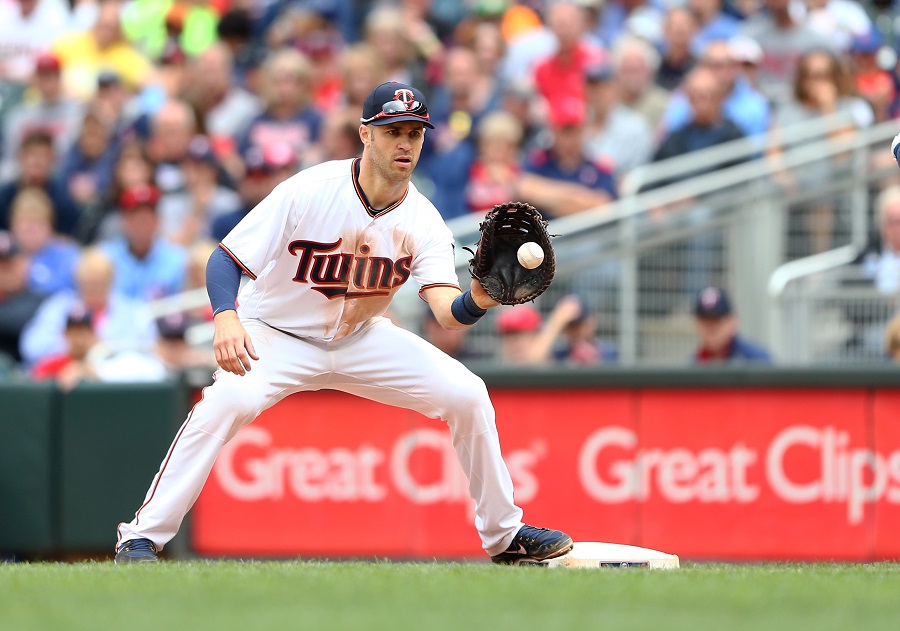 Getting this out of the way early, Joe Mauer went 89 games into 2017 before making an error. He had put together an incredible streak that included something like 600 chances. While those numbers are great, his fielding percentage and lack of errors is just about the last thing you should take into account when understanding why the Minnesota first basemen in Gold Glove worthy. For those that shy away from sabermetrics, understand this is your warning. For an award that is doled out in relation to defensive prowess, the best measurements of effectiveness are quite a ways down the rabbit hole. While defensive sabermetrics are far from flawless, they go a long way towards explaining what the eye tells us, and are significantly more effective than anything else we have at our disposal. With that disclaimer out of the way, let’s get into it. First and foremost, let’s take a look at what nabbed the award a year ago. Mitch Moreland grabbed a Gold Glove, and despite the sometimes poor decisions for the award (I’m looking at you Eric Hosmer), was a deserving recipient. Moreland posted 7 DRS (2nd), 6.4 UZR (1st), 9.2 UZR/150 (1st), and a 5.0 RngR (1st) a season ago. While Chris Davis had a solid season of his own, Moreland was clearly the best AL first basemen. Sadly, we again see the flawed process as Hosmer wound up the third finalist. Across the board, he was the worst defensive 1B among qualified players. So, with 2016 as a bench mark for understanding, let’s take a look at Mauer’s numbers in 2017. For Minnesota, Mauer owns 5 DRS (3rd), 6.5 UZR (1st), 10.6 UZR/150 (1st), 3.9 RngR (1st). Not only is Mauer pacing the American League in virtually every important category, but his numbers are also in line with or better than Moreland’s a season ago. In fact, expanding things a bit further, the only qualified first basemen with better numbers than Mauer in 2017 is the Giants Brandon Belt (who should run away with the NL award). At this point, we can see what the numbers tell us, it’s also important to understand what they mean. Defensive runs saved (DRS) for first basemen are generally a lower amount and less indicative of effectiveness. Given their opportunities on the field, pushing that number to swell in the same vein as an outfielder like Byron Buxton can accomplish is a difficult task. Ultimate zone rating and range runs are where first basemen can truly separate themselves however. UZR is blanket stat that values defensive ability as a whole. It’s composed (for a first basemen) of DPR (double-play runs), RngR (range runs), and ErrR (error runs). As the total number rises, it signifies the overall ability of a certain player. As the sum of all components, we have a numerical measurement of how well the player does everything being demanded of them at their position. Range runs are a separating metric at first because it helps to quantify reactions and athleticism. As fangraphs puts it “Is the player an Ozzie Smith or an Adam Dunn.” While virtually all first basemen should be able to make the play charging in, Mauer has shown an exceptional ability to react laterally, as well as cover ground. For most baseball fans, it’s been relatively easy to see that Joe Mauer is playing well above an average level just simply by watching a game. Whether a Twins fan or not, there’s little room for bias when it comes to just how exceptional the body of work has proven to be. When you dive into the numbers a bit further, it only helps to make the argument stronger and quantify what you should already know. Over the years, the Gold Glove has become a tainted award criticized for the inclusion of offensive prowess and the marketable name. As mentioned above, Eric Hosmer won three straight from 2013-15, despite never being a top three candidate any of those years. That being said, whether or not Mauer ends bring the award back to Minnesota, he should be considered the frontrunner without a shadow of a doubt. We can only hope that the voting contingent make the correct decision and award the trophy properly. If they do so, Mauer would join Darin Erstad and Placido Polanco as the only three players to win a Gold Glove at multiple positions. He would obviously be the first to do so at catcher and first base. It’s fair to be a bit down about a lack of thump from a corner infielder, but there’s no denying that Mauer has been a difference maker in the field, and a Gold Glove would only help to cement that notion.
 -
Coming off a 103 loss campaign a season ago, there was plenty of room for tempered expectations in 2017. While many feared another lackluster season, the expectation always should have been a generous step forward. Given the uncertainty of youth, a three year span with a boom, buster, and normalization felt appropriate to surmise. As we go down the stretch in 2017 however, the Twins have become much more. Going into 2017, I felt pretty confident that something in the upper 70's seemed like a realistic win total for Minnesota. A .500 record seemed doable, if not a best case scenario, but a certainty to bank on was the floor not once again dropping out. Fast forward to late August and the hometown nine is within striking distance of the division, and pacing a tight knit group for the second Wild Card spot. The results have no doubt been a culmination of 120 plus games of solid baseball, but right now, something different is taking place. Looking ahead, the 2018 Twins appear to be a team that should target the Postseason or bust. With the maturation of the youth, integration of the veterans, and the landscape of their division, it's a perfect storm. That all held relatively true regardless of what took place this season. Over the past few weeks however, it's been a tying of the old guard, and the new, that has really positioned Minnesota to crack a smile. As of this writing, Brian Dozier, Joe Mauer, Jorge Polanco, Byron Buxton, and Eddie Rosario are all pacing Minnesota at the same time. Hot streaks tend to come and go, but each of the aforementioned names have seen a consistent and sustained level of success over a period of weeks. While it's great on an individual basis, it's also explained why the Twins have been so able to fight off regression. It's fair to wonder whether one may cool off, but with the chips stacked as five players go off at the same time, there's definitely some room for error. Each player could have an entire post dedicated to their surge, but from a snapshot view, here's what we're looking at from the names above since the month of August kicked off: Brian Dozier .333/.429/.702 12 XBH 9 HR Joe Mauer .303/.379/.395 5 XBH 1 HR Jorge Polanco .382/.417/.647 10 XBH 3 HR Byron Buxton .316/.349/.566 9 XBH 4 HR Eddie Rosario .346/.375/.679 13 XBH 7 HR That group above accounts for over half of the Twins nightly lineup. Given the fact that their combined average is well north of .300, and they have produced a glut of extra base hits, it's no wonder why the Minnesota offense is clicking. There's some like Rosario and Buxton that have sustained it longer than others, but the goal is to try and continue to increase the sample size for each of the parties involved. Quite possibly the best news about the group currently putting the Twins ahead on a nightly basis, are the names it doesn't include. Miguel Sano has been scuffling since the All Star Break (and is currently on the DL), while Max Kepler has yet to really find a groove in 2017. In it's entirety, that full contingent of seven players remain with Minnesota not only for this year, but at least the one that lies ahead as well. It'd be foolish to suggest that Minnesota is a World Series contender in its current state. As we've seen as 2017 has drawn on though, this team is ready to make some waves. The offseason ahead provides some real opportunity to supplement a strong nucleus, and continuing to get production from a blend of player types will have a Derek Falvey and Thad Levine squad as must watch entertainment. At some point in the not so distant future, it's a good bet there will be some cooling off. The hope would be that opponents fall victim to the same situation. Given the lay of the land however, the Twins have the deck stacked in their favor right now, and that's not a bad situation to be in at all. For more from Off The Baggy, click here. Follow @tlschwerz
- 2 comments
-
- 1
-

-
- minnesota twins
- brian dozier
- (and 3 more)
-
On May 13, 2017 Byron Buxton was near rock bottom. 30 games into his season for the Minnesota Twins, he looked lost at the plate, was batting just .168, and owned a paltry .500 OPS. After an exciting September 2016, his new season had gotten off to a terrible start. Fast forward to today and things have changed, but it's the "how" and "why" that tell the story. Despite continuing to play otherworldly defense, Buxton was once again scuffling at the big league level. Despite raking at every stop along the way, he just couldn't put it together for the Twins. With only 5 extra base hits through 30 games, and a 4:1 strikeout to walk ratio, things were all going downhill. From the outside looking in, it's not as if there was a point in which things clicked, but small tweaks along the way have now narrated a different story. Fast forward to August 21, and Buxton is batting .243 with a .682 OPS. It's still a far cry from where he'd like to be, but there's no denying the massive jump in production. He's in the midst of a 12 game hitting streak (.400/.408/.800) and owns a .366/.402/.6123 line in 27 games dating back to July 4th. While the production in and of itself are fun to marvel at, it's worth digging to see what changes took place. Having both added and abandoned the leg kick multiple times over his career with the Twins, Buxton's swing has been a work in progress. At times, he's struggled with plate coverage, and a weak front side has prevented him from reaching and driving the outside pitch. He's continued to work with new hitting coach James Rowson to find something that works, and as the results come, so to does the comfortability. Outside of the physical changes though, we can eye a few trends that have yielded positive results. Through April, Buxton had a swinging strike rate of 16.1% and was making contact just 65.3% of the time. Both of those numbers are lackluster, and combining them with a 31.8% chase rate, there was little room for success to follow. Jump ahead to August, and Buxton has overhauled two of those three areas. He's swinging through just 11.4% of pitches, and his contact rate has jumped to 76.9%. He's still chasing often, now 34.8% of the time, but it would stand to argue that the reason isn't because he's being fooled. Like teammate Eddie Rosario, Buxton is somewhat of a free swinger. Now generating more contact and having an enhanced level of success, he's likely finding himself expand the strike zone on pitches he genuinely likes. While that still isn't going to produce ideal results, it's a better practice than flailing the bat head at pitches you've simply been fooled on. In fact, what Buxton's chase rate illustrates, is that his approach at the plate is still a work in progress, and there's even more to squeeze out when it comes to production. There have been times throughout Buxton's maturation at the plate he's struggled with different zones of coverage. Whether it be not having the ability to turn on the inside fastball, or to drive the outside breaking pitch, plate coverage was a by-product of a breakdown in swing mechanics. As those have begun to correct themselves, the Twins centerfielder has seen an uptick across the board. The next step for him is to settle in even further on pitch recognition, and hit balls in the zone he choose, rather than the ones opposing pitchers dictate to him. As the confidence has grown, the output has turned more favorable as well. Looking at the first two months of the season in comparison to the last three, quality has taken a significant leap forward. Rather than dribbling balls into the ground, Buxton has generated quality contact with launch angles that give him a chance to do something on the basepaths. His radial charts between the two instances display a night and day difference. Right now, as a .240 hitter, the Twins have themselves and above average regular. A Gold Glove defender is doing enough at the plate, Minnesota can't complain. Getting up closer to something like .260/.340/.480 would put him in elite territory. It's encouraging to see the process take shape in more than just the month of September, and it's great to know that there's still room to grow. At 23 years old, the Georgia native is probably just beginning to scratch the surface, and the prime that lies ahead of him remains incredibly exciting. For more from Off The Baggy, click here. Follow @tlschwerz
-
It's been a while since I've done a Twins mailbag here at Off The Baggy, and with the Twins playing some really fun and exciting baseball, it seemed like a good time. Soliciting questions from readers on Twitter, there was a handful of solid submissions. As the summer draws to a close, we'll get more concrete answers to some of these. Before letting the Twins play out the rest of their 2017 season, it seemed like a good time to take a look at some lingering questions about the year that has been, and what lies ahead. This group has no doubt played well above expectations, and that's created a heightened level of excitement surrounding the hometown nine. With that said, let's get into these questions. There's a ton of talent with those three names, and I think they each carry a unique situation. Among the group, the one I think makes the biggest jump a year from now is Blayne Enlow. He was a steal for the Twins in the 2017 draft, and has dominated short season GCL ball. He could go to Elizabethton considering his age, but he appears ready for full season ball in Cedar Rapids. Both Landon Leach and Tyler Benninghoff are exciting prospects as well, but there's a bit more reason to slowplay them. Benninghoff, an 11th round pick in 2016, has just returned to the mound following surgery. At 19, there's no reason to rush him. Leach is still relatively new to pitching full time, and while I think he has promise, I'd make him show you at every level for the next few seasons. I can only surmise that Colon's diet doesn't solely include salads. Not knowing his background, and having never been to the Dominican, trying to peg cultural foods is tough. I can say I love me a good (if that isn't an oxymoron) hot dog, some mac and cheese, or maybe even the two mixed together. For one reason or another, it seemed like the Twins were destined to keep Garver down until September. He would have been an easy one to peg, but is now finally up. With Rochester playoff bound, I'd imagine we don't see a ton of immediate promotions on September 1st. Also, the 40 man roster is pretty well represented at the big league level. I'd guess we could see Randy Rosario again, as well as maybe Felix Jorge or Fernando Romero getting work out of the pen. Romero is being limited right now for Chattanooga, and I'd guess he'll be coming up to an innings limit soon. Zack Granite and Daniel Palka should be near certainties from a position player standpoint with both being on the 40 man. If there's a candidate or two off of the 40 man, both Jake Reed and John Curtiss make a ton of sense. While the quick and easy answer is anybody, the realistic one requires a bit more thought. I've gone back and forth internally as to whether or not a Postseason run saves Molitor. I think though, he's shown enough to prove to Falvey and Levine that the results don't justify the means. It's been a situation in which the Twins have won despite him on more than one occasion. I think the biggest thing for any new hire is going to be relatability. Minnesota trots out one of the youngest lineups in baseball, and the manager needs to be someone that can connect with youth, as well as different cultures. A progressive thinker isn't going to hurt as well, and someone that meshes with the desires of the new front office will be a must. A name I've wondered about is Sandy Alomar Jr., but I haven't done near enough digging to see if he checks off any of those boxes. For more from Off The Baggy, click here. Follow @tlschwerz
-
One hundred and nineteen games into the 2017 Major League Baseball season, the Minnesota Twins find themselves hovering one game above the .500 mark. Looking back to where they were a year ago at this time, they’ve taken a massive leap forward. Considering how 2017 has gone, Paul Molitor’s club can certainly pat themselves on the back. Pitching has once again been an adventure, but this club has weathered the storm.Through a full season last year, the Twins used 11 different starting pitchers, and they trotted out 29 in total. Both of those numbers have been blitzed in 2017, as the club has set franchise records using both 14 starters and 33 arms in total. While that’s a pretty monumental feat in and of itself, those numbers should only be expected to swell over the final 43 games of the season. A year ago, the Twins' 5.09 team ERA was tied for dead last in all of baseball. Whether looking at starters or the bullpen, the result wasn’t pretty. Realistically, a complete overhaul of the staff wasn’t a one-year project, and the Twins addressed the issues on the bump in an unconventional but interesting way. Jason Castro was brought in as one of the game’s elite gloves behind the dish. Thanks in part to his efforts, as well as those around the diamond, the Twins have written a different story this time around. Realistically, it’s not fair to say the Twins pitching is all that much improved from where they found themselves in 2016. Instead of being dead last in the current campaign, they find themselves checking in at 26th with a 4.78 team ERA. The results have differed however, as a result of the surrounding parts. On defense, Twins fielders have been worth 17 DRS (defensive runs saved), a mark good enough for 10th in the big leagues. A season ago, Minnesota found themselves totaling a -49 effort, coming in 28th among the competition. With the growth of the glove Molitor’s club has put its best foot forward. To date, the hometown nine is one starter shy of having run out three separate starting rotations. Over the course of a season, having to turn to ten starters is seemingly a monumental task, asking to triple the required number is extraordinary. What’s even more mind boggling is that the Twins have traveled this path, and yet remained competitive. It’s fair to note that the AL Central is far from a juggernaut. It’s only been a matter of weeks that the Cleveland Indians started rolling, and the Kansas City Royals have appeared the only other team with a semblance of competitiveness thus far. However, where things stand today, the Twins were expected to be in the rear view and find themselves just 6.0 GB of the division while remaining within one of the wild card. 2015 was the last time Minnesota found themselves playing competitive baseball late in the year. That club won 83 games and was in the thick of things until the final weekend. In Molitor’s first year at the helm, Minnesota ran out 24 pitchers, and just nine different starters. When reaching their 60th win though, they had already lost 61 games, and found themselves 13.5 GB of the division-leading Indians. What the Twins have done this season is far from an enviable path. They’ve burned through pitchers at an alarming rate, and the depth of the system has been tested in every way possible. However, thanks to a key acquisition behind the dish, and the emergence of strong play in front of it, Minnesota has remained relevant against all odds. As has been the case for some time now, this organization’s bugaboo remains on the mound. To take the next step forward, pitching needs to become an asset. For where they are however, the sum of all parts must be credited. It’s a near certainty that the Twins will play meaningful and exciting September baseball. Given the pitching records being set, that’s nothing short of a miracle. This club is plenty close to making some real waves, and while we are now seeing their warts, we can’t ignore the strengths either. Click here to view the article
-
 Through a full season last year, the Twins used 11 different starting pitchers, and they trotted out 29 in total. Both of those numbers have been blitzed in 2017, as the club has set franchise records using both 14 starters and 33 arms in total. While that’s a pretty monumental feat in and of itself, those numbers should only be expected to swell over the final 43 games of the season. A year ago, the Twins' 5.09 team ERA was tied for dead last in all of baseball. Whether looking at starters or the bullpen, the result wasn’t pretty. Realistically, a complete overhaul of the staff wasn’t a one-year project, and the Twins addressed the issues on the bump in an unconventional but interesting way. Jason Castro was brought in as one of the game’s elite gloves behind the dish. Thanks in part to his efforts, as well as those around the diamond, the Twins have written a different story this time around. Realistically, it’s not fair to say the Twins pitching is all that much improved from where they found themselves in 2016. Instead of being dead last in the current campaign, they find themselves checking in at 26th with a 4.78 team ERA. The results have differed however, as a result of the surrounding parts. On defense, Twins fielders have been worth 17 DRS (defensive runs saved), a mark good enough for 10th in the big leagues. A season ago, Minnesota found themselves totaling a -49 effort, coming in 28th among the competition. With the growth of the glove Molitor’s club has put its best foot forward. To date, the hometown nine is one starter shy of having run out three separate starting rotations. Over the course of a season, having to turn to ten starters is seemingly a monumental task, asking to triple the required number is extraordinary. What’s even more mind boggling is that the Twins have traveled this path, and yet remained competitive. It’s fair to note that the AL Central is far from a juggernaut. It’s only been a matter of weeks that the Cleveland Indians started rolling, and the Kansas City Royals have appeared the only other team with a semblance of competitiveness thus far. However, where things stand today, the Twins were expected to be in the rear view and find themselves just 6.0 GB of the division while remaining within one of the wild card. 2015 was the last time Minnesota found themselves playing competitive baseball late in the year. That club won 83 games and was in the thick of things until the final weekend. In Molitor’s first year at the helm, Minnesota ran out 24 pitchers, and just nine different starters. When reaching their 60th win though, they had already lost 61 games, and found themselves 13.5 GB of the division-leading Indians. What the Twins have done this season is far from an enviable path. They’ve burned through pitchers at an alarming rate, and the depth of the system has been tested in every way possible. However, thanks to a key acquisition behind the dish, and the emergence of strong play in front of it, Minnesota has remained relevant against all odds. As has been the case for some time now, this organization’s bugaboo remains on the mound. To take the next step forward, pitching needs to become an asset. For where they are however, the sum of all parts must be credited. It’s a near certainty that the Twins will play meaningful and exciting September baseball. Given the pitching records being set, that’s nothing short of a miracle. This club is plenty close to making some real waves, and while we are now seeing their warts, we can’t ignore the strengths either.
 -
Twins To Perk-O-Late The Pen
Ted Schwerzler commented on Ted Schwerzler 's blog entry in Off The Baggy
Unless the Twins are calling up Curtiss or Reed, which they've shown no desire to do, he only has to be better than Buddy Boshers. We can talk about caring about making a Postseason run, but if that were the case, Mitch Garver should've been up weeks ago. -
After suffering a severe shoulder injury that required his labrum be reattached over the offseason, Glen Perkins is nearing a return to the big leagues. I was skeptical this day would ever come, but the Twins former closer has worked his tail off to be where he is today. The question remains, can this version of Perkins be an asset in relief for Paul Molitor's squad? Perkins last appeared on a big league mound on April 10, 2016. It marked two innings of ineffective pitching a year ago. You'd have to go back to July 11, 2015 to find the last instance in which Perkins was right on the mound. Fortunately for the Twins, when Perkins was right, he was among the best in the game. A three time All Star, Perkins totaled at least 32 saves each year from 2013-2015. He has been a steadying force at the back end of a bullpen for what amounted to pretty poor teams. As he returns though, it's fair to wonder what is left. Having now pitched at three different levels on the farm in rehab stints, Perkins has posted a 6.14 ERA across 7.1 IP. His 10 strikeouts in that span are exciting, but they've been paired with an unfortunate five walks. Velocity returning has been a big question, and aside from a few low 90's reports, he's hovered somewhere in the high 80's. It's hard to imagine the life on his fastball being better than what it was, and he's dipped from 96 mph in 2013, to 92.1 mph a year ago. Looking at the boost Perkins could provide however, is somewhat notable given the Twins current situation. While the bullpen has been better than it started out, there's still some easily replaceable parts. Maybe the easiest place to see the former closer slot in, is with a swap for lefty Buddy Boshers. Across 29.0 IP in 2017, Boshers has posted a 4.66 ERA that's due for even more regression with a 5.41 FIP. His strikeout rate has dipped to 7.4 K/9 and his walk rate has ballooned to a 3.1 BB/9 mark. Effective only against lefties, he's been exposed at the highest level of the game. Asking Perkins to slot in and take over Boshers' spot in the pen is a pretty mediocre ask. Being better than a 4.50+ ERA while limiting walks shouldn't be a tall task for a big league arm. What we don't know is whether or not Perkins still has the stuff to play at the highest level of competition. It's an easy move to tag him in, and it could end up being just as easy to remove him. The day appears to be coming that the Twins will need to make a decision. In terms of his rehab calendar, there's only a few days left in which the Twins can leave him on the farm. From everything Glen has stated publicly, he believes he's ready to go and wants to compete. For a guy that's given the organization so much, and has a team option left for next year, he's earned the opportunity for a swan song. It'd be pretty unfortunate to see Perkins go out and be shelled, effectively ended his time as a big league. His rope is probably pretty close to the end regardless, but it would be a much better story to allow him success and the ability to go out on top. This book is probably in its final chapter, but the author has yet to write the last few pages. Derek Falvey and Thad Levine are going to have to give the Minnesota native an answer, and the result seems to be a harmless one no matter what takes place. Perkins replacing Boshers is of little note, and should he too need to be replaced, there's more than a few capable arms still in the prospect realms waiting to hear their names called. Baseball is a tough game, and it generally dictates to everyone when they'll be done playing it. Rarely do athletes go out on their own terms, and some have harder exits than others. I'm pulling for Glen Perkins to ride off into the sunset, but I'm not certain how rocky the path will be. For more from Off The Baggy, click here. Follow @tlschwerz
-
All Strikeouts Are Far From The Same
Ted Schwerzler commented on Ted Schwerzler 's blog entry in Off The Baggy
Even more than K and BB rates, Sano's chase rate has essentially swelled while Rosario's has fallen. He has always been a patient and disciplined hitter, but has now deviated from that. -
223. That's the number of strikeouts that Arizona Diamondbacks infielder Mark Reynolds put up in 2009. It's a major league record, and has stood for the past seven seasons. In 2017 however, it's almost certain to fall, and both Miguel Sano and Aaron Judge are chasing it. The question is, are all strikeouts the same? There's an association with the strikeout that it is representative of negativity. In a certain context, that's a fair principle. At it's core, the strikeout is a non-productive at bat the results in an inning likely becoming less fruitful. For guys like Sano and Judge however, it seems a necessary evil, that most major league teams have given into. Thus far in 2017, both Sano and Judge have launched their share of homers. The former has 26 to his credit, while the latter has 36. When striking out his big league record amount, Reynolds clubbed 44. There's some key differences among the trio however. As the strikeout ties them together, it's the underlying factors that separate them. During his record setting season, Reynolds drew 76 walks and posted an on base percentage of .359. With a SLG percentage of .543, he totaled an .892 OPS. In comparison, it's Judge that has made his strikeouts less of a detriment than the Twins Sano. On the year, Judge owns a .420 OBP thanks to his league leading 87 walks. at a 1.028 OPS, he also leads the league. On the flip side, Sano has walked just 49 times, and owns only a .354 OBP. While his SLG is a solid .511, his .865 OPS checks in below the .916 mark he put up in his rookie season. Looking at the group from a top down view, none of the three represent a black hole for their club. The production, despite the strikeouts, remains an asset. Chris Carter, virtually for his whole career, is where you get into the territory of the positives not being worth the strikeouts. While he launched a good deal of homers from 2013-2016, his OBP hovered around .300, while his OPS was north of .800 just once. For the sake of this argument, Reynolds' 2009 is probably the baseline for where you'd like the combination to come in. The 44 longballs are a great offensive boon, and the .359 OBP is plenty efficient. Under those sentiments, Sano's 2017 is in jeopardy of leaving plenty to be desired. While he has just 26 homers to his credit, he hasn't picked up the pace significantly in the walks department. Finishing with an identical .269 average across 80 games in 2015, Sano has a .385 OBP. Right now, the Twins need Sano to trend more towards Judge, or even Reynolds. Judge has drawn plenty of criticism for his second half slide. After batting well north of .300 for the first half, pitchers have beaten him consistently with the low and away pitch. Still though, he's drawn walks and has posted elite numbers despite the strikeouts. When the dust settles, his average is probably going to hover somewhere around the .270 mark. Even with that reality, he should have an OBP up in the .380 range, and his OPS will remain above the league leaders. Strikeouts are something that plague most power hitters, and teams tend to put up with them to a certain extent. Chris Carter is jobless because his peripherals were of next to no value. Mark Reynolds has since reinvented himself and become a much more complete hitter. Aaron Judge is slipping some, but still owns extraordinary supporting stats. The Twins need Miguel Sano to tighten it up at the plate. In 2017, he's trended more towards Carter than Judge or Reynolds. The power will need to play for more longballs, and the in between times need to have more walks filtered in. Right now, Sano has just over 1,100 big league at bats, and he's still just 24 years old. He can continue to mature as a hitter and shape his approach at the dish. As the Twins continue to work with him, they'll need to focus on the aspect of discipline and punishing mistakes. There's no cause for concern as it relates to the strikeout, but Minnesota needs more production when the ball isn't leaving the yard. For more from Off The Baggy, click here. Follow @tlschwerz
