



Ted Schwerzler
-
Posts
5,149 -
Joined
-
Last visited
Content Type
Profiles
News
Minnesota Twins Videos
2026 Minnesota Twins Top Prospects Ranking
2022 Minnesota Twins Draft Picks
Minnesota Twins Free Agent & Trade Rumors, Notes, & Tidbits
Guides & Resources
2023 Minnesota Twins Draft Picks
The Minnesota Twins Players Project
2024 Minnesota Twins Draft Picks
2025 Minnesota Twins Draft Pick Tracker
2026 Minnesota Twins Draft Tracker: Picks & Bonuses
Forums
Blogs
Events
Store
Downloads
Gallery
Everything posted by Ted Schwerzler
-
With a postseason berth clinched, the Minnesota Twins will face off with the New York Yankees at Yankee Stadium on October 3rd. There’s no doubt this group is going to be massive underdogs, but they’ve been so all year, so it won’t be anything new. Beating the Yankees on the road isn’t something they’ve done in 2017, but there’s a blueprint to get the job done.On the season as a whole, Minnesota owns a 2-4 record and a -8 run differential against Joe Girardi’s squad. They did take the series at Target Field, but were swept on the road in September. A better road team over the full slate of games however, this group isn’t afraid to win anywhere. Without a full series, and realistically in a situation that benefits them, Minnesota will have to capitalize early and often to pull the upset. Here are a few areas for them to key on: Get to Severino- An All Star in 2017, Luis Severino has had nothing short of an incredible year. With a 2.98 ERA and a 10.7 K/9, he’s among the best young pitchers in the game. Therein lies an opportunity as well. At 23 years old, a one-game Wild Card will be the biggest stage the youngster has ever pitched on. Going against Minnesota on September 20, he may have begun to tip his hand. Lit up for 3 runs on 5 hits in just 3.0 IP, it was his second shortest outing of the year. Across 71 pitches, he threw 35 fastballs, 28 sliders, and 8 changeups. With velocity being his game, Twins hitters were able to sit fastball, and tee off on the pitch. He didn’t give up any real hard contact, but Twins hitters were able to get decent launch angles on most of the balls they put in play. Knowing what’s behind him as far as Yankee arms go, working Severino and jumping out to an early lead is going to be a must. Score early and often- When Minnesota took the series from New York in Minnesota, it was on the backs of 4-2 and 6-1 victories. Both of those games saw the Twins score first, and neither of them ended up being a grind-it-out effort. While a one-game situation allows teams to pull out all of the stops, turning it into a barnburner doesn’t favor Minnesota. On the year, Minnesota has scored the 5th most runs in MLB, and the Yankees trail only the Houston Astros. Playing for one run in any inning, especially early, is going to have the Twins beating themselves. With just 27 outs at their disposal, Paul Molitor will have to do everything he can to turn away from bunting and micro-managing the game. Realistically, the hometown nine don’t have the staying power that the Yankees do, and New York can get back into a game in a hurry (ask Bartolo Colon). Getting chunk innings, and continuing to add on will be a must for a victory. Control the pace- In the recent series with the Yankees, battery mates Ervin Santana and Jason Castro allowed New York to have their way on the bases. Knowing this same dup will be on the mound, expect Girardi to exploit whatever he saw that first go round. Allowing New York runners to swipe extra bases is one issue, but the Twins will need to control the pace in general. The Yankees are one of the slowest playing teams in all of baseball. Being on the road already hurts momentum, but Minnesota will need to do what they can to harbor as much of it as possible. Strong defense and good at bats can go a long ways towards eventual run production. Play the percentages- Yes, the Yankees bullpen is significantly better than what the Twins have at their disposal. Minnesota will need to do what they can to avoid allowing that to make a difference. That being said, Molitor can use his best relievers to exploit Yankees hitters. There’s power up and down the New York lineup, but there’s also plenty of strikeout potential. Using arms like Taylor Rogers, Ryan Pressly, Trevor Hildenberger, Alan Busenitz, and Matt Belisle, Molitor should focus on putting opposing hitters in situations he wants them in. While not a traditional usage of a reliever, getting single outs at a time should be the goal. If there are opportunities that lend themselves to easier avenues in generating outs, take them. Over the course of a full season, a boatload of pitching changes is never going to be a welcome reality. Given the situation however, pulling out all of the stops is a must. Ideally, Ervin Santana throws a complete game shutout, but if and when he doesn’t, don’t be afraid to have an early hook. Entering Yankee Stadium, the Twins are playing with house money. This collection was not supposed to be here, and they won’t be favored at any point from here on out. While you can embrace the underdog narrative, the reality is that this group has the ability to make waves. They’ve shown that throughout the regular season, and whether it be a one-game playoff with the Yankees, or a full series with the Indians, any opponent welcoming this contingent with open arms is opening themselves up for disappointment. Click here to view the article
-
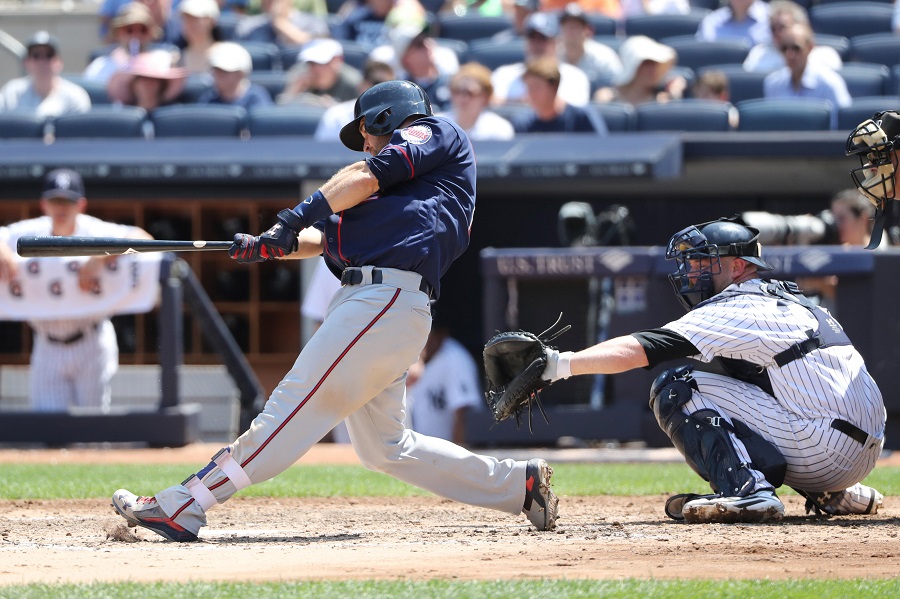 On the season as a whole, Minnesota owns a 2-4 record and a -8 run differential against Joe Girardi’s squad. They did take the series at Target Field, but were swept on the road in September. A better road team over the full slate of games however, this group isn’t afraid to win anywhere. Without a full series, and realistically in a situation that benefits them, Minnesota will have to capitalize early and often to pull the upset. Here are a few areas for them to key on: Get to Severino- An All-Star in 2017, Luis Severino has had nothing short of an incredible year. With a 2.98 ERA and a 10.7 K/9, he’s among the best young pitchers in the game. Therein lies an opportunity as well. At 23 years old, a one-game Wild Card will be the biggest stage the youngster has ever pitched on. Going against Minnesota on September 20, he may have begun to tip his hand. Lit up for three runs on five hits in just 3.0 IP, it was his second shortest outing of the year. Across 71 pitches, he threw 35 fastballs, 28 sliders, and 8 changeups. With velocity being his game, Twins hitters were able to sit fastball, and tee off on the pitch. He didn’t give up much real hard contact, but Twins hitters were able to get decent launch angles on most of the balls they put in play. Knowing what’s behind him as far as Yankee arms go, working Severino and jumping out to an early lead is going to be a must. Score early and often- When Minnesota took the series from New York in Minnesota, it was on the backs of 4-2 and 6-1 victories. Both of those games saw the Twins score first, and neither of them ended up being a grind-it-out effort. While a one game situation allows teams to pull out all of the stops, turning it into a barnburner doesn’t favor Minnesota. On the year, Minnesota has scored the fifth most runs in MLB, and the Yankees trail only the Houston Astros. Playing for one run in any inning, especially early, is going to have the Twins beating themselves. With just 27 outs at their disposal, Paul Molitor will have to do everything he can to turn away from bunting and micro-managing the game. Realistically, the hometown nine don’t have the staying power that the Yankees do, and New York can get back into a game in a hurry (ask Bartolo Colon). Getting chunk innings, and continuing to add on will be a must for a victory. Control the pace- In the recent series with the Yankees, battery mates Ervin Santana and Jason Castro allowed New York to have their way on the bases. Knowing this same dup will be on the mound, expect Girardi to exploit whatever he saw that first go-around. Allowing New York runners to swipe extra bases is one issue, but the Twins will need to control the pace in general. The Yankees are one of the slowest playing teams in all of baseball. Being on the road already hurts momentum, but Minnesota will need to do what they can to harbor as much of it as possible. Strong defense and good at-bats can go a long way toward eventual run production. Play the percentages- Yes, the Yankees bullpen is significantly better than what the Twins have at their disposal. Minnesota will need to do what they can to avoid allowing that to make a difference. That being said, Molitor can use his best relievers to exploit Yankees hitters. There’s power up and down the New York lineup, but there is also plenty of strikeout potential. Using arms like Taylor Rogers, Ryan Pressly, Trevor Hildenberger, Alan Busenitz and Matt Belisle, Molitor should focus on putting opposing hitters in situations he wants them in. While not a traditional usage of a reliever, getting single outs at a time should be the goal. If there are opportunities that lend themselves to easier avenues in generating outs, take them. Over the course of a full season, a boatload of pitching changes is never going to be a welcome reality. Given the situation however, pulling out all of the stops is a must. Ideally, Ervin Santana throws a complete game shutout, but if and when he doesn’t, don’t be afraid to have an early hook. Entering Yankee Stadium, the Twins are playing with house money. This collection was not supposed to be here, and they won’t be favored at any point from here on out. While you can embrace the underdog narrative, the reality is that this group has the ability to make waves. They’ve shown that throughout the regular season, and whether it be a one-game playoff with the Yankees, or a full series with the Indians, any opponent welcoming this contingent with open arms is opening themselves up for disappointment.
 -
In April, no one expected the Minnesota Twins to be here. Even the loftiest of expectations had this club somewhere around 80 wins and simply keeping things interesting. On September 27, 2017 however, the Twins punched their ticket to the Postseason. Reflecting on that, and the season that has been, only invokes a certain level of awe. Coming off 103 losses, the Twins are the first team ever to go from losing 100 or more games only to make the playoffs the following season. That means, not only did the organization add the number one overall pick in Royce Lewis this year, but they've also played meaningful baseball for the entirety of the schedule. While this group was expected to make waves, the thought was that 2018 looked like the opportune time for the window to open. Don't tell guys like Byron Buxton, Jorge Polanco, or Eddie Rosario that they weren't supposed to be here yet however. That trio had went through ups and downs this year, eventually leading to breakout seasons, and ignited the bats on any given night. Joe Mauer wasn't supposed to flash like his old self, and there were questions as to whether or not Brian Dozier would even be in Minnesota this season. Suggesting everything happens for a reason is about as simplistic as it gets. For now though, it works. On Tuesday October 3, Paul Molitor will field a playoff team for Minnesota. That will be the first time the Twins organization can say that since October 9, 2010. While they'll have a monumental task ahead of them, knocking off the Yankees on the road, the culmination of all the excitement suggest we've made it. The appointment TV, tense at bats, and champagne popping have all been the highlights of the last month or so in Twins Territory. Count the Twins out against the mighty Yankees if you must, but I can assure you this group doesn't care about narratives. Youth or veterans, these guys could care less about what the Twins of yesteryear carved out. They'll go into New York with more than a fighting chance, and in a one game scenario, anything is bound to happen. For more from Off The Baggy, click here. Follow @tlschwerz
-
It would be beyond silly to suggest that the Minnesota Twins lineup is better with Miguel Sano not in it. However, since the hulking third basemen last played on August 19, Minnesota has actually seen an increase in run production. Paul Molitor's club has risen to postseason play without one of their best players, and it's interesting to dive into how that happened. On August 19, the Twins were averaging 4.67 runs per game (good enough for 17th in MLB). Fast forward to today, and Minnesota is 4th in baseball averaging 5.08 runs per game. In the 35 games since August 19, they've scored double-digit runs on 10 different occasions. In the month of September alone, despite being just two games over .500, they've posted a +41 run differential. In other words, the Twins have been ambushing opposing pitchers for over a month now. When in the lineup, Miguel Sano generally he's batted 3rd or 4th. Since he's been out, that role has been given to a group consisting of Byron Buxton, Jorge Polanco, Eduardo Escobar, and Eddie Rosario. While none of those players are the home run threat that Sano is, they've each shouldered the load as an integral run producing fixture for the Twins. Sano's season will end with 111 games played. He has a .267/.365/.870 slash line. A three true outcomes player, he's walked, struck out, or homered in 60.6% of his plate appearances. While the home run numbers increased marginally from 2016, his strikeout rate has jumped off the page from his 80 game debut in 2015. If we're looking for something to point to as reason for the Twins additional run production, that could be it. To date, Sano owns a 35.8% strikeout rate. The guys who've filled in for him own totals of 29.2% (Buxton), 14.6% (Polanco), 19.5% (Escobar), and 17.8% (Rosario). Even the highest mark of the group is more than a 5% decrease from where Sano was at, and it all points towards more balls being put in play. Despite not having the same power numbers, run production has been aided by contact rates that surpass Sano's. Again, none of this is to suggest the Twins are better off without Sano in their lineup. While the Minnesota third basemen has been better this year than in 2016, trending more towards his 2015 debut would be ideal. In 80 games back in 2015, Sano drew 53 walks while striking out just 119 times. In 2017, he needed 111 games to draw 54 walks, but struck out 170 times. His contact rate is actually up (62.4%) from 2015 (60.9%), but the swinging strike rate has jumped to a career worst 18.1%. Going into the postseason, it's probably not realistic to expect any sort of a contribution from the slugger. Had his leg injury healed to the point of him being able to take at bats, a pinch hit scenario could be interesting, and pose a problem for opposing pitchers. As things stand however, he'll be unavailable, and the Twins will continue to turn to a group of non-traditional middle-of-the-order hitters. It shouldn't be overlooked that the fill-ins have flashed power of their own. Rosario may hit 30 homers, Escobar has 20, Buxton is at 16, and Polanco has added 12 of his own. Instead of being power, a free base, or nothing however, the group has made opposing pitchers attack the heart of the Twins lineup differently. Over the past month, it's worked better than anyone could've imagined, and Minnesota is going to have a postseason berth to show for it. When Paul Molitor takes this group to Yankee Stadium on Tuesday, he won't have his club's version of Miguel Sano in the lineup. That being said, if a New York pitcher thinks they're getting a break with the Minnesota 3-4-5 trio, they'll be sadly mistaken. For more from Off The Baggy, click here. Follow @tlschwerz
-
With just a few games left in the 2017 Major League Baseball season, the Minnesota Twins fate is all but decided. Paul Molitor's group is going to represent the AL Central in the Wild Card game, and it appears they'll take on the Evil Empire of the New York Yankees at Yankee Stadium. Knowing this organization is coming off 103 losses a year ago, it's somewhat astounding to look at how we arrived here. Not needing too much of a deep dive into the analytical side of things, this Twins club has plenty of eye-popping numbers at its disposal. Whether looking at snapshots of the season that has been, or taking a top down view from the entire 162, it's hard not to be impressed. Here's a handful of numbers that will threaten the safety of your jaw: 82 wins (and counting)- Coming off 103 losses, the Twins already have a turnaround of 23 games. That's tied for the best turnaround in club history (a 1965 team that lost in the World Series), and is almost certainly a number that will be added to across the final six games of the year. With an over/under set in Vegas at 74.5 prior to the season, Minnesota surpassed that mark with 18 games to spare. +96 run differential- Through August and September (up until the 25th), Minnesota has completely flipped the script in the run scoring department. At a -72 run differential on August 1st, the Twins have ripped off two of their best hitting months of the year. Outscoring opponents by nearly 100 runs across their last 53 games, the club now owns a Pythagorean W/L that sits at 80-76 (a mark unfathomable even a few weeks ago). 92.1%- The total jump in percentage that the Minnesota Twins playoff odds have taken since August 1st. Forced to decide their fate prior to the trade deadline, the Twins had just a 5.6% chance on July 31st. At 50-53, they were 4.5 games back in the AL Wild Card. In needing to make a decision, the club flipped closer Brandon Kintzler and rental starter Jaime Garcia, for some solid future pieces. Today their playoff odds rest at 97.7%. 199 home runs- With their next longball, the Twins will surpass the 200 HR plateau. Having done so in back-to-back seasons, they'll have accomplished that feat for the first time since the 1963/64 seasons. As of August 29, they were on pace for just 197. Right now, four players have at least 20 homers, which is the first time Minnesota has reached that mark since 2009. If Max Kepler can add one more, the Twins will have five 20 HR players for the first time since 1986. 96.4% Stolen Base efficiency- Byron Buxton has stolen 27 of the 28 bases he's attempted to swipe this year. The one in which he was thrown out, he overslid the base. At the time of his 24th steal, I checked into his efficiency. Since 1946, 1,483 players had stolen at least 24 bases in a season. Only five had been thrown out just once. Now 27 of 28, that group has gotten even smaller. Multi-position Gold Glove Winner- At the conclusion of 2017, Joe Mauer will look to join Placido Polanco and Darin Erstad as the only players to win Gold Glove awards at multiple positions. He'll be the first to do so at catcher and first base. Currently, Mauer ranks 1st among AL first basemen in UZR, UZR/150, and RngR. His 5 DRS checks in third. While teammate Byron Buxton is a guarantee to win the Gold Glove in CF, it would be a major upset if Mauer didn't take the award at 1B. 24 DRS- In 2017, Buxton's current 24 defensive runs saved are the highest number by any Twins outfielder since tracking began in the early 2000s. Denard Span posted a 19 DRS mark in 2012, and Torii Hunter's high water mark was 18 DRS in 2004. Despite scuffling at the plate, Buxton has been a game changer all season in the Minnesota outfield. Five- That's the amount of regular position players that the Twins have in their every day lineup age 25 and younger. Over half of their regular order has yet to reach a level where they would be considered and established big league veteran. Jose Berrios and Adalberto Mejia fall into this category on the pitching side. With prime's still in the future, there's plenty of reason to believe we've yet to see the best of what's to come. No matter how 2017 ends, and how far into October this club gets, looking back on what's been a fun year should provide plenty of excitement for what's ahead. Meaningful baseball was played for virtually the entire 162 game slate, and down the stretch, Minnesota has been appointment viewing. This club is trending in an upward direction, and among a division that has plenty of holes, that should put the rest of the league on notice. For more from Off The Baggy, click here. Follow @tlschwerz
-
Leaving New York, the Minnesota Twins likely couldn’t get on the plane out of town soon enough. Being outscored by 12 runs over three games, it was relatively apparent that the hometown nine was overmatched. What was also clear to see however, is that this current group is capable of putting the pressure on, and that remains a dangerous combination going forward.With just a handful of games left in the 2017 Major League Baseball season, the playoff race yet to be decided has come down to the Twins and the Los Angeles Angels. Despite the slimmest of margins (1.5 games to be exact), Minnesota has a more favorable path to postseason baseball. With seven of their final 10 games coming against the lowly Detroit Tigers, it’s time for them to get fat while the eatin’ is good. That being said, no amount of late season run is going to cover up some relatively glaring issues. In New York, Paul Molitor sent Ervin Santana and Jose Berrios to the mound for games one and two of the series. The former pitched admirably, but the lineup wasn’t able to muster any run support. The latter struggled with command and ultimately left too much of a burden on the the team at end of the game. Behind those two arms though, there’s an incredible amount of unknown. Whether it be relying on the emergence of Kyle Gibson, or resting on hope with Adalberto Mejia or Bartolo Colon, the Twins starters still leave plenty to be desired. Despite getting up 3-0 early on in the final game of the Yankees series, there was a feeling of when, and not if, the Bronx Bombers would climb back into it. Knowing Colon’s deception would be quickly taxed, and the bullpen would likely be overexposed, it didn’t take long for the Yankees to respond, and ultimately hang a 12-run effort on Minnesota. While the Twins came out firing against Yankees ace Luis Severino, their greatest flaw shined brightly, and allowed for a pretty stress- free result for Joe Girardi’s squad. At this point in the season, there are many more known commodities than unknown. The Twins can score runs, and are currently third in baseball (only behind the Indians in the AL) since the All-Star break. Those runs tend to come in bunches however, and there’s been more than a few games in which the bats have gone cold. Now being carried both by veterans (Dozier and Mauer) as well as youth (Polanco, Buxton and Rosario), the Minnesota lineup looks more complete than it has at any point in 2017. Even with that notion however, nightly results are relatively unpredictable from this group. It seems Miguel Sano will not be trotting on to the field at any point soon, and there isn’t any sort of reprieve on the mound. For a group that consistently relies on a starter eating up quality innings, there aren’t many arms for Molitor to hang his hat on. Knowing the bullpen has been better (13th in MLB since the break) is a welcomed truth, but they still are susceptible to being overexposed. What we have in front of us is exactly as titled, a team that remains flawed but also fearsome. Yes, Minnesota could desperately use a thumper bat, another arm or two, and their best power hitter. Over the course of a 162 game season, those deficiencies rear their head a lot more often. In the snapshot of a one game playoff, five game series, or seven game series, this club has the ability to do some damage. It’d be foolish to expect this band of misfits to make a deep playoff run. However, in the postseason, the mantra truly becomes one game at a time. There’s still work to be done prior to getting in, and there will be a treacherous road no matter how far they advance, but as flawed as they are, it’s also apparent fearlessness is something inherent by this group. When you’re at a point where nothing else can be done, there’s no reason not to throw haymakers and hope something lands. With more than a few capable bats, and a handful of plus arms, Paul Molitor’s club has the makings of a group with a narrative yet to be written. Nowhere in the immediate future will the Twins find themselves in an enviable position, but that’s been the case for the majority of the year, so why not keep it going? Click here to view the article
-
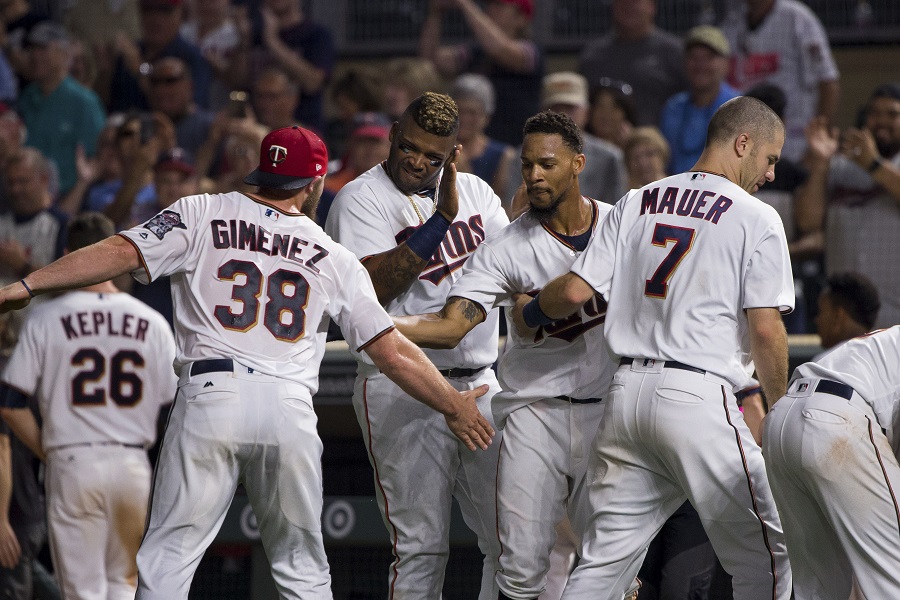 With just a handful of games left in the 2017 Major League Baseball season, the playoff race yet to be decided has come down to the Twins and the Los Angeles Angels. Despite the slimmest of margins (1.5 games to be exact), Minnesota has a more favorable path to postseason baseball. With seven of their final 10 games coming against the lowly Detroit Tigers, it’s time for them to get fat while the eatin’ is good. That being said, no amount of late season run is going to cover up some relatively glaring issues. In New York, Paul Molitor sent Ervin Santana and Jose Berrios to the mound for games one and two of the series. The former pitched admirably, but the lineup wasn’t able to muster any run support. The latter struggled with command and ultimately left too much of a burden on the the team at end of the game. Behind those two arms though, there’s an incredible amount of unknown. Whether it be relying on the emergence of Kyle Gibson, or resting on hope with Adalberto Mejia or Bartolo Colon, the Twins starters still leave plenty to be desired. Despite getting up 3-0 early on in the final game of the Yankees series, there was a feeling of when, and not if, the Bronx Bombers would climb back into it. Knowing Colon’s deception would be quickly taxed, and the bullpen would likely be overexposed, it didn’t take long for the Yankees to respond, and ultimately hang a 12-run effort on Minnesota. While the Twins came out firing against Yankees ace Luis Severino, their greatest flaw shined brightly, and allowed for a pretty stress- free result for Joe Girardi’s squad. At this point in the season, there are many more known commodities than unknown. The Twins can score runs, and are currently third in baseball (only behind the Indians in the AL) since the All-Star break. Those runs tend to come in bunches however, and there’s been more than a few games in which the bats have gone cold. Now being carried both by veterans (Dozier and Mauer) as well as youth (Polanco, Buxton and Rosario), the Minnesota lineup looks more complete than it has at any point in 2017. Even with that notion however, nightly results are relatively unpredictable from this group. It seems Miguel Sano will not be trotting on to the field at any point soon, and there isn’t any sort of reprieve on the mound. For a group that consistently relies on a starter eating up quality innings, there aren’t many arms for Molitor to hang his hat on. Knowing the bullpen has been better (13th in MLB since the break) is a welcomed truth, but they still are susceptible to being overexposed. What we have in front of us is exactly as titled, a team that remains flawed but also fearsome. Yes, Minnesota could desperately use a thumper bat, another arm or two, and their best power hitter. Over the course of a 162 game season, those deficiencies rear their head a lot more often. In the snapshot of a one game playoff, five game series, or seven game series, this club has the ability to do some damage. It’d be foolish to expect this band of misfits to make a deep playoff run. However, in the postseason, the mantra truly becomes one game at a time. There’s still work to be done prior to getting in, and there will be a treacherous road no matter how far they advance, but as flawed as they are, it’s also apparent fearlessness is something inherent by this group. When you’re at a point where nothing else can be done, there’s no reason not to throw haymakers and hope something lands. With more than a few capable bats, and a handful of plus arms, Paul Molitor’s club has the makings of a group with a narrative yet to be written. Nowhere in the immediate future will the Twins find themselves in an enviable position, but that’s been the case for the majority of the year, so why not keep it going?
 -
Coming into 2017, the Minnesota Twins were entering uncharted waters. A new front office was at the helm, and the captain of the dugout was managing for his life. Now, as the season rolls towards a conclusion, lots has changed but plenty still remains unknown. Without a new contract in place for 2018, it's time to begin wondering about the future of Paul Molitor and the Minnesota Twins. Personally, I'm inclined to suggest that Derek Falvey and Thad Levine move on. While Molitor has been an integral part of the organization for many years, his value as a manager has never seemed anything but average at best. At times, it's seemed to be a struggle for him to relate to youth (which is the current lifeblood of the 25 man), and in game managerial decisions have been passable at best. Going forward, I'd hardly be disappointed in seeing the new regime bring in their guy, with the hopes of them helping the organization reach new heights. Taking a step back however, and viewing things from what may (or is likely to) happen, who heads the Twins active roster in 2018 is a bit more confusing. There's plenty of reason to believe that Molitor will garner (and maybe even win) a handful Manager of the Year votes. The expectation from a national sense was that the Twins should be terrible. I'd argue that was misguided, and 2016 was more a reflection of the volatility that is young players. Minnesota wasn't expected to be a playoff team in 2017, but even a 90 loss season seemed laughable from the outset. So, with Molitor's team positioned for a serious run at the 2nd Wild Card, it's fair to include him among the best manager's in the American League for 2017. He'll face stiff competition for the award in the form of both Terry Francona and A.J. Hinch. The Angels Mike Scioscia should get consideration as well, given that roster probably had even less talent than the Twins, and they have found a way to stay afloat as well. Whether the Twins skipper takes home hardware or not, the inclusion among the conversation only clouds the future further. Let's operate under the assumption that Minnesota makes the playoffs and Molitor wins the award. In this scenario, the Twins manager would generate what should be quantified as two victories. In the front office though, it will be interesting to see what level of weight that holds. Recently fired Doug Mientkiewicz was produced winners throughout the minor leagues, and the message there screams of a guy that didn't fit the direction of the club going forward. At the highest level, it's probably a bit more difficult to can a manager that would have accomplished so much. Suggesting it's out of the realm of possibility isn't something I'm prepared to do, but you'd have to imagine the Twins brass better be well prepared for an explanation. Should we assume Molitor is retained, whether on a single-year deal or a multi-year extension, there's a few conversations I think Falvey and Levine would be inclined to have with their skipper. Focusing on those of integral importance, here' s a brief list: Bullpen usage- Over the course of his tenure as Twins manager, Molitor has made more than his fair share of head scratching relief decisions. Whether playing into odd splits, relying on a guy too far, or over exposing a specific arm, there's plenty of room for growth here. It may be micromanaging to suggest a checks and balances system, but Paul clearly could use some prodding in more than a handful of relief situations. Bunt deployment- Specifically the sacrifice bunt. Over the course of 2017, bunting has become more prevalent for the Twins than at any point I can recall previously. Whether having your cleanup hitter (regardless of who it is) drop down a sacrifice, or living by it in general, it's run way too rampant among a strong lineup. Minnesota has shown an ability to score runs, and a forward thinking front office can't be please with the general willingness to surrender free outs. Relation to youth- This has been somewhat curbed by the additions of help to his coaching staff. At times in his first two seasons, it seemed Molitor was quick to wash his hands of a player. When struggles arose for a young player, they were quickly jettisoned back to the farm, and growth at the highest level was rarely achieved. Knowing that it's on the backs of a youth movement that Minnesota regains its prominence among the AL Central, Molitor will have to commit to uplifting and utilizing players without a significant track record. Adaptation of numbers- Admittedly, I have no idea what level of value sabermetrics play in a game by game basis for Molitor or the Twins. That said, it's become apparent that Falvey and Levine put a great deal of stock in numbers. Minnesota is committing to winning off the field by developing a greater Baseball Analytics department, and the goal would seemingly be to implement those ideas on the field. Being an elder statesmen of the game, that's something that Molitor will have to be open to, and utilize. At the end of the day, I'd suggest with near certainty that missing the playoffs results in Molitor being let go. A Wild Card exit probably also gets him fired, and even a Divisional Series defeat could see him walking through the door. Things become a bit more complicated if he's given the award (though I think regardless he's behind Francona), but as we saw with Mientkiewicz, the new front office has a direct plan. It may be nice to see a fresh face, maybe someone in the vein of Sandy Alomar Jr., but there's little to suggest that a drastic difference follows a change as well. No matter what the Twins do for their skipper in 2018, I'd imagine there will be more of a front office reflection on the field, and that's something I can get behind. For more from Off The Baggy, click here. Follow @tlschwerz
-
Buxton Showing Snapshot Of Greatness
Ted Schwerzler commented on Ted Schwerzler 's blog entry in Off The Baggy
I don't ever see Buxton being more than a 25 HR guy, but he should be able to surpass 40 doubles over a full season. Regardless, it's pretty exciting to look at. -
On September 18, 2017 Byron Buxton owns a .258/.320/.430 slash line for the Minnesota Twins. While there's little to write home about a .749 OPS, it's well past time to take note of what the hometown squad's centerfielder is doing. Despite a September surge in 2016, we haven't seen anything like this from Buxton before, and he's already vaulting himself into the conversation of the best the Twins have ever seen. Looking at his 2017 as a whole, it's easily apparent that everything has been watered down due to such a slow start. What's less apparent without digging under the hood, is just how incredible he's been since. Rather than getting words in the way, let's allow the numbers to speak for themselves: Since May 14: 99 G .284/.341/.481 Since the All Star Break (July 14): 46 G .323/.369/.622 Since August 6th: 40 G .333/.375/.653 What we see here, is an incredible surge over a relatively decent sample size. Extrapolating Buxton's numbers from the All Star Break over 162 games, we arrive at 21 doubles, 18 triples, 39 homers, 106 RBI, and 35 stolen bases. In other words, Buxton sustaining a 46 game second half over the course of a full season has his walking away with an MVP award (and that's even before considering his defense). While it's fair to still hold out for a little more of a sustained sample, this isn't simply a replication of a September 2016 performance against watered down competition. Buxton has been raking against good pitchers, across multiple scenarios, for multiple months. Over the course of 2017, working with new hitting coach James Rowson, the Twins centerfielder rebuilt his swing at the big league level while never taking a trip back to Triple-A. The long and short of Buxton's transformation has been nothing short of incredible. Now reaping the fruits of his labor, he's flashing all of the tools that made him the top prospect in all of baseball. It wouldn't be fair to solely focus in on Buxton's offense, even if that's where the most growth has come from. In the field, he's all but ran away with the American League CF Gold Glove award. Leading all fielders not named Mookie Betts in DRS, Buxton has bailed pitchers out with both his arm strength and his range. Looking at Baseball Savant (Statcast), Buxton still tops the charts across MLB in 4 star outs. With a catch probability registering between 26-50%, Buxton has had 27 opportunities, converting 26 of them into outs. Things get even more nutty as you look at the newly introduced Outs Above Average metric. With 24 OAA, Buxton's individual total comes in ahead of every single team in the big leagues, with the closest number being the Rays 20 OAA. On balls Buxton can make a play on, he's been deemed to have an 86% expected catch rate, and in turn, has owned a 92% actual catch rate. When balls are put in Buxton's vicinity in the Twins outfield, he's added a 6% catch probability. Over the course of 2017, that in part, goes to illustrate why Twins pitchers have seen an uptick in their own numbers. Simply put, Buxton has been the premier outfielder in all of Major League Baseball for virtually the entirety of 2017. When he's in centerfield, it's impossible not to see him as a game changing asset. What's changed, is that since the middle of the year, he's also become an incredible threat at the plate (and in turn on the basepaths). Instead of simply being a Gold Glove winner on an annual basis, this version of Byron Buxton is in the Most Valuable Player realm. At just 23 years old, there's probably more to Buxton than we've seen thus far. For everyone else across the league, that's a scary thought to wrestle with. For those in Twins Territory, the only appropriate result is Buck Yeah! For more from Off The Baggy, click here. Follow @tlschwerz
-
The Twins got some really nice years from guys that came out of nowhere (Turley) and players returning from injury (Thorpe). My leaning towards Gonsalves was really heavily reliant on his growth with command. He's going to need that at the next level, and a stronger grasp of it this year was huge.
-
For years now, the biggest area of necessity the Minnesota Twins have faced has been on the mound. Specifically, the pitcher starting games for the hometown nine. The minor league system has produced a good amount of offensive weapons, but the tide is beginning to turn and the system is beginning to bear pitching fruit. Focusing on starters, we now hand out the 2017 Minnesota Twins Minor League Starting Pitcher of the Year award.Before we get to the Top Five, and the eventual winner, it's worth noting a few honorable mentions. Across the organization, Minnesota saw lots of winning in 2017, and it was on the back of good starting pitching that many of those victories were earned. Here are some of those candidates just missing the final cut: Honorable Mention Nik Turley Chattanooga Lookouts/Rochester Red Wings 2.05 ERA, 92.0 IP (13 starts), 12.1 K/9, 2.8 BB/9, 1.011 WHIPLewis Thorpe Fort Myers Miracle/Chattanooga Lookouts 2.93 ERA, 83.0 IP (16 starts), 9.9 K/9, 3.6 BB/9, 1.205 WHIPDereck Rodriguez Fort Myers Miracle/Chattanooga Lookouts 3.27 ERA, 143.1 IP (24 starts), 7.6 K/9, 2.4 BB/9, 1.193 WHIPDavid Hurlbut Rochester Red Wings 3.44 ERA, 130.2 IP (22 starts), 7.1 K/9, 2.1 BB/9, 1.393 WHIPTyler Wells GCL Twins/Cedar Rapids Kernels 3.03 ERA, 89.0 IP (15 starts), 10.9 K/9, 2.7 BB/9, 1.124 WHIPStarting Pitcher of the Year Here are the top five picks for the 2017 Minnesota Twins Minor League Starting Pitcher of the Year. #5- Fernando Romero Chattanooga Lookouts 3.53 ERA, 125.0 IP (23 starts), 8.6 K/9, 3.2 BB/9, 1.352 WHIP Now two years removed from the surgery taking away his 2015 campaign, Romero has become the darling of many prospect rankings. As a pitcher with starting stamina, and velocity that can push towards triple digits, he's often regarded as the Twins best chance at a potential staff ace. Reaching Double-A in 2017, he often overmatched opposing hitters, and found himself racking up strikeouts. With a previous career high of just 90.1 IP in a single season, 2017 wore on him a bit as his innings climbed north of 120. Continuing to distance himself from his setback season, Romero will enter 2018 as among the most polished arms in the Twins system, and he should have a shot at impacting the big league club in 2018. #4- Sean Poppen Cedar Rapids Kernels/Fort Myers Miracle 3.17 ERA, 139.0 IP (25 starts), 7.9 K/9, 1.6 BB/9, 1.137 WHIP Poppen was a 19th-round pick out of Harvard during the 2016 MLB Draft. After finishing 2016 in Cedar Rapids, he again began the year at the Single-A level. Poppen quickly established himself as being among the Kernels best options, and his 14 starts to the tune of a 2.90 ERA helped to set the tone for a season that would end in the playoffs. Making 11 starts at High-A for the Miracle, Poppen saw a bit of a numbers decrease across the board, but most importantly, he continued to flash strong command. While he may not blow by hitters at the upper levels, he's already a prospect who has shown a very strong ability to pitch, and not just throw. Look for Poppen to quickly establish himself in the Florida State League in 2018, with a likely promotion to Chattanooga coming at some point. #3- Aaron Slegers Rochester Red Wings 3.40 ERA, 148.1 IP (24 starts), 7.2 K/9, 1.8 BB/9, 1.234 WHIP Posting nearly an identical ERA in 2017 as in his 2016 season at Chattanooga (3.41), Slegers actually got even better at the highest minor league rung of the organization. Not only did he pick up nearly an extra strikeout per nine innings, but he also cut his walk rate down to a near-career best mark. The fifth-round pick in the 2013 draft from Indiana made his MLB debut with the Twins in 2017, and turned in an impressive outing in that game. While he's yet to establish himself at the big league level, he's shown that he should continue to remain in the conversation for major league time going forward. A 15-4 record with Rochester is hard to overlook, and Slegers should enter 2018 with an outside chance to compete for a rotation spot with the Twins. #2- Clark Beeker Cedar Rapids Kernels/Fort Myers Miracle 2.63 ERA, 143.2 IP (23 starts), 5.8 K/9, 1.4 BB/9, 1.058 WHIP Taken by the Twins in the 33rd round of the 2016 MLB Draft out of Steph Curry U (Davidson College), Beeker is nothing short of a glowing success. Not an incredibly hard thrower, he's utilized an exceptional level of command to find success in the early stages of his career. Earning a late season promotion to the Florida State League, Beeker got his first taste of High-A ball and was a part of a playoff-bound Miracle squad. With the Kernels, his 2.03 ERA dazzled, and his 128.2 IP breaks down to roughly 6.5 innings per start. The expectation should be that Beeker begins the 2018 season back with the Miracle, and a similar path of a late season promotion seems likely. As he climbs levels in the system, the Davidson alum will need to continue to rely on keeping hitters off balance and utilizing his pinpoint accuracy. Should a similar narrative continue to play out over the next couple of years, the Twins will surely have found themselves a diamond in the rough. #1- Stephen Gonsalves Chattanooga Lookouts/Rochester Red Wings 3.27 ERA, 110.0 IP (19 starts), 9.7 K/9, 2.5 BB/9, 1.136 WHIP Repeating as the Twins Minor League Starting Pitcher of the Year, Gonsalves edges the second-place vote getter by a single tally (24 to 23). If 2016 was a strong year for Gonsalves (and it was), it's hard to see a way that 2017 doesn't top it. Despite being at Double-A for the bulk of the year, and eventually reaching Triple-A, Gonsalves held his strikeout rate strong while drastically improving his walk rate. If there was an area of focus in 2017, it was limiting free passes. The 2.4 BB/9 across 15 starts for Chattanooga was a new career best. Having cracked multiple top 100 prospect lists coming into 2017, Gonsalves had emerged as a national name that had Twins fans salivating at the thought of inserting him into the big league rotation. He probably isn't going to generate the same buzz as other big name pitching prospects as velocity isn't his game. Sitting low to mid 90s, the 2013 fourth-round pick has the ability to work batters and push for a few extra miles per hour when needed. As he continues to replicate numbers at each level however, he's shown that the radar gun readings aren't the only thing indicative of a rotation mainstay. While there isn't much of a track record yet at Triple-A an extended stay doesn't seem entirely likely. His debut game for Rochester was a seven inning, two-run performance that saw him fan seven Norfolk batters while issuing zero walks. It's hard to see a scenario in which Gonsalves cracks Minnesota's rotation from the get go next spring, but he should have more than enough ability to prove himself at the next rung down. Expecting him to go into the season as Rochester's ace, the parent club should have more than just a spot start option when his name is finally called. Going into 2018, Gonsalves is going to be knocking on the door to Minnesota in short order. Assuming the big league club addresses starting pitching over the winter, there will be some depth to wade through. At this point however, Gonsalves has the track record that has him penciled in as a future rotation piece. Just barely 23 years-old, Gonsalves should continue to represent the Twins home- grown youth movement, and as we've seen, it's been a rather solid blueprint. It's hard to imagine Stephen as a three-time winner of this award a year from now, but that's only because it's likely he's no longer eligible. Despite being arguably the toughest thing to develop in a system, the Twins had more than a handful of strong candidates for Starting Pitcher of the Year in 2017. As the group continues to climb, grow, and succeed together, it will be exciting to see where each of them find his ceiling. Congratulations to each of the voter getters on a great 2017. The Ballots Votes came in from each of the Twins Daily minor league writers, making seven ballots in total. Striving for transparency, here is how each individual voted: Seth Stohs - 1) Aaron Slegers 2) Sean Poppen 3) Clark Beeker 4) Stephen Gonsalves 5) Dereck RodriguezJeremy Nygaard - 1) Nik Turley 2) Stephen Gonsalves 3) Lewis Thorpe 4) Tyler Wells 5) Lachlan WellsCody Christie - 1) Stephen Gonsalves 2) Clark Beeker 3) Aaron Slegers 4) Sean Poppen 5) Cody StashakTed Schwerzler - 1) Stephen Gonsalves 2) Fernando Romero 3) Clark Beeker 4) Aaron Slegers 5) Dereck RodriguezTom Froemming - 1) Stephen Gonsalves 2) Sean Poppen 3) Clark Beeker 4) Aaron Slegers 5) Fernando RomeroSteve Lein - 1) Clark Becker 2) Aaron Siegers 3) Stephen Gonsalves 4) Nik Turley 5) Sean PoppenEric Pleiss - 1) Clark Beeker 2) Aaron Slegers 3) Fernando Romero 4) David Hurlbut 5) Eduardo Del RosarioFeel free to discuss below in the comments. Share your ballot! Click here to view the article
-
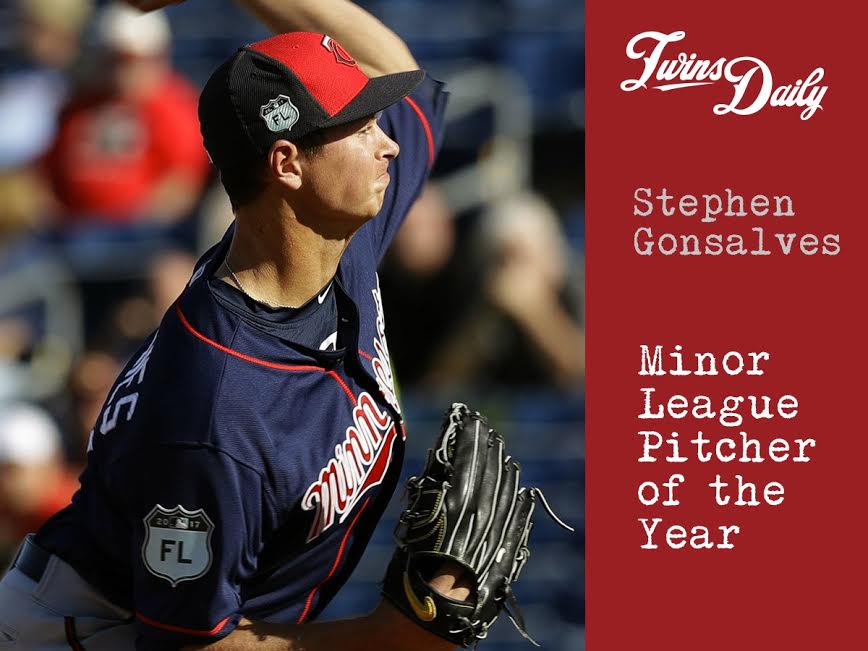 Before we get to the Top Five, and the eventual winner, it's worth noting a few honorable mentions. Across the organization, Minnesota saw lots of winning in 2017, and it was on the back of good starting pitching that many of those victories were earned. Here are some of those candidates just missing the final cut: Honorable Mention Nik Turley Chattanooga Lookouts/Rochester Red Wings 2.05 ERA, 92.0 IP (13 starts), 12.1 K/9, 2.8 BB/9, 1.011 WHIP Lewis Thorpe Fort Myers Miracle/Chattanooga Lookouts 2.93 ERA, 83.0 IP (16 starts), 9.9 K/9, 3.6 BB/9, 1.205 WHIP Dereck Rodriguez Fort Myers Miracle/Chattanooga Lookouts 3.27 ERA, 143.1 IP (24 starts), 7.6 K/9, 2.4 BB/9, 1.193 WHIP David Hurlbut Rochester Red Wings 3.44 ERA, 130.2 IP (22 starts), 7.1 K/9, 2.1 BB/9, 1.393 WHIP Tyler Wells GCL Twins/Cedar Rapids Kernels 3.03 ERA, 89.0 IP (15 starts), 10.9 K/9, 2.7 BB/9, 1.124 WHIP Starting Pitcher of the Year Here are the top five picks for the 2017 Minnesota Twins Minor League Starting Pitcher of the Year. #5- Fernando Romero Chattanooga Lookouts 3.53 ERA, 125.0 IP (23 starts), 8.6 K/9, 3.2 BB/9, 1.352 WHIP Now two years removed from the surgery taking away his 2015 campaign, Romero has become the darling of many prospect rankings. As a pitcher with starting stamina, and velocity that can push towards triple digits, he's often regarded as the Twins best chance at a potential staff ace. Reaching Double-A in 2017, he often overmatched opposing hitters, and found himself racking up strikeouts. With a previous career high of just 90.1 IP in a single season, 2017 wore on him a bit as his innings climbed north of 120. Continuing to distance himself from his setback season, Romero will enter 2018 as among the most polished arms in the Twins system, and he should have a shot at impacting the big league club in 2018. #4- Sean Poppen Cedar Rapids Kernels/Fort Myers Miracle 3.17 ERA, 139.0 IP (25 starts), 7.9 K/9, 1.6 BB/9, 1.137 WHIP Poppen was a 19th-round pick out of Harvard during the 2016 MLB Draft. After finishing 2016 in Cedar Rapids, he again began the year at the Single-A level. Poppen quickly established himself as being among the Kernels best options, and his 14 starts to the tune of a 2.90 ERA helped to set the tone for a season that would end in the playoffs. Making 11 starts at High-A for the Miracle, Poppen saw a bit of a numbers decrease across the board, but most importantly, he continued to flash strong command. While he may not blow by hitters at the upper levels, he's already a prospect who has shown a very strong ability to pitch, and not just throw. Look for Poppen to quickly establish himself in the Florida State League in 2018, with a likely promotion to Chattanooga coming at some point. #3- Aaron Slegers Rochester Red Wings 3.40 ERA, 148.1 IP (24 starts), 7.2 K/9, 1.8 BB/9, 1.234 WHIP Posting nearly an identical ERA in 2017 as in his 2016 season at Chattanooga (3.41), Slegers actually got even better at the highest minor league rung of the organization. Not only did he pick up nearly an extra strikeout per nine innings, but he also cut his walk rate down to a near-career best mark. The fifth-round pick in the 2013 draft from Indiana made his MLB debut with the Twins in 2017, and turned in an impressive outing in that game. While he's yet to establish himself at the big league level, he's shown that he should continue to remain in the conversation for major league time going forward. A 15-4 record with Rochester is hard to overlook, and Slegers should enter 2018 with an outside chance to compete for a rotation spot with the Twins. #2- Clark Beeker Cedar Rapids Kernels/Fort Myers Miracle 2.63 ERA, 143.2 IP (23 starts), 5.8 K/9, 1.4 BB/9, 1.058 WHIP Taken by the Twins in the 33rd round of the 2016 MLB Draft out of Steph Curry U (Davidson College), Beeker is nothing short of a glowing success. Not an incredibly hard thrower, he's utilized an exceptional level of command to find success in the early stages of his career. Earning a late season promotion to the Florida State League, Beeker got his first taste of High-A ball and was a part of a playoff-bound Miracle squad. With the Kernels, his 2.03 ERA dazzled, and his 128.2 IP breaks down to roughly 6.5 innings per start. The expectation should be that Beeker begins the 2018 season back with the Miracle, and a similar path of a late season promotion seems likely. As he climbs levels in the system, the Davidson alum will need to continue to rely on keeping hitters off balance and utilizing his pinpoint accuracy. Should a similar narrative continue to play out over the next couple of years, the Twins will surely have found themselves a diamond in the rough. #1- Stephen Gonsalves Chattanooga Lookouts/Rochester Red Wings 3.27 ERA, 110.0 IP (19 starts), 9.7 K/9, 2.5 BB/9, 1.136 WHIP Repeating as the Twins Minor League Starting Pitcher of the Year, Gonsalves edges the second-place vote getter by a single tally (24 to 23). If 2016 was a strong year for Gonsalves (and it was), it's hard to see a way that 2017 doesn't top it. Despite being at Double-A for the bulk of the year, and eventually reaching Triple-A, Gonsalves held his strikeout rate strong while drastically improving his walk rate. If there was an area of focus in 2017, it was limiting free passes. The 2.4 BB/9 across 15 starts for Chattanooga was a new career best. Having cracked multiple top 100 prospect lists coming into 2017, Gonsalves had emerged as a national name that had Twins fans salivating at the thought of inserting him into the big league rotation. He probably isn't going to generate the same buzz as other big name pitching prospects as velocity isn't his game. Sitting low to mid 90s, the 2013 fourth-round pick has the ability to work batters and push for a few extra miles per hour when needed. As he continues to replicate numbers at each level however, he's shown that the radar gun readings aren't the only thing indicative of a rotation mainstay. While there isn't much of a track record yet at Triple-A an extended stay doesn't seem entirely likely. His debut game for Rochester was a seven inning, two-run performance that saw him fan seven Norfolk batters while issuing zero walks. It's hard to see a scenario in which Gonsalves cracks Minnesota's rotation from the get go next spring, but he should have more than enough ability to prove himself at the next rung down. Expecting him to go into the season as Rochester's ace, the parent club should have more than just a spot start option when his name is finally called. Going into 2018, Gonsalves is going to be knocking on the door to Minnesota in short order. Assuming the big league club addresses starting pitching over the winter, there will be some depth to wade through. At this point however, Gonsalves has the track record that has him penciled in as a future rotation piece. Just barely 23 years-old, Gonsalves should continue to represent the Twins home- grown youth movement, and as we've seen, it's been a rather solid blueprint. It's hard to imagine Stephen as a three-time winner of this award a year from now, but that's only because it's likely he's no longer eligible. Despite being arguably the toughest thing to develop in a system, the Twins had more than a handful of strong candidates for Starting Pitcher of the Year in 2017. As the group continues to climb, grow, and succeed together, it will be exciting to see where each of them find his ceiling. Congratulations to each of the voter getters on a great 2017. The Ballots Votes came in from each of the Twins Daily minor league writers, making seven ballots in total. Striving for transparency, here is how each individual voted: Seth Stohs - 1) Aaron Slegers 2) Sean Poppen 3) Clark Beeker 4) Stephen Gonsalves 5) Dereck Rodriguez Jeremy Nygaard - 1) Nik Turley 2) Stephen Gonsalves 3) Lewis Thorpe 4) Tyler Wells 5) Lachlan Wells Cody Christie - 1) Stephen Gonsalves 2) Clark Beeker 3) Aaron Slegers 4) Sean Poppen 5) Cody Stashak Ted Schwerzler - 1) Stephen Gonsalves 2) Fernando Romero 3) Clark Beeker 4) Aaron Slegers 5) Dereck Rodriguez Tom Froemming - 1) Stephen Gonsalves 2) Sean Poppen 3) Clark Beeker 4) Aaron Slegers 5) Fernando Romero Steve Lein - 1) Clark Becker 2) Aaron Siegers 3) Stephen Gonsalves 4) Nik Turley 5) Sean Poppen Eric Pleiss - 1) Clark Beeker 2) Aaron Slegers 3) Fernando Romero 4) David Hurlbut 5) Eduardo Del Rosario Feel free to discuss below in the comments. Share your ballot!
 -
With just a handful of games left in the 2017 Major League Baseball season, the Minnesota Twins find themselves with a hold on the 2nd Wild Card spot. As of September 13, they have a 2 game lead over the Los Angeles Angels, and this is their race to lose. That means, in the matter of a few short weeks, they're staring at a matchup with the Bronx Bombers. Really though, is it all that scary? The way each of their schedules sets up, Minnesota finds themselves in a much more enviable position than the Angels down the stretch. With the assumption that the Wild Card lead only continues to grow, let's allow for the possibility to get ahead of ourselves. To kick off Postseason play, Paul Molitor's squad has a one-game playoff with Joe Girardi's Yankees. This isn't the Twins of the early 2000's, and many things have changed. Ron Gardenhire isn't in the dugout for Minnesota, and there's plenty of reasons to believe that this club can get the proverbial monkey off of their backs. With one series left against each other this season, the Twins currently hold the advantage over New York by a 2-1 margin with a +4 run differential. Pulling out all of the stops however, there's a few things we can look at. So, how does Minnesota stack up? On the bump, it's almost assuredly going to be Ervin Santana for the Twins. The Twins ace hasn't faced New York in 2017, with his last tilts against the Yankees coming in back-to-back outings a year ago. Split between home and the road, Santana posted 12.1 IP with a 2.19 ERA and a 6/2 K/BB in starts on June 19 and 25th. Looking at both of those lineups, only half remain in New York. With the emergence of players like Aaron Judge and Gary Sanchez, Santana will have some fresh faces to get used to. For Minnesota, the opposing pitcher is an interesting one. Girardi could go with the recently acquired Sonny Gray. He was the blockbuster deal this summer, and owns a 2.74 ERA across seven starts since swapping teams. It's 23 year-old Luis Severino that's been the Yankees best pitcher this year however, and his 2.96 ERA along with a 10.8 K/9 could be imposing against Twins hitters. In a one-game scenario, it probably makes sense to have whichever one isn't chosen to start, as an immediate piggy back option. Offensively, the Yankees have scored more runs than all major league teams not named the Houston Astros. However, the Twins don't find themselves far behind with a 7th best tally of 721 runs. Swatting the fourth most longballs in baseball, the Yankees have benefitted heavily from the big fly. Minnesota should clear the 200 plateau, but they are currently middle of the pack across the sport. New York does tend to strike out at a higher clip than the Twins, and the team .776 OPS is 5th in baseball in comparison to the Twins .770 mark (9th). While the Yankees do lead in virtually every category, the margin is slim, and Molitor's group should be far from out of their element. There's going to be two separating factors that should be evident in a one game scenario between these two clubs. The Yankees have a much deeper pitching stable, while the Twins have a defensive calling card significantly better than that of their foes. While Santana is capable of drawing the start, Minnesota has little room for error with a bullpen that offers little sure things in a winner take all format. The Twins will need to get up early, and protect their starter in what's generally assumed as a hitter's ballpark. New York can afford to lock down a lead, and even with the struggles of some big names lately, they have hurler after hurler that can jog in from the pen to snag three outs. Miscues will cost the Yankees, and a team with defensive limitations can be exploited by a surging Twins lineup. Interestingly enough, Minnesota will get a chance to see how things stack up soon before the Wild Card game takes place. With a series in the Bronx on September 18-20, the Twins will step into hostile territory for what amounts to a tune up. A lot in terms of momentum could be up for grabs, and a definitive series win could go a long ways towards a morale boost. Regardless of the venue (and the Twins have played better on the road for most of 2017), these two clubs check in incredibly close to one another. While the Yankees have more firepower over the course of a series scenario, one game leaves all of the theatrics up in the air. We've now gotten to experience a full season of meaningful baseball, and at least a handful of weeks following a playoff push. If it culminates in a one game playoff with Girardi's 25, the Twins should go in guns blazing. Overmatched in many of the earlier playoff series, the Twins don't find themselves in that scenario this time. Look for Molitor's group to put up a good showing, and the unlikely Twins could be making a push deeper into October. For more from Off The Baggy, click here. Follow @tlschwerz
-
Gibson Keeping Hitters Off Balance With Offspeed
Ted Schwerzler commented on Ted Schwerzler 's blog entry in Off The Baggy
Gibson could play in long relief as well. Santana, Berrios, Mejia, and Gibson still leave an opening as well. -
Gibson Keeping Hitters Off Balance With Offspeed
Ted Schwerzler posted a blog entry in Off The Baggy
Over the course of the 2017 Major League Baseball season, Kyle Gibson has been demoted to Triple-A, and experienced multiple periods of struggle at the big league level. Right now however, in the midst of a playoff race, he's been among the Twins most consistent starters. Diving deeper into the change, it doesn't appear anything more than a minor tweak was made. The results suggest that it may have made all of the difference. Forever, Gibson has been noted as a ground ball pitcher. Despite owning just a 50% ground ball rate for much of the year, Gibson is a sinkerballer that has always had more talk of his wormburners than action. That began to change over the course of his last eight starts though, and since July 22nd, the Twins have ran him out every fifth day feeling pretty good. Prior to July 22, Gibson had made 17 starts for the Twins. He owned a 6.29 ERA and was allowing a .920 OPS against. In that timespan, he'd posted just three quality starts, and was in general, being hit around the yard. On the 356 balls put in play, 25 of them (or 7%) were barreled. Roughly one in five fly balls left the yard, and his 16 homers allowed only helped to inflate already egregious numbers. Since that point, the Twins former top prospect has made eight starts to the tune of a 3.19 ERA. Allowing just a .682 OPS against, Gibson has tallied four straight quality starts, and hasn't given up more than three earned runs in any of those outings. When allowing contact, with 184 balls in play, he's given up just four barrels (2%). To get that kind of turnaround, essentially halving the numbers, there has to be a monumental shift right? Well, the answer is, not so much. Looking at Gibson's repertoire before and after July 22nd, not a whole lot has changed. He's still a sinkerballer first, and then turns to his two offspeed offerings. Throwing both a slider and changeup, it's on the heels of those pitches that opposing hitters are kept off balance. What's been integral for Gibson however, is a slight jump in usage for each. Early in the season, Gibson was throwing his fastball just under 60% of the time, while dishing up sliders about 16% and changeups right around 15%. Fast forward to today, and his last eight starts have him going with the fastball 55% of the time (at a slightly higher velocity), the slider almost 19%, and the changeup 17% of the time. In cutting out some of his fastball usage (and curveball as well), he's been able to throw offspeed pitches forcing batters to stay back. The results have translated to a hard hit rate down to 32% from 38% earlier in the year, but more importantly, a HR/FB rate cut from 20% to 9.4%. Gibson is generating ground balls 2% more often (53.1%), as well as giving up fly balls 5% less often. While keeping the ball in the yard, and giving his defense an opportunity, he's found success in utilizing one of the Twins greatest assets. Now, nothing says the Gibson has found a sure fire path to rest on his laurels. Opposing hitters have a BABIP that's only six points lower (.331) during this good stretch. That number still falls within a normal realm across the big leagues, and in general, leaves plenty of room for success to be had. For a guy that has just a 9% SwStr rate as well as a 15.8% strikeout rate, he's always going to need a push for balls in play that resemble routine outs. As the pitch mix continues to morph though, it seems the current structure is something that can work. Pitching coach Neil Allen is a big believer in the changeup, and there could have been some work done in getting Gibson to use it more often. The 17% usage rate would be the best single season mark since 2015, when he offered the pitch a career high 19.7% of the time. Maybe not so coincidentally, the Twins hurler relied heavily on his changeup and slider that season, en route to a career low 3.84 ERA. Now five years into his big league career, and 29 years old, Twins fans are probably through with hoping Gibson has found it. All along though, it's seemed like if he could just hone this or that small thing in, effectiveness was sure to follow. As Minnesota eyes the Postseason, a steadying rotation presence was needed, and Gibson has definitely provided that. Only time will tell how effective the current tweaks are, but right now, all parties have to feel very encouraged. For more from Off The Baggy, click here. Follow @tlschwerz -
As the 2017 Major League Baseball season rushes to a conclusion, ballots have gone out for Postseason awards. As a member of the IBWAA, I have the privilege of casting a vote each season. With the awards being a reflection of a full season of work, my ballot has already been cast and is ready to be unveiled. Throughout the 2017 season, we've seen a handful of exciting performances from veterans and rookies alike. Both on the mound and at the plate, major leaguers across both the American and National leagues have once again treated us to some spectacular performances. In rewarding their efforts, here's who I am suggesting for each major award. Let's get into it. American League MVP- Jose Altuve Others receiving votes: Mike Trout, Chris Sale, Jose Ramirez, George Springer, Aaron Judge, Eric Hosmer, Elvis Andrus, Jonathan Schoop, and Francisco Lindor Not willing to vote a pitcher for the MVP award, this was essentially a two horse race. Altuve's strongest competition was the Angels Mike Trout, and the time he missed due to injury hurt him here. Altuve has been incredible in 2017, and is going to run away with the batting title. He's actually upped his OPS in 2017, and continued to be the catalyst for a Houston Astros team that is on a crash course towards the World Series. Having finished third a season ago, it's time Altuve wins this award. American League Cy Young- Chris Sale Others receiving votes: Corey Kluber, Luis Severino, Chris Archer, and Carlos Carrasco The Red Sox paid a hefty price to acquire Sale from the Chicago White Sox, but he's been worth every penny. Virtually a guaranteed win each time out, Sale leads the league in K/9 and FIP while essentially walking no one. He's not afraid of any hitter that steps into the box, and he's probably going to strike them out. If the Red Sox can make a deep Postseason run, it will be on the heels of Sale's dominance. American League Rookie of the Year- Aaron Judge Others receiving votes: Andrew Benintendi and Trey Mancini Plenty has been made of Judge regressing in the second half, but the reality is his season has been nothing short of spectacular. Leading the AL in homers with 41, Judge has struck out plenty, but he's also coaxed a league leading amount of walks. The right fielder has been at the heart of the Bronx Bombers staying in playoff contention, and he should be plenty of fun for years to come. American League Manager of the Year- Terry Francona Others receiving votes: AJ Hinch and Mike Scioscia After a World Series loss a season ago, the Indians are again a threat in October. While Francona club stumbled out of the gates, they've turned it on down the stretch. While it was the Astros that looked like they'd run away with the league, Cleveland has held their own and gotten hot at the right time. Dealing with plenty of injuries, and getting more from key contributors like Jose Ramirez, it's impossible to overlook the job Francona has done. American League Reliever of the Year- Craig Kimbrel Others receiving votes: Andrew Miller and Tommy Kahnle Forget the 32 saves this year for the Read Sox, Kimbreal owns a 1.50 ERA and a ridiculous 1.25 FIP. He's striking out almost 17 batters per nine innings and he has a career best 1.8 BB/9. If there's a guy you don't want to see on the mound in the 9th or any other inning for that matter, it's Craig Kimbrel. National League MVP- Giancarlo Stanton Others receiving votes: Charlie Blackmon, Anthony Rendon, Joey Votto, Paul Goldschmidt, Corey Seager, Bryce Harper, Nolan Arenado, Kris Bryant, Zack Cozart There's been plenty of seasons in which we've wondered what a full year of Giancarlo Stanton might look like. The answer we've been given is that we probably weren't prepared for this. With 50 plus homers already, and the potential to hit 60, his power stroke has been insane. A .644 SLG is an incredible number, and Stanton has taken his OPS to new heights. He plays on a mediocre team, and that was considered, but this offensive year was too fun to ignore. National League Cy Young- Max Scherzer Others receiving votes: Jimmy Nelson, Clayton Kershaw, Stephen Strasburg, Zack Greinke The Nationals made a significant investment when they signed Max Scherzer, and with the deferred money, it could hang over their heads for some time. The club needs to win a World Series with him as their ace, and in 2017, they'll again have a strong shot. Again a strikeout artist, Schewrzer owns a career best 2.32 ERA and his 5.6 H/9 leads the league. He's positioned to repeat as the Cy Young winner, and should tally his third award. National League Rookie of the Year- Cody Bellinger Others receiving votes: Paul DeJong and Ian Happy Few rookies burst onto the scene and look as complete as the Dodgers Bellinger. Taking over a starting spot since his promotion, Bellinger has been a threat at the plate and an asset in the field since day one. With 34 long balls and a .939 OPS, he's among the best hitters in the National League already. Just 21 years old, Los Angeles is in for a lot of great production from a player advanced well beyond his years. National League Manager of the Year- Dave Roberts Others receiving votes: Dusty Baker and Torey Lovullo Despite slumping somewhat down the stretch, it can't be overstated as to just how good the Dodgers have been in 2017. The NL West has two other potential playoff teams, and Los Angeles has been double-digit games clear of them for months. The team calling Chavez Ravine home has so much talent, and Roberts has positioned them well for the majority of the season. It's World Series or bust for this grouping, but they have been tough to beat when at their best. National League Reliever of the Year- Kenley Jansen Others receiving votes: Felipe Rivero and Archie Bradley Jansen just continues to get better each year. Utilizing virtually one pitch, he has mowed down hitters in 2017. With a 14.1 K/9 and just a 1.0 BB/9, he's about as money as it gets when it comes to any high leverage situation. With the Dodgers calling on him to close out games, he's been more up to the task, and he's as much a sure thing as it gets. Jansen is the gold standard when it comes to relief work, and that should continue to be the expectation going forward. For more from Off The Baggy, click here. Follow @tlschwerz
-
On July 29, 2012, the Minnesota Twins made a move that would continue to pay dividends some five years down the line. Eduardo Escobar was snatched from the Chicago White Sox in exchange for Francisco Liriano. Minnesota was a 90-loss team and the playoff hopeful White Sox needed a boost. While Escobar was far from a known commodity, he’s been a splendid surprise for Twins Territory.Since coming to Minnesota, the utility player has been worth 3.8 fWAR over the past five years. While that’s hardly anything to get excited about, it’s the smaller things that he brings to the club that make all of the difference. Despite being out of position at times, he has played every position on the diamond outside of first base. Although his bat won’t set the world on fire, it’s provided plenty of pop in limited exposure. Coming into the year, I wondered whether or not Escobar and newly acquired Ehire Adrianza could coexist. Both best served as utility infielders; it was Adrianza who flashed superior leather while Escobar had a better stick. Nearly through the entirety of the 2017 slate, both players together do leave Minnesota a bit stretched, but I tend to lean towards Escobar being the more necessary commodity. Playing mostly shortstop and third base this season for Paul Molitor’s club, Escobar has been lackluster defensively. He has posted a total of -9 DRS between both positions, and while his range hasn’t graded negatively, it’s also not an asset. Given limited exposure in the field however, something like 600 or so innings, he’s not been an incredible detriment to the squad as a whole. It’s at the plate that Escobar becomes an asset for Minnesota, and when spelling a regular, there are far worse options you could be forced to use. In 2017, he’s posted a career best .749 OPS, and has gotten back to looking like the .754 OPS hitter from the 2015 season. With 15 homers to his credit already, he’s already posted a new career high. Yes, he’s in over his head as a middle of the order hitter, but there’s real value presenting itself here. Imaging a scenario in which Escobar continued to pay off long after the Twins jettisoned Liriano seems farfetched in and of itself. Thinking he’s a guy that the club should keep around as they embark on a new window of opportunity leading to the postseason is about as good as it gets. At some point, the Twins are going to need to beef up their bench as a whole and heighten the level of options at their disposal. That being said, Escobar can continue to squeeze out opportunity if he can hold on to a similar level of production. Entering his final year of arbitration eligibility, Derek Falvey and Thad Levine don’t have to make an all too difficult decision until 2019. Extending a utility player with a modest bat into free agency is something that would need to be evaluated against a shifting organizational landscape. That being said, the 2017 Twins wouldn’t be in a position to make September baseball interesting without the contributions of their Venezuelan utility man. When the dust settles, Eduardo Escobar is never going to be a game changer for a big league team. Wanting a guy to spell players every few days, or come in with some unexpected pop off the bench though, he’s more than capable of delivering on those accounts. Minnesota dealt Liriano at the beginning of a very unfortunate downtown. They continue to reap the rewards as the club pushes for relevancy once again. Click here to view the article
-
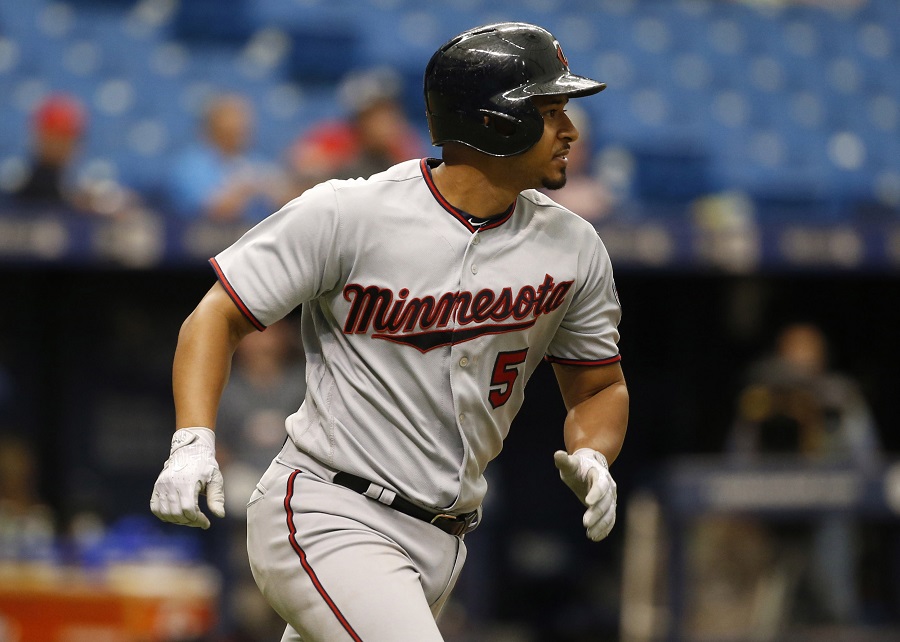 Since coming to Minnesota, the utility player has been worth 3.8 fWAR over the past five years. While that’s hardly anything to get excited about, it’s the smaller things that he brings to the club that make all of the difference. Despite being out of position at times, he has played every position on the diamond outside of first base. Although his bat won’t set the world on fire, it’s provided plenty of pop in limited exposure. Coming into the year, I wondered whether or not Escobar and newly acquired Ehire Adrianza could coexist. Both best served as utility infielders; it was Adrianza who flashed superior leather while Escobar had a better stick. Nearly through the entirety of the 2017 slate, both players together do leave Minnesota a bit stretched, but I tend to lean towards Escobar being the more necessary commodity. Playing mostly shortstop and third base this season for Paul Molitor’s club, Escobar has been lackluster defensively. He has posted a total of -9 DRS between both positions, and while his range hasn’t graded negatively, it’s also not an asset. Given limited exposure in the field however, something like 600 or so innings, he’s not been an incredible detriment to the squad as a whole. It’s at the plate that Escobar becomes an asset for Minnesota, and when spelling a regular, there are far worse options you could be forced to use. In 2017, he’s posted a career best .749 OPS, and has gotten back to looking like the .754 OPS hitter from the 2015 season. With 15 homers to his credit already, he’s already posted a new career high. Yes, he’s in over his head as a middle of the order hitter, but there’s real value presenting itself here. Imaging a scenario in which Escobar continued to pay off long after the Twins jettisoned Liriano seems farfetched in and of itself. Thinking he’s a guy that the club should keep around as they embark on a new window of opportunity leading to the postseason is about as good as it gets. At some point, the Twins are going to need to beef up their bench as a whole and heighten the level of options at their disposal. That being said, Escobar can continue to squeeze out opportunity if he can hold on to a similar level of production. Entering his final year of arbitration eligibility, Derek Falvey and Thad Levine don’t have to make an all too difficult decision until 2019. Extending a utility player with a modest bat into free agency is something that would need to be evaluated against a shifting organizational landscape. That being said, the 2017 Twins wouldn’t be in a position to make September baseball interesting without the contributions of their Venezuelan utility man. When the dust settles, Eduardo Escobar is never going to be a game changer for a big league team. Wanting a guy to spell players every few days, or come in with some unexpected pop off the bench though, he’s more than capable of delivering on those accounts. Minnesota dealt Liriano at the beginning of a very unfortunate downtown. They continue to reap the rewards as the club pushes for relevancy once again.
 -
Mauer Making Us Reconsider The Hall
Ted Schwerzler commented on Ted Schwerzler 's blog entry in Off The Baggy
I think the larger trend towards numbers based BBWAA voting, the better chance he has. Given what was, and the continued upward trend of 1B production, I've gained more confidence about his inclusion. Think he's somewhere around a 5th try inductee seems fair.- 8 comments
-
- 1
-

-
- minnesota twins
- joe mauer
- (and 2 more)
-
10 seasons into his Major League Baseball career, Joe Mauer was a number one overall pick playing for the hometown team, and owned the title of being the best catcher in the sport. Across that span, he had played in 1,178 games slashing .323/.405/.468. With awards piling up, it seemed certain a career was destined to be capped off with a Hall of Fame ceremony, the a traumatic brain injury occurred. Things have been different since, but in 2017, the Twins long tenured star is forcing us to reconsider. There's next to no argument that can be made against Mauer's first ten years in the big leagues being among the best we've ever seen from a catcher. He piled up three batting titles, and MVP award, three Gold Gloves, four Silver Sluggers, and six All Star Game appearances. Despite playing arguably the most demanding position on the diamond, he was among the best players on either team on a nightly basis. Since 2013, Mauer's post playing accolades have become murky. Dealing with the lingering effects of a career-altering injury, he's been a shell of his former self. Forced into a positional switch playing first base, he profiles oddly for the position as he's never been the traditional power hitter. From 2014 onwards, his slash line has dipped to a more human .275/.360/.388. There have been no awards handed out, and he has put forth just one season above 1.6 fWAR (the current one, in 2017). Now, looking at his career arc as a whole, Mauer presents an interesting case for Hall of Fame enshrinement. First and foremost, the largest caveat remains that his playing career is not over, and may be far from reaching that point. With another year left on his current deal in Minnesota, and good reason to continue playing (at least briefly) beyond that, we're not in a place for definitive conclusions. That being said, 2017 has presented us an opportunity to take another look at what could become a compelling case. Knowing what the numbers are, Mauer likely is never going to hit the "automatics." While he'll surpass 2,000 hits, he won't reach 3,000. He's not going to hit 500 homers, and and he may not even reach 1,000 RBI. His case for a plaque really never hinged on those targets anyways though, so let's take a look at what matters. Assuming he never wins another, Mauer's three batting titles put him in rare air. he's only the third catcher in history to win a batting title, the first since 1942, and the only ever for the America League. With three batting titles to his credit, only 14 players in the history of the sport have repeated as winners more often than the Twins star. Somewhat of a throw in for his batting title years (and one extra), he also has four Silver Slugger awards. Looking at his MVP award, Mauer also profiles rather favorably. Getting the nod in 2009, he became the first catcher to accept the honor since Ivan Rodriguez in 1999. Only 17 catchers have ever taken home the hardware, and only five have done so since 1970. Most backstops are brought in for their defensive acumen, or the ability to hit for power. Mauer combined both in 2009, and as a catcher, was a threat both with the bat and the glove. That takes us to arguably the most compelling award, the Gold Glove. Mauer tallied three of them behind the plate. Only 11 catchers in the awards history have won more Gold Gloves than Mauer. Three is an impressive total on its own, but it's what Mauer is positioned to do in 2017 that takes thing up a notch. Joining Placido Polanco and Darin Erstad, the Twins (now) first basemen, would be just the third player in history to win a Gold Glove at two different positions. He would also be the first player in history to win Gold Gloves at catcher, and any other position. Statistically speaking, Mauer is going to have a hard case to make. Since 2013 and going forward, his career is far from what it was. However, he'll likely still end his time in the majors with a solid .300+ average, and his fWAR will still do some good. Currently he has composed a career mark checking in above Hall of Famers such as Ralph Kiner, Kirby Puckett, Phil Rizzuto, Roy Campanella, and Lou Brock. What needs to be his calling card however, is what could have been, and the hardware that is. There's no telling whether or not Mauer can put up another Gold Glove caliber season at first base. He's still young enough, and has looked incredible in the role this year. Whether or not that happens depends on usage and how he ages. Right now though, assuming the award is properly distributed in 2017, the Minnesota natives case for The Hall just got a lot more interesting. For more from Off The Baggy, click here. Follow @tlschwerz
- 8 comments
-
- 5
-
-
- minnesota twins
- joe mauer
- (and 2 more)
-
In 2017, the early narrative for the Minnesota Twins was again the offensive struggles for Byron Buxton. The uber prospect had slumped out of the gate, and that's putting things nicely. Through May, he was hitting just .201, and a June slump bottomed him out at .195 as of July 3rd. Then things changed, and they've only gotten better since. While Buxton has grown at the plate, it also appears he's able to command it as well. Early in the season, Buxton struggled with both pitch recognition, and contact rates. He seemed to be guessing often, while swinging through offerings at an alarming rate. Through July 3, the Minnesota centerfielder had tallied 156 swinging strikes in 1,027 opportunities (15.19%). Since that date, there's been just 78 swinging strikes across 583 opportunities (13.38%). While the decrease may not be substantial, the locations tell a different story. When struggling at the plate, Buxton was missing pitches in the heart of the zone. Whether a by-product of poor recognition, or an inability to get the bat around to a contact point, he was simply leaving far too many hittable pitches on the table. Fast forward to where we are now, and pitchers have begun to shy away from the Twins hottest hitter. Owning a .368/.409/.654 slash line across 39 G since the 4th of July, that's not surprising, but Buxton has dictated that change. The opposition is now needing to use the outside edge of the zone, as well as going up and away, to get him swinging through pitches. There's also a significant difference in the quality of contact Buxton is making. With 50 hits since July 4, he already has surpassed the 46 he recorded in his first 78 games. Now seeing pitches more clearly, and displaying a better ability to generate solid contact, Buxton has barreled twice as many base hits. Balls in play have come off with better launch angles, and the expected outcomes have only trended upwards. At different points throughout the year, we've heard notions that the goal for Buxton needed to be beating the ball into the ground. Whether by bunting or hitting sharp grounders, the though process was that his speed would turn those scenarios into base hits. While that could've been a training mentality, it's not a mindset that ever made sense, and hopefully not one the Twins truly imposed upon the young hitter. At any rate, his surge has seen an increased lift on the ball, and as the launch angle of base hits has grown, so has the overall productivity. It's a pretty basic concept that a hitter isn't going to drive balls into the gaps or generate home runs on balls that are hit on the ground. As Buxton has lifted the ball, his slash line has followed suit. In summary, it's really been a perfect storm for the Twins young outfielder. He went from having a .280 BABIP, 30.5% chase rate, and 13.9 SwStr% through July 3rd to completely flipping the script. Since that point, those numbers are .432 BABIp, 32.6% chase rate, and 10.8 SwStr%. Still susceptible to expanding the zone, Buxton has covered the entirety of its center,. As opposing pitchers attack him insider or on the outside edge, the next goal will be to define a strong sense of discipline to lay off anything he can't execute on. What's maybe most scary for Buxton is that there's still room to grow. Expecting a guy to hang onto a .400+ BABIP isn't realistic, but continuing to hone in on the strike zone would help to curve any expected regression. All of this is being done while playing elite, Gold Glove level, defense and that only adds to his overall value. After being a negative fWAR player for early portions of the season, Buxton has jumped that mark all the way to 3.2 trailing only Brian Dozier among Twins. It appears this is much more than a brief flash in the pan moment, and for a 2018 squad that should be legitimate Postseason contenders, that's a great development to bank on. For more from Off The Baggy, click here. Follow @tlschwerz
-
Article: Nathan Leaves Rarefied Air
Ted Schwerzler replied to Ted Schwerzler 's topic in Twins Daily Front Page News
Meant Gardenhire. 3:30am isn't always kind. -
After just shy of 1,000 major league innings spanning 16 years, 42-year-old Joe Nathan is ready to put a bow on it. Today he steps away from the game that has been a large part of his adulthood, and he does so in front of a Twins fan base that celebrates along with him. As Nathan walks away however, it's worth contextualizing just what the game is losing.A sixth-round draft pick way back in 1995, Nathan broke into the big leagues as a starting pitcher. Making it with the organization that drafted him, Joe started 29 games through his first two big league seasons. He allowed more than his fair share of runs, strikeouts were hard to come by, and the free pass was all to frequent. There ended the starting career of Joe Nathan. What took place next could not have been predicted. The Giants called on Nathan for just over three innings in 2002, and while he pitched 79 in 2003, none of them were in a role that he would eventually come to know as home. San Francisco had tabbed Tim Worrell as their closer, and 38 of his 71 career saves came in that season. It wasn't until Nathan's path brought him to Minnesota that he got his chance. 125 games, and 270 innings into his major league career, Joe Nathan got his first save opportunity. He entered a 3-0 game against the Cleveland Indians at Jacobs Field and shut down the Tribe. He completed that same feat 376 more times over the next 666 games in his career. From 2004-2011, Nathan recorded 260 of his saves with the Minnesota Twins. As the closer for Minnesota, he went to four All-Star Games, while receiving both MVP and Cy Young votes on two separate occasions. Despite big names like Rick Aguilera and Jeff Reardon before him, it's Nathan who owns the all-time Twins saves record. Being 140 clear of the next active player (Glen Perkins), that doesn't appear to be in jeopardy any time soon. Used in the most traditional sense of the role, Ron Gardenhire routinely ran Nathan out for the ninth inning knowing he had someone who could shut the opponent down. While he touched mid-to-upper 90's plenty, it was also a devastating slider that kept him one step ahead of opposing batters. Not the triple-digit threat a handful of today's closers have become, Nathan was as much overpowering as he was intuitive. Officially closing the door on his active career, Nathan leaves the game with the eighth most saves all time. His 377 are sandwiched between Dennis Eckersley and Jonathan Papelbon. Francisco Rodriguez, and his 437 saves are the only active tally higher than the Twins great's, and his 377 is more than 50 saves clear of the next competitor in Huston Street (324). When trying to find active players who could push for Nathan's numbers, you have to go all the way down to Craig Kimbrel (287) or Kenley Jansen (224). In knowing how they are used, closers will perhaps never get their due. While Mariano Rivera will be a first ballot Hall of Famer, Trevor Hoffman was not. Lee Smith will likely need the help of a future committee, and guys like K-Rod or Billy Wagner will likely always be on the outside looking in. As the game has evolved, the importance placed on the final three outs has changed. Leverage and situational usage of your best relievers has shifted, and the save has become a stat looked upon with a level of disdain. What's not possible however is to discredit what Joe Nathan did in a Twins uniform, or as a major leaguer in general. For just shy of a decade, Nathan was a premier reliever in all of baseball. He was as lockdown as they come, and he played a key role on some of the most fondly remembered Twins teams in franchise history. It's too bad he never got to play in a Championship Series, let alone a World Series, but he can hardly look back and not smile at what was accomplished. As Joe Nathan takes his first step off the diamond today as a retired baseball player, he will have nothing to look back on with regret. If most people hope for their one opportunity, Nathan lived multiple lifetime's full of them. We're watching one of the greatest in the history of the sport walk away, and for Twins fans, he'll get to do in it the greatest territory of them all, Twins Territory. Click here to view the article
-
 A sixth-round draft pick way back in 1995, Nathan broke into the big leagues as a starting pitcher. Making it with the organization that drafted him, Joe started 29 games through his first two big league seasons. He allowed more than his fair share of runs, strikeouts were hard to come by, and the free pass was all to frequent. There ended the starting career of Joe Nathan. What took place next could not have been predicted. The Giants called on Nathan for just over three innings in 2002, and while he pitched 79 in 2003, none of them were in a role that he would eventually come to know as home. San Francisco had tabbed Tim Worrell as their closer, and 38 of his 71 career saves came in that season. It wasn't until Nathan's path brought him to Minnesota that he got his chance. 125 games, and 270 innings into his major league career, Joe Nathan got his first save opportunity. He entered a 3-0 game against the Cleveland Indians at Jacobs Field and shut down the Tribe. He completed that same feat 376 more times over the next 666 games in his career. From 2004-2011, Nathan recorded 260 of his saves with the Minnesota Twins. As the closer for Minnesota, he went to four All-Star Games, while receiving both MVP and Cy Young votes on two separate occasions. Despite big names like Rick Aguilera and Jeff Reardon before him, it's Nathan who owns the all-time Twins saves record. Being 140 clear of the next active player (Glen Perkins), that doesn't appear to be in jeopardy any time soon. Used in the most traditional sense of the role, Ron Gardenhire routinely ran Nathan out for the ninth inning knowing he had someone who could shut the opponent down. While he touched mid-to-upper 90's plenty, it was also a devastating slider that kept him one step ahead of opposing batters. Not the triple-digit threat a handful of today's closers have become, Nathan was as much overpowering as he was intuitive. Officially closing the door on his active career, Nathan leaves the game with the eighth most saves all time. His 377 are sandwiched between Dennis Eckersley and Jonathan Papelbon. Francisco Rodriguez, and his 437 saves are the only active tally higher than the Twins great's, and his 377 is more than 50 saves clear of the next competitor in Huston Street (324). When trying to find active players who could push for Nathan's numbers, you have to go all the way down to Craig Kimbrel (287) or Kenley Jansen (224). In knowing how they are used, closers will perhaps never get their due. While Mariano Rivera will be a first ballot Hall of Famer, Trevor Hoffman was not. Lee Smith will likely need the help of a future committee, and guys like K-Rod or Billy Wagner will likely always be on the outside looking in. As the game has evolved, the importance placed on the final three outs has changed. Leverage and situational usage of your best relievers has shifted, and the save has become a stat looked upon with a level of disdain. What's not possible however is to discredit what Joe Nathan did in a Twins uniform, or as a major leaguer in general. For just shy of a decade, Nathan was a premier reliever in all of baseball. He was as lockdown as they come, and he played a key role on some of the most fondly remembered Twins teams in franchise history. It's too bad he never got to play in a Championship Series, let alone a World Series, but he can hardly look back and not smile at what was accomplished. As Joe Nathan takes his first step off the diamond today as a retired baseball player, he will have nothing to look back on with regret. If most people hope for their one opportunity, Nathan lived multiple lifetime's full of them. We're watching one of the greatest in the history of the sport walk away, and for Twins fans, he'll get to do in it the greatest territory of them all, Twins Territory.
