



Ted Schwerzler
-
Posts
5,149 -
Joined
-
Last visited
Content Type
Profiles
News
Minnesota Twins Videos
2026 Minnesota Twins Top Prospects Ranking
2022 Minnesota Twins Draft Picks
Minnesota Twins Free Agent & Trade Rumors, Notes, & Tidbits
Guides & Resources
2023 Minnesota Twins Draft Picks
The Minnesota Twins Players Project
2024 Minnesota Twins Draft Picks
2025 Minnesota Twins Draft Pick Tracker
2026 Minnesota Twins Draft Tracker: Picks & Bonuses
Forums
Blogs
Events
Store
Downloads
Gallery
Everything posted by Ted Schwerzler
-
Molitor Struggles To Innovate With Twins
Ted Schwerzler commented on Ted Schwerzler 's blog entry in Off The Baggy
Yesterday was ugly, the notion there's no change in sight makes it worse. It's not major league level, and it's become a far cry to ask for that. -
The Minnesota Twins have started out the 2015 season in just about the worst fashion possible (ok they could be winless). While there's no doubt at all that being this bad is concerning, the bigger issue seems to come from within. From Terry Ryan on down through Paul Molitor, the organization seems to be operating on the principle that doing the same things they have always done, will somehow now produce different results. As if four abysmal seasons weren't enough evidence to the contrary, the beginning of this season should definitely be. Because everything starts and ends with pitching, the Twins have gone out and targeted the problem area in hopes of addressing it. Unfortunately, only one of the past three starting pitchers signed has panned out thus far. There's no doubt Ricky Nolasco has an incredible hole to dig out of, and Ervin Santana still remains up in the air. Starting pitching however is still not yet an asset for the Twins, and the bullpen is even worse. Suggesting the bullpen is bad probably isn't quite fair, it doesn't do justice to the definition. Phil Mackey recently penned a pitching manifesto in regards to the Twins, and it should be a mix of tears and laughter to you. Once again, the Twins have struck out on nearly every pitching option they have used to fill out their bullpen, while overlooking internal prospects that would seemingly offer a higher ceiling. Trying to pick up arms off the scrap heap has rarely panned out for the Twins before, yet the continue to follow the trend. Rounding out the roster, Minnesota has given jobs to players such as Eduardo Nunez, Shane Robinson, and Jordan Schafer. An already uphill battle to be competitive, the organization has made regulars out of fringe major leaguers with little to no ceiling. Knowing the production has already been cast off by better organizations, the Twins continue to operate under a belief that they know better. Getting to where things currently stand, Terry Ryan and the Minnesota Twins have become a by-product of their own poor decision making. You may have heard the idea that in order to do something you haven't previously achieved, you must be willing to take action you were previously unwilling to do. Minnesota has yet to operate under this belief, and continue down a cyclical path of mediocrity. While Ryan and the organization suggest that their goal is to win now, the actions and execution suggest nothing but the exact opposite. With a loaded farm system, the worry must translate into the handling of some exciting up and coming prospects. Currently out of the every day reach of Ryan and his handling of the major league club, the eventual promotion of players like Byron Buxton and Miguel Sano may now bring fear. An organization lacking the self-awareness to pull out from underneath the issues it has created, only brings a bigger level of uncertainty when more important assets find themselves mishandled. There's no doubt that throwing away the 2015 season at this point would be incredibly premature. However, there's also no doubt that if drastic changes in theory and execution in regards to how a competitive baseball team should look aren't made, there's little reason to expect different results through September. At this point, it's bad, and I'm uncertain as to whether or not the Twins are willing to do things they've never done. For more from Off The Baggy click here. Follow @tlschwerz
-
Today marks the Minnesota Twins home opener. A game that represents the first sellout of Target Field in quite some time, may be more a letdown than originally expected. With no Ervin Santana, and a team that owns a 1-5 record on the season, expectations have already plummeted. In the early going however, the Twins have seen less innovation and more of the same from Paul Molitor, and it hasn't been a good thing. When hired, Molitor was regarded as an elite baseball mind, and someone that embraced what the game had transitioned into. While not a full blown sabermetrics guy, he appeared to be someone that would be up to date on any new way to win. Hired from within, Molitor seemed to buck the trend of the Terry Ryan cloth and bring a fresh bit of insight to the bench. Thus far, the Twins have seen anything but, and their record struggles to deter from more of the same as well. Down in Fort Myers, Molitor mentioned being open to the idea of batting Joe Mauer (a high on base percentage hitter) second, while moving Brian Dozier (a power guy) into the third spot. This happened once during spring training, and has yet to take shape since. With Torii Hunter batting in the cleanup spot, the Twins have struggled to get much going from the bulk of their order, and the run production hasn't been there. Over the weekend, the Twins decided to place starting pitcher Ricky Nolasco on the disabled list. The move cleared up a spot on the active roster. It was announced that Trevor May would be called up to pitch the home opener on Monday, but as a starter, he didn't need to be added back until the end of the series with the White Sox. Instead of calling up a bullpen arm that could have helped the club in Chicago, the Twins added Trevor May immediately on Saturday. Instead of having a fresh bullpen arm (because no doubt the pen had been taxed in Detroit with starters only going just over 12 innings in three games) Minnesota had May on the bench sitting in a windbreaker. On top of that move, Eduardo Escobar headed to Minnesota and missed a game due to the birth of his child. The Twins failed to call up a bench bat in his place for the day, and Jordan Schafer was forced to look overmatched against David Robertson to end the game on Saturday (while Josmil Pinto hit a 2 run walk-off home run for Rochester). Really what it all adds up to is just a curious set of circumstances. While the Twins touted a changing of the guard for much of the offseason, Molitor has more often than not deferred. Whether Ron Gardenhire or Molitor is on the bench, it would seem hard to differentiate at this point. It's probably still to early to be grabbing pitchforks, but there's no doubt that a change of thinking needs to be implemented. For the Twins to accomplish heights they have not in recent years, a shift in the thought process needs to take place. It may start above Molitor at the Terry Ryan level, but there's no doubt on field execution needs some fine tuning. For more from Off The Baggy click here. Follow @tlschwerz
-
Misplaced Concern Doesn't Highlight True Issues
Ted Schwerzler commented on Ted Schwerzler 's blog entry in Off The Baggy
As far as the first comment, probably a little bit nitpick but I get it. Mathematically maybe not the same ratio, but the principle stands. Of course the trends are concerning, but three games shouldn't define future output. As far as the issues, I believe we will see some bullpen turnover rather quickly. The pen is filled with low risk contracts and lower ceiling players. In the outfield, there's no doubt Hicks should have been the decision from the get go, and I think we see that reversed soon. Buxton is probably here by the end of the year, but neither Schafer or Robinson is capable of keeping the seat warm. -
Misplaced Concern Doesn't Highlight True Issues
Ted Schwerzler commented on Ted Schwerzler 's blog entry in Off The Baggy
Literally, no matter how abysmal they have been, it's two games in. Focus the concern in the areas where it makes sense. -
Misplaced Concern Doesn't Highlight True Issues
Ted Schwerzler commented on Ted Schwerzler 's blog entry in Off The Baggy
Starting pitching has plagued the Twins heavily in recent years, and that's where the focus should be until proven otherwise. While not scoring stinks, they just faced two of the best pitchers in the big leagues. Today, getting to Shane Greene is a must. Gibson's start hasn't been ideal, but the Schafer misplay doesn't help things. -
Yesterday, the Minnesota Twins completed their second game of the 2015 Major League Baseball season. While they are now 0-2, after 1/81 of the season, it appears as if a large contingent of the fan base is already waving the white flag. Considering the stretch that is the Major League Baseball season, two games is representative of a very small sample size. In football, it may equate to one drive, or basketball, a possession. With that notion, joining the knuckle-dragging contingent suggesting doom seems premature. That being said, there are some definite concerns in the early going, it just appears they are misplaced. Much has been made about the offensive drought the Twins are currently going through. In 18 innings this season, they have yet to score a run, and even worse, have not reached third base. Dating back to 2014, it's been 24 innings (all against these Detroit Tigers) in which the Twins have failed to cross the plate. Again, while problematic, offensive issues aren't where concern should lie for this club. After all, a season ago virtually the same lineup was 7th in the majors when it came to scoring runs. However, yesterday's game highlighted some significant problem areas for the Twins. First and foremost, Ricky Nolasco. I still remain of the belief that Nolasco will make good on at least of portion of what was the largest Twins free agent contract handed out at the time. The unfortunate reality is that it should have been Phil Hughes, and not Nolasco, that was the priority in the first place last year. Nolasco was a relatively average pitcher for the Marlins and that was in the National League. Expecting him to be a top of the rotation guy in the American League also seemed to be a longshot, and it's biting the Twins hard now. Today, Nolasco was sent back to Minnesota for an MRI. After pitching through injury last season and doing more damage than good, it's no doubt a positive thing that he's getting it figured out early in the process. While even a healthy Nolasco is an unproven commodity, a hurt one is not a good thing at all. The Twins are in a position to handle a rotation in flux with names like Alex Meyer and Trevor May, but there's no doubt a sense of concern with an injury out of the gate. Moving on from the starting pitching and to the bullpen, the Twins weakness was already exposed. As Brandon Warne noted on this week's episode of Twins Tuesday, the bullpen is neither good nor interesting. Boasting a handful of journeyman types with low velocities and even lower ceilings, bullpen pitching is going to be an issue for the Twins until they start to call up some of the kids. Through 18 innings of baseball, the Twins have gone to the bullpen for four different pitchers, and only one has yet to give up a run. That pitcher is J.R. Graham, who prior to this season, hadn't pitched above the Double-A level. Of the 16 innings the Twins have pitched (the Tigers haven't needed to bat in the 9th yet), seven of the innings have been worked by bullpen pitchers. At nearly a 50% rate, an already overmatched bullpen is set to be overworked as well. Rounding out the issues the Twins have faced in the early going is one that was highlighted coming into the season, outfield defense. Although during the first game, issues weren't as prevalent as game two, the uncertainty has reared it's head. Yesterday's game featured multiple misplayed balls by centerfielder Jordan Schafer (one of which he simply fell over trying to field), an error (though it wasn't recorded as such) by Torii Hunter, and a circus experiment on a catch made by Oswaldo Arcia. The corner outfielders are no doubt there because of their bats (and to be fair, Hunter did make a nice catch against the wall). In center however, Schafer was somehow viewed as a better option than Aaron Hicks of Eddie Rosario. What it all amounts to is that Paul Molitor will be faced with some early decisions. Three games in, Eduardo Escobar is making his first start in left field. Arcia has struggled at the plate, looking overmatched in the early going. Schafer is being run out there again today and Hunter is no doubt here to stay. As Schafer and Shane Robinson continue to provide little value, the Twins will need to hope a quick start by Hicks or Rosario forces their hand. Getting less than ideal starting pitching is an issue, and compounding it by fielding a less than talented outfield only makes matters worse. While Minnesota is only two games into the season, there are some concerning trends that need to reverse themselves. Reaching third base and scoring runs are not reasons to panic in the slightest, but the above may prove to be costly unless the new manager does something about the bandaid that is no doubt peeling off. For more from Off The Baggy click here. Follow @tlschwerz
-
Safe To Prove Costly For Twins?
Ted Schwerzler commented on Ted Schwerzler 's blog entry in Off The Baggy
That much is definitely true. Considering a 7th inning guy being in place would require a consistent amount of leads and certainty, the Twins would have to undoubtedly find themselves in a good place. -
Watch Out For The Lookouts
Ted Schwerzler commented on Ted Schwerzler 's blog entry in Off The Baggy
I'd definitely give you that the runs per 9 are a nice gamble. I'm not sure that team ERA shouldn't be expected. -
The Minnesota Twins have started their 2015 Major League Baseball season already, and they did so with a tough luck loss to David Price. While the big league club is starting to trend in an upwards direction, there's no doubting that it's going to be another year with some lumps being taken. However, down in Chattanooga, Tennessee, there's a club ready to make waves. Minnesota's newest affiliate, the Chattanooga Lookouts are responsible for the Double-A rung of the farm system. Managed by Doug Mientkiewicz, the Lookouts may be one of the most intriguing teams constructed in all of baseball. Recently, the club released their Opening Day roster. Starting pitchers include names like Jose Berrios, Tyler Duffery, and Alex Wimmers. Out of the bullpen, the Lookouts have fireballers like Nick Burdi, Jake Reed, and Zack Jones. There's no doubt pitching is going to be an asset, but it's the offensive positional players that could set the game on fire. A roster that includes Miguel Sano, Byron Buxton, Levi Michael, Jorge Polanco, Stuart Turner, Travis Harrison, Max Kepler, and Adam Brett Walker is no doubt going to be exciting. With much of this club making up the Fort Myers Miracle Florida State League champions a season ago, expectations are incredibly high. Mientkiewicz will have plenty of assets at his disposal, and here is how his lineup could potentially shake out: What it all adds up to is some must watch baseball. Although the Twins may stumble throughout the season, it will be in Double-A that the groundwork is laid for the Twins future. Despite being upset about losing out on the Twins managerial role, and having no problem voicing it, Mientkiewicz may have an even more important role. Mentoring these young prospects and pushing their development forward is what the organization is currently banking on. Following up an impressive run in the Florida State League a year ago is going to be no easy task. That being said, there's no doubt that this Lookouts roster should strike fear into any opposing team's dugout. Understanding that the Twins are going to be shuffling the roster throughout the season, it is from the reaches of Double-A that plenty of callups could come. Thus far, Terry Ryan has suggested that top tier prospects like Buxton and Sano may not need a stop in Triple-A Rochester. With more journeymen minor leaguers filling out the highest level, it may be in Double-A that they face their stiffest competition. If Dougie Baseball can get his Lookouts off to a good start, there's no telling how soon we could see some of them at the big league level. No matter what happens with the Twins, you can bet the baseball world is taking notice of the Chattanooga Lookouts. For more from Off The Baggy click here. Follow @tlschwerz
-
Safe To Prove Costly For Twins?
Ted Schwerzler commented on Ted Schwerzler 's blog entry in Off The Baggy
It's not so much that each individual decision has issues, but that the practice as a whole is problematic. The Twins are in a position where they are set up to be neither good nor interesting. Having guys fill out the roster who have no ceiling, does nothing for the advancement of the club. In regards to specific questions, Hicks has struggled in the majors no doubt. He did however go through AA and AAA in succession and excelled a season ago. To negate that in favor of a Schafer/Robinson platoon appears short-sighted. Pelfrey's issue is that the Twins passed him over in favor of May during Spring Training, and then defaulted back to him. As I mentioned though, it's not pitchforks and zxes, it's just a curious way to go about things. If you're going to be mediocre, push your ceiling as high as you can. -
Well put and nice background on even the fringe guys. I'd say there's probably little doubt whether or not we see all of the names not listed in the "notable" category in 2015. I'd assume Reed makes his debut as well. Michael would be a nice replacement for Nunez, if he can continue to flash what he showed in a very brief period last year. Even though that makes him a first round bust, it would be better than no return.
-
The 2015 Major League Baseball season is just one day old. Unfortunately, the Minnesota Twins find themselves with only a tally in the loss column to this point. More unfortunately is that observations from one game have cause knuckle-dragging fans to already deem the 2015 season a failure. Whether because of anger that four years of losing causes, or the disappointment that still looming prospects has provided, a vast contingent isn't pleased. While those aren't viable reasons for angst at this point (and frankly lack even a decent sense of comprehension), the Twins safe decision making was on display yesterday, and should be plenty scrutinized in the immediate future. Against the Tigers, the Twins sent out what can be considered their top lineup. With Phil Hughes on the mound, at no other point (outside of replication) will the Twins 25 man roster be better represented than it was yesterday. Forget the fact that they were facing Cy Young level pitching in the form of David Price, there's no denying we might have seen and heard the first glimpses of concern. Starting in centerfield yesterday was Jordan Schafer. A protoypical fourth outfielder, generally utilized for his speed, the Twins have given the offed Atlanta Brave the keys to the outfield. In turn, on at least two occasions, defensive missplays cost the Twins. Allowing a run while stumbling late in the game, the Twins saw the deficit increase further than it should have due to their own doing. As a secondary option, manager Paul Molitor chose to bring journeyman Shane Robinson north along with Schafer. Employing a two man (remember it's not a platoon) centerfield, the Twins have gone with options that are definitely not starters, and potential questionable roster inclusions. When the bullpen entered the game yesterday, it was by way of Double-A Rule 5 Draft Pick, J.R. Graham. The hard thrower immediately worked himself into trouble, and then showed the resolve to get himself out of it unscathed. While it worked out in the team's favor this time, there's no doubt that Graham's shaky first inning doesn't bode well for the future. Considering that Molitor has said he plans to use some combination of Graham and Duensing in a 7th inning role, disaster could be looming for Minnesota. Despite not factoring into the action yesterday, Mike Pelfrey was also removed from his bullpen role in favor of Aaron Thompson. Following the loss of suspended starter Ervin Santana, Pelfrey was added back into the rotation. Despite a less than promising track record, the Twins decided to go with what was comfortable, rather than what may push them forward. That point gets us to the elephant the Twins see sitting at the end of their bench. Each and every roster move made this season has signified a stagnant style of thinking. Knowing this team isn't necessarily built to compete (despite what Terry Ryan has stated publicly), the ceiling has been purposely lowered from within. With options in house that could potentially stretch the ceiling, push the organization forward, and enhance development as a whole, the Twins have turned an opposite direction. It's fair to suggest that promotion of youth for the sake of doing so doesn't make sense. There is no reason to sacrifice potential ability because of immediate desire, but what the Twins have put in place leans towards the other end of the spectrum. Names like Schafer, Robinson, Nunez, Pelfrey, and well really the whole bullpen sans Glen Perkins, suggest a lack of faith in organizational advancement. Imagine if the Twins had instead included Hicks, Rosario, May, Meyer, or Tonkin? What if they went out and replaced their bench bat with a name like Dayan Viciedo? What if they increased their own ceiling by allowing for the floor to be lowered because the upside was substantially greater? The premise is simple, knowing you aren't built to be amongst the elite, transitioning towards a future gain strategy would seem to make a lot of sense. While Pelfrey or Schafer may not make the mistakes a Meyer or Rosario will, they also represent a muted level of talent. Outside of finishing first, the positioning is relatively irrelevant, and the Twins have sent out a roster that fails to maximize upon this concept. At the end of the day, most of the "safe" options for the Twins are immediately replaceable. When the bullpen falls, or Pelfrey blows up, or the outfield crumbles, the Twins can turn over the keys. The question becomes, why not do some of that from the beginning in hopes of advancement, rather than after issues in response to failure? For more from Off The Baggy click here. Follow on Twitter @tlschwerz
-
Ervin Santana And His Wrench
Ted Schwerzler commented on Ted Schwerzler 's blog entry in Off The Baggy
While I understand where you're coming from, you have to also consider the context. Pelfrey hasn't proven to be a quality major leaguer for years. The Twins were willing to give him a shot in the pen, rather than force him to use his last option or elect free agency. Making a public statement like that (especially a guy regarded in such an opposite standing) doesn't seem to be a positive. -
Twins' Roster is Set (but don't call it "final")
Ted Schwerzler commented on Steven Buhr's blog entry in SD Buhr/Jim Crikket
I agree with you Jim, I think that the Santana suspension provides a ton of intrigue. I still see the Twins winning around 79 games, but think the biggest dip is seen in how high the ceiling is. With more flexibility now, the Twins can make some of these "trades from within" type moves to bolster themselves down the line. Bullpen and pitching wise, we probably see most if not all of the big names this season. I am not sure Berrios will get more than a cup of coffee, but think that the rest will provide some help at some point. I would be surprised not to see Rosario before June, Sano August, and Buxton September. Regardless of competitiveness, it probably hinges a lot on how they start out of the gate on the farm, but I think each is realistic. Great piece! -
Friday afternoon, just days away from the Twins heading to Detroit to take on the Tigers and open the 2015 Major League Baseball season, free agent pitcher Ervin Santana was popped with an 80 game suspension. He was caught for using an oral steroid, Stanozolol. With the news, the Twins immediately have a different outlook for not only their rotation, but the upcoming season as a whole. A situation such as the one that the Twins have been put in due to the poor decision making of Santana has somewhat of a ripple effect. There are quite a few factors at play here, and they add up to what should make for an interesting summer. First, Santana himself. His press release following the news toed a similar song and dance. He suggested that he had no idea how he ingested an oral steroid, and the he "needs to be more careful as to what he consumes in his home country." Of course that's the storyline, however thinly veiled it is. At this point, how and why don't matter. He's been paid, he's a part of the organization going forward, but the Twins will be without his services for the next 80 games. That leads us to his replacement, and there may be more reason for frustration here than any other. Not minutes after the news regarding Santana broke, Paul Molitor announced that it would be Mike Pelfrey replacing him in the starting rotation. Earlier in the week, Pelfrey was "demoted" to the bullpen after the club announced that he wound up finishing third out of three when it came to the fifth starter competition. Both Tommy Milone and Trevor May were given one last prove it start, while the club decided that Pelfrey was not a viable option. A temper tantrum ensued, which then turned more cordial as Pelfrey realized the writing was on the wall. Now, whether a by-product of timing or indecision, the Twins have contradicted their initial decision and skip over May for the sake of Pelfrey. With the decision, the unfortunate reality is not that Pelfrey is now a starter for the Twins. What happened however is Minnesota organizationally contradicted a decision they made just a week earlier. Suggesting that it was May, not Pelfrey who gave them a better chance to win, the move is a puzzling one. In fairness, Pelfrey was strong this spring, and looked more than capable. He's battled back from injury and looks healthy for the first time in years. With the upside of an average at best pitcher however, the Twins once again balk on a higher ceiling and go against what they had seemingly decided. From an overall pitching standpoint, the loss of Santana may actually provide long-term value. Although it is Pelfrey who gets the first crack, there are no two fluid rotation spots if pitchers should falter. Both Milone and Pelfrey become replaceable in the right circumstances. For the Twins, this means that both May and Alex Meyer could get looks sooner than initially anticipated. An 80 game suspension is virtually half of the season, and while I expected both prospects to be in the majors prior to that time, now it would seem certain. The development gained by having forced the Twins to accelerate them, should prove vital for both players advancement going forward. Looking at the team as a whole, Santana's loss probably doesn't hurt the bottom line as much as perceived. As I noted in an earlier post, despite the strong spring, there was plenty of reason for skepticism in 2015. Now without his services for half of the season, the greatest impact will likely be felt on the top end. I have had the Twins winning 79 games all offseason, and I'm going to stick with that number. Where the deficiency may be felt is in the club trying to elevate past that mark. If the Twins upside was surprising some and pushing for a wild card spot, they would need to win somewhere near 85 games. Considering the roster shuffle, that may now be a tall task. This club is still markedly better than a season ago, and I believe they remain out of the final spot in the AL Central. At the end of the day, Minnesota has just one spring training contest left before the end of the season. Losing a star offseason acquisition is by no means ideal, but it still doesn't launch the Twins into the ability level they have been in the previous four seasons. The shuffle should push for those trades from within to come a little sooner, and the Twins will no doubt be getting a good pitcher back on July 4. A poor decision, compounded by poor timing could spell disaster, but the Twins have some options. For more, check out Off The Baggy here. Follow on Twitter @tlschwerz
-
Twins Rotation May Be The Most Certain
Ted Schwerzler commented on Ted Schwerzler 's blog entry in Off The Baggy
Yeah, I just can't seem to get behind the Indians. They are trendy, but I don't believe in so many of the reasons why. I think your middle paragraph perfectly equates to what the Twins should be expecting this year. I'd argue a bit higher ceiling for Gibson, but that's grasping at straws. However, I think even with the low ceiling, slightly above average is a good thing. The rotation has been abysmal, and if it can be slightly above average, the Twins will be in a good place. -
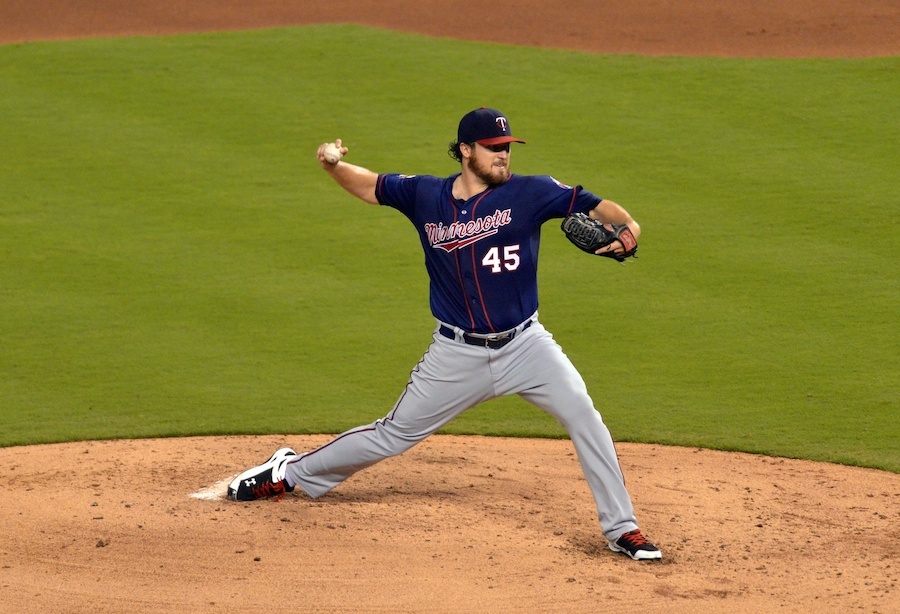 More than in any other recent season, the 2015 Twins have both a respectable ceiling and a relatively high floor. Maximizing on opportunities will determine in which direction they trend. Last season, Minnesota vastly outproduced expectations on the offensive end. Getting key contributions from players like Danny Santana, Kurt Suzuki, and even Jordan Schafer, the Twins saw more runs scored than they could have imagined. Unfortunately, even with unexpected batting averages being inflated, the Twins failed to capitalize in the wins category due to poor pitching. There's no doubt that once again the mound was an area of focus this offseason, and the Twins appear to be in a better place. When looking at how high the Twins ceiling is for 2015, everything begins and ends with pitching. Although Ervin Santana was the club's only offseason addition, the staff looks retooled and competitive for the first time in years. Gone are the days of Cole De Vries and Samuel Deduno making the opening day rotation. Minnesota has a true ace in Phil Hughes, and he is backed by arms such as Kyle Gibson, Santana and Ricky Nolasco. Rounding out the rotation, Tommy Milone is more than capable of getting the job done as a fifth starter at the major league level. The improved pitching should only complement a lineup designed to score runs. Looking at the offense, there's no doubt the Twins will see some regression. Of the players mentioned above as breakouts, next to none of them should be expected to replicate their 2014 level of success. However, getting key contributions from players like Joe Mauer, Torii Hunter and Oswaldo Arcia in 2015 should make the regression less detrimental to the team's fortunes. Minnesota's lineup boasts at least five guys capable of 20-home run seasons, and solid pitching performances should not be wasted this time around. Trying to quantify the ceiling in the win/loss column is probably more assumption- based than anything. As it stands currently, I have the Twins coming in at 79-83. Should they have things break in their favor and maximize on their opportunities, an 86-win campaign would not be out of the realm of possibility. That win total should be good enough to get them near the top of the AL Central and into the wild card round as well. The Central is competitive as a whole, but the top has gotten worse while the bottom has gotten better. Minnesota can no doubt play with, and beat, any team in the division. So what if it all crashes and burns? Before thinking doomsday, there's no doubt that this Twins roster is built for regression. Handling, and overcoming, adversity is something that the 2015 Twins should be more than capable of doing. Once again, everything begins and ends with pitching, and that could be where the Twins find their breakdown. I have a hard time quantifying what the floor looks like for the Twins this season. They have a handful of options when and if guys go down, and each of the options is capable in a limited capacity. However, if Nolasco fails to bounce back, Milone struggles, and Gibson doesn't develop, Minnesota could be in some trouble. A rotation highlighting only Hughes again would be extremely detrimental to this club. Although I think Santana is going to be fine with the Twins, he does have a couple of concerning factors that could come into play. From a numerical standpoint, the floor isn't where it once was. If the Twins mid-point is the 79-83 record I referenced above, than the floor is somewhere around 73 games. I don't foresee the current roster construction, or state of the organization, producing a 90-loss team. The AL Central probably won't produce a 90-loss team this year, and if it does, I don't think it will be the Twins. While not yet ready to make a deep playoff run in Paul Molitor's first season as skipper, the Twins have to be excited about the place they are in. There's more good than bad, and things are trending upwards.
 -
Twins Rotation May Be The Most Certain
Ted Schwerzler commented on Ted Schwerzler 's blog entry in Off The Baggy
Quite possibly two most important things to note: 1. Thanks for reading, I know that got long. 2. Certainty doesn't suggest quality. The Twins don't have the ceiling of other rotations, but they may have the fewest question marks. That's what I set out to look at. -
Although more often than not I put some thought into a topic before putting together a full fledged post, sometimes the topic just happens. This afternoon, a follower on Twitter posed a very interesting question. He asked, "Where do you see the Twins rotation amongst the AL Central competition." As recently as last season, it would be easy to quickly dismiss the thought and suggest they are dead last. Heading into 2015 however, it's not quite as easy. To understand the foundation the Twins stand on, we probably first need to comprehend what they are up against. Going in order of how I see the AL Central shaking out, let's take a look. Detroit Tigers I still hate the idea that the Tigers could win the AL Central, but looking at the White Sox and Indians, the Tigers still are where I lean. Although the Detroit offense should be impressive if it can stay healthy, this rotation is not at all at the same level as 2014. I'm not going to claim to know the order of any of these other rotations, but here is likely how the Tigers go: David Price Anibal Sanchez Justin Verlander (skipped while on DL) Shane Greene Alfredo Simon Last season, Price came over from the Rays and was welcomed rather uncomfortably. Sure, he posted a 3.26 ERA, but he also gave up more than four runs four different times in just 11 starts. There's no doubt he's deserving of the looming extension (and after losing Max Scherzer Detroit has to pay the man), but I'm not sure that brighter days are ahead. Anibal Sanchez is a constant injury risk, and while on he's great, the Tigers simply shouldn't rely on him at this point. I was of the belief that Verlander would bounce back this season, but he's showing signs of age before the season even gets going. I like Greene's upside, but there's still plenty for him to prove. Rounding out the rotation, a 33 year old Simon got paid off of his first year starting since 2011. His 4.33 FIP (fielding independent pitching) last season causes some real reason for concern. Chicago White Sox The White Sox are going to need their offense to show up, and I think it will. Their rotation has plenty of power at the top, but there's a significant cliff at the end. Here's who should be included: Chris Sale (beginning on the DL) Jeff Samardzija Jose Quintana John Danks Hector Noesi Sale and Samardzija are both quality pitchers and the White Sox should be fine there. Samardzija passed his regression test with Oakland (3.14 ERA in 16 starts) and should be counted on to continue the trend. From there however, things get uncertain. I like Quintana and think he can is a quality major league starter. He's young and he should only get better, if not for the next two, this is my favorite rotation in the Central. John Danks is rough, and as a 4th option even worse. He's getting paid, and the White Sox didn't want to go with the youngster Carlos Rodon yet. That will hurt them. Noesi is a back end of the rotation guy and is prone to blowups. He doesn't strike many out and doesn't miss enough bats. Knowing that Brad Penny is the option behind him, the White Sox are in trouble if they need to start shuffling. Cleveland Indians If you love the Indians to be a dark horse in the Central, and even the American League this year (and plenty do), it begins and ends with their rotation. Offensively, the Tribe should score, but they will need to be banking on the return of Kipnis and Swisher, while hoping that Moss and Brantley continue to perform. The biggest reason I dislike the Indians as a trendy team is that I don't buy their rotation: Corey Kluber Carlos Carrasco Trevor Bauer Zach McAllister TJ House Kluber is the reigning Cy Young. He's a stud, nothing to see there. The Indians will then give the ball to Carrasco, who's started just 54 games in his five year major league career. Last year he owned a 2.55 ERA but made only 14 starts. He had a 2.44 FIP a season ago, yet he had never posted a mark better than 4.10 previously in his career. Carrasco has also never thrown more than 134 innings in a season. It's too small of a sample size, and I just can't get on board. I like Bauer more than most, but the former top prospect is much to uncertain to rely on. He'll be lights out one night, and a walk machine the next. McAllister and House rounding out the group shouldn't excite anyone. Blame some poor defense (3.45 FIP/5.23 ERA) but McAllister didn't prove anything a year ago. House has a good deal of upside and should be expected to take steps forward, but his 3.69 FIP was actually worse than his ERA (3.35) and it will be interesting to see how he competes in his second year in the big leagues. Kansas City Royals If the Indians are the trendy pick, the Royals are anything but. I have them finishing at the bottom of the division and I just don't like their offseason at all. It's not that losing James Shields was detrimental, but the pieces they brought in as replacements should cause skepticism. Here is how the rotation should look: Yordano Ventura Danny Duffy Edinson Volquez Jason Vargas Jeremy Guthrie First, yuck. Second, the Royals rotation was recently ranked as one of the worst in the major leagues, and it's with good reason. Ventura may very well be a Cy Young candidate, but the cliff begins after him. Danny Duffy should be expected to provide quality again for Kansas City, but a 3.83 FIP and a 2.53 ERA suggest his surroundings were a large part of the reason for his success. Edinson Volquez coming over from Pittsburgh could get ugly quick. He owns a 4.44 career ERA with all but three seasons coming in the National League. He's posted an FIP under 4.00 only once, and that was size years ago. Both Jason Vargas and Jeremy Guthrie are on the wrong side of 30, with the former likely staring an ERA near 5.00 in the face. The fact that Joe Blanton believes he can crack this group on the back end is probably telling in and of itself. Minnesota Twins This brings us to the Twins (no I don't have them finishing last). While Minnesota's offense was in the top ten in runs scored a season ago, it didn't matter with the rotation bleeding runs. It's quite conceivable that the bullpen will be the culprit this season, but the rotation should have far more questions than answers. It's slated to look like this: Phil Hughes Ervin Santana Ricky Nolasco Kyle Gibson Tommy Milone Hughes was lights out last season, but for the most part, that could have been expected. His FIP (2.65) improved as it should have leaving Yankee Stadium. Although the outfield defense is expected to get worse, Hughes doesn't have to prevent a record amount of walks to improve. His 3.52 ERA leaves room to get lower, and he should once again be considered a staff ace. Of the group, Santana may actually be the wild card. While I'm excited by the signing, I noted that Santana actually concerns me a decent amount this year. The Twins need him to be good, and better than his trends suggest. Nolasco was billed as an innings eater and an ace when signed last offseason. that was a mistake by the Twins, and only compounded by the former Marlin pitching through injury. He's never going to be a top of the rotation guy, but an ERA right around 4.00 and a quality third starter should be expected. Gibson likely stands to take the biggest step forward this year. Settled into a guaranteed rotation spot, and another year removed from Tommy John surgery, Minnesota should expect more from their former first round pick. He's never going to strike a lot of guys out, but getting his K/9 up around 7.0 is fair and something that should lower his ERA into the high three range. The fifth spot is likely going to be the most fluid for the Twins. Milone isn't exciting, but you know what you're going to get. His 4.21 FIP average isn't going to be conducive to a low ERA, but Target Field should aid him just like the Coliseum. Healthy this season, he can give the Twins innings at a 4.10 clip until Alex Meyer or Trevor May is ready. While this became extremely long winded, I hope the point got across. There is no clear cut favorite when it comes to rotations in the AL Central. At the end of the day, the top dogs have more questions than answers on the back end. The Twins may not have the top tier aces, but they probably have more reliable quality throughout. Minnesota is not yet in a position to consider the rotation a strength, but if the Twins are going to shock some people, it will come on the backs of their starting pitchers hovering around their perceived potential. Get more from Off The Baggy here. Check out Ted on Twitter @tlschwerz
-
I have Arcia leading the Twins in home runs this year with right around 30. I think both him and Vargas have untapped potential, but it's going to take some developing. You definitely hit on it with your last comment there. The starting pitching is there, and the offense should produce. When turning the game over to the pen, things could get ugly, but this should be a vastly different Twins team.
-
Yeah, I think what it all comes down to is the very easy understanding that while the current construction is less than ideal, the moving parts make it an area of promise. Promotions and progressions could quickly turn the pen into an area of strength. I'm a big fan of the strikeout types knocking down the door.
-
Wanted to somewhat feature Burdi and Reed as they've really excelled thus far. Zach Jones definitely is in that category. Salcedo got a decent amount of run this spring, and see Peterson as an option as well. I think we're in agreement that if things don't work out, but the wins are there, the Twins have options.
-
This morning, the Minnesota Twins sent Caleb Thielbar out of major league camp and back to Triple-A Rochester. With the move, the 2015 bullpen is set in stone at the major league level. Without a doubt the group has more questions marks than anything, but the potential may lie just beyond those questions. First, let's take a quick look at how the Twins will set up the relief pitchers for the coming year: Blaine Boyer-Middle Reliever J.R. Graham-Middle Reliever Mike Pelfrey-Middle Reliever Brian Duensing-Lefty Specialist Tim Stauffer-Long Reliever Casey Fien-Setup Man Glen Perking-Closer Woof! Ok now that we have that out of the way, only Glen Perkins would appear to be a pitcher that can be counted on. Assuming he's healthy, and that's probably somewhat of a sketchy assumption, Perkins will be one of the better closers in the American League. Outside of him however, the Twins have compiled a pen of relatively low-upside players, some in new roles, and some battling through regressing trends. So where does this potential come in? Due to the current construction of the Twins bullpen, the upside is actually within who's not a part of the Opening Day list, and how they could quickly push for time. Starting with the most exciting options, prospects Nick Burdi and Jake Reed have a lot to gain this season with the Twins. Both high selections in the 2014 Major League Baseball draft, Burdi and Reed have been deserving of the hype thus far in their professional career. After playing in the College World Series for the Louisville Cardinals, Burdi went on to continue lighting up radar guns for the Twins. Pitching through both Cedar Rapids and Fort Myers, Burdi had just one bad outing in 20 games (coincidentally it was his first). Across the two levels, he compiled a 16.8 K/9 while pitching to the tune of a 2.66 ERA. It's pretty safe to say that Burdi made easy work of the lower levels of the organization, and will be accelerated this season. Whether he starts in Fort Myers or Chattanooga, expect him to surface with the Twins sooner rather than later. If he can continue along the same path, he should become an option at the back of the Twins pen over the summer. Fien slipping up would likely cede chances to a Michael Tonkin type first, but it also opens the door for Burdi. In the earlier innings, the Twins find a middle reliever in Reed that they should be able to count on for years to come. Selected out of Oregon, Reed dominated Elizabethton and Cedar Rapids. He continued the trend in overpowering the Arizona Fall League as well, traditionally filled with top tier prospects. Reed owned an 11.3 K/9 in 20 games last season while walking just 0.9 batters per nine innings. Efficient and dominant, the Twins will be looking to get him to the big leagues in short order as well. Likely slated for Fort Myers, Reed may have the most to gain this year. With Pelfrey, Boyer, Graham, and even Stauffer all being relative question marks, the door should swing open. While Lester Oliveros, Logan Darnell, A.J. Achter and others reside in the higher rungs of the organization, it's Reed that the Twins can elevate the most with. Should he be able to replicate his 2014 season, Reed will get an early look from the Twins, and could be an asset to them down the stretch. Really, the biggest takeaway from the current bullpen situation is that it is going to be an evolving entity for the Twins. Like I mentioned yesterday with positional players, the Twins can control their own talent level from within. Should they find themselves competing in the middle of the year, with pitchers like Reed and Burdi looking strong, and the bullpen in rough shape, they immediately have internal options. The current bullpen structure should be good enough to keep what is an improved staff happy, but the Twins taking a leap will come on the promotion of their top tier prospects. Having made pitcher heavy selections in the first ten round of the draft last season, most with relief intentions, the Twins have plenty to gain by going down on the farm. Although the bullpen is worrisome right now, expect leashes to be short, and options to be plentiful. The Twins surprising this season is going to involve some gutsy decisions. Check out more from Off The Baggy here. Follow along @tlschwerz
-
Well done on banging the drumb of the voice of reason. Nice to have you aboard. Understanding that this team will be able to utilize revolving doors is a positive situation.

