



Ted Schwerzler
-
Posts
5,149 -
Joined
-
Last visited
Content Type
Profiles
News
Minnesota Twins Videos
2026 Minnesota Twins Top Prospects Ranking
2022 Minnesota Twins Draft Picks
Minnesota Twins Free Agent & Trade Rumors, Notes, & Tidbits
Guides & Resources
2023 Minnesota Twins Draft Picks
The Minnesota Twins Players Project
2024 Minnesota Twins Draft Picks
2025 Minnesota Twins Draft Pick Tracker
2026 Minnesota Twins Draft Tracker: Picks & Bonuses
Forums
Blogs
Events
Store
Downloads
Gallery
Everything posted by Ted Schwerzler
-
The Minnesota Twins had all four affiliates in action today, while both the Fort Myers Miracle and Cedar Rapids Kernels played doubleheaders. With lots of baseball action throughout the farm system, there were plenty of highlights to go around. Top prospect Brent Rooker's eight game hitting streak was capped off by his 4th homer of the year, and Dietrich Enns turned in a nice start for the Red Wings.RED WINGS REPORT Rochester 6, Syracuse 4 Box Score Facing the Chiefs today, the Rochester Red Wings ran into a familiar Twins name. Former big league starter Tommy Milone was on the bump opposing the Minnesota Triple-A affiliate. Fortunately for the Red Wings, they chased him early putting up five runs on three hits and three walks before he was able to record a second out. Jake Cave started the scoring for the home team with a triple that plated both Ryan LaMarre and Zack Granite. Nick Buss doubled in both Cave and Jermaine Curtis, while Leo Reginatto drove in Wynston Sawyer with a first inning sac fly. After getting five strong innings of two-run (one earned) ball by Dietrich Enns, the Red Wings watched their lead be trimmed to one. A D.J. Baxendale wild pitch in the top of the sixth inning allowed Irving Falu to score for Syracuse and Rochester led just 5-4 at that point. The five runs would be enough however, and a Willians Astudillo single in the bottom of the eighth scored Brock Stassi to provide some extra cushion. Luke Bard worked two scoreless innings for Rochester grabbing his first hold of the year. He’s now up to 5 1/3 shutout innings since rejoining the Twins organization. Nick Anderson worked the ninth and struck out one, allowing no hits, en route to his first save of the season. CHATTANOOGA CHATTER Chattanooga 8, Tennessee 6 Box Score After getting behind by two in the top of the third inning, the Lookouts answered back with two and would keep scoring throughout this affair. LaMonte Wade was responsible for the first two runs of the game for the home team, driving in both Ryan Walker and Tanner English on a single. Brian Olson then scored in the bottom of the fourth on a fielding error to give Chattanooga their first lead of the contest. Brent Rooker kept up his hot hitting, and extended his hitting streak to eight games with a homer (his fourth) in the bottom of the fifth. With Tennessee having retaken the lead 5-4 in the top of the sixth inning, Chattanooga used a nice rally in the bottom of the seventh to recapture it. A wild pitch allowed English to cross the plate during a Zander Wiel at-bat, and then the first basemen did damage on his own with a single that drove in Rooker. A T.J. White double brought Wiel around to the plate and the Lookouts entered the eighth with an 8-5 lead. Sam Clay worked two innings in this one to get his first save of the year. While he did allow a ninth inning run to give the Smokies just a two run deficit, he held them there. Tyler Jay replaced starter Anthony Marzi earlier in the game and pitched 1 2/3 innings while allowing no runs on three hits. MIRACLE MATTERS Jupiter 4, Fort Myers 3 (Game 1, 7 innings) Box Score Fort Myers got out to an early lead in game one of the twin bill, but unfortunately it wasn’t enough as they were walked off in the bottom of the seventh. Taylor Grzelakowski’s first inning solo shot gave the Miracle their only lead of the contest. Jupiter answered back with a two-run homer in the bottom half of the first, and added another run on a fielder’s choice in the second. As he’s done all year, Jimmy Kerrigan came through for Fort Myers in the top half of the fourth inning, driving in Travis Blankenhorn on a single. Although the bats went somewhat cold in the middle innings, Mar Contreras singled to knot the game up at three in the top half of the seventh. With Logan Lombana on the mound for Fort Myers, a deep double to left field allowed Jupiter’s Aaron Knapp to come around and score the game-winning run. Kevin Marnon and Lombana split the game almost evenly, going 3 and 3 1/3 innings respectively. Jupiter 3, Fort Myers 2 (Game 2, 7 innings) Box Score Hoping for a different result in game two of the doubleheader, the Miracle found themselves in a very similar scenario. Jupiter was able to muster nine hits yet again, and came away with a one-run victory. Fort Myers struck first with Blankenhorn cracking a triple in the fourth that drove in Luis Arraez. He was then able to touch the plate after Jared Foster singled on a looper into centerfield. That lead wouldn’t last however as Jupiter answered with three runs of their own in the bottom half of the inning. The 3-2 tally in the fourth was the extent of the scoring in this one and the Hammerheads closed it out in seven innings. Paco Rodriguez made his organizational debut for the Twins and tallied two innings of scoreless ball as the starter in game two. He allowed two hits and struck out a pair while walking one. Ryan Mason, who has been excellent for the Miracle, had a tough outing in game two as his two innings of relief yielded three runs on five hits. KERNELS NUGGETS Quad Cities 6, Cedar Rapids 2 (Game 1, 7 innings) Box Score Also playing a doubleheader today, the Kernels found themselves needing to dig out of a big hole early. With Tyler Watson on the bump for Cedar Rapids, five unearned runs came around to score in the top half of the second inning. Errors up the middle from second basemen Jose Miranda, and shortstop Royce Lewis, wiped any statistical blame from Watson’s line. Cedar Rapids would battle back a bit in the bottom of the fifth inning, as a Miranda double scored Ben Rortvedt for their first run of the day. Akil Baddoo then tallied a double for himself to drive in Miranda and the deficit was cut to three. Unfortunately for Toby Gardenhire’s squad, that was where their scoring ended, and a Quad Cities solo shot in the top of the seventh put the final tally at 6-2. The Kernels recorded just four hits and three walks in game one of the twin bill. Quad Cities 8, Cedar Rapids 4 (Game 2, 7 innings) Box Score Looking to rebound from their game one loss, Cedar Rapids found yet another tough test in game two. A two-run bomb by Shane Carrier gave them the early lead in the bottom of the first inning, but it was again the second inning that proved costly. Royce Lewis committed his second error of the day, this one of the throwing variety. The River Bandits took that momentum and put up another second inning five spot. Randy Dobnak got the call in this contest and allowed all eight runs on 11 hits over 4 2/3 innings. After being down by six after the fifth inning, the Kernels once again put runs on the board. In the bottom of the sixth, Miranda drove in Jean Carlos Arias with a bases loaded fielders choice. A wild pitch with Baddoo at the dish allowed Ben Rodriguez to score the Kernels final run of the evening. Swept in the doubleheader, the Kernels dropped game two by four runs. STARS OF THE DAY Twins Daily Pitcher of the Day – Dietrich Enns, 5.0 IP, 5 H, 2 R, 1 ER, 2 BB, 4 K Twins Daily Hitter of the Day – Brent Rooker 2-3, 2 R, RBI, HR TOP PROSPECT SUMMARY 1. Royce Lewis (Cedar Rapids) – 0-4, 3 BB, 3 K 5. Alex Kirilloff (Cedar Rapids) – 0-5, R, 2 BB, 2 K 7. Brent Rooker (Chattanooga) – 2-3, 2 R, RBI, HR(4) 10. Akil Baddoo (Cedar Rapids) – 2-7, RBI, 2 2B, BB, 3 K 13. Lewin Diaz (Fort Myers) – 1-3 14. LaMonte Wade (Chattanooga) – 2-5, R, 2 RBI 15. Mitch Garver (Minnesota) – 1-4, R 16. Ben Rortvedt (Cedar Rapids) – 1-3, R, 3B, K 17. Travis Blankenhorn (Fort Myers) – 2-6, 2 R, RBI, 2B, 3B 19. Tyler Jay (Chattanooga) – 1.2 IP, 3 H WEDNESDAY’S PROBABLE STARTERS Syracuse @ Rochester (10:05am CST) – RHP Trevor May (0-0, 0.00 ERA) Chattanooga @ Biloxi (6:35pm CST) – TBD Fort Myers @ Jupiter (9:30am CST) – LHP Charlie Barnes (1-3, 4.61 ERA) Quad Cities @ Cedar Rapids (6:35 PM CST) – Bailey Ober (0-1, 13.03 ERA) Please feel free to ask questions and discuss Wednesday’s games! Click here to view the article
-
Twins Minor League Report (5/16): Rooker Rakes on Doubleheader Day
Ted Schwerzler posted an article in Twins
 RED WINGS REPORT Rochester 6, Syracuse 4 Box Score Facing the Chiefs today, the Rochester Red Wings ran into a familiar Twins name. Former big league starter Tommy Milone was on the bump opposing the Minnesota Triple-A affiliate. Fortunately for the Red Wings, they chased him early putting up five runs on three hits and three walks before he was able to record a second out. Jake Cave started the scoring for the home team with a triple that plated both Ryan LaMarre and Zack Granite. Nick Buss doubled in both Cave and Jermaine Curtis, while Leo Reginatto drove in Wynston Sawyer with a first inning sac fly. After getting five strong innings of two-run (one earned) ball by Dietrich Enns, the Red Wings watched their lead be trimmed to one. A D.J. Baxendale wild pitch in the top of the sixth inning allowed Irving Falu to score for Syracuse and Rochester led just 5-4 at that point. The five runs would be enough however, and a Willians Astudillo single in the bottom of the eighth scored Brock Stassi to provide some extra cushion. Luke Bard worked two scoreless innings for Rochester grabbing his first hold of the year. He’s now up to 5 1/3 shutout innings since rejoining the Twins organization. Nick Anderson worked the ninth and struck out one, allowing no hits, en route to his first save of the season. CHATTANOOGA CHATTER Chattanooga 8, Tennessee 6 Box Score After getting behind by two in the top of the third inning, the Lookouts answered back with two and would keep scoring throughout this affair. LaMonte Wade was responsible for the first two runs of the game for the home team, driving in both Ryan Walker and Tanner English on a single. Brian Olson then scored in the bottom of the fourth on a fielding error to give Chattanooga their first lead of the contest. Brent Rooker kept up his hot hitting, and extended his hitting streak to eight games with a homer (his fourth) in the bottom of the fifth. With Tennessee having retaken the lead 5-4 in the top of the sixth inning, Chattanooga used a nice rally in the bottom of the seventh to recapture it. A wild pitch allowed English to cross the plate during a Zander Wiel at-bat, and then the first basemen did damage on his own with a single that drove in Rooker. A T.J. White double brought Wiel around to the plate and the Lookouts entered the eighth with an 8-5 lead. Sam Clay worked two innings in this one to get his first save of the year. While he did allow a ninth inning run to give the Smokies just a two run deficit, he held them there. Tyler Jay replaced starter Anthony Marzi earlier in the game and pitched 1 2/3 innings while allowing no runs on three hits. MIRACLE MATTERS Jupiter 4, Fort Myers 3 (Game 1, 7 innings) Box Score Fort Myers got out to an early lead in game one of the twin bill, but unfortunately it wasn’t enough as they were walked off in the bottom of the seventh. Taylor Grzelakowski’s first inning solo shot gave the Miracle their only lead of the contest. Jupiter answered back with a two-run homer in the bottom half of the first, and added another run on a fielder’s choice in the second. As he’s done all year, Jimmy Kerrigan came through for Fort Myers in the top half of the fourth inning, driving in Travis Blankenhorn on a single. Although the bats went somewhat cold in the middle innings, Mar Contreras singled to knot the game up at three in the top half of the seventh. With Logan Lombana on the mound for Fort Myers, a deep double to left field allowed Jupiter’s Aaron Knapp to come around and score the game-winning run. Kevin Marnon and Lombana split the game almost evenly, going 3 and 3 1/3 innings respectively. Jupiter 3, Fort Myers 2 (Game 2, 7 innings) Box Score Hoping for a different result in game two of the doubleheader, the Miracle found themselves in a very similar scenario. Jupiter was able to muster nine hits yet again, and came away with a one-run victory. Fort Myers struck first with Blankenhorn cracking a triple in the fourth that drove in Luis Arraez. He was then able to touch the plate after Jared Foster singled on a looper into centerfield. That lead wouldn’t last however as Jupiter answered with three runs of their own in the bottom half of the inning. The 3-2 tally in the fourth was the extent of the scoring in this one and the Hammerheads closed it out in seven innings. Paco Rodriguez made his organizational debut for the Twins and tallied two innings of scoreless ball as the starter in game two. He allowed two hits and struck out a pair while walking one. Ryan Mason, who has been excellent for the Miracle, had a tough outing in game two as his two innings of relief yielded three runs on five hits. KERNELS NUGGETS Quad Cities 6, Cedar Rapids 2 (Game 1, 7 innings) Box Score Also playing a doubleheader today, the Kernels found themselves needing to dig out of a big hole early. With Tyler Watson on the bump for Cedar Rapids, five unearned runs came around to score in the top half of the second inning. Errors up the middle from second basemen Jose Miranda, and shortstop Royce Lewis, wiped any statistical blame from Watson’s line. Cedar Rapids would battle back a bit in the bottom of the fifth inning, as a Miranda double scored Ben Rortvedt for their first run of the day. Akil Baddoo then tallied a double for himself to drive in Miranda and the deficit was cut to three. Unfortunately for Toby Gardenhire’s squad, that was where their scoring ended, and a Quad Cities solo shot in the top of the seventh put the final tally at 6-2. The Kernels recorded just four hits and three walks in game one of the twin bill. Quad Cities 8, Cedar Rapids 4 (Game 2, 7 innings) Box Score Looking to rebound from their game one loss, Cedar Rapids found yet another tough test in game two. A two-run bomb by Shane Carrier gave them the early lead in the bottom of the first inning, but it was again the second inning that proved costly. Royce Lewis committed his second error of the day, this one of the throwing variety. The River Bandits took that momentum and put up another second inning five spot. Randy Dobnak got the call in this contest and allowed all eight runs on 11 hits over 4 2/3 innings. After being down by six after the fifth inning, the Kernels once again put runs on the board. In the bottom of the sixth, Miranda drove in Jean Carlos Arias with a bases loaded fielders choice. A wild pitch with Baddoo at the dish allowed Ben Rodriguez to score the Kernels final run of the evening. Swept in the doubleheader, the Kernels dropped game two by four runs. STARS OF THE DAY Twins Daily Pitcher of the Day – Dietrich Enns, 5.0 IP, 5 H, 2 R, 1 ER, 2 BB, 4 K Twins Daily Hitter of the Day – Brent Rooker 2-3, 2 R, RBI, HR TOP PROSPECT SUMMARY 1. Royce Lewis (Cedar Rapids) – 0-4, 3 BB, 3 K 5. Alex Kirilloff (Cedar Rapids) – 0-5, R, 2 BB, 2 K 7. Brent Rooker (Chattanooga) – 2-3, 2 R, RBI, HR(4) 10. Akil Baddoo (Cedar Rapids) – 2-7, RBI, 2 2B, BB, 3 K 13. Lewin Diaz (Fort Myers) – 1-3 14. LaMonte Wade (Chattanooga) – 2-5, R, 2 RBI 15. Mitch Garver (Minnesota) – 1-4, R 16. Ben Rortvedt (Cedar Rapids) – 1-3, R, 3B, K 17. Travis Blankenhorn (Fort Myers) – 2-6, 2 R, RBI, 2B, 3B 19. Tyler Jay (Chattanooga) – 1.2 IP, 3 H WEDNESDAY’S PROBABLE STARTERS Syracuse @ Rochester (10:05am CST) – RHP Trevor May (0-0, 0.00 ERA) Chattanooga @ Biloxi (6:35pm CST) – TBD Fort Myers @ Jupiter (9:30am CST) – LHP Charlie Barnes (1-3, 4.61 ERA) Quad Cities @ Cedar Rapids (6:35 PM CST) – Bailey Ober (0-1, 13.03 ERA) Please feel free to ask questions and discuss Wednesday’s games!
 -
For the Minnesota Twins in 2018, two of their most important pitchers in the rotation and bullpen are Jose Berrios and Fernando Rodney. With Berrios serving as the rotation's bonafide ace, and Rodney bringing up the rear in games with a lead, Paul Molitor needs both of them to be right far more often than they aren't. Unfortunately, both have gone through a dry spell in 2018, but it appears a couple of tweaks has each right back on track. Starting in the rotation with Berrios, we've seen both ends of the spectrum through the first two months of the season. Across his first four starts of 2018 for the Twins, Berrios own a 1.63 ERA and was allowing opposing hitters to compile just a .378 OPS against him. He tallied 29 strikeouts to pair with just five walks. For a guy who has had command issues in the past, the results were nothing short of greatness. Then however, we got to April 24th. In the first game following his dominant outing in Puerto Rico, Berrios came up against the Yankees. He surrendered five runs on six hits in the Bronx and took his second loss of the year. Things didn't get better from there, and the four game stretch would turn ugly by the time the dust settled. From the 24th through May 10th, Berrios posted an 8.84 ERA and allowed a 1.027 opponent OPS. His stuff had seemingly left him, and it was his curveball that appeared most out of whack. Working with pitching coach Garvin Alston during a bullpen session, reports suggested the curveball had been fixed. On Tuesday night against the St. Louis Cardinals that appeared to ring true. Berrios posted a 2,389 RPM on his curve against St. Louis, despite averaging just a 2,327 RPM mark over his previous four starts. He also got swinging strikes on the pitch 15.7% (16/102) of the time, as opposed to the 10.6% (35/330) he generated in the four starts prior. With more bite on his breaking pitch, it appeared that Berrios was back to his normal self on the bump. Out of the bullpen, the Twins needed Fernando Rodney to make a tweak as well. Despite still throwing gas at an advanced age, it has always been his changeup that Rodney has relied upon and thrived with. For whatever reason, he decided to abandon the pitch in coming over to the Twins. During his first 8 outings, Rodney threw 6.2 IP while balooning to a 6.75 ERA with a .991 OPS against. He was tossing his changeup just 18.6% of the time, and finding very little success. Fast forward to today, and he's gone another 7.0 IP with a 0.00 ERA and a .350 OPS against. In that time span, he's been using the offspeed pitch 27.1% of the time. Without having conversations with the closer, it's hard to determine why he'd abandon a regular usage of arguably his most effective pitch. Given the start to the Twins season weather wise however, it's worth questioning if the snow or cold may have played an effect. Grip can be tough on a major league baseball as is, throwing in suboptimal weather conditions no doubt only increases that reality. Right now though, it appears Rodney has things back in control and is utilizing his changeup more closely to his career norms. With a 35.6% career usage rate on the pitch, it's still a bit below where he's been, but things are trending in the right direction. The Fernando Rodney Experience is always going to be a rollercoaster, but having him pitch out of the closer role is the most optimal scenario for the Twins. Allowing pitchers like Addison Reed and Ryan Pressly to be deployed in high leverage at any point during the game is of massive value. The same can't be said about Rodney, and keeping him effective in the 9th allows the Twins to best position themselves for wins on a nightly basis. Minnesota continuing to push the Cleveland Indians in the AL Central will rest heavily on the shoulders of both Berrios and Rodney throughout the year. Making quick tweaks when necessary is extremely valuable, and keeping their respective focuses on point is imperative for sustained success. For more from Off The Baggy, click here. Follow @tlschwerz
-
Seven starts into his 2018 season with the Minnesota Twins, Lance Lynn has been nothing short of an abomination. He owns a 7.34 ERA, 1.981 WHIP, and is surrendering 6.6 free passes per nine innings. All of those numbers are ugly, but what's most interesting, is that Lynn's secondary numbers suggest he could be very good if he stops doubting himself. Now to be sure, doubt may not be the most appropriate word to describe what is going on with Lynn. At the core of his issues is simply the fact that he has decided not to throw strikes. Over the course of his career, Lynn has been in the zone 41.6% of the time. In his early years with the Cardinals, he attacked the zone at an even higher percentage. While not the same measurement, in 2018 for the Twins, Lynn has thrown strikes on just 58.5% of his offerings. In his first season back from Tommy John surgery last year, that number was 59%. In 2015 it was 61.5%, and in 2014 it was 62.6%. Across the board, the most glaring issue for the Twins free agent acquisition is his inability to work in or near the zone enough to entire hitters. In fact, if we look at some of Lynn's secondary numbers, his stuff is actually playing a bit better than career norms. His 2,300+ spin rate on average for pitches thrown this season is up from last year, and his velocity has seen about a one mile per hour spike as well. He's generating swinging strikes 10.8% of the time, which is a career best. His 30.4% chase rate is the 2nd best mark of his career, and he's allowing contact at a career low 75.9% mark. Doing so many other things rate, it's fair to question where that leaves him. There's a couple of things at play for the big righty. His repertoire seems to have shifted some this season. The four seam fastball usage is up nearly 8% over last year, and the sinker has dipped 10% to make up for it. In looking at the density of his pitches in the zone, we can see he's attacked completely opposite sides as well. Instead of working the left side and inner part of the zone against righties as he did so often in 2017, his 2018 balls have traveled to the right side of the zone with many of them floating over the heart of the plate. By taking a look at how he's attacking batters, or in this instance isn't, we can gather a good idea of what his batted ball numbers should look like. Issuing 6.6 walks per nine and over 11 hits in that same span, opposing batters are invited to be patient. As such, Lynn is issuing a career worst 40.8% hard hit rate as well as a 21.4% HR/FB ratio. Despite generating ground balls at a 48.5% mark, which is a strong total, he's allowing opposing hitters to sit back, swing hard, and deposit baseballs into the seats. Of the 164 plate appearances Lynn has been on the bump for this season, 108 of them have presented scenarios in which either the batter or pitcher is ahead in the count. Across those scenarios, Lynn has been behind an astounding 65% (70/108) of the time. In the 70 plate appearances where Lynn has been pitching from behind, he's ceded 25 walks and allowed opposing hitters to compile a 1.251 OPS off of him. Conversely, when working ahead in the count, Lynn has given up zero walks while striking out 16 despite still allowing a .947 OPS. Over the course of his seven year big league career, no one would suggest that Lynn is a command artist. A career 3.5 BB/9 for a starter is a bit above what you'd like to see. However, he's routinely made the process work because he's been able to throw plenty of strikes, get ahead of hitters, and put them away. Right now, Lynn has decided to nibble around the zone, strike out batters in part due to confusion, and be burned by his own inefficiency. The good news is that Lynn had next to no spring training and has plenty of time to turn things around for the Twins. The bad news is that his room for error is becoming incredibly small, and we've reached the point in which he either needs to throw the ball over the plate or changes need to be made. The stuff is there for a very good pitcher to emerge. Lynn's overall ability, repertoire, and stuff is in a better place than it was a year ago. If he isn't in a place where he believes that it plays within the parameters of the strike zone however, it doesn't much matter. For more from Off The Baggy, click here. Follow @tlschwerz
-
The Minnesota Twins just finished up a four game set with the Los Angeles Angels. By the time Fernando Romero was done with his five innings against Shohei Ohtani, Paul Molitor was tasked with utilizing a bullpen coming off an extra inning affair and quite a bit of recent work. What the Minnesota skipper was also having to deal with, was being a man short from beyond the outfield fence. Phil Hughes was available, but he isn't an option either. Hughes was jettisoned to the Twins bullpen after flopping in his first two starts of the year. Derek Falvey and Thad Levine likely saw this outcome coming given their decision to start Hughes on the DL out of spring training due to an "injury." Out of the pen, Hughes has been used in only the lowest of leverage situations, and has essentially taken on the role vacated by Tyler Kinley. Unlike the Rule 5 draft pick however, Hughes hums a fastball in at just 91 mph and doesn't really make anyone miss. The obvious elephant in the room here, is the $26.4 million owed to the former New York Yankees pitcher through 2019. Terry Ryan made an unwise decision in extending Hughes less than a third of the way into his first deal with the Twins. Rather than seeing more of a sample size, the veteran pitcher was given a guarantee after posting an MLB record breaking season in 2014. On the flip side, it'll be on both Falvey and Levine to come to grips with that number being a sunk cost. Right now, Paul Molitor and Garvin Alston are playing with a deck a few cards shy of a full set. The Twins have employed eight relievers often in the past few years, and that only highlights the importance placed on having quality options available out of the pen. As of May 14th, there's really only seven usable arms at Molitor's disposal. When going the extra reliever route, a team is suggesting that they're comfortable with a three-man bench. Minnesota has a trio that includes Bobby Wilson, Gregorio Petit, and Robbie Grossman. Outside of Grossman's bat, that group is a combination of journeyman that have more of a scrapiness to them than any distinct characteristics. In short, the lack of another option is a trickle down effect from what is currently taking place in relief. As things stand now, the Twins are leaving themselves short in the bullpen as well as off the bench, solely because a logical decision on Phil Hughes is being delayed. At Triple-A, Alan Busenitz is making the choices at the big league level look even more interesting. The owned of a 95 mph fastball and strikeout stuff, currently owns a 1.13 ERA and a 13/2 K/BB ratio across 8.0 IP. A year ago in 35.1 IP, Busenitz posted a 1.78 ERA and 9.9 K/9 for the Rochester Red Wings. Having made four appearances thus far with the big club in 2018, Busenitz has numbers that need improvement. Allowing three runs in just 4.0 IP, his 6.75 ERA isn't pretty. That small sample size doesn't overshadow the 1.99 ERA he posted in 31.2 IP a season ago however. In fact, I think the realistic performance lies somewhere in between. Busenitz is a better strikeout pitcher than the 6.5 K/9 he tallied in 2017, but he's probably not quite the guy who totaled just a 1.99 ERA either. At any rate, having Busenitz at his disposal would give Paul Molitor another necessary option out of the pen. Rather than subjecting Zach Duke to overuse against righties, or taxing arms like Taylor Rogers and Trevor Hildenberger, Busenitz could be worked into the mix and provide yet another quality option in a relief corps that's been significantly revamped from a year ago. Really what it comes down to is that Phil Hughes is the linchpin holding up multiple more adequate roster scenarios for the Twins. It's a tough pill to swallow when you're talking about that kind of money. Deciding to DFA Hughes isn't admitting defeat however. The reality is that he was trending downwards prior to his TOS surgery, and the list of successful recoveries is not a long one. It's time to thank him for what he's done, and push the water level of the club a bit higher. For more from Off The Baggy, click here. Follow @tlschwerz
- 1 comment
-
- 1
-

-
- minnesota twins
- phil hughes
- (and 1 more)
-
Article: This Dozier Recipe May Be a New One
Ted Schwerzler replied to Ted Schwerzler 's topic in Twins Daily Front Page News
I don't think Dozier has a necessary pattern either. However, you can take a look at any amount of data and draw conclusions from it. Prior to his recent hot streak (and being bumped to the two hole) he was not working counts and obliging pitchers by swinging at away offerings. -
Article: This Dozier Recipe May Be a New One
Ted Schwerzler replied to Ted Schwerzler 's topic in Twins Daily Front Page News
He's hitting worse...at Triple-A -
For virtually his whole career, Brian Dozier has developed a pattern of being a slow starter and going streaking following the All-Star break. While that doesn’t mean he’s running around with his pants off, his second half OPS numbers suggest he may play like a man with his pants on fire down the stretch. In 2018, the slow start is there, but the formula is a bit different as well.To date this season, Dozier owns a .225/.287/.384 slash line and has hit just five home runs. There was exactly one month between his 4th and 5th home runs on the year, and there are just 11 total extra-base hits to his name. Given that we’ve seen a similar blueprint time and time again for the Twins second baseman, it’s not time to panic. That being said, this season seems to have a new recipe in regard to how pitchers are attacking the Twins star, and in the way he reacts. Looking back over the past couple of seasons, pitchers have continued to make adjustments to Dozier’s dead pull strategy. Pitching away as opposed to up and in, the 606 pitches he’s seen this year have been more densely located in the low and away quadrant of the strike zone than at any point previously in his career (as evidenced in the graph below). Being pitched low and away isn’t exactly surprising for a guy that can do damage on balls thrown up and in. Right now though, it’s about what Dozier is doing with those low and away pitches. Download attachment: Webp.net-gifmaker.gif The unfortunate reality is that he’s swinging at them, and probably too often. On the year, Dozier is chasing 24% of the time, while swinging through pitches 7.8% of the time. The former number is in line with last season, while the latter is slightly lower. He has upped his zone swing percentage to 64% (from 62.5%), but there’s really nothing too negative with his percentage swing profile. If we look at the quality of contact, things change just a little bit. As much of a pull hitter as he’s turned into, Dozier hasn’t been that drastic of a fly ball guy. His launch angles have hovered around the high 12 or 13 degree mark on base hits, although this year the average has dipped down to 11.9. Combine that with an exit velocity that’s sitting at a four-year low of 90mph, and it’s no wonder why the 29.5% hard hit rate is a low water mark dating back to 2015. In summarizing the batted ball output, we’re seeing Dozier hit the ball more softly, at a less optimal launch angle, more often this year. It’s definitely why he owns just a .243 BABIP on a .225 average. By trying to pull pitches low and outside, he's only able to reach the middle of the field, as opposed to his desired left side. Download attachment: Webp.net-gifmaker (1).gif So, where can all of this be corrected? It seems that patience may be a virtue that Dozier has gotten away from just a little bit in the early going this season. Instead of forcing pitchers back up and in where he’d like pitches, he’s obliged in swinging at balls not conducive to success with his current approach. With 12 walks through 32 games, he’s on pace for roughly 20 fewer than a season ago. The strikeout numbers are also down slightly, and it too looks like a reflection of not working counts. In 2017, Dozier was ahead in the count during 272 plate appearances, while also seeing 116 full counts. This season he’s on pace for just 223 plate appearances where he’s been ahead in the count, and only 91 times will he have pushed the count full. As a leadoff hitter, Dozier has always been miscast. His home runs largely go as solo shots, and he doesn’t have the traditional mindset of forcing the opposing pitcher to work early. Preferring to hit in the one spot, it’s been a fine approach while he’s going good, but would regress significantly if this were to become the new norm. Getting back to being a choosier hitter in terms of pitch location is a must, and it should go a long way toward sparking a turnaround the rest of the way. It’s relatively silly to ever expect Brian Dozier to be an on-base machine. His walks are largely generated on the premise of him being pitched around or carefully to, when he’s going well. If that’s not happening though, there’s a lot less reason for opposing pitchers to be afraid of challenging him. Dozier can get back to stinging the ball by working counts and getting pitches he’s more able to do something with. We should see the change take place in due time, but the hope would that it would turn around sooner rather than later. Eduardo Escobar and Eddie Rosario are pacing the Twins lineup right now, but getting bigger contributions from a bopper like Dozier would be a very nice addition. Click here to view the article
-
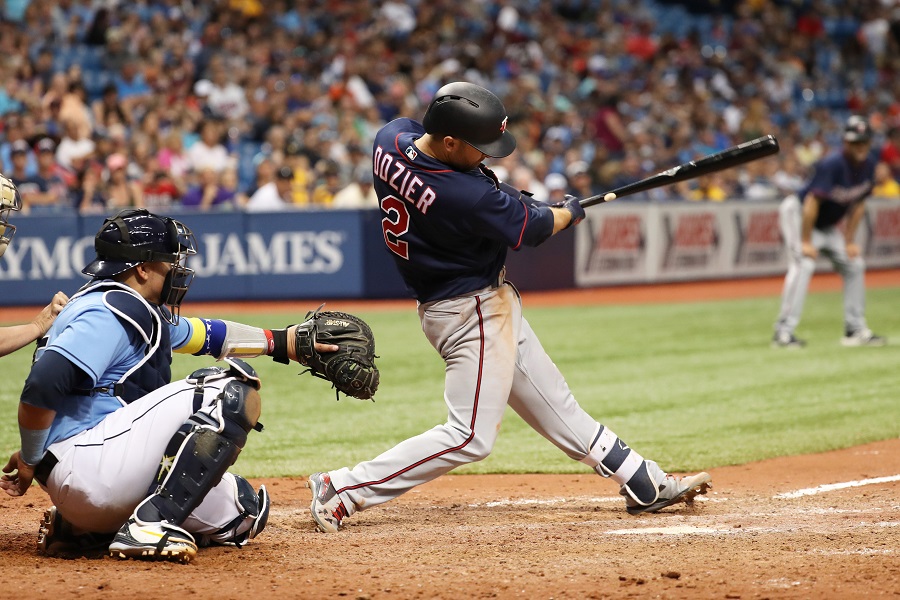 To date this season, Dozier owns a .225/.287/.384 slash line and has hit just five home runs. There was exactly one month between his 4th and 5th home runs on the year, and there are just 11 total extra-base hits to his name. Given that we’ve seen a similar blueprint time and time again for the Twins second baseman, it’s not time to panic. That being said, this season seems to have a new recipe in regard to how pitchers are attacking the Twins star, and in the way he reacts. Looking back over the past couple of seasons, pitchers have continued to make adjustments to Dozier’s dead pull strategy. Pitching away as opposed to up and in, the 606 pitches he’s seen this year have been more densely located in the low and away quadrant of the strike zone than at any point previously in his career (as evidenced in the graph below). Being pitched low and away isn’t exactly surprising for a guy that can do damage on balls thrown up and in. Right now though, it’s about what Dozier is doing with those low and away pitches. The unfortunate reality is that he’s swinging at them, and probably too often. On the year, Dozier is chasing 24% of the time, while swinging through pitches 7.8% of the time. The former number is in line with last season, while the latter is slightly lower. He has upped his zone swing percentage to 64% (from 62.5%), but there’s really nothing too negative with his percentage swing profile. If we look at the quality of contact, things change just a little bit. As much of a pull hitter as he’s turned into, Dozier hasn’t been that drastic of a fly ball guy. His launch angles have hovered around the high 12 or 13 degree mark on base hits, although this year the average has dipped down to 11.9. Combine that with an exit velocity that’s sitting at a four-year low of 90mph, and it’s no wonder why the 29.5% hard hit rate is a low water mark dating back to 2015. In summarizing the batted ball output, we’re seeing Dozier hit the ball more softly, at a less optimal launch angle, more often this year. It’s definitely why he owns just a .243 BABIP on a .225 average. By trying to pull pitches low and outside, he's only able to reach the middle of the field, as opposed to his desired left side. So, where can all of this be corrected? It seems that patience may be a virtue that Dozier has gotten away from just a little bit in the early going this season. Instead of forcing pitchers back up and in where he’d like pitches, he’s obliged in swinging at balls not conducive to success with his current approach. With 12 walks through 32 games, he’s on pace for roughly 20 fewer than a season ago. The strikeout numbers are also down slightly, and it too looks like a reflection of not working counts. In 2017, Dozier was ahead in the count during 272 plate appearances, while also seeing 116 full counts. This season he’s on pace for just 223 plate appearances where he’s been ahead in the count, and only 91 times will he have pushed the count full. As a leadoff hitter, Dozier has always been miscast. His home runs largely go as solo shots, and he doesn’t have the traditional mindset of forcing the opposing pitcher to work early. Preferring to hit in the one spot, it’s been a fine approach while he’s going good, but would regress significantly if this were to become the new norm. Getting back to being a choosier hitter in terms of pitch location is a must, and it should go a long way toward sparking a turnaround the rest of the way. It’s relatively silly to ever expect Brian Dozier to be an on-base machine. His walks are largely generated on the premise of him being pitched around or carefully to, when he’s going well. If that’s not happening though, there’s a lot less reason for opposing pitchers to be afraid of challenging him. Dozier can get back to stinging the ball by working counts and getting pitches he’s more able to do something with. We should see the change take place in due time, but the hope would that it would turn around sooner rather than later. Eduardo Escobar and Eddie Rosario are pacing the Twins lineup right now, but getting bigger contributions from a bopper like Dozier would be a very nice addition.
 -
Fair, but across baseball as a whole, it's still not the norm. I just find it fascinating that it takes place. A week is a long time to be playing the same team.
-
Despite the off day for the Minnesota Twins, each of the four farm teams were in action this evening. There were some standout performances across the board, but two players definitely made sure they got noticed this evening. Nick Gordon had a great night for himself at the dish, and Charlie Barnes picked up his first Florida State League win.TRANSACTIONS Rochester Red Wings LHP Dietrich Enns cleared outright waivers and was activated Chattanooga Lookouts Received RHP Ryne Harper from Triple-A Rochester Twins traded RHP Anthony McIver to Seattle Mariners Cedar Rapids Kernels Activated RHP Jared Finkel from the disabled list RED WINGS REPORT Buffalo 7, Rochester 0 Box Score In a cluster of roster moves a few days ago, the big league club needed to add Triple-A infielder Gregorio Petit to the 40 man roster. Dietrich Enns, acquired in the Jaime Garcia trade with the New York Yankees, was outrighted as a result. He recently cleared waivers and was activated today by Rochester to make the start. Unfortunately it didn’t go as planned. Enns needed 65 pitches to make it through just two outs into the second inning. He allowed five earned runs on four hits while walking two and striking out just one. That six-run third inning by Buffalo would prove to be fatal for the Red Wings, as they failed to muster any offense all day. The lineup produced just four hits in total, with them being spread out amongst Jermaine Curtis, Brock Stassi, James Ramsey and Sean Miller. Stassi’s double was the lone extra-base hit for Rochester. In relief, the Red Wings turned to four different arms today. D.J. Baxendale and Casey Crosby both ceded runs to give Buffalo their eventual tally of seven. Mason Melotakis and Alan Busenitz threw a combined three scoreless innings for the away club (with two of those being recorded by Melotakis). With today being a getaway day, the Red Wings will look for an opportunity to get back above .500 on Thursday against Scranton. CHATTANOOGA CHATTER Chatanooga 4, Jackson 2 Box Score In a rare five game series, the Lookouts found themselves in position to take the set in the third game with another win over the Generals. Omar Bencomo gave the club 5 1/3 strong innings, allowing just two runs on five hits. Leaving with a 3-2 lead, the Lookouts would add a run and hang on, pushing Bencomo’s record to 2-0 on the year. Nick Gordon tied up the game at one in the bottom of the first inning, launching a solo homer for his third of the year. Jackson then jumped back out to a 2-1 lead in the top of the third inning, but Edgar Corcino quickly answered with a solo shot of his own in the bottom half. From there, it was an Alex Perez single scoring Gordon in the fifth to put the Lookouts in the lead for good. Providing the cushion was none other than Gordon again, this time doubling for the second time on the night, and scoring Tanner English in the bottom of the sixth inning. Ryne Harper returned to the Lookouts today and worked 1 2/3 scoreless innings pitched while giving up just one hit and striking out three. Todd Van Steensel picked up his second save of the year in a six-out effort. Chattanooga has two games left ahead of them in order to pick up the series sweep. MIRACLE MATTERS Fort Myers 7, Charlotte 6 Box Score Charlie Barnes got the start tonight for the Fort Myers Miracle, and he turned in a career-best outing. He went 6 1/3 innings allowing just two runs to the Stone Crabs. While seven batters did record hits off of the lefty, Barnes limited the damage by issuing just one free pass and striking out four. The win is his first for the Miracle and fifth of his brief professional career. The Stone Crabs kept clawing their way back into the game, so it’s a good thing that the Fort Myers offense came to play as well. Three long balls were sent into the seats tonight, one each by Taylor Grzelakowski, Jared Foster and Jaylin Davis. With the lead trimmed to 5-2 in the seventh inning, it was Davis’ two run blast that provided the necessary cushion. Going into the final inning after having recorded the last out of the eighth, Andrew Vasquez had a one run lead to protect for the win. He was able to record each of the four necessary outs while allowing just one hit and punching out three to pick up his second save of the season. The win gave the Miracle yet another series win, and sends them off to Dunedin within one game of the .500 mark. KERNELS NUGGETS Dayton 5, Cedar Rapids 4 (10) Box Score Bailey Ober drew the start for the Kernels tonight and went five innings for the visitors. Despite being in a 4-1 hole when their starter left the game, Cedar Rapids battled on offense. From the sixth through the eighth innings, the Kernels put up a run in each frame. Alex Kirilloff’s fifth homer of the season was the highlight of the sixth inning for Toby Gardenhire’s squad. In the ninth inning, catcher David Banuelos doubled to lead off the frame and then advanced to third on a throwing error. Dayton got a strikeout of Jordan Gore to give them the first out of the inning. After walking Akil Baddoo to set up a double play, Andrew Bechtold fell victim as the second batter to strike out in the inning. Having already done damage earlier in the game, Kirilloff got a free pass to load the bases. Unfortunately, Ben Rodriguez couldn’t drive in the go ahead run and ended up allowing Dayton to strike out the side. After forcing extras and bringing the new pace of play rules into play, the Kernels couldn’t drive Ben Rodriguez in as he stalled on third base in the top half. In the bottom half, Dayton found themselves with a first and second situation after a hit batter. Jared Finkel was able to get Dayton batter Leandro Santana out on a foul bunt, but Jeter Downs singled in the next at bat to walk it off for the home team. The Kernels continue their road trip heading to Bowling Green for a new series tomorrow night. The Hot Rods sport a solid 20-12 record, and 2017 draft pick Brendan McKay will be on the mound to start the series. STARS OF THE DAY Twins Daily Pitcher of the Day – Charlie Barnes (6.1 IP, 7 H, 2 R, 2 ER, 1 BB 4 K) Twins Daily Hitter of the Day – Nick Gordon (3-4, 2 R, 2 RBI, HR(3), 2 2B) TOP PROSPECT SUMMARY 3. Nick Gordon (Chattanooga) – 3-4, 2 R, 2 RBI, HR(3), 2 2B 5. Alex Kirilloff (Cedar Rapids) – 2-4, R, RBI, BB, HR(5) 7. Brent Rooker (Chattanooga) – 1-4, BB 10. Akil Baddoo (Cedar Rapids) – 1-4, RBI, BB 17. Travis Blankenhorn (Fort Myers) – 1-4, 3 RBI, 3B(2) THURSDAY’S PROBABLE STARTERS Rochester @ Scranton (5:35PM CST) – RHP Zack Littell (1-0, 0.00 ERA) Jackson @ Chattanooga (6:15PM CST) – RHP Randy LeBlanc (4-1, 2.70 ERA) Fort Myers @ Dunedin (5:30PM CST) – RHP Andro Cutura (2-0, 4.40 ERA) Cedar Rapids @ Bowling Green (6:35PM CST) – RHP Randy Dobnak (3-0, 4.64 ERA) Please feel free to ask questions and discuss Wednesday’s games! Click here to view the article
- 15 replies
-
- 1
-
-
- minnesota twins
- nick gordon
- (and 1 more)
-
Twins Minor League Report (5/9): Gordon Crushes and Barnes Wins
Ted Schwerzler posted an article in Twins
 TRANSACTIONS Rochester Red Wings LHP Dietrich Enns cleared outright waivers and was activated Chattanooga Lookouts Received RHP Ryne Harper from Triple-A Rochester Twins traded RHP Anthony McIver to Seattle Mariners Cedar Rapids Kernels Activated RHP Jared Finkel from the disabled list RED WINGS REPORT Buffalo 7, Rochester 0 Box Score In a cluster of roster moves a few days ago, the big league club needed to add Triple-A infielder Gregorio Petit to the 40 man roster. Dietrich Enns, acquired in the Jaime Garcia trade with the New York Yankees, was outrighted as a result. He recently cleared waivers and was activated today by Rochester to make the start. Unfortunately it didn’t go as planned. Enns needed 65 pitches to make it through just two outs into the second inning. He allowed five earned runs on four hits while walking two and striking out just one. That six-run third inning by Buffalo would prove to be fatal for the Red Wings, as they failed to muster any offense all day. The lineup produced just four hits in total, with them being spread out amongst Jermaine Curtis, Brock Stassi, James Ramsey and Sean Miller. Stassi’s double was the lone extra-base hit for Rochester. In relief, the Red Wings turned to four different arms today. D.J. Baxendale and Casey Crosby both ceded runs to give Buffalo their eventual tally of seven. Mason Melotakis and Alan Busenitz threw a combined three scoreless innings for the away club (with two of those being recorded by Melotakis). With today being a getaway day, the Red Wings will look for an opportunity to get back above .500 on Thursday against Scranton. CHATTANOOGA CHATTER Chatanooga 4, Jackson 2 Box Score In a rare five game series, the Lookouts found themselves in position to take the set in the third game with another win over the Generals. Omar Bencomo gave the club 5 1/3 strong innings, allowing just two runs on five hits. Leaving with a 3-2 lead, the Lookouts would add a run and hang on, pushing Bencomo’s record to 2-0 on the year. Nick Gordon tied up the game at one in the bottom of the first inning, launching a solo homer for his third of the year. Jackson then jumped back out to a 2-1 lead in the top of the third inning, but Edgar Corcino quickly answered with a solo shot of his own in the bottom half. From there, it was an Alex Perez single scoring Gordon in the fifth to put the Lookouts in the lead for good. Providing the cushion was none other than Gordon again, this time doubling for the second time on the night, and scoring Tanner English in the bottom of the sixth inning. Ryne Harper returned to the Lookouts today and worked 1 2/3 scoreless innings pitched while giving up just one hit and striking out three. Todd Van Steensel picked up his second save of the year in a six-out effort. Chattanooga has two games left ahead of them in order to pick up the series sweep. MIRACLE MATTERS Fort Myers 7, Charlotte 6 Box Score Charlie Barnes got the start tonight for the Fort Myers Miracle, and he turned in a career-best outing. He went 6 1/3 innings allowing just two runs to the Stone Crabs. While seven batters did record hits off of the lefty, Barnes limited the damage by issuing just one free pass and striking out four. The win is his first for the Miracle and fifth of his brief professional career. The Stone Crabs kept clawing their way back into the game, so it’s a good thing that the Fort Myers offense came to play as well. Three long balls were sent into the seats tonight, one each by Taylor Grzelakowski, Jared Foster and Jaylin Davis. With the lead trimmed to 5-2 in the seventh inning, it was Davis’ two run blast that provided the necessary cushion. Going into the final inning after having recorded the last out of the eighth, Andrew Vasquez had a one run lead to protect for the win. He was able to record each of the four necessary outs while allowing just one hit and punching out three to pick up his second save of the season. The win gave the Miracle yet another series win, and sends them off to Dunedin within one game of the .500 mark. https://twitter.com/kirilloff19/status/994376382607183873 KERNELS NUGGETS Dayton 5, Cedar Rapids 4 (10) Box Score Bailey Ober drew the start for the Kernels tonight and went five innings for the visitors. Despite being in a 4-1 hole when their starter left the game, Cedar Rapids battled on offense. From the sixth through the eighth innings, the Kernels put up a run in each frame. Alex Kirilloff’s fifth homer of the season was the highlight of the sixth inning for Toby Gardenhire’s squad. In the ninth inning, catcher David Banuelos doubled to lead off the frame and then advanced to third on a throwing error. Dayton got a strikeout of Jordan Gore to give them the first out of the inning. After walking Akil Baddoo to set up a double play, Andrew Bechtold fell victim as the second batter to strike out in the inning. Having already done damage earlier in the game, Kirilloff got a free pass to load the bases. Unfortunately, Ben Rodriguez couldn’t drive in the go ahead run and ended up allowing Dayton to strike out the side. After forcing extras and bringing the new pace of play rules into play, the Kernels couldn’t drive Ben Rodriguez in as he stalled on third base in the top half. In the bottom half, Dayton found themselves with a first and second situation after a hit batter. Jared Finkel was able to get Dayton batter Leandro Santana out on a foul bunt, but Jeter Downs singled in the next at bat to walk it off for the home team. The Kernels continue their road trip heading to Bowling Green for a new series tomorrow night. The Hot Rods sport a solid 20-12 record, and 2017 draft pick Brendan McKay will be on the mound to start the series. STARS OF THE DAY Twins Daily Pitcher of the Day – Charlie Barnes (6.1 IP, 7 H, 2 R, 2 ER, 1 BB 4 K) Twins Daily Hitter of the Day – Nick Gordon (3-4, 2 R, 2 RBI, HR(3), 2 2B) TOP PROSPECT SUMMARY 3. Nick Gordon (Chattanooga) – 3-4, 2 R, 2 RBI, HR(3), 2 2B 5. Alex Kirilloff (Cedar Rapids) – 2-4, R, RBI, BB, HR(5) 7. Brent Rooker (Chattanooga) – 1-4, BB 10. Akil Baddoo (Cedar Rapids) – 1-4, RBI, BB 17. Travis Blankenhorn (Fort Myers) – 1-4, 3 RBI, 3B(2) THURSDAY’S PROBABLE STARTERS Rochester @ Scranton (5:35PM CST) – RHP Zack Littell (1-0, 0.00 ERA) Jackson @ Chattanooga (6:15PM CST) – RHP Randy LeBlanc (4-1, 2.70 ERA) Fort Myers @ Dunedin (5:30PM CST) – RHP Andro Cutura (2-0, 4.40 ERA) Cedar Rapids @ Bowling Green (6:35PM CST) – RHP Randy Dobnak (3-0, 4.64 ERA) Please feel free to ask questions and discuss Wednesday’s games!
 -
The Minnesota Twins were going to be without Miguel Sano at some point during the 2018 Major League Baseball season. Whether from a possible suspension, complications due to a rod being inserted into his leg, or the normal wear and tear a body of that size can endure, the reality is he would miss time. When that point came, Eduardo Escobar was going to be the man that filled in. What wasn't expected is that the utility man would raise the bar. Then again, maybe we should have seen this coming all along. Back in 2015, I wrote a piece entitled Twins Cash Check Formerly Known as Francisco Liriano. The point of that article was that Liriano had run his course within the organization and was flipped to the Chicago White Sox in a move that was largely forgettable. Escobar was a part of the return however, and he posted a 2.6 fWAR in 2014. As a part time player, he'd carved out a nice role for himself and the 2015 spring training continued to carry that momentum forward. Since that point, he's posted yearly fWAR totals of 1.9, -0.2, and 1.7. Outside of 2016 in which Minnesota went in the can as a whole, he's been incredible valuable. Now having played in 29 of the teams first 32 games, Escobar finds himself with a 1.4 fWAR (best on the team) that projects to a 7.1 mark over the course of a full season. There's next to no chance that pace continues, but for the sake of context, Joe Mauer won the MVP in 2009 with a 7.6 fWAR season. Right now, Escobar is playing like nothing short of the Twins team MVP. The great thing about what is currently taking place for the Fogo de Chao loving infielder, is that he's not doing anything too out of the ordinary. His .341 BABIP is far from inflated, he's swinging through roughly the same amount of pitches, and neither his contact or chase rates are out of whack. His 35 home run pace is probably unsustainable, but far from crazy after launching 20 a season ago. The jump from a 12.8% HR/FB rate to a 15.9% HR/FB is noticeable but doesn't scream crazy either. If we're looking for a change, things could potentially be explained by a more gradual one. At the time of first tracking in 2015, Escobar posted a 13.4 degree average launch angle on his base hits. Year over year, he's improved that number to 14.1, 17.1, and now 18.5 this season. Getting lift is something we've seen the game embrace as it positively correlates with the quality of hits generated. Simply put, hitting the ball harder, further, and higher is only going to positively impact an individual's overall results. Eduardo's double, triple, and home run totals seem to agree with that notion as well. I'm not going to boil this outburst from the Twins utility man down solely to a launch angle adaptation. I think there's plenty of factors at play, but it seems apparent that his growth as a hitter has definitely contributed to the current surge. What's arguably more important in this whole scenario, is just how valuable Escobar is to the Twins roster makeup as a whole. The talk of the offseason was in regards to how the Twins will retain Brian Dozier going into the 2019 season. My inclination all along has been that they'd either flip him for something, or allow him to walk with a qualifying offer tied to his name. Given what the market showed this last offseason, there's a decent possibility that Brian could accept that offer and return to the Twins on a one-year deal. Regardless, the totality of his age, production, and value going forward seems somewhat replaceable for Minnesota. Trying to find another Eduardo Escobar could be a more daunting task. Over the course of a full season, fWAR totals around 1.5-2.0 are relatively easy to come by. Escobar plays many positions, but is probably below average defensively at all of them. That being said, he's a very good teammate and provides a strong clubhouse presence. He'll be just 30 years old next season, and the familiarity of backing up all over for the Twins is something he's done since he was a 23 year old. Staring at an average annual value south of $8 million or so per year, that's a commodity that Derek Falvey and Thad Levine may not be so keen on losing. At the end of the day, Escobar is front and center regarding this Twins current turnaround. That's not to say someone else won't pick up the slack shortly, and it's a fool's errand to realistically expect 162 game averages off of this current level of production. Even at a mid-range value for Paul Molitor though, Eduardo Escobar is a player that winning teams need to have around and he's a great asset for Minnesota. For more from Off The Baggy, click here. Follow @tlschwerz
-
Another Big Move Coming for Minnesota?
Ted Schwerzler commented on Ted Schwerzler 's blog entry in Off The Baggy
I'd prefer Wade over Grossman as well, but there's more factors at play there. Grossman has started to come around, and Wade would would have a more difficult road to consistent playing time. -
Another Big Move Coming for Minnesota?
Ted Schwerzler commented on Ted Schwerzler 's blog entry in Off The Baggy
Yeah, I probably could've been more articulate than simply saying "clock" but intended to be somewhat all encompassing. I'm in agreement though that if it is Gordon, I want it to be for a significant amount of time, and to play. -
Update: The Twins put Miguel Sano on the DL today (5/1). Gregorio Petit was selected to join the 40 man roster and replace him on the 25 man roster. Dietrich Enns was DFA'd to make room for Petit. Given that the Twins are going with a fill in type player in Petit, I would assume that signifies a belief in Sano not being on the shelf for too long. Gordon would still make sense at some point in the not too distant future. After yet another ineffective start for the Minnesota Twins, Phil Hughes was guaranteed nothing by the front office and Paul Molitor. His scheduled start was listed as TBD on the press releases, and eventually the news came out that he'd been demoted to the bullpen. Top pitching prospect Fernando Romero is on his way to the big leagues and will have a chance to stick in the major league rotation. With Miguel Sano being hampered by a hamstring injury, that may not be the only top prospect making a debut for Minnesota. On Monday night when the Twins played the Toronto Blue Jays, Paul Molitor's bench included just two available options: Ryan LaMarre and Jason Castro. Given that neither of them are reliable bats at the current juncture, that's a pretty underwhelming set of reserves for a Twins club that badly needs to turn things around. With the promotion of Romero, I opined on Twitter that it signified the front office was echoing the statements of many fans. This level of performance is unexpected, and unacceptable. Instead of looking for band aids to try and get by, they were going to throw out their biggest pieces. That suggests to me that Stephen Gonsalves could soon be a rotation option, and Tyler Jay may not be far behind in relief. For the lineup though, there's one name that now jumps off the page. Minnesota's 40 man roster has been exhausted when it comes to hitters. The only player currently available and not with the big league club is Jake Cave. The outfielder, acquired from the New York Yankees this spring, is slashing .188/.322/.261 at Triple-A Rochester through his first 19 games. With Zack Granite on the disabled list, Derek Falvey may be forced into another aggressive move. It's probably time to wonder if top prospect Nick Gordon isn't ready for the big leagues. Here's the thing, it makes no sense for Gordon to come up and sit. There's also little reason to put him on the 40 man roster and start his clock if the stint at the highest level is going to be a matter of days. In regards to both of those concerns however, there's a clear path as to how things could work out. First and foremost, the playing time should be there. Eduardo Escobar is locked in as an everyday player right now. The utility man has filled in for Sano admirably, and is arguably the Twins best offensive threat going. Gordon, while not an ideal fit at shortstop, could immediately take over for Ehire Adrianza. The slick fielding Venezuelan would be a loss with his glove, but he's posted a .590 OPS and has never been a bat to rely on. Gordon would be making a big jump from Double-A Chattanooga, but his current .898 OPS in 23 games suggests he may be better than the level anyways. Secondly, there's no guarantee that Miguel Sano is going to simply need 10 days to get his leg back to full health. Hamstring pulls are tricky, and rushing them back only leads to further aggravation. The reality is that even with the ability to backdate his DL stint to April 27, the Twins could be without their starting third basemen for a matter of weeks. When he returns, slotting him into a DH role while Escobar is going hot would continue to make room for Gordon to receive regular playing time. There's a lot to digest here, and in Gordon, we're talking about a 22 year old kid with some question marks remaining in regards to his prospect status. That being said, his fielding deficiencies probably aren't going away, and that bat has continued to profile well. After a strong start to the 2017 season, he ended up with a .749 OPS. The .898 mark this year is solid, and that's bolstered by a .934 OPS over his last 16 games. Assumed the potential replacement for Brian Dozier, it's hardly a bad idea to get a look and see if he can't provide a jolt right now. We could have our answer sooner rather than later, but if the Twins want a spark and another aggressive move, the kid with the bloodlines should be the place to turn. For more from Off The Baggy, click here. Follow @tlschwerz
-
The Minnesota Twins are nearly through their first month of baseball in the 2018 season. To say it's been a debacle would be putting things nicely. After an offseason that saw the 25 man roster get substantially better, as well as infused with more depth, the results have been nothing short of underwhelming. With players across the roster performing below expectations, Kyle Gibson has been a very solid bright spot. A former first round pick for the Twins, Gibson has never lived up to the promise after being selected 22nd overall in the 2009 draft. A college pitcher out of Missouri, the expectation was that he could rise through the system quickly, and be an impact arm at the highest level. The numbers in the minors were acceptable, but probably not as glowing as the Twins brass would've hoped. Then there was Tommy John surgery, and further delays on getting him to the big leagues. Now with five big league seasons under his belt, it's been somewhat of a roller coaster ride. Gibson's 2nd and 3rd major league seasons (2014/15) had the makings of a guy who could be a rotation fixture. Despite the club's struggles, Gibson was a reliable arm that you gave you something consistent, even if it wasn't top-of-the-rotation stuff. The past two seasons, the former Tigers pitcher has been optioned back to Triple-A, looked like a non-tender candidate, and then turned things back in what has appeared a relatively unpredictable manner. Going into the 2018 season, the big question mark for Kyle was whether or not his pitching down the stretch for the Twins could be considered a new norm. Over his final 11 starts, he owned a 3.55 ERA and a .720 OPS against. Shrinking the sample to his final eight starts in 2017, Gibson's numbers were even better with a 2.92 ERA and a .684 OPS against. For a guy who seemingly had already developed the book on himself, this was uncharted territory. He had gone from a question mark for the upcoming year, to being a virtual lock in a Twins rotation that would open a season with postseason aspirations for the first time in a long while. Now five turns through the rotation in 2018, and Gibson has done nothing to dispel the notion that the end of 2017 was for real. He's compiled 27 innings of work and has a 3.33 ERA to show for it. The 10.0 K/9 is a career best, and nearly four strikeouts more than the 6.4 K/9 career average he has to this point. Gibson's 1.259 WHIP is a career low, as are his 6.7 H/9 and 0.3 HR/9 numbers. If there's something to nitpick at, it's the 4.7 BB/9 he's currently conceding, which is definitely a career worst. https://twitter.com/darenw/status/990604008095182851?ref_src=twsrc%5Etfw&ref_url=http%3A%2F%2Foffthebaggy.blogspot.com%2F2018%2F04%2Fis-real-kyle-gibson-standing-up.html So, what do we make of it all? Well, despite being an extremely small sample size, there's clearly something going on here. MLB's Daren Willman pointed out recently that Kyle Gibson's slider is currently producing the most swing and miss results in comparison to any pitch thrown by any other player across the entire league. What's equally as impressive, is that Gibson's curveball comes in third on the list. Looking at his career usage rates, Kyle is deploying his slider and curve at almost identical rates to what he has always done. That suggests that the pitches themselves are not getting batters of balance. There's something else at play here. When diving into Statcast data on BaseballSavant.com, we can see that Gibson's spin rates have been on an upward trajectory for the past four years. In 2018, through his first 27 innings, he's put up career best marks for both his slider and curveball. You can take a bit deeper dive into the understanding of spin rates with Mike Petriello's piece from 2017 here. It's not that Gibson's numbers are exceptional when compared across all of baseball, but they are noteworthy among starters, and definitely jump off the page in comparison to his previous output. Generating a better pitch quality, while also garnering more movement across the zone is something that has absolutely help the Twins former first round pick. Thanks to the improvements to his pitch quality, Gibson's results are currently correlating directly with the process. A 70.2% contract rating is the lowest he's ever allowed in his career, and represents and eight percent improvement in that category. He's also getting swinging strikes at a 13.1% clip, which is over a 3% boost on his career average. The best part of all of this, is that things look somewhat sustainable. Quality of contact ratings (soft/med/hard) are virtually identical to where they were a season ago for Gibson. His 4.2% HR/FB ratio is probably going to rise as it normalizes a bit, but being a sinkerballer, the home run has never been something that's plagued him too heavily. The .275 BABIP is lower than his .328 mark in 2017, and .308 career total, but it isn't completely out of whack either. In fact, Gibson owns a 3.11 FIP number to date, which suggests that his controllable production is even a bit better than what the actual output has dictated. To step out from behind the numbers, there's a few things that we can say with near certainty. First and foremost, we're dealing with a small 27 inning sample size. There's a possibility that this portion of the season becomes and outlier as opposed to a reflection of change. That being said, we can also determine that two pitches Gibson throws are being tossed across the plate in their best forms of his entire career. At the age of 30, he's developed strong secondary pitches, and pairing that with his sinker has been a very nice development. I don't expect Gibson to strike out double-digit batters per nine innings over the course of 2018, and thinking he'll walk nearly five per game seems foolish too. There's no doubting that his repertoire boost has worked to his benefit however, and that could be the key that unlocks all of his potential, whatever that may be. For more from Off The Baggy, click here. Follow @tlschwerz
-
For the past number of years, Fernando Rodney has come on to close baseball games for any number of big league teams. He’s been asked to pitch one inning, get three outs, and preserve the lead for his respective ball club. Over the years, he’s added the shooting arrow celebrating and a new number to his age tally. What he’s patented during his 16 major league seasons though, is the Fernando Rodney Experience. On Thursday it caused a lot of Twins fans to lose their collective minds.On the season, Rodney has been called upon eight times. He’s converted two save attempts while taking two losses and three blown saves. After his latest go-round with the New York Yankees, in which he recorded no outs and gave up three runs (two earned) his ERA sits at an ugly 6.75 across 6 2/3 innings pitched. From those numbers alone, you can choose to take the road of the collective majority and call for his head. The alternative is to look a bit deeper. This isn’t uncharted territory for Rodney, and really, it shouldn’t be for Twins fans either. On April 29th last season, Rodney owned a 12.60 ERA and was allowing opposing batters a 1.066 OPS off of him. He’d taken two losses and two blown saves over just 10 innings pitched for the Diamondbacks. All worse numbers than where he’s currently at for the Twins, Fernando then went on a run. For the rest of the season, Arizona called on him to pitch 45 1/3 innings. He turned in a 2.38 ERA, allowed opposing batters just a .442 OPS, and saved 33 contests while blowing just four more games. So why should you as a Twins fan be able to relate? How about because the same transformation happened right here at Target Field last year. Matt Belisle, who eventually replaced Brandon Kintzler as closer, owned a 9.00 ERA on May 7th. On that day he gave up six runs to the Boston Red Sox while recording just one out. From that point on though, the 36 year-old was lights out. In his final 47 1/3 innings for Paul Molitor last season, Belisle owned a 2.66 ERA and a .617 OPS against. Also an elder statesmen of the game who looked cooked in the early action, then a turnaround came. Now, for Rodney, the blueprint towards effectiveness seems pretty clear. Over the course of his career, Rodney’s plan of attack has been to lean on a strong fastball that touches the upper 90’s, and then come back often with a changeup that presents something like a 15 mph decrease in velocity. Through his 16 big league seasons, he’s averaged usage rates on those two offerings at 43% and 36% respectively. For the Twins this year however, something is way out of whack, as the bow hunter is throwing fastballs 64% of the time while serving up his changeup just 20% of the time. It’s easy to suggest that being 41 years-old could have some sort of effect on his performance, but the reality is that this same pitcher was 40 and effective one year ago. Instead of assuming a decline that the numbers disagree with (his average fastball velocity is exactly where it was last season), the more plausible explanation seems to be a process that’s deviated from what has worked so wonderfully in the past. Right now, and likely because of his pitch mix, Rodney is simply failing to keep hitters off balance. Knowing the fastball is coming more often, he’s been more predictable to sit on. Despite allowing just three home runs all year a season ago, he’s already served up two with April still having yet to fade away. The K/9 and BB/9 rates are actually wonderful for a guy who tiptoes both lines so feverishly, but it’s the 13.5 H/9 (nearly double his career average) that’s causing problems. Download attachment: Dbvlbv0XcAAs4ww.jpg-large.jpeg The Minnesota Twins have a few things they need to digest and address with their current closer. Arguably the most important is figuring out why the changeup usage has fallen off a cliff. It’s currently registering as the best quality of pitch average over the course of his career, and he’s not going to it at all. His fastball has never been less quality than it is right now, yet he’s leaning on it so heavily. Figuring out whether it’s a confidence thing, or just some ill-advised change in process is a must. From there, Paul Molitor and Garvin Alston must decide if the process can be rectified while keeping him in his current role. Ideally the Twins should want to have the flexibility of inserting arms like Addison Reed or Ryan Pressly at whichever point in the game high leverage first presents itself. Saving impact arms like that for what could be low leverage outs in the 9th inning would be wasteful. If Rodney can’t tweak his process while remaining in the closer role, they have to be willing to alter his usage until things are back on track. At the end of the day, I think there are a couple of really important takeaways here. Rodney is in no more of a dire situation than the Twins are as a whole right now. Being swept is hardly ideal, but they’ve played just 12% of their total schedule and there’s so much baseball ahead. On top of that, Paul Molitor’s bullpen is best constructed with the arms currently in it. There are contributors down on the farm, but none of them represent a golden ticket. Getting each of the guys currently beyond the outfield wall right is Minnesota’s best hope. There definitely comes a point in every player’s career where it’s simply time to hang it up and be real with the fact that the game has left you. Despite being 41 years old, there are plenty of reasons to doubt this being that crossroads for Fernando Rodney. The hope would be that in a few months, this date would be the one we look back upon and note it as having been the turning point. Click here to view the article
- 20 replies
-
- 1
-
-
- fernando rodney
- minnesota twins
- (and 1 more)
-
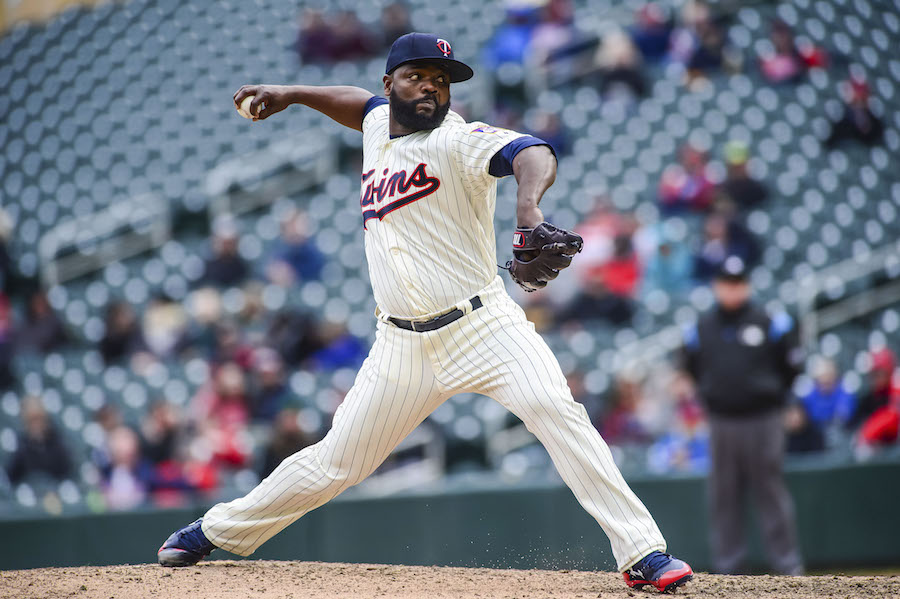 On the season, Rodney has been called upon eight times. He’s converted two save attempts while taking two losses and three blown saves. After his latest go-round with the New York Yankees, in which he recorded no outs and gave up three runs (two earned) his ERA sits at an ugly 6.75 across 6 2/3 innings pitched. From those numbers alone, you can choose to take the road of the collective majority and call for his head. The alternative is to look a bit deeper. This isn’t uncharted territory for Rodney, and really, it shouldn’t be for Twins fans either. On April 29th last season, Rodney owned a 12.60 ERA and was allowing opposing batters a 1.066 OPS off of him. He’d taken two losses and two blown saves over just 10 innings pitched for the Diamondbacks. All worse numbers than where he’s currently at for the Twins, Fernando then went on a run. For the rest of the season, Arizona called on him to pitch 45 1/3 innings. He turned in a 2.38 ERA, allowed opposing batters just a .442 OPS, and saved 33 contests while blowing just four more games. So why should you as a Twins fan be able to relate? How about because the same transformation happened right here at Target Field last year. Matt Belisle, who eventually replaced Brandon Kintzler as closer, owned a 9.00 ERA on May 7th. On that day he gave up six runs to the Boston Red Sox while recording just one out. From that point on though, the 36 year-old was lights out. In his final 47 1/3 innings for Paul Molitor last season, Belisle owned a 2.66 ERA and a .617 OPS against. Also an elder statesmen of the game who looked cooked in the early action, then a turnaround came. Now, for Rodney, the blueprint towards effectiveness seems pretty clear. Over the course of his career, Rodney’s plan of attack has been to lean on a strong fastball that touches the upper 90’s, and then come back often with a changeup that presents something like a 15 mph decrease in velocity. Through his 16 big league seasons, he’s averaged usage rates on those two offerings at 43% and 36% respectively. For the Twins this year however, something is way out of whack, as the bow hunter is throwing fastballs 64% of the time while serving up his changeup just 20% of the time. It’s easy to suggest that being 41 years-old could have some sort of effect on his performance, but the reality is that this same pitcher was 40 and effective one year ago. Instead of assuming a decline that the numbers disagree with (his average fastball velocity is exactly where it was last season), the more plausible explanation seems to be a process that’s deviated from what has worked so wonderfully in the past. Right now, and likely because of his pitch mix, Rodney is simply failing to keep hitters off balance. Knowing the fastball is coming more often, he’s been more predictable to sit on. Despite allowing just three home runs all year a season ago, he’s already served up two with April still having yet to fade away. The K/9 and BB/9 rates are actually wonderful for a guy who tiptoes both lines so feverishly, but it’s the 13.5 H/9 (nearly double his career average) that’s causing problems. The Minnesota Twins have a few things they need to digest and address with their current closer. Arguably the most important is figuring out why the changeup usage has fallen off a cliff. It’s currently registering as the best quality of pitch average over the course of his career, and he’s not going to it at all. His fastball has never been less quality than it is right now, yet he’s leaning on it so heavily. Figuring out whether it’s a confidence thing, or just some ill-advised change in process is a must. From there, Paul Molitor and Garvin Alston must decide if the process can be rectified while keeping him in his current role. Ideally the Twins should want to have the flexibility of inserting arms like Addison Reed or Ryan Pressly at whichever point in the game high leverage first presents itself. Saving impact arms like that for what could be low leverage outs in the 9th inning would be wasteful. If Rodney can’t tweak his process while remaining in the closer role, they have to be willing to alter his usage until things are back on track. At the end of the day, I think there are a couple of really important takeaways here. Rodney is in no more of a dire situation than the Twins are as a whole right now. Being swept is hardly ideal, but they’ve played just 12% of their total schedule and there’s so much baseball ahead. On top of that, Paul Molitor’s bullpen is best constructed with the arms currently in it. There are contributors down on the farm, but none of them represent a golden ticket. Getting each of the guys currently beyond the outfield wall right is Minnesota’s best hope. There definitely comes a point in every player’s career where it’s simply time to hang it up and be real with the fact that the game has left you. Despite being 41 years old, there are plenty of reasons to doubt this being that crossroads for Fernando Rodney. The hope would be that in a few months, this date would be the one we look back upon and note it as having been the turning point.
 -
Today, three of the four Minnesota Twins affiliates took to the field for early games. With just the Cedar Rapids Kernels playing in the evening, there was plenty to digest over the lunch hour. For both the Miracle and the Lookouts, the story was the longball.RED WINGS REPORT Rochester 8, Gwinett 3 Box Score Adalberto Mejia got the start for the Red Wings but was lifted after just one inning of work. Despite allowing one run on three hits, Mejia was in the zone often throwing 15 strikes out of his 22 pitches. Mejia was lifted after throwing one pitch in the second due to a blister or fingernail issue according to Twins Daily's Seth Stohs. It was a total team effort from the lineup today, as five different hitters picked up at least one RBI for the Red Wings. Kennys Vargas had a 3-4 day at the dish and James Ramsey tallied the lone extra-base hit for Rochester. Mason Melotakis got the win pitching three innings of relief work, while Gabriel Moya pitched two innings for his first work at Triple-A in 2018. Matt Magill was able to record his second save of the season, and it came over a three inning outing as well. The Red Wings pieced together both their linescore as well as their pitching effort in this one, and it came out to a nice five run victory drawing them closer to .500 on the year. CHATTANOOGA CHATTER Chattanooga 4, Jackson 3 Box Score Rnady LeBlanc drew the start today for the Lookouts, and despite being under duress often, he remained cool, calm, and collected. The Chattanooga starter got behind early giving up two runs in the first inning, but the deficit was quickly wiped away. In the top of the second, right fielder Edgar Corcino launched his first homer of the year, and the grand slam put the away team on top for good. LeBlanc would go into the seventh inning despite giving up 11 hits on the day. The damage only totaled three runs (two earned) and he fanned six Jacksonville hitters. Six different players picked up hits for the Lookouts, but no one was able to muster a multi-hit performance. Zander Wiel and his .367 average continue to hold strong as he added a base knock as well as a run scored in the effort. Omar Bencomo was the lone reliever used today by Chattanooga, and he earned his second save of the year throwing 2 1/3 innings of two hit ball. MIRACLE MATTERS Clearwater 9, Fort Myers 5 Box Score Coming off a very strong performance his last time out, things got rocky early for Tyler Wells in this one. Clearwater tageed the Miracle pitcher for five runs over the course of the third and fourth innings. Forced out of the game after 3 1/1 innings pitched, Wells’ bright spot was the nice 5/1 K/BB ratio on the day. Six of the nine Miracle batters picked up hits on the day, while both Nelson Molina and Travis Blankenhorn recorded multi-hit efforts. In the losing effort, Blankenhorn was the star of the show with both of his hits being of the home run variety. He now is batting .288 on the season and has four longballs to his credit. Along with his three hits, Molina tallied one of five RBI for the Miracle. As they look to draw closer to the .500 mark, the Miracle head home to face off against the Daytona Tortugas on Thursday. KERNELS NUGGETS Burlington 7, Cedar Rapids 2 Box Score Looking to take the series from the Bees, Cedar Rapids needed a win at home tonight. After allowing just one run in the first three innings, things started to unravel for Tyler Watson in the fourth. He ended up surrendering three runs on seven hits, and five walks while striking out six across 3 2/3 innings. Cedar Rapids wouldn't put up their first run until the 6th inning, on an Alex Kirilloff RBI double, but they already trailed 4-1 at that point. By the bottom of the 8th inning, the Kernels found themselves trailing 7-1. Andrew Becthold came around to score on a wild pitch, drawing within five, but that would be where things stalled for the home team. The lone multi-hit night came from the bat of Bechtold, and the 5-9 hitters in Toby Gardenhire's lineup combined to go 0-18 with eight strikeouts. Jose Miranda did match Kirilloff's double for the only other extra base hit of the evening. Tomorrow evening the Kernels will look to salvage a series split. STARS OF THE DAY Twins Daily Pitcher of the Day – Randy LeBlanc (W, 6.2 IP, 11 H, 3 R, 2 ER, 1 BB, 6 K) Twins Daily Hitter of the Day – Travis Blankenhorn (2-4, 2 R, 2 RBI, 2 HR) TOP PROSPECT SUMMARY 3. Nick Gordon (Chattanooga) – 0-4 5. Alex Kirilloff (Cedar Rapids) – 1-4, RBI, 2B, K 7. Brent Rooker (Chattanooga) – 0-4 10. Akil Baddoo (Cedar Rapids) – 0-3, 2 BB, K 13. Lewin Diaz (Fort Myers) – 0-4 14. LaMonte Wade (Chattanooga) – 1-4 16. Ben Rortvedt (Cedar Rapids) – 0-3, BB, K 17. Travis Blankenhorn (Fort Myers) – 2-4, 2 R, 2 RBI, 2 HR(4) WEDNESDAY’S PROBABLE STARTERS Rochester - No Game Scheduled. Chattanooga vs Tennessee (6:15PM CST) – LHP Lewis Thorpe (0-2, 5.79 ERA) Daytona @ Fort Myers (6:00PM CST) – LHP Charlie Barnes (0-2, 4.38 ERA) Burlington @ Cedar Rapids (6:35PM CST) – Click here to view the article
-
Twins Minor League Report (4/25): Long Ball Highlights Early Action
Ted Schwerzler posted an article in Twins
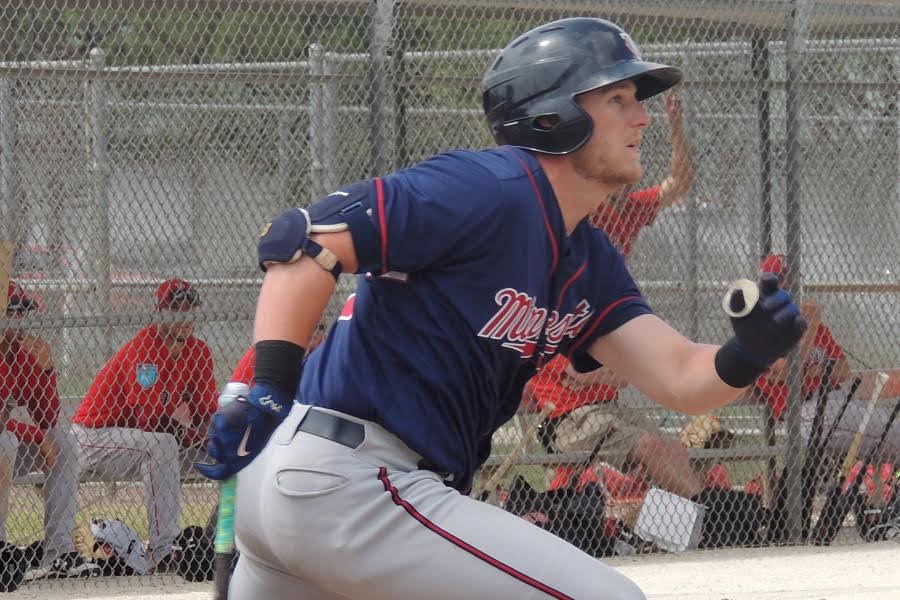 RED WINGS REPORT Rochester 8, Gwinett 3 Box Score Adalberto Mejia got the start for the Red Wings but was lifted after just one inning of work. Despite allowing one run on three hits, Mejia was in the zone often throwing 15 strikes out of his 22 pitches. Mejia was lifted after throwing one pitch in the second due to a blister or fingernail issue according to Twins Daily's Seth Stohs. It was a total team effort from the lineup today, as five different hitters picked up at least one RBI for the Red Wings. Kennys Vargas had a 3-4 day at the dish and James Ramsey tallied the lone extra-base hit for Rochester. Mason Melotakis got the win pitching three innings of relief work, while Gabriel Moya pitched two innings for his first work at Triple-A in 2018. Matt Magill was able to record his second save of the season, and it came over a three inning outing as well. The Red Wings pieced together both their linescore as well as their pitching effort in this one, and it came out to a nice five run victory drawing them closer to .500 on the year. CHATTANOOGA CHATTER Chattanooga 4, Jackson 3 Box Score Rnady LeBlanc drew the start today for the Lookouts, and despite being under duress often, he remained cool, calm, and collected. The Chattanooga starter got behind early giving up two runs in the first inning, but the deficit was quickly wiped away. In the top of the second, right fielder Edgar Corcino launched his first homer of the year, and the grand slam put the away team on top for good. LeBlanc would go into the seventh inning despite giving up 11 hits on the day. The damage only totaled three runs (two earned) and he fanned six Jacksonville hitters. Six different players picked up hits for the Lookouts, but no one was able to muster a multi-hit performance. Zander Wiel and his .367 average continue to hold strong as he added a base knock as well as a run scored in the effort. Omar Bencomo was the lone reliever used today by Chattanooga, and he earned his second save of the year throwing 2 1/3 innings of two hit ball. MIRACLE MATTERS Clearwater 9, Fort Myers 5 Box Score Coming off a very strong performance his last time out, things got rocky early for Tyler Wells in this one. Clearwater tageed the Miracle pitcher for five runs over the course of the third and fourth innings. Forced out of the game after 3 1/1 innings pitched, Wells’ bright spot was the nice 5/1 K/BB ratio on the day. Six of the nine Miracle batters picked up hits on the day, while both Nelson Molina and Travis Blankenhorn recorded multi-hit efforts. In the losing effort, Blankenhorn was the star of the show with both of his hits being of the home run variety. He now is batting .288 on the season and has four longballs to his credit. Along with his three hits, Molina tallied one of five RBI for the Miracle. As they look to draw closer to the .500 mark, the Miracle head home to face off against the Daytona Tortugas on Thursday. KERNELS NUGGETS Burlington 7, Cedar Rapids 2 Box Score Looking to take the series from the Bees, Cedar Rapids needed a win at home tonight. After allowing just one run in the first three innings, things started to unravel for Tyler Watson in the fourth. He ended up surrendering three runs on seven hits, and five walks while striking out six across 3 2/3 innings. Cedar Rapids wouldn't put up their first run until the 6th inning, on an Alex Kirilloff RBI double, but they already trailed 4-1 at that point. By the bottom of the 8th inning, the Kernels found themselves trailing 7-1. Andrew Becthold came around to score on a wild pitch, drawing within five, but that would be where things stalled for the home team. The lone multi-hit night came from the bat of Bechtold, and the 5-9 hitters in Toby Gardenhire's lineup combined to go 0-18 with eight strikeouts. Jose Miranda did match Kirilloff's double for the only other extra base hit of the evening. Tomorrow evening the Kernels will look to salvage a series split. STARS OF THE DAY Twins Daily Pitcher of the Day – Randy LeBlanc (W, 6.2 IP, 11 H, 3 R, 2 ER, 1 BB, 6 K) Twins Daily Hitter of the Day – Travis Blankenhorn (2-4, 2 R, 2 RBI, 2 HR) TOP PROSPECT SUMMARY 3. Nick Gordon (Chattanooga) – 0-4 5. Alex Kirilloff (Cedar Rapids) – 1-4, RBI, 2B, K 7. Brent Rooker (Chattanooga) – 0-4 10. Akil Baddoo (Cedar Rapids) – 0-3, 2 BB, K 13. Lewin Diaz (Fort Myers) – 0-4 14. LaMonte Wade (Chattanooga) – 1-4 16. Ben Rortvedt (Cedar Rapids) – 0-3, BB, K 17. Travis Blankenhorn (Fort Myers) – 2-4, 2 R, 2 RBI, 2 HR(4) WEDNESDAY’S PROBABLE STARTERS Rochester - No Game Scheduled. Chattanooga vs Tennessee (6:15PM CST) – LHP Lewis Thorpe (0-2, 5.79 ERA) Daytona @ Fort Myers (6:00PM CST) – LHP Charlie Barnes (0-2, 4.38 ERA) Burlington @ Cedar Rapids (6:35PM CST) –
 -
Miguel Sano is one of the Minnesota Twins most prolific hitters, and right now, he's also one of their worst. Through 17 games in the 2018 season, he's had 75 plate appearances and owns a .191/.253/.426 slash line. What's positive is that there's a very clear path to righting the ship. The downside is that the path is one that doesn't come easily for players toting power bats. Thus far, Sano has struck out 32 times while drawing just eight walks. Extrapolating those numbers over a full 162 game season gives us a 305/57 K/BB ratio. Both of those numbers would be a career high, the strikeouts would be an MLB record, and it would be nearly a doubling of his 178 whiffs in 2016. To be transparent, I have no real problem with a three true outcomes type of hitter, but right now, Sano has to right the ship in order to produce more of the two positive outcomes. Let's start with some good news. Sano owns an 18.2% swinging strike rate. That number is tied for 3rd worst in all of baseball, but it's directly in line with how he finished 2017. It's also in the same company as players like J.D. Martinez, Javier Baez, and Yoenis Cespedes. If you aren't a fan of swinging and missing, a more encouraging number is Sano's contact rate (63.3%) and his contact rate on pitches in the strike zone (78%). The former is a slight improvement from 2017, while the latter represents a new career high. To summarize, it's not as if Sano is missing hittable pitches, and he's got a very similar approach to what he's always done. Here's where things get off track however. The Twins third-basemen owns a career worst 33.2% chase rate. That number is up four percent from a year ago, and expanding the strike zone doesn't allow for him to truly harness his power. We see that evidenced by his hard hit rate as well, which at 35.1% is the lowest mark of his career. After owning the 4th best hard hit rate in baseball last season, Sano's current total puts him barely inside the top 100 among qualified hitters this year. Given the fluctuations in contact quality, it also matters how Sano is putting the ball in play. While the goal should always be to elevate the baseball, doing so with hard contact is a must. Right now, Sano has a career high 51.4% fly ball ratio, but he's dropped his line drive rate to a career worst 10.8%. With his HR/FB number dipping to 21.1% after 27.5% in 2017, we can see a perfect storm of negative events. Miguel is currently hitting the ball weaker, more up than on a line, and fewer baseballs are leaving the yard. For a guy looking to walk or homer nearly as often as he strikes out, the process has become a bit busted. Earlier I noted that the blueprint for a fix is there however, and that remains true. As a right handed batter, pitchers have decided their best opportunity to work around Sano is to attack the zone low and away. The graph shown allows us to see that Miguel has helped out his opponents far too often this season. When he's offered at pitches, nearly 10% of the time he's doing so with little opportunity of making anything positive happen. Unless he waits back significantly and drives the low and outside pitch to right field, it's hard to get any lift or power generated on a ball you're reaching for. Over the course of his career, Sano has shown an ability to go to all fields. While his spray chart skews home runs more to the pull side, the opposite fences aren't ignored. There's plenty of scatted doubles to be had the other way, and three of his four career triples have been sent to right field. The goal isn't necessarily to make Sano a hitter determined to use all fields as much as it is to impress upon him that dictating plate appearances is something that a batter of his caliber should be doing. Given the opposing pitcher is aware that mistakes will put them a run down, Sano must be more choosy in regards to the times he takes the bat off of his shoulder. It's still early in the year, and there's plenty of opportunity for the ship to be righted. This isn't the blistering start that the Dominican native got off to a year ago, but it's hardly a death sentence either. If Sano is really going to be a three true outcomes hitter that's fine, but the process has to be one conducive to productive results. For more from Off The Baggy, click here. Follow @tlschwerz
-
Reinforcements Needed in Relief
Ted Schwerzler commented on Ted Schwerzler 's blog entry in Off The Baggy
Those reasons are why they invested in Kinley in the first place. Absolutely they don't go unnoticed, but the performance also can't go ignored on a team with postseason aspirations. Carrying a Rule 5 guy is one thing, but when he's used solely as a mop up arm and isn't capable of that, further evaluation of the process comes into play.- 8 comments
-
- 1
-
-
- minnesota twins
- tyler duffey
- (and 2 more)
-
Reinforcements Needed in Relief
Ted Schwerzler commented on Ted Schwerzler 's blog entry in Off The Baggy
Literally the only argument is that the opportunity cost of adding him has cost them Chargois, Bard, and Burdi in some form or fashion (even though not directly). Outside of that, there isn't one.- 8 comments
-
- 2
-
-
- minnesota twins
- tyler duffey
- (and 2 more)
-
After a drubbing to the New York Yankees in their first matchup since the Wild Card loss last season, the Minnesota Twins had some questions to be answered. Jake Odorizzi struggled, and the bullpen provided little in the form of relief. With position player Ryan LaMarre finishing out the game, Paul Molitor needed some reinforcements, but the question now is; where do they come from? Leaving spring training, the Twins found themselves needing to juggle a bullpen to include Rule 5 pick Tyler Kinley. He looked promising with velocity out the wazoo, but in what we've seen thus far, little else has come with it. By including Kinley and Gabriel Moya (thanks to a timely Phil Hughes injury) on the 25 man roster, relief staple Tyler Duffey found himself making the trip to upstate New York. Since then, Alan Busenitz has also appeared out of the pen with the big club. After the 13-run loss, and fourth straight defeat, the Twins optioned Busenitz back to the farm. He'd posted a 6.75 ERA across four innings of work, and while the seven strikeouts are nice, the eight hits are far too many. Moya had been jettisoned previously, as he owned a 10.80 ERA across just 5.0 IP. Giving up three longballs in his brief work thus far, a tweak has to be made as he's now allowed five in just 11.1 IP at the major league level. Kinley is still being held onto after being invested in as a Rule 5 player, but the 24.30 ERA across 3.1 IP simply is unacceptable. To a certain extent, the problem for Minnesota lies in what moves they've already made. Getting Duffey back to the big league level is a good move. He's posted a 0.00 ERA across 11 IP at Triple-A, and owns a 14/1 K/BB. Behind him though, the options for Molitor and the front office are a lot of the names we've already seen. Busenitz and Moya both look like capable big league relievers to me, but neither has shown they are there right now. John Curtiss could be the next man up from Rochester, but he too would need to get off on the right foot. Outside of those names, there isn't another relief arm on the 40 man roster. At Triple-A Rochester, Jake Reed (who's currently on the DL), D.J. Baxendale, and Mason Melotakis are all names of intrigue. Of them, Reed probably has the most upside. None of those three are any sort of a sure thing however, and dipping down a level lower would be asking someone to make a big jump for the Twins. There is the option to ask a starter like Fernando Romero to work out of the pen, but unless he's used semi-regularly, that could be at a detriment to his development. What this all boils down to is Paul Molitor needing more from the guys currently expected to bolster his pitching staff. Both Odorizzi and Lance Lynn need to be better out of the rotation. When entering from relief, it's been Addison Reed, Ryan Pressly, or bust. Trevor Hildenberger has to return to 2017 form, and Taylor Rogers desperately needs to string together a few strong outings. There isn't a golden ticket waiting to happen, and the cream really needs to rise to the top. It's absolutely fair to note that the Twins have pitching depth, and it's also fair to suggest that there's a relative quality about it. That being said, the early season returns have been underwhelming, and the group as a whole must do some soul-searching to find out what more each individual can offer. For more from Off The Baggy, click here. Follow @tlschwerz
