



John Bonnes
-
Posts
6,782 -
Joined
-
Last visited
-
Days Won
4
Content Type
Profiles
News
Minnesota Twins Videos
2026 Minnesota Twins Top Prospects Ranking
2022 Minnesota Twins Draft Picks
Minnesota Twins Free Agent & Trade Rumors, Notes, & Tidbits
Guides & Resources
2023 Minnesota Twins Draft Picks
The Minnesota Twins Players Project
2024 Minnesota Twins Draft Picks
2025 Minnesota Twins Draft Pick Tracker
2026 Minnesota Twins Draft Tracker: Picks & Bonuses
Forums
Blogs
Events
Store
Downloads
Gallery
Everything posted by John Bonnes
-
-
Aaron and John talk about Twins camp ramping up less than two weeks before Opening Day, Zebby Matthews' standout spring and why the rotation could be the team's biggest strength, Brock Stewart's steady post-surgery progress, moving goalposts for the sale of the team, and 15 minutes with Phil Miller. You can listen by downloading us from iTunes, Spotify, Stitcher, iHeartRadio, or find it at GleemanAndTheGeek.com. Or just click this link. View full article
-
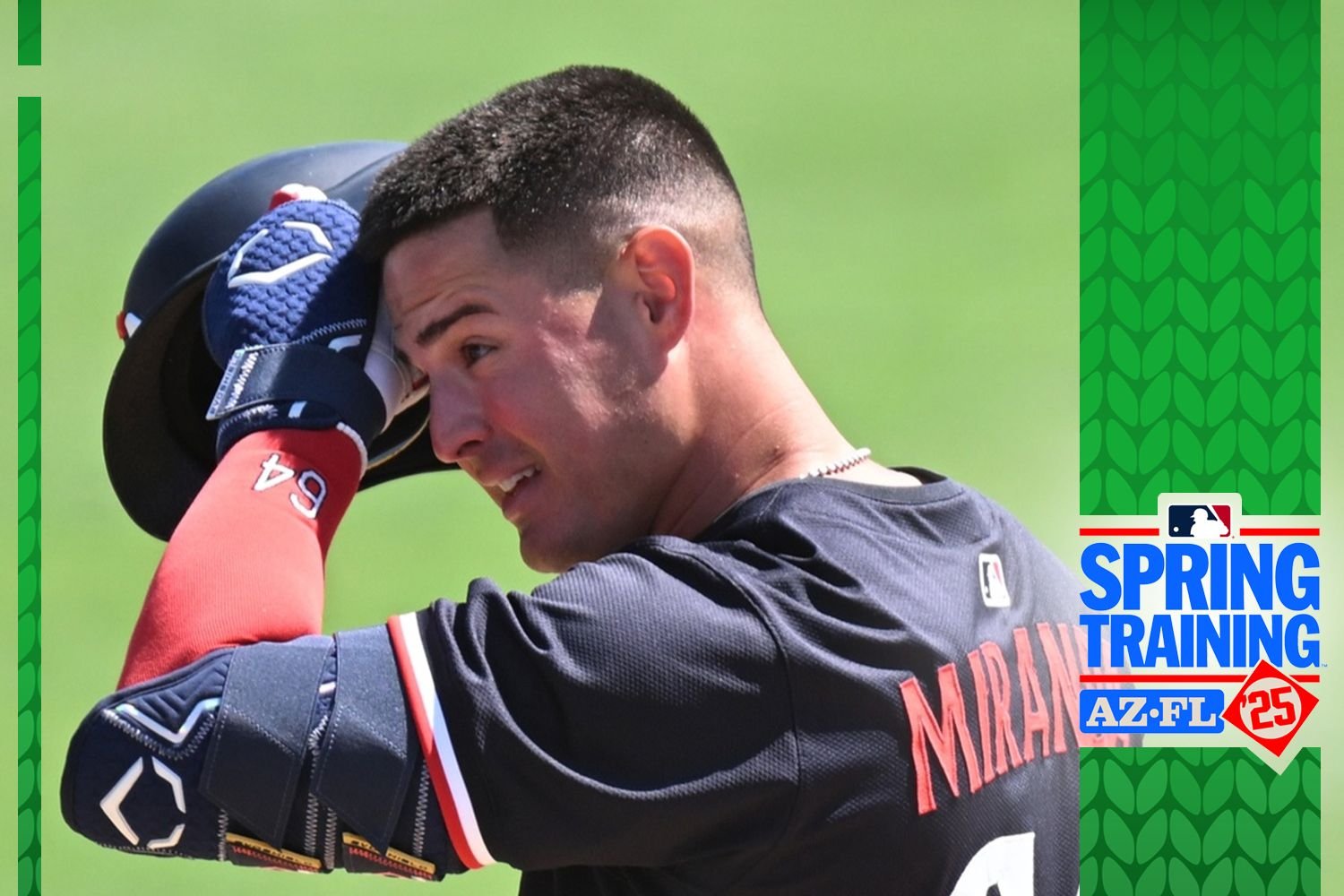
 Let's check-in on some young roster hopefuls in Twins spring training camp. Image courtesy of © Jonathan Dyer-Imagn Images Thursday’s afternoon’s 13-5 shellacking of the Pirates gave the Twins home crowd a chance to see a number of Opening Day hopefuls all in the same lineup. Twins manager Rocco Baldelli made it clear early in spring training that one of the themes of camp this year would be watching and evaluating some younger players who have shown promise but not consistency. When asked about one such player, Jose Miranda, he talked in general about what he wanted to see from them. “You could probably turn to two or three or four other players who have done some good things at the major league level and ask a similar question, and it would make sense,” Baldelli replied. “The response will probably be the same. I keep saying this, but it’s a healthy thing for an organization to have motivated guys that are going out there and want to earn their spot and their opportunities and their at-bats." In Thursday’s afternoon game, it seemed to be working. The team initially faced Pirates pitcher Jared Jones, a promising 23-year-old who will be in the majors this year. After battling him, they feasted on some of the relievers, scoring 14 runs in the fifth and sixth innings. “What an awesome sight to see a bunch of guys out there, working their butts off, competing, trying to show everybody here what they’re capable of,” Baldelli said after the game. “All doing it. You draw up that picture, that’s the picture you want to see.” All six players who are competing to fill out three back-end roster spots were painting that pretty picture. It seems like a good time to check in on where they are with Opening Day just two weeks away. Jose Miranda Entering spring training, I would’ve thought Jose Miranda’ s spot was almost assured. That opinion hasn’t changed. The 26-year-old is far from a finished product but he showed in his at-bats today why he deserves to have at-bats invested in him. In his first at-bat versus Jones, Miranda took a called strike on the outside edge that probably should have been challenged. But when Jones followed it up with a slider in the same area, Miranda drove it to right field for an easy single. In his third at-bat, after drawing out a long at-bat, he smacked a fastball into right-center field for a long single. He’s doing what the Twins want him to do at the plate. Defensively, he’s also a decent fit. He isn’t an embarrassment at third base. It’s a little surprising we’ve only seen him have three starts at first base this spring, but that seems mostly about convenience; Baldelli needs to get Ty France, Edouard Julien, and Mickey Gasper at-bats, and that’s one of the few positions they play, so Miranda gets crowded out. He should make the roster and get 400+ plate appearances this year. Brooks Lee In my mind, Brooks Lee and Julien represent the pivot point for the roster. If either shows enough to earn the everyday second base job, he’s the 12th (of 13) position player, and it makes the 13th player a matter of what Baldelli values most from his bench. If not, things get quite a bit trickier. Lee’s glove separate him from the other guys on this list, and I suspect that will be why we’ll see him on the roster on Opening Day. Baldelli’s spring training lineups have made it clear that Lee’s ability to cover at shortstop is, at the very least, a nice luxury. The only other backup option to Carlos Correa is Willi Castro. But Lee has to show he’s not overmatched offensively, which isn’t clear. What was clear was how the Pirates were attacking him: lots of offspeed stuff, especially early in the count. Lee confirmed postgame that he’s been seeing that most of the spring, and how he reacts to that will be worth watching as these last two weeks of games play out. Edouard Julien Julien showed just how dangerous he can be in 2023 when he posted a 130 OPS+ over 408 plate appearances before unraveling last year. He spoke early in spring training about retooling his swing to better handle offspeed pitches, which he thought was his Achilles heal. The Pirates disagreed and paid the price yesterday. Julien saw a total of five pitches in his first four at-bats and smacked fastballs all around the stadium, going 3-5 with two doubles. (And he was robbed of a third in his first at-bat.) He hasn’t been nearly as productive for the spring, but we’ll see if this is the start of something that could position him as either a platoon player at second base or the dangerous bat as the 13th man on the roster. Mickey Gasper The 29-year-old Gasper has gradually seen his starts with this younger group increase despite being the older outsider. (He joined the Twins when he was traded from the Red Sox this offseason.) He’s immediately demonstrated his offensive skill set: hitting for average and getting on base. He went 0-2 on Thursday but also had three walks. The Pirates liked to challenge him inside, which makes sense for a player who hasn’t hit more than 12 home runs in a season in the minors. His long-term outlook is undoubtedly tied to how he handles those. Short term, the switch-hitter might be the best option if the Twins decide that either Julien or Lee isn’t ready. He’s been getting starts at both first and second base, similar to Julien, and been solid defensively, which he was again yesterday, including making a nice catch on a foul ball down the first base line. He is setting a default demarcation line for this roster: someone is going to need to beat out this spray hitter to make this roster. Austin Martin I might’ve said that exact sentence about Austin Martin when camp started, but I think that’s Gasper’s job now. Martin hasn’t hit particularly well, has only made one start in the infield, and Thursday was only his fourth start in center field this spring. Even when it comes to being a platoon or late-inning defender for the Twins’ left-handed hitting corner outfielders, Martin is limited to playing left field. He is be being squeezed by the development of some other players on the roster, but the 25-year-old also needs to show he has something in his toolbag that a major league team values. We haven’t seen that yet. DaShawn Keirsey Jr. DaShawn Keirsey Jr. has put himself on the radar by having a decent camp offensively and an outstanding one defensively, reinforcing his skillset in the team’s mind. Seemingly every game, he’s made an excellent defensive play, including in Thursday’s game where he started in right field. If everyone else stays healthy, there isn’t really any role for a left-handed hitting defensive outfielder on the Opening Day roster. Still, I wouldn’t be surprised if he’s the first callup if there is an injury to any of the outfielders, even over Martin. The Twins haven’t had many of their positional prospects launch into the stratosphere when they had their first taste of the majors. But that kind of success is the exception, not the rule, in the major leagues. Several Twins players have shown that they have a chance to carve out a career or even thrive at an All-Star level if they make some incremental advancements in their games. This spring, the Twins have been providing a little tough love to encourage those advancements, and Thursday’s game was a single data point suggesting they may be close to paying off. Who are your favorite young players on the Twins roster? Comment below. View full article
 -
 Thursday’s afternoon’s 13-5 shellacking of the Pirates gave the Twins home crowd a chance to see a number of Opening Day hopefuls all in the same lineup. Twins manager Rocco Baldelli made it clear early in spring training that one of the themes of camp this year would be watching and evaluating some younger players who have shown promise but not consistency. When asked about one such player, Jose Miranda, he talked in general about what he wanted to see from them. “You could probably turn to two or three or four other players who have done some good things at the major league level and ask a similar question, and it would make sense,” Baldelli replied. “The response will probably be the same. I keep saying this, but it’s a healthy thing for an organization to have motivated guys that are going out there and want to earn their spot and their opportunities and their at-bats." In Thursday’s afternoon game, it seemed to be working. The team initially faced Pirates pitcher Jared Jones, a promising 23-year-old who will be in the majors this year. After battling him, they feasted on some of the relievers, scoring 14 runs in the fifth and sixth innings. “What an awesome sight to see a bunch of guys out there, working their butts off, competing, trying to show everybody here what they’re capable of,” Baldelli said after the game. “All doing it. You draw up that picture, that’s the picture you want to see.” All six players who are competing to fill out three back-end roster spots were painting that pretty picture. It seems like a good time to check in on where they are with Opening Day just two weeks away. Jose Miranda Entering spring training, I would’ve thought Jose Miranda’ s spot was almost assured. That opinion hasn’t changed. The 26-year-old is far from a finished product but he showed in his at-bats today why he deserves to have at-bats invested in him. In his first at-bat versus Jones, Miranda took a called strike on the outside edge that probably should have been challenged. But when Jones followed it up with a slider in the same area, Miranda drove it to right field for an easy single. In his third at-bat, after drawing out a long at-bat, he smacked a fastball into right-center field for a long single. He’s doing what the Twins want him to do at the plate. Defensively, he’s also a decent fit. He isn’t an embarrassment at third base. It’s a little surprising we’ve only seen him have three starts at first base this spring, but that seems mostly about convenience; Baldelli needs to get Ty France, Edouard Julien, and Mickey Gasper at-bats, and that’s one of the few positions they play, so Miranda gets crowded out. He should make the roster and get 400+ plate appearances this year. Brooks Lee In my mind, Brooks Lee and Julien represent the pivot point for the roster. If either shows enough to earn the everyday second base job, he’s the 12th (of 13) position player, and it makes the 13th player a matter of what Baldelli values most from his bench. If not, things get quite a bit trickier. Lee’s glove separate him from the other guys on this list, and I suspect that will be why we’ll see him on the roster on Opening Day. Baldelli’s spring training lineups have made it clear that Lee’s ability to cover at shortstop is, at the very least, a nice luxury. The only other backup option to Carlos Correa is Willi Castro. But Lee has to show he’s not overmatched offensively, which isn’t clear. What was clear was how the Pirates were attacking him: lots of offspeed stuff, especially early in the count. Lee confirmed postgame that he’s been seeing that most of the spring, and how he reacts to that will be worth watching as these last two weeks of games play out. Edouard Julien Julien showed just how dangerous he can be in 2023 when he posted a 130 OPS+ over 408 plate appearances before unraveling last year. He spoke early in spring training about retooling his swing to better handle offspeed pitches, which he thought was his Achilles heal. The Pirates disagreed and paid the price yesterday. Julien saw a total of five pitches in his first four at-bats and smacked fastballs all around the stadium, going 3-5 with two doubles. (And he was robbed of a third in his first at-bat.) He hasn’t been nearly as productive for the spring, but we’ll see if this is the start of something that could position him as either a platoon player at second base or the dangerous bat as the 13th man on the roster. Mickey Gasper The 29-year-old Gasper has gradually seen his starts with this younger group increase despite being the older outsider. (He joined the Twins when he was traded from the Red Sox this offseason.) He’s immediately demonstrated his offensive skill set: hitting for average and getting on base. He went 0-2 on Thursday but also had three walks. The Pirates liked to challenge him inside, which makes sense for a player who hasn’t hit more than 12 home runs in a season in the minors. His long-term outlook is undoubtedly tied to how he handles those. Short term, the switch-hitter might be the best option if the Twins decide that either Julien or Lee isn’t ready. He’s been getting starts at both first and second base, similar to Julien, and been solid defensively, which he was again yesterday, including making a nice catch on a foul ball down the first base line. He is setting a default demarcation line for this roster: someone is going to need to beat out this spray hitter to make this roster. Austin Martin I might’ve said that exact sentence about Austin Martin when camp started, but I think that’s Gasper’s job now. Martin hasn’t hit particularly well, has only made one start in the infield, and Thursday was only his fourth start in center field this spring. Even when it comes to being a platoon or late-inning defender for the Twins’ left-handed hitting corner outfielders, Martin is limited to playing left field. He is be being squeezed by the development of some other players on the roster, but the 25-year-old also needs to show he has something in his toolbag that a major league team values. We haven’t seen that yet. DaShawn Keirsey Jr. DaShawn Keirsey Jr. has put himself on the radar by having a decent camp offensively and an outstanding one defensively, reinforcing his skillset in the team’s mind. Seemingly every game, he’s made an excellent defensive play, including in Thursday’s game where he started in right field. If everyone else stays healthy, there isn’t really any role for a left-handed hitting defensive outfielder on the Opening Day roster. Still, I wouldn’t be surprised if he’s the first callup if there is an injury to any of the outfielders, even over Martin. The Twins haven’t had many of their positional prospects launch into the stratosphere when they had their first taste of the majors. But that kind of success is the exception, not the rule, in the major leagues. Several Twins players have shown that they have a chance to carve out a career or even thrive at an All-Star level if they make some incremental advancements in their games. This spring, the Twins have been providing a little tough love to encourage those advancements, and Thursday’s game was a single data point suggesting they may be close to paying off. Who are your favorite young players on the Twins roster? Comment below.
- 26 comments
-
- 9
-

-

-
- jose miranda
- brooks lee
- (and 4 more)
-
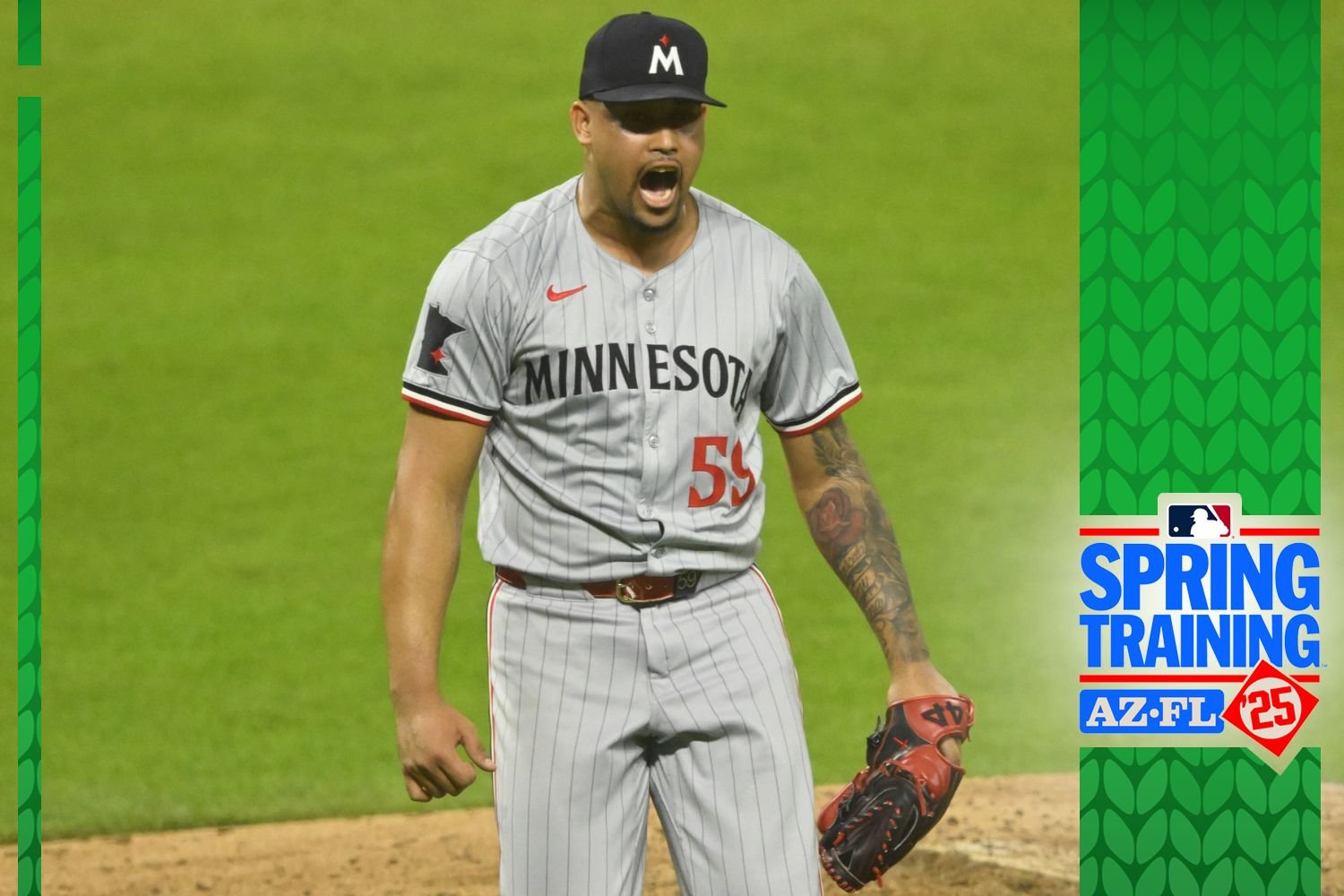
The Twins' bullpen picture is becoming clearer, and it's a pretty portrait. Image courtesy of © David Richard-Imagn Images You’re going to have trouble convincing Minnesota Twins fans that their team’s bullpen is going to be the best in the American League. You’re also going to have trouble convincing them that they have so many good arms that their bullpen is crowded. The fans are probably right. Bullpen projections are the finickiest ones. Small samples reign. Plus, one gopher ball in the ninth can decimate an otherwise immaculate week. This story is not going to try to convince you otherwise. However, the Twins bullpen should be a team strength this year, at least compared to other teams in the American League. Also, while it is impossible to have too much pitching, the Twins entered spring training camp with at least ten candidates vying for eight spots. Now that we’ve seen all the candidates pitch at least an inning in a spring training game, going to list the ten ranked the way I would’ve ranked them coming into camp, along with whether they seem to be trending up or down. #1. Griffin Jax - No Change We’ve only seen 13 pitches from Griffin Jax this spring because the birth of his child delayed his first spring training appearance. But what we saw was in line with his velocity numbers last year. Maybe more telling is hearing other Twins pitchers name-drop him and his pitches with a certain reverence in their tone. They certainly seem impressed with what they’re seeing. The only reason he isn’t trending up is he couldn’t go much higher in my mind than he already was. #2. Jhoan Duran - Trending Down (but maybe not as much as you might think) The question isn’t whether Jhoan Duran 's velocity is down. It clearly is, though seeing him break 100 mph in his last outing was nice. The question is whether he can still be super effective. To his and the Twins’ credit, that seems to be what they’re primarily paying attention to, viewing the velocity reports as more of a distraction than anything. (Which is a fair viewpoint. If it’s down, and there isn’t anything one can do about it, then paying attention to other aspects, like the shape of his pitches or the sequencing of them, is where one’s attention should probably be focused.) 3. Cole Sands - No Change Cole Sands has made two spring training appearances, and they couldn’t been any different. In the first, he got knocked around, giving up three runs and not getting out of the inning. Nine days later, he struck out the side. The only concern is that we haven’t seen him touch last year’s average four-seam fastball velocity of 95.7 mph yet. He’s topped out at 95.2 mph. That’s a change from his last two offseasons, where his velocity has increased two mph over each of them. 4. Danny Coulombe -Trending Down Danny Coulombe got a little late start to spring training games but has appeared in three games since March 1st. Unfortunately, only the latest one was at a ballpark with publicly available Statcast data, and even more unfortunately, it showed that almost all of his pitches were about two mph slower than their average velocity last year. They were also all variants of fastballs; no sliders or curveballs, which made up 40% of his pitch mix last year. It could just be that he’s working himself into shape after a late start to spring training. Plus, in those last two appearances, he didn’t give up any runs (though he also didn’t strike anyone out). 5. Justin Topa - Trending Down Justin Topa left his last start with stiffness in his shoulder, though it isn’t clear that he won’t be available for Opening Day, or even that he won’t be available for another spring training appearance this week. But even before that, the velocity was down on his bread-and-butter pitches. 6. Jorge Alcala - Trending Up My “up” trend for Jorge Alcala feels a little biased due to overly low expectations. Because of how he finished last year, when he was pretty clearly gassed, I probably ranked him a little lower than I should have. He’s made two appearances this year, and both went well. His velocity is clearly there, though the control seems to be a work in progress. But he seems to be more of his first-half self than his second-half self this spring. 7. Brock Stewart - Trending Up The best bullpen news of camp is that Brock Stewart has made an appearance, looked healthy, had his velocity, and is on a normal reliever protocol. If he can continue to stay healthy, he will improve the bullpen considerably. 8. Michael Tonkin - Trending Down Saturday’s injury news made clear what was already being wondered about: Michael Tonkin is dealing with an issue that could impact his ability to be available by Opening Day. That, along with a 13.50 ERA in three outings this spring, will move him to the bottom of the list. 9. Louis Varland - Trending Up The biggest news about Louis Varland is that he’s clearly being prepared to work as a reliever versus a starter this spring, even if the team hasn’t officially announced it. As expected, his velocity out of the ‘pen is up on his four-seam and sinker, and it looks like he and the Twins are experimenting with which of his pitches he wants to rely on most in that role. Adjustments will need to be made with the change, but his potential impact on the bullpen could be huge. In his brief appearance in that role in the 2023 season, he recorded 17 strikeouts and just one walk over 12 innings. 10. Eiberson Castellano - Trending Up Don’t pay attention to Eiberson Castellano's 7.71 ERA; I assure you the Twins are not. As a Rule 5 pick, Castellano entered camp as a wild card. For the Twins to keep him, he needs to make the Opening Day roster and remain on the 26-man roster for the year. That usually means a player is trying out for a mop-up role, which involves showing he can throw strikes even under duress, and Castellano hasn’t been especially good at that so far. But that might not matter. With a couple of injuries above him on the depth chart, a spot could be open. The Twins are going to have trouble letting go of a guy with a 96-mph four-seam fastball, a 96-mph sinker, a 90-mph changeup, and a curveball that received an “honorable mention” as the filthiest pitch in camp. They will find room, and if they need a mop-up man, they can find that elsewhere. View full article
-
 You’re going to have trouble convincing Minnesota Twins fans that their team’s bullpen is going to be the best in the American League. You’re also going to have trouble convincing them that they have so many good arms that their bullpen is crowded. The fans are probably right. Bullpen projections are the finickiest ones. Small samples reign. Plus, one gopher ball in the ninth can decimate an otherwise immaculate week. This story is not going to try to convince you otherwise. However, the Twins bullpen should be a team strength this year, at least compared to other teams in the American League. Also, while it is impossible to have too much pitching, the Twins entered spring training camp with at least ten candidates vying for eight spots. Now that we’ve seen all the candidates pitch at least an inning in a spring training game, going to list the ten ranked the way I would’ve ranked them coming into camp, along with whether they seem to be trending up or down. #1. Griffin Jax - No Change We’ve only seen 13 pitches from Griffin Jax this spring because the birth of his child delayed his first spring training appearance. But what we saw was in line with his velocity numbers last year. Maybe more telling is hearing other Twins pitchers name-drop him and his pitches with a certain reverence in their tone. They certainly seem impressed with what they’re seeing. The only reason he isn’t trending up is he couldn’t go much higher in my mind than he already was. #2. Jhoan Duran - Trending Down (but maybe not as much as you might think) The question isn’t whether Jhoan Duran 's velocity is down. It clearly is, though seeing him break 100 mph in his last outing was nice. The question is whether he can still be super effective. To his and the Twins’ credit, that seems to be what they’re primarily paying attention to, viewing the velocity reports as more of a distraction than anything. (Which is a fair viewpoint. If it’s down, and there isn’t anything one can do about it, then paying attention to other aspects, like the shape of his pitches or the sequencing of them, is where one’s attention should probably be focused.) 3. Cole Sands - No Change Cole Sands has made two spring training appearances, and they couldn’t been any different. In the first, he got knocked around, giving up three runs and not getting out of the inning. Nine days later, he struck out the side. The only concern is that we haven’t seen him touch last year’s average four-seam fastball velocity of 95.7 mph yet. He’s topped out at 95.2 mph. That’s a change from his last two offseasons, where his velocity has increased two mph over each of them. 4. Danny Coulombe -Trending Down Danny Coulombe got a little late start to spring training games but has appeared in three games since March 1st. Unfortunately, only the latest one was at a ballpark with publicly available Statcast data, and even more unfortunately, it showed that almost all of his pitches were about two mph slower than their average velocity last year. They were also all variants of fastballs; no sliders or curveballs, which made up 40% of his pitch mix last year. It could just be that he’s working himself into shape after a late start to spring training. Plus, in those last two appearances, he didn’t give up any runs (though he also didn’t strike anyone out). 5. Justin Topa - Trending Down Justin Topa left his last start with stiffness in his shoulder, though it isn’t clear that he won’t be available for Opening Day, or even that he won’t be available for another spring training appearance this week. But even before that, the velocity was down on his bread-and-butter pitches. 6. Jorge Alcala - Trending Up My “up” trend for Jorge Alcala feels a little biased due to overly low expectations. Because of how he finished last year, when he was pretty clearly gassed, I probably ranked him a little lower than I should have. He’s made two appearances this year, and both went well. His velocity is clearly there, though the control seems to be a work in progress. But he seems to be more of his first-half self than his second-half self this spring. 7. Brock Stewart - Trending Up The best bullpen news of camp is that Brock Stewart has made an appearance, looked healthy, had his velocity, and is on a normal reliever protocol. If he can continue to stay healthy, he will improve the bullpen considerably. 8. Michael Tonkin - Trending Down Saturday’s injury news made clear what was already being wondered about: Michael Tonkin is dealing with an issue that could impact his ability to be available by Opening Day. That, along with a 13.50 ERA in three outings this spring, will move him to the bottom of the list. 9. Louis Varland - Trending Up The biggest news about Louis Varland is that he’s clearly being prepared to work as a reliever versus a starter this spring, even if the team hasn’t officially announced it. As expected, his velocity out of the ‘pen is up on his four-seam and sinker, and it looks like he and the Twins are experimenting with which of his pitches he wants to rely on most in that role. Adjustments will need to be made with the change, but his potential impact on the bullpen could be huge. In his brief appearance in that role in the 2023 season, he recorded 17 strikeouts and just one walk over 12 innings. 10. Eiberson Castellano - Trending Up Don’t pay attention to Eiberson Castellano's 7.71 ERA; I assure you the Twins are not. As a Rule 5 pick, Castellano entered camp as a wild card. For the Twins to keep him, he needs to make the Opening Day roster and remain on the 26-man roster for the year. That usually means a player is trying out for a mop-up role, which involves showing he can throw strikes even under duress, and Castellano hasn’t been especially good at that so far. But that might not matter. With a couple of injuries above him on the depth chart, a spot could be open. The Twins are going to have trouble letting go of a guy with a 96-mph four-seam fastball, a 96-mph sinker, a 90-mph changeup, and a curveball that received an “honorable mention” as the filthiest pitch in camp. They will find room, and if they need a mop-up man, they can find that elsewhere.
- 26 comments
-
- 12
-
-
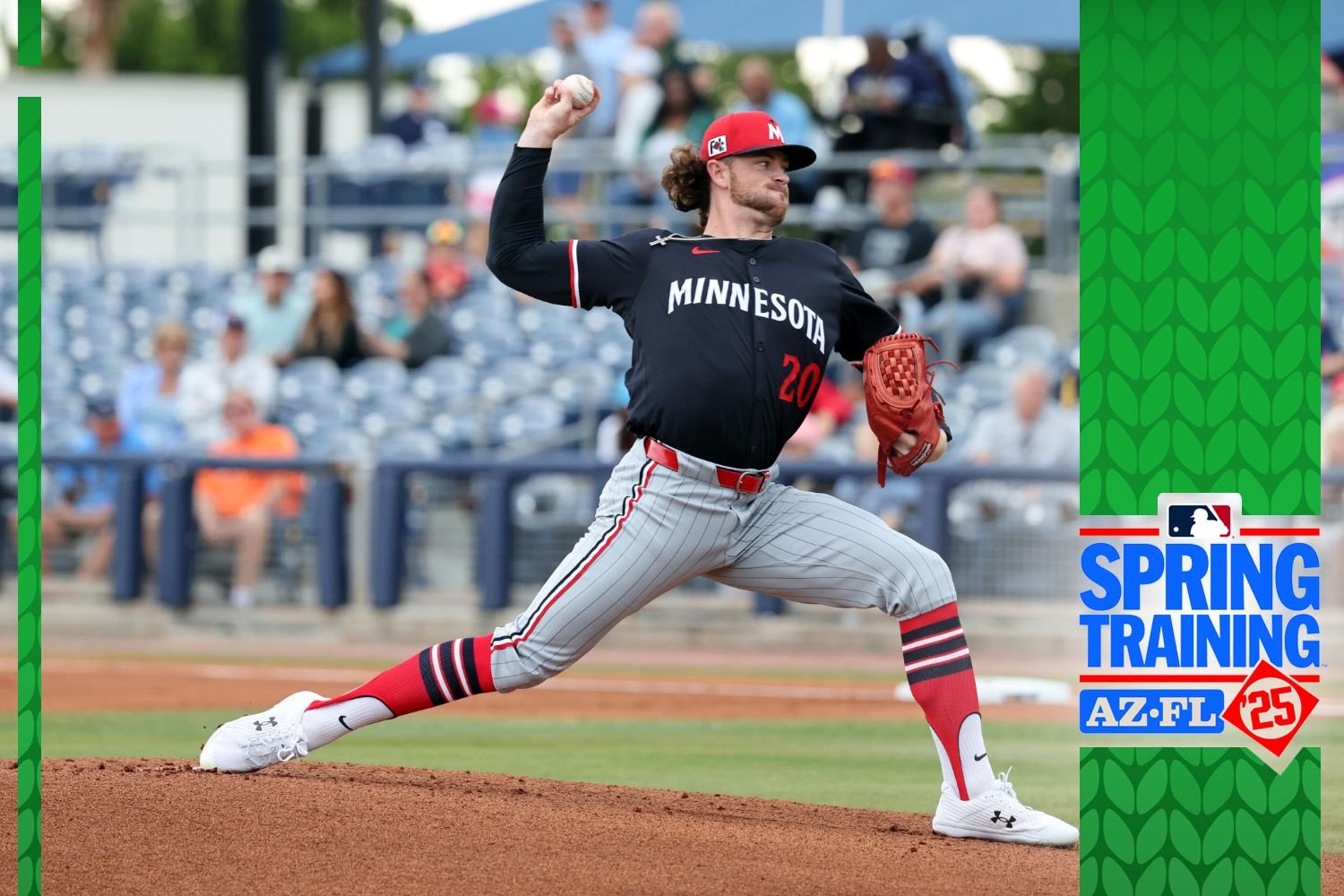
In a 9-8 win over the Red Sox at Hammond Stadium, the Twins survived a scare, saw some great defense, and a couple hitters continue to show off their bats. Image courtesy of © Kim Klement Neitzel-Imagn Images Twins starting pitcher Chris Paddack left Saturday’s game after a comebacker glanced off the tip of his glove and hit him in the head. Statcast measured the exit velocity of the ball as 97.6 mph. The Twins reported that Paddack suffered a head contusion but did not suffer a concussion. It was the second time a comebacker had hit Paddack in the same inning. Three batters earlier, he had taken a ball off of his tricep but remained in the game. “I think he's going to be okay,” Twins manager Rocco Baldelli said after the game. “The ball deflected off of his glove, the webbing of his glove, and probably kind of lessened the impact, who knows how much. He seems like himself." Prior to the event, Paddack had been cruising. He sailed through the first two innings on 18 pitches. His fastball was sitting in the 93-95 mph range and generated four swings and misses in the 27 pitches he threw, which included 22 strikes and two strikeouts over 2 ⅓ innings. Luke Keaschall Is Taking Advantage of Camp Just by looking at lineups, one can get a feel for which players are getting some extra attention. For instance, eight of the players in Saturday’s Twins lineup are either projected to make the team or at least be in the mix. That makes the ninth player stand out a bit. That ninth player was Twins Daily’s #3 Twins prospect, Luke Keaschall, who started at designated hitter. On Friday, he had a similar honor, batting as a designated hitter in a similarly loaded road lineup that included Carlos Correa, Byron Buxton, Trevor Larnach, and Jose Miranda. On Saturday, he acknowledged the honor with a 413-foot blast to left field for his first spring training home run. And after the game, Baldelli acknowledged that Keaschall had earned those opportunities. “He's having really good at-bats. He plays hard. He's fulfilling his end of his responsibilities being in major league camp as a young player. He's doing a great job. So yeah, if he was overwhelmed with the experience, I probably wouldn't be wedging him on in there.” Keaschall normally plays in the infield and is only playing designated hitter right now because he’s coming back from Tommy John surgery. He delayed that surgery for most of last season, but it didn’t slow him down; Keaschall hit .303 with a 903 OPS between High A and Double A. He underwent surgery in August so he could be back in time for the full 2025 season. If this year follows last year’s (and this spring’s) script, this won’t be the last time he finds himself in a lineup full of Minnesota Twins. Jhoan Duran Looks Like Jhoan Duran Jhoan Duran pitched the fourth inning in Saturday’s game, needing only seven pitches to mow down the Red Sox in a scoreless inning. But those seven pitches included two that cracked the 100 mph barrier, the first time we’ve seen that from Duran this spring. Those seven pitches also included a three-pitch strikeout of Red Sox first baseman Nick Sogard. Finally, it gave him the lead (relievers category) in the Twins’ pitching staff’s new “Fewest Pitches in an Inning Contest” this week, though the week goes through Monday. Buxton Steals Bases and Hearts, But With His Glove In the third inning, Rod Sox outfielder Jarren Duran hit a ball 386 feet to the warning track in right-center field. But Byron Buxton chased it down, gliding into the wall shortly after the catch. He made the catch look so routine, it feels a little silly to mention it, except that there was nothing routine about stealing that extra-base hit. In fact, it was how routine he made it look that is the remarkable part. So, of course, he did it again. Three innings later, Buxton turned and sprinted down a similarly impressive 401-foot, 102-mph liner to deep center field. The victim? Poor Jarren Duran again. Baldelli admitted after the game that, as a former center fielder, he appreciates watching Buxton, but thinks Buck has an even bigger admirer on the team, and one with a Gold Glove. “I think Harrison Bader in right field might have enjoyed it more than anyone else,” he said. “When one of the best defenders in baseball is also your biggest hype man, that's pretty cool.” We May Need To Get Ty France a “Wonderboy” Bat Repeat after me: spring training stats don’t mean a damn thing. Spring training stats don’t mean a damn thing. Spring training stats don’t mean a damn thing. OK. Good exercise. Now let’s all get irrationally excited about new Twins first baseman Ty France’s spring training stats. France added a double and home run to his already gaudy stats in Saturday’s 9-8 win over the Red Sox. To put it mildly, France has made a good first impression, going 11-20 (.550 batting average) with two home runs and a 1641 OPS. Basically, he’s been Roy Hobbs. Also like Hobbs, this is a little hard to believe. France is a 30-year-old who the Twins signed one week before spring training for $1M. Last year, he was designated for assignment in July. That was the result of a two-year slide, and the first led to the second. “I shouldn't have, but I panicked a little because I wasn't used to that kind of production,” France said about the first of those two years. “So I was like, ‘Okay, how can I get back to being my old self, or putting up those numbers again’ and kind of got lost.” He started overthinking everything and thinks that, along with some injuries, turned the one down year into two down years. France emphasized that this year he’s just trying to keep things simple, quit worrying about mechanics so much, and get back to enjoying the game. That is all working right now. For a player who was unemployed a month ago, it’s the kind of (fresh) start that France needed. Now, once again, repeat after me… Are we being too rational about France's start, or not rational enough? Let us know in the comments. View full article
-
 Twins starting pitcher Chris Paddack left Saturday’s game after a comebacker glanced off the tip of his glove and hit him in the head. Statcast measured the exit velocity of the ball as 97.6 mph. The Twins reported that Paddack suffered a head contusion but did not suffer a concussion. It was the second time a comebacker had hit Paddack in the same inning. Three batters earlier, he had taken a ball off of his tricep but remained in the game. “I think he's going to be okay,” Twins manager Rocco Baldelli said after the game. “The ball deflected off of his glove, the webbing of his glove, and probably kind of lessened the impact, who knows how much. He seems like himself." Prior to the event, Paddack had been cruising. He sailed through the first two innings on 18 pitches. His fastball was sitting in the 93-95 mph range and generated four swings and misses in the 27 pitches he threw, which included 22 strikes and two strikeouts over 2 ⅓ innings. Luke Keaschall Is Taking Advantage of Camp Just by looking at lineups, one can get a feel for which players are getting some extra attention. For instance, eight of the players in Saturday’s Twins lineup are either projected to make the team or at least be in the mix. That makes the ninth player stand out a bit. That ninth player was Twins Daily’s #3 Twins prospect, Luke Keaschall, who started at designated hitter. On Friday, he had a similar honor, batting as a designated hitter in a similarly loaded road lineup that included Carlos Correa, Byron Buxton, Trevor Larnach, and Jose Miranda. On Saturday, he acknowledged the honor with a 413-foot blast to left field for his first spring training home run. And after the game, Baldelli acknowledged that Keaschall had earned those opportunities. “He's having really good at-bats. He plays hard. He's fulfilling his end of his responsibilities being in major league camp as a young player. He's doing a great job. So yeah, if he was overwhelmed with the experience, I probably wouldn't be wedging him on in there.” Keaschall normally plays in the infield and is only playing designated hitter right now because he’s coming back from Tommy John surgery. He delayed that surgery for most of last season, but it didn’t slow him down; Keaschall hit .303 with a 903 OPS between High A and Double A. He underwent surgery in August so he could be back in time for the full 2025 season. If this year follows last year’s (and this spring’s) script, this won’t be the last time he finds himself in a lineup full of Minnesota Twins. Jhoan Duran Looks Like Jhoan Duran Jhoan Duran pitched the fourth inning in Saturday’s game, needing only seven pitches to mow down the Red Sox in a scoreless inning. But those seven pitches included two that cracked the 100 mph barrier, the first time we’ve seen that from Duran this spring. Those seven pitches also included a three-pitch strikeout of Red Sox first baseman Nick Sogard. Finally, it gave him the lead (relievers category) in the Twins’ pitching staff’s new “Fewest Pitches in an Inning Contest” this week, though the week goes through Monday. Buxton Steals Bases and Hearts, But With His Glove In the third inning, Rod Sox outfielder Jarren Duran hit a ball 386 feet to the warning track in right-center field. But Byron Buxton chased it down, gliding into the wall shortly after the catch. He made the catch look so routine, it feels a little silly to mention it, except that there was nothing routine about stealing that extra-base hit. In fact, it was how routine he made it look that is the remarkable part. So, of course, he did it again. Three innings later, Buxton turned and sprinted down a similarly impressive 401-foot, 102-mph liner to deep center field. The victim? Poor Jarren Duran again. Baldelli admitted after the game that, as a former center fielder, he appreciates watching Buxton, but thinks Buck has an even bigger admirer on the team, and one with a Gold Glove. “I think Harrison Bader in right field might have enjoyed it more than anyone else,” he said. “When one of the best defenders in baseball is also your biggest hype man, that's pretty cool.” We May Need To Get Ty France a “Wonderboy” Bat Repeat after me: spring training stats don’t mean a damn thing. Spring training stats don’t mean a damn thing. Spring training stats don’t mean a damn thing. OK. Good exercise. Now let’s all get irrationally excited about new Twins first baseman Ty France’s spring training stats. France added a double and home run to his already gaudy stats in Saturday’s 9-8 win over the Red Sox. To put it mildly, France has made a good first impression, going 11-20 (.550 batting average) with two home runs and a 1641 OPS. Basically, he’s been Roy Hobbs. Also like Hobbs, this is a little hard to believe. France is a 30-year-old who the Twins signed one week before spring training for $1M. Last year, he was designated for assignment in July. That was the result of a two-year slide, and the first led to the second. “I shouldn't have, but I panicked a little because I wasn't used to that kind of production,” France said about the first of those two years. “So I was like, ‘Okay, how can I get back to being my old self, or putting up those numbers again’ and kind of got lost.” He started overthinking everything and thinks that, along with some injuries, turned the one down year into two down years. France emphasized that this year he’s just trying to keep things simple, quit worrying about mechanics so much, and get back to enjoying the game. That is all working right now. For a player who was unemployed a month ago, it’s the kind of (fresh) start that France needed. Now, once again, repeat after me… Are we being too rational about France's start, or not rational enough? Let us know in the comments.
- 34 comments
-
- 16
-
-
-
- chris paddack
- luke keaschall
- (and 3 more)
-
Gleeman & The Geek: There's No Such Thing As Too Much Pitching
John Bonnes posted an article in Podcasts
-
Aaron and John talk about the Twins' pitching depth being tested early by injuries, the bullpen door opening for Louie Varland and maybe Eiberson Castellano, projections showing clear strengths and weaknesses for this roster, and Brock Stewart returning from surgery with his raw stuff intact. You can listen by downloading us from iTunes, Spotify, Stitcher, iHeartRadio, or find it at GleemanAndTheGeek.com. Or just click this link. View full article
-
Pablo Lopez started, but bullpen news predominated a 5-2 loss to the Orioles. Image courtesy of © Chris Tilley-Imagn Images Twins reliever Justin Topa left Wednesday’s 5-2 loss to the Orioles after throwing just seven pitches due to shoulder tightness. Acquired from Seattle in the Jorge Polanco trade last January, Topa was projected to be a setup man in the Twins bullpen but suffered a knee injury last March and faced setbacks throughout the 2024 season. He didn’t return until late September and only made a handful of appearances for the team. “We’ll see how he is tomorrow,” said Baldelli. “It doesn’t appear to be anything overly serious the way he’s describing it and talking about it, but he did feel something that he didn’t like.” Jhoan Duran Returns Speaking of relievers, Twins reliever Jhoan Duran made his first appearance in over a week. According to Duran the reason was more logistical than anything else. “We played a lot on the road last week,” Duran said after the game. “They wanted me pitching here in live BP and working on my mechanics, getting my pitches where I want it.” Duran saved 23 games for the Twins last year, posting a 3.64 ERA and a 1.160 WHIP, but that fell short of the lofty expectations his 2022 and 2023 season set; he posted a 2.15 ERA and 1.054 WHIP over those two years. The decreased effectiveness correlated with a decrease in his velocity between the two seasons. His four-seam fastball velocity dipped to 100.5 mph in 2024, down from 101.8 mph in 2023. This spring, the velocity is down further. Hs fastest pitch in yesterday’s 16-pitch outing was 99.7 mph. Duran says what he said last year, that he isn’t concerned. “I focus on my mechanics and my pitch’s movement,” he said after Wednesday’s game. “I don’t need to throw really hard right now.” Perhaps not. But Duran gave up a walk, two hits, and a run in his inning. That can happen , but more concerning is that he didn’t get a strikeout or a swing-and-miss in the inning. Brock Stewart Also Returns In better bullpen news, Twins reliever Brock Stewart, who has looked as effective a high-leverage bullpen arm as anyone when healthy, made his first spring training appearance today. Like Duran, he also gave up a run, and his fastest pitch was 97.5 mph, but that was his average fastball velocity last year, and he felt and looked like his old (healthy) self. “I thought Brock was the highlight of the day for me watching the game,” said manager Rocco Baldelli after the game. “The stuff looked like vintage Brock Stewart.” All of this news is against the background that the Twins bullpen is pretty crowded. Last year’s core relievers - Griffin Jax, Jhoan Duran, Coles Sands, and Jorge Alcala - are set to return. Michael Tonkin also signed a $1M guaranteed contract to return to the team. Left-hander Danny Coulombe was signed to provide left-handed support. Stewart appears to be healthy and throwing hard again, Louis Varland is poised to be converted to relief, and Rule 5 pick Eiberson Castellano is opening eyes at camp. Add in Topa, and those are ten names competing for eight spots in the bullpen. Austin Martin Shows Off His Glove Manager Rocco Baldelli has been saying he wants to see how good an outfield defender Austin Martin could be. Wednesday, Martin made a pair of great defensive plays in left field that demonstrate why his manager has such faith in him. “That's the other highlight of the day, right there,” said Baldelli. “We were talking about him pretty much the entire game.” For that matter, so does the pitcher whose ERA was the recipient of those plays, Pablo Lopez. “I mean, he’s a gamer,” said Lopez after the game. “He can do that at any position. He goes out there and he’s so athletic that he just makes those plays. I do appreciate that as a pitcher.” How well that skill set fits onto the 26-man roster has yet to be determined. Depending on how the infield situation shakes out, Martin could be the 13th position player or start the season in St. Paul. But if he does make the team, it was notable that Harrison Bader, who has a Gold Glove, started in right field while Martin played left field. In Target Field, left field is the tougher area to cover, but Bader also has a stronger arm, which might mean he’s a better fit in right field if both Bader and Martin cover the corner outfield spots. Baldelli didn’t commit to that alignment for the regular season but noted that Martin has more experience in left field while Bader has more experience in right field, so that alignment made sense to him. View full article
-
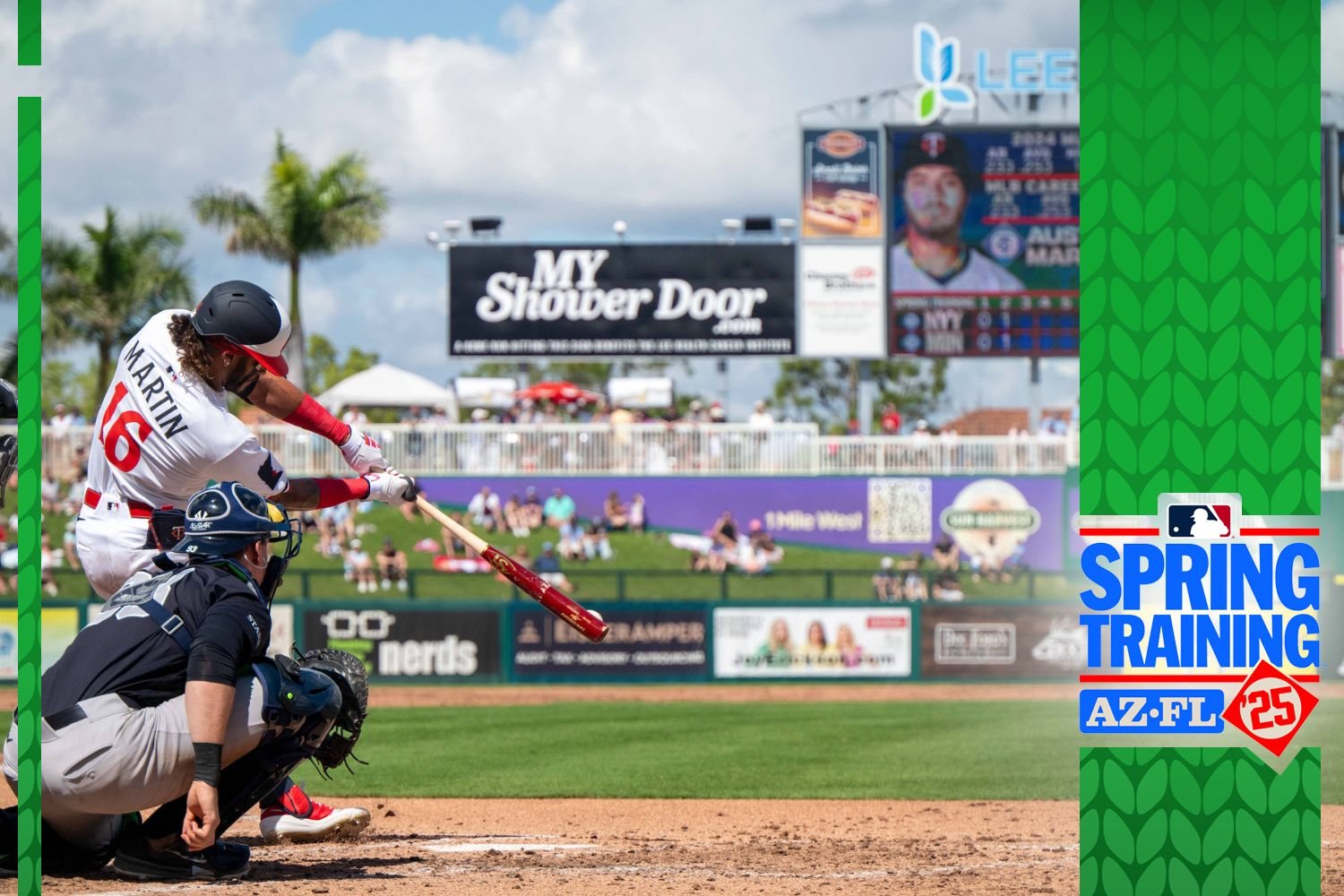 Twins reliever Justin Topa left Wednesday’s 5-2 loss to the Orioles after throwing just seven pitches due to shoulder tightness. Acquired from Seattle in the Jorge Polanco trade last January, Topa was projected to be a setup man in the Twins bullpen but suffered a knee injury last March and faced setbacks throughout the 2024 season. He didn’t return until late September and only made a handful of appearances for the team. “We’ll see how he is tomorrow,” said Baldelli. “It doesn’t appear to be anything overly serious the way he’s describing it and talking about it, but he did feel something that he didn’t like.” Jhoan Duran Returns Speaking of relievers, Twins reliever Jhoan Duran made his first appearance in over a week. According to Duran the reason was more logistical than anything else. “We played a lot on the road last week,” Duran said after the game. “They wanted me pitching here in live BP and working on my mechanics, getting my pitches where I want it.” Duran saved 23 games for the Twins last year, posting a 3.64 ERA and a 1.160 WHIP, but that fell short of the lofty expectations his 2022 and 2023 season set; he posted a 2.15 ERA and 1.054 WHIP over those two years. The decreased effectiveness correlated with a decrease in his velocity between the two seasons. His four-seam fastball velocity dipped to 100.5 mph in 2024, down from 101.8 mph in 2023. This spring, the velocity is down further. Hs fastest pitch in yesterday’s 16-pitch outing was 99.7 mph. Duran says what he said last year, that he isn’t concerned. “I focus on my mechanics and my pitch’s movement,” he said after Wednesday’s game. “I don’t need to throw really hard right now.” Perhaps not. But Duran gave up a walk, two hits, and a run in his inning. That can happen , but more concerning is that he didn’t get a strikeout or a swing-and-miss in the inning. Brock Stewart Also Returns In better bullpen news, Twins reliever Brock Stewart, who has looked as effective a high-leverage bullpen arm as anyone when healthy, made his first spring training appearance today. Like Duran, he also gave up a run, and his fastest pitch was 97.5 mph, but that was his average fastball velocity last year, and he felt and looked like his old (healthy) self. “I thought Brock was the highlight of the day for me watching the game,” said manager Rocco Baldelli after the game. “The stuff looked like vintage Brock Stewart.” All of this news is against the background that the Twins bullpen is pretty crowded. Last year’s core relievers - Griffin Jax, Jhoan Duran, Coles Sands, and Jorge Alcala - are set to return. Michael Tonkin also signed a $1M guaranteed contract to return to the team. Left-hander Danny Coulombe was signed to provide left-handed support. Stewart appears to be healthy and throwing hard again, Louis Varland is poised to be converted to relief, and Rule 5 pick Eiberson Castellano is opening eyes at camp. Add in Topa, and those are ten names competing for eight spots in the bullpen. Austin Martin Shows Off His Glove Manager Rocco Baldelli has been saying he wants to see how good an outfield defender Austin Martin could be. Wednesday, Martin made a pair of great defensive plays in left field that demonstrate why his manager has such faith in him. “That's the other highlight of the day, right there,” said Baldelli. “We were talking about him pretty much the entire game.” For that matter, so does the pitcher whose ERA was the recipient of those plays, Pablo Lopez. “I mean, he’s a gamer,” said Lopez after the game. “He can do that at any position. He goes out there and he’s so athletic that he just makes those plays. I do appreciate that as a pitcher.” How well that skill set fits onto the 26-man roster has yet to be determined. Depending on how the infield situation shakes out, Martin could be the 13th position player or start the season in St. Paul. But if he does make the team, it was notable that Harrison Bader, who has a Gold Glove, started in right field while Martin played left field. In Target Field, left field is the tougher area to cover, but Bader also has a stronger arm, which might mean he’s a better fit in right field if both Bader and Martin cover the corner outfield spots. Baldelli didn’t commit to that alignment for the regular season but noted that Martin has more experience in left field while Bader has more experience in right field, so that alignment made sense to him.
- 61 comments
-
- 12
-
-
- justin topa
- jhoan duran
- (and 3 more)
-
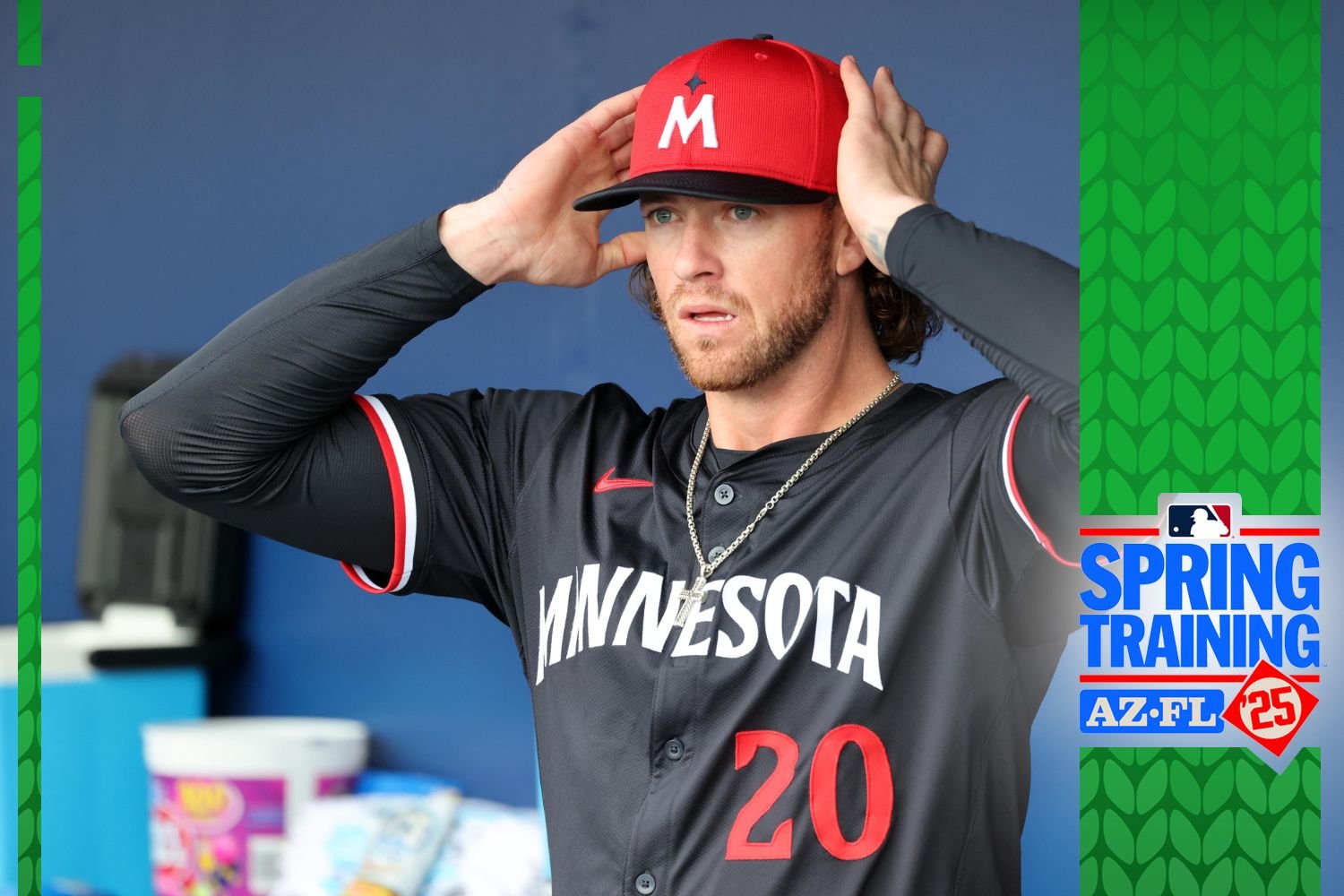 Twins Daily’s Ultimate Guide to Twins Spring Training has some tips on YOUR perfect time to come to spring training, but I’ll need to update it for the nichiest of nichy interest groups: the starting pitching geeks. If you consider yourself one of that fraternity, the second week of spring training is made for you. If you do not consider yourself part of that group, you might want to try it because there’s never been a better time as a Twins fan. The Twins not only have a starting rotation that should compete to be among the best in the American League, but they also have so much depth that an MLB team wouldn’t be embarrassed to have the St. Paul Saints probable starting rotation. In the second week of spring training, the pitching geeks are often treated to a BOGO deal: watch one starting pitcher and see another one for free. On Sunday’s game, a 5-5 tie with the Rays, Chris Paddack and Simeon Woods Richardson, the Twins’ probable #4 and #5 starters “piggybacked.” That means Paddack threw the first three innings, and then Woods Richardson threw two more. We’ve already seen this a couple of times. Saturday, Baily Ober was followed by David Festa, who is positioned to be the first call-up from the Saints if the Twins need a start. Wednesday, we saw the tandem of Andrew Morris and Cody Lewis, both of whom could make their MLB debuts this year if things break their way. Sunday’s starters both have question marks heading into 2025, but for totally different reasons because they’re in totally different places in their careers. Chris Paddack is a 29-year-old veteran who has battled injuries throughout his career, including a forearm strain that cost him the latter half of 2024 and Tommy John surgery that cost him most of 2022 and 2023. His start provided a good example of the difference between a good spring training start versus a good regular season start. Giving up four runs in three innings would not be considered a good regular season start. But in this case, all four runs were due to back-to-back home runs by 21-year-old Junior Caminero. Paddack challenged him with his fastball twice, and he lost twice. It wasn’t that the fastball was bad - 14 of the 20 fastballs Paddack threw exceeded his 93.5 average velocity last year. The first one followed a swing where Caminero was fooled so badly on a 3-1 pitch that he sent his bat back to the backstop. On the second at-bat, Paddack revealed that catcher Ryan Jeffers had set up Caminero for different pitches, but Paddack shook him off to throw his fastball. That proved to be a mistake. “He humbled me a little bit,” said Paddack after the game. “In year seven, still learning. Still learning this game, man.” However, in terms of spring training starts, there were several good signs. At a most basic level, he threw 51 pitches, so he remains on track to build his pitch count up. Second, he’s working on a slider that started where he didn’t want it - around 80 mph - but by changing the pressure of his grip during the game, he got it to where he wanted it: 84-85 mph. He also relied on his curveball more than usual because it was so effective. “I was able to steal some strikes early,” he said, “and I thought I did a really good job executing that pitch with two strikes out of the zone.” But by far, the most important sign is that he is clearly focusing on pitching as opposed to staying healthy. At this time last year, Paddack was still recovering from Tommy John surgery, and the varying results and velocity through the first half of last season demonstrated that frustrating reality. None of that guarantees a healthy 2025. But at least a spring in which he’s focusing on new pitches, their velocity, and his pitch sequencing demonstrates that his health isn’t a distraction. Woods Richardson, on the other hand, is only 24 years old and coming off a breakthrough year. He also faded last year, but that’s because he threw a career number of innings. His bigger concern is whether his relatively weak 20.6% strikeout rate is a negative harbinger. The bad news is that he didn’t strike out anyone in his two innings and threw 39 pitches to get through them. On the other hand, his fastball velocity, largely attributed for the giant step forward he took last year, remained consistently at 93 and 94 mph. It was also clear that this outing focused on his slider - 16 of his 39 pitches were sliders - so he may be using spring training exactly what it should be used for: practice. He also built up his pitch count, and he’s starting this spring a little later than he has in the past since he needed to give his arm time to recover from all those innings last year. Both outings demonstrate why, in spring training, it’s dangerous to put the same stock in numbers that we would normally trust during the regular season. But they also demonstrate why this week can be one the best weeks to visit if you’re interested in the art of starting pitching. Buxton Swipes First Third Byton Buxton has stolen 93 bases in his major league career but has never stolen third base. In Sunday’s ballgame, he did. Twins’ manager Rocco Baldelli said he wasn’t aware until after that Buxton had yet to steal third in the majors. “If you’re going to implement it in the season, you might as well break it out,” said Baldelli. “He’s always looking to add something.” Pitch to Contact? The Twins pitchers have a new contest this year. Posted in the clubhouse yesterday was a list of which Twins pitchers had gotten through an inning with the fewest pitches this last week. The leader going into yesterday’s game was left-handed reliever Kody Funderburk, who needed only seven pitches to get through an inning versus the Tigers on Wednesday. “I think the whole principle of it all is to just encourage guys to pound the zone and get to the big part of the plate, said Funderburk before today’s game. “And then when you get to two strikes, obviously be a little bit more fine.” Funderburk had a chance to take over the top two spots as he made an appearance today, but it did not go as cleanly as Wednesday. He struggles with his control, and it took 22 pitches to get through the eighth. No matter. The contest ends tomorrow, and the Twins have an off day, so he’ll be the first week’s winner regardless.
- 8 comments
-
- 10
-
-
- chris paddack
- simeon woods richardson
- (and 2 more)
-
Chris Paddack's outing on Sunday is another good example of why to ignored spring training numbers. Image courtesy of © Kim Klement Neitzel-Imagn Images Twins Daily’s Ultimate Guide to Twins Spring Training has some tips on YOUR perfect time to come to spring training, but I’ll need to update it for the nichiest of nichy interest groups: the starting pitching geeks. If you consider yourself one of that fraternity, the second week of spring training is made for you. If you do not consider yourself part of that group, you might want to try it because there’s never been a better time as a Twins fan. The Twins not only have a starting rotation that should compete to be among the best in the American League, but they also have so much depth that an MLB team wouldn’t be embarrassed to have the St. Paul Saints probable starting rotation. In the second week of spring training, the pitching geeks are often treated to a BOGO deal: watch one starting pitcher and see another one for free. On Sunday’s game, a 5-5 tie with the Rays, Chris Paddack and Simeon Woods Richardson, the Twins’ probable #4 and #5 starters “piggybacked.” That means Paddack threw the first three innings, and then Woods Richardson threw two more. We’ve already seen this a couple of times. Saturday, Baily Ober was followed by David Festa, who is positioned to be the first call-up from the Saints if the Twins need a start. Wednesday, we saw the tandem of Andrew Morris and Cody Lewis, both of whom could make their MLB debuts this year if things break their way. Sunday’s starters both have question marks heading into 2025, but for totally different reasons because they’re in totally different places in their careers. Chris Paddack is a 29-year-old veteran who has battled injuries throughout his career, including a forearm strain that cost him the latter half of 2024 and Tommy John surgery that cost him most of 2022 and 2023. His start provided a good example of the difference between a good spring training start versus a good regular season start. Giving up four runs in three innings would not be considered a good regular season start. But in this case, all four runs were due to back-to-back home runs by 21-year-old Junior Caminero. Paddack challenged him with his fastball twice, and he lost twice. It wasn’t that the fastball was bad - 14 of the 20 fastballs Paddack threw exceeded his 93.5 average velocity last year. The first one followed a swing where Caminero was fooled so badly on a 3-1 pitch that he sent his bat back to the backstop. On the second at-bat, Paddack revealed that catcher Ryan Jeffers had set up Caminero for different pitches, but Paddack shook him off to throw his fastball. That proved to be a mistake. “He humbled me a little bit,” said Paddack after the game. “In year seven, still learning. Still learning this game, man.” However, in terms of spring training starts, there were several good signs. At a most basic level, he threw 51 pitches, so he remains on track to build his pitch count up. Second, he’s working on a slider that started where he didn’t want it - around 80 mph - but by changing the pressure of his grip during the game, he got it to where he wanted it: 84-85 mph. He also relied on his curveball more than usual because it was so effective. “I was able to steal some strikes early,” he said, “and I thought I did a really good job executing that pitch with two strikes out of the zone.” But by far, the most important sign is that he is clearly focusing on pitching as opposed to staying healthy. At this time last year, Paddack was still recovering from Tommy John surgery, and the varying results and velocity through the first half of last season demonstrated that frustrating reality. None of that guarantees a healthy 2025. But at least a spring in which he’s focusing on new pitches, their velocity, and his pitch sequencing demonstrates that his health isn’t a distraction. Woods Richardson, on the other hand, is only 24 years old and coming off a breakthrough year. He also faded last year, but that’s because he threw a career number of innings. His bigger concern is whether his relatively weak 20.6% strikeout rate is a negative harbinger. The bad news is that he didn’t strike out anyone in his two innings and threw 39 pitches to get through them. On the other hand, his fastball velocity, largely attributed for the giant step forward he took last year, remained consistently at 93 and 94 mph. It was also clear that this outing focused on his slider - 16 of his 39 pitches were sliders - so he may be using spring training exactly what it should be used for: practice. He also built up his pitch count, and he’s starting this spring a little later than he has in the past since he needed to give his arm time to recover from all those innings last year. Both outings demonstrate why, in spring training, it’s dangerous to put the same stock in numbers that we would normally trust during the regular season. But they also demonstrate why this week can be one the best weeks to visit if you’re interested in the art of starting pitching. Buxton Swipes First Third Byton Buxton has stolen 93 bases in his major league career but has never stolen third base. In Sunday’s ballgame, he did. Twins’ manager Rocco Baldelli said he wasn’t aware until after that Buxton had yet to steal third in the majors. “If you’re going to implement it in the season, you might as well break it out,” said Baldelli. “He’s always looking to add something.” Pitch to Contact? The Twins pitchers have a new contest this year. Posted in the clubhouse yesterday was a list of which Twins pitchers had gotten through an inning with the fewest pitches this last week. The leader going into yesterday’s game was left-handed reliever Kody Funderburk, who needed only seven pitches to get through an inning versus the Tigers on Wednesday. “I think the whole principle of it all is to just encourage guys to pound the zone and get to the big part of the plate, said Funderburk before today’s game. “And then when you get to two strikes, obviously be a little bit more fine.” Funderburk had a chance to take over the top two spots as he made an appearance today, but it did not go as cleanly as Wednesday. He struggles with his control, and it took 22 pitches to get through the eighth. No matter. The contest ends tomorrow, and the Twins have an off day, so he’ll be the first week’s winner regardless. View full article
-
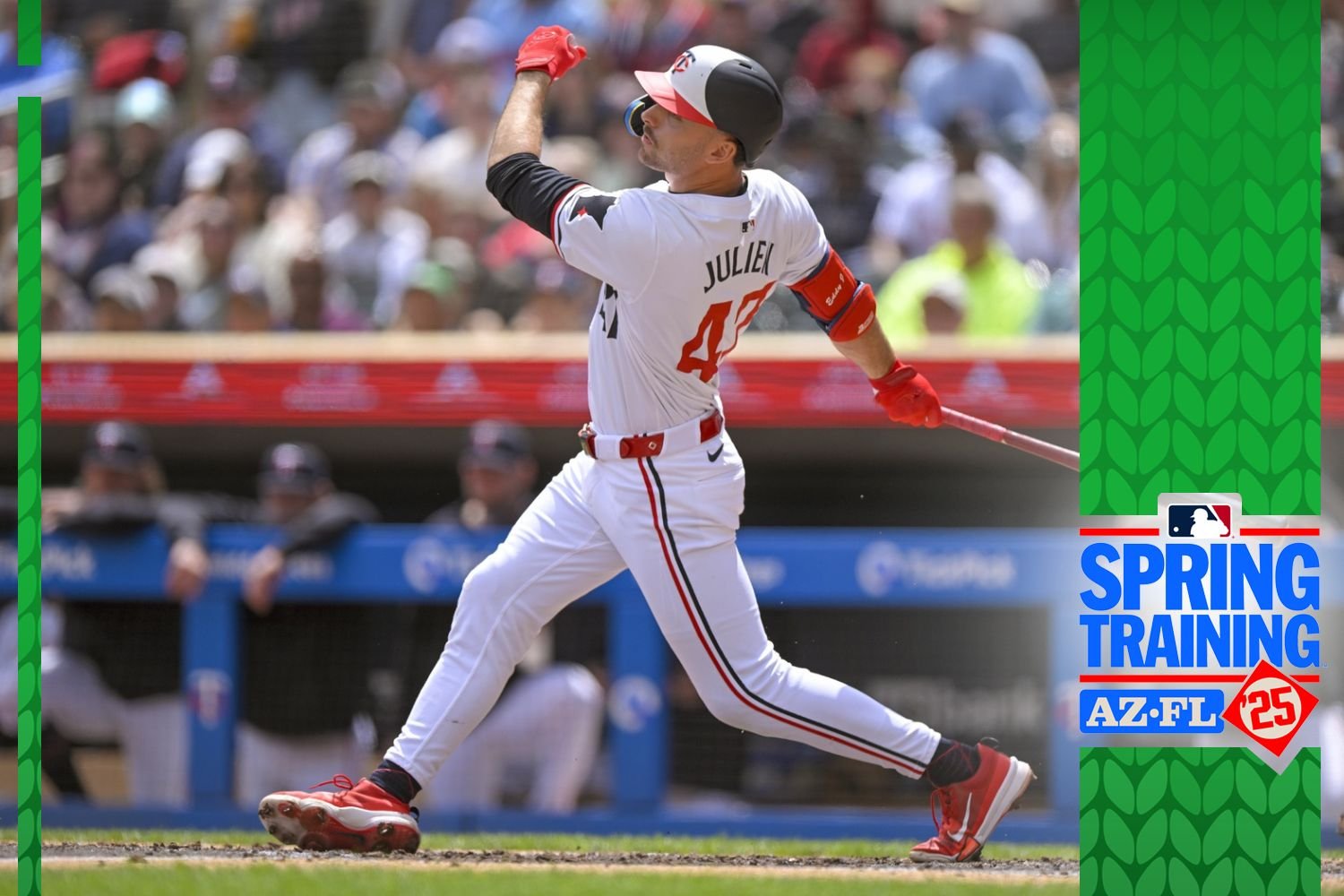 The Twins played back-to-back home spring training games this wee, which gave manager Rocco Baldelli a chance to showcase his everyday players two days in a row. So Matt Wallner, Carlos Correa, Byron Buxton, Trevor Larnach, and Royce Lewis batted first through fifth both days. Christian Vazquez and Ryan Jeffers, the veteran catchers, alternated starts, as is likely the plan for the season. But the other spots in the bottom half of the lineup all switched. Wednesday’s featured the veterans: Willi Castro, Harrison Bader, and Ty France. They’re all nearly guaranteed spots on the roster, though how significant their roles will be will likely depend on their performance. Thursday’s theme was “youth hoping to establish themselves as regulars.” Jose Miranda (26yo), Edouard Julien (25yo), and Brooks Lee (24yo) have all shown incredibe upside. Each also struggled at the end of last year as the Twins plummeted from a 90+% chance to make the postseason to watching October baseball from their couch. If they want to avoid that fate this year, those three players’ performances will be key to the team’s revival. At this time last year, Edouard Julien’s MLB career seemed assured. 2023 was his breakthrough season. Julien was called up on May 20th, and from that point on, he hit .267 with a 389 OBP and a 460 Slugging percentage in 378 plate appearances as a 24-year-old. There were some warts: he struck out 119 times, and his defense at second base was a little rough. But his combination of patience and power would play anywhere in the field if the latter didn’t improve. His 2024 was a disaster. Julien’s patience turned to passivity. He was sent down to St. Paul in early June when he was batting just .207 with a 676 OPS. He was recalled in late July when the Twins needed reinforcements, but he was even worse in the second half, hitting .186 with a 509 OPS. Julien attributes his sophomore slump to changes he made to his swing before the 2024 season that left him especially vulnerable to offspeed pitches. “I was uphill, and everything that was thrown, like sliders, curveball, everything going down in the zone, I wasn't able to connect with them,” said Julien when asked about last year. “I knew that was a problem, and I had to address it. And during the season, it was hard, because you don't really want to make some big changes.” Jose Miranda, on the other hand, had the bounceback season he was hoping for last year, up until he was sidelined by lower back stiffness in the middle of July. On July 8th, he looked like a middle-of-the-order bat for the next five years, posting a 908 OPS while batting .332. He returned from his trip to the Injured List before then end of July, but after that point, his production plunged, posting a 528 OPS with a .208 batting average. His struggles led the Twins to not only sign the free agent France last in the offseason, but to almost immediately name him the starting first baseman while simultaneously discussing how MIranda would need to earn his at-bats at first base, designated hitter, and third base. Finally, Brooks Lee, the 8th overall pick in the 2022 draft, raced through the minors, posting an 841 OPS while showcasing strong defensive infield work. He made his MLB debut and immediately showed fans glimpses of what they had heard about in the minors: he went 11-24 in his first week with the team. But his dream week turned to a nightmare. He hit just .182 after that point, posting a 503 OPS, while also missing time with a sore shoulder in August. ”So, yeah, it sucked,” said Lee about the experience. “It was not as enjoyable as I would have thought it would have been.” His challenge is to show what the Twins saw in the minors and what fans saw in his first week is what he can do every day. “I would like to do that again, sustain it for a season, a whole career,” says Lee about the upcoming season. “So that's what I'm trying to do.” And that’s the case for all three of the players. Julien has shown the patience and power to be an outstanding leadoff hitter. Miranda’s first half would look great batting third. Lee’s .362 OBP throughout the minors could be an asset as a #2. But yesterday, they were batting 7-8-9, trying to show that they belong on the Opening Day Roster. They each singled in the second inning to score the Twins first run. Julien and Lee each had another hit, and Miranda had a sacrifice fly that scored the Twins' fifth run. The team lost 13-10 to the Orioles, but those three provided exactly the kind of production the Twins hope to see in 2025. Last year the Twins saw how good their team could be, when they were 17 games above .500 in mid-August. They also saw just how easily that can fall apart when they finished the season 12-27 in their last 39 games. Similarly, these three have already shown that they can be major league regulars or even MLB All-Stars. If they each take a couple of steps forward, they could lead the Twins lineup to a postseason run. But if they cannot turn those flashes into sustained success, they may do the same, but atop the St. Paul Saints' lineup.
- 27 comments
-
- 10
-
-
-
- edouard julien
- jose miranda
- (and 1 more)
-
Is it ludicrous to suggest that the seventh, eighth, and ninth hitter in today’s game might be the key to the Twins season? Image courtesy of © Nick Wosika-Imagn Images The Twins played back-to-back home spring training games this wee, which gave manager Rocco Baldelli a chance to showcase his everyday players two days in a row. So Matt Wallner, Carlos Correa, Byron Buxton, Trevor Larnach, and Royce Lewis batted first through fifth both days. Christian Vazquez and Ryan Jeffers, the veteran catchers, alternated starts, as is likely the plan for the season. But the other spots in the bottom half of the lineup all switched. Wednesday’s featured the veterans: Willi Castro, Harrison Bader, and Ty France. They’re all nearly guaranteed spots on the roster, though how significant their roles will be will likely depend on their performance. Thursday’s theme was “youth hoping to establish themselves as regulars.” Jose Miranda (26yo), Edouard Julien (25yo), and Brooks Lee (24yo) have all shown incredibe upside. Each also struggled at the end of last year as the Twins plummeted from a 90+% chance to make the postseason to watching October baseball from their couch. If they want to avoid that fate this year, those three players’ performances will be key to the team’s revival. At this time last year, Edouard Julien’s MLB career seemed assured. 2023 was his breakthrough season. Julien was called up on May 20th, and from that point on, he hit .267 with a 389 OBP and a 460 Slugging percentage in 378 plate appearances as a 24-year-old. There were some warts: he struck out 119 times, and his defense at second base was a little rough. But his combination of patience and power would play anywhere in the field if the latter didn’t improve. His 2024 was a disaster. Julien’s patience turned to passivity. He was sent down to St. Paul in early June when he was batting just .207 with a 676 OPS. He was recalled in late July when the Twins needed reinforcements, but he was even worse in the second half, hitting .186 with a 509 OPS. Julien attributes his sophomore slump to changes he made to his swing before the 2024 season that left him especially vulnerable to offspeed pitches. “I was uphill, and everything that was thrown, like sliders, curveball, everything going down in the zone, I wasn't able to connect with them,” said Julien when asked about last year. “I knew that was a problem, and I had to address it. And during the season, it was hard, because you don't really want to make some big changes.” Jose Miranda, on the other hand, had the bounceback season he was hoping for last year, up until he was sidelined by lower back stiffness in the middle of July. On July 8th, he looked like a middle-of-the-order bat for the next five years, posting a 908 OPS while batting .332. He returned from his trip to the Injured List before then end of July, but after that point, his production plunged, posting a 528 OPS with a .208 batting average. His struggles led the Twins to not only sign the free agent France last in the offseason, but to almost immediately name him the starting first baseman while simultaneously discussing how MIranda would need to earn his at-bats at first base, designated hitter, and third base. Finally, Brooks Lee, the 8th overall pick in the 2022 draft, raced through the minors, posting an 841 OPS while showcasing strong defensive infield work. He made his MLB debut and immediately showed fans glimpses of what they had heard about in the minors: he went 11-24 in his first week with the team. But his dream week turned to a nightmare. He hit just .182 after that point, posting a 503 OPS, while also missing time with a sore shoulder in August. ”So, yeah, it sucked,” said Lee about the experience. “It was not as enjoyable as I would have thought it would have been.” His challenge is to show what the Twins saw in the minors and what fans saw in his first week is what he can do every day. “I would like to do that again, sustain it for a season, a whole career,” says Lee about the upcoming season. “So that's what I'm trying to do.” And that’s the case for all three of the players. Julien has shown the patience and power to be an outstanding leadoff hitter. Miranda’s first half would look great batting third. Lee’s .362 OBP throughout the minors could be an asset as a #2. But yesterday, they were batting 7-8-9, trying to show that they belong on the Opening Day Roster. They each singled in the second inning to score the Twins first run. Julien and Lee each had another hit, and Miranda had a sacrifice fly that scored the Twins' fifth run. The team lost 13-10 to the Orioles, but those three provided exactly the kind of production the Twins hope to see in 2025. Last year the Twins saw how good their team could be, when they were 17 games above .500 in mid-August. They also saw just how easily that can fall apart when they finished the season 12-27 in their last 39 games. Similarly, these three have already shown that they can be major league regulars or even MLB All-Stars. If they each take a couple of steps forward, they could lead the Twins lineup to a postseason run. But if they cannot turn those flashes into sustained success, they may do the same, but atop the St. Paul Saints' lineup. View full article
-
Aaron and John talk about billionaire Justin Ishbia pulling out of talks to buy the Twins and pivoting to the White Sox, Dave St. Peter officially stepping down as team president, good news on Brock Stewart, DaShawn Keirsey trying to impress, and the domino effects of ABS challenges. You can listen by downloading us from iTunes, Spotify, Stitcher, iHeartRadio, or find it at GleemanAndTheGeek.com. Or just click this link. View full article
-
-
The Twins' lineup was the most interesting part of Wednesday’s 4-0 road victory over the Detroit Tigers. Image courtesy of © Chris Tilley-Imagn Images Virtually the entire lineup was filled with hopefuls; guys who could find themselves playing with the Twins or with St. Paul’s Saints for most of the season. It included eight players that are essentially batting for three roster spots. Leading off was Edouard Julien at first base, where he was playing for the first time this spring. He’s only played there five times in his MLB career, and only twenty-eight times in his minor league career. But manager Rocco Baldelli said before the game that Julien is likely to find himself playing first base nearly as much as he plays second base this spring. Ultimately, Julien’s bat is going to make or break his spot on the roster, but having some positional flexibility would provide a left-handed hitting option to pair with Ty France and Jose Miranda at first base. Batting second was Mickey Gasper, playing second base. Gasper has only played second base fourteen times: six times last year with the Red Sox, and eight times this winter with Criollos de Cagua in the Puerto Rican Winter League. He’s never played it in the minors, playing mostly first base. During the regular season, Baldelli would probably have Gasper and Julien switching spots. But this spring, the Twins need to see if Gasper can handle second base, since that flexibility might be needed for a bench role. Batting third was catcher Jair Camargo. The only thing that has kept Camargo off the Twins' roster the last two years is that Ryan Jeffers and Christian Vazquez have been unnaturally healthy for catchers, starting all 324 games over the last two seasons. He’s an IL-stint (or a cost-cutting trade) away from making the roster and seeing significant playing time. The cleanup hitter was Miranda, who is most likely to find himself playing for the Twins. “But Jose is going to be in a position where he’s going to go out there, earn his at-bats, earn his opportunities like many other guys on our roster.” Those aren’t my words, they’re Baldelli’s when asked about Miranda’s role last week. Miranda played third base in this game, a position the Twins would like to have Royce Lewis get 600 at-bats, if he can stay healthy. When talking about earning at-bats, Baldelli made it clear he wasn’t just talking about Miranda. “You could probably turn to two or three or four other players who have done some good things at the major-league level and ask a similar question and it would made sense,” he continued. Which brings us to the fifth batter today, Brooks Lee, who was playing shortstop. Like almost everyone above him in this lineup, that’s not the position the Twins would like to see him play - he’s probably competing for second base - but he needs to get time there in case something happens to Carlos Correa. Batting sixth was Austin Martin, playing center field. Martin didn’t look great in center field last year, and the Twins should have both Byron Buxton and Harrison Bader above him on the depth chart. But the Twins are convinced Martin can be an excellent defensive outfielder if he gets more time there, so we’ll see him there a lot this spring. His more likely role during the season would be a corner outfield spot, perhaps starting versus left-handed pitchers over left-handed hitting Matt Wallner or Trevor Larnach. The eighth batter, left-handed hitting DaShawn Keirsey Jr, is somewhat blocked on the roster by the same four players as Martin, which is too bad because he’s had a pretty outstanding 24+ hours. Tuesday, he made a fantastic catch against the right field wall to preserve a tie versus the Yankees and then followed it with a game-winning hit. Wednesday, he made a diving catch in the right-field gap and started the Twins scoring with a home run to left field. Finally, in between those two, batting seventh, was Mike Ford , getting at-bats at designated hitter. Like Julien, the left-handed hitting first baseman would also need to find his way on the roster as a left-handed hitting option for France or Miranda. This was a lineup full of players that are guaranteed nothing this year. They almost all played positions where they are being tested, or where the team hopes they won’t have to play. They also traveled 2.5 hours each way on a bus to get at-bats to face Tarik Skubal, the reigning AL Cy Young winner who showed off a 100+ mph pitch in the first inning. But it is also a lineup filled with promise, much of it young promise, that could determine the fate of the Twins offense this year. View full article
-
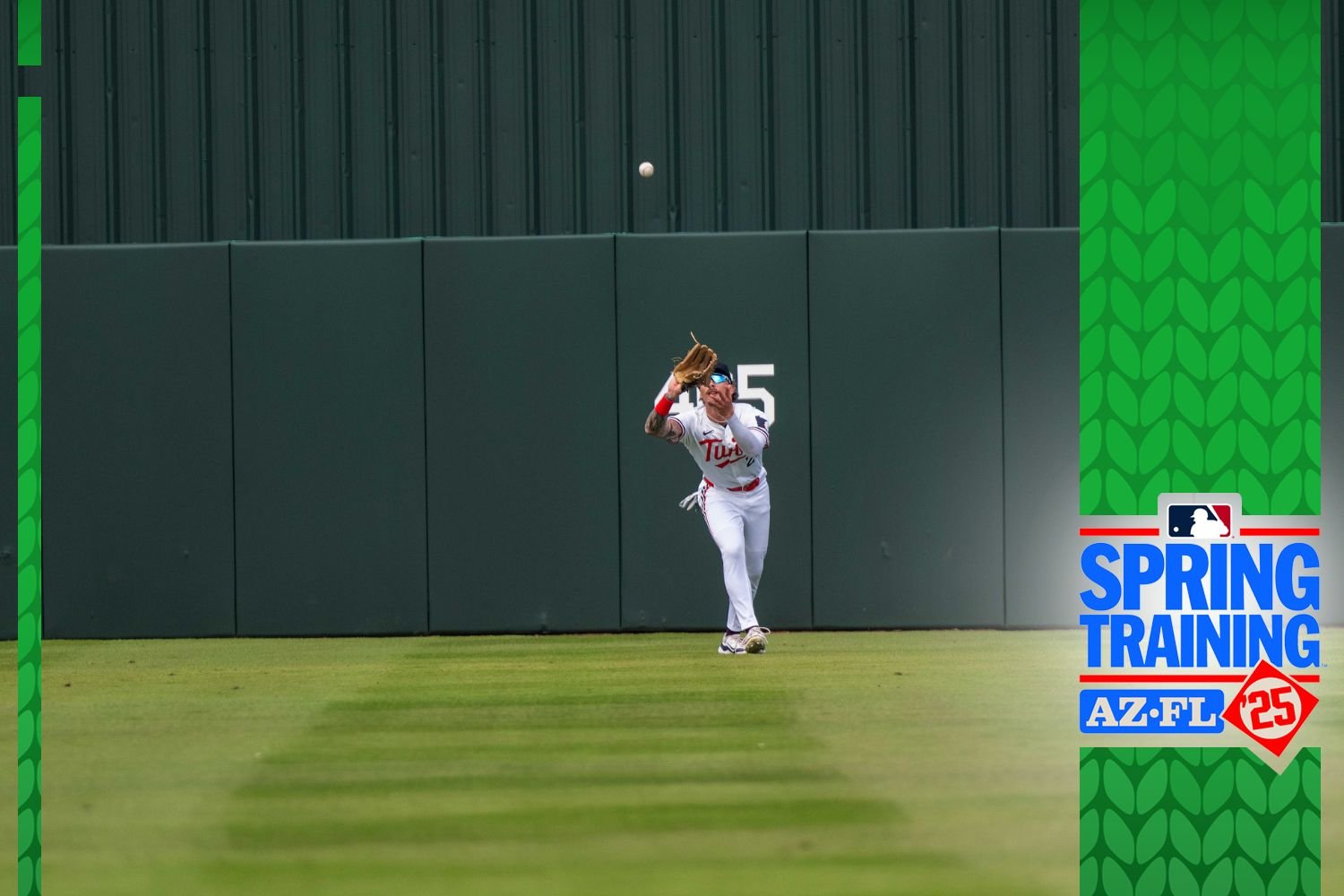 Virtually the entire lineup was filled with hopefuls; guys who could find themselves playing with the Twins or with St. Paul’s Saints for most of the season. It included eight players that are essentially batting for three roster spots. Leading off was Edouard Julien at first base, where he was playing for the first time this spring. He’s only played there five times in his MLB career, and only twenty-eight times in his minor league career. But manager Rocco Baldelli said before the game that Julien is likely to find himself playing first base nearly as much as he plays second base this spring. Ultimately, Julien’s bat is going to make or break his spot on the roster, but having some positional flexibility would provide a left-handed hitting option to pair with Ty France and Jose Miranda at first base. Batting second was Mickey Gasper, playing second base. Gasper has only played second base fourteen times: six times last year with the Red Sox, and eight times this winter with Criollos de Cagua in the Puerto Rican Winter League. He’s never played it in the minors, playing mostly first base. During the regular season, Baldelli would probably have Gasper and Julien switching spots. But this spring, the Twins need to see if Gasper can handle second base, since that flexibility might be needed for a bench role. Batting third was catcher Jair Camargo. The only thing that has kept Camargo off the Twins' roster the last two years is that Ryan Jeffers and Christian Vazquez have been unnaturally healthy for catchers, starting all 324 games over the last two seasons. He’s an IL-stint (or a cost-cutting trade) away from making the roster and seeing significant playing time. The cleanup hitter was Miranda, who is most likely to find himself playing for the Twins. “But Jose is going to be in a position where he’s going to go out there, earn his at-bats, earn his opportunities like many other guys on our roster.” Those aren’t my words, they’re Baldelli’s when asked about Miranda’s role last week. Miranda played third base in this game, a position the Twins would like to have Royce Lewis get 600 at-bats, if he can stay healthy. When talking about earning at-bats, Baldelli made it clear he wasn’t just talking about Miranda. “You could probably turn to two or three or four other players who have done some good things at the major-league level and ask a similar question and it would made sense,” he continued. Which brings us to the fifth batter today, Brooks Lee, who was playing shortstop. Like almost everyone above him in this lineup, that’s not the position the Twins would like to see him play - he’s probably competing for second base - but he needs to get time there in case something happens to Carlos Correa. Batting sixth was Austin Martin, playing center field. Martin didn’t look great in center field last year, and the Twins should have both Byron Buxton and Harrison Bader above him on the depth chart. But the Twins are convinced Martin can be an excellent defensive outfielder if he gets more time there, so we’ll see him there a lot this spring. His more likely role during the season would be a corner outfield spot, perhaps starting versus left-handed pitchers over left-handed hitting Matt Wallner or Trevor Larnach. The eighth batter, left-handed hitting DaShawn Keirsey Jr, is somewhat blocked on the roster by the same four players as Martin, which is too bad because he’s had a pretty outstanding 24+ hours. Tuesday, he made a fantastic catch against the right field wall to preserve a tie versus the Yankees and then followed it with a game-winning hit. Wednesday, he made a diving catch in the right-field gap and started the Twins scoring with a home run to left field. Finally, in between those two, batting seventh, was Mike Ford , getting at-bats at designated hitter. Like Julien, the left-handed hitting first baseman would also need to find his way on the roster as a left-handed hitting option for France or Miranda. This was a lineup full of players that are guaranteed nothing this year. They almost all played positions where they are being tested, or where the team hopes they won’t have to play. They also traveled 2.5 hours each way on a bus to get at-bats to face Tarik Skubal, the reigning AL Cy Young winner who showed off a 100+ mph pitch in the first inning. But it is also a lineup filled with promise, much of it young promise, that could determine the fate of the Twins offense this year.
- 69 comments
-
- 10
-
-
- jose miranda
- edouard julien
- (and 5 more)
-
Frank Sinatra’s “Fly Me To The Moon” played on the Hammond Stadium speaker as Twins outdielder Harrison Bader walked up to the plate. Is that his walkup music? “No, it’s not,” Bader said after the game. “But I appreciated it.” Image courtesy of © Chris Tilley-Imagn Images Maybe that’s because he appreciates smooth crooners, but more likely it was because he sent a slider from Yankees right-hander Allan Winans to the moon—or at least beyond the left field wall. It might as well have been to the moon. The Twins and Yankees hit plenty of home runs Tuesday, but all except Bader’s took the easy route, to right field, where wind gusts exceeding 20 mph were carrying the ball. Harrison Bader’’s shot was into the teeth of that same wind. The solo shot, paired with an earlier home run by fellow Twins newcomer Ty France, gave the Twins a 2-1 lead over the Yankees in the third inning. The team lost that lead when Michael Tonkin yielded three runs in the fifth inning, but tied it up again at 4-4 on a home run by Matt Wallner, and won the game in the ninth thanks to a walkoff hit by DaShawn Keirsey Jr. The moonshots were fun to see, especially because manager Rocco Baldelli revealed after the game that Wallner and France were only in the lineup because yesterday’s game was rained out and the skipper wanted to get them some at-bats. But do they matter? Considering the three guys involved, maybe. Wallner had a miserable spring training last year that led into a miserable April, which led to a demotion to St. Paul. France had a miserable midseason that led to him bouncing around the league and being stuck with a non-guaranteed contract. And Bader went from starting center fielder on the Mets to searching for backup jobs on the free-agent market. So yeah, a jolt of early success might matter quite a bit to these guys. Or maybe it was just about a windy day in Fort Myers. Or a classical banger of a song played at the right time. Could it play a future role for him? “I’m looking for [a permanent walkup song],” said Bader. “We’ll see.” We Saw Simeon Wood Richardson’s Velocity Simeon Woods Richardson started his 2025 season where he left his 2024 season, mixing pitches, being effective, and throwing in the mid-90s. Last year, Wood Richardson averaged 93.1 on his four-seam fastball, and he already averaged a tick over 92.5 with the twelve he threw in yesterday’s start. He also went through his full repertoire of pitches, though he gave up a home run on a wind-aided fly ball in the second inning. Unlike last year, Woods Richardson didn’t come to training camp a month early this year, needing his body to recover from a career-high 127 innings he threw last year between Triple A and the majors. He was pretty clearly gassed by the end of the season, posting a 5.91 ERA after Jul. 23 after posting a 3.27 ERA up to that point. So what should we expect this year? “Refine, revamp, and keep it going,” said Woods Richardson when asked his goals for training camp earlier this week. “Nothing really changes on the prep part. No real changes on the mechanical part. It’s just kind of just revamp and rego this year.” So far, so good. We Did Not See Jhoan Duran’s Velocity (Yet?) It is not unusual for pitchers to have something less than their midseason velocity in their first couple outings of the spring. But Durán’s reduced velocity last year was a story, and there were reports earlier this camp that he was showing big velocity in some early sessions. But we didn’t see it Tuesday. Duran threw 14 pitches in a scorelss inning, and six of them were his four-seam fastball, which averaged 100.5 mph last year. Objectively, that’s wonderful, except that it averaged 101.8 mph in 2023. Today, the fastest was 99.6 mph. Don’t hit the panic button. Just like we suggested not to hit the panic button just because Justin Topa gave up a run in Saturday’s game. Especially because… Topa Had A Clean Outing Three batters faced, one strikeout, no hits, no walks and his velocity was as expected. But what might matter is that the sweeper that he relied on to get out of his last outing got two outs, one on a swinging strike. We’ll keep an eye on that. View full article
-
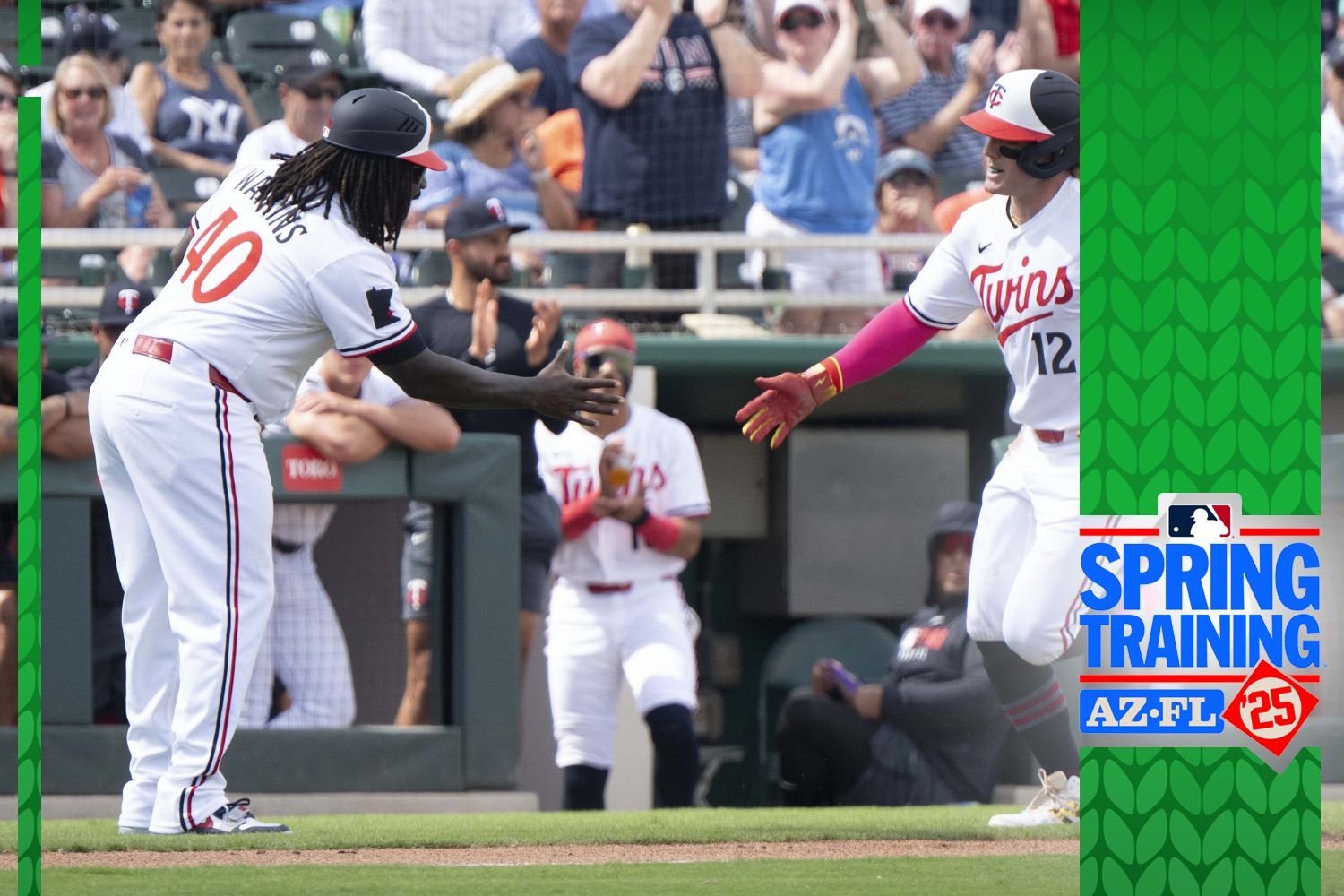 Maybe that’s because he appreciates smooth crooners, but more likely it was because he sent a slider from Yankees right-hander Allan Winans to the moon—or at least beyond the left field wall. It might as well have been to the moon. The Twins and Yankees hit plenty of home runs Tuesday, but all except Bader’s took the easy route, to right field, where wind gusts exceeding 20 mph were carrying the ball. Harrison Bader’’s shot was into the teeth of that same wind. The solo shot, paired with an earlier home run by fellow Twins newcomer Ty France, gave the Twins a 2-1 lead over the Yankees in the third inning. The team lost that lead when Michael Tonkin yielded three runs in the fifth inning, but tied it up again at 4-4 on a home run by Matt Wallner, and won the game in the ninth thanks to a walkoff hit by DaShawn Keirsey Jr. The moonshots were fun to see, especially because manager Rocco Baldelli revealed after the game that Wallner and France were only in the lineup because yesterday’s game was rained out and the skipper wanted to get them some at-bats. But do they matter? Considering the three guys involved, maybe. Wallner had a miserable spring training last year that led into a miserable April, which led to a demotion to St. Paul. France had a miserable midseason that led to him bouncing around the league and being stuck with a non-guaranteed contract. And Bader went from starting center fielder on the Mets to searching for backup jobs on the free-agent market. So yeah, a jolt of early success might matter quite a bit to these guys. Or maybe it was just about a windy day in Fort Myers. Or a classical banger of a song played at the right time. Could it play a future role for him? “I’m looking for [a permanent walkup song],” said Bader. “We’ll see.” We Saw Simeon Wood Richardson’s Velocity Simeon Woods Richardson started his 2025 season where he left his 2024 season, mixing pitches, being effective, and throwing in the mid-90s. Last year, Wood Richardson averaged 93.1 on his four-seam fastball, and he already averaged a tick over 92.5 with the twelve he threw in yesterday’s start. He also went through his full repertoire of pitches, though he gave up a home run on a wind-aided fly ball in the second inning. Unlike last year, Woods Richardson didn’t come to training camp a month early this year, needing his body to recover from a career-high 127 innings he threw last year between Triple A and the majors. He was pretty clearly gassed by the end of the season, posting a 5.91 ERA after Jul. 23 after posting a 3.27 ERA up to that point. So what should we expect this year? “Refine, revamp, and keep it going,” said Woods Richardson when asked his goals for training camp earlier this week. “Nothing really changes on the prep part. No real changes on the mechanical part. It’s just kind of just revamp and rego this year.” So far, so good. We Did Not See Jhoan Duran’s Velocity (Yet?) It is not unusual for pitchers to have something less than their midseason velocity in their first couple outings of the spring. But Durán’s reduced velocity last year was a story, and there were reports earlier this camp that he was showing big velocity in some early sessions. But we didn’t see it Tuesday. Duran threw 14 pitches in a scorelss inning, and six of them were his four-seam fastball, which averaged 100.5 mph last year. Objectively, that’s wonderful, except that it averaged 101.8 mph in 2023. Today, the fastest was 99.6 mph. Don’t hit the panic button. Just like we suggested not to hit the panic button just because Justin Topa gave up a run in Saturday’s game. Especially because… Topa Had A Clean Outing Three batters faced, one strikeout, no hits, no walks and his velocity was as expected. But what might matter is that the sweeper that he relied on to get out of his last outing got two outs, one on a swinging strike. We’ll keep an eye on that.
 -
Let's get a head start on the season with a preseason meetup. Step up to the plate this Friday (2/28) from 7-10 PM for Twins Daily’s Beers with the Beat Writers! A quintet of Twins spring training beat writers—John Bonnes (Twins Daily), Dan Hayes (The Athletic), Matthew Leach (MLB.com), and Phil Miller & Bobby Nightengale (Star Tribune)—will be at Palm City Brewing to talk Twins after a long and boring offseason. You can also take advantage of special prices! Enjoy $5 pours of the brand new Twins D-ALE-y Pale Ale and special pricing on one of Phil Miller’s favorite Palm City hazy IPAs, Subtropic. With plenty of Palm City’s other great beers on tap, it's the perfect evening to socialize with the beat writers and other Twins fans. Join us at Palm City Brewing at 7887 Drew Circle, Suite 130, Fort Myers, FL 33967, and make it a night to remember! View full article
-
Join Us in Fort Myers for Twins Daily's "Beers with the Beat Writers"
John Bonnes posted an article in Twins Daily
 Step up to the plate this Friday (2/28) from 7-10 PM for Twins Daily’s Beers with the Beat Writers! A quintet of Twins spring training beat writers—John Bonnes (Twins Daily), Dan Hayes (The Athletic), Matthew Leach (MLB.com), and Phil Miller & Bobby Nightengale (Star Tribune)—will be at Palm City Brewing to talk Twins after a long and boring offseason. You can also take advantage of special prices! Enjoy $5 pours of the brand new Twins D-ALE-y Pale Ale and special pricing on one of Phil Miller’s favorite Palm City hazy IPAs, Subtropic. With plenty of Palm City’s other great beers on tap, it's the perfect evening to socialize with the beat writers and other Twins fans. Join us at Palm City Brewing at 7887 Drew Circle, Suite 130, Fort Myers, FL 33967, and make it a night to remember!
 -
It’s great to have baseball back, but our excitement often means reading too much into spring training’s game results. That said, there are things to notice beyond the box score, so here are some observations from the Twins' 3-1 win over the Atlanta Braves on Saturday afternoon. Zebby Matthews’ Velocity Twins fans who don’t know the full story of Twins pitcher Zebby Matthews might view the 6.69 ERA he posted in his rookie year as disappointing. They are overlooking his meteoric rise – from Eighth round draft pick to the majors in two years, which was fueled by an increase in velocity. Apparently, he’s not done yet. Last year, Matthews’ four-seam fastball averaged 94.9 mph. In yesterday’s first spring outing – where velocities are usually lower – he threw 14 four-seam fastballs. The slowest was 95.4 mph. The fastest was 97.3 mph and the average of those pitches was 96.5 mph. He did all this while registering 19 strikes in the 29 pitches he threw. It was not unexpected. “So far this spring, I've been sitting around 95, 97. So, can't really complain too much about that,” said Matthews after the game. “Feel like we're in a good spot.” “We” includes the Twins, since they will likely have him stashed in St. Paul as the #2 option if the Twins need to swap out a member of their starting rotation. That depth is something the team lacked last year when they rushed him to the majors. It’s also something that can come in handy if the team needs to make some deals during the season or at the trade deadline to aid their pursuit of regaining the AL Central crown. Automatic Balls Strikes (ABS) In the first inning, Matthews gave up a lead-off double, but got out of the inning thanks to catcher Christian Vazquez challenging a “ball” call by the umpire. The call was changed to a strike upon further review, and that third strike call ended the inning. Matthews was not so sure. “I was like, I might be away a little bit,” said Matthews. “But no, we clipped the zone. So that was cool to see.” MLB is using spring training games as a testing ground for a “challenge” system for Automatic Balls & Strikes or ABS. Within seconds after the umpire’s call, the catcher, batter, or pitcher may challenge it. The challenge is announced, and almost immediately, the pitch is put on the scoreboard, allowing fans to see it from various angles and zoom in on it to see if it edges the zone. In the case of Matthews’ pitch, the edge of the ball touched the strike zone. That’s a strike. Last year in Triple-A, the average challenge took 17 seconds, and yesterday’s crowd cheered for the dramatic result. Matthews’ reaction also shows another aspect: that pitchers might not be in the best position to challenge. Twins’ manager Rocco Baldelli talked earlier this week about how the team might handle these when they come to real MLB games. “You’re going to see the catchers using opportunities to challenge behind the players, and the hitters should do it,” said Baldelli. “The pitchers are not in a position to do this as well as those other guys. They’re just not. It’s been proven that’s the case.” The team worked with the system starting on Thursday in live BP. Everyone was encouraged to try it to gain experience. In games, a team can challenge calls until they miss two; then, they cannot challenge calls for the rest of the game. But in spring training games, Baldelli isn’t worried about the penalties for challenging too many. These games don’t count, and he feels it’s important for players to become comfortable with the process by using it. Justin Topa Gives Up A Run But…. Justin Topa pitched the third inning of Saturday’s game and gave up the Twins only run on three singles to his first four batters. Twins fans didn’t see Topa much last year due to a knee injury and other setbacks, so I expect I’ll get some questions about today’s performance. Here’s what I saw. One of the singles was hard hit. One was a soft hit. The three singles came on three different pitch types: cutter, sinker, and changeup. His sinker and cutter had about the same velocity as they had in 2023 when he was with Seattle. And he got out of the inning by relying on a sweeper for six of the last eight pitches he threw. The results weren’t great, but I also didn’t see any red flags. Luke Keaschall is Already Hitting Like Matthews, Twins infield prospect Luke Keaschall launched himself up the prospect charts last year (landing at #3 on Twins Daily’s list) before having to shut down his season for Tommy John surgery. We likely won’t see him ready to play in the field until mid-March, but driving in two runs off the first pitch he sees this spring is encouraging. Because, also like Matthews, he could end up having a role on the team before the end of the year. View full article
