



Sam Morley
-
Posts
319 -
Joined
-
Last visited
Content Type
Profiles
News
Minnesota Twins Videos
2026 Minnesota Twins Top Prospects Ranking
2022 Minnesota Twins Draft Picks
Minnesota Twins Free Agent & Trade Rumors, Notes, & Tidbits
Guides & Resources
2023 Minnesota Twins Draft Picks
The Minnesota Twins Players Project
2024 Minnesota Twins Draft Picks
2025 Minnesota Twins Draft Pick Tracker
2026 Minnesota Twins Draft Tracker: Picks & Bonuses
Forums
Blogs
Events
Store
Downloads
Gallery
Everything posted by Sam Morley
-
Article: What To Make Of Mike Pelfrey
Sam Morley replied to Parker Hageman's topic in Twins Daily Front Page News
I think you have to go with the hot hand/what have you done for me lately philosophy here. Normally, I think that kind of approach is not very good. People are more successful when they aren't looking over their shoulder. I think as a manager, you want to be able to give your players some assurance, but the Twins' rotation has been such a disaster over the past several seasons- it feels like a frozen computer and you've been pressing ctrl alt del for an hour and it's not working and now it's just time to start pounding the key board with both hands and see what happens next. As far as I can see, nobody on the entire staff besides Perkins and Hughes has really earned their job and cemented it. Gibson and May are younger than the other guys, so they have more upside and that makes them part of the future... maybe. We have to let them pitch to find out, so maybe they have a longer leash. But if they stink it up, I don't think they have so much upside that the hot hand shouldn't move them to the back of the line. Milone, meh; is anybody really that stoked about Milone? Shorter leash for him. Happens to be one of the hot hands now- great. Pelfry just threw seven scoreless against the best team in the division and basically single handedly saved the team from a second division rival sweep. As people have said, the velocity is good. As Parker shared in the GIFs of the split-change, it is total filth. Pelfry has been, for me, one the most prodigiously groan inducing Twins players of all-time, but that pitch has very quickly turned my groan into an ooooh/ahhhh. Sickness. Now, I'm not saying his leash is any longer than anyone else's, but he absolutely has to keep starting without question at least until his next clunker... Especially when the guy we're talking about at the back of the line is Ricky Nolasco! The Twins have shown in this young season that they are no lost cause. They have lost a couple series, and won a couple series. They should've won this last series. If it were me running the show, there's no way Ricky is anywhere near a major league pitching mound until the team is totally buried and like ten or fifteen games under 500. Him starting is a sign to me the manager is going, "well jeepers, I don't know what else to do, and we're paying this guy." Anyway, thesis statement: the guys who have pitched well get to keep pitching; the guys who haven't might have to take a seat- regardless of their paycheck size, their relative youth/upside, or their 1989 Toyota Corolla fastball. PS: It seems to me that if Pelfry pitches similarly well over the next, say, two months, the potential trade returns could be more valuable to the Twins' long term plans than either Gibson or May... which then possibly makes Pelfry, at the moment, more valuable to the Twins' long term plans than either Gibson or May. (I would see the return ceiling for Pelfry- in the event he continues to pitch well- being low level plus starter type). -
Article: On Danny Santana And Regression
Sam Morley replied to Parker Hageman's topic in Twins Daily Front Page News
Here are some thoughts I had back in November about Santana and regression: http://twinsdaily.com/blog/428/entry-6230-danny-santana-projecting-regression-and-estimating-value/ -
Keep us posted on that mustache situation.
- 19 replies
-
- 1
-

-
- nate hanson
- glen perkins
- (and 4 more)
-
2015 Twins offseason top 40 prospects list: 6-10
Sam Morley commented on Thrylos's blog entry in Thrylos' Blog - select Tenth Inning Stretch posts
Really like your lists. It's awesome to see Diaz and Minier ranked this high. -
Article: Late Inning Gas is Coming. Get Ready
Sam Morley replied to Sam Morley's topic in Twins Daily Front Page News
One potential, significant obstacle to any non-traditional bullpen ideas that people have been raising here is the concern that players (and their agents) are attached to the traditional roles- for financial reasons, but also for preparation/routine/comfort reasons, and that managers are also possibly attached to recent tradition for the same reason. I did mention these briefly in the article, and think they are probably overcome-able. Do people think they are not? I think it would be weird to ask somebody like Perkins who has been the closer for a few seasons now, and performed well in the role, to suddenly do something unorthodox. But I think it's a much more manageable concept when talking about new major leaguers (actually guys still in the minors) who would probably do just about anything for a cup of coffee. I also think that with Ol' Ron G, the idea would've been totally laughable, but, well, he ain't here no more. We got ourselves a rookie manager, folks; the sky's the limit! -
Article: Late Inning Gas is Coming. Get Ready
Sam Morley replied to Sam Morley's topic in Twins Daily Front Page News
Thanks, and yep. -
Article: Late Inning Gas is Coming. Get Ready
Sam Morley replied to Sam Morley's topic in Twins Daily Front Page News
I wasn't clear about that. I think most teams have, or try to have, an established closer; but that the role of set up man can be a revolving door. If a team has an established set up man, then I think the same suggestion would apply to him as to closers. The idea is just that the more times a hitter sees a pitcher, the more informed he is. Divisional opponents will face Glen Perkins many times throughout the season, perhaps more than other late-inning guys; and, they know they will face him in a high leverage 9th inning. I think that those are two advantages for hitters in terms of preparation. If there was an established 8th inning guy, the advantage in preparation would be the same. But, I have not seen a study to this effect. It is a hypothesis. And, what I'm suggesting really only makes sense if the pitchers we're talking about turn out to be of comparable quality at the MLB level. They would be interchangeable regardless of inning, with some attention to platoon splits. For example: I think that Wade Davis and Greg Holland were probably interchangeable in terms of quality for the Royals, and that Herrera was close. But let's say you're facing the Royals in a close game, maybe down one or two runs in the sixth or seventh inning. You anticipate that your at bat will come in the 8th inning, and you expect to face Davis. I think that you start mentally preparing for that match-up, while you're in the field, and while you sit in the dug-out. You go over the scouting report, you recall previous at-bats against him, etc. But when your at-bat does come, in the 8th, it's Holland instead of Davis. I'm not saying that you're rendered suddenly helpless, or even unprepared, but I think you do lose a slight margin of the advantage you were developing through the mental preparation. And, that slight margin could be significant. But I don't really know how hitters prepare. I'm sure that it's entirely individual. It would be interesting interview content. Nitpicking is good here. It's a bit of a far out idea, and I mostly wrote about it to get more of a sense of how far out it might be. If somebody else had written it, I'd probably be saying the same stuff. It probably would've been prudent to wait until all these guys have their assignments to start the season; then we'd have a better sense of how close or far they really are, but I was thinking about it now, and wanted to talk about it now. -
How often do other established major leaguers do this?
-
Even if he was totally healthy, I still would think it is crazy for him to play baseball in the offseason. The MLB season is so long and grueling and taxing on a body. Take all the rest you can get. Train, stay in shape, hit BP, but don't compete.
-
Article: Late Inning Gas is Coming. Get Ready
Sam Morley replied to Sam Morley's topic in Twins Daily Front Page News
Well, I really haven't done any evaluating at all. I relied on brief scouting reports included in various organizational prospect lists, and was probably most influenced by Kiley McDaniel's recent list on fangraphs. Honestly, I barely even glanced at any of their stats at all. I think it's interesting that relievers would be displacing starters and position players on prospect lists. I think it takes a lot for minor league relievers to gain attention. I don't usually pay much attention to them. When I check the minor league box scores, I see everything, but I really only take note of the starter's performance and if anybody hit a jack or went 3 for 3 or something. I don't really care that much if Anthony Slama threw a scoreless 9th for a save. My point is, that based mostly on glowing scouting reports, this group has forced my attention. It was interesting to read the Sickle grades that you posted. I hadn't looked at those. Do you have a link for that info? I'm more familiar with the 80 point scale. Are the grades relative to that? -
Article: Late Inning Gas is Coming. Get Ready
Sam Morley replied to Sam Morley's topic in Twins Daily Front Page News
Throwing a fastball 100mph is like hitting a homerun 500ft. Hitting the ball 350ft may accomplish the same thing, be just as effective, but it's still awesome to see someone hit a ball 500ft. It's true that great control, a good fastball, a knee bending curveball/change and a nasty slider are all more important qualities/attributes in a pitcher. It's true that for 100mph to be effective, it has to be accompanied by some level of control, and maybe even life. But I think people are underestimating how hard it is to hit a pitch that fast. The difference between 94mph and 98mph is pretty significant in terms of just catching up, even if you know it's coming. Countless times I've seen entire sides retired on hard fastballs alone. And you really only need about 50% control. For a hitter to even get a piece at 100, he has to commit so early, mentally and physically. All that being said, what's more exciting to me about the hard heat in the system right now, is that it signals a change in the organization. It shows a recognition that at least a few power arms are needed to succeed in the league today, especially in the playoffs. It's not important that they throw that fast, it's just cool that a few of them do. Lastly, I think that most promising of our minor league relievers (Burdi, Chargois, Melotakis, Reed, Zack Jones) do have solid to plus second offerings (mostly sliders) and from what I've read, command isn't a glaring issue for any of them. So c'mon man, get excited about some minor league relief pitchers, dammit.- 46 replies
-
- 1
-
-
- j..t. chargois
- jake reed
- (and 2 more)
-
Article: Late Inning Gas is Coming. Get Ready
Sam Morley replied to Sam Morley's topic in Twins Daily Front Page News
Lots of strong comments here, including plenty of cautioning at over-valuing heat, and counting chickens before they hatch. All fair. I have to say that I don't typically take much interest in pitching, far less even in relief pitching. I'd much prefer to talk about position players. My typical thoughts on the pitching staff would be: focus on the starters, and see who steps up in relief- if a closer turns up, hang onto him. It seems like you can always convert somebody when you need to. But reading the prospect lists, from in-house to MLB.com, to Kiley McDaniel at fangraphs, they are full of college closers that crank it in the high 90s to trip digits. And from what I have read, many are not just throwers, but have a fair amount of polish. Plenty have said that Nick Burdi is MLB ready now. It seems, like these guys are the Sanos and Buxtons of relievers. I'm not one to pencil in future line-ups before guys arrive, but you can bet I'm still giddy excited about Sano and Buxton. At first, when I saw the Twins drafting all these relievers, I was a little annoyed. I was thinking, hey the rotation is a disgrace, and relievers are a dime a dozen. But maybe they've got an idea. And between an idea and 100mph, I can get excited about relief pitchers. Have the Twins ever had one guy that closed in on one hundo? C'mon, fellas!- 46 replies
-
- 2
-
-
- j..t. chargois
- jake reed
- (and 2 more)
-
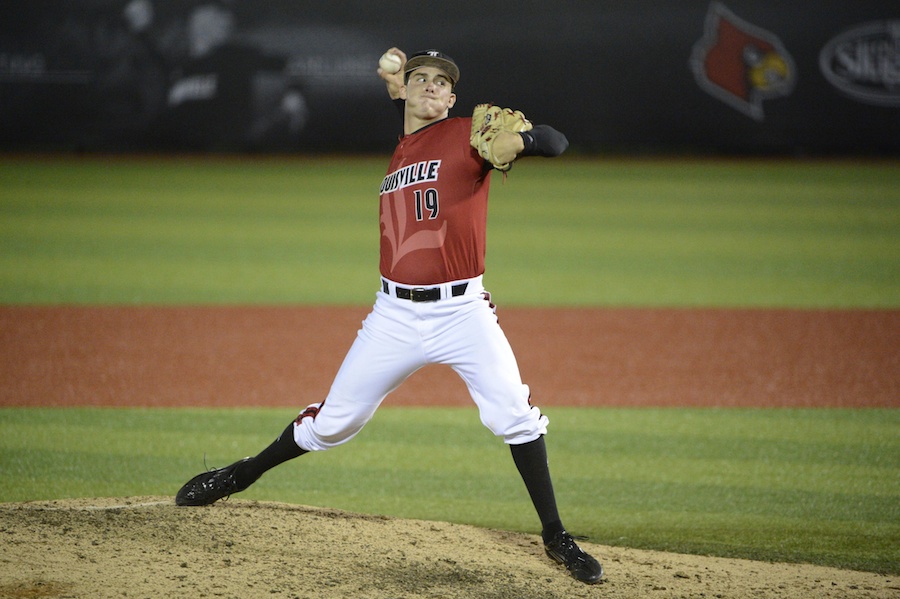
In recent years, the Twins have managed to stock the farm with flame throwers who project as late inning relievers. Several are projecting as shut down closers. These days, MLB pitching staffs have evolved from two positions, starter and reliever, into several positions: Starter, long relief, LH specialist, 7th inning guy, set-up guy, and closer.The hierarchy moves two directions: long relievers want to be starters, 7th inning and set-up guys want to be closers (I don’t know what to say about the aspirations of LH specialists- they are special). Very few teams ever seem very interested in or able to utilize a closer by committee type of late inning relief system. I’ve only been a TD member for about a year, and lurked for a couple years before then, and in that time, I can’t recall any standout discussions about closer by committee. But it seems like such a debate must have taken place somewhere along the way. So, hopefully I’m not opening some old ridiculous can of worms, beating a dead horse, or-r-r-r disturbing any sleeping dogs. For the purposes of this piece, and in light of what the Twins have coming up over the next few years, I’m going to advocate for it. Although, calling such a system “closer by committee” doesn’t seem quite right. It seems more like the position of closer is just eliminated. There can really only be one closer. If you have multiple relievers who all pitch in save situations, they wouldn't all be called 'closer', would they? Ugh, what am I talking about? Okay, this system would only work if you had three to five relievers all of closer quality. This doesn’t work if you have no relievers of closer quality and are just trying to puzzle it together playing match-ups. Neither does it work if you have one legit closer and a few guys who are okay. The Twins current relief corps could not do this. Maybe no team in baseball could. I think maybe the Royals could have done it last season. What they had in Herrera, Davis, and Holland was possibly unprecedented. It was also their ticket to the postseason and their key to success therein. It seems like any time a team has more than one successful late inning reliever, they will lose one in the following offseason. Either the closer leaves and the set-up guy becomes the new closer, or the set-up guy goes elsewhere to become a closer. So this is a market-driven issue as closers get more money than do other relievers, and teams aren’t yet willing to pay closer money to a non-closer. So, in the event a team accumulates three or more closer types at once, how should theat team use them, and how can they keep them around? When I look at the Twins minor league relievers, I think these become serious questions. Here’s a list of dudes: Nick Burdi, J.T. Chargois, Jake Reed, Mason Melotakis (L), Zack Jones, Yorman Landa, Fernando Romero, Michael Cedaroth, Cameron Booser (L), Alex Meyer, CK Irby, Brandon Poulson, Cole Johnson, Tyler Jones, Todd Van Steensel, Brandon Peterson, and Corey Williams (L). This is admittedly a wild list. It includes pitchers from Rookie to AAA, a few guys who are still starting but get plenty of press as possible future closer types. 75% of them throw in the upper 90s (a few hit triple digits) and the ones who don’t still boast K rates around 10/9. All of them but Poulson have solid secondary offerings. Several of them have sustained significant injury, some have returned already, some are still in recovery. So, hypothetically, Burdi, Reed, Chargois, Melotakis (L), and Meyer are all ready in 2016, and then Meyer doesn’t pan out as a starter. I pick these guys, because they all project as closers (if Meyer doesn’t cut it as a starter), they all throw gas, and they all are close enough to be up by 2016. You could push it back a season, and/or trade out names if you want. The point is that 2016-2017 is when the Twins should be back in business, and some combination of these guys could be ready. I think the Twins should be prepared to do something unorthodox with the situation, rather than trade what is perceived as excess or keep it stuffed in the minors or do a traditional 1, 2, 3 like the Royals, with Perkins at the top. Maybe something like a back-end five man rotation would work. It wouldn’t be predictable like the starting rotation, and it could be entirely match-up based, or partially, but probably not reliant on the hot hand. It would ideally keep opposing offenses from preparing to face one closer. I think eventually most closers gain enough regular exposure that their effectiveness can diminish. When a team comes to play the Twins, I think their hitters prepare to face the starter, and Glen Perkins. I don’t think they prepare for Caleb Theilbar- not because he isn’t good, but because of the unpredictability of facing him and also the unpredictability of the situation in which you might face him. If you are facing a closer, you know who it will be and you know the situation really counts. In one series you could face Perkins every night, and Theilbar not once. It seems like taking away the predictability of the closer position, thus taking away the ability of the offense to prepare, is a significant advantage. Especially, and maybe only, when the options to fill the role are multiple of comparable quality. What are the obstacles to implementing this kind of system, or something like it? Are managers too attached to the reliability of the traditional system? Are relievers too attached to the hierarchy of the 7th inning, set-up, closer system and the financial consequences involved? It seems like now might be the time to challenge those obstacles, if they exist. There is a new manager who could be open to different ideas. The relievers will all be new major leaguers, ideally more focused on performance than on title and/or relative pay. If such a system were to prove successful, why not the pay accurately reflect the value of each man. What am I missing here? Is this trying to reinvent the wheel? I don’t really know diddly about managing a pitching staff. I just see all those names about to be knocking on the door, and see those numbers attached to those names: 97mph, 98mph, 99mph, 100mph, 101mph, and think there’s got to be a way to put them all to work in equally contributive roles. Will everyone on the list make the show? Unlikely. Will all the ones who do be of closer quality? Unlikely… …but the scouting reports do look pretty damn good. Click here to view the article
- 46 replies
-
- 2
-
-
- j..t. chargois
- jake reed
- (and 2 more)
-
 The hierarchy moves two directions: long relievers want to be starters, 7th inning and set-up guys want to be closers (I don’t know what to say about the aspirations of LH specialists- they are special). Very few teams ever seem very interested in or able to utilize a closer by committee type of late inning relief system. I’ve only been a TD member for about a year, and lurked for a couple years before then, and in that time, I can’t recall any standout discussions about closer by committee. But it seems like such a debate must have taken place somewhere along the way. So, hopefully I’m not opening some old ridiculous can of worms, beating a dead horse, or-r-r-r disturbing any sleeping dogs. For the purposes of this piece, and in light of what the Twins have coming up over the next few years, I’m going to advocate for it. Although, calling such a system “closer by committee” doesn’t seem quite right. It seems more like the position of closer is just eliminated. There can really only be one closer. If you have multiple relievers who all pitch in save situations, they wouldn't all be called 'closer', would they? Ugh, what am I talking about? Okay, this system would only work if you had three to five relievers all of closer quality. This doesn’t work if you have no relievers of closer quality and are just trying to puzzle it together playing match-ups. Neither does it work if you have one legit closer and a few guys who are okay. The Twins current relief corps could not do this. Maybe no team in baseball could. I think maybe the Royals could have done it last season. What they had in Herrera, Davis, and Holland was possibly unprecedented. It was also their ticket to the postseason and their key to success therein. It seems like any time a team has more than one successful late inning reliever, they will lose one in the following offseason. Either the closer leaves and the set-up guy becomes the new closer, or the set-up guy goes elsewhere to become a closer. So this is a market-driven issue as closers get more money than do other relievers, and teams aren’t yet willing to pay closer money to a non-closer. So, in the event a team accumulates three or more closer types at once, how should theat team use them, and how can they keep them around? When I look at the Twins minor league relievers, I think these become serious questions. Here’s a list of dudes: Nick Burdi, J.T. Chargois, Jake Reed, Mason Melotakis (L), Zack Jones, Yorman Landa, Fernando Romero, Michael Cedaroth, Cameron Booser (L), Alex Meyer, CK Irby, Brandon Poulson, Cole Johnson, Tyler Jones, Todd Van Steensel, Brandon Peterson, and Corey Williams (L). This is admittedly a wild list. It includes pitchers from Rookie to AAA, a few guys who are still starting but get plenty of press as possible future closer types. 75% of them throw in the upper 90s (a few hit triple digits) and the ones who don’t still boast K rates around 10/9. All of them but Poulson have solid secondary offerings. Several of them have sustained significant injury, some have returned already, some are still in recovery. So, hypothetically, Burdi, Reed, Chargois, Melotakis (L), and Meyer are all ready in 2016, and then Meyer doesn’t pan out as a starter. I pick these guys, because they all project as closers (if Meyer doesn’t cut it as a starter), they all throw gas, and they all are close enough to be up by 2016. You could push it back a season, and/or trade out names if you want. The point is that 2016-2017 is when the Twins should be back in business, and some combination of these guys could be ready. I think the Twins should be prepared to do something unorthodox with the situation, rather than trade what is perceived as excess or keep it stuffed in the minors or do a traditional 1, 2, 3 like the Royals, with Perkins at the top. Maybe something like a back-end five man rotation would work. It wouldn’t be predictable like the starting rotation, and it could be entirely match-up based, or partially, but probably not reliant on the hot hand. It would ideally keep opposing offenses from preparing to face one closer. I think eventually most closers gain enough regular exposure that their effectiveness can diminish. When a team comes to play the Twins, I think their hitters prepare to face the starter, and Glen Perkins. I don’t think they prepare for Caleb Theilbar- not because he isn’t good, but because of the unpredictability of facing him and also the unpredictability of the situation in which you might face him. If you are facing a closer, you know who it will be and you know the situation really counts. In one series you could face Perkins every night, and Theilbar not once. It seems like taking away the predictability of the closer position, thus taking away the ability of the offense to prepare, is a significant advantage. Especially, and maybe only, when the options to fill the role are multiple of comparable quality. What are the obstacles to implementing this kind of system, or something like it? Are managers too attached to the reliability of the traditional system? Are relievers too attached to the hierarchy of the 7th inning, set-up, closer system and the financial consequences involved? It seems like now might be the time to challenge those obstacles, if they exist. There is a new manager who could be open to different ideas. The relievers will all be new major leaguers, ideally more focused on performance than on title and/or relative pay. If such a system were to prove successful, why not the pay accurately reflect the value of each man. What am I missing here? Is this trying to reinvent the wheel? I don’t really know diddly about managing a pitching staff. I just see all those names about to be knocking on the door, and see those numbers attached to those names: 97mph, 98mph, 99mph, 100mph, 101mph, and think there’s got to be a way to put them all to work in equally contributive roles. Will everyone on the list make the show? Unlikely. Will all the ones who do be of closer quality? Unlikely… …but the scouting reports do look pretty damn good.
 -
2015 Twins offseason top 40 prospects list: 16-20
Sam Morley commented on Thrylos's blog entry in Thrylos' Blog - select Tenth Inning Stretch posts
So Christensen will be coming into his age 24 season, presumably at Ft Myers. If he were to continue to advance at the same pace (one level per season) he would play his AAA season at age 26- too old for me to be excited about. I think it would be interesting for an organization to take players like Christensen, and the others you mention- college guys who demonstrate some success right away at lower levels- and use them as 'filler' at AAA. They wouldn't take spots from players who could be called up, obviously, but it would give them the chance to get ahead of that age barrier before they become Doug Bernier/James Beresford/Eric Fryer. It looks like there are four new infielders signed at AAA: Brock Peterson, Argenis Diaz, Jose Martinez, and Heiker Meneses. I know they need players polished to certain level at AAA, but it surprises/bothers me that those spots couldn't have been filled from within the organization. Anyway, all this being said, Christensen did have nearly a 25% K rate at CR, so... -
2015 Twins offseason top 40 prospects list: 16-20
Sam Morley commented on Thrylos's blog entry in Thrylos' Blog - select Tenth Inning Stretch posts
I definitely second what you say about Engelb Vielma. I saw him for four games in Cedar Rapids last season, and he was by far my favorite to watch. His arm is amazing. He was playing long toss with Ryan Walker during warm-ups and Walker was one and two hopping it, but Vielma was putting bullets in his chest like he was 90 feet away. He also smoked a triple into the RF corner. You're probably right about not expecting much power at 155lbs, but he'll probably get bigger and stronger, and even so, he's definitely got more power than Punto or Revere... maybe not definitely. Chih-Wei Hu was impressive in the start I was there for. Speaking of all these 2014 Cedar Rapids guys, Chad Christensen put up pretty solid, well-rounded numbers there last year but doesn't seem to get much prospect list love. I suppose he's around league average age, being a college guy. -
In recent years, the Twins have managed to stock the farm with flame throwers who project as late inning relievers. Several are projecting as shut down closers. These days, MLB pitching staffs have developed from two positions, starter and reliever, into several positions: starter, long relief, LH specialist, 7th inning guy, set-up guy, and closer. The hierarchy moves two directions: long relievers want to be starters, 7th inning and set-up guys want to be closers (I don’t know what to say about the aspirations of LH specialists- they are special). Very few teams ever seem very interested in or able to utilize a closer by committee type of late inning relief system. I’ve only been a TD member for about a year, and only lurked for a couple years before then, and in that time, I can’t recall any standout discussions about closer by committee. But, it seems like such a debate must have taken place somewhere along the way. So, hopefully I’m not opening some old ridiculous can of worms, beating a dead horse, orrrrr disturbing any sleeping dogs. For the purposes of this piece, and in light of what the Twins may have on the way over the next few years, I’m going to advocate it. Although, calling such a system “closer by committee” doesn’t seem quite right. It seems more like the position of closer is just eliminated. There can really only be one closer. If you have multiple relievers who all pitch in save situations, they wouldn't all be called 'closer', would they? Ugh, what am I talking about? Okay, this system would only work if you had three to five relievers all of closer quality. This doesn’t work if you have no relievers of closer quality and are just trying to puzzle it together playing match-ups. Neither does it work if you have one legit closer and a few guys who are okay. The Twins’ current relief core could not do this. Maybe no team in baseball could. I think maybe the Royals could have done it last season. What they had in Herrera, Davis, and Holland was possibly unprecedented. It was also their ticket to the postseason and their key to success there-in. It seems like any time a team has more than one successful late inning reliever, they will lose one in the following off season. Either the closer leaves and the set-up guy becomes the new closer, or the set-up guy goes elsewhere to become a closer. So this is a market driven issue as closers get more money than do other relievers, and teams aren’t so far willing to pay closer money to a non-closer. So in the event a team accumulates three or more closer types at once, how should they use them, and how can they keep them around? When I look at the Twins’ minor league relievers, I think these become serious questions. Here’s a list of dudes: Nick Burdi, J.T. Chargois, Jake Reed, Mason Melotakis (L), Zack Jones, Yorman Landa, Fernando Romero, Michael Cedaroth, Cameron Booser (L), Alex Meyer, CK Irby, Brandon Poulson, Cole Johnson, Tyler Jones, Todd Van Steensel, Brandon Peterson, and Corey Williams (L). This is admittedly a wild list. It includes pitchers from Rookie to AAA, a few guys who are still starting but get plenty of press as possible future closer types. 75% of them throw in the upper 90s (a few hit triple digits) and the ones who don’t still boast K rates around 10/9. All of them but Poulson have solid secondary offerings. Several of them have sustained significant injury, some have returned already, some are still in recovery. So, hypothetically, Burdi, Reed, Chargois, Melotakis (L), and Meyer are all ready in 2016, and Meyer doesn’t pan out as a starter. I pick these guys, because they all project as closers (if Meyer doesn’t cut it as a starter) they all throw gas, and they all are close enough to possibly be up by 2016. You could push it back a season, and/or trade out names if you want. The point is that 2016-2017 is when the Twins should be back in business, and some combination of these guys could be ready. I think the Twins should be prepared to do something unorthodox with the situation, rather than try and trade what is perceived as excess or keep it stuffed in the minors or do a traditional 1, 2, 3 like the Royals, with Perkins at the top. Maybe something like a back-end five man rotation would work. It couldn’t be predictable like the starting rotation, and it could be entirely match-up based, or partially, but probably not reliant on the hot hand. It would ideally keep opposing offenses from preparing to face one closer. I think, eventually, closers gain enough regular exposure that their effectiveness can diminish. When a team comes to play the Twins, I think their hitters prepare to face the starter, and Glen Perkins. I don’t think they prepare for Caleb Theilbar- not because he isn’t good, but because of the unpredictability of facing him and also the unpredictability of the situation in which you might face him. If you are facing a closer, you know who it will be and you know the situation really counts. In one series you could face Perkins every night, and Theilbar not once. It seems like taking the predictability of the closer position away, thus taking away the ability of the offense to prepare, is a significant advantage- especially (and maybe only) when the options to fill the role are multiple of comparable quality. What are the obstacles to implementing this kind of system, or something like it? Are managers too attached to the reliability of the traditional system? Are relievers too attached to the hierarchy of the 7th inning, set-up, closer system and the financial consequences involved? It seems like now might be the time to challenge those obstacles, if they exist. There is a new manager who could be open to different ideas. The relievers will all be new major leaguers, ideally more focused on performance than on title and/or relative pay (and if such a system were to prove successful, why not compensate reflectively). What am I missing here? Is this trying to reinvent the wheel? I don’t really know didly about managing a pitching staff. I just see all those names about to be knocking on the door, and see those numbers attached to those names: 97mph, 98mph, 99mph, 100mph, 101mph, and think there’s got to be a way to put them all to work in equally contributive roles. Will everyone on the list make the show? Unlikely. Will all the ones who do be of closer quality? Unlikely… …but the scouting reports look pretty damn good.
-
2015 Twins offseason top 40 prospects list: 21-25
Sam Morley commented on Thrylos's blog entry in Thrylos' Blog - select Tenth Inning Stretch posts
I love the inclusion of and write-ups on all the DSL guys on your list. They don't seem to get much attention on other lists. Kind of surprised to see Levi Michael on this list at all, let alone in the top 25. -
Article: Torii Hunter Signing Is Hard To Figure
Sam Morley replied to Nick Nelson's topic in Twins Daily Front Page News
If the Twins had signed an outfielder exactly like Torii Hunter but not Torii Hunter, I would be pissed. Lots of arguments against the signing are being presented, and it seems like most of them are probably valid. Young players losing time to an old player in the midst of a rebuild is the worst, in my mind. But even if his defense is as bad as the metrics insist, I'm not about to feel sorry for our pitching staff. It seems to me, that group has way more to worry about before getting cranky about the d. Anyway, analytically and strategically, I have to admit that I agree that this signing may not be very good. Fortunately, I'm not really an analyst nor a strategist; I'm just a fan, and as a fan this signing makes me happy. I will definitely be at Target Field more than I would have otherwise this summer just to see Torii in a Twins uniform a few more times. I think the Twins' fans on this site are the best out there, and it's definitely a bummer to read them tearing one of the all time Twins greats apart. In the early nineties it felt like the likes of Torii Hunter, Jaques Jones, Corey Koskie, and Christian Guzman single handedly saved the team from contraction. The team should have re-signed him the first time, paying him what he'd earned destroying his body on the metrodome concrete. They should have signed him when his contract with the Angels was up. Of course, now that it doesn't make any sense to sign him, they do. Oh well. I think all the 'the sky is falling' sentiment is silly. It might not be ideal, but it's definitely not a big deal. The Twins are not going to compete. They're not going to sign anybody that will make them compete. They're going to wait until the prospects emerge and hope they turn out. Torii Hunter is a Twins legend. He's not Kubel or Guerrier or Bartlett. He's a Twins legend. It's good to have him back. -
Suddenly Justin Masterson sounds really good.
-
Oh! P to the C-izzo! The forbidden phrase! Too soon, too soon. A warning first next time if you must, that the children and faint of heart among us at least might avert their eyes.
-
Article: Twins Winter League Updates
Sam Morley replied to Seth Stohs's topic in Twins Daily Front Page News
zero walks in fourteen games is amazing. please keep us updated on this streak. -
What is LOB with men on base? Is it different than LOB? Garza and Hughes both have some of the worst strand rates in the league among qualified starters. Masterson's LOB numbers are also poor; sometimes a little better than Hughes, sometimes worse. Garza's career LOB is actually better than Masterson's. Compared to the rest of the league, Masterson has a high WHIP and a low LOB, the combination of which is not good. I just thought it was interesting that in his good seasons, his WHIP was lower and the LOB% was higher. And, yeah, more ground balls means more double plays. I brought that up in attempt to find an explanation for his higher LOB% in 2011 and 2013. As in, if he had a higher GB% we could figure more double plays, which could go toward explaining a higher LOB%... but, his GB rates are pretty stable. A higher K% could explain it, and maybe in 2013 that was the case, but it doesn't explain 2011 (one of his better LOB rates but lowest K%). This doesn't really have anything to do with why I don't think he's not a good sign for the Twins; I just think it's interesting.
-
If he had any major structural damage, there wouldn't even be a conversation. Minor structural damage, or even weakness, should eliminate him from consideration. Maybe a guy with ideal mechanics, you go, okay. But watching Masterson's motion and delivery is cringe-inducing: upside down W, three quarter arm slot. Parker highlighted that photo right before release where his fingers are almost under the ball. Just holding my arm out 45 degrees from my body and turning my hand palm up, I can feel stress on the inside of my elbow. Even if he had never suffered any injury, his motion and delivery would concern me. You make a strong case with the FIP/xFIP, but I would say that one poor season not counting last season is inconsistent. In terms of FIP/xFIP, we're looking at two good years, one mediocre year, one bad year, and one disaster. For me, this is not consistency. And we're only talking about FIP/xFIP. His WHIP fluctuates from mediocre to bad. His walk rates are always high. His K rates are mediocre with one good season. And why only compare him to Hughes and Garza? I think, in general, a Hughes comp is inappropriate, given the national baseball media consensus at the time of his signing that he would profile much better in Target Field than Yankee Stadium. Even though he'd had a poor previous season, there was basically unanimous confidence that he would be more successful with the Twins. I don't see any similar factors at play with Masterson. Do you? The last stat you listed: LOB with men on base, I don't understand. LOB% is the % of runners left stranded, so isn't LOB with men on base redundant? I must be missing something. Masterson's career LOB% is about 70%. Maybe you can clarify on the stat you provided for me. One interesting thing about his LOB numbers is if you couple them with his WHIP numbers. The seasons where his WHIP is lower, his LOB% is higher. So in those seasons he let less men on, and stranded a higher than normal percent of them. It doesn't seem to be connected to K% or GB%, but it seems too large of a sample size to be fortune. I wish I could find a stat for double plays induced/inning ending double plays induced.
-
Yeah, I don't really have a problem with a short term deal, and I think your four points are strong, except that in the specific case of Masterson they hinge first on his health, and second on his performance. Granted, you say "chance" and that's fine, but in his case, I think, too much chance relative to the cost. I think there is a better chance that he will be hurt, be hurt and pitch and stink, or not be hurt and still stink, than the chance that he will be fine and good. Brett Anderson or Josh Johnson I like more. Their injury risk is obviously just as high, but their cost is less- I think- and they are both better pitchers. If the goal is to make an assured upgrade to the rotation for 2015, which it should be, none of these guys is it. Aside from the big dogs, Brandon McCarthy would be my choice (for more than one year if it took)- unless he's a QO guy, but I don't think he is.
