



Cody Christie
-
Posts
7,515 -
Joined
-
Last visited
-
Days Won
5
Content Type
Profiles
News
Minnesota Twins Videos
2026 Minnesota Twins Top Prospects Ranking
2022 Minnesota Twins Draft Picks
Minnesota Twins Free Agent & Trade Rumors, Notes, & Tidbits
Guides & Resources
2023 Minnesota Twins Draft Picks
The Minnesota Twins Players Project
2024 Minnesota Twins Draft Picks
2025 Minnesota Twins Draft Pick Tracker
2026 Minnesota Twins Draft Tracker: Picks & Bonuses
Forums
Blogs
Events
Store
Downloads
Gallery
Everything posted by Cody Christie
-
 In the prospect ranking department there are always players that fall slip through the cracks. For instance, take a look at Brian Dozier. As Nick wrote about on Monday, Dozier hit a combined total of 16 home runs over 1,600 plate appearances in the minors. Needless to say, Dozier was never featured on any national top 100 prospect lists before evolving into possibly the best power hitting second baseman in the game. Sometimes prospects slip through the cracks before putting it all together and other times great prospects fail.The Twins currently have an interesting situation unfolding with two young players. Byron Buxton was touted as one of the best prospects in the game after the Twins made him the second overall selection. In fact, he has been ranked as the first or second best prospect each of the last three seasons by Baseball America, MLB.com, and Baseball Prospectus. Like Dozier before him, Max Kepler has been a very different story in the prospect world. The 23-year old has moved slowly through the Twins system in the seven years since he signed. It wasn't until last season when he made his presence known. He hit .322/.416/.531 with 54 extra-base hits on the way to being named the Southern League MVP. National prospect lists took note of Kepler's breakout campaign and he found himself sprinkled on multiple lists entering this season. Baseball American had him 30th, MLB.com had him 44th, and Baseball Prospectus had him all the way back at 66th. Not nearly as high as Buxton but that's not how these rankings are put together. Kepler already has more home runs this season than his last two minor league seasons combined. He's getting on base over 33% of the time and his .508 slugging percentage ranks second among rookies in the American League. He is establishing himself as one of the best hitters in the Twins line-up while continually being penciled into the middle of the order. Meanwhile, Buxton's struggles have been well documented during his big league tenure. Pitchers are constantly getting ahead of him and Buxton has a 36.7 K%. He's now toiling at Rochester where he has slugged .982 this season while Kepler continues to thrive in Minnesota. Kepler's performance has been clearly superior to Buxton and that can show why prospect lists are fickle. Buxton could eventually put it all together and be the five-tool player most thought he would become. Kepler versus Buxton might be no contest for now but Twins fans should be patient. No matter what the results are now, both players are going to need to perform well for the Twins to return to their former glory. Click here to view the article
 -
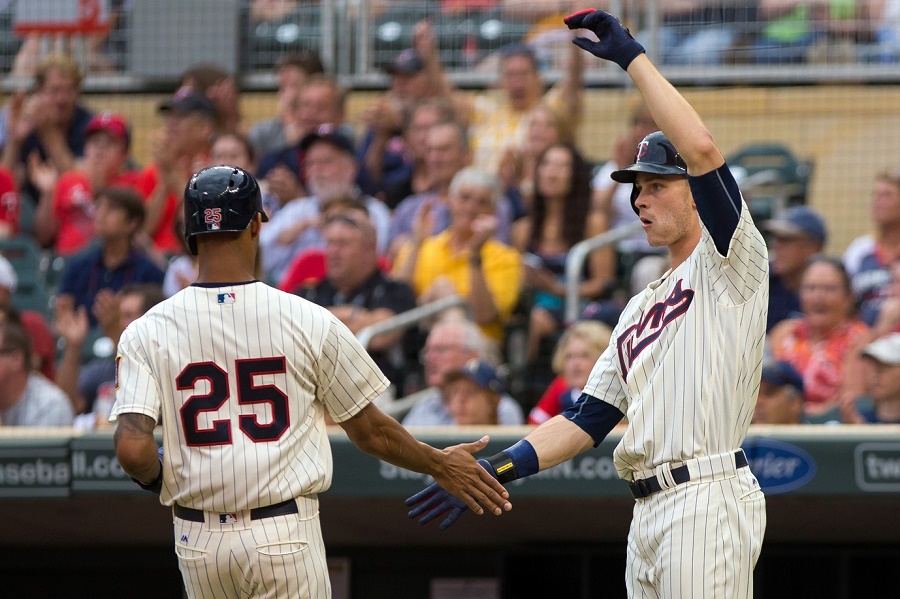 The Twins currently have an interesting situation unfolding with two young players. Byron Buxton was touted as one of the best prospects in the game after the Twins made him the second overall selection. In fact, he has been ranked as the first or second best prospect each of the last three seasons by Baseball America, MLB.com, and Baseball Prospectus. Like Dozier before him, Max Kepler has been a very different story in the prospect world. The 23-year old has moved slowly through the Twins system in the seven years since he signed. It wasn't until last season when he made his presence known. He hit .322/.416/.531 with 54 extra-base hits on the way to being named the Southern League MVP. National prospect lists took note of Kepler's breakout campaign and he found himself sprinkled on multiple lists entering this season. Baseball American had him 30th, MLB.com had him 44th, and Baseball Prospectus had him all the way back at 66th. Not nearly as high as Buxton but that's not how these rankings are put together. Kepler already has more home runs this season than his last two minor league seasons combined. He's getting on base over 33% of the time and his .508 slugging percentage ranks second among rookies in the American League. He is establishing himself as one of the best hitters in the Twins line-up while continually being penciled into the middle of the order. Meanwhile, Buxton's struggles have been well documented during his big league tenure. Pitchers are constantly getting ahead of him and Buxton has a 36.7 K%. He's now toiling at Rochester where he has slugged .982 this season while Kepler continues to thrive in Minnesota. Kepler's performance has been clearly superior to Buxton and that can show why prospect lists are fickle. Buxton could eventually put it all together and be the five-tool player most thought he would become. Kepler versus Buxton might be no contest for now but Twins fans should be patient. No matter what the results are now, both players are going to need to perform well for the Twins to return to their former glory.
 -
Article: Painted Into A Corner (Infield Crunch)
Cody Christie replied to Cody Christie's topic in Twins Daily Front Page News
I would leave Park at AAA until he shows he can hit on a consistent basis. Move Plouffe this winter if he has any value. Use Polanco and Sano at third base with Vargas and Mauer at first base. All of these players could get DH time in that scenario. I could see Dozier being traded as well. He could bring back more value than Plouffe and it would free up second base for Polanco.- 101 replies
-
- 1
-

-
- miguel sano
- trevor plouffe
- (and 3 more)
-
Wouldn't mind seeing him at the MLB level a little in September
- 31 replies
-
- 1
-
-
- keaton steele
- daniel palka
- (and 3 more)
-
With less than a month left in the minor league season, teams need to make their moves for any potential playoff run. For Minnesota's affiliates, Tuesday's action came with a ton of roster moves throughout the system. Infielders Travis Blankenhorn and Brandon Lopez moved up from Elizabethton to Cedar Rapids. In a corresponding move, Christian Ibarra was promoted to Fort Myers and Manuel Guzman was moved down to Elizabethton. Rochester sent out quite the updated list of roster moves. Three players were added to the roster. Byron Buxton was optioned from Minnesota and Mitch Garver and Leonardo Reginatto were transferred from Double-A Chattanooga. Infielder Heiker Meneses came off the disabled list and was sent to Double-A while RHP Marcus Walden was added to the DL with a right shoulder strain. TJ White was also moved from Fort Myers up to Chattanooga.Baseball can be a cruel game too for players trying to find a spot on a roster. After all the other moves of the day, outfielder Darin Mastroianni and infielder Buck Britton were released from their contracts. RED WINGS REPORT Rochester 4, Syracuse 6 Box Score Pat Dean ran into a little bit of a buzzsaw in the third inning of this contest. After making it through the first two innings, Dean was knocked around for six runs in the third while collecting only one out. He did not make it out of the frame after allowing 10 hits. The Rochester bullpen trio of DJ Baxendale, Ryan O'Rourke and Pat Light didn't allow a run the rest of the way as the Red Wings attempted their comeback. Daniel Palka had gotten Rochester out to an early lead with a solo home run to lead off the top of the second. Tommy Field doubled to start the sixth but was left at second with two outs. Adam Brett Walker didn't leave him hanging as he cracked his third triple of the season. James Beresford joined Walker with a triple of his own in the seventh inning before a Wilfredo Tovar single brought him home. Rochester got the tying run on base in the ninth inning but the comeback stopped there. Walker and Field both collected three hits while Beresford crossed the plate twice. Byron Buxton wasn't in the starting line-up but made an appearance as a pinch runner in the final inning. CHATTANOOGA CHATTER Chattanooga 0, Jacksonville 3 Box Score Before tonight's action, the Lookouts reset their rotation for the rest of the season. LHP Stephen Gonsalves was given an extra day of rest before re-entering the rotation. RHP Felix Jorge starts tonight's contest followed by Gonsalves, RHP Aaron Slegers, RHP Kohl Stewart, and LHP David Hurlbut. Jorge and the Lookouts were locked up in a pitchers' duel in this one. Jorge put up zeros through five innings before allowing a solo home run in the sixth. He came out for the seventh and collected the first two outs quickly before three straight hits pushed across two runs and he exited the game. Jorge struck out two and walked one. Zack Jones finished off the seventh inning and worked a perfect eighth frame while collecting three strikeouts. Jake Reed pitched a shutout ninth inning with a strikeout. The Lookouts were limited to five hits in the game with no batters collecting multiple hits. The team only had one opportunity to bat with runners in scoring position and it came with two outs in the inning. Every batter besides Shannon Wilkerson reached base at least once. MIRACLE MATTERS Fort Myers 0, St. Lucie 1 (7 Innings- Game 1) Box Score After being rained out on Monday night, the Miracle found themselves in a pitchers' duel in the first game of their double header. Keaton Steele pitched all seven innings for Fort Myers but ended up taking the tough luck loss. After allowing a lead-off double in the fourth frame, he almost wriggled out of the inning unscathed. Unfortunately, a two-out double pushed across the only run of the game. Steele dropped to 5-10 with the loss but it was his third straight start where he pitched at least six innings and gave up two earned runs or fewer. He struck out three and walked one. Only three Miracle batters were able to record hits. AJ Murray reached base twice in his three plate appearances before being lifted for a pinch runner. Joe Maloney and Chris Paul both went 1-for-3. Fort Myers never had a runner reach second base. Fort Myers --, St. Lucie -- (PPD- Game 2) Tuesday's second game was washed out and has been rescheduled as part of a doubleheader on Wednesday night. The Miracle will try to play two seven-inning games on Wednesday if the weather cooperates. KERNELS NUGGETS Cedar Rapids 6, Peoria 8 Box Score Cedar Rapids looked to be sailing to their 62nd victory as they took a 5-2 lead into the final inning. Brady Anderson pitched six solid innings as the only run scored against him was unearned. He found his way out of four walks and five hits but the Kernels were in position to win when he left the mound. Zander Wiel got the scoring started with a two-run home run in the bottom of the first. It was his 14th home run of the season. Cedar Rapids pushed another run across in the fourth. Casey Scoggins walked in front of a Sean Miller single to put two runners on base. Luis Arraes doubled to score Scoggins from second but the Kernels left two runners on base in the frame. JJ Fernandez started the seventh with a triple before being knocked in by a Rainis Silva single. Silva later scored on a fielding error to make the lead 5-2. The ninth inning got ugly in a hurry for the bullpen. Andrew Vasquez pitched the seventh and eighth without any issues but he allowed the first two batters to reach in the ninth. Max Cordy didn't fare much better as the first two batters he faced collected singles before a Jaylin Davis fielding error allowed another run to score. After coaxing two outs, Cordy hurled a wild pitch that was followed by a single and a double as the game slipped out of reach. E-TOWN E-NOTES Elizabethton 6, Danville 3 Box Score The E-Twins took advantage of six (yeah, count'em... six) fielding errors by Danville on their way to their 23rd victory of the season. Elizabethton didn't record an extra-base hit but the team went 3-for-8 with runners in scoring position. Ben Rortvedt was the lone batter with multiple hits, including an RBI. Shane Carrier scored two runs and first-round pick Alex Kirilloff was 1-for-4. Tyler Wells put together his best start of the season for his second win. He went six strong innings while scattering five hit and two earned runs. Wells struck out four and walked two. Domenick Carlini earned his first save in unconventional fashion by tossing three frames. He allowed one unearned run and struck out four. TWINS DAILY PLAYERS OF THE DAY Pitcher of the Day – Keaton Steele, Fort Myers Miracle Hitter of the Day – Adam Brett Walker, Rochester Red Wings WEDNESDAY’S PROBABLE STARTERS Rochester at Syracuse (5:35 CST) - LHP Adalberto Mejia (0-1, 2.57 ERA) Chattanooga- Scheduled Off Day Fort Myers vs St. Lucie (4:00 CST) -RHP Randy LeBlanc (4-5, 4.25 ERA) Fort Myers vs St. Lucie (Game 2- Makeup of 8/9 PPD)- LHP Sam Clay (1-1, 4.15 ERA) Elizabethton at Kingsport (6:00 CST) - TBD GCL Twins @ GCL Orioles (11:00AM CST) - TBD GCL Twins vs. GCL Orioles (Game 2- Makeup of 8/9 PPD)- TBD Please feel free to ask any questions and discuss Tuesday’s games. Click here to view the article
- 31 replies
-
- 1
-
-
- keaton steele
- daniel palka
- (and 3 more)
-
Twins Minor League Report (8/9): Steele Shines, Kernels Implode
Cody Christie posted an article in Minor Leagues
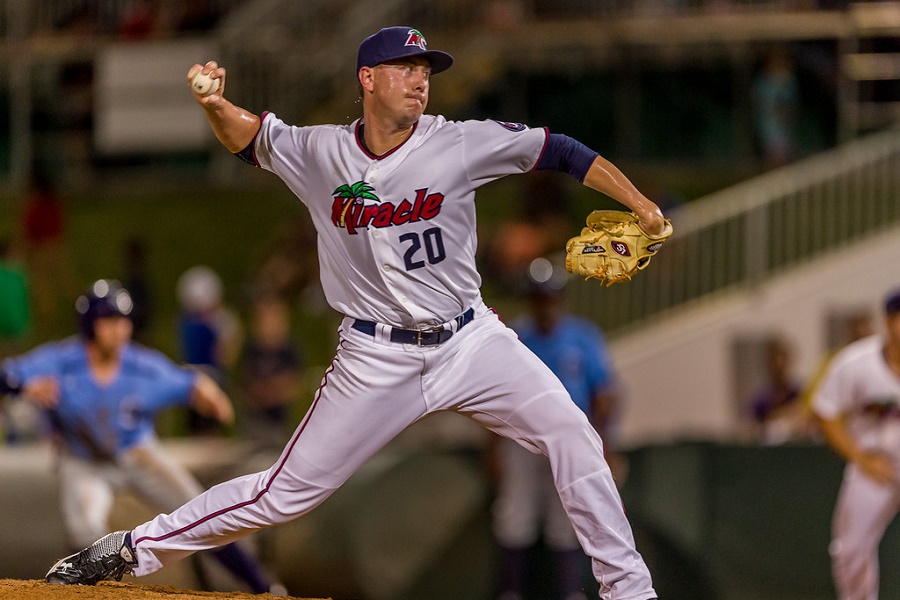 Baseball can be a cruel game too for players trying to find a spot on a roster. After all the other moves of the day, outfielder Darin Mastroianni and infielder Buck Britton were released from their contracts. RED WINGS REPORT Rochester 4, Syracuse 6 Box Score Pat Dean ran into a little bit of a buzzsaw in the third inning of this contest. After making it through the first two innings, Dean was knocked around for six runs in the third while collecting only one out. He did not make it out of the frame after allowing 10 hits. The Rochester bullpen trio of DJ Baxendale, Ryan O'Rourke and Pat Light didn't allow a run the rest of the way as the Red Wings attempted their comeback. Daniel Palka had gotten Rochester out to an early lead with a solo home run to lead off the top of the second. Tommy Field doubled to start the sixth but was left at second with two outs. Adam Brett Walker didn't leave him hanging as he cracked his third triple of the season. James Beresford joined Walker with a triple of his own in the seventh inning before a Wilfredo Tovar single brought him home. Rochester got the tying run on base in the ninth inning but the comeback stopped there. Walker and Field both collected three hits while Beresford crossed the plate twice. Byron Buxton wasn't in the starting line-up but made an appearance as a pinch runner in the final inning. CHATTANOOGA CHATTER Chattanooga 0, Jacksonville 3 Box Score Before tonight's action, the Lookouts reset their rotation for the rest of the season. LHP Stephen Gonsalves was given an extra day of rest before re-entering the rotation. RHP Felix Jorge starts tonight's contest followed by Gonsalves, RHP Aaron Slegers, RHP Kohl Stewart, and LHP David Hurlbut. Jorge and the Lookouts were locked up in a pitchers' duel in this one. Jorge put up zeros through five innings before allowing a solo home run in the sixth. He came out for the seventh and collected the first two outs quickly before three straight hits pushed across two runs and he exited the game. Jorge struck out two and walked one. Zack Jones finished off the seventh inning and worked a perfect eighth frame while collecting three strikeouts. Jake Reed pitched a shutout ninth inning with a strikeout. The Lookouts were limited to five hits in the game with no batters collecting multiple hits. The team only had one opportunity to bat with runners in scoring position and it came with two outs in the inning. Every batter besides Shannon Wilkerson reached base at least once. MIRACLE MATTERS Fort Myers 0, St. Lucie 1 (7 Innings- Game 1) Box Score After being rained out on Monday night, the Miracle found themselves in a pitchers' duel in the first game of their double header. Keaton Steele pitched all seven innings for Fort Myers but ended up taking the tough luck loss. After allowing a lead-off double in the fourth frame, he almost wriggled out of the inning unscathed. Unfortunately, a two-out double pushed across the only run of the game. Steele dropped to 5-10 with the loss but it was his third straight start where he pitched at least six innings and gave up two earned runs or fewer. He struck out three and walked one. Only three Miracle batters were able to record hits. AJ Murray reached base twice in his three plate appearances before being lifted for a pinch runner. Joe Maloney and Chris Paul both went 1-for-3. Fort Myers never had a runner reach second base. Fort Myers --, St. Lucie -- (PPD- Game 2) Tuesday's second game was washed out and has been rescheduled as part of a doubleheader on Wednesday night. The Miracle will try to play two seven-inning games on Wednesday if the weather cooperates. KERNELS NUGGETS Cedar Rapids 6, Peoria 8 Box Score Cedar Rapids looked to be sailing to their 62nd victory as they took a 5-2 lead into the final inning. Brady Anderson pitched six solid innings as the only run scored against him was unearned. He found his way out of four walks and five hits but the Kernels were in position to win when he left the mound. Zander Wiel got the scoring started with a two-run home run in the bottom of the first. It was his 14th home run of the season. Cedar Rapids pushed another run across in the fourth. Casey Scoggins walked in front of a Sean Miller single to put two runners on base. Luis Arraes doubled to score Scoggins from second but the Kernels left two runners on base in the frame. JJ Fernandez started the seventh with a triple before being knocked in by a Rainis Silva single. Silva later scored on a fielding error to make the lead 5-2. The ninth inning got ugly in a hurry for the bullpen. Andrew Vasquez pitched the seventh and eighth without any issues but he allowed the first two batters to reach in the ninth. Max Cordy didn't fare much better as the first two batters he faced collected singles before a Jaylin Davis fielding error allowed another run to score. After coaxing two outs, Cordy hurled a wild pitch that was followed by a single and a double as the game slipped out of reach. E-TOWN E-NOTES Elizabethton 6, Danville 3 Box Score The E-Twins took advantage of six (yeah, count'em... six) fielding errors by Danville on their way to their 23rd victory of the season. Elizabethton didn't record an extra-base hit but the team went 3-for-8 with runners in scoring position. Ben Rortvedt was the lone batter with multiple hits, including an RBI. Shane Carrier scored two runs and first-round pick Alex Kirilloff was 1-for-4. Tyler Wells put together his best start of the season for his second win. He went six strong innings while scattering five hit and two earned runs. Wells struck out four and walked two. Domenick Carlini earned his first save in unconventional fashion by tossing three frames. He allowed one unearned run and struck out four. TWINS DAILY PLAYERS OF THE DAY Pitcher of the Day – Keaton Steele, Fort Myers Miracle Hitter of the Day – Adam Brett Walker, Rochester Red Wings WEDNESDAY’S PROBABLE STARTERS Rochester at Syracuse (5:35 CST) - LHP Adalberto Mejia (0-1, 2.57 ERA) Chattanooga- Scheduled Off Day Fort Myers vs St. Lucie (4:00 CST) -RHP Randy LeBlanc (4-5, 4.25 ERA) Fort Myers vs St. Lucie (Game 2- Makeup of 8/9 PPD)- LHP Sam Clay (1-1, 4.15 ERA) Elizabethton at Kingsport (6:00 CST) - TBD GCL Twins @ GCL Orioles (11:00AM CST) - TBD GCL Twins vs. GCL Orioles (Game 2- Makeup of 8/9 PPD)- TBD Please feel free to ask any questions and discuss Tuesday’s games.
 -
Something had to change. MLB rosters are limited to 25 active players each day and someone wasn't going to be around when Trevor Plouffe returned from injury. Paul Molitor discussed the possibility of demoting Miguel Sano before his big weekend in Tampa Bay. Sano stayed and Byron Buxton was expendable as he continues to struggle at baseball's highest level. This recent roster shake-up brought to the forefront a glaring roster issue. Minnesota currently has a plethora of options when it comes to corner infielders and designated hitters. There are also more alternatives playing well in the minor leagues. It's important to have plenty of hitting options but the Twins 40-man roster is overloaded and something is going to have to change moving in 2017.Each player offers a different skill set so the new general manager will likely have some tough decisions to make in regard to each of these players. Joe Mauer, 1B Contract Status: Signed thru 2018 Mauer is in year six of his eight-year deal and this season is his third since being forced to move out from behind the plate. He has been one of the best defensive first baseman in the American League. His offensive numbers have lagged as he transitioned to first base but there have been flashes of the old Mauer this season as he has posted a .382 OBP and a .795 OPS. Mauer isn't going anywhere so he will be part of the big picture next season. Trevor Plouffe, 3B Contract Status: Arbitration Eligible 2017, Free Agent 2018 Plouffe's days in Minnesota seemed to be numbered and he might have already been traded if he were healthy leading into this year's trade deadline. Plouffe became serviceable at third base after working hard on his defense but those skills seem to be declining now that he is in his 30s. He's hit 14 or more home runs in each of the last four seasons and has a career OPS over .720. With younger and cheaper options already on the roster, this might be Plouffe's last season in Minnesota. Miguel Sano, 3B/DH Contract Status: Arbitration Eligible 2019, Free Agent 2022 There was probably little chance of Sano putting up the number he did during his 80 game rookie campaign. Things were going to come back down to earth. Minnesota's attempt to turn him into an outfielder was a massive failure and now he has struggled as he transitions back to third base. He currently ranks fifth on the team in fWAR and his 18 home runs are four behind Brian Dozier for the team lead. Even with the rumblings out the Twin Cities that Sano might not be working hard enough, he's still on track to be one of baseball's best power hitters. Kennys Vargas, 1B/DH Contract Status: Arbitration Eligible 2018, Free Agent 2022 Vargas has been up and down during his big league tenure. He showed some promising signs as a rookie back in 2014 with nine home runs and a .772 OPS across 53 games. Last year wasn't nearly as good as he struggled to hit over .240 and his slugging percentage dipped to .349. Since being recalled this season, Vargas has been one of the team's best hitters. Vargas is hitting .278/.404/.569 with 13 extra-base hits in 21 games. If he continues on this pace, Minnesota might have to consider him for the full-time DH role in 2017. Byung-Ho Park, 1B/DH Contract Status: Signed thru 2019, Team Option for 2020 Park held his own during the first month of the season with a .848 OPS and six home runs. Things took a nosedive from there as he hit .136/.224/.303 for the month of June. In 26 games since being demoted to Triple-A, he has hit nine home runs and compiled a .862 OPS. However, his batting average is .234 and he's only getting on base 31% of the time. With other players doing well in front of him, there doesn't look to be a spot for Mr. Park. His story line will be an interesting one to follow in the coming months. Even with this list of players, there are others making their way to Target Field that could be better suited for a designated hitter role. Adam Brett Walker continues to mash home runs at every level. Daniel Palka has been powerful during his first season in the organization and could be added to the 40-man roster in the off-season. Where do both of these players fit into the team's long-term plans? Minnesota's offense seems to be clicking so maybe having lots of power hitting options is a positive. This still leaves the new general manager with an interesting corner to paint himself out of during the offseason. Time will tell which players will make their marks for 2017 and beyond. If you are the GM, what corner infield options will be on your roster? Leave a COMMENT and start the discussion. Click here to view the article
- 101 replies
-
- 2
-
-
- miguel sano
- trevor plouffe
- (and 3 more)
-
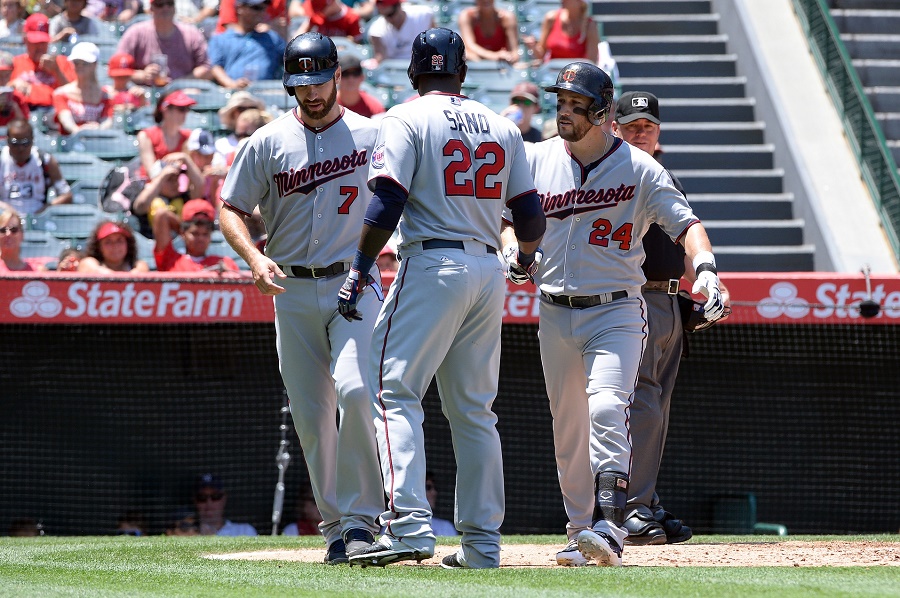 Each player offers a different skill set so the new general manager will likely have some tough decisions to make in regard to each of these players. Joe Mauer, 1B Contract Status: Signed thru 2018 Mauer is in year six of his eight-year deal and this season is his third since being forced to move out from behind the plate. He has been one of the best defensive first baseman in the American League. His offensive numbers have lagged as he transitioned to first base but there have been flashes of the old Mauer this season as he has posted a .382 OBP and a .795 OPS. Mauer isn't going anywhere so he will be part of the big picture next season. Trevor Plouffe, 3B Contract Status: Arbitration Eligible 2017, Free Agent 2018 Plouffe's days in Minnesota seemed to be numbered and he might have already been traded if he were healthy leading into this year's trade deadline. Plouffe became serviceable at third base after working hard on his defense but those skills seem to be declining now that he is in his 30s. He's hit 14 or more home runs in each of the last four seasons and has a career OPS over .720. With younger and cheaper options already on the roster, this might be Plouffe's last season in Minnesota. Miguel Sano, 3B/DH Contract Status: Arbitration Eligible 2019, Free Agent 2022 There was probably little chance of Sano putting up the number he did during his 80 game rookie campaign. Things were going to come back down to earth. Minnesota's attempt to turn him into an outfielder was a massive failure and now he has struggled as he transitions back to third base. He currently ranks fifth on the team in fWAR and his 18 home runs are four behind Brian Dozier for the team lead. Even with the rumblings out the Twin Cities that Sano might not be working hard enough, he's still on track to be one of baseball's best power hitters. Kennys Vargas, 1B/DH Contract Status: Arbitration Eligible 2018, Free Agent 2022 Vargas has been up and down during his big league tenure. He showed some promising signs as a rookie back in 2014 with nine home runs and a .772 OPS across 53 games. Last year wasn't nearly as good as he struggled to hit over .240 and his slugging percentage dipped to .349. Since being recalled this season, Vargas has been one of the team's best hitters. Vargas is hitting .278/.404/.569 with 13 extra-base hits in 21 games. If he continues on this pace, Minnesota might have to consider him for the full-time DH role in 2017. Byung-Ho Park, 1B/DH Contract Status: Signed thru 2019, Team Option for 2020 Park held his own during the first month of the season with a .848 OPS and six home runs. Things took a nosedive from there as he hit .136/.224/.303 for the month of June. In 26 games since being demoted to Triple-A, he has hit nine home runs and compiled a .862 OPS. However, his batting average is .234 and he's only getting on base 31% of the time. With other players doing well in front of him, there doesn't look to be a spot for Mr. Park. His story line will be an interesting one to follow in the coming months. Even with this list of players, there are others making their way to Target Field that could be better suited for a designated hitter role. Adam Brett Walker continues to mash home runs at every level. Daniel Palka has been powerful during his first season in the organization and could be added to the 40-man roster in the off-season. Where do both of these players fit into the team's long-term plans? Minnesota's offense seems to be clicking so maybe having lots of power hitting options is a positive. This still leaves the new general manager with an interesting corner to paint himself out of during the offseason. Time will tell which players will make their marks for 2017 and beyond. If you are the GM, what corner infield options will be on your roster? Leave a COMMENT and start the discussion.
 -
He is in an interesting place since the Twins have other DH type players ahead of him on the roster. My guess is he spends most of next year at Triple-A and will fill-in when others are injured at the big league level.
-
Article: The Death Of The Ticket Stub
Cody Christie replied to Cody Christie's topic in Twins Daily Front Page News
I hope the Twins continue to have options that include ticket stubs. My guess is that ticket stubs will disappear at some point in the next decade. I plan on hunting them down as long as they are available. -
As a nine-year old boy going to my first big league game, I tried to soak in everything around me. The sounds of the game, the smells of the Metrodome, and the feel of the warm hot dog in my hand were all part of my exposure. This was an experience like nothing I had felt before and I wanted to cherish every moment. When my family got back to the car, the first thing I did was grab everyone's ticket stub. Maybe they reminded me of the boxes of trading cards I had in my room at home. Maybe they were a cheap way for me to remember the events of the day. Either way it was the start of something more.To this day, I have kept at least one ticket stub from every MLB game I have attended. However, the future is changing and the ticket stub is slowly dying. Ticket stubs are a physical representation of childhood and historical memories. Kirby Puckett's walk-off hit, Target Field's first game, or even the 2014 All-Star Game are all important Twins memories and they are all stubs I proudly display. As technology has increased, the use of actual printed tickets from professional sports teams has declined. Fans can print out their tickets at home or have them sent to their phone. As the Vikings open US Bank Stadium this fall, all season ticket holders will only have electronic versions of their tickets. Major League Baseball wants to see the end of the traditional ticket stubs sales. According to Market Watch, in 2012 "the traditional ticket stub accounted for less than a third of single-game seats sold this past season, down from 55% in 2011." This number will only continue to shrink as most fans have apps on their phones like Apple's Wallet or the MLB Ballpark App that make it easy to transfer tickets at the click of a button. Bob Bowman, President of Business and Media of Major League Baseball, knows it will still take time for there to be a complete shift away from paper tickets. "It's been a tradition of 100 years, and some traditions die harder than others," he said. In 2014, the Los Angeles Dodgers all but did away with paper tickets. They called it a fan enhancement because fans could transfer tickets easily to friends, clients, or sell them on the secondary market. Some fans even started petitions to bring back their paper tickets. When Clayton Kershaw tossed a no-hitter later that year, the Dodgers printed commemorative tickets for their season ticket holders. I recently interviewed Dave St. Peter, the Twins President, about the shift in the ticket market. He said, "Including 'Print at Home' capability, roughly 35% of our total tickets are in electronic form. Less than 10% of our current tickets are used via a mobile device." When I asked him if he sees a time when all MLB tickets will be electronic, he said, "That's certainly a goal, but it's going to take some time for it to become reality." St. Peter went on to say, "The Twins will continue to migrate more fans to digital tickets in 2017 and beyond." However, "That being said, current plans call for 'Print at Home' capability to remain an option." The owner of FAN HQ, a Minnetonka based chain of sports apparel and memorabilia, Shaun Hagglund told me, "It's too bad hard tickets are going the way of printer tickets or even electronic tickets." He continued by saying, "Not only did they serve as a personal memento for a game attended, they were also unique items to have autographed by players who made an impact in a particular game or had a milestone event- first game, 3,000 hit, etc." Ticket stubs will always be part of baseball's history. They are a collector's item that continues to be harder and harder to find. Actual ticket stubs might be relegated to Cooperstown relics but that takes nothing away from baseball's past and the ticket's tiny slice of history. I was at Target Field this weekend but my tickets were in electronic form. The nine-year old kid in me looked through the stands after the game to come away with a rare relic to add to my ticket collection. The ticket stub might be on it's death bed but that doesn't mean fans have to forget about this important part of baseball history. Click here to view the article
-
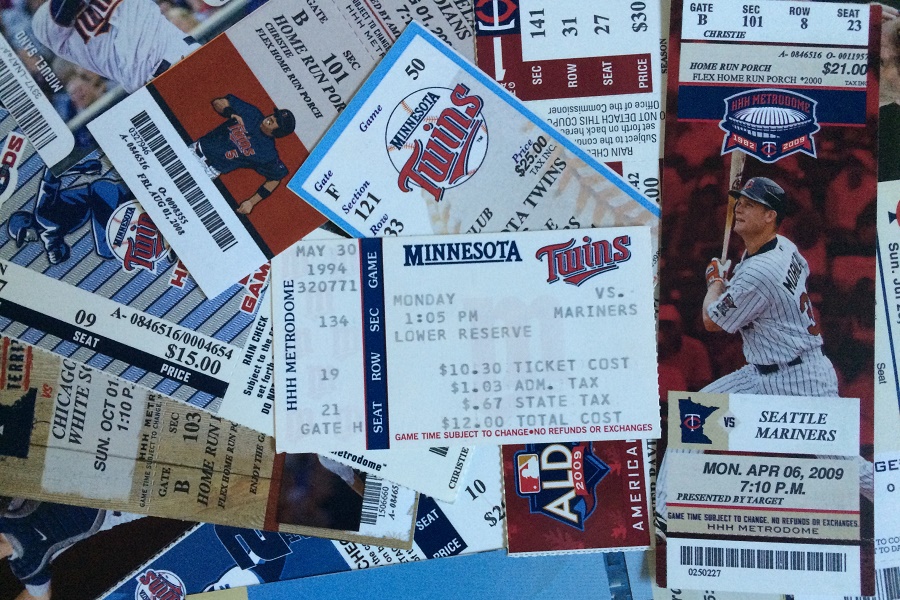 To this day, I have kept at least one ticket stub from every MLB game I have attended. However, the future is changing and the ticket stub is slowly dying. Ticket stubs are a physical representation of childhood and historical memories. Kirby Puckett's walk-off hit, Target Field's first game, or even the 2014 All-Star Game are all important Twins memories and they are all stubs I proudly display. As technology has increased, the use of actual printed tickets from professional sports teams has declined. Fans can print out their tickets at home or have them sent to their phone. As the Vikings open US Bank Stadium this fall, all season ticket holders will only have electronic versions of their tickets. Major League Baseball wants to see the end of the traditional ticket stubs sales. According to Market Watch, in 2012 "the traditional ticket stub accounted for less than a third of single-game seats sold this past season, down from 55% in 2011." This number will only continue to shrink as most fans have apps on their phones like Apple's Wallet or the MLB Ballpark App that make it easy to transfer tickets at the click of a button. Bob Bowman, President of Business and Media of Major League Baseball, knows it will still take time for there to be a complete shift away from paper tickets. "It's been a tradition of 100 years, and some traditions die harder than others," he said. In 2014, the Los Angeles Dodgers all but did away with paper tickets. They called it a fan enhancement because fans could transfer tickets easily to friends, clients, or sell them on the secondary market. Some fans even started petitions to bring back their paper tickets. When Clayton Kershaw tossed a no-hitter later that year, the Dodgers printed commemorative tickets for their season ticket holders. I recently interviewed Dave St. Peter, the Twins President, about the shift in the ticket market. He said, "Including 'Print at Home' capability, roughly 35% of our total tickets are in electronic form. Less than 10% of our current tickets are used via a mobile device." When I asked him if he sees a time when all MLB tickets will be electronic, he said, "That's certainly a goal, but it's going to take some time for it to become reality." St. Peter went on to say, "The Twins will continue to migrate more fans to digital tickets in 2017 and beyond." However, "That being said, current plans call for 'Print at Home' capability to remain an option." The owner of FAN HQ, a Minnetonka based chain of sports apparel and memorabilia, Shaun Hagglund told me, "It's too bad hard tickets are going the way of printer tickets or even electronic tickets." He continued by saying, "Not only did they serve as a personal memento for a game attended, they were also unique items to have autographed by players who made an impact in a particular game or had a milestone event- first game, 3,000 hit, etc." Ticket stubs will always be part of baseball's history. They are a collector's item that continues to be harder and harder to find. Actual ticket stubs might be relegated to Cooperstown relics but that takes nothing away from baseball's past and the ticket's tiny slice of history. I was at Target Field this weekend but my tickets were in electronic form. The nine-year old kid in me looked through the stands after the game to come away with a rare relic to add to my ticket collection. The ticket stub might be on it's death bed but that doesn't mean fans have to forget about this important part of baseball history.
 -
Not every prospect is going to make it to their ultimate goal. That's the nature of baseball. However, last year's Southern League MVP Max Kepler is sure making hitting at the big league level look pretty easy. A night after becoming the fifth Twins player with three home runs in a game, Kepler cranked another one out in Cleveland. His 13 home runs since June 26 are the most in the American League (two ahead of Brian Dozier). Minnesota's 49 home runs are the most during that same stretch. Are any players following in Kepler's footsteps? Read on to find out.RED WINGS REPORT Rochester 6, Pawtucket 3 Box Score With Monday's trade deadline passing, there were a flurry of roster moves that impacted the Rochester roster. Newly acquired pitchers Adalberto Mejia and Pat Light were both assigned to the Red Wings. Trevor Plouffe also joined Rochester as part of his rehab assignment. On Tuesday, Jason Wheeler didn't have his best stuff but he was still able to put the Red Wings in position to come out on top. While pitching into the sixth frame, he gave up three runs on nine hits with two strikeouts and a walk. DJ Baxendale, Sean Burnett and JT Chargois put up zeros the rest of the way to close out the win. Chargois allowed two base runners in the ninth but still earned his ninth save. Trevor Plouffe helped get things started for Rochester as he singled to start the second frame. Adam Brett Walker followed with his 21st home run. Things kept moving with Logan Schafer singling before stealing second base. Wilfredo Tovar doubled in Schafer and John Ryan Murphy capped the four-run inning with an RBI single. Schafer had a three-hit night, reaching base in all four plate appearances. He also threw out a runner for his fourth outfield assist. Plouffe finished 2-for-4 with a run scored. Daniel Palka and Byung Ho Park each added a double as part of the Triple-P (Palka, Park, Plouffe) middle of the line-up. CHATTANOOGA CHATTER Chattanooga --, Mobile -- (Postponed- Rain) After being rained out on Tuesday, the Lookouts sit at 56-51 on the season and 20-17 in the second half. Kohl Stewart was a tough luck loser as he threw six innings and allowed one earned run but still took the loss. Monday's trade deadline impacted the Chattanooga roster as Alan Busenitz, the minor league player included with Hector Santiago, was assigned to the Lookouts. KERNELS NUGGETS Cedar Rapids 5, Burlington 11 Box Score The Kernels tied things up in the top of the seventh inning at 5-5 but the bullpen imploded in the bottom half of the frame. Kuo Hua Lo allowed nine runs, six earned, on eight hits including two home runs. Sam Gibbons started and scattered six hits while limiting the Bees to two earned runs. He struck out two and walked three. Tom Hackimer pitched 1.1 scoreless innings to end the game. Even in victory, the Bees couldn't get Luiz Arraez out in this game. Arraez finished with a career-high five hits along with two RBIs. He is hitting .335 with the Kernels this year. JJ Fernandez collected his 22nd double as part of a two-hit effort. Chris Ibarra also had a double and those were the only extra-base hits for Cedar Rapids. E-TOWN E-NOTES Elizabethton 6, Princeton 12 Box Score The E-Twins offense had plenty of opportunities with runners in scoring position but the club went 2-for-16 in those situations and left nine runners on base. Shane Carrier led the way offensively by going 3-for-5 with a home run, a double and two RBIs. Alex Kirilloff, Amaurys Minier and Travis Blankenhorn all went 2-for-5 with each player adding a double. It was Kirilloff's eighth double and he's up to 21 RBIs. Blankenhorn had a very rough night in the field as he was charged with three errors, one fielding and two throwing. Add an Ariel Montesino throwing error and there were seven unearned runs scored against the E-Twins pitching staff. Tyler Wells couldn't make it through four innings and allowed six earned runs on eight hits. Alex Robinson pitched 2.1 innings and limited the Rays to one run on a solo home run. Austin Tribby was asked to get a few extra outs as four unearned runs were scored with him on the mound. Quin Grogan finished the game with a pair of strikeouts in 1.1 innings of work. GCL TWINS TAKES GCL Twins 6, GCL Orioles 1 Box Score Huascar Ynoa put the GCL Twins in a great position to win after hurling five shutout frames. He limited the Rays to one hit with five strikeouts and one walk. Onas Fanfar kept the shutout going with three scoreless frames while striking out three. Moises Gomez ran into a little trouble in the ninth by giving up a run on two hits and two walks. Garrett Kelly finished off the final frame for his second save. Every Twins hitter reached base at least once but the club didn't manage a single extra-base hit. Gorge Munoz drove in two runs as part of a two-hit effort. He also stole his fifth base. Aaron Whitefield scored three runs out of the the lead-off spot. The win moves the GCL Twins to two games over .500 and the team is in the midst of a three game winning streak. TWINS DAILY PLAYERS OF THE DAY Pitcher of the Day – Huascar Ynoa, GCL Twins Hitter of the Day – Shane Carrier, Elizabethton Twins WEDNESDAY’S PROBABLE STARTERS Rochester vs Pawtucket (6:05 CST) - LHP Pat Dean (4-6, 5.29 ERA) Chattanooga @ Mobile (5:05 CST) - TBD (Rain delay could alter rotation) Chattanooga @ Mobile (Game 2) - TBD Fort Myers @ Bradenton (5:30 CST) -LHP Randy Rosario (6-6, 3.60 ERA) Cedar Rapids vs Clinton (6:35 CST) - TBD GCL Twins vs GCL Rays (11:00AM CST) - TBD Please feel free to ask any questions and discuss Tuesday’s games. Click here to view the article
- 17 replies
-
- 1
-
-
- trevor ploffe
- adam brett walker
- (and 3 more)
-
Twins Minor League Report (8/2): Walker Homers, Plouffe Rehabs
Cody Christie posted an article in Minor Leagues
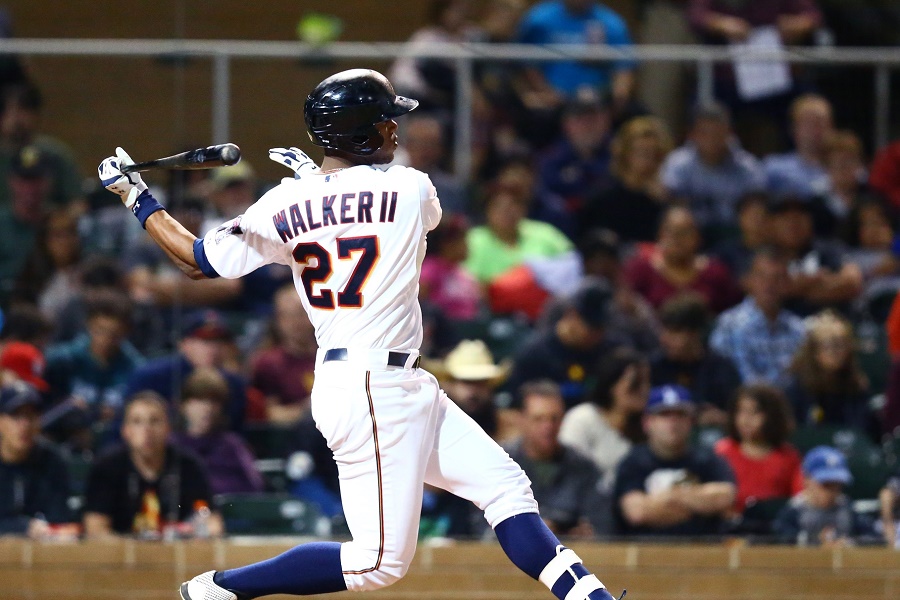 RED WINGS REPORT Rochester 6, Pawtucket 3 Box Score With Monday's trade deadline passing, there were a flurry of roster moves that impacted the Rochester roster. Newly acquired pitchers Adalberto Mejia and Pat Light were both assigned to the Red Wings. Trevor Plouffe also joined Rochester as part of his rehab assignment. On Tuesday, Jason Wheeler didn't have his best stuff but he was still able to put the Red Wings in position to come out on top. While pitching into the sixth frame, he gave up three runs on nine hits with two strikeouts and a walk. DJ Baxendale, Sean Burnett and JT Chargois put up zeros the rest of the way to close out the win. Chargois allowed two base runners in the ninth but still earned his ninth save. Trevor Plouffe helped get things started for Rochester as he singled to start the second frame. Adam Brett Walker followed with his 21st home run. Things kept moving with Logan Schafer singling before stealing second base. Wilfredo Tovar doubled in Schafer and John Ryan Murphy capped the four-run inning with an RBI single. Schafer had a three-hit night, reaching base in all four plate appearances. He also threw out a runner for his fourth outfield assist. Plouffe finished 2-for-4 with a run scored. Daniel Palka and Byung Ho Park each added a double as part of the Triple-P (Palka, Park, Plouffe) middle of the line-up. CHATTANOOGA CHATTER Chattanooga --, Mobile -- (Postponed- Rain) After being rained out on Tuesday, the Lookouts sit at 56-51 on the season and 20-17 in the second half. Kohl Stewart was a tough luck loser as he threw six innings and allowed one earned run but still took the loss. Monday's trade deadline impacted the Chattanooga roster as Alan Busenitz, the minor league player included with Hector Santiago, was assigned to the Lookouts. KERNELS NUGGETS Cedar Rapids 5, Burlington 11 Box Score The Kernels tied things up in the top of the seventh inning at 5-5 but the bullpen imploded in the bottom half of the frame. Kuo Hua Lo allowed nine runs, six earned, on eight hits including two home runs. Sam Gibbons started and scattered six hits while limiting the Bees to two earned runs. He struck out two and walked three. Tom Hackimer pitched 1.1 scoreless innings to end the game. Even in victory, the Bees couldn't get Luiz Arraez out in this game. Arraez finished with a career-high five hits along with two RBIs. He is hitting .335 with the Kernels this year. JJ Fernandez collected his 22nd double as part of a two-hit effort. Chris Ibarra also had a double and those were the only extra-base hits for Cedar Rapids. E-TOWN E-NOTES Elizabethton 6, Princeton 12 Box Score The E-Twins offense had plenty of opportunities with runners in scoring position but the club went 2-for-16 in those situations and left nine runners on base. Shane Carrier led the way offensively by going 3-for-5 with a home run, a double and two RBIs. Alex Kirilloff, Amaurys Minier and Travis Blankenhorn all went 2-for-5 with each player adding a double. It was Kirilloff's eighth double and he's up to 21 RBIs. Blankenhorn had a very rough night in the field as he was charged with three errors, one fielding and two throwing. Add an Ariel Montesino throwing error and there were seven unearned runs scored against the E-Twins pitching staff. Tyler Wells couldn't make it through four innings and allowed six earned runs on eight hits. Alex Robinson pitched 2.1 innings and limited the Rays to one run on a solo home run. Austin Tribby was asked to get a few extra outs as four unearned runs were scored with him on the mound. Quin Grogan finished the game with a pair of strikeouts in 1.1 innings of work. GCL TWINS TAKES GCL Twins 6, GCL Orioles 1 Box Score Huascar Ynoa put the GCL Twins in a great position to win after hurling five shutout frames. He limited the Rays to one hit with five strikeouts and one walk. Onas Fanfar kept the shutout going with three scoreless frames while striking out three. Moises Gomez ran into a little trouble in the ninth by giving up a run on two hits and two walks. Garrett Kelly finished off the final frame for his second save. Every Twins hitter reached base at least once but the club didn't manage a single extra-base hit. Gorge Munoz drove in two runs as part of a two-hit effort. He also stole his fifth base. Aaron Whitefield scored three runs out of the the lead-off spot. The win moves the GCL Twins to two games over .500 and the team is in the midst of a three game winning streak. TWINS DAILY PLAYERS OF THE DAY Pitcher of the Day – Huascar Ynoa, GCL Twins Hitter of the Day – Shane Carrier, Elizabethton Twins WEDNESDAY’S PROBABLE STARTERS Rochester vs Pawtucket (6:05 CST) - LHP Pat Dean (4-6, 5.29 ERA) Chattanooga @ Mobile (5:05 CST) - TBD (Rain delay could alter rotation) Chattanooga @ Mobile (Game 2) - TBD Fort Myers @ Bradenton (5:30 CST) -LHP Randy Rosario (6-6, 3.60 ERA) Cedar Rapids vs Clinton (6:35 CST) - TBD GCL Twins vs GCL Rays (11:00AM CST) - TBD Please feel free to ask any questions and discuss Tuesday’s games.
 -
Article: Brandon Kintzler: Proven Closer?
Cody Christie replied to Cody Christie's topic in Twins Daily Front Page News
I agree. It would be nice to get something for him. -
#OldFriend alert
-
No point in bringing him up for a taste of the big leagues unless this team was in the playoff hunt and needed the help. If he continues pitching well, he could debut as early as next season. No reason to rush him onto the 40-man roster.
-
The Lookouts just sent out an email. Stewart will start today. They had some roster moves happen at the last minutes yesterday and that caused the shift in the rotation.
-
They were going to limit his innings at some point this season by moving him to the pen. The plan is for him to still be a starter.
- 14 replies
-
- 2
-
-
- andrew albers
- randy rosario
- (and 3 more)
-
Andrew Albers wasn't in the Twins organization the previous two years but he is now back and making a mark on the International League. Entering tonight's contest in Pawtucket, Albers sported a 9-3 record (97.1 innings) with a spiffy 3.14 ERA and a 63 to 23 strikeout to walk ratio. At 30-years old, Albers isn't exactly considered a prospect anymore but he has helped the Red Wings to get off to a fantastic start this season. Rochester entered the night 16 games over .500 (60-44) and they were only 2.5 games out of the wild card race. Players like Albers deserve recognition for their contributions to the Twins organization. That's one of the main reasons we write these daily minor league write-ups. Players throughout the organization deserve to be recognized for their dedication to baseball even though they won't all be superstars.RED WINGS REPORT Rochester 2, Pawtucket 4 (11 Innings) Box Score The Red Wings collected seven hits but no player had more than one. In the second inning, Wilfredo Tovar doubled after a Daniel Palka walk to put two runners in scoring position. Carlos Paulino singled in both runners to give Rochester an early 2-0 but the offense went quiet from there. Andrew Albers did his best to put himself in position for his tenth win for Rochester. Albers went 6.2 innings, scattering seven hits and striking out four. It was the fourth straight start where he pitched at least six innings. Neil Ramirez and JT Chargois kept the game tied at two but Sean Burnett took his third loss after allowing a walk-off two-run shot in extra-innings. Rochester dropped to 60-45 with the loss, their third straight defeat. The Red Wings sit 6.5 games behind Scranton/WB for first in the International League North. They are also just three games back of the wild-card spot. CHATTANOOGA CHATTER Chattanooga 9, Tennessee 13 Box Score The Lookouts tried their best to overcome a deficit that stretched to 12-0 at one point but the comeback fell short. Aaron Slegers got hit hard over two innings as he allowed six earned runs for his fifth loss. Brandon Peterson didn't fare much better by allowing four runs in his two frames. Ryan Eades slowed some of the bleeding but still gave up two runs across three innings. In the last two innings, Tyler Jay allowed the final run. With two outs in the fifth frame, Zach Granite smacked his fifth triple. Ryan Walker followed with a single to put Chattanooga on the board. Mitch Garver doubled to push across the second run of the inning. Trailing by a score of 13-4, the Lookouts pushed across five runs in the ninth. Granite, Garver, and DJ Hicks all doubled in the frame but a Stuart Turner double play effectively ended the threat. MIRACLE MATTERS Fort Myers 7, Palm Beach 1 Box Score T.J. White wasted little time putting the Miracle up in this contest. He took the first pitch of the game and cranked a 381-foot home run to give Fort Myers a 1-0 lead. White finished the game 3-for-4 with two RBIs and two runs. Four innings later Joe Maloney started a three-run inning with a with a solo-blast of his own. Trey Vavra and Chris Paul joined the hit parade with multi-hit nights. This offensive output was more than enough to back-up a terrific start from Randy Rosario. For only the fifth time this season, he pitched more than six innings. He allowed one earned run over 6.2 innings with three strikeouts and three walks. Luke Bard and Nick Anderson pitched 2.1 shutout innings, each allowing a hit and combining to strike out three. After losing four straight games last week, the Miracle have now won three of their last four and tomorrow they will go for a three-game sweep of Palm Beach. The club (18-5) currently sits 2.5 games behind Jupiter for the second-half title. E-TOWN E-NOTES Elizabethton 0, Pulaski 7 Box Score The E-Twins offense had a hard time getting things going against the Yankees pitching staff. Elizabethton collected three hits, went 0-for-6 with runners in scoring position, and struck out 14 times. Travis Blankenhorn went 2-for-4 with a double. Bryant Hayman added the other hit, a double, while Amaurys Minier reached base twice on walks. Domenick Carlini was handed his fifth loss after allowing three runs on seven hits. He struck out seven and walked one in five innings of work. Hector Lujan gave up four runs in his three frames while striking out two and walking two. With the loss, the E-Twins five game winning streak is over. The team dropped to 15-17 on the season but they have still won seven of their last ten games. GCL TWINS TAKES GCL Twins 5, GCL Orioles 4 Box Score The GCL Twins took a 5-1 lead into the eighth frame before seeing the GCL Orioles claw their way back into this one. Miguel De Jesus put the Twins in position to win by pitching into the sixth inning without allowing a run. Overall, he tossed 5.1 shutout frames with six strikeouts and three walks. Moises Gomez allowed the tying run to score in the seventh inning but earned the victory by stopping the scoring there. He allowed one run on two hits over 1.2 innings. Onas Fanfar pitched the final two innings and allowed three runs (two earned). Offensively, Tyree Davis led the charge by going 2-for-3 including his sixth double. Akil Baddoo drove in a pair of runs and scored a run. Aaron Whitefield reached base three times, stole two bases, and scored twice out of the lead-off spot. The team combined to go 3-for-13 with runners in scoring position while leaving seven runners on base. TWINS DAILY PLAYERS OF THE DAY Pitcher of the Day – Randy Rosario, Fort Myers Miracle Hitter of the Day – TJ White, Fort Myers Miracle WEDNESDAY’S PROBABLE STARTERS Rochester at Pawtucket (6:05 CST) - RHP Jose Berrios (10-4, 2.31 ERA) Chattanooga vs Tennessee (6:15 CST) - LHP David Hurlbut (7-5, 3.56 ERA) Fort Myers vs Palm Beach (6:05 CST) -TBD Cedar Rapids @ Kane County (6:30 CST) - RHP Dereck Rodriguez (2-11, 5.73 ERA) Elizabethton at Pulaski (6:00 CST) - RHP Tyler Wells (1-1, 4.80 ERA) GCL Twins @ GCL Orioles (11:00AM CST) - TBD Please feel free to ask any questions and discuss Tuesday’s games. Click here to view the article
- 14 replies
-
- 2
-
-
- andrew albers
- randy rosario
- (and 3 more)
-
Twins Minor League Report (7/26): Rosario Helps Fort Myers Roll
Cody Christie posted an article in Minor Leagues
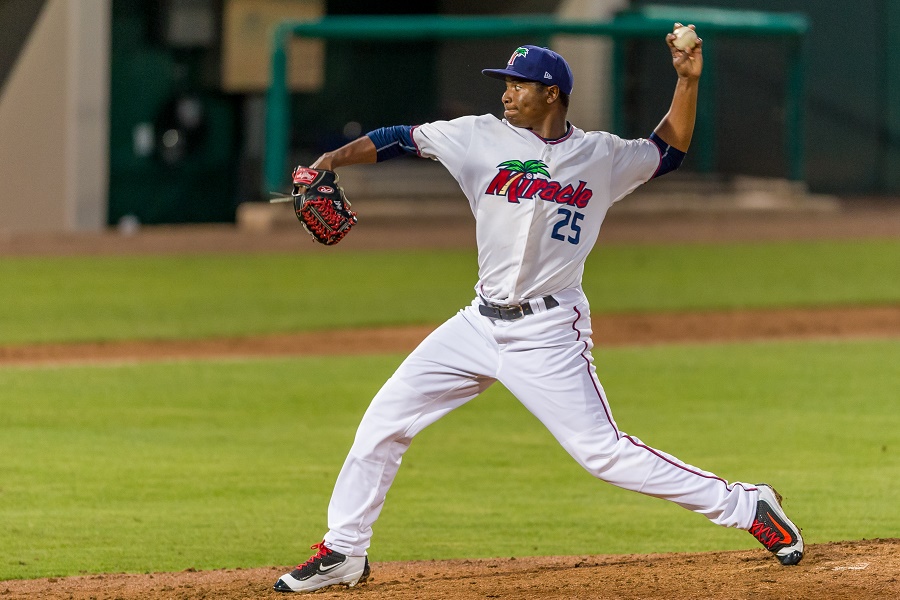 RED WINGS REPORT Rochester 2, Pawtucket 4 (11 Innings) Box Score The Red Wings collected seven hits but no player had more than one. In the second inning, Wilfredo Tovar doubled after a Daniel Palka walk to put two runners in scoring position. Carlos Paulino singled in both runners to give Rochester an early 2-0 but the offense went quiet from there. Andrew Albers did his best to put himself in position for his tenth win for Rochester. Albers went 6.2 innings, scattering seven hits and striking out four. It was the fourth straight start where he pitched at least six innings. Neil Ramirez and JT Chargois kept the game tied at two but Sean Burnett took his third loss after allowing a walk-off two-run shot in extra-innings. Rochester dropped to 60-45 with the loss, their third straight defeat. The Red Wings sit 6.5 games behind Scranton/WB for first in the International League North. They are also just three games back of the wild-card spot. CHATTANOOGA CHATTER Chattanooga 9, Tennessee 13 Box Score The Lookouts tried their best to overcome a deficit that stretched to 12-0 at one point but the comeback fell short. Aaron Slegers got hit hard over two innings as he allowed six earned runs for his fifth loss. Brandon Peterson didn't fare much better by allowing four runs in his two frames. Ryan Eades slowed some of the bleeding but still gave up two runs across three innings. In the last two innings, Tyler Jay allowed the final run. With two outs in the fifth frame, Zach Granite smacked his fifth triple. Ryan Walker followed with a single to put Chattanooga on the board. Mitch Garver doubled to push across the second run of the inning. Trailing by a score of 13-4, the Lookouts pushed across five runs in the ninth. Granite, Garver, and DJ Hicks all doubled in the frame but a Stuart Turner double play effectively ended the threat. MIRACLE MATTERS Fort Myers 7, Palm Beach 1 Box Score T.J. White wasted little time putting the Miracle up in this contest. He took the first pitch of the game and cranked a 381-foot home run to give Fort Myers a 1-0 lead. White finished the game 3-for-4 with two RBIs and two runs. Four innings later Joe Maloney started a three-run inning with a with a solo-blast of his own. Trey Vavra and Chris Paul joined the hit parade with multi-hit nights. This offensive output was more than enough to back-up a terrific start from Randy Rosario. For only the fifth time this season, he pitched more than six innings. He allowed one earned run over 6.2 innings with three strikeouts and three walks. Luke Bard and Nick Anderson pitched 2.1 shutout innings, each allowing a hit and combining to strike out three. After losing four straight games last week, the Miracle have now won three of their last four and tomorrow they will go for a three-game sweep of Palm Beach. The club (18-5) currently sits 2.5 games behind Jupiter for the second-half title. E-TOWN E-NOTES Elizabethton 0, Pulaski 7 Box Score The E-Twins offense had a hard time getting things going against the Yankees pitching staff. Elizabethton collected three hits, went 0-for-6 with runners in scoring position, and struck out 14 times. Travis Blankenhorn went 2-for-4 with a double. Bryant Hayman added the other hit, a double, while Amaurys Minier reached base twice on walks. Domenick Carlini was handed his fifth loss after allowing three runs on seven hits. He struck out seven and walked one in five innings of work. Hector Lujan gave up four runs in his three frames while striking out two and walking two. With the loss, the E-Twins five game winning streak is over. The team dropped to 15-17 on the season but they have still won seven of their last ten games. GCL TWINS TAKES GCL Twins 5, GCL Orioles 4 Box Score The GCL Twins took a 5-1 lead into the eighth frame before seeing the GCL Orioles claw their way back into this one. Miguel De Jesus put the Twins in position to win by pitching into the sixth inning without allowing a run. Overall, he tossed 5.1 shutout frames with six strikeouts and three walks. Moises Gomez allowed the tying run to score in the seventh inning but earned the victory by stopping the scoring there. He allowed one run on two hits over 1.2 innings. Onas Fanfar pitched the final two innings and allowed three runs (two earned). Offensively, Tyree Davis led the charge by going 2-for-3 including his sixth double. Akil Baddoo drove in a pair of runs and scored a run. Aaron Whitefield reached base three times, stole two bases, and scored twice out of the lead-off spot. The team combined to go 3-for-13 with runners in scoring position while leaving seven runners on base. TWINS DAILY PLAYERS OF THE DAY Pitcher of the Day – Randy Rosario, Fort Myers Miracle Hitter of the Day – TJ White, Fort Myers Miracle WEDNESDAY’S PROBABLE STARTERS Rochester at Pawtucket (6:05 CST) - RHP Jose Berrios (10-4, 2.31 ERA) Chattanooga vs Tennessee (6:15 CST) - LHP David Hurlbut (7-5, 3.56 ERA) Fort Myers vs Palm Beach (6:05 CST) -TBD Cedar Rapids @ Kane County (6:30 CST) - RHP Dereck Rodriguez (2-11, 5.73 ERA) Elizabethton at Pulaski (6:00 CST) - RHP Tyler Wells (1-1, 4.80 ERA) GCL Twins @ GCL Orioles (11:00AM CST) - TBD Please feel free to ask any questions and discuss Tuesday’s games.
 -
Proven closer... In a baseball world full of analytics and new statistical analysis, what does the term "proven closer" even mean? Old-school baseball minds would tell you that a "proven closer" is the player a manager always turns to in the ninth inning of a close game. He has experience collecting saves and pitching in high leverage situations. It doesn't matter the match-ups for the final frame because the "proven closer" will be out there on the mound. However, not every team has a proven closer and every closer needs to start gaining experience somewhere to earn their "proven closer" badge of honor.Terry Ryan, the Twins recently fired GM, was no stranger to this adage. Entering the 2012 season, Glen Perkins had been dominant in relief the year before but he was hesitant to give him the closer role. "He doesn't have any experience in that role," said Ryan. "I think you're wise to ultimately see if you can find a guy with experience." Perkins would serve as closer that season and he has been a three-time All-Star since 2012. Flash-forward to the 2016 season and the Twins have shuffled through multiple players at the back-end of the bullpen. Glen Perkins began the year with the closer title but he was limited to two appearances before requiring season-ending shoulder surgery. Kevin Jepsen was fantastic at the end of 2015 so he stepped back into the closer role. However, he posted a 6.16 ERA and was recently released by the club. Enter Brandon Kintzler, a 31-year old who the Brewers organization didn't want in the off-season. Since earning his first save on June 8, Kintzler has posted a 1.69 ERA and a 10 to 2 strikeout to walk ratio in 17 appearances. Opponents are slashing .238/.262/.317 and he has yet to blow a save. There's been a shift with the former 40th-round draft pick this season. In previous season's he stayed in the low to mid 90's but this season he has hit over 95 multiple times. Another significant change in 2016 has been his use of his sinking fastball. For his career, he has used this pitch 52.8% of the time but this season he has bumped that total up to 83.4%. Kintzler's sinking fastball has also resulted in 15 strikeouts this season which is 75% of all of his strikeouts this season. Over the course of his career, this pitch has been the out pitch in 53.2% of his strikeouts. He ranks third in the American League in ground ball percentage. This pitch has also been effective because he has hit nearly 96 mph with it but he can also drop it all the way down to 87.6 mph. The myth of the "proven closer" might still be out there in some baseball organizations. Kintzler has been good and hopefully someone would like to pay for Kintzler and his new closer title as the trade deadline approaches. Because he seems to have "proven" himself. Click here to view the article
- 25 replies
-
- 2
-
-
- brandon kintzler
- glen perkins
- (and 2 more)
-
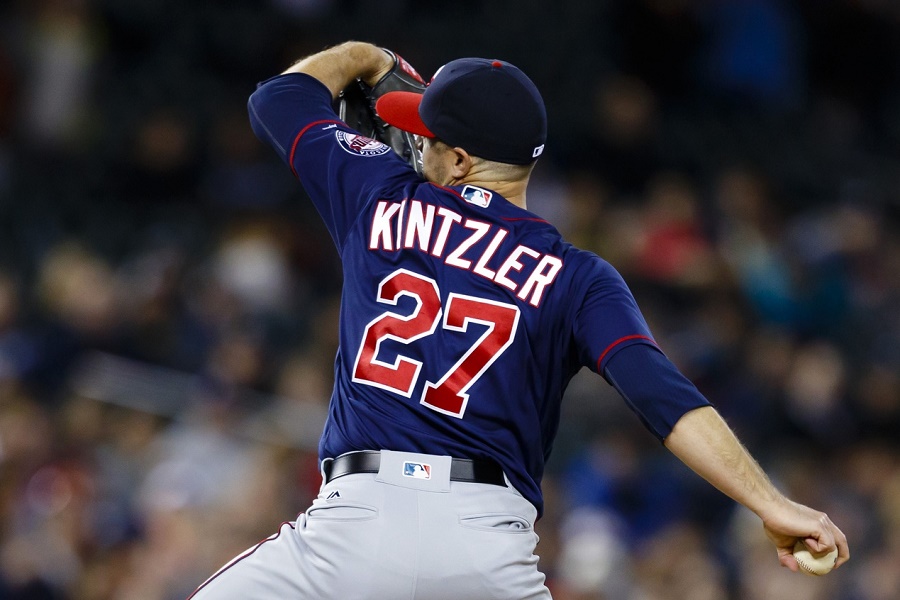 Terry Ryan, the Twins recently fired GM, was no stranger to this adage. Entering the 2012 season, Glen Perkins had been dominant in relief the year before but he was hesitant to give him the closer role. "He doesn't have any experience in that role," said Ryan. "I think you're wise to ultimately see if you can find a guy with experience." Perkins would serve as closer that season and he has been a three-time All-Star since 2012. Flash-forward to the 2016 season and the Twins have shuffled through multiple players at the back-end of the bullpen. Glen Perkins began the year with the closer title but he was limited to two appearances before requiring season-ending shoulder surgery. Kevin Jepsen was fantastic at the end of 2015 so he stepped back into the closer role. However, he posted a 6.16 ERA and was recently released by the club. Enter Brandon Kintzler, a 31-year old who the Brewers organization didn't want in the off-season. Since earning his first save on June 8, Kintzler has posted a 1.69 ERA and a 10 to 2 strikeout to walk ratio in 17 appearances. Opponents are slashing .238/.262/.317 and he has yet to blow a save. There's been a shift with the former 40th-round draft pick this season. In previous season's he stayed in the low to mid 90's but this season he has hit over 95 multiple times. Another significant change in 2016 has been his use of his sinking fastball. For his career, he has used this pitch 52.8% of the time but this season he has bumped that total up to 83.4%. Kintzler's sinking fastball has also resulted in 15 strikeouts this season which is 75% of all of his strikeouts this season. Over the course of his career, this pitch has been the out pitch in 53.2% of his strikeouts. He ranks third in the American League in ground ball percentage. This pitch has also been effective because he has hit nearly 96 mph with it but he can also drop it all the way down to 87.6 mph. The myth of the "proven closer" might still be out there in some baseball organizations. Kintzler has been good and hopefully someone would like to pay for Kintzler and his new closer title as the trade deadline approaches. Because he seems to have "proven" himself.
 -
Defense wins championships. While in baseball that adage might not completely apply, the defensive side of the ball is a big part of the game. Teams can make up for other holes in the roster by playing solid defense and doing some of the other little things right on the field. The Twins needed their defense to help this team to take the next step. Many of the regular players on the roster have been sub-par at their primary defensive position and this has only added to some of the first-half frustrations.During last week's All-Star Break, SABR released their updated rankings for the SABR Defensive Index (SDI). According to SABR, the Defensive Index draws on and aggregates two types of existing defensive metrics: those derived from batted ball location-based data and those collected from play-by-play accounts. The SDI rankings were updated through games as of July 10, 2016. It allows fans to compare the defense of their everyday players in relation to other players at the same position in the American League. Zero is the baseline score for SDI so a player with a positive score is doing well and a player with a negative score is not doing so well. Here are the position players that have qualified so far this year and how they compare to other players at their position in the American League. Joe Mauer, First Base SDI Score: 2.8 While Mauer's bat might have cooled off a little in recent weeks, his defense continues to be strong at first base. Mauer trails only Mitch Moreland in the AL SDI rankings for first base. This is a vast improvement over Mauer's play even as recently as last season. In 2015, Mauer posted a -0.1 SDI score and finished ranked tied for the fourth worst defensive AL first baseman. It might be tough for Mauer to catch Moreland for the top spot in the AL but he should be a Gold Glove finalist at first base. Brian Dozier, Second Base SDI Score: -4.5 I wrote about Dozier's defensive ineptitude during the off-season in hopes that he could make a turn-around similar to Jose Altuve. Unfortunately, Dozier's defense hasn't improve and he might actually be getting worse. Only Johnny Giavotella of the Angels ranks lower than Dozier according to the SDI. Last year, Dozier was able to finish ahead of only Robinson Cano and Giavotella. He finished with a -6.1 SDI score last season so it looks like Dozier will shatter that mark in 2016. Many Twins fans associate Dozier with playing good defense but that's not the case. He struggles to get to balls that are routinely gotten to by other players at his position. Eduardo Escobar, Shortstop SDI Score: -1.1 While Eduardo Nunez has taken over the full-time shortstop role, he had played over 60 fewer innings at shortstop compared to Eduardo Escobar when this update was released. Nunez will likely be featured on SDI updates the rest of the season. However, he likely won't score very well and he might not be in a Twins uniform by the end of the month. Only four shortstops in the AL have posted positive SDI marks this season. Escobar ranks fifth on the list ahead of players like Carlos Correa, Xander Bogaerts, and Elvis Andrus. In the final 2015 SDI rankings, Escobar finished ninth in the AL (-1.4 SDI score). Overall, he has moved up in the rankings but his score is trending in the wrong direction. Kurt Suzuki, Catcher SDI Score: -2.5 Suzuki has never been known for his defensive prowess. He has a hard time throwing out runners but Twins pitchers like throwing with him behind the plate. Suzuki currently sits in ninth place in the AL which ranks him ahead of five qualifying catchers. He was the worst ranking catcher according to SDI last season with a -8.4, a total that was more than four times worse than the next qualifying catcher. At this juncture of the season, only one everyday player has a positive score which is scary considering the state of the Twins pitching staff. Young players like Max Kepler and Byron Buxton haven't played enough innings to qualify but they both should score well in future updates. With Miguel Sano's recent struggles at third base, Minnesota's infield is almost entirely composed of sub-par defensive players. With young pitchers like Tyler Duffey and (eventually) Jose Berrios trying to establish themselves, it's imperative for the defense behind them to be strong. Right now, there are some holes in Minnesota's defense but the next month could see some changes as veteran players are dealt away. Did any of the SDI scores surprise you? Who would you put in Minnesota's best defensive line-up? Leave a COMMENT and start the discussion. Click here to view the article
-
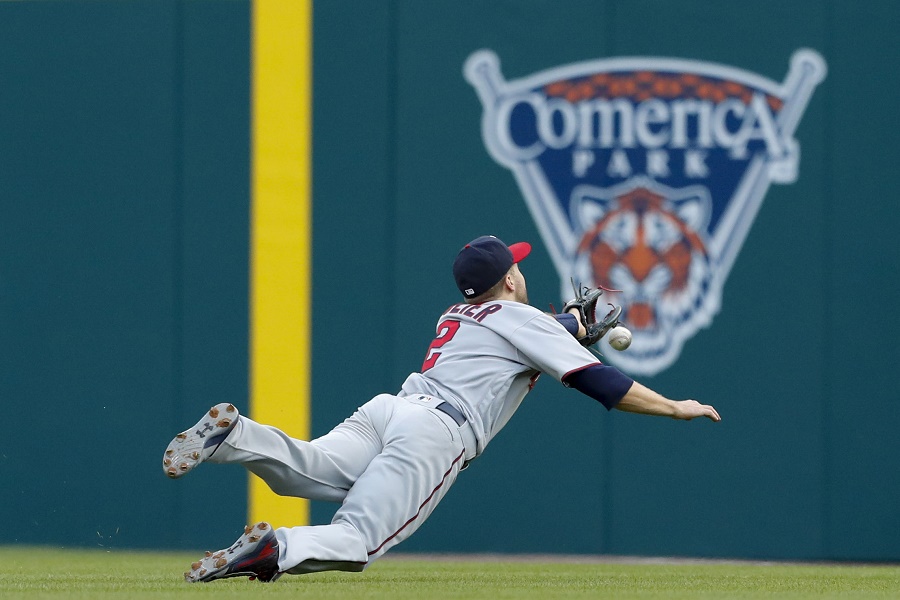 During last week's All-Star Break, SABR released their updated rankings for the SABR Defensive Index (SDI). According to SABR, the Defensive Index draws on and aggregates two types of existing defensive metrics: those derived from batted ball location-based data and those collected from play-by-play accounts. The SDI rankings were updated through games as of July 10, 2016. It allows fans to compare the defense of their everyday players in relation to other players at the same position in the American League. Zero is the baseline score for SDI so a player with a positive score is doing well and a player with a negative score is not doing so well. Here are the position players that have qualified so far this year and how they compare to other players at their position in the American League. Joe Mauer, First Base SDI Score: 2.8 While Mauer's bat might have cooled off a little in recent weeks, his defense continues to be strong at first base. Mauer trails only Mitch Moreland in the AL SDI rankings for first base. This is a vast improvement over Mauer's play even as recently as last season. In 2015, Mauer posted a -0.1 SDI score and finished ranked tied for the fourth worst defensive AL first baseman. It might be tough for Mauer to catch Moreland for the top spot in the AL but he should be a Gold Glove finalist at first base. Brian Dozier, Second Base SDI Score: -4.5 I wrote about Dozier's defensive ineptitude during the off-season in hopes that he could make a turn-around similar to Jose Altuve. Unfortunately, Dozier's defense hasn't improve and he might actually be getting worse. Only Johnny Giavotella of the Angels ranks lower than Dozier according to the SDI. Last year, Dozier was able to finish ahead of only Robinson Cano and Giavotella. He finished with a -6.1 SDI score last season so it looks like Dozier will shatter that mark in 2016. Many Twins fans associate Dozier with playing good defense but that's not the case. He struggles to get to balls that are routinely gotten to by other players at his position. Eduardo Escobar, Shortstop SDI Score: -1.1 While Eduardo Nunez has taken over the full-time shortstop role, he had played over 60 fewer innings at shortstop compared to Eduardo Escobar when this update was released. Nunez will likely be featured on SDI updates the rest of the season. However, he likely won't score very well and he might not be in a Twins uniform by the end of the month. Only four shortstops in the AL have posted positive SDI marks this season. Escobar ranks fifth on the list ahead of players like Carlos Correa, Xander Bogaerts, and Elvis Andrus. In the final 2015 SDI rankings, Escobar finished ninth in the AL (-1.4 SDI score). Overall, he has moved up in the rankings but his score is trending in the wrong direction. Kurt Suzuki, Catcher SDI Score: -2.5 Suzuki has never been known for his defensive prowess. He has a hard time throwing out runners but Twins pitchers like throwing with him behind the plate. Suzuki currently sits in ninth place in the AL which ranks him ahead of five qualifying catchers. He was the worst ranking catcher according to SDI last season with a -8.4, a total that was more than four times worse than the next qualifying catcher. At this juncture of the season, only one everyday player has a positive score which is scary considering the state of the Twins pitching staff. Young players like Max Kepler and Byron Buxton haven't played enough innings to qualify but they both should score well in future updates. With Miguel Sano's recent struggles at third base, Minnesota's infield is almost entirely composed of sub-par defensive players. With young pitchers like Tyler Duffey and (eventually) Jose Berrios trying to establish themselves, it's imperative for the defense behind them to be strong. Right now, there are some holes in Minnesota's defense but the next month could see some changes as veteran players are dealt away. Did any of the SDI scores surprise you? Who would you put in Minnesota's best defensive line-up? Leave a COMMENT and start the discussion.
