



Cody Christie
-
Posts
7,515 -
Joined
-
Last visited
-
Days Won
5
Content Type
Profiles
News
Minnesota Twins Videos
2026 Minnesota Twins Top Prospects Ranking
2022 Minnesota Twins Draft Picks
Minnesota Twins Free Agent & Trade Rumors, Notes, & Tidbits
Guides & Resources
2023 Minnesota Twins Draft Picks
The Minnesota Twins Players Project
2024 Minnesota Twins Draft Picks
2025 Minnesota Twins Draft Pick Tracker
2026 Minnesota Twins Draft Tracker: Picks & Bonuses
Forums
Blogs
Events
Store
Downloads
Gallery
Everything posted by Cody Christie
-
Miguel Sano and Byron Buxton are coming off their worst seasons as professionals. Kyle Gibson is one year away from free agency. Other players like Eddie Rosario and Jose Berrios broke out at the the major league level last year. Does it make sense for the Twins to start working on extensions with some of their core players?Over the weekend, fans at TwinsFest were given the opportunity to ask general manager Thad Levine about multiple topics. One of the most intriguing answers was about the Twins looking to sign their younger pieces to long-term deals. Here are some of the potential options for long-term contracts. Byron Buxton, CF Arbitration Eligible: 2020 Free Agent: 2023 Buxton is coming off one of the lowest points in his young career. The front office decided not to make him a September call-up and in turn, the team picked up an extra year of control over the former top prospect. Minnesota already gave him a hefty off-season raise to try and make up for the September smite. Another way to smooth the waters could be to give him some financial stability and buy out some of his free agent years. If he has a bounce-back year, next off-season his value could be even higher. Miguel Sano, 3B Arbitration Eligible: 2020 Free Agent: 2022 Sano has been dealing with on and off the field issues over the last calendar year. He was accused of assault, ran over a police officer, and wound up being sent all the way back down to High-A last year. There’s obviously some room to grow and adding veteran Nelson Cruz to the roster could help Sano reach his former all-star ability. He will reach free agency a year earlier than Buxton so it might be more pressing to sign the slugger to a longer-term deal. Minnesota is building a power line-up this year and Sano could be the biggest power bat for the team. Jose Berrios, SP Arbitration Eligible: 2020 Free Agent: 2023 Last year, Berrios made the All-Star Game for the first time and he was one of the team’s most valuable pitchers. His value might be at an all-time high so it could be in the club’s best interest to wait a year and see how he performs in 2019. He has yet to reach the 200-inning mark in any big-league season. However, he is one of the hardest working players in the system and he seems to fit the mold of the new front office. Minnesota is always short on starting pitching so it might be nice to have Berrios locked into the rotation for the great part of the next decade, even if he can’t be the team’s ace for that entire time. Eddie Rosario, OF Arbitration Eligible: 2020 Free Agent: 2022 Rosario was arguably the team’s best hitter last season and he can provide value on the defensive side of the ball as well. Minnesota has other outfield options working their way towards Target Field as also. The front office will need to decide if Rosario is part of the club’s long-term plans. He’s coming off his best big-league season; so, like Berrios, it might not be the best time to give him an extension. He’s also the oldest player on this list and he will be a free agent at age 29. It might be better to go through the year-to-year arbitration process for a player like him. Kyle Gibson, SP Free Agent: 2020 Next season could be Gibson’s last in a Twins uniform. His major league career has been full of ups and downs. He was the team’s best starter back in 2015 when he posted a 3.84 ERA and a 1.29 WHIP over 194.2 innings. Last year at age-30, he had an even better season with a 3.62 ERA and a 179 to 79 strikeout to walk ratio. Is Gibson finally finding himself at baseball’s highest level or is the club going to rely on some of the younger talent in the organization? Other players in consideration would have to be Jorge Polanco and Max Kepler. Who should be a priority for the team to sign to an extension? Leave a COMMENT and start the discussion. Click here to view the article
-
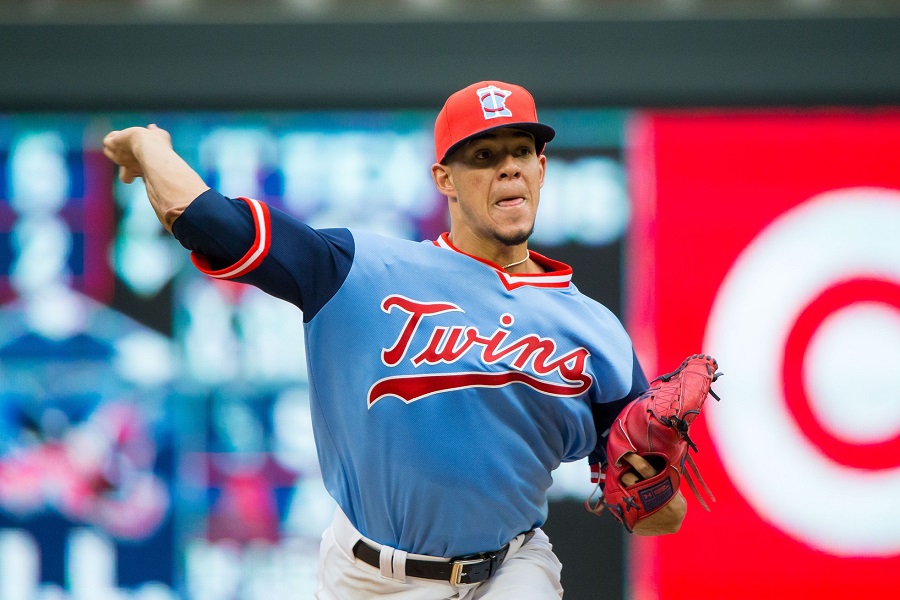 Over the weekend, fans at TwinsFest were given the opportunity to ask general manager Thad Levine about multiple topics. One of the most intriguing answers was about the Twins looking to sign their younger pieces to long-term deals. Here are some of the potential options for long-term contracts. Byron Buxton, CF Arbitration Eligible: 2020 Free Agent: 2023 Buxton is coming off one of the lowest points in his young career. The front office decided not to make him a September call-up and in turn, the team picked up an extra year of control over the former top prospect. Minnesota already gave him a hefty off-season raise to try and make up for the September smite. Another way to smooth the waters could be to give him some financial stability and buy out some of his free agent years. If he has a bounce-back year, next off-season his value could be even higher. Miguel Sano, 3B Arbitration Eligible: 2020 Free Agent: 2022 Sano has been dealing with on and off the field issues over the last calendar year. He was accused of assault, ran over a police officer, and wound up being sent all the way back down to High-A last year. There’s obviously some room to grow and adding veteran Nelson Cruz to the roster could help Sano reach his former all-star ability. He will reach free agency a year earlier than Buxton so it might be more pressing to sign the slugger to a longer-term deal. Minnesota is building a power line-up this year and Sano could be the biggest power bat for the team. Jose Berrios, SP Arbitration Eligible: 2020 Free Agent: 2023 Last year, Berrios made the All-Star Game for the first time and he was one of the team’s most valuable pitchers. His value might be at an all-time high so it could be in the club’s best interest to wait a year and see how he performs in 2019. He has yet to reach the 200-inning mark in any big-league season. However, he is one of the hardest working players in the system and he seems to fit the mold of the new front office. Minnesota is always short on starting pitching so it might be nice to have Berrios locked into the rotation for the great part of the next decade, even if he can’t be the team’s ace for that entire time. Eddie Rosario, OF Arbitration Eligible: 2020 Free Agent: 2022 Rosario was arguably the team’s best hitter last season and he can provide value on the defensive side of the ball as well. Minnesota has other outfield options working their way towards Target Field as also. The front office will need to decide if Rosario is part of the club’s long-term plans. He’s coming off his best big-league season; so, like Berrios, it might not be the best time to give him an extension. He’s also the oldest player on this list and he will be a free agent at age 29. It might be better to go through the year-to-year arbitration process for a player like him. Kyle Gibson, SP Free Agent: 2020 Next season could be Gibson’s last in a Twins uniform. His major league career has been full of ups and downs. He was the team’s best starter back in 2015 when he posted a 3.84 ERA and a 1.29 WHIP over 194.2 innings. Last year at age-30, he had an even better season with a 3.62 ERA and a 179 to 79 strikeout to walk ratio. Is Gibson finally finding himself at baseball’s highest level or is the club going to rely on some of the younger talent in the organization? Other players in consideration would have to be Jorge Polanco and Max Kepler. Who should be a priority for the team to sign to an extension? Leave a COMMENT and start the discussion.
 -
 TwinsFest is done and the Winter Meltdown was a resounding success. Thank you to everyone who was able to attend and make this event a great gathering of fans from throughout Twins Territory. Even with the sub-arctic temperatures across the upper Midwest, spring training is quickly approaching. There are plenty of unanswered questions left about the Twins before the season starts. Make sure to follow me on Twitter so you can be part of next week's mailbag. Ideally, Byron Buxton’s leash won’t have to be tested this season. Last week, I identified Buxton’s emergence as one of the keys to the 2019 club. It’s easy to be discouraged after his 2018 season. Buxton rebuilt his body this off-season by adding 21 pounds of muscle. The extra weight can hopefully increase his durability and keep him on the field when he is bouncing off the outfield grass and crashing into centerfield walls. Even if Buxton’s bat struggles again, he continues to provide value through his defense and base running abilities. I believe the team will bat him near the bottom of the order to keep some of the pressure off him. He needs to figure it out at the big-league level, so I think the team is going to sink or swim with Buxton in the line-up this year. Minnesota will likely use a few different players at first base this season and the starter could be tied to the player with the hottest bat. Each of the most likely first base options were added to the roster in the last year. C.J. Cron was claimed off waivers this off-season despite a 30-home run campaign in 2018. Tyler Austin saw some action for the Twins last year after being traded from the Yankees. Miguel Sano and Mitch Garver are also possibilities to see time at first. If I’m picking the Opening Day starter now, Cron would be my pick. As far as a replacement for Robbie Grossman, Jake Cave seems like he already started to do that last year. Cave played in 91 big league games and racked up over 300 plate appearances. He hit .269/.316/.481 with 32 extra-base hits. The club also used him at all three outfield positions, so it seems likely for him to continue to be used in a fourth outfielder role. If the Twins are done adding players, there seems to be a pretty clear starting situation for the Twins. No one knows how Rocco Baldelli is going to approach lineup construction, but Minnesota has nine players that should be regulars. Here’s how I would construct the Opening Day lineup: 1. Jorge Polanco- SS 2. Eddie Rosario- LF 3. Nelson Cruz- DH 4. Miguel Sano- 3B 5. CJ Cron- 1B 6. Jonathan Schoop- 2B 7. Max Kepler- RF 8. Jason Castro- C 9. Byron Buxton- CF As I mentioned before, Tyler Austin will probably get some at-bats at first base. The second half of the lineup could be altered depending on who has the hot hand. Buxton might start the year at the bottom of the order, but it will be key for him to be batting near the top by season’s end. This is certainly an intriguing question. In three of the last four seasons, Manny Machado has posted a WAR greater than 6.0. For the Twins, you also need to consider the players he would be replacing. Miguel Sano and Jorge Polanco are currently penciled in to play on Machado’s side of the infield. As Thieres Rabelo wrote about last week, Polanco might be as potent on offense as Machado. Polanco could slide over to second base but then he would be taking Jonathan Schoop’s spot in the line-up. Schoop was only worth 0.5 WAR last season and his career high WAR total was 3.8 back in 2017. That being said, Machado is one of the best players in the game. Over the course of 162 games, he could add 2-3 wins to the club. This might all be purely hypothetical because it sounds like the front office isn’t adding Machado or Bryce Harper. Season ticket sales are usually tied to the team’s performance in the previous season. Last year, the Twins were coming off a playoff appearance and their young players seemed poised to take the next step. The club also had veteran stars like Joe Mauer and Brian Dozier that can help to drive sales. Byron Buxton and Miguel Sano were a disappointment in 2018 and Mauer and Dozier are no longer with the club. Also, the team didn’t make the playoffs. Nothing drives ticket sales like having a consistently winning product on the field. Season ticket data won’t be released until later in the year. It seems likely that sales will be down, and the demand will be low for the current team. However, winning cures everything. TwinsFest is a wonderful weekend of events and activities for the entire family. Yes, the organization covers the traveling cost for players to attend. While the players are in town, the club usually completes some of the players' physicals so they can save time when players get to Florida. Twins President Dave St. Peter has done a good job of building relationships with former players. Luckily, the dates for the event are almost always the last weekend in January. This can make it easy for players to plan their attendance at the event. That being said, a lot of fans want to get autographs from the newer players and the former players aren’t as big of a draw. (Ask Corey Koskie about that.) Click here to view the article
- 102 replies
-
- 1
-

-
- byron buxton
- cj cron
- (and 3 more)
-
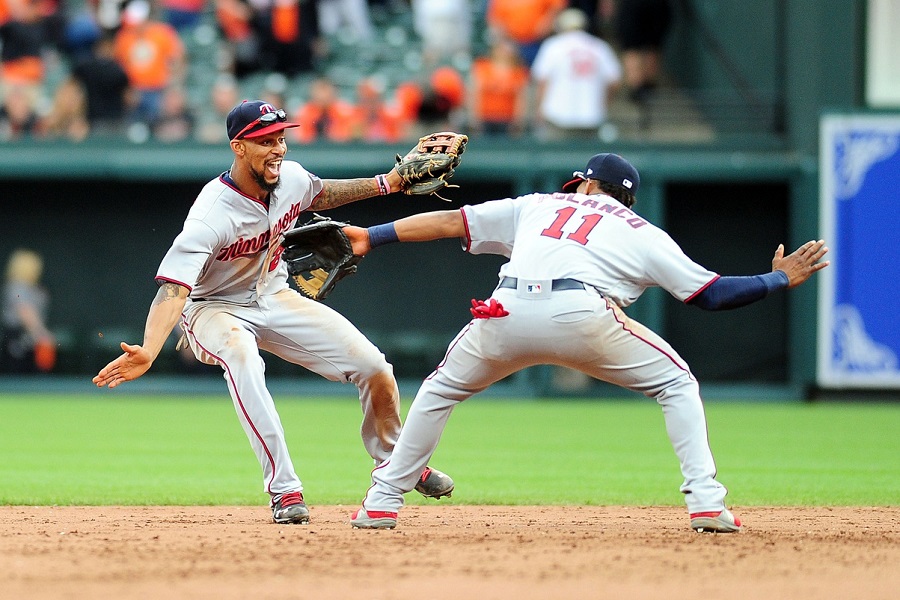 https://twitter.com/gary_pecinovsky/status/1089634127882653698 Ideally, Byron Buxton’s leash won’t have to be tested this season. Last week, I identified Buxton’s emergence as one of the keys to the 2019 club. It’s easy to be discouraged after his 2018 season. Buxton rebuilt his body this off-season by adding 21 pounds of muscle. The extra weight can hopefully increase his durability and keep him on the field when he is bouncing off the outfield grass and crashing into centerfield walls. Even if Buxton’s bat struggles again, he continues to provide value through his defense and base running abilities. I believe the team will bat him near the bottom of the order to keep some of the pressure off him. He needs to figure it out at the big-league level, so I think the team is going to sink or swim with Buxton in the line-up this year. https://twitter.com/hotts58/status/1088824695116521472 Minnesota will likely use a few different players at first base this season and the starter could be tied to the player with the hottest bat. Each of the most likely first base options were added to the roster in the last year. C.J. Cron was claimed off waivers this off-season despite a 30-home run campaign in 2018. Tyler Austin saw some action for the Twins last year after being traded from the Yankees. Miguel Sano and Mitch Garver are also possibilities to see time at first. If I’m picking the Opening Day starter now, Cron would be my pick. As far as a replacement for Robbie Grossman, Jake Cave seems like he already started to do that last year. Cave played in 91 big league games and racked up over 300 plate appearances. He hit .269/.316/.481 with 32 extra-base hits. The club also used him at all three outfield positions, so it seems likely for him to continue to be used in a fourth outfielder role. https://twitter.com/C__Lee/status/1088544039408988161 If the Twins are done adding players, there seems to be a pretty clear starting situation for the Twins. No one knows how Rocco Baldelli is going to approach lineup construction, but Minnesota has nine players that should be regulars. Here’s how I would construct the Opening Day lineup: 1. Jorge Polanco- SS 2. Eddie Rosario- LF 3. Nelson Cruz- DH 4. Miguel Sano- 3B 5. CJ Cron- 1B 6. Jonathan Schoop- 2B 7. Max Kepler- RF 8. Jason Castro- C 9. Byron Buxton- CF As I mentioned before, Tyler Austin will probably get some at-bats at first base. The second half of the lineup could be altered depending on who has the hot hand. Buxton might start the year at the bottom of the order, but it will be key for him to be batting near the top by season’s end. https://twitter.com/Mike_AnthonyFL/status/1088813118552186880 This is certainly an intriguing question. In three of the last four seasons, Manny Machado has posted a WAR greater than 6.0. For the Twins, you also need to consider the players he would be replacing. Miguel Sano and Jorge Polanco are currently penciled in to play on Machado’s side of the infield. As Thieres Rabelo wrote about last week, Polanco might be as potent on offense as Machado. Polanco could slide over to second base but then he would be taking Jonathan Schoop’s spot in the line-up. Schoop was only worth 0.5 WAR last season and his career high WAR total was 3.8 back in 2017. That being said, Machado is one of the best players in the game. Over the course of 162 games, he could add 2-3 wins to the club. This might all be purely hypothetical because it sounds like the front office isn’t adding Machado or Bryce Harper. https://twitter.com/C__Lee/status/1088813937511022594 Season ticket sales are usually tied to the team’s performance in the previous season. Last year, the Twins were coming off a playoff appearance and their young players seemed poised to take the next step. The club also had veteran stars like Joe Mauer and Brian Dozier that can help to drive sales. Byron Buxton and Miguel Sano were a disappointment in 2018 and Mauer and Dozier are no longer with the club. Also, the team didn’t make the playoffs. Nothing drives ticket sales like having a consistently winning product on the field. Season ticket data won’t be released until later in the year. It seems likely that sales will be down, and the demand will be low for the current team. However, winning cures everything. https://twitter.com/Hey_Yo_Its_GMan/status/1088830128786980864 TwinsFest is a wonderful weekend of events and activities for the entire family. Yes, the organization covers the traveling cost for players to attend. While the players are in town, the club usually completes some of the players' physicals so they can save time when players get to Florida. Twins President Dave St. Peter has done a good job of building relationships with former players. Luckily, the dates for the event are almost always the last weekend in January. This can make it easy for players to plan their attendance at the event. That being said, a lot of fans want to get autographs from the newer players and the former players aren’t as big of a draw. (Ask Corey Koskie about that.)
 -
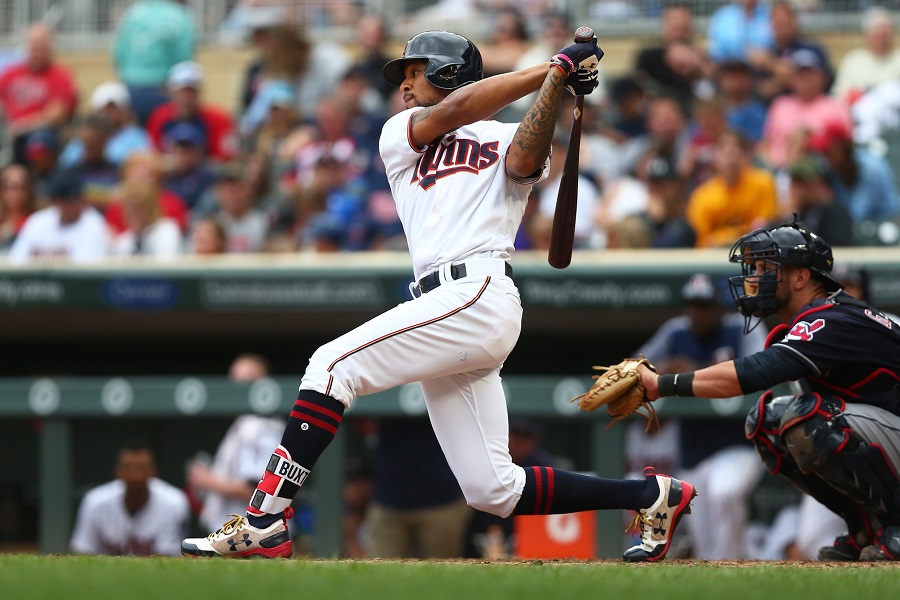 Byron Buxton didn’t finish last season in Minnesota. The organization decided not to make him a September call-up. In doing so, the club picked up an extra year of service time as Buxton now won’t be eligible for free agency until 2023. There were high hopes for Buxton entering the 2018 campaign. He ended 2017 on an upswing as he hit .300/.347/.546 with 23 extra-base hits in the second half. However, the 2018 campaign quickly turned into a nightmare for Buxton. He only managed to play 28 games at the big-league level while hitting .156/.183/.200 with four extra-base hits. He struggled through injuries and spent time trying to find his swing in the minor leagues. Some players take time to develop. In recent memory, Aaron Hicks was a player that took some time to figure it out at baseball’s highest level. Since leaving the Twins three years ago, he has been the tenth most valuable outfielder in the American League. Another former Twin, Joe Nathan, didn’t see his career take off until being traded to Minnesota and becoming the team’s closer at age 29. Baseball is a funny game. Sometimes it pays to be patient, especially with a player like Buxton who seems to have endless potential. Buxton is the one player on the Twins roster who can impact the game in every way. He’s shown the ability to be the best defensive player in the league. He can drive teams crazy on the bases with his ability to turn a single into a double or move from first to third on a slow roller to the outfield. The Twins don’t need Buxton to hit. 350 and crack 40 home runs. His defense and running ability make him valuable without even considering his hit and power tools. A healthy Buxton could result in more of what Twins fans saw in the second half of 2017. Buxton showed his ability to hit for average and to post some strong power numbers. Minnesota’s next window of opportunity is right now, and Buxton’s emergence is key to the club moving forward. Miguel Sano is an important piece as well, but Buxton can impact every facet of the game. If Minnesota sits atop the AL Central at season’s end, Buxton was likely part of the team’s success. Baseball’s former top prospect is only 25-years old so there is no reason to give up on him now. Buckle-up Twins fans because Buxton could be just one key component to the team’s success next season. He is a threat to break out at any moment. How important is Buxton to the Twins in 2019? Leave a COMMENT and start the discussion.
 -
Do you see that? Look on the horizon. Spring training is slowly moving closer. Twins pitchers and catchers will soon be reporting to Fort Myers with position players following close behind. Before the Twins make their annual trek south, it’s important to look at some of the key aspects facing the club in 2019. In the coming days, multiple keys will be identified and addressed. Minnesota has a chance to win the AL Central for the first time since 2010. For that to happen, certain things will need to work in the club’s favor this year. First on the list is the emergence of Mr. Byron Buxton.Byron Buxton didn’t finish last season in Minnesota. The organization decided not to make him a September call-up. In doing so, the club picked up an extra year of service time as Buxton now won’t be eligible for free agency until 2023. There were high hopes for Buxton entering the 2018 campaign. He ended 2017 on an upswing as he hit .300/.347/.546 with 23 extra-base hits in the second half. However, the 2018 campaign quickly turned into a nightmare for Buxton. He only managed to play 28 games at the big-league level while hitting .156/.183/.200 with four extra-base hits. He struggled through injuries and spent time trying to find his swing in the minor leagues. Some players take time to develop. In recent memory, Aaron Hicks was a player that took some time to figure it out at baseball’s highest level. Since leaving the Twins three years ago, he has been the tenth most valuable outfielder in the American League. Another former Twin, Joe Nathan, didn’t see his career take off until being traded to Minnesota and becoming the team’s closer at age 29. Baseball is a funny game. Sometimes it pays to be patient, especially with a player like Buxton who seems to have endless potential. Buxton is the one player on the Twins roster who can impact the game in every way. He’s shown the ability to be the best defensive player in the league. He can drive teams crazy on the bases with his ability to turn a single into a double or move from first to third on a slow roller to the outfield. The Twins don’t need Buxton to hit. 350 and crack 40 home runs. His defense and running ability make him valuable without even considering his hit and power tools. A healthy Buxton could result in more of what Twins fans saw in the second half of 2017. Buxton showed his ability to hit for average and to post some strong power numbers. Minnesota’s next window of opportunity is right now, and Buxton’s emergence is key to the club moving forward. Miguel Sano is an important piece as well, but Buxton can impact every facet of the game. If Minnesota sits atop the AL Central at season’s end, Buxton was likely part of the team’s success. Baseball’s former top prospect is only 25-years old so there is no reason to give up on him now. Buckle-up Twins fans because Buxton could be just one key component to the team’s success next season. He is a threat to break out at any moment. How important is Buxton to the Twins in 2019? Leave a COMMENT and start the discussion. Click here to view the article
- 42 replies
-
- 1
-
-
- byron buxton
- aaron hicks
- (and 1 more)
-
Dreams can happen right? Last week, I mused about the possibility of Minnesota making a bid for free agent Manny Machado. He’s young, a five-tool player, and has the potential to impact the game in multiple ways. It also helps that the White Sox have been going after him. If the Twins could steal him from their division rival, it would make the signing that much sweeter. Could the Twins make a splash and sign Machado or Harper?ESPN’s Buster Olney is reporting the Twins could be one of a handful of mystery teams interested in signing either Machado or Harper. Olney’s biggest reasons for identifying the Twins is their lack of free agent spending, which gives the club an opportunity to pull off this kind of contract. Over the last week, Minnesota’s payroll has been a hot button topic in Twins Territory. (I wrote a little about it in this week’s Twins Daily mailbag and you can listen to Gleeman and the Geek discuss it in their latest episode). Joe Mauer’s contract came off the books and the organization has few contractual commitments moving forward. According to Forbes, Minnesota ranks 22nd in MLB team valuations. The club made $261 million in revenue last year and spent $133 million on player expenses. Currently, the Twins are projected to start next season with a payroll around $100 million. If it takes longer for these two players to sign, their asking price could continue to drop. It could also drop the length of the contract. Both players are relatively young for reaching free agency since they made their debuts as teenagers. This could allow teams to sign them to a longer contract because the prime of their careers would be throughout most of the new deal. Since these two players debuted in 2012, Harper has the 12th highest WAR total, while Machado comes in at 15th. These are two of the best players of this generation and they are reaching free agency in their prime. All of baseball should be interested… why not the Twins? Leave a COMMENT and start the discussion. Click here to view the article
- 103 replies
-
- 3
-
-
- bryce harper
- manny machado
- (and 2 more)
-
ESPN Report: Twins Could Be Mystery Team for Harper, Machado
Cody Christie posted an article in Twins
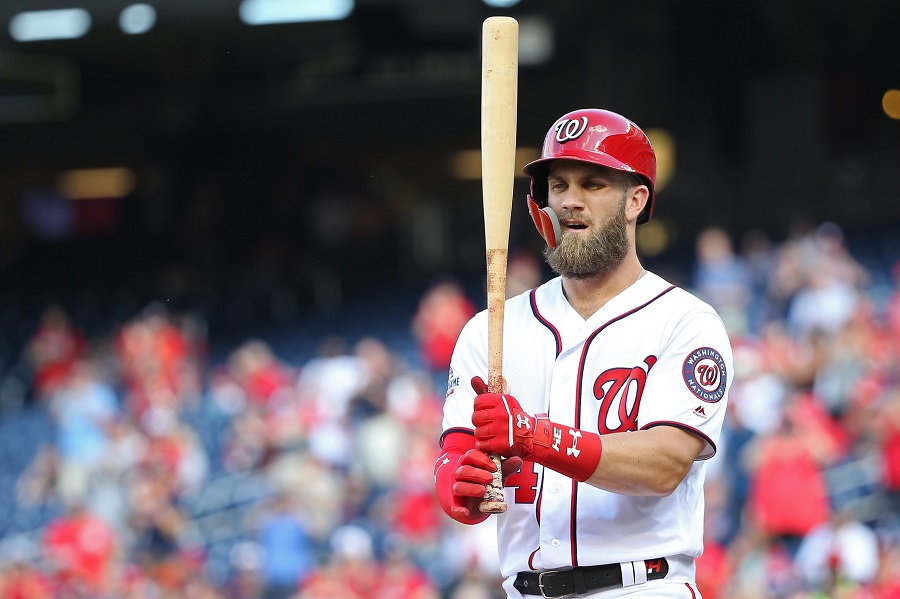 ESPN’s Buster Olney is reporting the Twins could be one of a handful of mystery teams interested in signing either Machado or Harper. Olney’s biggest reasons for identifying the Twins is their lack of free agent spending, which gives the club an opportunity to pull off this kind of contract. Over the last week, Minnesota’s payroll has been a hot button topic in Twins Territory. (I wrote a little about it in this week’s Twins Daily mailbag and you can listen to Gleeman and the Geek discuss it in their latest episode). Joe Mauer’s contract came off the books and the organization has few contractual commitments moving forward. According to Forbes, Minnesota ranks 22nd in MLB team valuations. The club made $261 million in revenue last year and spent $133 million on player expenses. Currently, the Twins are projected to start next season with a payroll around $100 million. If it takes longer for these two players to sign, their asking price could continue to drop. It could also drop the length of the contract. Both players are relatively young for reaching free agency since they made their debuts as teenagers. This could allow teams to sign them to a longer contract because the prime of their careers would be throughout most of the new deal. Since these two players debuted in 2012, Harper has the 12th highest WAR total, while Machado comes in at 15th. These are two of the best players of this generation and they are reaching free agency in their prime. All of baseball should be interested… why not the Twins? Leave a COMMENT and start the discussion.
 -
Even if the temperatures outside don’t agree, baseball is in the air. TwinsFest is this weekend and the annual Twins Caravans have been matriculating throughout Twins Territory in recent weeks. Twins pitchers and catchers report to Fort Myers on Wednesday, February 13 and position players follow on Monday, February 18. This week’s mailbag includes a look at Kohl Stewart’s chances to be in the rotation, trying to predict Minnesota’s win total, some potential trade targets, and a dive into the team’s payroll. Let’s open this week’s mail, shall we? When it comes to Kohl Stewart, there are no guarantees he will make the club out of spring training. There are certainly some locks when it comes to the starting rotation. Jose Berrios, Kyle Gibson, and Jake Odorizzi are all but guaranteed a starting spot. Michael Pineda should be fully recovered from Tommy John surgery and this allows him to slide into the back half of the rotation. This leaves the fifth rotation spot in question. Adalberto Mejia was off to a strong start last season before he was sidelined with a nerve issue. Other players in consideration for the final starting spot would be Stephen Gonsalves, Chase De Jong, Zack Littell, and recently signed Martin Perez. My guess is Stewart starts the season at Triple-A but he will get some time at the big league level throughout the 2019 campaign. Predicting win totals can be quite the exercise in futility, especially over the course of a 162-game MLB season. FanGraphs currently has the Twins pegged to finish the season at 82-80. This would place them in seventh place in the American League and second place in the AL Central. At this point in the off-season, I feel like this is a pretty accurate prediction. If everything breaks right, the Twins could pick up a few other wins throughout the year, especially if Byron Buxton and Miguel Sano take the next step. Minnesota should win 80+ games but do they have enough to catch Cleveland? That still remains to be seen. Minnesota’s payroll has been a hot button issue over the last week or so. The Pohlads run the Twins like a business so they typically spend 50% of their revenues on the payroll. According to Forbes, Minnesota ranks 22nd in MLB team valuations. The club made $261 million in revenue last year and spent $133 million on player expenses. Currently, the Twins are projected to start next season with a payroll around $100 million. There are a couple schools of thought when it comes to the Twins and their finances. Those that feel that the Twins are spending roughly what they should based on their market size and revenues. Others feel the Twins are spending money very similarly to how they did during the end of the Metrodome era. A source in the Twins front office told Phil Mackey, “We need to get the nucleus right first. Teams that hit the gas too early wind up mistiming their window. We’ll pounce when the time is right.” Later, he brought up the fact that the Twins market size (19th) and TV revenue rank (20th) also play a factor in their ability to spend. Aaron Gleeman has been vocal about his frustration with the team’s payroll. When the Twins moved into Target Field, there was a three-year spike in the team’s spending in comparison to the MLB average. After 2012, the club’s relative spending is back to the same level as during the Metrodome years. Should the Twins payroll be higher for 2019? Yes, but it’s important to make smart financial investments and those players might not currently be available. Next year’s potential free agent class includes numerous starting pitchers making some significant money in 2018. Some of the players include Madison Bumgarner, Gerrit Cole, Cole Hamels, Felix Hernandez, CC Sabathia, Chris Sale and Justin Verlander. Many of these players are projected to be on winning clubs this year so their current clubs are likely to hang on to them through the 2019 season. Madison Bumgarner and Felix Hernandez might be the most likely trade candidates on this list. Bumgarner had pitched 200 innings or more in six straight seasons before injuries limited him to less than 130 in each of the last two seasons. Hernandez has run into his own struggles in recent years. After posting a career ERA of 3.16 through 2016, he was limited to 86.2 innings in 2017 (4.36 ERA) and his ERA jumped to 5.55 last year. Make sure to follow me on Twitter so you can participate in next week’s mailbag segment. Now it’s your turn. What do you think about this week’s questions? Leave a COMMENT and start the discussion. Click here to view the article
-
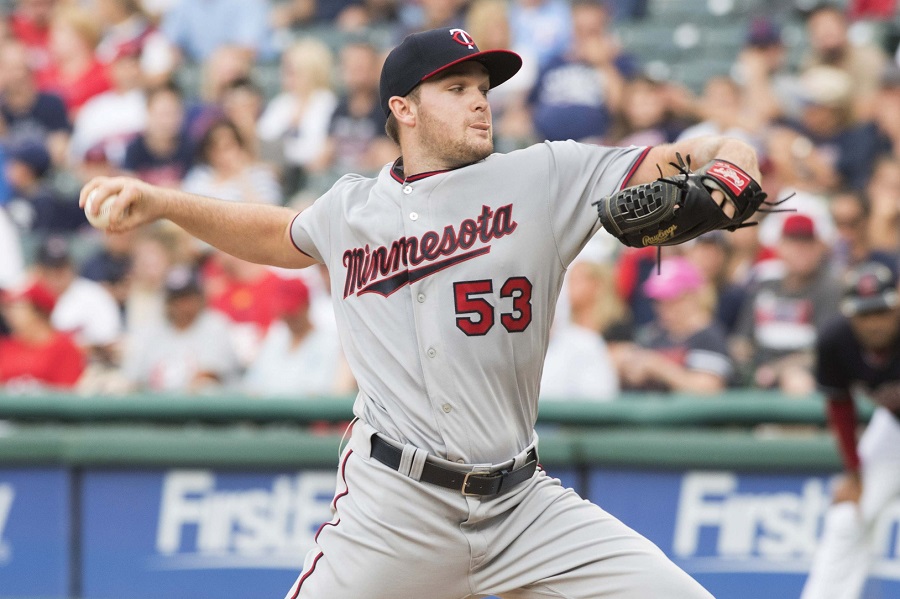 https://twitter.com/hotts58/status/1086239538438127616 When it comes to Kohl Stewart, there are no guarantees he will make the club out of spring training. There are certainly some locks when it comes to the starting rotation. Jose Berrios, Kyle Gibson, and Jake Odorizzi are all but guaranteed a starting spot. Michael Pineda should be fully recovered from Tommy John surgery and this allows him to slide into the back half of the rotation. This leaves the fifth rotation spot in question. Adalberto Mejia was off to a strong start last season before he was sidelined with a nerve issue. Other players in consideration for the final starting spot would be Stephen Gonsalves, Chase De Jong, Zack Littell, and recently signed Martin Perez. My guess is Stewart starts the season at Triple-A but he will get some time at the big league level throughout the 2019 campaign. https://twitter.com/TwinsGuy8/status/1086132123973623809 Predicting win totals can be quite the exercise in futility, especially over the course of a 162-game MLB season. FanGraphs currently has the Twins pegged to finish the season at 82-80. This would place them in seventh place in the American League and second place in the AL Central. At this point in the off-season, I feel like this is a pretty accurate prediction. If everything breaks right, the Twins could pick up a few other wins throughout the year, especially if Byron Buxton and Miguel Sano take the next step. Minnesota should win 80+ games but do they have enough to catch Cleveland? That still remains to be seen. https://twitter.com/AndyOnTheAM/status/1086118992211832833 Minnesota’s payroll has been a hot button issue over the last week or so. The Pohlads run the Twins like a business so they typically spend 50% of their revenues on the payroll. According to Forbes, Minnesota ranks 22nd in MLB team valuations. The club made $261 million in revenue last year and spent $133 million on player expenses. Currently, the Twins are projected to start next season with a payroll around $100 million. There are a couple schools of thought when it comes to the Twins and their finances. Those that feel that the Twins are spending roughly what they should based on their market size and revenues. Others feel the Twins are spending money very similarly to how they did during the end of the Metrodome era. A source in the Twins front office told Phil Mackey, “We need to get the nucleus right first. Teams that hit the gas too early wind up mistiming their window. We’ll pounce when the time is right.” Later, he brought up the fact that the Twins market size (19th) and TV revenue rank (20th) also play a factor in their ability to spend. Aaron Gleeman has been vocal about his frustration with the team’s payroll. When the Twins moved into Target Field, there was a three-year spike in the team’s spending in comparison to the MLB average. After 2012, the club’s relative spending is back to the same level as during the Metrodome years. Should the Twins payroll be higher for 2019? Yes, but it’s important to make smart financial investments and those players might not currently be available. https://twitter.com/AndrewAlber338/status/1086106767266902016 Next year’s potential free agent class includes numerous starting pitchers making some significant money in 2018. Some of the players include Madison Bumgarner, Gerrit Cole, Cole Hamels, Felix Hernandez, CC Sabathia, Chris Sale and Justin Verlander. Many of these players are projected to be on winning clubs this year so their current clubs are likely to hang on to them through the 2019 season. Madison Bumgarner and Felix Hernandez might be the most likely trade candidates on this list. Bumgarner had pitched 200 innings or more in six straight seasons before injuries limited him to less than 130 in each of the last two seasons. Hernandez has run into his own struggles in recent years. After posting a career ERA of 3.16 through 2016, he was limited to 86.2 innings in 2017 (4.36 ERA) and his ERA jumped to 5.55 last year. Make sure to follow me on Twitter so you can participate in next week’s mailbag segment. Now it’s your turn. What do you think about this week’s questions? Leave a COMMENT and start the discussion.
 -
Patrick Mahomes II will take the field in the AFC Championship Game this weekend. He will try and end the Patriots dynasty, while trying to exorcise the demons haunting Andy Reid’s playoff past. Kansas City has been a fun club to watch with their explosive offense. Needless to say, this Sunday will be a career altering game for the quarterbacks on both sides of the ball. Twins fans have an obvious connection to Mahomes since his father played parts of five seasons in Minnesota. Let’s take a trip down memory lane to learn more about the elder Mahomes and his pitching career.Mahomes was taken in the sixth round of the 1988 MLB Draft out of Lindale High School in Texas. He was one of 10 players from that round to make it to the big leagues. Out of the players Minnesota took in the ’88 Draft, Mahomes was the lone draftee to play more than 75 games at the big-league level. First round pick Johnny Ard (20th overall) never made it past Double-A in the Twins system. He made his professional debut in the Appalachian League where he was over three years younger than the competition. In 13 starts (78.0 IP), he had a 3.69 ERA and a 1.50 WHIP with a 93 to 51 strikeout to walk ratio. Over the next two seasons, he moved through both Low-A and High-A with a combined ERA south of 3.30. He also continued to strikeout close to a batter an inning. As the Twins were on the way to the 1991 World Series, Mahomes was dominating at Double- and Triple-A. In his age-20 season, he had a 2.32 ERA and struck out 177 in 171 innings. He was nearly six years younger than the competition in the PCL. After the season, Baseball America would name him the 25th best prospect in baseball. Around this time in his career is when we get an interesting interaction between Mahomes and future Hall of Famer Jack Morris. In an interview, Mahomes shared this story. “I remember one time that year asking Jack Morris how he threw his split-finger fastball. He said, ‘Get away from me, you little MF. You’ll be trying to take my job next year.’ “ Mahomes would split the next two seasons between Triple-A and the big-league level. He made his MLB debut on April 12, 1992 at the Metrodome. He was the sixth youngest player to play in the big leagues that season. In the first inning, he allowed a three-run home run to Juan Gonzalez with two outs. From there he settled in and pitched through six innings without giving up another run. Minnesota would tie the game in the seventh before Bob Kipper allowed the go-ahead run in the top of the eighth. The 1994 season would mark his only full season where he was used exclusively as a starter. He finished 9-5 with a 4.73 ERA. His nine wins were second on the team behind Kevin Tapani. Only four other players on the squad had a higher WAR than him (Chuck Knoblach, Shane Mack, Kirby Puckett, and Kevin Tapani). Over the next two seasons, he would start to transition to a bullpen role with the Twins. In August 1996, he was traded to the Red Sox for a player to be named later. Boston sent Brian Looney to Minnesota to complete the trade and Mahomes would be released by Boston the following June. Mahomes became a journeyman pitcher from that point on in his career. He would pitch in Japan for parts of the 1997 and 1998 seasons before signing with the Mets. In 1999, he pitched in four playoff games for the Mets before they eventually lost to the Braves in the NLCS. He’d play for an eye-popping 11 more organizations in his career including big-league time with the Rangers, Cubs, and Pirates. Mahomes continued pitching for multiple independent league clubs through his age-38 season. It’s clear to see the younger Mahomes might be finding more success in his chosen professional playing career. However, the young quarterback got some of his dad’s athleticism. The Vikings didn’t make the playoffs and you might be looking for a new team to root for this weekend. Why not cheer on Mahomes? Click here to view the article
-
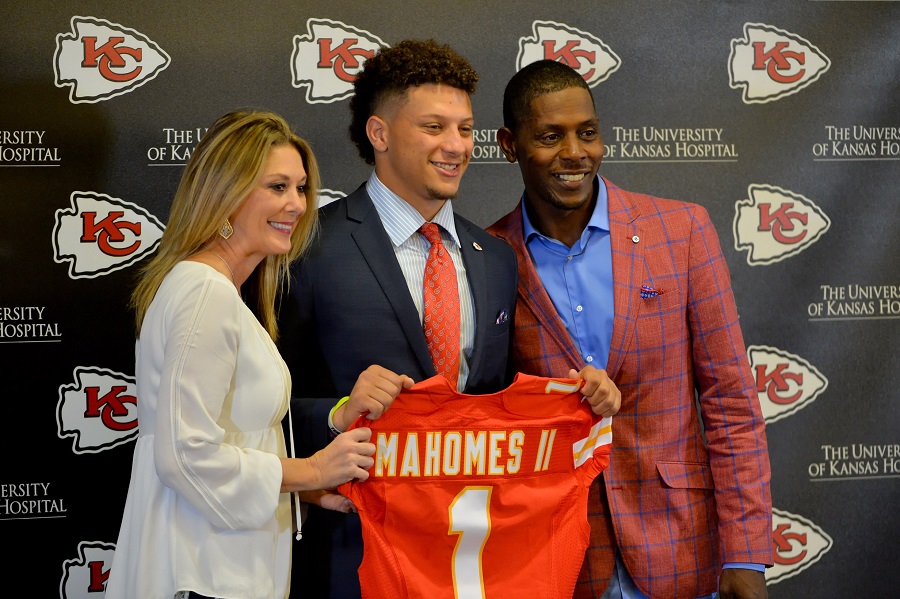 Mahomes was taken in the sixth round of the 1988 MLB Draft out of Lindale High School in Texas. He was one of 10 players from that round to make it to the big leagues. Out of the players Minnesota took in the ’88 Draft, Mahomes was the lone draftee to play more than 75 games at the big-league level. First round pick Johnny Ard (20th overall) never made it past Double-A in the Twins system. He made his professional debut in the Appalachian League where he was over three years younger than the competition. In 13 starts (78.0 IP), he had a 3.69 ERA and a 1.50 WHIP with a 93 to 51 strikeout to walk ratio. Over the next two seasons, he moved through both Low-A and High-A with a combined ERA south of 3.30. He also continued to strikeout close to a batter an inning. As the Twins were on the way to the 1991 World Series, Mahomes was dominating at Double- and Triple-A. In his age-20 season, he had a 2.32 ERA and struck out 177 in 171 innings. He was nearly six years younger than the competition in the PCL. After the season, Baseball America would name him the 25th best prospect in baseball. Around this time in his career is when we get an interesting interaction between Mahomes and future Hall of Famer Jack Morris. In an interview, Mahomes shared this story. “I remember one time that year asking Jack Morris how he threw his split-finger fastball. He said, ‘Get away from me, you little MF. You’ll be trying to take my job next year.’ “ Mahomes would split the next two seasons between Triple-A and the big-league level. He made his MLB debut on April 12, 1992 at the Metrodome. He was the sixth youngest player to play in the big leagues that season. In the first inning, he allowed a three-run home run to Juan Gonzalez with two outs. From there he settled in and pitched through six innings without giving up another run. Minnesota would tie the game in the seventh before Bob Kipper allowed the go-ahead run in the top of the eighth. The 1994 season would mark his only full season where he was used exclusively as a starter. He finished 9-5 with a 4.73 ERA. His nine wins were second on the team behind Kevin Tapani. Only four other players on the squad had a higher WAR than him (Chuck Knoblach, Shane Mack, Kirby Puckett, and Kevin Tapani). Over the next two seasons, he would start to transition to a bullpen role with the Twins. In August 1996, he was traded to the Red Sox for a player to be named later. Boston sent Brian Looney to Minnesota to complete the trade and Mahomes would be released by Boston the following June. Mahomes became a journeyman pitcher from that point on in his career. He would pitch in Japan for parts of the 1997 and 1998 seasons before signing with the Mets. In 1999, he pitched in four playoff games for the Mets before they eventually lost to the Braves in the NLCS. He’d play for an eye-popping 11 more organizations in his career including big-league time with the Rangers, Cubs, and Pirates. Mahomes continued pitching for multiple independent league clubs through his age-38 season. It’s clear to see the younger Mahomes might be finding more success in his chosen professional playing career. However, the young quarterback got some of his dad’s athleticism. The Vikings didn’t make the playoffs and you might be looking for a new team to root for this weekend. Why not cheer on Mahomes?
 -
For the second year in a row, the free agent market has been slower than molasses in January. Big name free agents like Bryce Harper, Manny Machado, and Dallas Keuchel remain unsigned. Spring training is looming on the horizon and these high caliber players are going to need to sign somewhere. So, let’s imagine a world where the Twins could make a bid for Manny Machado.On Tuesday, ESPN’s Buster Olney reported that the White Sox offer to Machado was for $175 million over seven years. From the rest of Olney’s tweet, it sounds like Chicago is hoping the market continues to be cold and Machado will eventually agree to their terms. This was a similar situation to the one faced by JD Martinez last year before he eventually signed with Boston. Machado has reached free agency and he is only a year older than Byron Buxton. In the time Buxton has been trying to emerge at the big-league level, Machado has won two Gold Gloves and been selected to four All-Star Games. He’s also finished in the top 10 for MVP voting three times including two top five finishes. Also, he’s mashed 30 or more home runs for four straight seasons. Looking into Minnesota’s future, the club has almost no guaranteed money moving beyond the 2019 season. Younger players will continue to become more expensive through the arbitration process and the organization could look to sign some of the young core to a long-term deal. With Minnesota’s financial flexibility, there is room to add a player of Machado’s caliber. It seems like it would be easy for a club to top the offer on the table from the White Sox. Adding Machado to Minnesota could limit the club’s ability to sign the likes of Miguel Sano or Byron Buxton in the years to come. However, they both have a lot still to prove at the big-league level. How’s this for an Opening Day line-up? 1. Jorge Polanco- 2B 2. Manny Machado- SS 3. Miguel Sano- 3B 4. Nelson Cruz- DH 5. Eddie Rosario- LF 6. CJ Cron- 1B 7. Max Kepler- RF 8. Jason Castro- C 9. Byron Buxton- CF Signing Machado might be a pipe dream, but he’d certainly look better in a Twins uniform than roaming the infield for the South Siders. Chicago is an emerging team in the AL Central and Minnesota is going to be contending with them for the next half a decade. Wouldn’t it be sweet to steal their prized free agent? Let’s dream about that. Leave a COMMENT and start the discussion. Would signing Machado make sense for the Twins? Click here to view the article
-
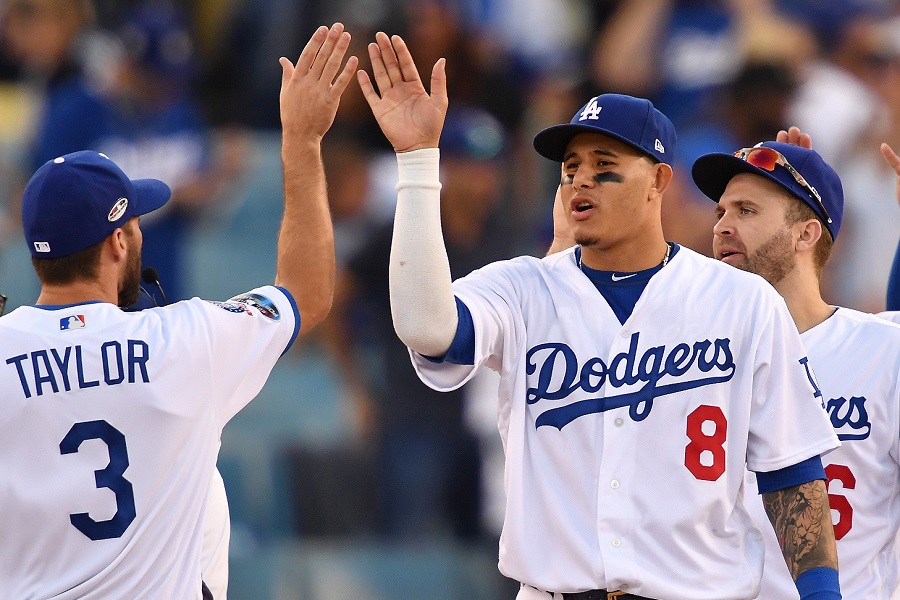 On Tuesday, ESPN’s Buster Olney reported that the White Sox offer to Machado was for $175 million over seven years. From the rest of Olney’s tweet, it sounds like Chicago is hoping the market continues to be cold and Machado will eventually agree to their terms. This was a similar situation to the one faced by JD Martinez last year before he eventually signed with Boston. https://twitter.com/Buster_ESPN/status/1085587294730502147 Machado has reached free agency and he is only a year older than Byron Buxton. In the time Buxton has been trying to emerge at the big-league level, Machado has won two Gold Gloves and been selected to four All-Star Games. He’s also finished in the top 10 for MVP voting three times including two top five finishes. Also, he’s mashed 30 or more home runs for four straight seasons. Looking into Minnesota’s future, the club has almost no guaranteed money moving beyond the 2019 season. Younger players will continue to become more expensive through the arbitration process and the organization could look to sign some of the young core to a long-term deal. With Minnesota’s financial flexibility, there is room to add a player of Machado’s caliber. It seems like it would be easy for a club to top the offer on the table from the White Sox. Adding Machado to Minnesota could limit the club’s ability to sign the likes of Miguel Sano or Byron Buxton in the years to come. However, they both have a lot still to prove at the big-league level. How’s this for an Opening Day line-up? 1. Jorge Polanco- 2B 2. Manny Machado- SS 3. Miguel Sano- 3B 4. Nelson Cruz- DH 5. Eddie Rosario- LF 6. CJ Cron- 1B 7. Max Kepler- RF 8. Jason Castro- C 9. Byron Buxton- CF Signing Machado might be a pipe dream, but he’d certainly look better in a Twins uniform than roaming the infield for the South Siders. Chicago is an emerging team in the AL Central and Minnesota is going to be contending with them for the next half a decade. Wouldn’t it be sweet to steal their prized free agent? Let’s dream about that. Leave a COMMENT and start the discussion. Would signing Machado make sense for the Twins?
 -
Last week, I examined a handful of burning questions from all corners of Twins Territory. Topics included Minnesota's use of an opener, Sano's legal situation at home, trading Byron Buxton, and Kirilloff's potential MLB debut. This week's mailbag has even more great topics. Make sure to follow me on Twitter so you can be part of the next Twins Daily mailbag. Let's open some of this week's mail. It’s hard to predict what the organization will want to do with some of the club’s top talent. Prospects like Royce Lewis and Alex Kirilloff spent limited time in the FSL last year so both will likely end up starting 2019 back in Fort Myers (High A). However, Minnesota could be aggressive with someone like Kirilloff, who destroyed the ball last year. Both Lewis and Kirilloff are expected to spend time in Pensacola (Double A) this season. If I’m making the Opening Day line-up for the Blue Wahoos, here’s who I’d pencil in: C: Brian Navarreto 1B: Luke Raley 2B: Travis Blankenhorn 3B: Luis Arraez SS: Jordan Gore RF: Alex Kirilloff CF: Tanner English LF: Jaylin Davis DH: Brent Rooker With Mauer and Dozier out of the picture, I believe the front office brought in Nelson Cruz to provide veteran leadership. This is especially true with the younger players that need to make positive strides next year. “He’s going to set a wonderful example in the way that he prepares for games and just being the person he is,” new manager Rocco Baldelli said. “That alone is going to be an asset for us going forward.” When it comes to the pitching staff, I think Kyle Gibson continues to be one of the best leaders on the team. Other veteran pitchers like Jake Odorizzi and Michael Pineda could also provide clubhouse leadership, particularly with their experience from other organizations. Between his flowing locks on the bases and his epic home run last week, Astudillo is quickly becoming a cult legend in Minnesota. Looking at the construction of the roster, one must wonder how he will fit into the club’s plans this year. Jason Castro and Mitch Garver should make almost all the team’s starts at catcher. Astudillo showed his ability to play multiple positions last season so that could make him a unique utility option. That being said, I think Garver will be the starting catcher for the foreseeable future. As fans saw last year, one injury could make Astudillo part of the team’s everyday plans. To answer the question more specifically, imagine the Twins tied atop the AL Central with the Indians on the final day of the season. Minnesota is down to Kansas City 3-1 in the bottom of the ninth. Astudillo comes off the bench for a pinch-hit three-run home run to win the division for Minnesota. He pimps the home run more than he did in the Venezuelan Winter League. I think the team needs Buxton to make the most progress next season. We’ve seen what Sano could be after his All-Star caliber season in 2017 and it would be great to see him get back to that level. Buxton has the chance to impact the game on so many different levels and Sano’s game has always had some limitations. I think Kepler is a good complementary player, but he is never going to be a guy to completely change the game for a club. Realistically, these three players all need to make improvements if the Twins are going to be competitive in the AL Central over the next five years. Minnesota has been proactive in the minor leagues by utilizing an “opener” at Double A and Triple A more frequently than at the big-league level. That should change in 2019 with new manager Rocco Baldelli. The idea behind the “opener” is that the starting pitcher can avoid the top of the line-up at the beginning of the game. Hypothetically, this would allow the starter to get further into the game. As we saw in last year’s playoffs, the Brewers used Wide Miley, a lefty, so the Dodgers stacked their line-up with righties. Then they removed him after one batter and put in a right-handed pitcher. From a manager’s perspective, he could create line-ups in a couple of different ways. The first would be to keep in their normal spots the best hitters, no matter who the opponent uses as a starter. Another way to create a line-up would be to make sure there is good balance of right- and left-handed hitters. Would it work to move the club’s three and four hitters to the five and six spot in the order? This would mean fewer at-bats for the team’s best hitters, but they could be in the line-up to face the starter in their first at-bat. I don’t think paying Keuchel makes sense. There are also some low-risk free agent options that are still on the market. I think players like Trevor May, Tyler Duffey, Taylor Rogers, Andrew Vasquez, and even Fernando Romero could get opportunities to serve as an opener in 2019. What do you think about this week's questions? Leave a COMMENT and start the discussion. Click here to view the article
-
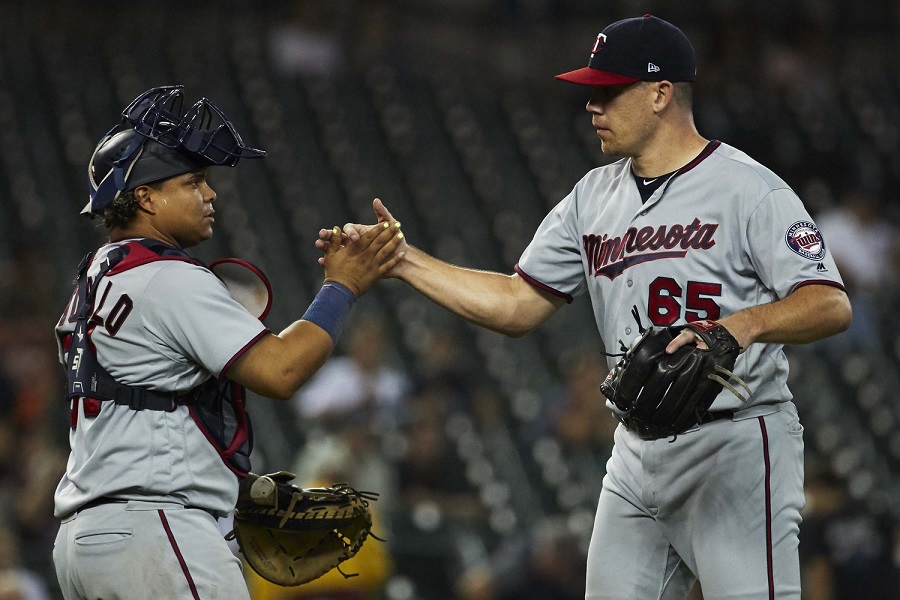 https://twitter.com/BlueWahoosBBall/status/1083744674681184256 It’s hard to predict what the organization will want to do with some of the club’s top talent. Prospects like Royce Lewis and Alex Kirilloff spent limited time in the FSL last year so both will likely end up starting 2019 back in Fort Myers (High A). However, Minnesota could be aggressive with someone like Kirilloff, who destroyed the ball last year. Both Lewis and Kirilloff are expected to spend time in Pensacola (Double A) this season. If I’m making the Opening Day line-up for the Blue Wahoos, here’s who I’d pencil in: C: Brian Navarreto 1B: Luke Raley 2B: Travis Blankenhorn 3B: Luis Arraez SS: Jordan Gore RF: Alex Kirilloff CF: Tanner English LF: Jaylin Davis DH: Brent Rooker https://twitter.com/C__Lee/status/1083759991906013189 With Mauer and Dozier out of the picture, I believe the front office brought in Nelson Cruz to provide veteran leadership. This is especially true with the younger players that need to make positive strides next year. “He’s going to set a wonderful example in the way that he prepares for games and just being the person he is,” new manager Rocco Baldelli said. “That alone is going to be an asset for us going forward.” When it comes to the pitching staff, I think Kyle Gibson continues to be one of the best leaders on the team. Other veteran pitchers like Jake Odorizzi and Michael Pineda could also provide clubhouse leadership, particularly with their experience from other organizations. https://twitter.com/BenRemington/status/1083745171035095040 Between his flowing locks on the bases and his epic home run last week, Astudillo is quickly becoming a cult legend in Minnesota. Looking at the construction of the roster, one must wonder how he will fit into the club’s plans this year. Jason Castro and Mitch Garver should make almost all the team’s starts at catcher. Astudillo showed his ability to play multiple positions last season so that could make him a unique utility option. That being said, I think Garver will be the starting catcher for the foreseeable future. As fans saw last year, one injury could make Astudillo part of the team’s everyday plans. To answer the question more specifically, imagine the Twins tied atop the AL Central with the Indians on the final day of the season. Minnesota is down to Kansas City 3-1 in the bottom of the ninth. Astudillo comes off the bench for a pinch-hit three-run home run to win the division for Minnesota. He pimps the home run more than he did in the Venezuelan Winter League. https://twitter.com/C__Lee/status/1083761121931206662 I think the team needs Buxton to make the most progress next season. We’ve seen what Sano could be after his All-Star caliber season in 2017 and it would be great to see him get back to that level. Buxton has the chance to impact the game on so many different levels and Sano’s game has always had some limitations. I think Kepler is a good complementary player, but he is never going to be a guy to completely change the game for a club. Realistically, these three players all need to make improvements if the Twins are going to be competitive in the AL Central over the next five years. https://twitter.com/brat99/status/1083940547306442752 Minnesota has been proactive in the minor leagues by utilizing an “opener” at Double A and Triple A more frequently than at the big-league level. That should change in 2019 with new manager Rocco Baldelli. The idea behind the “opener” is that the starting pitcher can avoid the top of the line-up at the beginning of the game. Hypothetically, this would allow the starter to get further into the game. As we saw in last year’s playoffs, the Brewers used Wide Miley, a lefty, so the Dodgers stacked their line-up with righties. Then they removed him after one batter and put in a right-handed pitcher. From a manager’s perspective, he could create line-ups in a couple of different ways. The first would be to keep in their normal spots the best hitters, no matter who the opponent uses as a starter. Another way to create a line-up would be to make sure there is good balance of right- and left-handed hitters. Would it work to move the club’s three and four hitters to the five and six spot in the order? This would mean fewer at-bats for the team’s best hitters, but they could be in the line-up to face the starter in their first at-bat. I don’t think paying Keuchel makes sense. There are also some low-risk free agent options that are still on the market. I think players like Trevor May, Tyler Duffey, Taylor Rogers, Andrew Vasquez, and even Fernando Romero could get opportunities to serve as an opener in 2019. What do you think about this week's questions? Leave a COMMENT and start the discussion.
 -
Every year as we create the Twins Prospect Handbook, I’m intrigued by the amount of talent throughout the Twins system. Only a few players will meet their ultimate dream of suiting up for the Twins. Projecting the future can be a challenging exercise but it can be fun to investigate the crystal ball. Roughly a year ago, I took a stab at projecting the 2021 Twins lineup. Some things have changed since that point with the rise of other prospects and changes in the organization. Let’s look one year further into the future. Who will comprise the 2022 Minnesota Twins?C: Mitch Garver Garver was given quite the opportunity last season after Jason Castro was injured. He took full advantage as he now seems to fit into the Twins plans moving forward. He combined to hit .268/.335/.414 with 28 extra-base hits in 102 games. His game calling skills continue to improve, even if there were some rough moments on the defensive side of the ball last season. Garver is under team control through the 2023 season so it makes sense for the Twins to continue to rely on him behind the plate. 1B: Tyler Austin Austin is a new addition to the Twins organization since last year and he moves to first base with the exit of Miguel Sano. Sano will be a free agent leading into the 2022 season and I think he is destined for a different organization at that point, especially after this year’s issues on and off the field. A lot can happen in the years ahead, but I’ve always felt Sano wants to play in a bigger market. Mauer’s retirement means there is a hole to fill at first base and Austin is under team control through the 2023 season. In less than 70 games last season, he clubbed 17 home runs, so a full season of Austin could be fun. 2B: Wander Javier Javier missed all last season after having shoulder surgery. Even with the injury, he is still considered a top-10 prospect in the Twins organization. Back in 2015, he signed for a franchise record $4 million. He was limited in his pro debut with a hamstring injury and now he missed all last season. That being said, the kid can hit, and he was able to use the last year to add strength through his rehab process. Pitchers in the Midwest League better watch out because he is going to have a lot to prove in 2019. 3B: Jose Miranda Out of every spot in this line-up, this was the toughest one to fill. In this scenario, Sano has left in free agency and there might not be much of a chance for him to stick at third base long-term. Miranda had a very strong season in the minors and he was named a Twins Daily Minor League All-Star. It seems like this is a position the club might need to fill through free agency or through shifting a middle infielder to a corner spot. For now, Miranda is trending in the right direction, so he would be the team’s best option. SS: Royce Lewis Minnesota has a lot riding on the future of Mr. Lewis. Twins fans have seen a revolving door of players trounced out to shortstop since Christian Guzman left. Since 2004, Pedro Florimon was the only shortstop to make back-to-back Opening Day starts. In the Twins Prospect Handbook, I wrote an article comparing Royce Lewis and Joe Mauer at similar points in their careers. Mauer just finished a tremendous 15-year career and fans can hope that Lewis will follow in his footsteps. Lewis will be facing a lot of pressure in the years to come but there has been nothing but positive signs since he joined the Twins organization. LF: Alex Kirilloff Kirilloff is coming off a monster season and in some other organizations, he would be considered the club’s top prospect. Missing a year due to injury allowed Kirilloff and Lewis to play together this season and win a championship in the FSL. Winning can be contagious and this dynamic duo can hopefully push each other all the way to Target Field. It seems possible for Kirilloff to make his big-league debut in 2019. Could be making his first All-Star appearance by 2022? CF: Byron Buxton Lewis and Kirilloff might be the wave of the future but Byron Buxton needs to be the wave of the present. The 2018 campaign was one to forget about for Buxton and he needs to return to some of what fans saw in 2017. If the Twins don’t sign Buxton to an extension, the 2022 season would be his last year before reaching free agency. Three seasons from now, Buxton should have multiple Gold Gloves to his credit and he could be the veteran leader on a club fighting for the playoffs. RF: Trevor Larnach The Twins took Larnach in the first round this past season and his college experience could help him to move quickly through the system. The College World Series hero helped Oregon State claim the title before beginning his pro career. His power continues to develop as he went from three homers in ’17 to 17 in the 2018 college season. He might not rank as high as some of the other prospects on this list but that doesn’t mean he can’t be a strong contributor on a playoff caliber team. DH: Brent Rooker Rooker could split time at first base with Austin but his power is something that can’t be ignored. Rooker continues to split time between first base and left field in the minors. With Mauer’s retirement, I think he should continue to strengthen his defense at first, especially since he has the best power in the Twins system. The front office has been focused on adding power during the current off-season so this could allow Rooker to debut at some point during the 2019 season. What do you think the 2022 line-up will look like in Minnesota? Leave a COMMENT and start the discussion. Click here to view the article
-
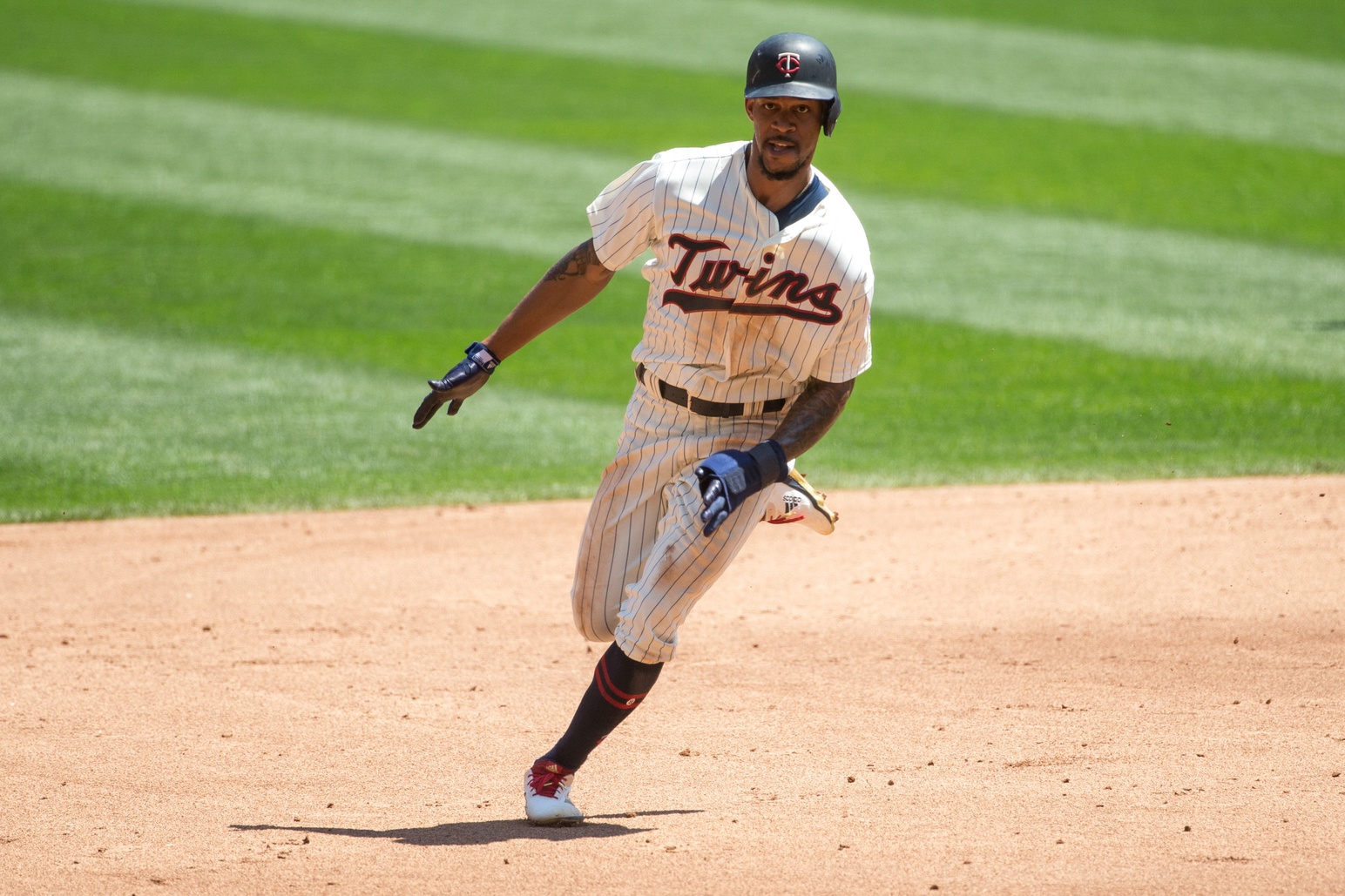 C: Mitch Garver Garver was given quite the opportunity last season after Jason Castro was injured. He took full advantage as he now seems to fit into the Twins plans moving forward. He combined to hit .268/.335/.414 with 28 extra-base hits in 102 games. His game calling skills continue to improve, even if there were some rough moments on the defensive side of the ball last season. Garver is under team control through the 2023 season so it makes sense for the Twins to continue to rely on him behind the plate. 1B: Tyler Austin Austin is a new addition to the Twins organization since last year and he moves to first base with the exit of Miguel Sano. Sano will be a free agent leading into the 2022 season and I think he is destined for a different organization at that point, especially after this year’s issues on and off the field. A lot can happen in the years ahead, but I’ve always felt Sano wants to play in a bigger market. Mauer’s retirement means there is a hole to fill at first base and Austin is under team control through the 2023 season. In less than 70 games last season, he clubbed 17 home runs, so a full season of Austin could be fun. 2B: Wander Javier Javier missed all last season after having shoulder surgery. Even with the injury, he is still considered a top-10 prospect in the Twins organization. Back in 2015, he signed for a franchise record $4 million. He was limited in his pro debut with a hamstring injury and now he missed all last season. That being said, the kid can hit, and he was able to use the last year to add strength through his rehab process. Pitchers in the Midwest League better watch out because he is going to have a lot to prove in 2019. 3B: Jose Miranda Out of every spot in this line-up, this was the toughest one to fill. In this scenario, Sano has left in free agency and there might not be much of a chance for him to stick at third base long-term. Miranda had a very strong season in the minors and he was named a Twins Daily Minor League All-Star. It seems like this is a position the club might need to fill through free agency or through shifting a middle infielder to a corner spot. For now, Miranda is trending in the right direction, so he would be the team’s best option. SS: Royce Lewis Minnesota has a lot riding on the future of Mr. Lewis. Twins fans have seen a revolving door of players trounced out to shortstop since Christian Guzman left. Since 2004, Pedro Florimon was the only shortstop to make back-to-back Opening Day starts. In the Twins Prospect Handbook, I wrote an article comparing Royce Lewis and Joe Mauer at similar points in their careers. Mauer just finished a tremendous 15-year career and fans can hope that Lewis will follow in his footsteps. Lewis will be facing a lot of pressure in the years to come but there has been nothing but positive signs since he joined the Twins organization. LF: Alex Kirilloff Kirilloff is coming off a monster season and in some other organizations, he would be considered the club’s top prospect. Missing a year due to injury allowed Kirilloff and Lewis to play together this season and win a championship in the FSL. Winning can be contagious and this dynamic duo can hopefully push each other all the way to Target Field. It seems possible for Kirilloff to make his big-league debut in 2019. Could be making his first All-Star appearance by 2022? CF: Byron Buxton Lewis and Kirilloff might be the wave of the future but Byron Buxton needs to be the wave of the present. The 2018 campaign was one to forget about for Buxton and he needs to return to some of what fans saw in 2017. If the Twins don’t sign Buxton to an extension, the 2022 season would be his last year before reaching free agency. Three seasons from now, Buxton should have multiple Gold Gloves to his credit and he could be the veteran leader on a club fighting for the playoffs. RF: Trevor Larnach The Twins took Larnach in the first round this past season and his college experience could help him to move quickly through the system. The College World Series hero helped Oregon State claim the title before beginning his pro career. His power continues to develop as he went from three homers in ’17 to 17 in the 2018 college season. He might not rank as high as some of the other prospects on this list but that doesn’t mean he can’t be a strong contributor on a playoff caliber team. DH: Brent Rooker Rooker could split time at first base with Austin but his power is something that can’t be ignored. Rooker continues to split time between first base and left field in the minors. With Mauer’s retirement, I think he should continue to strengthen his defense at first, especially since he has the best power in the Twins system. The front office has been focused on adding power during the current off-season so this could allow Rooker to debut at some point during the 2019 season. What do you think the 2022 line-up will look like in Minnesota? Leave a COMMENT and start the discussion.
 -
The off-season can drag on, especially with the free agent market moving at a snail’s pace. However, spring training is on the horizon, so it’s time to start thinking about baseball in the Florida sun. I put out a call on Twitter for mailbag questions and my followers didn’t disappoint. If you want to be part of the next mailbag article, make sure to follow me on the Twitter machine. Let’s open the mailbox. New Twins manager Rocco Baldelli is coming from the Tampa Bay organization, which used the “opener” strategy quite frequently last season. That being said, I think he will utilize this strategy throughout the 2019 season. Trevor May seems like a strong candidate to slide into an “opener” role, especially with his previous starting experience. Minnesota started using an “opener” at Double-A and Triple-A last season so younger pitchers are starting to get accustom to this process. The club has shared information with players about the benefits of using this strategy and I think the club will use it even more in 2019. Sano is not facing any legal situations in his home country. Earlier in the off-season, he ran over a police officer, breaking one of the officer's legs. He showed up for his court date and the police found no intent on his part to hurt the officer. Rocco Baldelli recently visited Sano in the Dominican Republic and the Twins slugger posted about it on Instagram. In the photos, Sano looks like he has dropped some weight. There have been some issues in the past with him showing up to spring training with extra weight. Hopefully, his demotion and time in the minors last season allowed him to reflect on his career and what he wants for the future. This is a pivotal off-season for him as he can hopefully regain his All-Star form from 2017. Trading Buxton simply doesn’t make sense. His value is probably at an all-time low. He just turned 25 and he is coming off his worst professional season. Look at a player like Aaron Hicks. Many fans wanted him traded and out of Minnesota. Over the last three seasons, Hicks has been the 10th most valuable AL outfield during his age 26-28 seasons. Be patient with Buxton, he needs to be part of the Twins solution and he certainly isn’t part of Minnesota’s problem right now. I think Tyler Austin has some continued value to the team, especially with no established first baseman currently under contract. There are other options at the back-end of the 40-man that could slip through the waiver wire. Zack Granite is coming off a rough year in the minors and there is a lot of outfield depth on the 40-man. Willians Astudillo has been tearing the cover off the ball this winter but the club will likely break camp with Jason Castro and Mitch Garver as the club’s catchers. Does that make Astudillo replaceable? Adding Blake Parker might make another relief pitcher expendable (see Tyler Duffey or Matt Magill).There are always options and I don’t think the club is done adding pieces before the start of the season. Alex Kirilloff is coming off a huge season in the minor leagues, as he was named MiLB’s Breakout Player of the Year. He missed all of 2017 due to Tommy John surgery so it was nice to see what he could do when he was back and healthy. He finished the 2018 campaign at High-A so he could spend the majority of 2019 at High-A and Double-A. If he hits like he did in 2018, it’s not out of the question for him to make his big-league debut at some point next season. He is the type of prospect that might not need any playing time at Triple-A. A lot is going to depend on how he performs in 2019 and if the big-league club has a need in the outfield. For the second year in a row, the free agent market has been cold as ice. Dallas Keuchel is considered the best starting pitcher on the market, but the Twins might not be looking to add another starter. Michael Pineda was signed last off-season to join the rotation in 2019. Other free agent starting options include Gio Gonzalez, Derek Holland, Wade Miley, and other lower tier options. Relief pitchers like Zach Britton, Jeurys Familia, and Andrew Miller have all signed for $25 million or more. It doesn’t make sense to overspend on relief pitchers and the Twins might be satisfied with the players already on the roster. Reports on Monday had the club signing Blake Parker. My guess is they will take a flyer on a couple of other relief options, but it might be closer to when spring training starts. Thanks to everyone for their questions. Make sure to follow me on Twitter, as I will probably do multiple mailbag segments in the weeks ahead. Now, it’s your turn. How would you answer these questions? Leave a COMMENT and start the discussion. Click here to view the article
-
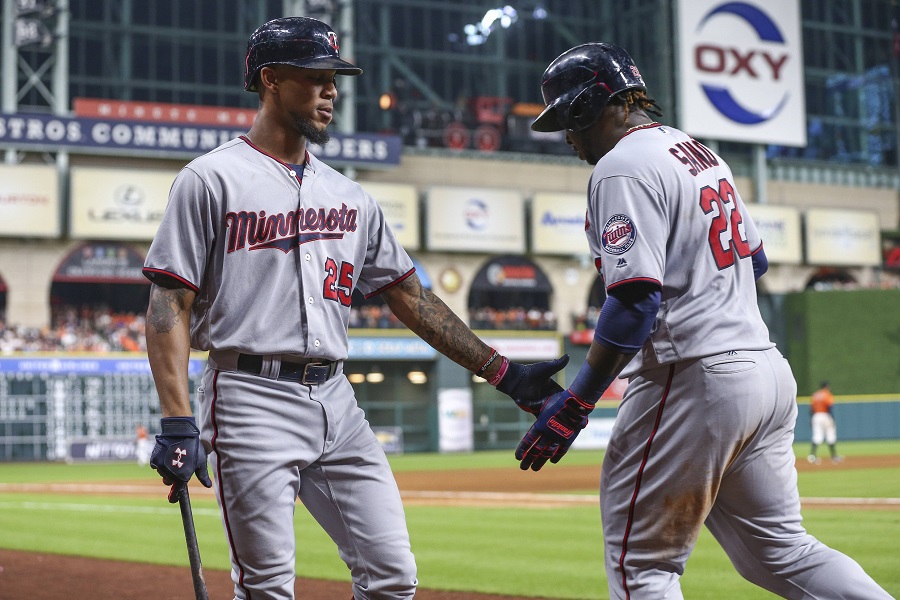 https://twitter.com/C__Lee/status/1080852468936916992 New Twins manager Rocco Baldelli is coming from the Tampa Bay organization, which used the “opener” strategy quite frequently last season. That being said, I think he will utilize this strategy throughout the 2019 season. Trevor May seems like a strong candidate to slide into an “opener” role, especially with his previous starting experience. Minnesota started using an “opener” at Double-A and Triple-A last season so younger pitchers are starting to get accustom to this process. The club has shared information with players about the benefits of using this strategy and I think the club will use it even more in 2019. https://twitter.com/hockeyjoe123/status/1080833096168210433 Sano is not facing any legal situations in his home country. Earlier in the off-season, he ran over a police officer, breaking one of the officer's legs. He showed up for his court date and the police found no intent on his part to hurt the officer. Rocco Baldelli recently visited Sano in the Dominican Republic and the Twins slugger posted about it on Instagram. In the photos, Sano looks like he has dropped some weight. There have been some issues in the past with him showing up to spring training with extra weight. Hopefully, his demotion and time in the minors last season allowed him to reflect on his career and what he wants for the future. This is a pivotal off-season for him as he can hopefully regain his All-Star form from 2017. https://twitter.com/PaulLovesTacos/status/1080912060978946048 Trading Buxton simply doesn’t make sense. His value is probably at an all-time low. He just turned 25 and he is coming off his worst professional season. Look at a player like Aaron Hicks. Many fans wanted him traded and out of Minnesota. Over the last three seasons, Hicks has been the 10th most valuable AL outfield during his age 26-28 seasons. Be patient with Buxton, he needs to be part of the Twins solution and he certainly isn’t part of Minnesota’s problem right now. https://twitter.com/Hey_Yo_Its_GMan/status/1080916130204663809 I think Tyler Austin has some continued value to the team, especially with no established first baseman currently under contract. There are other options at the back-end of the 40-man that could slip through the waiver wire. Zack Granite is coming off a rough year in the minors and there is a lot of outfield depth on the 40-man. Willians Astudillo has been tearing the cover off the ball this winter but the club will likely break camp with Jason Castro and Mitch Garver as the club’s catchers. Does that make Astudillo replaceable? Adding Blake Parker might make another relief pitcher expendable (see Tyler Duffey or Matt Magill).There are always options and I don’t think the club is done adding pieces before the start of the season. https://twitter.com/Daviddix69/status/1080849558018629632 Alex Kirilloff is coming off a huge season in the minor leagues, as he was named MiLB’s Breakout Player of the Year. He missed all of 2017 due to Tommy John surgery so it was nice to see what he could do when he was back and healthy. He finished the 2018 campaign at High-A so he could spend the majority of 2019 at High-A and Double-A. If he hits like he did in 2018, it’s not out of the question for him to make his big-league debut at some point next season. He is the type of prospect that might not need any playing time at Triple-A. A lot is going to depend on how he performs in 2019 and if the big-league club has a need in the outfield. https://twitter.com/PrimeKirilloff/status/1080830170502742017 For the second year in a row, the free agent market has been cold as ice. Dallas Keuchel is considered the best starting pitcher on the market, but the Twins might not be looking to add another starter. Michael Pineda was signed last off-season to join the rotation in 2019. Other free agent starting options include Gio Gonzalez, Derek Holland, Wade Miley, and other lower tier options. Relief pitchers like Zach Britton, Jeurys Familia, and Andrew Miller have all signed for $25 million or more. It doesn’t make sense to overspend on relief pitchers and the Twins might be satisfied with the players already on the roster. Reports on Monday had the club signing Blake Parker. My guess is they will take a flyer on a couple of other relief options, but it might be closer to when spring training starts. Thanks to everyone for their questions. Make sure to follow me on Twitter, as I will probably do multiple mailbag segments in the weeks ahead. Now, it’s your turn. How would you answer these questions? Leave a COMMENT and start the discussion.
 -
Debating the resumes of Hall candidates has become contentious in recent years. The steroid era clouded the results of this hallowed ground. Two players, Barry Bonds and Roger Clemens, might have been the all-time best hitter and pitcher. Neither has gotten the call from Cooperstown. This year’s class is shaping up to be one of the biggest in history. Two players, Lee Smith and Harold Baines, have already been elected by the 16-member electorate of the Today’s Game Era ballot. If I was lucky enough to have a ballot, this is how I would vote.Class of 2019 Roy Halladay: Tragically, Halladay won’t be in Cooperstown to give an acceptance speech. He crashed his plane into the Gulf of Mexico in November 2017. Halladay might be the last pitcher of a former era. He compiled 67 complete games in his career and he needed fewer than 100 pitches in 14 of those complete games. Halladay won two Cy Young awards (2003, 2010) and he finished in the top-five another five times. There may not be another pitcher like Halladay. Edgar Martinez: With the recent election of Baines, it makes no sense to keep Martinez out of the hall. He is one of the best designated hitters of all-time and he is in his final year on the ballot. Paul Molitor spend 44% of his career playing DH and Frank Thomas spend 57% of his career at DH. Both have been elected to the Hall. He received over 70% of the vote in 2018 so he should easily break the 75% threshold in the current election cycle. Mariano Rivera: Rivera utilized one of the best pitches, a cut fastball, in baseball history to become one of the best pitchers in baseball history. He set the all-time record for saves (652) but he might be most remembered for his dominance during postseason play. He was part of five World Series winners and he collected the final outs in four of those championship seasons. Rivera was also a great influence off the field and he could end up with one of the highest voting percentages in Hall of Fame history. Future Inductions Mike Mussina: Mussina’s long career stacks up well, especially when compared to the era that he pitched in. Other pitchers from the era have garnered more recognition but Mussina was strong throughout his career. In one 10-year stretch, he received Cy Young votes in eight different seasons. After finishing at 63.5% in 2018, he’s going to be borderline this year to get in. I think he has to wait one more year and he will be part of the Class of 2020. Omar Vizquel: Vizquel follows the mold of Ozzie Smith in the fact that nearly all of his value came on the defensive side of the ball. Think of him as the anti-Edgar Martinez, whose value came completely on the offensive side. His 11 Gold Gloves at shortstop are second most all-time behind Smith. Smith was a first ballot Hall of Famer. Every shortstop ahead of him on the all-time hits lists is enshrined in Cooperstown or on their way. He should get in, but he will need to gain more support in the years to come. May Never Get In (But Still On My Ballot) Barry Bonds, Roger Clemens, Larry Walker, Andrew Jones, Todd Helton Bonds and Clemens are two of the greatest players of all time but their connection to the steroid era has kept them out of Cooperstown. Walker continues to gain ground, but recent crowded ballots have kept him from getting elected. He is in his ninth year of eligibility, which means 2020 will be his last opportunity on the writer’s ballot. Jones is a long way from being elected in his second year on the ballot. He is one of the best defensive players of all-time and I think he will can some traction in the years ahead. Helton gets little support due to playing his entire career in Colorado. Still his offensive accolades put him on the borderline for enshrinement. To be transparent, some things have changed on my ballot from last year to this year. I correctly predicted the four players who would be elected last year (Vladimir Guerrero, Trevor Hoffman, Chipper Jones, and Jim Thome). I have replaced those four players on this year’s ballot with two first time candidates (Halladay, Rivera), while adding three new candidates (Walker, Jones, and Helton). Johan Santana fell off the ballot in his first year of eligibility, but I tried to make his case in a series of posts last year. If you missed any of the series on Johan Santana’s Cooperstown Case, there were three parts to the series. The first post looked at the Kirby Puckett Clause and how it can be applied to Santana. The second article touched on the similarities in careers between Santana and the great Sandy Koufax. The third and final piece touched on his missing third Cy Young. Here is the official list of players available to be voted for by the BBWAA. Who makes your list? Leave a COMMENT and start the discussion. Click here to view the article
- 37 replies
-
- 1
-
-
- mariano rivera
- roy halladay
- (and 3 more)
-
 Class of 2019 Roy Halladay: Tragically, Halladay won’t be in Cooperstown to give an acceptance speech. He crashed his plane into the Gulf of Mexico in November 2017. Halladay might be the last pitcher of a former era. He compiled 67 complete games in his career and he needed fewer than 100 pitches in 14 of those complete games. Halladay won two Cy Young awards (2003, 2010) and he finished in the top-five another five times. There may not be another pitcher like Halladay. Edgar Martinez: With the recent election of Baines, it makes no sense to keep Martinez out of the hall. He is one of the best designated hitters of all-time and he is in his final year on the ballot. Paul Molitor spend 44% of his career playing DH and Frank Thomas spend 57% of his career at DH. Both have been elected to the Hall. He received over 70% of the vote in 2018 so he should easily break the 75% threshold in the current election cycle. Mariano Rivera: Rivera utilized one of the best pitches, a cut fastball, in baseball history to become one of the best pitchers in baseball history. He set the all-time record for saves (652) but he might be most remembered for his dominance during postseason play. He was part of five World Series winners and he collected the final outs in four of those championship seasons. Rivera was also a great influence off the field and he could end up with one of the highest voting percentages in Hall of Fame history. Future Inductions Mike Mussina: Mussina’s long career stacks up well, especially when compared to the era that he pitched in. Other pitchers from the era have garnered more recognition but Mussina was strong throughout his career. In one 10-year stretch, he received Cy Young votes in eight different seasons. After finishing at 63.5% in 2018, he’s going to be borderline this year to get in. I think he has to wait one more year and he will be part of the Class of 2020. Omar Vizquel: Vizquel follows the mold of Ozzie Smith in the fact that nearly all of his value came on the defensive side of the ball. Think of him as the anti-Edgar Martinez, whose value came completely on the offensive side. His 11 Gold Gloves at shortstop are second most all-time behind Smith. Smith was a first ballot Hall of Famer. Every shortstop ahead of him on the all-time hits lists is enshrined in Cooperstown or on their way. He should get in, but he will need to gain more support in the years to come. May Never Get In (But Still On My Ballot) Barry Bonds, Roger Clemens, Larry Walker, Andrew Jones, Todd Helton Bonds and Clemens are two of the greatest players of all time but their connection to the steroid era has kept them out of Cooperstown. Walker continues to gain ground, but recent crowded ballots have kept him from getting elected. He is in his ninth year of eligibility, which means 2020 will be his last opportunity on the writer’s ballot. Jones is a long way from being elected in his second year on the ballot. He is one of the best defensive players of all-time and I think he will can some traction in the years ahead. Helton gets little support due to playing his entire career in Colorado. Still his offensive accolades put him on the borderline for enshrinement. To be transparent, some things have changed on my ballot from last year to this year. I correctly predicted the four players who would be elected last year (Vladimir Guerrero, Trevor Hoffman, Chipper Jones, and Jim Thome). I have replaced those four players on this year’s ballot with two first time candidates (Halladay, Rivera), while adding three new candidates (Walker, Jones, and Helton). Johan Santana fell off the ballot in his first year of eligibility, but I tried to make his case in a series of posts last year. If you missed any of the series on Johan Santana’s Cooperstown Case, there were three parts to the series. The first post looked at the Kirby Puckett Clause and how it can be applied to Santana. The second article touched on the similarities in careers between Santana and the great Sandy Koufax. The third and final piece touched on his missing third Cy Young. Here is the official list of players available to be voted for by the BBWAA. Who makes your list? Leave a COMMENT and start the discussion.
 -
Scouts are always looking for prospects with the tools to change a franchise. The next Mike Trout isn’t going to fall into the laps of an organization. Minnesota has one of the highest ranked minor league systems in baseball and this includes arguably the best prospect duo in Royce Lewis and Alex Kirilloff. So what prospects have the best tools in the Twins system? All the authors of the Twins Prospect Handbook (Seth Stohs, Tom Froemming, and myself) had some input on this list. There are some clear winners and some other spots that are open to interpretation.If you would like to see other toolsy prospects (along with articles from each Twins affiliate, full articles on the Twins Daily Minor League Award winners, over 160 Twins minor league player profiles, prospect rankings and much more), you have a couple of purchase options. If you want the paperbook copy of the book, it is $17.99. The electronic, PDF version is available for immediate download for $12.99. (Be sure to go to Lulu.com to see if there are any promo codes to provide a better price.) Best Hit Tool: Alex Kirilloff Alex Kirilloff might have the best hit tool of any prospect in the minor leagues not named Vladimir Guerrero Jr. As a 20-year old, Kirilloff was almost two and a half years younger than the competition in the Florida State League. He led the minor leagues with 71 extra-base hits and had a .970 OPS. MiLB named Kirilloff the Breakout Prospect of the Year because of his offensive explosion. The only question remaining might be if Kirilloff can turn his hit tool into making his big-league debut in 2019. Honorable Mention: Luis Arraez, Royce Lewis Best Power Tool: Brent Rooker Rooker burst onto the scene after being drafted by the Twins in 2017. In 62 games between E-Town and Fort Myers, he cracked 18 home runs and posted a .930 OPS. Rooker spent all of 2018 at Double-A, where he combined for 22 home runs and 32 doubles. His powerful swing resulted in some swing and miss tendencies as he compiled 150 strikeouts in 130 games played. Minnesota needs a new first baseman, but the team has already added CJ Cron and Nelson Cruz so far this off-season. This likely means Rooker starts the year in the minors but his powerful bat should get him to Minnesota. Honorable Mention: Trevor Larnach, Luke Raley, Jaylin Davis, Travis Blankenhorn, Alex Kirilloff, Jose Miranda, Trey Cabbage Best Run Tool: Royce Lewis Lewis is widely considered the best prospect in the Twins system and his five-tool skills make him standout above the crowd. His 28 steals were the most in the organization last season and he was only thrown out eight times. As a 19-year old, Lewis was almost three and a half years younger than the competition in the FSL. He and Kirilloff helped the Miracle to the FSL Championship. At this time next year, Lewis could be considered baseball’s top prospect. It’s scary to think how much better he could get over the next year. Honorable Mention: Akil Baddoo, Aaron Whitefield, Zack Granite, Tanner English Best Arm Tool: Andrew Bechtold Bechtold was taken out of college in the fifth round of the 2017 draft. He spent all of 2018 in Cedar Rapids while making most of his defensive starts at third base (670.1 innings). Bechtold did play roughly 200 innings at second base but his strong arm is probably wasted at the position. If he wants to make it to the big leagues as a third baseman, Bechtold is going to need get closer to his offensive numbers from his professional debut. His OPS dropped from .829 in 2017 to .593 in 2018. He will move up to the FSL this year, where he will try and make some offensive adjustments. Honorable Mention: Tanner English, Brian Navarreto, Ben Rortvedt Best Field Tool: Tanner English English has spent the last five seasons in the Twins system and played all last year in Chattanooga. In his age-25 season, he was over a year older than the competition in the Southern League. During his time in the organization, he has accumulated 26 outfield assists and a .992 fielding percentage. His career .239/.335/.387 batting line probably won’t make him a starter at the big-league level. However, his defensive skills could make him a useful fourth outfielder. His speed has also been evident on the base paths as he has accumulated 35 steals or more in any season he’s played over 100 games. Honorable Mention: Brian Navarreto, Zack Granite, Aaron Whitefield, David Banuelos, Royce Lewis Best Athlete: Royce Lewis Lewis is extremely athletic on both sides of the ball. On the offensive side, he can power the ball to all fields and he’s shown patience to draw walks. As mentioned above, any time he can get on base is a good thing because he has the best run tool of any player in the organization. Defensively, he will be given every opportunity to stick at shortstop. His athleticism helps him to have strong range and good hands. Right now, all Twins fans are familiar with Lewis, but the 2019 season could be his coming out party at the national level. Honorable Mention: Akil Baddoo, Travis Blankenhorn, Wander Javier, Tanner English, Gilberto Celestino, DaShawn Keirsey How does the list look? Who would you rank at the top of each tool? To read more about the tools of over 160 prospects and much more about the Twins minor leagues, grab your copy (or copies) of the 2019 Minnesota Twins Prospect Handbook. Paperback version PDF version Click here to view the article
-
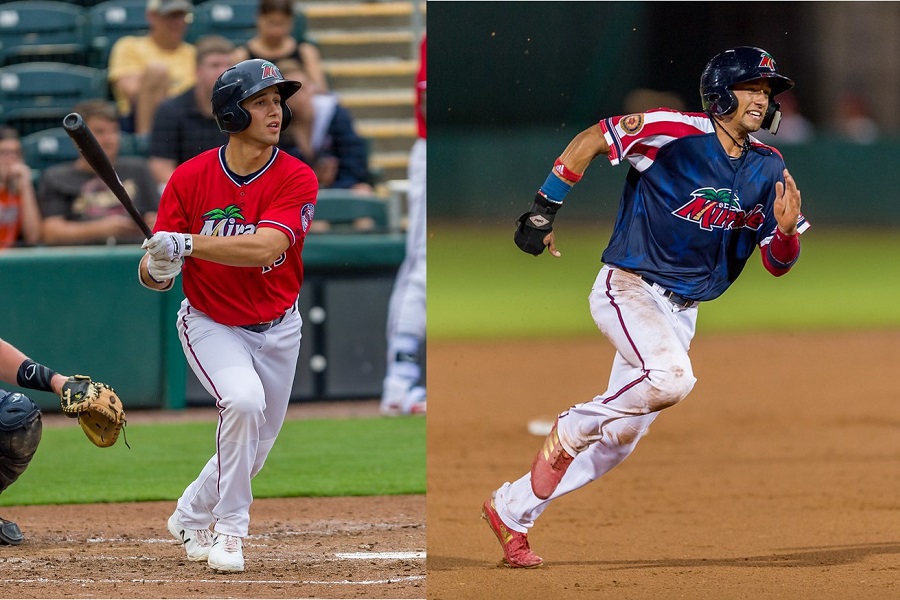 If you would like to see other toolsy prospects (along with articles from each Twins affiliate, full articles on the Twins Daily Minor League Award winners, over 160 Twins minor league player profiles, prospect rankings and much more), you have a couple of purchase options. If you want the paperbook copy of the book, it is $17.99. The electronic, PDF version is available for immediate download for $12.99. (Be sure to go to Lulu.com to see if there are any promo codes to provide a better price.) Best Hit Tool: Alex Kirilloff Alex Kirilloff might have the best hit tool of any prospect in the minor leagues not named Vladimir Guerrero Jr. As a 20-year old, Kirilloff was almost two and a half years younger than the competition in the Florida State League. He led the minor leagues with 71 extra-base hits and had a .970 OPS. MiLB named Kirilloff the Breakout Prospect of the Year because of his offensive explosion. The only question remaining might be if Kirilloff can turn his hit tool into making his big-league debut in 2019. Honorable Mention: Luis Arraez, Royce Lewis Best Power Tool: Brent Rooker Rooker burst onto the scene after being drafted by the Twins in 2017. In 62 games between E-Town and Fort Myers, he cracked 18 home runs and posted a .930 OPS. Rooker spent all of 2018 at Double-A, where he combined for 22 home runs and 32 doubles. His powerful swing resulted in some swing and miss tendencies as he compiled 150 strikeouts in 130 games played. Minnesota needs a new first baseman, but the team has already added CJ Cron and Nelson Cruz so far this off-season. This likely means Rooker starts the year in the minors but his powerful bat should get him to Minnesota. Honorable Mention: Trevor Larnach, Luke Raley, Jaylin Davis, Travis Blankenhorn, Alex Kirilloff, Jose Miranda, Trey Cabbage Best Run Tool: Royce Lewis Lewis is widely considered the best prospect in the Twins system and his five-tool skills make him standout above the crowd. His 28 steals were the most in the organization last season and he was only thrown out eight times. As a 19-year old, Lewis was almost three and a half years younger than the competition in the FSL. He and Kirilloff helped the Miracle to the FSL Championship. At this time next year, Lewis could be considered baseball’s top prospect. It’s scary to think how much better he could get over the next year. Honorable Mention: Akil Baddoo, Aaron Whitefield, Zack Granite, Tanner English Best Arm Tool: Andrew Bechtold Bechtold was taken out of college in the fifth round of the 2017 draft. He spent all of 2018 in Cedar Rapids while making most of his defensive starts at third base (670.1 innings). Bechtold did play roughly 200 innings at second base but his strong arm is probably wasted at the position. If he wants to make it to the big leagues as a third baseman, Bechtold is going to need get closer to his offensive numbers from his professional debut. His OPS dropped from .829 in 2017 to .593 in 2018. He will move up to the FSL this year, where he will try and make some offensive adjustments. Honorable Mention: Tanner English, Brian Navarreto, Ben Rortvedt Best Field Tool: Tanner English English has spent the last five seasons in the Twins system and played all last year in Chattanooga. In his age-25 season, he was over a year older than the competition in the Southern League. During his time in the organization, he has accumulated 26 outfield assists and a .992 fielding percentage. His career .239/.335/.387 batting line probably won’t make him a starter at the big-league level. However, his defensive skills could make him a useful fourth outfielder. His speed has also been evident on the base paths as he has accumulated 35 steals or more in any season he’s played over 100 games. Honorable Mention: Brian Navarreto, Zack Granite, Aaron Whitefield, David Banuelos, Royce Lewis Best Athlete: Royce Lewis Lewis is extremely athletic on both sides of the ball. On the offensive side, he can power the ball to all fields and he’s shown patience to draw walks. As mentioned above, any time he can get on base is a good thing because he has the best run tool of any player in the organization. Defensively, he will be given every opportunity to stick at shortstop. His athleticism helps him to have strong range and good hands. Right now, all Twins fans are familiar with Lewis, but the 2019 season could be his coming out party at the national level. Honorable Mention: Akil Baddoo, Travis Blankenhorn, Wander Javier, Tanner English, Gilberto Celestino, DaShawn Keirsey How does the list look? Who would you rank at the top of each tool? To read more about the tools of over 160 prospects and much more about the Twins minor leagues, grab your copy (or copies) of the 2019 Minnesota Twins Prospect Handbook. Paperback version PDF version
 -
On Tuesday, the Minnesota Twins organization surprised Joe Mauer by announcing his number seven would be retired. This ceremony will take place in a pre-game ceremony at some point in the coming season. As Kirsten Brown mentioned on Twitter, “7/7 is a home game and a Sunday. Seems like the logical choice to me.” With Mauer’s number being retired, it’s only natural to think about the next player that could receive the honor. There are some possibilities on the current roster and a couple of prospects might be on the path to greatness.Current Players After last season, it might be hard to put any player on a path to having his number retired. Jose Berrios had a strong season. In his age-24 season, he was named an All-Star and was tied for the league lead in complete games (2) and shutouts (1). Berrios also pitched over 190 big league innings for the first time in his career. He has a shot at greatness if he can continue to make subtle improvements while becoming the front of the rotation starter the Twins desperately need. Other players like Miguel Sano and Byron Buxton seemed to be on a path to having their numbers retired. Sano was an All-Star in 2017 as he went on to crack 28 home runs and post a .859 OPS. Buxton was also strong in 2017. He was awarded the American League Platinum Glove for his stellar defense and there were flashes of him putting it together at the plate. Sano and Buxton stumbled through last season, which makes it tough to imagine their numbers being retired. Sano wound up being demoted to the minor leagues and Buxton fought through multiple injuries. The speedy centerfielder also wasn’t brought up in September and he recently told reports that he was “pissed” with the club about this decision. Could 17 be added to the Target Field wall? What about 22 or 25? Top Prospects Royce Lewis is widely considered the top prospect in the Twins farm system. In the 2019 Twins Prospect Handbook, I wrote an article comparing Lewis’ and Mauer’s careers through their first pair of professional seasons. Both were former number one overall picks and both players started their professional careers on a strong note. Other top prospects like Alex Kirilloff and Brusdar Graterol are coming off strong minor league campaigns. Kirilloff was named MiLB.com’s Breakout Prospect of the Year after destroying the MWL and the FSL. Graterol might be the Twins best pitching prospect since Francisco Liriano and that takes nothing away from how good Berrios could wind up being in the years ahead. MiLB.com thinks Lewis and Kirilloff might be the most dynamic duo in the minor leagues. They moved through the minor leagues together last year and helped the Miracle win the FSL playoffs. It’s not hard to imagine a scenario where one of these two players has his number retired at some point in the next couple of decades. The next retired number might not be on the roster but there are some bright spots coming in the farm system. If you would like to read more about the prospects mentioned in this post (along with articles from each Twins affiliate, full articles on the Twins Daily Minor League Award winners, over 160 Twins minor league player profiles, prospect rankings and much more), you have a couple of purchase options. If you want the paperbook copy of the book, it is $17.99. The electronic, PDF version is available for immediate download for $12.99. (Be sure to go to Lulu.com to see if there are any promo codes to provide a better price.) Click here to view the article
- 58 replies
-
- 2
-
-
- byron buxton
- miguel sano
- (and 3 more)
