



Cody Christie
-
Posts
7,515 -
Joined
-
Last visited
-
Days Won
5
Content Type
Profiles
News
Minnesota Twins Videos
2026 Minnesota Twins Top Prospects Ranking
2022 Minnesota Twins Draft Picks
Minnesota Twins Free Agent & Trade Rumors, Notes, & Tidbits
Guides & Resources
2023 Minnesota Twins Draft Picks
The Minnesota Twins Players Project
2024 Minnesota Twins Draft Picks
2025 Minnesota Twins Draft Pick Tracker
2026 Minnesota Twins Draft Tracker: Picks & Bonuses
Forums
Blogs
Events
Store
Downloads
Gallery
Everything posted by Cody Christie
-
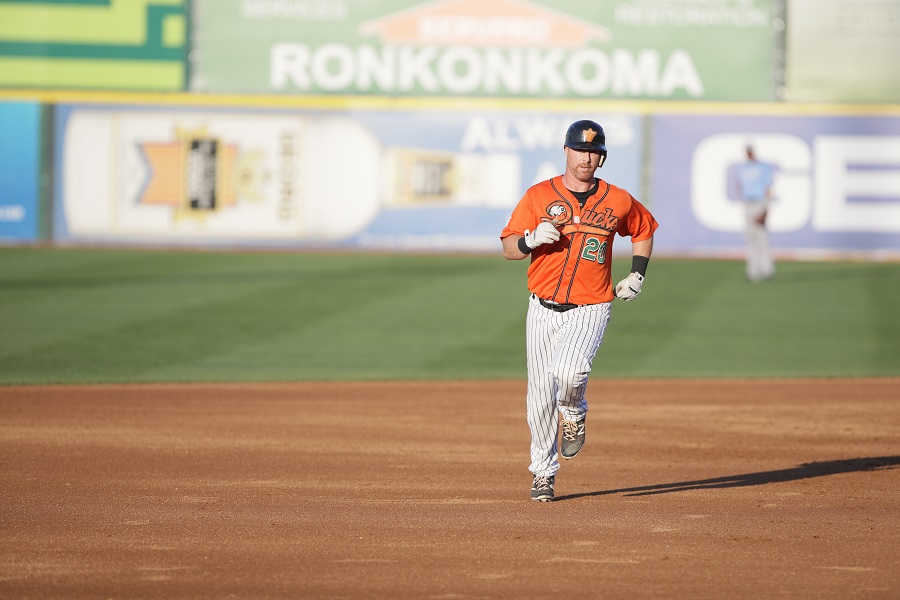 Ford’s Origins Ford was drafted in the 12th round of the 1999 amateur draft by the Boston Red Sox. He had spent four years in college, so he was 22-years old when he signed. His time in the Boston organization would be short lived, as he was deal to Minnesota on September 9, 2000 for Hector Carrasco. He spent the 2001 season at High-A and Double-A without showing many positive signs. He hit .259/.333/.377 with 38 extra-base hits in 129 games. He was over a year older than the competition in the Florida State League. He 2002 season might have been his coming out party. He combined for a .903 OPS at Double-A and Triple-A. It was getting harder for the Twins to ignore his production. Ford continued to hit the ball at Triple-A in 2003 and the Twins called him up. He played 34 games that season and batted .329/.402/.575 with 11 extra-base hits in 34 games. Ford got one playoff at-bat that year and struck out against Mariano Rivera in his only plate appearance. Minnesota would fall to the Yankees three games to one. Minnesota Nice Ford’s best season was the 2004 campaign. He played 154 games and batted .299/.381/.446 with 15 home runs and 31 doubles. It was his only big-league season where he’d finish with double-digit home runs. He finished in the top-25 in the MVP voting. He’d play 147 games in 2005 but his numbers came back to the pack. His OBP was still .338 but his slugging percentage dipped to .377. Minnesota would use Ford for 159 games over the next two seasons, but his numbers continued to dwindle. He played 104 games in 2006 and his OBP dropped to .287 and his slugging percentage dropped to .312. He was granted his free agency in October 2007. Comeback King Ford tried to mount comebacks with multiple teams in the years after leaving Minnesota. The Rockies and the Reds signed him, but he never appeared at the big-league level. However, he would make it back to the big leagues in 2012 with the Baltimore Orioles. He played in 25 regular seasons games that season and saved his best for the postseason. In three playoff games, he went 3-for-9 with a double, an RBI and two runs scores. Baltimore won the AL Wild Card Game against Texas but fell to the New York in the ALDS. For Ford, he got to relive his big-league dream at age-35. Long Island Legend Since he turned 32, Ford has played parts of multiple seasons with the Long Island Ducks in the independent Atlantic League. He has also spent time playing in Mexico, Venezuela, and the Dominican Republic but Long Island has become his second home. During the 2018 campaign, he was 41 years old. That was almost 12 years older than the competition in the Atlantic League. He played 123 games and hit .293/.352/.432 with 33 doubles and 10 home runs. This season, he has served as a coach and mentor, but the Ducks have still allowed him to play in 11 games during his age-42 season. Wally Backman, Long Island’s manager, has nothing but praise for Ford. “He's been here, he's a part of this community, and if he wants to play and thinks he can still perform, I'll have him here with me. Lew is in the gym every day, there's a lot of work. He takes care of himself very well. You see the longevity of players today outlast players of when I played. There's so much more for a player to do -- the vitamins and the work ethic -- where we just played baseball in the 80's. We weren't in the gym like these players are today and we didn't have the supplements that are available to the players today. If you take care of yourself, and I think Lew has done that, you're able to play up to that level. Lew can hit, and he can still run." Over 21-seasons at all levels, he has hit .296/.369/.448. He has 2331 career hits, 193 career home runs, and 495 career doubles. If you listen closely, you can still hear the chants of his name radiate at the Metrodome. What was your favorite Lew Ford memory? Leave a COMMENT and start the discussion.
 -
 Over most of the last two decades, Minnesota has struggled to find consistency at the shortstop position. Jorge Polanco and his tremendous start might be the person to stop this revolving door. Maybe it’s the newfound security of his off-season extension. Maybe he’s trying to make-up for his suspension from last season. Or maybe, just maybe, this is the player he was always going to be.Polanco is setting a record pace to start the season. Since the team moved to Minnesota, Rod Carew is the only middle infielder to post an OPS+ of 144 or more. Polanco entered play on Monday with a 165 OPS+. Polanco is on a record pace, so let’s see how the other top seasons stack up. Honorable Mention Brian Dozier (2016): 134 OPS+ Dozier’s 2016 campaign finished just outside the top-5 on this list but it seems fitting to include him as an honorable mention. He clubbed 42 home runs that season. He’s the only player not named Harmon Killebrew to pop more than 40 long-balls in one season. Unlike the other players on this list, Dozier didn’t hit for a high average. His 134 OPS+ was the highest total of his career. He finished 13th in the AL MVP voting, but five players in front of him had a lower WAR. 5. Chuck Knoblauch (1995): 136 OPS+ The Twins teams of the mid- and late-90’s were tough to watch but these are some of my first concrete baseball memories. During the strike-shortened 1995 season, Minnesota only won 56 games. Knoblauch finished with the second highest batting average of his career. His .911 OPS was aided by 34 doubles and eight triples. He had led the league with 45 doubles in 1994 but some of those balls went out of the park in 1995. He cracked double-digit home runs for the first time in his career. He finished 17th in the MVP voting but his 6.7 WAR ranked him fourth among position players. 4. Chuck Knoblauch (1996): 143 OPS+ Knoblauch’s 1996 campaign was clearly the best season of his career. He finished third in WAR trailing only Ken Griffey Jr. and Alex Rodriguez. He hit .341, a career high. In fact, he would never hit above .300 for the rest of his career. He led the AL with 14 triples, but he also had 13 home runs and 35 doubles. Minnesota was closer to .500 as the club finished 78-84. Clearly, the MVP voters paid little attention to the happenings in Minnesota. Knoblauch finished 16th in the MVP race. His 8.7 WAR was more than double that year’s MVP, Juan Gonzalez. 3. Rod Carew (1973): 144 OPS+ There were lots of firsts for Carew during the 1973 season. His first time leading the league in hits. His first time leading the league in triples. He would also finish in the top-5 for the AL MVP for the first time. All 24 first place votes went to Oakland’s Reggie Jackson, but a theme starts to emerge with Carew’s seasons. His WAR total was higher than the players between him and Jackson. Carew’s batting average was over 50 points higher than Jackson. Carew stole 41 bases during the season and the Twins finished 82-80. 2. Rod Carew (1974): 150 OPS+ For the first time in his career, Carew led all of baseball in hits. He would do this one other time during his MVP season. His .364 batting average was the second highest of his career and his .433 OBP was only 16 points behind the 1977 campaign. His 7.5 WAR was the third highest total of his career. He finished seventh in the MVP voting. However, only Fergie Jenkins had a higher WAR total out of the players ahead of him in the voting. 1. Rod Carew (1975): 157 OPS+ Carew’s best season for OPS+ wasn’t even the year he was named AL MVP (1977). For that season, he started all but five games at first base, so that season doesn’t qualify for this list. He posted a 178 OPS+ that year, a career high, and led the league in runs, hits, triples, batting average, OBP, OPS, and OPS+. The 1975 campaign was his last season playing in the middle infield. He won his fourth consecutive batting title and his fifth batting title overall. That season marked on the second time he had led the league on OBP, which was assisted by a league high 18 intentional walks. He was hitting above .400 into the middle of June and flirted with getting back there in late July. He finished ninth in the MVP voting but his 7.9 WAR that season was higher than all but one player ahead of him in the voting. Will Polanco be able to break the record? Leave a COMMENT and start the discussion. Click here to view the article
 -
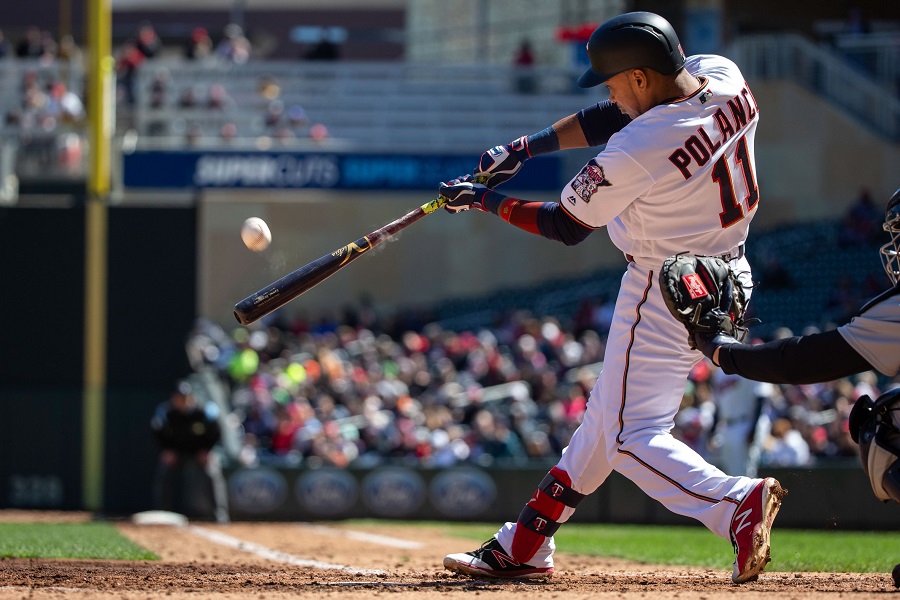 Polanco is setting a record pace to start the season. Since the team moved to Minnesota, Rod Carew is the only middle infielder to post an OPS+ of 144 or more. Polanco entered play on Monday with a 165 OPS+. Polanco is on a record pace, so let’s see how the other top seasons stack up. Honorable Mention Brian Dozier (2016): 134 OPS+ Dozier’s 2016 campaign finished just outside the top-5 on this list but it seems fitting to include him as an honorable mention. He clubbed 42 home runs that season. He’s the only player not named Harmon Killebrew to pop more than 40 long-balls in one season. Unlike the other players on this list, Dozier didn’t hit for a high average. His 134 OPS+ was the highest total of his career. He finished 13th in the AL MVP voting, but five players in front of him had a lower WAR. 5. Chuck Knoblauch (1995): 136 OPS+ The Twins teams of the mid- and late-90’s were tough to watch but these are some of my first concrete baseball memories. During the strike-shortened 1995 season, Minnesota only won 56 games. Knoblauch finished with the second highest batting average of his career. His .911 OPS was aided by 34 doubles and eight triples. He had led the league with 45 doubles in 1994 but some of those balls went out of the park in 1995. He cracked double-digit home runs for the first time in his career. He finished 17th in the MVP voting but his 6.7 WAR ranked him fourth among position players. 4. Chuck Knoblauch (1996): 143 OPS+ Knoblauch’s 1996 campaign was clearly the best season of his career. He finished third in WAR trailing only Ken Griffey Jr. and Alex Rodriguez. He hit .341, a career high. In fact, he would never hit above .300 for the rest of his career. He led the AL with 14 triples, but he also had 13 home runs and 35 doubles. Minnesota was closer to .500 as the club finished 78-84. Clearly, the MVP voters paid little attention to the happenings in Minnesota. Knoblauch finished 16th in the MVP race. His 8.7 WAR was more than double that year’s MVP, Juan Gonzalez. 3. Rod Carew (1973): 144 OPS+ There were lots of firsts for Carew during the 1973 season. His first time leading the league in hits. His first time leading the league in triples. He would also finish in the top-5 for the AL MVP for the first time. All 24 first place votes went to Oakland’s Reggie Jackson, but a theme starts to emerge with Carew’s seasons. His WAR total was higher than the players between him and Jackson. Carew’s batting average was over 50 points higher than Jackson. Carew stole 41 bases during the season and the Twins finished 82-80. 2. Rod Carew (1974): 150 OPS+ For the first time in his career, Carew led all of baseball in hits. He would do this one other time during his MVP season. His .364 batting average was the second highest of his career and his .433 OBP was only 16 points behind the 1977 campaign. His 7.5 WAR was the third highest total of his career. He finished seventh in the MVP voting. However, only Fergie Jenkins had a higher WAR total out of the players ahead of him in the voting. 1. Rod Carew (1975): 157 OPS+ Carew’s best season for OPS+ wasn’t even the year he was named AL MVP (1977). For that season, he started all but five games at first base, so that season doesn’t qualify for this list. He posted a 178 OPS+ that year, a career high, and led the league in runs, hits, triples, batting average, OBP, OPS, and OPS+. The 1975 campaign was his last season playing in the middle infield. He won his fourth consecutive batting title and his fifth batting title overall. That season marked on the second time he had led the league on OBP, which was assisted by a league high 18 intentional walks. He was hitting above .400 into the middle of June and flirted with getting back there in late July. He finished ninth in the MVP voting but his 7.9 WAR that season was higher than all but one player ahead of him in the voting. Will Polanco be able to break the record? Leave a COMMENT and start the discussion.
 -
For many Twins fans, the signing of Martin Perez wasn’t viewed in a positive light. The left-handed hurler had struggled in recent years with Texas. So far this season, he’s turned into one of the bright spots on a very strong Twins team. One pitch has made all the difference for Mr. Perez.Maybe fans shouldn’t have doubted the Twins front office. Thad Levine was very familiar with Perez from his own days in the Rangers front office. Before joining the Twins, Derek Falvey might have been best known for what he was able to do with the Cleveland pitching staff. Everything’s Bigger in Texas Perez was a regular part of the Ranger’s rotation from 2016-2017. During that time, he averaged over 190 innings per season, but he struggled to get consistent outs. He ranked near the top of the league in earned runs allowed and walks. Also, he wasn’t striking out batters on a consistent basis. He averaged just over five strikeouts per nine innings pitched. Statcast paints an even bleaker picture of what he was doing on the mound. His XBA ranked in the bottom 6% in the league for three consecutive seasons. In his last full season as a starter, his XSLG was in the bottom 7% of the league and his WOBA was in the bottom 1% of league. His strikeout percentage was also in the bottom 7% of the league for three straight seasons. Moving to the bullpen in 2018 didn’t help many of his numbers. His WHIP ballooned to 1.78, a career high. His strikeout and walk rates also stayed nearly the same. Perez’s hits per nine and home runs per nine average jumped to twice his career average. It was time for a change. The Birth of a Cutter During spring training, Perez got some advice from Johan Santana and Jake Odorizzi. From this advice, he was able to add a cut fastball that has kept batters off-balance. This pitch has become a secret weapon as hitters have been unable to solve this new addition to his pitching repertoire. Perez has thrown his new found pitch 34.8% of the time this season. He has 39 strikeouts and 13 of them have been as a result of the cutter. When facing Houston’s potent line-up, he limited the Astros to four hits over eight shutout innings. In that start, he threw his cutter on 43 of his 100 pitches. Perez seemed to put it all together on Monday night against Toronto. He collected a season high nine strikeouts in seven shutout innings. Five of his nine strikeouts came on the cutter. Out of his 102 pitches against the Blue Jays, he threw his cutter 34 times. Blue Jays hitters only managed one hit against the cutter. Will Perez be able to keep this up in the months and weeks ahead? Will the league eventually be able to figure him out? Leave a COMMENT and start the discussion. Click here to view the article
- 24 replies
-
- 1
-

-
- martin perez
- johan santana
- (and 3 more)
-
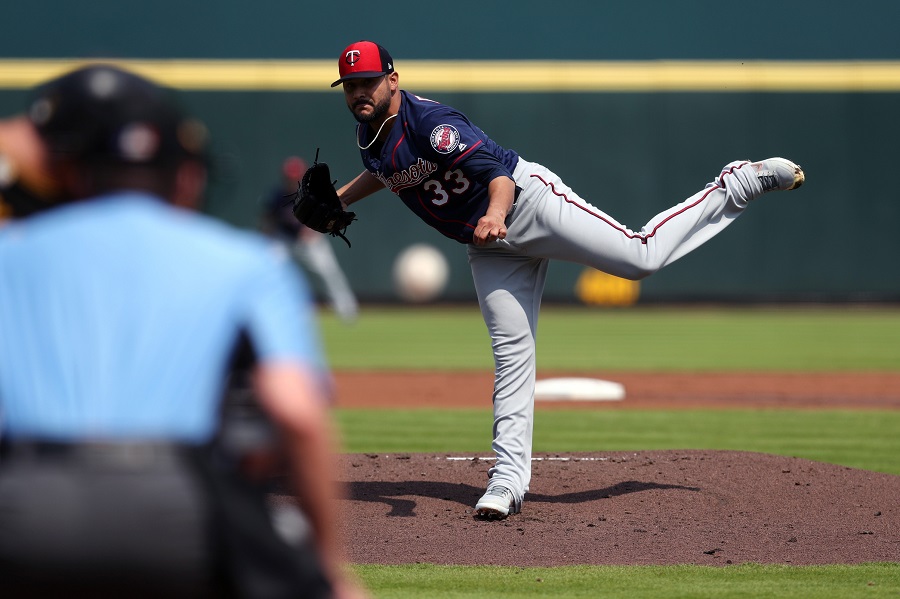 Maybe fans shouldn’t have doubted the Twins front office. Thad Levine was very familiar with Perez from his own days in the Rangers front office. Before joining the Twins, Derek Falvey might have been best known for what he was able to do with the Cleveland pitching staff. Everything’s Bigger in Texas Perez was a regular part of the Ranger’s rotation from 2016-2017. During that time, he averaged over 190 innings per season, but he struggled to get consistent outs. He ranked near the top of the league in earned runs allowed and walks. Also, he wasn’t striking out batters on a consistent basis. He averaged just over five strikeouts per nine innings pitched. Statcast paints an even bleaker picture of what he was doing on the mound. His XBA ranked in the bottom 6% in the league for three consecutive seasons. In his last full season as a starter, his XSLG was in the bottom 7% of the league and his WOBA was in the bottom 1% of league. His strikeout percentage was also in the bottom 7% of the league for three straight seasons. Moving to the bullpen in 2018 didn’t help many of his numbers. His WHIP ballooned to 1.78, a career high. His strikeout and walk rates also stayed nearly the same. Perez’s hits per nine and home runs per nine average jumped to twice his career average. It was time for a change. The Birth of a Cutter During spring training, Perez got some advice from Johan Santana and Jake Odorizzi. From this advice, he was able to add a cut fastball that has kept batters off-balance. This pitch has become a secret weapon as hitters have been unable to solve this new addition to his pitching repertoire. https://twitter.com/NoDakTwinsFan/status/1126214757931986944 Perez has thrown his new found pitch 34.8% of the time this season. He has 39 strikeouts and 13 of them have been as a result of the cutter. When facing Houston’s potent line-up, he limited the Astros to four hits over eight shutout innings. In that start, he threw his cutter on 43 of his 100 pitches. https://twitter.com/NoDakTwinsFan/status/1126167665347833856 Perez seemed to put it all together on Monday night against Toronto. He collected a season high nine strikeouts in seven shutout innings. Five of his nine strikeouts came on the cutter. Out of his 102 pitches against the Blue Jays, he threw his cutter 34 times. Blue Jays hitters only managed one hit against the cutter. Will Perez be able to keep this up in the months and weeks ahead? Will the league eventually be able to figure him out? Leave a COMMENT and start the discussion.
 -
The Miracle nearly had a no-hitter on Sunday and now the Kernels find themselves on the wrong side of a contest on Monday. Minor league contests are tough when it comes to strong pitching performances. How long can a starter last? How close can a club get to history? One team was able to make that happen on Monday night.TRANSACTIONS INF Ronald Torreyes placed on the temporary inactive list, retroactive to May 4. RHP Tom Hackimer promoted from Fort Myers to Pensacola. RHP Edwar Colina reinstated from 7-day IL for Fort Myers. RED WINGS REPORT Rochester enjoyed an off-day on Monday. The club currently sits at 12-16 before starting a three-game series with the Toledo Mud Hens. Rochester is currently 6.5 games behind Lehigh Valley. The club has a sub-.500 record at home and on the road. Brent Rooker could be one of the hitters to provide a boost in Rochester. Other than that, there might continue to be some struggles for Minnesota’s Triple-A squad. BLUE WAHOO BITES Pensacola 6, Mississippi 2 Box Score Pensacola used a five-run seventh inning to separate themselves from the Braves. Alex Kirilloff got things started for the Blue Wahoos with a run-scoring triple in the third frame. Tanner English got the scoring started in the seventh with a two-run double. Jordan Gore follow with a run-scoring single before Kirilloff drove him in with a single of his own. Kirilloff was able to score on fielding error. Sean Poppen started and lasted five frames. He scattered two runs on three hits, but he struggled with five walks. He was able to punch out seven batters and he lowered his season ERA to 2.84. Jeff Ames took over for Poppen. He pitched 1 2/3 innings and allowed one run on three hits. He struck out one and walked one. Cody Stashak continued to be tremendous in relief. He pitched 2 1/3 perfect innings by striking out three. He’s allowed only one run in his last five appearances while striking out 14 in 9 1/3 innings of work. MIRACLE MATTERS Ft. Myers 1, Charlotte 6 Box Score Fort Myers had won five straight games, but the club struggled to find any offense on this night. Especially when their opponent scored six runs in the first four innings. In his first appearance this season, Edwar Colina struggled. Colina allowed six earned runs on eight hits in less than five innings of work. He struck out five and walked three. He was making his first appearance since the Florida State League clinching game last September. Rickey Ramirez did a great job in relief as he tossed 2 1/3 innings of shutout ball. He retired all seven batters he faced, and he struck out six, including the last five batters he saw. Joe Record also picked up the pitching staff with one perfect inning. He didn’t allow a hit and he struck out one. Overall, the pitching staff struck out 12 in eight innings of work. Fort Myers nearly matched Charlotte in hits (7 to 8) but the club couldn’t come up with the big one. Jose Miranda tried his best with a 3-for-4 night including his seventh double. He had three of the club’s four hits against the opposing starter. Royce Lewis collected his second triple. Overall, the club was 0-for-8 with runners in scoring position and the team left eight men on base. KERNELS NUGGETS Cedar Rapids 0, South Bend 2 Box Score Cedar Rapids could literally muster nothing when it came to the offensive side of the ball. The Kernels found themselves on the wrong side of a no-hitter on Monday. Cedar Rapids had one base runner the entire night. Andrew Bechtold was able to break up the perfect game with a walk. Other than that, there was little to discuss on the offensive side of the ball. Josh Winder did all he could to keep Cedar Rapids in the game. He pitched a complete game, the first of his career, and limited the Cubs to two runs on three hits. He struck out six and walked two. Winder has pitched a minimum of five innings in every start and he has yet to surrender more than two earned runs. TWINS DAILY PLAYERS OF THE DAY TD Pitcher of the Day- Josh Winder, Cedar Rapids (8 IP, 2 ER, 3 H, 6 K, 2 BB) TD Hitter of the Day- Alex Kirilloff, Pensacola (3-5, 3B, 2 RBI, R) PROSPECT SUMMARY Here’s a look at how the Twins Daily Top 20 Twins Prospects performed: #1 - Royce Lewis (Ft. Myers) – 1-4, 3B #2 - Alex Kirilloff (Pensacola) – 3-5, 3B, 2 RBI, R #3 - Brusdar Graterol (Pensacola) – Did not pitch #4 - Trevor Larnach (Ft. Myers) – 0-3, BB, 2 K #5 - Wander Javier (EST) - No Game #6 - Brent Rooker (Rochester) – No Scheduled Game #7 - Jhoan Duran (Ft. Myers) – Did not pitch #8 - Lewis Thorpe (Rochester) – No Scheduled Game #9 - Blayne Enlow (Cedar Rapids) – Did not pitch #10 - Akil Baddoo (Ft. Myers) – 0-5, 4 K #11 - Nick Gordon (Rochester) - No Game Scheduled #12 - Stephen Gonsalves (Rochester) - Injured List #13 - Ryan Jeffers (Ft. Myers) – 1-4, RBI, R, K #14 - Ben Rortvedt (Ft. Myers) – 2-4, 2B #15 - Yunior Severino (Cedar Rapids) – Injured List #16 - Gilberto Celestino (Cedar Rapids) – 0-3 #17 - Zack Littell (Rochester) – No Scheduled Game #18 - LaMonte Wade (Rochester) – No Scheduled Game #19 - Jorge Alcala (Pensacola) – Did not pitch #20 - Jose Miranda (Ft. Myers) – 3-4, 2B, R, K TUESDAY’S PROBABLE STARTERS Rochester vs. Toledo (5:35 CST) – RHP Kohl Stewart (2-2, 4.50 ERA) Pensacola @ Mississippi (6:35 CST) – RHP Jorge Alcala (4-1, 4.71 ERA) Fort Myers @ Charlotte (5:30 CST) – LHP Bryan Sammons (3-0, 0.40 ERA) Cedar Rapids @ South Bend (6:05 CST) – RHP Luis Rijo (0-3, 3.43 ERA) Please feel free to ask any questions and discuss Monday’s games. Click here to view the article
- 53 replies
-
- 2
-
-
- alex kirilloff
- jose miranda
- (and 3 more)
-
 TRANSACTIONS INF Ronald Torreyes placed on the temporary inactive list, retroactive to May 4. RHP Tom Hackimer promoted from Fort Myers to Pensacola. RHP Edwar Colina reinstated from 7-day IL for Fort Myers. RED WINGS REPORT Rochester enjoyed an off-day on Monday. The club currently sits at 12-16 before starting a three-game series with the Toledo Mud Hens. Rochester is currently 6.5 games behind Lehigh Valley. The club has a sub-.500 record at home and on the road. Brent Rooker could be one of the hitters to provide a boost in Rochester. Other than that, there might continue to be some struggles for Minnesota’s Triple-A squad. BLUE WAHOO BITES Pensacola 6, Mississippi 2 Box Score Pensacola used a five-run seventh inning to separate themselves from the Braves. Alex Kirilloff got things started for the Blue Wahoos with a run-scoring triple in the third frame. Tanner English got the scoring started in the seventh with a two-run double. Jordan Gore follow with a run-scoring single before Kirilloff drove him in with a single of his own. Kirilloff was able to score on fielding error. Sean Poppen started and lasted five frames. He scattered two runs on three hits, but he struggled with five walks. He was able to punch out seven batters and he lowered his season ERA to 2.84. Jeff Ames took over for Poppen. He pitched 1 2/3 innings and allowed one run on three hits. He struck out one and walked one. Cody Stashak continued to be tremendous in relief. He pitched 2 1/3 perfect innings by striking out three. He’s allowed only one run in his last five appearances while striking out 14 in 9 1/3 innings of work. MIRACLE MATTERS Ft. Myers 1, Charlotte 6 Box Score Fort Myers had won five straight games, but the club struggled to find any offense on this night. Especially when their opponent scored six runs in the first four innings. In his first appearance this season, Edwar Colina struggled. Colina allowed six earned runs on eight hits in less than five innings of work. He struck out five and walked three. He was making his first appearance since the Florida State League clinching game last September. Rickey Ramirez did a great job in relief as he tossed 2 1/3 innings of shutout ball. He retired all seven batters he faced, and he struck out six, including the last five batters he saw. Joe Record also picked up the pitching staff with one perfect inning. He didn’t allow a hit and he struck out one. Overall, the pitching staff struck out 12 in eight innings of work. Fort Myers nearly matched Charlotte in hits (7 to 8) but the club couldn’t come up with the big one. Jose Miranda tried his best with a 3-for-4 night including his seventh double. He had three of the club’s four hits against the opposing starter. Royce Lewis collected his second triple. Overall, the club was 0-for-8 with runners in scoring position and the team left eight men on base. KERNELS NUGGETS Cedar Rapids 0, South Bend 2 Box Score Cedar Rapids could literally muster nothing when it came to the offensive side of the ball. The Kernels found themselves on the wrong side of a no-hitter on Monday. Cedar Rapids had one base runner the entire night. Andrew Bechtold was able to break up the perfect game with a walk. Other than that, there was little to discuss on the offensive side of the ball. Josh Winder did all he could to keep Cedar Rapids in the game. He pitched a complete game, the first of his career, and limited the Cubs to two runs on three hits. He struck out six and walked two. Winder has pitched a minimum of five innings in every start and he has yet to surrender more than two earned runs. TWINS DAILY PLAYERS OF THE DAY TD Pitcher of the Day- Josh Winder, Cedar Rapids (8 IP, 2 ER, 3 H, 6 K, 2 BB) TD Hitter of the Day- Alex Kirilloff, Pensacola (3-5, 3B, 2 RBI, R) PROSPECT SUMMARY Here’s a look at how the Twins Daily Top 20 Twins Prospects performed: #1 - Royce Lewis (Ft. Myers) – 1-4, 3B #2 - Alex Kirilloff (Pensacola) – 3-5, 3B, 2 RBI, R #3 - Brusdar Graterol (Pensacola) – Did not pitch #4 - Trevor Larnach (Ft. Myers) – 0-3, BB, 2 K #5 - Wander Javier (EST) - No Game #6 - Brent Rooker (Rochester) – No Scheduled Game #7 - Jhoan Duran (Ft. Myers) – Did not pitch #8 - Lewis Thorpe (Rochester) – No Scheduled Game #9 - Blayne Enlow (Cedar Rapids) – Did not pitch #10 - Akil Baddoo (Ft. Myers) – 0-5, 4 K #11 - Nick Gordon (Rochester) - No Game Scheduled #12 - Stephen Gonsalves (Rochester) - Injured List #13 - Ryan Jeffers (Ft. Myers) – 1-4, RBI, R, K #14 - Ben Rortvedt (Ft. Myers) – 2-4, 2B #15 - Yunior Severino (Cedar Rapids) – Injured List #16 - Gilberto Celestino (Cedar Rapids) – 0-3 #17 - Zack Littell (Rochester) – No Scheduled Game #18 - LaMonte Wade (Rochester) – No Scheduled Game #19 - Jorge Alcala (Pensacola) – Did not pitch #20 - Jose Miranda (Ft. Myers) – 3-4, 2B, R, K TUESDAY’S PROBABLE STARTERS Rochester vs. Toledo (5:35 CST) – RHP Kohl Stewart (2-2, 4.50 ERA) Pensacola @ Mississippi (6:35 CST) – RHP Jorge Alcala (4-1, 4.71 ERA) Fort Myers @ Charlotte (5:30 CST) – LHP Bryan Sammons (3-0, 0.40 ERA) Cedar Rapids @ South Bend (6:05 CST) – RHP Luis Rijo (0-3, 3.43 ERA) Please feel free to ask any questions and discuss Monday’s games.
 -
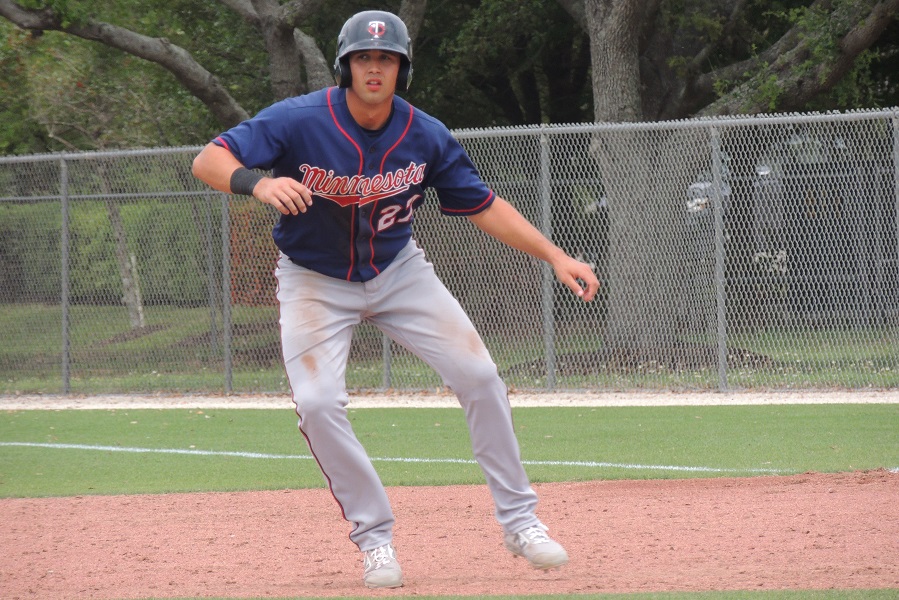
Alex Kirilloff was activated last Thursday from the disabled list. He missed the Blue Wahoo’s first 26 games after suffering a wrist injury late in spring training. Coming off a monster 2018 season, Kirilloff is widely considered the second-best prospect in the Twins organization. Entering the season, Kirilloff was ranked as MLB.com’s number nine prospect and Baseball America ranked him as number 15. Minnesota’s other top position player prospects have struggled to start the year. Some injuries have been to blame. Can Kirilloff help to boost a struggling group?In case you missed any of them, Twins Daily named its Award winners for April. Hitter of the Month - Trey CabbageStarting Pitcher of the Month - Devin SmeltzerRelief Pitcher of the Month - Ryan MasonAll rankings below are from the Twins Daily Top-20 Prospects. 1. Royce Lewis- Fort Myers Last week, the discussion arose about the possibility of Royce Lewis being baseball’s best prospect. Lewis has struggled to start the season. Through his first 28 games, he is hitting .227/.323/.273 with four extra-base hits. He has yet to hit a home run after clubbing 14 a season ago. He has done well against lefties by going 8-for-20 with two extra-base hits and more walks (3) than strikeouts (2). 2. Alex Kirilloff- Pensacola Kirilloff’s wrist injury obviously impacts his start to the season. In his first four games, he has gone 4-for-13 with a double. His three walks in 18 plate appearances have helped him to get on base 50% of the time. In Pensacola, Kirilloff is nearly three years younger than the competition. It seems likely for him to spend the majority of the year at Double-A. However, he could still make his big league debut this season. 4. Trevor Larnach- Fort Myers Larnach is part of a key group of 2018 draft picks populating the Miracle roster. In his first 28 games, he is hitting .279/.325/.369 with 10 doubles. Only one player has more doubles in the Florida State League. During his professional debut, Larnach posted a 28 to 21 strikeout to walk ratio. This season, he already has 25 strikeouts, but he has coaxed only eight walks. 5. Wander Javier- Extended Spring Training Javier hasn’t played since 2017. He missed all of 2018 after having surgery in his non-throwing shoulder. His start to the 2019 season has been delayed because of a right quad strain. He needs to show he can stay healthy. Minnesota will have to add him to the 40-man roster this off-season and he hasn’t played a game above the Appalachian League. 6. Brent Rooker- Rochester During his age-24 season, Rooker is getting on base 27% of the time and he has a .753 OPS. During the 2017 campaign, he posted a .930 OPS across two levels. He clubbed 18 home runs that year and his prospect stock couldn’t have been higher. Last year in Double-A his OPS dipped to .798 and he struck out a whopping 150 times in 130 games. He already has 30 strikeouts this season in 17 games. 10. Akil Baddoo- Fort Myers Baddoo has struggled to make consistent contact during his first taste of the Florida State League. He’s averaged more than a strikeout per game but there has only been one game this season where he faced a pitcher younger than himself. When he has made contact, there has been some power in his swing. He has 10 extra-base hits. Speed has also been part of his game as he has three triples and he has been successful in four of his five steal attempts. Can Kirilloff help to boost this struggling group? Who has the most to prove in the months ahead? Leave a COMMENT and start the discussion. Click here to view the article
-
Kirilloff Could Provide Boost to Top Hitting Prospects
Cody Christie posted an article in Minor Leagues
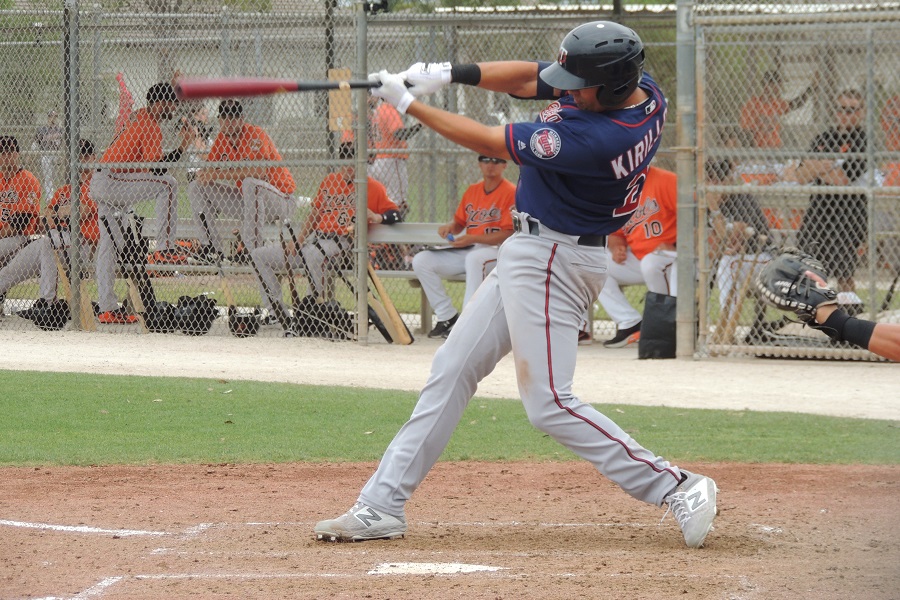 In case you missed any of them, Twins Daily named its Award winners for April. Hitter of the Month - Trey Cabbage Starting Pitcher of the Month - Devin Smeltzer Relief Pitcher of the Month - Ryan Mason All rankings below are from the Twins Daily Top-20 Prospects. 1. Royce Lewis- Fort Myers Last week, the discussion arose about the possibility of Royce Lewis being baseball’s best prospect. Lewis has struggled to start the season. Through his first 28 games, he is hitting .227/.323/.273 with four extra-base hits. He has yet to hit a home run after clubbing 14 a season ago. He has done well against lefties by going 8-for-20 with two extra-base hits and more walks (3) than strikeouts (2). 2. Alex Kirilloff- Pensacola Kirilloff’s wrist injury obviously impacts his start to the season. In his first four games, he has gone 4-for-13 with a double. His three walks in 18 plate appearances have helped him to get on base 50% of the time. In Pensacola, Kirilloff is nearly three years younger than the competition. It seems likely for him to spend the majority of the year at Double-A. However, he could still make his big league debut this season. 4. Trevor Larnach- Fort Myers Larnach is part of a key group of 2018 draft picks populating the Miracle roster. In his first 28 games, he is hitting .279/.325/.369 with 10 doubles. Only one player has more doubles in the Florida State League. During his professional debut, Larnach posted a 28 to 21 strikeout to walk ratio. This season, he already has 25 strikeouts, but he has coaxed only eight walks. 5. Wander Javier- Extended Spring Training Javier hasn’t played since 2017. He missed all of 2018 after having surgery in his non-throwing shoulder. His start to the 2019 season has been delayed because of a right quad strain. He needs to show he can stay healthy. Minnesota will have to add him to the 40-man roster this off-season and he hasn’t played a game above the Appalachian League. 6. Brent Rooker- Rochester During his age-24 season, Rooker is getting on base 27% of the time and he has a .753 OPS. During the 2017 campaign, he posted a .930 OPS across two levels. He clubbed 18 home runs that year and his prospect stock couldn’t have been higher. Last year in Double-A his OPS dipped to .798 and he struck out a whopping 150 times in 130 games. He already has 30 strikeouts this season in 17 games. 10. Akil Baddoo- Fort Myers Baddoo has struggled to make consistent contact during his first taste of the Florida State League. He’s averaged more than a strikeout per game but there has only been one game this season where he faced a pitcher younger than himself. When he has made contact, there has been some power in his swing. He has 10 extra-base hits. Speed has also been part of his game as he has three triples and he has been successful in four of his five steal attempts. Can Kirilloff help to boost this struggling group? Who has the most to prove in the months ahead? Leave a COMMENT and start the discussion.
 -
So far this season, Minnesota has been clubbing the ball out of the ballpark at quite the rate. The team has been able to do this with one of their best sluggers, Miguel Sano, recovering from an injury. Sano is in the midst of a rehab stint and he is getting close to rejoining the big-league club. How will Sano’s return impact the club’s roster?Marwin’s Struggles Marwin Gonzalez has been getting most of the playing time at third base with Sano out of the line-up. Entering play on Monday, he is hitting .204/.271/.286 with four extra-base hits in 98 at-bats. These are far below his career totals (.261/.316/.414). One has to wonder if his late signing this spring has impacted his ability to get prepared for the season’s start. Even with his struggles, Gonzalez has shown some positive signs this season. His 91.1 exit velocity is higher than his career average. It is also higher than the MLB average this season (87.4 mph). His launch angle is around the league average at 9.0 but it's below the totals he’s put together the last two years. Defensively, Gonzalez ranks in the middle of the pack among American League third basemen. FanGraphs credits him with one defensive run saved so far this year. His 1.4 defensive WAR ranks him sixth among the 11 qualified AL third basemen. Roster Space Finding roster space for Sano could come from the back-end of the bench or from a 13-man pitching staff. From the bench, Ehire Adrianza seems like a likely candidate to make way for Sano. He’s hit .146/.250/.220 in 16 games this season. If Adrianza is the odd-man out, Gonzalez could shift to a fill-in role at multiple positions. Jake Cave could also be sent back to Rochester if the Twins are comfortable with Gonzalez serving as the fourth outfielder. Cave has hit .206/.289/.235 this season with one extra-base hit in 14 games. He has more strikeouts (9) than hits (7). Cave might be more replaceable since Adrianza is currently listed as the back-up shortstop on the team’s depth chart. Minnesota is also carrying 13 pitchers so the team could trim the pitching staff to 12 pitchers. Mike Morin, Fernando Romero or Matt Magill could all be candidates to taken off the 25-man roster. The Twins are in the midst of quite a stretch of games so the extra man in the bullpen might be a necessity. Playing Time If Sano is going to take back the reins at third, Gonzalez will need to slide into a secondary role. It still seems likely for Gonzalez to get playing time at other positions in the line-up, especially if Cave is the one sent down. Gonzalez’s ability to play multiple positions could shift him to a super-utility role in the weeks ahead. Sano could also spend some time at designated hitter, but it seems likely for Nelson Cruz to continue to get the majority of those at-bats. Among regular non-catching starters, Cruz is tied with Max Kepler and Marwin Gonzalez for sixth most games played. His 38-year old body might need some rest in the months ahead. How do you think Sano will impact the line-up? Who gets sent down? Leave a COMMENT and start the discussion. Click here to view the article
- 116 replies
-
- 1
-
-
- miguel sano
- marwin gonzalez
- (and 3 more)
-
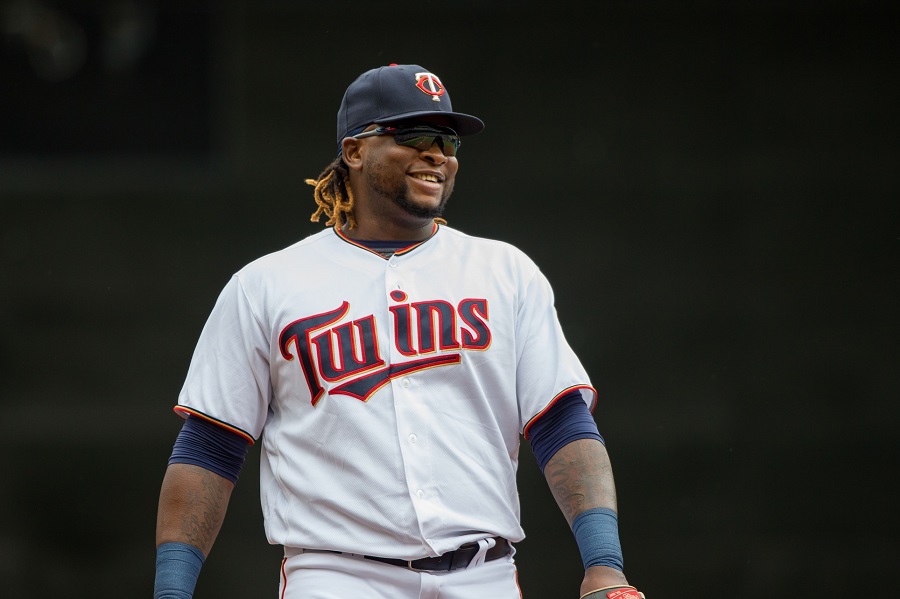 Marwin’s Struggles Marwin Gonzalez has been getting most of the playing time at third base with Sano out of the line-up. Entering play on Monday, he is hitting .204/.271/.286 with four extra-base hits in 98 at-bats. These are far below his career totals (.261/.316/.414). One has to wonder if his late signing this spring has impacted his ability to get prepared for the season’s start. Even with his struggles, Gonzalez has shown some positive signs this season. His 91.1 exit velocity is higher than his career average. It is also higher than the MLB average this season (87.4 mph). His launch angle is around the league average at 9.0 but it's below the totals he’s put together the last two years. Defensively, Gonzalez ranks in the middle of the pack among American League third basemen. FanGraphs credits him with one defensive run saved so far this year. His 1.4 defensive WAR ranks him sixth among the 11 qualified AL third basemen. Roster Space Finding roster space for Sano could come from the back-end of the bench or from a 13-man pitching staff. From the bench, Ehire Adrianza seems like a likely candidate to make way for Sano. He’s hit .146/.250/.220 in 16 games this season. If Adrianza is the odd-man out, Gonzalez could shift to a fill-in role at multiple positions. Jake Cave could also be sent back to Rochester if the Twins are comfortable with Gonzalez serving as the fourth outfielder. Cave has hit .206/.289/.235 this season with one extra-base hit in 14 games. He has more strikeouts (9) than hits (7). Cave might be more replaceable since Adrianza is currently listed as the back-up shortstop on the team’s depth chart. Minnesota is also carrying 13 pitchers so the team could trim the pitching staff to 12 pitchers. Mike Morin, Fernando Romero or Matt Magill could all be candidates to taken off the 25-man roster. The Twins are in the midst of quite a stretch of games so the extra man in the bullpen might be a necessity. Playing Time If Sano is going to take back the reins at third, Gonzalez will need to slide into a secondary role. It still seems likely for Gonzalez to get playing time at other positions in the line-up, especially if Cave is the one sent down. Gonzalez’s ability to play multiple positions could shift him to a super-utility role in the weeks ahead. Sano could also spend some time at designated hitter, but it seems likely for Nelson Cruz to continue to get the majority of those at-bats. Among regular non-catching starters, Cruz is tied with Max Kepler and Marwin Gonzalez for sixth most games played. His 38-year old body might need some rest in the months ahead. How do you think Sano will impact the line-up? Who gets sent down? Leave a COMMENT and start the discussion.
 -
Entering the year, many fans knew what to expect out of Jose Berrios. Beyond that, the rotation was kind of murky. Minnesota has certainly taken advantage of playing some sub-par opponents to start the year. That said, good teams need to beat-up on lesser opponents and survive against strong teams to make the playoffs. The Twins have followed that equation so far this season. Some of their success can be attributed to a rotation that has been better than advertised. Can this trend continue? Or are there some signs of regression?Gibson’s Pending Free Agency Kyle Gibson is a free agent at season’s end. Don’t shout that too loud in Twins circles. The man Minnesota took ahead of Mike Trout is headed for free agency and he might just be coming into his own. Among qualifying pitchers, only Jose Berrios ranked higher on the team in WAR for last season. His xFIP was just 0.02 points away from the team’s top pitcher. So far this season, there were some rough starts to begin the year. He didn’t pitch more than 5.1 innings in his first three appearances. He also allowed three runs or more during that stretch. In his two start since then, he has averaged 6.5 innings pitched while limiting opponents to three earned runs. He’s struck out twelve during that span and largely kept the ball in the park with one home run Odorizzi’s Mirage Jake Odorizzi was unbelievable against the Astros on Monday. He was certainly lucky the Twins picked him up in a close game. That’s far from the norm for the team’s middle of the rotation starter. In his first season with Minnesota, he posted a 4.49 ERA with more walks and runs allowed than the majority of the league. The Twins continued to start him, but he soaked up losses while the Twins struggled in the middle of the season. As this season has progressed, he dominated Cleveland with 11 strikeouts in six innings. His start against Toronto was also strong as he pitched into the sixth and allowed one run on six hits. He’s faced Houston in his last two appearances. During that time, he’s limited one of the AL’s best offenses to two runs on 12 hits over 12 2/3 innings. Perez’s Wild Card Martin Perez was certainly a wild card when the Twins signed him. He hadn’t had much success in Texas, but the front office saw something in him. To start the year, Perez was used in a piggy-backing role, so he was used for less than four innings in his first three appearances. Since joining the rotation, Perez has certainly looked like more than a wild card. In his first four starts, he has pitched 26 innings while limiting opponents to six earned runs on 23 hits. He has posted an 18 to 5 strikeout to walk ratio over this stretch. Batters are hitting .242 against him with a .632 OPS. Granted two of his four starts have been against Baltimore, but he certainly held his own against Houston on Wednesday night. What are your thoughts on the rotation so far? Leave a COMMENT and start the discussion. Click here to view the article
-
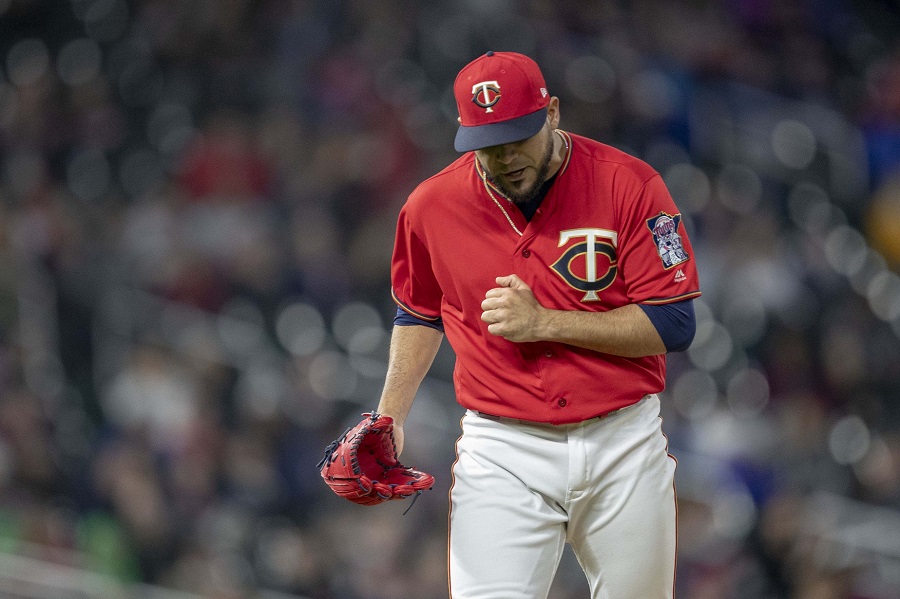 Gibson’s Pending Free Agency Kyle Gibson is a free agent at season’s end. Don’t shout that too loud in Twins circles. The man Minnesota took ahead of Mike Trout is headed for free agency and he might just be coming into his own. Among qualifying pitchers, only Jose Berrios ranked higher on the team in WAR for last season. His xFIP was just 0.02 points away from the team’s top pitcher. So far this season, there were some rough starts to begin the year. He didn’t pitch more than 5.1 innings in his first three appearances. He also allowed three runs or more during that stretch. In his two start since then, he has averaged 6.5 innings pitched while limiting opponents to three earned runs. He’s struck out twelve during that span and largely kept the ball in the park with one home run Odorizzi’s Mirage Jake Odorizzi was unbelievable against the Astros on Monday. He was certainly lucky the Twins picked him up in a close game. That’s far from the norm for the team’s middle of the rotation starter. In his first season with Minnesota, he posted a 4.49 ERA with more walks and runs allowed than the majority of the league. The Twins continued to start him, but he soaked up losses while the Twins struggled in the middle of the season. As this season has progressed, he dominated Cleveland with 11 strikeouts in six innings. His start against Toronto was also strong as he pitched into the sixth and allowed one run on six hits. He’s faced Houston in his last two appearances. During that time, he’s limited one of the AL’s best offenses to two runs on 12 hits over 12 2/3 innings. Perez’s Wild Card Martin Perez was certainly a wild card when the Twins signed him. He hadn’t had much success in Texas, but the front office saw something in him. To start the year, Perez was used in a piggy-backing role, so he was used for less than four innings in his first three appearances. Since joining the rotation, Perez has certainly looked like more than a wild card. In his first four starts, he has pitched 26 innings while limiting opponents to six earned runs on 23 hits. He has posted an 18 to 5 strikeout to walk ratio over this stretch. Batters are hitting .242 against him with a .632 OPS. Granted two of his four starts have been against Baltimore, but he certainly held his own against Houston on Wednesday night. What are your thoughts on the rotation so far? Leave a COMMENT and start the discussion.
 -
Vladimir Guerrero Jr. made his much anticipated debut over the weekend. Many believe he could have been called up at the end of the 2018 campaign. Toronto took advantage of baseball’s rules and left him in minor league purgatory so the club could pick up an extra year of service time. Vlad Jr. has been considered baseball’s top prospect, but now there is little reason to send him back to the minors. Some of baseball’s other top prospects have also been playing regularly at to start the season. Does this make Royce Lewis baseball’s best prospect?Graduating Prospects Besides Guerrero Jr., other top ranked prospects like Fernando Tatis Jr. and Eloy Jimenez have been on their big league squads since the season started. Both of these top prospects have taken different routes to baseball’s highest level. That being said, both will be graduating from prospect lists early this season. Jimenez signed a unique contact with the division rival White Sox this off-season. A couple weeks ago, I wrote about the possibility of the Twins approaching Royce Lewis and/or Alex Kirilloff with a similar deal. With a deal like this, there was no reason to keep Jimenez in the minors. He was under contract and the team could let him play at the big league level. Tatis Jr. was a surprise to make the Padres roster out of spring training. Manny Machado and Eric Hosmer took out Padres ownership to convince them to let the young prospect make the team. It was a smart move as the shortstop has been carrying their squad this season. Entering play on Monday, he’s batting .300 with a .910 OPS and 12 extra-base hits in 27 games. Lewis’s Competition Lewis is off to a slow start this season so there are plenty of other prospects challenging him for the top spot. Names like Alex Kirilloff, Wander Franco, and Nick Senzel have resumes that warrant consideration for baseball’s top prospect. Twins fans are very familiar with Kirilloff and what he was able to do last season. At Twins Daily, he was named the Minor League Hitter of the Year. MiLB.com also awarded Kirilloff with the Breakout Prospect of the Year. His 71 extra-base hits and 296 total bases ranked as best in the minors. Unfortunately, he has missed time at the beginning of this season with a wrist injury. Franco is 18-years old and he might be on pace to be a better prospect than Guerrero. He’s shown an advanced bat and he has all the makings of a five-tool superstar. Like Kirilloff, Senzel started the season battling an injury. He is starting the year at Triple-A, but he is close to big league ready. Senzel has been ranked as a top-10 prospect by multiple entities for the last three seasons. Slow Start Lewis hasn’t exactly lit the world on fire to start the season. Entering play on Monday, he has gone 17-for-87 (.195 BA) with three extra-base hits. His .538 OPS is 265 points lower than the OPS he compiled last season at Low- and High-A. He’s 20-years old which still makes his 2.4 years younger than the competition in the Florida State League. The slow start shouldn’t be anything to be concerned about. He still has elite speed to go along with strong hitting acumen. Also, his defense seems like it might be string enough to stick at shortstop which would be a very positive thing. Do you think Lewis is baseball’s best prospect? Leave a COMMENT and start the discussion. Click here to view the article
-
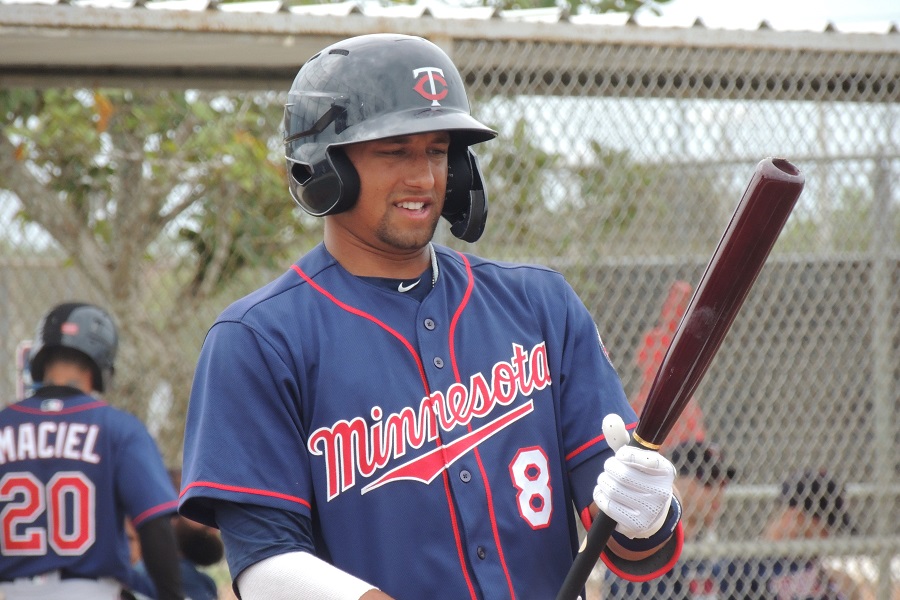 Graduating Prospects Besides Guerrero Jr., other top ranked prospects like Fernando Tatis Jr. and Eloy Jimenez have been on their big league squads since the season started. Both of these top prospects have taken different routes to baseball’s highest level. That being said, both will be graduating from prospect lists early this season. Jimenez signed a unique contact with the division rival White Sox this off-season. A couple weeks ago, I wrote about the possibility of the Twins approaching Royce Lewis and/or Alex Kirilloff with a similar deal. With a deal like this, there was no reason to keep Jimenez in the minors. He was under contract and the team could let him play at the big league level. Tatis Jr. was a surprise to make the Padres roster out of spring training. Manny Machado and Eric Hosmer took out Padres ownership to convince them to let the young prospect make the team. It was a smart move as the shortstop has been carrying their squad this season. Entering play on Monday, he’s batting .300 with a .910 OPS and 12 extra-base hits in 27 games. Lewis’s Competition Lewis is off to a slow start this season so there are plenty of other prospects challenging him for the top spot. Names like Alex Kirilloff, Wander Franco, and Nick Senzel have resumes that warrant consideration for baseball’s top prospect. Twins fans are very familiar with Kirilloff and what he was able to do last season. At Twins Daily, he was named the Minor League Hitter of the Year. MiLB.com also awarded Kirilloff with the Breakout Prospect of the Year. His 71 extra-base hits and 296 total bases ranked as best in the minors. Unfortunately, he has missed time at the beginning of this season with a wrist injury. Franco is 18-years old and he might be on pace to be a better prospect than Guerrero. He’s shown an advanced bat and he has all the makings of a five-tool superstar. Like Kirilloff, Senzel started the season battling an injury. He is starting the year at Triple-A, but he is close to big league ready. Senzel has been ranked as a top-10 prospect by multiple entities for the last three seasons. Slow Start Lewis hasn’t exactly lit the world on fire to start the season. Entering play on Monday, he has gone 17-for-87 (.195 BA) with three extra-base hits. His .538 OPS is 265 points lower than the OPS he compiled last season at Low- and High-A. He’s 20-years old which still makes his 2.4 years younger than the competition in the Florida State League. The slow start shouldn’t be anything to be concerned about. He still has elite speed to go along with strong hitting acumen. Also, his defense seems like it might be string enough to stick at shortstop which would be a very positive thing. Do you think Lewis is baseball’s best prospect? Leave a COMMENT and start the discussion.
 -
Minnesota had an off-night on Thursday but there was plenty of action in the minor leagues. All four affiliates played. This meant 10 of the Twins Daily Top-20 Twins Prospects were in action. Who played well? Who struggled? Who helped their team to a pair of extra-inning victories?TRANSACTIONS IF Travis Blankenhorn promoted from Fort Myers to Pensacola. RED WINGS REPORT Rochester 4, Scranton/WB 3 (10 Innings) Box Score Rochester used some strong pitching and four runs over the final five innings to come out victorious. Zack Littell started and pitched five strong innings. He limited the RailRiders to one run on five hits. It was the second straight start where he pitched at least five innings and allowed one run or less. LaMonte Wade made a run- saving catch in the first inning to save at least one run. Littell struck out four and walked three, but he would be long gone before this one would be decided. Taking over for Littell, Jake Reed and Preston Guilmet combined for three shutout innings. Reed lasted two innings by walking one and allowing one hit. Guilmett struck out the side in the eighth. Gabriel Moya allowed Scranton/WB to tie it up in the ninth. He gave up two runs on three hits. It was his first blown save. DJ Baxendale pitched a perfect tenth inning for his first win. In the sixth inning, John Andreoli doubled with one out. Following a Brent Rooker strikeout, Randy Cesar homered to put Rochester up 2-1. Luke Raley led off the bottom of the seventh and he was able to reach on a fielding error. Two batters later, Jordany Valdespin drove him in with his third double of the season. The Red Wings had a 3-1 lead. After Moya allowed the tying run to score in the ninth, Rochester needed to find a way to score a run. Zander Wiel got to start the bottom of the tenth on second base. With one out, Adam Rosales singled to put runners on the corners. Ronald Torreyes hit a chopper to first and the ball had to be thrown home. Wiel slid in safe and the Red Wings went home happy. BLUE WAHOO BITES Pensacola 5, Jackson 2 (10 Innings) Box Score Sean Poppen compiled five strong innings to put the Blue Wahoos in position to win. He struck out seven over five innings. He limited Jackson to one run on five hits. His season ERA dropped to 0.75. Andro Cutura blew his first save of the season. He allowed one run on two hits in two innings. Pensacola scored a pair of runs in the top of the sixth inning. Tanner English and Mitchell Kranson singled before Jaylin Davis reached on a throwing error. Taylor Grzelakowski came up with the big hit as he doubled to plate both runs. Cody Stashak picked up his second win in relief. He pitched two scoreless innings, while striking out three and walking one. Ryan Mason earned his fourth save of the year. He has yet to allow an earned run. In the tenth inning, Luis Arraez started on second and English walked to put to men on. Kranson used a sacrifice bunt to put two runners in scoring position. A passed ball allowed Arraez to score but it wouldn’t have mattered. Jaylin Davis blasted a two-run bomb. MIRACLE MATTERS Ft. Myers 1, Palm Beach 7 Box Score Fort Myers got off to an early lead. Akil Baddoo led off the game with his second double of the season. Royce Lewis moved him to third with a fly out and then Trevor Larnach drove him in with a sacrifice fly. From there, the Miracle offense went cold. Tyler Watson ran into some trouble in the third inning as the Cardinals plated three runs. The first four batters reached base against him that frame. With the bases full, he allowed a single then a walk and finally a sacrifice fly. In the top of the sixth, Watson ran into some more trouble. A leadoff single was followed by a wild pitch. Another single saw a run score and Watson’s night was done. It was his third straight loss. Anthony Vizcaya and Alex Phillips both pitched two innings without allowing any earned runs. Vizcaya saw two runs scored but they were both unearned. Phillips allowed two hits and struck out two. He’s appeared in eight games so far this season and he has yet to allow an earned run. He has pitched more than one inning in five of his appearances and he has 18 strikeouts on the year. Fort Myers had three total hits. Larnach went 2-for-3 with and RBI to raise his average to .270. Baddoo had the lone extra-base hit. KERNELS NUGGETS Cedar Rapids 0, Kane County 7 Box Score Cedar Rapids offense was almost non-existent and Blayne Enlow struggled for the first time since his first start this season. Enlow had pitched five innings or more in two consecutive starts and limited the opposition to one run in both appearances. In 4 2/3 innings, he allowed seven runs, a career high, on 10 hits. He was still able to strike out seven and walked one. While Enlow struggled, Zach Neff was outstanding in relief. He was asked to pitch 3 1/3 innings. He didn’t allow any runs and he limited Kane County to two hits. Neff had allowed multiple runs in three of his six appearances entering the night. Kernels 1-4 hitters combined to go 0-for-16 with six strikeouts. Gilberto Celestino was the only batter with multiple hits. He finished 2-for-3 with his second double of the year. Joe Cronin and Yeltsin Encarnacion both went 1-for-3. TWINS DAILY PLAYERS OF THE DAY TD Pitcher of the Day- Zach Neff, Cedar Rapids (3.1 IP, 0 ER, 2 H, 3 K) TD Hitter of the Day- Jaylin Davis, Pensacola (2-for-5, HR, 2 RBI, R) PROSPECT SUMMARY Here’s a look at how the Twins Daily Top 20 Twins Prospects performed: #1 - Royce Lewis (Ft. Myers) – 0-4, K #2 - Alex Kirilloff (Pensacola) - Injured List #3 - Brusdar Graterol (Pensacola) – Did not pitch #4 - Trevor Larnach (Ft. Myers) – 2-3, RBI #5 - Wander Javier (EST) - No Game #6 - Brent Rooker (Rochester) – 0-2, 2 K #7 - Jhoan Duran (Ft. Myers) – Did not pitch #8 - Lewis Thorpe (Rochester) - Did not pitch #9 - Blayne Enlow (Cedar Rapids) – 4.2 IP, 7 ER, 10 H, 7 K, BB #10 - Akil Baddoo (Ft. Myers) – 1-4, R #11 - Nick Gordon (Rochester) - Injured List #12 - Stephen Gonsalves (Rochester) - Injured List #13 - Ryan Jeffers (Ft. Myers) – Did not play #14 - Ben Rortvedt (Ft. Myers) - 0-3 #15 - Yunior Severino (Cedar Rapids) – Injured List #16 - Gilberto Celestino (Cedar Rapids) – 2-3 #17 - Zack Littell (Rochester) – 5 IP, ER, 5 H, 4 K, 3 BB #18 - LaMonte Wade (Rochester) – 0-2, K #19 - Jorge Alcala (Pensacola) – Did not pitch #20 - Jose Miranda (Ft. Myers) – 0-3 FRIDAY’S PROBABLE STARTERS Rochester vs. Pawtucket (5:35 CST) – RHP Chase De Jong (0-1, 11.12 ERA) Pensacola @ Jackson (6:05 CST) – RHP Jorge Alcala (4-0, 3.92 ERA) Fort Myers vs. Palm Beach (5:30 CST) – RHP Bailey Ober (1-0, 0.00 ERA) Cedar Rapids @ Kane County (6:30 CST) – RHP Jordan Balazovic (2-1, 2.45 ERA) Please feel free to ask any questions and discuss Thursday’s games. Click here to view the article
- 8 replies
-
- 1
-
-
- jaylin davis
- zach neff
- (and 3 more)
-
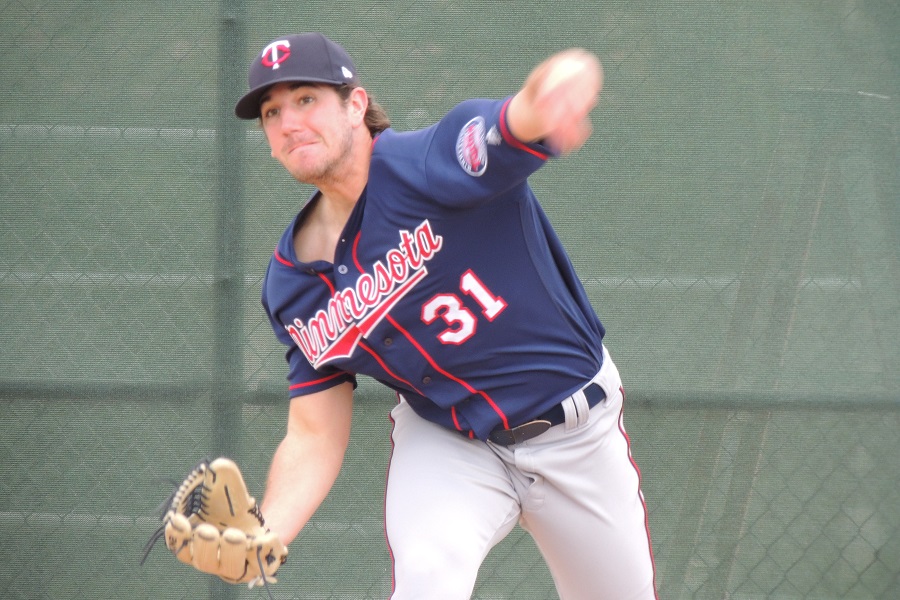 TRANSACTIONS IF Travis Blankenhorn promoted from Fort Myers to Pensacola. RED WINGS REPORT Rochester 4, Scranton/WB 3 (10 Innings) Box Score Rochester used some strong pitching and four runs over the final five innings to come out victorious. Zack Littell started and pitched five strong innings. He limited the RailRiders to one run on five hits. It was the second straight start where he pitched at least five innings and allowed one run or less. LaMonte Wade made a run- saving catch in the first inning to save at least one run. Littell struck out four and walked three, but he would be long gone before this one would be decided. https://twitter.com/RocRedWings/status/1121506353086902273 Taking over for Littell, Jake Reed and Preston Guilmet combined for three shutout innings. Reed lasted two innings by walking one and allowing one hit. Guilmett struck out the side in the eighth. Gabriel Moya allowed Scranton/WB to tie it up in the ninth. He gave up two runs on three hits. It was his first blown save. DJ Baxendale pitched a perfect tenth inning for his first win. In the sixth inning, John Andreoli doubled with one out. Following a Brent Rooker strikeout, Randy Cesar homered to put Rochester up 2-1. Luke Raley led off the bottom of the seventh and he was able to reach on a fielding error. Two batters later, Jordany Valdespin drove him in with his third double of the season. The Red Wings had a 3-1 lead. After Moya allowed the tying run to score in the ninth, Rochester needed to find a way to score a run. Zander Wiel got to start the bottom of the tenth on second base. With one out, Adam Rosales singled to put runners on the corners. Ronald Torreyes hit a chopper to first and the ball had to be thrown home. Wiel slid in safe and the Red Wings went home happy. BLUE WAHOO BITES Pensacola 5, Jackson 2 (10 Innings) Box Score Sean Poppen compiled five strong innings to put the Blue Wahoos in position to win. He struck out seven over five innings. He limited Jackson to one run on five hits. His season ERA dropped to 0.75. Andro Cutura blew his first save of the season. He allowed one run on two hits in two innings. Pensacola scored a pair of runs in the top of the sixth inning. Tanner English and Mitchell Kranson singled before Jaylin Davis reached on a throwing error. Taylor Grzelakowski came up with the big hit as he doubled to plate both runs. Cody Stashak picked up his second win in relief. He pitched two scoreless innings, while striking out three and walking one. Ryan Mason earned his fourth save of the year. He has yet to allow an earned run. In the tenth inning, Luis Arraez started on second and English walked to put to men on. Kranson used a sacrifice bunt to put two runners in scoring position. A passed ball allowed Arraez to score but it wouldn’t have mattered. Jaylin Davis blasted a two-run bomb. MIRACLE MATTERS Ft. Myers 1, Palm Beach 7 Box Score Fort Myers got off to an early lead. Akil Baddoo led off the game with his second double of the season. Royce Lewis moved him to third with a fly out and then Trevor Larnach drove him in with a sacrifice fly. From there, the Miracle offense went cold. Tyler Watson ran into some trouble in the third inning as the Cardinals plated three runs. The first four batters reached base against him that frame. With the bases full, he allowed a single then a walk and finally a sacrifice fly. In the top of the sixth, Watson ran into some more trouble. A leadoff single was followed by a wild pitch. Another single saw a run score and Watson’s night was done. It was his third straight loss. Anthony Vizcaya and Alex Phillips both pitched two innings without allowing any earned runs. Vizcaya saw two runs scored but they were both unearned. Phillips allowed two hits and struck out two. He’s appeared in eight games so far this season and he has yet to allow an earned run. He has pitched more than one inning in five of his appearances and he has 18 strikeouts on the year. Fort Myers had three total hits. Larnach went 2-for-3 with and RBI to raise his average to .270. Baddoo had the lone extra-base hit. KERNELS NUGGETS Cedar Rapids 0, Kane County 7 Box Score Cedar Rapids offense was almost non-existent and Blayne Enlow struggled for the first time since his first start this season. Enlow had pitched five innings or more in two consecutive starts and limited the opposition to one run in both appearances. In 4 2/3 innings, he allowed seven runs, a career high, on 10 hits. He was still able to strike out seven and walked one. While Enlow struggled, Zach Neff was outstanding in relief. He was asked to pitch 3 1/3 innings. He didn’t allow any runs and he limited Kane County to two hits. Neff had allowed multiple runs in three of his six appearances entering the night. Kernels 1-4 hitters combined to go 0-for-16 with six strikeouts. Gilberto Celestino was the only batter with multiple hits. He finished 2-for-3 with his second double of the year. Joe Cronin and Yeltsin Encarnacion both went 1-for-3. TWINS DAILY PLAYERS OF THE DAY TD Pitcher of the Day- Zach Neff, Cedar Rapids (3.1 IP, 0 ER, 2 H, 3 K) TD Hitter of the Day- Jaylin Davis, Pensacola (2-for-5, HR, 2 RBI, R) PROSPECT SUMMARY Here’s a look at how the Twins Daily Top 20 Twins Prospects performed: #1 - Royce Lewis (Ft. Myers) – 0-4, K #2 - Alex Kirilloff (Pensacola) - Injured List #3 - Brusdar Graterol (Pensacola) – Did not pitch #4 - Trevor Larnach (Ft. Myers) – 2-3, RBI #5 - Wander Javier (EST) - No Game #6 - Brent Rooker (Rochester) – 0-2, 2 K #7 - Jhoan Duran (Ft. Myers) – Did not pitch #8 - Lewis Thorpe (Rochester) - Did not pitch #9 - Blayne Enlow (Cedar Rapids) – 4.2 IP, 7 ER, 10 H, 7 K, BB #10 - Akil Baddoo (Ft. Myers) – 1-4, R #11 - Nick Gordon (Rochester) - Injured List #12 - Stephen Gonsalves (Rochester) - Injured List #13 - Ryan Jeffers (Ft. Myers) – Did not play #14 - Ben Rortvedt (Ft. Myers) - 0-3 #15 - Yunior Severino (Cedar Rapids) – Injured List #16 - Gilberto Celestino (Cedar Rapids) – 2-3 #17 - Zack Littell (Rochester) – 5 IP, ER, 5 H, 4 K, 3 BB #18 - LaMonte Wade (Rochester) – 0-2, K #19 - Jorge Alcala (Pensacola) – Did not pitch #20 - Jose Miranda (Ft. Myers) – 0-3 FRIDAY’S PROBABLE STARTERS Rochester vs. Pawtucket (5:35 CST) – RHP Chase De Jong (0-1, 11.12 ERA) Pensacola @ Jackson (6:05 CST) – RHP Jorge Alcala (4-0, 3.92 ERA) Fort Myers vs. Palm Beach (5:30 CST) – RHP Bailey Ober (1-0, 0.00 ERA) Cedar Rapids @ Kane County (6:30 CST) – RHP Jordan Balazovic (2-1, 2.45 ERA) Please feel free to ask any questions and discuss Thursday’s games.
 -
Minnesota’s bullpen has been one point of contention this season. There are a lot of unknowns and fans have been clamoring to add the best free agent relief pitcher, Craig Kimbrel. The Twins seem to be in a decent position without adding Kimbrel on a multi-year contract for over $40 million. That still doesn’t mean he couldn’t help the current squad. How would a Kimbrel signing impact the rest of the bullpen?Early Season Results Minnesota’s limited amount of games to start the season has certainly altered the bullpen’s results. Only three pitchers have appeared in double-digits games (Trevor May, Trevor Hildenberger, and Taylor Rogers). Blake Parker and Taylor Rogers have split save situations with both players earning three saves or more. There have been some surprises so far this season. Minus one appearance in Houston, Ryne Harper has been outstanding. There’s reason to believe he could continue this in the weeks ahead. Hildenberger, Rogers, and Parker have also been outstanding. Does that mean the Twins aren’t that desperate to add depth to the bullpen? The Ninth Inning Question Craig Kimbrel might not want to pitch outside of the ninth inning. With 333 saves, he currently ranks in the top 14 on the all-time list. He’s a long way away from catching Mariano Rivera’s 652 saves, but there is room for him to move up the list. Even if he signs after the draft this season, he could still pass Rollie Fingers (341 saves) and Randy Myers (347 saves). Also, Kimbrel might not be willing to pitch outside of the ninth inning. Rocco Baldelli has been open to using relief pitchers in the best situation. Would Kimbrel be willing to enter the game in the seventh inning if the opposing team’s best hitters were scheduled to appear. Relief pitching has drastically changed during the last handful of seasons. Kimbrel might be more worried about his long-term legacy than the results of team he has little connection tio. Trickle Down Effect If Kimbrel came in to be the team’s closer, other strong relief pitchers would be able to be utilized in earlier innings. May, Hildenberger, Rogers, and Parker could be utilized in earlier innings. Pushing all of the relief pitchers back an inning would mean the starters don’t need to go as long. This could make the bullpen even stronger and it could allow the Twins even more separation in the American League Central Division. Will Kimbrel solve everything that is wrong with this team? No… But he could add depth to a strong core. This could be the difference in a first-round exit and a competitive team in the AL Championship Series. Could Kimbrel make that much of a difference? I believe he can… Click here to view the article
-
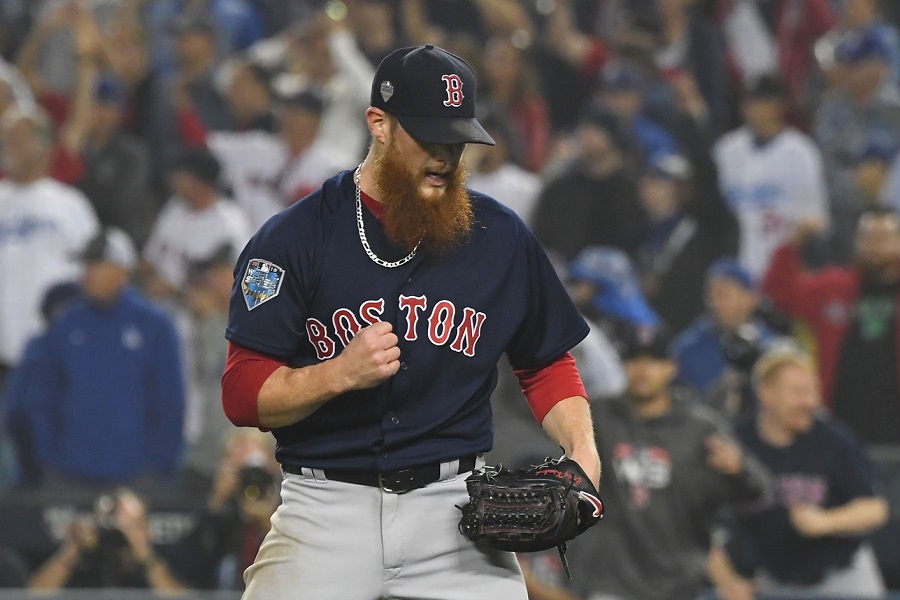 Early Season Results Minnesota’s limited amount of games to start the season has certainly altered the bullpen’s results. Only three pitchers have appeared in double-digits games (Trevor May, Trevor Hildenberger, and Taylor Rogers). Blake Parker and Taylor Rogers have split save situations with both players earning three saves or more. There have been some surprises so far this season. Minus one appearance in Houston, Ryne Harper has been outstanding. There’s reason to believe he could continue this in the weeks ahead. Hildenberger, Rogers, and Parker have also been outstanding. Does that mean the Twins aren’t that desperate to add depth to the bullpen? The Ninth Inning Question Craig Kimbrel might not want to pitch outside of the ninth inning. With 333 saves, he currently ranks in the top 14 on the all-time list. He’s a long way away from catching Mariano Rivera’s 652 saves, but there is room for him to move up the list. Even if he signs after the draft this season, he could still pass Rollie Fingers (341 saves) and Randy Myers (347 saves). Also, Kimbrel might not be willing to pitch outside of the ninth inning. Rocco Baldelli has been open to using relief pitchers in the best situation. Would Kimbrel be willing to enter the game in the seventh inning if the opposing team’s best hitters were scheduled to appear. Relief pitching has drastically changed during the last handful of seasons. Kimbrel might be more worried about his long-term legacy than the results of team he has little connection tio. Trickle Down Effect If Kimbrel came in to be the team’s closer, other strong relief pitchers would be able to be utilized in earlier innings. May, Hildenberger, Rogers, and Parker could be utilized in earlier innings. Pushing all of the relief pitchers back an inning would mean the starters don’t need to go as long. This could make the bullpen even stronger and it could allow the Twins even more separation in the American League Central Division. Will Kimbrel solve everything that is wrong with this team? No… But he could add depth to a strong core. This could be the difference in a first-round exit and a competitive team in the AL Championship Series. Could Kimbrel make that much of a difference? I believe he can…
 -
Ryne Harper is not a traditional rookie. As a 30-year old, he took the long-road to the big leagues and he has made his presence felt so far in the Twins bullpen. He worked his way through the Braves and Mariners farm systems before landing with the Twins. How has it taken this long for Mr. Harper to stick at the big-league level?One of Harper’s first pieces of success has been his ability to limit hard contact. Out of the 22 batted balls against him this season, none have been barreled up. This has helped his 89.8 exit velocity to be right around the league average. By not giving up hard contact, there have been few hits recorded against him. Harper has been successful by relying on two pitches. His curveball has averaged 72.5 mph, but batters still can’t seem to figure it out. So far this season, men stepping in the box have only been able to muster up a .286 slugging percentage when seeing his curveball. However, his curveball hasn’t been his only weapon. Because of the threat of his curveball, his fastball has been even better. He’s thrown almost the same number of both pitches, but he has yet to allow an extra-base hit off of his fastball. Opponents have only two hits off his heater and heater is a loose term for an 87.8 mph pitch. Batters are averaging a 19.6 degree launch angle against Harper, which is higher than the league average of 11.0. That being said, players still aren’t able to make solid contact against his two-pitch delivery. His weighted OBP ranks in the top 5% in the entire league. He’s also been avoiding walks, but this trend follows from his minor league career. As a professional, he has averaged 2.7 BB/9 and he has two walks in 8 1/3 innings so far this season. Harper hasn’t shown a high strikeout rate at the big-league level, but he averaged over 11 SO/9 in the minors. He needs to limit base runners and he has been able to do that throughout his career. If you want to have some fun, go and check out Harper’s Baseball Savant page from MLB.com. You can see video of every one of his pitches from this season. He’s thrown one cutter this season and it came against another Haper from Philadelphia. Yes, the man that signed for more than $300 million this off-season. Spoiler alert… Minnesota’s Harper is able to retire Philadelphia’s Harper. There are some signs of trouble in Harper’s numbers. Players might not be barreling up the ball, but he is giving up hard hit balls over 40% of the time. That’s almost 7% higher than the league average. Some of these hard-hit balls are because of his low velocity. There’s still room for him to get closer to his minor league strikeout numbers. Minnesota’s bullpen still has flaws but Harper seems to have found his niche. The league might be able to make some adjustments but his change in speeds separates him from the pack at this point. Batters have to guess if the fastball or the curveball is coming. So far, they haven’t been very lucky. Do you think Harper will be able to continue his success? Leave a COMMENT and start the discussion. Click here to view the article
-
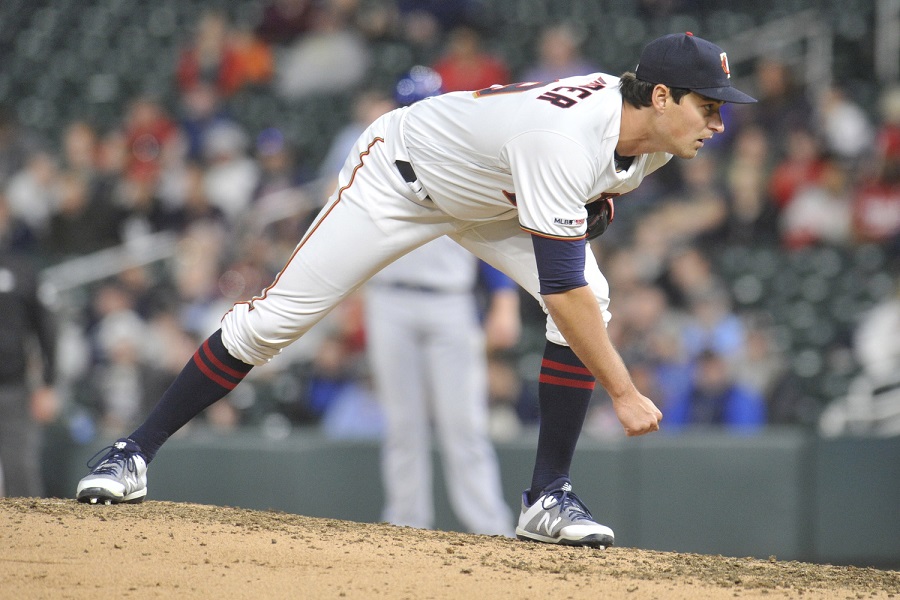 One of Harper’s first pieces of success has been his ability to limit hard contact. Out of the 22 batted balls against him this season, none have been barreled up. This has helped his 89.8 exit velocity to be right around the league average. By not giving up hard contact, there have been few hits recorded against him. https://twitter.com/NoDakTwinsFan/status/1120141591056986112 Harper has been successful by relying on two pitches. His curveball has averaged 72.5 mph, but batters still can’t seem to figure it out. So far this season, men stepping in the box have only been able to muster up a .286 slugging percentage when seeing his curveball. However, his curveball hasn’t been his only weapon. Because of the threat of his curveball, his fastball has been even better. He’s thrown almost the same number of both pitches, but he has yet to allow an extra-base hit off of his fastball. Opponents have only two hits off his heater and heater is a loose term for an 87.8 mph pitch. Batters are averaging a 19.6 degree launch angle against Harper, which is higher than the league average of 11.0. That being said, players still aren’t able to make solid contact against his two-pitch delivery. His weighted OBP ranks in the top 5% in the entire league. He’s also been avoiding walks, but this trend follows from his minor league career. As a professional, he has averaged 2.7 BB/9 and he has two walks in 8 1/3 innings so far this season. Harper hasn’t shown a high strikeout rate at the big-league level, but he averaged over 11 SO/9 in the minors. He needs to limit base runners and he has been able to do that throughout his career. If you want to have some fun, go and check out Harper’s Baseball Savant page from MLB.com. You can see video of every one of his pitches from this season. He’s thrown one cutter this season and it came against another Haper from Philadelphia. Yes, the man that signed for more than $300 million this off-season. Spoiler alert… Minnesota’s Harper is able to retire Philadelphia’s Harper. There are some signs of trouble in Harper’s numbers. Players might not be barreling up the ball, but he is giving up hard hit balls over 40% of the time. That’s almost 7% higher than the league average. Some of these hard-hit balls are because of his low velocity. There’s still room for him to get closer to his minor league strikeout numbers. Minnesota’s bullpen still has flaws but Harper seems to have found his niche. The league might be able to make some adjustments but his change in speeds separates him from the pack at this point. Batters have to guess if the fastball or the curveball is coming. So far, they haven’t been very lucky. Do you think Harper will be able to continue his success? Leave a COMMENT and start the discussion.
 -
Minnesota completed a sweep of the Orioles on Sunday afternoon. It was quite the series for the Twins as the club does their best to take care of some of the rebuilding clubs in the American League. Minnesota will get to see Baltimore again next weekend, but first they need to put on their big-boy pants and face the Astros. There was only one game in the Twins farm system on Sunday. Was Pensacola able to make a clean sweep for the organization?RED WINGS REPORT Rochester has had a slow start to the season with a 5-11 record. Currently the club is seven games back in the International League North. Rochester starts a four-game series with Scranton/WB on Monday. The RailRiders are 8-6 on the season and sit in third place in the division. If Rochester is going to make a move, this is as good of time as any to start moving up the standings. BLUE WAHOO BITES Pensacola 8, Mobile 5 Box Score Jordan Gore got things started with a lead-off double in the first frame. He moved to second on a wild-pitch. Even without an out at that point, it took a two-out single from Taylor Grzelakowski to bring in Gore for the first run of the game. That wouldn’t be the end of the scoring for the Blue Wahoos. Pensacola put up a five-spot in the third inning with help from the middle of the order. Ernie De La Trinidad singled before coming around to score on a Caleb Hamilton double. Jaylin Davis followed with his second home run of the season. Grzelakowski walked and then he moved to third on a Luis Arraez double. Jimmy Kerrigan singled to drive in a run and put runners on the corners. Joe Cronin drove in the final run of the innings with a sacrifice fly. Del La Trinidad got things started again in the fourth inning with his first homer of the year. Hamilton followed with a single and Davis added a double to put runners on the corners. Grzelakoski drove in another run with a sacrifice fly to put the score at 8-0. Jorge Alcala was cruising through four shutout innings before running into trouble in the fifth. He allowed five runs that inning, but he was able to finish the frame. He struck out eight and walked one. Tyler Jay took over and was fantastic through two shutout innings. He didn’t walk a batter and struck out four. Gabriel Moya made his second rehab appearance. He recorded two outs and both were strikeouts. However, he surrendered two walks and one hit to make things a little dicey. Dusten Knight finished off his fourth save by pitching 1 1/3 innings. He struck out two and went for the back flip. MIRACLE MATTERS Fort Myers enters play on Monday with a 10-7 record. The Miracle are currently in third place in the Florida State League South and trail first place by two games. Fort Myers will start a three-game set against first-place Bradenton on Monday. If the club were to sweep, the Miracle could take over first place in the division. KERNELS NUGGETS Cedar Rapids has started the year 7-9 and they will start Monday 4.5 games out of first place in the Midwest League Western Division. The Kernels start a three-game set on Monday in Wisconsin, which is currently half a game back in the standings. Andrew Cabezas will be looking to pick up his first win of the season. TWINS DAILY PLAYERS OF THE DAY TD Pitcher of the Day- Tyler Jay, Pensacola (2.0 IP, 0 ER, 4 K, 3 H) TD Hitter of the Day- Caleb Hamilton, Pensacola (3-5, 2 2B, 3 R, RBI, K) PROSPECT SUMMARY Here’s a look at how the Twins Daily Top 20 Twins Prospects performed: #2 - Alex Kirilloff (Pensacola) - Injured List #3 - Brusdar Graterol (Pensacola) – Did not pitch #19 - Jorge Alcala (Pensacola) – Did not play MONDAY’S PROBABLE STARTERS Rochester vs. Scranton/WB (5:05 CST) – TBD Pensacola vs. Mobile (6:35 CST) – RHP Brusdar Graterol (1-0, 0.52 ERA) Fort Myers @ Bradenton (5:30 CST) – TBD Cedar Rapids @ Wisconsin (6:35 CST) – RHP Andrew Cabezas (0-0, 6.00 ERA) Please feel free to ask any questions and discuss Sunday’s games. Click here to view the article
- 9 replies
-
- 2
-
-
- tyler jay
- ernie de la trinidad
- (and 3 more)
-
Twins Minor League Report (4/21): Pensacola Pounds Out 12 Hits
Cody Christie posted an article in Minor Leagues
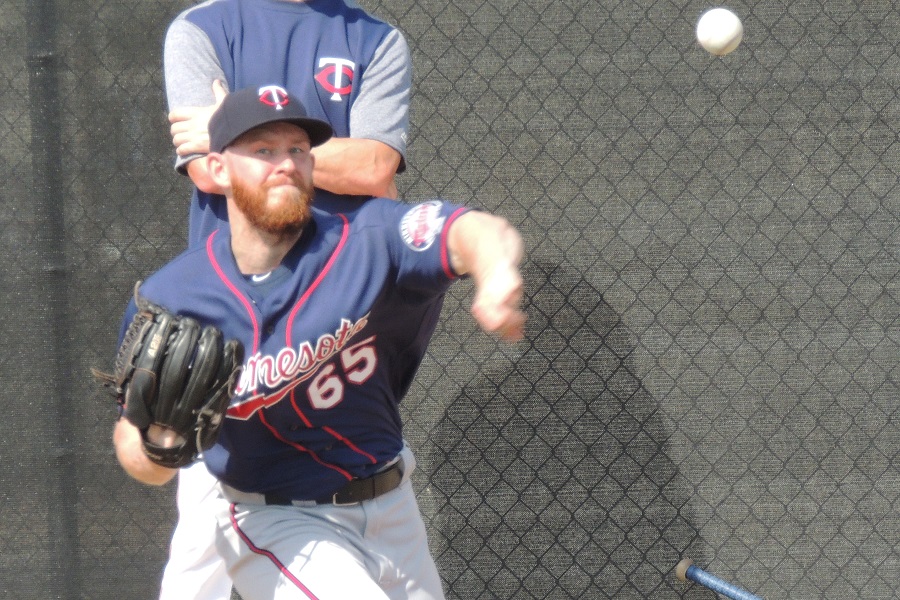 RED WINGS REPORT Rochester has had a slow start to the season with a 5-11 record. Currently the club is seven games back in the International League North. Rochester starts a four-game series with Scranton/WB on Monday. The RailRiders are 8-6 on the season and sit in third place in the division. If Rochester is going to make a move, this is as good of time as any to start moving up the standings. BLUE WAHOO BITES Pensacola 8, Mobile 5 Box Score Jordan Gore got things started with a lead-off double in the first frame. He moved to second on a wild-pitch. Even without an out at that point, it took a two-out single from Taylor Grzelakowski to bring in Gore for the first run of the game. That wouldn’t be the end of the scoring for the Blue Wahoos. Pensacola put up a five-spot in the third inning with help from the middle of the order. Ernie De La Trinidad singled before coming around to score on a Caleb Hamilton double. Jaylin Davis followed with his second home run of the season. Grzelakowski walked and then he moved to third on a Luis Arraez double. Jimmy Kerrigan singled to drive in a run and put runners on the corners. Joe Cronin drove in the final run of the innings with a sacrifice fly. Del La Trinidad got things started again in the fourth inning with his first homer of the year. Hamilton followed with a single and Davis added a double to put runners on the corners. Grzelakoski drove in another run with a sacrifice fly to put the score at 8-0. Jorge Alcala was cruising through four shutout innings before running into trouble in the fifth. He allowed five runs that inning, but he was able to finish the frame. He struck out eight and walked one. Tyler Jay took over and was fantastic through two shutout innings. He didn’t walk a batter and struck out four. Gabriel Moya made his second rehab appearance. He recorded two outs and both were strikeouts. However, he surrendered two walks and one hit to make things a little dicey. Dusten Knight finished off his fourth save by pitching 1 1/3 innings. He struck out two and went for the back flip. https://twitter.com/billvilonaPNJ/status/1120134149485027328 MIRACLE MATTERS Fort Myers enters play on Monday with a 10-7 record. The Miracle are currently in third place in the Florida State League South and trail first place by two games. Fort Myers will start a three-game set against first-place Bradenton on Monday. If the club were to sweep, the Miracle could take over first place in the division. KERNELS NUGGETS Cedar Rapids has started the year 7-9 and they will start Monday 4.5 games out of first place in the Midwest League Western Division. The Kernels start a three-game set on Monday in Wisconsin, which is currently half a game back in the standings. Andrew Cabezas will be looking to pick up his first win of the season. TWINS DAILY PLAYERS OF THE DAY TD Pitcher of the Day- Tyler Jay, Pensacola (2.0 IP, 0 ER, 4 K, 3 H) TD Hitter of the Day- Caleb Hamilton, Pensacola (3-5, 2 2B, 3 R, RBI, K) PROSPECT SUMMARY Here’s a look at how the Twins Daily Top 20 Twins Prospects performed: #2 - Alex Kirilloff (Pensacola) - Injured List #3 - Brusdar Graterol (Pensacola) – Did not pitch #19 - Jorge Alcala (Pensacola) – Did not play MONDAY’S PROBABLE STARTERS Rochester vs. Scranton/WB (5:05 CST) – TBD Pensacola vs. Mobile (6:35 CST) – RHP Brusdar Graterol (1-0, 0.52 ERA) Fort Myers @ Bradenton (5:30 CST) – TBD Cedar Rapids @ Wisconsin (6:35 CST) – RHP Andrew Cabezas (0-0, 6.00 ERA) Please feel free to ask any questions and discuss Sunday’s games.
 -
Have you ever wanted your own airplane? Well, the Twins’ Double-A affiliate was sort of able to accomplish this on Thursday. There’s more to the story below. Also, there was plenty of action throughout the Twins’ system. Two teams tried to mount comebacks, while another took advantage of the opportunities provided by the other team.TRANSACTIONS ACTIVATED: C David Banuelos from the 7-day injured list for Cedar Rapids RED WINGS REPORT Rochester 5, Lehigh Valley 6 Box Score Rochester outhit the IronPigs (10 to 7) and scored a late run to make things interesting, but it wasn’t enough. The club didn’t take advantage of some opportunities as they left eight runners on base and went 1-for-5 with runners in scoring position. Kohl Stewart took his bumps and bruises in this one as he couldn’t make it out of the fifth inning. He allowed six runs on six hits including two home runs. He struggled to find the zone for most of the night as he threw 100 pitches and only 52 of them were for strikes. After a promising first start of the season, Stewart has thrown clunkers his last two times out. Rochester continued to rely on the long ball in this game. With three solo shots on Thursday, Rochester has hit 22 home runs to produce 33 of the 62 total runs scored this season. LaMonte Wade, Tomas Telis, and Jordany Valdespin joined the home run parade. Also, Telis and Valdespin each added a double. DJ Baxendale pitched 2 2/3 scoreless innings by only allowing one hit. He struck out six and walked one. Matt Magill took the final frame and didn’t allow a runner. He had one strikeout and he has yet to allow a run this season. BLUE WAHOO BITES Pensacola --, Biloxi – (Postponed-Rain) The Blue Wahoos and the Schuckers were postponed on Thursday due to rain. The game will be made up as part of a double-header on Friday, April 19 with first pitch scheduled for 5:35 CST. Pensacola currently has a 9-4 record and they are in first place by two games in the Southern League South. In other news, the Blue Wahoos have teamed up with Silver Airways for a Kazoo- themed airplane. Kazoo is the name of the Blue Wahoos mascot. Silver Airways has flights from Pensacola to Fort Lauderdale, Tampa, and Orlando. MIRACLE MATTERS Ft. Myers 3, Charlotte 6 Box Score Fort Myers rallied for three runs in the bottom of the ninth, but a six-run deficit was too much to overcome. Tyler Watson started and pitched into the sixth inning for the second consecutive game. He allowed two runs on three hits while striking out five and walking one. Anthony Vizcaya took over for Watson and struggled in parts of two innings. He allowed four runs on four hits as Charlotte pushed their lead to 6-0. Calvin Faucher had a very nice bounce back game. In his last appearance, he allowed three runs while only recording one out. Tonight, he pitched 2 2/3 shutout innings with a pair of strikeouts and two walks. In the bottom of the ninth, Akil Baddoo lead off with a triple and was driven home on a Lewin Diaz groundout. Jose Miranda followed with a double before Trevor Larnach singled to put runners on the corners. A double from Ryan Jeffers scored a run and there were still runners on the corners. Ben Rortvedt would ground out to score another run and Michael Helman recorded the game’s final out. KERNELS NUGGETS Cedar Rapids 8, Beloit 2 Box Score Cedar Rapids jumped out to an early 4-0 thanks to some miscues by the Snappers. With one out, Gabe Snyder was hit by a pitch. Trey Cabbage followed and reached base on an error by the shortstop. Jacob Pearson struck out for the second out of the inning and it looked like Beloit might get out without allowing a run. However, Gilberto Celestino and Andrew Bechtold knocked back-to-back singles to push across a pair of runs. Celestino then stole third but it wouldn’t matter because David Banuelos tripled to score two more runs and put Cedar Rapids up 4-0. Cedar Rapids allowed a pair of runs in the top of the fifth inning, but the club got those runs back in the bottom of the frame. The Kernels were able to do this without recording a hit. Celestino and Bechtold walked to start the inning. With Banuelos batting, an error by the third baseman loaded up the bases. Michael Davis drew a walk to score one run and a wild pitch put the score at 6-2. Jordan Balazovic pitched five strong innings. He struck out eight, walked one, and limited the Snappers to two runs (one earned). He has allowed two runs or fewer in every start this season. His eight strikeouts tonight were the fewest he’s had all year (nine strikeouts in both previous starts). Jose Martinez pitched two shutout innings and struck out one. Joe Record collected the final six outs with four strikeouts. TWINS DAILY PLAYERS OF THE DAY TD Pitcher of the Day- Jordan Balazovic, Cedar Rapids (5.0 IP, 1 ER, 4 H, 8 K, 1 BB) TD Hitter of the Day- Tomas Telis, Rochester (2-for-4, HR, 2B, 2 RBI, R) PROSPECT SUMMARY Here’s a look at how the Twins Daily Top 20 Twins Prospects performed: #1 - Royce Lewis (Ft. Myers) – Did not play #2 - Alex Kirilloff (Pensacola) - Injured List #3 - Brusdar Graterol (Pensacola) - No Game #4 - Trevor Larnach (Ft. Myers) – 1-4, R #5 - Wander Javier (EST) - No Game #6 - Brent Rooker (Rochester) – Did not play #7 - Jhoan Duran (Ft. Myers) – Did not pitch #8 - Lewis Thorpe (Rochester) - Did not pitch #9 - Blayne Enlow (Cedar Rapids) – Did not pitch #10 - Akil Baddoo (Ft. Myers) – 1-3, 3B, R, K #11 - Nick Gordon (Rochester) - Injured List #12 - Stephen Gonsalves (Rochester) - Injured List #13 - Ryan Jeffers (Ft. Myers) – 1-4, 2B, RBI, K #14 - Ben Rortvedt (Ft. Myers) - 0-4, RBI #15 - Yunior Severino (Cedar Rapids) – Injured List #16 - Gilberto Celestino (Cedar Rapids) – 1-3, RBI, 2 K #17 - Zack Littell (Rochester) – Did not pitch #18 - LaMonte Wade (Rochester) – 2-4, HR, R, RBI, BB #19 - Jorge Alcala (Pensacola) – No Game #20 - Jose Miranda (Ft. Myers) – 1-4, 2B, R, K FRIDAY’S PROBABLE STARTERS Rochester @ Lehigh Valley (6:05 CST) – RHP Zack Littell (0-2, 7.71 ERA) Pensacola @ Biloxi (5:35 CST) – RHP Griffin Jax (0-0, 0.00 ERA) Pensacola @ Biloxi (Game 2) – TBD Fort Myers vs. Charlotte (5:30 CST) – RHP Bailey Ober (1-0, 0.00 ERA) Cedar Rapids vs. Beloit (6:35 CST) – RHP Cole Sands (0-0, 3.00 ERA) Please feel free to ask any questions and discuss Thursday’s games. Click here to view the article
-
 TRANSACTIONS ACTIVATED: C David Banuelos from the 7-day injured list for Cedar Rapids RED WINGS REPORT Rochester 5, Lehigh Valley 6 Box Score Rochester outhit the IronPigs (10 to 7) and scored a late run to make things interesting, but it wasn’t enough. The club didn’t take advantage of some opportunities as they left eight runners on base and went 1-for-5 with runners in scoring position. Kohl Stewart took his bumps and bruises in this one as he couldn’t make it out of the fifth inning. He allowed six runs on six hits including two home runs. He struggled to find the zone for most of the night as he threw 100 pitches and only 52 of them were for strikes. After a promising first start of the season, Stewart has thrown clunkers his last two times out. Rochester continued to rely on the long ball in this game. With three solo shots on Thursday, Rochester has hit 22 home runs to produce 33 of the 62 total runs scored this season. LaMonte Wade, Tomas Telis, and Jordany Valdespin joined the home run parade. Also, Telis and Valdespin each added a double. DJ Baxendale pitched 2 2/3 scoreless innings by only allowing one hit. He struck out six and walked one. Matt Magill took the final frame and didn’t allow a runner. He had one strikeout and he has yet to allow a run this season. BLUE WAHOO BITES Pensacola --, Biloxi – (Postponed-Rain) The Blue Wahoos and the Schuckers were postponed on Thursday due to rain. The game will be made up as part of a double-header on Friday, April 19 with first pitch scheduled for 5:35 CST. Pensacola currently has a 9-4 record and they are in first place by two games in the Southern League South. In other news, the Blue Wahoos have teamed up with Silver Airways for a Kazoo- themed airplane. Kazoo is the name of the Blue Wahoos mascot. Silver Airways has flights from Pensacola to Fort Lauderdale, Tampa, and Orlando. https://twitter.com/BlueWahoosBBall/status/1118889858456530944 MIRACLE MATTERS Ft. Myers 3, Charlotte 6 Box Score Fort Myers rallied for three runs in the bottom of the ninth, but a six-run deficit was too much to overcome. Tyler Watson started and pitched into the sixth inning for the second consecutive game. He allowed two runs on three hits while striking out five and walking one. Anthony Vizcaya took over for Watson and struggled in parts of two innings. He allowed four runs on four hits as Charlotte pushed their lead to 6-0. Calvin Faucher had a very nice bounce back game. In his last appearance, he allowed three runs while only recording one out. Tonight, he pitched 2 2/3 shutout innings with a pair of strikeouts and two walks. In the bottom of the ninth, Akil Baddoo lead off with a triple and was driven home on a Lewin Diaz groundout. Jose Miranda followed with a double before Trevor Larnach singled to put runners on the corners. A double from Ryan Jeffers scored a run and there were still runners on the corners. Ben Rortvedt would ground out to score another run and Michael Helman recorded the game’s final out. KERNELS NUGGETS Cedar Rapids 8, Beloit 2 Box Score Cedar Rapids jumped out to an early 4-0 thanks to some miscues by the Snappers. With one out, Gabe Snyder was hit by a pitch. Trey Cabbage followed and reached base on an error by the shortstop. Jacob Pearson struck out for the second out of the inning and it looked like Beloit might get out without allowing a run. However, Gilberto Celestino and Andrew Bechtold knocked back-to-back singles to push across a pair of runs. Celestino then stole third but it wouldn’t matter because David Banuelos tripled to score two more runs and put Cedar Rapids up 4-0. Cedar Rapids allowed a pair of runs in the top of the fifth inning, but the club got those runs back in the bottom of the frame. The Kernels were able to do this without recording a hit. Celestino and Bechtold walked to start the inning. With Banuelos batting, an error by the third baseman loaded up the bases. Michael Davis drew a walk to score one run and a wild pitch put the score at 6-2. Jordan Balazovic pitched five strong innings. He struck out eight, walked one, and limited the Snappers to two runs (one earned). He has allowed two runs or fewer in every start this season. His eight strikeouts tonight were the fewest he’s had all year (nine strikeouts in both previous starts). Jose Martinez pitched two shutout innings and struck out one. Joe Record collected the final six outs with four strikeouts. TWINS DAILY PLAYERS OF THE DAY TD Pitcher of the Day- Jordan Balazovic, Cedar Rapids (5.0 IP, 1 ER, 4 H, 8 K, 1 BB) TD Hitter of the Day- Tomas Telis, Rochester (2-for-4, HR, 2B, 2 RBI, R) PROSPECT SUMMARY Here’s a look at how the Twins Daily Top 20 Twins Prospects performed: #1 - Royce Lewis (Ft. Myers) – Did not play #2 - Alex Kirilloff (Pensacola) - Injured List #3 - Brusdar Graterol (Pensacola) - No Game #4 - Trevor Larnach (Ft. Myers) – 1-4, R #5 - Wander Javier (EST) - No Game #6 - Brent Rooker (Rochester) – Did not play #7 - Jhoan Duran (Ft. Myers) – Did not pitch #8 - Lewis Thorpe (Rochester) - Did not pitch #9 - Blayne Enlow (Cedar Rapids) – Did not pitch #10 - Akil Baddoo (Ft. Myers) – 1-3, 3B, R, K #11 - Nick Gordon (Rochester) - Injured List #12 - Stephen Gonsalves (Rochester) - Injured List #13 - Ryan Jeffers (Ft. Myers) – 1-4, 2B, RBI, K #14 - Ben Rortvedt (Ft. Myers) - 0-4, RBI #15 - Yunior Severino (Cedar Rapids) – Injured List #16 - Gilberto Celestino (Cedar Rapids) – 1-3, RBI, 2 K #17 - Zack Littell (Rochester) – Did not pitch #18 - LaMonte Wade (Rochester) – 2-4, HR, R, RBI, BB #19 - Jorge Alcala (Pensacola) – No Game #20 - Jose Miranda (Ft. Myers) – 1-4, 2B, R, K FRIDAY’S PROBABLE STARTERS Rochester @ Lehigh Valley (6:05 CST) – RHP Zack Littell (0-2, 7.71 ERA) Pensacola @ Biloxi (5:35 CST) – RHP Griffin Jax (0-0, 0.00 ERA) Pensacola @ Biloxi (Game 2) – TBD Fort Myers vs. Charlotte (5:30 CST) – RHP Bailey Ober (1-0, 0.00 ERA) Cedar Rapids vs. Beloit (6:35 CST) – RHP Cole Sands (0-0, 3.00 ERA) Please feel free to ask any questions and discuss Thursday’s games.
