



Seth Stohs
-
Posts
25,909 -
Joined
-
Last visited
-
Days Won
109
Content Type
Profiles
News
Minnesota Twins Videos
2026 Minnesota Twins Top Prospects Ranking
2022 Minnesota Twins Draft Picks
Minnesota Twins Free Agent & Trade Rumors, Notes, & Tidbits
Guides & Resources
2023 Minnesota Twins Draft Picks
The Minnesota Twins Players Project
2024 Minnesota Twins Draft Picks
2025 Minnesota Twins Draft Pick Tracker
2026 Minnesota Twins Draft Tracker: Picks & Bonuses
Forums
Blogs
Events
Store
Downloads
Gallery
Everything posted by Seth Stohs
-
In Episode 6 of Souhan as a podcaster, he was joined by Twins assistant GM Rob Antony. Rob is a great guy and very smart and has worked his way up the Twins ladder. He joined Souhan and the two talked about a few topics, but mainly just shared stories of his time with the Twins, from his days as PR intern until today. I enjoyed the stories about Kirby Puckett and some of the lesser known players from the 1991 team and since. It was just a fun chat, so I encourage people to listen to it.
-
 So we'll likely never know who "won" the bid and what the bid was... Oh well, it was a fun story for a Saturday!!!
-
All points fair. However... Who on the coaching staff would that have been? Maddon was going to Chicago. So, who? Torre? Larussa? Leo Mazzone?
-
Swarzak Outrighted off the 40 man roster
Seth Stohs replied to Brandon's topic in Minnesota Twins Talk
There are a couple of interesting names that will be available for the Rule 5, so having a couple of free spots for free agents, claims, or a Rule 5 pick. -
Swarzak Outrighted off the 40 man roster
Seth Stohs replied to Brandon's topic in Minnesota Twins Talk
My guess is that they would retain Duensing because they know what he brings to the table. -
Astros prospect Mark Appel played on the same Salt River Rafters team with the Twins minor leaguers. He just posted a video of the team's championship. It's pretty good considering he did much of it on his phone. He does talk to a few of the Twins minor leaguers too. It's 15 minutes, but it's definitely worth the watch! Watch the video here. Quick note - you'll find that Eddie Rosario has a bit of a potty mouth... parental advisory...
-
I'm with SDBuhr on this one. Here's a quick look, adn maybe in doing this others will agree or disagree with my assessment on each: Molitor: Mostly is from within the organization since he has been a player, a coach, a minor league instructor (the majority of the time), and then a bench coach most recently. Generally, everyone says that his way of thinking is very different, very educated. Vavra: Certainly is from within the organization. He's been around for about 15 years. Before that, he was in the Dodgers system. He's internal, but again, very intelligent and thinks outside the box. Glynn: 3B coach. He's got 30+ years in professional baseball, only the last three in the Twins system. He's been a big league coach in 4 other organizations and been a scout in our favorite system, the Rays. Hernandez: Yup, he's an inside guy. Brunansky: Sure, he's inside, but also did a great job. I think we'd all agree. Allen: Completely outside the organization. Guardado: I don't know. Played for the organization a decade ago... no coaching experience, but will light fires, which I believe commenters here have been wanting. He also spent time in other organizations since then, playing. All touted for their intelligence, relationships, rapport with players, ability to get the best out of people, and baseball knowledge and plenty of time spent in the big leagues. There have been changes, but more important to me, they've got smart baseball people and guys who fill key roles that we've been looking too, they're not old-school retreads, they're guys willing to use all means to make a team better.
-
Neil Allen interview with Patrick Reusse a half-hour ago. Very good.
-
There are lot of very good, private, family-run businesses that have had a lot of success and lasted decade after decade, maybe even a century. Sometimes those businesses develop a strong business plan and philosophy and despite new generations of ownership and managers and workers, they continue to be successful. Sure, there will be recessions from time to time, but that doesn't (at least it doesn't have to) say that the model is what's broken. Sure, you can bring in some new thoughts from time to time, and those people will have some new and different philosophies and ideas that mesh with the other ideas. But the overriding principals of the company remain constant. Sure, we got from paper to fax to e-mail, we advance and we try things, but the companies can be successful in the long run still. I get it, Mike, (some) want to blow it up and start it from scratch, but that doesn't always work either.
-
This is a great definition of a bench coach. Maybe others would add things to it, but it's pretty in line with what I feel the bench coach's duties are. In saying that, Vavra is very good at all of those things. Remember articles written on him when he was hitting coach talking about his use of advanced stats and more video? He gets it. Are there other guys in baseball who could do that and have done that, like Vavra? Maybe, but none of us knows who they are, do we? Going outside the organization just to go outside the organization makes no sense either.
-
Correct, and being the hitting coach when your team had 2 MVPs, a bunch of silver sluggers, etc., is pretty good. He helped Mauer and Morneau through their great years. He helped Cuddyer and Hunter and Kubel become really good players. he wasn't able to fix Delmon. Not sure we should hold that against him, though he did have his best year with him.
-
Article: The Case for Tony O
Seth Stohs replied to Seth Stohs's topic in Twins Daily Front Page News
For what it's worth, I agree with this sentence. Researching Oliva made me realize that he was one of the top 3-4 players in the American League for an 8-season run. I also always remembered hearing about his declining play after returning from the missed season. Well, he was still pretty good for three more years. -
He won't. He's the bench coach. Gene Glynn is the 3B coach.
-
I don't think that at all. My guess is they talked to a half-dozen or more possible candidates, maybe some were former managers or not, and they came to the realization that Vavra was perfect for the job. They clearly didn't just hand it to him, or they would have announced that at the same time as Brunansky or Glynn.
-
Swarzak Outrighted off the 40 man roster
Seth Stohs replied to Brandon's topic in Minnesota Twins Talk
According to Doogie (via twitter), Swarzak has chosen to become a free agent. -
Swarzak Outrighted off the 40 man roster
Seth Stohs replied to Brandon's topic in Minnesota Twins Talk
I think Colabello 'could' get claimed. I don't think it signals anything for Milone or Duensing at all. No relationship between the moves. -
Swarzak Outrighted off the 40 man roster
Seth Stohs replied to Brandon's topic in Minnesota Twins Talk
I definitely agree with both of those points as well. -
The Twins officially announced Eddie Guardado and Neil Allen as their new bullpen and pitching coaches, respectively. In a surprise, the Twins announced that Joe Vavra will remain on the big league coaching staff as the bench coach. I'm sure many won't like this, but he is a very smart guy, a baseball lifer, a guy with his head in the numbers... probably an ideal choice for a manager to have at his side. That said, I am surprised. I have tweeted the last few weeks that I would love to see him retained and replace Bill Springman as the minor league hitting coordinator because of his experience and intelligence. This works too for me.
-
Swarzak Outrighted off the 40 man roster
Seth Stohs replied to Brandon's topic in Minnesota Twins Talk
I believe that he should be able to become a minor league free agent with this decision, right? He's got plenty of time to have that right, I would think. I think he'd look to go elsewhere. Which is fine. -
Wolfson: Twins Say Steinbach Won't Be Back
Seth Stohs replied to Parker Hageman's topic in Minnesota Twins Talk
I thought he'd be a good managerial candidate, and he never got an interview (that we know of). I assumed he would be back with the Twins in some capacity, presumably as bench coach, but now that seems out. I figured with his Gopher connection to Molitor he'd be a shoe-in. I guess not. -
Former minor leaguer, author and TBS contributor Dirk Hayhurst wrote a fun-filled story about the stories of Neil Allen, the new Twins pitching coach. You know it's good when it starts out like this: Probably more important to Twins fan, he continues by saying: This could be fun!
-
Per Matt Eddy of Baseball America, RHP Daniel Turpen has re-signed with the Twins. He spent the season last year in New Britain. He came to the Twins from the Rockies in the Kevin Slowey trade.
-
Article: The Case for Tony O
Seth Stohs replied to Seth Stohs's topic in Twins Daily Front Page News
You make a great point. People worry so much about age for MLB Debut forgetting there are a lot of guys who don't get to the big leagues until they're 25 and still have really, really good careers. So the next time someone tells you that Brian Dozier was "old" when he was called up, remind them that 1.) he went to four years of college, 2.) he debuted less than 2 years after being drafted, 3.) he was 24 (turned 25 a couple weeks later), and 4.) Tony Oliva turned out just fine. -
Recently, the Baseball Hall of Fame announced the ten finalists who are on the Veteran’s Committee’s Golden Era Ballot. Three former Twins players are on the ballot, Luis Tiant, Jim Kaat and Tony Oliva. Today, I’m going to post several of the reasons that Oliva should be considered a Hall of Famer. At the end, I’ll let you know how you can help Oliva’s case.On December 8, the 16-person Veteran's Committii will vote on which of the ten players from the Golden Era should be elected. Like the Baseball Writer’s vote, to gain enshrinement in Cooperstown, a player will need 75% of the vote (or, 12 votes). Tony Oliva is a Twins legend. He is a member of the Minnesota Twins Hall of Fame and is one of the five best players in team history. However, he was not voted into the Hall of Fame after 15 years on the Baseball Writers’ ballot. In fact, he never accumulated more than 47.3% of the vote. However, thanks to the Hall of Fame’s addition of this Golden Era vote, Oliva has another chance. As Twins fans, we can certainly support one of ours being awarded the greatest honor a baseball player can receive. The Case For Oliva Players are to be considered or judged based on several criteria including record, ability, integrity, character, sportsmanship and contributions to the team. However, it all starts with record as a player since there are a lot of people of high character and integrity in the game. So, let’s start with his playing career. Oliva had cups of coffee with the Twins in 1962 and 1963. In 1964, he was the American League Rookie of the Year and won the league batting title when he hit .323. In 1965, he hit .321, becoming the only player in team history to win back-to-back batting titles. In 1966, he led the league in hits for the third straight year but his .307 batting average was second behind Frank Robinson. In 1971, he hit a career-high .337 for his third and final batting title. He led the league in hits five times, and four times he led the league in doubles. Three times he finished in the top five in MVP voting. Five times he finished in the top ten. All-Star appearances mean different things to different people these days, but the reason it was called The Golden Era is because so many of baseball’s elite players came from that era. To have been selected for eight straight All-Star games, from 1964 through 1971, tells us how great he was in the era. The Twins actually released Oliva in 1961 because he was so bad defensively in the outfield. However, he turned around his defense in right field enough to earn a Gold Glove Award in 1966. He was known to have had one of the strongest arms in baseball. Oliva’s peak was from 1964 through 1971 (ages 25-32). Unfortunately, he was able to play just ten games in 1972 because of his knees. I wanted to see where Oliva ranked during that eight year stretch compared to his contemporaries. His triple slash line for that time frame was .313/.360/.507 (.867). That is an adjusted-OPS+ of 140. In other words, he was 40% better than the average player for that stretch.His .313 batting average was tied with Pete Rose for fourth in MLB, behind Roberto Clemente (.334), Rico Carty (.322), and Matty Alou (.314). It was best in the American League, ahead of teammate and roommate Rod Carew’s .306 average.Because he was such an aggressive hitter, his on-base percentage ranks 31st from that time frame, but it is 13th in the American League.That said, he was third in the American League with 90 intentional walks. Only sluggers Harmon Killebrew and Frank Howard were intentionally walked more often in the AL. That is a sign of the respect opponents had for him.His slugging percentage is tied for 10th in MLB for that time frame. However, in the American League, only Frank Robinson, Harmon Killebrew and Frank Howard rank ahead of him.His OPS was 14th in baseball, sixth in the American League (top five – Frank Robinson, Harmon Killebrew, Carl Yastrzemski, Frank Howard and Mickey Mantle).His 1,455 hits was behind only Rose (1,554), Lou Brock (1,552), Billy Williams (1,516) and Clemente (1,460). In the AL, Brooks Robinson’s 1,313 hits was second to Oliva.His 278 doubles was best in MLB from 1964-1971.His 46 triples ranked 12th in MLB and fourth in the American League.His 177 home runs ranked 15th in all of baseball and eighth in the AL.His 719 RBI was 13th overall behind 11 Hall of Famers (and just ahead of three more). That RBI total ranked fourth in the American League (leader was Harmon Killebrew).He was 10th in MLB with 711 runs scored, which ranked second in the American League.Many think that the knee injuries completely derailed his career. Sure, it slowed him down, but he was still pretty good. After playing in just ten games in 1972, Oliva became the Twins DH in 1973 and played in 374 games over the next three seasons. In those three years, he hit a combined .283/.338/.401 (.740). That may sound somewhat pedestrian, especially in comparison to those first eight full seasons. However, with an adjusted OPS+ of 109, he was still nine percent better than the average player. So, did he fade after the injuries, and after he turned 32? Sure, a little. He was still a very good player. Despite hobbling when he walked. Despite Rod Carew’s stories of Oliva crying himself to sleep at night in pain, or limping to get ice, he still continued to play at a very high level. That said, there will always be the question of What If... with Tony Oliva’s career. His career hitting line, from 1962-1975, is .304/.353/.476 (.830) which equates to an adjusted-OPS+ of 131. He accumulated 329 doubles, 48 triples, 220 home runs and 947 RBI. Post-Playing Career Oliva came to the United States from Cuba for an opportunity to play baseball and earn a living. However, he got married in South Dakota and has made Bloomington his home for 50 years. He has remained active in the organization. In fact, many may forget that he was that Twins first base coach in 1985 and their hitting coach from 1986 through 1991. I think most Twins fans would agree that was a pretty good stretch for the Twins. Since then, he has been a special adviser for the Twins. He has spent time in Ft. Myers as an instructor as well as going around to the minor league affiliates to do much of the same. He is very active in the community, often representing the Twins at events. Currently, he is an Analyst on the Twins Spanish Radio network and a minor league instructor. Seemingly all Twins fans have a good Oliva story. For me, the first one was in 2001 while in Cooperstown for Kirby Puckett and Dave Winfield’s Hall of Fame Induction weekend. Just walking through the streets of Cooperstown, Oliva was chatting with fans and taking pictures. I happened to be in a store when my brother got his picture taken with him. In the last fifteen years, Oliva has had many honors bestowed on him. His #6 was retired by the Twins. He was part of the inaugural Twins Hall of Fame class. He was also named to the Latino Baseball Hall of Fame. In 2011, the bronze statue of Oliva was dedicated outside of Gate 6 at Target Field. In short, he has been an ambassador of the game of baseball in the Upper Midwest for half of a century. His joy permeates a room when he is at the front sharing stories of his playing days, his Twins Caravan trips and more. He exudes integrity and character. What Can I Do? As we mentioned at the start, YOU can help Tony Oliva get votes. You can mail a letter to the Golden Era Veterans Committee about why you think Tony Oliva should be in the Hall of Fame. The best way to influence the voting committee is by sending letters in support of Tony. VoteTonyO is working to send over 13,000 pieces of mail from fans, but more is needed. There are two things you can do to help the effort: 1. Mail pre-stamped VoteTonyO postcards VoteTonyO has designed and printed 8,000 custom postcards that are pre-stamped and pre-addressed. All you have to do is write a short message on the back and mail them in. These postcards are available for fans at no cost. To request postcards, email , providing your mailing address and desired quantity (in increments of 25). 2. Mail your own letter If you have more to say to the Hall of Fame voters about why Tony should be inducted, mail a letter to: Baseball Hall of Fame Attn: Golden Era Committee 25 Main Street Cooperstown, NY 13326 Don’t forget to write “VoteTonyO” on the front and back of the envelope. The vote is on December 8th, so you will need to get your letter or postcard as soon as possible. Click here to view the article
-
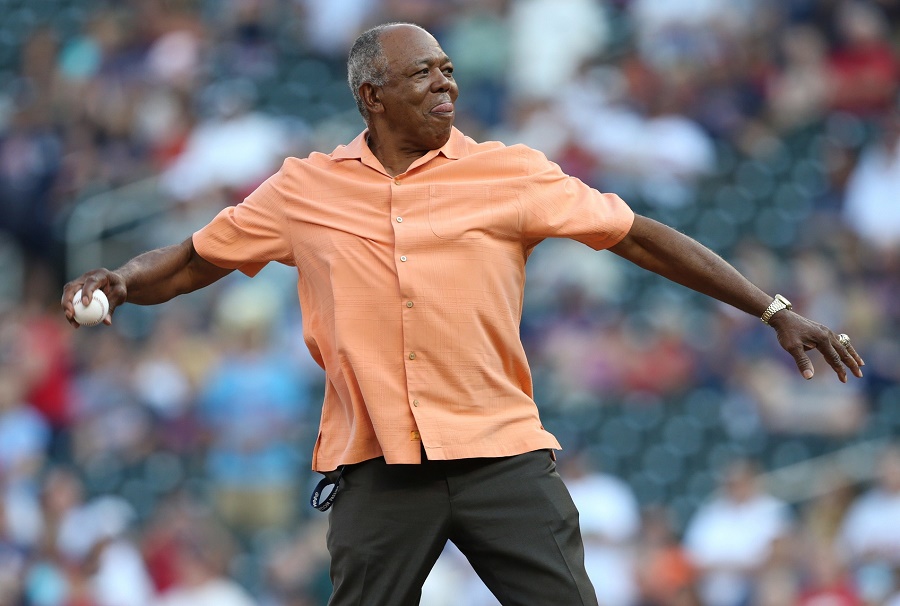 On December 8, the 16-person Veteran's Committii will vote on which of the ten players from the Golden Era should be elected. Like the Baseball Writer’s vote, to gain enshrinement in Cooperstown, a player will need 75% of the vote (or, 12 votes). Tony Oliva is a Twins legend. He is a member of the Minnesota Twins Hall of Fame and is one of the five best players in team history. However, he was not voted into the Hall of Fame after 15 years on the Baseball Writers’ ballot. In fact, he never accumulated more than 47.3% of the vote. However, thanks to the Hall of Fame’s addition of this Golden Era vote, Oliva has another chance. As Twins fans, we can certainly support one of ours being awarded the greatest honor a baseball player can receive. The Case For Oliva Players are to be considered or judged based on several criteria including record, ability, integrity, character, sportsmanship and contributions to the team. However, it all starts with record as a player since there are a lot of people of high character and integrity in the game. So, let’s start with his playing career. Oliva had cups of coffee with the Twins in 1962 and 1963. In 1964, he was the American League Rookie of the Year and won the league batting title when he hit .323. In 1965, he hit .321, becoming the only player in team history to win back-to-back batting titles. In 1966, he led the league in hits for the third straight year but his .307 batting average was second behind Frank Robinson. In 1971, he hit a career-high .337 for his third and final batting title. He led the league in hits five times, and four times he led the league in doubles. Three times he finished in the top five in MVP voting. Five times he finished in the top ten. All-Star appearances mean different things to different people these days, but the reason it was called The Golden Era is because so many of baseball’s elite players came from that era. To have been selected for eight straight All-Star games, from 1964 through 1971, tells us how great he was in the era. The Twins actually released Oliva in 1961 because he was so bad defensively in the outfield. However, he turned around his defense in right field enough to earn a Gold Glove Award in 1966. He was known to have had one of the strongest arms in baseball. Oliva’s peak was from 1964 through 1971 (ages 25-32). Unfortunately, he was able to play just ten games in 1972 because of his knees. I wanted to see where Oliva ranked during that eight year stretch compared to his contemporaries. His triple slash line for that time frame was .313/.360/.507 (.867). That is an adjusted-OPS+ of 140. In other words, he was 40% better than the average player for that stretch. His .313 batting average was tied with Pete Rose for fourth in MLB, behind Roberto Clemente (.334), Rico Carty (.322), and Matty Alou (.314). It was best in the American League, ahead of teammate and roommate Rod Carew’s .306 average. Because he was such an aggressive hitter, his on-base percentage ranks 31st from that time frame, but it is 13th in the American League. That said, he was third in the American League with 90 intentional walks. Only sluggers Harmon Killebrew and Frank Howard were intentionally walked more often in the AL. That is a sign of the respect opponents had for him. His slugging percentage is tied for 10th in MLB for that time frame. However, in the American League, only Frank Robinson, Harmon Killebrew and Frank Howard rank ahead of him. His OPS was 14th in baseball, sixth in the American League (top five – Frank Robinson, Harmon Killebrew, Carl Yastrzemski, Frank Howard and Mickey Mantle). His 1,455 hits was behind only Rose (1,554), Lou Brock (1,552), Billy Williams (1,516) and Clemente (1,460). In the AL, Brooks Robinson’s 1,313 hits was second to Oliva. His 278 doubles was best in MLB from 1964-1971. His 46 triples ranked 12th in MLB and fourth in the American League. His 177 home runs ranked 15th in all of baseball and eighth in the AL. His 719 RBI was 13th overall behind 11 Hall of Famers (and just ahead of three more). That RBI total ranked fourth in the American League (leader was Harmon Killebrew). He was 10th in MLB with 711 runs scored, which ranked second in the American League. Many think that the knee injuries completely derailed his career. Sure, it slowed him down, but he was still pretty good. After playing in just ten games in 1972, Oliva became the Twins DH in 1973 and played in 374 games over the next three seasons. In those three years, he hit a combined .283/.338/.401 (.740). That may sound somewhat pedestrian, especially in comparison to those first eight full seasons. However, with an adjusted OPS+ of 109, he was still nine percent better than the average player. So, did he fade after the injuries, and after he turned 32? Sure, a little. He was still a very good player. Despite hobbling when he walked. Despite Rod Carew’s stories of Oliva crying himself to sleep at night in pain, or limping to get ice, he still continued to play at a very high level. That said, there will always be the question of What If... with Tony Oliva’s career. His career hitting line, from 1962-1975, is .304/.353/.476 (.830) which equates to an adjusted-OPS+ of 131. He accumulated 329 doubles, 48 triples, 220 home runs and 947 RBI. Post-Playing Career Oliva came to the United States from Cuba for an opportunity to play baseball and earn a living. However, he got married in South Dakota and has made Bloomington his home for 50 years. He has remained active in the organization. In fact, many may forget that he was that Twins first base coach in 1985 and their hitting coach from 1986 through 1991. I think most Twins fans would agree that was a pretty good stretch for the Twins. Since then, he has been a special adviser for the Twins. He has spent time in Ft. Myers as an instructor as well as going around to the minor league affiliates to do much of the same. He is very active in the community, often representing the Twins at events. Currently, he is an Analyst on the Twins Spanish Radio network and a minor league instructor. Seemingly all Twins fans have a good Oliva story. For me, the first one was in 2001 while in Cooperstown for Kirby Puckett and Dave Winfield’s Hall of Fame Induction weekend. Just walking through the streets of Cooperstown, Oliva was chatting with fans and taking pictures. I happened to be in a store when my brother got his picture taken with him. In the last fifteen years, Oliva has had many honors bestowed on him. His #6 was retired by the Twins. He was part of the inaugural Twins Hall of Fame class. He was also named to the Latino Baseball Hall of Fame. In 2011, the bronze statue of Oliva was dedicated outside of Gate 6 at Target Field. In short, he has been an ambassador of the game of baseball in the Upper Midwest for half of a century. His joy permeates a room when he is at the front sharing stories of his playing days, his Twins Caravan trips and more. He exudes integrity and character. What Can I Do? As we mentioned at the start, YOU can help Tony Oliva get votes. You can mail a letter to the Golden Era Veterans Committee about why you think Tony Oliva should be in the Hall of Fame. The best way to influence the voting committee is by sending letters in support of Tony. VoteTonyO is working to send over 13,000 pieces of mail from fans, but more is needed. There are two things you can do to help the effort: 1. Mail pre-stamped VoteTonyO postcards VoteTonyO has designed and printed 8,000 custom postcards that are pre-stamped and pre-addressed. All you have to do is write a short message on the back and mail them in. These postcards are available for fans at no cost. To request postcards, email , providing your mailing address and desired quantity (in increments of 25). 2. Mail your own letter If you have more to say to the Hall of Fame voters about why Tony should be inducted, mail a letter to: Baseball Hall of Fame Attn: Golden Era Committee 25 Main Street Cooperstown, NY 13326 Don’t forget to write “VoteTonyO” on the front and back of the envelope. The vote is on December 8th, so you will need to get your letter or postcard as soon as possible.

