



Seth Stohs
-
Posts
25,911 -
Joined
-
Last visited
-
Days Won
109
Content Type
Profiles
News
Minnesota Twins Videos
2026 Minnesota Twins Top Prospects Ranking
2022 Minnesota Twins Draft Picks
Minnesota Twins Free Agent & Trade Rumors, Notes, & Tidbits
Guides & Resources
2023 Minnesota Twins Draft Picks
The Minnesota Twins Players Project
2024 Minnesota Twins Draft Picks
2025 Minnesota Twins Draft Pick Tracker
2026 Minnesota Twins Draft Tracker: Picks & Bonuses
Forums
Blogs
Events
Store
Downloads
Gallery
Everything posted by Seth Stohs
-

Should we be worried about Twins starting pitching ?
Seth Stohs replied to Thegrin's topic in Minnesota Twins Talk
Worried about the rotation? Not really? Worried about Hughes and Santana? Not at all. Worried about Gibson and Milone? Nope. Worried about Pelfrey? Sure. -
Yeah, those stats are amazing... and yeah, he's a 4-year senior, but he's still in his first full minor league season. I thought he should have moved up to Ft. Myers about 5-6 weeks earlier than he did, but even though he didn't, he continued to dominate. He does have a unique delivery. I saw him in spring training. I was at three games in Cedar Rapids early this season and didn't see him. But it's similar to Neshek's, I'd say. When he was named the Minor League RP of the Month of May, I asked him a few questions and he was a terrific interview. Here's the link.
-
I would agree with this statement, but longevity versus great peak both have to be factored into the discussion.
-
Offensively, Tovar was a whole bunch of notches below Knoblauch, and Knobby won gold glove awards and would have had a bunch more if not for playing in the same league as Roberto Alomar.
- 18 replies
-
- 4
-

-
- torii hunter
- kirby puckett
- (and 3 more)
-
Berardino article: Twins embrace geek squad
Seth Stohs replied to Steven Buhr's topic in Minnesota Twins Talk
I think the Twins have used statistical analysis and even advanced statistical analysis for at least several years. I think they really enjoy playing that down and making people think they don't know what stuff means or how to use it. -
Over the weekend, outfielder Torii Hunter hit his 207th and 208th home run in a Minnesota Twins uniform. In doing so, he tied and then surpassed his mentor Kirby Puckett on the all-time Twins list. Throughout this season, Hunter has passed some Twins greats in many all-time categories. At some point, we need to consider that the 40-year-old is among the best players in Minnesota Twins history. Image courtesy of Kirby Lee, USA Today Over the weekend, outfielder Torii Hunter hit his 207th and 208th home run in a Minnesota Twins uniform. In doing so, he tied and then surpassed his mentor Kirby Puckett on the all-time Twins list. Throughout this season, Hunter has passed some Twins greats in many all-time categories. At some point, we need to consider that the 40-year-old is among the best players in Minnesota Twins history. Let’s start by pointing out that there is a Big 6 atop the Minnesota Twins offensive record book due to them being on a Twins roster for many, many years and accumulating a lot of statistics. Obviously they accumulated those stats and all that playing time by being great players for a very long time in a Twins uniform. Harmon Killebrew, Rod Carew, Kirby Puckett, Kent Hrbek, Tony Oliva and Joe Mauer are the top six hitters in Minnesota Twins history. However, Torii Hunter is among a group that would be in the second tier and as this season continues he will likely find himself at the top of that list. If he comes back to the Twins in 2016, which I believe becomes more and more likely as he continues an impressive 2015 season, he could move into that upper group. If we take a look at where Hunter ranks among hitters in the 55-year history of the Minnesota Twins, it is clear that he has not just been a very good player, but he has been a Twins Great. Games Played: 1,322 – This season, Hunter has surpassed Bob Allison and Justin Morneau into eighth place. He should pass Gary Gaetti by the end of the season. Runs Scored: 719 – He has passed Chuck Knoblauch to move into seventh place. RBI: 765 – He has passed Rod Carew and Gary Gaetti to move into sixth place. Hits: 1,303 – He passed Gary Gaetti to move into eighth place on the list. He is 15 hits behind Justin Morneau. Total Bases: 2,253 – He passed Gary Gaetti to move into eighth place, and there is a chance he could catch Justin Morneau. Doubles: 274 – He is currently in seventh place, 15 doubles behind Justin Morneau. Home Runs: 208 – After passing Gary Gaetti earlier this season, Hunter passed Kirby Puckett over the weekend to move in to sixth place on the Twins list. He is three homers behind Bob Allison. He is 12 homers behind Tony Oliva, and he is 13 homers behind Justin Morneau. So, if he were to end the 2015 season with 30 home runs, he would be third on the all-time Minnesota Twins home runs list. He is not likely to catch Harmon Killebrew’s 475 Minnesota Twins home runs. Stolen Bases: 127 – He is in fifth place, seven behind Kirby Puckett. (Note – he is one for three in stolen base attempts so far this year.) Strikeouts: 933 – He will likely pass Kirby Puckett’s 965 strikeouts to move into second place in Twins history. He won’t catch Harmon Killebrew. Grand Slams: 9 – One more grand slam and he will tie Harmon Killebrew for the Twins record. Add in his defense and he moves up to the top of the second tier, probably the sixth-best offensive player in Minnesota Twins history. His seven Gold Gloves are second in Twins history behind Jim Kaat’s 11. Kirby Puckett won six with the Twins. Hunter represented the Minnesota Twins in two All Star games. It would be very interesting to know what kind of statistics Hunter would have been able to put up had he remained in the Twins organization instead of spending the past seven years in Anaheim and Detroit. How far up the list would he be? So where would Torii Hunter rank to you among the Top 10 Twins position players since the organization moved to Minnesota in 1961? The Top Six: Harmon Killebrew, Kirby Puckett, Rod Carew, Kent Hrbek, Joe Mauer, Tony Oliva The Next Five: Torii Hunter, Justin Morneau, Gary Gaetti, Bob Allison, Chuck Knoblauch. One could make an argument that we are able to watch two of the top seven or eight position players in the 55-year history of the Twins in Minnesota on a nightly basis. Please use the comments below to rank the Top 10 Twins position players in Twins history in your opinion, and then discuss with others. View full article
- 18 replies
-
- 2
-
-
- torii hunter
- kirby puckett
- (and 3 more)
-
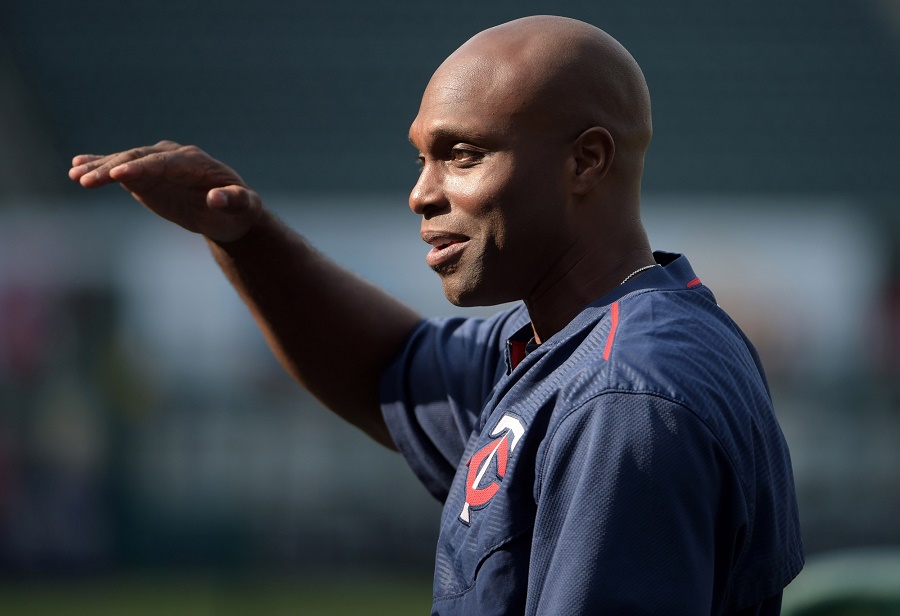 Let’s start by pointing out that there is a Big 6 atop the Minnesota Twins offensive record book due to them being on a Twins roster for many, many years and accumulating a lot of statistics. Obviously they accumulated those stats and all that playing time by being great players for a very long time in a Twins uniform. Harmon Killebrew, Rod Carew, Kirby Puckett, Kent Hrbek, Tony Oliva and Joe Mauer are the top six hitters in Minnesota Twins history. However, Torii Hunter is among a group that would be in the second tier and as this season continues he will likely find himself at the top of that list. If he comes back to the Twins in 2016, which I believe becomes more and more likely as he continues an impressive 2015 season, he could move into that upper group. If we take a look at where Hunter ranks among hitters in the 55-year history of the Minnesota Twins, it is clear that he has not just been a very good player, but he has been a Twins Great. Games Played: 1,322 – This season, Hunter has surpassed Bob Allison and Justin Morneau into eighth place. He should pass Gary Gaetti by the end of the season. Runs Scored: 719 – He has passed Chuck Knoblauch to move into seventh place. RBI: 765 – He has passed Rod Carew and Gary Gaetti to move into sixth place. Hits: 1,303 – He passed Gary Gaetti to move into eighth place on the list. He is 15 hits behind Justin Morneau. Total Bases: 2,253 – He passed Gary Gaetti to move into eighth place, and there is a chance he could catch Justin Morneau. Doubles: 274 – He is currently in seventh place, 15 doubles behind Justin Morneau. Home Runs: 208 – After passing Gary Gaetti earlier this season, Hunter passed Kirby Puckett over the weekend to move in to sixth place on the Twins list. He is three homers behind Bob Allison. He is 12 homers behind Tony Oliva, and he is 13 homers behind Justin Morneau. So, if he were to end the 2015 season with 30 home runs, he would be third on the all-time Minnesota Twins home runs list. He is not likely to catch Harmon Killebrew’s 475 Minnesota Twins home runs. Stolen Bases: 127 – He is in fifth place, seven behind Kirby Puckett. (Note – he is one for three in stolen base attempts so far this year.) Strikeouts: 933 – He will likely pass Kirby Puckett’s 965 strikeouts to move into second place in Twins history. He won’t catch Harmon Killebrew. Grand Slams: 9 – One more grand slam and he will tie Harmon Killebrew for the Twins record. Add in his defense and he moves up to the top of the second tier, probably the sixth-best offensive player in Minnesota Twins history. His seven Gold Gloves are second in Twins history behind Jim Kaat’s 11. Kirby Puckett won six with the Twins. Hunter represented the Minnesota Twins in two All Star games. It would be very interesting to know what kind of statistics Hunter would have been able to put up had he remained in the Twins organization instead of spending the past seven years in Anaheim and Detroit. How far up the list would he be? So where would Torii Hunter rank to you among the Top 10 Twins position players since the organization moved to Minnesota in 1961? The Top Six: Harmon Killebrew, Kirby Puckett, Rod Carew, Kent Hrbek, Joe Mauer, Tony Oliva The Next Five: Torii Hunter, Justin Morneau, Gary Gaetti, Bob Allison, Chuck Knoblauch. One could make an argument that we are able to watch two of the top seven or eight position players in the 55-year history of the Twins in Minnesota on a nightly basis. Please use the comments below to rank the Top 10 Twins position players in Twins history in your opinion, and then discuss with others.
 -
Twins Minor League Report (7/27): Rains Reign In Southwest Florida
Seth Stohs posted an article in Minor Leagues
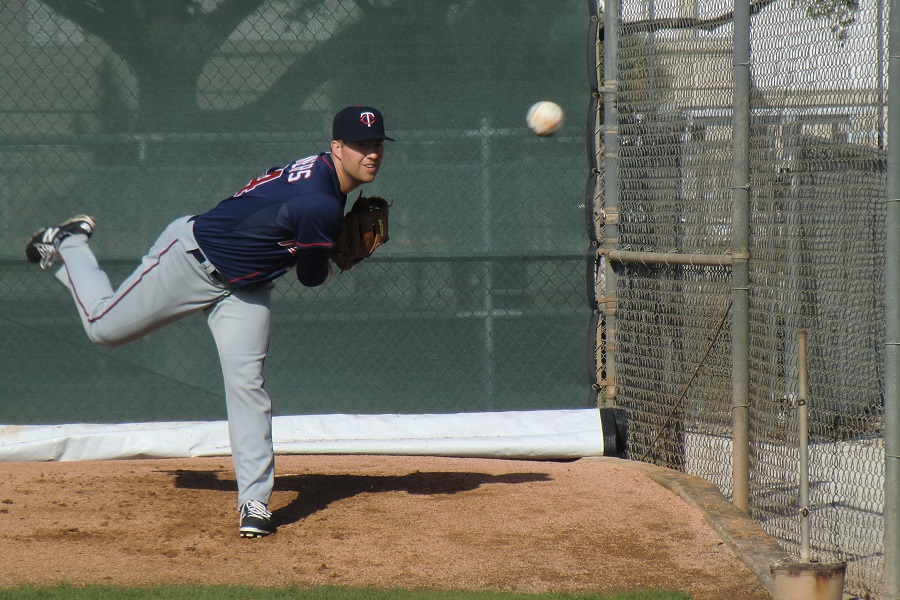 These topics and much more can be found as you work your way through today’s minor league report. TRANSACTIONS A day after adding RHP Michael Bowden to a minor league deal and assigning him to Rochester, the Twins also added 25-year-old outfielder Xavier Avery. He was in the lineup right away on Sunday evening. To make room for him, infielder Jose Martinez was placed on the disabled list. RED WINGS REPORT Rochester 4, Columbus 5 Box Score The Red Wings mounted a comeback in the ninth. With two runners on, newcomer Xavier Avery singled in Chris Herrmann to cut the lead to 5-4. Columbus brought in former big league closer Carlos Marmol who struck out James Beresford to end the game. Tyler Duffey got the start and didn’t pitch as poorly as his final line might indicate. The right-hander gave up five runs (three earned) on eight hits. He walked none and struck out three over 6.2 innings. He was hurt by a couple of errors, including Jorge Polanco’s ninth error in 21 games with the Red Wings. Mark Hamburger needed just three pitches to get out of that seventh inning. Aaron Thompson was given the eighth inning and was flawless. The offense generated eight hits, but they were unable to come up with the runs. Polanco went 2-4 with his sixth double. Xavier Avery was 2-5 with the big ninth inning hit. James Beresford went 2-4. Danny Ortiz went 2-3. Reynaldo Rodriguez hit his 10th home run of the season. CHATTANOOGA CHATTER Chattanooga 8, Tennessee 0 Box Score He had struggled in recent starts, particularly with his control, but on Sunday Alex Wimmers was very good. He worked 6.2 shutout innings. He gave up six hits, walked one and struck out three. Tim Shibuya came on and got the next four outs. Matt Summers pitched the ninth inning. Stuart Turner played hitting hero in this game. He went 3-4 with a walk and his fourth home run of the season. He’s likely more happy about the team pitching a shutout. Adam Brett Walker went 1-3 with two walks. He hit his third triple and stole his eighth base. The Lookouts had eight hits and seven walks in the game. MIRACLE MATTERS Ft. Myers, Lakeland Box Score The Miracle game was postponed by rain as poor weather has covered southwest Florida for several days now. The two teams are hoping to play a doubleheader on Monday. KERNELS NUGGETS Cedar Rapids 5, Beloit 4 Box Score It’s not quite how you draw it up, but the Cedar Rapids Kernels will take the win. The Kernels had a two-run lead heading into the top of the ninth inning. Luke Bard, who has been terrific since arriving with the Kernels, came on. He was charged with two runs (one earned, thanks to an error of his own) on three hits, a walk and a hit batter. The game went to the bottom of the ninth tied at four. Tanner English and Nick Gordon led off with singles. Edgar Corcino then dropped down a sacrifice bunt. Zach Larson was intentionally walked to load the bases. However, Tyler Kuresa came through with a game-winning single to center to give the Kernels the win. Kuresa led the offense. He went 3-4 with a walk and his 10th double to go with the walk-off single. Tanner English went 3-5. Rafael Valera went 2-4 with his first triple and two RBIs. Zach Larson went 1-2 with three walks. He scored three runs and stole his 12th base. Luke Westphal started and the left-hander went the first five innings. He gave up two runs on six hits. He walked two and struck out five. Ethan Mildren gave up five hits over three shutout innings. Bard got the blown save, but he winds up improving to 6-0. E-TOWN E-NOTES Elizabethton 4, Kingsport 8 Box Score Dereck Rodriguez started for the E-Twins on Sunday. He was charged with four runs (one earned) on seven hits and a walk in just four innings. He struck out one. He falls to 3-1 with a 1.35 ERA. Anthony Mciver came on. He gave up three runs on four hits over the next two innings. Josh Guyer gave up an unearned run on one hit over the final two innings. He struck out two and didn’t walk a batter. For the second straight day, infielder Alex Perez went 3-5. The 22-year-old was the Twins 23rd round pick this June out of Virginia Tech. Brad Hartong came on in the middle of the 3rd inning to replace Rainis Silva behind the plate (no word yet on why Silva left the game). He went 3-4 with a triple and an RBI. Amaurys Minier went 1-2 with two walks. GCL TWINS TAKES GCL Twins @ GCL Red Sox No Game Scheduled. TWINS DAILY PLAYERS OF THE DAY Twins Daily Minor League Pitcher of the Day – Alex Wimmers, Chattanooga Lookouts Twins Daily Minor League Hitter of the Day – Tyler Kuresa, Cedar Rapids Kernels MONDAY’S PROBABLE STARTERS Rochester @ Toledo (6:00 CST) – LHP Pat Dean Chattanooga – No Game Scheduled Lakeland @ Ft. Myers (DH at 5:05 CST) – RHP Aaron Slegers, RHP Ryan Eades Cedar Rapids– No Game Scheduled Johnson City @ Elizabethton (6:00 CST) – TBD GCL Twins @ GCL Rays (DH @ 10:00 CST) – TBD, TBD Feel free to leave any questions or comments below.
 -
No.
-
A couple of transactions from the last couple of days: Twins signed minor league free agents RHP Michael Bowden and OF Xavier Avery. RHP Greg Peavey was sent back to Chattanooga and IF Jose Martinez was put on the DL. Dalton Hicks was placed with the Ft. Myers Miracle, and Brett Doe is now back with the Cedar Rapids Kernels.
-
Minnesota Twins Minor League Player of the Week: Week 1: Tyler Duffey, Chattanooga Lookouts Week 2: Stephen Gonsalves, Cedar Rapids Kernels Week 3: Byron Buxton, Chattanooga Lookouts Week 4: Trey Vavra, Cedar Rapids Lookouts Week 5: Miguel Sano, Chattanooga Lookouts Week 6: Max Kepler, Chattanooga Lookouts Week 7: Aaron Slegers, Ft. Myers Miracle Week 8: Brandon Peterson, Ft. Myers Miracle Week 9: David Hurlbut, Chattanooga Lookouts Week 10: Alex Wimmers, Chattanooga Lookouts Week 11: Engelb Vielma, Ft. Myers Miracle Week 12: AJ Achter, Rochester Red Wings Week 13: Oswaldo Arcia, Rochester Red Wings Week 14: Mat Batts, Ft. Myers Miracle Week 15: Felix Jorge, Cedar Rapids Kernels Single-A Cedar Rapids right-handed pitcher Felix Jorge is the Twins minor league Player of the Week...Jorge made one start for the Kernels on Tuesday, allowing two runs on five hits in 7.0 innings pitched with one walk and seven strikeouts...he has gone 5-3, 2.10 ERA (103.0 IP, 24 ER) with 23 walks and 82 strikeouts in 16 starts for the Kernels this season... he was originally signed by the Twins as an undrafted free agent in February of 2011.
-
I'm as guilty as anyone, but I think we make too big of a deal out of the strikeouts. The talent is there. He has a chance to be quite good.
- 5 replies
-
- 2
-
-
- david hurlbut
- sam gibbons
- (and 3 more)
-
The Rochester Red Wings announced that the Twins have signed Xavier Avery to a minor league contract. He will join Red Wings outfield. Infielder Jose Martinez was placed on the Disabled List. Avery was a highly-touted prospect with the Orioles and spent 32 games with them in 2012. He was traded to Seattle in late 2013. He's spent time with the Mariners, Tigers and most recently the Giants the last few years. According to Doogie Wolfson, Avery recently asked the Giants for his release. He also noted that Avery does not have an opt-out.
-
Ken Rosenthal is reporting that the Kansas City Royals have acquired Johnny Cueto from the Cincinnati Reds. No word yet on who the Reds will receive. I'm putting this in the Twins forum because I think that this pretty much means that the Twins are playing for a Wild Card spot. That might (should/could?) alter their trade strategy. How much future do you want to trade for a chance at a 1-game wild card spot? There's no right or wrong answer to that question, but it should be a factor.
-
What is the point of getting yourself thrown out of a 5-1 game?
Seth Stohs replied to DaveW's topic in Minnesota Twins Talk
I'd argue that the tide of the game changed because of the bases-loaded strikeout which was followed by Milone getting hit hard in the 7th inning. Molitor had nothing to do with either of those two things. -
I would guess some of those guys from those Edmonton teams (Michael Cuddyer, Michael Ryan, maybe Todd Walker) I would think Hicks will get back to Chattanooga.
-
Clubhouse leaders and cornerstone players don't have to be the same players. For instance, Perkins is the best reliever, and I believe he is also a good leader out there, but I would guess that Duensing is the leader of that bullpen, along with Perkins and Guardado.
-
2015 Adopt-a-Prospect Sign-Up Here (NOW LIVE!)
Seth Stohs replied to Seth Stohs's topic in Twins Daily Front Page News
Just to bring this topic up to the front page for a little while. If you have adopted any players, be sure to write about them soon. Brag up their accomplishments, promotions, big games, everything. -
Twins Minor League Leader Board (through July 24)
Seth Stohs replied to Seth Stohs's topic in Twins Daily Front Page News
I don't know that he'd develop more power. He's pretty mature physically. But, his increase in power would obviously come from an improvement in his approach. -
Darren "Doogie" Wolfson tweeted that he's hearing that Bowden has an August 22nd opt-out in his contract. Makes sense... let's him see if a team might be willing to give him a September call up.
-
What is the point of getting yourself thrown out of a 5-1 game?
Seth Stohs replied to DaveW's topic in Minnesota Twins Talk
This is it completely. Score doesn't matter at all. Molitor was 100% in the right to do that. -
Twins Kick Baltimore Tires
Seth Stohs replied to Jeremy Nygaard's topic in Twins Daily Front Page News
The Scott Boras is his agent part probably tells what the odds of Wieters sticking around are. -
On Saturday, there were six games in the Twins minor league system. There were also a couple of transactions. In the games, it became clear how much strong starting pitching helps a team win, but home runs also help. Which 2015 draft pick homered? Which relief pitcher was clocked just shy of 100 mph? These topics and much more can be found as you work your way through today’s Minor League Report. Image courtesy of Seth Stohs (photo of David Hurlbut) On Saturday, there were six games in the Twins minor league system. There were also a couple of transactions. In the games, it became clear how much strong starting pitching helps a team win, but home runs also help. Which 2015 draft pick homered? Which relief pitcher was clocked just shy of 100 mph? These topics and much more can be found as you work your way through today’s Minor League Report. TRANSACTIONS On Saturday morning, the Twins and Red Wings announced that they had signed RHP Michael Bowden. The 28-year-old had been pitching in AAA Norfolk (Baltimore organization), but he opted out of his contract last week. He’ll join the Red Wings rotation. To make room for him, Greg Peavey was sent back to Chattanooga. Dalton Hicks, who has been on the Lookouts disabled list since early May and has played a handful of games in the GCL, has been added to the Ft. Myers roster. Brett Doe returned to Cedar Rapids. RED WINGS REPORT Rochester 1, Columbus 5 Box Score Taylor Rogers had a bad first inning. He gave up four runs. However, he gave up only those four runs on six hits and three walks in five innings. He struck out three. Alex Meyer came on and gave up one run on two hits in 1.1 innings. He struck out two without issuing a walk. Caleb Thielbar got the next three outs. Cole Johnson came in and got the final two outs, both on strikeouts. The Red Wings managed just five hits in this game. James Beresford hit his 16th doubles of the season. Oswaldo Arcia hit his 12th double. CHATTANOOGA CHATTER Chattanooga 4, Tennessee 3 Box Score The Lookouts got a lead, added some insurance and held on for a win. David Hurlbut made the start. He threw seven shutout innings. In his time, he gave up four hits, walked three and struck out five. JT Chargois struck out one in a perfect inning. Kennys Vargas hit his fourth Double-A home run of the year to give the Lookouts a 4-0 lead heading into the ninth. It’s a good thing because Alex Muren came on for the ninth and gave up three runs on four hits and two walks, but he did walk off the mound with a 4-3 win. Vargas went 2-5 with the home run. Aderlin Mejia went 2-4. Max Kepler hit his ninth triple. Heiker Meneses hit his second triple. Adam Brett Walker hit his 23rd double and stole his seventh base. Marcus Knecht hit his second AA double and stole his second base. MIRACLE MATTERS Game 1 – Ft. Myers 0, Tampa 2 Box Score Game 1 of the doubleheader was delayed a little over an hour, but they were able to get both games in on Saturday. When they started, Kohl Stewart took the mound. The right-hander went six innings. He gave up two runs (one earned) on seven hits. He walked three and struck out seven. Corey Williams struck out one in a scoreless seventh inning. The Miracle managed just three hits in the game. Michael Quesada hit his fifth double, and Logan Wade hit his 11th two-base hit. Dalton Hicks went 0-3 in his first game of the year with the Miracle. Jason Kanzler was ejected from the game following a called third strike in the fourth inning. Game 2 – Ft. Myers 2, Tampa 1 Box Score The Miracle offense was still quiet in game 2 but scored enough runs to pick up a win. Zach Granite went 1-2 with his eighth double. Michael Quesada went 1-2 with his sixth double. Hicks was 0-2 with a walk. The two Miracle runs scored on sacrifice flies from Granite and Mitch Garver, who went 1-2. Stephen Gonsalves improved to 4-1 with 2.36 ERA with the Miracle. It was the tenth win of the season for Gonsalves. The left-hander gave up one run on four hits. In six innings, he walked two and struck out two. Zack Jones got his first Miracle save of the year. He didn’t give up a run despite allowing two hits and a walk. He was helped out by Jason Kanzler. With two outs in the seventh inning (final inning in minor league double-headers), there was a single to right. The runner tried to score from second base, but Kanzler gunned him down to end the game and secure the Miracle win. KERNELS NUGGETS Cedar Rapids 3, Beloit 00 Box Score Australian right-hander Sam Gibbons made the start for the Kernels. He threw six shutout innings, giving up four hits, walking four and striking out four. Yorman Landa struck out three in two scoreless innings. He gave up a hit and walked two. Reports from the press box said that Landa hit 99.7 mph with his fastball. Jared Wilson gave up a hit and walked one in the seventh inning to pick up his second save since moving back to the bullpen. Tyler Kuresa went 2-4. Pat Kelly doubled for the 10th time, and Austin Diemer hit his second double. Nick Gordon went 1-3 with a walk and his fourth triple. Tanner English walked twice. E-TOWN E-NOTES Elizabethton 5, Kingsport 3 Box Score It was a good day for the E-Town offense. Alex Perez went 3-5 with his third double. Travis Blankenhorn was 2-5 with his second home run and his first stolen base. LaMonte Wade went 2-4. Amaurys Minier hit his fifth double. Kamran Young homered for the second time. Cody Stashak went the first six innings. He gave up two runs (one earned) on four hits. He struck out seven without walking a batter. Jose Abreu struck out three in two perfect innings. Kuo Hua Lo gave up one run on two hits in his inning. GCL TWINS TAKES GCL Twins @ GCL Red Sox Box Score These two teams were rained out on Friday, so they were supposed to play a doubleheader on Saturday. However, Mother Nature won this one, pouring rain again, and postponing the games until a later date. TWINS DAILY PLAYERS OF THE DAY Twins Daily Minor League Pitcher of the Day – David Hurlbut, Chattanooga Lookouts Twins Daily Minor League Hitter of the Day – Travis Blankenhorn, Elizabethton Twins SUNDAY’S PROBABLE STARTERS Rochester @ Columbus (5:05 CST) – RHP Tyler Duffey Chattanooga @ Tennessee (4:05 CST) – Alex Wimmers Lakeland @ Ft. Myers (DH at 3:05 CST) – RHP Aaron Slegers Beloit @ Cedar Rapids (2:05 CST) – LHP Luke Westphal Elizabethton @ Kingsport (3:00 CST) – RHP Dereck Rodriguez GCL Twins – No Game Scheduled Feel free to leave any questions or comments below. View full article
- 5 replies
-
- 1
-
-
- david hurlbut
- sam gibbons
- (and 3 more)
-
Twins Minor League Report (7/25): Saturday In The Parks
Seth Stohs posted an article in Minor Leagues
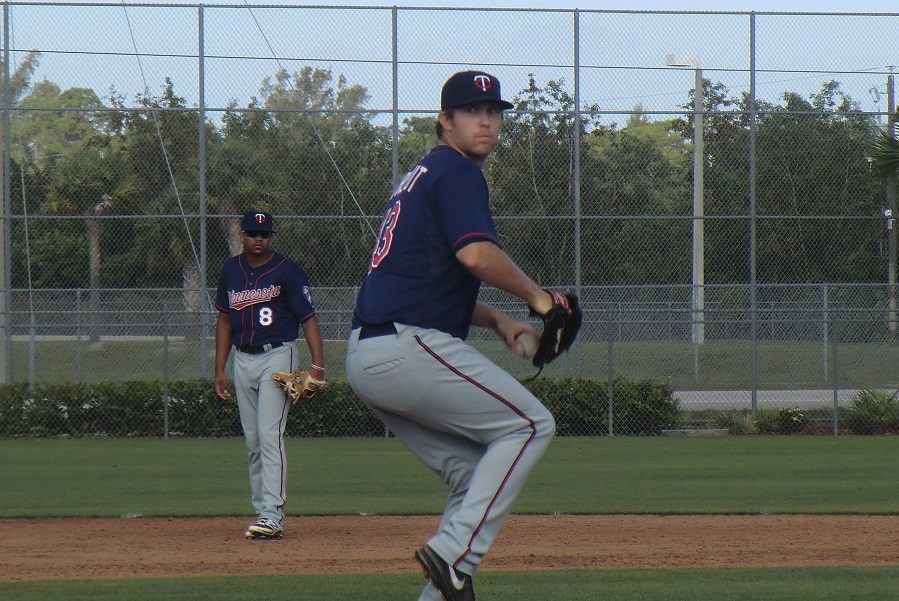 TRANSACTIONS On Saturday morning, the Twins and Red Wings announced that they had signed RHP Michael Bowden. The 28-year-old had been pitching in AAA Norfolk (Baltimore organization), but he opted out of his contract last week. He’ll join the Red Wings rotation. To make room for him, Greg Peavey was sent back to Chattanooga. Dalton Hicks, who has been on the Lookouts disabled list since early May and has played a handful of games in the GCL, has been added to the Ft. Myers roster. Brett Doe returned to Cedar Rapids. RED WINGS REPORT Rochester 1, Columbus 5 Box Score Taylor Rogers had a bad first inning. He gave up four runs. However, he gave up only those four runs on six hits and three walks in five innings. He struck out three. Alex Meyer came on and gave up one run on two hits in 1.1 innings. He struck out two without issuing a walk. Caleb Thielbar got the next three outs. Cole Johnson came in and got the final two outs, both on strikeouts. The Red Wings managed just five hits in this game. James Beresford hit his 16th doubles of the season. Oswaldo Arcia hit his 12th double. CHATTANOOGA CHATTER Chattanooga 4, Tennessee 3 Box Score The Lookouts got a lead, added some insurance and held on for a win. David Hurlbut made the start. He threw seven shutout innings. In his time, he gave up four hits, walked three and struck out five. JT Chargois struck out one in a perfect inning. Kennys Vargas hit his fourth Double-A home run of the year to give the Lookouts a 4-0 lead heading into the ninth. It’s a good thing because Alex Muren came on for the ninth and gave up three runs on four hits and two walks, but he did walk off the mound with a 4-3 win. Vargas went 2-5 with the home run. Aderlin Mejia went 2-4. Max Kepler hit his ninth triple. Heiker Meneses hit his second triple. Adam Brett Walker hit his 23rd double and stole his seventh base. Marcus Knecht hit his second AA double and stole his second base. MIRACLE MATTERS Game 1 – Ft. Myers 0, Tampa 2 Box Score Game 1 of the doubleheader was delayed a little over an hour, but they were able to get both games in on Saturday. When they started, Kohl Stewart took the mound. The right-hander went six innings. He gave up two runs (one earned) on seven hits. He walked three and struck out seven. Corey Williams struck out one in a scoreless seventh inning. The Miracle managed just three hits in the game. Michael Quesada hit his fifth double, and Logan Wade hit his 11th two-base hit. Dalton Hicks went 0-3 in his first game of the year with the Miracle. Jason Kanzler was ejected from the game following a called third strike in the fourth inning. Game 2 – Ft. Myers 2, Tampa 1 Box Score The Miracle offense was still quiet in game 2 but scored enough runs to pick up a win. Zach Granite went 1-2 with his eighth double. Michael Quesada went 1-2 with his sixth double. Hicks was 0-2 with a walk. The two Miracle runs scored on sacrifice flies from Granite and Mitch Garver, who went 1-2. Stephen Gonsalves improved to 4-1 with 2.36 ERA with the Miracle. It was the tenth win of the season for Gonsalves. The left-hander gave up one run on four hits. In six innings, he walked two and struck out two. Zack Jones got his first Miracle save of the year. He didn’t give up a run despite allowing two hits and a walk. He was helped out by Jason Kanzler. With two outs in the seventh inning (final inning in minor league double-headers), there was a single to right. The runner tried to score from second base, but Kanzler gunned him down to end the game and secure the Miracle win. KERNELS NUGGETS Cedar Rapids 3, Beloit 00 Box Score Australian right-hander Sam Gibbons made the start for the Kernels. He threw six shutout innings, giving up four hits, walking four and striking out four. Yorman Landa struck out three in two scoreless innings. He gave up a hit and walked two. Reports from the press box said that Landa hit 99.7 mph with his fastball. Jared Wilson gave up a hit and walked one in the seventh inning to pick up his second save since moving back to the bullpen. Tyler Kuresa went 2-4. Pat Kelly doubled for the 10th time, and Austin Diemer hit his second double. Nick Gordon went 1-3 with a walk and his fourth triple. Tanner English walked twice. E-TOWN E-NOTES Elizabethton 5, Kingsport 3 Box Score It was a good day for the E-Town offense. Alex Perez went 3-5 with his third double. Travis Blankenhorn was 2-5 with his second home run and his first stolen base. LaMonte Wade went 2-4. Amaurys Minier hit his fifth double. Kamran Young homered for the second time. Cody Stashak went the first six innings. He gave up two runs (one earned) on four hits. He struck out seven without walking a batter. Jose Abreu struck out three in two perfect innings. Kuo Hua Lo gave up one run on two hits in his inning. GCL TWINS TAKES GCL Twins @ GCL Red Sox Box Score These two teams were rained out on Friday, so they were supposed to play a doubleheader on Saturday. However, Mother Nature won this one, pouring rain again, and postponing the games until a later date. TWINS DAILY PLAYERS OF THE DAY Twins Daily Minor League Pitcher of the Day – David Hurlbut, Chattanooga Lookouts Twins Daily Minor League Hitter of the Day – Travis Blankenhorn, Elizabethton Twins SUNDAY’S PROBABLE STARTERS Rochester @ Columbus (5:05 CST) – RHP Tyler Duffey Chattanooga @ Tennessee (4:05 CST) – Alex Wimmers Lakeland @ Ft. Myers (DH at 3:05 CST) – RHP Aaron Slegers Beloit @ Cedar Rapids (2:05 CST) – LHP Luke Westphal Elizabethton @ Kingsport (3:00 CST) – RHP Dereck Rodriguez GCL Twins – No Game Scheduled Feel free to leave any questions or comments below.
 -
The hope is that you have multiple "cornerstone" type of players. Mauer and Morneau were cornerstones from 2006 through (2010 for Morneau, 2013 for Mauer). Johan Santana was a cornerstone from 2004-2008. Hopefully Dozier is a cornerstone for awhile... But the big hope is that Buxton and Sano will be cornerstones for a 8-12 years.
