



Seth Stohs
-
Posts
25,870 -
Joined
-
Last visited
-
Days Won
109
Content Type
Profiles
News
Minnesota Twins Videos
2026 Minnesota Twins Top Prospects Ranking
2022 Minnesota Twins Draft Picks
Minnesota Twins Free Agent & Trade Rumors, Notes, & Tidbits
Guides & Resources
2023 Minnesota Twins Draft Picks
The Minnesota Twins Players Project
2024 Minnesota Twins Draft Picks
2025 Minnesota Twins Draft Pick Tracker
2026 Minnesota Twins Draft Tracker: Picks & Bonuses
Forums
Blogs
Events
Store
Downloads
Gallery
Everything posted by Seth Stohs
-
 The end of the third week in the Arizona Fall League marks the halfway point of the season, and at this juncture the Salt River Rafters, for whom the Twins prospects play, have clearly been the class of the league. They lead the East Division with a 12-4-1 record and are the only team with double-digit wins.In week 3, Taylor Rogers was again the only Twins representative who didn’t see action. Did Eddie Rosario continue to hit? Did Byron Buxton turn it around? Did Zack Jones and Jake Reed continue to mow down hitters? Read on to find out! Byron Buxton – 4 games, 6-18 (.333), 2B, 3 R’s, 3 RBI, 1 BB, 4 K’s, 3 SB’s (4). Buxton played in four games this week, including another appearance in RF. His big game of the week came on Friday, when he went 3-5 with a double, scored two runs, drove in two more and stole two bases. It was the second game in a row he collected multiple hits, having gone 2-5 the day before. It’s a good sign to see all of his tools back on display, and Buxton is happy to be moving forward after his injury-wrecked 2014 season. Buxton raised his average from .229 to .264 during the week. Eddie Rosario – 4 games, 6-13 (.462), 2 R’s, 6 RBI, 2 BB, 1 K, 3 SB (9). Rosario continued to bat third in the Rafters lineup this week, and continued to rack up hits. He currently is second in the league in batting average (.429) and total hits (21), fourth in RBI’s (11) and second in stolen bases (9). He had at least one hit in all four games during the week and collected multiple hits twice. In Tuesday’s 5-0 Rafters win, he was 2-2 with two RBI sac flies in four plate appearances. He was 2-4 with three RBI in his next game on Thursday, where he also stole two more bases. Of major note in reference to Rosario, is the fact that he has hit safely in all ten games he has played in the AFL, and seems to like the pace of play created by the 20-second pitch clock. Max Kepler – 3 games, 5-12 (.417), 2 R, 2 2B’s, 3B, RBI, 1 BB’s, 4 K’s, SB (3). Kepler saw action in three games during the week, and made the most of his opportunities as he went 2-4 on Tuesday, 2-5 with a double and triple on Wednesday, and 1-3 with a double, walk, and RBI on Thursday. His triple in Wednesday’s 9-3 victory sparked a four run second inning for the Rafters. He raised his average to .290 in league play, with an on-base percentage of .405. Taylor Rogers – Did not play. Rogers took a line drive to his shoulder in his only start for the Rafters in week 1, and has not pitched since. Jason Adam – 1 game, 1 IP, 0 R’s, 1 H’s, 0 BB, 1 K. 0.00 ERA. Adam finally made his first scoreless appearance in Friday’s 8-1 win, allowing just a single in the sixth inning. The runner moved to second on a passed ball, but he finished the inning with a strikeout and picked up his first hold. Zack Jones – 2 games, 1.1 IP, 0 ER, 1 H’s, 3 BB, 0 K, 2 Holds. 0.00 ERA. Zack Jones made appearances in the wins on Monday and Thursday, picking up a hold in both contests. In Monday’s win, he gave up a double but retired the three other batters he faced. In Friday’s win, he lost his control in the seventh inning, throwing just eight of twenty-one pitches for strikes while walking three to load the bases. He recorded just one out, but still picked up a hold as Kaleb Fleck from the Diamondbacks organization retired the next two batters. Jake Reed – 2 games, 2 IP, 0 ER, 1 H, 0 BB, 0 K’s, 2 Holds. 0.00 ERA. Reed pitched in the same games as Jones, pitching the inning before him in each contest. He was extremely efficient, throwing twenty of twenty-four pitches for strikes, while allowing just one hit in his two innings. He also recorded two holds. Of note from Jones and Reed: neither hurler recorded an out with a strikeout on the week. Notes -Twins hitters combined to bat .395 with 3 2B’s, 1 3B, 7 R’s, 10 RBI, 4 BBs, 9 K’s, and 7 SB during the week. -Twins pitchers compiled a 0.00 ERA in 4.1 IP, allowing 0 R’s on 3 H’s and 3 BBs, while striking out one on the week. Click here to view the article
 -
Article: Twins Organizational Depth Chart: Third Base
Seth Stohs replied to Seth Stohs's topic in Twins Daily Front Page News
The glove/range were really the issues. I'm sure he'll get some time there, but not a ton. -
Article: Twins Organizational Depth Chart: Third Base
Seth Stohs replied to Seth Stohs's topic in Twins Daily Front Page News
My sense is that he won't be added, but it will depend upon how many roster spots they want to add. My sense is that a team won't take him because he wouldn't be likely to stick. I can't even find a way to get him onto the Opening Day Chattanooga roster right now. -
Article: Twins Organizational Depth Chart: Third Base
Seth Stohs replied to Seth Stohs's topic in Twins Daily Front Page News
Amaurys Minier moved to Left Field this year after shoulder surgery... though he wasn't going to be a 3B anyway. -
Article: How "Different" Is Paul Molitor?
Seth Stohs replied to Nick Nelson's topic in Twins Daily Front Page News
I agree with this. I think he'd be a good 2-4 year guy. Maybe Mientkiewicz goes to AA in 2015 and becomes a bench coach in 2016 and takes over as manager in 2017-2018. Might be a nice progression. -
Article: How "Different" Is Paul Molitor?
Seth Stohs replied to Nick Nelson's topic in Twins Daily Front Page News
It came up a day or two ago in another thread. I don't think any of that would be a disqualifier. His drug usage was 30-35 years ago. his family stuff is personal and seems to be managed. That's not to say that it's not part of Terry Ryan's decision-making, but it shouldn't be a disqualifier. -
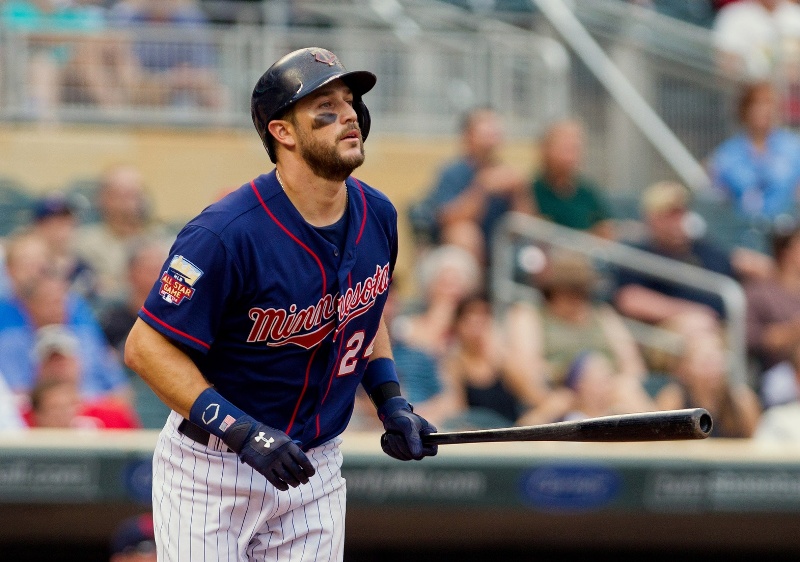
Earlier this week, we looked at the organization depth at first base for the Twins. Today, we make the jump across the diamond to the hot corner and see all the third basemen in the Twins organization.Major Leagues Trevor Plouffe put together the best season of his big league career. At the plate, he hit .258/.328/.423 (.751) with 40 doubles, 14 home runs and 80 RBI. As important, he made some huge improvements defensively. He is arbitration-eligible for the second year (of four). Eduardo Nunez and Eduardo Escobar both got time at third base when Plouffe was out of the lineup. Escobar is perceived by many as a utility infielder, though in 2014 he played most every day at shortstop. He played a lot of third base in previous seasons. In 465 plate appearances, the 25-year-old hit .275/.315/.406 with 35 doubles and six home runs. Nunez played in 72 games with the Twins after being acquired from the New York Yankees. He hit .250/.271/.382 (.654) with seven doubles, four triples and four homers. He is arbitration-eligible and may be a non-tender candidate. Minor Leagues Doug Bernier played in 124 games in Rochester before his September call-up. He played all over the diamond including in the outfield. He played 44 games at third base. He was removed from the 40-man roster and became a free agent. 28-year-old Deibinson Romero had a very strong showing with his bat in big league spring training. He spent the season in AAA where he hit .265/.364/.406 (.770) with 31 doubles and eight home runs. He can become a minor league free agent again this year. Miguel Sano is the big prospect. A year ago, he was a Top 10 prospect in all of baseball, but Tommy John surgery cost him the entire 2014 season. He’ll need to be brought along slowly and cautiously in 2015, but that doesn’t take away from his best tool, his power. He hit 65 home runs total in the last two years at three levels. He will turn 22 years old in May. Hopefully he can come back healthy and force the Twins to make some decisions on him and Plouffe. Brandon Waring tied for the team lead in home runs in spring training. OK, he hit two, but the 28-year-old was sent back to AA. In 106 games, he hit .212/.311/.406 with 28 doubles and 13 home runs. He came to the Twins as a minor league free agent and will be the same following the World Series. Nate Hanson split his season between New Britain and Rochester again in 2014. The 27-year-old who graduated from Eden Prairie High School and then went to the University of Minnesota and was the Twins 28th round pick in 2008. In 2014, he combined to hit .256/.327/.369 (.696) with 33 doubles and six home runs. He can become a six-year minor league free agent following the World Series. Stephen Wickens hurt his shoulder in spring training and missed a large chunk of the beginning of the season. The 25-year old rehabbed with the Miracle and then spent time playing various positions for the Rock Cats. In 72 games, he hit .242/.296/.301 (.598) with eight doubles. He played mainly 3B and 2B, but also got time in the outfield. Niko Goodrum was the Twins 2nd round pick in 2009 out of high school. He had been a good fielding shortstop until 2013 when he was moved to third base. Offensively, he hit .249/.337/.336 (.672) with 19 doubles, five triples and three home runs. He has very good speed and stole 35 bases in 39 attempts. Defensively he was a work in progress, adjusting to the hot corner where instincts are as important as range. He would be eligible for the Rule 5 draft this winter if not added to the 40 man roster. Bryan Haar split the season between Cedar Rapids and Ft. Myers. He was the 34th round pick in 2012 out of the University of San Diego. In 108 games with the Kernels, he hit .267/.319/.446 (.765) with 20 doubles, five triples and 14 homers. He moved up to the Miracle and played in just 10 games. He played the majority of his games at third base but also got into 19 games at first base. Logan Wade is a 22 year old Australian who spent most of the season in Cedar Rapids playing second base and third. He missed extended time due to injury and struggled mightily in his return. In 75 games with the Kernels, he hit .233/.272/.380 (.652) with 12 doubles, four triples and seven home runs. At 5-11 and just 155 pounds, Jonatan Hinojosa is certainly not your typical third baseman. He is more of a middle infielder, but in 2014 he played a lot of third base in Elizabethton and at Cedar Rapids when he returned there late in the season. He didn’t hit in E-Town, but when he got to Cedar Rapids, he hit .341/.378/.494 with seven extra base hits in 20 games. He missed 50 games this year due to a PED suspension. Tyler Mautner was the Twins 14th round pick in 2014 out of the University of Buffalo. At 21, he hit .210/.306/.383 with 13 doubles and five home runs in his 45 game professional debut in Elizabethton. TJ White was the Twins 18th round pick in 2014 out of UNLV. He signed quite late and played in just eight games in the GCL before finishing with five games at Elizabethton. Ruar Verkerk signed as a 16-year-old in 2013 out of the Netherlands. The 6-3, 180 pound third baseman played in 25 games with the GCL Twins. He hit just .147/.216/.147 (.363) with no extra base hits in 68 at bats. As you would expect, he is quite raw and has much to learn about the game. Nelson Molina was the Twins 11th round pick in 2013 out of high school in Puerto Rico. The smooth-fielding shortstop actually played a little more at third base in 2014 (18 games). He hit .243/.305/.287 (.591) in 45 games. He added three triples and was 12-14 in stolen base attempts. Rafael Valera is a 19-year-old who made his US debut with the GCL Twins in 2014 after spending two seasons toiling in the Dominican Summer League. In 47 GCL games, he hit .254/.370/.341 (.710) with eight doubles and two triples. He was also 13 of 15 in stolen base attempts. He also played in three games for the Miracle when they had a need for a body. Roni Tapia signed as a 16-year-old in 2013 out of the Dominican Republic for $550,000. He made his professional debut in 2014 in the Dominican Summer League. In 50 games, he hit .269/.306/.386 (.692) with 15 doubles and four triples. In 25 games at third base, he committed 20 errors. Jermaine Palacios also played as a 17-year-old in the DSL. In 49 games, he hit .270/.404/.399 (.802) with 11 doubles and six triples. In 40 games at third base, he committed 10 errors. SUMMARY Trevor Plouffe took a step forward in his offensive and defensive games in 2014. He certainly goes into 2015 with the third base job. Like one year ago, his hold on the job is still somewhat slippery due to the presence of Miguel Sano. Sano is the big prospect, one of the best (and literally biggest) in the game. He has elite power potential. The team, and Sano, need to be patient in his return from Tommy John surgery. There are some other prospects worth watching at the position who will need to develop. Also, Travis Harrison played 15 games at third base at Ft. Myers in 2014, though it appears his move away from the position may be permanent. Click here to view the article
-
 Major Leagues Trevor Plouffe put together the best season of his big league career. At the plate, he hit .258/.328/.423 (.751) with 40 doubles, 14 home runs and 80 RBI. As important, he made some huge improvements defensively. He is arbitration-eligible for the second year (of four). Eduardo Nunez and Eduardo Escobar both got time at third base when Plouffe was out of the lineup. Escobar is perceived by many as a utility infielder, though in 2014 he played most every day at shortstop. He played a lot of third base in previous seasons. In 465 plate appearances, the 25-year-old hit .275/.315/.406 with 35 doubles and six home runs. Nunez played in 72 games with the Twins after being acquired from the New York Yankees. He hit .250/.271/.382 (.654) with seven doubles, four triples and four homers. He is arbitration-eligible and may be a non-tender candidate. Minor Leagues Doug Bernier played in 124 games in Rochester before his September call-up. He played all over the diamond including in the outfield. He played 44 games at third base. He was removed from the 40-man roster and became a free agent. 28-year-old Deibinson Romero had a very strong showing with his bat in big league spring training. He spent the season in AAA where he hit .265/.364/.406 (.770) with 31 doubles and eight home runs. He can become a minor league free agent again this year. Miguel Sano is the big prospect. A year ago, he was a Top 10 prospect in all of baseball, but Tommy John surgery cost him the entire 2014 season. He’ll need to be brought along slowly and cautiously in 2015, but that doesn’t take away from his best tool, his power. He hit 65 home runs total in the last two years at three levels. He will turn 22 years old in May. Hopefully he can come back healthy and force the Twins to make some decisions on him and Plouffe. Brandon Waring tied for the team lead in home runs in spring training. OK, he hit two, but the 28-year-old was sent back to AA. In 106 games, he hit .212/.311/.406 with 28 doubles and 13 home runs. He came to the Twins as a minor league free agent and will be the same following the World Series. Nate Hanson split his season between New Britain and Rochester again in 2014. The 27-year-old who graduated from Eden Prairie High School and then went to the University of Minnesota and was the Twins 28th round pick in 2008. In 2014, he combined to hit .256/.327/.369 (.696) with 33 doubles and six home runs. He can become a six-year minor league free agent following the World Series. Stephen Wickens hurt his shoulder in spring training and missed a large chunk of the beginning of the season. The 25-year old rehabbed with the Miracle and then spent time playing various positions for the Rock Cats. In 72 games, he hit .242/.296/.301 (.598) with eight doubles. He played mainly 3B and 2B, but also got time in the outfield. Niko Goodrum was the Twins 2nd round pick in 2009 out of high school. He had been a good fielding shortstop until 2013 when he was moved to third base. Offensively, he hit .249/.337/.336 (.672) with 19 doubles, five triples and three home runs. He has very good speed and stole 35 bases in 39 attempts. Defensively he was a work in progress, adjusting to the hot corner where instincts are as important as range. He would be eligible for the Rule 5 draft this winter if not added to the 40 man roster. Bryan Haar split the season between Cedar Rapids and Ft. Myers. He was the 34th round pick in 2012 out of the University of San Diego. In 108 games with the Kernels, he hit .267/.319/.446 (.765) with 20 doubles, five triples and 14 homers. He moved up to the Miracle and played in just 10 games. He played the majority of his games at third base but also got into 19 games at first base. Logan Wade is a 22 year old Australian who spent most of the season in Cedar Rapids playing second base and third. He missed extended time due to injury and struggled mightily in his return. In 75 games with the Kernels, he hit .233/.272/.380 (.652) with 12 doubles, four triples and seven home runs. At 5-11 and just 155 pounds, Jonatan Hinojosa is certainly not your typical third baseman. He is more of a middle infielder, but in 2014 he played a lot of third base in Elizabethton and at Cedar Rapids when he returned there late in the season. He didn’t hit in E-Town, but when he got to Cedar Rapids, he hit .341/.378/.494 with seven extra base hits in 20 games. He missed 50 games this year due to a PED suspension. Tyler Mautner was the Twins 14th round pick in 2014 out of the University of Buffalo. At 21, he hit .210/.306/.383 with 13 doubles and five home runs in his 45 game professional debut in Elizabethton. TJ White was the Twins 18th round pick in 2014 out of UNLV. He signed quite late and played in just eight games in the GCL before finishing with five games at Elizabethton. Ruar Verkerk signed as a 16-year-old in 2013 out of the Netherlands. The 6-3, 180 pound third baseman played in 25 games with the GCL Twins. He hit just .147/.216/.147 (.363) with no extra base hits in 68 at bats. As you would expect, he is quite raw and has much to learn about the game. Nelson Molina was the Twins 11th round pick in 2013 out of high school in Puerto Rico. The smooth-fielding shortstop actually played a little more at third base in 2014 (18 games). He hit .243/.305/.287 (.591) in 45 games. He added three triples and was 12-14 in stolen base attempts. Rafael Valera is a 19-year-old who made his US debut with the GCL Twins in 2014 after spending two seasons toiling in the Dominican Summer League. In 47 GCL games, he hit .254/.370/.341 (.710) with eight doubles and two triples. He was also 13 of 15 in stolen base attempts. He also played in three games for the Miracle when they had a need for a body. Roni Tapia signed as a 16-year-old in 2013 out of the Dominican Republic for $550,000. He made his professional debut in 2014 in the Dominican Summer League. In 50 games, he hit .269/.306/.386 (.692) with 15 doubles and four triples. In 25 games at third base, he committed 20 errors. Jermaine Palacios also played as a 17-year-old in the DSL. In 49 games, he hit .270/.404/.399 (.802) with 11 doubles and six triples. In 40 games at third base, he committed 10 errors. SUMMARY Trevor Plouffe took a step forward in his offensive and defensive games in 2014. He certainly goes into 2015 with the third base job. Like one year ago, his hold on the job is still somewhat slippery due to the presence of Miguel Sano. Sano is the big prospect, one of the best (and literally biggest) in the game. He has elite power potential. The team, and Sano, need to be patient in his return from Tommy John surgery. There are some other prospects worth watching at the position who will need to develop. Also, Travis Harrison played 15 games at third base at Ft. Myers in 2014, though it appears his move away from the position may be permanent.
 -
There aren't any other manager jobs open. They're not competing against anyone. They have three really good candidates, and now today, the STrib is reporting that Terry Ryan may call a few more people. There's no real rush, though it would certainly be good to have a guy a day or two after the World Series.
-
Yes, Terry Ryan invented the 100 pitch limit... No other teams in baseball do that. My guess is he'll hear each candidates thoughts on various pitching philosophies and that's just one piece of the hire. Obviously he doesn't want someone who will have guys throw 150 pitches each time out.. Mike Maddux would be great... and he wouldn't be micromanaged.
-
Pretty sure that has absolutely nothing to do with there not being a manager yet.
-
Article: Twins Organizational Depth Chart: First Base
Seth Stohs replied to Seth Stohs's topic in Twins Daily Front Page News
No, they should not bat him leadoff (regardless of what my friend Brandon Warne says)... I think #2 is the perfect spot for him. -
49 minutes to go... keep the questions coming in for Kyle, but also for Jeremy and I to discuss.
-
Again, my point was not to at all say that service time as anything to do with promoting them, at least not for relievers. It was just to illustrate where they all are relative to needing to be added to the 40 man roster. Twins need, number of options ahead of them that they need to pass, etc., will have a bigger part in that decision.
-
I'm pretty sure I never suggested that. I was just pointing out where each was. I fully expect Burdi to be up in 2015. Reed has a chance, but remember he was a 5th round pick. The Twins wouldn't send him to the AFL if they didn't think he could be close. But I'd still put it at less than 50% because he's got a long way to go.
-
Very good questions. Thank you! Keep them coming!
-
Any questions for Kyle?
-
Article: Twins Organizational Depth Chart: First Base
Seth Stohs replied to Seth Stohs's topic in Twins Daily Front Page News
Walker is certainly another name that fits into the "He could also play there" discussion. Mauer will be fine. I mean, I'm not sure if people think that a guy who caught in the big leagues for the majority of 10 years is going to keep hitting as Mauer did when he was 30 and under... but a nice .300/.380/.450 would be alright. Let's not forget the concussion either.- 19 replies
-
- 1
-

-
- joe mauer
- kennys vargas
- (and 3 more)
-
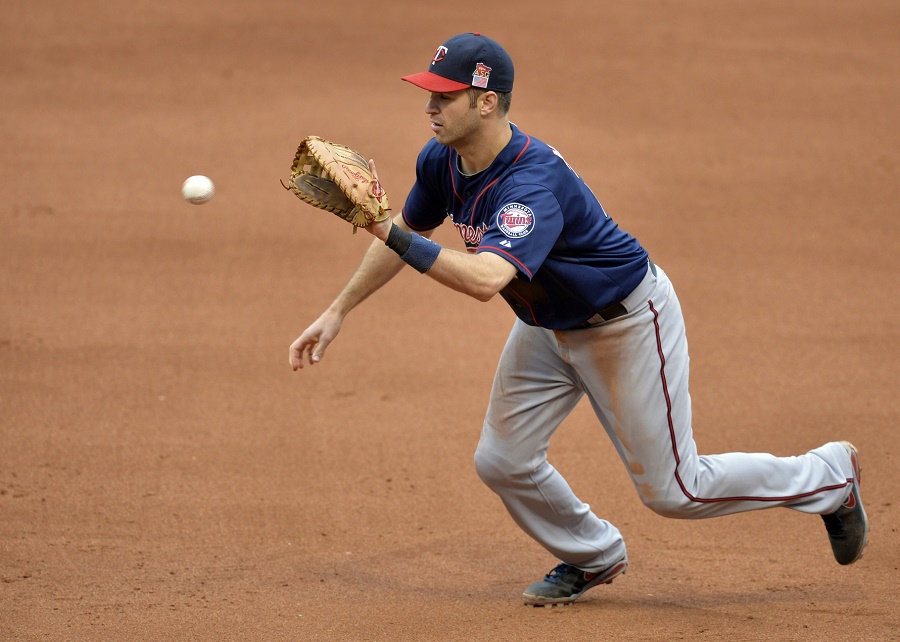 Major Leagues Joe Mauer is signed through the 2018 season. The six-time All-Star, five-time Silver Slugger, three-time Gold Glove winner and former MVP had a disappointing season in his initial year at first base. His defense improved through the season. It was his offense that was down. The career .319/.401/.459 (.860) hitter hit just .277/.361/.371 (.732) with 27 doubles and four home runs. Regardless of anyone’s thoughts, he will be the team’s first baseman for most games over the next four seasons Kennys Vargas came up straight from AA after the July trade deadline and was impressive. In 97 games in New Britain, he hit .281/.360/.472 (.832) with 17 doubles and 17 home runs. In two months with the Twins, he hit .274/.316/.456 (.772) with 10 doubles and nine homers. He really is a DH, but he can play some first base to spell Mauer. Chris Parmelee played some in the outfield and quite a bit at first base in 2014. After 32 games in Rochester, he was added back to the Twins 40-man roster and called up. In 87 games with the Twins, he hit .256/.307/.384 (.691) with 11 doubles and seven homers. He could stay on the 40-man roster this offseason and compete for a utility job next spring. Minor Leagues Chris Colabello was the co-Player of the Month in the American League in April, but things went south from there and he spent time in AAA. He remains on the team’s 40-man roster because he is a big, powerful man. If he stays on the 40-man roster, he could be an option for a bench role or he could head back to Rochester where he was the International League’s MVP and Rookie of the Year in 2013. Max Kepler is also on the 40-man roster and currently playing in the Florida State League. He got most of his playing time in 2014 in the three outfield positions, but also played a dozen games at first base. His youth and versatility, along with immense power potential, will likely keep him on the 40-man roster to start 2015. Mike Gonzales split his 2014 season between Ft. Myers and New Britain. Combined, he hit .271/.348/.439 (.787) with 29 doubles and 12 home runs. Like Vargas, Gonzales is a big man. He is listed at 6-6 and 265 pounds. The Twins ninth round pick in 2008 out of junior college, he can become a free agent following the World Series. Dalton Hicks was the Twins 17th round pick in 2012 out of Central Florida. At 6-5 and 250 pounds, he fits the mold with several other first basemen in the system. He spent his age-24 season in Ft. Myers where he hit .262/.344/.407 (.751) with 24 doubles, 11 home runs and 76 RBI. Chad Christensen was the primary first baseman in his home town of Cedar Rapids in 2014. After four years at the University of Nebraska, Christensen was the Twins 25th round pick in 2013. Christensen does not fit the mold of hulking first basemen you’ve seen above. He is 6-3, 210 pounds and a tremendous athlete who can play all over the field, including centerfield if necessary. He hit .272/.339/.404 (.744) with 24 doubles, seven triples, nine home runs, and 73 RBI. He also was 30 for 35 on stolen base attempts. Bryan Haar split the season between Cedar Rapids and FT. Myers. He was the 34th round pick in 2012 out of the University of San Diego. In 108 games with the Kernels, he hit .267/.319/.446 (.765) with 20 doubles, five triples and 14 homers. He moved up to the Miracle and played in just 10 games. He played the majority of his games at third base but also got into 19 games at first base. At Elizabethton this summer, Tyler Kuresa played 39 games at first base. The Twins actually drafted him out of his high school in the 11th round of the 2010 draft, but he went to college. He was drafted in the 14th round by the Braves in 2013 but again went back to college. Following his senior season, he was selected by the Twins in the 16th round in 2014. He debuted by hitting .298/.381/.478 (.859) with 14 doubles and five home runs in 46 games for the E-Twins. Trey Vavra, the Twins 33rd round pick in 2014 out of Florida Southern, played 27 of his 50 games in Elizabethton at first base. Overall, he hit .319/.392/.454 (.846) with 20 doubles, a triple and a home run. Although he is a catcher, Joel Polanco played a majority of his games at first base. As a 21-year-old in 2014, he hit .248/.296/.350 (.646) with six doubles and two homers in the GCL. Jack Barrie is an 18-year old from Australia who made his debut in the organization in 2014. He hit .205/.284/.233 (.517) in the GCL with two doubles. Like others above, he is a big lad. He is listed at 6-4 and 250 pounds already. He will require patience, but his power potential is exciting. Lewin Diaz was a million-dollar signing in 2013 from the Dominican Republic. The 17-year-old is another big guy with power potential. There was talk that he might be able to play some outfield, but in his pro debut in the Dominican Summer League, he played just first base. In 43 games, he hit .257/.385/.451 (.836) with 13 doubles and five home runs. He should debut in the States in 2015, likely in the GCL. SUMMARY Joe Mauer will be the primary first baseman, most likely, over the next four years. Kennys Vargas will have to fight a sophomore slump, but he certainly has all the power from both sides of the plate that you would want, especially since he will primarily be a DH. After that, Lewin Diaz is probably the player with the most upside in the organization. That said, players like Miguel Sano and Travis Harrison could also be looked at as guys who could move to first base if, or when, needed.
 -
After what seems like such a long delay, the World Series begins with Game 1 tonight. When the Series is complete, players that are eligible will become free agents and the offseason will begin. I thought it would be good to take a look at the Twins by position to find their areas of organizational strength or weakness. Today, we start with the first basemen.Major Leagues Joe Mauer is signed through the 2018 season. The six-time All-Star, five-time Silver Slugger, three-time Gold Glove winner and former MVP had a disappointing season in his initial year at first base. His defense improved through the season. It was his offense that was down. The career .319/.401/.459 (.860) hitter hit just .277/.361/.371 (.732) with 27 doubles and four home runs. Regardless of anyone’s thoughts, he will be the team’s first baseman for most games over the next four seasons Kennys Vargas came up straight from AA after the July trade deadline and was impressive. In 97 games in New Britain, he hit .281/.360/.472 (.832) with 17 doubles and 17 home runs. In two months with the Twins, he hit .274/.316/.456 (.772) with 10 doubles and nine homers. He really is a DH, but he can play some first base to spell Mauer. Chris Parmelee played some in the outfield and quite a bit at first base in 2014. After 32 games in Rochester, he was added back to the Twins 40-man roster and called up. In 87 games with the Twins, he hit .256/.307/.384 (.691) with 11 doubles and seven homers. He could stay on the 40-man roster this offseason and compete for a utility job next spring. Minor Leagues Chris Colabello was the co-Player of the Month in the American League in April, but things went south from there and he spent time in AAA. He remains on the team’s 40-man roster because he is a big, powerful man. If he stays on the 40-man roster, he could be an option for a bench role or he could head back to Rochester where he was the International League’s MVP and Rookie of the Year in 2013. Max Kepler is also on the 40-man roster and currently playing in the Florida State League. He got most of his playing time in 2014 in the three outfield positions, but also played a dozen games at first base. His youth and versatility, along with immense power potential, will likely keep him on the 40-man roster to start 2015. Mike Gonzales split his 2014 season between Ft. Myers and New Britain. Combined, he hit .271/.348/.439 (.787) with 29 doubles and 12 home runs. Like Vargas, Gonzales is a big man. He is listed at 6-6 and 265 pounds. The Twins ninth round pick in 2008 out of junior college, he can become a free agent following the World Series. Dalton Hicks was the Twins 17th round pick in 2012 out of Central Florida. At 6-5 and 250 pounds, he fits the mold with several other first basemen in the system. He spent his age-24 season in Ft. Myers where he hit .262/.344/.407 (.751) with 24 doubles, 11 home runs and 76 RBI. Chad Christensen was the primary first baseman in his home town of Cedar Rapids in 2014. After four years at the University of Nebraska, Christensen was the Twins 25th round pick in 2013. Christensen does not fit the mold of hulking first basemen you’ve seen above. He is 6-3, 210 pounds and a tremendous athlete who can play all over the field, including centerfield if necessary. He hit .272/.339/.404 (.744) with 24 doubles, seven triples, nine home runs, and 73 RBI. He also was 30 for 35 on stolen base attempts. Bryan Haar split the season between Cedar Rapids and FT. Myers. He was the 34th round pick in 2012 out of the University of San Diego. In 108 games with the Kernels, he hit .267/.319/.446 (.765) with 20 doubles, five triples and 14 homers. He moved up to the Miracle and played in just 10 games. He played the majority of his games at third base but also got into 19 games at first base. At Elizabethton this summer, Tyler Kuresa played 39 games at first base. The Twins actually drafted him out of his high school in the 11th round of the 2010 draft, but he went to college. He was drafted in the 14th round by the Braves in 2013 but again went back to college. Following his senior season, he was selected by the Twins in the 16th round in 2014. He debuted by hitting .298/.381/.478 (.859) with 14 doubles and five home runs in 46 games for the E-Twins. Trey Vavra, the Twins 33rd round pick in 2014 out of Florida Southern, played 27 of his 50 games in Elizabethton at first base. Overall, he hit .319/.392/.454 (.846) with 20 doubles, a triple and a home run. Although he is a catcher, Joel Polanco played a majority of his games at first base. As a 21-year-old in 2014, he hit .248/.296/.350 (.646) with six doubles and two homers in the GCL. Jack Barrie is an 18-year old from Australia who made his debut in the organization in 2014. He hit .205/.284/.233 (.517) in the GCL with two doubles. Like others above, he is a big lad. He is listed at 6-4 and 250 pounds already. He will require patience, but his power potential is exciting. Lewin Diaz was a million-dollar signing in 2013 from the Dominican Republic. The 17-year-old is another big guy with power potential. There was talk that he might be able to play some outfield, but in his pro debut in the Dominican Summer League, he played just first base. In 43 games, he hit .257/.385/.451 (.836) with 13 doubles and five home runs. He should debut in the States in 2015, likely in the GCL. SUMMARY Joe Mauer will be the primary first baseman, most likely, over the next four years. Kennys Vargas will have to fight a sophomore slump, but he certainly has all the power from both sides of the plate that you would want, especially since he will primarily be a DH. After that, Lewin Diaz is probably the player with the most upside in the organization. That said, players like Miguel Sano and Travis Harrison could also be looked at as guys who could move to first base if, or when, needed. Click here to view the article
-
Personal opinion and obviously a lot of variables, but here is my uqick thoughts on percent likelihood they play in the big leagues in 2015: Byron Buxton - 80% (doesn't have to be on 40 man roster for another year) Eddie Rosario - 80% (will be added to 40 man in November) Max Kepler - 20% (2nd of 4 option years) Taylor Rogers - 45% (doesn't have to be added to the 40 man roster for another year) Jason Adam - 25% (could be added to 40 man roster in November) Zack Jones - 50% (doesn't have to be on 40 man roster for another year) Jake Reed - 35% (doesn't have to be on the 40 man roster for 3 more years or so)
-
"likely to fit" with the Twins shouldn't be a criteria in Twins prospect lists. "likely to fit" on the field - OF or 1B - or in the lineup - middle of lineup or back third - is a very legitimate question. I dropped him from something like 9th to 16th from last year to this year. I'm definitely not willing to give up on him at all. Too much talent and athleticism, but obviously it does have to come together at some point.
- 46 replies
-
- 1
-
-
- eddie rosario
- byron buxton
- (and 3 more)
-
I personally wouldn't do anything with Major League Free Agent bullpen guys. Andrew Miller is the one that is great. There are 3-5 others that are pretty solid but on the wrong side of 30. There are plenty of good options currently and in the upper levels, and there are some guys drafted the last 2-3 years that could (should?) surface quickly. I like the minor league free agent route with bullpen arms.
-
Article: Twins Hangouts: October 14
Seth Stohs replied to Jeremy Nygaard's topic in Twins Daily Front Page News
Best two outfielders in the organization. No doubt about that. Kanzler is so good defensively. But yes, I would expect that he will star the season back in Ft. Myers. That Chattanooga outfield is full! Rosario will probably start there too, though he could move up to AAA with a strong AFL. Who knows, he could be the Twins opening day LF (Reusse tweeted that this morning, I responded saying maybe by June). -
The Kansas City Royals are going to the World Series. The AL Central team that was seemingly in a perennial rebuild suddenly has put itself in a great position. They won the 1985 World Series and this is the first time since then that they've been back in the playoffs. They have now gone 8-0 this postseason and will represent the American League in the World Series. The Twins have had a run of four-straight 90-loss seasons, so I thought it would be interesting to take a look at the Royals roster and see how their players were acquired. Are there similarities between the Twins and the Royals?THE CORE I always write and talk about how important it is for the Twins to develop their core and then supplement it with free agents or through trades to find final pieces. Both the 1987 and 1991 World Series championship Minnesota Twins teams had strong cores. Kirby Puckett, Kent Hrbek and Greg Gagne were part of both cores. The 1987 team included Tom Brunansky, Gary Gaetti and Frank Viola who were on the team when they were losing a lot of games. Dan Gladden, Juan Berenguer and Jeff Reardon were added. Gladden became part of the core of the 1991 team. At the core of the Royals roster have been four first-round picks. Billy Butler was the 14th overall pick in the 2004 draft. Alex Gordon was the #2 overall pick in the 2005 draft. Mike Moustakas was the second overall pick in the 2007 draft, and Eric Hosmer was the #3 pick in the 2008 draft. All four of these players have certainly had their ups and downs in their big league career. Fans complain about the lack of power shown by Butler and Hosmer. Alex Gordon struggled early in his career and switched positions. Mike Moustakas has struggled with the bat, and in fact, he was sent down to AAA this year because he was playing so poorly. Other guys whom they have drafted and developed are around the roster. Closer Greg Holland was the team’s 10th round pick in 2007. Lefty Danny Duffy was their third round pick in 2008. Jarrod Dyson was the team’s 50th round pick in 2006. Yes, I meant to type 50th. In addition, the Royals signed some of their new, expanded core as international free agents. Flamethrower Yordano Ventura was signed from the Dominican Republic in 2008. Fellow triple-digit tosser Kelvin Herrera signed in 2006. Salvador Perez, who is one of the best catchers in baseball offensively and defensively, signed out of Venezuela in 2006. In addition, reliever Brandon Finnegan became the first person, ever, to play in the College World Series and the Major League World Series in the same year. The lefty pitched for TCU this spring, was selected with the 17th overall pick in June, and was up in September. He played a huge role in the Division Series. TRADES The Royals then made a few trades that have had a huge effect on their roster, and on this year’s results. There were a couple of completely opposite trades. When the Royals were struggling and had a terrific starting pitcher in Zach Greinke, they were able to trade him to Milwaukee. The Brewers sent to Kansas City Alcides Escobar, Jake Odorizzi, and the ALCS MVP Lorenzo Cain in that deal. Odorizzi was on the other end of a trade with the Tampa Bay Rays two years ago. Instead of acquiring prospects, the Royals traded one of baseball’s top prospects, Wil Myers, along with Odorizzi and more in exchange for James Shields and Wade Davis. Shields had become an ace for the Rays and pitched in the playoffs and the World Series. Davis was a soft-throwing starter who was being moved to the bullpen. The Royals gave him a shot to start last year, but he became arguably baseball’s most dominant reliever in 2014. In addition, the Royals traded soft-tossing lefty reliever Will Smith to the Brewers last offseason for outfield Nori Aoki. They acquired reliever Jason Frasor at the trade deadline for a minor leaguer. They also got Josh Willingham from the Twins in mid-August. FREE AGENCY With that core having gained some experience and the Royals starting to show signs of life, they supplemented their team with some free agent signings. In July of 2012, the Royals traded lefty Jonathan Sanchez to the Rockies for Jeremy Guthrie. Both pitchers had struggled immensely and maybe a change of scenery would help. Well, Guthrie pitched well down the stretch in 2012 and turned it into a three year deal worth $25.2 million deal with the Royals. Though he has been about league average in those 2 1/2 years, he has worked a combined 505.1 regular-season innings for the Royals. After letting Ervin Santana go elsewhere after the 2013 season, the Royals signed very soft-tossing left-hander Jason Vargas to a four-year, $32 million contract. The move was widely criticized at the time, but Vargas has pitched well in the first year. After trotting out guys like Johnny Giavotella and Chris Getz at second base in recent years, the Royals gave Omar Infante a four year, $30.25 million contract to be their second baseman. Granted, the 32-year-old hit just .252/.295/.337 (.632), but he has 13 years of big league experience which likely helped the club in some way. After getting released by the Angels in June, veteran Raul Ibanez signed with the Royals. He hit just .188 with six extra base hits in 90 plate appearances. Consider this: Had the Twins gone out and signed free agents like Guthrie, Vargas and Infante, would those moves have excited the Twins fan base? Do they scream "OK, now, we're heading to the World Series?" SUMMARY The Royals have a fairly young core of talent that should allow them to make a run for a few years. In their regular lineup, Omar Infante is the only hitter over the age of 30. Salvador Perez and Eric Hosmer are still under 25 while Billy Butler, Alcides Escobar, Lorenzo Cain and Mike Moustakus are all 28 or less. Yordano Ventura is 23, and Danny Duffy is 25. Meanwhile, James Shields becomes a free agent at the end of the year and the 32-year-old could bolt for big money. Jeremy Guthrie is 35 and Jason Vargas is 32. They’ll need to develop a couple more pitchers and possibly sign one or two to replace Shields. The bullpen is full of hard throwers, and they are quite young. The forgotten name might be 2009 first-round pick Aaron Crow who was very good the last couple of years before struggling a little bit in 2014. A reminder of the Royals first round picks in the last decade: · 2004 (14) – Billy Butler – High School · 2005 (2) – Alex Gordon – College – Nebraska · 2006 (1) – Luke Hochevar – College – Tennessee · 2007 (2) – Mike Moustakas – High School · 2008 (3) – Eric Hosmer – High School · 2009 (12) – Aaron Crow – College – Missouri · 2010 (4) – Christian Colon – College – Cal State Fullerton · 2011 (5) – Bubba Starling – High School · 2012 (5) – Kyle Zimmer – College – San Francisco · 2013 (8) – Hunter Dozier – College – Stephen F. Austin · 2013 (34) – Sean Manaea – College – Indiana State · 2014 (18) – Brandon Finnegan – College – TCU The Royals have had a boatload of very high draft picks and for the most part, they have made good on them. Hochevar was moved to the bullpen in 2013 and posted an ERA south of two. He had Tommy John surgery this spring. Colon made his MLB debut in 2014. Starling, Zimmer and Dozier are all participating in the Arizona Fall League. HOW DO THE TWINS COMPARE? Are the Twins doing any of the things that have made the Royals successful this year? The draft has been a struggle in the last decade, though they have had their successes as well: · 2004 – Trevor Plouffe (20), Glen Perkins (22) · 2005 – Matt Garza (25) · 2006 – Chris Parmelee (20) · 2007 – Ben Revere (28) · 2008 – Aaron Hicks (14) · 2009 – Kyle Gibson (22) · 2010 – Alex Wimmers (21) · 2011 – Levi Michael (30) · 2012 – Byron Buxton (2), Jose Berrios (32) · 2013 – Kohl Stewart (4) · 2014 – Nick Gordon (5) While the Royals were accumulating high first-round picks for a decade, the Twins were competing (and often winning) division titles. Only in the last three drafts (and the 2015 draft) have the Twins had high picks. It will be important for the Twins long-term success to have those guys hit. The Twins now have Kyle Gibson and Trevor May as young starters in their rotation. They have added free agents Ricky Nolasco and Phil Hughes last year. Hughes out-pitched all but a handful of starters in the American League in 2014 while Nolasco showed how hard free agent pitchers can be to judge with a rough first season. Obviously, for the Twins to compete in 2015 and 2016, Nolasco will have to return to at least mediocrity. The team also continues to have hope for Alex Meyer, hoping he can become a top-of-the-rotation starter. So will they add another high-priced free agent starter to the mix as the Royals have in recent years? The Royals bullpen is among the best in baseball, and they are a huge reason why the Royals have yet to lose a game in the playoffs. They are able to bring in hard-thrower after hard-thrower to dominate. They drafted Finnegan with the 17th overall pick this year. The Twins drafted Nick Burdi with the 46th overall pick and he has thrown a legitimate 102 mph fastball with a 90+ mph slider. Third round pick Michael Cederoth will get a chance to start, but he was clocked at 100 in college this year. Fifth round pick Jake Reed hit 98, and according to Jason Kanzler (in a Twins Hangouts interview on Tuesday night) he has just filthy movement on his pitches. He’s pitching in the AFL now, too. The Twins have about 10 guys in the system who reach 98 or better on their fastballs including Meyer, Zack Jones, JT Chagois and more. Each of these guys has a realistic chance to debut with the Twins in 2015. Joe Mauer was part of the core in the last decade and will be a big part of the team’s success the next few years. However, the core for the next winning team starts with Miguel Sano and Byron Buxton. Hosmer and Moustakas were both among Baseball America’s top 10 prospects prior to the 2011 season. Buxton and Sano were both in BA's top 10 prospects list prior to this season. Though both missed significant time in 2014, they remain among baseball’s elite prospects. Beyond them, Jorge Polanco and Eddie Rosario are guys who could come up in the next year or two and compete. JO Berrios took a huge step forward in 2014 as a prospect. It's certainly far to early to know how Kohl Stewart and Nick Gordon will fare over time, but both had good showings in 2014. Oswaldo Arcia made strides and continued to hit for big power as a 23-year-old in 2014. Danny Santana put up Rookie of the Year numbers this year, though White Sox 27-year-old Jose Abreu will win that award unanimously. Kennys Vargas showed great power in his surprise debut. Brian Dozier (eighth round, 2010) won’t turn 28 until mid-May. Trevor Plouffe will be 28 through the first half of 2015. The Twins need Aaron Hicks to step up in 2015 as well, but the Twins offense was actually pretty good in 2014. Free agent Kurt Suzuki played a role in that. Another trait of the Twins strong teams has been defense. The Royals defense all around the diamond has been incredible. There are web gems, yes, but there is also great positioning. This is an area where the Twins have fallen flat, squished, you could say. The Twins defense is dreadful, and in order to help their pitching staff save some runs, it will also have to be a focus. The Twins aren’t just suddenly going to compete in 2015 unless a lot of things go really well. However, it’s clear what the Twins are building. The next core of hitters and pitchers is just starting to arrive and will continue to do so over the next two years. They will have to take their lumps, no question, just like the Royals core did over the last several years. But there are certainly pieces in place for the Twins to contend within the next couple of seasons, and hopefully for an extended period of time again. As the Royals have shown this year, it’s about getting to the playoffs and peaking. They certainly aren’t the best team in baseball. They probably aren’t the best team in the American League. Frankly, they weren’t the best team in the American League Central Division this year. However, they have the right pieces in place, in the lineup, on defense and in that bullpen. And right now, Lady Luck is shining on the Royals and they are playing great. Hopefully it will continue through the World Series. Click here to view the article
