



Seth Stohs
-
Posts
25,870 -
Joined
-
Last visited
-
Days Won
109
Content Type
Profiles
News
Minnesota Twins Videos
2026 Minnesota Twins Top Prospects Ranking
2022 Minnesota Twins Draft Picks
Minnesota Twins Free Agent & Trade Rumors, Notes, & Tidbits
Guides & Resources
2023 Minnesota Twins Draft Picks
The Minnesota Twins Players Project
2024 Minnesota Twins Draft Picks
2025 Minnesota Twins Draft Pick Tracker
2026 Minnesota Twins Draft Tracker: Picks & Bonuses
Forums
Blogs
Events
Store
Downloads
Gallery
Everything posted by Seth Stohs
-
 I definitely am a big believer in track record, and Milone certainly has that. We all like velocity and strikeouts, but there have been a lot of guys in this game's history that have succeeded without those things.
 -
After announcing that thirteen players were removed from the Minnesota Twins spring training roster on Sunday, three more Twins players were optioned and will report to minor league camp. Miguel Sano was officially included in the group, along with LHP Jason Wheeler and RHP Lester OliverosIn all, the Twins have now sent 16 players to minor league camp in the last two days.There are no surprises among the players cut from big league camp to this point. With Opening Day less than three weeks away, manager Paul Molitor has some tough decisions to make and needs to give opportunities to those who are competing for the final roster spots. As a quick reminder, those players who are on the 40-man roster need to be "optioned" when they are not on the active roster. These players are then assigned to the roster of one of the Twins minor league affiliates. Non-roster invitees are just "reassigned" to minor league camp. They do not need to be assigned to a specific roster. That will happen later in spring training. Miguel Sano certainly impressed with his power this spring, hitting two long home runs in big league games. He needs some time in the minors to shake off rust, both offensively and defensively. However, in his time in big league camp, he certainly showed again that he may not be far off. These moves reduce the current Twins spring training roster to 45. Eleven of those are non-roster players. They have 21 pitchers (two non-roster), six catchers (three non-roster), 10 infielders (three non-roster) and seven outfielders (two non-roster). Click here to view the article
-
Article: Danny Santana's Role Becoming Solidified
Seth Stohs replied to Nick Nelson's topic in Twins Daily Front Page News
I don't think all of these are true. Gardy did the pop up things on several occasions. Gardy had some NRI guys pitching late innings, but the Twins are sending several minor league pitchers on their road trip already tomorrow, so Molitor will do the same (and every manager does). So far, I agree on the outfield situation, I guess. -
Article: Danny Santana's Role Becoming Solidified
Seth Stohs replied to Nick Nelson's topic in Twins Daily Front Page News
They won't have HIcks up as a pinch runner, so it's be Robinson... Unless Rosario starts, then Schafer remains the 4th OF. -
Article: Danny Santana's Role Becoming Solidified
Seth Stohs replied to Nick Nelson's topic in Twins Daily Front Page News
He's most likely the backup catcher who gets to DH when they give Vargas or Mauer a day off. I think he's almost a given. -
Article: Danny Santana's Role Becoming Solidified
Seth Stohs replied to Nick Nelson's topic in Twins Daily Front Page News
He's fine in the outfield and he's alright in the infield. Not great range, but he makes the routine play which is just fine. I don't have any problem with Nunez, or picking up his option. No real risk. And, I definitely am a fan of Herrmann too. I like versatility and think it's important. -
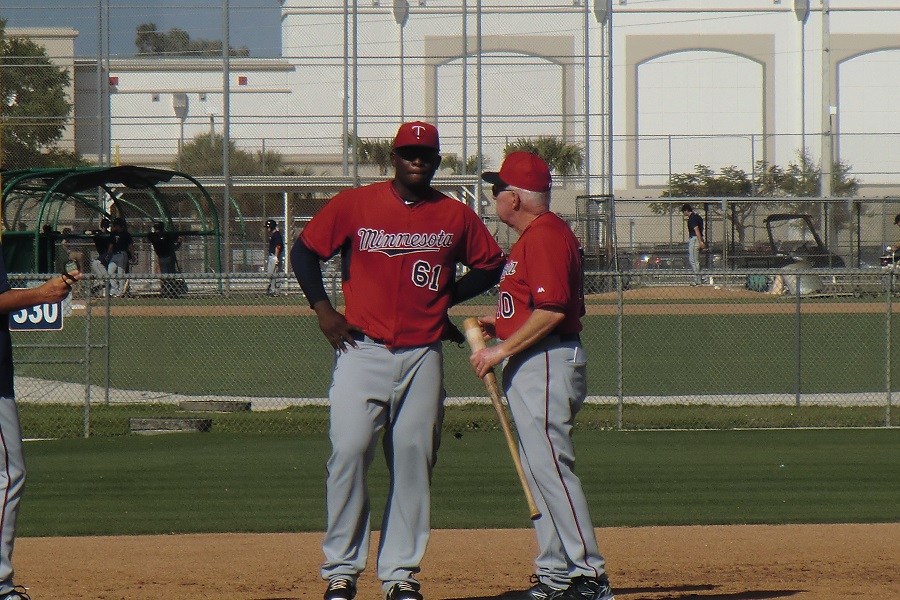 In all, the Twins have now sent 16 players to minor league camp in the last two days.There are no surprises among the players cut from big league camp to this point. With Opening Day less than three weeks away, manager Paul Molitor has some tough decisions to make and needs to give opportunities to those who are competing for the final roster spots. As a quick reminder, those players who are on the 40-man roster need to be "optioned" when they are not on the active roster. These players are then assigned to the roster of one of the Twins minor league affiliates. Non-roster invitees are just "reassigned" to minor league camp. They do not need to be assigned to a specific roster. That will happen later in spring training. Miguel Sano certainly impressed with his power this spring, hitting two long home runs in big league games. He needs some time in the minors to shake off rust, both offensively and defensively. However, in his time in big league camp, he certainly showed again that he may not be far off. These moves reduce the current Twins spring training roster to 45. Eleven of those are non-roster players. They have 21 pitchers (two non-roster), six catchers (three non-roster), 10 infielders (three non-roster) and seven outfielders (two non-roster).
 -
Kanzler did shave his mustache for their photo, but I have a feeling it'll be back.
-
Article: Luke Westphal's Long Road To The Twins
Seth Stohs replied to Seth Stohs's topic in Twins Daily Front Page News
He was fun to talk to. When I approached him, he looked at me like, "How or why would anyone possibly know who I am?" We had a good conversation though. Very excited for an opportunity. And still just 25, left handed and breathing! -
Article: Torii Hunter Might Not Retire After 2015
Seth Stohs replied to Parker Hageman's topic in Twins Daily Front Page News
Hunter was clear about this at his introductory press conference too. He basically said if he played well and felt right he might keep playing.- 39 replies
-
- 1
-

-
- torii hunter
- mlbnetwork
- (and 1 more)
-
Article: Danny Santana's Role Becoming Solidified
Seth Stohs replied to Nick Nelson's topic in Twins Daily Front Page News
In my opinion, Nunez is competing with Herrmannn for the 25th roster spot. They already know Escobar is the main utility infielder. If Herrmann beats out Nunez, they'll DFA or trade him. -
Article: Danny Santana's Role Becoming Solidified
Seth Stohs replied to Nick Nelson's topic in Twins Daily Front Page News
Uti Utility infielder. At one of Terry Ryan's pregame chat, he said he thinks Escobar could get 300 at bats. I think an injury at SS or 2B is what it would take. -
Article: Danny Santana's Role Becoming Solidified
Seth Stohs replied to Nick Nelson's topic in Twins Daily Front Page News
I'm not certain what changes you're looking for. The offense was pretty good last year. Centerfield was really the only question mark after Hunter signed and whichever guy plays out there will likely bat ninth. The lineup didn't need much change. Gary's lineup last year was fine. His pitchers just didn't all pitch very well. -
Article: Berrios, Buxton Among First Round of Cuts
Seth Stohs replied to Seth Stohs's topic in Twins Daily Front Page News
I was there. Pictures to facebook and twitter shortly. -
Article: Berrios, Buxton Among First Round of Cuts
Seth Stohs replied to Seth Stohs's topic in Twins Daily Front Page News
They did not. The four players that I tweeted showed up down there in the morning didn't play and the others didn't show up (excused). Guys on the 40 man roster get 48 hours to report to minor league camp. Non-Roster guys don't have that ability. They are generally expected to go there right away, but I'm guessing the Twins will give them a day. -
Article: Berrios, Buxton Among First Round of Cuts
Seth Stohs replied to Seth Stohs's topic in Twins Daily Front Page News
Correct. The Twins have not formally announced Sano being sent down, though there are reports that he has... There's timing and things like that (that are beyond my understanding). There are as many as 5 guys that have already been told that they will be sent down. That may officially be announced tomorrow, but it could wait until Tuesday as the Twins have a complete off day tomorrow.- 43 replies
-
- 1
-
-
- byron buxton
- jose berrios
- (and 3 more)
-
There are so many interesting stories in minor league baseball. The Twins are well-known for scouring the furthermost reaches of the globe to find players that have some potential. Last offseason, they signed another kid who was playing in Australia, but this one was a little different. He is actually from Wisconsin. Get to know the story of left-handed pitcher Luke Westphal below.Luke Westphal was born and raised is the town of Clintonville, Wisconsin. Clintonville has a population just over 4,500 residents. It is located about 45 miles north of Oshkosh in northeast Wisconsin. He pitched for four years at the University of Wisconsin at Oshkosh, a school that was a huge Division III powerhouse for decades. However, following his four seasons of college baseball, Westphal wasn’t drafted. Following his 2013 graduation, he received an opportunity to pitch in the independent Frontier League, for the Gateway Grizzlies. The team is located in the St. Louis area. He posted a 1.59 ERA and struck out 21 batters in 17 innings coming out of the bullpen. He returned to the Grizzlies in 2014 for the full season. He went 3-5 with a 2.91 ERA in 52.2 innings over 35 games. He struck out 68 and walked 39 batters. So how did he wind up playing in Australia? Westphal recalled, “I had a teammate out at Gateway who was actually from Australia. One day, he was just talking to a couple of my other teammates who had played over in Australia also. He was talking about guys heading back. I thought it sounded like a great plan and a good idea. I approached him and asked if there was any way there would be any interest in me playing over there. He said he’d make a couple of phone calls. I got an e-mail within the next couple of days asking if I’d like to come over and play.” He jumped at the opportunity and went to Australia for the winter. Now, he didn’t play in the Australian Baseball League. Instead he played for a team in Doncaster, in Victoria. Westphal was excited for the opportunity in baseball, but also for an opportunity to see something new. “That was my first time out of the country, and it was an absolutely amazing experience. I went over there. Friendliest people you’ll ever meet.” He continued, “My teammates were terrific.” He had been a starter in college, but with the Grizzlies he had pitched out of the bullpen. He wanted another opportunity to start. “I had been in the bullpen in independent ball but I’d like to start. So, I had the opportunity to start over there. They let me build back up as slow as I wanted. It was four innings the first two outings. Five innings the next two. Six. Seven. They let me build my pitch count up. They were great with me, and I had an unbelievable experience. It was awesome.” Though we don’t have final statistics, at one point right before the end of the season, Westphal had 136 strikeouts in just 74 innings. That’s 16.5 strikeouts per nine innings! It wasn’t the Australian Baseball League, so the competition wasn’t quite as high, but there was still some really good talent. According to the left-hander, “It was a very wide range of talent. Every team had a couple of terrific hitters. Every team had a couple of guys with affiliated experience, whether it was High-A or AA. Then every team had a couple of guys that were 18, 19 years old, looking to go to college or to sign with somebody. It was a big gap. It was a wide range. It was different.” The Twins had scouted Doncaster before. In fact, Lewis Thorpe was signed after playing for Doncaster. Matz Schutte was signed as a 16-year-old from The Netherlands, but the Twins sent him to Australia to play with Doncaster as well. Twins scout Howard Norsetter who is responsible for so many of the Twins international signings, particularly in Australia, got the chance to see Westphal pitch, probably by accident. Westphal said, “The club that I played with is where Lewis Thorpe had signed out of, Doncaster. Actually Daniel McGrath, who is with the Red Sox, he signed out of Doncaster as well. And then Matz is with the Twins. He was over there to get innings. So I think Howard probably showed up to see Matz, and I was starting and then Matz would come in after me most games. He watched me the first time he saw Matz.” Doncaster, he said, typically played on Saturdays and Tuesdays. Westphal usually was the team’s pitcher on Saturday, but late in the year, he was asked to make a couple of starts on Tuesday instead. It can be a little more difficult, you see, because Westphal had to work Monday through Friday. In his second-to-last start, his first Tuesday start, he had his worst outing of the year, by far. In about the fourth inning, one of his teammates pointed to the stands and told him that there was a Twins scout (Norsetter) there. Understandably, Westphal was quite disappointed. He said, “Oh great, that’s the game he came here to watch. Went home, wasn’t in a great mood and was watching some ESPN. Ended up finding a voice mail on my phone. He had actually called me after the game and said he wanted to talk to me. I couldn’t believe it. He liked what he saw and wasn’t too worried about the results. He’d seen me previously as well, and he gave me the opportunity.” Westphal is a left-handed pitcher, listed at 6-3 and 240 pounds. He throws fairly hard. Asked what his pitches were, he said, “Right now I’m throwing a four-seam fastball, a two-seam fastball that sinks a little bit. Curve ball, slider, change-up. So, four pitches with a little two-seam variation off my fastball. I’d probably say that I like to go to the slider, especially to the lefties. I like my two-seam versus lefties or righties. I like my curve ball as well. The change-up is probably the pitch I use least.” As for his hopes for 2015, Westphal is keeping it simple and enjoying the ride. “I’m just super thankful for the opportunity, and I’m really hoping to come in to spring training, throw as well as I can, show them everything I have, and when we break camp, I just hope I’m with a team and whatever level they decide they want to put me at, I’ll be happy with that as long as I have the opportunity to make it out of spring and try to move up from there.” Westphal is another guy you can’t help rooting for. Just seeking an opportunity, the 25-year-old southpaw from Wisconsin traveled halfway across the globe to sign with the team from Minnesota. Baseball can be a funny game. Click here to view the article
-
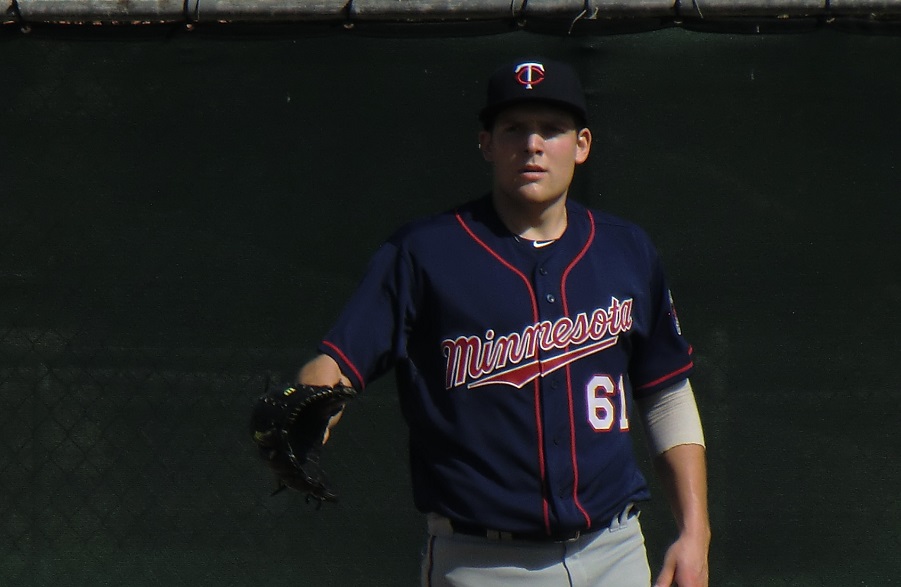 Luke Westphal was born and raised is the town of Clintonville, Wisconsin. Clintonville has a population just over 4,500 residents. It is located about 45 miles north of Oshkosh in northeast Wisconsin. He pitched for four years at the University of Wisconsin at Oshkosh, a school that was a huge Division III powerhouse for decades. However, following his four seasons of college baseball, Westphal wasn’t drafted. Following his 2013 graduation, he received an opportunity to pitch in the independent Frontier League, for the Gateway Grizzlies. The team is located in the St. Louis area. He posted a 1.59 ERA and struck out 21 batters in 17 innings coming out of the bullpen. He returned to the Grizzlies in 2014 for the full season. He went 3-5 with a 2.91 ERA in 52.2 innings over 35 games. He struck out 68 and walked 39 batters. So how did he wind up playing in Australia? Westphal recalled, “I had a teammate out at Gateway who was actually from Australia. One day, he was just talking to a couple of my other teammates who had played over in Australia also. He was talking about guys heading back. I thought it sounded like a great plan and a good idea. I approached him and asked if there was any way there would be any interest in me playing over there. He said he’d make a couple of phone calls. I got an e-mail within the next couple of days asking if I’d like to come over and play.” He jumped at the opportunity and went to Australia for the winter. Now, he didn’t play in the Australian Baseball League. Instead he played for a team in Doncaster, in Victoria. Westphal was excited for the opportunity in baseball, but also for an opportunity to see something new. “That was my first time out of the country, and it was an absolutely amazing experience. I went over there. Friendliest people you’ll ever meet.” He continued, “My teammates were terrific.” He had been a starter in college, but with the Grizzlies he had pitched out of the bullpen. He wanted another opportunity to start. “I had been in the bullpen in independent ball but I’d like to start. So, I had the opportunity to start over there. They let me build back up as slow as I wanted. It was four innings the first two outings. Five innings the next two. Six. Seven. They let me build my pitch count up. They were great with me, and I had an unbelievable experience. It was awesome.” Though we don’t have final statistics, at one point right before the end of the season, Westphal had 136 strikeouts in just 74 innings. That’s 16.5 strikeouts per nine innings! It wasn’t the Australian Baseball League, so the competition wasn’t quite as high, but there was still some really good talent. According to the left-hander, “It was a very wide range of talent. Every team had a couple of terrific hitters. Every team had a couple of guys with affiliated experience, whether it was High-A or AA. Then every team had a couple of guys that were 18, 19 years old, looking to go to college or to sign with somebody. It was a big gap. It was a wide range. It was different.” The Twins had scouted Doncaster before. In fact, Lewis Thorpe was signed after playing for Doncaster. Matz Schutte was signed as a 16-year-old from The Netherlands, but the Twins sent him to Australia to play with Doncaster as well. Twins scout Howard Norsetter who is responsible for so many of the Twins international signings, particularly in Australia, got the chance to see Westphal pitch, probably by accident. Westphal said, “The club that I played with is where Lewis Thorpe had signed out of, Doncaster. Actually Daniel McGrath, who is with the Red Sox, he signed out of Doncaster as well. And then Matz is with the Twins. He was over there to get innings. So I think Howard probably showed up to see Matz, and I was starting and then Matz would come in after me most games. He watched me the first time he saw Matz.” Doncaster, he said, typically played on Saturdays and Tuesdays. Westphal usually was the team’s pitcher on Saturday, but late in the year, he was asked to make a couple of starts on Tuesday instead. It can be a little more difficult, you see, because Westphal had to work Monday through Friday. In his second-to-last start, his first Tuesday start, he had his worst outing of the year, by far. In about the fourth inning, one of his teammates pointed to the stands and told him that there was a Twins scout (Norsetter) there. Understandably, Westphal was quite disappointed. He said, “Oh great, that’s the game he came here to watch. Went home, wasn’t in a great mood and was watching some ESPN. Ended up finding a voice mail on my phone. He had actually called me after the game and said he wanted to talk to me. I couldn’t believe it. He liked what he saw and wasn’t too worried about the results. He’d seen me previously as well, and he gave me the opportunity.” Westphal is a left-handed pitcher, listed at 6-3 and 240 pounds. He throws fairly hard. Asked what his pitches were, he said, “Right now I’m throwing a four-seam fastball, a two-seam fastball that sinks a little bit. Curve ball, slider, change-up. So, four pitches with a little two-seam variation off my fastball. I’d probably say that I like to go to the slider, especially to the lefties. I like my two-seam versus lefties or righties. I like my curve ball as well. The change-up is probably the pitch I use least.” As for his hopes for 2015, Westphal is keeping it simple and enjoying the ride. “I’m just super thankful for the opportunity, and I’m really hoping to come in to spring training, throw as well as I can, show them everything I have, and when we break camp, I just hope I’m with a team and whatever level they decide they want to put me at, I’ll be happy with that as long as I have the opportunity to make it out of spring and try to move up from there.” Westphal is another guy you can’t help rooting for. Just seeking an opportunity, the 25-year-old southpaw from Wisconsin traveled halfway across the globe to sign with the team from Minnesota. Baseball can be a funny game.
 -
On Sunday, the Minnesota Twins announced that nine players had been cut from big league spring training. Byron Buxton and JO Berrios were among the first round of cuts. UPDATE - Following Sunday's game, the Minnesota Twins announced that LHP Logan Darnell was optioned to Rochester, and infielder Jorge Polanco was optioned to Chattanooga. RHP Adrian Salcedo and infielder Argenis Diaz were reassigned to minor league camp.40-Man Roster These players get a couple of days to report to minor league camp. Max Kepler - 1B, OFNon-Roster Invites These players are expected to head across the parking lot. In fact, several of them went right to work after learning the news, fitting into the minor league drills. Jose Berrios - RH SPByron Buxton - OutfielderTyler Duffey – RH SPTaylor Rogers – LH SPRyan O’Rourke – LH RPHeiker Meneses – InfielderMitcher Garver - CatcherStuart Turner - CatcherThe Twins spring training roster is now at 52 players. UPDATE - With the four additional moves, the Twins roster is now at 48 and just 11 of them are non-roster players. Click here to view the article
-
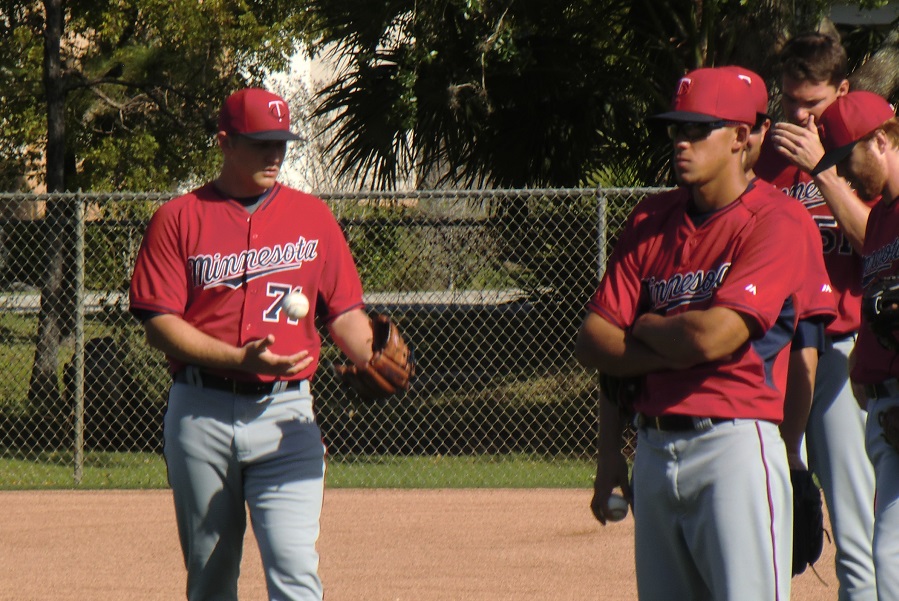 40-Man Roster These players get a couple of days to report to minor league camp. Max Kepler - 1B, OF Non-Roster Invites These players are expected to head across the parking lot. In fact, several of them went right to work after learning the news, fitting into the minor league drills. Jose Berrios - RH SP Byron Buxton - Outfielder Tyler Duffey – RH SP Taylor Rogers – LH SP Ryan O’Rourke – LH RP Heiker Meneses – Infielder Mitcher Garver - Catcher Stuart Turner - Catcher The Twins spring training roster is now at 52 players. UPDATE - With the four additional moves, the Twins roster is now at 48 and just 11 of them are non-roster players.
 -
The Minnesota Twins farm system is full of really good relief pitchers. Alex Muren was one of the better minor league relievers in 2014, and it’s very possible that you’ve never heard of him. He’s just fine with that. While some prospects have reporters surrounding them and autograph hounds begging for their signature, Muren is fully comfortable lurking in the shadows.Alex Muren was the Twins 12th round draft pick in 2012 out of Cal State-Northridge. Despite a 5-8 record and a 5.30 ERA, and just 47 strikeouts in 91.2 innings for the Matadors, the Twins obviously saw something that they liked. After signing, he was assigned to the GCL Twins where he worked out of the bullpen and posted a 1.46 ERA. In 2013, he pitched in relief at Cedar Rapids most of the season. He went 6-1 and posted a 2.85 ERA in 60 innings. He returned to the Kernels to start the 2014 season. In 33 games, he went 3-1 with a 2.85 ERA. He earned a promotion to the Ft. Myers Miracle for the final months and had a 2.45 ERA in 18.1 innings. In his professional career, he has a strikeout rate of just 4.8 K/9. However, he hasn’t posted an ERA above 2.89 at any level. Why? In 2014, Alex Muren posted an incredible 2.8 groundouts to flyouts. Coupled with dropping his walk rate in half, to a miniscule 1.5 BB/9 in 2014, and you can understand why Muren posted the kinds of numbers that he has. In Cedar Rapids, Manager Jake Mauer would often go to Muren in tight situations with runners on, knowing there was a good chance that he would coax a ground ball and maybe they could get a double play. Most often, that’s exactly what happened. I caught up with the right-hander on Saturday, and he said he was much more comfortable now that he is in his third spring training. “The more you’re here, the more you know the guys and the routines. It makes it easier.” He is a ground ball pitcher for a couple of reasons. First, he works with a low-90s, four-seam fastball. “I get a little bit of late run on it which helps.” He has also, as mentioned above, worked to gain better control. He credits his pitching coaches with a great plan of attack. He understands what makes him so successful. “I think just working with the pitching coaches and focusing on staying at the knees and below the knees. And hopefully they’ll hit it on the ground.” Muren reported to Twins minor league spring training earlier this week. He threw a bullpen a couple of days ago and, on Friday, threw his first live batting practice of the year. Asked if there are certain statistics that he looks at and finds most important, he had an interesting response. “I try not to look at stats at all throughout the year, for superstition reasons. I just go based on the outing, how the outing went. I’ll look at the game chart to look at ground balls, strikes to balls ratio. Those are the ones I care about.” Muren took a couple of months off after the season before starting his throwing program again. He worked during the day as a middle school substitute teacher. It was an ideal situation for him as he could earn money, but he also has another reason that he does it. “I just do that because it helps scheduling-wise. I can pick which days I work.” Do the kids that he teaches know that he plays professional baseball? “I try not to bring it up at all, but if they ask what I do, I’ll tell them.” Muren is married, and his wife is currently finishing up her student teaching. If her schedule permits, she may come and visit him in Ft. Myers during spring training. So, as he looks to 2015, what are his goals? Will he be able to back up his terrific 2014 season in which he finished sixth in the Twins Daily Minor League Relief Pitcher of the Year balloting? “Just keep building off of last year. Go out there and do better, get more groundballs. Throw more strikes. Getting the velo up higher earlier.” Of course, if as he moves up he continues to post the kinds of numbers he did in 2014, more and more people will know his name. Click here to view the article
-
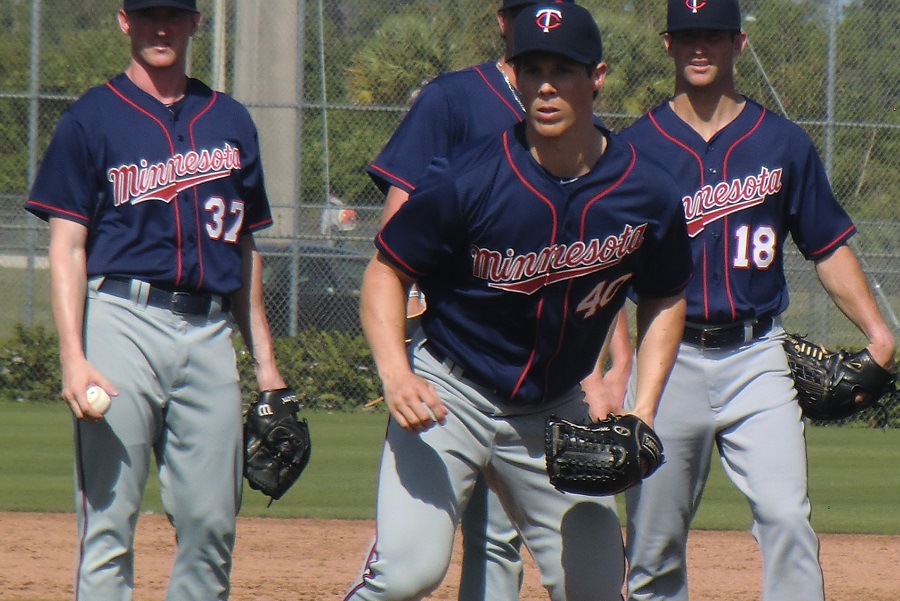 Alex Muren was the Twins 12th round draft pick in 2012 out of Cal State-Northridge. Despite a 5-8 record and a 5.30 ERA, and just 47 strikeouts in 91.2 innings for the Matadors, the Twins obviously saw something that they liked. After signing, he was assigned to the GCL Twins where he worked out of the bullpen and posted a 1.46 ERA. In 2013, he pitched in relief at Cedar Rapids most of the season. He went 6-1 and posted a 2.85 ERA in 60 innings. He returned to the Kernels to start the 2014 season. In 33 games, he went 3-1 with a 2.85 ERA. He earned a promotion to the Ft. Myers Miracle for the final months and had a 2.45 ERA in 18.1 innings. In his professional career, he has a strikeout rate of just 4.8 K/9. However, he hasn’t posted an ERA above 2.89 at any level. Why? In 2014, Alex Muren posted an incredible 2.8 groundouts to flyouts. Coupled with dropping his walk rate in half, to a miniscule 1.5 BB/9 in 2014, and you can understand why Muren posted the kinds of numbers that he has. In Cedar Rapids, Manager Jake Mauer would often go to Muren in tight situations with runners on, knowing there was a good chance that he would coax a ground ball and maybe they could get a double play. Most often, that’s exactly what happened. I caught up with the right-hander on Saturday, and he said he was much more comfortable now that he is in his third spring training. “The more you’re here, the more you know the guys and the routines. It makes it easier.” He is a ground ball pitcher for a couple of reasons. First, he works with a low-90s, four-seam fastball. “I get a little bit of late run on it which helps.” He has also, as mentioned above, worked to gain better control. He credits his pitching coaches with a great plan of attack. He understands what makes him so successful. “I think just working with the pitching coaches and focusing on staying at the knees and below the knees. And hopefully they’ll hit it on the ground.” Muren reported to Twins minor league spring training earlier this week. He threw a bullpen a couple of days ago and, on Friday, threw his first live batting practice of the year. Asked if there are certain statistics that he looks at and finds most important, he had an interesting response. “I try not to look at stats at all throughout the year, for superstition reasons. I just go based on the outing, how the outing went. I’ll look at the game chart to look at ground balls, strikes to balls ratio. Those are the ones I care about.” Muren took a couple of months off after the season before starting his throwing program again. He worked during the day as a middle school substitute teacher. It was an ideal situation for him as he could earn money, but he also has another reason that he does it. “I just do that because it helps scheduling-wise. I can pick which days I work.” Do the kids that he teaches know that he plays professional baseball? “I try not to bring it up at all, but if they ask what I do, I’ll tell them.” Muren is married, and his wife is currently finishing up her student teaching. If her schedule permits, she may come and visit him in Ft. Myers during spring training. So, as he looks to 2015, what are his goals? Will he be able to back up his terrific 2014 season in which he finished sixth in the Twins Daily Minor League Relief Pitcher of the Year balloting? “Just keep building off of last year. Go out there and do better, get more groundballs. Throw more strikes. Getting the velo up higher earlier.” Of course, if as he moves up he continues to post the kinds of numbers he did in 2014, more and more people will know his name.
 -
Article: A Day At Twins Minor League Camp
Seth Stohs replied to Seth Stohs's topic in Twins Daily Front Page News
He's here. He's working with Group 4 which is the group that likely starts in Extended Spring Training. He didn't pitch last year at all, so I'm guessing he'll start in extended at least.- 10 replies
-
- 1
-
-
- luke bard
- david hurlbut
- (and 3 more)
-
The Twins were on the road again on Saturday. They made the trip to Bradenton to play the Pirates and got a win. I spent the full day over at the minor league practice. In fact, if you follow Twins Daily on Twitter or “Like” Twins Daily on Facebook, you can see that a LOT of pictures (probably 500) were taken of minor league players whom you have seen in box scores or the Twins Daily minor league reports each day through the season, but now you can put a face to them. I’ve been asked on numerous occasions what happens in a day at minor league camp. They definitely put in some work. Here is an approximation of a daily schedule as well as some of my observations. I included a few minor league notes at the end as well.There are 55 rooms in the new dormitory at the Twins complex, with two players in each room. Most of the younger players stay there. Some of the more veteran players or some of the guys who think they’ll play for the Miracle this season will find a place to live off-site. At the dorms, they are able to eat breakfast. At about 9 a.m., they will generally have a meeting to discuss the day’s practice. Before Friday’s first official practice, all of the minor leaguers and staff met in the new auditorium to go through things they would need to know. At around 9:30, the players will come out onto the fields. The pitchers will all go to one field and the hitters will go to the area that includes Perry’s Hill. The strength and conditioning coordinators go through a series of stretching exercises as well as some short jogging, just to loosen up. They have weights and stretchy bands as well as some devices that are essentially shake weights. They definitely get a full body stretch and a small workout to get everything ready for a full day of practice. When they’re done, the players split into four work groups. Work Group 1 is the most veteran group with a lot of players who will spend the season at AA or AAA. Work Group 4 is a lot of the guy who will likely begin the season in extended spring training. The hitters go to a field and usually start with some base running work. They’ll run from home to first, through the bag. They’ll start at first and work on their cross-over steps to steal second. They’ll go first to third. Finally they’ll go second to home. They’ll maybe do each thing a couple of times. At that point, the infielders break into ground ball drills. They put them through every situation imaginable, throwing to first and throwing to second. They’ll spend 10 minutes just working on backhands. The middle infielders will work with each other on flips, or giving each other a good target for a double play. You will see a coach with a fungo standing by third base, hitting line drives and one or two hoppers at the first basemen so that they can work on stretching and scooping baseballs. Pitchers will get ground balls shot out of a pitching machine to work on their reactions and hands. They make it a competition to keep it enjoyable. On their days, pitchers will throw their bullpens. They’ll work from the windup and from the stretch. As the spring wears on, those bullpen sessions will likely become more intense and pitchers will be working on more things. At the end of each pitcher’s bullpen, he and his catcher will meet in the middle, shake hands and talk for a minute about what they saw. Outfielders may be in the batting cages taking swings. At some point in the morning, they get that pitching machine and launch fly balls from it positioned near the left field line to the outfielders who are standing in centerfield. They will make them come forward or go backwards. It’s all about repetition and getting to see the ball in the air. Pitchers fielding practice (PFP) is something that we hear about all of the time. On Friday, the pitchers worked on it on all three fields. Infielders will help with it as well. The pitchers need to do a variety of things in preparation for what could happen during the season: Covering first base on a grounder to the first baseman.Fielding a bunt to each the first or third base line.Fielding grounders straight back to them.Communicating with the first baseman on grounders that way that maybe the pitcher can field.Finding a ball that is near the mound and calmly throwing to first base.Getting a ground ball and throwing to second base for a force out, or maybe even a double play.Fielding a bunt down the third base line and throwing to third.Pick off throws to first, second or even third base. I’m certain that I left out some of the scenarios. They go through some I hadn’t even thought of and yet that scenario may come up during the course of the season. In fact, on Saturday, they worked on where to go to back up a play if they have picked off a runner from one of the bases, starting with how to run toward them and make the runner commit to a base. It’s really amazing to watch the precision of a minor league practice with four work groups on five fields. They have stations. They have certain things that they need to do and they get them done. On Saturday before lunch, all of the pitchers had to do the shuttle run. Mini-cones were placed 25 yards from each other. A group of six to eight pitchers will get on the line and do six down and backs, about 300 yards. They are timed and the times are recorded. Most finish between 53 and 60 seconds. A few get between 61 and 65. And then after each of the groups does it once, they get to do it a second time. A few of them maintain their mid-50s time, but most are closer to 60 the second time and a few more trickle to just above 60 seconds. It’s actually kind of impressive. The players generally have lunch for about 30 to 45 minutes. At that point, the hitters come out and they take batting practice on three fields. They get a lot of swings. There was even a bunting station on each field where three or four guys would rotate just to work on bunting. It is an impressive showing of efficient use of the field. Pitchers generally will be shagging fly balls throughout this time. On Friday, they hit until about 2:00. At that point, the hitters went over to the area to do their two shuttle runs. You can tell the catchers, but again, the times were typically between 55 and 60 seconds. There were several that trickled over 60 seconds, but for the most part, they did well. When you watch it, the players are generally doing something. However, in the Florida heat, I also think they do a good job of mixing coaching with executing. In other words, not only do they take ground balls or work on different plays, but they will spend a lot of time huddling in a group to discuss what they will be doing and why. If a coach sees something that a guy should work on, he'll work with him right away, or hit him another ground ball so that he can continue to learn. They are encouraged to get water frequently. The players are on the field from basically 9:30 until 2:30 with a 30 to 45 minute lunch, but they are well taken care of and each field has one athletic trainer around in case there is a need. If you get a chance to spend a day watching a full Twins minor league practice during spring training, I would encourage it. Again, I am amazed by the efficiency. They are able to keep somewhere around 140 baseball players busy, but more important, they are coaching them up at every opportunity. I'm certain that I didn't cover it all. There is so much going on. Here are a couple of quick notes: I talked to Luke Bard for a little while. As you know, he had surgery last May and it is expected to be a 12 month recovery. As I’ve written before, once they found the issue, they were amazed that he was able to throw at all. As he said, a lot of really good doctors missed it. Bard said he feels good and is on track to this point. He’s such a good person that you want to see him get healthy and see what he can do. Reports from teammates when he was able to pitch were that he had some really nasty stuff.I also talked to David Hurlbut, a left-handed starting pitcher who was named to the Florida State League All-Star team in 2014. He didn’t pitch from that point forward and was rehabbing throughout the offseason. He told me that he kept having bullpens and thinking he was good and then he wouldn’t be able to pitch again for a couple of weeks. He did say that the last couple of weeks, he has felt very good. He’s now doing bullpens and involved in all activities with the hope to be ready for opening day.Jason Kanzler shaved the mustache for photo day. I actually felt bad. I was chatting with outfielder Zach Granite between fields, and Kanzler walked by on his way to another field. I had to do a double take. We chatted later and Kanzler said, “Yeah, didn’t think you knew it was me.” I agreed and said that I had to do a double-take just to believe that it was him.There is a belief that flame-thrower Brandon Poulson has a chance to be really good, dominating someday as a pitcher. Though he is 25 years old, he hasn’t played a lot of baseball. He’s 6-4, 240 pounds and as Tom Powers of the Pioneer Press wrote today, he has just 8% body fat. Right now, he has trouble with this control, and the Twins will be patient with him. Why? Because he has little problem hitting 98 mph with his fastball. If it takes him a couple of years to gather his control and maybe a second or third pitch, and he could get to the big leagues at 28 years old with a 98 to 101 mph fastball, then it’s all worth it. I know you were wondering the same thing I was, but they were able to get THEOFANOPOULUS on the back of a Twins jersey. Three guys to keep an eye on for years down the road, possibly, are outfielders Roberto Gonzalez, Tyree Davis and Edgar Corcino. All three fit the profile of athlete. They are all very fast. They all have good strength and they’re all baseball guys. Obviously they’re all young and a long way from big league ready, but if you’re looking for some names of sleepers in the low levels, those guys could be very interesting.One thing I’ve noticed in watching so many bullpens the last couple of days: The Twins have a lot of pitchers that throw pretty hard. I know they’re not completely airing it out in the first bullpen sessions, and I’m not necessarily seeing their best secondary pitches either, but it’s very clear that there is more velocity.On Saturday, the Twins are on the road again, this time across the state in Jupiter, so I’ll be at the minor league facilities again. As you can see, I really enjoy this and I hope that passion comes through when you read me write about the Twins minor league system and the players in it. There really is a lot of talent. Then consider that some of their top prospects are still over in the major league camp and that talent pool just continues to grow. Nick Nelson will be arriving in Ft. Myers later this afternoon, so look forward to his terrific writing the next week or so. He and I will both cover the Twins on Sunday, so be sure to check back often. Click here to view the article
- 10 replies
-
- 2
-
-
- luke bard
- david hurlbut
- (and 3 more)
-
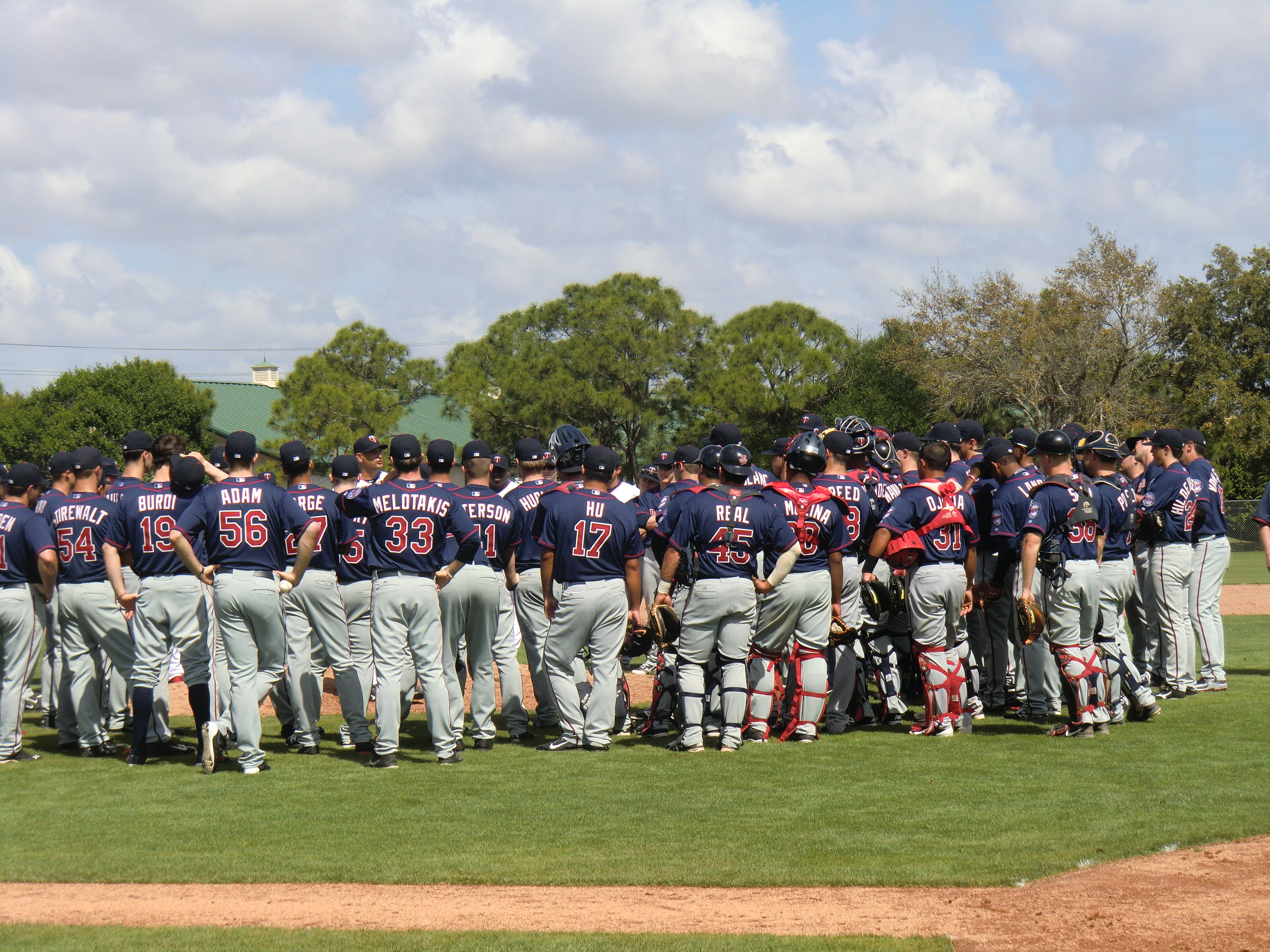 There are 55 rooms in the new dormitory at the Twins complex, with two players in each room. Most of the younger players stay there. Some of the more veteran players or some of the guys who think they’ll play for the Miracle this season will find a place to live off-site. At the dorms, they are able to eat breakfast. At about 9 a.m., they will generally have a meeting to discuss the day’s practice. Before Friday’s first official practice, all of the minor leaguers and staff met in the new auditorium to go through things they would need to know. At around 9:30, the players will come out onto the fields. The pitchers will all go to one field and the hitters will go to the area that includes Perry’s Hill. The strength and conditioning coordinators go through a series of stretching exercises as well as some short jogging, just to loosen up. They have weights and stretchy bands as well as some devices that are essentially shake weights. They definitely get a full body stretch and a small workout to get everything ready for a full day of practice. When they’re done, the players split into four work groups. Work Group 1 is the most veteran group with a lot of players who will spend the season at AA or AAA. Work Group 4 is a lot of the guy who will likely begin the season in extended spring training. The hitters go to a field and usually start with some base running work. They’ll run from home to first, through the bag. They’ll start at first and work on their cross-over steps to steal second. They’ll go first to third. Finally they’ll go second to home. They’ll maybe do each thing a couple of times. At that point, the infielders break into ground ball drills. They put them through every situation imaginable, throwing to first and throwing to second. They’ll spend 10 minutes just working on backhands. The middle infielders will work with each other on flips, or giving each other a good target for a double play. You will see a coach with a fungo standing by third base, hitting line drives and one or two hoppers at the first basemen so that they can work on stretching and scooping baseballs. Pitchers will get ground balls shot out of a pitching machine to work on their reactions and hands. They make it a competition to keep it enjoyable. On their days, pitchers will throw their bullpens. They’ll work from the windup and from the stretch. As the spring wears on, those bullpen sessions will likely become more intense and pitchers will be working on more things. At the end of each pitcher’s bullpen, he and his catcher will meet in the middle, shake hands and talk for a minute about what they saw. Outfielders may be in the batting cages taking swings. At some point in the morning, they get that pitching machine and launch fly balls from it positioned near the left field line to the outfielders who are standing in centerfield. They will make them come forward or go backwards. It’s all about repetition and getting to see the ball in the air. Pitchers fielding practice (PFP) is something that we hear about all of the time. On Friday, the pitchers worked on it on all three fields. Infielders will help with it as well. The pitchers need to do a variety of things in preparation for what could happen during the season: Covering first base on a grounder to the first baseman. Fielding a bunt to each the first or third base line. Fielding grounders straight back to them. Communicating with the first baseman on grounders that way that maybe the pitcher can field. Finding a ball that is near the mound and calmly throwing to first base. Getting a ground ball and throwing to second base for a force out, or maybe even a double play. Fielding a bunt down the third base line and throwing to third. Pick off throws to first, second or even third base. I’m certain that I left out some of the scenarios. They go through some I hadn’t even thought of and yet that scenario may come up during the course of the season. In fact, on Saturday, they worked on where to go to back up a play if they have picked off a runner from one of the bases, starting with how to run toward them and make the runner commit to a base. It’s really amazing to watch the precision of a minor league practice with four work groups on five fields. They have stations. They have certain things that they need to do and they get them done. On Saturday before lunch, all of the pitchers had to do the shuttle run. Mini-cones were placed 25 yards from each other. A group of six to eight pitchers will get on the line and do six down and backs, about 300 yards. They are timed and the times are recorded. Most finish between 53 and 60 seconds. A few get between 61 and 65. And then after each of the groups does it once, they get to do it a second time. A few of them maintain their mid-50s time, but most are closer to 60 the second time and a few more trickle to just above 60 seconds. It’s actually kind of impressive. The players generally have lunch for about 30 to 45 minutes. At that point, the hitters come out and they take batting practice on three fields. They get a lot of swings. There was even a bunting station on each field where three or four guys would rotate just to work on bunting. It is an impressive showing of efficient use of the field. Pitchers generally will be shagging fly balls throughout this time. On Friday, they hit until about 2:00. At that point, the hitters went over to the area to do their two shuttle runs. You can tell the catchers, but again, the times were typically between 55 and 60 seconds. There were several that trickled over 60 seconds, but for the most part, they did well. When you watch it, the players are generally doing something. However, in the Florida heat, I also think they do a good job of mixing coaching with executing. In other words, not only do they take ground balls or work on different plays, but they will spend a lot of time huddling in a group to discuss what they will be doing and why. If a coach sees something that a guy should work on, he'll work with him right away, or hit him another ground ball so that he can continue to learn. They are encouraged to get water frequently. The players are on the field from basically 9:30 until 2:30 with a 30 to 45 minute lunch, but they are well taken care of and each field has one athletic trainer around in case there is a need. If you get a chance to spend a day watching a full Twins minor league practice during spring training, I would encourage it. Again, I am amazed by the efficiency. They are able to keep somewhere around 140 baseball players busy, but more important, they are coaching them up at every opportunity. I'm certain that I didn't cover it all. There is so much going on. Here are a couple of quick notes: I talked to Luke Bard for a little while. As you know, he had surgery last May and it is expected to be a 12 month recovery. As I’ve written before, once they found the issue, they were amazed that he was able to throw at all. As he said, a lot of really good doctors missed it. Bard said he feels good and is on track to this point. He’s such a good person that you want to see him get healthy and see what he can do. Reports from teammates when he was able to pitch were that he had some really nasty stuff. I also talked to David Hurlbut, a left-handed starting pitcher who was named to the Florida State League All-Star team in 2014. He didn’t pitch from that point forward and was rehabbing throughout the offseason. He told me that he kept having bullpens and thinking he was good and then he wouldn’t be able to pitch again for a couple of weeks. He did say that the last couple of weeks, he has felt very good. He’s now doing bullpens and involved in all activities with the hope to be ready for opening day. Jason Kanzler shaved the mustache for photo day. I actually felt bad. I was chatting with outfielder Zach Granite between fields, and Kanzler walked by on his way to another field. I had to do a double take. We chatted later and Kanzler said, “Yeah, didn’t think you knew it was me.” I agreed and said that I had to do a double-take just to believe that it was him. There is a belief that flame-thrower Brandon Poulson has a chance to be really good, dominating someday as a pitcher. Though he is 25 years old, he hasn’t played a lot of baseball. He’s 6-4, 240 pounds and as Tom Powers of the Pioneer Press wrote today, he has just 8% body fat. Right now, he has trouble with this control, and the Twins will be patient with him. Why? Because he has little problem hitting 98 mph with his fastball. If it takes him a couple of years to gather his control and maybe a second or third pitch, and he could get to the big leagues at 28 years old with a 98 to 101 mph fastball, then it’s all worth it. I know you were wondering the same thing I was, but they were able to get THEOFANOPOULUS on the back of a Twins jersey. Three guys to keep an eye on for years down the road, possibly, are outfielders Roberto Gonzalez, Tyree Davis and Edgar Corcino. All three fit the profile of athlete. They are all very fast. They all have good strength and they’re all baseball guys. Obviously they’re all young and a long way from big league ready, but if you’re looking for some names of sleepers in the low levels, those guys could be very interesting. One thing I’ve noticed in watching so many bullpens the last couple of days: The Twins have a lot of pitchers that throw pretty hard. I know they’re not completely airing it out in the first bullpen sessions, and I’m not necessarily seeing their best secondary pitches either, but it’s very clear that there is more velocity. On Saturday, the Twins are on the road again, this time across the state in Jupiter, so I’ll be at the minor league facilities again. As you can see, I really enjoy this and I hope that passion comes through when you read me write about the Twins minor league system and the players in it. There really is a lot of talent. Then consider that some of their top prospects are still over in the major league camp and that talent pool just continues to grow. Nick Nelson will be arriving in Ft. Myers later this afternoon, so look forward to his terrific writing the next week or so. He and I will both cover the Twins on Sunday, so be sure to check back often.
