



Seth Stohs
-
Posts
25,870 -
Joined
-
Last visited
-
Days Won
109
Content Type
Profiles
News
Minnesota Twins Videos
2026 Minnesota Twins Top Prospects Ranking
2022 Minnesota Twins Draft Picks
Minnesota Twins Free Agent & Trade Rumors, Notes, & Tidbits
Guides & Resources
2023 Minnesota Twins Draft Picks
The Minnesota Twins Players Project
2024 Minnesota Twins Draft Picks
2025 Minnesota Twins Draft Pick Tracker
2026 Minnesota Twins Draft Tracker: Picks & Bonuses
Forums
Blogs
Events
Store
Downloads
Gallery
Everything posted by Seth Stohs
-
 Good, fair questions... I hadn't given it much thought, but I think Hu would have been in that 13-16 range. Tapia was further away, but without knowing how he would have done, I probably would have him in that low 30s.
 -
Article: Predicting The Twins 40 Man Roster Additions
Seth Stohs replied to Seth Stohs's topic in Twins Daily Front Page News
Ridiculous considering how poorly he (and he admits he) pitched last year, and the fact that he wasn't even supposed to be in the Red Wings rotation to start the season. Like I said, I don't think I would protect him, but I don't think it's crazy based on his improvements of the breaking pitches. -
Article: Get To Know: LHP Lachlan Wells
Seth Stohs replied to Seth Stohs's topic in Twins Daily Front Page News
Friend of Twins Daily, Hans Van Slooten will take care of it. he's good. -
Article: Predicting The Twins 40 Man Roster Additions
Seth Stohs replied to Seth Stohs's topic in Twins Daily Front Page News
That's my opinion. I think he's got a ton of talent though. I think he's someone they have to consider protecting. I don't think I would.- 115 replies
-
- 1
-

-
- adam brett walker
- taylor rogers
- (and 3 more)
-
Article: Predicting The Twins 40 Man Roster Additions
Seth Stohs replied to Seth Stohs's topic in Twins Daily Front Page News
By the way, those on Twitter will be able to Vote on whether or not you would add these guys to the 40 man roster. Go to www.twitter.com/sethtweets for the polls. I mean, you can follow me too, if you want... When you vote, you can see the sample size and the results. Should be interesting. The vote goes for 24 hours and I"ll be sure to post the results here. -
Article: Predicting The Twins 40 Man Roster Additions
Seth Stohs replied to Seth Stohs's topic in Twins Daily Front Page News
I don't know if that's fair. Maybe, but he put up ridiculous numbers in 2015 in AAA. I've heard that he has really improved his curveball and slider. I'm not saying they should protect him, but I don't think we should talk about him like he has no value. Like I wrote about, he pitched better than Gilmartin when he was taken. I'm not even saying I would protect him, but it's not a bad thing if they do. -
Article: Predicting The Twins 40 Man Roster Additions
Seth Stohs replied to Seth Stohs's topic in Twins Daily Front Page News
And then he would have to stay in the big leagues longer into 2017 or be offered back. It's possible. That's a case I've argued in the past. But it hasn't happened. -
Article: Predicting The Twins 40 Man Roster Additions
Seth Stohs replied to Seth Stohs's topic in Twins Daily Front Page News
Things the Twins need to consider in this decision: 1.) Would that player be selected? 2.) Could that player stick with another team through the year? 3.) If lost, would it be devastating or would it be fine?- 115 replies
-
- 1
-
-
- adam brett walker
- taylor rogers
- (and 3 more)
-
Article: Predicting The Twins 40 Man Roster Additions
Seth Stohs replied to Seth Stohs's topic in Twins Daily Front Page News
He will be eligible for the Rule 5 draft if not added to the 40 man roster next year at this time... I have a sneaky suspicion that he'll be added before then.- 115 replies
-
- 2
-
-
- adam brett walker
- taylor rogers
- (and 3 more)
-
Article: Predicting The Twins 40 Man Roster Additions
Seth Stohs replied to Seth Stohs's topic in Twins Daily Front Page News
Yup, he has been eligible for the Rule 5 the last two years and hasn't been taken.I thought it was crazy last week when Jeremy Nygaard, on twitter, said that some were more worried about losing Dean than Gilmartin last year. I've talked to a couple of other people this week, prepping for the Prospect Handbook, and that has been pointed out to me as true. -
Article: Predicting The Twins 40 Man Roster Additions
Seth Stohs replied to Seth Stohs's topic in Twins Daily Front Page News
I don't disagree with that. However, when it comes to likelihood of a player being selected, something that has to be considered is the likelihood that a player will make the roster. Melotakis won't likely pitch for a couple of months into the season, and even then he would need to be monitored very closely. Bard and Melotakis both have great stuff. Both have been hurt. Bard got through this season, starting in early June. He'll start in Ft. Myers and I think he could move up a level pretty quickly, but that's a long ways to go. I just can't see either being selected... -
By the end of this week, the Minnesota Twins will have to add some players to their 40-man roster. The Twins currently have 33 players on their 40-man roster. That number does not include Byung-Ho Kim. So, the Twins could add as many as six players to the roster. Most likely, they will add three to four players. In the Twins Daily Offseason Handbook, I went into more detail on several of the players that the Twins will likely consider for adding to the 40-man roster. Today, I’ll post the most likely players for the Twins to add with some more information. We’ll start at #1 with the player most likely to be added, and get through the top 10. Of course, these are just my opinion, so I’d encourage your thoughts below.Let’s get started… but first, who is eligible for the Rule 5 draft if not protected on a 40 man roster? Players signed at the age of 18 or less in 2011 (signed before end of minor league season)Players signed at the age of 19 or more in 2012Players signed under the first two categories in previous years.#1 – LHP Taylor Rogers The 25-year-old southpaw has moved up a level each year since being the Twins 11th round pick in 2012 out of the University of Kentucky. He has done well as a starter, though many believe that he could be tremendous out of the bullpen. With the Twins depth of starting pitchers, Rogers could be a guy who gets to the Twins quickly out of the bullpen. Consider left-handers hit just .177/.209/.193 (.402) off him in 2015 in AAA. Rogers has a good fastball with a really, really good slider that is devastating to lefties. He needs a better changeup if he wants to be a starter, specifically to help get right-handers out. After throwing 174 innings during the regular season, he has thrown another 25 innings, so far, in the AFL. Rogers will pitch in the big leagues for a long time. #2 – OF Adam Brett Walker Yes, he strikes out too much. Yes, there are concerns about his pitch recognition. However, he’s just 24, and is a legitimate 8 power on the scout’s 2-8 chart. He led minor league baseball in strikeouts (195) this year, but he also hit 31 home runs and ended with 65 extra base hits. He has led his league in home runs each of the last three seasons. Walker is adequate in the outfield, with an arm for left field. The Twins third-round pick in 2012 out of Jacksonville University has done well in the Arizona Fall League as well, with five home runs. #3 – RH RP JT Chargois It may sound strange to say that a guy who didn’t pitch in 2013 and 2014 is a given to be added to the 4- man roster, but I believe he is. Why? He is capable and frequently hit 100 mph with his fastball. He was consistently at 98 and 99 mph. He was the Twins second round pick in 2012 out of Rice University where he was co-closer with Tyler Duffey. He pitched 16 innings in Elizabethton that year and then missed the next two years with elbow problems that culminated in Tommy John surgery. He’s not a finished project. He can throw more strikes and his slider, while a terrific pitch, can be inconsistent. Two big league pitches and he can be a dominant late-inning reliever, soon. #4 – LHP Pat Dean After a 2014 season in AA that he described as remarkably disappointing, Dean responded with a terrific 2015 season in Rochester. The lefty, who was the Twins third-round pick in 2010 out of Boston College. In 2015, he went 12-11 with a 2.82 over a minor league-leading 179 innings pitched. If he isn’t protected, there is a good chance that he is selected in the Rule 5 draft. #5 – 2B Levi Michael Michael was the Twins first-round pick in 2011 out of the University of North Carolina. His biggest issue through his professional career has been the injury bug. However, the last two years when he has been healthy, he has been good. In 2014 he played in just 65 games but he hit a combined .313/.389/.387 (.776). He spent 2015 in Chattanooga and played just 63 games. He hit .267/.369/.434 (.804) with 12 doubles, five triples and five home runs. Michael may not have any tools that jump out of the roof, but he is a solid player all around. He’s got good speed, puts together good at-bats, has doubles power, and plays solid defense. He is primarily a second baseman, but he could probably make a team as a 25th man who can play all three infield positions. Still just 24, he is a guy who could stick with a big league team. #6 – RHP Zack Jones A year ago, Zack Jones was on path to be an easy add to the roster at this time. However, after being a Southern League All-Star following a strong first half in AA, he really struggled and ended his season back in Ft. Myers. However, that doesn’t negate his upside. It also doesn’t negate his upper-90s fastball. He also has a very good slider. However, he can struggle with control of each. There may be a team out there willing to give him an opportunity in some low-level situations throughout 2016. He was the Twins fourth-round pick in 2012. #7 – RHP Felix Jorge Jorge is just 22. He signed out of Venezuela in 2010. He struggled mightily in Cedar Rapids in 2014. He returned to the Kernels and was remarkably consistent all year. In fact, he completed six innings in 19 of his 22 starts and never went less than five innings. I think he’s a longer-shot to be added because he is still quite far from being big league ready. #8 – LHP Corey Williams Williams came back from Tommy John surgery in early June after having the surgery on April 1, 2014, and missing that season. He split his time between Fort Myers and Chattanooga and pitched well. He is definitely one to watch following a regular offseason. Left-handed. Throws hard. Stuff described as nasty. I feel like he should be higher up on this list. The same might be said of another power lefty. Mason Melotakis had Tommy John surgery late in 2014 and will return to action in 2016. When healthy, his 97 mph fastball and three-pitch mix make him intriguing. However, he is behind Williams in the return schedule which makes him unlikely to be taken. #9 – OF Travis Harrison Twins supplemental first-round pick in 2011 (50th overall) out of high school in California, Harrison has worked his way up one level at a time each year. To this point, his best tool has been his patience and approach at the plate. Still just 23, he has very good power potential despite not hitting home runs the last couple of years. Defensively, he is adequate in right field and has a strong arm. I think it might serve him best to get another half-season in Chattanooga, but there’s still enough upside and talent that a team might be willing to have him take up a roster spot. #10 – RHP Yorman Landa Signed by the Twins out of Venezuela in 2010, Landa has fought some shoulder injuries the last couple of seasons. When healthy, he is another guy who is capable of reaching into the upper-90s and has a good slider as well. Over time, he could develop into a late-inning power arm. However, having just finished a season in Cedar Rapids, he is likely too far away from the big leagues to be selected in the Rule 5. OTHER ELIGIBLES: RHP Jose Abreu, RHP Jason Adam, RHP Nick Anderson, RHP Luke Bard, RHP Omar Bencomo, OF Edgar Corcino, RHP DJ Baxendale, RHP Sam Gibbons, RHP Miguel Gonzalez, IF/OF Niko Goodrum, 1B/3B Bryan Haar, 1B Dalton Hicks, LHP David Hurlbut, RHP Cole Johnson, LHP Brett Lee, RHP Kuo-Hua Lo, IF Aderlin Mejia, RHP Alex Muren, C Carlos Paulino, RHP Greg Peavey, C Michael Quesada, RHP Dereck Rodriguez, C Jairo Rodriguez, OF/1B Reynaldo Rodriguez, LHP Randy Rosario, RHP Tim Shibuya, RHP Matt Summers, RHP Loek Van Mil, RHP Todd Van Steensel, IF/OF Logan Wade, LHP Jason Wheeler, IF/OF Stephen Wickens, RHP Alex Wimmers. Click here to view the article
- 115 replies
-
- 1
-
-
- adam brett walker
- taylor rogers
- (and 3 more)
-
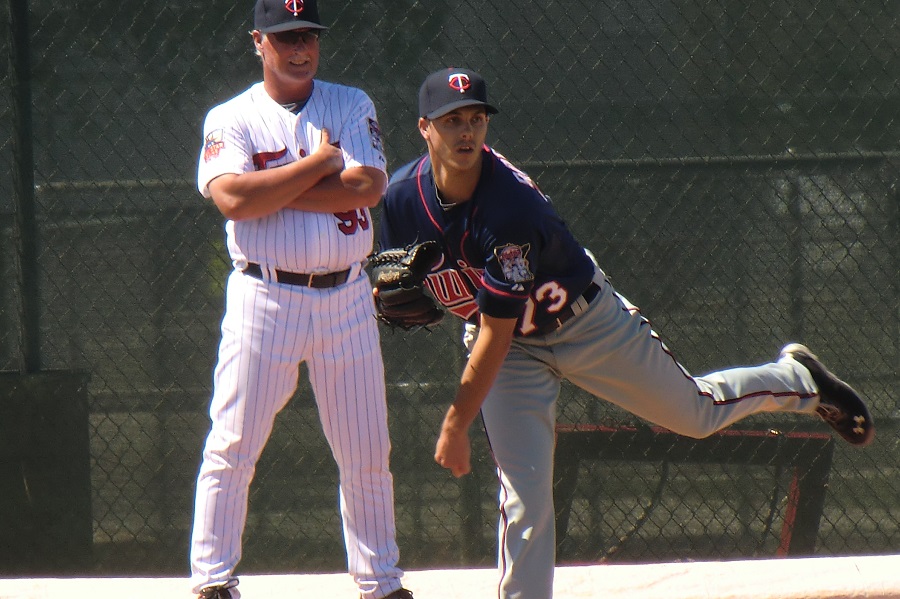 Let’s get started… but first, who is eligible for the Rule 5 draft if not protected on a 40 man roster? Players signed at the age of 18 or less in 2011 (signed before end of minor league season) Players signed at the age of 19 or more in 2012 Players signed under the first two categories in previous years. #1 – LHP Taylor Rogers The 25-year-old southpaw has moved up a level each year since being the Twins 11th round pick in 2012 out of the University of Kentucky. He has done well as a starter, though many believe that he could be tremendous out of the bullpen. With the Twins depth of starting pitchers, Rogers could be a guy who gets to the Twins quickly out of the bullpen. Consider left-handers hit just .177/.209/.193 (.402) off him in 2015 in AAA. Rogers has a good fastball with a really, really good slider that is devastating to lefties. He needs a better changeup if he wants to be a starter, specifically to help get right-handers out. After throwing 174 innings during the regular season, he has thrown another 25 innings, so far, in the AFL. Rogers will pitch in the big leagues for a long time. #2 – OF Adam Brett Walker Yes, he strikes out too much. Yes, there are concerns about his pitch recognition. However, he’s just 24, and is a legitimate 8 power on the scout’s 2-8 chart. He led minor league baseball in strikeouts (195) this year, but he also hit 31 home runs and ended with 65 extra base hits. He has led his league in home runs each of the last three seasons. Walker is adequate in the outfield, with an arm for left field. The Twins third-round pick in 2012 out of Jacksonville University has done well in the Arizona Fall League as well, with five home runs. #3 – RH RP JT Chargois It may sound strange to say that a guy who didn’t pitch in 2013 and 2014 is a given to be added to the 4- man roster, but I believe he is. Why? He is capable and frequently hit 100 mph with his fastball. He was consistently at 98 and 99 mph. He was the Twins second round pick in 2012 out of Rice University where he was co-closer with Tyler Duffey. He pitched 16 innings in Elizabethton that year and then missed the next two years with elbow problems that culminated in Tommy John surgery. He’s not a finished project. He can throw more strikes and his slider, while a terrific pitch, can be inconsistent. Two big league pitches and he can be a dominant late-inning reliever, soon. #4 – LHP Pat Dean After a 2014 season in AA that he described as remarkably disappointing, Dean responded with a terrific 2015 season in Rochester. The lefty, who was the Twins third-round pick in 2010 out of Boston College. In 2015, he went 12-11 with a 2.82 over a minor league-leading 179 innings pitched. If he isn’t protected, there is a good chance that he is selected in the Rule 5 draft. #5 – 2B Levi Michael Michael was the Twins first-round pick in 2011 out of the University of North Carolina. His biggest issue through his professional career has been the injury bug. However, the last two years when he has been healthy, he has been good. In 2014 he played in just 65 games but he hit a combined .313/.389/.387 (.776). He spent 2015 in Chattanooga and played just 63 games. He hit .267/.369/.434 (.804) with 12 doubles, five triples and five home runs. Michael may not have any tools that jump out of the roof, but he is a solid player all around. He’s got good speed, puts together good at-bats, has doubles power, and plays solid defense. He is primarily a second baseman, but he could probably make a team as a 25th man who can play all three infield positions. Still just 24, he is a guy who could stick with a big league team. #6 – RHP Zack Jones A year ago, Zack Jones was on path to be an easy add to the roster at this time. However, after being a Southern League All-Star following a strong first half in AA, he really struggled and ended his season back in Ft. Myers. However, that doesn’t negate his upside. It also doesn’t negate his upper-90s fastball. He also has a very good slider. However, he can struggle with control of each. There may be a team out there willing to give him an opportunity in some low-level situations throughout 2016. He was the Twins fourth-round pick in 2012. #7 – RHP Felix Jorge Jorge is just 22. He signed out of Venezuela in 2010. He struggled mightily in Cedar Rapids in 2014. He returned to the Kernels and was remarkably consistent all year. In fact, he completed six innings in 19 of his 22 starts and never went less than five innings. I think he’s a longer-shot to be added because he is still quite far from being big league ready. #8 – LHP Corey Williams Williams came back from Tommy John surgery in early June after having the surgery on April 1, 2014, and missing that season. He split his time between Fort Myers and Chattanooga and pitched well. He is definitely one to watch following a regular offseason. Left-handed. Throws hard. Stuff described as nasty. I feel like he should be higher up on this list. The same might be said of another power lefty. Mason Melotakis had Tommy John surgery late in 2014 and will return to action in 2016. When healthy, his 97 mph fastball and three-pitch mix make him intriguing. However, he is behind Williams in the return schedule which makes him unlikely to be taken. #9 – OF Travis Harrison Twins supplemental first-round pick in 2011 (50th overall) out of high school in California, Harrison has worked his way up one level at a time each year. To this point, his best tool has been his patience and approach at the plate. Still just 23, he has very good power potential despite not hitting home runs the last couple of years. Defensively, he is adequate in right field and has a strong arm. I think it might serve him best to get another half-season in Chattanooga, but there’s still enough upside and talent that a team might be willing to have him take up a roster spot. #10 – RHP Yorman Landa Signed by the Twins out of Venezuela in 2010, Landa has fought some shoulder injuries the last couple of seasons. When healthy, he is another guy who is capable of reaching into the upper-90s and has a good slider as well. Over time, he could develop into a late-inning power arm. However, having just finished a season in Cedar Rapids, he is likely too far away from the big leagues to be selected in the Rule 5. OTHER ELIGIBLES: RHP Jose Abreu, RHP Jason Adam, RHP Nick Anderson, RHP Luke Bard, RHP Omar Bencomo, OF Edgar Corcino, RHP DJ Baxendale, RHP Sam Gibbons, RHP Miguel Gonzalez, IF/OF Niko Goodrum, 1B/3B Bryan Haar, 1B Dalton Hicks, LHP David Hurlbut, RHP Cole Johnson, LHP Brett Lee, RHP Kuo-Hua Lo, IF Aderlin Mejia, RHP Alex Muren, C Carlos Paulino, RHP Greg Peavey, C Michael Quesada, RHP Dereck Rodriguez, C Jairo Rodriguez, OF/1B Reynaldo Rodriguez, LHP Randy Rosario, RHP Tim Shibuya, RHP Matt Summers, RHP Loek Van Mil, RHP Todd Van Steensel, IF/OF Logan Wade, LHP Jason Wheeler, IF/OF Stephen Wickens, RHP Alex Wimmers.
 -
Article: Get To Know: LHP Lachlan Wells
Seth Stohs replied to Seth Stohs's topic in Twins Daily Front Page News
I promise, he throws left-handed. UPDATE - I added a photo of Lachlan Wells pitching from this year... just to prove it. -
Article: Get To Know: LHP Lachlan Wells
Seth Stohs replied to Seth Stohs's topic in Twins Daily Front Page News
6-0, 185. -
Article: Get To Know: LHP Lachlan Wells
Seth Stohs replied to Seth Stohs's topic in Twins Daily Front Page News
When he signed he touched 92... I'm still checking in to find out where he was at this year, but in that area. -
Article: Get To Know: LHP Lachlan Wells
Seth Stohs replied to Seth Stohs's topic in Twins Daily Front Page News
I can find out. I have gone by how you have gone, so we'll see. -
The Twins have a long history of signing players from Australia. From Grant Balfour to Luke Hughes. From Liam Hendriks to James Beresford. From Michael Nakamura to the subject of today’s Get to Know ‘Em Q&A, Lachlan Wells. Wells was signed by the Twins in August of 2014. This summer, he made his pro debut with the GCL Twins. He pitched well, especially for an 18-year-old. He was 5-2 with a 2.09 ERA and a 0.97 WHIP. In 47.1 innings, he walked 11 and struck out 49. As the season came to an end, Wells left and pitched for Australia in an international tournament. Sound familiar? Two years earlier Lewis Thorpe did the same thing. In fact, Wells was on that Australian team two years ago when Thorpe beat Team USA. This summer, with Thorpe rehabbing from Tommy John surgery, the two roomed together at the Twins academy in Ft. Myers.Recently, Wells was gracious enough to answer a series of questions for Twins Daily. Continue reading to get to know Lachlan Wells. Seth Stohs (SS): As an amateur, how much contact did you have with MLB teams and what was it that caused you to decide to sign with the Twins? Lachlan Wells (LW): As an amateur, I had a few teams interested in me. The reason I chose the Twins was that it was a good system and there have been plenty of Australian boys that have been through the system and well looked after. SS: What was the adjustment like for you last spring moving from Australia to Florida? What were the biggest challenges? LW: The adjustment from moving to Fort Myers was pretty big. Moving halfway around the world was tough. The time difference and not knowing many people were challenges I faced. SS: What was the highlight of your 2015 season, your first year in the Twins organization? LW: My highlight from my first season would be throwing my first outing of the season. SS: You had a successful first professional season with the GCL Twins. What were your keys to your success? LW: My keys to success were working hard and keeping my pitches down in the zone. SS: What pitches do you throw? What is your best pitch, and what is the pitch that you really want to improve? LW: The pitches I throw is fastball, curveball and change up. My best pitch is my change up. SS: After the GCL season, you were impressive while representing Australia in an international tournament. What’s it like to pitch for your country? LW: There is no greater feeling to pitch for your country. Words cannot describe it. SS: Away from baseball, what do you enjoy doing in your free time? LW: I like to play golf and hang out with my family and mates. SS: Growing up, who were some of your role models in the game of baseball? LW: My role model growing up was Grant Balfour. SS: You are following a similar path, and roomed this year with Lewis Thorpe. He's still young, but what have you been able to learn from him? LW: I learnt a lot of Lewis, little things here and there, on the field and even off the field. SS: Your twin brother signed with the Orioles. How happy are the two of you for each other to get signed? LW: We are both very happy that we are both signed. The feeling when it happened was indescribable. SS: Who are some of the people who have helped you get to this point in your career? LW: A lot of people have helped me to get where I am today. The support from people back home is awesome! SS: What are some of your goals for the 2016 season? Are there certain statistics that you focus on? LW: My goals for the 2016 season are to move up out of rookie ball and to work on making my pitches better. SS: What would it mean to you and your family to be able to reach the major leagues and put that uniform on for the first time? LW: It would mean a lot. Words can't describe how good it would be to reach the major leagues. We would like to thank Lachlan Wells for taking time to respond to our series of questions, and a couple of follow up questions. Feel free to ask questions and discuss in the comments below. Photo by Jim Donten Click here to view the article
-
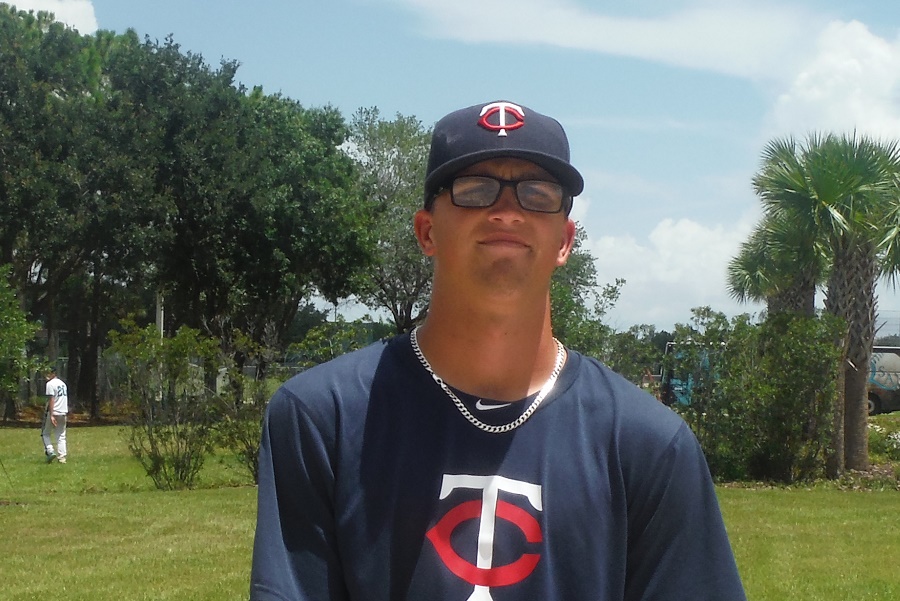 Recently, Wells was gracious enough to answer a series of questions for Twins Daily. Continue reading to get to know Lachlan Wells. Seth Stohs (SS): As an amateur, how much contact did you have with MLB teams and what was it that caused you to decide to sign with the Twins? Lachlan Wells (LW): As an amateur, I had a few teams interested in me. The reason I chose the Twins was that it was a good system and there have been plenty of Australian boys that have been through the system and well looked after. SS: What was the adjustment like for you last spring moving from Australia to Florida? What were the biggest challenges? LW: The adjustment from moving to Fort Myers was pretty big. Moving halfway around the world was tough. The time difference and not knowing many people were challenges I faced. SS: What was the highlight of your 2015 season, your first year in the Twins organization? LW: My highlight from my first season would be throwing my first outing of the season. SS: You had a successful first professional season with the GCL Twins. What were your keys to your success? LW: My keys to success were working hard and keeping my pitches down in the zone. SS: What pitches do you throw? What is your best pitch, and what is the pitch that you really want to improve? LW: The pitches I throw is fastball, curveball and change up. My best pitch is my change up. SS: After the GCL season, you were impressive while representing Australia in an international tournament. What’s it like to pitch for your country? LW: There is no greater feeling to pitch for your country. Words cannot describe it. SS: Away from baseball, what do you enjoy doing in your free time? LW: I like to play golf and hang out with my family and mates. SS: Growing up, who were some of your role models in the game of baseball? LW: My role model growing up was Grant Balfour. SS: You are following a similar path, and roomed this year with Lewis Thorpe. He's still young, but what have you been able to learn from him? LW: I learnt a lot of Lewis, little things here and there, on the field and even off the field. SS: Your twin brother signed with the Orioles. How happy are the two of you for each other to get signed? LW: We are both very happy that we are both signed. The feeling when it happened was indescribable. SS: Who are some of the people who have helped you get to this point in your career? LW: A lot of people have helped me to get where I am today. The support from people back home is awesome! SS: What are some of your goals for the 2016 season? Are there certain statistics that you focus on? LW: My goals for the 2016 season are to move up out of rookie ball and to work on making my pitches better. SS: What would it mean to you and your family to be able to reach the major leagues and put that uniform on for the first time? LW: It would mean a lot. Words can't describe how good it would be to reach the major leagues. We would like to thank Lachlan Wells for taking time to respond to our series of questions, and a couple of follow up questions. Feel free to ask questions and discuss in the comments below. Photo by Jim Donten
 -
Article: AFL Recap Week 5: Bullpen Dominates
Seth Stohs replied to Steve Lein's topic in Twins Daily Front Page News
This is what he CAN be, and that is incredible.... We (myself and many here, I'm sure) probably were a little unrealistic last year. Burdi and the Twins have both said that his struggles this year may be the best thing for him... Hard to disagree. -
Article: AFL Recap Week 5: Bullpen Dominates
Seth Stohs replied to Steve Lein's topic in Twins Daily Front Page News
Good point... Steve, you should add him... -
Today we will get to know another Twins minor leaguer, and another member of the Minnesota Twins 2015 draft class. Hector Lujan was the Twins 35th round pick in June out of NAIA Westmont College where he was a teammate of Twins 32nd pick LHP Andrew Vasquez. In his 2015 Draft Supplemental, Jeremy Nygaard wrote this of Lujan, “His fastball touches 95 mph, and he couples that with an 86 mph slider.”He recently answered some questions from Twins Daily. So continue on to learn a little more about right-handed pitcher Hector Lujan. Seth Stohs (SS) Growing up in California, who was your favorite team to follow, and who were some of your favorite players? Hector Lujan (HL): Growing up in Mira Loma, California, my favorite team was the Los Angeles Dodgers while my family were Angels fans. Some of my favorite players during the time were Bartolo Colon, Mariano Rivera, and Orel Hershiser. (SS): You went to UC-Santa Barbara before going to Westwood College for your junior season. What were some of your favorite moments from you college years? (HL): Some of my favorite college memories were making a regional with UCSB during my freshman year of college, and then making a regional at Westmont College the year I was drafted. Another favorite moment in my college career was making my first collegiate start against Pepperdine University at UCSB. One more favorite moment from college was being able to compete with a bunch of hardworking teammates and meeting new people and coaches. (SS): What was your interaction with scouts before the draft? Did you think you might be drafted? (HL): I had good interaction with scouts. Talking to them, I knew I had a really good chance of being drafted so it pushed me even more to reach my dream in playing professional baseball. Being able to speak with teams about the draft was one of the best moments in my life. (SS): The Twins took you in the 35th round. How did you find out you had been drafted? (HL): The way I found out I was drafted was that my scout, Taylor Cameron, from the Twins had texted me in the morning (to see) if I still wanted to sign. So I texted him telling him “yes.” I was. Then a couple hours later while the draft was going on and he texted me if I was listening to the draft. I told, “No, I was watching it on twitter.” He then told me that they took me in the 35th round. To this day, I remember the excitement I had and the best feeling was that I was with my parents when I found out. (SS): Was it a difficult decision for you to sign with the Twins versus going back to college for one more year? (HL): It wasn’t a difficult choice because I had already decided I was going to sign if I was drafted. It was an easy decision, especially with my parents 200% behind me on my decision. (SS): You and Andrew Vasquez were teammates at UC-SB and at Westmont, and the Twins took him in the 32nd round this year. What can you tell us about Vasquez as a pitcher and a teammate? (HL): Andrew Vasquez was a great teammate and still is a great teammate and a great friend as well. He lives close to me at home during the offseason. He and I plan on working out together and throwing as well. It was great having him as a teammate both at UCSB and Westmont because we would push each other really hard and had two things on our minds, get drafted and win during our last college season together at Westmont. (SS): What was the biggest adjustment you had to make, going from amateur/college season to the pro game, on or off the field? (HL): The biggest adjustments that I had to make was probably getting used to the heat down here in Florida, also being able to maintain my body during the season playing every day. I felt I did a really good job adjusting to this. (SS): How would you describe yourself as a pitcher? What do you throw? What is your best pitch, out pitch, etc? (HL): The way I would describe myself as a pitcher would be as a really competitive pitcher. No matter who steps into that box, my plan is to get you out no matter what it takes. Talking to older guys that have pitched in the big leagues or higher minor league levels have told me that, and that is something I have taken into my game as well as to being a smart pitcher and not just a thrower. My best pitch. I would say, is my change up, and my slider I have been working on which I’m still developing more. My pitches will be ready in my arsenal when spring training comes around. (SS): In these very early stages of your career, what would you say are your biggest strengths as a player? (HL): My biggest strengths as a player, I would say, are leadership and maturing as pitcher. (SS): What are the things that you feel you need to improve over the offseason and going forward? (HL): Somethings that I plan on improving during my offseason are developing my pitches and getting more velocity/movement on my pitches. (SS): What are your plans for the offseason? (When do you start preparing for the 2016 season, but also what do you enjoy doing away from the game of baseball?) (HL): My plans for the offseason for starting to prep have already started. I’m really looking forward to starting my throwing program in a couple of weeks and seeing more results of my offseason work pay off. Somethings I really enjoy away from baseball during my offseason is being able to spend time with my parents and family, horseback riding with my father and being able to help my mom at work down at the old elementary school. (SS): Who are some of the coaches and others who have helped you get to this point in your career? (HL): Two of the most important people that have helped me get to this point I am right now in my career would be my mother and father. They always stood by me with everything from baseball to school, etc… They would always push me and would always help by playing catch with me to sometimes my father catching my bullpens or running with me after my high school games I pitched. I am really blessed to have parents like them that have always had my back with my career in baseball. Other people that have really helped get me to my professional career would be my three pitching coaches. My high school pitching coach Che Edmonds high, school head coach Chuck Arementa, and my two college pitching coaches UCSB Andrew Checketts and my Westmont pitching coach Tony Cougole. Also my head coach at Westmont College Robert Ruiz. Coach Ruiz gave me the opportunity to pitch for his team at Westmont college before the start of my last college season. We would like to thank RHP Hector Lujan for taking the time to answer our questions today. Please feel free to ask questions and comment. Click here to view the article
-
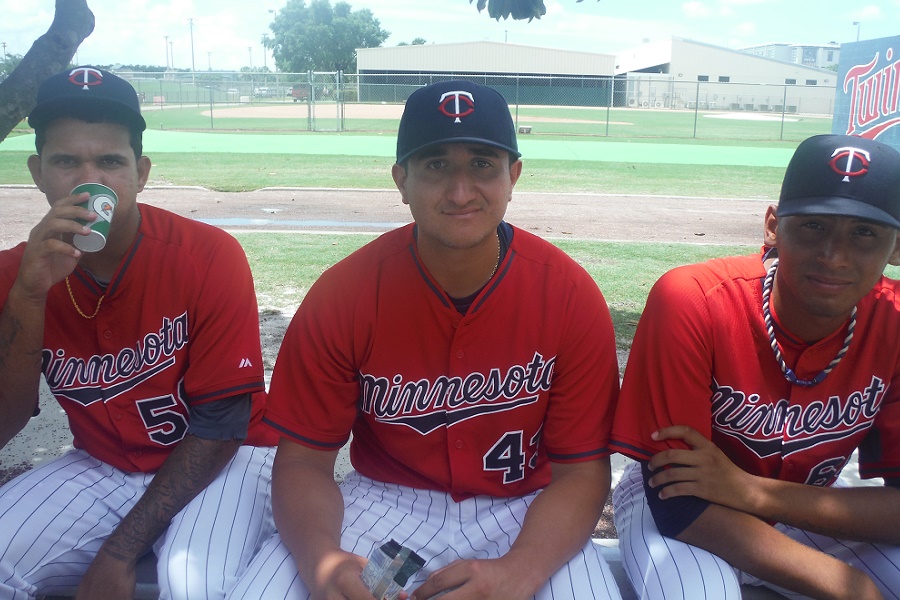 He recently answered some questions from Twins Daily. So continue on to learn a little more about right-handed pitcher Hector Lujan. Seth Stohs (SS) Growing up in California, who was your favorite team to follow, and who were some of your favorite players? Hector Lujan (HL): Growing up in Mira Loma, California, my favorite team was the Los Angeles Dodgers while my family were Angels fans. Some of my favorite players during the time were Bartolo Colon, Mariano Rivera, and Orel Hershiser. (SS): You went to UC-Santa Barbara before going to Westwood College for your junior season. What were some of your favorite moments from you college years? (HL): Some of my favorite college memories were making a regional with UCSB during my freshman year of college, and then making a regional at Westmont College the year I was drafted. Another favorite moment in my college career was making my first collegiate start against Pepperdine University at UCSB. One more favorite moment from college was being able to compete with a bunch of hardworking teammates and meeting new people and coaches. (SS): What was your interaction with scouts before the draft? Did you think you might be drafted? (HL): I had good interaction with scouts. Talking to them, I knew I had a really good chance of being drafted so it pushed me even more to reach my dream in playing professional baseball. Being able to speak with teams about the draft was one of the best moments in my life. (SS): The Twins took you in the 35th round. How did you find out you had been drafted? (HL): The way I found out I was drafted was that my scout, Taylor Cameron, from the Twins had texted me in the morning (to see) if I still wanted to sign. So I texted him telling him “yes.” I was. Then a couple hours later while the draft was going on and he texted me if I was listening to the draft. I told, “No, I was watching it on twitter.” He then told me that they took me in the 35th round. To this day, I remember the excitement I had and the best feeling was that I was with my parents when I found out. (SS): Was it a difficult decision for you to sign with the Twins versus going back to college for one more year? (HL): It wasn’t a difficult choice because I had already decided I was going to sign if I was drafted. It was an easy decision, especially with my parents 200% behind me on my decision. (SS): You and Andrew Vasquez were teammates at UC-SB and at Westmont, and the Twins took him in the 32nd round this year. What can you tell us about Vasquez as a pitcher and a teammate? (HL): Andrew Vasquez was a great teammate and still is a great teammate and a great friend as well. He lives close to me at home during the offseason. He and I plan on working out together and throwing as well. It was great having him as a teammate both at UCSB and Westmont because we would push each other really hard and had two things on our minds, get drafted and win during our last college season together at Westmont. (SS): What was the biggest adjustment you had to make, going from amateur/college season to the pro game, on or off the field? (HL): The biggest adjustments that I had to make was probably getting used to the heat down here in Florida, also being able to maintain my body during the season playing every day. I felt I did a really good job adjusting to this. (SS): How would you describe yourself as a pitcher? What do you throw? What is your best pitch, out pitch, etc? (HL): The way I would describe myself as a pitcher would be as a really competitive pitcher. No matter who steps into that box, my plan is to get you out no matter what it takes. Talking to older guys that have pitched in the big leagues or higher minor league levels have told me that, and that is something I have taken into my game as well as to being a smart pitcher and not just a thrower. My best pitch. I would say, is my change up, and my slider I have been working on which I’m still developing more. My pitches will be ready in my arsenal when spring training comes around. (SS): In these very early stages of your career, what would you say are your biggest strengths as a player? (HL): My biggest strengths as a player, I would say, are leadership and maturing as pitcher. (SS): What are the things that you feel you need to improve over the offseason and going forward? (HL): Somethings that I plan on improving during my offseason are developing my pitches and getting more velocity/movement on my pitches. (SS): What are your plans for the offseason? (When do you start preparing for the 2016 season, but also what do you enjoy doing away from the game of baseball?) (HL): My plans for the offseason for starting to prep have already started. I’m really looking forward to starting my throwing program in a couple of weeks and seeing more results of my offseason work pay off. Somethings I really enjoy away from baseball during my offseason is being able to spend time with my parents and family, horseback riding with my father and being able to help my mom at work down at the old elementary school. (SS): Who are some of the coaches and others who have helped you get to this point in your career? (HL): Two of the most important people that have helped me get to this point I am right now in my career would be my mother and father. They always stood by me with everything from baseball to school, etc… They would always push me and would always help by playing catch with me to sometimes my father catching my bullpens or running with me after my high school games I pitched. I am really blessed to have parents like them that have always had my back with my career in baseball. Other people that have really helped get me to my professional career would be my three pitching coaches. My high school pitching coach Che Edmonds high, school head coach Chuck Arementa, and my two college pitching coaches UCSB Andrew Checketts and my Westmont pitching coach Tony Cougole. Also my head coach at Westmont College Robert Ruiz. Coach Ruiz gave me the opportunity to pitch for his team at Westmont college before the start of my last college season. We would like to thank RHP Hector Lujan for taking the time to answer our questions today. Please feel free to ask questions and comment.
 -
Article: Gambling On The Relief Market: Simply Folly
Seth Stohs replied to jorgenswest's topic in Twins Daily Front Page News
I ranked Chargois pretty high in my Top 50 Twins Prospect rankings last month. I have a good feeling about Meyer as well. I think a full offseason to clear his mind, to get married and to kind of just start over will help. He's a really good guy, works hard, and has a ton of talent. -
Article: Gambling On The Relief Market: Simply Folly
Seth Stohs replied to jorgenswest's topic in Twins Daily Front Page News
Good questions... To your first comment, about Sipp, I agree with what you're saying. I guess I would say that it shouldn't be about the numbers as much as what they are doing... In other words, if there is some scouting reason that he made these improvements and it can be repeatable (like, something clicked), that's more important to me than the numbers... As for the list, my opinion is that Burdi or Chargois will be the first from that group to get to the big leagues - unless Meyer gets off to a great start. Those two, along with Jones and Reed, should start in AA again, and could move quickly. Melotakis likely won't return to game action until May or June, and I'm sure they'll mainly just try to keep him healthy this year. But he's a gas-throwing lefty.
