



Seth Stohs
-
Posts
25,909 -
Joined
-
Last visited
-
Days Won
109
Content Type
Profiles
News
Minnesota Twins Videos
2026 Minnesota Twins Top Prospects Ranking
2022 Minnesota Twins Draft Picks
Minnesota Twins Free Agent & Trade Rumors, Notes, & Tidbits
Guides & Resources
2023 Minnesota Twins Draft Picks
The Minnesota Twins Players Project
2024 Minnesota Twins Draft Picks
2025 Minnesota Twins Draft Pick Tracker
2026 Minnesota Twins Draft Tracker: Picks & Bonuses
Forums
Blogs
Events
Store
Downloads
Gallery
Everything posted by Seth Stohs
-
AFL Report - Week 2: Pitchers Outshine Hitters
Seth Stohs replied to Steve Lein's topic in Twins Daily Front Page News
Yeah, he does the Twins first every year, then - I think - Atlanta, and then the Royals maybe? -
Sickels top Twins prospect list for 2019
Seth Stohs replied to gunnarthor's topic in Twins Minor League Talk
Right, but TD, Sickels, FanGraphs, Baseball America, Baseball Prospectus, MLB Pipeline all use the same criteria for what constitutes a rookie/prospect. (130 AB for a hitter, 50 IP for a pitcher and some Service Time rules as well) -
Sickels top Twins prospect list for 2019
Seth Stohs replied to gunnarthor's topic in Twins Minor League Talk
Garver was on our preseason Prospect rankings because he was a rookie coming into the season. When we did our midseason Prospect rankings, he was no longer under the rookie limits, so he was removed. Romero is over the 50-innings limit, so he's not included. -
Sickels top Twins prospect list for 2019
Seth Stohs replied to gunnarthor's topic in Twins Minor League Talk
Are people really surprised that Larnach is that high? Current year's 1st round pick. Huge power potential AND hit tool. Gonsalves and Gordon both probably fell back a notch or two. Also, Sickels' ranking is a little different. He gives grades based on upside and other stuff and he puts them into grad groupings. So, I think he made the comment that hit 12-17 prospects are all the same grade so not to worry too much about the specific number they're ranked. -
BA's League Top 20 Prospect Lists Thread
Seth Stohs replied to lamiwe21's topic in Twins Minor League Talk
I think MLB Pipeline has Lewis ranked #7 overall and Kirilloff ranked #110 overall in their postseason Top Prospect rankings... so I think they're both pretty good. -
Your Turn: What Do You Want From A Manager?
Seth Stohs posted a topic in Twins Daily Front Page News
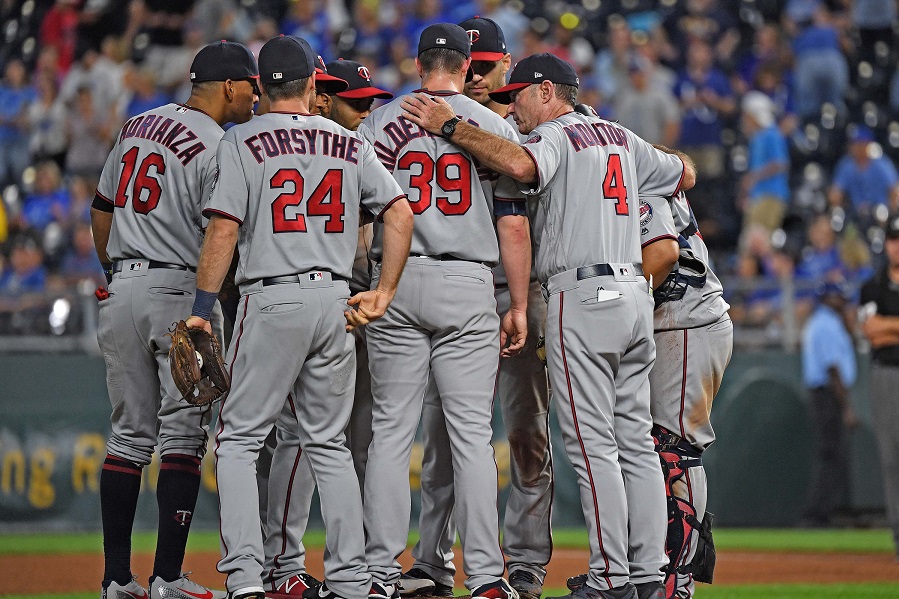
As the 2018 World Series is set to start tonight in Boston, indications would seem to be the the Twins are down to just a couple of final candidates for the next team manager. Twins bench coach Derek Shelton, Cubs bench coach Brandon Hyde, and Rays Major League Field Coordinator Rocco Baldelli appear to be the favorites, though it is entirely possible that there are other candidates that we just aren’t hearing as much about. So instead of dissecting each candidate, let’s take a moment to consider what we, as fans, would want to see from the next Twins manager. What traits do you think are important, and why? Image courtesy of Peter G. Aiken, USA Today As the 2018 World Series is set to start tonight in Boston, indications would seem to be the the Twins are down to just a couple of final candidates for the next team manager. Twins bench coach Derek Shelton, Cubs bench coach Brandon Hyde, and Rays Major League Field Coordinator Rocco Baldelli appear to be the favorites, though it is entirely possible that there are other candidates that we just aren’t hearing as much about. So instead of dissecting each candidate, let’s take a moment to consider what we, as fans, would want to see from the next Twins manager. What traits do you think are important, and why? Instead of regurgitating old, tired discussions about why the Twins needed to fire Paul Molitor (or Ron Gardenhire before him), let’s be a little more productive. Let’s not jump to hyperbole and automatically bash everything about the Twins brass. Like all of us, there is good and not-so-good in everybody. People have strengths and areas for improvement. What are the areas of strength that you find most important for a manager? So, for the sake of important, meaningful discussion, let’s limit this discussion to the manager role. Today, I’m going to post several qualifications that I think are either important for an MLB manager or that come up often in discussions. Feel free to discuss the qualifications in the comments, but mostly, use this article to start thinking about who you would like to see replace Paul Molitor. MANAGERIAL EXPERIENCE (BACKGROUND) Do the Twins need to hire someone with experience as a big league manager? If so, does it need to be a manager who has put together World Series championships, or could you consider a candidate who wasn’t good in his first manager job but meets many other requirements? (Note that none of the three men generally presumed to be the Twins finalists have any major league managerial experience.) How about minor league managerial experience, and if so, how much? Do you prefer a candidate who has been second-in-command in a winning organization, for instance, a respected bench coach? Can the candidate be a former player, or would the negate him as a possibility for you? While they probably couldn’t officially ask, does age factor into the decision? ANALYTICS This is one that people think that the Twins are so far behind on, but with Derek Falvey on board, it’s now known as an organization that embraces analytics. So what level of analytical skill or curiosity is enough, or maybe even too much? And how do you evaluate that? A manager may not always go by the analytic book. A manager has to go by the gut sometimes, based on factors that we as fans may not see or ever know about. Players need rest. Players may have other things going on. COMMUNICATION Which leads to a pretty important topic; how does the manager communicate? How should the manager communicate with the front office? How much voice should he have in the conversations about any number of topics? How should the manager communicate with his coaching staff? How should the manager communicate with the players? We often hear the term “lose the clubhouse.” That didn’t happen with Paul Molitor, but it is always a topic when a team loses. How much screaming and yelling do you want from a manager? Or do you prefer a manager be more laid back and professional in his communication? In other words, do you want someone with "fire in his belly" like Ron Gardenhire, or someone generally more calm and collected like Paul Molitor? While less important than the above, what would your expectations be for a manager with the media? Ron Gardenhire was great, gave good, fun answers, and often didn’t say much. Paul Molitor was terrific with the media as well, very smart and thoughtful in his responses. As fans, we want to know everything and we want to know the real reasons for whatever situation, but that’s not always best for the team. So, what would you want? PLAYER DEVELOPMENT How much input should the major league manager have in the development of philosophies on the minor leagues and player development? How can the manager be helpful in the transition from minor league baseball to the big leagues? How much of this is delegated to the coaching staff? How can a manager help players continue to develop once getting to the big leagues, and how do you evaluate that? Player development is rarely linear. For example. Miguel Sano came up in July of 2015 and played so well that he was named the Twins MVP. In 2016, he took a step backward. But then in 2017, he played well in the first half and was an All Star. And then he got hurt, and 2018 was a mess. How much of that is on the manager? Every manager (and hitting coach, and pitching coach) will have his successes and failures, so how should it be evaluated? BULLPEN USAGE Bullpen usage has been a topic as it relates to Ron Gardenhire and Paul Molitor. Both were often accused of not being very good at it. How do you expect bullpen arms to be used? How much usage is too much usage? How much negativity would come up when a top reliever is given an extra day off and a secondary reliever comes in instead and gives up a lead? But over the long haul, was it the right thing? How is it evaluated when there are only three or four reliable options in the bullpen? How do the manager and the pitching coach share responsibility in this? WINS AND LOSSES At the end of a day, Wins are what any manager will be evaluated by, right or wrong? What are the expectations for Win total in 2019, and how does that change if the Twins front office makes more July deadline deals, or if a couple of major contributors get hurt? How long are you giving a manager to ‘Win”? Two years? And does that mean winning an AL Central title, or are you talking about a playoff series, or even a game? Or, a World Series title? MISCELLANEOUS How do you define “Success” with the next manager? What should the clubhouse atmosphere be like under a new manager? What should the atmosphere between the manager and the front office personnel be? How does the managerial candidate feel about building from within? How does that manager candidate create a culture of accountability with his players, coaches and himself? Which current major league and minor league coaches would be let go, and who would you bring back? WHAT DO YOU THINK? All right, now it’s your turn? What are the most important qualities that a Manager can bring to an organization? I brought up a lot of topics, and how do you go about acquiring those kinds of players? Put yourself in the shoes of Derek Falvey and Thad Levine. You need to decide which manager will lead your vision. What does that look like, and how embodies that? Again, I appreciate this thread not turning into yet another negative, bashing thread, but instead, let’s be productive and each of us jot down our thoughts on what makes a good manager, and what type of candidate we would support for the Twins. View full article- 49 replies
-
- 2
-

-
- paul molitor
- derek shelton
- (and 3 more)
-
 Instead of regurgitating old, tired discussions about why the Twins needed to fire Paul Molitor (or Ron Gardenhire before him), let’s be a little more productive. Let’s not jump to hyperbole and automatically bash everything about the Twins brass. Like all of us, there is good and not-so-good in everybody. People have strengths and areas for improvement. What are the areas of strength that you find most important for a manager? So, for the sake of important, meaningful discussion, let’s limit this discussion to the manager role. Today, I’m going to post several qualifications that I think are either important for an MLB manager or that come up often in discussions. Feel free to discuss the qualifications in the comments, but mostly, use this article to start thinking about who you would like to see replace Paul Molitor. MANAGERIAL EXPERIENCE (BACKGROUND) Do the Twins need to hire someone with experience as a big league manager? If so, does it need to be a manager who has put together World Series championships, or could you consider a candidate who wasn’t good in his first manager job but meets many other requirements? (Note that none of the three men generally presumed to be the Twins finalists have any major league managerial experience.) How about minor league managerial experience, and if so, how much? Do you prefer a candidate who has been second-in-command in a winning organization, for instance, a respected bench coach? Can the candidate be a former player, or would the negate him as a possibility for you? While they probably couldn’t officially ask, does age factor into the decision? ANALYTICS This is one that people think that the Twins are so far behind on, but with Derek Falvey on board, it’s now known as an organization that embraces analytics. So what level of analytical skill or curiosity is enough, or maybe even too much? And how do you evaluate that? A manager may not always go by the analytic book. A manager has to go by the gut sometimes, based on factors that we as fans may not see or ever know about. Players need rest. Players may have other things going on. COMMUNICATION Which leads to a pretty important topic; how does the manager communicate? How should the manager communicate with the front office? How much voice should he have in the conversations about any number of topics? How should the manager communicate with his coaching staff? How should the manager communicate with the players? We often hear the term “lose the clubhouse.” That didn’t happen with Paul Molitor, but it is always a topic when a team loses. How much screaming and yelling do you want from a manager? Or do you prefer a manager be more laid back and professional in his communication? In other words, do you want someone with "fire in his belly" like Ron Gardenhire, or someone generally more calm and collected like Paul Molitor? While less important than the above, what would your expectations be for a manager with the media? Ron Gardenhire was great, gave good, fun answers, and often didn’t say much. Paul Molitor was terrific with the media as well, very smart and thoughtful in his responses. As fans, we want to know everything and we want to know the real reasons for whatever situation, but that’s not always best for the team. So, what would you want? PLAYER DEVELOPMENT How much input should the major league manager have in the development of philosophies on the minor leagues and player development? How can the manager be helpful in the transition from minor league baseball to the big leagues? How much of this is delegated to the coaching staff? How can a manager help players continue to develop once getting to the big leagues, and how do you evaluate that? Player development is rarely linear. For example. Miguel Sano came up in July of 2015 and played so well that he was named the Twins MVP. In 2016, he took a step backward. But then in 2017, he played well in the first half and was an All Star. And then he got hurt, and 2018 was a mess. How much of that is on the manager? Every manager (and hitting coach, and pitching coach) will have his successes and failures, so how should it be evaluated? BULLPEN USAGE Bullpen usage has been a topic as it relates to Ron Gardenhire and Paul Molitor. Both were often accused of not being very good at it. How do you expect bullpen arms to be used? How much usage is too much usage? How much negativity would come up when a top reliever is given an extra day off and a secondary reliever comes in instead and gives up a lead? But over the long haul, was it the right thing? How is it evaluated when there are only three or four reliable options in the bullpen? How do the manager and the pitching coach share responsibility in this? WINS AND LOSSES At the end of a day, Wins are what any manager will be evaluated by, right or wrong? What are the expectations for Win total in 2019, and how does that change if the Twins front office makes more July deadline deals, or if a couple of major contributors get hurt? How long are you giving a manager to ‘Win”? Two years? And does that mean winning an AL Central title, or are you talking about a playoff series, or even a game? Or, a World Series title? MISCELLANEOUS How do you define “Success” with the next manager? What should the clubhouse atmosphere be like under a new manager? What should the atmosphere between the manager and the front office personnel be? How does the managerial candidate feel about building from within? How does that manager candidate create a culture of accountability with his players, coaches and himself? Which current major league and minor league coaches would be let go, and who would you bring back? WHAT DO YOU THINK? All right, now it’s your turn? What are the most important qualities that a Manager can bring to an organization? I brought up a lot of topics, and how do you go about acquiring those kinds of players? Put yourself in the shoes of Derek Falvey and Thad Levine. You need to decide which manager will lead your vision. What does that look like, and how embodies that? Again, I appreciate this thread not turning into yet another negative, bashing thread, but instead, let’s be productive and each of us jot down our thoughts on what makes a good manager, and what type of candidate we would support for the Twins.
-
I like the show Young and Hungry. It's from Free Form. Five seasons. I guess that it got cancelled, but I enjoyed it. Atypical... finished Season 2 recently. I think that it is fantastic. Ozark - I watched Season 2 ,, and I thought it was better than Season 1. American Horror Story - This is where I catch up when new seasons become available. Iv'e watched a bunch.
-
I watched it last week. I enjoyed it a lot. It's' somewhat scary, definitely has some scary parts, but I enjoyed how it was put together and the mental/psychological thriller parts too.
-
I can't' listen to KFAN. The Common Man annoys me. Then again,, when I'm making the 5 minute drive home and back for lunch, it's' the only station I get. Usually makes me crabby by the time I am back at work. I listen to: Crime in Sports Small Town Murder The Serial Killer Podcast Those three are on Podcast One. Serial is good. Season 1 of In the Dark was really interesting. Obviously as someone who is about the same age as Jacob Wetterling and remember that time, it was fascinating. And, of course, ,it came to a resolution 27 years later as this podcast was coming out. Season 2 was OK too.
-
I watched it this weekend while getting a good start on the prospect handbook. So, it's possible I missed some too. But, it was good. I know one thing. If I ever end up in a bad situation where I think I'm wrongly accused, I want Steven Avery's lawyer. As much work as she did for Steven Avery, she barely got any response on it. Much of the story was on the kid and his ever-changing situation over those two years. I feel bad for Steven's parents. And, I probably feel bad for the kid''s mom too, though that got interesting in the latter episodes too.
-
WINNERS SELECTED BY TWIN CITIES BASEBALL WRITERS ASSOCIATION OF AMERICA 14th Annual Diamond Awards Event Set For January 24, 2019 Minneapolis/St. Paul, MN — The Minnesota Twins announced today the recipients of the Diamond Awards, their annual awards for the 2018 season based on voting conducted by the Twin Cities Chapter of the Baseball Writers Association of America. In addition, the Twins and the BBWAA announced plans for the 14th annual Diamond Awards, which will be held Thursday, January 24, 2019 at The Depot Minneapolis and will benefit research, education and care in brain, nerve and muscle disorders at the University of Minnesota. Outfielder Eddie Rosario is the winner of the Calvin R. Griffith Award (the Twins’ first owner) given to the Most Valuable Twin, his first time winning the award. The Puerto Rico native hit .288 (161-for-559) with 31 doubles, two triples, 24 home runs, 77 RBI and 87 runs scored in 138 games. He finished the season tied for 10th in the American League in multi-hit games despite playing in just 138 games. Right-handed pitcher José Berríos is the winner of the Joseph W. Haynes Award (former Twins Executive Vice President) given to the Twins Pitcher of the Year. The American League All-Star made 32 starts, going 12-11 with a 3.84 ERA (192.1 IP, 82 ER), two complete games, 61 walks and 202 strikeouts. He became the eighth different Twin to reach the 200-strikeout mark in a season. He also finished tied for first in the AL in complete games, tied for sixth in starts, eighth in innings pitched and 11th in strikeouts. He has also been named the winner of the Carl R. Pohlad Community Service Award. Berríos has done extensive work in his native Puerto Rico, including providing relief supplies to those in need following Hurricane Maria’s devastation of the island. Outfielder Jake Cave is the winner of the Bill Boni Award (former St. Paul Dispatch-Pioneer Press Executive Sports Editor) given to the Twins Most Outstanding Rookie. Cave joined the Twins in spring training as part of a trade with the New York Yankees and played in 91 games for the Twins, hitting .265 (75-for-283) with 16 doubles, two triples, 13 home runs, 45 RBI and 54 runs scored. He ranked tied for first among AL rookies Post-All-Star Break in games (65), fifth in homers (10) and RBI (33), and eighth in hits (51). Outfielder Max Kepler is the winner of the Jim Kaat Award(former Twins pitcher) for Twins Defensive Player of the Year. Kepler led the club in games played in the field with 151 (142 starts), making just one error and seven outfield assists in 335 total chances. He ranked third in the AL in games played in the outfield, playing in both rightfield and centerfield. First baseman Joe Mauer is the winner of the Dick Siebert Award(former University of Minnesota Baseball Coach) given to the Upper Midwest Player of the Year. The St. Paul native wins the award for the seventh time in his career (2006, ‘08, ‘09, ‘10, ‘12, ‘17). Mauer played in 127 games, hitting .282 (137-for-486) with 27 doubles, six home runs, 48 RBI, 51 walks and a .351 on-base percentage. He is also the winner of the Bob Allison Award (former Twins player) given to the Twins player who exemplifies determination, hustle, tenacity, competitive spirit and leadership both on and off the field. Right-handed pitcher Kyle Gibson has been named the winner of both the Mike Augustin “Media Good Guy” Award (former Pioneer Press Sports Writer) and the Charles O. Johnson Award (former Minneapolis Star Tribune Sports Editor), awarded to the most improved Twin. Gibson went 10-13 with a 3.62 ERA (196.2 IP, 79 ER), 79 walks and 179 strikeouts. He led the club in innings pitched and set career-highs in strikeouts, ERA and innings. Former Twins third baseman Corey Koskie will be given theKirby Puckett Award for Twins Alumni Community Service. Koskie works with and supports the Positive Coaching Alliance and the Twins Community Fund as a board member and volunteer. Koskie has also spent much of his post-playing career coaching and working to improve youth amateur sports. In addition, Hall of Famer Jack Morris will be given the Herb Carneal Lifetime Achievement Award. The St. Paul native pitched 18 seasons in the majors, going 254-186 with a 3.90 ERA in 549 games between Detroit, Minnesota, Toronto and Cleveland. The 1991 World Series MVP was inducted into the National Baseball Hall of Fame in July. Jack joins Herb Carneal (2006), Tom Mee (2007), Carl Pohlad (2008), Jerry Bell (2009), Bert Blyleven (2010), John Gordon (2011), Jim Rantz (2012), Tony Oliva (2013), Tom Kelly (2015), Rod Carew (2016) and Rick Stelmaszek (2017) as the only recipients of the award. The 14th annual Diamond Awards dinner, which will be held on Thursday, January 24, 2019 beginning at 5:30 p.m. at The Depot Minneapolis, will honor the 2018 BBWAA award recipients as well as the winners of the Sherry Robertson Award (Alex Kirilloff) for the Twins Minor League Player of the Year and the Jim Rantz Award (Lewis Thorpe)for the Twins Minor League Pitcher of the Year. All proceeds from the event will benefit the University of Minnesota’s innovative research and patient care focused on ALS (Lou Gehrig’s Disease), ataxia, muscular dystrophy, multiple sclerosis and Parkinson’s disease. Along with the award winners, current and former Twins players and coaches are scheduled to appear at the event. Corporate sponsorship opportunities, tables and individual tickets are now available. For more information on the event visit www.minnesotadiamondawards.org or call (612) 425-1483.
-
- 4
-
-
Looks like it'll be a five-year deal...
-
I'm not going to pretend the Twins analytics is as good as Houston's. Houston's group has been together for like 7-9 years. The Twins have tried to build it up over the last two years, and slowly. I think we need some patience as they are continuing to add. I would also venture a guess that people with the Twins were fully aware of his spin rate and the quality of his curveball and slider. We heard them say that often. So, in my mind, the question becomes why didn't Pressly throw more CB? Were the coaches/manager not encouraging him to do so? (I don't know, but maybe) Were the Twins scouting reports different than other teams? (Maybe, but I doubt it) Was the catcher just not willing to call more curves/sliders? (very likely) Were the catchers not calling as many sliders because he was very inconsistent with it, or maybe there were often runners on 3B? (possible, maybe likely) Was Pressly letting the information go in one ear and out the other? (Possible) Did he have the same confidence in throwing that pitch over and over and over that he has now? (Certainly) I mean, the article, in my opinion, is kind of an over-simplification of what might be a multi-layered question that doesn't fall solely on the front office, the coaching staff, or the player?
-
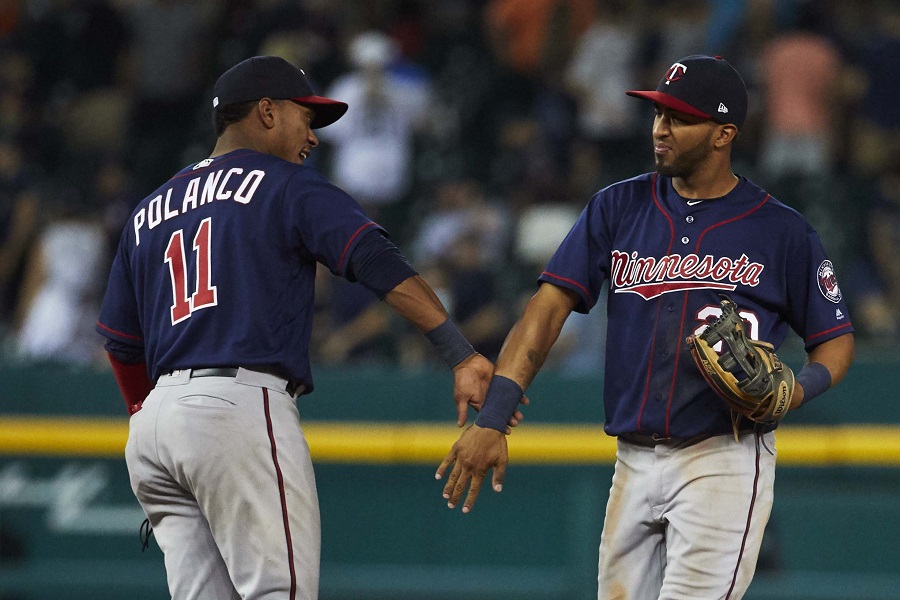
At the All Star break in 2017, I wrote up an article discussing the Twins Core Four. During the Twins recent poor seasons, there was a lot of hope tied to these four Twins prospects who were now playing in the big leagues. As the 2017 season was nearing its completion, and the Twins were marching toward the playoffs, I wrote that the Twins might just have a Core Seven. Three other prospects that didn’t come up with quite the hype as the top four, but were still borderline Top 100 prospects too. Here we are, one year later, and the Twins front office has a lot of big decisions to make, and potentially a lot of money to spend. How do these seven players factor into this offseason? Image courtesy of Rick Osentoski, USA Today At the All Star break in 2017, I wrote up an article discussing the Twins Core Four. During the Twins recent poor seasons, there was a lot of hope tied to these four Twins prospects who were now playing in the big leagues. As the 2017 season was nearing its completion, and the Twins were marching toward the playoffs, I wrote that the Twins might just have a Core Seven. Three other prospects that didn’t come up with quite the hype as the top four, but were still borderline Top 100 prospects too. Here we are, one year later, and the Twins front office has a lot of big decisions to make, and potentially a lot of money to spend. How do these seven players factor into this offseason? Throughout the really rough Twins seasons from 2011 through the surprising 2015 season, and then through the equality surprising - and incredibly disappointing - 2016 season, the hope the so many Twins fans held on to involved the highly-touted prospects. The New York Yankees had their Core Four - Derek Jeter, Bernie Williams, Jorge Posada, and Mariano Rivera. They were the key to those four-straight Yankees championships in the late 1990s. Sure, they had help, but building a core from within is vital to any sort of championship run. While my expectations for the Twins core of minor league prospects wasn’t going to be for them to win multiple World Series titles, the hope was certainly for them to bring the Twins back to a competitive state. It was for them to get back to the playoffs and be a perennial contender for the World Series. That core of players came up between 2015 and 2016 and were a big part of the Twins run to the AL Wild Card game in 2017. But then there were struggles by several of these core players, as well as some of the free agents that were brought in to contribute, and 2018 was a disappointing season. Today, let’s take a look at that Core Seven and see how they’ve done and where they stand going into the 2018-2019 offseason. ADALBERTO MEJIA Admittedly, Mejia was an add-on to the list. When he came to the Twins from the Giants in a deadline deal with the Giants for Eduardo Nunez, he had recently been named in a midseason Top 100 Prospect ranking by Baseball America. He made the Twins Opening Day roster in 2017, and he had some ups and downs. While he usually struggled to complete five innings, he showed that he had some decent stuff. And, he was just 24 as the 2017 season came to an end. Mejia didn’t make this roster to start the 2018 season. In fact, he didn’t make an appearance for the Twins until the end of June. He was fantastic for the Red Wings starting in June and July. He made four appearances for the Twins in late July and early August. In those four games, he gave up just two runs over 18 1/3 innings. Over his final three appearances (against Boston, Cleveland and Cleveland), he gave up just three hits (and four walks) over 13 1/3 innings. Unfortunately, he left that game with a sore wrist and forearm and didn’t pitch again in 2018. Give some thought to which pitchers will comprise the Twins starting rotation in 2019. Where does Mejia fit into that group? Is he part of a Core? Probably not, but maybe as we see more Openers or the Brewer Bullpen strategy, Mejia’s ability to get through three innings might be valuable. JORGE POLANCO Out of options, the Twins had to keep Polanco in the big leagues throughout the 2017 season. In June, he was hitting just .213 (.570) with little power. Paul Molitor gave him several games off. Over the final two months, Polanco hit .316/.377/.553 (.931) with 15 doubles and 10 home runs. He became the team’s best hitter down the stretch and hit third in the lineup. There was excitement surrounding Polanco as spring training began, but in mid-March, news came that Polanco had been suspended for 80 games for a performance-enhancing drug violation. He returned to the team in early July. While it took him a little while to get going, he ended up hitting .288/.345/.427 (.773) with 18 doubles and six homers. Polanco is yet to reach arbitration, so he will be an important part of the 2019 Twins season. Will he play shortstop or second base? That may be a question for the Twins front office to determine. Polanco has another year before he hits arbitration. EDDIE ROSARIO Rosario put together an impressive rookie season in 2015. He struggled early in 2016 which earned him a trip back to Rochester for a month, but really since then, he’s been one of the Twins more consistent hitters. In 2017, he hit .290/.328/.507 (.836) with 33 doubles and 27 home runs. In 2018, he hit .288/.323/.479 (.803) with 31 doubles and 24 home runs despite missing the final 12 games of the Twins schedule. He was the Twins Daily choice for team MVP. Rosario will be arbitration-eligible for the first time this offseason and should get a hefty raise, earning eight-to-ten times as much as he did in 2018. He’s earned it, and he should remain the Twins left fielder. MAX KEPLER Kepler signed with the Twins on the same day as Jorge Polanco in 2009. Kepler really didn’t get a lot of prospect fanfare, at least not nationally, until his monster 2015 season in Chattanooga where he won the Southern League MVP and helped the Lookouts to the league championship. That season, he hit .322/.416/.531 (.947) with 32 doubles, 13 triples and nine home runs. Through his first three MLB seasons, Kepler has been remarkably consistent. Often that is a good thing, but it would be great to see him taking steps forward. His OPS in those years have been .734, .737, and .727. He has hit 17 home runs, then 19 home runs, and on the final day of the 2018 season, he knocked his 20th home run of the season. But it’s also important to remember that his WAR (Wins Above Replacement) according to fangraphs have been 1.2, 1.4, and it jumped up to 2.6 in 2018. Kepler should remain a part of the Twins future and at least their 2019 plans. His defense is strong, even when he played centerfield. He has some power, and he remains full of power potential. He is Super-2 arbitration eligible this offseason. So while Kepler has been valuable while making close to league minimum, he may have to start taking those strides forward starting in 2019. BYRON BUXTON Buxton has been highly-touted since the Twins used the #2 overall pick in the 2012 draft on the athletic outfielder. He was the #1 overall prospect in all of baseball two years. He was rushed up to the big leagues in 2015. Since then, he has endured long slumps. He has had a variety of injuries, many caused by how hard he plays the game or slamming into walls. He has bumped up and down from the Twins to Rochester and back and forth several times. In 2017, he played in 140 games, and he showed exactly why so many are so excited about. After a slow start through his first 18 games, he hit .274/.333/.452 (.785) with 12 doubles, six triples and 16 home runs over the final 122 games. Add in that he is the best defensive center fielder in baseball. He won the AL Gold Glove and the AL Platinum Glove (best overall defensive player in the league). But 2018 was a major disappointment for Buxton. He got off to a slow start, and then he had a migraine. He fouled a ball off of his foot, and broke his big toe. He missed a little time, but he came back before the bone had healed, and the struggles continued to affect him. He went on the DL later in the season and stayed in Rochester the rest of the year. As we know, he was sent home rather than joining the Twins for September. So what does that mean for 2019, especially considering Jake Cave came up and hit very well. It should be obvious that the Twins should not trade Buxton. At 25, he still has the world of potential. He just needs to get healthy and stay healthy. Plus, it would be selling very low on Buxton. Don’t give up on Buxton. 2019 is Buxton’s first of potentially four years of arbitration. MIGUEL SANO Sano was a consensus Top 10 overall prospect in national rankings as he climbed the ladder. He may have been up in the big leagues in 2014, but Tommy John surgery ended his season. He came back in 2015. He was called up to the Twins in July, and had a huge rookie season. In fact, the Twins media voted him as not only the Twins rookie of the year but also their MVP. In 2016, he took a couple of steps backwards and missed time with a couple of injuries. In 2017, he had a big first half and made the All Star team and was runner up to Aaron Judge in the home run derby. His 2017 season ended early with a leg injury that resulted in a titanium rod being placed in his leg. During the holidays, he was accused of assault. He was not suspended, but his reputation took another hit. He started the season in a big slump, filled with strikeouts. He went on the DL in late April for a month. He returned, and he really struggled, looked lost at the plate. The Twins made the decision to option him all the way to Ft. Myers. He returned in late July, looking different, but the play was the same. He played in just one of the team’s final 24 after a late slide re-aggravated his leg injury. And, just over a week ago, he was detained for an incident in the Dominican Republic that was deemed an accident. The Rise and Fall of Miguel Sano has been incredible, and we certainly hope that there will be another rise in the equation. Like Buxton, trading Sano should not be an option. He’s still young and still has talent and huge power potential. It would be selling very low. Can Sano stick to his plan and maintain his weight loss? Can he play third base, or should he shift to first base? Can he find a way to strike out at a reasonable clip?Those questions all still need to be answered. Sano is arbitration-eligible for the first time this offseason. JOSE BERRIOS Berrios was the Twins supplemental first-round pick (32nd overall) in 2012. He gradually moved up prospect rankings and his hard work became a social media marvel. He continued to pitch well and move up. He was the Twins Daily Minor League Starting Pitcher of the Year in 2014 and 2015. He debuted with the Twins in 2016 and really struggled. He came back in 2017 and was much improved. He went 14-8 with a 3.89 ERA and a 1.23 WHIP. In 2018, he was even better, especially in the first half when he earned his first All Star appearance. On the season, he went 12-11 with a 3.84 ERA and a 1.14 WHIP. He ended the season with 202 strikeouts in 192 1/3 innings. He was the choice for Twins Daily Pitcher of the Year. While he may not be a Justin Verlander-like ace, the Twins should be excited about the potential of the hard-throwing Berrios. Along with counting on him for 2019, the Twins should consider locking him up to a long-term contract extension to keep him at the top of the Twins rotation for years to come. He has one more year before he becomes arbitration-eligible. It started with The Core Four, and by the end of 2017, it became somewhat of a Core Seven. 2018 created more question marks regarding most of these players than it provided answers. How many from this group do you feel remain part of the organization’s core? How many should? Who should be handed jobs heading into 2019? Who should be on the potential trade block? These are some of the questions the Twins front office will have to answer in the offseason. You'll be able to go through the Twins 40-man roster, consider potential free agents and trade targets and develop your own blueprint by using our 2019 Offseason Handbook, which is available for preorder. Claim your copy now, get it before its official release. Yesterday we revealed the front cover and our star-studded lineup of guest authors. View full article
- 42 replies
-
- 1
-
-
- jorge polanco
- max kepler
- (and 3 more)
-
 Throughout the really rough Twins seasons from 2011 through the surprising 2015 season, and then through the equality surprising - and incredibly disappointing - 2016 season, the hope the so many Twins fans held on to involved the highly-touted prospects. The New York Yankees had their Core Four - Derek Jeter, Bernie Williams, Jorge Posada, and Mariano Rivera. They were the key to those four-straight Yankees championships in the late 1990s. Sure, they had help, but building a core from within is vital to any sort of championship run. While my expectations for the Twins core of minor league prospects wasn’t going to be for them to win multiple World Series titles, the hope was certainly for them to bring the Twins back to a competitive state. It was for them to get back to the playoffs and be a perennial contender for the World Series. That core of players came up between 2015 and 2016 and were a big part of the Twins run to the AL Wild Card game in 2017. But then there were struggles by several of these core players, as well as some of the free agents that were brought in to contribute, and 2018 was a disappointing season. Today, let’s take a look at that Core Seven and see how they’ve done and where they stand going into the 2018-2019 offseason. ADALBERTO MEJIA Admittedly, Mejia was an add-on to the list. When he came to the Twins from the Giants in a deadline deal with the Giants for Eduardo Nunez, he had recently been named in a midseason Top 100 Prospect ranking by Baseball America. He made the Twins Opening Day roster in 2017, and he had some ups and downs. While he usually struggled to complete five innings, he showed that he had some decent stuff. And, he was just 24 as the 2017 season came to an end. Mejia didn’t make this roster to start the 2018 season. In fact, he didn’t make an appearance for the Twins until the end of June. He was fantastic for the Red Wings starting in June and July. He made four appearances for the Twins in late July and early August. In those four games, he gave up just two runs over 18 1/3 innings. Over his final three appearances (against Boston, Cleveland and Cleveland), he gave up just three hits (and four walks) over 13 1/3 innings. Unfortunately, he left that game with a sore wrist and forearm and didn’t pitch again in 2018. Give some thought to which pitchers will comprise the Twins starting rotation in 2019. Where does Mejia fit into that group? Is he part of a Core? Probably not, but maybe as we see more Openers or the Brewer Bullpen strategy, Mejia’s ability to get through three innings might be valuable. JORGE POLANCO Out of options, the Twins had to keep Polanco in the big leagues throughout the 2017 season. In June, he was hitting just .213 (.570) with little power. Paul Molitor gave him several games off. Over the final two months, Polanco hit .316/.377/.553 (.931) with 15 doubles and 10 home runs. He became the team’s best hitter down the stretch and hit third in the lineup. There was excitement surrounding Polanco as spring training began, but in mid-March, news came that Polanco had been suspended for 80 games for a performance-enhancing drug violation. He returned to the team in early July. While it took him a little while to get going, he ended up hitting .288/.345/.427 (.773) with 18 doubles and six homers. Polanco is yet to reach arbitration, so he will be an important part of the 2019 Twins season. Will he play shortstop or second base? That may be a question for the Twins front office to determine. Polanco has another year before he hits arbitration. EDDIE ROSARIO Rosario put together an impressive rookie season in 2015. He struggled early in 2016 which earned him a trip back to Rochester for a month, but really since then, he’s been one of the Twins more consistent hitters. In 2017, he hit .290/.328/.507 (.836) with 33 doubles and 27 home runs. In 2018, he hit .288/.323/.479 (.803) with 31 doubles and 24 home runs despite missing the final 12 games of the Twins schedule. He was the Twins Daily choice for team MVP. Rosario will be arbitration-eligible for the first time this offseason and should get a hefty raise, earning eight-to-ten times as much as he did in 2018. He’s earned it, and he should remain the Twins left fielder. MAX KEPLER Kepler signed with the Twins on the same day as Jorge Polanco in 2009. Kepler really didn’t get a lot of prospect fanfare, at least not nationally, until his monster 2015 season in Chattanooga where he won the Southern League MVP and helped the Lookouts to the league championship. That season, he hit .322/.416/.531 (.947) with 32 doubles, 13 triples and nine home runs. Through his first three MLB seasons, Kepler has been remarkably consistent. Often that is a good thing, but it would be great to see him taking steps forward. His OPS in those years have been .734, .737, and .727. He has hit 17 home runs, then 19 home runs, and on the final day of the 2018 season, he knocked his 20th home run of the season. But it’s also important to remember that his WAR (Wins Above Replacement) according to fangraphs have been 1.2, 1.4, and it jumped up to 2.6 in 2018. Kepler should remain a part of the Twins future and at least their 2019 plans. His defense is strong, even when he played centerfield. He has some power, and he remains full of power potential. He is Super-2 arbitration eligible this offseason. So while Kepler has been valuable while making close to league minimum, he may have to start taking those strides forward starting in 2019. BYRON BUXTON Buxton has been highly-touted since the Twins used the #2 overall pick in the 2012 draft on the athletic outfielder. He was the #1 overall prospect in all of baseball two years. He was rushed up to the big leagues in 2015. Since then, he has endured long slumps. He has had a variety of injuries, many caused by how hard he plays the game or slamming into walls. He has bumped up and down from the Twins to Rochester and back and forth several times. In 2017, he played in 140 games, and he showed exactly why so many are so excited about. After a slow start through his first 18 games, he hit .274/.333/.452 (.785) with 12 doubles, six triples and 16 home runs over the final 122 games. Add in that he is the best defensive center fielder in baseball. He won the AL Gold Glove and the AL Platinum Glove (best overall defensive player in the league). But 2018 was a major disappointment for Buxton. He got off to a slow start, and then he had a migraine. He fouled a ball off of his foot, and broke his big toe. He missed a little time, but he came back before the bone had healed, and the struggles continued to affect him. He went on the DL later in the season and stayed in Rochester the rest of the year. As we know, he was sent home rather than joining the Twins for September. So what does that mean for 2019, especially considering Jake Cave came up and hit very well. It should be obvious that the Twins should not trade Buxton. At 25, he still has the world of potential. He just needs to get healthy and stay healthy. Plus, it would be selling very low on Buxton. Don’t give up on Buxton. 2019 is Buxton’s first of potentially four years of arbitration. MIGUEL SANO Sano was a consensus Top 10 overall prospect in national rankings as he climbed the ladder. He may have been up in the big leagues in 2014, but Tommy John surgery ended his season. He came back in 2015. He was called up to the Twins in July, and had a huge rookie season. In fact, the Twins media voted him as not only the Twins rookie of the year but also their MVP. In 2016, he took a couple of steps backwards and missed time with a couple of injuries. In 2017, he had a big first half and made the All Star team and was runner up to Aaron Judge in the home run derby. His 2017 season ended early with a leg injury that resulted in a titanium rod being placed in his leg. During the holidays, he was accused of assault. He was not suspended, but his reputation took another hit. He started the season in a big slump, filled with strikeouts. He went on the DL in late April for a month. He returned, and he really struggled, looked lost at the plate. The Twins made the decision to option him all the way to Ft. Myers. He returned in late July, looking different, but the play was the same. He played in just one of the team’s final 24 after a late slide re-aggravated his leg injury. And, just over a week ago, he was detained for an incident in the Dominican Republic that was deemed an accident. The Rise and Fall of Miguel Sano has been incredible, and we certainly hope that there will be another rise in the equation. Like Buxton, trading Sano should not be an option. He’s still young and still has talent and huge power potential. It would be selling very low. Can Sano stick to his plan and maintain his weight loss? Can he play third base, or should he shift to first base? Can he find a way to strike out at a reasonable clip?Those questions all still need to be answered. Sano is arbitration-eligible for the first time this offseason. JOSE BERRIOS Berrios was the Twins supplemental first-round pick (32nd overall) in 2012. He gradually moved up prospect rankings and his hard work became a social media marvel. He continued to pitch well and move up. He was the Twins Daily Minor League Starting Pitcher of the Year in 2014 and 2015. He debuted with the Twins in 2016 and really struggled. He came back in 2017 and was much improved. He went 14-8 with a 3.89 ERA and a 1.23 WHIP. In 2018, he was even better, especially in the first half when he earned his first All Star appearance. On the season, he went 12-11 with a 3.84 ERA and a 1.14 WHIP. He ended the season with 202 strikeouts in 192 1/3 innings. He was the choice for Twins Daily Pitcher of the Year. While he may not be a Justin Verlander-like ace, the Twins should be excited about the potential of the hard-throwing Berrios. Along with counting on him for 2019, the Twins should consider locking him up to a long-term contract extension to keep him at the top of the Twins rotation for years to come. He has one more year before he becomes arbitration-eligible. It started with The Core Four, and by the end of 2017, it became somewhat of a Core Seven. 2018 created more question marks regarding most of these players than it provided answers. How many from this group do you feel remain part of the organization’s core? How many should? Who should be handed jobs heading into 2019? Who should be on the potential trade block? These are some of the questions the Twins front office will have to answer in the offseason. You'll be able to go through the Twins 40-man roster, consider potential free agents and trade targets and develop your own blueprint by using our 2019 Offseason Handbook, which is available for preorder. Claim your copy now, get it before its official release. Yesterday we revealed the front cover and our star-studded lineup of guest authors.
-
Get To Know: Twins Infield Prospect Michael Helman
Seth Stohs replied to Seth Stohs's topic in Twins Daily Front Page News
Yeah, they just all had to wait until Larnach signed. Once he signed, they could go to Sands and Mack and get them taken care of, which also happened on that last day. My guess is that Helman was willing to sign for whatever was still available. Working the draft signings is a science.- 8 replies
-
- 3
-
-
- michael helman
- trevor larnach
- (and 2 more)
-
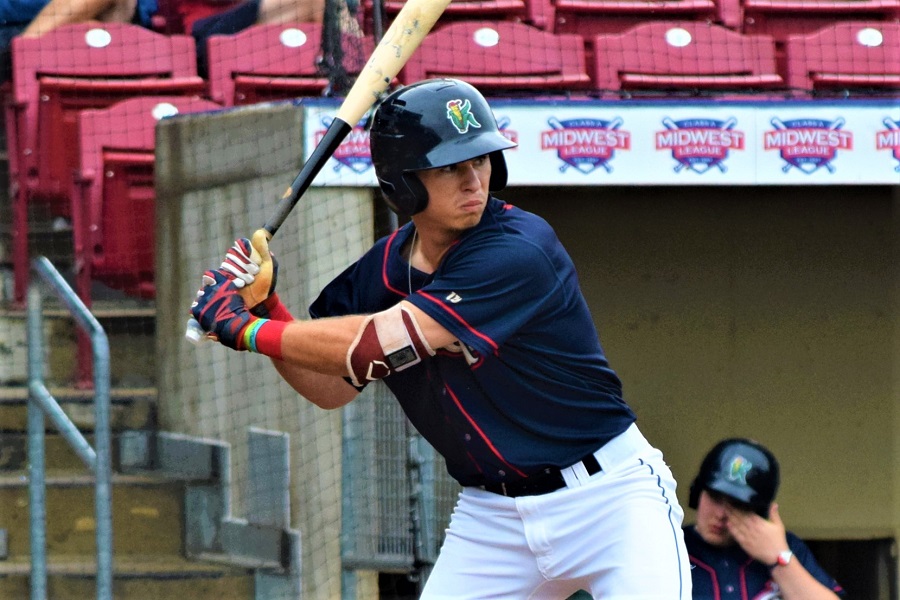
While Twins 2018 draft pick Michael Helman is just 22-years-old, baseball has kept him on the move in recent years. The infielder from Lincoln, Nebraska, has played in Hutchinson (Kansas), College Station (Texas), Elizabethton (Tennessee), and Cedar Rapids (Iowa). And, he just completed his first camp in Ft. Myers (Florida). Recently, Twins Daily caught up with the talented second base prospect and 11th round pick in 2018. Get to know a little more about him on and off the field. Image courtesy of Steve Buhr (photo of Michael Helman) While Twins 2018 draft pick Michael Helman is just 22-years-old, baseball has kept him on the move in recent years. The infielder from Lincoln, Nebraska, has played in Hutchinson (Kansas), College Station (Texas), Elizabethton (Tennessee), and Cedar Rapids (Iowa). And, he just completed his first camp in Ft. Myers (Florida). Recently, Twins Daily caught up with the talented second base prospect and 11th round pick in 2018. Get to know a little more about him on and off the field. “Growing up, I loved the game and being around it. I played pretty much 24/7; playing fall ball, playing spring ball, and in the winter, I was usually doing something related to baseball.” Michael Helman was born 22 years ago in Lincoln, Nebraska. While football is life in Lincoln (yes, even now), baseball was the sport for Helman. While he did play basketball and football, once he got to high school, it was all baseball all the time. But that started when he was young. Helman notes, “When I was a kid, I was watching baseball movies all the time. I was watching Roy Hobbs and The Natural, and Field of Dreams with Kevin Costner. I always had a passion for the game.” It was a passion that was shared in his home. “I was always playing catch with my dad, and I have a twin brother. We always played on the same teams. Even where we used to live, there was a cruddy little baseball field behind our house. We got out there a lot to play catch and our dad would throw to us. It was fun. I loved baseball, and it was how I grew up. I had a dream to make it one day.” He also appreciates his youth coaches for continually pushing him on the field and driving his passion. “Growing up, I played some travel baseball. Probably second grade to eighth grade. I had some great coaches, and I have to thank them for the kind of ballplayer and person that they made me into.” In Lincoln, most baseball fans are Kansas City Royals fans. It is the nearest MLB team to the city, but also the Royals’ Triple-A affiliate is in Omaha. Helman was a Royals fan, but not solely a Royals fan. “I was a Royals fan by default, and then I was also a Twins fan for awhile just because I have a twin brother. So we followed the Twins for a while. Actually I grew up being a Mets fans. Kind of weird. I loved Mike Piazza. ” Helman went to Lincoln’s Pius X High School. Baseball in Lincoln may not be as strong as in Omaha, but there have been several players to go to Division I schools and more playing at Division II schools, or other colleges. Speaking of Omaha, while Helman didn’t get the chance to play in the College World Series, it is an event that he has attended most years. “I would go almost every year. I went when I was in junior college. This past year, even though we didn’t make the College World Series, I was still able to go to some games. It’s like a carnival there.” Upon graduation from high school, Helman made the decision to head south and play baseball at Hutchinson Community College in Hutchinson, Kansas. Despite a solid career in high school, Helman found himself without any college offers. He added, “The only reason I got hooked up with Hutch was because a kid that went to my high school went there and then went to the University of Nebraska. He called them up and said ‘Hey, take a look at this kid.’ They invited me to a camp, and they happened to have one spot open. They offered me a spot on the team, and I took that.” Whatever the reason, Helman took full advantage of the opportunity presented to him. As a freshman, he hit .416/.473/.654 (1.127) with 20 doubles and nine home runs in 57 games. The next year, he played 60 games and hit .487/.567/.829 (1.329) with 17 doubles and 17 home runs.In addition, he walked 34 times and struck out just 13 times that season. Despite such gaudy numbers, Helman went undrafted. Scouts were there to watch his teammate, pitcher Nolan Hoffman. He filled out the questionnaires and sat down with scouts, but nothing too major. During the draft, he did receive some phone calls, but by then he was pretty set on going to Texas A&M. He had several Division I offers, but he knew he wanted to play for the Aggies. A fellow Lincoln native Logan Foster was heading there, and so was Hutchinson teammate Nolan Hoffman (who was drafted in the fifth round by the Mariners in 2018). In addition, one of Texas A&M coaches had gone to high school at Lincoln Southeast High School and the University of Nebraska. That coach is Jeff Christy who was the sixth-round pick of the Minnesota Twins in 2006. He played in the Twins organization through the 2009 season and reached the Triple-A level. “It was nice to have guys I was familiar with at A&M.The coaches at Hutch really helped me out with everything. Coach Ryan Schmidt, he was great through the whole process and stuck with me the whole way, and I’m glad it worked out at Texas A&M..” His junior, and sole, season, at Texas A&M, Helman played in 61 games. He hit .369/.452/.520 (.972) with 15 doubles and six home runs. This time, Helman was ready to make the jump to pro ball. He noted, “I knew I wanted to play professional ball once I got to A&M, and I knew A&M was a great place to get more looks and have that opportunity.” Greg Runser is the Twins area scout for southeast Texas and Louisiana. He was in occasional contact with Helman. But there were several other teams that expressed interest as well. Helman said, “Close to the draft day, I know I got calls from him and calls from a bunch of other teams. It looked like the Rockies were probably most interested, and they were planning on taking me anywhere from the third to seventh round. Obviously that didn’t happen.” Helman fell to the 11th round, and the Twins were thrilled to take him with the first pick of the third day. In a story in the Lincoln Journal-Star, Helman noticed that he had likely been drafted thanks to social media and a familiar Twins website he follows. He told the newspaper, The Twins sent Helman to Elizabethton to begin his career. He was excited to get going. He thought that the time in Elizabethton was beneficial just in terms of getting back into the proverbial swing of things. “The Twins ended up coming through, and I was glad to start my professional career. I was definitely trying to get back into it because I hadn’t played for a month and a half while we were waiting for Trevor Larnach (to sign). It was nice to get back into it and see that pitching. There were a lot of good arms there, though it was all stuff that I’ve seen before. It just took time to adjust again.” It didn’t take him long to adjust at all. He played just twelve games and got just 40 at-bats in Tennessee. He hit .375 (1.010 OPS) with a triple and two home runs. In early August, Helman was surprised that he was promoted to Cedar Rapids. He made an assumption that he would spend the remainder of the season in E-Town. “Honestly, I was playing maybe three times a week. I wasn’t planning on getting called up. I brought my car to Tennessee so I could drive back home. After I got called up, my dad flew to Tennessee and drove my car up to Cedar Rapids. I was pretty shocked when I got called up. I didn’t figure I’d be up there that quick, after just 12 games, and ended up playing every single day, which was an adjustment for me. It was great.” It’s not unusual for college players to play every other day in Elizabethton as they re-adjust to playing after time off between their college season, the draft and signing. But once he got to the Kernels, he was in the lineup almost every day. And, he had fans in the stands. “It was great to be there. It was a little closer to home so my family could come up and watch. It just felt a little more like home. The competition definitely upped itself a little bit once I got to Cedar Rapids, but nothing too drastic changing from Rookie to Low A.” Soon after, the Kernels had four members of the 2018 Twins draft on its roster. First-round pick Trevor Larnach played right field most days. Second-round pick Ryan Jeffers split time catching and at DH. Helman played second base, and 25th-round pick Michael Davis played shortstop. All four found success and helped push the team forward as they prepared for the Midwest League playoffs. The four players fit in and got to know each other. “It was great to help out the team and do our jobs, to be team players. We all just kind of clicked together and we all feed off of each other, hitting the ball and on defense. We hang out together all the time, and being around those guys is great.” Helman contributed strongly in the middle of the lineup. In his 27 games with the Kernels, he hit .355/.398/.486 (.884) with six double and two home runs. As a hitter, Helman tries to keep it simple and put the ball in play. “My whole life I’ve loved swinging the bat. My whole approach at the plate has been established through my junior college play and at Texas A&M. I just figure, put the ball in play and anything can happen.” How about power? Could he add some power to his game? Helman insists. “I say I have a little power, it just hasn’t been unleashed yet. I pretty much spray the ball to all parts of the field. I’m just trying to drive the ball, and sometimes I hit the ball on the ground in a hole and can beat it out. Bunt for hits. I just compete, a scrappy player, I would say.” Defensively, he has primarily played second base the last few years, and it is a position at which he is continuing to gain confidence. “I played one game at shortstop in E-Town. It wasn’t bad, it was just getting readjusted to it because I played a little shortstop in high school. But my whole life, I was a catcher. The first time I played second base consistently was at Hutchinson. I got recruited as a second baseman, and I got drafted as a second baseman. I’m really comfortable over there. I enjoy being over there. I’m willing to play anywhere, outfield ,left side of the infield, but most comfortable at second base.” He continued, “I definitely need to work on my defense a little bit. I’ve only been playing second base for three years. There’s always room to get better in every part of my game, defense, base running, anything like that.” Helman is a very competitive, very talented player who works really hard on the field, something he considers his biggest strength right now. “I would say it’s my ability to compete, not necessarily in the box, but even making plays in the field, making the routine ones, laying out for balls that are borderline, and helping the team in any way that I can.” Away from the game, you won’t be surprised to read one of his favorite things to do. “I play Fortnite with my roommates. I love playing Fortnite. He will spend a large part of his offseason back at College Station. Winter in Texas is generally a bit warmer than in Lincoln. He’ll be able to play catch outside, take ground balls and hit on the field. But he will head back home to Nebraska a few times during the offseason. “I really want to get back to Lincoln and see a Husker football game because I’m a die-hard Husker football fan at heart. Even though they’re not playing well, things are crazy, it’s a great atmosphere.” Helman just returned from his first Instructional League. Now he’ll enjoy his first offseason as a professional baseball player. He’ll work out for baseball, and he’ll play a lot of Fortnite. View full article
- 8 replies
-
- 2
-
-
- michael helman
- trevor larnach
- (and 2 more)
-
 “Growing up, I loved the game and being around it. I played pretty much 24/7; playing fall ball, playing spring ball, and in the winter, I was usually doing something related to baseball.” Michael Helman was born 22 years ago in Lincoln, Nebraska. While football is life in Lincoln (yes, even now), baseball was the sport for Helman. While he did play basketball and football, once he got to high school, it was all baseball all the time. But that started when he was young. Helman notes, “When I was a kid, I was watching baseball movies all the time. I was watching Roy Hobbs and The Natural, and Field of Dreams with Kevin Costner. I always had a passion for the game.” It was a passion that was shared in his home. “I was always playing catch with my dad, and I have a twin brother. We always played on the same teams. Even where we used to live, there was a cruddy little baseball field behind our house. We got out there a lot to play catch and our dad would throw to us. It was fun. I loved baseball, and it was how I grew up. I had a dream to make it one day.” He also appreciates his youth coaches for continually pushing him on the field and driving his passion. “Growing up, I played some travel baseball. Probably second grade to eighth grade. I had some great coaches, and I have to thank them for the kind of ballplayer and person that they made me into.” In Lincoln, most baseball fans are Kansas City Royals fans. It is the nearest MLB team to the city, but also the Royals’ Triple-A affiliate is in Omaha. Helman was a Royals fan, but not solely a Royals fan. “I was a Royals fan by default, and then I was also a Twins fan for awhile just because I have a twin brother. So we followed the Twins for a while. Actually I grew up being a Mets fans. Kind of weird. I loved Mike Piazza. ” Helman went to Lincoln’s Pius X High School. Baseball in Lincoln may not be as strong as in Omaha, but there have been several players to go to Division I schools and more playing at Division II schools, or other colleges. Speaking of Omaha, while Helman didn’t get the chance to play in the College World Series, it is an event that he has attended most years. “I would go almost every year. I went when I was in junior college. This past year, even though we didn’t make the College World Series, I was still able to go to some games. It’s like a carnival there.” Upon graduation from high school, Helman made the decision to head south and play baseball at Hutchinson Community College in Hutchinson, Kansas. Despite a solid career in high school, Helman found himself without any college offers. He added, “The only reason I got hooked up with Hutch was because a kid that went to my high school went there and then went to the University of Nebraska. He called them up and said ‘Hey, take a look at this kid.’ They invited me to a camp, and they happened to have one spot open. They offered me a spot on the team, and I took that.” Whatever the reason, Helman took full advantage of the opportunity presented to him. As a freshman, he hit .416/.473/.654 (1.127) with 20 doubles and nine home runs in 57 games. The next year, he played 60 games and hit .487/.567/.829 (1.329) with 17 doubles and 17 home runs.In addition, he walked 34 times and struck out just 13 times that season. Despite such gaudy numbers, Helman went undrafted. Scouts were there to watch his teammate, pitcher Nolan Hoffman. He filled out the questionnaires and sat down with scouts, but nothing too major. During the draft, he did receive some phone calls, but by then he was pretty set on going to Texas A&M. He had several Division I offers, but he knew he wanted to play for the Aggies. A fellow Lincoln native Logan Foster was heading there, and so was Hutchinson teammate Nolan Hoffman (who was drafted in the fifth round by the Mariners in 2018). In addition, one of Texas A&M coaches had gone to high school at Lincoln Southeast High School and the University of Nebraska. That coach is Jeff Christy who was the sixth-round pick of the Minnesota Twins in 2006. He played in the Twins organization through the 2009 season and reached the Triple-A level. “It was nice to have guys I was familiar with at A&M.The coaches at Hutch really helped me out with everything. Coach Ryan Schmidt, he was great through the whole process and stuck with me the whole way, and I’m glad it worked out at Texas A&M..” His junior, and sole, season, at Texas A&M, Helman played in 61 games. He hit .369/.452/.520 (.972) with 15 doubles and six home runs. This time, Helman was ready to make the jump to pro ball. He noted, “I knew I wanted to play professional ball once I got to A&M, and I knew A&M was a great place to get more looks and have that opportunity.” Greg Runser is the Twins area scout for southeast Texas and Louisiana. He was in occasional contact with Helman. But there were several other teams that expressed interest as well. Helman said, “Close to the draft day, I know I got calls from him and calls from a bunch of other teams. It looked like the Rockies were probably most interested, and they were planning on taking me anywhere from the third to seventh round. Obviously that didn’t happen.” Helman fell to the 11th round, and the Twins were thrilled to take him with the first pick of the third day. In a story in the Lincoln Journal-Star, Helman noticed that he had likely been drafted thanks to social media and a familiar Twins website he follows. He told the newspaper, The Twins sent Helman to Elizabethton to begin his career. He was excited to get going. He thought that the time in Elizabethton was beneficial just in terms of getting back into the proverbial swing of things. “The Twins ended up coming through, and I was glad to start my professional career. I was definitely trying to get back into it because I hadn’t played for a month and a half while we were waiting for Trevor Larnach (to sign). It was nice to get back into it and see that pitching. There were a lot of good arms there, though it was all stuff that I’ve seen before. It just took time to adjust again.” It didn’t take him long to adjust at all. He played just twelve games and got just 40 at-bats in Tennessee. He hit .375 (1.010 OPS) with a triple and two home runs. In early August, Helman was surprised that he was promoted to Cedar Rapids. He made an assumption that he would spend the remainder of the season in E-Town. “Honestly, I was playing maybe three times a week. I wasn’t planning on getting called up. I brought my car to Tennessee so I could drive back home. After I got called up, my dad flew to Tennessee and drove my car up to Cedar Rapids. I was pretty shocked when I got called up. I didn’t figure I’d be up there that quick, after just 12 games, and ended up playing every single day, which was an adjustment for me. It was great.” It’s not unusual for college players to play every other day in Elizabethton as they re-adjust to playing after time off between their college season, the draft and signing. But once he got to the Kernels, he was in the lineup almost every day. And, he had fans in the stands. “It was great to be there. It was a little closer to home so my family could come up and watch. It just felt a little more like home. The competition definitely upped itself a little bit once I got to Cedar Rapids, but nothing too drastic changing from Rookie to Low A.” Soon after, the Kernels had four members of the 2018 Twins draft on its roster. First-round pick Trevor Larnach played right field most days. Second-round pick Ryan Jeffers split time catching and at DH. Helman played second base, and 25th-round pick Michael Davis played shortstop. All four found success and helped push the team forward as they prepared for the Midwest League playoffs. The four players fit in and got to know each other. “It was great to help out the team and do our jobs, to be team players. We all just kind of clicked together and we all feed off of each other, hitting the ball and on defense. We hang out together all the time, and being around those guys is great.” Helman contributed strongly in the middle of the lineup. In his 27 games with the Kernels, he hit .355/.398/.486 (.884) with six double and two home runs. As a hitter, Helman tries to keep it simple and put the ball in play. “My whole life I’ve loved swinging the bat. My whole approach at the plate has been established through my junior college play and at Texas A&M. I just figure, put the ball in play and anything can happen.” How about power? Could he add some power to his game? Helman insists. “I say I have a little power, it just hasn’t been unleashed yet. I pretty much spray the ball to all parts of the field. I’m just trying to drive the ball, and sometimes I hit the ball on the ground in a hole and can beat it out. Bunt for hits. I just compete, a scrappy player, I would say.” Defensively, he has primarily played second base the last few years, and it is a position at which he is continuing to gain confidence. “I played one game at shortstop in E-Town. It wasn’t bad, it was just getting readjusted to it because I played a little shortstop in high school. But my whole life, I was a catcher. The first time I played second base consistently was at Hutchinson. I got recruited as a second baseman, and I got drafted as a second baseman. I’m really comfortable over there. I enjoy being over there. I’m willing to play anywhere, outfield ,left side of the infield, but most comfortable at second base.” He continued, “I definitely need to work on my defense a little bit. I’ve only been playing second base for three years. There’s always room to get better in every part of my game, defense, base running, anything like that.” Helman is a very competitive, very talented player who works really hard on the field, something he considers his biggest strength right now. “I would say it’s my ability to compete, not necessarily in the box, but even making plays in the field, making the routine ones, laying out for balls that are borderline, and helping the team in any way that I can.” Away from the game, you won’t be surprised to read one of his favorite things to do. “I play Fortnite with my roommates. I love playing Fortnite. He will spend a large part of his offseason back at College Station. Winter in Texas is generally a bit warmer than in Lincoln. He’ll be able to play catch outside, take ground balls and hit on the field. But he will head back home to Nebraska a few times during the offseason. “I really want to get back to Lincoln and see a Husker football game because I’m a die-hard Husker football fan at heart. Even though they’re not playing well, things are crazy, it’s a great atmosphere.” Helman just returned from his first Instructional League. Now he’ll enjoy his first offseason as a professional baseball player. He’ll work out for baseball, and he’ll play a lot of Fortnite.
-
This is good news... The Twins have been in E-Town for a long time. Facilities definitely need improvement, but it's a great place for players to begin their professional careers.
-
2018 Twins Minor League All-Stars
Seth Stohs replied to Seth Stohs's topic in Twins Daily Front Page News
As I always note... Age to level of competition is pretty meaningless to me for college pitchers who aren't top half of the first round picks. They get up to the big leagues when they're ready.- 15 replies
-
- 1
-
-
- royce lewis
- alex kirilloff
- (and 3 more)
-
Of note... these are all "internal" candidates, but candidates brought in during the Falvine Administration. So hopefully we don't get any of that old complaining if it were to be any one of these candidates.
-
2.5 WAR is a pretty valuable player, easily worthy of that number... And Kepler was at 2.8 fWAR this year despite the low batting average. MLB Trade Rumors has a really good track record. I'm sure there is some plus-minus factor, but they use arbitration history and other things to figure it all out.
-
They absolutely can negotiate before offering arbitration. Teams do it often, even if not official. Using Adrianza as an example, maybe the Twins go to his representatives and say "We'll offer 1 year, $1.4 million." The representative can say Yes and accept that deal. Or, the representative/agent can talk to Adrianza and they decide not to accept that offer. Then the Twins would non-tender him rather than tender him a contract on that particular day. He'd then be a free agent. Once they offer arbitration, they can't go back on it, though as other people have said, those arbitration agreements are not fully guaranteed until whatever day it is before the season starts.
-
2018 Twins Minor League All-Stars
Seth Stohs replied to Seth Stohs's topic in Twins Daily Front Page News
Maybe conservative... but we do need to assume that the Twins rotation will include Berrios, Gibson, Pineda, maybe Odorizzi, Romero, Gonsalves, Thorpe, Littell, De Jong, Stewart... Now wells may pass by all of them... but he's made just 6 appearances in AA... He'll likely spend most of 2019 in AA, possibly move up to AAA later in the season, and probably start 2020 there. That's if things go well It's tough, but honestly, it's nice to know that there is that much depth that at least have some reason for optimism.- 15 replies
-
- 1
-
-
- royce lewis
- alex kirilloff
- (and 3 more)
