



Seth Stohs
-
Posts
25,909 -
Joined
-
Last visited
-
Days Won
109
Content Type
Profiles
News
Minnesota Twins Videos
2026 Minnesota Twins Top Prospects Ranking
2022 Minnesota Twins Draft Picks
Minnesota Twins Free Agent & Trade Rumors, Notes, & Tidbits
Guides & Resources
2023 Minnesota Twins Draft Picks
The Minnesota Twins Players Project
2024 Minnesota Twins Draft Picks
2025 Minnesota Twins Draft Pick Tracker
2026 Minnesota Twins Draft Tracker: Picks & Bonuses
Forums
Blogs
Events
Store
Downloads
Gallery
Everything posted by Seth Stohs
-
MLB Pipeline just updated its Top 100 Prospects since the draft... Here are how the Twins rank, and a couple of others: #10 - Royce Lewis #35 - Alex Kirilloff #91 - Trevor Larnach #97 - Jordan Balazovic Others of Note: #42 - Max Meyer (Minnesotan, Gophers star and #3 overall pick in this year's draft). #94 - Brusdar Graterol Check out the full listing here. https://www.mlb.com/prospects/
-
 Matt Walbeck came to the Twins after the 1993 season as a highly-touted catching prospect. He spent three seasons learning under the tutelage of Tom Kelly. He spent parts of 11 seasons in the big leagues before beginning a career as a coach and manager. To this day, he continues to coach and train ballplayers at the Walbeck Baseball Academy. His passion for teaching and training ballplayers is evident. Let’s take a look back at the career of Matt Walbeck, and find out what he’s up to these days.To tell the story of Matt Walbeck, it goes back to his early days as a baseball fan in northern California. He was able to watch and learn from two really good major-league teams, the Oakland A’s and the San Francisco Giants. As he said, “I liked both. I would go to the Giants and the A’s games with my dad. I was one of those fans that pulled for both of them.” He wasn’t the biggest kid, but he had a lot of support and kept working, and growing. “I wanted to be a Major League Baseball player ever since I was five. I had to fight for everything that I had. I was never the biggest or strongest kid on the team. My dad was my coach and used to practice with me a lot. By the time I got to high school, I was still considered too small to catch. So freshman and sophomore years, I played other positions like second or third base.” An opportunity arose during his junior year. “The catcher in front of me didn’t get good grades, so I took over the spot. I started to lift weights and got bigger and stronger. I always knew I was going to play in the Major Leagues, but it wasn’t until that point that I realized I had a chance to get drafted. The scouts were coming and looking at one of my teammates, Wayne Weinheimer, who played in the minor leagues with the Cubs.” He became a very good, highly-touted high school player in Sacramento and became the eighth round draft pick of the Chicago Cubs in 1987. “I was going to sign no matter what out of high school because I always wanted to get to the big leagues, and I figured there was no better way than to learn how to play professional baseball as a youngster. I was 17.” As a high school draft pick, he gradually made the move up the minor leagues, though there was some extended missed time. “When I was 19, I blew my knee out. I had a career-threatening ACL/MCL injury.” The injury cost him part of the 1989 season and most of the 1990 season. But you could say that he made the most of the time off, adding another aspect to his game. He said, “During the time it took me to rehab my knee, I taught myself to switch-hit. So I came back as a switch-hitter.” He spent the entire 1992 season at Double-A Charlotte. He had hit .301/.358/.418 (.776) with 22 doubles and seven homers. He went to spring training with the Cubs in 1993. Ryne Sandberg broke his arm and started the season on the Disabled List. That opened up a roster spot. Just days before the season was set to begin, GM Larry Himes and manager Jim Lefebvre called him over during batting practice. “I walked over. I thought they were going to send me down, but they said, ‘Hey, Congratulations! You made the team.’ So, that was pretty exciting.” I’d say so. He played in 11 games for the Cubs at the start of the season and hit .200. However, he had two doubles and a home run (off of Jose DeLeon) among his six hits. He spent the rest of that season in Triple-A. Following that 1993 season, the Twins traded right-hander Willie Banks to the Cubs for Walbeck and right-hander Dave Stevens. The Twins hoped they had their catcher and closer for the next several years. “It was really exciting. Baseball is a business, and I understood that deals had to be made. It opened up a spot for me to really learn from Tom Kelly, and play alongside Kirby Puckett. To learn to play the game like that, having watched the Twins as a minor leaguer, watching them win the World Series in 1987 and again in 1991. I knew quite a bit about their organization and the importance they placed on the fundamentals of the game, to always play hard and get the most out of what you had.” Of course, he was a young player who played for Tom Kelly, who was very well known for not being real patient with rookies.. “My Tom Kelly experience was... I learned a great deal from him. He was very difficult on younger players, and I had it coming. Sometimes I spoke more than I listened. I was young, inexperienced. I didn’t really understand what it was like to play in the Major Leagues. At the same time, even as a young player, you have to be very confident. Sometimes you walk the line of being overly confident. He was very hard on me. I think he respected me. I respected him.” Walbeck continued, “It was a tough time for him, trying to rebuild. And, trying to fill the shoes of Brian Harper isn’t an easy task. He was an amazing player. It was very difficult to fill those shoes. The city welcomed me. The teammates were great. TK was great, but sometimes he had very little patience, and understandably so.” Minnesota Twins The Twins had the two World Series titles, but things went downhill fairly quickly after the 1992 season. “It was a tough time for the Twins and for baseball in general. “Our teams weren’t very good. Our winning percentage wasn’t very good. It was tough losing more than winning, and rebuilding. There were a lot of great moments, but certainly a lot of not great moments.” Across the league, things were changing as well. “We went on strike in 1994, and we came back later in 1995. So the game was somewhat going through some growing pains. We broke it apart for a little bit. Owners and players alike. It became a challenge from that point too. The game had changed. They did some re-alignment. They added a division, the Central. I can remember Hrbek saying he was disappointed because we didn’t play the A’s in the same division anymore because they were rivals.” He made the Opening Day roster in 1994 and spent three seasons with the Twins. In 275 games played, Walbeck hit .230 with 40 doubles and eight homers. Walbeck said, “(TK) stuck with me, and he gave me more chances than I probably deserved, to be honest. The whole organization did. I was so fortunate to have that opportunity, and looking back on it, getting to play with Kirby Puckett and Chuck Knoblauch, and to catch Scott Erickson and Rick Aguilera.” He added, “I mean, I remember hitting behind Dave Winfield. That was just surreal. Kent Hrbek. All those guys.” He was there for Dave Winfield’s 3000th hit, “Molitor too. I was there for Paul Molitor’s 3000th hit.” But his favorite memory? “ My biggest memory, my happiest moment playing for the Twins, was catching Scott Erickson’s no-hitter. By far. That was my career highlight.” He really grew to love the Twin Cities too. “The city itself is just a wonderful city. I really learned to fish there, and get into the great outdoors. Man, what a great experience!” His playing time lessened in 1996, and after that season he was traded to the Detroit Tigers. He spent a season with the Tigers before spending three seasons with the Angels. “Playing in Anaheim was great because it was closer to home. It was my first multi-year contract. That was awesome. I got to play for Mike Scioscia, Terry Collins and even Joe Maddon a little bit.” He spent the 2001 season in the Phillies organization. “I was in Philadelphia for a long time. That was when 9/11 hit. I didn’t have an at bat for three weeks or so. My wife was getting ready to give birth, so I had to leave pretty soon too. We were making a playoff run, and I didn't have any at bats. It came down to the point where I had to literally beg Larry Bowa to get me in there. It was in Florida, on the road, game was out of hand, and he was somewhat hesitant but then finally gave in. I realized that at-bat was going to be my only at-bat for the entire year. Reflecting on my baseball card, with my stats, this was it. I didn’t know if I was ever going to play again. I was fortunate enough to get a hit in that at bat, so I batted 1.000 that year. Oh man, talk about a career highlight. It really doesn’t mean a lot but to me it was pretty special.” He ended his career with two more seasons in Detroit. “2002 was a rough season. Then 2003 was really rough. We went 43-119 which was … we almost broke the record for the all-time losingest season.” Upon retirement, Walbeck went into the world of coaching. He had a ton of success, winning a couple of league championships, as a minor league manager in the Tigers organization. He spent a season coaching for the Texas Rangers in 2008. Then he went back to managing. After 11 seasons, “that was enough.” “I look back on it very fondly. At the end of the day, I’ve worked for ten of 30 major-league teams as either a player, coach or a manager. That’s over 25 years of professional experience in organized baseball. I”m only 50, but I still look back on it and think, ‘Wow! I’ve accomplished a lot.’ Half my life I was in pro baseball. Pretty cool.” --------------------------------------------------------- He went back home to Sacramento. He did some lessons, but he was able to be a dad and a husband, helping his wife as their three children were growing up. Walbeck’s son is now 21 and just got his first ‘real’ job. He’s got a daughter who just finished high school and is headed to college soon. He’s also got a daughter in eighth grade. In 2011, his lessons developed into a business, the Walbeck Baseball Academy. Walbeck offers training classes. Players come into his facilities and warm up. They choose classes like hitting, pitching, or the catcher position. They have memberships or training plans. They would enroll and come in to train. Well, that was before COVID. Walbeck had to let some staff go since students can’t come into the facilities for indoor training.. Now Walbeck is at the office nearly every day handling online training. He offers Zoom classes, three to five classes a day, up to five days a week. He has up to 15 players in each class. He says over the past, he’s done 250 Zoom classes and reached about 1,400 students. “It’s pretty amazing to see the improvements the kids are making, and the different areas they work around their house, such as the garage or the living room, or kids will go to the park. We do drills, and I focus on each kid, and I help them with their technique and their concentration and their confidence.” Walbeck lives in a suburb of Sacramento, and his facility is in Rancho Cordero, California. Most of the players who have attended the facilities are from within a 50-mile radius. However, with the online training and camps on Zoom, you can sign up and participate from anywhere around the country. For more information, be sure to bookmark Walbeck Baseball Academy. Check out the training opportunities and the camps. Check out the schedule of training coming up. Hey, there are even training sessions for adults. --------------------------------------- One more fun story from Walbeck. We talked a bit about how the Catcher position has evolved since he was a big league catcher. “That position has changed dramatically over the years. When I was trained to play professionally, your job was to block pitches and be in a position to throw guys out, as well as receive the pitch. But you also had umpires back in those days that would come down on you if you tried to frame pitches.” “In fact, Paul Runge was my first umpire in a spring training game, and he literally told me he would have my (butt) if I ever tried to frame another pitch for the rest of my career.” “I couldn’t believe it. I went to Tom Trebelhorn and said, ‘Hey get a load of this…I’m not supposed to frame pitches.’ “He said, ‘Hey, you get back out there and tell him you’re paid to do this.’ OK. This guy is a veteran ump in the major leagues, so I had to deal with that.” “The umpire catcher relationship was very strong. You had to have their trust. You didn’t want to try to steal anything from them. Nowadays, you’re literally trying to steal pitches from them. Yeah, you’d try to steal pitches, but you didn’t want to embarrass yourself by pulling pitches too far. Now there’s so much emphasis on trying to pull pitches.” ---------------------------------------------------------- I’ve got to say, this was a fun phone call for me. I think the interview portion was about 15-18 minutes, and then we just talked baseball for another 20-25 minutes. It was fantastic, and you can just hear and feel Matt Walbeck’s joy and passion for the game of baseball. If you get a chance, please take a look at the Walbeck Baseball Academy website, and consider signing up for one of his training sessions. Click here to view the article
-
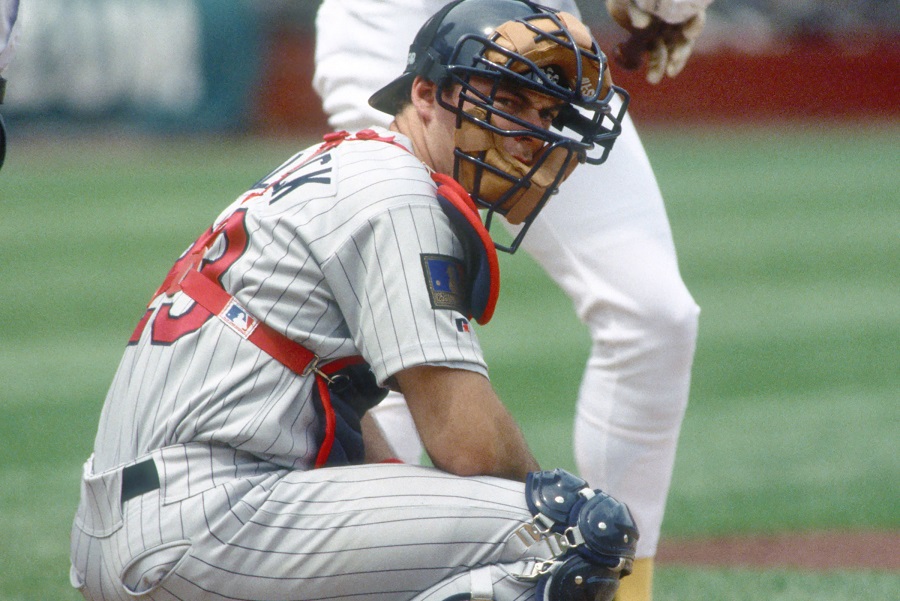 To tell the story of Matt Walbeck, it goes back to his early days as a baseball fan in northern California. He was able to watch and learn from two really good major-league teams, the Oakland A’s and the San Francisco Giants. As he said, “I liked both. I would go to the Giants and the A’s games with my dad. I was one of those fans that pulled for both of them.” He wasn’t the biggest kid, but he had a lot of support and kept working, and growing. “I wanted to be a Major League Baseball player ever since I was five. I had to fight for everything that I had. I was never the biggest or strongest kid on the team. My dad was my coach and used to practice with me a lot. By the time I got to high school, I was still considered too small to catch. So freshman and sophomore years, I played other positions like second or third base.” An opportunity arose during his junior year. “The catcher in front of me didn’t get good grades, so I took over the spot. I started to lift weights and got bigger and stronger. I always knew I was going to play in the Major Leagues, but it wasn’t until that point that I realized I had a chance to get drafted. The scouts were coming and looking at one of my teammates, Wayne Weinheimer, who played in the minor leagues with the Cubs.” He became a very good, highly-touted high school player in Sacramento and became the eighth round draft pick of the Chicago Cubs in 1987. “I was going to sign no matter what out of high school because I always wanted to get to the big leagues, and I figured there was no better way than to learn how to play professional baseball as a youngster. I was 17.” As a high school draft pick, he gradually made the move up the minor leagues, though there was some extended missed time. “When I was 19, I blew my knee out. I had a career-threatening ACL/MCL injury.” The injury cost him part of the 1989 season and most of the 1990 season. But you could say that he made the most of the time off, adding another aspect to his game. He said, “During the time it took me to rehab my knee, I taught myself to switch-hit. So I came back as a switch-hitter.” He spent the entire 1992 season at Double-A Charlotte. He had hit .301/.358/.418 (.776) with 22 doubles and seven homers. He went to spring training with the Cubs in 1993. Ryne Sandberg broke his arm and started the season on the Disabled List. That opened up a roster spot. Just days before the season was set to begin, GM Larry Himes and manager Jim Lefebvre called him over during batting practice. “I walked over. I thought they were going to send me down, but they said, ‘Hey, Congratulations! You made the team.’ So, that was pretty exciting.” I’d say so. He played in 11 games for the Cubs at the start of the season and hit .200. However, he had two doubles and a home run (off of Jose DeLeon) among his six hits. He spent the rest of that season in Triple-A. Following that 1993 season, the Twins traded right-hander Willie Banks to the Cubs for Walbeck and right-hander Dave Stevens. The Twins hoped they had their catcher and closer for the next several years. “It was really exciting. Baseball is a business, and I understood that deals had to be made. It opened up a spot for me to really learn from Tom Kelly, and play alongside Kirby Puckett. To learn to play the game like that, having watched the Twins as a minor leaguer, watching them win the World Series in 1987 and again in 1991. I knew quite a bit about their organization and the importance they placed on the fundamentals of the game, to always play hard and get the most out of what you had.” Of course, he was a young player who played for Tom Kelly, who was very well known for not being real patient with rookies.. “My Tom Kelly experience was... I learned a great deal from him. He was very difficult on younger players, and I had it coming. Sometimes I spoke more than I listened. I was young, inexperienced. I didn’t really understand what it was like to play in the Major Leagues. At the same time, even as a young player, you have to be very confident. Sometimes you walk the line of being overly confident. He was very hard on me. I think he respected me. I respected him.” Walbeck continued, “It was a tough time for him, trying to rebuild. And, trying to fill the shoes of Brian Harper isn’t an easy task. He was an amazing player. It was very difficult to fill those shoes. The city welcomed me. The teammates were great. TK was great, but sometimes he had very little patience, and understandably so.” Minnesota Twins The Twins had the two World Series titles, but things went downhill fairly quickly after the 1992 season. “It was a tough time for the Twins and for baseball in general. “Our teams weren’t very good. Our winning percentage wasn’t very good. It was tough losing more than winning, and rebuilding. There were a lot of great moments, but certainly a lot of not great moments.” Across the league, things were changing as well. “We went on strike in 1994, and we came back later in 1995. So the game was somewhat going through some growing pains. We broke it apart for a little bit. Owners and players alike. It became a challenge from that point too. The game had changed. They did some re-alignment. They added a division, the Central. I can remember Hrbek saying he was disappointed because we didn’t play the A’s in the same division anymore because they were rivals.” He made the Opening Day roster in 1994 and spent three seasons with the Twins. In 275 games played, Walbeck hit .230 with 40 doubles and eight homers. Walbeck said, “(TK) stuck with me, and he gave me more chances than I probably deserved, to be honest. The whole organization did. I was so fortunate to have that opportunity, and looking back on it, getting to play with Kirby Puckett and Chuck Knoblauch, and to catch Scott Erickson and Rick Aguilera.” He added, “I mean, I remember hitting behind Dave Winfield. That was just surreal. Kent Hrbek. All those guys.” He was there for Dave Winfield’s 3000th hit, “Molitor too. I was there for Paul Molitor’s 3000th hit.” But his favorite memory? “ My biggest memory, my happiest moment playing for the Twins, was catching Scott Erickson’s no-hitter. By far. That was my career highlight.” He really grew to love the Twin Cities too. “The city itself is just a wonderful city. I really learned to fish there, and get into the great outdoors. Man, what a great experience!” His playing time lessened in 1996, and after that season he was traded to the Detroit Tigers. He spent a season with the Tigers before spending three seasons with the Angels. “Playing in Anaheim was great because it was closer to home. It was my first multi-year contract. That was awesome. I got to play for Mike Scioscia, Terry Collins and even Joe Maddon a little bit.” He spent the 2001 season in the Phillies organization. “I was in Philadelphia for a long time. That was when 9/11 hit. I didn’t have an at bat for three weeks or so. My wife was getting ready to give birth, so I had to leave pretty soon too. We were making a playoff run, and I didn't have any at bats. It came down to the point where I had to literally beg Larry Bowa to get me in there. It was in Florida, on the road, game was out of hand, and he was somewhat hesitant but then finally gave in. I realized that at-bat was going to be my only at-bat for the entire year. Reflecting on my baseball card, with my stats, this was it. I didn’t know if I was ever going to play again. I was fortunate enough to get a hit in that at bat, so I batted 1.000 that year. Oh man, talk about a career highlight. It really doesn’t mean a lot but to me it was pretty special.” He ended his career with two more seasons in Detroit. “2002 was a rough season. Then 2003 was really rough. We went 43-119 which was … we almost broke the record for the all-time losingest season.” Upon retirement, Walbeck went into the world of coaching. He had a ton of success, winning a couple of league championships, as a minor league manager in the Tigers organization. He spent a season coaching for the Texas Rangers in 2008. Then he went back to managing. After 11 seasons, “that was enough.” “I look back on it very fondly. At the end of the day, I’ve worked for ten of 30 major-league teams as either a player, coach or a manager. That’s over 25 years of professional experience in organized baseball. I”m only 50, but I still look back on it and think, ‘Wow! I’ve accomplished a lot.’ Half my life I was in pro baseball. Pretty cool.” --------------------------------------------------------- He went back home to Sacramento. He did some lessons, but he was able to be a dad and a husband, helping his wife as their three children were growing up. Walbeck’s son is now 21 and just got his first ‘real’ job. He’s got a daughter who just finished high school and is headed to college soon. He’s also got a daughter in eighth grade. In 2011, his lessons developed into a business, the Walbeck Baseball Academy. Walbeck offers training classes. Players come into his facilities and warm up. They choose classes like hitting, pitching, or the catcher position. They have memberships or training plans. They would enroll and come in to train. Well, that was before COVID. Walbeck had to let some staff go since students can’t come into the facilities for indoor training.. Now Walbeck is at the office nearly every day handling online training. He offers Zoom classes, three to five classes a day, up to five days a week. He has up to 15 players in each class. He says over the past, he’s done 250 Zoom classes and reached about 1,400 students. “It’s pretty amazing to see the improvements the kids are making, and the different areas they work around their house, such as the garage or the living room, or kids will go to the park. We do drills, and I focus on each kid, and I help them with their technique and their concentration and their confidence.” Walbeck lives in a suburb of Sacramento, and his facility is in Rancho Cordero, California. Most of the players who have attended the facilities are from within a 50-mile radius. However, with the online training and camps on Zoom, you can sign up and participate from anywhere around the country. For more information, be sure to bookmark Walbeck Baseball Academy. Check out the training opportunities and the camps. Check out the schedule of training coming up. Hey, there are even training sessions for adults. --------------------------------------- One more fun story from Walbeck. We talked a bit about how the Catcher position has evolved since he was a big league catcher. “That position has changed dramatically over the years. When I was trained to play professionally, your job was to block pitches and be in a position to throw guys out, as well as receive the pitch. But you also had umpires back in those days that would come down on you if you tried to frame pitches.” “In fact, Paul Runge was my first umpire in a spring training game, and he literally told me he would have my (butt) if I ever tried to frame another pitch for the rest of my career.” “I couldn’t believe it. I went to Tom Trebelhorn and said, ‘Hey get a load of this…I’m not supposed to frame pitches.’ “He said, ‘Hey, you get back out there and tell him you’re paid to do this.’ OK. This guy is a veteran ump in the major leagues, so I had to deal with that.” “The umpire catcher relationship was very strong. You had to have their trust. You didn’t want to try to steal anything from them. Nowadays, you’re literally trying to steal pitches from them. Yeah, you’d try to steal pitches, but you didn’t want to embarrass yourself by pulling pitches too far. Now there’s so much emphasis on trying to pull pitches.” ---------------------------------------------------------- I’ve got to say, this was a fun phone call for me. I think the interview portion was about 15-18 minutes, and then we just talked baseball for another 20-25 minutes. It was fantastic, and you can just hear and feel Matt Walbeck’s joy and passion for the game of baseball. If you get a chance, please take a look at the Walbeck Baseball Academy website, and consider signing up for one of his training sessions.
-
We may see some creativity while there are 30 and 28 player rosters. We may also see creativity against the Pirates and Royals, getting guys work.
-
Berrios had 15 pitches (2 strikeouts) in a 1-2-3 first inning. To me, his goal should be 15 or (preferably) less pitches per inning. 15 x 6 = 90.... That's why 12 pitches per inning would be better... Strikeouts are wonderful, but has to become more efficient.
-
Can the Twins Fix Mitch Garver?
Seth Stohs replied to Cody Christie's topic in Twins Daily Front Page News
Nothing to worry about. He was off to a slow start but put together much better at bats over the weekend. Nothing really to fix. He's working on some timing things, but he shouldn't do anything crazy. -
RIch Hill placed on the IL with shoulder fatigue... no corresponding move to announce tonight. I'm guessing it'd come before the Tuesday afternoon game. A few updates... 1.) Sounds like things went well for Odorizzi today. He should make a start this weekend against the Royals. 2.) Bailey's doing fine. Should make a start early next week. 3.) Hill just experiencing fatigue. Baldelli said they got the transaction in before the game today to get an extra day to retroactively IL him. So, by that, he should be ready to make a start early next week too.
-
Caleb Thielbar is Back in the Big Leagues
Seth Stohs replied to Seth Stohs's topic in Twins Daily Front Page News
Gotta think Chacin is kicking himself right about now. -
Caleb Thielbar is Back in the Big Leagues
Seth Stohs replied to Seth Stohs's topic in Twins Daily Front Page News
no, Bailey's only on the 10-Day IL. Pretty sure the Twins had an opening or two on the 40-man. -
Wade was on the Opening Day roster.
-
The Twins announced on Monday afternoon that left-hander Caleb Thielbar has had his contract selected and he's back in the big leagues for the first time since the Twins released him during the 2015 season.It was quite a story the first time that Caleb Thielbar was called up to the big leagues. The Randolph, Minnesota, native had been the Brewers 18th round draft pick in 2009 out of South Dakota State in Brookings. He spent just two seasons in the Brewers organization before joining the St. Paul Saints. He pitched well enough in 2011 that the Twins signed him late in the season and had him play three games in Ft. Myers. In 2012, he pitched in Ft. Myers, New Britain and Rochester, combining to go 6-2 with a 2.43 ERA in 48 games and 77 2/3 innings. He even pitched in the Arizona Fall League after the season. He began 2013 with the Rochester Red Wings but after 17 games, he was called up to the Twins in mid-May. He began his big-league career by going 19 2/3 innings without giving up a run. He posted a 1.76 ERA in 49 games and 46 innings and was named the Bill Boni Twins Rookie of the Year. He pitched to a 3.40 ERA in 2014 over 54 games with the Twins. He started slow in 2015 and was sent down to AAA early. Late in the year, he was DFAd. He spent the end of that season in the Padres organization. He returned to the Saints for the 2016 and 2017 seasons, pitching well both years. In 2018, he was very good in the Detroit Tigers organization, playing for Doug Mientkiewicz in Toledo, but he never got the call. In 2019, he pitched in Toledo again and late in the year with Gwinnett, the Braves AAA affiliate. Despite reports that he was throwing 95 mph, he did not get a call. This past offseason, there were reports that he had accepted a coaching job at Augustana University in South Dakota. The next thing we heard, he was signing a minor league deal with the Twins. He pitched well in spring training. When Summer Camp rosters were announced, he was on the Twins 60-player pool. During the Twins first road trip of the season, Thielbar was one of three members of their Taxi Squad. And on Monday, with the team needing arms, LaMonte Wade was optioned and Caleb Thielbar was called up from the St. Paul group. What a story! Before the game, Baldelli spoke of Thielbar's story, but also of a potential role for him. "I've just heard pieces of that story. He brings a really interesting skill set. He's got this delivery that creates some deception. He's got the fastball that has tremendous ride on it, and then he's got this really up and down, change-of-pace breaking ball that he can manipulate too. What he does is gives you a really nice, different look. That's what makes a lot of these guys good. And Caleb certainly brings something, and his talents to the table, that are different than the rest off the group. I'm looking forward to him going out there and doing his thing. We've been watching him for awhile from the first time around in Ft. Myers. He seems like a really good guy and teammate, but also a guy that can contribute and we knew that from the start." Join us in congratulating Thielbar on his return to the big leagues. Click here to view the article
-
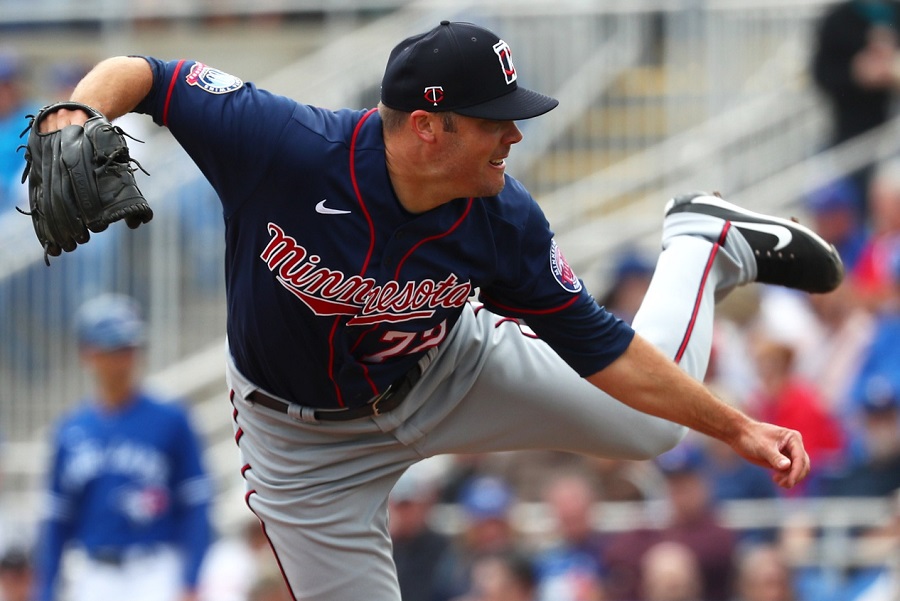 It was quite a story the first time that Caleb Thielbar was called up to the big leagues. The Randolph, Minnesota, native had been the Brewers 18th round draft pick in 2009 out of South Dakota State in Brookings. He spent just two seasons in the Brewers organization before joining the St. Paul Saints. He pitched well enough in 2011 that the Twins signed him late in the season and had him play three games in Ft. Myers. In 2012, he pitched in Ft. Myers, New Britain and Rochester, combining to go 6-2 with a 2.43 ERA in 48 games and 77 2/3 innings. He even pitched in the Arizona Fall League after the season. He began 2013 with the Rochester Red Wings but after 17 games, he was called up to the Twins in mid-May. He began his big-league career by going 19 2/3 innings without giving up a run. He posted a 1.76 ERA in 49 games and 46 innings and was named the Bill Boni Twins Rookie of the Year. He pitched to a 3.40 ERA in 2014 over 54 games with the Twins. He started slow in 2015 and was sent down to AAA early. Late in the year, he was DFAd. He spent the end of that season in the Padres organization. He returned to the Saints for the 2016 and 2017 seasons, pitching well both years. In 2018, he was very good in the Detroit Tigers organization, playing for Doug Mientkiewicz in Toledo, but he never got the call. In 2019, he pitched in Toledo again and late in the year with Gwinnett, the Braves AAA affiliate. Despite reports that he was throwing 95 mph, he did not get a call. This past offseason, there were reports that he had accepted a coaching job at Augustana University in South Dakota. The next thing we heard, he was signing a minor league deal with the Twins. He pitched well in spring training. When Summer Camp rosters were announced, he was on the Twins 60-player pool. During the Twins first road trip of the season, Thielbar was one of three members of their Taxi Squad. And on Monday, with the team needing arms, LaMonte Wade was optioned and Caleb Thielbar was called up from the St. Paul group. What a story! Before the game, Baldelli spoke of Thielbar's story, but also of a potential role for him. "I've just heard pieces of that story. He brings a really interesting skill set. He's got this delivery that creates some deception. He's got the fastball that has tremendous ride on it, and then he's got this really up and down, change-of-pace breaking ball that he can manipulate too. What he does is gives you a really nice, different look. That's what makes a lot of these guys good. And Caleb certainly brings something, and his talents to the table, that are different than the rest off the group. I'm looking forward to him going out there and doing his thing. We've been watching him for awhile from the first time around in Ft. Myers. He seems like a really good guy and teammate, but also a guy that can contribute and we knew that from the start." Join us in congratulating Thielbar on his return to the big leagues.
-
Caleb Thielbar is back in the big leagues. https://twitter.com/SethTweets/status/1290398448441798657
-
They said biceps tendinitis right away on Bailey... so, unless they're just making stuff up to protect him in some way, it's biceps tendinitis. Rocco didn't seem too concerned.
-
No, but based on what's been said, he's throwing against hitters. I'd be surprised if he doesn't start either in Pittsburgh or the first game or two against the Royals.
-
I can't imagine Astudillo is anywhere near ready to play. He was only cleared to practice about a week ago, which means he missed probably a month of time. Kirilloff is in St. Paul with the CHS Player Pool.
-
The Twins have placed Homer Bailey on the IL with right biceps tendinitis (which is no fun)... Sean Poppen called up. Remember it was announced following the game last night that Tyler Clippard was starting today as an opener, with Bailey pushed back a day. Apparently the arm issue showed up.
-
Twins Bullpen: Ready When Needed
Seth Stohs replied to Seth Stohs's topic in Twins Daily Front Page News
Lots here... Starters that go 7 are terrific... but for most starters, that third time through the lineup doesn't go well. That said, with all the pitcher injuries early this season around the league, the Twins are wise to continue to treat it like an extended spring training. They'll get extended over time. That may coincide with the likelihood of losing one reliever in about a week and probably another one in 3 weeks when rosters (may) go back to 26. Why not take advantage of the expanded roster. And, the Opener just makes so much sense when you push a guy back like the Twins did. Let CLippard start and work an inning, then bring in Smeltzer or whoever and let him go 4-5 and then see where you are. Like keeping a catcher's legs strong, be smart with your top arms too.- 8 replies
-
- 1
-

-
- taylor rogers
- tyler duffey
- (and 3 more)
-
I bet her would enjoy getting to play a game in his home state. But yeah, I was thinking this too. If they 10-day'd Donaldson, I think Blankenhorn makes the most sense.
-
Littell is a good guy. And as Baldelli said yesterday, this is a minor thing and he probably doesn't need 10 days, but rather than him not being avaialble for the next 4-5 days and playing with essentially a 29-man roster, they're making the move. Could Littell go back to starting? Sure, but why? 1.) They already have 8 solid MLB starting options on the 30 man roster. (plus Duran and Chalmers in St. Paul) 2.) He thrived in the bullpen in 2019, and 3.) He's now comfortable in that role. As for Alcala vs Poppen. Poppen couldn't throw strikes during summer camp. He's got great stuff, but Alcala's got electric stuff. I included some quotes from Baldelli on Alcala (and the Littell injury) in my bullpen article from late last night. From that, you can hear the excitement they have for Alcala's arm. I would say that Stashak and Poppen are polar opposites right now.
-
The Twins are at home, so they don't have to designate a taxi squad. Also, each road trip, the taxi squad can change. Those three were on the taxi squad to Chicago, but when they head to Pittsburgh on Wednesday, it could be three different players. While they're at home, the non-30-man-roster guys are just working out at CHS Field. With an injury, the Twins can call up anyone on the 40-man roster. They bring three players on the road as a taxi squad to avoid traveling last minute and having depth right there.
-
It took until the fifth game of the season for Twins closer Taylor Rogers to get into a game. In the team’s first eight games, he has now pitched three times and recorded three saves for the Twins. He has a pretty well defined role on this team, but the roles of the rest of the bullpen appear to be ever-changing.Going back a decade or more, the concept of Closer-by-Committee was met with disdain by many inside baseball circles. Meanwhile, the concept behind it was certainly sound. Use your best bullpen arms in the best positions for them to succeed. In other words, if your opponent has Mike Trout, Anthony Rendon and Justin Upton coming up to start the eighth inning, you might want to use your closer in that situation, especially if you’ve got a closer that dominates right-handed hitters. Get through that situation, and bring in the most logical next reliever for that ninth-inning save. It has also always been tradition that the better bullpens have a ninth inning guy, an eighth inning guy and maybe even a seventh inning guy. That is their role in a game that the team is winning. The role is based on the inning, not necessarily on the matchups coming during that inning. Through admittedly just eight games this season, it appears that Rocco Baldelli, Wes Johnson and the Twins have decided not to give pitcher roles by innings but instead by situation. Here is a quick breakdown of which innings the relievers have been used in so far. Taylor Rogers: 9th/Save (3) Sergio Romo: 7th (1), 8th (1), 9th/Save (1), Trevor May: 5th (1),7th (1), 8th (1), Tyler Duffey: 6th (1), 7th (2), Tyler Clippard: 6th (3), 8th (1), Cody Stashak: 8th and 9th (1), 7th (1), 8th (1) Zack Littell: 5th (1), 6th and 7th (1), Devin Smeltzer: 6th and 7th (1), Matt Wisler: 8th (1), 8th and 9th (1) Lewis Thorpe: 6th, 7th and 8th (1), 8th and 9th (1) Kenta Maeda became the first Twins starting pitcher to throw a pitch in the six innings. In games that the Twins have won, we have seen Clippard, Duffey, May, Romo, Stashak and Rogers. As interesting, pitchers have been used in a variety of roles. Trevor May has pitched in the fifth inning and in the eighth inning. On Sunday, Tyler Clippard will be used as an Opener after being used in either the sixth or eighth innings previously. Tyler Duffey has pitched in the sixth and seventh innings. Duffey said on Saturday afternoon that Baldelli has been up front with the relievers about their roles. “Rocco did a good job. Before we got started, he kind of made the rounds and talked to guys. He said, ‘Hey, situations are gonna call for guys to pitch. Just be ready.’” Earlier in the week, Sergio Romo hesitated when asked about reliever roles, but said, “We all have an ability to get hitters out in a unique way, in a different way from each other. The situations that Rocco’s been putting us in is a compliment to that, to each one of our strengths. Each one of us has been put in situations where I feel Rocco - maybe beyond 100% - knows we’re going to succeed. I think you’ll see more of that.” And succeed they have. Duffey (3 IP), Rogers (3 IP), Romo (3 IP), Stashak (4 IP), Thorpe (4 ⅔ IP) and Wisler (2 ⅓ IP) have combined to throw 20 innings with a combined 0.00 ERA. Clippard (4 IP) and May (3 IP) have each given up just one earned run. Zack Littell threw two scoreless innings in his most recent outing after giving up four runs in his first inning. Devin Smeltzer gave up five earned run in two innings in his lone outing. Combined, the bullpen has pitched 32 innings and has a 3.09 ERA. If you remove Littell’s and Smeltzer’s first outings, the bullpen has thrown 29 innings and has a 0.62 ERA. In short, outside of one game, this bullpen has been remarkable! We knew coming into the season that the bullpen was expected to be a strength of for the Twins. Many national sports media sites ranked the Twins bullpen among the Top 5 in MLB. There is talent. There are veterans like Romo and Clippard who have performed over their dozen-plus big league seasons. Taylor Rogers emerged the last two seasons as one of the best left-handed relievers in the game, if not one of the best relievers period. Trevor May and Tyler Duffey each have electric stuff and seemingly put it together in 2019s second half. Both are much more confident early this season. Zack Littell and Cody Stashak were rookies last year who were a big boost to the late-season improvements of the Twins bullpen. Stashak has been terrific early this year. Stashak said, “It (bullpen’s confidence) is pretty high. I’m sure the word’s gone around that we’ve got a solid ‘pen.” Littell struggled in his first outing, then threw two scoreless innings on Thursday night. He has now been put on the Injured List with a hamstring injury. Baldelli said of Littell, “Zack came out of his last outing with just a little bit of a hamstring tightness. You could call it an injury. You could call it just a minor incident. Really, what it comes down to, is you probably don't want to have to put a guy on the IL for something like this, but it probably would have been a couple of days before he would have seen game action again. So, does he need the full 10 days to feel better and be able to get out there on the mound? I don't know. Probably not. But to have a spot in the bullpen where you're not going to pitch a guy for a handful of days right now is also not a place where we really want to be. ” That gives Jorge Alcala, whose stuff the team has been raving about throughout summer camp, an opportunity. Before Saturday’s game, Baldelli noted, “We had some videos of him throwing at home, and he looked really, really impressive. The velocity was good and was up from what we saw in the big leagues last year. We know he has a big arm and some added depth to the breaking ball was apparent. More than anything, I think his confidence in what he's doing when he steps on the mound against hitters, against big league hitters, even against his own teammates in some of these outings and Summer Camp sessions.” So now maybe Alcala assumes the role and gets the situations that Littell had pitched. With the innings not being the determining factor for when a pitcher comes in, how does a pitcher know, or anticipate, when he might be called upon? In Saturday’s pre-game Zoom Meetings, I asked Duffey if he just needs to start getting ready earlier or if it causes him to pay attention to things like the opponent’s batting order and such. He said, “Obviously we’re not locked in for nine innings, but you kind of look at the lineup and say, ‘OK, there are some righties, or I’ve done well against that lefty in the past, or maybe we need to turn this switch-hitter around,’ something like that. Those are thoughts that go through your mind.” Duffey added, “You can’t really expect anything, and I think that’s good. It keeps everyone on their toes and mentally ready. I can’t say it enough, this is a really, really good group of guys. A lot of talent, a lot of different looks, especially out of our bullpen. I think that’s why we’re gonna have a lot of success.” Sergio Romo agrees, and is looking forward to seeing how it plays out. “It’s going to be fun to see the combinations that Rocco puts together with us. Again, it’s more of a compliment to us when he has so many different ways to use us and is so willing to do it confidently. It’s fun to be a part of again.” While the starters will, hopefully, continue to eat more innings as the season moves on, Baldelli and Johnson have to feel really good about their bullpen, knowing whoever they put into a game is fully capable of shutting the door. And having one of the top closers in the game certainly doesn’t hurt either. Click here to view the article
-
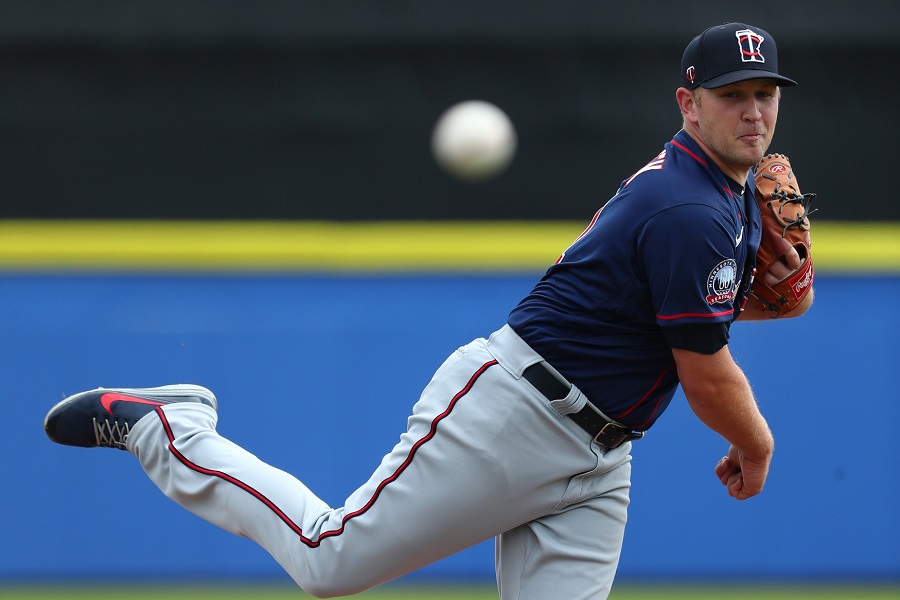 Going back a decade or more, the concept of Closer-by-Committee was met with disdain by many inside baseball circles. Meanwhile, the concept behind it was certainly sound. Use your best bullpen arms in the best positions for them to succeed. In other words, if your opponent has Mike Trout, Anthony Rendon and Justin Upton coming up to start the eighth inning, you might want to use your closer in that situation, especially if you’ve got a closer that dominates right-handed hitters. Get through that situation, and bring in the most logical next reliever for that ninth-inning save. It has also always been tradition that the better bullpens have a ninth inning guy, an eighth inning guy and maybe even a seventh inning guy. That is their role in a game that the team is winning. The role is based on the inning, not necessarily on the matchups coming during that inning. Through admittedly just eight games this season, it appears that Rocco Baldelli, Wes Johnson and the Twins have decided not to give pitcher roles by innings but instead by situation. Here is a quick breakdown of which innings the relievers have been used in so far. Taylor Rogers: 9th/Save (3) Sergio Romo: 7th (1), 8th (1), 9th/Save (1), Trevor May: 5th (1),7th (1), 8th (1), Tyler Duffey: 6th (1), 7th (2), Tyler Clippard: 6th (3), 8th (1), Cody Stashak: 8th and 9th (1), 7th (1), 8th (1) Zack Littell: 5th (1), 6th and 7th (1), Devin Smeltzer: 6th and 7th (1), Matt Wisler: 8th (1), 8th and 9th (1) Lewis Thorpe: 6th, 7th and 8th (1), 8th and 9th (1) Kenta Maeda became the first Twins starting pitcher to throw a pitch in the six innings. In games that the Twins have won, we have seen Clippard, Duffey, May, Romo, Stashak and Rogers. As interesting, pitchers have been used in a variety of roles. Trevor May has pitched in the fifth inning and in the eighth inning. On Sunday, Tyler Clippard will be used as an Opener after being used in either the sixth or eighth innings previously. Tyler Duffey has pitched in the sixth and seventh innings. Duffey said on Saturday afternoon that Baldelli has been up front with the relievers about their roles. “Rocco did a good job. Before we got started, he kind of made the rounds and talked to guys. He said, ‘Hey, situations are gonna call for guys to pitch. Just be ready.’” Earlier in the week, Sergio Romo hesitated when asked about reliever roles, but said, “We all have an ability to get hitters out in a unique way, in a different way from each other. The situations that Rocco’s been putting us in is a compliment to that, to each one of our strengths. Each one of us has been put in situations where I feel Rocco - maybe beyond 100% - knows we’re going to succeed. I think you’ll see more of that.” And succeed they have. Duffey (3 IP), Rogers (3 IP), Romo (3 IP), Stashak (4 IP), Thorpe (4 ⅔ IP) and Wisler (2 ⅓ IP) have combined to throw 20 innings with a combined 0.00 ERA. Clippard (4 IP) and May (3 IP) have each given up just one earned run. Zack Littell threw two scoreless innings in his most recent outing after giving up four runs in his first inning. Devin Smeltzer gave up five earned run in two innings in his lone outing. Combined, the bullpen has pitched 32 innings and has a 3.09 ERA. If you remove Littell’s and Smeltzer’s first outings, the bullpen has thrown 29 innings and has a 0.62 ERA. In short, outside of one game, this bullpen has been remarkable! We knew coming into the season that the bullpen was expected to be a strength of for the Twins. Many national sports media sites ranked the Twins bullpen among the Top 5 in MLB. There is talent. There are veterans like Romo and Clippard who have performed over their dozen-plus big league seasons. Taylor Rogers emerged the last two seasons as one of the best left-handed relievers in the game, if not one of the best relievers period. Trevor May and Tyler Duffey each have electric stuff and seemingly put it together in 2019s second half. Both are much more confident early this season. Zack Littell and Cody Stashak were rookies last year who were a big boost to the late-season improvements of the Twins bullpen. Stashak has been terrific early this year. Stashak said, “It (bullpen’s confidence) is pretty high. I’m sure the word’s gone around that we’ve got a solid ‘pen.” Littell struggled in his first outing, then threw two scoreless innings on Thursday night. He has now been put on the Injured List with a hamstring injury. Baldelli said of Littell, “Zack came out of his last outing with just a little bit of a hamstring tightness. You could call it an injury. You could call it just a minor incident. Really, what it comes down to, is you probably don't want to have to put a guy on the IL for something like this, but it probably would have been a couple of days before he would have seen game action again. So, does he need the full 10 days to feel better and be able to get out there on the mound? I don't know. Probably not. But to have a spot in the bullpen where you're not going to pitch a guy for a handful of days right now is also not a place where we really want to be. ” That gives Jorge Alcala, whose stuff the team has been raving about throughout summer camp, an opportunity. Before Saturday’s game, Baldelli noted, “We had some videos of him throwing at home, and he looked really, really impressive. The velocity was good and was up from what we saw in the big leagues last year. We know he has a big arm and some added depth to the breaking ball was apparent. More than anything, I think his confidence in what he's doing when he steps on the mound against hitters, against big league hitters, even against his own teammates in some of these outings and Summer Camp sessions.” So now maybe Alcala assumes the role and gets the situations that Littell had pitched. With the innings not being the determining factor for when a pitcher comes in, how does a pitcher know, or anticipate, when he might be called upon? In Saturday’s pre-game Zoom Meetings, I asked Duffey if he just needs to start getting ready earlier or if it causes him to pay attention to things like the opponent’s batting order and such. He said, “Obviously we’re not locked in for nine innings, but you kind of look at the lineup and say, ‘OK, there are some righties, or I’ve done well against that lefty in the past, or maybe we need to turn this switch-hitter around,’ something like that. Those are thoughts that go through your mind.” Duffey added, “You can’t really expect anything, and I think that’s good. It keeps everyone on their toes and mentally ready. I can’t say it enough, this is a really, really good group of guys. A lot of talent, a lot of different looks, especially out of our bullpen. I think that’s why we’re gonna have a lot of success.” Sergio Romo agrees, and is looking forward to seeing how it plays out. “It’s going to be fun to see the combinations that Rocco puts together with us. Again, it’s more of a compliment to us when he has so many different ways to use us and is so willing to do it confidently. It’s fun to be a part of again.” While the starters will, hopefully, continue to eat more innings as the season moves on, Baldelli and Johnson have to feel really good about their bullpen, knowing whoever they put into a game is fully capable of shutting the door. And having one of the top closers in the game certainly doesn’t hurt either.
-
There haven't been many yet, but I'll start this today... The Twins just announced that Zack Littell (hamstring) has been placed on the 10-Day IL... Jorge Alcala recalled.
-
For those unaware of Costello or what happened, click here. http://twinsdaily.com/_/minnesota-twins-news/minnesota-twins-minor-leagues/rip-ryan-costello-1996-2019-r8647#:~:text=We%20are%20deeply%20saddened%20to,at%20the%20age%20of%2023.&text=The%20Twins%20family%20learned%20of,night%20or%20early%20Monday%20morning.
