



Thrylos
-
Posts
11,094 -
Joined
-
Last visited
-
Days Won
9
Content Type
Profiles
News
Minnesota Twins Videos
2026 Minnesota Twins Top Prospects Ranking
2022 Minnesota Twins Draft Picks
Minnesota Twins Free Agent & Trade Rumors, Notes, & Tidbits
Guides & Resources
2023 Minnesota Twins Draft Picks
The Minnesota Twins Players Project
2024 Minnesota Twins Draft Picks
2025 Minnesota Twins Draft Pick Tracker
2026 Minnesota Twins Draft Tracker: Picks & Bonuses
Forums
Blogs
Events
Store
Downloads
Gallery
Everything posted by Thrylos
-
Hard to argue with those choices... Good stuff. Keep it coming One little detail: Cedar Rapids is in an A league, not an A- league. A- leagues are leagues like the New York Penn Leagues that are short season leagues and an alternative to the higher Rookie Leagues, like the Appalachian. I know a lot of people call the Midwest League, "Low" A league to distinguish from the High A Florida State League, but it is totally inaccurate. It is A. Not Low A or A-
-
I think that it is fair to say that Brian Dozier's 2013 season (especially his power numbers) was not expected by many, based on his fairly disappointing 2012 rookie season and his fairly flat minor league career. But was there anything is his path through the minors that could have acted as a leading indicator potentially predicting his 2013 breakout season? After he was drafted in the eighth round of the 2009 draft Dozier moved in a pretty typical path through the Twins organization for a 22 year old: Rookie leagues in 2009, split between A and high A in 2010 and split between high A and double AA, in his age 24 season. That was the season when Dozier finally got it all together. Here is a graph of his OPS and ISO throughout his career. ~~~ Originally published at The Tenth Inning Stretch ~~~ http://farm8.staticflickr.com/7298/11016136206_480115753b_o.jpg His age 24 season shows a noticeable increase in his OPS and, especially, his ISO which doubled from previous marks and was approaching the .200s . His power (but not his OPS - which means that he still potentially has ways to go in the major league level) was very similar to that exhibited in his age 26 MLB season (2013). Also to be noted is that Dozier, after his 2011 season, continued the success in the AFL: .296/.358/.454 (.821 OPS, .158 ISO). He did have a setback in 2012, but that entire Twins' season was a setback. Let's compare the above chart with a chart that shows the OPS and ISO numbers per season of another Twins' player and align them for age: http://farm8.staticflickr.com/7358/11016251843_6ecb81ef87_o.jpg As you can see, this player has started his professional career earlier that Dozier did and had similar moderate success. However, like Dozier, in his age 24 season (at AAA instead of Dozier's A/A+), had a major breakthrough with increases in OPS and ISO to close to all-star levels. Actually, at the same age and at a higher level of competition, his OPS and power numbers were better than Dozier's, which makes me believe that he will potentially have a season similar to Dozier's 2013 next year. The player? Eduardo Escobar Also of note is that Escobar (like Dozier in 2011) is continuing his breakthough 2013 season in the Venezuela Winter League: .302/.348/.519 (.867 OPS, .217 ISO) at the time this was written How about fielding which was another strong suit of Brian Dozier's ? Here are the MLB career numbers for Dozier: .992 FP% 2B (1255 Inn), .964 FP% SS (732 Inn), UZR/150: -0.7 2B, -5.0 SS, RZR .832 2B (MLB best 2013: .842), .796 SS (MLB Best 2013: .876; Florimon .838) And Escobar: 1.000 FP% 2B (149.7 Inn), .951 FP% 3B (287.7 Inn), .959 FP% SS (281.2 Inn) UZR/150: -6.0 2B, -16.2 3B, 5.1 SS. RZR: .813 2B (MLB best 2013: .842), .641 3B, .814 SS (MLB Best 2013: .876; Florimon .838) Neither Dozier nor Escobar make many errors. UZR/150 does not like Dozier and Escobar at 2B and 3B, but likes Escobar at SS. Revized Zone Rating has Dozier near the MLB top at second base and Escobar above average at both 2B and SS (but not that great at 3B). Note that Escobar's defense at SS is close to Florimon's as far as UZR/150 and RZR are concerned, but he is making fewer errors than Florimon. Could Escobar be the Twins' SS of the near future and Escobar and Dozier the Twins double play combination for a while? Time will tell, but if Dozier's very similar career is an indicator, it looks like a very true possibility, starting with the 2014 season. http://farm4.staticflickr.com/3696/11017192645_3f60120173_z.jpg
-
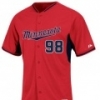 Not exactly a sample size of 1. Lots of PAs and def reps in there, because the comparison is minor league careers and seasons.... I guess one can describe an entire baseball career as sample size of 1
 -
Originally published at The Tenth Inning Stretch ---- I think that it is fair to say that Brian Dozier's 2013 season (especially his power numbers) was not expected by many based on his fairly disappointing 2012 rookie season and his fairly flat minor league career. But was there anything is his path through the minors that could have acted as a leading indicator potentially predicting his 2013 breakout season? After he was drafted in the 8th round of the 2009 draft Dozier moved in a pretty typical path through the Twins organization for a 22 year old: Rookie leagues in 2009, split between A and high A in 2010 and split between high A and double AA, in his age 24 season. That was the season when Dozier finally got it all together. Here is a graph of his OPS and ISO throughout his career http://farm8.staticflickr.com/7298/11016136206_480115753b_o.jpg His age 24 season shows a noticeable increase in his OPS and, especially, his ISO that doubled from previous marks and was approaching the .200s . His power (but not his OPS - which means that he still potentially has ways to go in the major league level) was very similar to that exhibited in his age 26 MLB season (2013). Also to be noted that Dozier, after his 2011 season, continued the success in the AFL: .296/.358/.454 (.821 OPS, .158 ISO). He did have a setback in 2012, but that whole Twins' season was a setback. Let's superimpose the above chart with a chart that shows the OPS and ISO numbers per season of another Twins' player and align them for age: http://farm8.staticflickr.com/7358/11016251843_6ecb81ef87_o.jpg As you can see, this player has started his professional career earlier that Dozier did and had similar moderate success. However, like Dozier, in his age 24 season (at AAA instead of Dozier's A/A+) had a major breakthrough with increases in OPS and ISO to close to all-star levels. Actually at the same age, at a higher level of competition, his OPS and power numbers were better than Dozier's, which makes me believe that he will potentially have a season similar to Dozier's 2013 next season. The player? Eduardo Escobar Also of note is that Escobar (like Dozier in 2011) is continuing his breakthough 2013 season in the Venezuela Winter League: .302/.348/.519 (.867 OPS, .217 ISO) at the time this was written How about fielding which was another strong suit of Brian Dozier's ? Here are the MLB career numbers for Dozier: .992 FP% 2B (1255 Inn), .964 FP% SS (732 Inn), UZR/150: -0.7 2B, -5.0 SS, RZR .832 2B (MLB best 2013: .842), .796 SS (MLB Best 2013: .876; Florimon .838) and Escobar: 1.000 FP% 2B (149.7 Inn), .951 FP% 3B (287.7 Inn), .959 FP% SS (281.2 Inn) UZR/150: -6.0 2B, -16.2 3B, 5.1 SS. RZR: .813 2B (MLB best 2013: .842), .641 3B, .814 SS (MLB Best 2013: .876; Florimon .838) Both Dozier and Escobar do not make many errors. UZR/150 does not like Dozier and Escobar in 2B and 3B, but likes Escobar at SS. Revized Zone Rating has Dozier near the MLB top at second base abd Escobar above average at both 2B and SS (but not that great at 3B). Noted that Escobar's defense at SS is close to Florimon's as far as UZR/150 and RZR are concerned, but he is making fewer errors than Florimon. Could Escobar be the Twins' SS of the near future and Escobar & Dozier the Twins double play combination for a while? Time will tell, but if Dozier's very similar career is an indicator, it looks like a very true possibility, starting with the 2014 season. http://farm4.staticflickr.com/3696/11017192645_3f60120173_z.jpg
-
Originally published at The Tenth Inning Stretch ---- In the first trade of the 2013 off-season, the Minnesota Twins returned RHRP Duke Welker (whom they acquired in the Justin Morneau trade) to the Pittsburgh for LHSP Kris Johnson. Johnson (6'4", 190, 28 years old) is a former first round draft pick of the Boston Redsox (2006) and signed as a minor league free agent by the Pirates 2 years ago. He was listed as the Redsox' fourth best pitching prospect in 2008 by Baseball America. This season he had a breakthrough performance in Independent (AAA) league, pitching 135.7 innings, with a 2.39 ERA (3.43 FIP), winning 10 games and losing 4. His strikeout rate was 17.1% (6.34 K/9), his walk rate 7.8% (2.85 BB/9, 2.19 K/BB). His WHIP was 1.17 and achieved with a .279 BABIP. He throws a 91-94 mph fastball, a slow low 70s curve and a mid 80s change/cutter/slider type of pitch that is very effective against righties. As is, he will be the most polished Twins' left hand starter (compared to Scott Diamond and Andrew Albers) and will likely fight for a spot in the Twins' rotation out of Spring Training. He has relieved before, so the pen is also an option potentially. All in all, the Twins turned a hard throwing but enigmatic (think Hoey) righty reliever to a polished lefty starter with true back of the rotation stuff who is at his prime. I think all in all it is a good move for the Twins, since they lack depth in the minors esp. from the left side. Johnson had a cup of coffee with the Pirates (10.3 IP) this August, which means that he has only 2 options left. What does this mean for the Twins? Johnson automatically goes on top of the LHP starting depth ahead of Diamond and Albers at this point, and if they do not sign someone like Scott Kazmir, he might wear a Twins' uniform next season. Additionally, he will potentially challenge for a spot in the bullpen, especially if Thielbar regresses. This trade gives the Twins more options than they had before (plently of hard-throwing relievers and Michael Tonkin made Duke Welker redundant in the system) http://binaryapi.ap.org/913b31dff82647e2b2c20d2ac4fbe617/940x.jpg
-
Originally published at The Tenth Inning Stretch --- Twins' beat reporter Mike Berardino broke the news late Tuesday night that the Minnesota Twins were looking closely (but not yet negotiating) at the possibility of signing Bronson Arroyo, the 37 year old free agent pitcher lately of the Cincinnati Reds. The thought that immediately came to my mind was that the last thing the Twins need is another (and older version of) Kevin Correia, given my premise that the Twins need 3 starting pitchers better than Correia to compete. Arroyo's durability (pitched at least 199 innings every season after 2004, without ever visiting the Disabled List) and mentoring skills have been exalted, but he is thirty seven years old, with a 87 mph fastball and his numbers look so much like Kevin Correia's. How much? I went to look and confirm. Here are Kevin Correia's and Bronson Arroyo's career numbers in several categories, from traditional like ERA to "advanced" like SIERA, FIP and xFIP: http://farm4.staticflickr.com/3694/10840083145_beb4a18519_o.jpg Looking at the first five columns, ERA, FIP, xFIP, SIERA and K/9, it is immediately noticeable that one could not have picked any more similar pitchers. Also interesting is the fact that both their ERA are so close to their FIP, xFIP and SIERA. Other measurements not listed here, but are extremely alike are: career HR/FB (identical at 10.9), K% (15.3 for Arroyo and 15 for Correia), tERA (4.81 for Correia and 4.84 for Arroyo) and Hits per 9 IP (1.07 for Correia and 1.02 for Arroyo). Alas. The data seem to indicate that my gut feeling was correct. They are the same pitcher. But with one (pretty large) difference in a single measurement: Their PE (pitching effectiveness) and xPE cannot be more different. You can read about PE and xPE (and why I like them as simple predictive measurements) starting here and following the relative links for more detail and how those measurements were developed. The difference (mainly walk rate differential-driven, which also reflects the changes in their WHIPs, since the hit rates are similar.) indicates that Arroyo is a much better pitcher and (unlike Correia whose numbers fall in the number 5 starter range with a PE of 7.92 and an xPE of 8.12) has been a solid number 3 type starter with a PE of 14.03 and an xPE of 13.60. But these are career numbers. How about his age 36, 2013 season? His PE of 17.52 and xPE of 16.13 in 2013 were even better than his total career numbers. A couple of additional things that have to be mentioned: a. Arroyo threw more than 100 pitches in 172 of his 385 games (44.7%) and 120 in 13 (3.4%). These numbers for other starting pitchers drafted when Arroyo did (1995): Ryan Dempster 52.9% and 7.5%, Jarrod Washburn 57.7% and 3.9%, Matt Morris 48.6% and 4%, Roy Halladay 57.9% and 4.8% and Russ Ortiz 53.8% and 12.8%. So if you are a pitch count believer, his arm has been abused less than his peers, which might indicate that there might be something in his 37 year old arm. b. Arroyo is a different type of a pitcher. Here is an excellent writeup on Arroyo's stuff from yesterday by ESPN 1500's Twins' reporter Brandon Warne and here is a fangraphs interview where Arroyo describes his pitching style. A lot of very interesting things in that piece about his approach of the game, but his admission that hard throwing pitchers have an easier time dealing with batters is golden, because I have heard the argument (which I oppose dearly) that increased velocity does not make someone a better pitcher. Hearing it from an actual MLB veteran pitcher, is refreshing. Arroyo also admits that he sees himself pitching up to 3 more years. So, suddenly and after a bit of research, I feel a bit better about this. My gut reaction was wrong: Arroyo is better than Correia and is expected to be better than Correia in the near future. So he can be one of the 3 pitchers better than Correia the Twins need. If the Twins get Arroyo they need 2 more pitchers better than him, hopefully top of the rotation types. On the other hand, he is thirty seven and I just hope that the elderly Floridian with the funky leg kick, who once was traded for Willy Mo Pena (by Twins' special assistant to the GM Wayne Krivsky nevertheless), remains healthy. http://upload.wikimedia.org/wikipedia/commons/thumb/5/53/Bronson_Arroyo_2011.jpg/360px-Bronson_Arroyo_2011.jpg
-
A week ago, I looked at the available starting pitchers who are free agents and I distilled the long list of names to three who the MInnesota Twins should target this off-season. The premise is that other than Alex Meyer and maybe Kyle Gibson, the Twins do not have any "sure bets" for the top of their rotation for next season and the near future that will coincide with the coming of age of uber-prospects Miguel Sano and Byron Buxton. So, in order to compete in 2014 and to not waste that future, the Twins need three starting pitchers better than Kevin Correia and Kyle Gibson (today) who will occupy the last two spots in the Twins' rotation for 2014. These pitchers should be young enough to be around for three years, maybe longer. The two other criteria I used to trim the free agent list, in addition to age (31 next season or younger) were characteristics sorely missed by the Twins' rotations since Johan Santana's departure and Fransisco Liriano's injury and eventual departure: Hard throwing (FB 92 mph or better) and striking people out (K/9 rate of eight or better.) I also excluded pitchers in rehab or mostly in the minors or in foreign leagues in 2013. From the list of 54 free agent pitchers, I ended with an "A" list of five names who meet the criteria and a "B" list of four names who meet some of the criteria. It is unlikely the Twins will acquire three free agent pitchers, yet there is a good opportunity to acquire one pitcher who would had been on the A list (and near the top of that list), were he a free agent. It's not Detroit Tigers pitcher Rick Porcello, who is potentially available and young enough, but his fastball is too slow and he does not strike enough people out to even make the "B" list. It's not Cincinnati Reds hurler Homer Bailey, who has enough characteristics to make the "A" list but likely will cost someone like Alex Meyer to acquire, which would defeat the purpose. And it's really not Tampa Bay Rays ace David Price, who would likely will cost the farm, and a bit more. Who is the mystery pitcher and what would it take for the Twins to acquire him? The Twins need to start thinking about selling high (without destroying the team) and buying low. Unfortunately this front office has not been implementing the strategy well, from the Willingham non-trade after a career season, to the clearance sale of Fransisco Liriano, to the giving up of Delmon Young, Kevin Slowey and Jim Thome. The proposed trade is Brian Dozier, Casey Fien and Darin Mastroianni to the Chicago Cubs for Jeff Samardzija. Why would the Twins want this trade? Samardzija is 29 years old, listed at 6'5" and 225 lbs, is arbitration eligible and under team control for the next 2 years. His estimated 2014 salary is an affordable $5 million. He has top of the rotation stuff, including a fastball that averages 94 mph and K/9 around or higher than nine the past three seasons. And he is durable (175 and 214 IP the last two seasons) and has a negative W-L ratio and ERA in the 4s, which are not top of the rotation results, which is the buy-low part. Given that his xFIP is about a full point lower than his ERA, his SIERA is 3.60 and his xPE (19.8) in the number 2 starter range, his actual results are worse than his potential and were likely influenced by the Cubs' bad defense and their horrible-for-pitchers ballpark. Twenty-eight-year-old Brian Dozier is coming off a career season that has cemented in the minds of many the idea that he is the Twins' second baseman of the future and the Twins should move 22-year-old Eddie Rosario back to the outfield. But Dozier's results are likely unsustainable - thus the sell high. Dozier's season with the bat, even though it seems Ruthian among the Twins' hitters, was a league average .726 OPS, resulting from a .244/.312/.414 slash line, that propelled his OPS to average because of his slugging percentage. But that slugging percentage was influenced by a ridiculous HR/FB rate that is not sustainable. If it drops a conservative 30 points and a .244/.312/.384 (with a .696 OPS) does not look quite as Ruthian. He is a prime candidate for regression - sell high. Twenty-five-year-old Eduardo Escobar, who quietly had a stellar 2013 AAA campaign and is repeating it in the Venezuela Winter League, can be an immediate replacement with potential shift to shortstop when Eddio Rosario is deemed ready, which could be as soon as September of 2014. Thirty-year-old Casey Fien, who in the minds of some is a prime candidate to be the righthanded set-up man (and whom was used partially in that role last season), is the poster boy for selling high. His peak was before the All-Star break (and the Twins lost the opportunity to trade him at the deadline before he regressed) but still has some sell high potential. I explained the reasons to sell high on Fien here then, and they stand, albeit the attractiveness is slightly reduced. The Twins have plenty of pitchers including Michael Tonkin who can replace Fien with potentially better results. Why Mastroianni? Because the 28-year-old's future with the Twins as a defensive replacement/pinch runner/fourth outfielder was nulled when the Twins acquired 25-year-old Ryan Pressly. Mastroianni might be the sweetener of the deal for the Cubs. Why would the Cubs want the trade? Samardzija has shown flashes of brilliance but he has not really translated the potential and expectations into actual wins. There is pressure to win in Chicago and the clock is winding down for the new front office leadership to produce a winner in a division where the Reds, the Cardinals and now the Pirates provide tremendous competition. Thus, the Cubs might soon be in "win-now" mode and spending some real money in free agency. Second base was a black hole for them last season. Dozier, who will likely sustain his high HR/FB rates in Wrigley, will help close that hole and continue with his stellar defense. Their 'pen was a mess and Casey Fien, with a l bit of continuation of his luck, will help them fix it. Their outfield, especially centerfield, was very inconsistent. Mastroianni can hold down centerfield in late innings for them. Also, last but not least, all three players are under club control for five years and would cost only about league minimum the first two, helping the Cubs divert that money toward the acquisition of costly free agents Is it a fair trade? On first look, five years (two at minimum wage) of each of Brian Dozier, Darin Mastroianni and Casey Fien for the last two arbitration years of Jeff Samardzija seems like a slam dunk for the Cubs. However, the Twins are buying low and selling high, making this a fair trade for both teams Just in case this happens, for the Twins' fans: The D, Z and I in Samardzija's name (whose nickname is "Shark) are silent, and pronounced Sah-MAR-jah. Originally published at The Tenth Inning Stretch
-
One Starting Pitcher the Twins should target in a trade
Thrylos commented on Thrylos's blog entry in Thrylos' Blog - select Tenth Inning Stretch posts
Here is what I think about this, esp. when comparing Dozier to a top prospect like Rozario as far as trade value goes: They both have about the same years of club control. Unlike Rozario, Dozier has proven himself (whatever that means) in the majors and I think he has more value. Those 5 years of club control will coincide with his prime and he will be there for the future. Rozario is an excellent prospect, but still unproven. That's why I think that Dozier is more valuable than a top 30 prospect. He can start at second base tomorrow -
Originally published at The Tenth Inning Stretch ---- A week ago, I looked at the available starting pitchers who are free agents and I distilled the long list to three names who the Twins should target this off-season. The premise is that other than Alex Meyer and maybe Kyle Gibson, the Twins do not have any "sure bets" for the top of their rotation for next season and the near future that will coincide with the coming of age of uber prospects Miguel Sano and Byron Buxton. So, in order to compete in 2014 and not to waste that future, the Twins need three starting pitchers better than Kevin Correia and Kyle Gibson (today) who will hold the 2 last spots in the Twins' rotation for 2014. These pitchers should be young enough to be around at least for 3 years, maybe longer. The two other criteria I used to trim the free agent list, in addition to age (31 next season or younger) were characteristics sorely missed by the Twins' rotations since Johan Santana's and Fransisco Liriano's departure and injury and eventual departure: Hard throwing (FB 92 mph or better) and striking people out (K/9 8 or better.) I also excluded pitchers in rehab or mostly in the minors or in foreign leagues in 2013. From the list of 54 free agent pitchers, ended up with an "A" list of five names who meet the criteria and a "B" list of four names who meet some of the criteria. However it is unlikely that the Twins will get 3 free agent pitchers and there is a good opportunity to acquire a pitcher who would had been in the A list (and fairly on the top of the list), were he a free agent. There have been thoughts ranging from rumors to dreams about the Twins trading with the Detroit Tigers for Rick Porcello (who potentially is available, and is young enough, but his fastball is too slow and does not strike enough people out to even make the "B" list) or with the Cincinnati Reds for Homer Bailey (who has enough characteristics to make the "A" list, but likely will cost someone like Alex Meyer to acquire, which defeats the purpose) or even with the Tampa Bay Rays for David Price (who would like will cost the farm, and a bit more.) Who is the mystery pitcher and what would it take for the Twins to acquire him? The Twins need to start thinking about selling high (without destroying the team) and buying low. Unfortunately this front office has not been utilizing the practice well recently, from the Willingham non-trade after a career season, to the clearance sale of Frasisco Liriano (who was an ace for the Pirates last season) to the giving up of Delmon Young, Kevin Slowey and Jim Thome (whom the Philies eventually "flipped" to the Orioles for 2 C prospects.) The proposed trade is Brian Dozier, Casey Fien and Darin Mastroianni to the Chicago Cubs for Jeff Samardzija. Why would the Twins want this trade? Samardzija is 29 years old, listed at 6'5" and 225 lbs, is arbitration eligible and under team control for the next 2 years (estimated 2014 award and affordable $5 million), has top of the rotation stuff (94 mph FB average and K/9 around or higher than 9 the past 3 seasons; as far as our criteria go) is durable (175 and 214 IP the last 2 seasons) and (the buy low part) has a negative W-L ratio and ERA in the 4s, which is not top of the rotation results. Given that his xFIP is about a full point lower than his ERA, his SIERA is 3.60 and his xPE (19.8) in the number 2 starter range, his actual results are lower than his potential and were likely influenced by the Cubs' bad defense and their horrible for pitchers ballpark. Twenty eight year old Brian Dozier is coming from a career season that has cemented him in the minds of many as the Twins' second baseman of the future who should make the Twins move 22 year old Eddie Rosario back to the outfield, but it is unlikely sustainable, thus the sell high. Dozier's season with the bat, even though it seems Ruthian among the Twins' hitters, was a league average .726 OPS, resulting from a .244/.312/.414 slash line, that propelled his OPS to average because of SLG%. His SLG% was influence by a ridiculous HR/FB rate that is not sustainable. Drop is SLG% a conservative 30 points and a .244/.312/.384 (with a .696 OPS) does not look quite Ruthian. Prime candidate for regression. Sell high. Twenty five year old Eduardo Escobar, who quietly had a stellar 2013 AAA campaign and is repeating it in the Venezuela Winter League, can be an immediate replacement with potential shift to short stop when Eddio Rozario is deemed ready (as soon as September of 2014). Thirty year old Casey Fien who in the mind of some is a prime candidate for the right hand set up man (and Gardenhire used him in that role partially last season), is the poster boy for selling high; his peak was before the All-Star break (and the Twins lost the opportunity to trade him at the deadline before he regressed) but still has some sell high potential. I have explained the reasons to sell high on Fien here then, and they stand, albeit the attractiveness slightly reduced. The Twins have plenty of pitchers including Michael Tonkin who will replace Fien with potentially better results. Why Mastroianni? Because the 28 year old's future with the Twins as a defensive replacement/pinch runner/fourth outfielder was nulled when the Twins acquired 25 year old Ryan Pressly and might be the sweetener for the deal for the Cubs. Why would the Cubs want the trade? Samardzija has shown flashed of brilliance but has not really translated the potential and expectations into actual wins. There is pressure to win in Chicago and the clock is winding down for the new Front Office leadership to produce a winner in a division where the Reds, the Cardinals and now the Pirates provide tremendous competition. Thus the Cubs might soon be in "win-now" mode and spending some real money in free agency. Second base was a black hole in production last season. Dozier who will likely sustain his high HR/FB rates in Wrigley will help close that and continue with his stellar defense. The pen was a mess and Casey Fien, with a little bit of continuation of his luck will help them fix. Their outfield, especially centerfield was very inconsistent. Mastroianni can hold down centerfield in late innings for them. Also, last but not least, all 3 players are under club control for 5 years and would cost only about league minimum the first 2, helping the Cubs focus that money towards the acquisition of costly free agents Is it a fair trade? On first look, 5 years (2 at minimum wage) of each of Brian Dozier, Darin Mastroianni and Casey Fien for the last 2 arbitration years of Jeff Samardzija seem like a slam dunk for the Cubs. However, the Twins are buying low and selling high, making this a fair trade for both teams Just in case this happens, for the Twins' fans: The D, Z and I in Samardzija's name (whose nickname is "Shark) are silent, and pronounced Sah-MAR-jah http://farm4.staticflickr.com/3730/10837295476_e3e274820d_z.jpg
-
Just the fact that Roberto Hernandez was once known as Fausto Carmona is enough for me to not sign him. Gives the wrong message and I would not like people like him in the clubhouse. Skill or not skill. Same reason I would not like ARod, even if he were free.
-
Both Jimenez and E. Santana are in the same boat as far as QO's go. The difference between them and someone like Lohse last season is that he was 34, so a long term signing did not make much sense nor did giving up a 1st round pick for a year or two of his services. Jimenez and Santana are young enough to merit a long term contract and for some teams giving up a first round pick is not a big deal if they are going to win. Players like Beltran, Cruz, Kuroda, Grandenson and Napoli are in the same boat this season as Lohse was last season and they will be better of to accept those offers.
-
Probably more, because there is not much of a pipeline in the Twins organization. I would look at a 3 year or 2+1 for Kazmir and the same for Johnson and an 1 + 1 for Volquez. I don't really think much of Diamond. On a good team he is a swingman at best. His 2013 was more like his 2011, which makes me think that his 2012 was an aberration (think Albers' first few games), because the raw stuff is not there as well... And we are talking about a good competitive team. And good, competitive teams do not sell good performing players in the deadline, unless they have better in the pipeline to replace them. The Twins have to start thinking like champions for a change...
-
It is not a secret: the Minnesota Twins biggest problem the last few woeful seasons has been the lack of a reliable rotation. While a lot of fans are looking at 2015 or 2016, when Miguel Sano and Byron Buxton "come of age", as the potential contending point for the Twins, the dirty secret is that there are not, other than Alex Meyer and potentially Kyle Gibson, any sure bets for top of the rotation pitchers in the system above A-level, which almost certainly would guarantee mediocrity at best through the middle of this decade. This offseason, the Twins have an opportunity to remedy this via free agency and be competitive in 2014. In order to do so, the Twins need to sign at least three pitchers better than Kevin Correia, who is in his last contract year and who can be a place holder for Alex Meyer and Kyle Gibson. Who should those three new pitchers be? What would it take to sign them? Remember, we are looking not only for 2014, but we are looking beyond. And we are looking for numbers one, two and three in the Twins' rotation, allowing Gibson to be number four and Correia number five. This would result in a competitive rotation. Potentially one of these positions could come internally: Alex Meyer might be one out of spring training; I have not given up on Vance Worley because of an awful injury-, out-of-shapeness and (BABIP-induced) bad luck, age 25 season. And nobody knows whether Samuel Deduno will take the next step. Originally posted at The Tenth Inning Stretch What characteristics should those free agents should have? If you look at the measurable characteristics the top pitchers have, two jump out right away, and these 2 happen to be the exact ones the Twins' rotation has been lacking: a. Hard throwing. The average Fastball velocity in MLB is 92 mph, including relievers. b. Missing bats. Average K/9 is around 7 in the majors, so we are looking for top of the rotation players with K/9 above 8. Since PitchF/X was introduced allowing the measurement of pitch velocities, only two Minnesota Twins starting pitchers,, both left-handed, satisfied both these criteria: Johan Santana (2004, 2005, 2006) and Fransisco Liriano (2005, 2006, 2010). And because of the long-term vision (we are looking for players who can get 3+1 or 4+1 contacts and would be with the team for the biggest part of the decade after Sano and Buxton come of age) the Twins need to look at pitchers who would at most be 31 years old in 2014, so they do not pay for a pitcher's declining seasons. One can argue that an older pitcher could be signed to a one or two-year contract as a place holder for someone like Kohl Stewart. This is a valid argument but at this point it does not guarantee competitiveness, since Stewart is not a sure bet now. Here are the 3 criteria (all measurable) the Twins should look for in a free agent: a. Average FB velocity >= 92 mph b. K/9 >= 8 c. Age in 2014 season =< 31 Here is a list of all 2014 free agent starting pitchers, from MLB trade rumors, alphabetically and with 2014 season ages in parenthesis: Alfredo Aceves (31) Bronson Arroyo (37) Scott Baker (32) Erik Bedard (35) Travis Blackley (31) A.J. Burnett (37) Chris Capuano (35) Chris Carpenter (39) Bruce Chen (37) Bartolo Colon (41) Scott Feldman (30) Gavin Floyd (31) Jeff Francis (33) Freddy Garcia (37) Jon Garland (34) Matt Garza (30) Chad Gaudin (31) Roy Halladay (37) Jason Hammel (31) Aaron Harang (36) Dan Haren (33) Roberto Hernandez (33) Tim Hudson (38) Phil Hughes (28) Ubaldo Jimenez (30) Josh Johnson (30) Jair Jurrjens (28) Jeff Karstens (31) Scott Kazmir (30) Hiroki Kuroda (39) John Lannan (29) Wade LeBlanc (29) Jon Lester (30) Colby Lewis (34) Ted Lilly (38) Paul Maholm (32) Shaun Marcum (32) Jason Marquis (35) Daisuke Matsuzaka (33) James McDonald (29) Randy Messenger (32) Ricky Nolasco (31) Sean O'Sullivan (26) Roy Oswalt (35) Mike Pelfrey (30) Greg Reynolds (28) Clayton Richard (30) Ervin Santana (31) Johan Santana (34) Joe Saunders (33) Kevin Slowey (30) Masahiro Tanaka (25) Jason Vargas (31) Ryan Vogelsong (36) We trim the list by age and list K/9 and average FB velocity for both 2012 and 2013. Then we disqualify pitchers who (because we are looking mostly for "sure bets") are projects and bargains and who might be a fit for one of these positions, but are out of the scope of this exercise. These pitchers: a. pitched less than 50 innings due to injury in 2013 b. pitched mostly in the pen in 2013 c. pitched mostly in minor or foreign leagues in 2013 We have this list, with K/9 and FB velocity fitting the criteria indicated in green, in yellow if it fitting when rounded up): http://farm6.staticflickr.com/5542/10710062884_1fb93bcac8_o.jpg The "A" list (at least two pitchers should be from this list) : Matt Garza, RHP, 30. Difficult to see a Garza reunion with Ron Gardenhire and Rick Anderson still on the Twins' staff. Documented personality conflicts when with the Twins Ubaldo Jimenez, RHP, 30. Received a qualifying offer, which means the Twins would have to surrender their second round pick to sign him. Price will be high because of monster second half. Josh Johnson, RHP, 30. No qualifying offers. Health and performance consideration (if one looks at W-L and ERA, but solid xFIP and peripherals) will drop the price Scott Kazmir, LHP, 30. The only lefty in the list. No qualifying offer. Great year suggests that recovered from injury nicely Edinson Volquez, RHP, 30 . No qualifying offer. Very quietly made it to the list. A sleeper, potentially low cost signing The "B" list (potentially one pitcher should be from this list, but there are questions) : Phil Hughes (28) He is intriguing; close with the K/9. Still in early prime. Can be the one from this group to target Jon Lester (30) Will likely stay with the Red Sox. Expensive. Lots of people think of him as an "A list" pitcher but is not. Mike Pelfrey (30) Interesting to see him in the list, but his K/9 is not in the ball park. Can he get his K/9 up? Great fit in the Twins' club house. Should the Twins take another flier with Pelfrey another year away from TJ surgery? Ervin Santana (31) Expensive. Lots of people think of him as an "A list" pitcher but is not. Received a qualifying offer. Stay away for the money. More expensive that all the pitchers in the A list, other than Jimenez. The rest: Gaudin was a reliever in 2012 when he met the criteria. Nolasco and Vargas are thought to belong in the "A list" potentially. They do not. Who are the three starting pitchers the Minnesota Twins should target in 2013 in order to be competitive in 2014 and beyond? They are: Josh Johnson Scott Kazmir Edinson Volquez Can they sign all three? The short answer is "yes", but I will examine the Twins' budget in another post...
-
Originally posted at The Tenth Inning Stretch ----- It is not a secret, that the biggest problem the Minnesota Twins had in the past few woeful season, as far as players are concerned, is the lack of a reliable rotation. While a lot of fans are looking at 2015 or 2016 as the potential contenting point for the Twins, when Miguel Sano and Byron Buxton "come to age", the dirty secret is that there are not (other than Alex Meyer and potentially Kyle Gibson above A level) any sure bets for top of the rotation pitchers in the system, which, almost certainly would guarantee mediocrity at best for the middle of this decade. This off-season the Twins have an opportunity to remediate this via free agency and, in addition to 2015 and beyond, be competitive in 2014. In order to do so, the Twins would need to sign at least 3 pitchers better than Kevin Correia who can be a place holder for Alex Meyer, in his last contract year and with Kyle Gibson would be the 2 remaining parts of the Twins' rotation in 2014. Who should those three new pitchers be? What would it take to sign them? Remember, we are not looking only for 2014, but we are looking beyond. And we are looking for numbers one, two and three in the Twins' rotation, allowing Gibson to be number four and Correia number five, which would result in a competitive rotation. Potentially one of these positions could come internally: Alex Meyer might be one out of Spring Training; I have not given up on Vance Worley because of an awful injury, out-of-shapeness and bad luck (BABIP) induced, age 25 season; and nobody knows whether Samuel Deduno might take the next step. What characteristics those free agents should have? If you look at the measurable characteristics the top pitchers have, two jump out right away, and these 2 happen to be the exact ones the Twins' rotation has been lacking: a. Hard throwing. Average Fastball velocity in MLB is 92 mph, including relievers b. Missing bats. Average K/9 is around 7 in the majors, so we are looking for top of the rotation players with K/9 above 8. Only 3 Minnesota Twins starting pitchers, both left-handed, since PitchF/X was introduced allowing the measurement of pitch velocities, satisfied that criteria: Johan Santana (2004, 2005, 2006) and Fransisco Liriano (2005, 2006, 2010). And because of the long-term vision (we are looking for players who can get 3+1 or 4+1 contacts and would be with the team for the biggest part of the decade when Sano and Buxton come to age) the Twins need to look at pitchers who would at mostly be 31 years old in 2014, so they do not pay for a pitcher's declining seasons. One can argue that an older pitcher can be signed in an one or two year contract as a place holder for someone like Kohl Steward, which is a valid argument, but at this point it does not guarantee competitiveness, since Kohl Steward is not a sure bet now. Here are the 3 criteria (all measurable) the Twins should look for in a free agent: a. Average FB velocity >= 92 mph b. K/9 >= 8 c. Age in 2014 season =< 31 Here is a list of all 2014 free agent starting pitchers, from MLB trade rumors, alphabetically and with 2014 season ages in parenthesis: Alfredo Aceves (31) Bronson Arroyo (37) Scott Baker (32) Erik Bedard (35) Travis Blackley (31) A.J. Burnett (37) Chris Capuano (35) Chris Carpenter (39) Bruce Chen (37) Bartolo Colon (41) Scott Feldman (30) Gavin Floyd (31) Jeff Francis (33) Freddy Garcia (37) Jon Garland (34) Matt Garza (30) Chad Gaudin (31) Roy Halladay (37) Jason Hammel (31) Aaron Harang (36) Dan Haren (33) Roberto Hernandez (33) Tim Hudson (38) Phil Hughes (28) Ubaldo Jimenez (30) Josh Johnson (30) Jair Jurrjens (28) Jeff Karstens (31) Scott Kazmir (30) Hiroki Kuroda (39) John Lannan (29) Wade LeBlanc (29) Jon Lester (30) Colby Lewis (34) Ted Lilly (38) Paul Maholm (32) Shaun Marcum (32) Jason Marquis (35) Daisuke Matsuzaka (33) James McDonald (29) Randy Messenger (32) Ricky Nolasco (31) Sean O'Sullivan (26) Roy Oswalt (35) Mike Pelfrey (30) Greg Reynolds (28) Clayton Richard (30) Ervin Santana (31) Johan Santana (34) Joe Saunders (33) Kevin Slowey (30) Masahiro Tanaka (25) Jason Vargas (31) Ryan Vogelsong (36) Trimming the list by age, and listing K/9 and average FB velocity for both 2012 and 2013, disqualifying pitchers who (because we are looking mostly for "sure bets". Reclamation projects and bargains could fit for one of these positions, but are out of scope for this exercise.) : a. pitched less than 50 innings due to injury in 2013 b. pitched mostly in the pen in 2013 c. pitched mostly in minor or foreign leagues in 2013 we have this list (with K/9 and FB velocity fitting the criteria indicated in green, if fit complete or in yellow if fit when rounded up to no decimals) : http://farm6.staticflickr.com/5542/10710062884_1fb93bcac8_o.jpg The "A" list (at least two pitchers should be from this list) : Matt Garza, RHP, 30. Difficult to see a Garza reunion with Ron Gardenhire and Rick Anderson still on the Twins' staff. Documented personality conflicts when with the Twins Ubaldo Jimenez, RHP, 30. Received a qualifying offer, which means the Twins will have to surrender their second round pick to sign him. Price will be high because of monster second half. Josh Johnson, RHP, 30. No qualifying offers. Health and performance consideration (if one looks at W-L and ERA; but solid xFIP and peripherals) will drop the price Scott Kazmir, LHP, 30. The only lefty in the list. No qualifying offer. Great year suggests that recovered from injury nicely Edinson Volquez, RHP, 30 . No qualifying offer. Very quietly made it to the list. A sleeper, potentially low cost signing The "B" list (potentially one pitcher should be from this list, but there are questions) : Phil Hughes (28) He is intriguing; close with the K/9. Still in early prime. Can be the one from this group to target Jon Lester (30) Will likely stay with the Red Sox. Expensive. Lots of people think of him as an "A list" pitcher but is not. Mike Pelfrey (30) Interesting to see him in the list, but his K/9 is not in the ball park. Can he get his K/9 up? Great fit in the Twins' club house. Should the Twins take another flier with Pelfrey another year away from TJ surgery? Ervin Santana (31) Expensive. Lots of people think of him as an "A list" pitcher but is not. Received a qualifying offer. Stay away for the money. More expensive that all the pitchers in the A list, other than Jimenez. The rest: Gaudin was a reliever in 2012 when he met the criteria. Nolasco and Vargas are thought to belong in the "A list" potentially. They do not. Who are the three starting pitchers the Minnesota Twins should sign in 2013, in order to be competitive in 2014 and beyond? They are: Josh Johnson Scott Kazmir Edinson Volquez Can they sign all three? The short answer is "yes", but I will examine the Twins' budget in another post...
-
Agreed with Oldgoat about that game being the highlight of his career (and funny enough, 2 beloved by most Twins' fans players were the reason the Twins did not make the post-season: Jim Thome with that home run and Mike Cuddyer who did not try to knock AJP out and score) I am amazed that the Twins did not try a pen role for Blackburn (like they did with Perkins) It was probably the $ and that ill-advised contract. In the minors he did have a 97 mph four-seamer (that Andy took away) which would had been a decent weapon in the pen. Maybe he'll surface as a pen guy someplace
-
Originally published at The Tenth Inning Stretch --- The art of evaluating performance inside a baseball diamond has undoubtedly changed the last few years with the infusion of science (math & statistic notations.) In the "good old days" if someone "hit 300", with more than 30 home runs and either more than 100 runs scored or 100 "ribies", he had a great season. That was the measuring stick that separated great from very good. And it still does, mainly on the mainstream press, game broadcasts and talk radio. The expressions "he hits two seventy five" and "he cannot hit his weight" will be there as performance measures, albeit as crude as an Amish scooter is for propelling devise when compared to a Tesla . Still, even that is light years ahead than the Fred Flintstone mobile of a hitter's performance evaluation, the "eyeballing" method, which introduces measures such as "the special sound a ball makes when leaves the bat" or "the quickness of someone's wrists" or the way "someone is flying on the bases" or . There has been evolution. OPS as a concept was introduced in 1984, and then was refined to OPS+ or adjusted OPS, that normalizes for park and league effects, plus adds an easy to compare baseline of 100 that is the league average that season, for an easy reference. So an OPS+ higher than 100 is better than average and less than 100 worse. Much improved from "ribies" and other cumulative stats, but still one dimensional Gremlin-like. What OPS lacks, is that it disregards the ability of someone to sacrifice runs, steal bases, score runs, avoid hitting into double plays, and all the other goodies that are happening in real life baseball with the bat or at the bases. A year after OPS was created, in 1985, Bill James introduced a measure for offensive performance he called Runs Created . This concept has been improved (see previous reference) constantly to account for things like stolen bases and sacrifices. Tom Tango, eventually improved the concept or Runs Created and morphed it into weighted Runs Created or wRC. wRC is a good way of looking at someones performance, but (like RC) it is cumulative; think Runs, HRs and RBIs. This is fine for evaluating a season (like who had the best season in an MVP type of consideration) or whether someone's career is HOF worthy (both cummulative questions; for the record I do prefer WAR over wRC to answer those, since it includes fielding, among other reasons); however it does not answer the question of who performed the best for the time he was on the field (and maybe play him more, or call him "up", if necessary.) So we moved from a Gremin to a 'cuda (Yes, I like 'cudas too, especially the Hemi version, but they are not without faults) Enter wRC+ to the equation. wRC+ is a lot like OPS+. It is based on wRC (runs created with the bat and on the bases, independent of league and park,) but it normalized to 100 (denoting league average, like OPS+,) and furthermore it is a rate metric (think UZR/120 vs UZR) so you can look at chunks of performance, moving plate appearance variations (sample size) aside. A good writeup in basic terms about wRC+ is found here: This interesting article from Denver Post (an enlightened mainstream newspaper), uses wRC+ to argue the greatness of Carlos Gonzalez. Here is a real life field test of the effectiveness of cumulative measures like wRC (and WAR) compared to rate stats, like wRC+. Work with me: Let's rewind to the Twins' last good season (2010) and ask the question: who was the best Twins' player on the field (for the time he played, assuming that it was significant; I like the 200 PA mark as a cut-off point) and try to find an objective quantitative measure to support your argument. "Ribies" and ball sounds and the like are not allowed. Here are the top 6 in wRC, a cumulative measure, with Plate Appearances (and OPS for reference) in parenthesis, in descending order. Joe Mauer 93 (584, .871) Delmon Young 87 (613, .826) Michael Cuddyer 82 (675, .753) Justin Morneau 75 (348, 1.055) Denard Span 73 (705, .679) Jim Thome 71 (340, 1.039) So basically, the cummulative stat, because of the disparity of sample size favors an average player (Cuddyer) and a below average player (Span) because they had twice as many PAs as Morneau and Thome; the "longevity" effect in HOF discussions. Let's look at the best wRC+ with a 200 PA minimum (to filter players like Luke Hughes and Carl Pavano who make the list but had less than 10 PAs) : Justin Morneau 184 Jim Thome 178 Joe Mauer 136 Delmon Young 120 (Danny Valencia 118) Michael Cuddyer 104 . . . (4 players) Denard Span 88 This is what wRC+ does. And this was the season that every single Twins' fan was saying what that season would have been, "if" Morneau did not hit his head. I hope this little example illustrates the value of wRC+ vs things like wRC and WAR. After the long but necessary introduction, back to the original subject, Miquel Sano. If trying to find objective measures that evaluate performance on the field is difficult, finding objective quantitative measures that can estimate future performance, used to discuss who is the best prospect or to create prospect "lists" is borderline impossible (like trying to create a vehicle that is using air for fuel and emits water for exhaust.) But we can dream and play. Earlier this year, during the off-season, I looked at potential future performance of the starting pitchers in the Twins' organization using objective quantitative measures. I will repeat the exercise this coming off-season looking at the position players and the whole slew of pitchers and not only starters. I will be using wRC+ as the basis of that endeavor, based on the discussion above. In addition, age and level of play will also be major factors. But for this piece here, before it turns into War and Peace, let's focus on Miguel Sano's performance this season in a quantitative way and putting it in perspective: Miguel Sano in 243 PAs in A+ (average league age for hitters is 23) at age 20 had a 201 wRC+. In 190 PAs in AA(average league age for hitters is 24.5) at age 20 he is having a 158 wRC+. His AA numbers are in flex and we can discuss more after the season is over, but his A+ number are final. To put that 201 wRC+ in perspective: - It is the highest in the minors this season (second highest is Chris Colabello with 197 in Rochester, who is well in his prime and older than the average AAA player) - It has been achieved by only 5 major leaguers in the past 30 years (mininum 200 PAs): Miguel Cabrera, Barry Bonds, Mark McGwire, Jeff Bagwell, Frank Thomas; and Cabrera's is this season, so it is not final. For the fun of it, and the perspective of Sano's dominance, here is a list of all the MLB leaders in wRC+ (and some close to the leaders) with career highs indicated for the last 30 seasons: 2013: Miguel Cabrera, 210, in progress 2012: Mike Trout & Miguel Cabrera tied, 166 2011: Jose Bautista, 180 (career high) 2010: Josh Hamilton, 175 (career high) 2009: Albert Pujols, 180 ; Joe Mauer, 170 (career high) 2008: Albert Pujols, 184 (career high) 2007: David Ortiz & Alex Rodriguez tied, 175 (career high for both) 2006: Travis Hafner, 176 (career high) 2005: Alex Rodriguez, 174 2004: Barry Bonds, 233 (Todd Helton, 166, career high) 2003: Barry Bonds, 212 (Albert Pujols, 184) 2002: Barry Bonds, 244 (Jim Thome 189, Manny Ramirez 185); all three career high 2001: Barry Bonds, 235 (Jason Giambi 193, Sammy Sosa 186; career high for both); 2000: Manny Ramirez, 181 1999: Manny Ramirez, 172 (Mark McGwire, 168) 1998: Mark McGwire, 205 (career high) 1997: Mike Piazza, 183, career high (Frank Thomas, 179, Larry Walker 177, career high) 1996: Mark McGwire, 190 (Garry Sheffield 185, career high) 1995: Edgar Martinez, 182 (career high) 1994: Frank Thomas & Jeff Bagwell, 205 (Albert Belle 186); all three career high 1993: Barry Bonds, 193 1992: Barry Bonds, 198 1991: Frank Thomas, 179 (Chili Davis, 139) 1990: Rickey Henderson, 190 (career high) 1989: Kevin Mitchell, 184 (career high) 1988: Jose Canseco, 169 (career high) 1987: Jack Clark 176, Wade Boggs 171; both career high (Kent Hrbek, 134) 1986: Don Mattingly 160 (career high) 1985: Pedro Guerrero 181 (George Brett 168); both career high 1984: Mike Schmidt 154 (career high) 1983: Wade Boggs 155 And here are the wRC+ career highs and career averages for selected Twins' hitters Harmon Killebrew, high: 176, 1967; career average: 142 Tony Oliva, high: 154, 1971; career average: 129 Rod Carew, high: 175, 1977; career average: 132 Kent Hrbek: high: 146, 1988 career average: 126 Kirby Puckett: high: 150, 1988 career average: 122 Dave Winfield: high: 161, 1975; career average: 128 Paul Molitor: high: 145 1991; career average: 122 Joe Mauer: high: 170, 2009; career average: 133 Justin Morneau: high: 184, 2010; career average: 118 Sano's career worst wRC+ is 146 last season in Beloit. As you can see, his wRC+ numbers this season, in combination with his age, his level of play and the average age in that level, are totally out of the stratosphere. How about Byron Buxton? Buxton is only 7 months younger than Sano, and has been playing at a full level below Sano. So the age/level combination is very similar (but still on Sano's favor). Here are Buxton numbers: in 321 PAs in A (average league age for hitters is 21.5) at age 19 had a 173 wRC+. In 174 PAs in A+ at age 19 (average league age for hitters is 23) he is having a 129 wRC+. For comparison's sake, the Angels' Mike Trout, at the same age (19), at the same league (Midwest), at the same team (Cedar Rapids) had an identical 173 wRC+. Objectively, Byron Buxton, looks like he is the prospect Mike Trout was and had a great season in Cedar Rapids (and this is great news for the Twins), but Sano had a monumental season in Fort Meyers. Better than Morneau's 2010 with the Twins. I just cannot see how objectively anyone can justify ranking Buxton higher than Sano, or not rank Sano as the number one prospect in baseball this season; unless it is the sound the ball makes when it meets his bat (or something) Sano is poised to be a centerpiece in the majors for years to come. Fans will enjoy seeing his #PowerBananas for a long while. I just hope that they are all with him in a Twins' uniform... http://farm9.staticflickr.com/8257/8607105428_fcbd66e42a_z.jpg
-
Pitz, I wish I knew you were there, I'd say hi. About that error: The ball hit Rohlfing square on the chest protector and bounced to the back stop. I treat any ball that is hitting someone at that part of the body as catchable. Surprised the error was credited to Rosario. Baxendale's fastball was not there yesterday. I just hope that he is not still hurt.
-
[I]Originally published at [URL="http://tenthinningstretch.blogspot.com/2013/07/from-aj-to-dj-to-eddie-but-no-sano-rock.html"]The Tenth Inning Stretch[/URL][/I] ----- Despite the current drama within the Twins' organization with their future star third baseman, which is getting to be about as bad as that of the Yankees with their former star third baseman, and unsure whether the unanimous number three prospect in baseball would play, I made the forty five minute trip to Reading (think of "ready" when pronouncing it, not " 'riting" and " 'rithmetic") to watch the Rock Cats face the Phillies' AA team, the Reading Fighting Phils. The major attraction in my book was starter [B]DJ Baxendale[/B] (whom [URL="http://tenthinningstretch.blogspot.com/2013/03/random-spring-training-thoughts-from_24.html"]I last watched live in Spring Training making the unanimous number one prospect in baseball look like a fool[/URL], striking out on three pitches.) Baxendale was a different pitcher tonight. Not sure whether it had to do with his recent three week stint in the disabled list, but his fastball was down a couple notches to 88-90 mph and he had a hard time controlling it the way he did in the spring. This game was almost rained out, but when he pitched the weather was not a factor. His curveball in low the 70's was his best pitch and he showed great command, throwing it for strikes and intentionally throwing it in the dirt. His low 80's change-up did have movement, but for some reason he wasn't throwing it much. I did not see any sliders. His main arsenal was the curve and he threw it a lot. So he did not have his best stuff out there, but despite that he looked very poised. I checked him on the centerfield camera a couple times and the way he pitches reminds me of Brad Radke, but substitute curve for change-up. Very similar fluid mechanics with good follow through and easy motion. In addition to not being 100% he was unlucky: [B]Nate Hanson[/B] let a couple catchable balls go through at third (one for a double) and [B]Jordan Paraz[/B] let a catchable ball fly sail over his head in short center. These accounted for three runs. Add a Reading batter who got "hit" on the toe, but didn't try to get out of the way and a two run error on [B]Dan Rohlfing[/B] and you get the rest of the picture. [B]Eddie Rosario[/B] was impressive. He might be the second player who will make it to the bigs from this bunch. Excellent speed and very good feet and an even cutting motion at second. He is owning the position. Add a batting average around .320 (he was batting third) and he might be on his way soon. I have seen him hit and I knew he could hit, but color me very impressed with his glove at second. For sure he will rise on the lists as soon as the national writers see him play. He changed his number from 2 to 13. This was what he was wearing today. Rumors that he did it in support of Jerry White, are unsubstantiated. [B]Josmil Pinto[/B] likely will be the first guy up from this squad, maybe as soon as September, or earlier, trading deadline deals willing. Since last spring, he has gained a good 20 pounds of solid muscle and looks pretty dominant out there. He was the DH tonight. I did not have much chance to see [B]Danny Santana [/B]and [B]Danny Ortiz[/B] play live, but they are both solid with the bat. Santana is very fast as well and he flashes a nice glove at short. Definitely a possibility at short with the big club. [B]Evan Bigley[/B] seems to slowly be getting back from his injury, which is a shame because he was close to becoming a mainstay in Rochester in a season the big club is very thin in outfielders. Journeymen [B]Reynaldo Rodriguez[/B] and [B]Jordan Paraz, [/B]neither of who have any future with the Twins were at first ([B]Kennys Vargas [/B]anyone?) and center. [B]Nate Hanson[/B],26 years old[B],[/B] was plainly disappointing with the glove today. I think this might be the end of the road for him. [B]Dan Rohlfing[/B] has had a puzzling season. After a great spring, he has had a very miserable summer both at the plate and on the field. [B]Blake Martin[/B] was better than I remember, with a fastball in the 90's and a variety of off-speed stuff. Might have some future as a "crafty lefty", but he is 27 and the organization is full of this type of pitcher. [B]AJ Pettersen[/B] sat, as did [B]Angel Morales[/B] and [B]Miguel Sano[/B]. I am not going to get into the Sano drama in this piece. Morales and Sano shared first base coaching duties. I took a whole bunch of pictures, but will put them up later, because it is getting late here on the east coast. But I am leaving you with the following parting shot: [CENTER] [URL="http://farm4.staticflickr.com/3811/9382321846_18764053ef_c.jpg"][IMG]http://farm4.staticflickr.com/3811/9382321846_18764053ef_c.jpg[/IMG][/URL][/CENTER] Thunder came and the skies opened at the top of the seventh inning while the score was 2-8. I did not stay any longer. View full article
-
Originally published at The Tenth Inning Stretch ----- Despite the current drama within the Twins' organization with their future star third baseman, which is getting to be about as bad as that of the Yankees with their former star third baseman, and unsure whether the unanimous number three prospect in baseball would play, I made the forty five minute trip to Reading (think of "ready" when pronouncing it, not " 'riting" and " 'rithmetic") to watch the Rock Cats face the Phillies' AA team, the Reading Fighting Phils. The major attraction in my book was starter DJ Baxendale (whom I last watched live in Spring Training making the unanimous number one prospect in baseball look like a fool, striking out on three pitches.) Baxendale was a different pitcher tonight. Not sure whether it had to do with his recent three week stint in the disabled list, but his fastball was down a couple notches to 88-90 mph and he had a hard time controlling it the way he did in the spring. This game was almost rained out, but when he pitched the weather was not a factor. His curveball in low the 70's was his best pitch and he showed great command, throwing it for strikes and intentionally throwing it in the dirt. His low 80's change-up did have movement, but for some reason he wasn't throwing it much. I did not see any sliders. His main arsenal was the curve and he threw it a lot. So he did not have his best stuff out there, but despite that he looked very poised. I checked him on the centerfield camera a couple times and the way he pitches reminds me of Brad Radke, but substitute curve for change-up. Very similar fluid mechanics with good follow through and easy motion. In addition to not being 100% he was unlucky: Nate Hanson let a couple catchable balls go through at third (one for a double) and Jordan Paraz let a catchable ball fly sail over his head in short center. These accounted for three runs. Add a Reading batter who got "hit" on the toe, but didn't try to get out of the way and a two run error on Dan Rohlfing and you get the rest of the picture. Eddie Rosario was impressive. He might be the second player who will make it to the bigs from this bunch. Excellent speed and very good feet and an even cutting motion at second. He is owning the position. Add a batting average around .320 (he was batting third) and he might be on his way soon. I have seen him hit and I knew he could hit, but color me very impressed with his glove at second. For sure he will rise on the lists as soon as the national writers see him play. He changed his number from 2 to 13. This was what he was wearing today. Rumors that he did it in support of Jerry White, are unsubstantiated. Josmil Pinto likely will be the first guy up from this squad, maybe as soon as September, or earlier, trading deadline deals willing. Since last spring, he has gained a good 20 pounds of solid muscle and looks pretty dominant out there. He was the DH tonight. I did not have much chance to see Danny Santana and Danny Ortiz play live, but they are both solid with the bat. Santana is very fast as well and he flashes a nice glove at short. Definitely a possibility at short with the big club. Evan Bigley seems to slowly be getting back from his injury, which is a shame because he was close to becoming a mainstay in Rochester in a season the big club is very thin in outfielders. Journeymen Reynaldo Rodriguez and Jordan Paraz, neither of who have any future with the Twins were at first (Kennys Vargas anyone?) and center. Nate Hanson,26 years old, was plainly disappointing with the glove today. I think this might be the end of the road for him. Dan Rohlfing has had a puzzling season. After a great spring, he has had a very miserable summer both at the plate and on the field. Blake Martin was better than I remember, with a fastball in the 90's and a variety of off-speed stuff. Might have some future as a "crafty lefty", but he is 27 and the organization is full of this type of pitcher. AJ Pettersen sat, as did Angel Morales and Miguel Sano. I am not going to get into the Sano drama in this piece. Morales and Sano shared first base coaching duties. I took a whole bunch of pictures, but will put them up later, because it is getting late here on the east coast. But I am leaving you with the following parting shot: http://farm4.staticflickr.com/3811/9382321846_18764053ef_c.jpg Thunder came and the skies opened at the top of the seventh inning while the score was 2-8. I did not stay any longer.
-
Originally published at The Tenth Inning Stretch ----- Despite the current drama within the Twins' organization with their future star third baseman, which is getting to be about as bad as that of the Yankees with their former star third baseman, and unsure whether the unanimous number three prospect in baseball will play, I made the forty five minute trip to Reading (think of "ready" when pronouncing it, not "righting" and "rithmetic") to watch the Rock Cats face the Phillies' AA team, the Reading Fighting Phils. The major attraction in my book was DJ Baxendale starting (whom I last watched live in Spring Training making the unanimous number one prospect in baseball look like a fool, striking out in three pitches.) Baxendale was different tonight. Not sure whether it had to do with his recent three week stint in the disabled list, but his fastball was down a couple notches to 88-90 mph and he had a hard time command it, the way he did in the spring. This game was almost rained out, but when he pitched the weather was not a factor. His curveball in low 70s was his best pitch and he showed great command throwing for strikes and intentionally throwing it at the dirt. Low 80s change up did have movement, but for some reason he was not throwing much of it. I did not see any sliders. His main arsenal was the curve today and he threw it a lot. So he did not have his best stuff out there, but he looked very poised pitching despite that. I checked him on the centerfield camera a couple times and the way he pitches reminds me of Brad Radke, but substitute curve for change up. Very similar fluid mechanics with good follow through and easy motion. In addition to not being 100% he was unlucky: Nate Hanson let a couple of catchable balls go through at third (one for a double) and Jordan Paraz let a catchable ball fly over his head in short center. These were good for 3 runs. Add a Reading batter who got "hit" on the toe, but did not try to get out of the way and a two run error on Dan Rohlfing and you get the rest of the picture. Eddie Rosario was impressive. He might be the second player who will make it in the bigs from this bunch. Excellent speed and very good feet and even cutting motion at second. He is owning the position. Add a batting average around .320 (he was batting third) and he might be on his way soon. I have seen him hit and I know that he can hit, but color me very impressed with his glove at second. For sure he will rise on the lists as soon as the national writers see him play. He changed his number from 2 to 13. This was what he was wearing today. Rumors that he did it in support of Jerry White, are unsubstantiated. Josmil Pinto likely will be the first guy up from this squad, maybe as soon as September, or earlier, trading deadline deals willing. Since last Spring, he gained a good 20 pounds of solid muscle and looks pretty dominant out there. He was the DH tonight. I did not have much change to see Danny Santana and Danny Ortiz play live, but they are both solid with the bat. Santana is very fast as well and he flashes a nice glove at short. Definitely a possibility at short with the big club. Evan Bigley seems to slowly get back from his injury, which is a shame because he was close to becoming a mainstay in Rochester in a season that the big club is very thin in outfielders. Journeymen Reynaldo Rodriguez and Jordan Paraz, neither of who have any future with the Twins were at first (Kennys Vargas anyone?) and center. Nate Hanson was plainly disappointing with the glove today and he is 26. I think that this might be the end of the road for him. Dan Rohlfing has had a puzzling season. After a great Spring, he has a very miserable summer both at the plate and on the field. Blake Martin was better than I remember, with a fastball in the 90s and a variety of off-speed stuff. Might have some future as a "crafty lefty", but he is 27 and the organization is full of these type of pitchers. AJ Pettersen did not play. So did Angel Morales and Miguel Sano. I am not going to get into the Sano drama in this piece. Morales and Sano shared first base coach duty. I took a whole bunch of pictures, but will put them up later, because it is getting late here on the east coast. But I am leaving you with the following parting shot: http://farm4.staticflickr.com/3811/9382321846_18764053ef_c.jpg The skies opened at the top of the seventh inning with thunder while the score was 2-8. I did not stay any longer.
-
Originally published at The Tenth Inning Stretch ----- Despite the current drama within the Twins' organization with their future star third baseman, which is getting to be about as bad as that of the Yankees with their former star third baseman, and unsure whether the unanimous number three prospect in baseball will play, I made the forty five minute trip to Reading (think of "ready" when pronouncing it, not "righting" and "rithmetic") to watch the Rock Cats face the Phillies' AA team, the Reading Fighting Phils. The major attraction in my book was DJ Baxendale starting (whom I last watched live in Spring Training making the unanimous number one prospect in baseball look like a fool, striking out in three pitches.) Baxendale was different tonight. Not sure whether it had to do with his recent three week stint in the disabled list, but his fastball was down a couple notches to 88-90 mph and he had a hard time command it, the way he did in the spring. This game was almost rained out, but when he pitched the weather was not a factor. His curveball in low 70s was his best pitch and he showed great command throwing for strikes and intentionally throwing it at the dirt. Low 80s change up did have movement, but for some reason he was not throwing much of it. I did not see any sliders. His main arsenal was the curve today and he threw it a lot. So he did not have his best stuff out there, but he looked very poised pitching despite that. I checked him on the centerfield camera a couple times and the way he pitches reminds me of Brad Radke, but substitute curve for change up. Very similar fluid mechanics with good follow through and easy motion. In addition to not being 100% he was unlucky: Nate Hanson let a couple of catchable balls go through at third (one for a double) and Jordan Paraz let a catchable ball fly over his head in short center. These were good for 3 runs. Add a Reading batter who got "hit" on the toe, but did not try to get out of the way and a two run error on Dan Rohlfing and you get the rest of the picture. Eddie Rosario was impressive. He might be the second player who will make it in the bigs from this bunch. Excellent speed and very good feet and even cutting motion at second. He is owning the position. Add a batting average around .320 (he was batting third) and he might be on his way soon. I have seen him hit and I know that he can hit, but color me very impressed with his glove at second. For sure he will rise on the lists as soon as the national writers see him play. He changed his number from 2 to 13. This was what he was wearing today. Rumors that he did it in support of Jerry White, are unsubstantiated. Josmil Pinto likely will be the first guy up from this squad, maybe as soon as September, or earlier, trading deadline deals willing. Since last Spring, he gained a good 20 pounds of solid muscle and looks pretty dominant out there. He was the DH tonight. I did not have much change to see Danny Santana and Danny Ortiz play live, but they are both solid with the bat. Santana is very fast as well and he flashes a nice glove at short. Definitely a possibility at short with the big club. Evan Bigley seems to slowly get back from his injury, which is a shame because he was close to becoming a mainstay in Rochester in a season that the big club is very thin in outfielders. Journeymen Reynaldo Rodriguez and Jordan Paraz, neither of who have any future with the Twins were at first (Kennys Vargas anyone?) and center. Nate Hanson was plainly disappointing with the glove today and he is 26. I think that this might be the end of the road for him. Dan Rohlfing has had a puzzling season. After a great Spring, he has a very miserable summer both at the plate and on the field. Blake Martin was better than I remember, with a fastball in the 90s and a variety of off-speed stuff. Might have some future as a "crafty lefty", but he is 27 and the organization is full of these type of pitchers. AJ Pettersen did not play. So did Angel Morales and Miguel Sano. I am not going to get into the Sano drama in this piece. Morales and Sano shared first base coach duty. I took a whole bunch of pictures, but will put them up later, because it is getting late here on the east coast. But I am leaving you with the following parting shot: http://farm4.staticflickr.com/3811/9382321846_18764053ef_c.jpg The skies opened at the top of the seventh inning with thunder while the score was 2-8. I did not stay any longer.
-
It is a weekend series with the Yankees away from the All-Star break, and it is obvious that the 2013 version of the Minnesota Twins is not much better than the 2012; understandably, they should be "sellers" before the fast-approaching trade deadline. Several players, like Justin Morneau, Josh Willingham, even Trevor Plouffe and Glen Perkins have been mentioned as potential "trade bait". I strongly believe that non-contending teams with plenty of faults should rebuild by trading players in the last year of their contracts and trade veterans or players in their late 20s at the peak of their value ("selling high".) [PRBREAK][/PRBREAK] Of the aforementioned, only Justin Morneau (last contract season) and Glen Perkins (value peak, plus friendly contract) fit the bill. I would like to examine whether there are other potential players the Twins should think about trading, based on peak value. I have to mention the Twins have been extremely poor at trading players at the peak of their value. Instead, they tend to sell low or give away. For every Bobby Kielty, AJ Pierzynski and Denard Span (3 examples of players sold high,) there is an army of Delmon Young, Fransisco Liriano, Jose Mijares, Kevin Slowey, Alex Burnett, Joe Nathan, Nick Blackburn, Mike Cuddyer, Carl Pavano etc. who just rode into the sunset. Selling high and selling impending free agents is how good teams, like the Tampa Bay Rays, keep themselves competitive year after year. So the Twins should trade Justin Morneau and Glen Perkins (but not give them away). Anyone else who, according to this formula, should be a candidate? Enter Casey Fien. Casey Fien will turn 30 this October and arguably he is at the apex of his value for his career. He has pitched in 42 games (36.2 innings), struck out 40 and walked 7 (2 intentionally), has a 3.19 ERA, 9.8 K/9, 5.7 K/BB and a minuscule 0.79 WHIP. Last season he became a reliable fixture in the Twins' pen in the second half, appearing in 35 games (36.2 innings), striking out 32 and walking 9 (4 intentionally), with a tiny 2.06 ERA, and a 0.97 WHIP. Why trade him? At first glance, he appears to be a pitcher capable of taking over the closer's role from Glen Perkins . Why not go that route? Here are the reasons: He has been pitching over his head. This season his BABIP is .207; last season it was .229. This is not sustainable and expect a Diamond-like regression once balls start to go through. His numbers are better than his stuff. He is mainly a fastball and cutter/slider pitcher with an occasional slurve he uses as a change of pace. His fastball is in the low nineties and the cutter in the high eighties. This season he lost has 2-3 mph of velocity on all his offerings. I do not want to speculate on the reason. RH middle relievers are the easiest players to replace. The Twins have a plethora of 6th starter/AAAA starters. It is very possible that conversion to the pen will have a Glen Perkins-like effect for them. So I would add another name for the Twins to shop, that of (the Mighty) Casey Fien. -------- Originally posted at The Tenth Inning Stretch
-
One pitcher the Minnesota Twins should sell high
Thrylos commented on Thrylos's blog entry in Thrylos' Blog - select Tenth Inning Stretch posts
Let's agree to disagree about the BABIP, because it will be a long discussion but here are a couple of interesting BABIP splits for Fien: In low leverage situations: BABIP .156 In medium leverage situations: BABIP .250 In high leverage situations: BABIP .316 -
Originally posted at The Tenth Inning Stretch ------- It is a weekend series with the Yankees away from the All Star break, and it is obvious that the 2013 version of the Minnesota Twins is not much better than the 2012, so understandable, they should be "sellers" in the fast approaching trading deadline. Several names of players, like Justin Morneau, Josh Willingham, even Trevor Plouffe and Glen Perkins have been mentioned as potential "trade bait". I strongly believe that non-contending teams with plenty of faults should rebuild by trading players at the last year of their contracts and trade veterans or players in their late 20s at their peak of their value ("selling high".) From the aforementioned only Justin Morneau (last contract season) and Glen Perkins (value peak, plus friendly contract) fit the bill. I would like to examine whether there other potential players who the Twins should think about trading based on peak of their value. I have to mention that the Twins have been extremely bad about trading players at the peak of their value, and instead they sell low or give away. For every Bobby Kielty, AJ Pierzynski and Denard Span (3 examples of players sold high,) there is an army of Delmon Young, Fransisco Liriano, Jose Mijares, Kevin Slowey, Alex Burnett, Joe Nathan, Nick Blackburn, Mike Cuddyer, Carl Pavano etc who just rode into the sunset. Selling high and selling impeding free agents before the hit the market is how good teams, like the Tampa Bay Rays, keep themselves competitive year after year. So the Twins should trade Justin Morneau and Glen Perkins (but not give them away.) Anyone else who according to this formula should be a candidate? Enter Casey Fien. Casey Fien will turn 30 this October and arguably he is on the peak value for his career. He has pitched in 42 games (36.2 innings), struck out 40 and walked 7 (2 intentionally), has a 3.19 ERA, 9.8 K/9, 5.7 K/BB and a miniscule 0.791 WHIP. And last season, he became a fixture in the Twins' pen in the second half appearing in 35 games (36.2 innings), struck out 32 and walked 9 (4 intentionally), with a tiny 2.06 ERA, and a 0.971 WHIP. Why trade him? At first glance he appears as a pitcher who can be Glen Perkins' replacement as a closer potentially. Why not go that route? Here are the reasons: He has been pitching over his head. This season his BABIP is .207; last season it was .229. This is not sustainable and expect a Diamond-like regression once balls start to go through. His numbers are better than his stuff. He is mainly a fastball and cutter/slider pitcher with an occasional slurve he uses as a change of pace. His fastball is in the low nineties and the cutter in the high eighties. This season he lost 2-3 mph of velocity in all of his offerings. I do not want to speculate the reason. RH middle relievers are the easiest players to replace. The Twins have a plethora of 6th starter/AAAA starters. It is very possible that conversion to the pen will have a Glen Perkins' like effect for them. So I would add another name for the Twins to shop, that of (the mighty) Casey Fien. Next: a few more players the Twins should consider trading
