



Andrew Thares
-
Posts
653 -
Joined
-
Last visited
Content Type
Profiles
News
Minnesota Twins Videos
2026 Minnesota Twins Top Prospects Ranking
2022 Minnesota Twins Draft Picks
Minnesota Twins Free Agent & Trade Rumors, Notes, & Tidbits
Guides & Resources
2023 Minnesota Twins Draft Picks
The Minnesota Twins Players Project
2024 Minnesota Twins Draft Picks
2025 Minnesota Twins Draft Pick Tracker
2026 Minnesota Twins Draft Tracker: Picks & Bonuses
Forums
Blogs
Events
Store
Downloads
Gallery
Everything posted by Andrew Thares
-
We close out the 2020 MLB Draft Prospect Rankings with the cream of the crop, the best of the best, the pick of the litter, the crème de la crème, okay I’m done. While it is unlikely that these guys fall to the Minnesota Twins at pick 27, they are still important names to follow, as they represent the most likely candidates to be the future stars of the sport. Also, with the Detroit Tigers, Kansas City Royals and Chicago White Sox holding the 1st, 4th and 11th overall picks in the draft, it is likely that three names on this list could be future divisional foes for the Twins. We close out the 2020 MLB Draft Prospect Rankings with the cream of the crop, the best of the best, the pick of the litter, the crème de la crème, okay I’m done. While it is unlikely that these guys fall to the Minnesota Twins at pick 27, they are still important names to follow, as they represent the most likely candidates to be the future stars of the sport. Also, with the Detroit Tigers, Kansas City Royals and Chicago White Sox holding the 1st, 4th and 11th overall picks in the draft, it is likely that three names on this list could be future divisional foes for the Twins. 10. Max Meyer, Minnesota Pos: RHP | Height: 6’0” | Weight: 185 | Age: 21 Previously Drafted: 34th Round, 2017 (MIN) Scouting Grades Fastball: 65 Slider: 75 Changeup: 50 Control: 55 Overall: 55 Checking in at number 10 in the prospect rankings is Minnesota’s own Max Meyer. Meyer graduated from Woodbury High School in 2017, and was taken in the 34th round by the Minnesota Twins in the draft that year. That was the first draft under the current Twins regime, who has shown an affinity for taking Minnesota prep players around that point in the draft, as a way to recognize some of the state’s young baseball talent before they head off to college. Meyer was lights out in his three seasons pitching for the Gophers, putting up a career 2.07 ERA, with 187 strikeouts and 41 walks in 148 innings pitched. After serving as the team’s closer his freshman season, he made the transition to starting during his sophomore season. After coming into this spring with a shot at being a back end of the first-round talent, he vaulted himself up into Top 10 consideration with four dominating starts, all coming against Power 5 schools in Non-Conference play. On the mound, Meyer has lights out stuff. His fastball frequently touches upper 90s, and sits in the mid 90s with ease. However, Meyer’s best pitch is his slider, which is without question the best pitch in this year’s draft. He also features an okay changeup, that has a chance to improve with more use. Despite his lack of commanding size, Meyer holds his velocity well late into starts, thanks to his lower effort delivery that not a lot of pitchers who can pump it up as high as he does with his size have. 9. Mick Abel, Jesuit HS, Portland, OR Pos: RHP | Height: 6’5” | Weight: 190 | Age: 18 Commitment: Oregon State Scouting Grades Fastball: 60 Slider: 60 Changeup: 55 Control: 60 Overall: 55 The stigma around high school pitchers is real, which has a lot to do with the top high school arm in the country coming in at number nine in my rankings for the second year in a row, there is just too much risk, especially for the high price tag they demand. That being said, the potential of Mick Abel is a rare commodity and deserves to go high in this year’s draft. Abel is a presence on the mound, not only with his height, but also his stuff. Last summer, Abel typically sat in the low-to-mid 90s with his stuff, but when he reared back he could get into the upper 90s. There are also reports that Abel has been showing increased velocity in bullpen sessions this spring. Abel’s slider isn’t a big swooping breaker by any means, but it has nice and tight rotation with some downward break. He also mixes in a strong changeup, that he has shown more wiliness to throw than most high school pitchers. Despite being a prep pitcher, Abel’s game is developed well beyond his years. He has three above average or better pitches, and he can command all three exceptionally well. With still some room to grow in his frame, it is not out of the question for Abel to add even more velocity as he matures. 8. Garrett Mitchell, UCLA Pos: OF | B/T: L/R | Height: 6' 3" | Weight: 215 | Age: 21 Previously Drafted: 14th Round, 2017 (OAK) Scouting Grades Hit: 60 Power: 45 Run: 70 Throw: 55 Field: 60 Overall: 55 Garrett Mitchell has the all-around tool set that will give him a very high floor as a potential top 10 pick. This is what scouts saw, and loved about Mitchell coming out of high school back in 2017. However, Mitchell fell due to sign ability concerns, and made his way onto campus at UCLA where he has done nothing be elevate his draft stock even further. In three seasons for the Bruins, Mitchell had a slash line of .327/.393/.478 in 121 career games. His best season was his sophomore year in 2019, where Mitchell hit .349 with an OPS of .984. While Mitchell doesn’t have much for home run power, having hit just six in his entire college career, he does show plenty of extra base power. In that sophomore season alone, Mitchell hit 14 doubles and lead the nation with 12 triples. What gives Mitchell his incredibly high floor, is the defensive ability he displays in center field. With his speed and ball tracking ability, Mitchell has the potential to one day be a gold glove caliber center fielder. The speed that Mitchell displays is easily the best trait for a player that has a lot of tools. In his career at UCLA, Mitchell was successful on 28 of 37 stolen base attempts. 7. Zac Veen, Spruce Creek HS, Port Orange, FL Pos: OF | B/T: L/R | Height: 6' 4" | Weight: 190 | Age: 18 Commitment: Florida Scouting Grades Hit: 55 Power: 60 Run: 50 Throw: 55 Field: 50 Overall: 55 During the summer showcase circuit last summer, one of the players that stood out the most was Florida prep outfielder Zac Veen. While his tools might not be as loud as many of the other high caliber players, Veen has just as much potential as them. With his long and tall frame, Veen is able to generate power with ease, as he leverages his body well. Veen has tremendous plate discipline for someone his age, and has a knack for waiting for his pitch, and then attacking it. His powerful uppercut swing already helps him generate plus power, but that could develop even further as Veen continues to fill out his body. As an outfielder, Veen currently plays a lot of center field, but will need to move to a corner position as a pro, where he has average or better defensive potential. The arm strength is there for a team to try Veen at right field. 6. Austin Hendrick, West Allegheny HS, Imperial, PA Pos: OF | B/T: L/R | Height: 6' 1" | Weight: 195 | Age: 18 Commitment: Mississippi State Scouting Grades Hit: 55 Power: 70 Run: 55 Throw: 60 Field: 50 Overall: 55 When you watch Austin Hendrick swing, it is evident how explosive of an athlete he is. It is this athletic ability that has me so excited about Hendrick as a prospect. While there are certainly still a couple holes in his game, it is nothing that can’t be fixed with good coaching and development as a prospect. Hendrick has a great feel at the plate, and exceptional bat speed that helps him generate as much or more power than any other prospect in this year's class. At the Perfect Game national showcase last summer, Hendrick topped out with an exit velocity of 105 MPH, which is very impressive for high schooler. In the field, Hendrick has the ability to be an average to slightly above-average defensive right fielder. While Hendrick is a much riskier prospect than most taken this early in the draft, his high ceiling, due to his power potential, is why I am so high on Hendrick as a prospect. 5. Nick Gonzales, New Mexico State Pos: 2B | B/T: R/R | Height: 5' 10" | Weight: 190 | Age: 21 Previously Drafted: Never Scouting Grades Hit: 65 Power: 55 Run: 55 Throw: 50 Field: 55 Overall: 60 Nick Gonzalez has been dominating on the baseball field ever since he first got to campus at New Mexico State in 2018. After posting a 1.021 OPS as a freshman, Gonzales blasted onto scouts’ radars when he put up 1.305 OPS as a sophomore in 2019, and was taking yet another step forward this spring with a 1.765 OPS in 16 games before the season was cut short. For his career, Gonzales put up a .399/.500 /.747 slash line with 37 home runs in 128 games played. Gonzalez finished his career on an 82-consecutive game on base streak, which dates all the way back to his freshman season. It might be easy to dismiss those numbers, as Gonzales was putting them up against lower level competition in the WAC, in what is an extremely hitter friendly environment. However, Gonzales proved that his numbers were legit last summer in the Cape Cod League, where he finished second in batting average (.351) and first in both OBP (.451) and SLG (.630). Despite some of his recent efforts to play shortstop in the field, Gonzales is a clear cut second base prospect for the pro game. He has decent range and fielding ability, but he lacks the elite range and plus arm strength that are required at the shortstop position. 4. Emerson Hancock, Georgia Pos: RHP | Height: 6’4” | Weight: 215 | Age: 21 Previously Drafted: 38th Round, 2017 (ARI) Scouting Grades Fastball: 60 Slider: 55 Curveball: 50 Changeup: 60 Control: 65 Overall: 60 After showing a lot of promise, in what was a statistically down freshman campaign, Emerson Hancock proved all of his believers right in a big way in 2019, lighting up the competition on his way to a 1.99 ERA in 90 and 1/3 innings pitched. Hancock wasn’t off to an amazing start to his 2020 campaign, from a run prevention perspective, but his 34 to 3 strikeout to walk ratio was still quite impressive, and that is something a lot of teams care more about than just ERA. In the MLB Draft, you get a lot of pitchers who are more throwers than pitchers at this stage of their careers. Hancock is not one of them, as he is a well refined pitching prospect. He has a great four-pitch mix, which includes a fastball that sits easily in the mid 90s, but doesn’t have a lot of movement, a sharp low 80s slider, a plus changeup and a decent curveball that he can break off from time to time. However, Hancock’s best trait is the command that he has with them. Over his past two seasons at Georgia, Hancock has walked just 4.8 percent of batters that he faced. For reference, that would have been tied with Max Scherzer for the 7th lowest walk rate among qualified starting pitchers in the MLB last season. As a pitcher, Hancock checks all of the boxes that scouts want to see in a potential top of the rotation ace. He has the prototypical size of a frontline starter, he has a low-effort delivery that is easily repeatable, he has four pitches that are average or better, with three of them having the potential to be plus pitches, and he can control all four of his pitches in and out of the strike zone. Really, what more could you ask from a possible top five pick. 3. Austin Martin, UCLA Pos: UTL | B/T: R/R | Height: 6' 0" | Weight: 185 | Age: 21 Previously Drafted: 37th Round, 2017 (CLE) Scouting Grades Hit: 70 Power: 55 Run: 55 Throw: 50 Field: 55 Overall: 60 What position Austin Martin eventually settles in at defensively is still up in the air, and it might change depending on which organization selects him. In his career at Vanderbilt, Martin his played primarily second and third base, but he has also showcased his talents in center field. If I saw a future for Martin as a shortstop, he most likely would be my number one player on the board, but I just don’t see Martin having the arm strength to play the position. Where there are no questions with Martin is with the bat in his hands. Martin is considered by many to be the best hitter in this class, and I would have to agree with that assessment. In three seasons as a full-time starter for the Commodores, Martin has an eye-popping .368/.474/.532 slash line, which is even more impressive when you consider that he is going up against many of the best arms in the country, playing in the SEC. Between he plus-plus hitting ability, his good eye at the plate, and his excellent base running ability, Martin has all the makings of a leadoff hitter at the professional level. Martin didn’t display a ton of power in his college career, just 14 home runs in 140 games played, but with his exceptional bat speed, Martin should be able to produce above-average power down the line. 2. Asa Lacy, Texas A&M Pos: LHP | Height: 6’4” | Weight: 215 | Age: 21 Previously Drafted: 31st Round, 2017 (CLE) Scouting Grades Fastball: 60 Slider: 65 Curveball: 55 Changeup: 55 Control: 50 Overall: 60 I had the opportunity to see what Asa Lacy could do up close last spring, when he put on a show against the LSU Tigers. In that start, Lacy absolutely shut down the Tigers bats, holding them scoreless over 6 innings, which included striking out 11 of the final 17 batters that he faced. However, it is not just one great start that makes Lacy so impressive, but instead the overall body of work that he has displayed. After a successful freshman season coming out of the bullpen, Lacy transitioned to the starting rotation over the last two seasons, where he put up a 1.84 ERA in 112 and 2/3 innings pitched across 19 starts and accumulating 176 strikeouts and 51 walks. While a number of pitchers at the top of draft have four pitches that all grade out at average or better, Lacy is a rare pitcher that has all four of his pitches graded out at above-average or better. His best pitch is a hard slider, with some downward bite, that is his go to swing and miss pitch. He pairs that up well with a bigger breaking curveball that is upper 70s to low 80s, which helps keep hitters off balance. Lacy’s fastball is too overpowering, but he can maintain his mid 90s velocity deep into his pitch count. He rounds out his repertoire with a changeup that he uses well versus opposing right-handed hitters. One potential holdup on Lacy is he has a tendency to walk his fair share of batters. However, it is not a glaring problem, and with some fine tuning of his mechanics, Lacy should be able to bring his walk total back down a little bit. With the combination of high strikeouts and a decent number of walks, Lacy doesn’t go very deep into ballgames, having thrown more than seven innings just once in his career, and averaging just 5.75 innings pitched in his 21 career starts for the Aggies. 1. Spencer Torkelson, Arizona State Pos: 1B | B/T: R/R | Height: 6' 1" | Weight: 220 | Age: 20 Previously Drafted: Never Scouting Grades Hit: 60 Power: 70 Run: 40 Throw: 50 Field: 55 Overall: 60 While there is not a lot of separation between Spencer Torkelson and the rest of the field, it seems to be a consensus by many that he will be the player that the Detroit Tigers select with the first overall pick in this year’s draft. After putting up impressive power numbers in both his freshman and sophomore seasons, 25 and 23 home runs in 2018 and 2019 respectively, and was well on his way to repeating those numbers again this spring. It is not too often that first basemen are considered for the top overall pick in the draft, then again it is not every year that a hitter with Torkelson’s ability is available. While many want to compare Torkelson to last year’s third overall pick Andrew Vaughn, however, that wouldn’t do Torkelson justice. While Vaughn was a more polished hitter, he doesn’t nearly have the power that Torkelson does, and that is what takes Torkelson to the next level. In addition to Torkelson’s bat, he is also a good defender at first base. That being said, as a first baseman his overall upside is still limited. Additionally, there doesn’t seem to be a lot of room to grow to continue developing, so he likely won’t add much more power than he has now. However, Torkelson’s rare combination of hitting ability and power will make him too tough to pass up with the first overall pick. Rest of the 2020 MLB Draft Top 50 Prospects 2020 MLB Draft Top 50 Prospect: 11-20 2020 MLB Draft Top 50 Prospect: 21-30 2020 MLB Draft Top 50 Prospect: 31-40 2020 MLB Draft Top 50 Prospect: 41-50 MORE FROM TWINS DAILY — Latest Twins coverage from our writers — Recent Twins discussion in our forums — Follow Twins Daily via Twitter, Facebook or email View full article
-
 10. Max Meyer, Minnesota Pos: RHP | Height: 6’0” | Weight: 185 | Age: 21 Previously Drafted: 34th Round, 2017 (MIN) Scouting Grades Fastball: 65 Slider: 75 Changeup: 50 Control: 55 Overall: 55 Checking in at number 10 in the prospect rankings is Minnesota’s own Max Meyer. Meyer graduated from Woodbury High School in 2017, and was taken in the 34th round by the Minnesota Twins in the draft that year. That was the first draft under the current Twins regime, who has shown an affinity for taking Minnesota prep players around that point in the draft, as a way to recognize some of the state’s young baseball talent before they head off to college. Meyer was lights out in his three seasons pitching for the Gophers, putting up a career 2.07 ERA, with 187 strikeouts and 41 walks in 148 innings pitched. After serving as the team’s closer his freshman season, he made the transition to starting during his sophomore season. After coming into this spring with a shot at being a back end of the first-round talent, he vaulted himself up into Top 10 consideration with four dominating starts, all coming against Power 5 schools in Non-Conference play. On the mound, Meyer has lights out stuff. His fastball frequently touches upper 90s, and sits in the mid 90s with ease. However, Meyer’s best pitch is his slider, which is without question the best pitch in this year’s draft. He also features an okay changeup, that has a chance to improve with more use. Despite his lack of commanding size, Meyer holds his velocity well late into starts, thanks to his lower effort delivery that not a lot of pitchers who can pump it up as high as he does with his size have. 9. Mick Abel, Jesuit HS, Portland, OR Pos: RHP | Height: 6’5” | Weight: 190 | Age: 18 Commitment: Oregon State Scouting Grades Fastball: 60 Slider: 60 Changeup: 55 Control: 60 Overall: 55 The stigma around high school pitchers is real, which has a lot to do with the top high school arm in the country coming in at number nine in my rankings for the second year in a row, there is just too much risk, especially for the high price tag they demand. That being said, the potential of Mick Abel is a rare commodity and deserves to go high in this year’s draft. Abel is a presence on the mound, not only with his height, but also his stuff. Last summer, Abel typically sat in the low-to-mid 90s with his stuff, but when he reared back he could get into the upper 90s. There are also reports that Abel has been showing increased velocity in bullpen sessions this spring. Abel’s slider isn’t a big swooping breaker by any means, but it has nice and tight rotation with some downward break. He also mixes in a strong changeup, that he has shown more wiliness to throw than most high school pitchers. Despite being a prep pitcher, Abel’s game is developed well beyond his years. He has three above average or better pitches, and he can command all three exceptionally well. With still some room to grow in his frame, it is not out of the question for Abel to add even more velocity as he matures. 8. Garrett Mitchell, UCLA Pos: OF | B/T: L/R | Height: 6' 3" | Weight: 215 | Age: 21 Previously Drafted: 14th Round, 2017 (OAK) Scouting Grades Hit: 60 Power: 45 Run: 70 Throw: 55 Field: 60 Overall: 55 Garrett Mitchell has the all-around tool set that will give him a very high floor as a potential top 10 pick. This is what scouts saw, and loved about Mitchell coming out of high school back in 2017. However, Mitchell fell due to sign ability concerns, and made his way onto campus at UCLA where he has done nothing be elevate his draft stock even further. In three seasons for the Bruins, Mitchell had a slash line of .327/.393/.478 in 121 career games. His best season was his sophomore year in 2019, where Mitchell hit .349 with an OPS of .984. While Mitchell doesn’t have much for home run power, having hit just six in his entire college career, he does show plenty of extra base power. In that sophomore season alone, Mitchell hit 14 doubles and lead the nation with 12 triples. What gives Mitchell his incredibly high floor, is the defensive ability he displays in center field. With his speed and ball tracking ability, Mitchell has the potential to one day be a gold glove caliber center fielder. The speed that Mitchell displays is easily the best trait for a player that has a lot of tools. In his career at UCLA, Mitchell was successful on 28 of 37 stolen base attempts. 7. Zac Veen, Spruce Creek HS, Port Orange, FL Pos: OF | B/T: L/R | Height: 6' 4" | Weight: 190 | Age: 18 Commitment: Florida Scouting Grades Hit: 55 Power: 60 Run: 50 Throw: 55 Field: 50 Overall: 55 During the summer showcase circuit last summer, one of the players that stood out the most was Florida prep outfielder Zac Veen. While his tools might not be as loud as many of the other high caliber players, Veen has just as much potential as them. With his long and tall frame, Veen is able to generate power with ease, as he leverages his body well. Veen has tremendous plate discipline for someone his age, and has a knack for waiting for his pitch, and then attacking it. His powerful uppercut swing already helps him generate plus power, but that could develop even further as Veen continues to fill out his body. As an outfielder, Veen currently plays a lot of center field, but will need to move to a corner position as a pro, where he has average or better defensive potential. The arm strength is there for a team to try Veen at right field. 6. Austin Hendrick, West Allegheny HS, Imperial, PA Pos: OF | B/T: L/R | Height: 6' 1" | Weight: 195 | Age: 18 Commitment: Mississippi State Scouting Grades Hit: 55 Power: 70 Run: 55 Throw: 60 Field: 50 Overall: 55 When you watch Austin Hendrick swing, it is evident how explosive of an athlete he is. It is this athletic ability that has me so excited about Hendrick as a prospect. While there are certainly still a couple holes in his game, it is nothing that can’t be fixed with good coaching and development as a prospect. Hendrick has a great feel at the plate, and exceptional bat speed that helps him generate as much or more power than any other prospect in this year's class. At the Perfect Game national showcase last summer, Hendrick topped out with an exit velocity of 105 MPH, which is very impressive for high schooler. In the field, Hendrick has the ability to be an average to slightly above-average defensive right fielder. While Hendrick is a much riskier prospect than most taken this early in the draft, his high ceiling, due to his power potential, is why I am so high on Hendrick as a prospect. 5. Nick Gonzales, New Mexico State Pos: 2B | B/T: R/R | Height: 5' 10" | Weight: 190 | Age: 21 Previously Drafted: Never Scouting Grades Hit: 65 Power: 55 Run: 55 Throw: 50 Field: 55 Overall: 60 Nick Gonzalez has been dominating on the baseball field ever since he first got to campus at New Mexico State in 2018. After posting a 1.021 OPS as a freshman, Gonzales blasted onto scouts’ radars when he put up 1.305 OPS as a sophomore in 2019, and was taking yet another step forward this spring with a 1.765 OPS in 16 games before the season was cut short. For his career, Gonzales put up a .399/.500 /.747 slash line with 37 home runs in 128 games played. Gonzalez finished his career on an 82-consecutive game on base streak, which dates all the way back to his freshman season. It might be easy to dismiss those numbers, as Gonzales was putting them up against lower level competition in the WAC, in what is an extremely hitter friendly environment. However, Gonzales proved that his numbers were legit last summer in the Cape Cod League, where he finished second in batting average (.351) and first in both OBP (.451) and SLG (.630). Despite some of his recent efforts to play shortstop in the field, Gonzales is a clear cut second base prospect for the pro game. He has decent range and fielding ability, but he lacks the elite range and plus arm strength that are required at the shortstop position. 4. Emerson Hancock, Georgia Pos: RHP | Height: 6’4” | Weight: 215 | Age: 21 Previously Drafted: 38th Round, 2017 (ARI) Scouting Grades Fastball: 60 Slider: 55 Curveball: 50 Changeup: 60 Control: 65 Overall: 60 After showing a lot of promise, in what was a statistically down freshman campaign, Emerson Hancock proved all of his believers right in a big way in 2019, lighting up the competition on his way to a 1.99 ERA in 90 and 1/3 innings pitched. Hancock wasn’t off to an amazing start to his 2020 campaign, from a run prevention perspective, but his 34 to 3 strikeout to walk ratio was still quite impressive, and that is something a lot of teams care more about than just ERA. In the MLB Draft, you get a lot of pitchers who are more throwers than pitchers at this stage of their careers. Hancock is not one of them, as he is a well refined pitching prospect. He has a great four-pitch mix, which includes a fastball that sits easily in the mid 90s, but doesn’t have a lot of movement, a sharp low 80s slider, a plus changeup and a decent curveball that he can break off from time to time. However, Hancock’s best trait is the command that he has with them. Over his past two seasons at Georgia, Hancock has walked just 4.8 percent of batters that he faced. For reference, that would have been tied with Max Scherzer for the 7th lowest walk rate among qualified starting pitchers in the MLB last season. As a pitcher, Hancock checks all of the boxes that scouts want to see in a potential top of the rotation ace. He has the prototypical size of a frontline starter, he has a low-effort delivery that is easily repeatable, he has four pitches that are average or better, with three of them having the potential to be plus pitches, and he can control all four of his pitches in and out of the strike zone. Really, what more could you ask from a possible top five pick. 3. Austin Martin, UCLA Pos: UTL | B/T: R/R | Height: 6' 0" | Weight: 185 | Age: 21 Previously Drafted: 37th Round, 2017 (CLE) Scouting Grades Hit: 70 Power: 55 Run: 55 Throw: 50 Field: 55 Overall: 60 What position Austin Martin eventually settles in at defensively is still up in the air, and it might change depending on which organization selects him. In his career at Vanderbilt, Martin his played primarily second and third base, but he has also showcased his talents in center field. If I saw a future for Martin as a shortstop, he most likely would be my number one player on the board, but I just don’t see Martin having the arm strength to play the position. Where there are no questions with Martin is with the bat in his hands. Martin is considered by many to be the best hitter in this class, and I would have to agree with that assessment. In three seasons as a full-time starter for the Commodores, Martin has an eye-popping .368/.474/.532 slash line, which is even more impressive when you consider that he is going up against many of the best arms in the country, playing in the SEC. Between he plus-plus hitting ability, his good eye at the plate, and his excellent base running ability, Martin has all the makings of a leadoff hitter at the professional level. Martin didn’t display a ton of power in his college career, just 14 home runs in 140 games played, but with his exceptional bat speed, Martin should be able to produce above-average power down the line. 2. Asa Lacy, Texas A&M Pos: LHP | Height: 6’4” | Weight: 215 | Age: 21 Previously Drafted: 31st Round, 2017 (CLE) Scouting Grades Fastball: 60 Slider: 65 Curveball: 55 Changeup: 55 Control: 50 Overall: 60 I had the opportunity to see what Asa Lacy could do up close last spring, when he put on a show against the LSU Tigers. In that start, Lacy absolutely shut down the Tigers bats, holding them scoreless over 6 innings, which included striking out 11 of the final 17 batters that he faced. However, it is not just one great start that makes Lacy so impressive, but instead the overall body of work that he has displayed. After a successful freshman season coming out of the bullpen, Lacy transitioned to the starting rotation over the last two seasons, where he put up a 1.84 ERA in 112 and 2/3 innings pitched across 19 starts and accumulating 176 strikeouts and 51 walks. While a number of pitchers at the top of draft have four pitches that all grade out at average or better, Lacy is a rare pitcher that has all four of his pitches graded out at above-average or better. His best pitch is a hard slider, with some downward bite, that is his go to swing and miss pitch. He pairs that up well with a bigger breaking curveball that is upper 70s to low 80s, which helps keep hitters off balance. Lacy’s fastball is too overpowering, but he can maintain his mid 90s velocity deep into his pitch count. He rounds out his repertoire with a changeup that he uses well versus opposing right-handed hitters. One potential holdup on Lacy is he has a tendency to walk his fair share of batters. However, it is not a glaring problem, and with some fine tuning of his mechanics, Lacy should be able to bring his walk total back down a little bit. With the combination of high strikeouts and a decent number of walks, Lacy doesn’t go very deep into ballgames, having thrown more than seven innings just once in his career, and averaging just 5.75 innings pitched in his 21 career starts for the Aggies. 1. Spencer Torkelson, Arizona State Pos: 1B | B/T: R/R | Height: 6' 1" | Weight: 220 | Age: 20 Previously Drafted: Never Scouting Grades Hit: 60 Power: 70 Run: 40 Throw: 50 Field: 55 Overall: 60 While there is not a lot of separation between Spencer Torkelson and the rest of the field, it seems to be a consensus by many that he will be the player that the Detroit Tigers select with the first overall pick in this year’s draft. After putting up impressive power numbers in both his freshman and sophomore seasons, 25 and 23 home runs in 2018 and 2019 respectively, and was well on his way to repeating those numbers again this spring. It is not too often that first basemen are considered for the top overall pick in the draft, then again it is not every year that a hitter with Torkelson’s ability is available. While many want to compare Torkelson to last year’s third overall pick Andrew Vaughn, however, that wouldn’t do Torkelson justice. While Vaughn was a more polished hitter, he doesn’t nearly have the power that Torkelson does, and that is what takes Torkelson to the next level. In addition to Torkelson’s bat, he is also a good defender at first base. That being said, as a first baseman his overall upside is still limited. Additionally, there doesn’t seem to be a lot of room to grow to continue developing, so he likely won’t add much more power than he has now. However, Torkelson’s rare combination of hitting ability and power will make him too tough to pass up with the first overall pick. Rest of the 2020 MLB Draft Top 50 Prospects 2020 MLB Draft Top 50 Prospect: 11-20 2020 MLB Draft Top 50 Prospect: 21-30 2020 MLB Draft Top 50 Prospect: 31-40 2020 MLB Draft Top 50 Prospect: 41-50 MORE FROM TWINS DAILY — Latest Twins coverage from our writers — Recent Twins discussion in our forums — Follow Twins Daily via Twitter, Facebook or email
 -
In the most recent edition of this series, we looked at a plethora of college right-handed pitchers that I have ranked from 21st through 30th in the 2020 MLB Draft. Any one of them would make a great addition to the Minnesota Twins farm system. In this edition, we will take a look at a group of players who are ranked a little above the Twins range, but as those of you who are familiar with the MLB Draft know, a handful of these players listed will still likely fall to the Twins at pick number 27 overall. In the most recent edition of this series, we looked at a plethora of college right-handed pitchers that I have ranked from 21st through 30th in the 2020 MLB Draft. Any one of them would make a great addition to the Minnesota Twins farm system. In this edition, we will take a look at a group of players who are ranked a little above the Twins range, but as those of you who are familiar with the MLB Draft know, a handful of these players listed will still likely fall to the Twins at pick number 27 overall. 20. Robert Hassell, Independence HS, Thompson's Station, TN Pos: OF | B/T: L/L | Height: 6' 2" | Weight: 195 | Age: 18 Commitment: Vanderbilt Scouting Grades Hit: 60 Power: 50 Run: 55 Throw: 55 Field: 50 Overall: 55 In a prep class that is not very deep with pure hitting ability, Robert Hassell might just be the best one. Hassell has tremendous contact ability, thanks in large part to his smooth swing from the left side of the plate. Hassell showcased his hitting ability at the U-18 Baseball World Cup at the end of last summer, where he was the clear-cut best hitter on the United States National Team. The future power potential for Hassell is still up in the air, but if he can grow out a little more, he should provide at least respectable power from the left-hand side of the plate. In the outfield, Hassell seems destined to move to a corner outfield position in the long run, though he should be a plus defender in either right or left field. Hassell has a pretty good amount of arm strength, so a move to right field could make a lot of sense. 19. Cade Cavalli, Oklahoma Pos: RHP | Height: 6’4” | Weight: 225 | Age: 21 Previously Drafted: 29th Round, 2017 (ATL) Scouting Grades Fastball: 60 Slider: 60 Curveball: 50 Changeup: 50 Control: 45 Overall: 55 Cade Cavalli marks the eighth right-handed college pitcher to be featured in the last twelve spots of these rankings, and he might just be the best one of the group. Cavalli has the build that MLB scouts love to see and has effortless mechanics. Cavalli’s fastball frequently gets into the upper 90s and has even touched triple-digits, but it doesn’t have much movement coming from an over the top delivery. This allows hitters to pick up on it easier than you would expect. The other top pitch Cavalli features is a slider that is absolutely nasty to opposing right-handed hitters. In addition to the slider, Cavalli has also started developing a curveball that he likes to offer up against lefties and complements his slider well. He also has a decent changeup, which gives Cavalli potential for four average or better pitches. 18. Tyler Soderstrom, Turlock HS, CA Pos: C | B/T: L/R | Height: 6' 2" | Weight: 200 | Age: 18 Commitment: UCLA Scouting Grades Hit: 55 Power: 60 Run: 50 Throw: 55 Field: 45 Overall: 55 Earlier in this series we look at Drew Romo, who is the standout prep catcher on the defensive side of the ball. Now we will take a look at Tyler Soderstrom, who is a prep catcher on the opposite end of the spectrum from Romo. In what is now my third year covering the MLB Draft for Twins Daily, Soderstrom is unquestionably the best hitting prep catcher that I have graded. He has a compact upper-cut swing that helps him generate some lift on the ball to maximize his power, without sacrificing much in the way of swing and miss. The looming question that has been on every evaluators mind is Soderstrom’s future behind the plate. He doesn’t show the natural feel for the position and still needs a lot of fundamental work. However, Soderstrom is a good athlete with a big arm, so if he needs to move to a corner outfield position in the future, he should be able to play there, and still bring a plus bat. 17. Garrett Crochet, Tennessee Pos: LHP | Height: 6’5” | Weight: 210 | Age: 20 Previously Drafted: 34th Round, 2017 (MIL) Scouting Grades Fastball: 65 Slider: 60 Curveball: 50 Changeup: 50 Control: 50 Overall: 55 Garrett Crochet is another pitcher that could land in drastically different spots on different teams’ draft boards. Stuff wise, Crochet deserves some Top 10 pick consideration, however, there are lingering concerns that could cause him to fall much lower than that with some teams. Like many other pitchers at the top of the draft class, Crochet’s fastball-slider combo is a force to be reckoned with. He typically sits in the mid-to-high 90s with his fastball that has a lot of arm side run but can get away from him at times when he tries to overthrow it. He pairs that with his sharp breaking slider, that has some downward movement to it. Crochet also throws a changeup that has promise, but is still very much a work in progress, and a curveball that looked good in his one start this spring vs Wright State. There are a few red flags that will give some teams pause with Crochet. First is Crochet’s inexperience starting, having started in just 13 of his 36 career appearances at Tennessee. Next is injury concern, as Crochet missed his first three starts of this spring with a shoulder injury, and didn’t have the time to prove he was fully recovered from that. Finally, Crochet can be a little erratic at times. However, if he can’t make it as a starter, Crochet has all the makings of a dominant left-handed relief ace. 16. Nick Bitsko, Central Bucks East HS, Doylestown, PA Pos: RHP | Height: 6’3” | Weight: 220 | Age: 17 Commitment: Virginia Scouting Grades Fastball: 65 Curveball: 55 Changeup: 50 Control: 55 Overall: 55 Had Nick Bitsko been able to foresee the coronavirus pandemic wiping out the 2020 spring baseball season, he might not have reclassified from the 2021 class back in January, as scouts were unable to get a deeper look on a player that was likely on many of their back burners before his reclassification. However, season or no season, Bitsko has tremendous potential as a starting pitcher at the major league level, and still will likely get a team to bite on his talent at some point in the first round. Late last summer, after turning just 17 years of age, Bitsko was routinely sitting in the mid 90s with his fastball. After the fastball, Bitsko features a hard curveball that is typically in the low 80s, and will mix in the occasionally changeup. What helps set Bitsko apart from many other high school pitchers is the control he shows for all three of his pitches at such a young age. 15. Patrick Bailey, North Carolina State Pos: C | B/T: S/R | Height: 6' 2" | Weight: 190 | Age: 21 Previously Drafted: 37th Round, 2017 (MIN) Scouting Grades Hit: 50 Power: 55 Run: 50 Throw: 55 Field: 60 Overall: 55 The Twins selected Patrick Bailey, when he was coming out of high school, in the 37th round of the 2017 MLB Draft. At the time, Bailey was a highly thought of defensive catcher, but most teams questioned his future with the bat. Bailey decided not to sign with the Twins, and instead opted to go play ball at NC State. Bailey immediately proved his doubters wrong in his freshman season with the Wolfpack, when he hit .321 and finished fourth in the ACC with a .604 slugging percentage. After an okay season with the bat in 2019, Bailey was again displaying his power potential in 2020 with six home runs in just 17 games before the season was suspended. Behind the plate, Bailey still has the tremendous ability that scouts saw coming out of high school. He is a smooth receiver of the baseball and is a tremendous blocker of pitches in the dirt. Bailey does have a big arm, though despite this, Bailey only threw out a pedestrian 28 percent of base stealers in his college career. 14. Reid Detmers, Louisville Pos: LHP | Height: 6’2” | Weight: 210 | Age: 20 Previously Drafted: 32nd Round, 2017 (ATL) Scouting Grades Fastball: 55 Curveball: 60 Slider: 45 Changeup: 50 Control: 55 Overall: 55 Reid Detmers has been one of the most dominant starting pitchers in college baseball over the past couple of years. After putting up a 2.78 ERA in 2019, Detmers came back this season and allowed just three combined runs in his four starts. In total, Detmers had a 2.57 ERA with an impressive 215 strikeouts and just 39 walks in 133 and 1/3 innings pitched over that stretch. On the mound, Detmers' stuff is not anything overwhelming, but he is a well-polished pitcher who has proven he knows how to get the most out of his stuff. Detmers has a clean delivery that is easily repeatable, which helps him be such a consistent strike thrower. Detmers fastball sits in the low 90s, but with his ability to spot the pitch, it plays up a bit. He also throws an excellent curveball, that has served as his go-to strikeout pitch. Detmers also features a pretty decent changeup that has potential to become a third above average pitch, along with a slider that is still developing. 13. Ed Howard, Mount Carmel HS, IL Pos: SS | B/T: R/R | Height: 6' 2" | Weight: 185 | Age: 18 Commitment: Oklahoma Scouting Grades Hit: 50 Power: 45 Run: 65 Throw: 55 Field: 65 Overall: 55 I would be lying if I didn’t say that Ed Howard is one of my favorite prospects in this draft, and that is because he has the one thing I look for over everything else in prep position players, and that is pure athleticism. Howard has the raw tools that cannot be developed, and the parts of his game that are lacking at the moment are the ones that have the potential to be. Let’s start with Howard’s play at shortstop, because that is where he shines. Howard has the natural feel for the position that is required to play it at a high level, and it has been on display since he was 12-years old in the Little League World Series. Howard also has good quickness and enough arm strength for the position. With the bat in his hands, Howard has shown the ability to be a solid contact hitter, with a quick stroke and excellent hand-eye coordination. There is not a lot of pop in the bat yet, but with his already prevalent bat speed, Howard should be able to develop some power as he grows and matures. If Howard is unable to develop the bat, he is still good enough at short to be a perennial 2 WAR player on just the defensive side of the ball alone, and if he does develop the bat, Howard is a star in the making. 12. Jared Kelley, Refugio HS, TX Pos: RHP | Height: 6’2” | Weight: 225 | Age: 18 Commitment: Texas Scouting Grades Fastball: 70 Slider: 50 Changeup: 60 Control: 55 Overall: 55 Jared Kelley has as much velocity on his fastball as any pitcher in this draft, outside of maybe Cole Wilcox, and what is amazing about it is how effortlessly Kelley generates that power. This easy delivery is what scouts like to see most, as it creates projectability for Kelley as a starter long term. In addition to Kelley’s fastball that get into the upper 90s with ease, Kelley also has a changeup that is advanced well beyond his years. Typically, with high school pitchers that have enough stuff to just blow past hitters, they rarely have developed changeups because they haven’t needed them. Kelley also features a solid slider, but it isn’t the put-away pitch that you would like to see just yet. The part that will give teams hesitation on Kelley, through no fault of his own, is the poor track record that hard-throwing right-handed prep pitchers have had in the MLB Draft. Additionally, these pitchers typically demand high signing bonuses to draw them away from their college commitment. In a year where teams don’t have the extra rounds to draw bonus pool money from, Kelley could be a tough sign for a number of teams. 11. Heston Kjerstad, Arkansas Pos: OF | B/T: L/R | Height: 6' 3" | Weight: 215 | Age: 21 Previously Drafted: 36th Round, 2017 (SEA) Scouting Grades Hit: 55 Power: 65 Run: 50 Throw: 55 Field: 50 Overall: 55 After breaking out in his freshman season at Arkansas, alongside Casey Martin, Heston Kjerstad has done nothing but prove that he is every bit the hitter we saw the potential of him becoming. In 145 career games for the Razorbacks, Kjerstad had an impressive .345/.425/.587 slash line with 35 home runs. Kjerstad’s stance looks a little unorthodox, and he has a big leg kick, but at delivery he gets himself in a good hitting position where he can generate a lot of power. The swing itself has a nice uppercut, which helps him lift the ball to take advantage of all that power he possesses. In the outfield, Kjerstad will never wow you, but at least for now he can get the job done. His arm is big enough to stick in right field, which is where he has spent his time in the Arkansas outfield. Rest of the 2020 MLB Draft Top 50 Prospects 2020 MLB Draft Top 50 Prospect: 21-30 2020 MLB Draft Top 50 Prospect: 31-40 2020 MLB Draft Top 50 Prospect: 41-50 MORE FROM TWINS DAILY — Latest Twins coverage from our writers — Recent Twins discussion in our forums — Follow Twins Daily via Twitter, Facebook or email View full article
-
 20. Robert Hassell, Independence HS, Thompson's Station, TN Pos: OF | B/T: L/L | Height: 6' 2" | Weight: 195 | Age: 18 Commitment: Vanderbilt Scouting Grades Hit: 60 Power: 50 Run: 55 Throw: 55 Field: 50 Overall: 55 In a prep class that is not very deep with pure hitting ability, Robert Hassell might just be the best one. Hassell has tremendous contact ability, thanks in large part to his smooth swing from the left side of the plate. Hassell showcased his hitting ability at the U-18 Baseball World Cup at the end of last summer, where he was the clear-cut best hitter on the United States National Team. The future power potential for Hassell is still up in the air, but if he can grow out a little more, he should provide at least respectable power from the left-hand side of the plate. In the outfield, Hassell seems destined to move to a corner outfield position in the long run, though he should be a plus defender in either right or left field. Hassell has a pretty good amount of arm strength, so a move to right field could make a lot of sense. 19. Cade Cavalli, Oklahoma Pos: RHP | Height: 6’4” | Weight: 225 | Age: 21 Previously Drafted: 29th Round, 2017 (ATL) Scouting Grades Fastball: 60 Slider: 60 Curveball: 50 Changeup: 50 Control: 45 Overall: 55 Cade Cavalli marks the eighth right-handed college pitcher to be featured in the last twelve spots of these rankings, and he might just be the best one of the group. Cavalli has the build that MLB scouts love to see and has effortless mechanics. Cavalli’s fastball frequently gets into the upper 90s and has even touched triple-digits, but it doesn’t have much movement coming from an over the top delivery. This allows hitters to pick up on it easier than you would expect. The other top pitch Cavalli features is a slider that is absolutely nasty to opposing right-handed hitters. In addition to the slider, Cavalli has also started developing a curveball that he likes to offer up against lefties and complements his slider well. He also has a decent changeup, which gives Cavalli potential for four average or better pitches. 18. Tyler Soderstrom, Turlock HS, CA Pos: C | B/T: L/R | Height: 6' 2" | Weight: 200 | Age: 18 Commitment: UCLA Scouting Grades Hit: 55 Power: 60 Run: 50 Throw: 55 Field: 45 Overall: 55 Earlier in this series we look at Drew Romo, who is the standout prep catcher on the defensive side of the ball. Now we will take a look at Tyler Soderstrom, who is a prep catcher on the opposite end of the spectrum from Romo. In what is now my third year covering the MLB Draft for Twins Daily, Soderstrom is unquestionably the best hitting prep catcher that I have graded. He has a compact upper-cut swing that helps him generate some lift on the ball to maximize his power, without sacrificing much in the way of swing and miss. The looming question that has been on every evaluators mind is Soderstrom’s future behind the plate. He doesn’t show the natural feel for the position and still needs a lot of fundamental work. However, Soderstrom is a good athlete with a big arm, so if he needs to move to a corner outfield position in the future, he should be able to play there, and still bring a plus bat. 17. Garrett Crochet, Tennessee Pos: LHP | Height: 6’5” | Weight: 210 | Age: 20 Previously Drafted: 34th Round, 2017 (MIL) Scouting Grades Fastball: 65 Slider: 60 Curveball: 50 Changeup: 50 Control: 50 Overall: 55 Garrett Crochet is another pitcher that could land in drastically different spots on different teams’ draft boards. Stuff wise, Crochet deserves some Top 10 pick consideration, however, there are lingering concerns that could cause him to fall much lower than that with some teams. Like many other pitchers at the top of the draft class, Crochet’s fastball-slider combo is a force to be reckoned with. He typically sits in the mid-to-high 90s with his fastball that has a lot of arm side run but can get away from him at times when he tries to overthrow it. He pairs that with his sharp breaking slider, that has some downward movement to it. Crochet also throws a changeup that has promise, but is still very much a work in progress, and a curveball that looked good in his one start this spring vs Wright State. There are a few red flags that will give some teams pause with Crochet. First is Crochet’s inexperience starting, having started in just 13 of his 36 career appearances at Tennessee. Next is injury concern, as Crochet missed his first three starts of this spring with a shoulder injury, and didn’t have the time to prove he was fully recovered from that. Finally, Crochet can be a little erratic at times. However, if he can’t make it as a starter, Crochet has all the makings of a dominant left-handed relief ace. 16. Nick Bitsko, Central Bucks East HS, Doylestown, PA Pos: RHP | Height: 6’3” | Weight: 220 | Age: 17 Commitment: Virginia Scouting Grades Fastball: 65 Curveball: 55 Changeup: 50 Control: 55 Overall: 55 Had Nick Bitsko been able to foresee the coronavirus pandemic wiping out the 2020 spring baseball season, he might not have reclassified from the 2021 class back in January, as scouts were unable to get a deeper look on a player that was likely on many of their back burners before his reclassification. However, season or no season, Bitsko has tremendous potential as a starting pitcher at the major league level, and still will likely get a team to bite on his talent at some point in the first round. Late last summer, after turning just 17 years of age, Bitsko was routinely sitting in the mid 90s with his fastball. After the fastball, Bitsko features a hard curveball that is typically in the low 80s, and will mix in the occasionally changeup. What helps set Bitsko apart from many other high school pitchers is the control he shows for all three of his pitches at such a young age. 15. Patrick Bailey, North Carolina State Pos: C | B/T: S/R | Height: 6' 2" | Weight: 190 | Age: 21 Previously Drafted: 37th Round, 2017 (MIN) Scouting Grades Hit: 50 Power: 55 Run: 50 Throw: 55 Field: 60 Overall: 55 The Twins selected Patrick Bailey, when he was coming out of high school, in the 37th round of the 2017 MLB Draft. At the time, Bailey was a highly thought of defensive catcher, but most teams questioned his future with the bat. Bailey decided not to sign with the Twins, and instead opted to go play ball at NC State. Bailey immediately proved his doubters wrong in his freshman season with the Wolfpack, when he hit .321 and finished fourth in the ACC with a .604 slugging percentage. After an okay season with the bat in 2019, Bailey was again displaying his power potential in 2020 with six home runs in just 17 games before the season was suspended. Behind the plate, Bailey still has the tremendous ability that scouts saw coming out of high school. He is a smooth receiver of the baseball and is a tremendous blocker of pitches in the dirt. Bailey does have a big arm, though despite this, Bailey only threw out a pedestrian 28 percent of base stealers in his college career. 14. Reid Detmers, Louisville Pos: LHP | Height: 6’2” | Weight: 210 | Age: 20 Previously Drafted: 32nd Round, 2017 (ATL) Scouting Grades Fastball: 55 Curveball: 60 Slider: 45 Changeup: 50 Control: 55 Overall: 55 Reid Detmers has been one of the most dominant starting pitchers in college baseball over the past couple of years. After putting up a 2.78 ERA in 2019, Detmers came back this season and allowed just three combined runs in his four starts. In total, Detmers had a 2.57 ERA with an impressive 215 strikeouts and just 39 walks in 133 and 1/3 innings pitched over that stretch. On the mound, Detmers' stuff is not anything overwhelming, but he is a well-polished pitcher who has proven he knows how to get the most out of his stuff. Detmers has a clean delivery that is easily repeatable, which helps him be such a consistent strike thrower. Detmers fastball sits in the low 90s, but with his ability to spot the pitch, it plays up a bit. He also throws an excellent curveball, that has served as his go-to strikeout pitch. Detmers also features a pretty decent changeup that has potential to become a third above average pitch, along with a slider that is still developing. 13. Ed Howard, Mount Carmel HS, IL Pos: SS | B/T: R/R | Height: 6' 2" | Weight: 185 | Age: 18 Commitment: Oklahoma Scouting Grades Hit: 50 Power: 45 Run: 65 Throw: 55 Field: 65 Overall: 55 I would be lying if I didn’t say that Ed Howard is one of my favorite prospects in this draft, and that is because he has the one thing I look for over everything else in prep position players, and that is pure athleticism. Howard has the raw tools that cannot be developed, and the parts of his game that are lacking at the moment are the ones that have the potential to be. Let’s start with Howard’s play at shortstop, because that is where he shines. Howard has the natural feel for the position that is required to play it at a high level, and it has been on display since he was 12-years old in the Little League World Series. Howard also has good quickness and enough arm strength for the position. With the bat in his hands, Howard has shown the ability to be a solid contact hitter, with a quick stroke and excellent hand-eye coordination. There is not a lot of pop in the bat yet, but with his already prevalent bat speed, Howard should be able to develop some power as he grows and matures. If Howard is unable to develop the bat, he is still good enough at short to be a perennial 2 WAR player on just the defensive side of the ball alone, and if he does develop the bat, Howard is a star in the making. 12. Jared Kelley, Refugio HS, TX Pos: RHP | Height: 6’2” | Weight: 225 | Age: 18 Commitment: Texas Scouting Grades Fastball: 70 Slider: 50 Changeup: 60 Control: 55 Overall: 55 Jared Kelley has as much velocity on his fastball as any pitcher in this draft, outside of maybe Cole Wilcox, and what is amazing about it is how effortlessly Kelley generates that power. This easy delivery is what scouts like to see most, as it creates projectability for Kelley as a starter long term. In addition to Kelley’s fastball that get into the upper 90s with ease, Kelley also has a changeup that is advanced well beyond his years. Typically, with high school pitchers that have enough stuff to just blow past hitters, they rarely have developed changeups because they haven’t needed them. Kelley also features a solid slider, but it isn’t the put-away pitch that you would like to see just yet. The part that will give teams hesitation on Kelley, through no fault of his own, is the poor track record that hard-throwing right-handed prep pitchers have had in the MLB Draft. Additionally, these pitchers typically demand high signing bonuses to draw them away from their college commitment. In a year where teams don’t have the extra rounds to draw bonus pool money from, Kelley could be a tough sign for a number of teams. 11. Heston Kjerstad, Arkansas Pos: OF | B/T: L/R | Height: 6' 3" | Weight: 215 | Age: 21 Previously Drafted: 36th Round, 2017 (SEA) Scouting Grades Hit: 55 Power: 65 Run: 50 Throw: 55 Field: 50 Overall: 55 After breaking out in his freshman season at Arkansas, alongside Casey Martin, Heston Kjerstad has done nothing but prove that he is every bit the hitter we saw the potential of him becoming. In 145 career games for the Razorbacks, Kjerstad had an impressive .345/.425/.587 slash line with 35 home runs. Kjerstad’s stance looks a little unorthodox, and he has a big leg kick, but at delivery he gets himself in a good hitting position where he can generate a lot of power. The swing itself has a nice uppercut, which helps him lift the ball to take advantage of all that power he possesses. In the outfield, Kjerstad will never wow you, but at least for now he can get the job done. His arm is big enough to stick in right field, which is where he has spent his time in the Arkansas outfield. Rest of the 2020 MLB Draft Top 50 Prospects 2020 MLB Draft Top 50 Prospect: 21-30 2020 MLB Draft Top 50 Prospect: 31-40 2020 MLB Draft Top 50 Prospect: 41-50 MORE FROM TWINS DAILY — Latest Twins coverage from our writers — Recent Twins discussion in our forums — Follow Twins Daily via Twitter, Facebook or email
 -

Taylor Rogers Shouldn’t Be THE Twins Closer
Andrew Thares replied to Cody Pirkl's topic in Twins Daily Front Page News
I'm not particularly a big fan of this way of thinking. Maybe a better phrase is, if something can be improved, why not try to improve it? The "If it's not broken, don't fix it" way of thinking is what caused the Twins to suck for most of the 2010s. Under Terry Ryan, the Twins way of doing things was the same as it had been to create the good 2000s teams, so in an essence it wasn't broken. So, when most of the rest of the league was focused on improving their way of operating, the Twins fell way behind the curve, rendering their way of doing things broken. -
2020 MLB Draft Top 50 Prospects: 21-30
Andrew Thares replied to Andrew Thares's topic in Twins Daily Front Page News
Trading draft picks for these players would be an interesting wrinkle, however, teams are only allowed to trade their competitive balance round picks, which is what the Twins did this year in the trade for Kenta Maeda. Also, the few million teams spend on these players is a relative bargain for what they would be on the open market. The players taken in the first few rounds are typically what make up a lot of the top prospects in baseball. Just look at the Twins as an example. Each of their top 3 prospects (Lewis, Kirilloff and Larnach) were all 1st round picks by the Twins. -
So far, we have looked at the prospects that I have ranked 31st through 50th in the 2020 MLB Draft. Now it is time to take a look at the prospects ranked 21st through 30th. With the Minnesota Twins making their first selection at pick number 27 overall, the players listed below should all be on Twins fans radar as potential picks for the Twins come June 10th. For fans hoping the Twins add a college arm in the draft, this group of prospects is the one for you. So far, we have looked at the prospects that I have ranked 31st through 50th in the 2020 MLB Draft. Now it is time to take a look at the prospects ranked 21st through 30th. With the Minnesota Twins making their first selection at pick number 27 overall, the players listed below should all be on Twins fans radar as potential picks for the Twins come June 10th. For fans hoping the Twins add a college arm in the draft, this group of prospects is the one for you. 30. Bryce Jarvis, Duke Pos: RHP | Height: 6’2” | Weight: 195 | Age: 22 Previously Drafted: 37th Round, 2019 (NYY) Scouting Grades Fastball: 60 Slider: 55 Changeup: 55 Control: 50 Overall: 50 After a of couple solid seasons at Duke, Bryce Jarvis was a sophomore-eligible draft prospect in the 2019 draft. After turning down the Yankees offer, Jarvis went back to Duke and set the world on fire with his new and improved stuff, which included a perfect game against a Cornell offense that struck out 15 times, and only got one ball into the outfield, which was a lazy liner to right. Prior to this spring, Jarvis was typically in the upper 80’s to low 90’s, but this spring he was pumping that gas on his fastball, which frequently was in the mid 90’s. This jump in velocity has drastically improved Jarvis’ draft stock, as his ceiling is so much higher than it was a year ago. Jarvis also throws two above-average offspeed pitches, both a slider and a changeup, giving him the desired three-pitch mix that scouts love to see in starting pitchers. Jarvis also showed improved command this spring, walking just two batters in 27 innings of work. 29. Chris McMahon, Miami Pos: RHP | Height: 6’2” | Weight: 205 | Age: 21 Previously Drafted: 33rd Round, 2017 (ATL) Scouting Grades Fastball: 60 Slider: 60 Changeup: 55 Cutter: 45 Control: 50 Overall: 50 The first of two University of Miami starting pitchers on this list, Chris McMahon was a highly regarded pitching prospect coming out of high school, but like many high school pitchers with signability concerns, he fell to the latter rounds. Now three years later, McMahon as developed into the pitcher scouts thought he could be, and is now firmly in the discussion of being a first-round pick. McMahon features an advanced four-pitch mix, with three of those pitches grading out above-average or better. He features a fastball that will sit in the mid 90s, and has some nice tailing action to it. With that, he throws a good slider with some strong potential, but still needs a little bit of work, and a changeup that is more advanced than most armateur pitchers possess. McMahon has also started throwing a hard slider that acts more like a cutter than anything. After not being an overly dominant strikeout pitcher in his first two seasons at Miami, McMahon drastically improved, striking out 38 batters in just 25 2/3 innings of work this spring. 28. Casey Martin, Arkansas Pos: SS | B/T: R/R | Height: 5' 11" | Weight: 180 | Age: 21 Previously Drafted: Never Scouting Grades Hit: 45 Power: 55 Run: 70 Throw: 55 Field: 55 Overall: 50 Casey Martin broke onto the scene his freshman season, when he was one of the offensive leaders that carried Arkansas all the way to the National Championship Series. At the time, I was looking at Martin as a future Top 10 pick. That has fallen off slightly with his play the past couple of years, but nonetheless Martin’s talent is undeniable and is deserving of a first-round pick. In his freshman season, Martin put up a staggering .345/.418./.556 slash line, with 13 home runs in 67 games. In the time since, Martin’s numbers have fallen off sharply, having put up a more modest .284/.363/.532 slash line, with 17 home runs in 81 games. Martin has all the traits to be a good defensive shortstop. He is a good athlete with a strong arm, however he needs to dramatically improve his consistency if he wants to stick there. The best trait that Martin has is his speed. On the base paths, Martin went 24 for 27 in stolen base attempts during his college career. 27. Carmen Mlodzinski, South Carolina Pos: RHP | Height: 6’2” | Weight: 230 | Age: 21 Previously Drafted: Never Scouting Grades Fastball: 60 Slider: 55 Changeup: 45 Cutter: 55 Control: 55 Overall: 50 Not much was thought of Carmen Mlodzinski as a draft prospect prior to last Summer’s Cape Cod League. However, by the time the summer was done, Mlodzinski had firmly planted himself in first round consideration after posting a 1.83 ERA, with 43 strikeouts and just 5 walks in 34 and 1/3 innings of work. Despite those strong strikeout numbers in the Cape Cod League, Mlodzinski is more of an old school groundball heavy pitcher who features a heavy sinking fastball that routinely sits in the 93-96 MPH range. He also pairs a hard cutter and sharp down breaking slider in the low 80s. The pitch that could make or break Mlodzinski professional career will be his still-developing changeup. If he can make improvements to that pitch, it will give him another weapon that could help improve his strikeout numbers as a professional. 26. Slade Cecconi, Miami Pos: RHP | Height: 6’4” | Weight: 220 | Age: 20 Previously Drafted: 38th Round, 2018 (BAL) Scouting Grades Fastball: 60 Slider: 55 Changeup: 50 Cutter: 55 Control: 60 Overall: 50 The other member of the Miami Hurricanes starting rotation to make the list is sophomore Slade Cecconi. Despite being still only 20, Cecconi is draft eligible since he will turn 21 within 45 days of the MLB Draft. Cecconi has similar stuff as McMahon, but he has more projectability being a year younger and a couple inches taller. Cecconi is also much further along with his cutter, which has the potential to be a plus pitch, giving him four pitches that can be average or better. In addition to better projectability, Cecconi has great control, having walked just 25 batters in 101 1/3 innings at the college level. This, along with his pitching repertoire, projects him to having no trouble staying in the starting rotation. 25. Bobby Miller, Louisville Pos: RHP | Height: 6’5” | Weight: 220 | Age: 21 Previously Drafted: 38th Round, 2017 (BAL) Scouting Grades Fastball: 65 Slider: 55 Changeup: 55 Control: 45 Overall: 50 The train of college right-handed pitchers continues with Louisville righty Bobby Miller. Miller has worked as both a starting pitcher and a long reliever in his time with the Cardinals, making 25 starts and 16 appearances out of the bullpen, with 11 of those relief appearances lasting more than one inning. Miller has a fastball that lights up radar guns in the upper-90s, but could use some work to generate more swing and miss. He pairs that up with a tight upper-80s slider and a developed mid-80s changeup, both of with are above-average pitches, giving Miller strong potential to stick in the starting rotation. The concern with Miller comes from the elongated arm action in his delivery that causes some command issues. The team that drafts Miller will need to work with him on that, but if they can find a way to shorten his delivery, without sacrificing his stuff, Miller should be destined for a future in an MLB starting rotation. 24. Pete Crow-Armstrong, Harvark-Westlake HS, Studio City, CA Pos: OF | B/T: L/L | Height: 6' 1" | Weight: 180 | Age: 18 Commitment: Vanderbilt Scouting Grades Hit: 55 Power: 45 Run: 60 Throw: 55 Field: 60 Overall: 50 Pete Crow-Armstrong already has an indirect tie to the Minnesota Twins, as he is the son of Ashley Crow, who is the actress that played Jenny Heywood in Little Big League. As a player, Crow-Armstrong is an athletic prep centerfielder, who could potentially be available for the actual Twins to select at pick 27. At the plate, Crow-Armstrong brings an approach to the plate that is mature well beyond his years. He has tremendous contact ability, and all of the makings of a future leadoff hitter. There is not a lot of pop in Crow-Armstrong’s bat, but as he continues to mature and develop, he should be able to generate at least decent power. Where Crow-Armstrong really shines, however, is in center field. He has the superb range that is needed to play the position and possess a big arm. He should have no trouble sticking at center. 23. Daniel Cabrera, LSU Pos: OF | B/T: L/L | Height: 6' 1" | Weight: 195 | Age: 21 Previously Drafted: 26th Round, 2017 (SDP) Scouting Grades Hit: 55 Power: 60 Run: 50 Throw: 55 Field: 55 Overall: 55 Having seen him play up close and personal numerous times over the past couple of years, I can tell you that Daniel Cabrera is the real deal. He is a good athlete, with more tools than a lot of scouts realize, which is why he falls on my list where he does. Where Cabrera excels most is with the bat, as he is a career .305 hitter playing in a full-time starting role since his freshmen year in the SEC. While his home run totals aren’t staggering, 22 in his career, Cabrera has plenty of pop in his bat. The problem is Cabrera has a tendency to hit far too many balls on the ground to take full advantage of his plus exit velocities. Cabrera is an excellent candidate to start blasting more home runs, once he learns to get the ball in the air more often. In the outfield, Cabrera is not a defender that will wow you with many spectacular plays, but he has more than enough speed and ability to be an average or better corner outfielder. 22. Cole Wilcox, Georgia Pos: RHP | Height: 6’5” | Weight: 230 | Age: 20 Previously Drafted: 37th Round, 2018 (WAS) Scouting Grades Fastball: 70 Slider: 60 Changeup: 55 Control: 45 Overall: 55 Two years ago, Cole Wilcox was one of the top prep pitchers entering the draft, which is why I ranked him the 35th best available prospect in the 2018 MLB Draft. However, he fell in the draft due to signability concerns, and now is back in my rankings again, this time as a draft-eligible sophomore. Wilcox had a rough first five outings to begin his college career in 2019. However, he was lights out for the remainder of his freshman season and was even better in his four starts to begin his sophomore season this spring. From a stuff perspective, Wilcox has about as much as any other pitcher in this year’s class. His fastball sits easily in the upper-90s and has reached triple-digits. He also has a wicked down-breaking slider and an easily above-average changeup. The problem Wilcox faces is with his control. During his freshman season, Wilcox walked 38 batters in just 59 2/3 innings of work. That seemed much improved this spring, having walked just 2 batters in his 23 innings pitched. Had Wilcox gotten the opportunity to pitch the entire season, and show his control has much improved, he could threaten Top 10 status with his stuff. 21. J.T. Ginn, Mississippi State Pos: RHP | Height: 6’2” | Weight: 200 | Age: 21 Previously Drafted: 30th Overall, 2018 (LAD) Scouting Grades Fastball: 65 Slider: 65 Changeup: 50 Control: 60 Overall: 55 Just like Cole Wilcox, J.T. Ginn is also a draft-eligible sophomore who I had highly ranked coming out of the 2018 prep class, with Ginn being ranked 41st on my list at the time. Ginn wound up being selected by the Los Angeles Dodgers with the 30th overall selection. However, Ginn turned down the Dodgers top offer of a $2.4 M signing bonus to go to college. Ginn put his potential on full display his freshman season at Mississippi State, posting a 3.13 ERA, with a 5.53 K/BB ratio in 86 1/3 innings. Unfortunately, his sophomore season ended before it ever really got going, suffering an elbow injury during his first start that required Tommy John surgery. If it weren’t for the injury, Ginn would probably fall in the 10 to 15 range on this list. When healthy, Ginn features a fastball-slider combo that can be quite effective at getting hitters out. Ginn’s fastball will hover in the low-to-mid-90s, but can reach upper-90s when he rears back, with some big arm-side run, though his velocity was down a bit late last season. He combos that with an excellent slider that he throws in the low-80s. His changeup is a distant third pitch, but should still be an average offering. Rest of the 2020 MLB Draft Top 50 Prospects 2020 MLB Draft Top 50 Prospect: 31-40 2020 MLB Draft Top 50 Prospect: 41-50 MORE FROM TWINS DAILY — Latest Twins coverage from our writers — Recent Twins discussion in our forums — Follow Twins Daily via Twitter, Facebook or email View full article
-
 30. Bryce Jarvis, Duke Pos: RHP | Height: 6’2” | Weight: 195 | Age: 22 Previously Drafted: 37th Round, 2019 (NYY) Scouting Grades Fastball: 60 Slider: 55 Changeup: 55 Control: 50 Overall: 50 After a of couple solid seasons at Duke, Bryce Jarvis was a sophomore-eligible draft prospect in the 2019 draft. After turning down the Yankees offer, Jarvis went back to Duke and set the world on fire with his new and improved stuff, which included a perfect game against a Cornell offense that struck out 15 times, and only got one ball into the outfield, which was a lazy liner to right. Prior to this spring, Jarvis was typically in the upper 80’s to low 90’s, but this spring he was pumping that gas on his fastball, which frequently was in the mid 90’s. This jump in velocity has drastically improved Jarvis’ draft stock, as his ceiling is so much higher than it was a year ago. Jarvis also throws two above-average offspeed pitches, both a slider and a changeup, giving him the desired three-pitch mix that scouts love to see in starting pitchers. Jarvis also showed improved command this spring, walking just two batters in 27 innings of work. 29. Chris McMahon, Miami Pos: RHP | Height: 6’2” | Weight: 205 | Age: 21 Previously Drafted: 33rd Round, 2017 (ATL) Scouting Grades Fastball: 60 Slider: 60 Changeup: 55 Cutter: 45 Control: 50 Overall: 50 The first of two University of Miami starting pitchers on this list, Chris McMahon was a highly regarded pitching prospect coming out of high school, but like many high school pitchers with signability concerns, he fell to the latter rounds. Now three years later, McMahon as developed into the pitcher scouts thought he could be, and is now firmly in the discussion of being a first-round pick. McMahon features an advanced four-pitch mix, with three of those pitches grading out above-average or better. He features a fastball that will sit in the mid 90s, and has some nice tailing action to it. With that, he throws a good slider with some strong potential, but still needs a little bit of work, and a changeup that is more advanced than most armateur pitchers possess. McMahon has also started throwing a hard slider that acts more like a cutter than anything. After not being an overly dominant strikeout pitcher in his first two seasons at Miami, McMahon drastically improved, striking out 38 batters in just 25 2/3 innings of work this spring. 28. Casey Martin, Arkansas Pos: SS | B/T: R/R | Height: 5' 11" | Weight: 180 | Age: 21 Previously Drafted: Never Scouting Grades Hit: 45 Power: 55 Run: 70 Throw: 55 Field: 55 Overall: 50 Casey Martin broke onto the scene his freshman season, when he was one of the offensive leaders that carried Arkansas all the way to the National Championship Series. At the time, I was looking at Martin as a future Top 10 pick. That has fallen off slightly with his play the past couple of years, but nonetheless Martin’s talent is undeniable and is deserving of a first-round pick. In his freshman season, Martin put up a staggering .345/.418./.556 slash line, with 13 home runs in 67 games. In the time since, Martin’s numbers have fallen off sharply, having put up a more modest .284/.363/.532 slash line, with 17 home runs in 81 games. Martin has all the traits to be a good defensive shortstop. He is a good athlete with a strong arm, however he needs to dramatically improve his consistency if he wants to stick there. The best trait that Martin has is his speed. On the base paths, Martin went 24 for 27 in stolen base attempts during his college career. 27. Carmen Mlodzinski, South Carolina Pos: RHP | Height: 6’2” | Weight: 230 | Age: 21 Previously Drafted: Never Scouting Grades Fastball: 60 Slider: 55 Changeup: 45 Cutter: 55 Control: 55 Overall: 50 Not much was thought of Carmen Mlodzinski as a draft prospect prior to last Summer’s Cape Cod League. However, by the time the summer was done, Mlodzinski had firmly planted himself in first round consideration after posting a 1.83 ERA, with 43 strikeouts and just 5 walks in 34 and 1/3 innings of work. Despite those strong strikeout numbers in the Cape Cod League, Mlodzinski is more of an old school groundball heavy pitcher who features a heavy sinking fastball that routinely sits in the 93-96 MPH range. He also pairs a hard cutter and sharp down breaking slider in the low 80s. The pitch that could make or break Mlodzinski professional career will be his still-developing changeup. If he can make improvements to that pitch, it will give him another weapon that could help improve his strikeout numbers as a professional. 26. Slade Cecconi, Miami Pos: RHP | Height: 6’4” | Weight: 220 | Age: 20 Previously Drafted: 38th Round, 2018 (BAL) Scouting Grades Fastball: 60 Slider: 55 Changeup: 50 Cutter: 55 Control: 60 Overall: 50 The other member of the Miami Hurricanes starting rotation to make the list is sophomore Slade Cecconi. Despite being still only 20, Cecconi is draft eligible since he will turn 21 within 45 days of the MLB Draft. Cecconi has similar stuff as McMahon, but he has more projectability being a year younger and a couple inches taller. Cecconi is also much further along with his cutter, which has the potential to be a plus pitch, giving him four pitches that can be average or better. In addition to better projectability, Cecconi has great control, having walked just 25 batters in 101 1/3 innings at the college level. This, along with his pitching repertoire, projects him to having no trouble staying in the starting rotation. 25. Bobby Miller, Louisville Pos: RHP | Height: 6’5” | Weight: 220 | Age: 21 Previously Drafted: 38th Round, 2017 (BAL) Scouting Grades Fastball: 65 Slider: 55 Changeup: 55 Control: 45 Overall: 50 The train of college right-handed pitchers continues with Louisville righty Bobby Miller. Miller has worked as both a starting pitcher and a long reliever in his time with the Cardinals, making 25 starts and 16 appearances out of the bullpen, with 11 of those relief appearances lasting more than one inning. Miller has a fastball that lights up radar guns in the upper-90s, but could use some work to generate more swing and miss. He pairs that up with a tight upper-80s slider and a developed mid-80s changeup, both of with are above-average pitches, giving Miller strong potential to stick in the starting rotation. The concern with Miller comes from the elongated arm action in his delivery that causes some command issues. The team that drafts Miller will need to work with him on that, but if they can find a way to shorten his delivery, without sacrificing his stuff, Miller should be destined for a future in an MLB starting rotation. 24. Pete Crow-Armstrong, Harvark-Westlake HS, Studio City, CA Pos: OF | B/T: L/L | Height: 6' 1" | Weight: 180 | Age: 18 Commitment: Vanderbilt Scouting Grades Hit: 55 Power: 45 Run: 60 Throw: 55 Field: 60 Overall: 50 Pete Crow-Armstrong already has an indirect tie to the Minnesota Twins, as he is the son of Ashley Crow, who is the actress that played Jenny Heywood in Little Big League. As a player, Crow-Armstrong is an athletic prep centerfielder, who could potentially be available for the actual Twins to select at pick 27. At the plate, Crow-Armstrong brings an approach to the plate that is mature well beyond his years. He has tremendous contact ability, and all of the makings of a future leadoff hitter. There is not a lot of pop in Crow-Armstrong’s bat, but as he continues to mature and develop, he should be able to generate at least decent power. Where Crow-Armstrong really shines, however, is in center field. He has the superb range that is needed to play the position and possess a big arm. He should have no trouble sticking at center. 23. Daniel Cabrera, LSU Pos: OF | B/T: L/L | Height: 6' 1" | Weight: 195 | Age: 21 Previously Drafted: 26th Round, 2017 (SDP) Scouting Grades Hit: 55 Power: 60 Run: 50 Throw: 55 Field: 55 Overall: 55 Having seen him play up close and personal numerous times over the past couple of years, I can tell you that Daniel Cabrera is the real deal. He is a good athlete, with more tools than a lot of scouts realize, which is why he falls on my list where he does. Where Cabrera excels most is with the bat, as he is a career .305 hitter playing in a full-time starting role since his freshmen year in the SEC. While his home run totals aren’t staggering, 22 in his career, Cabrera has plenty of pop in his bat. The problem is Cabrera has a tendency to hit far too many balls on the ground to take full advantage of his plus exit velocities. Cabrera is an excellent candidate to start blasting more home runs, once he learns to get the ball in the air more often. In the outfield, Cabrera is not a defender that will wow you with many spectacular plays, but he has more than enough speed and ability to be an average or better corner outfielder. 22. Cole Wilcox, Georgia Pos: RHP | Height: 6’5” | Weight: 230 | Age: 20 Previously Drafted: 37th Round, 2018 (WAS) Scouting Grades Fastball: 70 Slider: 60 Changeup: 55 Control: 45 Overall: 55 Two years ago, Cole Wilcox was one of the top prep pitchers entering the draft, which is why I ranked him the 35th best available prospect in the 2018 MLB Draft. However, he fell in the draft due to signability concerns, and now is back in my rankings again, this time as a draft-eligible sophomore. Wilcox had a rough first five outings to begin his college career in 2019. However, he was lights out for the remainder of his freshman season and was even better in his four starts to begin his sophomore season this spring. From a stuff perspective, Wilcox has about as much as any other pitcher in this year’s class. His fastball sits easily in the upper-90s and has reached triple-digits. He also has a wicked down-breaking slider and an easily above-average changeup. The problem Wilcox faces is with his control. During his freshman season, Wilcox walked 38 batters in just 59 2/3 innings of work. That seemed much improved this spring, having walked just 2 batters in his 23 innings pitched. Had Wilcox gotten the opportunity to pitch the entire season, and show his control has much improved, he could threaten Top 10 status with his stuff. 21. J.T. Ginn, Mississippi State Pos: RHP | Height: 6’2” | Weight: 200 | Age: 21 Previously Drafted: 30th Overall, 2018 (LAD) Scouting Grades Fastball: 65 Slider: 65 Changeup: 50 Control: 60 Overall: 55 Just like Cole Wilcox, J.T. Ginn is also a draft-eligible sophomore who I had highly ranked coming out of the 2018 prep class, with Ginn being ranked 41st on my list at the time. Ginn wound up being selected by the Los Angeles Dodgers with the 30th overall selection. However, Ginn turned down the Dodgers top offer of a $2.4 M signing bonus to go to college. Ginn put his potential on full display his freshman season at Mississippi State, posting a 3.13 ERA, with a 5.53 K/BB ratio in 86 1/3 innings. Unfortunately, his sophomore season ended before it ever really got going, suffering an elbow injury during his first start that required Tommy John surgery. If it weren’t for the injury, Ginn would probably fall in the 10 to 15 range on this list. When healthy, Ginn features a fastball-slider combo that can be quite effective at getting hitters out. Ginn’s fastball will hover in the low-to-mid-90s, but can reach upper-90s when he rears back, with some big arm-side run, though his velocity was down a bit late last season. He combos that with an excellent slider that he throws in the low-80s. His changeup is a distant third pitch, but should still be an average offering. Rest of the 2020 MLB Draft Top 50 Prospects 2020 MLB Draft Top 50 Prospect: 31-40 2020 MLB Draft Top 50 Prospect: 41-50 MORE FROM TWINS DAILY — Latest Twins coverage from our writers — Recent Twins discussion in our forums — Follow Twins Daily via Twitter, Facebook or email
 -
2020 MLB Draft Top 50 Prospects: 31-40
Andrew Thares replied to Andrew Thares's topic in Twins Daily Front Page News
If you are hoping for a college pitcher, then you will be pleasantly surprised with the next installment of this series. The Twins are going to have plenty of college pitching options if that is where they look to go. -
In the first installment of this series, we looked at the prospects that I have ranked 41st through 50th, in the 2020 MLB Draft. Today, we will be taking another look at some of the top prospects available in this draft, which will include some players that I view as potential candidates for the Minnesota Twins to select at pick number 27. In the first installment of this series, we looked at the prospects that I have ranked 41st through 50th, in the 2020 MLB Draft. Today, we will be taking another look at some of the top prospects available in this draft, which will include some players that I view as potential candidates for the Minnesota Twins to select at pick number 27. 40. Austin Wells, Arizona Pos: C | B/T: L/R | Height: 6' 1" | Weight: 220 | Age: 20 Previously Drafted: 35th Round, 2018 (NYY) Scouting Grades Hit: 60 Power: 55 Run: 50 Throw: 45 Field: 40 Overall: 50 Finding a catcher with the offensive output that Austin Wells has is a rare occurrence, and usually these players find themselves taken in the first-round, often times inside the top ten picks. However, there are legitimate concerns about Wells’ ability to stay behind the plate defensively long-term. As a hitter, Wells has done nothing but rake since stepping foot on campus in Tucson. In his two seasons for the Wildcats, Wells has put up a .357/.473 /.560 slash line in 353 career plate appearances. He also torn up the Cape Code League last summer finishing 3rd in the league in hits and T-6th in the league in home runs. Strikeouts are a bit of a concern for Wells, but it is nothing too drastic at this point in his career. Defensively, is where Wells runs into a little bit of trouble. He is not the smoothest of catchers behind the plate and doesn’t show the natural feel for the position that is needed to play catcher at the MLB level. At Arizona, Wells has nabbed a decent 26 percent of potential base stealers, but he could struggle more with that against faster players at the professional level. If he needs to move from catcher, he will likely find a home as a corner outfielder or a first baseman, which drastically limits his future potential. 39. Nick Loftin, Baylor Pos: SS | B/T: R/R | Height: 6' 1" | Weight: 180 | Age: 21 Previously Drafted: Never Scouting Grades Hit: 55 Power: 45 Run: 50 Throw: 55 Field: 55 Overall: 50 In a draft where pick safety might be of high importance to a lot of teams, a player like Nick Loftin could see himself going higher than he otherwise would. Loftin brings a combination of above-average defense at shortstop, with three seasons of solid offensive production while at Baylor. Loftin, doesn’t have any loud tools that will blow you away, but he is a steady player across the board, which teams like to see from college players. While at Baylor, Loftin has put up a career .316/.374/.484 slash line with 14 home runs in 577 plate appearances. Loftin has excellent contact ability, which helps him stay away from strikeouts, but also keeps him from drawing too many walks, as he usually puts the ball in play before he can work deep into counts. Loftin should have the ability to remain at shortstop as a professional. He likely won’t ever be a gold glove threat at the position, but if he can refine his play there a little bit more, he should be a steady defensive player at a premier defensive position. 38. Aaron Sabato, UNC Pos: 1B | B/T: S/R | Height: 6' 2" | Weight: 230 | Age: 20 Previously Drafted: Never Scouting Grades Hit: 55 Power: 65 Run: 35 Throw: 45 Field: 40 Overall: 50 For a college first baseman, with no real potential to play anywhere but first or DH, you better bring a powerful bat if you want to be considered a potential first-round pick, and that is just what Aaron Sabato does. As a draft eligible sophomore, Sabato’s time to impress scouts at the college level has been limited, but he has made full use of that time. After blasting 18 home runs in 64 games as a true freshman in 2019, Sabato belted another 7 home runs in just 19 games this spring, before the season was cut short. Defensively, things aren’t always the smoothest for Sabato at first-base, though they aren’t bad enough to take his glove off the field just yet. Hopefully with some professional coaching, he can bring up his play closer to average at first base. 37. Dillon Dingler, Ohio State Pos: C | B/T: R/R | Height: 6' 3" | Weight: 210 | Age: 21 Previously Drafted: Never Scouting Grades Hit: 50 Power: 50 Run: 55 Throw: 60 Field: 60 Overall: 50 One of just two Big Ten players to make my top 50, Dillon Dingler has a chance to be the first Ohio State Buckeye to be selected in the first two rounds of the MLB Draft, since the Twins took Alex Wimmers in the first-round of the 2010 draft. The main draw to Dingler is his skills behind the plate. He is a defensive weapon from the catcher position, who has thrown out 50 percent of potential base stealers in his college career. In addition to his big arm, Dingler has athleticism that is rarely matched at the catcher position and has used his time at Ohio State to refine his catching ability to make himself into a great all-around defensive catcher. The question with Dingler comes with the bat. While his bat was a little underwhelming in his first two college seasons, Dingler can out of the gates red hot in 2020. However, the season being cut short really hurt his possibility to establish what he can do with the bat. Unfortunately, that is not the case, so I’m still not entirely sold on Dingler’s bat based on just 13 games against a relatively weak non-conference schedule that Ohio State had played against. 36. Jordan Westburg, Mississippi State Pos: SS | B/T: R/R | Height: 6' 3" | Weight: 190 | Age: 21 Previously Drafted: Never Scouting Grades Hit: 50 Power: 50 Run: 55 Throw: 55 Field: 50 Overall: 50 Jordan Westburg is a player I have gone back and forth on quite a bit. At one point I considered not having him even make the top 50 list, but in the end I find myself believing in his strong showing in the Cape Cod League last summer, followed up by a strong start to the 2020 season, which is why Westburg finds himself at number 36 on my list. One thing I like to see from college players is continued development year to year. That is something Westburg showed in his time at Mississippi State. After putting up a mere .707 OPS as a part time starter his freshman season in 2018, Westburg followed that up with a .859 OPS in 2019, followed by a .901 OPS in the Cape Cod League last summer, before putting up a .949 OPS in 16 games this spring. Westburg plays a fine shortstop, but many scouts believe that he will find his future home at either second or third base, due to his size. If he needs to do so, this will make it a lot tougher for him to pave his way to the bigs, without continued improvement to his bat, especially in the power department. 35. Cole Henry, LSU Pos: RHP | Height: 6’4” | Weight: 215 | Age: 20 Previously Drafted: 38th Round, 2018 (DET) Scouting Grades Fastball: 55 Curveball: 60 Changeup: 55 Control: 50 Overall: 50 Cole Henry was a member of the loaded 2018 LSU recruiting class, and after starting his freshman season as a weekday starter, he pitched his way to the top of the starting rotation, becoming the Tigers number one starter for the postseason. Henry has great stuff, with three above-average pitches, and the prototypical build to be a frontline starting pitcher. His fastball with usually hover in the low-to-mid 90’s, with some good life. Henry can also break off a nasty curveball that gets hitters to swing-and-miss with regularity. Followed by a changeup, that can get hitters out from both sides of the plate. Depending on how much teams are willing to pay for Henry, he could find his way back to Baton Rouge, for what will only be his junior season, and put together another strong season, and vault himself way up draft boards. 34. Dax Fulton, Mustang HS, OK Pos: LHP | Height: 6' 6" | Weight: 220 | Age: 18 Commitment: Oklahoma Scouting Grades Fastball: 55 Curveball: 65 Changeup: 50 Control: 55 Overall: 50 Last summer, Dax Fulton was considered by many to be one of the top high school left-handers in the 2020 class. That took a hit last year, when Fulton injured his elbow requiring Tommy John surgery. A decade ago, this may have completely ruined Fulton’s chances of getting drafted, but with the advances in this surgery, it is no longer considered the career ender that it previously was. Prior to his injury, Fulton threw a fastball that would hover around the 90 MPH mark with good control, but he has the frame to add a few more ticks to that fastball as he matures. He paired that pitch up with a big breaking curveball that is one of the better breaking pitches in this class. It will be interesting to see if a team takes a flyer on Fulton, given the draft format for this season. In previous year’s he would be more likely to find a team willing to pay big on a riskier pitcher, but that might be hard to do this year. 33. Jordan Walker, Decatur HS, GA Pos: 3B | B/T: R/R | Height: 6' 5" | Weight: 220 | Age: 18 Commitment: Duke Scouting Grades Hit: 50 Power: 60 Run: 50 Throw: 55 Field: 50 Overall: 50 Jordan Walker is a big kid, with a smooth swing, that will generate a lot of power as he matures. Walker is my highest ranked third base prospect in this draft, so teams looking to add young depth at the hot corner in their farm systems will be looking at Walker as early as the latter part of the first round. Walker’s best attribute, both now and into the future, is far and away his power. He uses the leverage generated from his 6’5” frame well to generate swing speed. His is a bit long and will need some work as he matures to shorten that down a bit. Defensively, the team that drafts Walker should give him every opportunity to try and develop at third base. Despite his size, Walker is able to move around pretty well and has a big enough arm to play third base. 32. Carson Montgomery, Windermere HS, FL Pos: RHP | Height: 6' 2" | Weight: 200 | Age: 17 Commitment: Florida State Scouting Grades Fastball: 60 Slider: 60 Changeup: 45 Control: 45 Overall: 50 Carson Montgomery is one of the more intriguing prospects to see where he ends up on draft night. He is a player that likely ranks is drastically different spots on different team’s draft boards, depending on how they project his skillset going forward. Montgomery features an exciting combination of a mid 90’s fastball, coupled with a sharp breaking slider that he can use to dominate opposing hitters. He also won’t turn 18 until a couple of months after the draft, so he still has plenty of time left to develop. What might give teams pause is the concern Montgomery could end up in the bullpen long-term. As of now he doesn’t have much feel for the changeup, which will be needed if Montgomery wants to stick in the starting rotation. The other concern is Montgomery can be quite wild at times. Both problems are fixable, but make Montgomery a riskier prospect. 31. Drew Romo, The Woodlands HS, TX Pos: C | B/T: S/R | Height: 6' 1" | Weight: 205 | Age: 18 Commitment: LSU Scouting Grades Hit: 45 Power: 50 Run: 45 Throw: 70 Field: 65 Overall: 50 In a catching class made up primarily of hitters first at the top of the draft, Drew Romo is unquestionably the best defensive catcher available. For me he is reminiscent of Will Banfield, who I had ranked as the 32nd best prospect in the 2018 MLB Draft. Romo is extremely comfortable behind the plate, who excels at both his receiving ability and his blocking ability. However, Romo’s best trait from behind the plate is his cannon for an arm. He shows it off consistently, and his Pop Times are already up there with some of the top catchers at the major league level. There were a lot of question marks with Romo’s bat, but he has shown at least enough ability to hit, to where he could one day develop into an average hitting major league catcher. With his defense, Romo’s floor is a great defensive catcher, but if he can get better with the bat, he has an incredibly high ceiling. Rest of the 2020 MLB Draft Top 50 Prospects 2020 MLB Draft Top 50 Prospect: 41-50 MORE FROM TWINS DAILY — Latest Twins coverage from our writers — Recent Twins discussion in our forums — Follow Twins Daily via Twitter, Facebook or email View full article
-
 40. Austin Wells, Arizona Pos: C | B/T: L/R | Height: 6' 1" | Weight: 220 | Age: 20 Previously Drafted: 35th Round, 2018 (NYY) Scouting Grades Hit: 60 Power: 55 Run: 50 Throw: 45 Field: 40 Overall: 50 Finding a catcher with the offensive output that Austin Wells has is a rare occurrence, and usually these players find themselves taken in the first-round, often times inside the top ten picks. However, there are legitimate concerns about Wells’ ability to stay behind the plate defensively long-term. As a hitter, Wells has done nothing but rake since stepping foot on campus in Tucson. In his two seasons for the Wildcats, Wells has put up a .357/.473 /.560 slash line in 353 career plate appearances. He also torn up the Cape Code League last summer finishing 3rd in the league in hits and T-6th in the league in home runs. Strikeouts are a bit of a concern for Wells, but it is nothing too drastic at this point in his career. Defensively, is where Wells runs into a little bit of trouble. He is not the smoothest of catchers behind the plate and doesn’t show the natural feel for the position that is needed to play catcher at the MLB level. At Arizona, Wells has nabbed a decent 26 percent of potential base stealers, but he could struggle more with that against faster players at the professional level. If he needs to move from catcher, he will likely find a home as a corner outfielder or a first baseman, which drastically limits his future potential. 39. Nick Loftin, Baylor Pos: SS | B/T: R/R | Height: 6' 1" | Weight: 180 | Age: 21 Previously Drafted: Never Scouting Grades Hit: 55 Power: 45 Run: 50 Throw: 55 Field: 55 Overall: 50 In a draft where pick safety might be of high importance to a lot of teams, a player like Nick Loftin could see himself going higher than he otherwise would. Loftin brings a combination of above-average defense at shortstop, with three seasons of solid offensive production while at Baylor. Loftin, doesn’t have any loud tools that will blow you away, but he is a steady player across the board, which teams like to see from college players. While at Baylor, Loftin has put up a career .316/.374/.484 slash line with 14 home runs in 577 plate appearances. Loftin has excellent contact ability, which helps him stay away from strikeouts, but also keeps him from drawing too many walks, as he usually puts the ball in play before he can work deep into counts. Loftin should have the ability to remain at shortstop as a professional. He likely won’t ever be a gold glove threat at the position, but if he can refine his play there a little bit more, he should be a steady defensive player at a premier defensive position. 38. Aaron Sabato, UNC Pos: 1B | B/T: S/R | Height: 6' 2" | Weight: 230 | Age: 20 Previously Drafted: Never Scouting Grades Hit: 55 Power: 65 Run: 35 Throw: 45 Field: 40 Overall: 50 For a college first baseman, with no real potential to play anywhere but first or DH, you better bring a powerful bat if you want to be considered a potential first-round pick, and that is just what Aaron Sabato does. As a draft eligible sophomore, Sabato’s time to impress scouts at the college level has been limited, but he has made full use of that time. After blasting 18 home runs in 64 games as a true freshman in 2019, Sabato belted another 7 home runs in just 19 games this spring, before the season was cut short. Defensively, things aren’t always the smoothest for Sabato at first-base, though they aren’t bad enough to take his glove off the field just yet. Hopefully with some professional coaching, he can bring up his play closer to average at first base. 37. Dillon Dingler, Ohio State Pos: C | B/T: R/R | Height: 6' 3" | Weight: 210 | Age: 21 Previously Drafted: Never Scouting Grades Hit: 50 Power: 50 Run: 55 Throw: 60 Field: 60 Overall: 50 One of just two Big Ten players to make my top 50, Dillon Dingler has a chance to be the first Ohio State Buckeye to be selected in the first two rounds of the MLB Draft, since the Twins took Alex Wimmers in the first-round of the 2010 draft. The main draw to Dingler is his skills behind the plate. He is a defensive weapon from the catcher position, who has thrown out 50 percent of potential base stealers in his college career. In addition to his big arm, Dingler has athleticism that is rarely matched at the catcher position and has used his time at Ohio State to refine his catching ability to make himself into a great all-around defensive catcher. The question with Dingler comes with the bat. While his bat was a little underwhelming in his first two college seasons, Dingler can out of the gates red hot in 2020. However, the season being cut short really hurt his possibility to establish what he can do with the bat. Unfortunately, that is not the case, so I’m still not entirely sold on Dingler’s bat based on just 13 games against a relatively weak non-conference schedule that Ohio State had played against. 36. Jordan Westburg, Mississippi State Pos: SS | B/T: R/R | Height: 6' 3" | Weight: 190 | Age: 21 Previously Drafted: Never Scouting Grades Hit: 50 Power: 50 Run: 55 Throw: 55 Field: 50 Overall: 50 Jordan Westburg is a player I have gone back and forth on quite a bit. At one point I considered not having him even make the top 50 list, but in the end I find myself believing in his strong showing in the Cape Cod League last summer, followed up by a strong start to the 2020 season, which is why Westburg finds himself at number 36 on my list. One thing I like to see from college players is continued development year to year. That is something Westburg showed in his time at Mississippi State. After putting up a mere .707 OPS as a part time starter his freshman season in 2018, Westburg followed that up with a .859 OPS in 2019, followed by a .901 OPS in the Cape Cod League last summer, before putting up a .949 OPS in 16 games this spring. Westburg plays a fine shortstop, but many scouts believe that he will find his future home at either second or third base, due to his size. If he needs to do so, this will make it a lot tougher for him to pave his way to the bigs, without continued improvement to his bat, especially in the power department. 35. Cole Henry, LSU Pos: RHP | Height: 6’4” | Weight: 215 | Age: 20 Previously Drafted: 38th Round, 2018 (DET) Scouting Grades Fastball: 55 Curveball: 60 Changeup: 55 Control: 50 Overall: 50 Cole Henry was a member of the loaded 2018 LSU recruiting class, and after starting his freshman season as a weekday starter, he pitched his way to the top of the starting rotation, becoming the Tigers number one starter for the postseason. Henry has great stuff, with three above-average pitches, and the prototypical build to be a frontline starting pitcher. His fastball with usually hover in the low-to-mid 90’s, with some good life. Henry can also break off a nasty curveball that gets hitters to swing-and-miss with regularity. Followed by a changeup, that can get hitters out from both sides of the plate. Depending on how much teams are willing to pay for Henry, he could find his way back to Baton Rouge, for what will only be his junior season, and put together another strong season, and vault himself way up draft boards. 34. Dax Fulton, Mustang HS, OK Pos: LHP | Height: 6' 6" | Weight: 220 | Age: 18 Commitment: Oklahoma Scouting Grades Fastball: 55 Curveball: 65 Changeup: 50 Control: 55 Overall: 50 Last summer, Dax Fulton was considered by many to be one of the top high school left-handers in the 2020 class. That took a hit last year, when Fulton injured his elbow requiring Tommy John surgery. A decade ago, this may have completely ruined Fulton’s chances of getting drafted, but with the advances in this surgery, it is no longer considered the career ender that it previously was. Prior to his injury, Fulton threw a fastball that would hover around the 90 MPH mark with good control, but he has the frame to add a few more ticks to that fastball as he matures. He paired that pitch up with a big breaking curveball that is one of the better breaking pitches in this class. It will be interesting to see if a team takes a flyer on Fulton, given the draft format for this season. In previous year’s he would be more likely to find a team willing to pay big on a riskier pitcher, but that might be hard to do this year. 33. Jordan Walker, Decatur HS, GA Pos: 3B | B/T: R/R | Height: 6' 5" | Weight: 220 | Age: 18 Commitment: Duke Scouting Grades Hit: 50 Power: 60 Run: 50 Throw: 55 Field: 50 Overall: 50 Jordan Walker is a big kid, with a smooth swing, that will generate a lot of power as he matures. Walker is my highest ranked third base prospect in this draft, so teams looking to add young depth at the hot corner in their farm systems will be looking at Walker as early as the latter part of the first round. Walker’s best attribute, both now and into the future, is far and away his power. He uses the leverage generated from his 6’5” frame well to generate swing speed. His is a bit long and will need some work as he matures to shorten that down a bit. Defensively, the team that drafts Walker should give him every opportunity to try and develop at third base. Despite his size, Walker is able to move around pretty well and has a big enough arm to play third base. 32. Carson Montgomery, Windermere HS, FL Pos: RHP | Height: 6' 2" | Weight: 200 | Age: 17 Commitment: Florida State Scouting Grades Fastball: 60 Slider: 60 Changeup: 45 Control: 45 Overall: 50 Carson Montgomery is one of the more intriguing prospects to see where he ends up on draft night. He is a player that likely ranks is drastically different spots on different team’s draft boards, depending on how they project his skillset going forward. Montgomery features an exciting combination of a mid 90’s fastball, coupled with a sharp breaking slider that he can use to dominate opposing hitters. He also won’t turn 18 until a couple of months after the draft, so he still has plenty of time left to develop. What might give teams pause is the concern Montgomery could end up in the bullpen long-term. As of now he doesn’t have much feel for the changeup, which will be needed if Montgomery wants to stick in the starting rotation. The other concern is Montgomery can be quite wild at times. Both problems are fixable, but make Montgomery a riskier prospect. 31. Drew Romo, The Woodlands HS, TX Pos: C | B/T: S/R | Height: 6' 1" | Weight: 205 | Age: 18 Commitment: LSU Scouting Grades Hit: 45 Power: 50 Run: 45 Throw: 70 Field: 65 Overall: 50 In a catching class made up primarily of hitters first at the top of the draft, Drew Romo is unquestionably the best defensive catcher available. For me he is reminiscent of Will Banfield, who I had ranked as the 32nd best prospect in the 2018 MLB Draft. Romo is extremely comfortable behind the plate, who excels at both his receiving ability and his blocking ability. However, Romo’s best trait from behind the plate is his cannon for an arm. He shows it off consistently, and his Pop Times are already up there with some of the top catchers at the major league level. There were a lot of question marks with Romo’s bat, but he has shown at least enough ability to hit, to where he could one day develop into an average hitting major league catcher. With his defense, Romo’s floor is a great defensive catcher, but if he can get better with the bat, he has an incredibly high ceiling. Rest of the 2020 MLB Draft Top 50 Prospects 2020 MLB Draft Top 50 Prospect: 41-50 MORE FROM TWINS DAILY — Latest Twins coverage from our writers — Recent Twins discussion in our forums — Follow Twins Daily via Twitter, Facebook or email
 -
2020 MLB Draft Top 50 Prospects: 41-50
Andrew Thares replied to Andrew Thares's topic in Twins Daily Front Page News
That is a great question. The overall grade represents the quality of player I expect that prospect to be if they reach their potential. The scale for this system is 20 to 80, with 50 being average. So, in this case, I am projecting these players to become roughly average Major League caliber players. -
The 2020 MLB Draft will be one like we have never seen before. With the fallout of the COVID-19 pandemic, many adjustments to the normal operations of MLB were made, one of them being to the MLB draft. Instead of the typical 40-round draft, this year’s draft will consist of just five rounds. It will be additionally tricky, given that all of the amateur seasons this spring were either cut short, or never started at all. This makes scouting a little more difficult than usual, but nonetheless will be very important. So, let us take a look at the players that I have ranked in my top 50 for this year’s draft, starting with players ranked 41 through 50. The 2020 MLB Draft will be one like we have never seen before. With the fallout of the COVID-19 pandemic, many adjustments to the normal operations of MLB were made, one of them being to the MLB draft. Instead of the typical 40-round draft, this year’s draft will consist of just five rounds. It will be additionally tricky, given that all of the amateur seasons this spring were either cut short, or never started at all. This makes scouting a little more difficult than usual, but nonetheless will be very important. So, let us take a look at the players that I have ranked in my top 50 for this year’s draft, starting with players ranked 41 through 50. 50. Drew Bowser, Harvark-Westlake HS, Studio City, CA Pos: 3B | B/T: R/R | Height: 6' 3" | Weight: 205 | Age: 18 Commitment: Stanford Scouting Grades Hit: 50 Power: 65 Run: 50 Throw: 55 Field: 50 Overall: 50 Drew Bowser has about as much raw power as any prospect in this draft, college or prep. He has a big frame that still has room to fill out and develop even more pop than he already has. Bowser used this power to win the home run derby at the Perfect Game All-American classic last year. The question mark for Bowser will be his all-around hitting ability. He has shown a little inconsistency at many of the major prep showcases, which gives scouts pause. However, if he can get in with the right hitting coaches to refine his swing, Bowser has the potential to be a middle-of-the-order hitter in an MLB lineup. Like many high school infielders, Bowser currently plays shortstop, where he can hold his own defensively pretty well, but his size will force him over to third base at the professional level, where his big arm will play nicely. 49. Chase Davis, Franklin HS, Elk Grove, CA Pos: OF | B/T: L/L | Height: 6' 1" | Weight: 210 | Age: 18 Commitment: Arizona Scouting Grades Hit: 55 Power: 60 Run: 50 Throw: 65 Field: 50 Overall: 50 Just like Drew Bowser, Chase Davis is a California prep star with plenty of pop in his bat. However, Davis does it playing in the outfield, where he has all of the physical tools that are necessary to be a major league caliber right-fielder. Davis possesses excellent bat control for someone that swings the bat as hard as he does. This is a big part as to why I gave him an above-average grade to go along with his plus power. He will need to have these parts of his game carry him in order to make it one day at the major league level. Defensively, Davis isn’t anything to write home about, but he does have enough speed to be at least a decent right fielder. However, Davis does possess possibly the strongest arm of any prep outfielder in this class. 48. Burl Carraway, Dallas Baptist Pos: LHP | Height: 6’0” | Weight: 175 | Age: 20 Previously Drafted: Never Scouting Grades Fastball: 65 Curveball: 65 Control: 40 Overall: 50 If there was any player in this draft that had a shot at making an MLB roster during the 2020 season it would be Dallas Baptist closer Burl Carraway. His stuff is already at a high enough level to fit into an MLB bullpen, and given that he has thrown only 9 1/3 innings so far this spring, he should have plenty in the tank to pitch deep into the season. Burl makes his money with an electric fastball and a big breaking curveball. This two-pitch combo has helped Carraway strike out 15.7 batters per nine, while collecting 11 saves for the Patriots over the past two seasons. The only drawback with Carraway, however, is the erratic control he has shown. Between 2019 and 2020, Carraway has walked 28 batters in just 51 innings pitched. This will need to be improved before he can make any real impact for a major league club. 47. Tanner Burns, Auburn Pos: RHP | Height: 6’0” | Weight: 215 | Age: 21 Previously Drafted: 37th Round, 2017 (NYY) Scouting Grades Fastball: 55 Curveball: 55 Changeup: 50 Control: 50 Overall: 50 Tanner Burns has put up some impressive numbers against SEC competition in his three seasons at Auburn. He has been in a full-time starting role since 2018, and in that time, Burns has a 2.86 ERA, with 10 K/9 and 3.2 BB/9 across 36 starts. Burns sits in the low-to-mid 90’s with his fastball, and pairs that with a strong curveball that may just be his best pitch. He also shows a changeup, that at times flashes some potential, but is still a little inconsistent at this point. For a team looking for a safe pick, Burns might be a pitcher to target, as he has already shown what he can do against quality hitters. However, his upside is limited to at most a number three starter in an MLB rotation, which will likely push him into day two of the draft. 46. Kevin Parada, Loyola HS, Los Angeles, CA Pos: C | B/T: R/R | Height: 6' 0" | Weight: 200 | Age: 18 Commitment: Georgia Tech Scouting Grades Hit: 55 Power: 55 Run: 50 Throw: 60 Field: 45 Overall: 50 We are just five players in, and Kevin Parada is already the third prep position player from California to make the list. Parada is one of the better prep hitting prospects at the catcher position that I have seen over the past few years. Parada has an excellent feel at the plate, and attacks pitches with a smooth and contact swing that helps him compete with some of the best arms in the country. He can also generate some power with his swing, that could make him a rare all-around offensive threat at catcher. The concern with Parada, however, is his ability to stay behind the plate. He hasn’t shown the greatest feel for receiving pitches and isn’t the greatest blocker. If he can’t stay at catcher long term, he could make the transition to right field, where he has adequate speed, a big arm and enough offensive ability to play the position. 45. Jared Shuster, Wake Forest Pos: LHP | Height: 6’3” | Weight: 210 | Age: 21 Previously Drafted: Never Scouting Grades Fastball: 55 Slider: 50 Changeup: 65 Control: 50 Overall: 50 Jared Shuster is player that first caught my attention last summer in the Cape Cod League, where he had a remarkable 1.41 ERA, and a 35 to 5 strikeout to walk ratio in 32 innings, going up against many of the best college hitters in the county. He backed that up in his four starts this spring, where he posted a 3.76 ERA, and an incredible 43 to 4 strikeout to walk ratio. While normally it would take a lot more than just nine impressive starts to make me think Shuster is far improved from the pitcher who had a 6.49 ERA last spring, but for Shuster that has been the case. A big reason for this is the newfound life on his fastball, which is an easy three or four ticks higher than it was this time last spring. Additionally, Shuster has drastically cut down on the walks, which was his main bugaboo previously. If Shuster had the entire 2020 college season to showcase the new pitcher that he has become, he would be an easy first-round pick. However, it will be hard for a team to pull the trigger on Shuster in the first round, based solely on such a small sample size. 44. Dylan Crews, Lake Mary HS, FL Pos: OF | B/T: R/R | Height: 6' 0" | Weight: 190 | Age: 18 Commitment: LSU Scouting Grades Hit: 55 Power: 55 Run: 50 Throw: 50 Field: 55 Overall: 50 Prior to the 2019 summer, Dylan Crews was thought of by many as one of the top prep hitters in the 2020 class. That stock took a bit of a hit due to a poor performance during the summer circuit. But he still has enough ability, and potential, to land him firmly inside my top 50. Crews possess a combination of hitting ability and power, that is coveted in this day and age. He also has a good eye at the plate, which helps him draw a lot of walks, while staying away from bad offerings. With his athletic skill set, Crews profiles better as a corner outfielder long term, as he just doesn’t have the range needed to play center. Many scouts like his arm, but I often find many of his throws to be a little underwhelming, compared to some of the better arms in this class. 43. Masyn Winn, Kingwood HS, TX Pos: RHP/SS | B/T: R/R | Height: 5' 10" | Weight: 180 | Age: 18 Commitment: Arkansas Scouting Grades Hit: 50 Power: 55 Run: 65 Throw: 65 Field: 55 Overall: 50 Fastball: 60 Slider: 55 Changeup: 50 Control: 45 Overall: 50 When talking about the best pure athletes in this draft class, you would be remiss not to mention Masyn Winn. He is a true dual threat on both the mound and as a shortstop. Personally, I see Winn as a player with a higher ceiling at shortstop, but a higher floor as a pitcher. At shortstop, Winn has all the makings of a premier defensive shortstop, thanks to his incredible range, his massive arm and fluid footwork. The question will come with his production at the plate. If he can develop into an even average MLB hitter, Winn could be a star in the making. On the mound, Winn has plus stuff. He can blow hitters away with a fastball that has been clocked as high as 98 MPH, and he can make hitters look silly with his wipe-out slider. He also has a changeup that still needs to be refined, but at times looks like it could be a third above-average pitch. However, Winn lacks the ideal size for a starting pitcher, and can struggle with his control at times, which could lead him to the bullpen in the future. 42. Justin Foscue, Mississippi St. Pos: 2B | B/T: R/R | Height: 6' 0" | Weight: 200 | Age: 21 Previously Drafted: Never Scouting Grades Hit: 55 Power: 50 Run: 50 Throw: 50 Field: 50 Overall: 50 Justin Foscue is not a player that will wow you with an impressive skill set, but rather with bring a consistent everyday approach to the game. He had a very productive 2019 season in the SEC, which has helped bring Foscue into the second-round conversation. At the plate, Foscue is a polished hitter who had a .331/.395/.564 slash line, with 14 home runs in 2019. Foscue was backing that performance up again this spring, before the season was shorted. Despite the 14 home runs Foscue hit last season (which is an impressive number in the college game), Foscue really projects for just average power at the professional level. Foscue leaves a little to be desired defensively, but with improvement he should be able to play solid enough defense to stay at second base. He has a tendency to let plays get away from him, which resulted in an ugly .937 fielding percentage in 2019. However, he did show that he cleaned up much of that with his play early in 2020. 41. C.J. Van Eyk, Florida State Pos: RHP | Height: 6’1” | Weight: 200 | Age: 21 Previously Drafted: 19th Round, 2017 (NYM) Scouting Grades Fastball: 55 Curveball: 60 Slider: 45 Changeup: 55 Control: 45 Overall: 50 C.J. Van Eyk is a name that has been on scouts' radars for a number of year’s now. He was a highly regarded pitcher coming out of high school and found his way to Florida State. Van Eyk possess a solid four-pitch mix, with three of them already being above-average offerings. Van Eyk’s best pitch is his curveball, which helped him strike out 11.5 batters per nine innings in his career at Florida State. He also has an above-average fastball that sits in the low-to-mid 90’s, but can reach upper 90’s when he rears back on it, along with a changeup that is above-average also, when he locates it properly. The big concern with Van Eyk is his control, as he walked 83 batters in 176 2/3 career innings pitched at the collegiate level, including 12 in just 20 2/3 innings this spring. If he can clean that up, Van Eyk has the potential to be a number 2 or 3 starter in an MLB rotation. MORE FROM TWINS DAILY — Latest Twins coverage from our writers — Recent Twins discussion in our forums — Follow Twins Daily via Twitter, Facebook or email View full article
-
 50. Drew Bowser, Harvark-Westlake HS, Studio City, CA Pos: 3B | B/T: R/R | Height: 6' 3" | Weight: 205 | Age: 18 Commitment: Stanford Scouting Grades Hit: 50 Power: 65 Run: 50 Throw: 55 Field: 50 Overall: 50 Drew Bowser has about as much raw power as any prospect in this draft, college or prep. He has a big frame that still has room to fill out and develop even more pop than he already has. Bowser used this power to win the home run derby at the Perfect Game All-American classic last year. The question mark for Bowser will be his all-around hitting ability. He has shown a little inconsistency at many of the major prep showcases, which gives scouts pause. However, if he can get in with the right hitting coaches to refine his swing, Bowser has the potential to be a middle-of-the-order hitter in an MLB lineup. Like many high school infielders, Bowser currently plays shortstop, where he can hold his own defensively pretty well, but his size will force him over to third base at the professional level, where his big arm will play nicely. 49. Chase Davis, Franklin HS, Elk Grove, CA Pos: OF | B/T: L/L | Height: 6' 1" | Weight: 210 | Age: 18 Commitment: Arizona Scouting Grades Hit: 55 Power: 60 Run: 50 Throw: 65 Field: 50 Overall: 50 Just like Drew Bowser, Chase Davis is a California prep star with plenty of pop in his bat. However, Davis does it playing in the outfield, where he has all of the physical tools that are necessary to be a major league caliber right-fielder. Davis possesses excellent bat control for someone that swings the bat as hard as he does. This is a big part as to why I gave him an above-average grade to go along with his plus power. He will need to have these parts of his game carry him in order to make it one day at the major league level. Defensively, Davis isn’t anything to write home about, but he does have enough speed to be at least a decent right fielder. However, Davis does possess possibly the strongest arm of any prep outfielder in this class. 48. Burl Carraway, Dallas Baptist Pos: LHP | Height: 6’0” | Weight: 175 | Age: 20 Previously Drafted: Never Scouting Grades Fastball: 65 Curveball: 65 Control: 40 Overall: 50 If there was any player in this draft that had a shot at making an MLB roster during the 2020 season it would be Dallas Baptist closer Burl Carraway. His stuff is already at a high enough level to fit into an MLB bullpen, and given that he has thrown only 9 1/3 innings so far this spring, he should have plenty in the tank to pitch deep into the season. Burl makes his money with an electric fastball and a big breaking curveball. This two-pitch combo has helped Carraway strike out 15.7 batters per nine, while collecting 11 saves for the Patriots over the past two seasons. The only drawback with Carraway, however, is the erratic control he has shown. Between 2019 and 2020, Carraway has walked 28 batters in just 51 innings pitched. This will need to be improved before he can make any real impact for a major league club. 47. Tanner Burns, Auburn Pos: RHP | Height: 6’0” | Weight: 215 | Age: 21 Previously Drafted: 37th Round, 2017 (NYY) Scouting Grades Fastball: 55 Curveball: 55 Changeup: 50 Control: 50 Overall: 50 Tanner Burns has put up some impressive numbers against SEC competition in his three seasons at Auburn. He has been in a full-time starting role since 2018, and in that time, Burns has a 2.86 ERA, with 10 K/9 and 3.2 BB/9 across 36 starts. Burns sits in the low-to-mid 90’s with his fastball, and pairs that with a strong curveball that may just be his best pitch. He also shows a changeup, that at times flashes some potential, but is still a little inconsistent at this point. For a team looking for a safe pick, Burns might be a pitcher to target, as he has already shown what he can do against quality hitters. However, his upside is limited to at most a number three starter in an MLB rotation, which will likely push him into day two of the draft. 46. Kevin Parada, Loyola HS, Los Angeles, CA Pos: C | B/T: R/R | Height: 6' 0" | Weight: 200 | Age: 18 Commitment: Georgia Tech Scouting Grades Hit: 55 Power: 55 Run: 50 Throw: 60 Field: 45 Overall: 50 We are just five players in, and Kevin Parada is already the third prep position player from California to make the list. Parada is one of the better prep hitting prospects at the catcher position that I have seen over the past few years. Parada has an excellent feel at the plate, and attacks pitches with a smooth and contact swing that helps him compete with some of the best arms in the country. He can also generate some power with his swing, that could make him a rare all-around offensive threat at catcher. The concern with Parada, however, is his ability to stay behind the plate. He hasn’t shown the greatest feel for receiving pitches and isn’t the greatest blocker. If he can’t stay at catcher long term, he could make the transition to right field, where he has adequate speed, a big arm and enough offensive ability to play the position. 45. Jared Shuster, Wake Forest Pos: LHP | Height: 6’3” | Weight: 210 | Age: 21 Previously Drafted: Never Scouting Grades Fastball: 55 Slider: 50 Changeup: 65 Control: 50 Overall: 50 Jared Shuster is player that first caught my attention last summer in the Cape Cod League, where he had a remarkable 1.41 ERA, and a 35 to 5 strikeout to walk ratio in 32 innings, going up against many of the best college hitters in the county. He backed that up in his four starts this spring, where he posted a 3.76 ERA, and an incredible 43 to 4 strikeout to walk ratio. While normally it would take a lot more than just nine impressive starts to make me think Shuster is far improved from the pitcher who had a 6.49 ERA last spring, but for Shuster that has been the case. A big reason for this is the newfound life on his fastball, which is an easy three or four ticks higher than it was this time last spring. Additionally, Shuster has drastically cut down on the walks, which was his main bugaboo previously. If Shuster had the entire 2020 college season to showcase the new pitcher that he has become, he would be an easy first-round pick. However, it will be hard for a team to pull the trigger on Shuster in the first round, based solely on such a small sample size. 44. Dylan Crews, Lake Mary HS, FL Pos: OF | B/T: R/R | Height: 6' 0" | Weight: 190 | Age: 18 Commitment: LSU Scouting Grades Hit: 55 Power: 55 Run: 50 Throw: 50 Field: 55 Overall: 50 Prior to the 2019 summer, Dylan Crews was thought of by many as one of the top prep hitters in the 2020 class. That stock took a bit of a hit due to a poor performance during the summer circuit. But he still has enough ability, and potential, to land him firmly inside my top 50. Crews possess a combination of hitting ability and power, that is coveted in this day and age. He also has a good eye at the plate, which helps him draw a lot of walks, while staying away from bad offerings. With his athletic skill set, Crews profiles better as a corner outfielder long term, as he just doesn’t have the range needed to play center. Many scouts like his arm, but I often find many of his throws to be a little underwhelming, compared to some of the better arms in this class. 43. Masyn Winn, Kingwood HS, TX Pos: RHP/SS | B/T: R/R | Height: 5' 10" | Weight: 180 | Age: 18 Commitment: Arkansas Scouting Grades Hit: 50 Power: 55 Run: 65 Throw: 65 Field: 55 Overall: 50 Fastball: 60 Slider: 55 Changeup: 50 Control: 45 Overall: 50 When talking about the best pure athletes in this draft class, you would be remiss not to mention Masyn Winn. He is a true dual threat on both the mound and as a shortstop. Personally, I see Winn as a player with a higher ceiling at shortstop, but a higher floor as a pitcher. At shortstop, Winn has all the makings of a premier defensive shortstop, thanks to his incredible range, his massive arm and fluid footwork. The question will come with his production at the plate. If he can develop into an even average MLB hitter, Winn could be a star in the making. On the mound, Winn has plus stuff. He can blow hitters away with a fastball that has been clocked as high as 98 MPH, and he can make hitters look silly with his wipe-out slider. He also has a changeup that still needs to be refined, but at times looks like it could be a third above-average pitch. However, Winn lacks the ideal size for a starting pitcher, and can struggle with his control at times, which could lead him to the bullpen in the future. 42. Justin Foscue, Mississippi St. Pos: 2B | B/T: R/R | Height: 6' 0" | Weight: 200 | Age: 21 Previously Drafted: Never Scouting Grades Hit: 55 Power: 50 Run: 50 Throw: 50 Field: 50 Overall: 50 Justin Foscue is not a player that will wow you with an impressive skill set, but rather with bring a consistent everyday approach to the game. He had a very productive 2019 season in the SEC, which has helped bring Foscue into the second-round conversation. At the plate, Foscue is a polished hitter who had a .331/.395/.564 slash line, with 14 home runs in 2019. Foscue was backing that performance up again this spring, before the season was shorted. Despite the 14 home runs Foscue hit last season (which is an impressive number in the college game), Foscue really projects for just average power at the professional level. Foscue leaves a little to be desired defensively, but with improvement he should be able to play solid enough defense to stay at second base. He has a tendency to let plays get away from him, which resulted in an ugly .937 fielding percentage in 2019. However, he did show that he cleaned up much of that with his play early in 2020. 41. C.J. Van Eyk, Florida State Pos: RHP | Height: 6’1” | Weight: 200 | Age: 21 Previously Drafted: 19th Round, 2017 (NYM) Scouting Grades Fastball: 55 Curveball: 60 Slider: 45 Changeup: 55 Control: 45 Overall: 50 C.J. Van Eyk is a name that has been on scouts' radars for a number of year’s now. He was a highly regarded pitcher coming out of high school and found his way to Florida State. Van Eyk possess a solid four-pitch mix, with three of them already being above-average offerings. Van Eyk’s best pitch is his curveball, which helped him strike out 11.5 batters per nine innings in his career at Florida State. He also has an above-average fastball that sits in the low-to-mid 90’s, but can reach upper 90’s when he rears back on it, along with a changeup that is above-average also, when he locates it properly. The big concern with Van Eyk is his control, as he walked 83 batters in 176 2/3 career innings pitched at the collegiate level, including 12 in just 20 2/3 innings this spring. If he can clean that up, Van Eyk has the potential to be a number 2 or 3 starter in an MLB rotation. MORE FROM TWINS DAILY — Latest Twins coverage from our writers — Recent Twins discussion in our forums — Follow Twins Daily via Twitter, Facebook or email
 -
This week, with the help of Out of the Park, we’ve simulated the 91/19 World Series, a seven-game battle between the 1991 Twins and the 2019 Twins. The 91/19 series returned to the Metrodome for Game 6. After fighting off elimination in Game 5, the 2019 Twins were up against the brink once again, and just like the last time, the bats pulled through in a big way forcing a pivotal Game 7. This week, with the help of Out of the Park, we’ve simulated the 91/19 World Series, a seven-game battle between the 1991 Twins and the 2019 Twins. The 91/19 series returned to the Metrodome for Game 6. After fighting off elimination in Game 5, the 2019 Twins were up against the brink once again, and just like the last time, the bats pulled through in a big way forcing a pivotal Game 7. The visiting 2019 Twins threw out their young ace Jose Berrios to try and force a Game 7, while the 1991 Twins countered with Cy Young runner up Scott Erickson to close the series out tonight. While this set up to be a great dual between two young phenoms, it wasn’t that. The bats got to both of these starting pitchers early tonight. After the 2019 Twins went down 1-2-3 to leadoff the top of the first, the 1991 Twins got a little rally going, thanks to a one out double from Kent Hrbek and a two-out walk from Shane Mack. However, with two on and two out, Jose Berrios got Chili Davis to role over on a groundball to short to get out of the inning. Miguel Sano got the 2019 Twins on the board in the 2nd, when he drove a 1-2 slider from Scott Erickson over the baggy in right, to give the 2019 Twins an early 1-0 lead. The Bomba Squad opened up the floodgates in the 3rd, starting with C.J. Cron’s leadoff bomb over the wall in center field to push the lead to two. After a couple of quick groundouts from Byron Buxton and Jorge Polanco, Luis Arreaz got a two-out rally started with one of his patented gritty plate appearances, drawing a walk after falling behind 0-2. Arraez then advanced to second on a wild pickoff attempt and was driven home by Nelson Cruz who cam up with a clutch base hit. Mitch Garver then roped a double down the third base line, advancing Cruz to third. Often times, in this situation, the 1991 Twins might have elected to go ahead and walk the lefty Max Kepler to set up a more favorable right-on-right matchup with Miguel Sano to get out of the inning. However, with Sano having taken Erickson deep his last time up, the 1991 Twins elected to go ahead and pitch to Kepler. This decision turned out costly, as Kepler came through with yet another two-out base hit, this time bringing home both Nelson Crus and Mitch Garver to bust this game open by a score of 5-0. This was the end of the night for Erickson, who was replaced by Carl Willis, who came in and got Miguel Sano to end the inning. Willis settled things down for the 1991 Twins by stifling the bottom of the 2019 Twins order in the top of the 4th, giving his team a chance to get back in the ball game. It took five pitches in the bottom of the 4th to do just that. Catcher Brian Harper smacked a first pitch single up the middle to leadoff the inning, before Jose Berrios plunked Gene Larkin with the very next pitch. After falling behind 2-0 to Greg Gagne, Jose Berrios settled in for an all-important pitch. Here is the call from Twins radio announcer John Gordon on the call. “Berrios is in the stretch and delivers, Gagne swings and hits a blast, to deep right center, way back, it’s gone! Touch ‘em all, Greg Gagne!” That blast from Gagne brought the 1991 Twins back into the game, now down by a score of just 5-3. Both Carl Willis and Jose Berrios put up zeros in the fifth, so Tom Kelly decided to trout Willis back out for another inning of work, something that Willis was quite accustomed to doing when the Twins received a short start from the starting pitcher. However, it was clear that the Twins bats were ready to get to Willis the second time through the order. Mitch Garver lead off the inning with a blast down the left field line, and it took an amazing grab in the corner by left fielder Shane Mack to bring back what would have been a home run. Max Kepler then proceeded to rip a double into the left-centerfield gap, and that was the end of the line for Willis, but the bleeding didn’t stop. Kepler got a good read and stole third base on the second pitch to Sano, getting himself to third with just one out. This paid off on the very next pitch, as Kepler scored on, from all things, an infield single from Sano, extended the 2019 Twins lead back up to three. The seventh inning was an eventful one. In the top of the inning, Jorge Polanco reached on error from shortstop Greg Gagne. Then after a couple of failed sacrifice attempts by Luis Arraez, he eventually reached on a fielder’s choice, retiring Polanco at second. Nelson Cruz drew a walk before Mitch Garver came through with a base hit to bring home Arraez from second, giving the 2019 Twins a 7-3 lead. Jose Berrios was relieved in the bottom of the inning, and 1991 Twins scratched back two runs, thanks to a double from Mike Pagliarulo, and singles from Chuck Knoblauch and Shane Mack, cutting the lead back down to two. With one out in the bottom of the eighth, Tyler Duffey came in to get the Twins out of the inning, and he did just that on only three pitches, thanks to a line-drive double-play off the bat of Greg Gagne. Taylor Rogers came in to protect the 2019 Twins two run lead in the bottom of the 9th, a similar spot to the one he was in at the end of Game 4. However, this time Rogers shut the 1991 Twins down, retiring all three batters he faced, and evening the series at three games apiece. You can find the box score and pitch-by-pitch results for Game One attached below. If you would like to learn more about Out of the Park Baseball 21, please click on this link. If you would like to try it, you can also download it for 10% off the regular price using the code TWINSDAILY. You may also want to read the recaps for: Game 1 Game 2 Game 3 Game 4 Game 5 View full article
-
91/19 World Series, Game 6: Timely Hitting Forces a Game Seven
Andrew Thares posted an article in Twins
 The visiting 2019 Twins threw out their young ace Jose Berrios to try and force a Game 7, while the 1991 Twins countered with Cy Young runner up Scott Erickson to close the series out tonight. While this set up to be a great dual between two young phenoms, it wasn’t that. The bats got to both of these starting pitchers early tonight. After the 2019 Twins went down 1-2-3 to leadoff the top of the first, the 1991 Twins got a little rally going, thanks to a one out double from Kent Hrbek and a two-out walk from Shane Mack. However, with two on and two out, Jose Berrios got Chili Davis to role over on a groundball to short to get out of the inning. Miguel Sano got the 2019 Twins on the board in the 2nd, when he drove a 1-2 slider from Scott Erickson over the baggy in right, to give the 2019 Twins an early 1-0 lead. The Bomba Squad opened up the floodgates in the 3rd, starting with C.J. Cron’s leadoff bomb over the wall in center field to push the lead to two. After a couple of quick groundouts from Byron Buxton and Jorge Polanco, Luis Arreaz got a two-out rally started with one of his patented gritty plate appearances, drawing a walk after falling behind 0-2. Arraez then advanced to second on a wild pickoff attempt and was driven home by Nelson Cruz who cam up with a clutch base hit. Mitch Garver then roped a double down the third base line, advancing Cruz to third. Often times, in this situation, the 1991 Twins might have elected to go ahead and walk the lefty Max Kepler to set up a more favorable right-on-right matchup with Miguel Sano to get out of the inning. However, with Sano having taken Erickson deep his last time up, the 1991 Twins elected to go ahead and pitch to Kepler. This decision turned out costly, as Kepler came through with yet another two-out base hit, this time bringing home both Nelson Crus and Mitch Garver to bust this game open by a score of 5-0. This was the end of the night for Erickson, who was replaced by Carl Willis, who came in and got Miguel Sano to end the inning. Willis settled things down for the 1991 Twins by stifling the bottom of the 2019 Twins order in the top of the 4th, giving his team a chance to get back in the ball game. It took five pitches in the bottom of the 4th to do just that. Catcher Brian Harper smacked a first pitch single up the middle to leadoff the inning, before Jose Berrios plunked Gene Larkin with the very next pitch. After falling behind 2-0 to Greg Gagne, Jose Berrios settled in for an all-important pitch. Here is the call from Twins radio announcer John Gordon on the call. “Berrios is in the stretch and delivers, Gagne swings and hits a blast, to deep right center, way back, it’s gone! Touch ‘em all, Greg Gagne!” That blast from Gagne brought the 1991 Twins back into the game, now down by a score of just 5-3. Both Carl Willis and Jose Berrios put up zeros in the fifth, so Tom Kelly decided to trout Willis back out for another inning of work, something that Willis was quite accustomed to doing when the Twins received a short start from the starting pitcher. However, it was clear that the Twins bats were ready to get to Willis the second time through the order. Mitch Garver lead off the inning with a blast down the left field line, and it took an amazing grab in the corner by left fielder Shane Mack to bring back what would have been a home run. Max Kepler then proceeded to rip a double into the left-centerfield gap, and that was the end of the line for Willis, but the bleeding didn’t stop. Kepler got a good read and stole third base on the second pitch to Sano, getting himself to third with just one out. This paid off on the very next pitch, as Kepler scored on, from all things, an infield single from Sano, extended the 2019 Twins lead back up to three. The seventh inning was an eventful one. In the top of the inning, Jorge Polanco reached on error from shortstop Greg Gagne. Then after a couple of failed sacrifice attempts by Luis Arraez, he eventually reached on a fielder’s choice, retiring Polanco at second. Nelson Cruz drew a walk before Mitch Garver came through with a base hit to bring home Arraez from second, giving the 2019 Twins a 7-3 lead. Jose Berrios was relieved in the bottom of the inning, and 1991 Twins scratched back two runs, thanks to a double from Mike Pagliarulo, and singles from Chuck Knoblauch and Shane Mack, cutting the lead back down to two. With one out in the bottom of the eighth, Tyler Duffey came in to get the Twins out of the inning, and he did just that on only three pitches, thanks to a line-drive double-play off the bat of Greg Gagne. Taylor Rogers came in to protect the 2019 Twins two run lead in the bottom of the 9th, a similar spot to the one he was in at the end of Game 4. However, this time Rogers shut the 1991 Twins down, retiring all three batters he faced, and evening the series at three games apiece. You can find the box score and pitch-by-pitch results for Game One attached below. If you would like to learn more about Out of the Park Baseball 21, please click on this link. If you would like to try it, you can also download it for 10% off the regular price using the code TWINSDAILY. You may also want to read the recaps for: Game 1 Game 2 Game 3 Game 4 Game 5
 -
Major League Baseball, much like the rest of the world, is being hit hard by the fallout from COVID-19. We all know about the start of the regular season being pushed back, however, that is not the only thing in being affected, as the MLB Draft was in serious danger of not happening at all. Fortunately, MLB and MLBPA reached an agreement this past week that insured it will happen, albeit with some major alterations. Major League Baseball, much like the rest of the world, is being hit hard by the fallout from COVID-19. We all know about the start of the regular season being pushed back, however, that is not the only thing in being affected, as the MLB Draft was in serious danger of not happening at all. Fortunately, MLB and MLBPA reached an agreement this past week that insured it will happen, albeit with some major alterations. We will start by breaking down the new, agreed upon changes for the 2020 MLB Draft. The first thing to discuss is the cut in number of rounds. Since 2012, the MLB Draft has consisted of 40 rounds, spanning three days. However, this year’s draft will have a maximum of ten rounds and a minimum of five rounds (the exact number is still yet to be determined). The slot value amounts for each pick in the 2020 Draft will be the same as the corresponding pick in the 2019 Draft. Players who do not get drafted, but still wish to turn pro, can sign for a maximum of just $20,000. Given the limited number of rounds, it would make going pro a much tougher decision for the large number of players who still have college eligibility, along with players that have good job prospects outside of playing professional baseball. Additionally, the start date of the draft will be sometime between June 10th (the originally planned start date) and July 20th. The decision to have five rounds, as opposed to ten rounds will have a major impact on the 2020 MLB Draft. The biggest impact is on the 150 players who would have otherwise been drafted between rounds six and ten. If the draft is ten rounds, those players will be able to sign much larger contracts, as the slot values for those picks would range between $142,200 and $301,600 and could still sign for above slot value. However, if the draft is limited to five rounds, those players will only be able to sign for the undrafted maximum of $20,000, which could cause a large number of these players to pass on deals they would have otherwise signed. Another impact that a five-round draft, as opposed to a ten-round draft, would have is the flexibility teams have early in the draft, as their bonus pools will shrink somewhere in the neighborhood of $1,000,000. What this does, is it makes it harder for teams to overspend on a prospect in the early rounds that fell to them, as they will have a harder time making up for it by underspending in later rounds. This could cause of a lot of high school talent (who normally teams are paying over slot for) to pass on signing a contract, and instead opt to go the college route. Having a five-round draft also lessens the benefit of undersigning players in the early rounds, as the teams will have fewer picks later on to get more value from by overspending on players that have fallen to them. This will probably have the biggest impact on the Minnesota Twins, as that is the strategy the current regime has preferred in their first three drafts since they took control. A big factor that will drastically affect the MLB Draft is if the NCAA decides to grant an extra year of eligibility for NCAA Division I spring sport athletes, which includes college baseball. While it was previously considered to be a given that these athletes would get their year of eligibility back, financial concerns have caused this to come into question in the past week. One possibility is that seniors will be granted the extra year of eligibility, while other classes would lose that year of eligibility. It sounds as though the NCAA will be voting on this issue this upcoming week, so hopefully we will have more clarity on this matter soon. If the NCAA decides not to grant this extra year of eligibility, it would drastically increase the pool of players who will be looking to sign pro contracts, as all of the college seniors will be out of eligibility and look to continue their baseball careers at the professional level. If that is the case, we could see a large number of players signing deals, at or below the $20,000 threshold, as undrafted free agents. However, if the NCAA decides to grant the extra year of eligibility, the number of players looking to sign pro contracts will be much smaller. With the loss of most of the 2020 amateur baseball seasons, many teams did not get the opportunity to fully scout many of the players that will be available in the upcoming draft. This will put the preparation each team has for the draft to the test, as the teams that have done the most scouting work well in advance should have more information to work with than teams that lag behind in that area. As a result of the shortened seasons, MLB will be looking to hold events (if possible) to increase the exposure teams have to these players. These events could include things such as workouts, showcase games, interviews and medical evaluations. There are also a few changes that will be made to the 2021 MLB Draft, but most of those are still very much up in the air, depending on what happens with the 2020 MLB season. If the regular season is shortened below 81 games, MLB will have the right to make changes to the draft order. Additionally, the draft could be shortened to as few as 20 rounds. However, this is all still to be determined a little way down the road. No matter what happens in the coming months, the MLB Draft will certainly look different, and we could see some interesting draft strategies that come from it. Fortunately, we will still be having an MLB Draft, something that only a week ago was not a given. MORE FROM TWINS DAILY — Latest Twins coverage from our writers — Recent Twins discussion in our forums — Follow Twins Daily via Twitter, Facebook or email View full article
- 6 replies
-
- 1
-

-
- 2020 mlb draft
- baseball draft
- (and 1 more)
-
The Changes Made to the 2020 MLB Draft as a Result of COVID-19
Andrew Thares posted an article in Minor Leagues
 We will start by breaking down the new, agreed upon changes for the 2020 MLB Draft. The first thing to discuss is the cut in number of rounds. Since 2012, the MLB Draft has consisted of 40 rounds, spanning three days. However, this year’s draft will have a maximum of ten rounds and a minimum of five rounds (the exact number is still yet to be determined). The slot value amounts for each pick in the 2020 Draft will be the same as the corresponding pick in the 2019 Draft. Players who do not get drafted, but still wish to turn pro, can sign for a maximum of just $20,000. Given the limited number of rounds, it would make going pro a much tougher decision for the large number of players who still have college eligibility, along with players that have good job prospects outside of playing professional baseball. Additionally, the start date of the draft will be sometime between June 10th (the originally planned start date) and July 20th. The decision to have five rounds, as opposed to ten rounds will have a major impact on the 2020 MLB Draft. The biggest impact is on the 150 players who would have otherwise been drafted between rounds six and ten. If the draft is ten rounds, those players will be able to sign much larger contracts, as the slot values for those picks would range between $142,200 and $301,600 and could still sign for above slot value. However, if the draft is limited to five rounds, those players will only be able to sign for the undrafted maximum of $20,000, which could cause a large number of these players to pass on deals they would have otherwise signed. Another impact that a five-round draft, as opposed to a ten-round draft, would have is the flexibility teams have early in the draft, as their bonus pools will shrink somewhere in the neighborhood of $1,000,000. What this does, is it makes it harder for teams to overspend on a prospect in the early rounds that fell to them, as they will have a harder time making up for it by underspending in later rounds. This could cause of a lot of high school talent (who normally teams are paying over slot for) to pass on signing a contract, and instead opt to go the college route. Having a five-round draft also lessens the benefit of undersigning players in the early rounds, as the teams will have fewer picks later on to get more value from by overspending on players that have fallen to them. This will probably have the biggest impact on the Minnesota Twins, as that is the strategy the current regime has preferred in their first three drafts since they took control. A big factor that will drastically affect the MLB Draft is if the NCAA decides to grant an extra year of eligibility for NCAA Division I spring sport athletes, which includes college baseball. While it was previously considered to be a given that these athletes would get their year of eligibility back, financial concerns have caused this to come into question in the past week. One possibility is that seniors will be granted the extra year of eligibility, while other classes would lose that year of eligibility. It sounds as though the NCAA will be voting on this issue this upcoming week, so hopefully we will have more clarity on this matter soon. If the NCAA decides not to grant this extra year of eligibility, it would drastically increase the pool of players who will be looking to sign pro contracts, as all of the college seniors will be out of eligibility and look to continue their baseball careers at the professional level. If that is the case, we could see a large number of players signing deals, at or below the $20,000 threshold, as undrafted free agents. However, if the NCAA decides to grant the extra year of eligibility, the number of players looking to sign pro contracts will be much smaller. With the loss of most of the 2020 amateur baseball seasons, many teams did not get the opportunity to fully scout many of the players that will be available in the upcoming draft. This will put the preparation each team has for the draft to the test, as the teams that have done the most scouting work well in advance should have more information to work with than teams that lag behind in that area. As a result of the shortened seasons, MLB will be looking to hold events (if possible) to increase the exposure teams have to these players. These events could include things such as workouts, showcase games, interviews and medical evaluations. There are also a few changes that will be made to the 2021 MLB Draft, but most of those are still very much up in the air, depending on what happens with the 2020 MLB season. If the regular season is shortened below 81 games, MLB will have the right to make changes to the draft order. Additionally, the draft could be shortened to as few as 20 rounds. However, this is all still to be determined a little way down the road. No matter what happens in the coming months, the MLB Draft will certainly look different, and we could see some interesting draft strategies that come from it. Fortunately, we will still be having an MLB Draft, something that only a week ago was not a given. MORE FROM TWINS DAILY — Latest Twins coverage from our writers — Recent Twins discussion in our forums — Follow Twins Daily via Twitter, Facebook or email
 -
Following their first postseason appearance since the inaugural season of Target Field, the Minnesota Twins found themselves in an unfamiliar position, as they didn’t have their first selection until the 20th pick of the 2018 MLB Draft. Factor that in with it being the first draft following the Twins taking Royce Lewis with the first overall selection in 2017, and it makes sense that not a lot of Twins fans were overly excited for this draft. However, that doesn’t mean that the Twins weren’t able to acquire some quality talent and now a season and a half later it appears that the Twins did just that. Image courtesy of © John David Mercer-USA TODAY Sports Following their first postseason appearance since the inaugural season of Target Field, the Minnesota Twins found themselves in an unfamiliar position, as they didn’t have their first selection until the 20th pick of the 2018 MLB Draft. Factor that in with it being the first draft following the Twins taking Royce Lewis with the first overall selection in 2017, and it makes sense that not a lot of Twins fans were overly excited for this draft. However, that doesn’t mean that the Twins weren’t able to acquire some quality talent and now a season and a half later it appears that the Twins did just that. Now that the Twins 2018 Draft Class has had a chance to play their first full season of professional baseball, we are starting to get a clearer picture of how the they are shaping up. While some of these players haven’t had a number of opportunities to show what they can do, the ones that have had the opportunity have really impressed. Let’s take a look at some of the more notable players from this class. Trevor Larnach With their first-round pick, the Twins took soon to be national champion outfielder Trevor Larnach out of Oregon State University. After a strong professional debut in 2018, Larnach began the 2019 season in High-A Fort Myers. In 84 games with the Miracle, Larnach hit .316, with and .842 OPS, both of which were easily league highs among qualified hitters in the very pitcher-friendly Florida State League in 2019. This performance led to Larnach’s call up to AA Pensacola mid-season, where he continued to hit the ball well over the final couple months of the season. This helped Larnach secure the ranking as Twins Daily’s 3rd highest ranked prospect in the Twins farm system. Ryan Jeffers In the second round, the Twins turned some heads when they supposedly reached on UNC Wilmington catcher Ryan Jeffers. Jeffers was thought of by many scouts as a great hitting college catcher, who would have a tough time staying behind the plate as a professional. However, the Twins scouts thought differently, and have since been proven dead right. Not only has Jeffers mashed in his 698 career professional plate appearances, but he has also proven to be more than capable enough to hold his own as a catcher defensively, all of this leading to Jeffers being ranked the 7th best Twins prospect here at Twins Daily. Look for Jeffers to knock on the MLB door in the near future and give the Twins a dynamic duo behind the plate with Jeffers and Mitch Garver. Cole Sands The first pitcher that the Twins took in this draft didn’t come until the fifth round, when they took Florida State right-hander Cole Sands. After not pitching professionally in 2018, Sand made his professional debut at Cedar Rapids in 2019, and quickly moved his way up to make one start at AA Pensacola before the end of the season. Among the 545 pitchers who threw at least 90 innings in affiliated minor league baseball in 2019, Cole Sands’ 2.45 FIP was the 5th lowest. This was due in large part to his tremendous 5.68 strikeout to walk ratio. This is a number that even the great Johan Santana couldn’t top during his time with the Twins. I expect great things from Sands again in 2020, which could vault him way up the Twins prospect ranking leader board by seasons end. Josh Winder The second pitcher that the Twins took in the 2018 MLB draft was Josh Winder out of the Virginia Military Institute. After a solid pro debut in Elizabethton in 2018, Winder was one of the best pitchers in the Midwest League in 2019. In 21 starts for the Cedar Rapids Kernels, Winder tossed 125 2/3 innings to the tune of a 2.65 ERA, which was the fourth lowest mark among Midwest League pitchers with at least 100 innings pitching in 2019. In 164 1/3 combined professional innings, Winder has struck out 160 batters, while allowing just 36 walks and 11 home runs. Chris Williams Taken as a college senior in the eighth round of the 2018 MLB draft, Clemson 1B/C Chris Williams signed with the Twins for just $10,000, which was well below the $162,100 slot value for that pick. However, Williams hasn’t played like just some random-pick-to save-money, as he quickly established himself as a legit power threat at the professional level, belting 26 home runs in just 545 pro plate appearances. While Williams didn’t spend anytime behind the plate in 2018, he almost exclusively caught in 2019. If he can stay behind the plate, he has potential to make a splash, with his rare power behind the plate. Willie Joe Garry Jr. It has been a bit of a slow start from a production standpoint for the Twins ninth-round pick in the 2018 MLB draft, but Willie Joe Garry Jr. did show signs of improvement in 2019, and with his raw athletic ability the ceiling is very high for this young high school prospect out of Mississippi. Seth Stohs did a great piece on Willie Joe Garry Jr. earlier this week, if you want to learn more about this young Twins prospect. Other Notable Prospects - 15th-round pick Kody Funderburk struck out 9.9 batter per nine innings and had a 3.25 FIP in 50 innings pitched for Cedar Rapids in 2019. - 17th-round pick Erik Cha has a 2.21 ERA, with 65 strikeouts and 21 walks in 61 innings pitched out of the bullpen, pitching mostly for the GCL Twins and in Elizabethton. - 18th-round pick Andrew Cabezas has made 31 starts in his two seasons of pro ball, accumulating a 3.31 ERA in 160 1/3 innings pitched. - 19th-round pick Austin Schulfer has made 41 appearances (20 starts) in his two seasons at the professional level. In that time, Schulfer has posted a 3.27 ERA and has struck out an impressive 158 batters in 137 2/3 innings pitched. - 21st-round pick Gabe Snyder blasted 19 home runs for Cedar Rapids in 2019. That was good for second most among all Mid-West league hitters last season. - 31st-round pick Zach Neff pitched 39 innings for Cedar Rapids in 2019, before getting called up to Fort Myers, where he threw another 33 2/3 innings. Neff’s 2.11 FIP for Cedar Rapids was the fifth lowest among the 251 Midwest league pitchers who threw at least 30 innings pitched last season, while his 2.27 FIP for Fort Myers was the 17th lowest among the 178 Florida State League pitchers who threw at least 30 innings in 2019. As you can see, there are a number of good prospects in the Twins farm system that came from that 2018 Draft Class, even though the Twins weren’t blessed with a number of high-end selections. This upcoming season will be a great year to follow these guys, as they are now mostly settled into the professional ranks and are looking to move their way up the Twins minor league system. MORE FROM TWINS DAILY — Latest Twins coverage from our writers — Recent Twins discussion in our forums — Follow Twins Daily via Twitter, Facebook or email — Follow Andrew Thares on Twitter View full article
- 10 replies
-
- 2
-
-
- minnesota twins
- twins prospects
- (and 2 more)
-
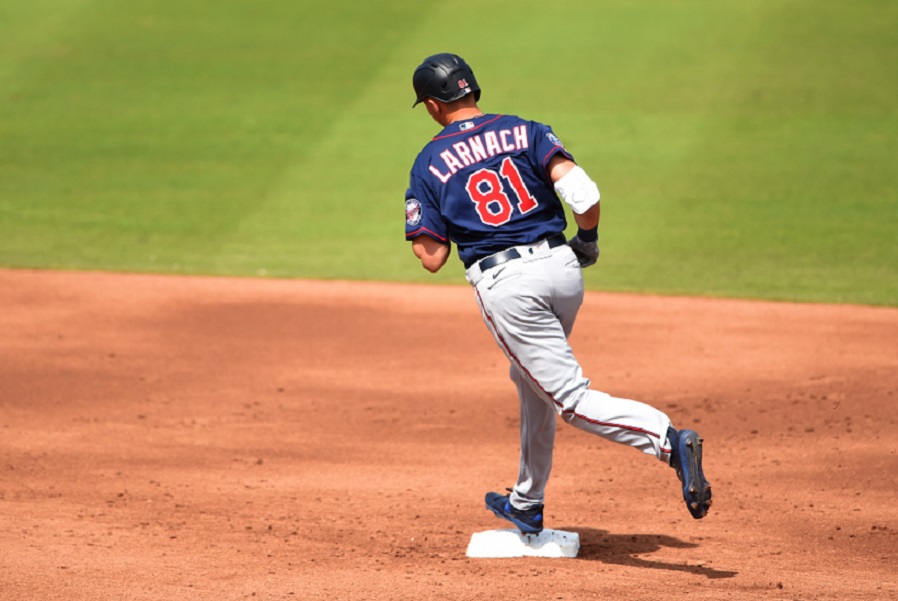 Now that the Twins 2018 Draft Class has had a chance to play their first full season of professional baseball, we are starting to get a clearer picture of how the they are shaping up. While some of these players haven’t had a number of opportunities to show what they can do, the ones that have had the opportunity have really impressed. Let’s take a look at some of the more notable players from this class. Trevor Larnach With their first-round pick, the Twins took soon to be national champion outfielder Trevor Larnach out of Oregon State University. After a strong professional debut in 2018, Larnach began the 2019 season in High-A Fort Myers. In 84 games with the Miracle, Larnach hit .316, with and .842 OPS, both of which were easily league highs among qualified hitters in the very pitcher-friendly Florida State League in 2019. This performance led to Larnach’s call up to AA Pensacola mid-season, where he continued to hit the ball well over the final couple months of the season. This helped Larnach secure the ranking as Twins Daily’s 3rd highest ranked prospect in the Twins farm system. Ryan Jeffers In the second round, the Twins turned some heads when they supposedly reached on UNC Wilmington catcher Ryan Jeffers. Jeffers was thought of by many scouts as a great hitting college catcher, who would have a tough time staying behind the plate as a professional. However, the Twins scouts thought differently, and have since been proven dead right. Not only has Jeffers mashed in his 698 career professional plate appearances, but he has also proven to be more than capable enough to hold his own as a catcher defensively, all of this leading to Jeffers being ranked the 7th best Twins prospect here at Twins Daily. Look for Jeffers to knock on the MLB door in the near future and give the Twins a dynamic duo behind the plate with Jeffers and Mitch Garver. Cole Sands The first pitcher that the Twins took in this draft didn’t come until the fifth round, when they took Florida State right-hander Cole Sands. After not pitching professionally in 2018, Sand made his professional debut at Cedar Rapids in 2019, and quickly moved his way up to make one start at AA Pensacola before the end of the season. Among the 545 pitchers who threw at least 90 innings in affiliated minor league baseball in 2019, Cole Sands’ 2.45 FIP was the 5th lowest. This was due in large part to his tremendous 5.68 strikeout to walk ratio. This is a number that even the great Johan Santana couldn’t top during his time with the Twins. I expect great things from Sands again in 2020, which could vault him way up the Twins prospect ranking leader board by seasons end. Josh Winder The second pitcher that the Twins took in the 2018 MLB draft was Josh Winder out of the Virginia Military Institute. After a solid pro debut in Elizabethton in 2018, Winder was one of the best pitchers in the Midwest League in 2019. In 21 starts for the Cedar Rapids Kernels, Winder tossed 125 2/3 innings to the tune of a 2.65 ERA, which was the fourth lowest mark among Midwest League pitchers with at least 100 innings pitching in 2019. In 164 1/3 combined professional innings, Winder has struck out 160 batters, while allowing just 36 walks and 11 home runs. Chris Williams Taken as a college senior in the eighth round of the 2018 MLB draft, Clemson 1B/C Chris Williams signed with the Twins for just $10,000, which was well below the $162,100 slot value for that pick. However, Williams hasn’t played like just some random-pick-to save-money, as he quickly established himself as a legit power threat at the professional level, belting 26 home runs in just 545 pro plate appearances. While Williams didn’t spend anytime behind the plate in 2018, he almost exclusively caught in 2019. If he can stay behind the plate, he has potential to make a splash, with his rare power behind the plate. Willie Joe Garry Jr. It has been a bit of a slow start from a production standpoint for the Twins ninth-round pick in the 2018 MLB draft, but Willie Joe Garry Jr. did show signs of improvement in 2019, and with his raw athletic ability the ceiling is very high for this young high school prospect out of Mississippi. Seth Stohs did a great piece on Willie Joe Garry Jr. earlier this week, if you want to learn more about this young Twins prospect. Other Notable Prospects - 15th-round pick Kody Funderburk struck out 9.9 batter per nine innings and had a 3.25 FIP in 50 innings pitched for Cedar Rapids in 2019. - 17th-round pick Erik Cha has a 2.21 ERA, with 65 strikeouts and 21 walks in 61 innings pitched out of the bullpen, pitching mostly for the GCL Twins and in Elizabethton. - 18th-round pick Andrew Cabezas has made 31 starts in his two seasons of pro ball, accumulating a 3.31 ERA in 160 1/3 innings pitched. - 19th-round pick Austin Schulfer has made 41 appearances (20 starts) in his two seasons at the professional level. In that time, Schulfer has posted a 3.27 ERA and has struck out an impressive 158 batters in 137 2/3 innings pitched. - 21st-round pick Gabe Snyder blasted 19 home runs for Cedar Rapids in 2019. That was good for second most among all Mid-West league hitters last season. - 31st-round pick Zach Neff pitched 39 innings for Cedar Rapids in 2019, before getting called up to Fort Myers, where he threw another 33 2/3 innings. Neff’s 2.11 FIP for Cedar Rapids was the fifth lowest among the 251 Midwest league pitchers who threw at least 30 innings pitched last season, while his 2.27 FIP for Fort Myers was the 17th lowest among the 178 Florida State League pitchers who threw at least 30 innings in 2019. As you can see, there are a number of good prospects in the Twins farm system that came from that 2018 Draft Class, even though the Twins weren’t blessed with a number of high-end selections. This upcoming season will be a great year to follow these guys, as they are now mostly settled into the professional ranks and are looking to move their way up the Twins minor league system. MORE FROM TWINS DAILY — Latest Twins coverage from our writers — Recent Twins discussion in our forums — Follow Twins Daily via Twitter, Facebook or email — Follow Andrew Thares on Twitter
 -
In the years leading up to the 2019 season, Homer Bailey was one of the worst starting pitchers in Major League Baseball. His name being Homer was almost fitting, as he gave up a lot of those in his final few seasons as a starting pitcher for the Cincinnati Reds. In 2018, the Reds went an almost inconceivably bad 1-19 in the 20 starts Homer Bailey made that season. However, in 2019, Homer Bailey had a surprising bounce back season, that lead the Minnesota Twins to giving him a 1-year, $7-million contract this winter. Image courtesy of © David Dermer-USA TODAY Sports In the years leading up to the 2019 season, Homer Bailey was one of the worst starting pitchers in Major League Baseball. His name being Homer was almost fitting, as he gave up a lot of those in his final few seasons as a starting pitcher for the Cincinnati Reds. In 2018, the Reds went an almost inconceivably bad 1-19 in the 20 starts Homer Bailey made that season. However, in 2019, Homer Bailey had a surprising bounce back season, that lead the Minnesota Twins to giving him a 1-year, $7-million contract this winter. From 2009 to 2014, Homer Bailey was one of the more reliable starting pitchers in Major League Baseball on a yearly basis. Over that this, Bailey posted a 3.95 ERA (3.85 FIP) with a 7.7 K/9 and a 2.7 BB/9 across 917 innings pitched. This helped Bailey get a 6-year, $105-million contract extension from the Reds back in February of 2014. Ultimately, this went down as one of the worst contracts in recent history, as Bailey posted a horrendous 6.25 ERA (5.13 FIP) with a 6.7 K/9 and a 3.3 BB/9 over 231 and 2/3 innings pitched from 2015 to 2018. Over that timeframe, Bailey’s 6.25 ERA was easily the worst mark in Major League Baseball (min 200 IP). Given how bad he pitched in the four previous seasons, Homer Bailey’s 2019 was probably a career saving bounce back season. While the 4.57 ERA that Bailey posted in 2019 is not exactly popping off the charts, that is more than good enough to be a solid number five starter in most MLB starting rotations. For a quick comparison, Martin Perez had a 5.12 ERA as essentially the Twins fifth starter last season. So, if Bailey can replicate his 2019 performance in 2020, the Twins will be getting more than their money’s worth out of him. Now, it is easy to assume that 2019 was more of a fluke season, then an actual sign that Homer Bailey actually turned his career around, and I myself fell into that notion when the Twins first signed him. However, after doing some digging, there is reason for optimism that Bailey could repeat his performance again this season. However, simply thinking that Bailey will be able to do this again, given his history leading up to 2019, without any supporting evidence would be a fool’s errand. Fortunately, it appears as though the Twins have done their homework and are not just drinking the Kool-Aid on Homer Bailey. From a statistical standpoint, there are plenty of underlying indicators that Homer Bailey’s 4.57 ERA in 2019 was a true reflection of him as a pitcher, and not just a one-year fluke where he was lucky to have a lower ERA than he deserved (i.e. Ervin Santana in 2017). One of the most encouraging things to look at is Bailey’s improved strikeout rate, which was up to 21.4 percent. That was a big jump up from where Bailey had been at in previous years and was the highest strikeout rate he had posted in any season with at least 25 innings pitched since 2013 (which was the best year of Homer Bailey’s career). This, coupled with the fact that Homer Bailey kept his walk rate and home run rate in check, helped him post a respectable 4.11 FIP in 2019. When diving into the Statcast metrics, they tell more of the same story. In 2019, he held opposing hitters to a .267 expected AVG, a .419 expected SLG and a .318 expected wOBA. All three of those numbers were easily the best Homer Bailey has posted since the Statcast era began in 2015, and were only slightly behind the numbers that Jose Berrios, Jake Odorizzi and Michael Pineda put up last season. While numbers can be great, it is even better to have a tangible reason to back up the idea that Homer Bailey is actually an improved pitcher. Often times these tangible factors can be hard to identify, as they are hidden in a cluster of a number of not so obvious reasons, that had a cumulative effect on making a pitcher better. However, for Homer Bailey, there does seem to be one strong indicator that explains a lot of his improvement, and that is the adaptation of his splitter. For much of his career, Homer Bailey has relied on a balanced four-pitch mix of a four-seam fastball, a sinker, a changeup and a slider. However, in 2017, Bailey decided to all but ditch his changeup in exchange for a splitter. For the first year and a half of throwing the splitter, Homer Bailey was still clearly getting used to the new pitch that he had never thrown before in his career. However, after returning from nearly a two-month long stint on the DL for right knee inflammation, Homer Bailey found his form with the splitter which instantly became his best pitch. In 2019, opposing hitters accumulated just a 0.214 wOBA against Homer Bailey’s splitter. Among the 106 MLB pitchers who threw at least 500 changeups or splitters last season, that was the 12th lowest mark. So, we are talking about Homer Bailey developing a borderline elite level off-speed pitch this late in his career. A big factor in this was the high 38.2 percent whiff rate Homer Bailey had on his splitter. For reference, between Jake Odorizzi and Jose Berrios, they combined to have just one individual pitch with a whiff rate above 30 percent in 2019, and that was Jake Odorizzi’s fastball, which had a whiff rate of 30.8 percent. It is apparent that Homer Bailey noticed this too, as he drastically ramped up the use of his splitter in 2019, this time at the expense of his sinker, which was easily the worst pitch for Bailey throughout his entire career. He also started throwing more four-seam fastballs as well, and as a result Homer Bailey threw either a four-seamer or splitter on 75 percent of his pitches in 2019, with the other 25 percent coming from a combination of sliders and curveballs. It wouldn’t be surprising to see Homer Bailey continue to increase the usage of his splitter in 2020, to take full advantage of this gem of a pitch he found late in his career. If so, it wouldn’t be all that surprising if Homer Bailey has another strong season, and puts up an ERA in the low-to-mid 4s, which I’m sure all Twins fans would take out of the backend of the rotation. View full article
-
 From 2009 to 2014, Homer Bailey was one of the more reliable starting pitchers in Major League Baseball on a yearly basis. Over that this, Bailey posted a 3.95 ERA (3.85 FIP) with a 7.7 K/9 and a 2.7 BB/9 across 917 innings pitched. This helped Bailey get a 6-year, $105-million contract extension from the Reds back in February of 2014. Ultimately, this went down as one of the worst contracts in recent history, as Bailey posted a horrendous 6.25 ERA (5.13 FIP) with a 6.7 K/9 and a 3.3 BB/9 over 231 and 2/3 innings pitched from 2015 to 2018. Over that timeframe, Bailey’s 6.25 ERA was easily the worst mark in Major League Baseball (min 200 IP). Given how bad he pitched in the four previous seasons, Homer Bailey’s 2019 was probably a career saving bounce back season. While the 4.57 ERA that Bailey posted in 2019 is not exactly popping off the charts, that is more than good enough to be a solid number five starter in most MLB starting rotations. For a quick comparison, Martin Perez had a 5.12 ERA as essentially the Twins fifth starter last season. So, if Bailey can replicate his 2019 performance in 2020, the Twins will be getting more than their money’s worth out of him. Now, it is easy to assume that 2019 was more of a fluke season, then an actual sign that Homer Bailey actually turned his career around, and I myself fell into that notion when the Twins first signed him. However, after doing some digging, there is reason for optimism that Bailey could repeat his performance again this season. However, simply thinking that Bailey will be able to do this again, given his history leading up to 2019, without any supporting evidence would be a fool’s errand. Fortunately, it appears as though the Twins have done their homework and are not just drinking the Kool-Aid on Homer Bailey. From a statistical standpoint, there are plenty of underlying indicators that Homer Bailey’s 4.57 ERA in 2019 was a true reflection of him as a pitcher, and not just a one-year fluke where he was lucky to have a lower ERA than he deserved (i.e. Ervin Santana in 2017). One of the most encouraging things to look at is Bailey’s improved strikeout rate, which was up to 21.4 percent. That was a big jump up from where Bailey had been at in previous years and was the highest strikeout rate he had posted in any season with at least 25 innings pitched since 2013 (which was the best year of Homer Bailey’s career). This, coupled with the fact that Homer Bailey kept his walk rate and home run rate in check, helped him post a respectable 4.11 FIP in 2019. When diving into the Statcast metrics, they tell more of the same story. In 2019, he held opposing hitters to a .267 expected AVG, a .419 expected SLG and a .318 expected wOBA. All three of those numbers were easily the best Homer Bailey has posted since the Statcast era began in 2015, and were only slightly behind the numbers that Jose Berrios, Jake Odorizzi and Michael Pineda put up last season. While numbers can be great, it is even better to have a tangible reason to back up the idea that Homer Bailey is actually an improved pitcher. Often times these tangible factors can be hard to identify, as they are hidden in a cluster of a number of not so obvious reasons, that had a cumulative effect on making a pitcher better. However, for Homer Bailey, there does seem to be one strong indicator that explains a lot of his improvement, and that is the adaptation of his splitter. For much of his career, Homer Bailey has relied on a balanced four-pitch mix of a four-seam fastball, a sinker, a changeup and a slider. However, in 2017, Bailey decided to all but ditch his changeup in exchange for a splitter. For the first year and a half of throwing the splitter, Homer Bailey was still clearly getting used to the new pitch that he had never thrown before in his career. However, after returning from nearly a two-month long stint on the DL for right knee inflammation, Homer Bailey found his form with the splitter which instantly became his best pitch. In 2019, opposing hitters accumulated just a 0.214 wOBA against Homer Bailey’s splitter. Among the 106 MLB pitchers who threw at least 500 changeups or splitters last season, that was the 12th lowest mark. So, we are talking about Homer Bailey developing a borderline elite level off-speed pitch this late in his career. A big factor in this was the high 38.2 percent whiff rate Homer Bailey had on his splitter. For reference, between Jake Odorizzi and Jose Berrios, they combined to have just one individual pitch with a whiff rate above 30 percent in 2019, and that was Jake Odorizzi’s fastball, which had a whiff rate of 30.8 percent. It is apparent that Homer Bailey noticed this too, as he drastically ramped up the use of his splitter in 2019, this time at the expense of his sinker, which was easily the worst pitch for Bailey throughout his entire career. He also started throwing more four-seam fastballs as well, and as a result Homer Bailey threw either a four-seamer or splitter on 75 percent of his pitches in 2019, with the other 25 percent coming from a combination of sliders and curveballs. It wouldn’t be surprising to see Homer Bailey continue to increase the usage of his splitter in 2020, to take full advantage of this gem of a pitch he found late in his career. If so, it wouldn’t be all that surprising if Homer Bailey has another strong season, and puts up an ERA in the low-to-mid 4s, which I’m sure all Twins fans would take out of the backend of the rotation.
 -
Jake Cave is Primed to Break Out in 2020
Andrew Thares replied to Andrew Thares's topic in Twins Daily Front Page News
How do Twins fans Way under-value Eddie Rosario? He has a career 105 wRC+, which is okay but not great, and now that Eddie's defense has completely fallen off a cliff he just isn't that good. I hope he can prove me wrong, but right now, Rosario is a below average MLB outfielder.- 65 replies
-
- 3
-
-
- jake cave
- minnesota twins
- (and 2 more)
-
Jake Cave is Primed to Break Out in 2020
Andrew Thares posted a topic in Twins Daily Front Page News
With a healthy Byron Buxton, the Minnesota Twins have unquestionably one of the best outfields in major league baseball. Add in super utility man Marwin Gonzalez last season, and the opportunities were limited for Jake Cave to show what he could do at the MLB level in 2019. While those same barriers exist for Cave in 2020, there are, this year, cracks in that armor that could give Cave the path to show how good of a player he is. Image courtesy of © Ken Blaze-USA TODAY Sports With a healthy Byron Buxton, the Minnesota Twins have unquestionably one of the best outfields in major league baseball. Add in super utility man Marwin Gonzalez last season, and the opportunities were limited for Jake Cave to show what he could do at the MLB level in 2019. While those same barriers exist for Cave in 2020, there are, this year, cracks in that armor that could give Cave the path to show how good of a player he is. Jake Cave burst onto the scene in May of 2018, when he belted a home run in his MLB debut. Since then, he has done an excellent job as the Minnesota Twins fourth outfielder, hitting for a .262/.329/.466 (.795) slash line, with a 111 wRC+ in 537 plate appearances across both seasons. Additionally, Cave has provided solid defense in the outfield, finishing with a catch probability added of 0 percent in 2018, and 2 percent in 2019. For reference, among outfielders with at least 50 opportunities in those seasons, Cave finished 74th out of 174 in 2018, and 52nd out of 184 in 2019. It is clear that Jake Cave has been an average, to slightly above average, outfielder in his first two seasons in the majors. However, there are plenty of signs pointing towards Cave elevating his game to a higher level in 2020. The first factor that has Cave trending in the right direction is his age and experience. 2020 will be Cave’s age-27 season, which means he will be entering into his prime years starting this season. Factor that in with roughly a full season’s worth of MLB plate appearances under his belt, and Cave should have his feet under him. In addition to entering his prime years, there are also statistical factors that suggest that a Jake Cave breakout is on the horizon. One of the biggest improvements to his game that Jake Cave made from year one to year two, was his ability to recognize pitches. In 2018, Jake Cave struggled with this a bit, as he swung at 35.9 percent of pitches outside of the strike zone, which ranked in just the 22nd percentile among all MLB hitters with at least 300 plate appearances that season. Jump ahead to 2019, and Cave cut that rate down to a much more respectable 31.7 percent. At the same time, he also made a drastic improvement at swinging at pitches inside the strike zone, as his swing percentage on those pitches increased from 65.8 percent in 2018, up to 72.9 percent in 2019. This all helped Cave’s on-base percentage improve from a mere .313 in 2018, to a strong .351 mark in 2019. More great signs that point toward further success for Jake Cave are his Statcast metrics. Per Baseball Savant, Jake Cave collected an expected wOBA (xwOBA) of .360 in 2019. This ranked 55th out of the 360 MLB hitters who had at least 200 plate appearances last season. Among Twins players, Cave had the sixth highest xwOBA, and finished higher than each of the other outfielders on the team. A big part of that is due to his ability to hit the ball hard. Last season, Cave finished with an average exit velocity of 90.5 MPH and a hard-hit rate (batted ball events at or above 95 MPH) of 43.8 percent. Those two numbers finished in the 82nd and 84th percentiles, respectively, among all MLB hitters with at least 50 batted ball events in 2019. With as hard as Jake Cave hits the ball, it is easy to wonder why his power numbers aren’t better than they are, and why they dipped slightly in 2019. Perhaps the best explanation for this is the slight drop in average launch angle he had from 10.0 degrees in 2018, down to 7.4 degrees in 2019. If he can make a slight adjustment with his swing to get that number up to a more optimal number of roughly 12 degrees or higher, without seeing a dip in his hard-hit rate, we could his a huge increase in his power numbers, similar to what happened to Max Kepler in 2019. While most Twins fans might not realize it, Jake Cave is already more than good enough to be a full-time starting outfielder at the major league level. If he is able to take the leap forward in 2020 that he is more than capable of, I wouldn’t be surprised if Cave starts getting some playing time over Eddie Rosario later in the season, especially in games where either Jake Odorizzi or Michael Pineda (both heavy flyball pitchers) are starting, and the effects of Jake Cave being a far better defensive outfielder than Eddie Rosario are more pronounced. MORE FROM TWINS DAILY — Latest Twins coverage from our writers — Recent Twins discussion in our forums — Follow Twins Daily via Twitter, Facebook or email — Follow Andrew Thares on Twitter here View full article -
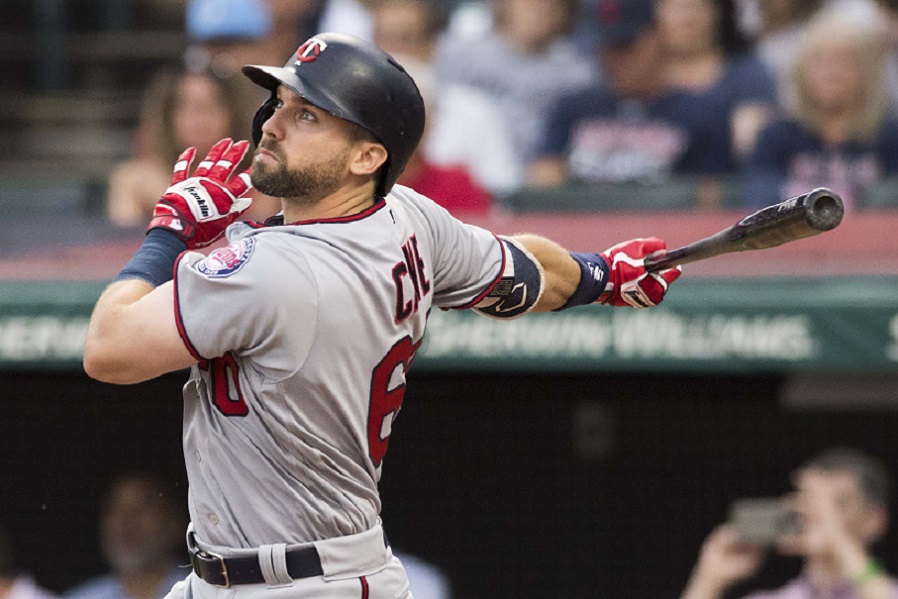 Jake Cave burst onto the scene in May of 2018, when he belted a home run in his MLB debut. Since then, he has done an excellent job as the Minnesota Twins fourth outfielder, hitting for a .262/.329/.466 (.795) slash line, with a 111 wRC+ in 537 plate appearances across both seasons. Additionally, Cave has provided solid defense in the outfield, finishing with a catch probability added of 0 percent in 2018, and 2 percent in 2019. For reference, among outfielders with at least 50 opportunities in those seasons, Cave finished 74th out of 174 in 2018, and 52nd out of 184 in 2019. It is clear that Jake Cave has been an average, to slightly above average, outfielder in his first two seasons in the majors. However, there are plenty of signs pointing towards Cave elevating his game to a higher level in 2020. The first factor that has Cave trending in the right direction is his age and experience. 2020 will be Cave’s age-27 season, which means he will be entering into his prime years starting this season. Factor that in with roughly a full season’s worth of MLB plate appearances under his belt, and Cave should have his feet under him. In addition to entering his prime years, there are also statistical factors that suggest that a Jake Cave breakout is on the horizon. One of the biggest improvements to his game that Jake Cave made from year one to year two, was his ability to recognize pitches. In 2018, Jake Cave struggled with this a bit, as he swung at 35.9 percent of pitches outside of the strike zone, which ranked in just the 22nd percentile among all MLB hitters with at least 300 plate appearances that season. Jump ahead to 2019, and Cave cut that rate down to a much more respectable 31.7 percent. At the same time, he also made a drastic improvement at swinging at pitches inside the strike zone, as his swing percentage on those pitches increased from 65.8 percent in 2018, up to 72.9 percent in 2019. This all helped Cave’s on-base percentage improve from a mere .313 in 2018, to a strong .351 mark in 2019. More great signs that point toward further success for Jake Cave are his Statcast metrics. Per Baseball Savant, Jake Cave collected an expected wOBA (xwOBA) of .360 in 2019. This ranked 55th out of the 360 MLB hitters who had at least 200 plate appearances last season. Among Twins players, Cave had the sixth highest xwOBA, and finished higher than each of the other outfielders on the team. A big part of that is due to his ability to hit the ball hard. Last season, Cave finished with an average exit velocity of 90.5 MPH and a hard-hit rate (batted ball events at or above 95 MPH) of 43.8 percent. Those two numbers finished in the 82nd and 84th percentiles, respectively, among all MLB hitters with at least 50 batted ball events in 2019. With as hard as Jake Cave hits the ball, it is easy to wonder why his power numbers aren’t better than they are, and why they dipped slightly in 2019. Perhaps the best explanation for this is the slight drop in average launch angle he had from 10.0 degrees in 2018, down to 7.4 degrees in 2019. If he can make a slight adjustment with his swing to get that number up to a more optimal number of roughly 12 degrees or higher, without seeing a dip in his hard-hit rate, we could his a huge increase in his power numbers, similar to what happened to Max Kepler in 2019. While most Twins fans might not realize it, Jake Cave is already more than good enough to be a full-time starting outfielder at the major league level. If he is able to take the leap forward in 2020 that he is more than capable of, I wouldn’t be surprised if Cave starts getting some playing time over Eddie Rosario later in the season, especially in games where either Jake Odorizzi or Michael Pineda (both heavy flyball pitchers) are starting, and the effects of Jake Cave being a far better defensive outfielder than Eddie Rosario are more pronounced. MORE FROM TWINS DAILY — Latest Twins coverage from our writers — Recent Twins discussion in our forums — Follow Twins Daily via Twitter, Facebook or email — Follow Andrew Thares on Twitter here

