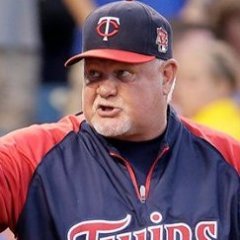
The baseball world lost a longtime coach and former Minnesota Twins pitcher Wednesday as Don Cooper passed away at the age of 70.
While Cooper became best known for his work with the Chicago White Sox, his playing career included a brief stop in Minnesota. The Twins selected Cooper from the New York Yankees organization in the 1980 Rule 5 Draft, giving the right-hander an opportunity to reach the majors after working his way through the Yankees' minor-league system.
Cooper made his MLB debut with the Twins in 1981 and spent parts of two seasons with the organization. Across 70 innings for Minnesota in 1981 and 1982, he posted a 5.14 ERA and 1.69 WHIP while striking out 38 batters and walking 43. His time with the Twins represented the largest portion of his big-league playing career.
Cooper also appeared for the Toronto Blue Jays and New York Yankees. He pitched 5 1/3 innings for Toronto in 1983 and another 10 innings for New York in 1985. Cooper remained in professional baseball through the 1987 season, spending time in the minor leagues with the Blue Jays and Baltimore Orioles before eventually moving into coaching.
That transition ultimately produced a remarkable second career. Cooper joined the White Sox organization in 1988 and remained there for 33 seasons. He became Chicago's major-league pitching coach in 2002 and held that position for 18 full seasons.
Chicago's championship run was particularly memorable because the White Sox pitching staff threw four consecutive complete games during the postseason, becoming the first team to accomplish that feat since the 1928 Yankees.
The White Sox recognized Cooper's lengthy contribution to the organization following his passing.
"Don Cooper spent 33 seasons as a coach in the White Sox organization from 1988-2020, including 18 full seasons as the major-league pitching coach. Cooper served as the pitching coach for the 2005 World Series champion club, which became the first team since the 1928 Yankees to toss four consecutive complete games in a single postseason," the team said. "Forever in our thoughts."
For Twins fans, Cooper's legacy is a reminder of how many different paths can emerge from a short stint in Minnesota. His playing career with the Twins lasted only two seasons, but his impact on baseball continued for decades after he left the organization.
The Minnesota Twins are making another change behind the scenes. The organization has parted ways with longtime scout and former amateur scouting director Deron Johnson, according to Bobby Nightengale Jr. of the Star Tribune. The Twins eliminated Johnson's senior advisor position, bringing an end to more than three decades with the organization.
Johnson originally joined Minnesota in January 1994 as an area scout covering Northern California. He eventually moved into a larger role as the club's West Coast supervisor before being promoted to scouting director in September 2007.
His tenure leading the amateur scouting department included nine drafts and several notable selections. The first draft under his direction produced Aaron Hicks with the 14th overall pick in 2008. Johnson was also at the helm when Minnesota selected Byron Buxton second overall in 2012.
Other first-round selections made while Johnson served as scouting director included Kohl Stewart, Nick Gordon and Tyler Jay. Not every pick developed into a long-term contributor, but Johnson's fingerprints were on a significant portion of the organization's amateur talent pipeline during that era.
The Twins moved Johnson into a senior advisory role following the 2016 season. Rather than stepping away from scouting, he continued evaluating talent and contributed to professional, international and minor-league scouting efforts. Now, that position has been eliminated.
The timing is notable as Minnesota continues making changes throughout its baseball operations department. The Twins entered the final week of the 2026 season already eliminated from postseason contention, with the organization beginning to look toward what comes next.
Johnson's departure also comes on the same day Minnesota selected the contract of Aaron Sabato, the former first-round pick from the 2020 draft, allowing him to make his major-league debut.
After 32 years with the Twins and a career that included nearly every level of the scouting department, Johnson's departure represents the end of a significant chapter in Minnesota's front-office history.
The Minnesota Twins are running out the final days of their 2026 season, and Trevor Larnach likely won't be part of them. Minnesota placed Larnach on the 10-day injured list Friday with a left wrist sprain. The move was made retroactive to September 15. To take his place on the roster, the Twins recalled outfielder Alan Roden from Triple-A St. Paul.
Technically, Larnach could return for Minnesota's final series against the Texas Rangers at Target Field. Realistically, there isn't much reason to rush him back. The Twins are out of the playoff picture, and Larnach would be better served using the final days of the season to allow his wrist to recover rather than potentially making the injury worse.
Larnach appeared in 122 games this season, hitting .269/.352/.436 (.788) with 13 home runs, 23 doubles, and a 121 OPS+. His opportunities were heavily tilted toward right-handed pitching, with all but 55 of his plate appearances coming against righties.
That split could be an important consideration heading into the offseason. Larnach posted an .819 OPS against right-handed pitchers but just a .572 OPS against lefties.
The Twins also have an offseason decision to make. Larnach is under team control through arbitration next season and is in line for a raise from his $4.475 million salary. At the same time, Minnesota has several younger outfielders who could make his roster spot less secure. Luke Keaschall, Walker Jenkins, and Emmanuel Rodriguez could all factor into the team's plans.
That makes these final days particularly important for Roden. The 26-year-old has 79 big-league plate appearances this season, hitting .254/.333/.313 (.647) with four doubles. His Triple-A season was interrupted by a small labrum tear in his right shoulder, but he has produced when healthy. In 48 games with the Saints, Roden has posted an .853 OPS with nine home runs and nine doubles. Now, he'll have a handful of games to remind the Twins why he belongs in their plans.
Larnach's injury isn't necessarily a reflection of where he stands with the organization, but the timing gives Minnesota another opportunity to evaluate its crowded outfield. The Twins have several decisions coming this winter, and every at-bat from Roden could matter when those decisions arrive.
Whether or not he returns this season, the Minnesota Twins know they have something good in Kaelen Culpepper.
The rookie shortstop was placed on the 10-day injured list Wednesday by the Twins due to a strained left hamstring. Fellow rookie shortstop Ben Ross was called up from Triple-A St. Paul.
Culpepper left Tuesday's 8-1 loss to the New York Yankees in the sixth inning after trying to beat out a double-play grounder and feeling something in his left hamstring. Twins Daily's No. 3 prospect was slashing .275/.333/.404 with three homers and 11 RBIs in his first 31 games. Manager Derek Shelton said the Twins would like to have Culpepper back for the final two games of the regular season, but also know the rookie's season could be over.
Ross came up when rosters expanded Sept. 1 (he was to be Rule 5-eligible this offseason anyways). He only played in three games, going 0-for-4. Ross was slashing .273/.379/.500 with 20 homers and 71 RBIs in the minors this season.
The Twins have spent much of September trying to keep their lineup intact, but another injury concern surfaced Tuesday night. Kaelen Culpepper was forced to leave Minnesota’s game after the sixth inning because of left hamstring tightness. The timing is particularly frustrating for a young player who had just returned to the lineup after missing two games because of a hit-by-pitch.
Culpepper appeared to feel the issue while trying to beat out a potential double-play ball. After being ruled out at first base, he reached toward the back of his left leg before eventually leaving the game. Ryan Kreidler took over at shortstop for the seventh inning.
Manager Derek Shelton said after the game that Culpepper noticed the problem almost immediately.
“What he told me was that he felt it the first move out of the box,” said Shelton. “So we’ll get an MRI in the morning and see where he’s at. Honestly, it sucks. Just because of the fact that we’re late in the schedule and how well he’s played and what he’s done.”
The Twins should have a better idea of the severity after Culpepper undergoes an MRI. Until then, the team will have to wait to determine whether this is something that could cost him additional time or simply require some rest.
This is another frustrating development for Culpepper, who has been an important part of Minnesota’s lineup during the second half. The former first-round pick has been given an extended opportunity at the major-league level, and his recent performance has helped strengthen his case for being the club’s Opening Day shortstop next season.
Culpepper is hitting .275/.333/.404 (.737) with five doubles, three home runs, and a 107 OPS+. Defensively, he’s also been an upgrade over other options for the Twins. He has a 1 OAA and his 88.2 mph arm strength ranks in the 75th percentile.
The injury also comes at an unfortunate time for the Twins. With only a little more than a week remaining in the regular season, there isn't much calendar left for injured players to work their way back. Culpepper already spent time recovering from Saturday’s hit-by-pitch against Cleveland. Now, Minnesota will hope Tuesday’s hamstring issue is a short-term setback rather than another extended absence.
The Minnesota Twins entered Monday’s series opener against the New York Yankees with an increasingly thin lineup. With roughly two weeks left in the regular season, Kaelen Culpepper, Royce Lewis, and Trevor Larnach were all unavailable, leaving Minnesota without several regular contributors.
Larnach’s absence could be the most concerning of the group. The outfielder underwent an MRI on his left wrist Monday after dealing with soreness for several days, leaving his availability for the remainder of the series uncertain.
Manager Derek Shelton explained that Larnach’s wrist became more problematic after a slide during Sunday’s game.
“He’s dealing with some left wrist soreness,” Shelton said, “so we sent him for an MRI. He has felt it for a few days, and then he felt it sliding yesterday. And then when he came in today, tried to go through his routine and just didn’t go kind of the way he wanted it to. So we’re just going to get it looked at.”
The Twins turned to Emmanuel Rodriguez in left field for Monday’s game. If Larnach needs to miss significant time, Rodriguez would appear to be one of Minnesota’s best options for taking on additional opportunities down the stretch.
That would be an important development for Rodriguez, who is out of minor league options for next season. More consistent playing time could give the young outfielder an opportunity to establish himself heading into the offseason.
Larnach, meanwhile, has put together one of his strongest seasons since reaching the majors. The 29-year-old entered Monday hitting .269/.352/.436 while serving as a regular presence in left field. His 2.2 fWAR and 123 wRC+ are both career bests.
For a Twins team already dealing with multiple injuries and limited lineup depth, losing Larnach for an extended period would be another difficult blow. The MRI should provide a clearer picture of the injury and how Minnesota will have to manage his workload over the final two weeks of the season.
The Minnesota Twins are once again putting Pablo López forward for one of Major League Baseball's most prestigious honors. The club announced Monday morning that López has been selected as Minnesota's nominee for the Roberto Clemente Award. It marks the third consecutive season the Twins have nominated López for the award and the fourth time overall that he has been recognized by the organization for his work in the community.
López has not been able to contribute on the mound for Minnesota this season, but his absence from the rotation has not kept him from making an impact elsewhere. His work with teammates, children and families throughout the Twin Cities has continued despite spending the year rehabbing from injury.
"Like Roberto Clemente before him, Pablo López exemplifies humanity, compassion, and the best of our game," Twins General Manager Jeremy Zoll said in a statement.
"Even in a year when injury prevented him from pitching, Pablo's commitment to others, from teammates to those less fortunate, never wavered. His integrity, generosity, and leadership make our clubhouse, our organization, and our communities better every day."
The Roberto Clemente Award is given annually to the player who best represents the game through community involvement, philanthropy and character both on and off the field. Each of MLB's 30 clubs selects one nominee, with the league's winner announced during the World Series. The Twins have a recent history of having their nominees recognized, with Nelson Cruz winning the award in 2021.
For López, much of his community work has centered around children. His connection to children's hospitals has a particularly personal meaning because both of his parents were doctors before their passing.
Each September, López continues a tradition of visiting patients at Children's Minnesota and M Health Fairview as part of Childhood Cancer Awareness Month. His work with young patients has remained a priority even during a season in which he has been unable to pitch.
López has also continued working with the Twins Community Fund and its youth programs. He has participated in the Twins High School Leadership Academy, speaking with students about leadership and his experiences. He has also helped put baseball equipment into the hands of Minneapolis children and participated in clinics for young athletes.
His community work extends beyond the Twin Cities as well. López has remained closely connected to his Venezuelan heritage and has used his platform to support causes important to his home country.
Earlier this year, López participated in a recess takeover at a Minneapolis elementary school, connecting with Venezuelan students while celebrating Día del Niño. After devastating earthquakes struck Venezuela in June, he used his social media presence to raise awareness and funds for relief efforts. He also directed his Twins Community Fund charitable giving toward three organizations assisting with recovery efforts.
That work helps explain why López continues to be recognized for the Roberto Clemente Award despite not throwing a single pitch for the Twins this season. The right-hander's 2026 season has been defined by rehabilitation rather than starts, but his presence around the organization has remained significant. López has continued to lead by example, support his teammates and give his time to people throughout the community.
Now, Twins fans have an opportunity to help recognize that work. Voting for the Roberto Clemente Award is open through September 27 at 11:59 p.m. Fans can cast their votes for López through MLB's website, with the eventual winner set to receive the award during the World Series.
Royce Lewis’ difficult 2026 season took another frustrating turn on Sunday. The Minnesota Twins announced that Lewis exited Sunday’s 9-2 loss to the Cleveland Guardians after five innings because of left shoulder soreness. Lewis made a diving play to record the final out of the fourth inning at first base, and it appears that play caused the issue to flare up again.
Lewis remained in the game for the bottom of the fourth, where he flew out to right field in his final at-bat. Victor Caratini replaced Lewis at first base to begin the sixth inning.
Following the game, Twins manager Derek Shelton said Lewis aggravated the soreness during the defensive play that ended the fourth inning.
“Two pitches before he had the F9, I think he kind of tweaked it a little bit again,” Shelton said. “He’s day to day, and we’ll kind of see how he is tomorrow.”
The injury is another concern for a player who has struggled to find consistency throughout the 2026 season. Lewis has appeared in 114 games for Minnesota, hitting .230/.297/.391 (.6880 with 14 home runs and 53 RBI.
It has been a particularly challenging year for Lewis after the Twins gave him a reset in the minor leagues earlier this season. Minnesota sent Lewis to Triple-A in an effort to get him regular at-bats and allow him to work through some of the issues that had plagued him at the major-league level. The reset provided some reason for optimism, but Lewis has struggled to maintain any momentum since returning to Minnesota.
His recent stretch has been especially difficult. Lewis has hit just one home run since August 7, and over his last 131 plate appearances, he has slashed .228/.267/.317 for a .584 OPS. He has struck out 34 times during that span while drawing only seven walks.
Those numbers help put Sunday's injury into a larger context. Lewis was already trying to find his footing at the plate, and now the Twins will have to wait and see whether his shoulder soreness forces him to miss additional time.
For a player Minnesota once viewed as a potential cornerstone of its lineup, the 2026 season has been filled with more questions than answers. The Twins will hope Sunday's issue is minor and that Lewis can get back on the field quickly. For now, though, Lewis is officially day-to-day.
Kaelen Culpepper had a scary moment in what was an exciting inning for young Twins players. Emmanuel Rodriguez had homered in his first big-league at-bat earlier in the frame. Then Culpepper was hit by a pitch. Guardians reliever Franco Aleman fired a 95.3 mph fastball that struck Culpepper in the upper back and shoulder area. The right-handed hitter immediately went to the ground in pain, creating an understandably concerning scene for the Twins.
Culpepper eventually got back to his feet and began making his way toward first base under his own power. He made it roughly halfway down the line before stopping. The Twins training staff attended to him before the club removed him from the game. Ryan Kreidler entered as a pinch-runner for Culpepper and took over at shortstop.
Fortunately, the initial testing provided some good news. The Twins announced that Culpepper suffered a right shoulder contusion. X-rays were negative for a fracture, and the rookie is considered day to day. That designation should provide some relief, especially considering the timing of the injury. Culpepper was also hit by a pitch during Friday’s loss to Cleveland, making Saturday’s incident his second consecutive game taking a pitch.
Culpepper has quickly established himself as an important part of the Twins’ future since making his Major League debut on August 7. He is hitting .286 across his first 30 games and has provided the club with another young player capable of handling a premium defensive position.
The Twins have spent recent weeks of this season looking toward the future, and Culpepper represents an important part of that future. His development over the final weeks of the season can help Minnesota determine how he fits into the organization’s plans moving forward.
For now, though, the biggest concern is simply making sure Culpepper is healthy. The initial diagnosis is encouraging. A shoulder contusion can still require some time away, particularly for a player who needs to throw across the diamond every day, but the absence of a fracture is the news everyone in Twins Territory wanted to hear.
After the excitement surrounding Rodriguez’s first career homer, the Twins quickly went from celebration to concern. Thankfully, Saturday’s scare appears to be just that: a scare.
The Minnesota Twins are getting a useful piece of their roster back at an important time of the season. The Twins activated Austin Martin from the 10-day injured list Thursday afternoon, putting the versatile outfielder back in the lineup after he missed nearly a month with a left hamstring strain.
Martin's last appearance came on August 16, when he injured the hamstring trying to track down a fly ball near the left-field line. The Twins appear satisfied that he is ready to return after a brief rehab assignment with Triple-A St. Paul.
Martin appeared in two games for the Saints earlier this week, going 3-for-8 with a triple and three RBIs. Rehab statistics don't carry much weight when evaluating a player, but seeing Martin run the bases and play in games without an apparent setback was an important step following a hamstring injury.
Now, the Twins need to figure out how to use him. Martin isn't going to transform the Minnesota offense by himself. He is hitting .241 with three home runs, 21 RBIs and a .686 OPS, good for a 95 OPS+, across 110 games this season.
Finding Martin At-Bats
The Twins already have a crowded outfield, which means bringing Martin back creates another roster puzzle for Shelton. One potential solution is splitting time between Martin and Trevor Larnach. Larnach has been mired in an extended slump that dates back roughly a month, making it difficult to justify running him out there every day regardless of the matchup.
Martin's return gives Shelton the ability to mix and match. That doesn't mean Martin needs to become an everyday player. His defensive versatility allows him to move around the outfield, and his ability to handle multiple spots gives the Twins flexibility from one game to the next.
At this point in the season, that flexibility matters. Martin may not be the answer to all of those problems, but getting him healthy gives Minnesota another competent option and lengthens the lineup. The hope is that Martin can find a rhythm quickly and provide a spark over the final weeks.
Gonzalez Heads Back to St. Paul
To make room for Martin, the Twins optioned outfielder Gabriel Gonzalez to Triple-A St. Paul. Gonzalez appeared in seven games with Minnesota this season but received only eight at-bats. He went 2-for-8, with his other plate appearance resulting in a hit by pitch.
That's hardly enough time to make a meaningful evaluation. Sending Gonzalez back to St. Paul makes sense if the Twins aren't going to give him regular playing time. Sitting on the bench at the major-league level doesn't do much for a young player who needs consistent at-bats.
Gonzalez remains an interesting piece for the Twins moving forward. He could potentially compete for a fourth-outfielder role next season, or find himself in the mix for a larger role if injuries or poor performance create an opening. But the Twins need to see more from him before making that decision. The final games of the season should give Gonzalez an opportunity to play regularly and show the organization what he can do. Strong performance could strengthen his case for a role in Minnesota.
For now, though, the focus returns to Martin. The Twins have another versatile defender, another left-field option and another bat capable of moving around the lineup. Martin may not be a star, but players who can do a little bit of everything become especially valuable when a team is trying to navigate the final stretch of a long season.
Getting him healthy was the first step. Now Shelton needs to find a way to put him to work.
On Monday, the Twins returned Joe Ryan from his rehab assignment and reinstated him from the 15-day injured list, officially putting one of their most important starting pitchers back on the active roster. To make room, Minnesota optioned right-handed reliever Garrett Acton to Triple-A St. Paul.
Ryan's return comes at a time when the Twins don't have much left to play for in the standings, but there is still plenty of value in getting their All-Star right-hander back on the mound before the season comes to an end.
Ryan completed a three-inning rehab start for St. Paul on Tuesday night in Omaha. He threw 42 pitches, with 29 finding the strike zone. He also threw roughly 10 additional pitches in the bullpen after completing his scheduled work. That was enough for the Twins to feel comfortable moving forward.
Ryan also threw a bullpen session over the weekend in Chicago, and the organization ultimately gave him the green light to return to the roster for the team's series against Detroit. The Twins have a TBD scheduled for Monday’s afternoon game in Detroit, so Ryan could take that spot in the rotation.
The rehab outing certainly wasn't perfect, but it accomplished what Ryan and the Twins wanted. He got back on the mound, worked through multiple innings and came out of the outing feeling good.
Ryan's fastball velocity sat around 91-92 mph in Omaha. That's noticeably below the 93.4 mph average he has carried this season. For a pitcher like Ryan, whose effectiveness comes from command, deception and the ability to locate his pitches rather than overpower hitters, a drop in velocity is worth monitoring.
The conditions in Omaha were extremely hot, and Ryan acknowledged that he wasn't trying to reach back for the same velocity he would during a regular-season Major League start. The goal was to work through his pitches and make sure his body responded well to the outing. More importantly, Ryan came away encouraged by the quality of his pitches. That's the part the Twins should care about most.
And the Twins could certainly use him. Getting him back gives the organization another opportunity to evaluate what its pitching staff can look like heading into 2027. It also provides Ryan with a chance to finish his season on a positive note after an interrupted campaign.
Acton's departure is the corresponding roster move. He appeared in seven games for Minnesota this season, allowing seven earned runs across 11 innings. He struck out 14 batters but also issued six walks.
His numbers in Triple-A tell a different story. Acton owns a 2.55 ERA with 23 strikeouts and just eight walks across 17 2/3 innings for St. Paul. He has shown enough there to remain a potential bullpen option for the Twins, particularly as the organization continues evaluating its pitching depth.
For now, though, the attention shifts back to Ryan. And after watching the Twins navigate the final stretch of the season without one of their best starters, that return can't come soon enough.
The Twins released OF Kyler Fedko after he was designated for assignment on September 1. Fedko made his major league debut earlier this year, playing in 14 games at the major league level. In those 14 games, he had 16 at-bats but did not get his first major league hit.
Fedko did walk twice and has one RBI to go along with eight strikeouts in 19 plate appearances. He played 75 games with Triple-A St. Paul, with a slash line of .274/.362/.545, good for a .908 OPS with 17 home runs and 10 stolen bases.
Fedko has signed a minor league deal with the Pittsburgh Pirates and will rehab his torn ACL in Bradenton, where the Pirates' Single-A team plays.
Joe Ryan’s return to the Minnesota Twins’ rotation may be close. After completing a three-inning rehab start with Triple-A St. Paul on Tuesday night, Ryan appears to have put himself in position to potentially make his return to the Twins before the middle of September. Manager Derek Shelton acknowledged Wednesday that the possibility of Ryan starting during the team’s upcoming road trip to Chicago and Detroit is being discussed.
“I think it’s on the table,” Shelton said. “I wouldn’t say 50-50, one way or another, but I don’t think it’s completely off the table.”
That represents a significant step forward for a pitcher the Twins have been without since early August.
Ryan threw 42 pitches during Tuesday’s outing in Omaha, with 29 of those pitches finding the strike zone. He then added roughly 10 additional pitches in the bullpen. If everything continues to progress as planned, Ryan could be stretched beyond 60 pitches and potentially work four or five innings in his next appearance.
Before that happens, Ryan is expected to throw a bullpen session this weekend, most likely while the Twins are in Chicago. His next competitive outing would then likely come either with St. Paul or with Minnesota a couple of days later. That timeline could put a Major League return firmly within reach.
The Velocity Question
One of the most notable aspects of Ryan’s rehab appearance was his fastball velocity. Ryan sat around 91-92 mph with his fastball in Omaha, well below his 93.4 mph average for the season. On the surface, that could be viewed as a potential concern for a pitcher whose margin for error is already relatively small.
Neither Ryan nor Shelton seemed particularly worried about the radar gun, however. The conditions in Omaha were extremely hot, and Ryan acknowledged that he wasn't trying to reach back for the same kind of velocity he would during a regular-season Major League start. More importantly, he came away encouraged by the overall quality of his pitches.
That will be the bigger takeaway as Ryan continues building back toward a full workload. After all, velocity wasn't the only issue Ryan was dealing with before landing on the injured list.
A Tale of Two Seasons
Ryan's first half was everything the Twins could have hoped for. He looked like a legitimate frontline starter, posting an ERA below 3.00 and earning his second career All-Star selection. Then something changed after the All-Star break.
Ryan lost all three of his starts following the break and allowed 17 runs over his final 15 1/3 innings. His strikeout numbers also dropped considerably, with just 10 strikeouts against his final 73 batters faced.
His final start before the injured list provided another clue. Ryan's four-seam fastball averaged just 92.1 mph that day, his lowest average in a start since early May and more than a mile per hour below his season average.
An Important Addition for September
Minnesota's postseason chances may be slim, but Ryan's return still carries plenty of importance. The Twins need to determine what their rotation looks like moving forward, and getting Ryan back on the mound would provide valuable information heading into the offseason.
The immediate goal isn't necessarily to see Ryan return and suddenly become the first-half ace he was. It's to see the fastball tick back up, watch his delivery become more consistent and allow him to rebuild the foundation that made him so effective before the All-Star break.
And if Ryan continues moving in the right direction, his return to the Twins' rotation may not have to wait as long as initially anticipated.
With rosters formally expanding to 28 on Tuesday, the Minnesota Twins made the move official and added a familiar face.
Shortstop Ben Ross had his contract selected from Triple-A St. Paul and will be making his MLB debut, while right-handed reliever Garrett Acton was also called up from the Saints. To make room for Ross on the 40-man roster, outfielder Kyler Fedko was designated for assignment.
Ross' addition was known before rosters expanded Tuesday. The 25-year-old has a .274/.378/.506 slash line with 20 homers and 71 RBIs over 118 games between Double-A Wichita and Triple-A St. Paul.
Acton has pitched in four games this season for the Twins, allowing five runs (two earned) over 6⅔ innings.
Fedko made his MLB debut with the Twins this year, appearing in 14 games but going 0-for-16 with a run scored and an RBI. He did walk twice and struck out eight times.
The Minnesota Twins have spent much of the 2026 season trying to keep Byron Buxton on the field. Once again, they have been unable to do it.
Buxton was placed on the 10-day injured list over the weekend with a right hip impingement, marking his third IL stint of the season related to hip issues. Minnesota made the move ahead of Sunday's game against the Chicago White Sox, calling up outfielder Gabriel Gonzalez from Triple-A St. Paul.
At this point, the problem isn't simply that Buxton is missing games. The bigger concern is that the issue could follow him into the offseason and require surgery.
Buxton hinted Wednesday that he would eventually need to work with the Twins' training staff to develop a plan for addressing his hip during the offseason. General manager Jeremy Zoll took that possibility a step further Friday, telling reporters that a surgical procedure remains on the table.
“(It’s) definitely a potential option as we sort through everything,” Zoll said. “It would be some type of hip procedure, but not at that point right now. … (We) just need to see how these symptoms progress over this next stretch, and then we’ll continue to assess options.”
That doesn't mean Buxton is headed for surgery. The Twins aren't at that point yet, and there is still time for the symptoms to improve. But the fact that surgery has entered the conversation is significant.
Buxton has dealt with his share of physical setbacks throughout his career, and the Twins have become increasingly careful about managing his workload. This season was supposed to provide another opportunity for the veteran to put together a lengthy stretch of games. Instead, the hip has continued to interrupt his season.
Manager Derek Shelton's comments Sunday reflected the frustration surrounding the situation.
“We can’t just magically snap our fingers and all of a sudden it’s the Jetsons and he’s healthy,” Shelton said. “If he could, it would be a lot cooler that way … in terms of it just automatically getting better. We just need to give it time.”
Unfortunately for the Twins, time has been a difficult solution with Buxton's hip. The three-time All-Star has still produced when he's been available, hitting .254 with 25 home runs and 46 RBIs across 93 games. He was on pace to reach 100 games for the third consecutive season, something he has accomplished only four times in his 12-year career.
That availability matters as much as the production. Minnesota's offense has relied heavily on Buxton's power and ability to change a game with one swing. His presence in the lineup also impacts how opposing pitchers approach the rest of the order. When he's healthy, the Twins are a different team.
That's why the next few weeks could be important beyond simply determining whether Buxton returns this season. The Twins need to learn whether rest and rehabilitation can get him back to full strength or whether a more permanent solution is necessary.
For a Twins team trying to figure out what comes next, finding a way to get its best players consistently onto the field remains one of the biggest challenges. And right now, Buxton's hip is at the center of that conversation.
Joe Ryan is finally getting closer to a return, but the most important part of Tuesday’s rehab start in Omaha won’t necessarily be the results. It will be how he feels. Ryan is scheduled to pitch for Triple-A St. Paul as they begin a road series in Omaha after receiving the all-clear following a brief bullpen session Sunday morning. The right-hander has been on the 15-day injured list since Aug. 6 with a mild left glute strain.
That injury is likely the cause for Ryan’s second half struggles, but it also gives the Twins an opportunity to reset one of their most important players before the final month of the season.
The right-hander had struggled through three starts following the All-Star break and acknowledged that he was having difficulty repeating his delivery. That was the bigger concern.
Ryan wasn't simply getting hit harder than usual. Something didn't look right. His mechanics weren't as consistent, his velocity dipped and the results quickly followed.
Now, he believes he's moving in the right direction.
"Facing hitters was the biggest one, right?" Ryan told reporters after Wednesday's live batting practice. "I haven't done that in a second, and then I haven't really done that feeling like I have control over my body and not compensating for a couple, a little bit longer than that. So good to just get out there and feel a little bit more free."
That feeling of freedom might be the most important statistic for Ryan right now.
A Dramatic Second-Half Turn
Ryan looked like an ace during the first half of the season. He posted a sub-3.00 ERA and earned his second All-Star selection, continuing to establish himself as one of the most reliable pieces of Minnesota's rotation.
Then the calendar flipped. Ryan has allowed 17 runs over his last 15 1/3 innings. He has struck out just 10 of his last 73 opponents. The Twins lost all three of his starts following the All-Star break.
His fastball told part of the story. Ryan's four-seam fastball averaged just 92.1 mph in his final start before landing on the injured list. That's his lowest average in a start since early May and more than a full mile per hour below his 93.4 mph season average.
For a pitcher who relies heavily on command and deception, even a small decline in velocity can make a significant difference. When that velocity drop comes alongside trouble repeating a delivery, it becomes much easier to understand why Ryan wasn't producing the same results.
Another Test for Ryan
There have been a few warning signs surrounding Ryan's health this season.
He missed time during Spring Training because of lower back discomfort. In May, he exited a start after just one-third of an inning because of elbow pain. Six days later, he returned to pitch one of his best games of the season. His most recent start before going on the injured list was also pushed back three days because of what was described as arm fatigue.
None of those situations necessarily point to one major problem. But taken together, they make Ryan's current recovery more important than simply getting him through a minor-league outing.
The Twins need to know that Ryan's body is allowing him to execute the delivery he has used so effectively throughout his career. Tuesday's game in Omaha should provide that opportunity.
The results won't matter nearly as much as the process. Can Ryan repeat his delivery? Does his fastball have its usual life? Can he attack hitters without compensating for his lower body? Most importantly, does he finish the outing feeling like himself?
Ryan appears to be making progress, and his comments after facing live hitters suggest he finally feels more in control of his body. That's encouraging. Now, the Twins need to see that feeling translate to the mound in Omaha.
The Minnesota Twins have spent much of the season searching for answers on the pitching staff. Injuries and inconsistency have forced the organization to move pitchers between the rotation, bullpen, and minor leagues, creating plenty of roster movement along the way.
Kendry Rojas could soon give the Twins another option. Rojas suffered a mild right oblique strain on August 21 during a start for the St. Paul Saints. He exited after just two innings, creating some concern about whether the injury would end his season. However, general manager Jeremy Zoll provided encouraging news over the weekend.
Rojas could throw a bullpen session as early as this week, with the Twins hopeful that he can return to game action by the middle of September. There is one significant change coming, though. The organization doesn't expect him to have enough time to build back up as a starting pitcher.
“Where we're at calendar-wise, not expecting to be able to stretch him back out at this point,” Zoll said. “If he does get back into game action, it'll probably be a two-inning outing for his first go, and we'll go from there.”
That could still be valuable for the Twins.
Rojas Has Already Shown Enough
Rojas has made a strong first impression during his first taste of the major leagues. Across 12 appearances, including four starts, he has posted a 3.34 ERA with 34 strikeouts over 29 2/3 innings. His 26.2% strikeout rate is particularly encouraging. Rojas has shown the ability to miss bats against major-league hitters, and Minnesota has already demonstrated its willingness to use him in different roles.
The biggest concern has been his control. Rojas has issued 22 walks in his limited major-league sample, resulting in a 16.9% walk rate. That's a number the Twins will want to see improve, especially if he's going to work in shorter outings where free passes can quickly create problems.
Still, the walk issues haven't been nearly as pronounced throughout his minor-league career (8.3 BB% in 2026). That gives Minnesota some reason to believe the major-league number isn't necessarily representative of what Rojas will become. More importantly, the Twins have already seen that he can provide length.
Another Multi-Inning Option
Rojas returned to Triple-A following the trade deadline after Minnesota acquired Jeff Hoffman and added A.J. Minter to its pitching staff. Those additions created some difficult roster decisions, and Rojas ultimately went back to St. Paul.
He resumed working as a starter, but that role is unlikely to continue if he makes it back to Minnesota this season. Instead, Rojas could become another multi-inning weapon for a pitching staff that has needed plenty of them.
That type of role would also allow Minnesota to manage his workload carefully. Rather than immediately asking him to handle a starter's workload after an oblique injury, the Twins can ease him back into competition while still getting meaningful innings from his arm.
September rosters aren't what they used to be, but every healthy arm can matter during the final weeks of a season. The key will be making sure the oblique injury doesn't linger. Rojas has already shown he can handle multiple innings in the majors. If his oblique cooperates, the Twins could see what he looks like in shorter outings where he can amp up his velocity.
For the third time this season, a cranky right hip has sidelined Byron Buxton.
The star center fielder was placed on the 10-day injured list Sunday by the Minnesota Twins with a right hip impingement. Outfielder Gabriel Gonzalez was called up from Triple-A St. Paul.
Buxton, an All-Star, also went on the IL on July 6 and July 29 with the right hip issue. When on the field, Buxton has a slash line of .254/.319/.511 with 25 homers and 46 RBIs. But the hip injury has hindered him at the plate and in the field. Buxton has not homered since June 22.
Gonzalez came up briefly at the end of May to make his MLB debut and went 1-for-2 before being sent back to Triple-A, where he has a .254/.318/.423 slash line with 15 homers and 51 RBIs in 106 games.
The Minnesota Twins made it official Friday, selecting the contract of outfielder Walker Jenkins and bringing one of the organization’s most anticipated prospects to the major leagues. The move was reported Thursday, but Minnesota officially announced the promotion Friday.
To make room for Jenkins on the active roster, the Twins optioned outfielder Alan Roden to Triple-A St. Paul. Minnesota also needed to clear a spot on its 40-man roster, designating right-handed pitcher Woo-Suk Go for assignment.
For the Twins, the move marks the arrival of a player who has been viewed as a cornerstone of the organization since he was selected fifth overall in the 2023 MLB Draft. Jenkins has continued to establish himself as one of baseball’s top prospects throughout his professional career. Across multiple minor-league levels, he has compiled a .303/.404/.490 batting line.
His plate discipline has been particularly impressive. Jenkins has posted a 13.4% walk rate while striking out just 15.9% of the time. His 144 wRC+ shows just how productive he has been offensively, as he has performed 44% better than league average.
The 21-year-old also brings plenty of ability beyond the batter’s box. Jenkins has good speed and a strong throwing arm and is considered a capable defender at all three outfield positions. That versatility could give the Twins multiple options for how they use him during the final weeks of the season.
Jenkins’ promotion comes as Minnesota attempts to remain in the American League playoff race. The Twins have struggled to find consistency throughout the season, but the arrival of one of their best young players gives the club another option as it navigates the final month.
There will naturally be an adjustment period for Jenkins as he faces major-league pitching for the first time. However, his minor-league track record gives the Twins plenty of reason to believe he can contribute immediately.
For Roden, the move provides an opportunity to get regular playing time in St. Paul. The Twins acquired Roden as part of last year's trade involving Louis Varland, and he has remained part of the organization's plans despite struggling to establish himself offensively in Minnesota. He has received limited playing time in recent weeks, making just 10 starts in August.
Roden is hitting .254/.333/.313 this season, producing a .647 OPS and an 84 OPS+. Sending him to Triple-A should allow Roden to get consistent at-bats and continue developing rather than spending extended periods on the major-league bench.
The Twins' 40-man roster move ends Go’s brief run with the organization, at least for now. Minnesota took a chance on the 28-year-old right-hander earlier this season after he opted out of his contract with the Detroit Tigers organization. Go joined the Twins hoping to provide another option for a bullpen that has undergone significant changes throughout the season.
Go appeared in four games for Minnesota in July, allowing four runs. He posted a 3.91 ERA between Triple-A Toledo and St. Paul this season, although his numbers were much different between the two stops. Go struggled significantly in Toledo, posting a 12.54 ERA, before pitching better after joining the Saints.
His time in St. Paul also included a 10-game suspension after he was found to have an illegal substance on his glove. Now, Go will head to the waiver wire following Minnesota’s decision to designate him for assignment.
Those roster moves, however, are secondary to the biggest news of the day for the Twins. After more than three years of development, Jenkins has officially reached the major leagues. The former fifth overall pick is at Target Field, giving the organization an opportunity to see one of its most important young players against major-league competition. The next chapter of Jenkins’ career begins now.
For most players, playing catch is about as routine as it gets. For Pablo López, it represented something much bigger.
After spending the first several months of the season rehabbing from Tommy John surgery, López finally picked up a baseball and started throwing again Friday at Petco Park. It was a small session, with the Twins right-hander working from approximately 30 to 45 feet.
But after everything López has been through, it was a significant moment.
“It felt good, and what a place to do it, San Diego is perfect,” López said. “It was nerve wracking. I felt like I was warming up to throw a postseason game, because they let me do my normal pre-throw routine, which I had to figure out on the spot. I was trying to remember. So I went through some muscle memory, transitioned from one station to the other. But once I got out there, I was able to just feel the arm path. From such a short distance, 30-45 feet, there’s not going to be a lot of air under the ball. It’s really just getting into a good rhythm, feeling your tempo.”
That first throwing session came after López received clearance from Dr. Keith Meister, who performed the right-hander’s second Tommy John surgery on February 25. Meister met with López in Texas earlier this month and gave him the green light to begin the throwing program he had been waiting to start.
López's last throw before Friday came on February 16, when he was attempting to work through his first live batting-practice session of spring training. That session was cut short by right elbow soreness, leading to an MRI that revealed significant damage to his ulnar collateral ligament. After seeking a second opinion from Meister, López underwent surgery later that month.
Now, the process of working his way back has finally entered a new phase.
“It’s not a small step,” said Twins manager Derek Shelton. “It is a large step because his arm was moving forward and there was a baseball that came out of it. I mean, even though it was 30 feet and 45 feet, I think it was very encouraging. He left with a smile.”
Shelton wasn't the only one smiling. López described the session as nerve-wracking, which is understandable considering the circumstances. But once he got through the initial routine and began throwing, the focus shifted toward finding his rhythm and trusting his arm again.
The next part of the rehab will involve gradually increasing both the distance and volume of López's throwing. Exactly when he moves to each stage will depend on how his arm responds and what Meister sees during future evaluations.
López said he has a general idea of what the next steps could look like, but there is still plenty of uncertainty. His body will ultimately dictate the pace. That's particularly important given the history involved. This is the second Tommy John surgery of López's career. He previously underwent the procedure in 2014 while in the Seattle Mariners organization.
The Twins acquired López from the Miami Marlins before the 2023 season for Luis Arraez, and he quickly became an important part at the top of the rotation. His return won't come soon enough for Minnesota, but the organization has been clear that there is no reason to rush the process.
The goal is to have López healthy and ready to contribute in 2027. Friday didn't guarantee that outcome. It wasn't supposed to. It was simply the first throw. But after months of waiting, wondering and rehabbing, that first throw represented something López and the Twins hadn't seen since February: progress.
And sometimes, after Tommy John surgery, progress is worth celebrating.
Joe Ryan's return to the Minnesota Twins rotation took another step forward Tuesday afternoon. Nearly two weeks after being placed on the injured list with a mild left glute strain, Ryan climbed back onto the mound at Target Field for his first bullpen session since the injury. The session was brief — just 25 pitches — but it represented a meaningful checkpoint for a Twins rotation that desperately needs reinforcements.
Ryan left the Twins shortly after his August 4 start against the Kansas City Royals to undergo an MRI. The examination revealed the glute strain, which has kept him sidelined since. While he has been cautious about the injury, Ryan said he has continued throwing regularly because he wanted to keep his arm moving.
Tuesday marked the first time he tested the injured area from a pitching mound.
“It’s a step in the right direction for sure,” Ryan said.
For the Twins, that was exactly what they wanted to see.
“Very encouraging,” manager Derek Shelton said before Tuesday's game against Atlanta. “He looked free and easy. He’s a very important part of our team. To see him out there and be healthy — (it’s the) first step in the progression to getting him back.”
Ryan Tests the Glute
Ryan's bullpen was intentionally limited. He threw 25 pitches, all fastballs and sinkers, as the Twins continued to ease him through the recovery process. The goal wasn't to recreate a normal bullpen session. It was to see how Ryan's body responded to pitching off the mound. So far, so good.
“I think it’s good to get off the mound and see how we feel,” Ryan said. “Just check in that area and, yeah, just do my job out there.”
Shelton emphasized that Ryan still has several steps to complete before the Twins can consider activating him. The next bullpen session should include breaking pitches, adding another layer to the physical test.
“I think anytime a guy’s dealing with an injury, to be able to cross hurdles like that, it’s extremely important,” Shelton said. “We diagnose what we think the situation is. And then we treat it and then we take the step of him getting out on the mound.”
A Much-Needed Rotation Boost
Ryan has struggled since returning from the All-Star Game, posting a stretch that included three consecutive losses before the injury. In his final three starts before landing on the IL, he surrendered seven home runs and 16 earned runs across 15 1/3 innings.
Now, the Twins are hoping the time away allows him to get healthy and return to something closer to the pitcher who earned All-Star honors in both 2025 and 2026. Ryan has gone 6-8 with a 3.65 ERA this season. He also represented the American League in this year's All-Star Game in Philadelphia, throwing a scoreless inning while allowing one hit and striking out two batters in the AL's 4-0 victory.
Minnesota's rotation has not exactly provided much stability since the All-Star break. Entering Tuesday, Twins starters had posted a 5.81 ERA across 29 games since the break. That ranked 29th in baseball during that stretch. The rotation had also allowed 24 home runs while issuing 59 walks.
Those numbers make Ryan's progression particularly important. The Twins remain in a crowded American League Wild Card race, and every quality starting pitcher becomes increasingly valuable as the schedule moves toward September. Minnesota doesn't need Ryan to return simply because he's one of its best starters. It needs him because the current rotation needs another reliable arm.
Ryan's return won't solve every problem facing the Twins, but getting a healthy two-time All-Star back into the rotation could dramatically change their outlook. The first step is now complete. The next few will determine just how quickly Minnesota can get its ace back on a big-league mound.
Butch Huskey, who spent parts of seven seasons in the majors and played his last season with Minnesota in 2000, has died at the age of 54. The New York Mets announced his death Friday. A cause of death was not included in the team's announcement, though Mets vice president of alumni relations Jay Horwitz told The Athletic's Tyler Kepner that Huskey died from a blood clot in his lung.
A seventh-round selection by the Mets in the 1989 MLB Draft, Huskey reached the majors in 1993 and spent five seasons with New York. He also played for the Seattle Mariners, Boston Red Sox, Twins and Colorado Rockies. Over his seven-year career, Huskey compiled a .267/.318/.442 slash line with 86 home runs, 98 doubles and 336 RBI. He was a versatile player who saw time at third base, first base and both corner outfield positions.
His final season came with Minnesota. Huskey appeared in 64 games for the Twins in 2000, hitting .223/.306/.353 with five home runs and 13 doubles. In July, Minnesota traded him and Todd Walker to Colorado in July for Todd Sears and cash. The move to Colorado gave Huskey an opportunity to finish his career on an impressive note. He played 47 games for the Rockies and posted a remarkable .998 OPS before his major-league career came to an end.
Huskey is perhaps best remembered for being one of the final players to wear No. 42 after Major League Baseball retired the number across the sport in honor of Jackie Robinson. When Huskey began his major-league career, he wore No. 10. In 1995, however, he switched to No. 42 as a tribute to Robinson, a number he continued to wear with the Mets, Mariners and Twins.
Then, on April 15, 1997, commissioner Bud Selig made one of baseball's most significant announcements at Shea Stadium. Robinson's No. 42 would be retired throughout Major League Baseball.
Players already wearing the number were allowed to keep it for the remainder of their careers. That group included Yankees Hall of Famer Mariano Rivera, but Huskey was another prominent player who continued wearing Robinson's number during the transition.
His decision to wear No. 42 wasn't something he took lightly. Huskey had learned about Robinson while he was in high school and made a promise to himself.
"I told myself if I ever got a chance to play professional baseball, I would wear his number," he told the New York Daily News in 1997. "I think about it quite often … It means a lot to me just to be put in the same sentence with him."
Huskey's Final Connection to the Twins
Huskey wasn't the last player to wear No. 42 for Minnesota, either. Mike Jackson, a veteran relief pitcher who spent 17 seasons in the majors, wore the number during his time with the Twins in 2002. Jackson appeared in 58 games that season and posted a 3.27 ERA while contributing 1.2 rWAR to a Minnesota team that reached the ALCS.
Huskey’s time in Minnesota was relatively short, but his seven-year major-league career provided plenty of memorable moments. Huskey was a powerful, versatile player who carved out a role across several positions, and his decision to wear Robinson's number gave his career an added historical significance.
That makes Huskey's name a memorable one in both Mets and Twins history, even more than two decades after his final major-league appearance.
The Minnesota Twins had an unusual roster decision to make following Thursday’s Field of Dreams Game, and the solution was a familiar one. The club designated third catcher Alex Jackson for assignment, bringing its 40-man roster down to 39 players.
The timing of the move was dictated by the unique circumstances surrounding Thursday’s matchup with the Philadelphia Phillies. Both teams were allowed to carry a 27th player for the game, essentially giving them the same roster flexibility they would have during a doubleheader. Minnesota used that extra spot to activate Byron Buxton from the 10-day injured list.
That temporary roster advantage disappears Friday. The Twins needed to get back to a standard 26-man roster, and Jackson was the player caught in the numbers game. Because he is out of minor-league options, Minnesota could not simply send him back to Triple-A St. Paul without first exposing him to waivers.
In many ways, this move has been coming for quite some time. Jackson was called up in May after Ryan Jeffers suffered a hamate fracture. He provided depth behind Victor Caratini while Jeffers recovered, giving Minnesota three catchers on the roster for a stretch of the season. Once Jeffers returned around the All-Star break, however, Jackson's role became increasingly difficult to justify.
The Twins have a strong catching tandem with Jeffers and Caratini, and this is a team attempting to maximize every available roster spot during a playoff push. Jackson had not started a game since July 30 and had only one plate appearance in August before Thursday. There simply wasn't much opportunity available.
Jackson's surface-level numbers this season were actually respectable. He hit .303 with one home run across 69 plate appearances, but the underlying numbers tell a much different story. He struck out 23 times while drawing just one walk, highlighting the same plate-discipline concerns that have followed him throughout his professional career.
The former sixth overall pick has now appeared in parts of seven MLB seasons, but he has never been able to establish himself offensively. Across 189 career games, Jackson owns a .174/.252/.305 slash line and has struck out in nearly 40% of his plate appearances. That makes it difficult for a contender to carry him as a third catcher when there are only so many opportunities to get him into the lineup.
The next step will be placing Jackson on waivers, which should happen within the next couple of days. There is a chance he goes unclaimed and returns to Triple-A St. Paul. However, catching depth wears thin at this late point in the season and another team could need a veteran backup option.
It would be great for Jackson to stick in the organization as depth, but the big-league roster was suffering with him collecting dust on the bench.
Josh Donaldson has never been shy about sharing his opinion, and the former Minnesota Twins third baseman is making waves with some rather unflattering comments about his former team and the state of Minnesota.
On a recent episode of his Get It Done League podcast, Donaldson was discussing Jeff Hoffman being traded to the Twins at the deadline and his thoughts on Minnesota as a destination. Donaldson did not exactly give his former home a ringing endorsement.
"He's going to get to go to Minnesota, where it's 'Minnesota Nice'... people in Minnesota... I don't think they even care about baseball that much... Playing there for two years, I thought it was mediocre at best," Donaldson said.
Parker Hageman of Twins Daily shared a clip of Donaldson's comments on X, and it quickly generated plenty of engagement from Twins fans, many of whom remember Donaldson's own two-year run in Minnesota quite well.
Donaldson signed with the Twins as a free agent ahead of the 2020 season and spent two seasons with the club. While he was productive when on the field, posting a .829 OPS, many fans had a sour taste in their mouths over Donaldson's time in Minnesota. Injuries limited him to just 163 games over those two years, and he missed the Twins' 2020 postseason run because of injury.
Donaldson's tenure in Minnesota was also defined by his personality. He became a polarizing figure among Twins fans, with his attitude, controversial comments and perceived lack of leadership rubbing plenty of people the wrong way.
After spending the 2022 and 2023 seasons in New York and Milwaukee, Donaldson retired following the 2023 season. He now hosts Get It Done League alongside former teammate and All-Star Russell Martin and veteran broadcaster Arash Madani.
Now, his comments about Minnesota have given Twins fans another reason to revisit the Donaldson era.
What do you make of Josh Donaldson's comments? And what is your overall opinion of Donaldson's time with the Twins? Let us know in the comments.
The Minnesota Twins have added some veteran pitching depth, signing right-hander Germán Márquez to a minor league deal, according to Dan Hayes of The Athletic. Márquez will report to Triple-A St. Paul.
Márquez was designated for assignment by the San Diego Padres on August 5 to make room for Robbie Ray, whom San Diego acquired at the trade deadline.
The 31-year-old Márquez has spent 11 seasons in the Major Leagues, with the first 10 coming with the Colorado Rockies. He earned an All-Star selection in 2021 and has made 210 career starts. Despite carrying a 4.70 ERA for his career, Márquez has posted a 103 ERA+, which is above league average and speaks to just how difficult it is to pitch half of your games at Coors Field.
Márquez primarily works with a mid-90s fastball and a knuckle curve that has generated a 27% whiff rate. However, the underlying numbers haven't been particularly encouraging in recent seasons, which helps explain why the Padres ultimately moved on.
He doesn't miss many bats, averaging six strikeouts per nine innings over the past two seasons, and he's also been prone to giving up hard contact. Over the past two seasons, Márquez has allowed 37 home runs in 179 innings.
There's certainly a chance Márquez doesn't have much left in the tank. That's also why the Twins were able to sign him to a minor league deal rather than making a significant commitment. There's a good chance he never makes an appearance for the big league club.
Still, Márquez provides the Twins with something valuable at this point in the season: veteran starting pitching depth. He's been through just about everything a pitcher can experience over an 11-year Major League career, and if the Twins suddenly need someone to make a spot start because of an injury or another roster need, Márquez has plenty of experience doing exactly that.
It's a low-risk move for the Twins, but one that could potentially pay off if they find something in Márquez that the Padres couldn't.
What do you think of the Twins signing Germán Márquez to a minor league deal? Leave a comment below and start the conversation!