



Ted Schwerzler
-
Posts
5,149 -
Joined
-
Last visited
Content Type
Profiles
News
Minnesota Twins Videos
2026 Minnesota Twins Top Prospects Ranking
2022 Minnesota Twins Draft Picks
Minnesota Twins Free Agent & Trade Rumors, Notes, & Tidbits
Guides & Resources
2023 Minnesota Twins Draft Picks
The Minnesota Twins Players Project
2024 Minnesota Twins Draft Picks
2025 Minnesota Twins Draft Pick Tracker
2026 Minnesota Twins Draft Tracker: Picks & Bonuses
Forums
Blogs
Events
Store
Downloads
Gallery
Everything posted by Ted Schwerzler
-
Ryan's Minor League Finds Highlight Biggest Asset
Ted Schwerzler commented on Ted Schwerzler 's blog entry in Off The Baggy
That's not lost in all of this, but when you are bad, flipping guys like Grossman and Abad that you spent nothing on is a great thing to provide supplemental talent with. -
Ryan's Minor League Finds Highlight Biggest Asset
Ted Schwerzler posted a blog entry in Off The Baggy
It's funny sometimes how others share a similar thought process to your own. That happened for me today as I prepared my coverage of the Twins for the week here at Off The Baggy. One topic I wanted to highlight and touch on was the ability Terry Ryan has shown to nab some very solid minor league signings heading into the season. MLB Trade Rumors released a piece with the best of the 2016 year, and of course, Minnesota had three entrants. It's pretty easy to pick out that the Twins have gotten considerable run from Fernando Abad, Brandon Kintzler, and Robbie Grossman in 2016. Both Abad and Kintzler were non-roster guys that received spring training invites and minor league deals with the Twins. It was expected from the get go that Abad would make the team as the club's lefty reliever, and Minnesota thought his down 2015 was simply due to tipping his pitches. After posting a 4.15 ERA with the Athletics a season ago, Abad has been incredible for the Twins. No longer tipping his pitches, he's made it through the first half with a 2.83 ERA and a 3.63 FIP. His 8.2 FIP is along the lines of his last three seasons, and he's danced around the a career worst 4.1 BB/9. Despite a recent rough stretch, Abad has been able to get both righties (.725 OPS) and lefties (.451 OPS) out. Obviously looking at those numbers, he's absolutely dominated left-handed batters, to the tune of a .163/.196/.256 slash line. Despite being a long shot to make the 25 man roster, Kintzler obviously saw a pretty solid chance to make the Twins at some point after the club had such a poor pen a season ago. He owned a 3.52 ERA in 10 games with Triple-A Rochester prior to his promotion to the big league club. Since, he's owned a 2.42 ERA and walked next to no one (0.7 BB/9). His FIP leaves plenty to be desired, but he;s now working as the Twins (miscast) closer, having picked up his first five major league saves. Rounding out the trio of guys touched on by MLB Trade Rumors was Robbie Grossman. Cast off by the Cleveland Indians, Ryan and the Twins saw an opportunity to solidify their revolving outfield. Grossman, just 26, had shown promise with the Astros but had never lived up to his billing. With the Twins, he's been an on base machine, and has slashed .289/.421/.465 through 48 games. He's already matched his career high in homer (6), and is just four doubles shy of tying his career high (14). It's pretty safe to say that each of the three aforementioned guys have been among the Twins best players in 2016. This isn't something new though for a Terry Ryan club, and it's really not even isolated to this trio for the current year. Buddy Boshers was another non roster guy that the Twins brought in out of Indy Ball for the 2016 season. He was a part of the roster squeeze a few days back, but he posted a 1.38 ERA across 13.0 IP and amassed a 9.7 K/9 with a 1.4 BB/9 in his first major league action since 2013. A season ago, Minnesota could've used Mark Hamburger in their pen. He was lights out at Triple-A Rochester, posting a 3.44 ERA in 68.0 IP with an 8.3 K/9. Now pitching in Indy Ball with the St. Paul Saints and working as a starter, he's compiled a 2.59 ERA across 11 outings. In an uncertain outfield, Minnesota brought in Shane Robinson who turned out 3 defensive runs saved in just over 450 innings. Before that, it was signings like Blaine Boyer (2.49 ERA across 65.0 IP in 2015 for Twins), that showed Ryan's acumen. At it's core, the highlighting of small splashes like those noted above are what Terry Ryan has done best. It follows the narrative of the Twins being a small market team, but is really indicative of a different story altogether. It's not that the Twins don't have the money to spend, but instead that when they do, Ryan generally misses the mark. It's in deals like those handed out to Ricky Nolasco and Phil Hughes that Ryan looks to make the big wave and comes up short. Rather, when he uses his adept scouting knowledge and looks to squeeze what's left out of something lesser, the Twins GM generally finds his mark. Seeing the Twins turn out decent non-roster deals or small market contracts is far from a surprise, and once again should benefit them in 2016. As the trade deadline approaches, Abad should be an easy piece to move. Kintzler is a usable option for a competing team, and Grossman's approach should be able to help another club unless the Twins see him as a fourth outfielder in the year ahead. What hitting on situations like these does is allow for a bad team, like the Twins have been, to try and stockpile assets moving forward. You won't get the cream of the crop, but your return on investment should be through the roof. When push comes to shove at the end of the season, Minnesota would be best served to fire Terry Ryan. Don't let him walk away on his own terms, don't let him step down. Send the message that he has failed as General Manager, there's no soft way to put that. If the club has a problem cutting ties or wants to utilize his true talent though, Ryan serving in a scouting capacity of some sort would be far from a bad option. If there's something Ryan had proven over his tenure with the Twins, it's that he knows what he's looking for when scouting that diamond in the rough. He's just been miscast in executing it. For more from Off The Baggy, click here. Follow @tlschwerz -
The 2016 Major League Baseball season wasn't supposed to go like this for the Minnesota Twins, but then again, maybe it was. Reliant upon an influx of youth, Paul Molitor's club was expected to score runs, and do so in bunches. Pitching should've been an improved aspect, but still could've been an assumed deficiency for this club. Through the first half however, nothing went right, right up until the end. As the dust settled and the 2016 season enters the All Star Break, the Minnesota Twins find themselves owners of just 32 wins through 88 games. It's the second worst mark in all of baseball, and the worst record in the American League. 20 games back in the AL Central, the club's 2016 efforts are all but null and worthless at this point. What happened over the final two weeks of the first half though tells a different narrative. Once the calendar turned to July, the assumed Twins showed up. It took Paul Molitor's club 70 games to score double digit runs for the first time in 2016. From July 1 through the 10th, Minnesota accomplished that feat four times in 10 games. A club that came into July with a run differential of -112, has drastically changed that total with a +41 run differential through their first ten games. During the span of solid play from the Twins, Minnesota has gotten it done against two different forms of competition as well. Winning a season best three straight series, the Twins have knocked off the Texas Rangers twice (owners of the American League's best record), while also trumping the Oakland Athletics. When looking at the three losses as well, the Twins dropped those contests by a combined four runs. Entering the year, the narrative for the Twins is that they would hit enough to score plenty, but that they'd likely need to in order to combat some likely pitching woes. Standing 17th in the majors with 395 runs scored is not an ideal place, but its indicative of a club that has gotten too little early on from their relied upon youth. Through the recent surge however, it's been those players that have absolutely carried the load. At the forefront has been German-born superstar Max Kepler. A grand slam in the final game of the first half put a nice stamp on a breakout campaign thus far. He's experienced some ups and downs, but his production for the Twins has absolutely been a welcomed reality. Despite batting just .216 in the first 10 games of July, Kepler owns a .940 OPS and has launched five homers. Fellow young outfielder Byron Buxton has slowly but surely adjusted to the big league game. He was shelved over the past couple of contests after a new bruise following a wall collision, but his play at the plate has picked up. Riding a six game hitting streak into the break, Buxton has slashed .348/.400/.609 during that span. It's come with four doubles and a triple while striking out just five times and walking twice. He's dramatically decreased the strikeout totals, sitting down in just 32% of his plate appearances since his recall as opposed to striking out in 49% of his plate appearances to start the season. Then there's the bopper that is Miguel Sano. Probably assumed to fly by 30 home runs, Sano was dealt a less than ideal situation to start the year by having to move to right field. Now fresh off the disabled list and back in the infield, he's slashed .282/.391/.538 in 10 games since his return. Settling back in to the middle of Paul Molitor's lineup, Sano has crushed three homers while driving in nine runs since the 1st of July. A somewhat surprising form of production has come from the forgotten Kennys Vargas. Given playing time with the departure of Oswaldo Arcia and demotion of Byung Ho Park, Vargas has done the most with it. Playing in sixe games since his promotion, Vargas has slashed .471/.609/1.294 with five doubles and three homers. Each of his eight hits thus far have been of the extra base hit variety. Obviously an unsustainable level of production, Vargas is extending his opportunity by producing with it. When Minnesota returns from the All Star break, the reality of 2016 being a lost season will remain. The other reality is that the youth expected to carry this team is beginning to show up. At some point soon, the pitching staff will welcome Jose Berrios and J.T. Chargois. Taylor Rogers has already showed he belongs, and there's hope that a few other young arms may join them yet this season. Despite the end already being seemingly clear, the path to get there the rest of the way is one that absolutely is worth watching. If the trend of producing youth can continue for the Twins, a 2017 with a handful of young question marks shouldn't be something Minnesota has to assume they'll be looking at. For more from Off The Baggy, click here. Follow @tlschwerz
-
All Star Game Sends Mixed Signals
Ted Schwerzler commented on Ted Schwerzler 's blog entry in Off The Baggy
I think on that front, you'd be more inclined to watch by having the best talent. Eduardo Nunez being invited doesn't likely sway a majority of MN to all of a sudden now watch. -
Recently, Jayson Stark wrote a great piece over at ESPN. The crux of it was that the rule mandating every team have an All Star representative should be removed. While that may hit home here in Twins Territory due to the inclusion of Eduardo Nunez in the game, it's part of a bigger problem. Major League Baseball has the best All Star game running, and it's being used to send mixed signals. Since 2003, the Mid-Summer Classic has meant something. Bud Selig said his game would count, and the All Star Game has determined home field advantage for the American and National League come time for the World Series. The game itself was no longer simply an exhibition, but there were now implications for teams a few months later that hinged on this game. That's really where the mixed messages begin, but it's far from where they branch out to. In and of itself, baseball is unlike football and basketball. It's not a game you can play halfway. Sure, the managerial aspect in the All Star Game is nothing like that of something you'd see during the season, but you can't fake 90+ mph heat. You can't take a play off with exit velocities rocketing over 100 mph. There's really no such thing as an alley oop dunk fest, or lineman standing up and playing patty cake in baseball, it just doesn't exist. From that reality alone, the product on the field during the Mid-Summer Classic was always going to be better. When it comes to who plays in the game, the mixed messages are a bit more in depth however. Sure, fan voting has always produced some goofy outcomes (sorry Royals fans), but it provides a level of ownership to those that spend hours casting ballots. You're never going to remove fan balloting, and that may provide a disadvantage for one side or another during a game that counts. Instead though, it's baseball's outdated filling out of the rosters that suggests the game is losing touch with itself. Has Eduardo Nunez had a great season for the struggling Twins? Absolutely he has, but he's nowhere near the caliber of a player you'd hope to be filling out an All Star team. It's not his fault though, he's a by-product of a rule that says Minnesota must have a player included. Throw Stephen Vogt and the Athletics in that group, as well as a couple of others. It isn't these players faults, but instead a rule that baseball is punishing itself with. Now we get to the meat of where baseball is missing the point. In an ever competitive landscape of sporting events, baseball has lost traction to football, basketball, and probably a handful of other forms of entertainment. In reeling fans back in, would showcasing the best of your product not be of the utmost importance. Whether including stars of yesteryear, or the up and comers, shouldn't they be what this All Star Game that counts is about? Given the performance this season, Ichiro Suzuki isn't an All Star. He is however a star that's performing incredibly, and he's nearing an elite baseball milestone. He draws in a contingent of fans that involves an entirely different country, and his appeal goes well beyond America's borders. Carlos Correa is arguably one of the games best young stars. His youth draws in a new generation, and his talent could provide the next wave of fans emulating their hero. How do you not include the likes of Brandon Crawford, Gregory Polanco, Aaron Sanchez, or Aledmys Diaz? It really doesn't matter the rationale, considering the only thing that matters is they won't be there, and this one counts. The game counts in terms of a win and a loss, but it also counts in the scope of advancing the product that is Major League Baseball. The sport wants to draw a younger generation towards the game. Baseball needs a revitalization of passionate fans, but the messages being sent by an All Star Game selection process suggest a tone deaf practice. In no realistic scenario does the inclusion of Nunez, Vogt, Odubel Herrera, or Adam Duvall types advance the game of baseball. If fans of those teams were going to watch the game, they would have done so anyways. Having brighter stars selected to not only increase the level of talent on the field, but heighten the draw to the game likely advances every goal set forth for the Mid-Summer Classic. Baseball wants a larger draw but is turning away its youngest ambassadors. The game counts but talent, or lack thereof, is watering it down. At the end of the day, the sport needs to get on the same page with itself, and make it not only count, but matter too. For more from Off The Baggy, click here. Follow @tlschwerz
-
A few weeks ago, there was some significant buzz around Twins territory regarding catcher Kurt Suzuki. After a dismal start to what would likely be his final year in Minnesota, something had changed. His offensive production had risen, and he looked like a different hitter at the plate. That talk surrounded a change of his bat, and the maker wasn't the only difference. What if I told you that using technology dating back hundreds of years no longer made sense? What if there was a better way to make a baseball bat? What if combining those two questions resulted in a monumental shift in the way in which baseball is played? Kurt Suzuki is currently in the midst of finding out. Enter Axe Bat. I had the privilege of speaking with Hugh Tompkins, Baden's Director of Research and Development. Matt Peterson, PR man for Baden sports helped to make the connection. In speaking with both of them, I was able to catch a glimpse into a technology, and a way of thinking, that has the potential to revolutionize the sport of baseball. Baden Sports has been around for a significant amount of time, but they have remained a smaller player when it comes to certain niche avenues within sporting goods. Having never been synonymous with bat making, the Axe Bat was going to be a large undertaking for them. Through innovation and design, the axe handle was developed back in 2010, and has is rooted in principles based on Ted Williams' book describing a swing that mimics that of an axe. Going back to the first question regarding dated technology is close to where Baden started with the Axe Bat. A round handle had become a generally accepted way in which a baseball bat was made. It had always been made that way, and no one had ever though to challenge the idea. Being an innovator however, and looking to carve out a new part of the market, Baden decided to reinvent the wheel. Wood bats no longer needed to be cut solely on lathes and now could utilize the technology of a CNC machine. As Tompmkins put it, "We built a better mouse trap." In reality, that's exactly what they did. In utilizing technology that had evolved to allow for a better product, Baden simply took advantage of it. Scientifically proven to be a more effective way to craft a bat, the Axe Bat design was the culmination of Baden Sports challenging what has been accepted as status quo. What's great about the adoption and adaptation of the Axe Bat among the sport however is the organic growth that Baden Sports has fostered. They didn't reach out to big leaguers buying their hands at the plate. In fact, Dustin Pedroia actually reached out to them. A season ago, Pedroia placed an order on his own through their website. Victus Sports handles the crafting of the wood bats as they're well ingrained withing Major League Baseball already. When Pedroia's order came in, the team over at Baden wondered if it was in fact the Dustin Pedroia. As his production rose to end the year, the organic growth followed suit. Having made appearances around spring training this season, the Axe Bat gained traction. Despite not taking it north with him out of the gate, Suzuki hopped on board with the technology full time a month or so into the season. Since June 2nd, Suzuki has slashed .365/.386/.553 for the Twins. While the Axe Bat probably can't be given sole credit, it's foolish to ignore to altogether. At the highest level, Baden and Victus are able to create a completely custom baseball weapon. At the dish, the axe handle is crafted for each individual player, with the hitting surface being specifically designed to incorporate the wood grain on the sweet spot nearly every single time. Through video study and swing analysis, the CNC machines are able to specifically craft each Axe Bat to their player, and Baden keeps files for all those utilizing their technology. Given time, the production will continue to be harder to ignore, and the growth of the Axe Bat will surely continue. When asking yourself why you use a round bat handle, you'll be hard pressed to answer with anything but, "because that's the way it's always been." If presented with an opportunity to attack the game with a better bat and better technology however, you'd be hard pressed to find a reason to turn it down. Baden Sports and the Axe Bat are changing the way in which a batter steps into the box, and if you aren't bringing it to the plate, you're already at a disadvantage. For more from Off The Baggy, click here. Follow @tlschwerz
-
Salvaging The Worst Of The Twins
Ted Schwerzler commented on Ted Schwerzler 's blog entry in Off The Baggy
I don't believe I suggested that I'd trade Dozier. They need to move one of the two however, and I'd lean towards dealing Polanco but know I'm in the minority. If you give up Dozier, you should be getting a haul back. The Twins really screwed up when not playing Polanco every day with Escobar on the DL. There's no place for him to play right now, so calling him up to sit wouldn't accomplish much. -
Through 82 games, the Twins are on pace to blitz by a franchise worst amount of losses, and finish the season as the worst team in history. Suggesting the first half of the season has been anything but a disaster would be putting it nicely. That all being said, there's plenty left to play for in 2016. Considering that the bulk of Minnesota's schedule to close out the year comes against AL Central foes, Paul Molitor's club will see a lot of their divisional rivals and can begin to prepare for the year ahead. While it's going to be important to try and slow the pace of the losing, it's equally as important to set up for success in the year ahead. Looking at how the Twins have positioned themselves, what will be available on the market, and where the roster stands, many of the answers for the future are going to need to come from within. Starting to figure those out sooner rather than later remains in the best interests of the club. If you're going to place a heightened focus on certain places the rest of the way, here's exactly where I'd point you: 1. Jose Berrios First and foremost, Jose Berrios needs to get back up to the big leagues and settle in. Across his last four Triple-A starts he's owned a 0.60 ERA and allowed opposing hitters to bat just .104/.171/.156 against him. He's allowed just one home run in his last 30 innings and he's walked batters at just a 2.1 BB/9 rate over that time. There's no denying he scuffled in his big league debut. As Keith Law of ESPN warned, command and a flat fastball were his biggest deterrents. He'll need to keep the ball in the yard, and he can't issue so many free passes. What remains a constant though is that the Twins need Berrios more than he needs to be here. Minnesota doesn't have an ace, and hasn't for a while. The rotation is full of mediocre options performing below their typical high water marks. Berrios may not be among the best pitchers in the major leagues, but he needs to settle in the rest of the way and be viewed as the Twins go to starter to open 2017. 2. Who is your number two? If Jose Berrios can finish the year in the big leagues, and do it while pitching well, you have to find out what you have behind him. Right now, the Twins need to be looking everywhere to see if they can move Ricky Nolasco or Ervin Santana. The latter seems like he'll have suitors, while the former's market remains up in the air. Tommy Milone may not be offered arbitration again, and that leaves just Kyle Gibson and Phil Hughes. Gibson was expected to take a step forward this season, but despite not being healthy, has struggled to do so. He turned in a nice effort last time out, but owns a 4.82 ERA through 9 starts and has walked a career worst 3.4 per nine. Hughes is facing an uphill battle in coming back from Thoracic Outlet surgery, and there'll be plenty of question marks there. Someone needs to pitch behind Berrios, and it can't be a group of mediocrity. Minnesota will need a legitimate one-two-punch, but who makes it up is yet to be seen. 3. Is there an actual closer? As of right now, the Twins should be operating under the belief that the days of Glen Perkins closing baseball games for them is done. His velocity has declined severely, and he'll now be entering 2017 after a shoulder surgery that required his labrum be reattached to his bone. He has a 3.51 ERA over the past two years and has saved 32 games. Without a stellar pre-All Star 2015 bolstering those numbers though, things are much worse. Brandon Kintzler is currently operating as the Twins closer, but like Kevin Jepsen before him, that's a role he's not really cast for. Paul Molitor needs to see if Trevor May or Ryan Pressly could be a better option for the here and now. Nick Burdi hasn't pitched hardly at all in 2016 due to injury concerns of his own, and the Twins have given a whopping two outs of major league work to J.T. Chargois. Those are the names I'd start with for closers in 2017, you can't go into the year with a question mark at the back end of a mediocre pen. 4. Settle the log jams Really, the only areas that the Twins need to be concerned in regards to players piling up are at second and third base. Both Brian Dozier and Jorge Polanco should be at the major league level, but there's currently only room for one. Trevor Plouffe and Miguel Sano play the same position, and when both are healthy, that's been an area of concern as well. It's pretty obvious that the Twins should've traded Plouffe some time ago. His value has probably never been lower than it is now, and a move at this point would be beneficial if only for opening up the roster spot. In regards to Dozier and Polanco, the return for the Twins All Star second basemen should be hefty. Despite entering his 30's, Dozier is a late bloomer and has been one of the most offensively productive two-baggers in the big leagues. I'm really good with trading either, but the return has to be right for both. At the end of 2016 however, only two of these four should realistically be options going forward for Minnesota. 5. Allow Buxton to struggle I was really happy to see the Twins make the right move in their latest roster shuffles by adding guys back without sending Byron Buxton out. Sure, he's scuffled at the plate, but his defense is already Gold Glove caliber. He's shown the club he can rake at Triple-A, and there's nothing new he's going to learn by heading back there. Run Buxton out nearly every day and let him struggle through it. He's got a good head on his shoulders, and confidence doesn't appear to be an issue he struggles with. He's hit a better (but still not good) .222/.248/.374 since rejoining the Twins, and his 37% strikeout rate is a far cry from the 53% output he had prior to his demotion. There's going to be a lot more lumps for Buxton to take the rest of the way, but if he can figure things out and take them now, it sets him up to hit the ground running in 2017. Minnesota needs to let that process play out. When you have played as bad as the Twins have, there's not many positives to draw from the first half of what has been an unfortunate year. That being said, the rest of the way invites an opportunity to position things for a better start in 2017, as opposed to packing it in and slogging through the rest of the schedule. If Minnesota can get a few things to click down the stretch, the team they have a year from now will be significantly better for it. For more from Off The Baggy, click here. Follow @tlschwerz
-
Over the past month, two Minnesota Twins hitters have been absolutely unconscious in relation to their teammates. Both Kurt Suzuki and Brian Dozier have been so red hot at the plate, they've completely turned around the storylines of their early seasons. While Suzuki is in the last year of his deal with Minnesota, and is likely on his way out, Dozier is not and finds himself in a different situation. Coming into the season, there was some significant worry about what Brian Dozier's career may turn into. Fangraphs questioned whether his pull happy tendencies would have him looking like Dan Uggla sooner rather than later. Using that as a baseline, I too was worried that we may have seen the best of what Dozier has to offer. Then there was the early season swoon for the Twins second basemen. He was determined to pull the ball regardless of what that meant for the team. His approach had become one of a sellout for power, and in turn, allowed him to maximize his career potential. The piece that became maybe hardest to be patient with was that there were numbers that suggested Dozier would turn things around, despite what we were watching was telling us. Now through the month of June, we have seen a guy that looks every bit the part of his 2015 All Star self come full circle. Back in May, the numbers I noted included a 7.5% HR/FB ratio, a 17.2 K%, and an 81.2% contact rate. While Dozier was putting up better peripheral numbers than at most points in his career, the results simply weren't following suit for him. Fast forward to where we are now, and things have normalized significant. He's still making great contact, in fact he's bumped the number to an even 82%. His strikeout rate has continued to drop, and Dozier is heading back to the bench just 16% of the time (a very nice adjustment from his Twins record setting strikeout total a year ago). The biggest difference though comes by way of the longball. I wrote that piece talking about numbers suggesting not to panic on Dozier on May 3. To that point, the second basemen had just three homers for the Twins. His 7.5% HR/FB ratio was nearly half of what it was a season ago. Now, Dozier has boosted his his HR/FB ratio to a whopping 12%. It's equated to nine more home runs for the 2015 All Star, and his game looks to be back in line with what we have come to expect from him. Just over a year ago, Brian Dozier was climbing into elite territory among second basemen. From a position that doesn't boast an incredible amount of offensive stalwarts, he was right there behind the Jose Altuve's of the big leagues. With his resurgence and normalization, he's made good once again on his contract, and has the Twins having to wonder what to do with the middle of their infield. Enter Jorge Polanco. A top Twins prospect and just 22 years old, Polanco is going to force the Twins to make a decision on him sooner rather than later as he'll be out of options a season from now. Through 48 games at Triple-A Rochester this season, he's slashing .289/.344/.492 with 22 extra base hits. He's played nearly exclusively at second base (41 games with one at third base), and hasn't played considerable time at shortstop since 2015 at Double-A Chattanooga. For Polanco, the thought was that he'd never be able to stick at short in the big leagues. With 339 games under his belt in the minors at short, he's made 99 errors in just shy of 3,000 innings. His .932 fielding percentage leaves plenty to be desired, and would likely be an area of concern at the highest level. What the Twins haven't done however is find out. When Eduardo Escobar hit the disabled list early in 2016, I argued that Paul Molitor should have deployed Polanco at short on a nearly every day basis. Eduardo Nunez is a fun story, but not an every day player, and he's started to show that. Molitor failed to employ the idea however, and aPolanco was given little opportunity to provide and level of clarity for the Twins. Now having returned and surged since being injured, Escobar once again looks like the Twins best option at short. What's worth exploring though is whether or not an ideal situation involves both Polanco and Escobar garnering starts at short for Minnesota. In this scenario, Minnesota would likely (and should) need to move Eduardo Nunez. It's a proposition I have been making for weeks, and while he likely isn't going to have a ton of trade value regardless of his out-of-nowhere 2016, shipping Nunez elsewhere opens a necessary roster spot for the Twins. At this point, Minnesota appears committed to the idea that Nunez is an All Star. For marketing purposes, it makes sense as to why they'd want to hold onto him until after the mid-summer classic in San Diego. Shortly thereafter though, Terry Ryan needs to cut ties and turn shortstop over into a rotational situation between Escobar and Polanco. Going forward, the Twins absolutely have to make a decision on who stays and who goes between Dozier and Polanco. If Jorge can't hack it at short and his lone position is second base, I'd look to send him packing. He's not going to bring the return that Dozier presumably would, but he also would have some serious production shoes to fill if Minnesota did move on from Dozier. In an ideal situation the Twins enter 2017 with Eduardo Escobar and Jorge Polanco splitting time at shortstop with Brian Dozier holding down second base. If the return for Polanco can help you elsewhere, he's the piece I'm willing to move. Barring a club giving up a handful of prospects for an All Star caliber player in Dozier, I want to hold onto one of the most productive players on the Twins roster. Going forward, third base is Miguel Sano's while first base is Joe Mauer's. What happens up the middle is up in the air for the time being, but the Twins could provide themselves more clarity over the next couple of months. For more from Off The Baggy, click here. Follow @tlschwerz
-
In Trading Santana, Twins Can Start Over
Ted Schwerzler commented on Ted Schwerzler 's blog entry in Off The Baggy
I don't see past PED transgressions as a negative thing, and he's yet to hit his mid 30s. He's not a top of the rotation guy, but for a team looking to add a piece, they could do much worse. Worse would in fact be Nolasco. -
Terry Ryan Is Bad, and Worse Than You'd Think
Ted Schwerzler commented on Ted Schwerzler 's blog entry in Off The Baggy
I tweeted today that it's a serious problem if he is just urged to resign as opposed to being fired. It sends a terrible message, and one that the Twins have become synonymous with. They're ok doing right by everyone, and doing nothing intelligently when it comes to the game they are supposed to be competing in. I fear as well that Antony may be the next in line, and if that's the case, none of this matters either. Don't fire Ryan unless you're going to clean house. -
Terry Ryan Is Bad, and Worse Than You'd Think
Ted Schwerzler commented on Ted Schwerzler 's blog entry in Off The Baggy
Well said sir, well said. -
There's not much hiding from the fact that the 2016 Minnesota Twins aren't good. Currently just 24-51 through their first 75 games, Paul Molitor and Terry Ryan have put a stinker on the field night after night. While there's plenty of blame to be handed to the players under-performing, there's a true scapegoat in all of this. At the end of the day, the criticism for Terry Ryan hasn't been loud enough. Sure, it's maybe not fair to pile on a 62 year old that's in well over his head. That being said, he's currently the General Manager of a Major League Baseball team, and his ineptitude suggests we probably haven't dissected just how bad it is, often enough. Forget the fact he asked his best young player to play out of position, or the reality that he's made countless of boneheaded roster moves in 2016 alone. Honestly, you can forget that fact that the debacle known as 2016 has even happened, none of it matters, and none of it absolves Ryan from what he's done. What is it that he has done you ask? Now in his 20th season as the General Manager of the Minnesota Twins, Ryan has compiled losing records in 13 of those seasons (including 2016). He's orchestrated two separate four-year stretches of 90 plus losses, and his teams have won just 47% of the 3,083 games he's presided over. After handpicking his replacement in Bill Smith following the 2017 season, he's come back to be even worse. Since his return in 2011, the Twins have won only 42% of their games, and have had just one winning season. Ryan has never sniffed anything close to a World Series berth, and the playoffs have been made just four times. In short, no sane franchise gives any comparable run to a General Manager that has failed at the level Ryan has for the Twins. Not only has Minnesota given Terry Ryan 20 years of employment, but they have also entrusted him with one of the most critical situations in recent Twins history. Following the second four-year 90 loss stretch under his watch, Ryan was tasked to rebuild. He had a talented farm system that was supposed to be the biggest piece of the puzzle, and in turn, make Minnesota relevant at the highest level. Instead, Ryan has decided to put bandaids on a bullet wound, and turned his nose at a rebuild. He's committed significant money or years of employment to players like Phil Hughes, Ricky Nolasco, and Kurt Suzuki, He moved his star third basemen to right field and got him injured. He's failed to make trades when they appeared obvious, and instead has sold at a player's lowest possible value, or cut bait all together (see Arcia, Oswaldo). Seemingly lacking understanding of player options, he's misused his young talent (see Tonkin, Michael or Polanco, Jorge), and he's committed to veteran retreads. Ryan most recently can be pitted against franchise gurus such as Theo Epstein or Jeff Lunhow. With both the Cubs and Astros finding themselves in similar positions to the Twins during recent memory, both have turned their respective franchises around and are in significantly better places than that of the hapless Twins. While both Chicago and Houston were looking to turn things around and sustain a high level of play into the future, Ryan was worried about toeing the line of mediocrity for the here and now. To summarize, nothing the Twins do in 2016 matters. Poor trades, poor roster management, poor decisions, all of it together doesn't matter. Sure, the more decisions that Terry Ryan has a hand in, the further the franchise will be set back for the long run. Really though, the only thing that matters is that the Twins realize and do something about their 20 year long mistake. Terry Ryan is not a good General Manager, and he's never been a good General Manager. A brief period of relevance is a distant memory, and far from worthy to hang the franchise's hat on still today. It's not an enviable situation to make a change at the top, but until the Minnesota Twins rid themselves of the man who has brought them 20 seasons of losing, nothing matters. For more from Off The Baggy, click here. Follow @tlschwerz
-
In Trading Santana, Twins Can Start Over
Ted Schwerzler commented on Ted Schwerzler 's blog entry in Off The Baggy
Clayton Kershaw and Zack Greinke are $200m guys, heck Starsburg didn't even get $200m. Instead of Nolasco/Hughes, Twins could've done a Jordan Zimmerman type deal $110m. The point is spend smarter. -
As the Minnesota Twins continue their run through the 2016 Major League Baseball season, it's more than apparent to label them as sellers when the July 31st trade deadline rolls around. Terry Ryan and Paul Molitor will have to decide who sticks going forward, but no one not named Miguel Sano and Byron Buxton should be considered off limits on the 25 man roster. It sounds like the piece that may draw the most interest could be starting pitcher Ervin Santana. Recently, the Boston Globe's Nick Cafardo reported that an American League assistant GM told him that Santana is seen as "perhaps the most viable trade deadline pickup on the market." It's interesting that this information comes from Cafardo. Not because he's been unreliable in the past, but instead, Cafardo's assigned Red Sox could definitely use some starting help. With that reality in play, it's fair to assume he may be pretty clued in to the starting market. So, if the Twins are actually going to grab some offers for Ervin Santana, what can we actually expect? Right now, Santana is in just the second year of a four-year deal paying him $55 million. At 33 years old, he's not merely a rental, and a contending team could do considerably worse. In his time with the Twins, Santana has started 31 games and posted a 4.27 ERA. It's almost identically in line with his 4.29 FIP and inflated due to a 1.357 WHIP. His 6.6 K/9 isn't going to light the world on fire, but his 2.9 BB/9 has been more than acceptable. A middle of the rotation starter, you'll get what you expect with Santana. Having pitched in both the American and National (briefly) Leagues, Santana's stuff should play just fine no matter where he ends up. His fastball velocity has remained consistent the past two seasons with Minnesota, if not even slightly experiencing an increase. Looking back through his career at his contact and chase rates, he's been virtually the same pitcher for the duration of his 12 big league seasons. In return for a pitcher like Santana, the Twins probably should do better than a throwaway prospect. Again, he's not a rental, and a veteran with his pedigree should truly be able to help a contending team down the stretch. He's not going to bring back a massive haul, but if he emerges as one of the better options on the market, Minnesota should have a few returns to choose from. Arguably the best thing trading Santana allows the Twins to do is start over, and aim higher. Terry Ryan has made a habit (and it's a bad one) of going after middling options in free agency. It's time that someone new step in, and deviate from that strategy. In moving on from Santana, the Twins shed some significant salary requirements, and immediately open up a spot in the starting rotation. Ideally, it's Phil Hughes and Ricky Nolasco that the Twins are able to move on from first, but that isn't a realistic possibility. The level of mediocrity achieved in inking them to free agent deals (and in extending Hughes) really hamstrung the Twins immediate future. While Santana is a middling option, he's still head and shoulders above the bet that was the two aforementioned names. Trading Santana though allows the process to start. Once Santana is out of the picture, the Twins have an immediate opening in the starting rotation to be claimed by Jose Berrios. It allows him to settle in through 2016 and lay claim to a 2017 Opening Day spot. From there, you'd like to see Minnesota parlay Hughes and Nolasco into a one contract, top of the rotation starter. The caveat is that neither come off the books a season from now (Nolasco 2017, Hughes 2019). Looking at the landscape of what's available however, that's not necessarily a bad thing. The starting pitching market in 2017 was Stephen Strasburg and everyone else. Now inked to a long term deal by the Nationals, the Twins need to be saved from themselves by overspending and overreaching yet again. In keeping Hughes and Nolasco for another year, the 2017 club could have another hot name at deadline time. While there isn't a ton of ideal options in 2018 either, Minnesota could chose to commit the $100+ million they have tied up in Hughes and Nolasco to one top tier option. What the Twins do in the future remains a pretty significant mystery. Half of the equation is whether or not Terry Ryan gets to orchestrate what happens going forward (and the hope would be that he doesn't). What they can't do though is continue to operated along the same lines as they did to get to the place they are now. Ryan has committed over $150 million to three pitchers who all are no more than a middle-rotation starter on a playoff club. Santana's time appears to be done, and with it should go the mindset that brought him in. For more from Off The Baggy, click here. Follow @tlschwerz
-
The Minnesota Twins have now played 75 games in 2016, and they've won just 24 of them. Paul Molitor's club has the worst record in the major leagues, and Minnesota was the first team to reach the 50 loss plateau. After a season in which the Twins nearly made the playoffs, they're all but cooked by the end of June. It's time the organization makes a shift in its thought process. Now in his second time around as general manager, Terry Ryan has made mediocrity a defining term in looking at his tenure. He's failed to ever fully commit to a rebuild, and an organization chock full of young prospects have yet to bear fruits at the highest level. While there's no doubt Ryan should be gone at season's end (and not given the good nature of doing so on his own accord), the problems shouldn't be further compounded this season; commit to the future. A couple of weeks ago I touched on a handful of players the Twins need to trade. While there's a July 31st trade deadline approaching, Minnesota would be doing themselves a favor to make moves before then. Eduardo Nunez, Robbie Grossman, and Trevor Plouffe aren't going to raise whatever value they may currently have over the next month, and they're only holding the Twins back in the interim. As thing stand, the best thing for a bad Twins club would be to open the floodgates and bring aboard the youth. Although waiting a month is far from a damaging situation, it's also wasted developmental time coming into the critical juncture that is 2017. Eddie Rosario should be recall number one. Nobody was harder on him than I was, and the expectation that he would struggle in his sophomore big league season was very real. He swung far too freely and had an ugly plate approach. On top of all of that, he had an attitude that needed to be knocked down a notch. His leash was long, but eventually he found his way back to Triple-A. Since the demotion, he's proven he wants no business in staying there. In his time with the Red Wings, Rosario has slashed .319/.342/.539 with 19 extra base hits (six of which have left the yard). He's struck out 23 times and has drawn six walks. His approach is never going to be one of patience, but he's made some minor tweaks, and the Twins have room. How exactly do the Twins have room you ask? Well, the outfield is far from settled at this point. Waiver claim Robbie Grossman has really hit the skids of late. He's batting just .150 across his last 11 games, and despite an OBP north of .400, his average has dropped below .270. There's definitely reason to keep running him out there, but Minnesota's first goal should be to move him, and if not, he's more than adequate being a role player. On the other hand, Byron Buxton, who's struggled still to hit big league pitching, may be worth of a few less starts per week. Rather than running Danny Santana out to center, Rosario could draw some of those starts, allowing Buxton to stay at the level he needs to figure out, without being given a full leash. After Rosario, the next two biggest pieces wasting away on the farm come in the form of an infielder and a reliever. Jorge Polanco and J.T. Chargois absolutely belong up with the Twins. Polanco is coming up on a 2017 season in which he'll be out of options, and the Twins handling of Oswaldo Arcia doesn't spark any sense of trust for Polanco being dealt with in an ideal manner. Polanco likely can't play short, and the Twins didn't exactly find out when presented with the opportunity that was Eduardo Escobar's DL stint. Brian Dozier is hitting like a mad man right now, so second remains out of the question. For Polanco, his playing time must come in the form of a trade involving either Plouffe and/or Nunez. Neither Trevor Plouffe nor Eduardo Nunez will do anything but depreciate for the Twins. At this point in time, given the roster construction, moving one or both for the sake of opening up a roster spot remains of the highest value. Whatever return Minnesota is given will likely be low (even with Nunez's unexpected season), and shouldn't be a key piece in the decision making process. For Chargois, he's been held down in favor of a guy like Buddy Boshers, or a DFA candidate in Kevin Jepsen. J.T. has dominated the AAA level, and despite an ugly MLB debut, should be inching his way towards the back end of the Twins bullpen. With Nick Burdi having spent virtually the whole year on the DL, and Glen Perkins facing an extremely up hill battle to resume his career (let alone close again), Chargois should be emerging as a 2017 closer. Right now, Boshers has done about as well as the Twins could have asked. He's come out of indy ball and absolutely earned his opportunity. Expecting him to be a key piece in the Twins pen a year from now is foolhardy at best however. If you'd rather not send a bad message though, the smart move would be to DFA Jepsen, who has done nothing to earn his roster spot in 2016. A phantom injury could provide the Twins a look without moving on from the reliever acquired from the Rays a season ago, but Terry Ryan leaned too heavily on unrealistic expectations for Jepsen, and things finally broke. Rounding out the necessary youth movement would be that of Jose Berrios. Since his demotion back to Triple-A, he's been anything but the dominating pitcher he was prior to his big league debut. His last outing was stellar however, and he's going to be a key component for the Twins going forward. It sounds like Minnesota may have takers on Ervin Santana, and they should continue to shop Ricky Nolasco (and really any starter that draws interest). When that spot opens up, it should be Berrios who hears his name called. As things stand, the Twins are bad. They weren't expected to be in this position however, and have to find a way to make the most out of it. Giving run to guys that won't be key pieces of a team that needs to turn it around a year from now is not the way to do that. Paul Molitor and Terry Ryan need to create roster spots for cornerstones of the future, and that transition needs to happen sooner rather than later. In free agency, Ryan has aimed for mediocrity. In his roster decisions, Ryan has aimed for mediocrity. In his rebuild, Ryan has aimed right down the middle, for mediocrity. It's time to realize that plan of action hasn't worked, and do something different. For more from Off The Baggy, click here. Follow @tlschwerz
-
There was a time prior to the 2016 Major League Baseball season that it was wondered whether or not the Twins may set some records. Those records were along the lines of a power surge that an exciting and intriguing lineup seemed to set itself up for. Fast forward to now, and the Twins have been anywhere but at the top of the home run charts, and the only record they're looking to set is in the loss column. The question is, just where do they sit as far as home runs are concerned? Well, the Power Index has been keeping things up to date during the season, but it's probably time to take a look and break things down a bit further. As things stand, Byung Ho Park leads the Twins in homers, and Miguel Sano trails him by one. Those two are the only players that have eclipsed double digits for Minnesota, and the team as a whole has totaled 76 long balls. As things stand currently, Park is on pace for 28 homers, Sano is trending towards 25 long balls, and the Twins as a whole are on pace to club 176 taters. Respectable numbers to be sure, but far off from what was imagined prior to the season. With numbers resting where they are, the Twins currently have the 18th most home runs in the big leagues, and the 13th best total in the American League. When diving in a bit deeper, the Twins aren't hitting balls out of the yard at anything that looks like an efficient clip either. Having developer some standards in the Power Index, it was determined that .16 home runs per strikeout was a solid baseline for power hitters. Among Twins batters, only Byung Ho Park (.17) and Brian Dozier (.18) are above the low water mark. With power hitters come strikeouts, but unfortunately the Twins are doing the latter far too often. Four teams currently have 100 or more homers this season. A season ago, the baseline for team efficiency when it came to homers was .11 per strikeout. The big time home run hitting teams such as the Blue Jays and Orioles were at or above .16 HR/K. This season, all four of the teams at or above 100 homers are hitting them at a .16 HR/K clip or better. In fact, three of the four are launching homers at a .18 HR/K rate or higher. I'm not necessarily sure that the Twins set out to hit a bunch of home runs, likely they didn't. What they did do however, was to employ a lineup that was slanted heavily towards a power output. Sure, Miguel Sano and Byung Ho Park are probably the only two true power hitters, but Brian Dozier, Trevor Plouffe, and a handful of others are more than capable of sending baseballs out of the park. Unfortunately, Minnesota didn't project the level of futility when not hitting homers to reach the levels it has. To be fair, the Twins have slowed from their record strikeout pace they began the season on. Of the teams striking out more though, nearly all of them also have more homers on the season. It's probably not fair to question whether or not the Twins have a power outage, that's really never been their style in the first place. What was a lineup that looked to be full of boomsticks has been anything but though, and that's been a problem. It took Minnesota 70 games to score double-digit runs for the first time in 2016, and it'll take them a handful more to reach the 100 home run plateau. Baseball has shifted to a game where teams can choose to live and die by the longball, and this season, it's done more harm than good for Paul Molitor and his crew. For more from Off The Baggy, click here. Follow @tlschwerz
-
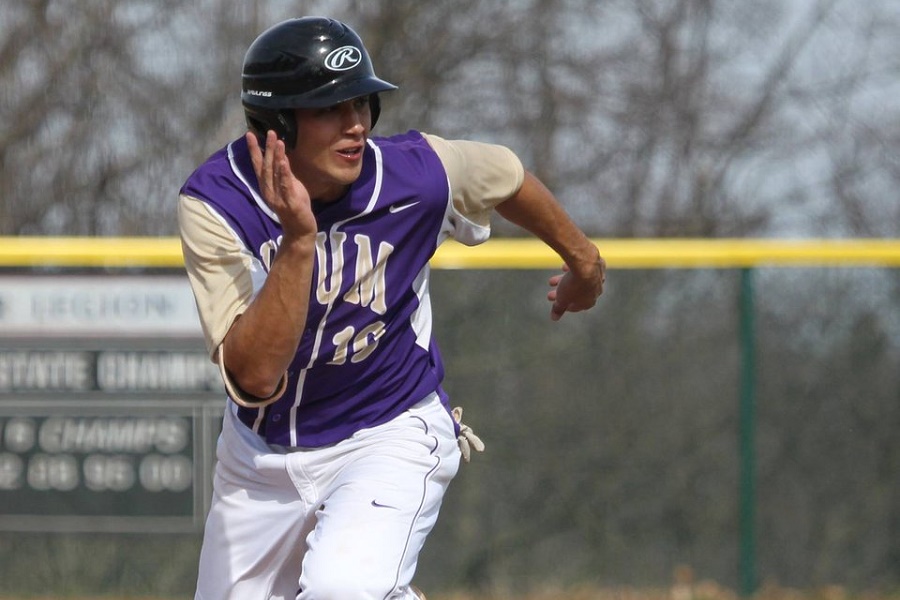 Recently, I was able to catch up with the Twins top pick. We talked about his game, the Twins, and a few things in between. Here's what he had to say: Off The Baggy: Tell me a little bit about your game. Most of the national outlets have described you as a solid all-around athlete with a great hit tool and solid arm strength. Likely starting your professional career in the outfield, how would you describe your game as a whole? Alex Kirilloff: I pride myself on being as well-rounded of a player as I can be. I work very hard on all parts of my game. I feel that my biggest asset is my bat. OTB: I believe you really burst onto the power scene with a recent home run derby performance. Was that your first home run contest and what was the experience like? AK: I was 11 years old in my first home run derby. I had just started using a leg lift with my swing, which helped me hit the ball further immediately. I beat a 12 year old who was the favorite to win the whole thing. So the only two home run derbys I have ever been in I won. OTB: Being from Pennsylvania, I'd assume you're a Pirates fan. I saw that longtime Pittsburgh fan favorite Neil Walker congratulated you on Twitter. Who is a big leaguer that you have modeled your game after? AK: Neil Walker is first class and I now have even more respect for him than I already had before. I like watching Andrew McCutchen, he is a pretty well-rounded player himself so I am inspired by him. OTB: When looking at the Twins, what do you know about the organization, its players, and the state of Minnesota as a whole? AK: I know Minnesota is cold...but it's okay, I am used to it coming from Pittsburgh! With two World Series titles, Hall of Fame players throughout the decades, and great traditions built, I am excited to be a part of the culture, history, and richness of the organization. OTB: Tell me about your draft day experience. I believe you got to watch it unfold with teammates and friends as you were still wrapping up your season. What was the call like, and did you have any indications it was going to come from the Twins? AK: It was a great experience being able to share it with my teammates, coaches, family, girlfriend, and friends. The call was a dream come true. OTB: There's been some talk already that Minnesota may have you skip the Gulf Coast League and head straight to Elizabethton for your professional debut. What are your goals in your first professional season? AK: My goals are to train, develop, learn, adapt, and play to the best of my ability while embracing the lifestyle of professional baseball. Let the rest take care of itself. OTB: Let's end it with this, when Twins fans look ate Alex Kirilloff the baseball player, what do you hope they notice most? AK: I hope they notice the baseball player and person that they want representing their fan base, city and baseball team. With a great head on his shoulders, it seems Kirilloff is going to start off on a great foot for the Twins. He is headed to Minnesota this week and then will begin his professional career in the organization. He's going to be fun to watch, and should be another high-ceiling prospect Minnesota can add to the farm system. Recently, he was included in the Off The Baggy Top 15 update. For more from Off The Baggy, click here. Follow @tlschwerz
 -
Coming into the 2016 Major League Baseball season, there was plenty of reason to believe that the Minnesota Twins should have moved Trevor Plouffe. Playing third base while pushing teammate Miguel Sano to the outfield, it was over the offseason that Plouffe's value was likely at its peak. Fast forward to where we are now however, and the narrative couldn't be any more different. Starting with Sano, I had plenty of belief that he could be a capable right fielder. To say he has been far off from that is probably somewhat controversial. Looking at the power hitting corner guys such as J.D. Martinez and Jose Bautista however, he's holding his own just fine. The argument for Sano in right was always that if the power played, the rest wouldn't matter. That has held relatively true for the most part. Right up until the point in which he got hurt. Now with a balky hamstring that's going to be more susceptible to injury the rest of the way, Minnesota is absolutely faced with a decision. That involves figuring out a way to get Sano back into the infield, and have him focus more on his bat and glove, rather than running down fly balls. This is where Trevor Plouffe enters the equation. In 2016, Plouffe was worth 2.5 fWAR, the second highest mark of his career. His 22 longballs were his highest total since launching 24 back in 2012. With a 3.6 fWAR season in 2014, and continuing improvement defensively, it appeared as if Plouffe was a late bloomer and his best seasons may be ahead of him. Minnesota probably could have (and maybe should have) dealt Plouffe before the 2016 season started, but the market for third basemen was lukewarm at best, and the club decided to hold on. Now 50 games into his 2016 season, Plouffe is slashing .239/.264/.362 with just five homers and eight doubles to his credit. Normally an extra base hit machine, he's looked anything but the player Twins fans have come to know him as. Posting a -0.6 fWAR thus far, it's been as much a struggle for Plouffe as it has the hapless Twins this season. As things stand currently, Minnesota has reached a point in which a crossroads must be addressed. To be completely fair, the situation probably should have been cleared up prior to this point. Miguel Sano is likely going to go out on a rehab assignment in the coming week or so. When he returns, he's going to need a place in the lineup, and it's not going to be in the outfield. Paul Molitor could do some shuffling with Byung Ho Park, but really, this one is on Terry Ryan. It's time, trade Trevor Plouffe. Without being connected to the front office, it's hard to imagine what phone calls the Twins have made or received. However, there are some teams out there that absolutely have some needs. Kelly Johnson isn't going to be the lone answer for the Mets, and it would stand to reason that Minnesota should start there. When linked to the Angels during the offseason, Plouffe's return was speculated as equivalent to that of a relief prospect. Right now, that caution can almost be thrown to the wind. Making $7.2 million with a final year of arbitration eligibility in front of him, Plouffe's value to the Twins is becoming addition by subtraction. Right now, whatever return Ryan could finagle for Plouffe should turn into an afterthought. Opening up third base, allowing Sano, Mauer, and Park to all coexist harmoniously, that should be the goal. Over the past seven years, Trevor Plouffe has done a lot for the Twins. He's grown up in Minnesota, matured as a pro, and become a relevant big leaguer. Cut the ties, allow him to go to a winner, and start to make the kids a priority in the Twins lineup. For more from Off The Baggy, click here. Follow @tlschwerz
-
Where Did Minnesota Get Off Chicago's Road?
Ted Schwerzler commented on Ted Schwerzler 's blog entry in Off The Baggy
Right, at some point, when you consistently fall short on your opportunities, you have to hold yourself accountable and decide that you want to achieve more. -
Where Did Minnesota Get Off Chicago's Road?
Ted Schwerzler commented on Ted Schwerzler 's blog entry in Off The Baggy
Absolutely part of it, and didn't touch on that. However, given the rebuilding arc, Twins took a route that could prove more difficult to project and come with a longer time frame (HS as opposed to College). Also, the high schools they did take have some significant proving to do yet to substantiate their expected potential (Stewart lacking K's, Gordon making errors). None of the draft strategy negates the reality that the two should be more closely comparable though, and aren't. -
As things stand for the 2016 Minnesota Twins, Paul Molitor's club is a Major League Baseball worst 21-48. Things are bad, that's pretty obvious, but the question is where things went wrong. I'm not here to tell you that I have all of the answers, but I'm pretty firm in the belief that Terry Ryan and his cronies certainly do not either. Let's set the stage here; the parallels came full circle once again on Sunday night as I watched Cubs rookie catcher Willson Contreras launch a home run. The Pirates pitcher hung a changeup on the first big league pitch Contreras saw, and he deposited it into the Wrigley Field seats. Eddie Rosario had a similar moment in his debut for the Twins, but for Minnesota, that's where the happiness ends. These two clubs couldn't be less comparable, Chicago sits at a near opposite of the Twins, 47-20. What's sad is you can only look at Minnesota and think what could have been. 2010 represented that last season of true relevance for the Twins. That year, the Cubs didn't have the same fortune, but were far from a dumpster fire. Minnesota owned a 94-68 record while claiming first in the AL Central. The Northsiders finished 75-87, a mark that put them at the bottom of the NL Central. The draft picks is where this narrative gains more steam. From 2011 through 2015, here's where Minnesota and Chicago made picks: 2011: Twins 30 Cubs 9 2012: Twins 2 Cubs 6 2013: Twins 4 Cubs 2 2014: Twins 5 Cubs 4 2015: Twins 6 Cubs 9 Now, to be sure, there's plenty of talent taken at those spots by both clubs. In fact, here's the names of those selected, and where they currently are at in the organization: 2011: Levi Michael (AA) Javier Baez (MLB) 2012: Byron Buxton (MLB) Albert Almora (MLB) 2013: Kohl Stewart (AA) Kris Bryant (MLB) 2014: Nick Gordon (A) Kyle Schwarber (MLB) 2015: Tyler Jay (A) Ian Happ (A) Alright, so where does that put us? Well, in short, things are virtually a direct reflection of the big league records. The Cubs have done an excellent job developing their drafted talent, and doing so quickly, while in turn righting the ship at the highest level. On the flip side, well, the Twins have not. Byron Buxton is the lone first pick since 2011 to reach the big leagues and he's scuffled there mightily. Of the other picks, there's plenty of intrigue in regards to Stewart, Gordon, and Jay, but they still have plenty to prove. At this point, Michael seems all but a lost cause. So, why aren't the Twins the Cubs? It's a reasonable expectation that based upon the rebuilding arcs and developmental process, that they should be closely compared. I think probably the best answer as to why the Twins are lagging behind is because they have yet to commit to moving forward. Chicago knew they were approaching a crossroads, and they turned the keys over to people capable of putting them back into a sustained version of relevance. Theo Epstein was brought in, Jed Hoyer came with, and together they represent some very elite baseball minds. As the organization was rebuilt with talent, the duo knew they needed someone in place capable of harnessing it, enter Joe Maddon. A farm system chock full of some of baseball's best prospects, the club now had arguably the best manager in the business to deploy them at the highest level. On the flip side, Minnesota stayed with what has worked, or maybe better put, what they have known. Terry Ryan has been a symbol of mediocrity for quite some time. He handpicked Bill Smith who failed miserably in his absence. For the years of relevancy he's been a part of, Ryan has also orchestrated plenty of losing. Known as a guy who's far too committed to his dear friends within the front office, there's a real problem with a lack of innovation anywhere withing the organizational structure. That couldn't be more visible as the Twins struggle with many of the same issues this season that they always have. In trying to come full circle from a rebuild, you also must realize that it's as much about developing from within as it is about making the right moves to supplement your club. The Cubs have clearly done a better job with player development than the Twins, but then they also have been much more adapt at bringing in talent than Ryan's clubs as well. It's hard to overstate how shrewd of a move flipping Jeff Samardzija for Addison Russell was. That was a big needle mover, and something that probably doesn't happen all to often. However, a trade like that is made possible because the Cubs don't sit in the middle ground during free agency. As the talent has came up through the system, Epstein has brought in players like Jon Lester, Jason Heyward, and Ben Zobrist, He realizes that baseball is a sport in which it takes a full 25 man to compete, and that requires talent that is near guaranteed to produce. Even if Minnesota was developing players at an adequate rate (which you can argue they aren't), Ryan is doing himself next to no favors by the players he's supplementing with, Bringing in Ervin Santana, Phil Hughes, and Ricky Nolasco on bloated starting pitcher contracts allows little room for error. Minnesota has long shed it's mid-market definition, but spending smartly has never been something Ryan has been criticized of. Take a minute to imagine a Twins team with some of the draft talent developed and producing at the big league level. Then, instead of a host of mediocrity in the rotation, a top tier pitcher or two that takes some of the heat off of the lineup and the rest of the staff. It's far from a surefire turnaround, but the results would likely be considerably more productive than where the Twins find themselves or see themselves going. At the end of the day, Minnesota's biggest problem is themselves. They've become incredibly too committed to Terry Ryan, and in turn, he's far too committed to those who consistently fail to move the needle across the board. Right now, the Cubs are playing baseball like one of the best teams in history. Asking the Twins to replicate that is a giant reach for the a group currently losing at a historical pace. However, expecting a few key changes to result in a situation that is much more similar is not hard to imagine, and one that makes you think what could have been. The Twins aren't the Cubs by any means, but right now, they aren't anywhere near what they should have been at this point either. For more from Off The Baggy, click here. Follow @tlschwerz
-
For the 2016 Major League Baseball Draft, the Minnesota Twins were coming off of a winning season that awarded them just the 15th overall pick. Not selecting in the top 10 for the first time in a while, Minnesota had a few options that would be presented to them. When the dust settled, they ended up going with the power hitting outfielder Alex Kirilloff. The Pennsylvania native has plenty of intrigue, and he's ready to unleash it for the Twins. Kirilloff's prep career came to an end one win short of a Pennsylvania State Championship. Losing in the title game, you can bet his hunger to get back on the field and compete in the Twins organization remains high. He's likely going to head to Elizabethton to start his professional career, and his bat should be the thing that carries him early on. Recently, I was able to catch up with the Twins top pick. We talked about his game, the Twins, and a few things in between. Here's what he had to say: Off The Baggy: Tell me a little bit about your game. Most of the national outlets have described you as a solid all around athlete with a great hit tool and solid arm strength. Likely starting your professional career in the outfield, how would you describe your game as a whole? Alex Kirilloff: I pride myself on being as well rounded of a player as I can be. I work very hard on all parts of my game. I feel that my biggest asset is my bat. OTB: I believe you really burst onto the power scene with a recent Home Run Derby performance. Was that your first home run contest and what was the experience like? AK: I was 11 years old in my first home run derby. I had just started using a leg lift with my swing, which helped me hit the ball further immediately. I beat a 12 year old who was the favorite to win the whole thing. So the only two home run derby's I have ever been in I won. OTB: Being from Pennsylvania, I'd assume your a Pirates fan. I saw that longtime Pittsburgh fan favorite Neil Walker congratulated you on Twitter. Who is a big leaguer that you have modeled your game after? AK: Neil Walker is first class and I now have even more respect for him than I already had before. I like watching Andrew McCutchen, he is a pretty well rounded player himself so I am inspired by him. OTB: When looking at the Twins, what do you know about the organization, its players, and the state of Minnesota as a whole? AK: I know Minnesota is cold...but it's okay, I am used to it coming from Pittsburgh! With three world series titles, Hall of fame players throughout the decades, and great traditions built, I am excited to be a part of the culture, history, and richness of the organization. OTB: Tell me about your draft day experience. I believe you got to watch it unfold with teammates and friends as you were still wrapping up your season. What was the call like, and did you have any indications it was going to come from the Twins? AK: It was a great experience being able to share it with my teammates, coaches, family, girlfriend, and friends. The call was a dream come true. OTB: There's been some talk already that Minnesota may have you skip the Gulf Coast League and head straight to Elizabethton for your professional debut. What are your goals in your first professional season? AK: My goals are to train, develop, learn, adapt, and play to the best of my ability while embracing the lifestyle of professional baseball. Let the rest take care of itself. OTB: Let's end it with this, when Twins fans look ate Alex Kirilloff the baseball player, what do you hope they notice most? AK: I hope they notice the baseball player and person that they want representing their fanbase, city, and baseball team. With a great head on his shoulders, it seems Kirilloff already is going to start off on a great foot for the Twins. He is headed to Minnesota this week and then will begin his professional career in the organization. He's going to be fun to watch, and should be another high ceiling prospect Minnesota can add to the farm system. Recently, he was included in the Off The Baggy Top 15 update. For more from Off The Baggy, click here. Follow @tlschwerz
-
Following their 46th loss of the season, Paul Molitor informed reported that the Minnesota Twins would be welcoming Danny Santana back after a rehab assignment. That move was also met with the announcement that Minnesota would designate Oswaldo Arcia for assignment, his time with the Twins has come to an end. It might be a mercy rule for both sides however, as both parties deserved better. For the Twins, Arcia was signed as an amateur free agent back in 2007. He landed on prospect lists prior to the 2013 season, and saw his highest ranking at 41st on Baseball America's list. A hulking slugger, he was never expected to play the field well, but the belief was that his back would make up for his defensive deficiencies. In part that happened for the Twins, but not significantly enough for a guy who has been worth -31 DRS across nearly 2,000 major league innings. Over the course of his Twins career, Arcia has been worth a combined -0.5 fWAR. He hit 40 homers and ripped 37 doubles. His career .240/.303/.429 slash line was reflective of a guy that faded from 34 homers across his first two seasons. Summarizing his time with the Twins, Minnesota would be hard pressed to put a word other than underwhelming on it. For Arcia, the story is similar, his time having to interact with the Twins has to feel underwhelming as well. After putting up 14 and 20 home runs in his first two seasons respectively, the Twins began their bungling of Arcia's development a season ago. After just 19 games, and 58 at bats, Minnesota determined that it had seen enough. Despite a career his .276 average, Arcia's .718 OPS was a career low. He had hit just two homers, and those longballs represented his lone extra base hits. From a power threat, Minnesota expected more. Upon being relegated to Triple-A, the notion was that Arcia had to prove it or risk spending the rest of the year in Rochester. He went on a torrid home run stretch for a brief period, but unfortunately his final slash line rested at .199/.257/.372 across 79 Triple-A contests. He hit just 12 homers on the season, and was never a realistic option for the Twins during a postseason push. To start 2016, Arcia found himself on the 25 man, in part because Minnesota wasn't yet at a point ready to cut ties. The notion that he was in DFA purgatory played out through the season's first third. In 66 games, he was given just 27 starts, and found action in a whopping 32. His 103 at bats produced a lackluster .214/.289/.369 slash line and his defense remained poor. The results were underwhelming, but so were the opportunities. At this point, both sides deserve something better than what they have given each other. Arcia has been one of the most under-developed and poorly used Twins in the past two seasons. When given opportunities however few and far between though, he's done little to mark that reality more of a focus. Right now, the best thing is for a separation of the two. That scenario should be expected to play out. Still just 25 years old, Arcia is the kind of guy that plenty of big league teams will line up to take a flier on. In fact, a fit could come within the Twins division. With the Detroit Tigers recently losing J.D. Martinez, a poor fielder and good slugger in his own right, Arcia fits the profile on a much lesser scale. In fact, the Tigers might be able to see a former prospect of their own in the failed Twin. Back in 2013, Avisail Garcia found himself on Baseball America's top 100 list, at number 74, behind Arcia. Once nicknamed "Minny Miggy," Garcia has never really been more than just a guy. Now playing with the White Sox, his career .695 OPS lags behind the .732 of Arcia's. Garcia has never matched Oswaldo's home run numbers, and Detroit was willing to give their former failed prospect 53 games worth of work from 2012-13. The Tigers could do a lot worse than a quick flier on someone they have seen plenty of over the past four years. Regardless of where Oswaldo Arcia winds up, he shouldn't be expected to be David Ortiz 2.0 for the Twins. Although he won't spurn them to that level, Minnesota shouldn't find themselves off the hook either. They operated with a poor plan in regards to the Venezuelan, and what could have been will likely remain a question for a while. If there's one good thing that comes out of this for the Twins, it's that the commitment to the kids seems to have taken a hold. Both Max Kepler and Byron Buxton remain on the big league roster. Rather than being sent back to Triple-A, the organization realizes it's time for them to sink or swim, and allowing them to figure it out against the highest level of competition is a must. For more from Off The Baggy, click here. Follow @tlschwerz
-
Twins Have An Oswaldo Arcia Sized Problem
Ted Schwerzler commented on Ted Schwerzler 's blog entry in Off The Baggy
Agreed. The list of poorly handled prospects is long. Tonkin and Polanco are the most recent. Tonkin has been given the opportunities (and succeeded) this year, which only makes last year worse. Arcia maybe wasn't going to right the ship, but Minnesota never allowed him to find out. Polanco could be headed down a similar path a year from now if Nunez, Escobar, and Dozier all remain rostered.

