



Greg Logan
-
Posts
68 -
Joined
-
Last visited
Content Type
Profiles
Minnesota Twins News, Rumors & Analysis
Minnesota Twins Videos
2026 Minnesota Twins Top Prospect Rankings
2022 Minnesota Twins Draft Picks & Signing Bonuses
Minnesota Twins Trade & Free Agent Rumors
Minnesota Twins Fan Guides & Resources
2023 Minnesota Twins Draft Picks & Signing Bonuses
The Minnesota Twins Players Project
2024 Minnesota Twins Draft Picks & Signing Bonuses
2025 Minnesota Twins Draft Picks & Signing Bonuses
2026 Minnesota Twins Draft Picks & Signing Bonuses
Forums
Blogs
Events
Store
Downloads
Gallery
Everything posted by Greg Logan
-
 You can view the page at http://twinsdaily.com/content.php/3122-What-is-sustainable-for-Danny-Santana
-
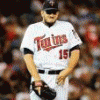
My first exposure to Danny Santana was a spring game in March against the Red Sox. While I certainly remember his flashy play (1-3 with a 2B, a walk and a SB), it was a costly 5th inning fielding error, leading to a 2-run Red Sox rally that gave the defending champs the game, that stuck with me as a perfect example of the inconsistency marking Santana’s young career. That defensive inconsistency was the reason many assumed Santana’s first call-up in early May would be a short one, but he slammed the door behind him with a blistering pace at the plate. He has now hit at a .340/.382/.447 clip for roughly a month and a half, thanks in a large part to a .423 BABIP. Even his defensive shortcomings have been masked by a shift to center field, where lack of experience on defense has been helped by lowered expectations given the limited options at the position. Between his tremendous offensive output from the leadoff spot and the injuries to Aaron Hicks and Trevor Plouffe, it seems Santana has cemented himself in the lineup for the foreseeable future. But for how long can a young man with a career minor league batting line of .274/.318/.393 be expected to perform at this high level? The Bad News: As the sabermetricians among us will point out, a .423 sample BABIP won’t last long. A high BABIP will inevitably regress, given enough AB's, toward the player’s career average BABIP, which for the league average player was .297 in 2013. If Santana maintains the same K%, BB% and batted ball rates, we can expect him to hit at roughly a .287/323/.412 line the rest of the season provided he follows league averages for BABIP. The Good News: While we can assume Santana’s BABIP of .423 won’t maintain, it may not normalize to quite as low a level as we’d expect. The above projections assume league average BABIP for ground balls (roughly .241), and players with Santana’s speed tend to have above-average BABIP for grounders. Santana has already shown the ability to consistently outrun routine grounders and even bunts. Hard-hitting speedsters like Mike Trout and Andrew McCutchen were able to maintain GB BABIP’s of over .300 in 2013, but a more conservative ground ball BABIP for Santana would be Dozier’s 2013 rate of .277 The Other Good News: The guy hits a lot of line drives, and line drives get you hits. Danny Santana leads the team (minus Eric Fryer and his 5 AB’s) in LD% with 29.7%, and line drives yield a league average of a .695/.688/.894 line. While I couldn’t find Santana’s minor league batted ball rates (note: any suggestions for this would be much appreciated), it’s fairly safe to assume this will regress a bit, but it does bode well for his normalized numbers to land above his minor league averages. Santana’s speed will also continue to stretch line drives from singles to doubles and from doubles to triples. The Bottom Line: Trying to project Santana’s numbers as the season progresses, we can make a few reasonable assumptions: A) his BABIP will drop substantially, his ground ball BABIP will be well above league average, and C) his LD%, if maintained, will keep his average decent and yield a good number of extra bases. If he can maintain his LD% and keeps his GB BABIP up around .275, he would project at around a .300/.335/.417 slash, but splitting the difference between his LD% and the team’s rate of 21.4% would yield closer to .282/.319/.409, which seems more likely given his minor league averages. With Eduardo Escobar covering third base for the next few weeks, Santana will have to prove his bat can outperform the inconsistency of his glove. If he can meet these projections, he just may be able to hold his spot on a healthy 25-man roster for the long term.
-
Article: Eddie Rosario and Redemption
Greg Logan replied to Nick Nelson's topic in Twins Daily Front Page News
Could definitely see the intrigue if Hammer's traded at the deadline. You have a potential platoon of Hicks/Rosario in center. Both could also be strong fourth outfielders if Hicks starts hitting for more power. -
My first exposure to Danny Santana was a spring game against the Red Sox in March. While I certainly remember his flashy play (1-3 with a 2B, a walk and a SB), it was a costly 5th inning fielding error, leading to a 2-run Red Sox rally that gave the defending champs the game, that stuck with me as a perfect example of the inconsistency of Santana’s young career. That defensive inconsistency was the reason many assumed Santana’s first call-up in early May would be a short one, but he slammed the door behind him with a blistering pace at the plate. He has now hit at a .340/.382/.447 clip for roughly a month and a half, thanks in a large part to a .423 BABIP. Even his defensive shortcomings have been masked by a shift to center field, where lack of experience on defense has been helped by lowered expectations given the limited options at the position. Between his tremendous offensive output from the leadoff spot and the injuries to Aaron Hicks and Trevor Plouffe, it seems that Santana has cemented himself in the lineup for the foreseeable future. But for how long can a young man with a career minor league batting line of .274/.318/.393 be expected to perform at this high of a level? The Bad News: As the sabermetricians among us will point out, a .423 sample BABIP won’t last long. A high BABIP will inevitably regress toward the player’s career average BABIP given enough ABs, which for the league average player was .297 in 2013. If Santana maintains the same K%, BB% and batted ball rates, we can expect him to hit at roughly a .287/323/.412 line the rest of the season if he follows league averages for BABIP. The Good News: While we can assume Santana’s BABIP of .423 won’t maintain, it may not normalize to quite as low a level as we’d expect. The above projections assume league average BABIP for ground balls (roughly .241), and players with Santana’s speed tend to have above-average BABIP for grounders. Santana has already shown the ability to outrun routine grounders and even bunts consistently. Hard hitting speedsters like Mike Trout and Andrew McCutchen were able to maintain GB BABIP’s of over .300 in 2013, but a more conservative ground ball BABIP for Santana would be Dozier’s 2013 rate of .277 The Other Good News: The guy hits a lot of line drives, and line drives get you hits. Danny Santana leads the team (minus Eric Fryer and his 5 AB’s) in LD% with 29.7%, and line drives yield a league average of a .695/.688/.894 line. While I couldn’t find Santana’s minor league batted ball rates (note: any suggestions for this would be much appreciated), it’s fairly safe to assume this will regress a bit, but it does bode well for his normalized numbers to land above his minor league averages. Santana’s speed will also continue to stretch line drives from singles into doubles and from doubles into triples. The Bottom Line: Trying to project Santana’s numbers as the season progresses, we can make a few reasonable assumptions: A) his BABIP will drop substantially; his ground ball BABIP will be well above league average; and C) his LD%, if maintained, will keep his average decent and yield a good number of extra bases. If he can maintain his LD% and keeps his GB BABIP up around .275, he would project at around a .300/.335/.417 slash, but splitting the difference between his LD% and the team’s rate of 21.4% would yield closer to .282/.319/.409, which seems more likely given his minor league averages. With Eduardo Escobar covering third base for the next few weeks, Santana will have to prove that his bat can outperform the inconsistency of his glove. If he can meet these projections, he just may be able to hold his spot on a healthy 25-man roster for the long-term.
-
You can view the page at http://twinsdaily.com/content.php/3004-Are-we-giving-Aaron-Hicks-a-raw-deal
-
I’m not in love with Aaron Hicks. I can’t disagree with Rob Antony and Ron Gardenhire’s critique of his preparation, and I’ve always been an unabashed Denard Span guy. (Note: I'm hugely excited that he ended up in DC, where I live now). But I do think we (the Twins-loving public) have been giving Hicks a raw deal by bashing the year he’s having. First off, the easy part: let’s look at his on-base percentage (OBP). I noticed today that, of the 32 major league center fielders that have 100+ plate appearances, Hicks is actually in the top half with an OBP of .339. That’s well above league average and good for 14th out of those 32. In spite of the batting average that’s been getting all the attention, this is certainly not the Aaron Hicks of last year, who got on base at a .259 rate. Now, granted, he isn’t hitting for any power, as shown by his almost Revere-ish .073 ISO, but for a guy in the 8 or 9 hole, most teams would take an above league-average on-base guy any day, power or not. Speaking of Ben Revere, I should note that both he and (gasp) Denard Span sit well behind Hicks in the OBP rankings, at .287 and .284 respectively. Even if you take a look at wOBA, which factors in power numbers, you still don’t have Hicks as far down the rankings as you might think when looking at his batting average: 23rd out of 32 with a .290 wOBA. Next, Hicks’ BABIP (batting average on balls in play) is substantially lower than any guy with his kind of speed has any business maintaining. If we take a look at his batted ball rates, we see part of the issue. He’s hitting grounders 53.8% of the time (league average 45.6%) and hitting line drives only 16.9% of the time (league average 20.2%). But, even normalizing his batting average based on league average BABIP for those different batted ball rates, he’d be batting closer to the .230 mark than the .198 mark he’s showing now. (Note: I’ll be putting out another entry in the next few days explaining how I calculated this). And that’s assuming he continues grounding the ball so often and lining the ball so rarely, which both seem unlikely. Also of note, for a guy who’s shown a history some pop, Hicks has a HR/FB rate of only 5.3% (league average 10.1%). This tends to normalize to career average over a full season, so I would assume that a few more of these fly balls will be finding the seats, particularly as the Twins spend more games away from Target Field between now and the All-Star break. Now, I’m not saying Hicks is the top-of-the-order guy the fan base (and organization) wanted him to be when he took the centerfield job last spring. But I do think if he continues to improve on defense and his offense starts normalizing, he can be the fairly-decent placeholder for the Byron Buxton era that this team needs. A little prep work can go a long way, and if what Gardy and Antony are saying is true, Hicks could see substantial improvement on his strikeout rate and overall batting average by putting in a bit more time in the clubhouse. And, after all, let’s not forget that he’s only 24. Agree? Disagree? “New Breed Stat Guys” nonsense, as Bob Ryan would say?
-
Are we giving Aaron Hicks a raw deal?
Greg Logan commented on Greg Logan's blog entry in Bloop Singles
I agree with you folks to an extent. I agree that he likely won't get back to his minor league offensive numbers, but I also think its reasonable to expect his average to normalize to a .230-.250 range with decent walk rate. If his walk rate settles down to his minor league rate (14.7%) and he's able to boost his LD% even slightly, that equates to about a .225 BA and a .325 OBP. Without any alternatives, I can settle for a .325 OBP at the back of the lineup until Buxton is ready to take over CF. I focused this article on his offense to keep it brief, but I'm on the same page with the three of you that his defense is troubling. The angles he's been taking to balls in the field and the (perceived?) lack of hustle makes it hard to see the defensive upside we thought he had. It's also hard for me to tell whether he isn't going full speed on defense in some cases or if it only looks that way because of his longer strides. -
I’ll start by saying that I’m not an Aaron Hicks lover. I can’t disagree with Rob Antony and Ron Gardenhire’s critique of his preparation, and I’ve always been an unabashed Denard Span guy (note: hugely excited that he ended up in DC, where I live now). But I do think we (the Twins-loving public) have been giving Hicks a raw deal by bashing the year he’s having. First off, the easy part: let’s look at his OBP. I noticed today that, of the 32 major league center fielders that have 100+ plate appearances, Hicks is actually in the top half with an OBP of .339. That’s well above league average and good for 14th out of those 32. In spite of the batting average that’s been getting all the attention, this is certainly not the Aaron Hicks of last year, who got on base at a .259 rate. Now, granted, he isn’t hitting for any power, as shown by his almost Revere-ish .073 ISO, but for a guy in the 8 or 9 hole in the lineup, most teams would take an above league-average on-base guy any day, power or not. Speaking of Ben Revere, I should note that both he and (gasp) Denard Span sit well behind Hicks in the OBP rankings, at .287 and .284 respectively. Even if you take a look at wOBA, which factors in power numbers, you still don’t have Hicks as far down the rankings as you might think when looking at his batting average - 23rd out of 32 with a .290 wOBA. Next, Hicks’ BABIP is substantially lower than any guy with his kind of speed has any business maintaining. If we take a look at his batted ball rates, we see part of the issue. He’s hitting grounders 53.8% of the time (league average 45.6%) and hitting line drives only 16.9% of the time (league average 20.2%). But, even normalizing his batting average based on league average BABIP for those different batted ball rates, he’d be batting closer to the .230 mark than the .198 mark he’s showing now. (Note: I’ll be putting out another entry in the next few days explaining how I calculated this). And that’s assuming he continues grounding the ball so often and lining the ball so rarely, which both seem unlikely. Also of note, for a guy who’s shown a history some pop, Hicks has a HR/FB rate of only 5.3% (league average 10.1%). This tends to normalize to career average over a full season, so I would assume that a few more of these fly balls will be finding the seats, particularly as the Twins spend more games away from Target Field between now and the All-Star break. Now, I’m not saying Hicks is the top-of-the-order guy the fanbase wanted him to be when he took the CF job last spring, but I do think if he continues to improve on defense and his offense starts normalizing, he can be the fairly-decent placeholder for the Byron Buxton era that this team needs. A little prep work can go a long way, and if what Gardy and Antony are saying is true, Hicks could see substantial improvement on his K% and overall batting average by putting in a bit more time in the clubhouse. And, after all, let’s not forget that he’s only 24. Agree? Disagree? “New Breed Stat Guys” nonsense, as Bob Ryan would say?
