



Cody Christie
-
Posts
7,515 -
Joined
-
Last visited
-
Days Won
5
Content Type
Profiles
News
Minnesota Twins Videos
2026 Minnesota Twins Top Prospects Ranking
2022 Minnesota Twins Draft Picks
Minnesota Twins Free Agent & Trade Rumors, Notes, & Tidbits
Guides & Resources
2023 Minnesota Twins Draft Picks
The Minnesota Twins Players Project
2024 Minnesota Twins Draft Picks
2025 Minnesota Twins Draft Pick Tracker
2026 Minnesota Twins Draft Tracker: Picks & Bonuses
Forums
Blogs
Events
Store
Downloads
Gallery
Everything posted by Cody Christie
-
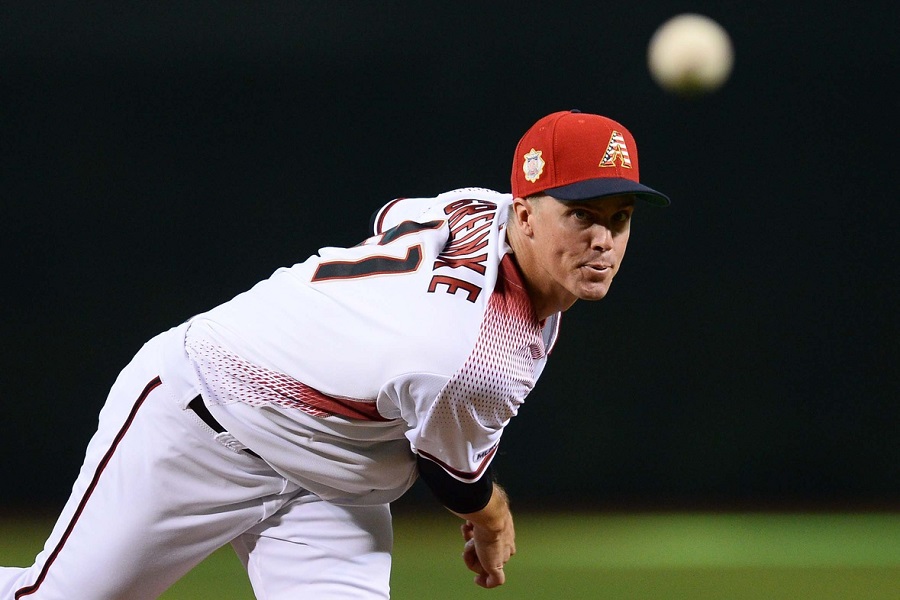 Deadline Blueprint With one of the baseball’s best offenses, it makes sense for the Twins to focus on adding pitching before the deadline. Minnesota’s most glaring need is the bullpen. Taylor Rogers might be the AL’s most valuable reliever, but he won’t be able to pitch every postseason inning. Ryne Harper, Tyler Duffey and Zach Littell have been more than serviceable, but they might be better suited for pitching the middle innings. Jose Berrios and Jake Odorizzi have been leading the pitching staff, while the rest of the rotation has fit into their roles nicely. Kyle Gibson and Martin Perez have had some up and down moments throughout the year. Michael Pineda has provided an upgrade over recent fifth starters. Would you trust one of these pitchers to face the Yankees or Astros line-up in the ALDS? Ideally, the Twins would add two relief arms and a starter before the calendar turns to August. Bullpen In a perfect world, the Twins would be able to add both a right- and left-handed reliever to assist Rogers in his late inning role. There are some internal options for the Twins including two left-handed pitchers that are already on the 40-man roster. Both players would be unknowns in a relief role, so it makes sense to find someone with some experience if the price in prospects isn’t too steep. When it comes to left-handed relievers, Will Smith is the name on everyone’s list. He is currently being used as the Giants closer, but his cost might be slightly lower since he is a free agent after the season. John projected a package of Kohl Stewart and Edwar Colina for Smith. If that’s the deal on the table, I pull the trigger. For Ron Gardenhire and the Tigers, there have been few bright spots this year. However, Shane Greene has been one of the team’s best players. In 2018, he struggled in his first chance being the full-time closer. He posted a 5.12 ERA and a 1.37 WHIP with a 65 to 19 strikeout to walk ratio. For how bad he was last season, he has done a complete 180 this year. He has a microscopic 1.06 ERA and a 0.85 WHIP with 35 strikeouts and 10 walks. He’s also under team control through 2020. Starting Pitching There’s been lots of talk about Madison Bumgarner since he is a pending free agent and the Giants are likely to be sellers. One must wonder what version of Madison Bumgarner a club would receive in a trade. He’s been a World Series hero but that was half a decade ago. This season he has posted a 3.86 ERA with a 1.21 WHIP to go along with 121 strikeouts in 116 2/3 innings. Another thing to consider is Bumgarner has a lot of miles on his arm with 1755 big league innings over the last 11 seasons. Toronto’s Marcus Stroman is another potential trade target and he is younger than Bumgarner. So far this season, he has a 3.25 ERA and a 1.27 WHIP. He has 88 strikeouts in 110 2/3 innings, so Bumgarner has him beat in that category. Stroman has another year of team control as the 2020 season will be his final year of arbitration eligibility. Both above-mentioned pitchers could help the club, but I’d rather the team target Arizona’s Zack Greinke, even if he has a no-trade clause that includes the Twins. There are a few reasons I’d rather the team go after a 35-year old pitcher with a big contract. First, it would likely take fewer high-ranking prospects to acquire Greinke because of his large contract. Greinke has been very good this year with a 2.95 ERA and a 0.95 WHIP. Minnesota has the financial flexibility in the years ahead to absorb the Greinke contract. Plus, three of the Twins current starters will be free agents following the World Series. Greinke could fit in at the top of the rotation with Berrios for the next handful of seasons. If he isn’t still an ace in 2021, the Twins could still fit him in some part of their rotation. Greinke, Smith, and Greene put the Twins in better position to win October games. Who would be part of your perfect trade deadline for the Twins? Leave a COMMENT and start the discussion. Other Stories of Interest Internal Relief Help Could Provide Second Half Upgrade Arraez is What Minnesota Has Craved Twins Trade Rumors Roundup: Teams Pondering Selling
 -
 Minnesota is likely looking to add pitching to their roster before the July 31st trade deadline. While multiple moves could be made in the coming weeks, the Twins could look to supplement their roster with internal players. There are multiple players the team has already used this year, or it might be in the form of other prospects working their way to Target Field. Could the Twins look to internal help instead of trading for a reliever?Lefty Duo Lewis Thorpe, a left-handed pitcher, made one start for the Twins this year. Back on June 30, he held the White Sox to two earned runs on five hits while striking out seven. Thorpe is coming of a 2018 season where he was named Jim Rantz Award winner as the Twins Minor League Pitcher of the Year. Thorpe’s pitching repertoire might be a good fit as a bullpen arm. His fastball sits in the low-90s and he mixes in a slider, a curveball, and a changeup. Throughout his five professional seasons, Thorpe has been used as a relief pitcher on three separate occasions. In the last week, Rochester used Thorpe in relief, but this was so Fernando Romero could be utilized as an opener. Devin Smeltzer, another left-handed pitcher, has made three appearances with the Twins this year. Across 16 2/3 innings, he has a 3.24 ERA, a 1.02 WHIP and a 13 to 4 strikeout to walk ratio. Right before the All-Star break, Smeltzer was used as a relief arm after Kyle Gibson had started the game as an opener. In that appearance, he allowed one run on five hits in 4 1/3 innings. Smeltzer doesn’t exactly fit the mold of power-throwing lefty. His fastball sits in the high-80s while his change up (82.9 mph) and curveball (76.4 mph) help to keep hitters off-balance. Out of his 216 big-league pitches, only three pitches have been barreled up against him. Since Smeltzer is more of a finesse pitcher, it might make more sense for Thorpe to be given the first crack at a relief role. Other Names to Consider Over the last couple weeks, multiple 40-man roster spots have been vacated. Adalberto Mejia, Andrew Vasquez, Mike Morin and Ronald Torreyes were all either outrighted or designated for assignment. Minnesota currently has three open 40-man roster spots and no clear indication of what the plan will be for these openings. Perhaps, the club could be looking at internal options to add to the bullpen. Cody Allen, the former Indians and Angels closer, has been working his way through the Twins system. He made three appearances with Fort Myers and didn’t allow a run. Since joining Rochester, he has allowed two runs in three appearances with two strikeouts. Over the weekend, Charley Walters of the Pioneer Press mentioned that the Twins could look at other internal options. “It’s not necessarily Triple-A pitchers the Twins are considering, either,” Walters said. “They could reach to Double-A and even high-A for help. Those would be pitchers with fastballs in the mid-to-high 90s-mph range.” Edwar Colina is a player that could fit that mold as he was just promoted from High-A to Double-A. As a right-handed pitcher, he can hit triple-digits with his fastball. In 61 2/3 innings as a starter, he has a 2.34 ERA with a 1.10 WHIP. Also, he has a 61 to 15 strikeout to walk ratio. He made his Pensacola debut on Tuesday as he allowed two runs on four hits in four innings. Other than Colina, Jorge Alcala, who has pitched all year with Pensacola, could be a relief option. His fastball can hit into the high-90s, but there have been some struggles in his first taste of Double-A. He has a 6.15 ERA and a 1.51 WHIP in 89.1 innings. His 9.8 K/9 is good for a starter and the Twins could hope to take advantage of his strikeout ability. It seems more than likely that the Twins will be adding a relief piece or two in the weeks ahead. Could any of these arms help the Twins in the second half? Leave a COMMENT and start the discussion. Other Stories of Interest Is Taylor Rogers the AL’s Most Valuable Reliever? Wouldja? Trading For Giants Closer Will Smith Week in Review: Second Half Statement Click here to view the article
 -
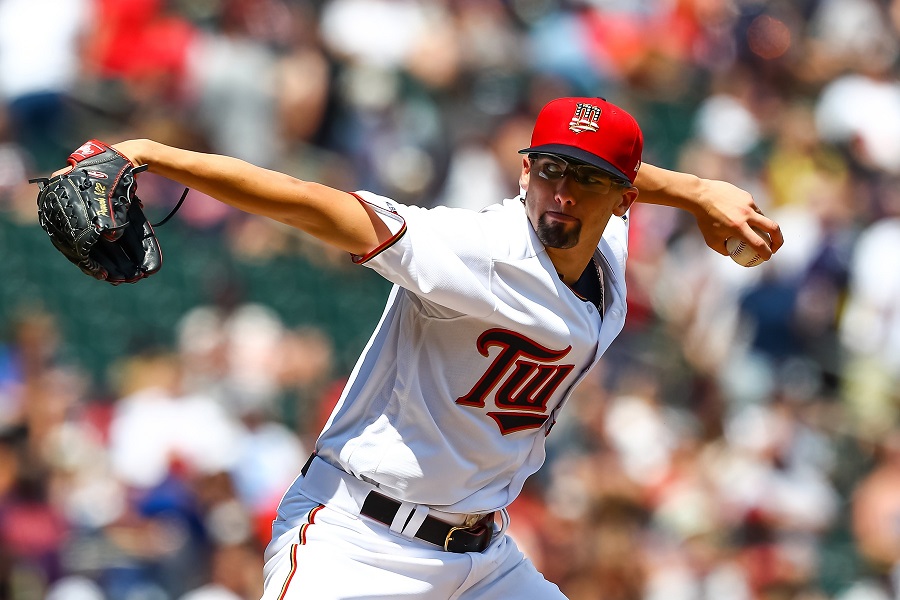 Lefty Duo Lewis Thorpe, a left-handed pitcher, made one start for the Twins this year. Back on June 30, he held the White Sox to two earned runs on five hits while striking out seven. Thorpe is coming of a 2018 season where he was named Jim Rantz Award winner as the Twins Minor League Pitcher of the Year. Thorpe’s pitching repertoire might be a good fit as a bullpen arm. His fastball sits in the low-90s and he mixes in a slider, a curveball, and a changeup. Throughout his five professional seasons, Thorpe has been used as a relief pitcher on three separate occasions. In the last week, Rochester used Thorpe in relief, but this was so Fernando Romero could be utilized as an opener. Devin Smeltzer, another left-handed pitcher, has made three appearances with the Twins this year. Across 16 2/3 innings, he has a 3.24 ERA, a 1.02 WHIP and a 13 to 4 strikeout to walk ratio. Right before the All-Star break, Smeltzer was used as a relief arm after Kyle Gibson had started the game as an opener. In that appearance, he allowed one run on five hits in 4 1/3 innings. Smeltzer doesn’t exactly fit the mold of power-throwing lefty. His fastball sits in the high-80s while his change up (82.9 mph) and curveball (76.4 mph) help to keep hitters off-balance. Out of his 216 big-league pitches, only three pitches have been barreled up against him. Since Smeltzer is more of a finesse pitcher, it might make more sense for Thorpe to be given the first crack at a relief role. Other Names to Consider Over the last couple weeks, multiple 40-man roster spots have been vacated. Adalberto Mejia, Andrew Vasquez, Mike Morin and Ronald Torreyes were all either outrighted or designated for assignment. Minnesota currently has three open 40-man roster spots and no clear indication of what the plan will be for these openings. Perhaps, the club could be looking at internal options to add to the bullpen. Cody Allen, the former Indians and Angels closer, has been working his way through the Twins system. He made three appearances with Fort Myers and didn’t allow a run. Since joining Rochester, he has allowed two runs in three appearances with two strikeouts. https://twitter.com/ParkerHageman/status/1151297467855659009 Over the weekend, Charley Walters of the Pioneer Press mentioned that the Twins could look at other internal options. “It’s not necessarily Triple-A pitchers the Twins are considering, either,” Walters said. “They could reach to Double-A and even high-A for help. Those would be pitchers with fastballs in the mid-to-high 90s-mph range.” Edwar Colina is a player that could fit that mold as he was just promoted from High-A to Double-A. As a right-handed pitcher, he can hit triple-digits with his fastball. In 61 2/3 innings as a starter, he has a 2.34 ERA with a 1.10 WHIP. Also, he has a 61 to 15 strikeout to walk ratio. He made his Pensacola debut on Tuesday as he allowed two runs on four hits in four innings. Other than Colina, Jorge Alcala, who has pitched all year with Pensacola, could be a relief option. His fastball can hit into the high-90s, but there have been some struggles in his first taste of Double-A. He has a 6.15 ERA and a 1.51 WHIP in 89.1 innings. His 9.8 K/9 is good for a starter and the Twins could hope to take advantage of his strikeout ability. It seems more than likely that the Twins will be adding a relief piece or two in the weeks ahead. Could any of these arms help the Twins in the second half? Leave a COMMENT and start the discussion. Other Stories of Interest Is Taylor Rogers the AL’s Most Valuable Reliever? Wouldja? Trading For Giants Closer Will Smith Week in Review: Second Half Statement
 -
Taylor Rogers was an 11th round draft pick back in 2012. Here’s the list of players from that round that have a positive WAR at the big-league level…. Taylor Rogers and that’s it. As the old adage goes, Rogers is left-handed, and he has a pulse. This makes him valuable, but Minnesota had no idea how valuable he would be when they took him that late in the draft. Below is a brief look at the Taylor Rogers story as he has transformed himself into the most valuable reliever on one of the American League’s best teams.Minor Leagues With his college experience, it made sense for Rogers to try to stick as a starting pitcher. During his professional debut (15 appearances), he split time between Elizabethton and Beloit with a 2.27 ERA, a 1.11 WHIP, and a 74 to 17 strikeout to walk ratio. In 2013, he continued to be utilized as a starter. Between Low- and High-A, he posted good numbers as he made 24 starts and posted a 2.88 ERA with a 1.20 WHIP. Over the next two seasons, he would continue to start, and he made multiple trips to the Arizona Fall League. New Britain was his home for all of 2014 as he had a 3.29 ERA and a 1.29 ERA. He made only three appearances in the AFL that season, but he limited batters to four hits and one earned run. He continued to climb the ladder in 2015 as he pitched to a 3.98 ERA at Triple-A. A return trip to the AFL saw him start six games with a 2.88 ERA and a 1.12 WHIP. It was time to see what he could do at the big-league level, but it would come with a new role as a relief pitcher. Rough Transition During his rookie season, Rogers made 57 relief appearances (61 1/3 innings) and had a 3.96 ERA and a 1.29 WHIP. Batters were making solid contact against him on a regular basis. His 89.7 exit velocity and 40.8% hard hit percentage were in the bottom 6% of the league. Opponents hit .260/.318/.401 (.719) against him that year as he surrendered a career high seven home runs. The 2017 campaign saw Rogers still trying to acclimate to life as a reliever. His WHIP rose to 1.31 and his strikeouts per nine dipped from 9.4 to 7.9. Obviously, this isn’t a good sign in the transition to the bullpen. However, opponent's exit velocity dropped nearly three miles per hour (89.7 to 86.9) and his hard-hit percentage finished at 35.4%. One of the biggest intentional changes was his decreased use of his fastball. He used his four seamer 3.9% of the time, which was a steep drop from 17% in 2016 (see chart below). From this point forward, Rogers made other pitching changes to transform into one of baseball’s best relievers. Among Baseball’s Best Besides his fastball usage, Rogers made two other pitching changes to become dominant. He implemented a slider in 2018 and it has become his second most used pitch during the 2019 campaign. Other than that, his curveball has almost disappeared. He used this pitch over 33% of the time last year and he has only used it 1.3% of the time this season. Download attachment: Tayor Rogers chart.jpeg Rogers has provided unbelievable value to the Twins this season. His 2.78 win probability added (WPA) leads all Twins pitchers. It’s almost a full win higher than Minnesota’s All-Star starters Jose Berrios and Jake Odorizzi. No position player has a higher total than Rogers. He also might be on pace for one of the best relief seasons in Twins history. Since Target Field opened in 2010, Glen Perkins (2.79 WPA) has the best WPA of any Twin reliever. Jared Burton (2.41 WPA) and Glen Perkins (1.85 WPA) in 2012 have the other top totals. Doug Corbett’s 1980 season was Minnesota’s all-time best WPA mark from a reliever. His 7.58 total is likely untouchable for Rogers, but he could have enough to catch Joe Nathan’s 5.77 WPA for second place all-time. During a record-setting year, Rogers might be the AL’s most valuable reliever. He is the lone AL relief pitcher with a WPA over 2.0 and he is closing in on 3.0. He’s up 0.85 WPA over Alex Colome, the second-place relief arm. Former Twins Liam Hendricks (1.87 WPA) and Ryan Pressly (1.78 WPA) round out the top-four. It’s been quite the journey, but Rogers could end this season as the most valuable reliever in the American League. Do you think Taylor Rogers is the most valuable reliever in the AL? Leave a COMMENT and start the discussion. Click here to view the article
- 8 replies
-
- 2
-

-
- taylor rogers
- glen perkins
- (and 3 more)
-
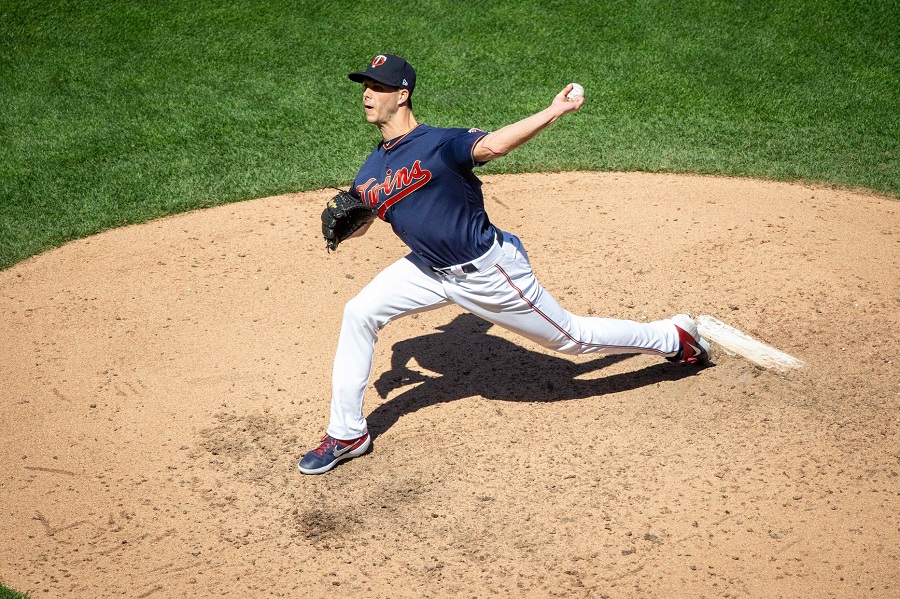 Minor Leagues With his college experience, it made sense for Rogers to try to stick as a starting pitcher. During his professional debut (15 appearances), he split time between Elizabethton and Beloit with a 2.27 ERA, a 1.11 WHIP, and a 74 to 17 strikeout to walk ratio. In 2013, he continued to be utilized as a starter. Between Low- and High-A, he posted good numbers as he made 24 starts and posted a 2.88 ERA with a 1.20 WHIP. Over the next two seasons, he would continue to start, and he made multiple trips to the Arizona Fall League. New Britain was his home for all of 2014 as he had a 3.29 ERA and a 1.29 ERA. He made only three appearances in the AFL that season, but he limited batters to four hits and one earned run. He continued to climb the ladder in 2015 as he pitched to a 3.98 ERA at Triple-A. A return trip to the AFL saw him start six games with a 2.88 ERA and a 1.12 WHIP. It was time to see what he could do at the big-league level, but it would come with a new role as a relief pitcher. Rough Transition During his rookie season, Rogers made 57 relief appearances (61 1/3 innings) and had a 3.96 ERA and a 1.29 WHIP. Batters were making solid contact against him on a regular basis. His 89.7 exit velocity and 40.8% hard hit percentage were in the bottom 6% of the league. Opponents hit .260/.318/.401 (.719) against him that year as he surrendered a career high seven home runs. The 2017 campaign saw Rogers still trying to acclimate to life as a reliever. His WHIP rose to 1.31 and his strikeouts per nine dipped from 9.4 to 7.9. Obviously, this isn’t a good sign in the transition to the bullpen. However, opponent's exit velocity dropped nearly three miles per hour (89.7 to 86.9) and his hard-hit percentage finished at 35.4%. One of the biggest intentional changes was his decreased use of his fastball. He used his four seamer 3.9% of the time, which was a steep drop from 17% in 2016 (see chart below). From this point forward, Rogers made other pitching changes to transform into one of baseball’s best relievers. Among Baseball’s Best Besides his fastball usage, Rogers made two other pitching changes to become dominant. He implemented a slider in 2018 and it has become his second most used pitch during the 2019 campaign. Other than that, his curveball has almost disappeared. He used this pitch over 33% of the time last year and he has only used it 1.3% of the time this season. Rogers has provided unbelievable value to the Twins this season. His 2.78 win probability added (WPA) leads all Twins pitchers. It’s almost a full win higher than Minnesota’s All-Star starters Jose Berrios and Jake Odorizzi. No position player has a higher total than Rogers. He also might be on pace for one of the best relief seasons in Twins history. Since Target Field opened in 2010, Glen Perkins (2.79 WPA) has the best WPA of any Twin reliever. Jared Burton (2.41 WPA) and Glen Perkins (1.85 WPA) in 2012 have the other top totals. Doug Corbett’s 1980 season was Minnesota’s all-time best WPA mark from a reliever. His 7.58 total is likely untouchable for Rogers, but he could have enough to catch Joe Nathan’s 5.77 WPA for second place all-time. During a record-setting year, Rogers might be the AL’s most valuable reliever. He is the lone AL relief pitcher with a WPA over 2.0 and he is closing in on 3.0. He’s up 0.85 WPA over Alex Colome, the second-place relief arm. Former Twins Liam Hendricks (1.87 WPA) and Ryan Pressly (1.78 WPA) round out the top-four. It’s been quite the journey, but Rogers could end this season as the most valuable reliever in the American League. Do you think Taylor Rogers is the most valuable reliever in the AL? Leave a COMMENT and start the discussion.
 -
The dog days of summer are here are with it comes the opportunity for minor league teams to gain some separation from the other teams in their league. Strong pitching performances can be overshadowed by lackluster offensive outputs. Offensives can explode for double-digit runs to cover up a pitcher’s poor start. For Twins fans, there was some good, some bad, and some ugly on Sunday.TRANSACTIONS RHP Ryan Eades placed on the IL for Rochester (right groin strain). INF Spencer Steer promoted to Cedar Rapids from Elizabethton. C/INF Chris Williams placed on IL with Cedar Rapids (right ankle sprain). AWARDS The Twins announced their weekly Hitter and Pitcher of the Week: Hitter of the Week: Royce Lewis, Fort MyersLewis, who played in the SiriusXM Futures Game at Progressive Field last Sunday, played in four games for the Miracle late this week, hitting .353 (6-for-17) with two home runs, three RBI and two walks. Lewis is in his third professional season after being taken with the number one overall pick in the 2017 MLB Draft.Pitcher of the Week: Edwar Colina, Fort MyersColina made the start on Wednesday vs. Daytona, pitching 7.0 shutout innings with three hits allowed, no walks and eight strikeouts. Colina was promoted to Pensacola the day after his start. He was signed back in 2015 out of Venezuela. RED WINGS REPORT Rochester 5, Lehigh Valley 4 Box Score Rochester needed two runs over the final two innings to walk off with the win in this one. Trailing 4-3 entering the eighth, Jaylin Davis knocked his 10th home run to tie the game. With two outs in the ninth, Drew Maggi singled to put the winning run on base. One batter later, Nick Gordon lined a single to left field and Maggi came all the way around to score. It was a terrible play by the outfielder and Maggi was aggressive. The Red Wings got their scoring started in the sixth inning. With one out, Wilin Rosario coaxed a four-pitch walk before Davis moved him into scoring position with a single. Tomas Telis cracked a three-run shot, his sixth of the year, to tie the game 3-3. Drew Hutchison ran into some early trouble as he allowed three first inning runs. From there he settled in and finished five frames. He allowed three earned runs on five hits and struck out nine. It was the second fewest runs he has allowed since joining the Twins organization (five starts). Cody Allen had a scoreless sixth inning as he allowed one walk and struck out one. Fernando Romero struck out three across two innings, but he allowed one run on three hits. Cody Stashak improved to 5-0 at Triple-A after throwing a perfect ninth inning with a pair of strikeouts. BLUE WAHOO BITES Pensacola 0, Montgomery 4 Box Score Pensacola was limited to four hits in this one with Caleb Hamilton recording half of them. He reached base three times and added his 14th double. Joe Cronin went 1-for-4 and stole his eighth base. Jordan Gore had the team’s other hit. The Blue Wahoos had some chances as the team finished 0-for-8 with runners in scoring position and left seven men on base. With the offense struggling, Jorge Alcala didn’t have much of an opportunity to pitch his team to victory. He has taken the loss in his last five decisions and his last win came all the way back on May 13. In this one, he allowed three runs on five hits in 5 1/3 innings. He struck out five and walked two. Andrew Vasquez made his first appearance since being reassigned from Rochester. In 1 2/3 innings, he allowed one run on one hit with two walks and two strikeouts. Hector Lujan took the final two innings and didn’t allow a hit. He struck out one and walked one. MIRACLE MATTERS Ft. Myers 5, Bradenton 4 Box Score Ryan Costello connected for a go-ahead home run in the eighth inning and Fort Myers didn’t look back. It was his eighth longball of the season and three of those homers have come in the eighth inning or later. In the game, he reached base three times, drove in two, and scored twice. Fort Myers started their scoring in the fourth inning. Four straight batters reached to start the inning including singles from Trevor Larnach, Ryan Jeffers, and Jose Miranda. Miranda’s RBI tied the game at 1-1 and an Andrew Bechtold groundout gave Fort Myers their first lead. Larnach extended his hitting streak to seven games. With one out in the sixth, Costello doubled and came around on a double by Bechtold. Bailey Ober returned to the mound for the first time since April 26 as he was dealing with right ulnar nerve subluxation. He allowed earned runs for the first time all season. Making his seven appearance (fifth with Fort Myers), he allowed three earned runs on six hits. He struck out three and walked two. Johan Quezada took over for Ober, but he allowed one run on two hits in 1 2/3 innings. He has allowed runs in five of his last 10 relief appearances. Joe Record and Zach Neff combined for three perfect innings to end the game. KERNELS NUGGETS Cedar Rapids 0, Lansing 2 Box Score Kai-Wei Teng was the most positive storyline for the Kernels in this one. He struck out a career-high 10 batters over six shutout innings. He didn’t walk a batter and he limited Lansing to just five hits. He had at least one strikeout in every inning. However, his biggest out might have been an inning-ending double play to get out of a bases-loaded jam. Teng has a quality start in all his last five starting assignments. J.T Perez faltered in trying to preserve the Kernels shutout. He surrendered a two-run home run in the seventh inning that would account for the only runs in the game. Carlos Suniaga finished the game with two shutout innings as he allowed only two hits. Cedar Rapids had one extra-base hit, a triple by Jared Akins. Wander Javier continues to struggle at the plate. He failed to record a hit in three at-bats. When he did reach base with a walk, he was removed for a pinch runner. Jacob Pearson reached base twice. Overall, the club went 0-for-9 with runners in scoring position. E-TWINS E-NOTES Elizabethton 13, Johnson City 12 (10 Innings) Box Score Elizabethton scored five runs in the bottom of the ninth inning and wound up a walk-off winner in extra frames. In that big ninth frame, Charles Mack smacked a grand slam. Everyone of the top five batters in the order had multiple hits. Matt Wallner finished 3-for-4 with two doubles. Seth Gray had a three-run bomb in the fifth inning. Rueben Santana ended the game with a walk-off double. Pitching was a little dicey as one would expect when a club surrenders 12 runs. Prelander Berroa allowed a season-high five earned runs and was only able to pitch through three innings. The bullpen didn’t fare much better as Denny Bentley saw three runs score (two earned) during the fourth. Cody Laweryson was asked to toss four innings and he allowed earned runs for the first time this season. Steven Cruz was credited with the win after tossing two scoreless innings to end the game. TWINS DAILY PLAYERS OF THE DAY TD Pitcher of the Day- Kai-Wei Teng, Cedar Rapids (6.0 IP, 0 ER, 5 H, 10 K, 0 BB) TD Hitter of the Day- Ryan Costello, Fort Myers (2-for-3, HR, 2 R, 2 RBI, BB) PROSPECT SUMMARY Here’s a look at how the Twins Daily Top 20 Twins Prospects performed: #1 - Royce Lewis (Ft. Myers) – 1-5, 2B, K #2 - Alex Kirilloff (Pensacola) – 0-4, 2 K #3 - Brusdar Graterol (Pensacola) - Injured list #4 - Trevor Larnach (Ft. Myers) – 1-4, R, BB #5 - Wander Javier (Cedar Rapids) – 0-3, BB, K #6 - Jordan Balazovic (Ft. Myers) – Did not pitch #7 - Keoni Cavaco (GCL Twins) – No scheduled game #8 - Brent Rooker (Rochester) – Did not play #9 - Jhoan Duran (Ft. Myers) - Did not pitch #10 - Blayne Enlow (Ft. Myers) - Did not pitch #11 - Lewis Thorpe (Rochester) – Did not pitch #12 - Nick Gordon (Rochester) – 1-8, 2 K #13 - Ryan Jeffers (Ft. Myers) – Did not play #14 - Luis Arraez (Twins) – 1-3, 2B, BB, R #15 - Matt Wallner (Elizabethton) – 3-4, 2 2B, 2 R, 2 RBI, BB #16 - Ben Rortvedt (Pensacola) – 0-4 #17 - Akil Baddoo (Ft. Myers) - Out for year with Tommy John surgery #18 - Jorge Alcala (Pensacola) – 5.1 IP, 5 H, 3 ER, 5 K, 2 BB #19 - Misael Urbina (DSL Twins) – No scheduled game #20 - Travis Blankenhorn (Pensacola) – Did not play MONDAY’S PROBABLE STARTERS Rochester @ Norfolk (6:05 CST) - TBD Pensacola vs. Montgomery (6:35 CST) – TBD Fort Myers – Scheduled Off-Day Cedar Rapids vs. Lansing (12:05 CST) – RHP Austin Schulfer (6-4, 2.62 ERA) Elizabethton vs. Johnson City (5:30 CST) – TBD GCL Twins @ GCL Rays (11:00 am CST) – TBD Please feel free to ask any questions and discuss Sunday’s games. Click here to view the article
- 12 replies
-
- 2
-
-
- ryan costello
- kai-wei teng
- (and 3 more)
-
 TRANSACTIONS RHP Ryan Eades placed on the IL for Rochester (right groin strain). INF Spencer Steer promoted to Cedar Rapids from Elizabethton. C/INF Chris Williams placed on IL with Cedar Rapids (right ankle sprain). AWARDS The Twins announced their weekly Hitter and Pitcher of the Week: Hitter of the Week: Royce Lewis, Fort Myers Lewis, who played in the SiriusXM Futures Game at Progressive Field last Sunday, played in four games for the Miracle late this week, hitting .353 (6-for-17) with two home runs, three RBI and two walks. Lewis is in his third professional season after being taken with the number one overall pick in the 2017 MLB Draft. Pitcher of the Week: Edwar Colina, Fort Myers Colina made the start on Wednesday vs. Daytona, pitching 7.0 shutout innings with three hits allowed, no walks and eight strikeouts. Colina was promoted to Pensacola the day after his start. He was signed back in 2015 out of Venezuela. RED WINGS REPORT Rochester 5, Lehigh Valley 4 Box Score Rochester needed two runs over the final two innings to walk off with the win in this one. Trailing 4-3 entering the eighth, Jaylin Davis knocked his 10th home run to tie the game. With two outs in the ninth, Drew Maggi singled to put the winning run on base. One batter later, Nick Gordon lined a single to left field and Maggi came all the way around to score. It was a terrible play by the outfielder and Maggi was aggressive. https://twitter.com/Wheyen3/status/1150519103628763138 The Red Wings got their scoring started in the sixth inning. With one out, Wilin Rosario coaxed a four-pitch walk before Davis moved him into scoring position with a single. Tomas Telis cracked a three-run shot, his sixth of the year, to tie the game 3-3. Drew Hutchison ran into some early trouble as he allowed three first inning runs. From there he settled in and finished five frames. He allowed three earned runs on five hits and struck out nine. It was the second fewest runs he has allowed since joining the Twins organization (five starts). Cody Allen had a scoreless sixth inning as he allowed one walk and struck out one. Fernando Romero struck out three across two innings, but he allowed one run on three hits. Cody Stashak improved to 5-0 at Triple-A after throwing a perfect ninth inning with a pair of strikeouts. BLUE WAHOO BITES Pensacola 0, Montgomery 4 Box Score Pensacola was limited to four hits in this one with Caleb Hamilton recording half of them. He reached base three times and added his 14th double. Joe Cronin went 1-for-4 and stole his eighth base. Jordan Gore had the team’s other hit. The Blue Wahoos had some chances as the team finished 0-for-8 with runners in scoring position and left seven men on base. With the offense struggling, Jorge Alcala didn’t have much of an opportunity to pitch his team to victory. He has taken the loss in his last five decisions and his last win came all the way back on May 13. In this one, he allowed three runs on five hits in 5 1/3 innings. He struck out five and walked two. Andrew Vasquez made his first appearance since being reassigned from Rochester. In 1 2/3 innings, he allowed one run on one hit with two walks and two strikeouts. Hector Lujan took the final two innings and didn’t allow a hit. He struck out one and walked one. MIRACLE MATTERS Ft. Myers 5, Bradenton 4 Box Score Ryan Costello connected for a go-ahead home run in the eighth inning and Fort Myers didn’t look back. It was his eighth longball of the season and three of those homers have come in the eighth inning or later. In the game, he reached base three times, drove in two, and scored twice. Fort Myers started their scoring in the fourth inning. Four straight batters reached to start the inning including singles from Trevor Larnach, Ryan Jeffers, and Jose Miranda. Miranda’s RBI tied the game at 1-1 and an Andrew Bechtold groundout gave Fort Myers their first lead. Larnach extended his hitting streak to seven games. With one out in the sixth, Costello doubled and came around on a double by Bechtold. Bailey Ober returned to the mound for the first time since April 26 as he was dealing with right ulnar nerve subluxation. He allowed earned runs for the first time all season. Making his seven appearance (fifth with Fort Myers), he allowed three earned runs on six hits. He struck out three and walked two. Johan Quezada took over for Ober, but he allowed one run on two hits in 1 2/3 innings. He has allowed runs in five of his last 10 relief appearances. Joe Record and Zach Neff combined for three perfect innings to end the game. KERNELS NUGGETS Cedar Rapids 0, Lansing 2 Box Score Kai-Wei Teng was the most positive storyline for the Kernels in this one. He struck out a career-high 10 batters over six shutout innings. He didn’t walk a batter and he limited Lansing to just five hits. He had at least one strikeout in every inning. However, his biggest out might have been an inning-ending double play to get out of a bases-loaded jam. Teng has a quality start in all his last five starting assignments. J.T Perez faltered in trying to preserve the Kernels shutout. He surrendered a two-run home run in the seventh inning that would account for the only runs in the game. Carlos Suniaga finished the game with two shutout innings as he allowed only two hits. Cedar Rapids had one extra-base hit, a triple by Jared Akins. Wander Javier continues to struggle at the plate. He failed to record a hit in three at-bats. When he did reach base with a walk, he was removed for a pinch runner. Jacob Pearson reached base twice. Overall, the club went 0-for-9 with runners in scoring position. E-TWINS E-NOTES Elizabethton 13, Johnson City 12 (10 Innings) Box Score Elizabethton scored five runs in the bottom of the ninth inning and wound up a walk-off winner in extra frames. In that big ninth frame, Charles Mack smacked a grand slam. Everyone of the top five batters in the order had multiple hits. Matt Wallner finished 3-for-4 with two doubles. Seth Gray had a three-run bomb in the fifth inning. Rueben Santana ended the game with a walk-off double. Pitching was a little dicey as one would expect when a club surrenders 12 runs. Prelander Berroa allowed a season-high five earned runs and was only able to pitch through three innings. The bullpen didn’t fare much better as Denny Bentley saw three runs score (two earned) during the fourth. Cody Laweryson was asked to toss four innings and he allowed earned runs for the first time this season. Steven Cruz was credited with the win after tossing two scoreless innings to end the game. TWINS DAILY PLAYERS OF THE DAY TD Pitcher of the Day- Kai-Wei Teng, Cedar Rapids (6.0 IP, 0 ER, 5 H, 10 K, 0 BB) TD Hitter of the Day- Ryan Costello, Fort Myers (2-for-3, HR, 2 R, 2 RBI, BB) PROSPECT SUMMARY Here’s a look at how the Twins Daily Top 20 Twins Prospects performed: #1 - Royce Lewis (Ft. Myers) – 1-5, 2B, K #2 - Alex Kirilloff (Pensacola) – 0-4, 2 K #3 - Brusdar Graterol (Pensacola) - Injured list #4 - Trevor Larnach (Ft. Myers) – 1-4, R, BB #5 - Wander Javier (Cedar Rapids) – 0-3, BB, K #6 - Jordan Balazovic (Ft. Myers) – Did not pitch #7 - Keoni Cavaco (GCL Twins) – No scheduled game #8 - Brent Rooker (Rochester) – Did not play #9 - Jhoan Duran (Ft. Myers) - Did not pitch #10 - Blayne Enlow (Ft. Myers) - Did not pitch #11 - Lewis Thorpe (Rochester) – Did not pitch #12 - Nick Gordon (Rochester) – 1-8, 2 K #13 - Ryan Jeffers (Ft. Myers) – Did not play #14 - Luis Arraez (Twins) – 1-3, 2B, BB, R #15 - Matt Wallner (Elizabethton) – 3-4, 2 2B, 2 R, 2 RBI, BB #16 - Ben Rortvedt (Pensacola) – 0-4 #17 - Akil Baddoo (Ft. Myers) - Out for year with Tommy John surgery #18 - Jorge Alcala (Pensacola) – 5.1 IP, 5 H, 3 ER, 5 K, 2 BB #19 - Misael Urbina (DSL Twins) – No scheduled game #20 - Travis Blankenhorn (Pensacola) – Did not play MONDAY’S PROBABLE STARTERS Rochester @ Norfolk (6:05 CST) - TBD Pensacola vs. Montgomery (6:35 CST) – TBD Fort Myers – Scheduled Off-Day Cedar Rapids vs. Lansing (12:05 CST) – RHP Austin Schulfer (6-4, 2.62 ERA) Elizabethton vs. Johnson City (5:30 CST) – TBD GCL Twins @ GCL Rays (11:00 am CST) – TBD Please feel free to ask any questions and discuss Sunday’s games.
 -
Jorge Polanco made his first All-Star appearance this week and he was voted in as the American League’s starting shortstop. Polanco was able to earn this honor in a league that includes names like Carlos Correa, Francisco Lindor, and Xander Bogaerts. His offensive output as part of one of the league’s best line-ups likely helped him to be voted in, but his changes on the defensive side of the ball might end up being even more valuable to the Twins.Predestined for Second Base Throughout his minor league career, there were questions about whether Polanco was going to be able to stick at shortstop. In fact, he played some second base in every season throughout his minor league career. If concerns were there, the Twins have ignored them at the big-league level as he has played all but 14 games at shortstop. “When I got here [in 2017], some guys told me, ‘Yeah, his defense, he’s got to work on it, he’s got to improve. Maybe he’s second base when [brian Dozier] leaves,” said Ehire Adrianza, who has backed up Polanco for the past two seasons. “But he works so hard, and he’s been getting better and better. You don’t hear anyone say [he’s not a shortstop] anymore.” “I thought he was going to become an elite, All-Star-level second baseman,” said Jake Mauer, one of Polanco’s minor league managers. “It’s a testament to Jorge that he worked to make himself better and stayed at short. I’m really proud of him.” Defensive Transformation Polanco’s lone full season with the Twins came back in 2017. He logged almost 1120 innings at shortstop and posted a .964 fielding percentage. His other peripheral numbers didn’t stack up as well. He had a -12 Rtot (Total Zone Total Fielding Runs Above Average). He also posted a -1 Rdrs or defensive runs saves above average. The flaws present in his minor league career followed him to the MLB level. This season, Polanco has been a different player on the defensive side of the ball. His Rtot has improved from -12 in 2017 to 4 in 2019. He’s also improved his Rdrs from -1 in 2017 to 7 in 2019. His fielding percentage is roughly the same, but the other defensive metrics show a remarkable improvement. However, those aren’t the only areas in which he has improved. SABR’s Defensive Index Since 2013, SABR and Rawlings have teamed to use SABR’s Defensive Index to help chose the Gold Glove winners in both leagues. According to SABR, the SABR Defensive Index draws on and aggregates two types of existing defensive metrics: those derived from batted ball location-based data and those collected from play-by-play accounts. Because of Polanco’s 2018 suspension, he didn’t have enough games to qualify for the leaderboards that season. In 2017, only four qualified AL shortstops finished with a lower SDI than Polanco's -3.8 SDI. This season, Polanco has seen a remarkable improvement as he is currently at a -0.5 SDI compared to his career high (or career low depending on how you look at it) back in 2017. Since SABR started the Defensive Index, only one Twins shortstop has been able to finish with a non-negative SDI. During the 2014 campaign, Eduardo Escobar finished third in the AL with a 0.0 SDI. He was only 0.2 points away from second place. Polanco might not be in the running for a Gold Glove this year, but he could be on pace for Minnesota’s best shortstop season since SDI was introduced. Stopping the Revolving Door Polanco’s offensive production is tough to ignore, but this is a player that once was thought of as a second baseman at the big-league level. Minnesota signed him to a long-term deal in the off-season to help stop the team’s revolving door at shortstop. Cristian Guzman was the Twins’ Opening Day shortstop for six seasons, from 1999-2004. Since then, no Twin has had more than two Opening Day starts at shortstop. That’s includes 11 different shortstops in 12-years from 2006-17. Minnesota has top prospects like Royce Lewis and Wander Javier working their way towards Target Field. Neither player will be debuting in the imminent future. For now, Polanco doesn’t seem like he is in a position to give up one of the most important positions in baseball. What have you thought about Polanco’s defensive improvements? Leave a COMMENT and start the discussion. Click here to view the article
- 21 replies
-
- 5
-
-
- jorge polanco
- ehire adrianza
- (and 1 more)
-
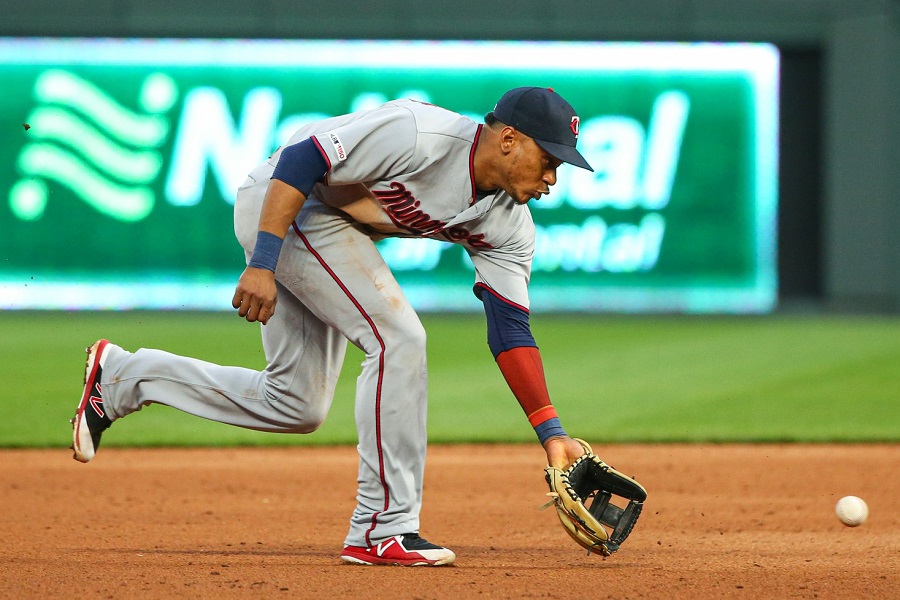 Predestined for Second Base Throughout his minor league career, there were questions about whether Polanco was going to be able to stick at shortstop. In fact, he played some second base in every season throughout his minor league career. If concerns were there, the Twins have ignored them at the big-league level as he has played all but 14 games at shortstop. “When I got here [in 2017], some guys told me, ‘Yeah, his defense, he’s got to work on it, he’s got to improve. Maybe he’s second base when [brian Dozier] leaves,” said Ehire Adrianza, who has backed up Polanco for the past two seasons. “But he works so hard, and he’s been getting better and better. You don’t hear anyone say [he’s not a shortstop] anymore.” “I thought he was going to become an elite, All-Star-level second baseman,” said Jake Mauer, one of Polanco’s minor league managers. “It’s a testament to Jorge that he worked to make himself better and stayed at short. I’m really proud of him.” Defensive Transformation Polanco’s lone full season with the Twins came back in 2017. He logged almost 1120 innings at shortstop and posted a .964 fielding percentage. His other peripheral numbers didn’t stack up as well. He had a -12 Rtot (Total Zone Total Fielding Runs Above Average). He also posted a -1 Rdrs or defensive runs saves above average. The flaws present in his minor league career followed him to the MLB level. This season, Polanco has been a different player on the defensive side of the ball. His Rtot has improved from -12 in 2017 to 4 in 2019. He’s also improved his Rdrs from -1 in 2017 to 7 in 2019. His fielding percentage is roughly the same, but the other defensive metrics show a remarkable improvement. However, those aren’t the only areas in which he has improved. SABR’s Defensive Index Since 2013, SABR and Rawlings have teamed to use SABR’s Defensive Index to help chose the Gold Glove winners in both leagues. According to SABR, the SABR Defensive Index draws on and aggregates two types of existing defensive metrics: those derived from batted ball location-based data and those collected from play-by-play accounts. Because of Polanco’s 2018 suspension, he didn’t have enough games to qualify for the leaderboards that season. In 2017, only four qualified AL shortstops finished with a lower SDI than Polanco's -3.8 SDI. This season, Polanco has seen a remarkable improvement as he is currently at a -0.5 SDI compared to his career high (or career low depending on how you look at it) back in 2017. Since SABR started the Defensive Index, only one Twins shortstop has been able to finish with a non-negative SDI. During the 2014 campaign, Eduardo Escobar finished third in the AL with a 0.0 SDI. He was only 0.2 points away from second place. Polanco might not be in the running for a Gold Glove this year, but he could be on pace for Minnesota’s best shortstop season since SDI was introduced. Stopping the Revolving Door Polanco’s offensive production is tough to ignore, but this is a player that once was thought of as a second baseman at the big-league level. Minnesota signed him to a long-term deal in the off-season to help stop the team’s revolving door at shortstop. Cristian Guzman was the Twins’ Opening Day shortstop for six seasons, from 1999-2004. Since then, no Twin has had more than two Opening Day starts at shortstop. That’s includes 11 different shortstops in 12-years from 2006-17. Minnesota has top prospects like Royce Lewis and Wander Javier working their way towards Target Field. Neither player will be debuting in the imminent future. For now, Polanco doesn’t seem like he is in a position to give up one of the most important positions in baseball. What have you thought about Polanco’s defensive improvements? Leave a COMMENT and start the discussion.
 -
It’s been an entertaining first half and Minnesota has three All-Stars for only the second time since 2009. Many fans were disappointed that the likes of Max Kepler, Taylor Rogers, and Eddie Rosario aren’t joining their teammates in Cleveland. It’s a great honor to be named to the All-Star team, but it’s also nice for players to get a chance to reset amid a grueling season. Which Twins players would be in consideration if the team’s end-of-season awards were being handed out today? With a team 5.5 games up in the division, there are plenty of contributing pieces. Sometimes it can be hard to narrow the list down to one player.All WAR totals listed in the headings are courtesy of FanGraphs. Looking at Baseball Reference’s WAR totals would probably result in similar results as listed below, but likely would have been more definitive for the winning players. Most Valuable Player Candidates: Jorge Polanco (2.9 WAR), Max Kepler (2.8), Jose Berrios (2.7), Byron Buxton (2.5), Jake Odorizzi (2.2) On Tuesday night, Jorge Polanco will represent the Twins as the AL’s starting shortstop in the All-Star Game. His maturation on both sides of the ball has been critical to Minnesota’s first half success. Max Kepler is an interesting name because he has come on strong in recent weeks. If he continues trending upward, both he and Polanco could be in the AL MVP conversation. Jose Berrios and Jake Odorizzi will join Polanco in Cleveland. For Berrios, it will be his second straight appearance in the Mid-Summer Classic. Both pitchers have been integral in the Twins avoiding long losing streaks. Byron Buxton seems to be putting things together. Everyone knows about his defensive skills, but he’s also been able to add some pop to his bat. Buxton might be on top of this list if he’d been healthy for the entire first half. MVP: Jorge Polanco Pitcher of the Year Candidates: Jose Berrios (2.7 WAR), Jake Odorizzi (2.2), Martin Perez (2.0), Taylor Rogers (1.2) At different points in the first half, Minnesota’s top three starting pitchers all looked like Cy Young candidates. Most fans knew what to expect from Jose Berrios as he was coming off an All-Star season. Jake Odorizzi and Martin Perez have both exceeded expectations. Odorizzi has currently collected as much fWAR as Justin Verlander and that puts him just outside the AL top 10. Perez has come back to the norm after a tremendous stretch to start the year. Berrios could have a shot at the Cy Young with a strong second half. Pitchers like Mike Minor, Lance Lynn, and Charlie Morton aren’t exactly household names when it comes to Cy Young voting. Berrios is leading the pitching staff of one of baseball’s best teams and he could help drive a playoff run. Pitcher of the Year: Jose Berrios Reliever of the Year Candidates: Taylor Rogers (1.2 WAR), Ryne Harper (0.6), Trevor May (0.4) This award isn’t much of a race at this point. Taylor Rogers has been a savior for a paper-thin bullpen. Rogers is on pace to have one of Minnesota’s all-time best relief seasons. He’s also doing this when being asked to pitch in a non-traditional closer role. If Minnesota is going on a long playoff run, Rogers will be a key piece to getting big late inning outs. It’s clear rookie manager Rocco Baldelli has full trust in Rogers and that’s the way it should be for a contending team. Reliever of the Year: Taylor Rogers Rookie of the Year Candidates: Luis Arraez (1.0 WAR), Ryne Harper (0.6 WAR) For a team in the thick of a playoff hunt, this is a two-man race. Besides Taylor Rogers, Ryne Harper has been a godsend to Minnesota’s bullpen. He made the Twins claimed a roster spot out of spring training and he has never looked back. Twins Daily readers named him the Sire of Fort Myers and he has lived up to that title. He has been contributing to the team for the entire season and that certainly adds value. There’s no doubt about Luis Arraez and his hit tool. Many of the other facets of his game were in question. In nearly 100 plate appearances, he is hitting .393/.453/.524 with a 10.5 BB% and an 8.4 K%. As a 22-year old, he has shown an advanced approach at the plate and it’s certainly looking like he needs to part of Minnesota’s long-term plans. Harper has been critical, but Arraez has been more than valuable as a replacement player. Rookie of the Year: Luis Arraez Who would you vote for in regards to the awards listed above? Leave a COMMENT and start the discussion. Click here to view the article
- 13 replies
-
- 1
-
-
- jorge polanco
- jose berrios
- (and 3 more)
-
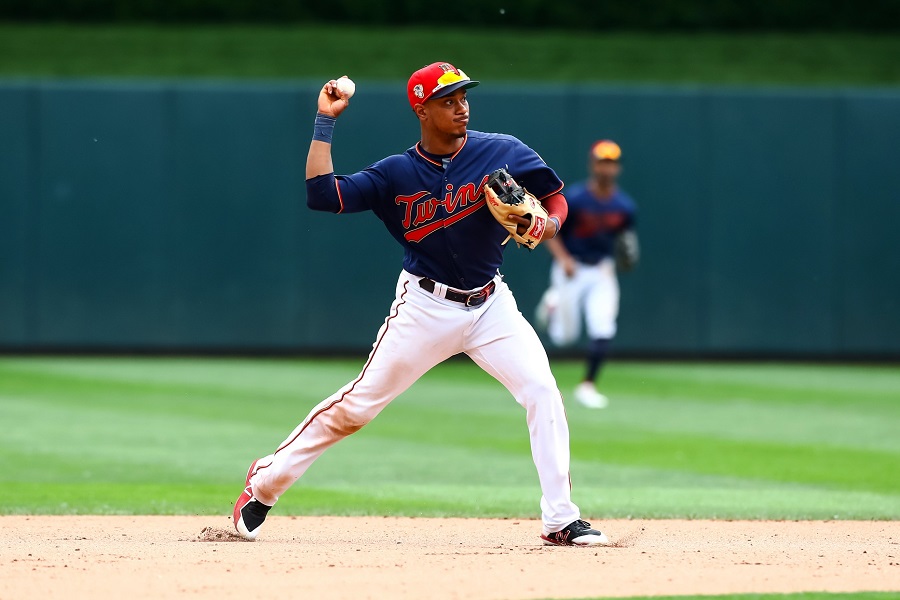 All WAR totals listed in the headings are courtesy of FanGraphs. Looking at Baseball Reference’s WAR totals would probably result in similar results as listed below, but likely would have been more definitive for the winning players. Most Valuable Player Candidates: Jorge Polanco (2.9 WAR), Max Kepler (2.8), Jose Berrios (2.7), Byron Buxton (2.5), Jake Odorizzi (2.2) On Tuesday night, Jorge Polanco will represent the Twins as the AL’s starting shortstop in the All-Star Game. His maturation on both sides of the ball has been critical to Minnesota’s first half success. Max Kepler is an interesting name because he has come on strong in recent weeks. If he continues trending upward, both he and Polanco could be in the AL MVP conversation. Jose Berrios and Jake Odorizzi will join Polanco in Cleveland. For Berrios, it will be his second straight appearance in the Mid-Summer Classic. Both pitchers have been integral in the Twins avoiding long losing streaks. Byron Buxton seems to be putting things together. Everyone knows about his defensive skills, but he’s also been able to add some pop to his bat. Buxton might be on top of this list if he’d been healthy for the entire first half. MVP: Jorge Polanco Pitcher of the Year Candidates: Jose Berrios (2.7 WAR), Jake Odorizzi (2.2), Martin Perez (2.0), Taylor Rogers (1.2) At different points in the first half, Minnesota’s top three starting pitchers all looked like Cy Young candidates. Most fans knew what to expect from Jose Berrios as he was coming off an All-Star season. Jake Odorizzi and Martin Perez have both exceeded expectations. Odorizzi has currently collected as much fWAR as Justin Verlander and that puts him just outside the AL top 10. Perez has come back to the norm after a tremendous stretch to start the year. Berrios could have a shot at the Cy Young with a strong second half. Pitchers like Mike Minor, Lance Lynn, and Charlie Morton aren’t exactly household names when it comes to Cy Young voting. Berrios is leading the pitching staff of one of baseball’s best teams and he could help drive a playoff run. Pitcher of the Year: Jose Berrios Reliever of the Year Candidates: Taylor Rogers (1.2 WAR), Ryne Harper (0.6), Trevor May (0.4) This award isn’t much of a race at this point. Taylor Rogers has been a savior for a paper-thin bullpen. Rogers is on pace to have one of Minnesota’s all-time best relief seasons. He’s also doing this when being asked to pitch in a non-traditional closer role. If Minnesota is going on a long playoff run, Rogers will be a key piece to getting big late inning outs. It’s clear rookie manager Rocco Baldelli has full trust in Rogers and that’s the way it should be for a contending team. Reliever of the Year: Taylor Rogers Rookie of the Year Candidates: Luis Arraez (1.0 WAR), Ryne Harper (0.6 WAR) For a team in the thick of a playoff hunt, this is a two-man race. Besides Taylor Rogers, Ryne Harper has been a godsend to Minnesota’s bullpen. He made the Twins claimed a roster spot out of spring training and he has never looked back. Twins Daily readers named him the Sire of Fort Myers and he has lived up to that title. He has been contributing to the team for the entire season and that certainly adds value. There’s no doubt about Luis Arraez and his hit tool. Many of the other facets of his game were in question. In nearly 100 plate appearances, he is hitting .393/.453/.524 with a 10.5 BB% and an 8.4 K%. As a 22-year old, he has shown an advanced approach at the plate and it’s certainly looking like he needs to part of Minnesota’s long-term plans. Harper has been critical, but Arraez has been more than valuable as a replacement player. Rookie of the Year: Luis Arraez Who would you vote for in regards to the awards listed above? Leave a COMMENT and start the discussion.
 -
Every day at Twins Daily, prospects take center stage every in our Minor League Reports. However, Sunday’s MLB Futures Game allows some of the top talent in the organization to get recognized on the national stage. For some, Royce Lewis was one of the most impressive bats during batting practice. He was also wore a microphone during the game so that provided some additional entertainment. Lewis went 1-for-2 in the game and had a shot to win it in the seventh. Jordan Balazovic might not be as well known as Lewis, but he is rising on prospect lists. The right-handed pitcher out of Canada is quickly moving up prospect lists. Even MilB.com did a story on his journey. In his first appearance in any All-Star Game, he pitched a perfect frame.TRANSACTIONS OF Jake Cave recalled by Minnesota from Rochester. LHP Devin Smeltzer recalled by Minnesota from Rochester. INF Wilin Rosario reinstated from the IL with Rochester. AWARDS The Twins announced their weekly Hitter and Pitcher of the Week: Hitter of the Week: Jaylin Davis, RochesterIn eight games including a Friday doubleheader, Davis hit .364 (12-for-33) with three doubles, four home runs, eight RBI, two walks and a 1.128 OPS. Davis, 25, was a 25th-round pick by the Twins in 2015 and has hit .284 (81-for-285) with 15 doubles, 17 home runs and 47 RBI in 77 games between Double-A Pensacola and Rochester.Pitcher of the Week: Luis Rijo, Cedar RapidsRijo made the start on Thursday vs. Burlington, pitching 7.0 shutout innings with one hit allowed, no walks and 10 strikeouts. The 20-year-old Venezuela native was acquired by the Twins in 2018 from New York-AL, in exchange for right-handed pitcher and current Ranger Lance Lynn RED WINGS REPORT Rochester 4, Scranton/WB 7 (Game 1- 7 Innings) Box Score Yeltsin Encarnacion tried to carry the Red Wings offense all by himself in this one. He finished the day 3-for-3 with a run scored. Brent Rooker knocked his 14th home run of the year, while Jimmy Kerrigan collected his first Triple-A home run. Unfortunately, it was not enough. In a bullpen game, Preston Guilmet started and pitched three scoreless frames. He struck out three and limited batters to three hits. Jake Reed ran into some trouble in the fourth. He allowed four earned runs on three hits. Ryan Eades took the loss after allowing two earned runs on three hits in one inning. DJ Baxendale took the final frame and allowed a solo home run. Rochester 3, Scranton/WB 6 (Game 2 - 7 Innings) Box Score Rochester pitchers allowed six runs in the first three innings and the offense couldn’t recover. In only his fourth start for Rochester, Drew Hutchison took the brunt of the damage. He was charged with six runs on eight hits in five innings. This included three home runs. Gabriel Moya made it through a scoreless innings with a strikeout and two hits allowed. Fresh off his Player of the Week honors, Jaylin Davis clocked his eighth home run. It was a two run-shot and it briefly put Rochester on top. Ronald Torreyes and Wilin Rosario both went 2-for-3. Zander Wiel collected his 22nd double. BLUE WAHOO BITES Pensacola 5, Birmingham 6 (10 Innings) Box Score Pensacola scored three runs over the final two innings, but it wouldn’t be enough as the bullpen faltered in extra frames. Charlie Barnes allowed his most earned runs in over a month, but he was able to keep the Blue Wahoos in the game. He allowed four earned runs on seven hits with six strike outs. Alex Phillips and Hector Lujan combined for four shutout innings to hold serve while the offense recovered. Zack Weiss allowed the final two runs of the game and was stuck with the loss. Offensively, four batters had multiple hits and the Blue Wahoos combined for eleven total hits. Unfortunately, the team went 3-for-16 with runners in scoring position and left eight men on base. Alex Kirilloff knocked his fourth home run. Lewin Diaz went 2-for-5 with a pair of doubles. MIRACLE MATTERS Ft. Myers 2, Palm Beach 12 Box Score Fort Myers had won six straight, but all good things must come to an end. Fort Myers was limited to eight hits including two extra-base hits. Jose Miranda went 1-for-4 with his 17th double. Michael Davis went 2-for-2 with a double. In a blowout loss, Cody Allen might have provided a positive light. Allen was used as an opener and pitched a perfect inning. According to reports, he was sitting in the low 90s with his fastball and he threw 83% of his pitches for strikes. Since joining Fort Myers, he has thrown four scoreless innings. There weren’t many other positives for the pitching staff as every pitcher that threw at least one inning allowed a minimum of one run. KERNELS NUGGETS Cedar Rapids 5, Quad Cities 2 Box Score Cedar Rapids earned their seventh win in a row, a season high. Kai-Wei Teng also extended the Kernel’s quality start streak to nine straight games. He pitched seven innings and the only run scored with him on the mound was unearned. He struck out four and didn’t walk any as his season ERA dipped to 1.85. Cedar Rapids is 6-0 when he takes the mound. Moises Gomez earned his sixth save after striking out the side in the ninth. Gabe Snyder had a role in two of the biggest moments of the day. His first inning solo home run gave Cedar Rapids an early lead. In the sixth, he coaxed a two out walk and scored from first on a double from Jared Akins. Chris Williams followed with a double of his own to stretch the lead to 3-1. E-TWINS E-NOTES Elizabethton 7, Kingsport 3 Box Score Elizabethton was out-hit six to nine, but it didn’t factor into the outcome of this game. Prelander Berroa did well to pitch five innings for the second consecutive start. He allowed two earned runs on seven hits for his first victory. In relief, Osiris German was very strong. He limited the Cardinals to one hit over three innings. He struck out four and walked a pair. Nate Hadley pitched a scoreless ninth with two strikeouts. Matt Wallner drove in a pair of runs with a home run in the first inning. It was his second professional home run. Charles Mack went 2-for-4 and added his third home run. Seth Gray reached base twice and scored a pair of runs to help the cause. TWINS DAILY PLAYERS OF THE DAY TD Pitcher of the Day- Kai-Wei Teng, Cedar Rapids (7.0 IP, 0 ER, 4 H, 4 K, 0 BB) TD Hitter of the Day- Gabe Snyder, Cedar Rapids (2-for-4, HR, 2 R, RBI, BB, K) PROSPECT SUMMARY Here’s a look at how the Twins Daily Top 20 Twins Prospects performed: #1 - Royce Lewis (AL Futures Game) – 1-2, K #2 - Alex Kirilloff (Pensacola) – 1-4, HR, 2 R, RBI, BB #3 - Brusdar Graterol (Pensacola) - Injured list #4 - Trevor Larnach (Ft. Myers) – 1-4, R, K #5 - Wander Javier (Cedar Rapids) – 1-4, K, BB #6 - Jordan Balazovic (AL Futures Game) – 1.0 IP, 0 ER, 0 H, 0 K, 0 BB #7 - Keoni Cavaco (GCL Twins) - Did not play #8 - Brent Rooker (Rochester) – 1-7, HR, RBI, R, 2 K #9 - Jhoan Duran (Ft. Myers) - Did not pitch #10 - Blayne Enlow (Ft. Myers) - Did not pitch #11 - Lewis Thorpe (Rochester) – Did not pitch #12 - Nick Gordon (Rochester) – 1-8, 2 K #13 - Ryan Jeffers (Ft. Myers) – Did not play #14 - Luis Arraez (Twins) - 1-5 #15 - Matt Wallner (Elizabethton) - 1-4, HR, 2 RBI, R, K #16 - Ben Rortvedt (Pensacola) – 1-5, 2 K #17 - Akil Baddoo (Ft. Myers) - Out for year with Tommy John surgery #18 - Jorge Alcala (Pensacola) - Did not pitch #19 - Misael Urbina (DSL Twins) – No scheduled game #20 - Travis Blankenhorn (Pensacola) - 2-5, RBI MONDAY’S PROBABLE STARTERS Rochester- Scheduled Off-Day Pensacola @ Birmingham (7:05 CST) – RHP Jorge Alcala (5-5, 6.69 ERA) Fort Myers vs. Daytona (6:00 CST) – RHP Cole Sands (4-2, 2.47 ERA) Cedar Rapids @ Quad Cities (6:35 CST) – RHP Austin Schulfer (6-4, 2.40 ERA) Elizabethton Twins @ Johnson City (5:30 CST)- LHP Ryley Widell (0-3, 10.38 ERA) GCL Twins vs. GCL Pirates (11:00 am CST) – TBD Please feel free to ask any questions and discuss Sunday’s games. Click here to view the article
- 6 replies
-
- 2
-
-
- royce lewis
- jordan balazovic
- (and 3 more)
-
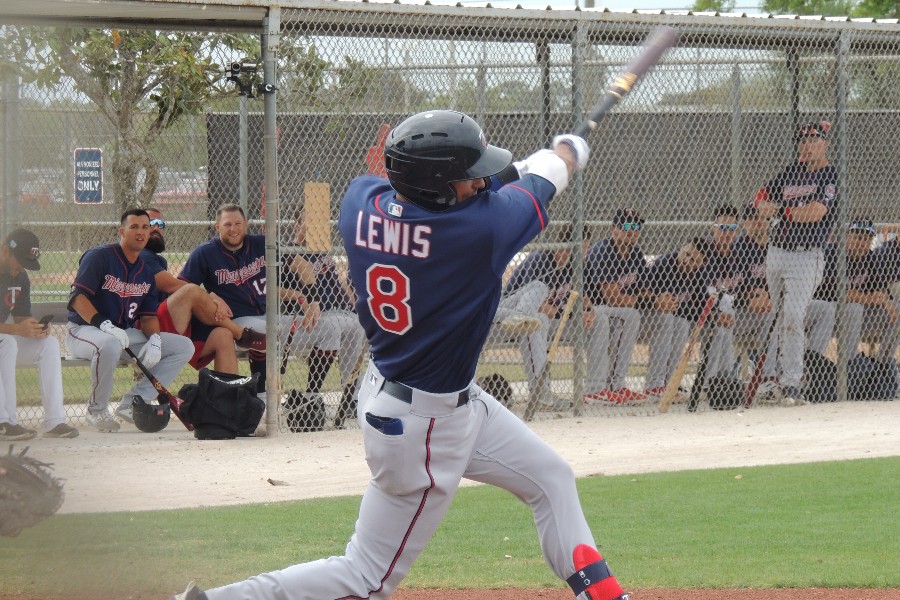 TRANSACTIONS OF Jake Cave recalled by Minnesota from Rochester. LHP Devin Smeltzer recalled by Minnesota from Rochester. INF Wilin Rosario reinstated from the IL with Rochester. AWARDS The Twins announced their weekly Hitter and Pitcher of the Week: Hitter of the Week: Jaylin Davis, Rochester In eight games including a Friday doubleheader, Davis hit .364 (12-for-33) with three doubles, four home runs, eight RBI, two walks and a 1.128 OPS. Davis, 25, was a 25th-round pick by the Twins in 2015 and has hit .284 (81-for-285) with 15 doubles, 17 home runs and 47 RBI in 77 games between Double-A Pensacola and Rochester. Pitcher of the Week: Luis Rijo, Cedar Rapids Rijo made the start on Thursday vs. Burlington, pitching 7.0 shutout innings with one hit allowed, no walks and 10 strikeouts. The 20-year-old Venezuela native was acquired by the Twins in 2018 from New York-AL, in exchange for right-handed pitcher and current Ranger Lance Lynn RED WINGS REPORT Rochester 4, Scranton/WB 7 (Game 1- 7 Innings) Box Score Yeltsin Encarnacion tried to carry the Red Wings offense all by himself in this one. He finished the day 3-for-3 with a run scored. Brent Rooker knocked his 14th home run of the year, while Jimmy Kerrigan collected his first Triple-A home run. Unfortunately, it was not enough. In a bullpen game, Preston Guilmet started and pitched three scoreless frames. He struck out three and limited batters to three hits. Jake Reed ran into some trouble in the fourth. He allowed four earned runs on three hits. Ryan Eades took the loss after allowing two earned runs on three hits in one inning. DJ Baxendale took the final frame and allowed a solo home run. Rochester 3, Scranton/WB 6 (Game 2 - 7 Innings) Box Score Rochester pitchers allowed six runs in the first three innings and the offense couldn’t recover. In only his fourth start for Rochester, Drew Hutchison took the brunt of the damage. He was charged with six runs on eight hits in five innings. This included three home runs. Gabriel Moya made it through a scoreless innings with a strikeout and two hits allowed. Fresh off his Player of the Week honors, Jaylin Davis clocked his eighth home run. It was a two run-shot and it briefly put Rochester on top. Ronald Torreyes and Wilin Rosario both went 2-for-3. Zander Wiel collected his 22nd double. BLUE WAHOO BITES Pensacola 5, Birmingham 6 (10 Innings) Box Score Pensacola scored three runs over the final two innings, but it wouldn’t be enough as the bullpen faltered in extra frames. Charlie Barnes allowed his most earned runs in over a month, but he was able to keep the Blue Wahoos in the game. He allowed four earned runs on seven hits with six strike outs. Alex Phillips and Hector Lujan combined for four shutout innings to hold serve while the offense recovered. Zack Weiss allowed the final two runs of the game and was stuck with the loss. Offensively, four batters had multiple hits and the Blue Wahoos combined for eleven total hits. Unfortunately, the team went 3-for-16 with runners in scoring position and left eight men on base. Alex Kirilloff knocked his fourth home run. Lewin Diaz went 2-for-5 with a pair of doubles. MIRACLE MATTERS Ft. Myers 2, Palm Beach 12 Box Score Fort Myers had won six straight, but all good things must come to an end. Fort Myers was limited to eight hits including two extra-base hits. Jose Miranda went 1-for-4 with his 17th double. Michael Davis went 2-for-2 with a double. In a blowout loss, Cody Allen might have provided a positive light. Allen was used as an opener and pitched a perfect inning. According to reports, he was sitting in the low 90s with his fastball and he threw 83% of his pitches for strikes. Since joining Fort Myers, he has thrown four scoreless innings. There weren’t many other positives for the pitching staff as every pitcher that threw at least one inning allowed a minimum of one run. KERNELS NUGGETS Cedar Rapids 5, Quad Cities 2 Box Score Cedar Rapids earned their seventh win in a row, a season high. Kai-Wei Teng also extended the Kernel’s quality start streak to nine straight games. He pitched seven innings and the only run scored with him on the mound was unearned. He struck out four and didn’t walk any as his season ERA dipped to 1.85. Cedar Rapids is 6-0 when he takes the mound. Moises Gomez earned his sixth save after striking out the side in the ninth. Gabe Snyder had a role in two of the biggest moments of the day. His first inning solo home run gave Cedar Rapids an early lead. In the sixth, he coaxed a two out walk and scored from first on a double from Jared Akins. Chris Williams followed with a double of his own to stretch the lead to 3-1. E-TWINS E-NOTES Elizabethton 7, Kingsport 3 Box Score Elizabethton was out-hit six to nine, but it didn’t factor into the outcome of this game. Prelander Berroa did well to pitch five innings for the second consecutive start. He allowed two earned runs on seven hits for his first victory. In relief, Osiris German was very strong. He limited the Cardinals to one hit over three innings. He struck out four and walked a pair. Nate Hadley pitched a scoreless ninth with two strikeouts. Matt Wallner drove in a pair of runs with a home run in the first inning. It was his second professional home run. Charles Mack went 2-for-4 and added his third home run. Seth Gray reached base twice and scored a pair of runs to help the cause. TWINS DAILY PLAYERS OF THE DAY TD Pitcher of the Day- Kai-Wei Teng, Cedar Rapids (7.0 IP, 0 ER, 4 H, 4 K, 0 BB) TD Hitter of the Day- Gabe Snyder, Cedar Rapids (2-for-4, HR, 2 R, RBI, BB, K) PROSPECT SUMMARY Here’s a look at how the Twins Daily Top 20 Twins Prospects performed: #1 - Royce Lewis (AL Futures Game) – 1-2, K #2 - Alex Kirilloff (Pensacola) – 1-4, HR, 2 R, RBI, BB #3 - Brusdar Graterol (Pensacola) - Injured list #4 - Trevor Larnach (Ft. Myers) – 1-4, R, K #5 - Wander Javier (Cedar Rapids) – 1-4, K, BB #6 - Jordan Balazovic (AL Futures Game) – 1.0 IP, 0 ER, 0 H, 0 K, 0 BB #7 - Keoni Cavaco (GCL Twins) - Did not play #8 - Brent Rooker (Rochester) – 1-7, HR, RBI, R, 2 K #9 - Jhoan Duran (Ft. Myers) - Did not pitch #10 - Blayne Enlow (Ft. Myers) - Did not pitch #11 - Lewis Thorpe (Rochester) – Did not pitch #12 - Nick Gordon (Rochester) – 1-8, 2 K #13 - Ryan Jeffers (Ft. Myers) – Did not play #14 - Luis Arraez (Twins) - 1-5 #15 - Matt Wallner (Elizabethton) - 1-4, HR, 2 RBI, R, K #16 - Ben Rortvedt (Pensacola) – 1-5, 2 K #17 - Akil Baddoo (Ft. Myers) - Out for year with Tommy John surgery #18 - Jorge Alcala (Pensacola) - Did not pitch #19 - Misael Urbina (DSL Twins) – No scheduled game #20 - Travis Blankenhorn (Pensacola) - 2-5, RBI MONDAY’S PROBABLE STARTERS Rochester- Scheduled Off-Day Pensacola @ Birmingham (7:05 CST) – RHP Jorge Alcala (5-5, 6.69 ERA) Fort Myers vs. Daytona (6:00 CST) – RHP Cole Sands (4-2, 2.47 ERA) Cedar Rapids @ Quad Cities (6:35 CST) – RHP Austin Schulfer (6-4, 2.40 ERA) Elizabethton Twins @ Johnson City (5:30 CST)- LHP Ryley Widell (0-3, 10.38 ERA) GCL Twins vs. GCL Pirates (11:00 am CST) – TBD Please feel free to ask any questions and discuss Sunday’s games.
 -
Minnesota has one of baseball’s strongest farm systems and the five players below are only part of the equation. With the trade deadline less than a month away, at least one of these players could find themselves in another organization. Some of these names seem like they would be untouchable in a trade, but Minnesota hasn’t had a big-league team this good in quite some time. If the deal is right, it could make sense to trade a top-5 prospect.Compared to the Twins Daily Preseason Top-20 rankings, the top-5 has stayed exactly the same. In fact, the top-3 prospects were named in the same order on every ballot. Jordan Balazovic has been a fast riser among Twins top prospects and he just missed the top-5. If he continues his strong start to the season, he could be a top-5 prospect before the start of next year. 5. Wander Javier – SS Age: 20 ETA: 2023 2019 Stats (A-): .172/.274/.258 (.532 OPS), 2 2B, 0 3B, 2 HR, 31 K, 12 BB 2019 Preseason Ranking: 5 Seth: 4 | Tom: 5 | Cody: 5 | Ted: 6 | Steve: 4 Wander Javier needs to stay healthy after missing all of 2018 with a torn labrum in his non-throwing shoulder. During this spring, he had a quad injury that limited him. Minnesota hopes he can live up to the $4 million bonus he signed for back in 2015. He quickly acclimated to professional life as he hit .308/.400/.654 (1.054) in the 2016 Dominican Summer League. Although, he put up those numbers in only nine games and 30 plate appearances. Back in 2017, he hit .299/.383/.471 with Elizabethton. He lost an entire season, but he is still only 20 years old, which makes him over a year younger than the competition in the Midwest League. Javier has added weight since signing with the Twins and there is still room for him to grow and add more power. At present, his quick hands help him to generate power and drive the ball to all fields. Most scouts believe he will be able to stick at shortstop long-term. 4. Trevor Larnach - RF Age: 22 ETA: 2021 2019 Stats (A+): .308/.375/.459 (.833 OPS), 25 2B, 1 3B, 5 HR, 66 K, 30 BB 2019 Preseason Ranking: 4 Seth: 5 | Tom: 4 | Cody: 4 | Ted: 5 | Steve: 6 Out of the players in the top-5, Larnach might be having the best overall season. He’s stayed healthy and, on the field, so that certainly helps. Minnesota drafted Larnach in the first round in 2018. During his junior season at Oregon State, he hit .348/.463/.652 (1.115) with 19 home runs. His breakout campaign helped the Beavers to claim the College World Series. After signing with the Twins, he split time between Elizabethton and Cedar Rapids while batting .303/.390/.500 (.890). He added 19 extra-base hits and combined that with a 28 to 21 strikeout to walk ratio. Throughout his college career, Larnach added over 50 pounds to his frame and he’s added at least another 10 pounds since signing with the Twins. Adding weight has certainly helped his power production. He is among the FSL leaders in batting average, OBP, SLG, OPS. Not to mention, he leads the league in doubles and total bases. Larnach uses an advanced approach at the plate and he can drive the ball to all fields. 3. Brusdar Graterol – RHP Age: 20 ETA: 2021 2019 Stats (AA): 47.2 IP, 1.89 ERA, 1.05 WHIP, 8.7 K/9, 3.6 BB/9, 2.42 K/BB 2019 Preseason Ranking: 3 Seth: 3 | Tom: 3 | Cody: 3 | Ted: 3 | Steve: 3 Graterol has come a long way since the Twins signed him as a 16-year old back in 2014. The right-handed hurler was forced to miss all of 2016 after having Tommy John surgery. Luckily, he has come back to put himself in the conversation as a top-100 prospect in all of baseball. His fastball can hit in the triple digits multiple times per game but he usually sits in the high-90s. Add in a good slider and an improving change-up and he makes it tough on opposing batters. Last year, Graterol split time between Low- and High-A. In over 100 innings, he had a 2.74 ERA with a 1.15 WHIP. He also posted a 107 to 28 strikeout to walk ratio. To start the 2019 campaign, Minnesota continued to be aggressive with him by moving him up to Double-A. He had only pitched 60 2/3 innings in Fort Myers. He has responded to the challenge by allowing two runs or fewer in eight of his nine appearances. Unfortunately, he is on the injured list with a should impingement that could be related to a trapezius injury from earlier in the year. 2. Alex Kirilloff – OF/1B Age: 21 ETA: 2020 2019 Stats (AA): .268/.356/.399 (.755 OPS), 12 2B, 1 3B, 2 HR, 37 K, 17 BB 2019 Preseason Ranking: 2 Seth: 2 | Tom: 2 | Cody: 2 | Ted: 2 | Steve: 2 Following a monster 2018 season, Kirilloff lofted himself into the conversation of best hitting prospect in all of baseball. In 130 games, he hit .348/.392/.578 (.970) with 20 home runs and 44 doubles. He had the highest OPS among hitters in the Midwest League and Florida State League with 280 plate appearances. Fort Myers would claim the FSL Championship and he added a five-hit game to help the cause. Following the season, he was named the Twins Daily Hitter of the Year and MiLB named him the Breakout Prospect of the Year. Naturally, one can expect a little regression this year even with higher expectations. Injuries have also played a role in his decreased production. He missed the first month of the season with a wrist injury before coming back for 29 games. Then he headed back to the injured list with the same injury. 1. Royce Lewis - SS ETA: 2021 Age: 20 2019 Stats (A+): .229/.276/.350 (.625 OPS), 13 2B, 3 3B, 6 HR, 72 K, 20 BB 2019 Ranking: 1 Seth: 1 | Tom: 1 | Cody: 1 | Ted: 1 | Steve: 1 When the Twins selected Lewis in 2017, he became the Twins first number one overall pick since Joe Mauer. Since then, he has put himself in the conversation as one of baseball’s best prospects. In his pro debut, he hit .279/.381/.407 (.788) with 15 extra-base hits in 54 games between the GCL and the Midwest League. He made a return trip with the Kernels last season and posted a .853 OPS with 23 doubles and nine home runs. In the second half, he’d be promoted to Fort Myers where he’d help the club the FSL Championship with three home runs in two games of the series. Lewis is a scouting department’s dream as he has all the attributes of a five-tool player. He can hit and his power tool showed improvement throughout 2018. In fact, 13 of his 14 home runs came in the final 86 games last year. So far this year, his offensive numbers are down. In a recent chat, ESPN’s Keith Law mentioned there have been some changes to his swing and setup. He thinks there are “way too many moving parts.” His speed is undeniable, and he will continue to get better at stealing bases. As far as defense, many believe he will be able stick at shortstop. Will any of these players be dealt before the trade deadline? Leave a COMMENT and start the discussion. Also, stop back tomorrow as Nick will review out countdown of the top prospects. Twins Daily 2019 Midseason Prospect Rankings Prospects 36-40 Prospects 31-35 Prospects 26-30 Prospects 21-25 Prospects 16-20 Prospects 11-15 Prospects 6-10 Prospects 1-5 (TODAY) Top Prospect Recap Coming Tomorrow Click here to view the article
-
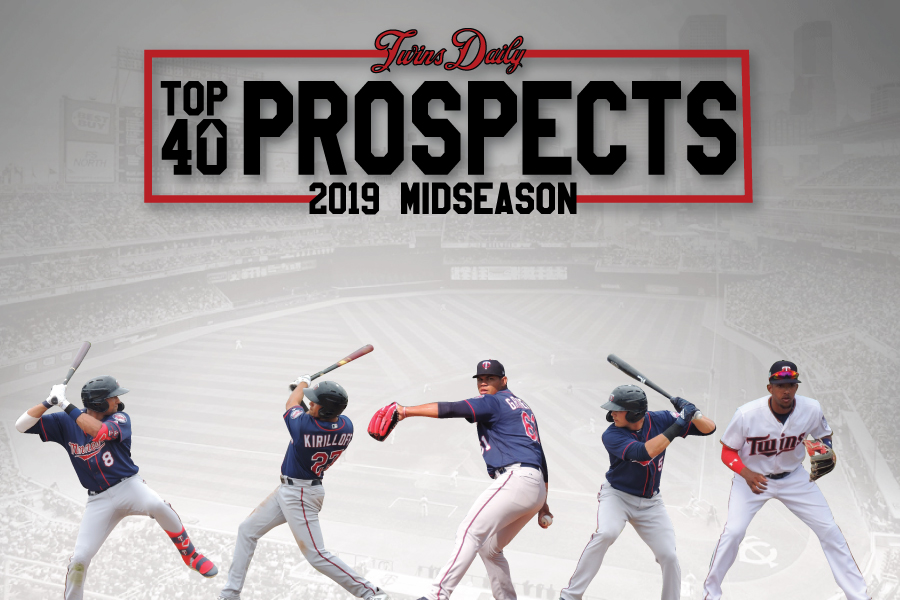 Compared to the Twins Daily Preseason Top-20 rankings, the top-5 has stayed exactly the same. In fact, the top-3 prospects were named in the same order on every ballot. Jordan Balazovic has been a fast riser among Twins top prospects and he just missed the top-5. If he continues his strong start to the season, he could be a top-5 prospect before the start of next year. 5. Wander Javier – SS Age: 20 ETA: 2023 2019 Stats (A-): .172/.274/.258 (.532 OPS), 2 2B, 0 3B, 2 HR, 31 K, 12 BB 2019 Preseason Ranking: 5 Seth: 4 | Tom: 5 | Cody: 5 | Ted: 6 | Steve: 4 Wander Javier needs to stay healthy after missing all of 2018 with a torn labrum in his non-throwing shoulder. During this spring, he had a quad injury that limited him. Minnesota hopes he can live up to the $4 million bonus he signed for back in 2015. He quickly acclimated to professional life as he hit .308/.400/.654 (1.054) in the 2016 Dominican Summer League. Although, he put up those numbers in only nine games and 30 plate appearances. Back in 2017, he hit .299/.383/.471 with Elizabethton. He lost an entire season, but he is still only 20 years old, which makes him over a year younger than the competition in the Midwest League. Javier has added weight since signing with the Twins and there is still room for him to grow and add more power. At present, his quick hands help him to generate power and drive the ball to all fields. Most scouts believe he will be able to stick at shortstop long-term. 4. Trevor Larnach - RF Age: 22 ETA: 2021 2019 Stats (A+): .308/.375/.459 (.833 OPS), 25 2B, 1 3B, 5 HR, 66 K, 30 BB 2019 Preseason Ranking: 4 Seth: 5 | Tom: 4 | Cody: 4 | Ted: 5 | Steve: 6 Out of the players in the top-5, Larnach might be having the best overall season. He’s stayed healthy and, on the field, so that certainly helps. Minnesota drafted Larnach in the first round in 2018. During his junior season at Oregon State, he hit .348/.463/.652 (1.115) with 19 home runs. His breakout campaign helped the Beavers to claim the College World Series. After signing with the Twins, he split time between Elizabethton and Cedar Rapids while batting .303/.390/.500 (.890). He added 19 extra-base hits and combined that with a 28 to 21 strikeout to walk ratio. Throughout his college career, Larnach added over 50 pounds to his frame and he’s added at least another 10 pounds since signing with the Twins. Adding weight has certainly helped his power production. He is among the FSL leaders in batting average, OBP, SLG, OPS. Not to mention, he leads the league in doubles and total bases. Larnach uses an advanced approach at the plate and he can drive the ball to all fields. 3. Brusdar Graterol – RHP Age: 20 ETA: 2021 2019 Stats (AA): 47.2 IP, 1.89 ERA, 1.05 WHIP, 8.7 K/9, 3.6 BB/9, 2.42 K/BB 2019 Preseason Ranking: 3 Seth: 3 | Tom: 3 | Cody: 3 | Ted: 3 | Steve: 3 Graterol has come a long way since the Twins signed him as a 16-year old back in 2014. The right-handed hurler was forced to miss all of 2016 after having Tommy John surgery. Luckily, he has come back to put himself in the conversation as a top-100 prospect in all of baseball. His fastball can hit in the triple digits multiple times per game but he usually sits in the high-90s. Add in a good slider and an improving change-up and he makes it tough on opposing batters. Last year, Graterol split time between Low- and High-A. In over 100 innings, he had a 2.74 ERA with a 1.15 WHIP. He also posted a 107 to 28 strikeout to walk ratio. To start the 2019 campaign, Minnesota continued to be aggressive with him by moving him up to Double-A. He had only pitched 60 2/3 innings in Fort Myers. He has responded to the challenge by allowing two runs or fewer in eight of his nine appearances. Unfortunately, he is on the injured list with a should impingement that could be related to a trapezius injury from earlier in the year. 2. Alex Kirilloff – OF/1B Age: 21 ETA: 2020 2019 Stats (AA): .268/.356/.399 (.755 OPS), 12 2B, 1 3B, 2 HR, 37 K, 17 BB 2019 Preseason Ranking: 2 Seth: 2 | Tom: 2 | Cody: 2 | Ted: 2 | Steve: 2 Following a monster 2018 season, Kirilloff lofted himself into the conversation of best hitting prospect in all of baseball. In 130 games, he hit .348/.392/.578 (.970) with 20 home runs and 44 doubles. He had the highest OPS among hitters in the Midwest League and Florida State League with 280 plate appearances. Fort Myers would claim the FSL Championship and he added a five-hit game to help the cause. Following the season, he was named the Twins Daily Hitter of the Year and MiLB named him the Breakout Prospect of the Year. Naturally, one can expect a little regression this year even with higher expectations. Injuries have also played a role in his decreased production. He missed the first month of the season with a wrist injury before coming back for 29 games. Then he headed back to the injured list with the same injury. 1. Royce Lewis - SS ETA: 2021 Age: 20 2019 Stats (A+): .229/.276/.350 (.625 OPS), 13 2B, 3 3B, 6 HR, 72 K, 20 BB 2019 Ranking: 1 Seth: 1 | Tom: 1 | Cody: 1 | Ted: 1 | Steve: 1 When the Twins selected Lewis in 2017, he became the Twins first number one overall pick since Joe Mauer. Since then, he has put himself in the conversation as one of baseball’s best prospects. In his pro debut, he hit .279/.381/.407 (.788) with 15 extra-base hits in 54 games between the GCL and the Midwest League. He made a return trip with the Kernels last season and posted a .853 OPS with 23 doubles and nine home runs. In the second half, he’d be promoted to Fort Myers where he’d help the club the FSL Championship with three home runs in two games of the series. Lewis is a scouting department’s dream as he has all the attributes of a five-tool player. He can hit and his power tool showed improvement throughout 2018. In fact, 13 of his 14 home runs came in the final 86 games last year. So far this year, his offensive numbers are down. In a recent chat, ESPN’s Keith Law mentioned there have been some changes to his swing and setup. He thinks there are “way too many moving parts.” His speed is undeniable, and he will continue to get better at stealing bases. As far as defense, many believe he will be able stick at shortstop. Will any of these players be dealt before the trade deadline? Leave a COMMENT and start the discussion. Also, stop back tomorrow as Nick will review out countdown of the top prospects. Twins Daily 2019 Midseason Prospect Rankings Prospects 36-40 Prospects 31-35 Prospects 26-30 Prospects 21-25 Prospects 16-20 Prospects 11-15 Prospects 6-10 Prospects 1-5 (TODAY) Top Prospect Recap Coming Tomorrow
 -
Red Wings outfielder Brent Rooker has been destroying the baseball and he was recognized for it on Thursday. The International League announced the league’s All-Star rosters and Rooker will be joined by catcher Tomas Telis as Rochester’s representatives. Stu Cliburn, the team’s pitching coach, will also make the trip to El Paso, TX for the game. Would Rooker or Telis impact the Red Wings line-up on Thursday? Read on to find out.TRANSACTIONS OF LaMonte Wade promoted to Minnesota from Rochester. IF Ronald Torreyes promoted to Rochester from Fort Myers. LHP Andrew Vasquez reinstated from the IL with Rochester. RHP DJ Baxendale placed on IL with Rochester (left ankle sprain). RHP Adam Bray transferred to Pensacola to Rochester. LHP Bryan Sammons placed on the IL with Pensacola. RHP Tom Hackimer placed on the suspended list for Pensacola. LHP J.T. Perez promoted to Cedar Rapids from Elizabethton. SS Tanner Brubaker assigned to Elizabethton. LF Carlos Agular placed on the IL with the GCL Twins. RHP Regi Grace placed on the IL with the GCL Twins. RED WINGS REPORT Rochester 8, Lehigh Valley 7 Box Score Rochester snuck out to an early 4-0 lead in this one and they needed every run in the end. Zander Wiel and Nick Gordon both had three-hit nights. Gordon had his 15th double while Wiel had his 13th home run and his 19th double. Jordany Valdespin, Wilin Rosario and Brian Schales all joined the multi-hit parade with two hits apiece. The Red Wings pounded out 15 total hits, but the club only went 4-for-21 with runners in scoring position. Devin Smeltzer pitched into the fifth inning, allowing one run, a home run, with five strikeouts and a walk. Rochester’s bullpen did little to support Smeltzer’s effort as every relief pitcher allowed at least one run. Jake Reed surrendered three runs in two innings. Carlos Torres pitched 1 1/3 innings and gave up two runs on two hits. Ian Krol earned his third save but he also allowed a run in the ninth as the result of three walks. BLUE WAHOO BITES Pensacola 1, Biloxi 5 Box Score The Blue Wahoos offensive struggled to string together hits and found themselves on the wrong end of this one. Only one batter stepped in with a runner in scoring position and the team went 0-for-1 in those situations. Lewin Diaz continued his hot hitting ways since being called up. He homered for the second time in three games. Alex Kirilloff and Mark Contreras both added doubles. Andro Cutura was used as an opener and held Biloxi off the scoreboard even though he allowed two hits. Charlie Barnes was used as the primary pitcher. He allowed two earned runs but errors from Alex Kirilloff and Travis Blankenhorn allowed two unearned runs to score. Barnes struck out six and walked one in six innings. Jeff Ames allowed one run on one hit in two innings. He struck out one and walked two. MIRACLE MATTERS Ft. Myers 1, Charlotte 2 Box Score Blayne Enlow ended up on the wrong end of a pitcher’s duel. Both starting pitchers allowed a home run but Enlow’s was a two-run shot to baseball’s best prospect, Wander Franco. In 6 1/3 innings, Enlow allowed two runs on five hits with six strikeouts and two walks. He’s pitched six innings in every appearance with Fort Myers and he has yet to allow more than two runs. Ryan Jeffers accounted for the lone Miracle run. He knocked his 10th home run in the fourth inning and it gave Fort Myers a 1-0 lead. He finished 2-for-4. Royce Lewis and Gabriel Maciel both went 1-for-4. Andrew Bechtold picked up a hit in three trips. He’s now gone 3-for-20 since being promoted from Cedar Rapids. Joe Record finished off the seventh inning for Enlow. He allowed a walk and a hit. Derek Molina continued his tremendous streak. Over his last 11 appearances, Molina hasn’t allowed an earned run. In this one, he pitched two perfect innings and struck out four. In other news... KERNELS NUGGETS Cedar Rapids 2, Wisconsin 5 (11 Innings) Box Score Cedar Rapids scored two runs in the first three innings. However, they would be shut out from there and Wisconsin plated three runs in extra-innings for the win. Jacob Pearson did his best to keep Cedar Rapids in this one. In the first inning, Pearson set up a run all by himself. He led off the inning with a single and then he stole second. Gabe Snyder followed with a single and Pearson came around to score. In the bottom of the third, he cracked his fourth home run of the year. Chris Williams and Daniel Ozoria both went 2-for-4 in the losing effort. Tyler Palm was terrific on the mound as he was nearly unhittable. He retired the first 14 batters he faced and carried a no-hitter into the sixth inning. In 5 1/3 innings, he limited the Timber Rattlers to one run on three hits. He struck out three and walked one. Carlos Suniaga pitched 1 2/3 innings and only allowed one baserunner while striking out two. Moises Gomez struck out six batters in three innings, but he allowed the tying run in the eighth. Tanner Howell took the loss after Wisconsin put up a three spot in the final frame. Three walks would come back to haunt him. E-TWINS E-NOTES Elizabethton 2, Bristol 6 Box Score Bristol jumped all over E-Twins starter Tyler Benninghoff in his first start of the year. The first batter doubled and moved to third on a wild pitch. Six straight batters reached before Benninghoff was able to record an out. He was only able to collect two outs and he allowed six runs on four hits. The E-Twins bullpen did fantastic in relief. Frandy Torres took over for Benninghoff and did well in a tough spot. Over 3 1/3 shutout innings, he limited the Pirates to two hits and added four strikeouts. Louie Varland continued the shutout innings. He tossed three innings and allowed two hits. Nate Hadley finished off the final two frames. He only allowed one baserunner and struck out three. Elizabethton was limited to four hits in the game. Matt Wallner collected his first professional home run as part of a two-hit effort. He also scored both of the team’s runs. Trevor Jensen reached base two times. TWINS DAILY PLAYERS OF THE DAY TD Pitcher of the Day- Tyler Palm, Cedar Rapids (5.1 IP, 1 ER, 1 H, 3 K, BB) TD Hitter of the Day- Zander Wiel, Rochester (3-for-5, HR, 2B, 2 RBI, R, 2 K) PROSPECT SUMMARY Here’s a look at how the Twins Daily Top 20 Twins Prospects performed: #1 - Royce Lewis (Ft. Myers) – 1-4 #2 - Alex Kirilloff (Pensacola) – 1-3, 2B, BB #3 - Brusdar Graterol (Pensacola) – Injured list #4 - Trevor Larnach (Ft. Myers) – 0-4 #5 - Wander Javier (Cedar Rapids) – 0-4, BB, K #6 - Brent Rooker (Rochester) – 0-5, BB, 3 K #7 - Jhoan Duran (Ft. Myers) – Did not pitch #8 - Lewis Thorpe (Rochester) – Did not pitch #9 - Blayne Enlow (Ft. Myers) – 6.1 IP, 2 ER, 5 H, 6 K, 2 BB #10 - Akil Baddoo (Ft. Myers) – Tommy John surgery, out for the year #11 - Nick Gordon (Rochester) – 3-6, 2B, 2 R, BB, 3 K #12 - Stephen Gonsalves (Rochester) – Injured list #13 - Ryan Jeffers (Ft. Myers) – 2-4, HR, R, RBI #14 - Ben Rortvedt (Pensacola) – 1-4, 2 K #15 - Yunior Severino (Cedar Rapids) – Injured List #16 - Gilberto Celestino (Cedar Rapids) – 1-4, RBI, BB, K #17 - Zack Littell (Minnesota) – 1.0 IP, 0 ER, 2 BB #18 - LaMonte Wade (Minnesota) – Did not play #19 - Jorge Alcala (Pensacola) – Did not pitch #20 - Jose Miranda (Ft. Myers) – 0-4, K FRIDAY’S PROBABLE STARTERS Rochester vs. Pawtucket (6:05 CST) – LHP Lewis Thorpe (3-4, 5.71 ERA) Pensacola vs. Biloxi (6:35 CST) – RHP Jorge Alcala (5-5, 5.65 ERA) Fort Myers vs. Bradenton (6:00 CST) – TBD Cedar Rapids vs. Wisconsin (6:35 CST) – RHP Luis Rijo (1-4, 2.72 ERA) Elizabethton @ Greeneville (5:30 CST) – TBD GCL Twins @ GCL Red Sox (11:00 AM CST) – TBD Please feel free to ask any questions and discuss Thursday’s games. Click here to view the article
- 6 replies
-
- 2
-
-
- zander wiel
- tyler palm
- (and 3 more)
-
Twins Minor League Report (6/27): Enlow Caught in Pitcher’s Duel
Cody Christie posted an article in Minor Leagues
 TRANSACTIONS OF LaMonte Wade promoted to Minnesota from Rochester. IF Ronald Torreyes promoted to Rochester from Fort Myers. LHP Andrew Vasquez reinstated from the IL with Rochester. RHP DJ Baxendale placed on IL with Rochester (left ankle sprain). RHP Adam Bray transferred to Pensacola to Rochester. LHP Bryan Sammons placed on the IL with Pensacola. RHP Tom Hackimer placed on the suspended list for Pensacola. LHP J.T. Perez promoted to Cedar Rapids from Elizabethton. SS Tanner Brubaker assigned to Elizabethton. LF Carlos Agular placed on the IL with the GCL Twins. RHP Regi Grace placed on the IL with the GCL Twins. RED WINGS REPORT Rochester 8, Lehigh Valley 7 Box Score Rochester snuck out to an early 4-0 lead in this one and they needed every run in the end. Zander Wiel and Nick Gordon both had three-hit nights. Gordon had his 15th double while Wiel had his 13th home run and his 19th double. Jordany Valdespin, Wilin Rosario and Brian Schales all joined the multi-hit parade with two hits apiece. The Red Wings pounded out 15 total hits, but the club only went 4-for-21 with runners in scoring position. Devin Smeltzer pitched into the fifth inning, allowing one run, a home run, with five strikeouts and a walk. Rochester’s bullpen did little to support Smeltzer’s effort as every relief pitcher allowed at least one run. Jake Reed surrendered three runs in two innings. Carlos Torres pitched 1 1/3 innings and gave up two runs on two hits. Ian Krol earned his third save but he also allowed a run in the ninth as the result of three walks. BLUE WAHOO BITES Pensacola 1, Biloxi 5 Box Score The Blue Wahoos offensive struggled to string together hits and found themselves on the wrong end of this one. Only one batter stepped in with a runner in scoring position and the team went 0-for-1 in those situations. Lewin Diaz continued his hot hitting ways since being called up. He homered for the second time in three games. Alex Kirilloff and Mark Contreras both added doubles. Andro Cutura was used as an opener and held Biloxi off the scoreboard even though he allowed two hits. Charlie Barnes was used as the primary pitcher. He allowed two earned runs but errors from Alex Kirilloff and Travis Blankenhorn allowed two unearned runs to score. Barnes struck out six and walked one in six innings. Jeff Ames allowed one run on one hit in two innings. He struck out one and walked two. MIRACLE MATTERS Ft. Myers 1, Charlotte 2 Box Score Blayne Enlow ended up on the wrong end of a pitcher’s duel. Both starting pitchers allowed a home run but Enlow’s was a two-run shot to baseball’s best prospect, Wander Franco. In 6 1/3 innings, Enlow allowed two runs on five hits with six strikeouts and two walks. He’s pitched six innings in every appearance with Fort Myers and he has yet to allow more than two runs. Ryan Jeffers accounted for the lone Miracle run. He knocked his 10th home run in the fourth inning and it gave Fort Myers a 1-0 lead. He finished 2-for-4. Royce Lewis and Gabriel Maciel both went 1-for-4. Andrew Bechtold picked up a hit in three trips. He’s now gone 3-for-20 since being promoted from Cedar Rapids. Joe Record finished off the seventh inning for Enlow. He allowed a walk and a hit. Derek Molina continued his tremendous streak. Over his last 11 appearances, Molina hasn’t allowed an earned run. In this one, he pitched two perfect innings and struck out four. In other news... https://twitter.com/SNETCampbell/status/1144239237707063296 KERNELS NUGGETS Cedar Rapids 2, Wisconsin 5 (11 Innings) Box Score Cedar Rapids scored two runs in the first three innings. However, they would be shut out from there and Wisconsin plated three runs in extra-innings for the win. Jacob Pearson did his best to keep Cedar Rapids in this one. In the first inning, Pearson set up a run all by himself. He led off the inning with a single and then he stole second. Gabe Snyder followed with a single and Pearson came around to score. In the bottom of the third, he cracked his fourth home run of the year. Chris Williams and Daniel Ozoria both went 2-for-4 in the losing effort. Tyler Palm was terrific on the mound as he was nearly unhittable. He retired the first 14 batters he faced and carried a no-hitter into the sixth inning. In 5 1/3 innings, he limited the Timber Rattlers to one run on three hits. He struck out three and walked one. Carlos Suniaga pitched 1 2/3 innings and only allowed one baserunner while striking out two. Moises Gomez struck out six batters in three innings, but he allowed the tying run in the eighth. Tanner Howell took the loss after Wisconsin put up a three spot in the final frame. Three walks would come back to haunt him. E-TWINS E-NOTES Elizabethton 2, Bristol 6 Box Score Bristol jumped all over E-Twins starter Tyler Benninghoff in his first start of the year. The first batter doubled and moved to third on a wild pitch. Six straight batters reached before Benninghoff was able to record an out. He was only able to collect two outs and he allowed six runs on four hits. The E-Twins bullpen did fantastic in relief. Frandy Torres took over for Benninghoff and did well in a tough spot. Over 3 1/3 shutout innings, he limited the Pirates to two hits and added four strikeouts. Louie Varland continued the shutout innings. He tossed three innings and allowed two hits. Nate Hadley finished off the final two frames. He only allowed one baserunner and struck out three. Elizabethton was limited to four hits in the game. Matt Wallner collected his first professional home run as part of a two-hit effort. He also scored both of the team’s runs. Trevor Jensen reached base two times. TWINS DAILY PLAYERS OF THE DAY TD Pitcher of the Day- Tyler Palm, Cedar Rapids (5.1 IP, 1 ER, 1 H, 3 K, BB) TD Hitter of the Day- Zander Wiel, Rochester (3-for-5, HR, 2B, 2 RBI, R, 2 K) PROSPECT SUMMARY Here’s a look at how the Twins Daily Top 20 Twins Prospects performed: #1 - Royce Lewis (Ft. Myers) – 1-4 #2 - Alex Kirilloff (Pensacola) – 1-3, 2B, BB #3 - Brusdar Graterol (Pensacola) – Injured list #4 - Trevor Larnach (Ft. Myers) – 0-4 #5 - Wander Javier (Cedar Rapids) – 0-4, BB, K #6 - Brent Rooker (Rochester) – 0-5, BB, 3 K #7 - Jhoan Duran (Ft. Myers) – Did not pitch #8 - Lewis Thorpe (Rochester) – Did not pitch #9 - Blayne Enlow (Ft. Myers) – 6.1 IP, 2 ER, 5 H, 6 K, 2 BB #10 - Akil Baddoo (Ft. Myers) – Tommy John surgery, out for the year #11 - Nick Gordon (Rochester) – 3-6, 2B, 2 R, BB, 3 K #12 - Stephen Gonsalves (Rochester) – Injured list #13 - Ryan Jeffers (Ft. Myers) – 2-4, HR, R, RBI #14 - Ben Rortvedt (Pensacola) – 1-4, 2 K #15 - Yunior Severino (Cedar Rapids) – Injured List #16 - Gilberto Celestino (Cedar Rapids) – 1-4, RBI, BB, K #17 - Zack Littell (Minnesota) – 1.0 IP, 0 ER, 2 BB #18 - LaMonte Wade (Minnesota) – Did not play #19 - Jorge Alcala (Pensacola) – Did not pitch #20 - Jose Miranda (Ft. Myers) – 0-4, K FRIDAY’S PROBABLE STARTERS Rochester vs. Pawtucket (6:05 CST) – LHP Lewis Thorpe (3-4, 5.71 ERA) Pensacola vs. Biloxi (6:35 CST) – RHP Jorge Alcala (5-5, 5.65 ERA) Fort Myers vs. Bradenton (6:00 CST) – TBD Cedar Rapids vs. Wisconsin (6:35 CST) – RHP Luis Rijo (1-4, 2.72 ERA) Elizabethton @ Greeneville (5:30 CST) – TBD GCL Twins @ GCL Red Sox (11:00 AM CST) – TBD Please feel free to ask any questions and discuss Thursday’s games.
 -
As the calendar turns to July, the international signing period opens for MLB organizations. Besides the MLB Draft, this is one of the most valuable ways for an organization to add an influx of talent to their farm system. At the ripe age of 16, some players will sign for big bonuses and change their family’s lives.Fans can look up and down the current Twins roster to find impact players signed as part of the international signing period. Max Kepler and Miguel Sano were both signed out of the 2009 signing class. One year after Kepler and Sano signed, Jorge Polanco was inked to a deal out of the Dominican Republic. Even rookie Luis Arraez has his origin traced to the 2013 international signing period. Minnesota’s Bonus Pool The Twins are in the second tier of teams that have $5,939,800 to spend during the 2019-20 spending period. Compared to Minnesota, only eight teams have more money to spend and five other teams have an equal pool from which to spend. These new hard cap rules have helped to level the playing field when it comes to signing international players. Since Minnesota had a “Competitive Balance Pick” in Round A of the draft, they were given an extra $541,500 for the current signing period. Teams in the competitive balance portion of the draft are deemed by MLB to be smaller markets or smaller revenue clubs. This helps those clubs to level the playing field. Also, teams can trade for up to an additional 60% of their original bonus pool allotment. However, these trades can’t happen until after the signing period opens on July 2. Signing bonuses of $10,000 or less do not count toward a club’s bonus pool. Players to Watch Jesse Sanchez of MLB.com expects the Twins to be aggressive in the upcoming signing period. Last year, Minnesota was able to sign Misael Urbina, MLB.com’s number six prospect in the 2018 signing class. He is an outfielder that hails from Venezuela. In Twins Daily’s Midseason Top-40 Prospects, he came in as the 19th best player. Urbina is making his professional debut in the Dominican Summer League. So far this season, he is hitting .271/.380/.441 (.821) with seven extra-base hits in 16 games. The Twins are tied to another MLB top-10 prospect for the current signing period. Emmanuel Rodriguez, a Dominican outfielder, is ranked as the eighth best player in the current class. FanGraphs places him as the 19th best prospect and provides . At 5-foot-10 and 165 pounds, there is still room for him to grow. Multiple prospect sites praise him for his hit tool. MLB.com said, “Rodriguez is athletic with a strong body and a medium frame. He has shown a solid hitting approach and advanced knowledge of the strike zone for a player his age. He has an efficient swing that creates lots of backspin and generates power to all fields. He also has a real feel and natural instincts for the game and specifically, hitting.” FanGraphs referred to him as a “smaller tweener” type and they said he has a “good feel to hit and instincts.” MLB.com even compared his skill set to a young Eddie Rosario. Malfrin Sosa, another outfielder from the Dominican, is also tied to the Twins. Sosa, a right-handed hitter, comes in at 6-foot-2 and 195 pounds. His big size means he projects as a corner outfielder, but he has the raw power to fit that mold. His hit tool is one thing to work on, but he is a little younger than some of the other potential signees. FanGraphs ranks him as the 28th best international prospect in this class. In all reality, neither of these players will be at Target Field in the next five years. That being said, it’s tough to ignore the importance of international signees on the current Twins roster. Players signed through this method can impact line-ups throughout the game. What are your thoughts on the two names above? Leave a COMMENT and start the discussion. Click here to view the article
-
 Fans can look up and down the current Twins roster to find impact players signed as part of the international signing period. Max Kepler and Miguel Sano were both signed out of the 2009 signing class. One year after Kepler and Sano signed, Jorge Polanco was inked to a deal out of the Dominican Republic. Even rookie Luis Arraez has his origin traced to the 2013 international signing period. Minnesota’s Bonus Pool The Twins are in the second tier of teams that have $5,939,800 to spend during the 2019-20 spending period. Compared to Minnesota, only eight teams have more money to spend and five other teams have an equal pool from which to spend. These new hard cap rules have helped to level the playing field when it comes to signing international players. Since Minnesota had a “Competitive Balance Pick” in Round A of the draft, they were given an extra $541,500 for the current signing period. Teams in the competitive balance portion of the draft are deemed by MLB to be smaller markets or smaller revenue clubs. This helps those clubs to level the playing field. Also, teams can trade for up to an additional 60% of their original bonus pool allotment. However, these trades can’t happen until after the signing period opens on July 2. Signing bonuses of $10,000 or less do not count toward a club’s bonus pool. Players to Watch Jesse Sanchez of MLB.com expects the Twins to be aggressive in the upcoming signing period. Last year, Minnesota was able to sign Misael Urbina, MLB.com’s number six prospect in the 2018 signing class. He is an outfielder that hails from Venezuela. In Twins Daily’s Midseason Top-40 Prospects, he came in as the 19th best player. Urbina is making his professional debut in the Dominican Summer League. So far this season, he is hitting .271/.380/.441 (.821) with seven extra-base hits in 16 games. The Twins are tied to another MLB top-10 prospect for the current signing period. Emmanuel Rodriguez, a Dominican outfielder, is ranked as the eighth best player in the current class. FanGraphs places him as the 19th best prospect and provides . At 5-foot-10 and 165 pounds, there is still room for him to grow. Multiple prospect sites praise him for his hit tool. MLB.com said, “Rodriguez is athletic with a strong body and a medium frame. He has shown a solid hitting approach and advanced knowledge of the strike zone for a player his age. He has an efficient swing that creates lots of backspin and generates power to all fields. He also has a real feel and natural instincts for the game and specifically, hitting.” FanGraphs referred to him as a “smaller tweener” type and they said he has a “good feel to hit and instincts.” MLB.com even compared his skill set to a young Eddie Rosario. Malfrin Sosa, another outfielder from the Dominican, is also tied to the Twins. Sosa, a right-handed hitter, comes in at 6-foot-2 and 195 pounds. His big size means he projects as a corner outfielder, but he has the raw power to fit that mold. His hit tool is one thing to work on, but he is a little younger than some of the other potential signees. FanGraphs ranks him as the 28th best international prospect in this class. In all reality, neither of these players will be at Target Field in the next five years. That being said, it’s tough to ignore the importance of international signees on the current Twins roster. Players signed through this method can impact line-ups throughout the game. What are your thoughts on the two names above? Leave a COMMENT and start the discussion.
 -
I mean Polanco was leading in the Primary voting. Correa being hurt could help his cause. There is also a limited amount of votes since you can only vote one time per method.
-
MLB makes too much money off it for it to go away. Yes, the starters are a popularity contest, but usually fans get most of the starters correct. Managers, players, and MLB's office pick the reserves and the pitchers.
-
It’s Election Day. No, we aren’t voting for new members of Congress, but fans will get to pick out the starters for MLB’s All-Star Game in Cleveland. Major League Baseball and the Player’s Union overhauled the voting process for this year’s Midsummer Classic. Today will mark the first one-day all-out voting war to pick the starters for the AL and NL squads.Voting Changes Major League Baseball altered their voting process for the 2019 All-Star Game. Two phases of voting are being held, “The Primary” and “The Starters Election.” Fans remain in charge of selecting the All-Star starters, but this new process allows for more fan involvement in an Election Day (that’s today). All the pitchers and reserve position players will continue to be chosen through Player Ballots and selections from the Commissioner’s Office. The Primary Round concluded last Friday to narrow the ballot to the top three vote-getters at each position (including nine outfielders). “The Starters Election” will take the top vote getters from “The Primary” and open an all-out voting war. Starting at 11 am CST today (June 26), fans will have 28-hours to vote for the starters. There is only ONE vote per platform - http://www.twinsbaseball.com/vote and Google. CLICK HERE TO VOTE Possible Twins Starters First Base CJ Cron finished in the top-3 in a tightly contested vote at first base. According to FanGraphs WAR, he doesn’t rank in the top-5 among AL first baseman. New York’s Luke Voit was leading all first basemen, so it could be another case of a Twins player losing to a Yankee. When it comes to the top candidate, Carlos Santana has put together some strong numbers and the game is being played in his home stadium. It would make sense for him to represent his club at the event. Cron has been swinging a very hot bat over the last week and this could help him in the voting. Who Should Win? Santana Who Will Win? Voit Shortstop Shortstop might be Minnesota’s best chance to land a starter at the All-Star Game. Jorge Polanco lead all American League shortstops in the Primary Vote, and he is having an MVP caliber first half. He leads the AL in batting average, and he’s been one of the best hitters in a potent Twins line-up. Francisco Lindor is one of the ambassadors for the All-Star Game, but he couldn’t sneak onto the ballot. Polanco is going to have some tough competition from Houston’s Carlos Correa and New York’s Gleyber Torres. Correa is on the injured list so that might take him out of the running. Fans might be more attracted to Torres and his 18 home runs than Polanco and his overall numbers. Who Should Win? Polanco Who Will Win? Polanco Outfield Minnesota fell just 138 votes short of placing two outfielders into the top-9 for the Starters Election. An argument could be made for all three outfielders to be on the ballot. Among AL outfielders, Max Kepler only trails Mike Trout in FanGraphs WAR. Eddie Rosario has some more popular numbers on the ballot with his high home run total and high OPS. This still probably won’t be enough to get him into the top-3. Last year’s AL MVP Mookie Betts and George Springer, the 2017 World Series MVP, will also do well in the Final Vote. New York’s Aaron Judge just came back from injury, but his superstar status in the biggest MLB market could help his final vote total. Who Should Win? Trout, Betts, Kepler (even though he’s not on the ballot) Who Will Win? Trout, Betts, Springer Designated Hitter Nelson Cruz might also have a shot at winnings a starters spot since there is not clear-cut favorite for the DH role. It be elected Cruz is going to have to beat out Boston’s J.D. Martinez and Texas’ Hunter Pence. Recently, Pence was placed on the DL with a groin strain, so it might come down to Martinez versus Cruz. Martinez has his lowest OPS since 2015 with Detroit. Ironically, that was the only time he was named to the All-Star Game. Cruz is a six-time All-Star and he has been elected in five of the last six seasons. As a Twins fan, it’s hard not to consider the impact Cruz has had on the Twins line-up. He and Martinez have almost identical OPS totals so it will be interesting to see who the fans eventually select. Who Should Win? Cruz Who Will Win? Martinez Minnesota has been having a great first half. Make sure to get out and vote for the Twins players above to be All-Star starters. CLICK HERE TO VOTE Click here to view the article
-
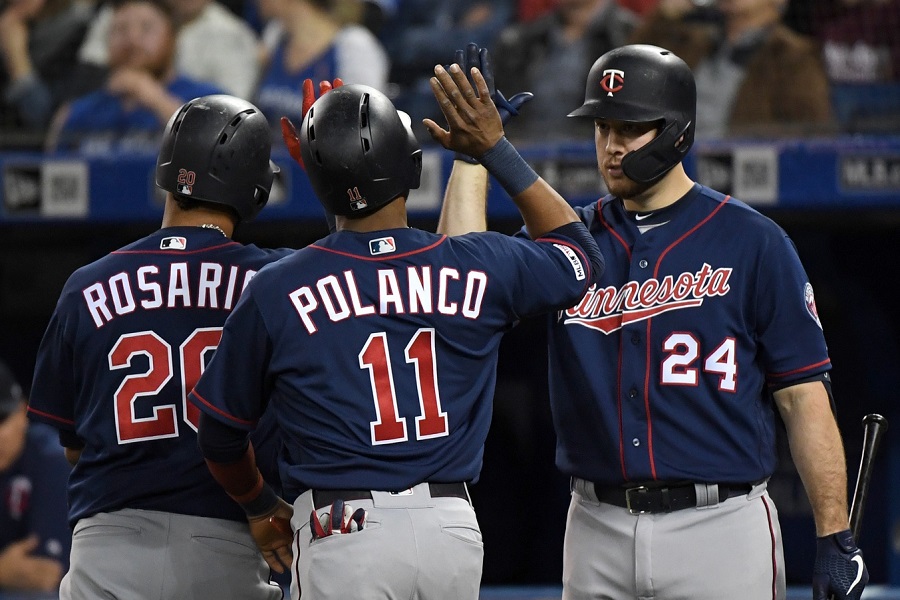 Voting Changes Major League Baseball altered their voting process for the 2019 All-Star Game. Two phases of voting are being held, “The Primary” and “The Starters Election.” Fans remain in charge of selecting the All-Star starters, but this new process allows for more fan involvement in an Election Day (that’s today). All the pitchers and reserve position players will continue to be chosen through Player Ballots and selections from the Commissioner’s Office. The Primary Round concluded last Friday to narrow the ballot to the top three vote-getters at each position (including nine outfielders). “The Starters Election” will take the top vote getters from “The Primary” and open an all-out voting war. Starting at 11 am CST today (June 26), fans will have 28-hours to vote for the starters. There is only ONE vote per platform - http://www.twinsbaseball.com/vote and Google. CLICK HERE TO VOTE Possible Twins Starters First Base CJ Cron finished in the top-3 in a tightly contested vote at first base. According to FanGraphs WAR, he doesn’t rank in the top-5 among AL first baseman. New York’s Luke Voit was leading all first basemen, so it could be another case of a Twins player losing to a Yankee. When it comes to the top candidate, Carlos Santana has put together some strong numbers and the game is being played in his home stadium. It would make sense for him to represent his club at the event. Cron has been swinging a very hot bat over the last week and this could help him in the voting. Who Should Win? Santana Who Will Win? Voit Shortstop Shortstop might be Minnesota’s best chance to land a starter at the All-Star Game. Jorge Polanco lead all American League shortstops in the Primary Vote, and he is having an MVP caliber first half. He leads the AL in batting average, and he’s been one of the best hitters in a potent Twins line-up. Francisco Lindor is one of the ambassadors for the All-Star Game, but he couldn’t sneak onto the ballot. Polanco is going to have some tough competition from Houston’s Carlos Correa and New York’s Gleyber Torres. Correa is on the injured list so that might take him out of the running. Fans might be more attracted to Torres and his 18 home runs than Polanco and his overall numbers. Who Should Win? Polanco Who Will Win? Polanco Outfield Minnesota fell just 138 votes short of placing two outfielders into the top-9 for the Starters Election. An argument could be made for all three outfielders to be on the ballot. Among AL outfielders, Max Kepler only trails Mike Trout in FanGraphs WAR. Eddie Rosario has some more popular numbers on the ballot with his high home run total and high OPS. This still probably won’t be enough to get him into the top-3. Last year’s AL MVP Mookie Betts and George Springer, the 2017 World Series MVP, will also do well in the Final Vote. New York’s Aaron Judge just came back from injury, but his superstar status in the biggest MLB market could help his final vote total. Who Should Win? Trout, Betts, Kepler (even though he’s not on the ballot) Who Will Win? Trout, Betts, Springer Designated Hitter Nelson Cruz might also have a shot at winnings a starters spot since there is not clear-cut favorite for the DH role. It be elected Cruz is going to have to beat out Boston’s J.D. Martinez and Texas’ Hunter Pence. Recently, Pence was placed on the DL with a groin strain, so it might come down to Martinez versus Cruz. Martinez has his lowest OPS since 2015 with Detroit. Ironically, that was the only time he was named to the All-Star Game. Cruz is a six-time All-Star and he has been elected in five of the last six seasons. As a Twins fan, it’s hard not to consider the impact Cruz has had on the Twins line-up. He and Martinez have almost identical OPS totals so it will be interesting to see who the fans eventually select. Who Should Win? Cruz Who Will Win? Martinez Minnesota has been having a great first half. Make sure to get out and vote for the Twins players above to be All-Star starters. CLICK HERE TO VOTE
 -
Prospects in the mid-20s range for an organization can encompass quite the cornucopia of players. Some on the names below were once considered top-100 prospects in all of baseball. However, prospects can be fickle and that’s why it’s not a good idea for fans to get attached to certain names. Only a handful of players will ever be successful at baseball’s highest level.Over a two-week span, Twins Daily will be revealing the Twins Daily Midseason Top 40 Prospects. Minnesota has some of the best prospects in the game and one of the strongest farm systems. There have been some changes from our preseason top-20 list, but most of those changes are draft picks and strong performances. Continue reading, and then discussing, the Twins Daily choices for 25th through 21st prospects of the Minnesota Twins below. 25. Yunior Severino – 2B Age: 19 ETA: 2023 2019 Stats (A-): .269/.367/.269 (.636 OPS), 0 2B, 0 3B, 0 HR, 7 K, 4 BB 2019 Preseason Ranking: 15 Seth: 34 | Tom: 21 | Cody: 18 | Ted: 25 | Steve: NR Severino took a roundabout way of getting to the Twins organization. During the 2017 international signing period, the Twins had their eyes set on Severino. He decided to sign with Atlanta, but the Braves had circumvented international spending rules. Severino and 13 other prospects had their contract voided. In his first taste of full-season ball, Severino has seen limited action because of a broken thumb. Prior to the injury, he had gone 6-for-22 with four walks and seven strikeouts. Severino continues to add weight to his frame and with it should come some more power. When he is healthy, he should be a player to move quickly up this list. 24. Edwar Colina - RHP Age: 22 ETA: 2022 2019 Stats (A+): 41.0 IP, 3.51 ERA, 1.37 WHIP, 8.6 K/9, 2.4 BB/9, 3.55 K/BB 2019 Ranking: HM Seth: 13 | Tom: 30 | Cody: 35 | Ted: 31 | Steve: 13 Colina signed with the Twins back in 2015 out of Venezuela. Last year was a breakout season for him at Cedar Rapids. Over his final six starts at that level, he had 51 strikeouts in 40 1/3 innings. He has spent all this season in Fort Myers after finishing at that level last year. His first start was a little rough as he allowed six earned runs on eight hits and he couldn’t finish the fifth inning. Since then, he has posted a 2.48 with 34 strikeouts and 8 walks in 36 1/3 innings. Colina has a lot of strength in his lower half and this helps him to reach into the mid-90s with his fastball. He mixes in a good changeup and a solid breaking ball. If he continues to pitch well, he could be in the Pensacola rotation before the season ends. 23. Jose Miranda – 3B/2B Age: 20 ETA: 2022 2019 Stats (A+): .235/.300/.350 (.650 OPS), 14 2B, 1 3B, 4 HR, 37 K, 16 BB 2019 Ranking: 20 Seth: 28 | Tom: 17 | Cody: 26 | Ted: 26 | Steve: 30 Minnesota took Jose Miranda with their second-round pick in 2016. He played a big role in last year’s FSL championship run with Fort Myers as he went 10-for-25 (.400) with three doubles and a pair of home runs. The right-handed hitting infielder has combined for 91 regular season games at High-A over the last two seasons. During that time, he has hit .229/.297/.351 (.648) with 27 extra-base hits and a 48 to 21 strikeout to walk ratio. After hitting 16 home runs last year, his power has dipped a little. It would be nice to see him have a hot second half like last year. Miranda has split time playing second base and third base throughout his professional career and this year he has spent most of his time at the hot corner. 22. Zack Littell - RHP Age: 24 ETA: 2018 2019 Stats: MLB: 9.1 IP, 7.71 ERA, 1.50 WHIP, 6.8 K/9, 1.0 BB/9, 7.00 K/BB (AAA): 50.2 IP, 3.91 ERA, 1.26 WHIP, 10.3 K/9, 3.0 BB/9, 3.41 K/BB 2019 Preseason Ranking: 17 Seth: 39 | Tom: 15 | Cody: 15 | Ted: 27 | Steve: NR Littell was acquired from the Yankees as part of the Jaime Garcia trade back in 2017. He was a little bit of a polarizing prospect when it came to these rankings. Even though he is being used as a relief pitcher at the big-league level, some of us still think he could fit in as a starter. His MLB numbers look a little rough because he allowed eight earned runs in 4 1/3 innings back on May 30. In his other three appearances, he has yet to allow a run. His fastball has increased this season, which usually can be expected for pitchers coming out of the bullpen. He can help the bullpen this season and it will be interesting to see if the club keeps him there long-term. 21. Stephen Gonsalves - LHP ETA: 2018 Age: 24 2019 Stats (AAA): 2.0 IP, 4.50 ERA, 3.00 WHIP, 9.0 K/9, 22.5 BB/9, 0.40 K/BB 2019 Ranking: 12 Seth: 22 | Tom: 28 | Cody: 20 | Ted: 20 | Steve: 14 Gonsalves, a fourth-round pick in 2013, has been one of the Twins best starting pitchers in the minors over the last half of a decade. So far this year, he has been limited to one appearance. He is dealing with a stress reaction in his elbow and forearm. His UCL is intact, so the club is using a period of rest before he will be reexamined. He dominated at Double-A and High-A with sub-2.50 ERAs and sub 1.16 WHIP totals. Triple-A has seen some ups and downs with a 3.46 ERA and a 1.29 WHIP in 125 innings. He sits in the low-90s with his fastball so it’s critical for him to have command of all his pitches. His change-up might be his best pitch and he adds in a low-70s curveball as well. Who’s ranked too high? Who’s ranked too low? Leave a COMMENT and start the discussion. Also, check back next week to see who made the top-30 prospects. Twins Daily 2019 Midseason Prospect Rankings Prospects 36-40 Prospects 31-35 Prospects 26-30 Prospects 21-25 (TODAY) Prospects 16-20 Coming Soon Click here to view the article
- 11 replies
-
- 2
-
-
- yunior severino
- edwar colina
- (and 3 more)

