



Bill Parker
-
Posts
64 -
Joined
-
Last visited
Content Type
Profiles
News
Minnesota Twins Videos
2026 Minnesota Twins Top Prospects Ranking
2022 Minnesota Twins Draft Picks
Minnesota Twins Free Agent & Trade Rumors, Notes, & Tidbits
Guides & Resources
2023 Minnesota Twins Draft Picks
The Minnesota Twins Players Project
2024 Minnesota Twins Draft Picks
2025 Minnesota Twins Draft Pick Tracker
2026 Minnesota Twins Draft Tracker: Picks & Bonuses
Forums
Blogs
Events
Store
Downloads
Gallery
Everything posted by Bill Parker
-
Max Kepler and the Cost of Silence
Bill Parker replied to Nick Nelson's topic in Twins Daily Front Page News
Yes, sloop, thank you, that is correct. This is an issue on which there's one legitimate way to look at it. If you have a different "viewpoint" on this one particular issue, it's because you either haven't thought through it or are incapable of doing so. The post that's currently a couple above the end as I'm writing this, somehow equating outrage over the police's systemic abuse of their unlimited power and position of public trust to the killing of one police officer and to the abortion issue, is really a perfect illustration of this. This is one of those uncommon cases where there's a right way to look at it, and a stupid way. -
Max Kepler and the Cost of Silence
Bill Parker replied to Nick Nelson's topic in Twins Daily Front Page News
Wild responses here. I'm definitely not going to read them all, just going to point out it's not "groupthink" for a person to have thought harder about something than you have. That's just "think." Thanks, Nick. All very well said. -
Article: Kent Hrbek And The All-Star Game
Bill Parker replied to Bill Parker's topic in Twins Daily Front Page News
I'm not totally convinced he shouldn't get the invite based on his *current* experience--he's 3rd to Cabrera and Davis in bWAR among AL first basemen (and very close to Davis), though it requires way more faith in their defensive metrics than I have to believe he's been better than Hosmer. Fangraphs also has him third, albeit with more distance from him to Davis, and is even harder on Hosmer's glove. With the size of the modern All-Star rosters, I think it'd be perfectly defensible to take all four. Otherwise, Eduardo Nunez is pretty much your only other option, and that's likely to look Coomer-level silly by the end of 2016. I suppose Yost could decide he really just wants a lefty and take Abad, but that would be at least as silly... -
Article: Kent Hrbek And The All-Star Game
Bill Parker replied to Bill Parker's topic in Twins Daily Front Page News
spycake- thanks so much. Great additions. I didn't really have time to look that specifically at each case given the scope of this (and I couldn't find info on exactly which day the rosters were announced), but that really puts some of these, especially Viola-Hurst, in better perspective. Definitely agree with thebomisthebomb's last suggestion above--seems most likely to me that this was, more than anything else, a way for Hrbie to make sure he had a nice little stretch every summer for huntin' and fishin'...- 19 replies
-
- 2
-

-
- kent hrbek
- all-star game
- (and 3 more)
-
A while back, a few of us (Twins Daily writers and some other unsavories) were talking on Twitter about Kent Hrbek, and how odd it was that in a career that spanned 12 full seasons, during almost all of which he was one of the four or five best first basemen in the American League, he'd made only one All-Star Game, and that in his rookie season of 1982. Seth quickly found the reason why, in this 1987 article (and it's been written up locally more recently, too). The gist: through July 9, 1987, after years of futility, the Twins were leading the West Division by two games. Yet, when the rosters were announced for the All-Star game to be held in Oakland early the following week, only Kirby Puckett was selected to be among the American League reserves. Hrbek, who was hitting .275 with an eye-popping 23 home runs, didn't make it, and neither did anyone else on the team. "I'm peeved, not just (for) myself, but because it shows nothing for the whole team," Hrbek was quoted as saying. "I accepted not making it when we weren`t doing well. This I don`t accept. If those guys ask me to go again, they can kiss my butt. I played in my first All-Star Game in 1982, and when I played in 1982 it was my last one." Fair enough, I suppose! It's kind of a nice gesture, standing up for one's teammates (and one's pride). What I wondered was: did he have a point? Should he, or any other Twin, have made the team?Might as well deal with first basemen first. Red Sox manager John McNamara ultimately named four players who were primarily first basemen that year to the roster, behind elected starter Don Mattingly--Mark McGwire, Pat Tabler, George Brett and his own man, Dwight Evans--though Brett and Evans were both better known for playing, and spent time in 1987 at, other positions (in the game itself, Dewey played right field, and Brett did not play). At any rate, although I can't confirm this, the article only mentions McGwire and Tabler, so it appears that to the extent they were considered first basemen, McNamara added Evans as an outfielder and Brett sometime after Hrbek had already made clear that he wasn't interested. Hrbek was having a great season: through the end of the first half, he hit .272/.367/.537, with 23 home runs (only six doubles, weirdly), 49 runs and 55 RBI. But McGwire was a no-brainer: on his way to a unanimous Rookie of the Year Award (and playing for the A's, who were 44-40 and only 3 games behind Minnesota, since this seems important to Hrbek), Big Mac ended the first half hitting .294/.383/.692, with an incredible 33 home runs, 59 runs scored and 68 knocked in. There was no way McGwire wasn't going to make the roster. Tabler, though? That's a bit trickier. A 29-year-old career mostly-part-timer for Cleveland you've only heard of if you were really into baseball before the 1990s rolled around, Tabler was having a nice-enough season, batting .308/.368/.451 with 24 doubles. Hrbek was pretty clearly better--even in an age when batting average was valued much more highly than it is now, all else being close enough, managers would generally have preferred a first baseman with 23 homers to one with just seven. The problem, though? Baseball's All-Star Game had, and retains today, the unfortunate rule that every team had to be represented by at least one player, and Cleveland was awful in 1987. They were 31-53 after July 9--21 games behind the East-leading Yankees--and ultimately lost 101. Tabler was their only representative. Yet, he wasn't their only worthy representative--the lineup also featured Joe Carter, who had 20 homers and 19 steals in 20 tries at the break (though he always struggled with getting on base, and his 803 OPS was just okay for a corner outfielder), and then-shortstop Julio Franco, who was hitting .315/.392/.435 with 22 steals and 59 runs (but was a terrible defensive shortstop). But Puckett and Evans, both much better than Carter, were the only outfield reserves McNamara named (it was assuredly a different time), and the reserve shortstops behind Cal Ripken were Tony Fernandez--the reigning and to-be Gold Glove winner at shortstop who was hitting .310/.380/.429 at the break--and Alan Trammell--a should-be Hall of Famer in the middle of a should-be MVP season. (Don't bother looking at Cleveland's pitchers for Tabler alternatives, either--the staff had a 5.59 ERA at the break, with no particular diamonds in the rough.) So, should Hrbek have made it? Personally, with the benefit of a lot more statistical analysis and probably more idle time than McNamara had, I think I would have tried to find a way to get Franco on the team, without supplanting either of the other two reserve shortstops, and added Hrbek instead of Tabler. But that's asking him to spend a lot of time poring over a last-place team, and it's not even clear it's right. McNamara's choices were certainly justifiable, and even if he were to ditch Tabler for another first baseman, it's not totally clear it should have been Hrbek over Eddie Murray (.278/.342/.518, 20 HR, coming off six consecutive All-Star selections) or Wally Joyner (.277/.366/.526, 20 HR, an All-Star and near-Rookie of the Year the season before). Hrbek certainly had a right to feel that he deserved to be there, but it's hard to argue he was clearly wronged--and certainly, no more so than half a dozen guys in each league are every year when these types of hard decisions have to be made. So what about the teammates Hrbek was so concerned about? The whole squad's offensive first half is here, and pitching here (huge thanks to the amazing Baseball-Reference Play Index for making this whole stupid exercise possible). And...it's hard to see much. Tom Brunansky was having a very nice first half, but so were a lot of other outfielders, and as I said, McNamara only took two--swapping out Puckett clearly wouldn't have addressed Hrbek's qualms (and wouldn't have made sense by the numbers), and Evans was third in the AL with a 1001 OPS. Gary Gaetti was having a nice season with 16 homers and was on his way to his second straight Gold Glove,, but his OPS was only around league average, while the only third base reserve selected, Kevin Seitzer, was hitting .305/.387/.419. You could argue for either of them over Brett or, say, Harold Baines -- who was hitting very well, but was almost exclusively a DH at a time when there was no DH at the Midsummer Classic -- but you could no doubt argue for a number of other guys in those spots, too, and you really can't say that either of the Twins clearly belonged. The best pitcher--and probably the Twins' best case for a second representative at all--was Frank Viola, who had thrown 140 innings with a 2.96 ERA, which was great for that high-offense year. (You can look for yourself to see if there are any other pitching candidates, but I sure don't see any. Bert Blyleven had already surrendered 30 home runs, and closer Jeff Reardon sported a 5.32 ERA.) Here, I think, Hrbek would've had a pretty valid complaint: with the exception of game starter Brett Saberhagen, Viola was a better pick than every other All-Star. He had a lower ERA than, in a comparable number of innings to, Jack Morris (who Viola also beat in innings, strikeouts, and walks and homers allowed), Mark Langston, and Mike Witt. None of those, however, can be chalked up to a lack of respect or anti-Twins bias, but to win-loss bias: Viola's record at the break was just 8-6, while each of the other three had at least 11 wins. But. But! There was one more AL All-Star starting pitcher that year: McNamara's own guy, Bruce Hurst. Hurst didn't even have a significant W-L advantage over Viola, as he was just 9-6 at the break, and in about the same number of innings, put up an ERA more than eight-tenths of a run higher than Viola's. There was just no legitimate way to justify Hurst over Viola--that's pure my-guyism. Except: another of McNamara's guys was Roger Clemens, the reigning MVP and Cy Young, who led Hurst in innings, strikeouts, and ERA, but who, like Viola, was 8-6. Maybe McNamara really just did love the win that much? Maybe he picked Hurst over two clearly superior pitchers, including one of his own, because he really thought that one extra win meant something. Which is crazy, but which still isn't a lack of respect for the Twins. So...I don't know. The '87 Twins certainly could have had more than one All-Star, and Hrbek certainly could have been it (though Viola had an even better case). But it's hard to find evidence that it was a lack of respect for the Twins that kept the number at one--some lack of common sense, certainly, in the way of evaluating pitchers and relying on the silly "win" stat, but nothing managers weren't doing every year, and didn't keep doing more or less every year until at least this decade. At any rate, McNamara's my-guyism was nothing compared to the following year, when Twins manager Tom Kelly found a way to get five of his own guys on the team (and certainly would've taken Hrbek too, if he'd been receptive to it). There's just, frankly, kind of disappointingly little here--this just isn't the kind of thing that would normally merit a "kiss my butt," even from such a...free spirit as Hrbek. Without the blowup, Hrbek certainly goes to the All-Star game in 1988 and again in '92 (since Kelly managed it again), and had strong cases in 1990 and '91 as well. For that matter, he may have been a last-minute replacement in '87--if indeed that's what Brett was--if he hadn't shot his mouth off first. So, All-Star caliber player Kent Hrbek made some questionable statements about 29 years ago, and they kept him a one-time All-Star when he could've been at least a three-time, and probably a four- or five-time All-Star. There are greater tragedies in the world. And, hell, the second weekend or so in July is probably prime fishing season somewhere in the world, which may well have been his plan all along. Click here to view the article
- 19 replies
-
- 1
-
-
- kent hrbek
- all-star game
- (and 3 more)
-
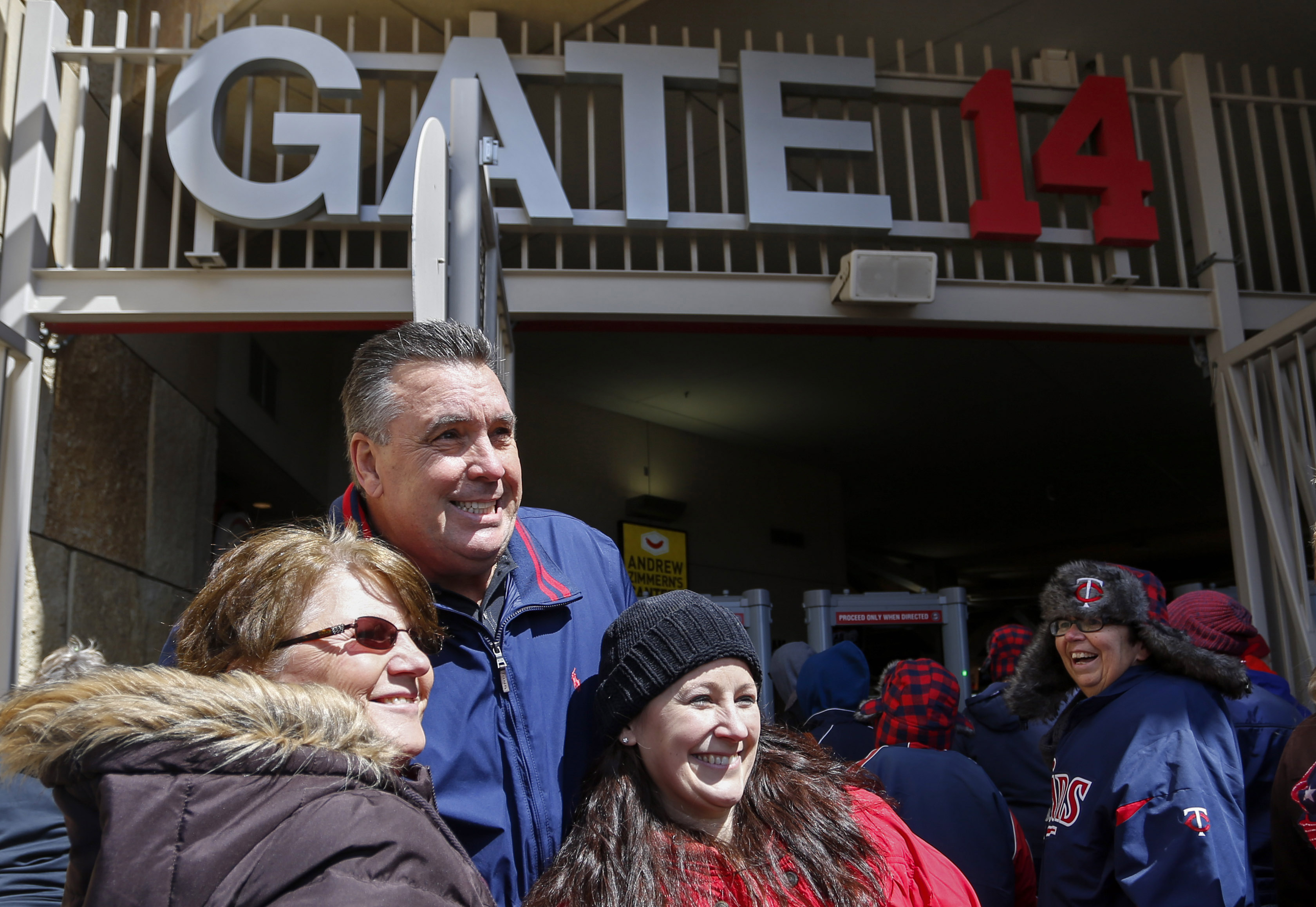 Might as well deal with first basemen first. Red Sox manager John McNamara ultimately named four players who were primarily first basemen that year to the roster, behind elected starter Don Mattingly--Mark McGwire, Pat Tabler, George Brett and his own man, Dwight Evans--though Brett and Evans were both better known for playing, and spent time in 1987 at, other positions (in the game itself, Dewey played right field, and Brett did not play). At any rate, although I can't confirm this, the article only mentions McGwire and Tabler, so it appears that to the extent they were considered first basemen, McNamara added Evans as an outfielder and Brett sometime after Hrbek had already made clear that he wasn't interested. Hrbek was having a great season: through the end of the first half, he hit .272/.367/.537, with 23 home runs (only six doubles, weirdly), 49 runs and 55 RBI. But McGwire was a no-brainer: on his way to a unanimous Rookie of the Year Award (and playing for the A's, who were 44-40 and only 3 games behind Minnesota, since this seems important to Hrbek), Big Mac ended the first half hitting .294/.383/.692, with an incredible 33 home runs, 59 runs scored and 68 knocked in. There was no way McGwire wasn't going to make the roster. Tabler, though? That's a bit trickier. A 29-year-old career mostly-part-timer for Cleveland you've only heard of if you were really into baseball before the 1990s rolled around, Tabler was having a nice-enough season, batting .308/.368/.451 with 24 doubles. Hrbek was pretty clearly better--even in an age when batting average was valued much more highly than it is now, all else being close enough, managers would generally have preferred a first baseman with 23 homers to one with just seven. The problem, though? Baseball's All-Star Game had, and retains today, the unfortunate rule that every team had to be represented by at least one player, and Cleveland was awful in 1987. They were 31-53 after July 9--21 games behind the East-leading Yankees--and ultimately lost 101. Tabler was their only representative. Yet, he wasn't their only worthy representative--the lineup also featured Joe Carter, who had 20 homers and 19 steals in 20 tries at the break (though he always struggled with getting on base, and his 803 OPS was just okay for a corner outfielder), and then-shortstop Julio Franco, who was hitting .315/.392/.435 with 22 steals and 59 runs (but was a terrible defensive shortstop). But Puckett and Evans, both much better than Carter, were the only outfield reserves McNamara named (it was assuredly a different time), and the reserve shortstops behind Cal Ripken were Tony Fernandez--the reigning and to-be Gold Glove winner at shortstop who was hitting .310/.380/.429 at the break--and Alan Trammell--a should-be Hall of Famer in the middle of a should-be MVP season. (Don't bother looking at Cleveland's pitchers for Tabler alternatives, either--the staff had a 5.59 ERA at the break, with no particular diamonds in the rough.) So, should Hrbek have made it? Personally, with the benefit of a lot more statistical analysis and probably more idle time than McNamara had, I think I would have tried to find a way to get Franco on the team, without supplanting either of the other two reserve shortstops, and added Hrbek instead of Tabler. But that's asking him to spend a lot of time poring over a last-place team, and it's not even clear it's right. McNamara's choices were certainly justifiable, and even if he were to ditch Tabler for another first baseman, it's not totally clear it should have been Hrbek over Eddie Murray (.278/.342/.518, 20 HR, coming off six consecutive All-Star selections) or Wally Joyner (.277/.366/.526, 20 HR, an All-Star and near-Rookie of the Year the season before). Hrbek certainly had a right to feel that he deserved to be there, but it's hard to argue he was clearly wronged--and certainly, no more so than half a dozen guys in each league are every year when these types of hard decisions have to be made. So what about the teammates Hrbek was so concerned about? The whole squad's offensive first half is here, and pitching here (huge thanks to the amazing Baseball-Reference Play Index for making this whole stupid exercise possible). And...it's hard to see much. Tom Brunansky was having a very nice first half, but so were a lot of other outfielders, and as I said, McNamara only took two--swapping out Puckett clearly wouldn't have addressed Hrbek's qualms (and wouldn't have made sense by the numbers), and Evans was third in the AL with a 1001 OPS. Gary Gaetti was having a nice season with 16 homers and was on his way to his second straight Gold Glove,, but his OPS was only around league average, while the only third base reserve selected, Kevin Seitzer, was hitting .305/.387/.419. You could argue for either of them over Brett or, say, Harold Baines -- who was hitting very well, but was almost exclusively a DH at a time when there was no DH at the Midsummer Classic -- but you could no doubt argue for a number of other guys in those spots, too, and you really can't say that either of the Twins clearly belonged. The best pitcher--and probably the Twins' best case for a second representative at all--was Frank Viola, who had thrown 140 innings with a 2.96 ERA, which was great for that high-offense year. (You can look for yourself to see if there are any other pitching candidates, but I sure don't see any. Bert Blyleven had already surrendered 30 home runs, and closer Jeff Reardon sported a 5.32 ERA.) Here, I think, Hrbek would've had a pretty valid complaint: with the exception of game starter Brett Saberhagen, Viola was a better pick than every other All-Star. He had a lower ERA than, in a comparable number of innings to, Jack Morris (who Viola also beat in innings, strikeouts, and walks and homers allowed), Mark Langston, and Mike Witt. None of those, however, can be chalked up to a lack of respect or anti-Twins bias, but to win-loss bias: Viola's record at the break was just 8-6, while each of the other three had at least 11 wins. But. But! There was one more AL All-Star starting pitcher that year: McNamara's own guy, Bruce Hurst. Hurst didn't even have a significant W-L advantage over Viola, as he was just 9-6 at the break, and in about the same number of innings, put up an ERA more than eight-tenths of a run higher than Viola's. There was just no legitimate way to justify Hurst over Viola--that's pure my-guyism. Except: another of McNamara's guys was Roger Clemens, the reigning MVP and Cy Young, who led Hurst in innings, strikeouts, and ERA, but who, like Viola, was 8-6. Maybe McNamara really just did love the win that much? Maybe he picked Hurst over two clearly superior pitchers, including one of his own, because he really thought that one extra win meant something. Which is crazy, but which still isn't a lack of respect for the Twins. So...I don't know. The '87 Twins certainly could have had more than one All-Star, and Hrbek certainly could have been it (though Viola had an even better case). But it's hard to find evidence that it was a lack of respect for the Twins that kept the number at one--some lack of common sense, certainly, in the way of evaluating pitchers and relying on the silly "win" stat, but nothing managers weren't doing every year, and didn't keep doing more or less every year until at least this decade. At any rate, McNamara's my-guyism was nothing compared to the following year, when Twins manager Tom Kelly found a way to get five of his own guys on the team (and certainly would've taken Hrbek too, if he'd been receptive to it). There's just, frankly, kind of disappointingly little here--this just isn't the kind of thing that would normally merit a "kiss my butt," even from such a...free spirit as Hrbek. Without the blowup, Hrbek certainly goes to the All-Star game in 1988 and again in '92 (since Kelly managed it again), and had strong cases in 1990 and '91 as well. For that matter, he may have been a last-minute replacement in '87--if indeed that's what Brett was--if he hadn't shot his mouth off first. So, All-Star caliber player Kent Hrbek made some questionable statements about 29 years ago, and they kept him a one-time All-Star when he could've been at least a three-time, and probably a four- or five-time All-Star. There are greater tragedies in the world. And, hell, the second weekend or so in July is probably prime fishing season somewhere in the world, which may well have been his plan all along.
 -
And, I should note, WAR corrects for that. If Mauer had caught virtually every game of his career to this point as Cochrane did, and all else remained the same, he'd be well ahead of Cochrane (and a bunch of other guys) by now. He gets penalized for playing 1B or DH. So it's not like it's somehow unfair to compare Mauer to other catchers because he hasn't caught quite as often.
-
I don't think this argument (KGB's and Steve's) holds a lot of water. Mauer will go down as a catcher. He's 11th in WAR among guys who spent 50% of their time as catchers, but if you drop that down to 35% (probably the outer limit of where he might end up), he falls all the way to 12th--only Joe Torre, who certainly should have gone into the Hall as a player, jumps in there ahead of him. Mauer will likely move into the top 10 of either list this year or next. Guys just don't generally catch as much as Mauer did and accomplish what he did, and when they do that plus other stuff, they generally end up in the Hall (or should).
-
A couple of months ago, the Baseball Hall of Fame introduced Mike Piazza as one of its two newest inductees, and it was natural for some to wonder whether Joe Mauer, the other great hitting catcher of recent memory, was likely to join him someday. It’s a bit of a forced comparison, though, as everyone recognized. You couldn’t find two more different great players who played the same position. One bats right handed, one left; one topped 30 home runs nine times, one’s topped 10 home runs only five; one spent his career relentlessly maligned (fairly or not) for his lack of defense, while one won three Gold Gloves at catcher; one anchored himself to a base and hoped for three straight walks or a homer, while the other is a (slow but) savvy and net-positive baserunner. Piazza matched Mauer’s .395 career on-base percentage in only four full seasons, while Mauer has equaled Piazza’s .545 career slugging percentage just once. It’s like comparing chocolate and beer. They’re both great, but for completely different, mostly incompatible reasons. There is, on the other hand, a Hall of Fame catcher who does compare very closely, and favorably, to Mauer, right now. His name isn’t as sexy to modern audiences, but he was great, and the comparison is kind of uncanny. Let’s talk about Mickey Cochrane.Cochrane was a Massachusetts native and a left-handed hitter who debuted with the Philadelphia Athletics in 1925, at age 22. He hit .331/.397/.448 as a rookie, and finished 10th in the MVP race (though it’s worth pointing out that offense was so ridiculous in the twenties that that line, which would be the stuff of MVP talk now or even a few years ago, was good for a 108 OPS+). After a slight dip the following year, Cochrane took over as probably the best catcher in the game, year in and year out, from 1927 through 1935, his age-32 season. For those nine seasons, Cochrane started an average of 122 games a year, all at catcher, batting .322/.423/.490, good even in those heady days for a 134 OPS+, in 4,980 plate appearances. He won two MVP awards--one in 1928 with the Athletics, one in 1934 with the Tigers (who he also managed)--and was known as an excellent defensive catcher. The All-Star Game didn’t exist until 1933, and Cochrane lost out to fellow Hall of Famers Rick Ferrell and Bill Dickey that first year, but was selected in ‘34 and ‘35. While he played only 71 games over the next two seasons and suffered a head injury from a hit-by-pitch in May 1937 that ended his career at just 34, Cochrane was elected to the Hall of Fame by the BBWAA in 1947, with 79.5% of the vote. At the end of the last millennium, he was (perhaps kindly) listed 65th on The Sporting News’ list of the 100 greatest baseball players. Mauer, it turns out, has had similar success, for similar reasons. From 2006-2013, Mauer put together an eight-year stretch that looks a lot like Cocrhane’s 9-year run: .327/.410/.473 (139 OPS+), catching an average of just 93 games a year thanks to the availability of the DH and his ability to play first, but playing an average of 126 of them, winning an MVP award and making six All-Star teams. In all, adjusting for eras and such, Cochrane probably had (even) more patience than Mauer and (even) less home run power, but the parallels between the two are astounding. Some selected career numbers (with Mauer’s through Monday the 18th), with the most fun parts highlighted: http://i.imgur.com/xiwXJaM.png They’re lefty-hitting catchers with good defensive reputations who hit for high averages, drew walks and had gap power. Both had one season where they uncharacteristically hit home runs (Cochrane had 23 in 1932, while Mauer, of course, hit those 28 in 2009), and altogether have matched each other in that category almost exactly. Maybe most interestingly, and certainly most importantly: Cochrane played in an era when it was a lot easier to get on base and score runs, but adjusting for that, Mauer has been exactly as effective with the bat as Cochrane was, in about a hundred more plate appearances than Cochrane got for his whole career. Cochrane remains a bit ahead on both common measures of WAR--largely driven by the fact that Mauer gets a significant negative position adjustment from spending time at first and left, whereas 5 innings in left in 1932 represented the whole of Cochrane’s career non-catching experience--but Mauer could well catch him this season, or next. Cochrane has those two MVP awards to Mauer’s one, of course, though with only eight teams in the American League, he faced almost literally half the competition Mauer has, and it’s worth noting that in both of Cochrane’s MVP years, he accumulated just 4.0 WAR, so Mauer was nearly as valuable in his one MVP year (7.8 WAR) as Cochrane was in both of his. Mauer also had solid cases to win the award in 2006 and/or 2008. Then, there’s the thing I haven’t mentioned yet: Cochrane played in five World Series (three with the Athletics, two with the Tigers), and his teams won three of them. He didn’t play particularly well in the postseason, overall, and it was a lot easier to make the Series back then for essentially the same reason it was easier to win an MVP, but anyway, there’s no denying that five Series appearances in just 11 full seasons was a major part of Cochrane’s resume, and one that Mauer can’t compete with. Anyway, there’s no real doubt that Cochrane is a better Hall candidate, and overall player, right now, than Mauer, whether on the numbers alone or with the superlatives. The thing is that it’s close--very, kind of eerily close, right at the moment--and Cochrane’s career was essentially over at Mauer’s age, so whatever Joe contributes from here on out is gravy. Mauer has already essentially had a full career as a Hall of Fame catcher, plus whatever he adds from here on out. Even with Piazza, there are only thirteen Major League catchers in the Hall of Fame--and frankly, at least three of them were mistakes (Ferrell, Roger Bresnahan, and Ray Schalk, all with significantly less career WAR than Mauer already has). I think that this is a wrong that needs correcting, and along with Ivan Rodriguez, I would put in Ted Simmons, Bill Freehan and maybe Jorge Posada. I’d also put Mauer in, even if he retired tomorrow. He wouldn’t get in, of course--but I think the comparison to Cochrane shows that he’s a lot closer, based on historical standards, than people typically think. Who knows what the BBWAA will do anymore, but a couple more solid years really should be enough to seal his induction, eventually. Click here to view the article
-
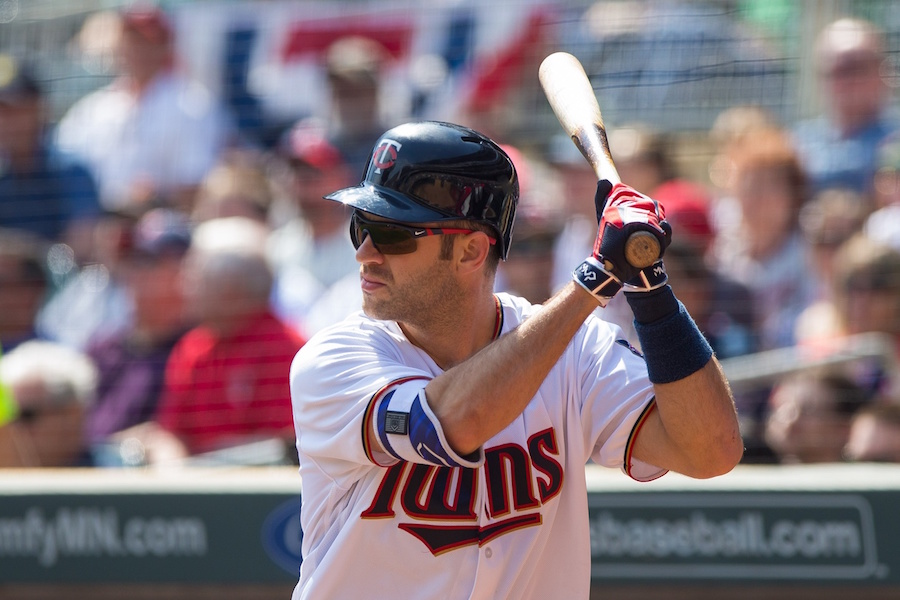 Cochrane was a Massachusetts native and a left-handed hitter who debuted with the Philadelphia Athletics in 1925, at age 22. He hit .331/.397/.448 as a rookie, and finished 10th in the MVP race (though it’s worth pointing out that offense was so ridiculous in the twenties that that line, which would be the stuff of MVP talk now or even a few years ago, was good for a 108 OPS+). After a slight dip the following year, Cochrane took over as probably the best catcher in the game, year in and year out, from 1927 through 1935, his age-32 season. For those nine seasons, Cochrane started an average of 122 games a year, all at catcher, batting .322/.423/.490, good even in those heady days for a 134 OPS+, in 4,980 plate appearances. He won two MVP awards--one in 1928 with the Athletics, one in 1934 with the Tigers (who he also managed)--and was known as an excellent defensive catcher. The All-Star Game didn’t exist until 1933, and Cochrane lost out to fellow Hall of Famers Rick Ferrell and Bill Dickey that first year, but was selected in ‘34 and ‘35. While he played only 71 games over the next two seasons and suffered a head injury from a hit-by-pitch in May 1937 that ended his career at just 34, Cochrane was elected to the Hall of Fame by the BBWAA in 1947, with 79.5% of the vote. At the end of the last millennium, he was (perhaps kindly) listed 65th on The Sporting News’ list of the 100 greatest baseball players. Mauer, it turns out, has had similar success, for similar reasons. From 2006-2013, Mauer put together an eight-year stretch that looks a lot like Cocrhane’s 9-year run: .327/.410/.473 (139 OPS+), catching an average of just 93 games a year thanks to the availability of the DH and his ability to play first, but playing an average of 126 of them, winning an MVP award and making six All-Star teams. In all, adjusting for eras and such, Cochrane probably had (even) more patience than Mauer and (even) less home run power, but the parallels between the two are astounding. Some selected career numbers (with Mauer’s through Monday the 18th), with the most fun parts highlighted: http://i.imgur.com/xiwXJaM.png They’re lefty-hitting catchers with good defensive reputations who hit for high averages, drew walks and had gap power. Both had one season where they uncharacteristically hit home runs (Cochrane had 23 in 1932, while Mauer, of course, hit those 28 in 2009), and altogether have matched each other in that category almost exactly. Maybe most interestingly, and certainly most importantly: Cochrane played in an era when it was a lot easier to get on base and score runs, but adjusting for that, Mauer has been exactly as effective with the bat as Cochrane was, in about a hundred more plate appearances than Cochrane got for his whole career. Cochrane remains a bit ahead on both common measures of WAR--largely driven by the fact that Mauer gets a significant negative position adjustment from spending time at first and left, whereas 5 innings in left in 1932 represented the whole of Cochrane’s career non-catching experience--but Mauer could well catch him this season, or next. Cochrane has those two MVP awards to Mauer’s one, of course, though with only eight teams in the American League, he faced almost literally half the competition Mauer has, and it’s worth noting that in both of Cochrane’s MVP years, he accumulated just 4.0 WAR, so Mauer was nearly as valuable in his one MVP year (7.8 WAR) as Cochrane was in both of his. Mauer also had solid cases to win the award in 2006 and/or 2008. Then, there’s the thing I haven’t mentioned yet: Cochrane played in five World Series (three with the Athletics, two with the Tigers), and his teams won three of them. He didn’t play particularly well in the postseason, overall, and it was a lot easier to make the Series back then for essentially the same reason it was easier to win an MVP, but anyway, there’s no denying that five Series appearances in just 11 full seasons was a major part of Cochrane’s resume, and one that Mauer can’t compete with. Anyway, there’s no real doubt that Cochrane is a better Hall candidate, and overall player, right now, than Mauer, whether on the numbers alone or with the superlatives. The thing is that it’s close--very, kind of eerily close, right at the moment--and Cochrane’s career was essentially over at Mauer’s age, so whatever Joe contributes from here on out is gravy. Mauer has already essentially had a full career as a Hall of Fame catcher, plus whatever he adds from here on out. Even with Piazza, there are only thirteen Major League catchers in the Hall of Fame--and frankly, at least three of them were mistakes (Ferrell, Roger Bresnahan, and Ray Schalk, all with significantly less career WAR than Mauer already has). I think that this is a wrong that needs correcting, and along with Ivan Rodriguez, I would put in Ted Simmons, Bill Freehan and maybe Jorge Posada. I’d also put Mauer in, even if he retired tomorrow. He wouldn’t get in, of course--but I think the comparison to Cochrane shows that he’s a lot closer, based on historical standards, than people typically think. Who knows what the BBWAA will do anymore, but a couple more solid years really should be enough to seal his induction, eventually.
 -
So Baseball Prospectus' PECOTA has the Twins going 78-84 this season. That sounds about right to me--I can see them winning anything between 70 and 95, but something between 76 and 81 seems the most likely. Moreover, PECOTA's individual projections, the things that add up to that 78-win season are, by and large, hard to argue with. I hope Joe Mauer bounces back, which PECOTA is not expecting, it could be just a touch low on Plouffe and Dozier, and it expects Suzuki to play more and Murphy to play less than I think and hope each will. But short of Mauer 2016 suddenly becoming Mauer 2013 again, these are pretty incremental differences. And if it's big contributions from the new guys you're counting on, PECOTA already has you covered -- it expects Miguel Sano to be worth 3.3 wins thanks to 33 home runs, Byron Buxton to be worth nearly 4 thanks to average-ish offense and world-class defense, and Byung-ho Park to be worth 1.5 with 20 homers from the DH spot. We might all hope that one or more of those guys does substantially more than he is projected to, but to expect it would be a bit crazy. No, if you want to get the Twins substantially more wins than PECOTA projects -- without depending on conquering savior turns from Berrios/Kepler/Burdi -- I think you're pretty well limited to the following three players.1. Eduardo Escobar PECOTA-projected 2016 stats: .253/.294/.375, -0.4 WARP When he was coming up as a fringe prospect with the White Sox, I remember Kevin Goldstein (then with Baseball Prospectus (BP), now with the Astros) including Escobar among a list of middle infielders who had the defensive tools to be perennial gold glovers, but who might never hit enough to hold down a regular job in the majors. It made sense, too--Escobar was a career .269/.319/.358 hitter in the minors, which doesn't typically translate to great things at the highest level. Fast forward five years, though, and the opposite appears to be true: the BP Annual's bio of Escobar says that he's "a fringy defensive shortstop, but for any kind of shortstop, he's a really good hitter." I don't know how "fringy" his defense is -- he's always seemed quite solid to me, maybe average at worst -- but over the last two years he's certainly transformed himself into an offensive asset, as middle infielders go, putting up a 102 OPS+ in both seasons (the average AL shortstop's last year was 90). PECOTA seems unconvinced by his recent offensive improvement, projecting Escobar to lose 15 points of OBP and a whopping 70 points of slugging percentage from his 2015 line, while costing the Twins 9 runs defensively vis-a-vis an average shortstop. Projection systems are particularly (and probably necessarily) bad at incorporating things like major swing adjustments, like the one that allowed Escobar to crack 35 doubles in 2014 and 12 homers in 2015. That adjustment happened though, and Escobar is just now entering his age-27 season, when he should be hitting his peak. I think a repeat of 2015 or even another modest improvement on offense is likely, along with defense that's within a couple runs of average (as, per BPs FRAA, he was last year). Where BP sees a starting shortstop that costs the team nearly half a win vs. a replacement player, I think he could easily be worth two wins above replacement (which is much closer to Fangraphs' various projections for him than this one). 2. Glen Perkins Projected 2016 stats: 57 IP, 3.53 ERA, 56/15 K/BB, 37 SV, 0.6 WARP It's hard to blame PECOTA for coming up with that line; after all, that's more or less what his 2015 looked like, minus a few innings and strikeouts and plus a few walks, and he's 33, so a little more decline could reasonably be expected. Except: he's never actually been that pitcher, not even close. In 2015, he was two different guys: the one who saved 29/30 with a 1.37 ERA through his first 39 1/3 innings, and the one pitching through an injury who lost his job and put up a 7.64 ERA through his last 17 2/3 innings. The same thing could happen again, I suppose -- two parts brilliant and one part disaster adding up to the just-pretty-good numbers you see above -- but it seems more likely to me that he's either healthy and brilliant, or unhealthy and a disaster. He seemed healthy this spring, and I think it's reasonable to expect him to get back to his 2011-13 form for another year or two, which would make him about a two-win player in 2016, not 0.6. 3. Eddie Rosario Projected 2016 stats: .250/.280/.402, -1.1 WARP If PECOTA doesn't like Escobar much, it hates Rosario, who it sees falling a full three and a half wins from his rookie year performance. The defensive drop is puzzling: FRAA credits Rosario with nearly 13 runs saved in 2015 (which isn't too out of line with the other measures; Baseball-Reference's had him with 11, Fangraphs' with 7.4), but PECOTA expects him to cost the team 13 runs in 2016. The math aside, I think anyone who knows this team and has seen Rosario play knows that that's not likely to happen. Give him a conservative +7 in place of that -13, and that's about two wins back right there. The bat is less of a sure thing, but I think we can get some back there too. Rosario hit .267/.289/.459 in 2015, and BP likes him to lose 16, 9 and 57 points off those numbers, respectively. PECOTA is understandably weighting his 2014 and '15 numbers in Double- and Triple-A pretty heavily, and for whatever reason, those were ugly times for Rosario. What he did at the big-league level in 2015, though, is not far from the rest of his minor league career, and having maintained league-average offense over his first 474 career plate appearances, I don't see a convincing reason to expect a huge drop this season. Certainly, if he's ever going to be a true asset at the plate, Rosario will have to learn to control the strike zone much better than he's shown to date. I don't think anything about what he did in 2015 was a fluke though and don't see any reason he can't be essentially league-average again, maybe with a slight improvement. If he hits .270/.300/.450, with the good defense we know he'll provide, he's at least a 2.5 win player over a full season, as he was in his 122 games in 2015. So with those three (pretty reasonable, I think) individual improvements, we've added seven wins (7.4, actually) to the Twins' total, taken them from 78 wins to 85, about as many as adding a David Price or Josh Donaldson likely would. That's close to a playoff spot, close enough that a couple more big breaks get them to or over 90 and the division. That's a lot more interesting than 78 wins and it's something to dream on. I still can't look at this team and think they're likely to win many more than 78 games, but I do think PECOTA missed big with these three, and it seems pretty clear from this that it's all well within the realm of possibility. And anyway, it's Opening Day. Maybe Joe's concussion issues are finally behind him and he hits .300/.400/.500 again. Maybe Park hits 45, maybe Hughes is back in 2014 form, maybe Dozier puts two good halves together and goes 30/30. Maybe they win all 162! It's a day for dreaming. Click here to view the article
-
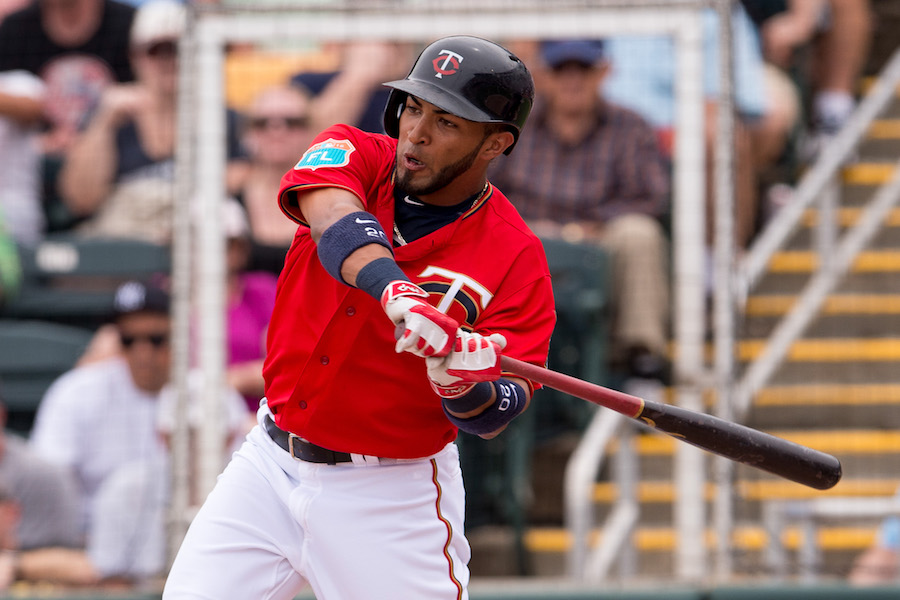 1. Eduardo Escobar PECOTA-projected 2016 stats: .253/.294/.375, -0.4 WARP When he was coming up as a fringe prospect with the White Sox, I remember Kevin Goldstein (then with Baseball Prospectus (BP), now with the Astros) including Escobar among a list of middle infielders who had the defensive tools to be perennial gold glovers, but who might never hit enough to hold down a regular job in the majors. It made sense, too--Escobar was a career .269/.319/.358 hitter in the minors, which doesn't typically translate to great things at the highest level. Fast forward five years, though, and the opposite appears to be true: the BP Annual's bio of Escobar says that he's "a fringy defensive shortstop, but for any kind of shortstop, he's a really good hitter." I don't know how "fringy" his defense is -- he's always seemed quite solid to me, maybe average at worst -- but over the last two years he's certainly transformed himself into an offensive asset, as middle infielders go, putting up a 102 OPS+ in both seasons (the average AL shortstop's last year was 90). PECOTA seems unconvinced by his recent offensive improvement, projecting Escobar to lose 15 points of OBP and a whopping 70 points of slugging percentage from his 2015 line, while costing the Twins 9 runs defensively vis-a-vis an average shortstop. Projection systems are particularly (and probably necessarily) bad at incorporating things like major swing adjustments, like the one that allowed Escobar to crack 35 doubles in 2014 and 12 homers in 2015. That adjustment happened though, and Escobar is just now entering his age-27 season, when he should be hitting his peak. I think a repeat of 2015 or even another modest improvement on offense is likely, along with defense that's within a couple runs of average (as, per BPs FRAA, he was last year). Where BP sees a starting shortstop that costs the team nearly half a win vs. a replacement player, I think he could easily be worth two wins above replacement (which is much closer to Fangraphs' various projections for him than this one). 2. Glen Perkins Projected 2016 stats: 57 IP, 3.53 ERA, 56/15 K/BB, 37 SV, 0.6 WARP It's hard to blame PECOTA for coming up with that line; after all, that's more or less what his 2015 looked like, minus a few innings and strikeouts and plus a few walks, and he's 33, so a little more decline could reasonably be expected. Except: he's never actually been that pitcher, not even close. In 2015, he was two different guys: the one who saved 29/30 with a 1.37 ERA through his first 39 1/3 innings, and the one pitching through an injury who lost his job and put up a 7.64 ERA through his last 17 2/3 innings. The same thing could happen again, I suppose -- two parts brilliant and one part disaster adding up to the just-pretty-good numbers you see above -- but it seems more likely to me that he's either healthy and brilliant, or unhealthy and a disaster. He seemed healthy this spring, and I think it's reasonable to expect him to get back to his 2011-13 form for another year or two, which would make him about a two-win player in 2016, not 0.6. 3. Eddie Rosario Projected 2016 stats: .250/.280/.402, -1.1 WARP If PECOTA doesn't like Escobar much, it hates Rosario, who it sees falling a full three and a half wins from his rookie year performance. The defensive drop is puzzling: FRAA credits Rosario with nearly 13 runs saved in 2015 (which isn't too out of line with the other measures; Baseball-Reference's had him with 11, Fangraphs' with 7.4), but PECOTA expects him to cost the team 13 runs in 2016. The math aside, I think anyone who knows this team and has seen Rosario play knows that that's not likely to happen. Give him a conservative +7 in place of that -13, and that's about two wins back right there. The bat is less of a sure thing, but I think we can get some back there too. Rosario hit .267/.289/.459 in 2015, and BP likes him to lose 16, 9 and 57 points off those numbers, respectively. PECOTA is understandably weighting his 2014 and '15 numbers in Double- and Triple-A pretty heavily, and for whatever reason, those were ugly times for Rosario. What he did at the big-league level in 2015, though, is not far from the rest of his minor league career, and having maintained league-average offense over his first 474 career plate appearances, I don't see a convincing reason to expect a huge drop this season. Certainly, if he's ever going to be a true asset at the plate, Rosario will have to learn to control the strike zone much better than he's shown to date. I don't think anything about what he did in 2015 was a fluke though and don't see any reason he can't be essentially league-average again, maybe with a slight improvement. If he hits .270/.300/.450, with the good defense we know he'll provide, he's at least a 2.5 win player over a full season, as he was in his 122 games in 2015. So with those three (pretty reasonable, I think) individual improvements, we've added seven wins (7.4, actually) to the Twins' total, taken them from 78 wins to 85, about as many as adding a David Price or Josh Donaldson likely would. That's close to a playoff spot, close enough that a couple more big breaks get them to or over 90 and the division. That's a lot more interesting than 78 wins and it's something to dream on. I still can't look at this team and think they're likely to win many more than 78 games, but I do think PECOTA missed big with these three, and it seems pretty clear from this that it's all well within the realm of possibility. And anyway, it's Opening Day. Maybe Joe's concussion issues are finally behind him and he hits .300/.400/.500 again. Maybe Park hits 45, maybe Hughes is back in 2014 form, maybe Dozier puts two good halves together and goes 30/30. Maybe they win all 162! It's a day for dreaming.
 -
If Phil Hughes had managed to throw 6 2/3 more innings than he did in 2015, he would almost certainly have joined Bartolo Colon as just the 15th and 16th pitchers in baseball history on a strange -- not necessarily good or bad, but certainly strange -- list: pitchers who pitched enough innings to qualify for the ERA title while allowing more home runs than they did walks. For Hughes, that's more or less the kind of pitcher he's become since joining the Twins--world-class control, possibly the best in the league, coupled with a bit of a problem with the gopher ball. Hughes nearly did it in his excellent 2014--his historically low 16 walks matched exactly his homers-allowed total, in 209 2/3 innings--before leading the league in homers allowed with 29 despite throwing just 155 1/3 innings in 2015 (again with just 16 walks), and it's not at all hard to see his homers allowed topping the walks again this year. Colon was a bit more of a surprise; he's had great control for years, but his 25 homers allowed (against 24 walks) was his highest total since stealing a Cy Young Award from Johan in 2005.As you might expect, this is largely a modern phenomenon, made much more doable by the explosion of home runs in the mid-1990s. Indeed, a qualifying starting pitcher had allowed more home runs than walks just three times in all of history prior to 1998 (Tommy Bond in 1874, Robin Roberts in 1956, Gary Nolan in 1976), then happened three times in 1998, and it's happened 13 more times since. A bit like a hitter's 50-homer season, it's still very rare, just a lot less rare than it once was. It's also, though, largely a Twins thing, and specifically a last-decade Twins thing. In the decade running from 2000 through 2009, pitchers accomplished the feat (if that's what it is) 10 times. The Twins had three different pitchers do it, a total of five times, all between 2002 and 2006. No other team has seen more than two pitcher seasons like this in its entire history; the Twins had five in five seasons. I don't know if that's a point of pride, necessarily, but it's a reminder that "pitch to contact" really used to be a thing, and a thing that worked. Former pitching coach Rick Anderson's whole philosophy was to pound the strike zone and limit walks. It was an against-the-grain tactic that required exactly the right kind of pitcher to work, and in the mid-00s, the Twins were able to develop or acquire a large number of exactly the right kind of pitcher. "Pitch to contact" got to be kind of a joke a few years ago, as it appeared to many of us that Anderson was trying to force a number of square pegs through that round hole -- particularly Francisco Liriano, whose many talents did not include pounding the strike zone or regularly inducing soft contact. It's also possible that strikeouts have become such a vital part of every pitcher's game in just the past few years that this would no longer be a viable strategy with any sort of pitching staff. In the middle of last decade, though, with the three guys below, and to a lesser degree the likes of Joe Mays, Kyle Lohse and Kenny Rogers, they had just the sorts of talents they needed to make it work, and that was a big part of their success--behind Johan Santana, of course, for whom I imagine the coaching strategy exclusively involved saying "you go do your thing, Johan" once every five days or so. Here's the full list of the 14 pitchers who have allowed more homers than walks, in a total of 19 seasons (along with each of the three guys below, David Wells and Jon Lieber also did it twice). Here are the three Twins pitchers who've done it, in order of their first time doing it: Rick Reed: we probably can't give Anderson too much credit (or blame) for this one, as Reed did it in 2002, Anderson's first year as pitching coach for the big club, and had also done it in 1998, with the Mets. Reed always had great control, but posted a league-best 1.2 BB/9 in 2002, walking 26 while allowing a career-high 32 homers. He managed a solid 3.78 ERA (118 ERA+) in 188 innings, thanks to that control and, probably, more than a bit of good luck. Brad Radke: probably my all-time favorite Twin (I wrote a chapter on him in this e-book), and deservedly the poster boy for the Twins' pitch-to-contact reputation. One of the several things that made Radke (nearly) great was that after his nightmarish first two seasons, in both of which he led the league in homers allowed (and was a great sport about it, appearing in poking fun at his issues with the long ball) he actually got to be pretty good at keeping the ball in the ballpark, so while he never walked many (finishing in the top 10 in fewest BB/9 all 11 times he pitched enough innings to qualify), he allowed homers to even fewer. He had upward ticks in 2003 (33 HR, to 28 BB), however, and 2005 (32 HR, 23 BB), and was probably consequently just a bit better than average in those seasons, in contrast to 2004, when he gave up just 23 homers against 26 walks and his 5.8 WAR made him, by that measure, the third-best pitcher and sixth-best player in the AL. Carlos Silva: you might remember Silva's 2005, in which he walked a ridiculous 9 batters in 188 innings, for an MLB record 0.43 walks per nine innings. Not giving up more home runs than walks under those circumstances would've been pretty astounding, but he gave up an average-ish 25, and posted a nice 3.44 ERA (130 ERA+) in 188 1/3 innings. He did it again in 2006, perfectly illustrating how this particular achievement is neither a good nor a bad thing: everything got worse from 2005 to 2006, and Silva gave up a league-high 38 home runs (interestingly, five of the 19 seasons on the list led the league in home runs allowed, but Silva is the only Twin to have done so) against a far more human 32 walks, and put up a 5.94 ERA (75 ERA+) in 180 1/3 innings. He'd have a nice bounceback-to-the-middle season in 2007, which convinced the Bill Bavasi-led Mariners to sign him to a bafflingly huge contract, under which he'd throw a total of 183 2/3 innings in two years, with a 6.81 ERA (62 ERA+). I don't know what any of this means, or that it means anything, but the fact that the Twins did something five times in five years that's only been done 19 times by anyone ever is really interesting to me. I don't think Anderson's pitch-to-contact approach is workable these days, with the league strikeouts per 9 innings hovering near 8 and only two pitchers in the MLB top 10 in WAR posting K/9s under 8 (and most of them well over a strikeout an inning). Strikeouts are to a large extent driving the league (and especially pitching) right now, they're a thing you just have to have to be successful (as a pitcher or as a team), which is something the team's current administration appears to understand at least a bit better than the last one did. But 2002-06 was a different time, where league-wide strikeouts were down about 1.5 from today, and the Twins appear to have found an undervalued set of skills in pitchers--a set that helped make them division champions four times in those five years. Mostly, though, I think handing out more homers than walks over the course of a full season is just a fun, quirky thing, and it'll be fun to see if Hughes finally joins their ranks this season. Click here to view the article
- 8 replies
-
- 2
-
-
- pitching to contact
- brad radke
- (and 3 more)
-
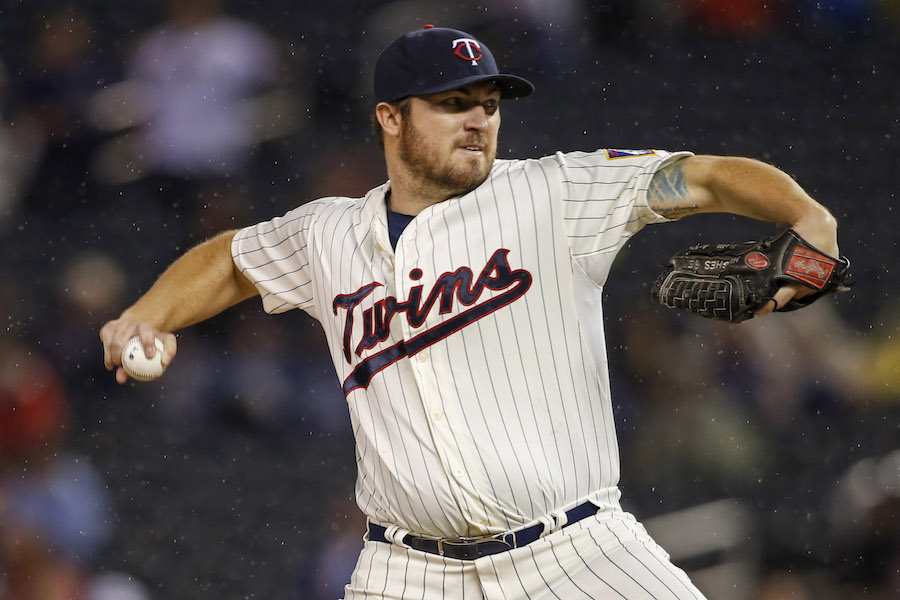 As you might expect, this is largely a modern phenomenon, made much more doable by the explosion of home runs in the mid-1990s. Indeed, a qualifying starting pitcher had allowed more home runs than walks just three times in all of history prior to 1998 (Tommy Bond in 1874, Robin Roberts in 1956, Gary Nolan in 1976), then happened three times in 1998, and it's happened 13 more times since. A bit like a hitter's 50-homer season, it's still very rare, just a lot less rare than it once was. It's also, though, largely a Twins thing, and specifically a last-decade Twins thing. In the decade running from 2000 through 2009, pitchers accomplished the feat (if that's what it is) 10 times. The Twins had three different pitchers do it, a total of five times, all between 2002 and 2006. No other team has seen more than two pitcher seasons like this in its entire history; the Twins had five in five seasons. I don't know if that's a point of pride, necessarily, but it's a reminder that "pitch to contact" really used to be a thing, and a thing that worked. Former pitching coach Rick Anderson's whole philosophy was to pound the strike zone and limit walks. It was an against-the-grain tactic that required exactly the right kind of pitcher to work, and in the mid-00s, the Twins were able to develop or acquire a large number of exactly the right kind of pitcher. "Pitch to contact" got to be kind of a joke a few years ago, as it appeared to many of us that Anderson was trying to force a number of square pegs through that round hole -- particularly Francisco Liriano, whose many talents did not include pounding the strike zone or regularly inducing soft contact. It's also possible that strikeouts have become such a vital part of every pitcher's game in just the past few years that this would no longer be a viable strategy with any sort of pitching staff. In the middle of last decade, though, with the three guys below, and to a lesser degree the likes of Joe Mays, Kyle Lohse and Kenny Rogers, they had just the sorts of talents they needed to make it work, and that was a big part of their success--behind Johan Santana, of course, for whom I imagine the coaching strategy exclusively involved saying "you go do your thing, Johan" once every five days or so. Here's the full list of the 14 pitchers who have allowed more homers than walks, in a total of 19 seasons (along with each of the three guys below, David Wells and Jon Lieber also did it twice). Here are the three Twins pitchers who've done it, in order of their first time doing it: Rick Reed: we probably can't give Anderson too much credit (or blame) for this one, as Reed did it in 2002, Anderson's first year as pitching coach for the big club, and had also done it in 1998, with the Mets. Reed always had great control, but posted a league-best 1.2 BB/9 in 2002, walking 26 while allowing a career-high 32 homers. He managed a solid 3.78 ERA (118 ERA+) in 188 innings, thanks to that control and, probably, more than a bit of good luck. Brad Radke: probably my all-time favorite Twin (I wrote a chapter on him in this e-book), and deservedly the poster boy for the Twins' pitch-to-contact reputation. One of the several things that made Radke (nearly) great was that after his nightmarish first two seasons, in both of which he led the league in homers allowed (and was a great sport about it, appearing in poking fun at his issues with the long ball) he actually got to be pretty good at keeping the ball in the ballpark, so while he never walked many (finishing in the top 10 in fewest BB/9 all 11 times he pitched enough innings to qualify), he allowed homers to even fewer. He had upward ticks in 2003 (33 HR, to 28 BB), however, and 2005 (32 HR, 23 BB), and was probably consequently just a bit better than average in those seasons, in contrast to 2004, when he gave up just 23 homers against 26 walks and his 5.8 WAR made him, by that measure, the third-best pitcher and sixth-best player in the AL.Carlos Silva: you might remember Silva's 2005, in which he walked a ridiculous 9 batters in 188 innings, for an MLB record 0.43 walks per nine innings. Not giving up more home runs than walks under those circumstances would've been pretty astounding, but he gave up an average-ish 25, and posted a nice 3.44 ERA (130 ERA+) in 188 1/3 innings. He did it again in 2006, perfectly illustrating how this particular achievement is neither a good nor a bad thing: everything got worse from 2005 to 2006, and Silva gave up a league-high 38 home runs (interestingly, five of the 19 seasons on the list led the league in home runs allowed, but Silva is the only Twin to have done so) against a far more human 32 walks, and put up a 5.94 ERA (75 ERA+) in 180 1/3 innings. He'd have a nice bounceback-to-the-middle season in 2007, which convinced the Bill Bavasi-led Mariners to sign him to a bafflingly huge contract, under which he'd throw a total of 183 2/3 innings in two years, with a 6.81 ERA (62 ERA+). I don't know what any of this means, or that it means anything, but the fact that the Twins did something five times in five years that's only been done 19 times by anyone ever is really interesting to me. I don't think Anderson's pitch-to-contact approach is workable these days, with the league strikeouts per 9 innings hovering near 8 and only two pitchers in the MLB top 10 in WAR posting K/9s under 8 (and most of them well over a strikeout an inning). Strikeouts are to a large extent driving the league (and especially pitching) right now, they're a thing you just have to have to be successful (as a pitcher or as a team), which is something the team's current administration appears to understand at least a bit better than the last one did. But 2002-06 was a different time, where league-wide strikeouts were down about 1.5 from today, and the Twins appear to have found an undervalued set of skills in pitchers--a set that helped make them division champions four times in those five years. Mostly, though, I think handing out more homers than walks over the course of a full season is just a fun, quirky thing, and it'll be fun to see if Hughes finally joins their ranks this season.
 -
Article: The Ten Best DH Seasons in Twins History
Bill Parker replied to Bill Parker's topic in Twins Daily Front Page News
I think by now most people know it's a term of art, not a literal "half." If you've got a better word, great, but if not, I'm fine with that too. At any rate, the difference in 1991 was only 4 games (the Twins played 83 in the first half and 79 in the second), and Davis got 44 fewer plate appearances due to his own playing time, not the schedule. Davis' HR% fell from 5.6% to 3.4% -- so it was a 39% decline rather than the 47% suggested by the drop from 19 to 10. And Dozier truly was terrible in the second half last year, it's almost impossible to overstate how terrible, so these are two odd examples with which to make this point. -
MLB.com's Cut4 reminds us of a weird little bit of Twins history: "on March 6, 1973, Larry Hisle took the first at-bat as a DH in the history of the game." It was spring training, of course, and in fact Hisle -- who the Twins had acquired the prior November to be their primary center fielder -- wouldn't play a regular game as designated hitter until 1975. As the article notes, the first regular-season DH was the Yankees' Ron Blomberg, who was born to play the "position." Still, though, Hisle was the first guy ever to fill the slot of "designated hitter" in a Major League Baseball game, 43 years ago yesterday, and that's kind of cool. It got me thinking about the Twins and the designated hitter. In my mind -- in which the days when Ron Gardenhire would just plug in Jason Tyner or Mike Redmond are still fairly fresh, along with the more recent (and hopefully temporary) disappointments of Oswaldo Arcia and Kennys Vargas -- it's just always been a position they've struggled to fill with anyone who wasn't something approaching embarrassing.And it's worth noting that in 43 seasons with the DH, only 13 times has a Twins player put up more than 1 win above replacement during a season in which he spent 50% or more of his time as the DH. I didn't have a great sense of what that means either, but the Yankees have had 21 such seasons, the Royals 18, and the Rangers 23, to take the first three I checked. I'm pretty comfortable saying 13 times is not great. At the same time, though, there have been some good performances, and maybe more than you remember. Here are the ten best, ranked by Baseball-Reference's batting runs component of WAR (since WAR itself would include credit or demerits for time spent in the field, which I don't particularly care about here): 10.) Jose Morales, 1980: No relation to the late-last-decade backup catcher, this Morales was a journeyman first baseman who appears to have been viewed as a strict platoon player, getting almost twice as many plate appearances against lefties as against righties--a bit strange, since his splits are hardly overwhelming (744 OPS against LHP, 733 against RHP). In 1980, he was used almost exclusively as a designated hitter against lefties, or as a pinch hitter when a lefty came into the game, hitting .303/.361/.490 in 269 PA, 212 of them against southpaws, even though he fared at least equally well in his 57 PA against same-sided pitching. He gets held down a bit (9 batting runs) due to his low playing time; the 125 OPS+ is 8th among Twins DHs with at least 200 PA in a season. 9.) David Ortiz, 2002: Ortiz owns the seasons with the 5th, 11th, 12th, 26th, 28th, 34th, 46th, 60th, 66th, 78th, 110th and 198th most batting runs all-time for a DH, but all of those seasons came with some other team, because Doug Mientkiewicz's defense was just that good. He's also got the third-most batting runs for a DH all-time, behind Edgar Martinez and Frank Thomas. He's only on this list the once, though: he played in 125 games for Minnesota in '02, 95 of those as the DH, and hit .272/.339/.500 (120 OPS+), good for 10.1 batting runs, with 20 homers. That represented a huge step forward from 2001, but the Twins must've figured the 26-year-old had peaked. Whoops! 8.) Craig Kusick, 1976: Quick, click that link and check out those shades and that 'stache. Then guess where he was born, and look below and see if you were right! Wasn't that fun? Anyway, Kusick filled a similar role in 1976 and '77 to the one Morales filled a couple of years later. The plate appearance difference wasn't quite as stark, but maybe it should have been, as Kusick hit just .223/.264/.379 against right-handed pitching in '76 and .193/.282/.339 against them in his career. Kusick still got most of his PA against lefties in '76, and crushed them, winding up with a .259/.344/.432 overall line in 306 PA. He did about the same thing in '77, but quickly fell off after that. 7.) Glenn Adams, 1977: Brought over from the GIants to serve as Kusick's platoon partner that second year, Adams faced a lefty only 7 times, going 0-for-5 with two walks, but hit an eye-popping .345/.378/.477 in 283 plate appearances against righties to give him a 130 overall OPS+. He'd never approach that kind of success again, putting up an 88 OPS+ in his five remaining seasons. 6.) Chili Davis, 1992: Thanks mostly to the 60% drop in home runs from the previous season, Davis's year, like so many other things about 1992, felt like a huge disappointment--and it was disappointing, a little. Still, though, Davis hit .288/.386/.439, good for a 130 OPS+--third on the team behind Puckett and Mack--and 17.5 batting runs. 5.) Miguel Sano, 2015: Only 80 games, 335 PA, and with 18.4 batting runs, it was still the fifth-most productive DH season in Twins history. He also holds the Twins DH strikeout record, with two more than Jim Thome's 117, but never mind that. That was fun. 4.) Paul Molitor, 1996: With the benefit of park factors and normalization, it's not quite as amazing as it seemed at the time that Molitor could come home at age 39 and bat .341. The park-adjusted league average line that year was .278/.352/.447, so Molitor's .341/.390/.468, which would've generated MVP talk 20 years later, was good for "just" a 118 OPS+. Still a great season, though, and Molitor played all but one of the team's games, leading the league with 225 hits and the team with 113 RBI. That was about all he had left in him, as it turned out, but Molitor and Knoblauch provided a good deal of excitement on what otherwise was a pretty depressing '96 team. 3.) Jason Kubel, 2009: Oh man, oh man. Remember this? Former top prospect busts out at age 27, hitting .300/.369/.539 (137 OPS+) with 28 homers and 35 doubles, appears poised for a six-to-eight-year run of dominance. That was as good as it got, of course; he'd never play in as many as 146 games again, and never came particularly close to that level of production again. But that was a helluva year. Kubel was a special kind of terror against right-handed pitching, batting .322/.396/.617 with 26 of his 28 homers when he had the platoon advantage. 2.) Chili Davis, 1991: You knew this would be here, right? Davis is one of only two players on this list who played as few as two seasons in Minnesota (see #1), and is the only player who appears twice on this list. It turns out I had another homer-related prejudice against Davis; I had always thought he tailed off badly that season, since he had 19 homers at the All-Star break but finished with "just" 29. But it turns out he was probably even better in the second half, just different: .269/.366/.521 before the break, .287/.407/.492 after it. It was an all-around great year at a really tough time to be a hitter, and of course, helping to lead the team to a world championship helps, too. 1.) Jim Thome, 2010: There have been a few hitters in my time as a Twins fan who I felt like I had to drop everything to watch: Mauer, Puckett, Knoblauch, and Shane Mack for me, at various times in their careers, each for his own idiosyncratic reasons. But Thome is the only one that gave you the feeling that at any time the next pitch might just suddenly disappear somewhere over a neighboring county. He turned 40 in August of 2010, and he played in only 109 games, with only 340 plate appearances (and is the only one on this list not to take the field with a glove even once all season), but every one of them was An Event. I can't write responsibly about it, because his time with the Twins was just so great. Just , instead. I want to marry that clip.Thome's 31.7 batting runs top Davis's by nearly three runs in just over half the number of PAs, and his 182 OPS+ is second in Twins history (minimum 250 PA) to Justin Morneau, from that same 2010 season. He was just. I mean. I need some time here. So there's a lot of fun there at the top, but overall, it's a pretty underwhelming list. The Twins had the first DH, kind of, but have never quite found the right guy to take the job, or at least not for long. It will be interesting (I hope!) to look back at this at the end of the year to see where Byung-ho Park fits in, if he makes the cut at all. His ZiPS and Steamer projections would almost certainly put him somewhere in the top five, for whatever that's worth. Click here to view the article
- 19 replies
-
- 4
-
-
- designated hitter
- miguel sano
- (and 2 more)
-
 And it's worth noting that in 43 seasons with the DH, only 13 times has a Twins player put up more than 1 win above replacement during a season in which he spent 50% or more of his time as the DH. I didn't have a great sense of what that means either, but the Yankees have had 21 such seasons, the Royals 18, and the Rangers 23, to take the first three I checked. I'm pretty comfortable saying 13 times is not great. At the same time, though, there have been some good performances, and maybe more than you remember. Here are the ten best, ranked by Baseball-Reference's batting runs component of WAR (since WAR itself would include credit or demerits for time spent in the field, which I don't particularly care about here): 10.) Jose Morales, 1980: No relation to the late-last-decade backup catcher, this Morales was a journeyman first baseman who appears to have been viewed as a strict platoon player, getting almost twice as many plate appearances against lefties as against righties--a bit strange, since his splits are hardly overwhelming (744 OPS against LHP, 733 against RHP). In 1980, he was used almost exclusively as a designated hitter against lefties, or as a pinch hitter when a lefty came into the game, hitting .303/.361/.490 in 269 PA, 212 of them against southpaws, even though he fared at least equally well in his 57 PA against same-sided pitching. He gets held down a bit (9 batting runs) due to his low playing time; the 125 OPS+ is 8th among Twins DHs with at least 200 PA in a season. 9.) David Ortiz, 2002: Ortiz owns the seasons with the 5th, 11th, 12th, 26th, 28th, 34th, 46th, 60th, 66th, 78th, 110th and 198th most batting runs all-time for a DH, but all of those seasons came with some other team, because Doug Mientkiewicz's defense was just that good. He's also got the third-most batting runs for a DH all-time, behind Edgar Martinez and Frank Thomas. He's only on this list the once, though: he played in 125 games for Minnesota in '02, 95 of those as the DH, and hit .272/.339/.500 (120 OPS+), good for 10.1 batting runs, with 20 homers. That represented a huge step forward from 2001, but the Twins must've figured the 26-year-old had peaked. Whoops! 8.) Craig Kusick, 1976: Quick, click that link and check out those shades and that 'stache. Then guess where he was born, and look below and see if you were right! Wasn't that fun? Anyway, Kusick filled a similar role in 1976 and '77 to the one Morales filled a couple of years later. The plate appearance difference wasn't quite as stark, but maybe it should have been, as Kusick hit just .223/.264/.379 against right-handed pitching in '76 and .193/.282/.339 against them in his career. Kusick still got most of his PA against lefties in '76, and crushed them, winding up with a .259/.344/.432 overall line in 306 PA. He did about the same thing in '77, but quickly fell off after that. 7.) Glenn Adams, 1977: Brought over from the GIants to serve as Kusick's platoon partner that second year, Adams faced a lefty only 7 times, going 0-for-5 with two walks, but hit an eye-popping .345/.378/.477 in 283 plate appearances against righties to give him a 130 overall OPS+. He'd never approach that kind of success again, putting up an 88 OPS+ in his five remaining seasons. 6.) Chili Davis, 1992: Thanks mostly to the 60% drop in home runs from the previous season, Davis's year, like so many other things about 1992, felt like a huge disappointment--and it was disappointing, a little. Still, though, Davis hit .288/.386/.439, good for a 130 OPS+--third on the team behind Puckett and Mack--and 17.5 batting runs. 5.) Miguel Sano, 2015: Only 80 games, 335 PA, and with 18.4 batting runs, it was still the fifth-most productive DH season in Twins history. He also holds the Twins DH strikeout record, with two more than Jim Thome's 117, but never mind that. That was fun. 4.) Paul Molitor, 1996: With the benefit of park factors and normalization, it's not quite as amazing as it seemed at the time that Molitor could come home at age 39 and bat .341. The park-adjusted league average line that year was .278/.352/.447, so Molitor's .341/.390/.468, which would've generated MVP talk 20 years later, was good for "just" a 118 OPS+. Still a great season, though, and Molitor played all but one of the team's games, leading the league with 225 hits and the team with 113 RBI. That was about all he had left in him, as it turned out, but Molitor and Knoblauch provided a good deal of excitement on what otherwise was a pretty depressing '96 team. 3.) Jason Kubel, 2009: Oh man, oh man. Remember this? Former top prospect busts out at age 27, hitting .300/.369/.539 (137 OPS+) with 28 homers and 35 doubles, appears poised for a six-to-eight-year run of dominance. That was as good as it got, of course; he'd never play in as many as 146 games again, and never came particularly close to that level of production again. But that was a helluva year. Kubel was a special kind of terror against right-handed pitching, batting .322/.396/.617 with 26 of his 28 homers when he had the platoon advantage. 2.) Chili Davis, 1991: You knew this would be here, right? Davis is one of only two players on this list who played as few as two seasons in Minnesota (see #1), and is the only player who appears twice on this list. It turns out I had another homer-related prejudice against Davis; I had always thought he tailed off badly that season, since he had 19 homers at the All-Star break but finished with "just" 29. But it turns out he was probably even better in the second half, just different: .269/.366/.521 before the break, .287/.407/.492 after it. It was an all-around great year at a really tough time to be a hitter, and of course, helping to lead the team to a world championship helps, too. 1.) Jim Thome, 2010: There have been a few hitters in my time as a Twins fan who I felt like I had to drop everything to watch: Mauer, Puckett, Knoblauch, and Shane Mack for me, at various times in their careers, each for his own idiosyncratic reasons. But Thome is the only one that gave you the feeling that at any time the next pitch might just suddenly disappear somewhere over a neighboring county. He turned 40 in August of 2010, and he played in only 109 games, with only 340 plate appearances (and is the only one on this list not to take the field with a glove even once all season), but every one of them was An Event. I can't write responsibly about it, because his time with the Twins was just so great. Just , instead. I want to marry that clip.Thome's 31.7 batting runs top Davis's by nearly three runs in just over half the number of PAs, and his 182 OPS+ is second in Twins history (minimum 250 PA) to Justin Morneau, from that same 2010 season. He was just. I mean. I need some time here. So there's a lot of fun there at the top, but overall, it's a pretty underwhelming list. The Twins had the first DH, kind of, but have never quite found the right guy to take the job, or at least not for long. It will be interesting (I hope!) to look back at this at the end of the year to see where Byung-ho Park fits in, if he makes the cut at all. His ZiPS and Steamer projections would almost certainly put him somewhere in the top five, for whatever that's worth.
 -
Which other measures? Those are the only ones that really try to measure his overall contributions...
-
By Baseball-Reference's fielding runs or by DRS/UZR when available, Lee was generally above average up through age 29 or so and generally below average at 30 and later. There are blips on either side, but that tended to be the case, anyway.
-
Carlos Lee was actually pretty good out there for the first half of his career. Which is a "ray of hope" in terms of the ability to quickly learn the position, though on the other hand his numbers start to fall off right around the time he probably gets close to Sano's size...
-
No. Well, I looked at DRS too, but what happened was I forgot that Fangraphs combines UZR and their positional adjustment into the dashboard "Defense" number now. Kinda hate that (but I get it).
-
Who said never?
-
Interesting. Pena is also listed at 6'3", 260 on B-Ref, though AGAIN a rookie card image I found online has him at 215 as a much younger guy. That's the thing sort of lurking in the back of all this--I can't find anybody who weighed this much as Sano's listed weight at Sano's age. Even moving away from the outfield: their early baseball cards listed Mo Vaughn at 225, Prince Fielder at 240, Billy Butler at 225....something to keep an eye on.
-
You're right, sorry, I looked at the wrong line on Fangraphs. They had him almost exactly average. The second bit just doesn't follow at all, though. Sano could be a lot worse than not good, and it could hurt a lot. Runs, saved or created, are runs--there's nothing in baseball that comports with that sort of "oh, it wasn't great last year so it won't matter this year" mindset.
-
I don't know where you get this. The metrics show Torii as being less disastrous in 2015 than in 2014, but still really bad, between 6 and 9 runs below average depending on where you look. Cuddyer's two Target Field years as a right fielder rate on B-R as -36 runs combined, or almost four losses over those two seasons. I think that there's something behind the general thinking that having a small right field or a particularly rangy center fielder can make up for a terrible right fielder, but that the effects are a lot smaller than people assume. There are still going to be a lot of balls that only the right fielder can get to...or not get to. And having a great right fielder out there instead would just mean that between the confines and Buxton next to him, essentially nothing would fall in on that side of the field, and would free Buxton up to cover more of the left side. There's some lost value there due to overlap, but I don't think it's nearly as big as people would assume. Also, of course, half of his games will be on the road. I think he'll probably be okay, as I've said, but it's definitely not an "oh, it's just right field at TF, anybody could do it" sort of situation. If he's NOT okay, if he pulls a Hanley (speaking of small outfields) or a mid-career Dunn out there, it'll really hurt.
