



Seth Stohs
-
Posts
25,909 -
Joined
-
Last visited
-
Days Won
109
Content Type
Profiles
News
Minnesota Twins Videos
2026 Minnesota Twins Top Prospects Ranking
2022 Minnesota Twins Draft Picks
Minnesota Twins Free Agent & Trade Rumors, Notes, & Tidbits
Guides & Resources
2023 Minnesota Twins Draft Picks
The Minnesota Twins Players Project
2024 Minnesota Twins Draft Picks
2025 Minnesota Twins Draft Pick Tracker
2026 Minnesota Twins Draft Tracker: Picks & Bonuses
Forums
Blogs
Events
Store
Downloads
Gallery
Everything posted by Seth Stohs
-
The "potential" conversation is an interesting one. Alex Meyer, JO Berrios, Trevor May ... all these guys have decent upside potential. But, despite being >30, Johan Santana's potential is still very good. If he's healthy (and his injury last year was not arm related), he can be a #2 starter even at this stage of his career. If you couple that potential upside with Ervin Santana and Phil Hughes and Gibson takes a step forward and Nolasco goes back to what he had been before 2014... they may have something... and they'll still have Meyer and May and Berrios in the system. If he winds up as a long-reliever for awhile, that isn't a terrible thing... I don't see much downside in a high-incentive deal... and there is a ton of upside if he's 85% of what he once was. I want to see the young guys too, but I also want to see more wins... If he can help them do that, I'm all on board. It's also important to note that we're talking about 2 innings last night...
-
Jeff Johnson, the terrific writer from The Gazette in Cedar Rapids wrote about the Twins Caravan. Specifically he wrote about how impressive it is that Glen Perkins would make such a trip:
-
Mike McFeely from KFGO in Fargo chatted with the four Twins representatives at the Caravan in Fargo last night: Kyle Gibson, Caleb Thielbar, Dan Gladden and Dave St. Peter. Check out the videos here.
-
Cody Christie tweeted some pictures and stories from the Twins Caravan stop tonight in Fargo. Steve Buhr was at the Twins Caravan (and Kernels Caravan) in Cedar Rapids tonight. Here are some of his tweets, including this nugget:
-
Tonight in Venezuela, Johan Santana pitched for the first time in a game in over a year. He faced six batters and got all six out (including Josmil Pinto on a fly out to LF). He looked like himself on the mound. There wasn't a radar gun on the feed, but it didn't look like he was throwing real hard. That said, the changeup looked good. I couldn't help but post the following on twitter: So, I'm curious what people think of the idea? Here are some questions for discussion: Would you be OK with signing Johan Santana on a minor league contract? How about a major league contract? Is there a certain dollar figure that you would find acceptable? What kind of role can he play? Should he start, or should they just use him out of the bullpen (IF he were to make the team)? Would it be a case of, as so many here like to say, bringing back the band? Is Johan Santana different because he's Johan Santana?
-
 Interesting discussion on what Mauer would get if he was a free agent. We discussed it here in November. I said 3/$45... I think Aaron threw out 4/$44. I don't know if John gave any sort of number, but said he was surprised at Aaron's 4/$44. Since our forum in November, Butler and Markakis signed, giving more data points. I feel good about my 3/$45 number, though I think 4/$56-60 might be likely too.
-
Just noticed that Nick Gordon is now listed on the schedule for Twins Fest. Must have been a real recent addition. Means now that 9 of my top 11 Twins prospects will be at Twins Fest.
-
Here is the Twins' Twins Fest webpage which includes a ton of information about the activities and events. I would guess by this time next week, they'll have a pdf of the times and activities and autograph sessions and photos and radio and such.
-
The Twins Winter Caravan got started this week with two groups traveling around the upper midwest. Kyle Gibson, Caleb Thielbar, Dan Gladden are heading north and west. Glen Perkins, Paul Molitor and Gene Glynn and traveling with Kris Atteberry. This week and next, the caravan will be making stops around the region. If anyone is able to attend any of the events, share pictures and stories of them here.
-
On Tuesday around Major League Baseball salary arbitration cases will be filed. On Friday, teams and players will exchange numbers. However, don’t be surprised if many of the arbitration-eligible players agree to terms before Friday. Six Twins players were offered arbitration last month, so here is a quick look at what to expect over the next few days.When it comes to arbitration, there are ways to guess and predict where the values will come in. It is based on career numbers to that point, but there can also be some attention placed on most recent performance. It will be interesting to see if baseball's increased revenues will have any impact on the arbitration decisions. Will players get a 10% bump over historical data just because of the revenues? When we hear that the team and the player file arbitration numbers, a lot of thought and statistical analysis goes into those numbers. The team can’t just lowball the player because it makes reaching an agreement less likely, and it makes it more likely that an arbiter would rule for the player. The same goes the other way. A player can’t just put a $10 million filing number out there if he’s likely worth $2 million because there’s no way the judge would rule for the player. It’s a tough slope. Here are my thoughts or projections for the week. Get your predictions into the comments section below and we'll see what happens over the next four days. TREVOR PLOUFFE – 2nd Year of Arbitration The third baseman had a very good 2014 season. He made $2.35 million in his first year of arbitration and should nearly double that amount. Should it get to Friday, I would expect Plouffe to ask for around $5.2 million while the Twins would likely counter around $4.5 million. In the end, the midpoint would be about $4.85 million. Plouffe could be a candidate for an extension, either four or five years, or maybe a shorter-term deal like two years. BRIAN DUENSING – 3rd Year of Arbitration Duensing is in his third and final year of arbitration. He received $2 million in 2014. I think that the Twins will offer him a raise to around $2.3 million while Duensing’s representation will likely counter with a number around $2.9 million. In the end, I can see them settling near the midpoint at about $2.6 million. JORDAN SCHAFER – 2nd Year of Arbitration A year ago, the Braves paid Schafer $1.09 million to be an extra outfielder on their roster. He rarely played more than just as a pinch runner and didn’t hit in his limited opportunity. After the Twins traded Sam Fuld and Schafer was DFA'd by the Braves, it only made sense for the Twins to give an opportunity to the former top prospect. He played well the final couple of months for the Twins. He will likely get a small raise. I think his representatives will ask for $1.6 million. I can see the Twins offering $1.2 million. I can see the two sides getting creative. I can see them agreeing to a deal for about $1.3 million with several incentives based on playing time. In other words, if he ends up being the starter, he could make up to $200K more. If not, the midpoint is at $1.4 million. TOMMY MILONE – 1st Year of Arbitration Milone presents an interesting case. A look at his statistics say that he should make some serious money. Had he been in the A’s rotation all season, he could be looking at a $4 million payday. But instead, the A’s demoted him, warranted or not, and when he was traded to the Twins for Fuld, he remained in the minors for about a week. Once with the Twins, he was hurt and didn’t get a chance to increase his value. It’s also interesting because his 2015 role is uncertain. He could be the fifth starter. He could be a long reliever. He still has an option remaining. This is another situation where there could be some creativity. I can see Milone’s side filing a $3 million number while the Twins should file closer to $2.2 million. That puts the midpoint at $2.6 million. Could they reach an agreement for about $2.4 million with incentives for $200K for each ten-start interval? CASEY FIEN – 1st Year of Arbitration Fien had a fine 2014 season. He was one of the better set-up men until a rough September which made his numbers look not as impressive. He achieved Super-2 status this year so he could have four years of arbitration. There are a lot of relief pitchers each year who reach arbitration every year and the range of their contracts is all over the board, so it’s difficult to guess where he could fall in. I think that the high end would be about $2.2 million, so I would think that the Fien side would ask for about that amount. The Twins should counter north of $1.6 million because if it does go to arbitration, it’d be hard to imagine an arbiter siding with a number less than that. I think that the Twins would counter around $1.8 million. At the end of the day, the midpoint is $2 million and that feels about right. EDUARDO NUNEZ – 1st Year of Arbitration There are always several utility infielders who get to arbitration for the first time each year. The range for first year arbitration utility infielders is anywhere from about $750K to $1.4 million. I think that the Nunez camp will likely ask for around $1.2 million. I could see the Twins countering at about $800K. I think there could be an agreement just shy of the $1 million mark. As you can see, there is a range for where these six arbitration figures can put the Twins payroll. Be sure to check out Jeremy Nygaard’s Rosters & Payroll to keep updated on the Twins payroll. Click here to view the article
- 12 replies
-
- 1
-

-
- trevor plouffe
- brian duensing
- (and 3 more)
-
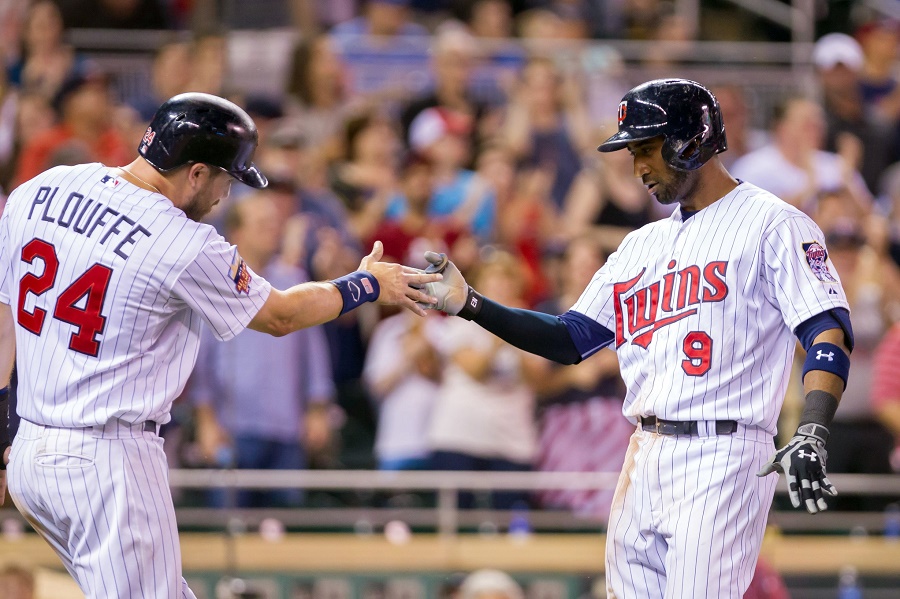 When it comes to arbitration, there are ways to guess and predict where the values will come in. It is based on career numbers to that point, but there can also be some attention placed on most recent performance. It will be interesting to see if baseball's increased revenues will have any impact on the arbitration decisions. Will players get a 10% bump over historical data just because of the revenues? When we hear that the team and the player file arbitration numbers, a lot of thought and statistical analysis goes into those numbers. The team can’t just lowball the player because it makes reaching an agreement less likely, and it makes it more likely that an arbiter would rule for the player. The same goes the other way. A player can’t just put a $10 million filing number out there if he’s likely worth $2 million because there’s no way the judge would rule for the player. It’s a tough slope. Here are my thoughts or projections for the week. Get your predictions into the comments section below and we'll see what happens over the next four days. TREVOR PLOUFFE – 2nd Year of Arbitration The third baseman had a very good 2014 season. He made $2.35 million in his first year of arbitration and should nearly double that amount. Should it get to Friday, I would expect Plouffe to ask for around $5.2 million while the Twins would likely counter around $4.5 million. In the end, the midpoint would be about $4.85 million. Plouffe could be a candidate for an extension, either four or five years, or maybe a shorter-term deal like two years. BRIAN DUENSING – 3rd Year of Arbitration Duensing is in his third and final year of arbitration. He received $2 million in 2014. I think that the Twins will offer him a raise to around $2.3 million while Duensing’s representation will likely counter with a number around $2.9 million. In the end, I can see them settling near the midpoint at about $2.6 million. JORDAN SCHAFER – 2nd Year of Arbitration A year ago, the Braves paid Schafer $1.09 million to be an extra outfielder on their roster. He rarely played more than just as a pinch runner and didn’t hit in his limited opportunity. After the Twins traded Sam Fuld and Schafer was DFA'd by the Braves, it only made sense for the Twins to give an opportunity to the former top prospect. He played well the final couple of months for the Twins. He will likely get a small raise. I think his representatives will ask for $1.6 million. I can see the Twins offering $1.2 million. I can see the two sides getting creative. I can see them agreeing to a deal for about $1.3 million with several incentives based on playing time. In other words, if he ends up being the starter, he could make up to $200K more. If not, the midpoint is at $1.4 million. TOMMY MILONE – 1st Year of Arbitration Milone presents an interesting case. A look at his statistics say that he should make some serious money. Had he been in the A’s rotation all season, he could be looking at a $4 million payday. But instead, the A’s demoted him, warranted or not, and when he was traded to the Twins for Fuld, he remained in the minors for about a week. Once with the Twins, he was hurt and didn’t get a chance to increase his value. It’s also interesting because his 2015 role is uncertain. He could be the fifth starter. He could be a long reliever. He still has an option remaining. This is another situation where there could be some creativity. I can see Milone’s side filing a $3 million number while the Twins should file closer to $2.2 million. That puts the midpoint at $2.6 million. Could they reach an agreement for about $2.4 million with incentives for $200K for each ten-start interval? CASEY FIEN – 1st Year of Arbitration Fien had a fine 2014 season. He was one of the better set-up men until a rough September which made his numbers look not as impressive. He achieved Super-2 status this year so he could have four years of arbitration. There are a lot of relief pitchers each year who reach arbitration every year and the range of their contracts is all over the board, so it’s difficult to guess where he could fall in. I think that the high end would be about $2.2 million, so I would think that the Fien side would ask for about that amount. The Twins should counter north of $1.6 million because if it does go to arbitration, it’d be hard to imagine an arbiter siding with a number less than that. I think that the Twins would counter around $1.8 million. At the end of the day, the midpoint is $2 million and that feels about right. EDUARDO NUNEZ – 1st Year of Arbitration There are always several utility infielders who get to arbitration for the first time each year. The range for first year arbitration utility infielders is anywhere from about $750K to $1.4 million. I think that the Nunez camp will likely ask for around $1.2 million. I could see the Twins countering at about $800K. I think there could be an agreement just shy of the $1 million mark. As you can see, there is a range for where these six arbitration figures can put the Twins payroll. Be sure to check out Jeremy Nygaard’s Rosters & Payroll to keep updated on the Twins payroll.
-
Twins Ft. Myers Baseball Academy
Seth Stohs replied to Seth Stohs's topic in Twins Minor League Talk
Who else is there this week? is there a list somewhere? That would have to be a lot of fun.- 11 replies
-
- 1
-
-
- minnesota twins
- fort myers mighty mussels
- (and 1 more)
-
Article: Last Chance for Winter Meltdown Tickets
Seth Stohs replied to John Bonnes's topic in Twins Daily Front Page News
I'm a 7 hour drive from there... I'll be there! -
Article: A New Metric for Shortstop Fielding
Seth Stohs replied to Thrylos's topic in Twins Daily Front Page News
Correct, old nurse. Consider that if the shortstop fields the ball and makes the throw to 2B, the throw is much shorter, many times even underhand. If he gets the put out, it means he had to catch the ball and throw it to first, not having to field it at all. As you've said, the other key is that someone has to be on base and the pitcher coaxes a ground ball.- 18 replies
-
- 1
-
-
- jorge polanco
- engelb vielma
- (and 1 more)
-
Outfield Depth Reality in Minors
Seth Stohs replied to lightfoot789's topic in Twins Minor League Talk
Or just forgetting about him. -
Article: The Rise Of Ryan O'Rourke
Seth Stohs replied to Seth Stohs's topic in Twins Daily Front Page News
Fien, Stauffer, Achter... I think Darnell has good stuff for a lefty bullpen guy. I think he can be solid for some time. I'd like to see him pitch out of that role for Rochester for a couple of months. He and O'Rourke and Thompson could provide some quality lefty work for the Red Wings. -
2015 Twins offseason top 40 prospects list: 1-5
Seth Stohs commented on Thrylos's blog entry in Thrylos' Blog - select Tenth Inning Stretch posts
Good list for discussion creation... -
Article: Rocking The Boat?
Seth Stohs replied to Parker Hageman's topic in Twins Daily Front Page News
It's just a weird story... Players should handle benchings better. Sano handled his perfectly. He didn't get a manager fired. We don't know the whole story and maybe there's been a lot going on that led up to this... but firing a manager who did have a very good big league career as the playoffs are starting... something's strange. There's more to this story, for sure. -
This article was originally posted in January. Ryan O'Rourke had just found out that he had been invited to big league spring training. Tonight, O'Rourke learned that he is heading to the big leagues, replacing lefty Aaron Thompson who was optioned. ----------------- When Merrimack College beat the University of Minnesota’s Men’s Hockey team in the Mariucci Classic a week ago, one member of the Twins organization was very happy. Ryan O’Rourke is a proud Merrimack alum. Recently, the left-handed reliever was invited to big league camp with the Twins. He is trying to meet a goal that many may have seen as unlikely just three years ago.The Minnesota Twins used their 13th round pick of the 2010 draft to select O’Rourke, a four-year senior from Merrimack College. In high school, O’Rourke was a three sport athlete. He played football, hockey and baseball. He thinks that it is important for kids today to be involved in more than one sport. “I think playing more than one sport is crucial. All the kids that I talk to, or parents that ask me to talk to their kids, I tell them to go out there and find as many things as you can possibly do athletically and try to excel in them. Work as hard as you can because the stuff that translates to the mound is great, not just physically, but mentally. It’s great.” Though he skated with the Merrimack hockey team in college, he didn’t play on the team. However, he had a role in his years in high school hockey. “I kind of had to be the guy who checked a lot of people. I’ve taken that bulldog mentality, and I try to bring it to the mound. At this point in my career, I’m coming out there for one or two innings, so I need to bring my all for that point and time. All the sports I’ve played tell me that I need to come with everything I’ve got. I try to take that to the baseball mound as well. ” O’Rourke began his professional career splitting time between the rotation and the bullpen. After a solid 2011 season in Beloit, he returned to the Snappers roster to start the 2012 season. Through mid-July, he was struggling with a 5.59 ERA in 29 appearances. Already 24, he could not help but wonder about his future in baseball. “Without a doubt, there’s a thought that creeps into everyone’s head. You could be the best or the worst player in the world, but there’s a point where that thought always creeps into your head. I did think about it. Am I out of my league? Is this too far above me?” Fortunately, O’Rourke had some supporters. “I had a few conversations with coaches and staff and the front office. They told me that they believed in me, that the numbers were kind of a fluke. I believed them. I think the confidence that they gave me really propelled me to the next year, 2013, and this year, 2014. Just knowing that someone is there in your corner, I think that really helps. Confidence is probably the most important thing that you can have on the mound. There can be days when your stuff is not there, but if mentally you think that you’re the top of the hill that day, then you’ll probably have a good day. Yeah, there was a time back then where I didn’t think I was very good. That’s always there. You just kind of have to kick that aside and focus on what you can control.” In Beloit, Jon and Erin Pingel decided that, for the first time, they would be willing to be a host family for members of the Beloit Snappers. They, along with their two young children, were fortunate to be able to host O’Rourke. According to Erin, “We were very excited those two stayed with us. We had met them the year before, and we really liked that Ryan picked AJ (Achter) to room with him.” O’Rourke is a very competitive pitcher on the mound, but what about off the field? According to Ping, “He was fun, just one of the kids. They played their games, and then they came home and played with the kids in the backyard.” O’Rourke made some adjustments and figured some things out the last two seasons. In 2013, left-handed batters hit just .173/.214/.250 (464) against him. Those are tremendous numbers. In 2014, the southpaw limited lefties to a .114/.162/.129 (.291) stat line. “I really can’t explain it. I don’t know if I attack them differently. I throw fastballs and sliders to lefties and righties, so it’s not like my pitches are different. Obviously my pitches are coming from different angles, one is seeing it break in and the other is seeing it break away. I’ve even asked lefties on my team to step in against me, and they just say it’s a really sharp breaking ball. I don’t know what it is I do. I just go out there. I’m just going to keep going out there and doing what I know how to do and what I’m blessed to do. I’m not really trying to change up anything at this point.” With that kind of success against left-handed batters, that sounds like a good plan. That said, he knows that he is not yet a finished product. He said, “I need to refine some things, yes, but with the success I’ve had against lefties, I’m just going to try to build on that. Work on whatever I was weak at and build my strength. You may be asking yourself, “Did Ryan O’Rourke cut down on the number of pitches he throws now that he’s pitching solely out of the bullpen? What is his strategy on the mound?" “I throw the same bag of tricks I had as a starter now as a reliever. I’ve thrown a couple of change-ups this year to righties and lefties. I’ve thrown a lot of curveballs to lefties and righties. I throw a ton of two-seamers to lefties and righties. I don’t know what it looks like to them. In my head, I try to speed up and slow down stuff depending on what the batter is doing. If he’s trying to cheat to a fastball, maybe I’ll throw a really slow breaking ball. If he’s trying to sit back on my slider, maybe I’ll throw a cutter, so they think it’s a fastball, jump on it and it tails away a little. I just try to mix things up with every pitch I have. There are not too many people in the world who can just throw two pitches and get away with it. Mariano Rivera only had to throw one pitch. I really just use everything I have and keep it down, keep it low.” O’Rourke has seen his role altered, particularly in 2014. Whereas previously he would typically pitch an inning or two, he now was being used as a LOOGY (left-handed one out guy). O’Rourke provided a scenario. “This past year, I really started focusing on it because I would see a left-hander is batting fourth next inning. The coach would be like ‘Ryan, you have the fourth hitter. The fourth batter gets up, you get it.’ That’s where I kind of saw my role of OK, here’s a lefty, you need to get a lefty.” As he saw more and more success against same-sided hitters, he noticed some changes. “I started seeing batters just kind of standing there and just being like, ‘I’m going to wait for him to prove that he can throw three strikes because I’m not going to swing at a ball and miss.’ Then toward the end of the year, the managers were just pulling every lefty. If a lefty was coming up, they’d just put in a righty.” Sure, O’Rourke probably would have liked to face more left-handed hitters, but he understood and looked at it the right way. “I just took it as a compliment.” After playing in Puerto Rico during the previous offseason, Ryan O’Rourke had the opportunity to play in Venezuela this year. He pitched 12.2 innings over 21 appearances for Aguilas del Zulia before coming back to the States for the holidays and for some rest before spring training starts. He was very excited about going to Venezuela and had goals to make the most of the opportunity. “I was told this is the hardest winter league. My goal was to go down there, enjoy myself, immerse myself in the culture and have a good experience. That was goal #1 for me. And goal #2 was to get better at baseball, learn what guys are going to do, everything. A lot of the hitters there are veterans, big leaguers. I mean, I faced Bobby Abreu down there. That was pretty cool!” There are many difficulties for American ballplayers in Venezuela. One of the obvious ones is the language barrier. O’Rourke worked on it, and he really thrived. “I took Spanish in college, but I’ve probably learned more in minor league baseball. Down there, it’s 100% necessity that you need to know. If you know broken Spanish, you’ll get by, but I got pretty close to conversational fluency. All the Americans were asking me to translate. We’d go out to eat and guys would ask me to sit with them so I could order for them.” All in all, it was a great opportunity for the 26-year-old left-hander from Massechusetts. “I went down there and it was a great experience. I was happy with what I accomplished on the field, and I was happy with everything I learned off the field. My time there, I think I spent it intelligently, and I’m happy I did it. I think that the Twins were happy I did it as well.” Whether it was his performance in Venezuela, or his performance with the New Britain Rock Cats (and one appearance with Rochester) in 2014, O’Rourke made an impression. Enough of an impression that while he was sitting on the beach in Venezuela one day, he received a call on his cell phone with a Minnesota number. “Terry Ryan called me and asked how are things were going down there. He talked to me about the season, said I had a good year and that there are always things to improve on. Then he told me that they were going to invite me into spring training. It was a short, quick conversation. It was a good conversation. I was excited, and surprised. You always think in the back of your head that you have a chance.” Being a non-roster Invitee to big league spring training guarantees nothing for a player, but as O’Rourke acknowledges, it is an opportunity. “That’s the way I look at it. In minor league camp, we always have a talk that someone in that room is going to get to the big leagues that year who didn’t pitch at all in big league camp. And it does happen every year. Look at AJ Achter last year. He was in minor league camp, pitched and got a call in September. But, the amount of guys that were in big league camp that pitched in the big leagues last year was exponentially higher. I’m hoping to make the team right out of camp, don’t get me wrong, but if that doesn’t happen, I want to get the first call. I mean, that’s just the reality of it.” He was very excited for his long-time friend AJ Achter when he got his September call up to the big leagues. “Everyone in the locker room that day was just pumped. Couldn’t happen to a better guy.” However, O’Rourke sees Achter’s situation as something more. “I was probably one of the first guys that AJ met in pro ball and we’ve been great friends ever since. It was just a great moment for me for it to happen to him because… this might sound weird, but look at my good buddy getting called up there. It’s motivation. I’ve been with him every step of the way. So, what’s to say I can’t do it too?” So, what will it be like when Ryan O’Rourke does, at some point, get that call that he will pitch in the big leagues? What will it be like to don that Minnesota Twins uniform in a regular season game for the first time? He quickly pointed out, “Don’t knock the spring training games. That will be a big moment too.” He continued, “Everything’s a step on the way. When you get the call from A-Ball to High-A, that was a good moment. High-A to AA was a cool moment. AA to AAA… They’re all cool moments. But getting the call to the peak of baseball is going to be… I don’t know… I don’t know. I’ll probably sit there and wonder if it’s real. When it happens, it’s going to be a great moment. I’ll just think of all the long bus rides, the struggles, the ups and downs, and all that culminating in the eventual biggest moment of your life when you get called up to the big leagues. I’ll probably call my Mom and my Mom is going to start crying. I’m going to work hard and if it happens, it happens. That’s why I play baseball. That’s why I give it all I have to put myself in a position to get that call.” On the morning of Christmas Eve, Ryan O’Rourke boarded a six-passenger plane in Venezuela. It traveled to Aruba where they encountered a storm that shook the plane. Somehow, the pilot landed the plane safely. Another flight later, and he was home with his family for Christmas and some time off before heading down to Ft. Myers in early February for his first spring training. He’ll try to get to some Boston Bruins games and hopes to get to a Patriots game in Foxboro if they keep their season alive. I’m sure that, on some level, O’Rourke has felt his career has been as shaky as that small plane ride. The Pingel family calls him “A kid at heart.” He is also a kid with heart, heart that has him attending big league spring training next month. O’Rourke has kind of always been an underdog, and he’s been able to get to this point. He’s certainly one guy to cheer for this spring. (Almost three years ago, in the early days of Twins Daily, Ryan O’Rourke wrote an article for our site which you can read by clicking here.) Click here to view the article
-
Article: Rocking The Boat?
Seth Stohs replied to Parker Hageman's topic in Twins Daily Front Page News
Uggh!! Sorry Kennys... but take your day off, and respect what a guy like Carlos Baerga has done in the game!! Not good to hear this. Of course, we don't know the whole story, but still. -
Some very interesting stuff about scouting, and getting Johan Santana as a Rule 5. But he also talked about the Molitor decision and here is how he ranked the finalists for the manager: 1.) Paul Molitor - Obviously since he's the manager. 2.) Gene Glynn - Said he was incredibly impressive. 3.) Torey Lovullo - said he was very impressive too. 4.) Doug Mientkiewicz - said basically that he just didn't think he was ready, but that he isn't far off and that he will be a very good MLB manager in the near future.
-
Outfield Depth Reality in Minors
Seth Stohs replied to lightfoot789's topic in Twins Minor League Talk
Today's Guest: Minnesota Twins: LF - Arcia, CF - Hicks, RF - Hunter, 4th - Schafer Rochester Red Wings - LF - Ortiz, CF - Robinson, RF - Kvasnicka, 4th OF/IF - Eric Farris New Britain - LF - Rosario, CF - Buxton, RF - Walker/Kepler Harrison moves up as soon as Rosario moves up. -
Yesterday (Wednesday 1/7), Jim Souhan was joined by Twins GM Terry Ryan on this week's Souhan Unfiltered. It's a fun talk about his playing days, moving into scouting, some on Tom Kelly and many other topics. Very interesting. I enjoy listening to Ryan talk.
-
Article: Projecting 2015 Value for Youngsters
Seth Stohs replied to Cody Christie's topic in Twins Daily Front Page News
True. Vargas will get 0 Defensive WAR whereas we assume Arcia's Defensive WAR will be negative in LF... so 0 is better than negative. That's why if I had a guess, I'd say that Santana will have the highest WAR because I think his Offensive numbers will come down quite a bit, his defense as a SS should help some.
