Seth Stohs
-
Posts
25,909 -
Joined
-
Last visited
-
Days Won
109
Content Type
Profiles
News
Minnesota Twins Videos
2026 Minnesota Twins Top Prospects Ranking
2022 Minnesota Twins Draft Picks
Minnesota Twins Free Agent & Trade Rumors, Notes, & Tidbits
Guides & Resources
2023 Minnesota Twins Draft Picks
The Minnesota Twins Players Project
2024 Minnesota Twins Draft Picks
2025 Minnesota Twins Draft Pick Tracker
2026 Minnesota Twins Draft Tracker: Picks & Bonuses
Forums
Blogs
Events
Store
Downloads
Gallery
Everything posted by Seth Stohs
-
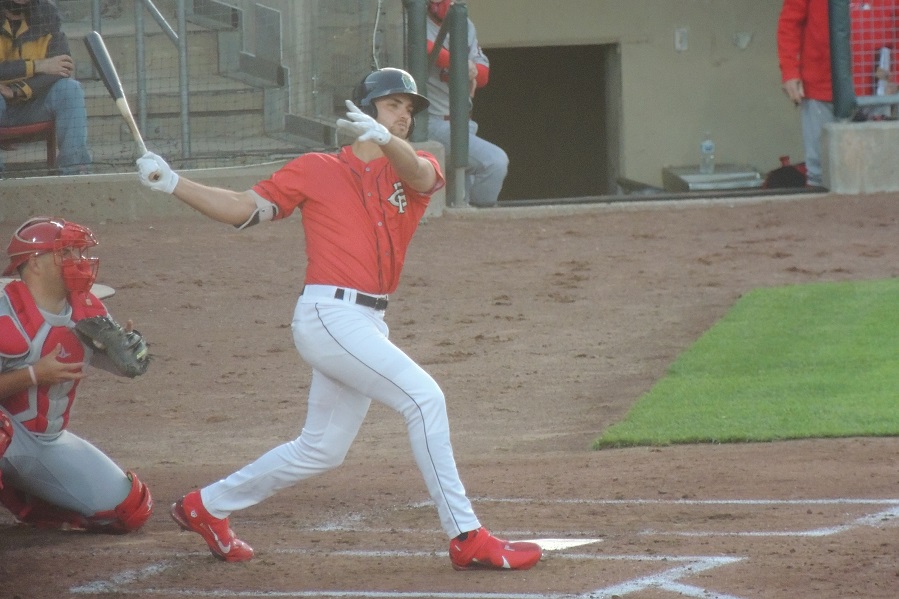 Let’s take a look at that Cedar Rapids Kernels lineup and pretend I’m a scout. (note, I’m not a scout, but I am playing one on the internet today.) Spencer Steer - IF (23) Steer was the Twins third round pick in 2019 from the University of Oregon. He ended that season with the Low-A Kernels. This spring, he was added to the Twins development camp when Chris Williams was injured. In the four games I saw, Steer was the leadoff hitter each game and played second base, shortstop, third base and then shortstop. Steer is a guy who may not do anything that jumps out at a fan at a game, but when you watch him for a while, even just four games (and some online), you begin to see it. His at bats are very professional. He knows the strike zone. He attacks pitches in the zone and is willing to take walks. While he isn’t going to hit a lot of home runs, he gets the barrel to the ball pretty consistently and could develop more power in time. I think ultimately his best position may be second base, but he makes the routine plays at all three spots. It’s never fair to put comps out on players. They’re never really fair. But I do see a lot of Brian Dozier in his prospect days in Speer. That’s not to say that Speer will ever hit 42 homers in a season. It’s more that he just does everything pretty well. Seth’s Scouting Stuff (20/80 scale): Hit: 60, Hit for Power: 45, Run: 55, Defense: 60, Arm: 45, Approach: 65. Seth Gray - 3B (22) Gray was the Twins fourth round pick in 2019 from Wright State. He also ended his 2019 with a couple of games in Cedar Rapids. Gray is a third baseman. He is big and strong. While he isn’t swift, he does seem to have good agility at the hot corner and a strong arm. As he develops, he should add significant power. He’s got the strength. He also has a really good approach at the plate. He seems to have a pretty good idea of the strike zone and is willing to take walks. He also stays down on pitches well, which should help him over time, but it may also lead to him getting hit by pitches. He is a joy to watch in batting practice. Also, if you want to root for a guy with a great mullet, Gray is your guy! Seth’s Scouting Stuff (20/80 scale): Hit: 55, Hit for Power: 60, Run: 40, Defense:55, Arm: 55, Approach: 55 Matt Wallner - OF (23) You know the Wallner story. Forest Lake grad. Drafted by the Twins in 32nd round as a pitcher. Was set to go to the University of North Dakota. They cut their baseball program. He winds up at Southern Mississippi and becomes a power-hitting, three-time All American outfielder. The Twins selected him in the Competitive Balance Round of the 2019 draft. He also ended the 2019 season in Cedar Rapids. Wallner is a big guy; tall (6-5), and very strong. Powerful. He has the ability to hit the ball a long way. And, frankly, he takes what his manager calls a “violent” swing at the ball. Yes, that means there will be some swing and miss, for sure, but he punishes the ball to all fields. Unlike Alex Kirilloff and Trevor Larnach, whose natural power is to the opposite field, Wallner has the ability to pull the ball with authority. That’s not to say that he won’t hit the ball the other way. He will, and with authority. He is a joy to watch in batting practice. If I’m being honest, Wallner is also more athletic than I anticipated. While he had some adventures on a couple of plays in right field, he showed good range. He also had a triple and was moving really quickly once he got going. As a former pitcher, including some closing in his first two seasons in college, he hit upper-90s with a fastball, and he isn’t afraid to show off a big arm from right field. Seth’s Scouting Stuff (20/80 scale): Hit: 55, Hit for Power: 65, Run: 45, Defense: 50, Arm: 70, Approach: 55. Jair Camargo - C (21) Camargo came to the Twins as part of the Maeda/Graterol deal from the Dodgers. I didn’t know a lot about him so when I saw him hitting clean up in this lineup, it caught my attention. Now, some of that might be to break up the lefties, but Camargo does have some pop in his bat. It may not necessarily be home run power, but he can drive the ball a little. He may be a little pull-happy. Camargo is stocky, and he’s not fast, but he does appear to be a good athlete. He sets up well behind the plate and seems to work with pitchers well. I really didn’t get to see much of his arm, but it seemed fairly strong and accurate. It’s clear he’s still working on framing the ball as a couple of pitches got by him when he was trying to bring it back over the plate. The Colombian should produce and could move slowly up the ladder. He’s still just 21 years old, which may be most encouraging. Seth’s Scouting Stuff (20/80 scale): Hit:45, Hit for Power: 45, Run: 35, Defense:50, Arm: 55, Approach: 45 Gabe Snyder - 1B (26) Snyder was a four-year college guy, so he is a little bit older than the other guys (turned 26 in March), but he’s intriguing. He put up power numbers with the Low-A Kernels in 2019, and he’s begun this season with some power. Let’s start with the defense. Snyder is a pretty solid first baseman. He is pretty agile, showed some range, scoops well. He looks like he’s been playing the position for a long time, and as a tall, left-hander, he probably has. He pitched in one game last week and threw most of his fastballs at 77 mph. He wasn’t totally airing it out, but clearly that’s plenty of arm for the position. Offensively, he shows a good approach and has a good eye. He isn’t afraid to use the whole field, and he also is a little more athletic than I had thought. On a triple on Opening Night, he was moving really well. But his tool that will need to be prevalent as he moves up will need to be his power. He’s got plenty of power, but will he be able to continue to hit for power as he moves up? He is a joy to watch in batting practice. Seth’s Scouting Stuff (20/80 scale): Hit:45, Hit for Power: 55, Run: 40, Defense:50, Arm: 50, Approach: 50 Wander Javier - SS (22) We have been hearing and reading about Javier since he signed a big signing bonus with the Twins in 2015. Unfortunately, he played just nine games in 2016 before getting hurt. He missed the 2018 injury with a shoulder injury. He struggled in Cedar Rapids in a half-season in 2019. And, of course, he missed the 2020 season. All that, and Javier is still just 22 years old. He has gained a lot of strength. He is a great athlete with good speed. He is a good defender at shortstop with a strong arm. He has shown glimpses of power. He has just struggled in terms of batting average and contact. It almost looks like he is guessing at times. But he’s young. He does work hard. He is all those things that mean you don’t give up on him. Seth’s Scouting Stuff (20/80 scale): Hit:40, Hit for Power: 45, Run: 50, Defense:55, Arm: 55, Approach: 40 Trey Cabbage - OF (24) Cabbage was the Twins 4th round pick in 2015 out of high school in Tennessee. Yes, this is his fourth season in Cedar Rapids, but that stat is a little (or more than a little) misleading. He spent the final six weeks of the 2017 season with the Kernels. He then spent the 2018 season in Cedar Rapids. Then he spent April in Cedar Rapids in 2019 before being promoted to High-A Ft. Myers. Of course, no one played in 2020, and Cedar Rapids became the High-A affiliate of the Twins. And, I would guess that he’s a candidate for a quick promotion to Wichita this year. Cabbage was drafted as a third baseman and played between there and third base most of his early years. He has primarily played in the corner outfield the last couple of seasons, though he still has that first baseman’s glove. Cabbage is big and strong, and takes a big cut. He rarely gets cheated and has the ability to hit the ball hard and far. When he makes contact, good things happen. That tends to be the issue, and there is quite a bit of swing-and-miss. He’s not a burner, but like Michael Cuddyer, once he gets going, he is pretty quick. By the way, he is a joy to watch in batting practice. Seth’s Scouting Stuff (20/80 scale): Hit:45, Hit for Power: 60, Run: 50, Defense:45, Arm: 50, Approach: 45 Gabriel Maciel - OF (22) Maciel is a native of Brazil. He came to the Twins from the Arizona Diamondbacks in the Eduardo Escobar trade. Maciel is a quiet player. In the outfield, he just makes all the plays. He’s got good range and can play all three positions pretty well. He’s got a good, probably average arm. Offensively, he is a switch hitter. While I didn’t see enough of him either right or left-handed, he takes pitches, seems to know the strike zone pretty well. He knows himself well. He takes walks, sprays line drives and then steals some bases. Seth’s Scouting Stuff (20/80 scale): Hit:45, Hit for Power: 30, Run: 60, Defense:55, Arm: 45, Approach: 50 DaShawn Keirsey, Jr. - OF (24) Keirsey was the team’s fourth-round pick in 2018 out of the University of Utah. He spent 2019 in Cedar Rapids but was hurt much of the season. He has played in four games at the start of this season because he is nursing a hamstring strain. However, he was the team’s starting centerfielder in four of their first five games. Keirsey is really good in centerfield. He’s got very good instincts, speed and first step. He’s got a good arm. Offensively, he isn’t going to hit for a lot of power. He will (or should) hit for average and get some doubles and triples because of his speed and he can be a gap-to-gap hitter. Seth’s Scouting Stuff (20/80 scale): Hit:40, Hit for Power: 35, Run: 60, Defense:60, Arm: 50, Approach: 50 Alex Isola - C (22) Isola was the Twins 29th round pick in 2019 out of TCU. He finished that season with the Kernels. This spring, he was invited to the Twins development camp for his work behind the plate. He is solid behind the plate with a strong, accurate arm. He sets up well behind the plate, blocks pretty well and continues to work on framing. Offensively, he has a good approach at the plate and seems to know the strike zone well. While he won’t hit a lot of homers, he is strong and should get some extra base hits. Seth’s Scouting Stuff (20/80 scale): Hit:40, Hit for Power: 40, Run: 35, Defense:55, Arm: 55, Approach: 50 Chris Williams - C/1B (24) Williams was the Twins eighth round pick in 2018 out of Clemson. He was a catcher in college, though he played a lot at first base after a shoulder injury. This spring, he was invited to big-league camp as a catcher. He hurt his shoulder while playing in his first game with the Twins. Williams has got himself in really good shape over the past year, and he did so without giving up any of his power. That will be his calling card. He does have a good eye and is willing to take a walk too. For the Kernels, he will mostly DH and play first base, but he will also get some time behind the plate. Seth’s Scouting Stuff (20/80 scale): Hit:45, Hit for Power: 55, Run: 40, Defense:40, Arm: 40, Approach: 50 Michael Helman - IF/OF (24) Helman was the Twins 11th round pick in 2018 out of Texas A&M. He had a strong showing that year including at Cedar Rapids. He moved up to Ft. Myers in 2019 and struggled before getting hurt. He returns to the High-A level this year with the Kernels. Now, he hasn’t hit muhc, but he has a really good approach at the plate. He knows the strike zone well and could be a leadoff hitter if needed. Defensively, he has mostly played in the middle infield and is a good defender with range. This year, he is going to get time in the outfield as well. He did a nice job in left field in a game last week and threw out a runner at home. In just watching him play and practice, I think he could be a really good center fielder too. He profiles as a utility guy who gets on base. Seth’s Scouting Stuff (20/80 scale): Hit:40, Hit for Power: 40, Run: 55, Defense:55, Arm: 50, Approach: 60 Yeltsin Encarnacion - IF (22) I tweeted earlier this week that Encarnacion embodies probably my favorite type of baseball player. Encarnacion can play all three infield positions well, though he’s best in the middle infield where he has good range and a strong arm. Hey, he pitched one inning when I was in Cedar Rapids and he was hitting 86 and didn’t look like he was even trying to overthrow. Offensively, he’s a switch hitter who sprays the ball all over the field. He isn’t going to hit for much power, but he will hit a lot of line drives and turn singles into doubles either literally or with a stolen base. He knows the zone well, and he isn’t afraid to take a big swing. He also just has a presence of confidence, so it’s not surprising when the Triple-A Saints needed an infielder Encarnacion got the call and was thrown into their starting lineup. Ultimately, he’s a reliable utility player Seth’s Scouting Stuff (20/80 scale): Hit: 45, Hit for Power: 35, Run: 55, Defense:55, Arm: 60, Approach: 55 Listen, I’m not a scout, so maybe I’m off, but I have watched most of these guys play in person here, or in spring training or on milb dot tv. I’d be very curious to hear what the Twins scouts and player evaluators would think about my Scouting stuff. Consider them one person’s opinion, mine, and I encourage you to agree or disagree with them. The Cedar Rapids lineup is fun. They do have some really solid hitters. They have quite a few hitters with power. Several of them can generally be relied upon for a quality plate appearance. And yes, there will be some players who will prove to be very versatile over the course of the year and their career, and that is valuable. I definitely recommend Twins fans to make that 4 ½ to five hour trek south to watch some Kernels games this summer!
-
 I was surprised he is starting the season in Rochester. Had a nice first start on Friday. I believe they are going to piggyback Chandler Shepherd with him tonight. Toby Gardenhire likes him and how he competes. They just really, really want to keep him healthy. It'd be nice if he'd be able to hit 90 in terms of long-term potential, but again, there are always exceptions. You never know.
-
He didn't get selected the year before either. Not enough strikeouts. Not an "electric" arm, just a solid pitcher. Tyler Wells have a bigger fastball and more strikeout stuff, so he does get drafted. But guys like Jax, that are just steady and generally throw strikes and have three pitches, tend to surface at some point.
-
I think that sounds like a pretty good idea to me.
-
He is on the Injured List. It does sound like he's getting pretty close. Balazovic has the oblique injury. He's a little behind Duran. He'll go to Wichita.
-
Enlow looked really good last night. Here is some video...
-
Dobnak: "Some days my sinker is going to dive more than I'm used to. Some days will be less." Talked also about how he needs the low strike zone. Wasn't sure if he was just missing below the strike zone, but he needs those. If he's not getting them, he has to move his pitches out, which allows the hitters to see the pitch better. "Today I didn't really get hit around a lot. It was more just walking guys. That just frustrates me more than anything. I hate walking guys." Toby Gardenhire talked about how he gets so much movement that it can be hard to contain at times, and when he has issues, that's what it is. I asked someone in Wichita about Cano's velocity. Heard it was 'Mid-90s'. Mussels Mgr Brian Meyer said he's not surprised by the good start by Cavaco. Said he put in a lot of work, learned a lot at Instructs, and really made big strides between then and spring training. "It was nice to see him get rewarded. He got a hanger. He took it out of the ballpark and he was all smiles around the bases."
-
Twins Minor League Week in Review: Six Down, 114 To Go
Seth Stohs replied to Seth Stohs's topic in Twins Minor League Talk
I asked Toby Gardenhire about that just a bit ago in the pre-game press conference for tonight's Saints game, and it is true. Also, a player called up to any level needs to go through an intake process which includes a 24-48 hour quarantine. When a player goes between AAA and MLB, they are on the same testing schedule so the intake is a little different, quicker. -
So excited that Minor League Baseball is back! Go Saints, Wind Surge, Kernels and Mighty Mussels! And Twins too!
-
Twins Minor League Week in Review: Six Down, 114 To Go
Seth Stohs replied to Seth Stohs's topic in Twins Minor League Talk
I'd heard that as rumor last week, but I believe it is true. -
Twins Minor League Week in Review: Six Down, 114 To Go
Seth Stohs replied to Seth Stohs's topic in Twins Minor League Talk
Oops! Should have been mentioned. Also, Spencer Steer is hitting .350. -
Twins Minor League Week in Review: Six Down, 114 To Go
Seth Stohs replied to Seth Stohs's topic in Twins Minor League Talk
The reinforcements are Kirilloff, Larnach, Gordon, Rooker and Jeffers. They up or injured, or down to get playing time. Dobnak and Thorpe looking to be good SP depth. -
When I was in my early days of blogging, Roger and I had a ton of conversations about prospects and rankings, and how much performance matters in the minors.
-
After approximately 20 months, minor league baseball returned on Tuesday night. The Twins have new affiliates, affiliates at different classifications, and lots of prospects to watch. The teams play six games each week, Tuesday though Sunday with Monday's as off days. Each Monday night, we will post this Twins Minor League Week in Review article to summarize the prior week and look ahead. How nice was it to see minor league baseball return this week? And, hopefully you have enjoyed the return of the Twins Minor League Reports each day on this site. I had a great time watching and covering the start of the Cedar Rapids Kernels season from Cedar Rapids. Those that follow me on Instagram or Twitter likely saw that I took approximately 2.3 million pictures over four days. I enjoyed the time and was able to see the Kernels jump up to High-A after being the team’s Low-A affiliate for the previous eight years. My plan is to do a weekly Twins Minor League Week in Review. It will be similar to Nick’s Twins Week in Review, but I will instead be highlighting the goings-on in the Twins farm system. My intent is to show top performers for the week as well as discuss some storylines developing in the system. As always, I welcome your feedback on what you would like to see from these Week in Review articles, so let me know in the comments below. With that, let’s look at Week 1 in the Twins minor leagues: Results Triple-A: St. Paul Saints: Week (2-4 at Omaha), overall (2-4) Double-A: Wichita Wind Surge: Week (5-1 at Springfield), overall (5-1) High-A: Cedar Rapids Kernels: Week (5-1, hosting Peoria), overall (5-1) Low-A: Ft. Myers Mighty Mussels: Week (3-3, at Bradenton), overall (3-3) News & Notes For those of you looking to attend CHS Field for the St. Paul Saints first games as the Twins AAA affiliate, tickets are still available. Check out their website for ticket availability and information. We may have less (though hopefully more and more) readers in the Wichita area, but they also have tickets available for their home opening series against Amarillo. Tickets also available in Ft. Myers as they start their home schedule on Tuesday as well. Wichita opened their new $90 million ballpark, Riverfront Stadium, on April 10th when Wichita State played the University of Houston. Did you know, the last time a MLB-affiliated game was played in Wichita was in August of 2007. Catcher David Banuelos began his season with the Wichita Wind Surge. He did leave the team this weekend, but for good reason. He and his wife are expecting their first child so he is back home. So while he went just 1-for-13 at the plate, this will be a good week for the catcher. Highlights It’s always nice to start the season on a good note. We are all paying attention early in the season, and then we start looking at season numbers. It’s also a fun time to see players making their professional debuts, or returning from injury, or switching positions, and those are fun to cover as well. We will start with the Twins choices for Hitter and Pitcher of the Week (which is announced on Sunday mornings). Twins Player of the Week: Jose Miranda, Wichita Wind Surge Splitting his time between second base and third base, Miranda provided some thump in the Wind Surge lineup. He hit .370/.414/.741 (1.155) with a double, three home runs and seven RBI. He has had at least one hit in all six games. Twins Pitcher of the Week: Brent Headrick, Ft. Myers Mighty Mussels Headrick made one start for the Mussels and it went well. He threw four scoreless innings. He gave up just two hits, walked one and struck out seven batters. Other Strong Starts Aaron Whitefield, Wichita Wind Surge: The speedy outfielder put together a very nice first series of the season. He had multiple hits in all six games. He hit .444/.500/.815 (1.315) with two doubles, a triple and two home runs. He also stole three bases. Matt Wallner, Cedar Rapids Kernels: The Minnesota native who was twice drafted by the Twins got off to a strong start for the Kernels. He hit .381/.462/.810 (1.271) with a double, a triple, two home runs and eight RBI. Caleb Hamilton, Wichita Wind Surge: Just before the season started, Hamilton was transferred from the alternate site in St. Paul to the Wichita roster. In four games, he is hitting .417/.611/.583 (1.194) with two doubles. He also had six walks to go with four strikeouts. Edouard Julien, Ft. Myers Mighty Mussels: The 2019 draft pick hurt his elbow playing for Team Canada that summer. He had Tommy John surgery. So this week marked his professional debut. It went well. He hit .353/.577/588 (1.165) with two doubles and a triple. He also walked nine times compared to seven strikeouts. Trey Cabbage, Cedar Rapids Kernels: He hit .313/.450/.625 (1.075) with a triple and a home run during the week. On Thursday, he went 4-for-4 with the home run, triple, two singles and a walk. All four hits were over 100 mph off the bat. On Opening Night, he also made a great diving catch out in left field. Yunior Severino, Ft. Myers Mighty Mussels: In five games this week, Severino hit .333/.400/.611 (1.011) with two doubles, a homer and eight RBI. Andrew Vasquez, St. Paul Saints: The lefty reliever worked in three of the Saints six games and gave up just one hit over 3 ⅓ innings. He didn’t walk anyone and struck out six batters, harkening back to his remarkable 2018 season. Cole Sands, Wichita Wind Surge: The 2018 draft pick went 4 1/3 scoreless innings in his 2021 debut. He gave up two hits, walked two and struck out three batters. Jovani Moran, Wichita Wind Surge: The lefty worked 3 1/3 scoreless relief innings over two appearances. He gave up two hits, walked one and struck out seven batters. Hunter McMahon, Ft. Myers Mighty Mussels: The right-hander came to the Twins organization from the Nationals in the Ryne Harper trade. In his first appearance in the organization, he worked 4 2/3 innings and gave up just two hits, walked one and struck out six batters. Randy Dobnak, St. Paul Saints: The righty tossed four scoreless innings for the Saints and gave up just two hits. He didn’t walk a batter and struck out five. In fact, he struck out the side in his final inning of work. Kody Funderburk, Cedar Rapids Kernels: The southpaw was the Kernels opening night starter on Tuesday and worked three innings. He came in again on Sunday afternoon and recorded a two-inning save. In all, he gave up two unearned runs in five innings of work and struck out six batters. Melvi Acosta, Cedar Rapids Kernels: Acosta worked 4 ⅓ scoreless innings over two appearances in Week 1. He gave up just one hit, walked two and struck out six batters. Andrew Cabezas, Cedar Rapids Kernels: The righty came out of the bullpen and worked four scoreless innings in his 2021 debut. He gave up just one hit, walked two and struck out two batters. Josh Winder, Wichita Wind Surge: Winder certainly has made a name for himself the past six months. Increased velocity and a strong spring training performance meant he skipped High-A ball and jumped right to AA where he was the team’s Opening Night starter. He also started on Sunday. Combined, he worked 9 2/3 innings and gave up just two runs. He struck out 11 batters. Daniel Ozoria, Ft. Myers Mighty Mussels: On Sunday, the Mussels lost a crazy game by the score of 18-9. The team’s best pitcher in that game was Ozoria who worked 2 2/3 scoreless innings. He gave up one hit. He walked one. He didn’t strike anyone out. But he was able to get the team through those final innings… Oh, Ozoria, he’s an infielder. Great Comeback Stories Zach Featherstone, Cedar Rapids Kernels: The Twins drafted Featherstone in 2016 as a 1B/OF. In 2018, he made the transition to the mound. However, he hurt his elbow, rehabbed, and then after just three games in the GCL, he needed Tommy John surgery. He was ready to return late in 2019, but a hurricane ended the GCL season early. Then came COVID in 2020. On Thursday night, Featherstone returned to the mound in a game for the first time in nearly three years. The lefty was pumping 96 in his first inning and displaying some good secondary pitches too. He worked 1 2/3 scoreless innings in relief. After the game, Featherstone said, “It was definitely cool to get back on the mound and be competitive.” Jon Olsen, Cedar Rapids Kernels: Olsen starred at UCLA, but early in the 2018 season, he needed Tommy John surgery. The Twins still drafted him in the 11th round that year. He rehabbed that year and in 2019. Olsen was looking strong and excited to get going in 2020, but then came COVID. On Sunday afternoon, he was finally able to make his professional debut. He worked four innings and gave up just one run on five hits and a walk. He struck out four batters. Lowlights As those who have known me or have read what I’ve written over the last couple decades know, I generally tend to be positive. But for this report, I think having a small ‘Lowlights’ section makes sense. It is , in my mind, more of a reminder for all of us that even the top prospects are still developing. They’re still working on things. They aren’t finished products. So here are a few guys who have started their season slowly in the first week. With the 27th overall pick in the 2020 MLB Draft, the Twins selected 1B Aaron Sabato from the University of North Carolina. While there were questions about his defense, the general belief is that he will hit and hit for power. It’s also possible that he could be a fast-riser through the system. He went to Twins spring training (development camp) and played a bunch late in big-league games. It may have surprised many that he began the season (and his professional career) in Low-A Ft. Myers. However, reports surfaced that he had struggled with the bat in minor league camp. Through the season’s first six games, Sabato has started and batted third each game for the Mussels. He is hitting .095/.345/.095 (.440) with no extra base hits. He has walked seven times, but he’s struck out 11 times in his 29 plate appearances. What to do? Well, manager Brian Meyer will most likely play him each of the next six games at home this week, and bat him third, and he will continue to do that as long as Sabato remains with the Mighty Mussels. Gilberto Celestino begins his 2021 campaign in Double-A Wichita despite ending the 2019 season with just eight games in High-A. He began the season by hitting .150/.292/.200 (.492) with one double. He has three hits in 20 at-bats. Trending Storyline It has been interesting to see how the pitching rotations for the Twins affiliates have been set up, especially with the two Class A affiliates. The idea, of course, is to protect the arms of these pitching prospects who were unable to work any official innings in 2020 due to the pandemic. On Thursday night, the Cedar Rapids Kernels were behind by a score of 4-2 going into the ninth inning. On the mound for the Kernels in the top of the ninth inning… Gabe Snyder, the first baseman. The lefty was hitting 77 mph with his fastball, but he faced five batters, gave up three hits and walked two batters before being replaced by second baseman Yeltsin Encarnacion. Encarnacion gave up two more hits and a long home run, but he got three outs, including one on a strikeout (with an 86 mph fastball). The Kernels lone loss of the season was an 11-2 loss that night. So why did they need to throw a position player into a close game? After the game, Kernels manager Brian Dinkelman said, “With a bit of a shortened spring training, guys were not quite built up all the way. We know we have a limit of pitches, and ups and downs for guys. We used some guys the first couple of games. We had our guys that were available tonight, and they threw. I know it’s a tough situation, close ball game in the ninth, to have to throw a position player out there. But we’re trying to protect these players so we can go farther into the season.” The Kernels are not alone with this. Ft. Myers Mighty Mussels pitching coach Peter Larson pointed out “Coming off of the missed year, workload volume management is at the forefront, the most important thing, that we don’t blow these guys out.” Because of that, the Mussels roster, specifically the pitching staff, illustrates that. Larson noted, “We have a lot of starters, and we have 15 pitchers. We’re going to look to piggyback starters especially in the early months and it could go the whole season.” He projected the idea of one pitcher starting the first week and then the guys who came in relief would start the second role to give them different opportunities. With the Mighty Mussels, they will also have the advantage of being in the same facilities as the players at the development complex (essentially Extended Spring Training). In week one, we already saw the Mussels add two pitchers from the complex to their roster (Anthony Escobar and Donny Breek). LOOKING AHEAD Clearwater @ Ft. Myers (Hunter McMahon, Regi Grace, Miguel Rodriguez, Bradley Hanner, Sawyer Gipson-Long, Louie Varland) Cedar Rapids @ Quad Cities: (Ben Gross, Blayne Enlow, Tyler Watson, Kody Funderburk, Matt Canterino, Andrew Cabezas) Amarillo @ Wichita: (Cole Sands, Austin Schulfer, Dakota Chalmers, Josh Winder, Bryan Sammons, Cole Sands) Iowa @ St. Paul (Randy Dobnak, Griffin Jax, Bailey Ober, Andrew Albers, Charlie Barnes, TBD) With this being the first Week in Review for the Minor Leagues, feel free to provide some feedback below. What do you like to read? What types of information would you like added? And feel free to ask any questions you like. View full article
-
Twins Minor League Week in Review: Six Down, 114 To Go
Seth Stohs posted an article in Minor Leagues
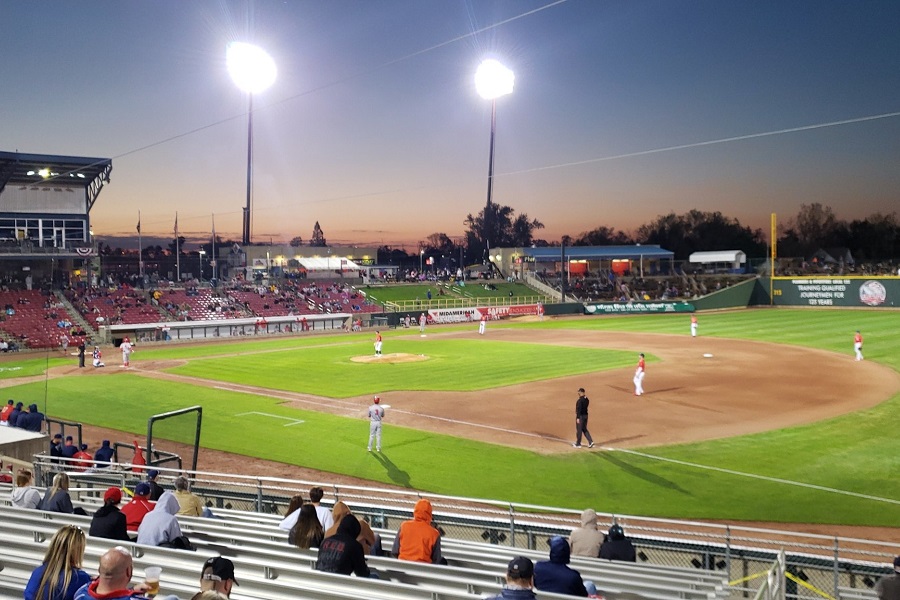 How nice was it to see minor league baseball return this week? And, hopefully you have enjoyed the return of the Twins Minor League Reports each day on this site. I had a great time watching and covering the start of the Cedar Rapids Kernels season from Cedar Rapids. Those that follow me on Instagram or Twitter likely saw that I took approximately 2.3 million pictures over four days. I enjoyed the time and was able to see the Kernels jump up to High-A after being the team’s Low-A affiliate for the previous eight years. My plan is to do a weekly Twins Minor League Week in Review. It will be similar to Nick’s Twins Week in Review, but I will instead be highlighting the goings-on in the Twins farm system. My intent is to show top performers for the week as well as discuss some storylines developing in the system. As always, I welcome your feedback on what you would like to see from these Week in Review articles, so let me know in the comments below. With that, let’s look at Week 1 in the Twins minor leagues: Results Triple-A: St. Paul Saints: Week (2-4 at Omaha), overall (2-4) Double-A: Wichita Wind Surge: Week (5-1 at Springfield), overall (5-1) High-A: Cedar Rapids Kernels: Week (5-1, hosting Peoria), overall (5-1) Low-A: Ft. Myers Mighty Mussels: Week (3-3, at Bradenton), overall (3-3) News & Notes For those of you looking to attend CHS Field for the St. Paul Saints first games as the Twins AAA affiliate, tickets are still available. Check out their website for ticket availability and information. We may have less (though hopefully more and more) readers in the Wichita area, but they also have tickets available for their home opening series against Amarillo. Tickets also available in Ft. Myers as they start their home schedule on Tuesday as well. Wichita opened their new $90 million ballpark, Riverfront Stadium, on April 10th when Wichita State played the University of Houston. Did you know, the last time a MLB-affiliated game was played in Wichita was in August of 2007. Catcher David Banuelos began his season with the Wichita Wind Surge. He did leave the team this weekend, but for good reason. He and his wife are expecting their first child so he is back home. So while he went just 1-for-13 at the plate, this will be a good week for the catcher. Highlights It’s always nice to start the season on a good note. We are all paying attention early in the season, and then we start looking at season numbers. It’s also a fun time to see players making their professional debuts, or returning from injury, or switching positions, and those are fun to cover as well. We will start with the Twins choices for Hitter and Pitcher of the Week (which is announced on Sunday mornings). Twins Player of the Week: Jose Miranda, Wichita Wind Surge Splitting his time between second base and third base, Miranda provided some thump in the Wind Surge lineup. He hit .370/.414/.741 (1.155) with a double, three home runs and seven RBI. He has had at least one hit in all six games. Twins Pitcher of the Week: Brent Headrick, Ft. Myers Mighty Mussels Headrick made one start for the Mussels and it went well. He threw four scoreless innings. He gave up just two hits, walked one and struck out seven batters. Other Strong Starts Aaron Whitefield, Wichita Wind Surge: The speedy outfielder put together a very nice first series of the season. He had multiple hits in all six games. He hit .444/.500/.815 (1.315) with two doubles, a triple and two home runs. He also stole three bases. Matt Wallner, Cedar Rapids Kernels: The Minnesota native who was twice drafted by the Twins got off to a strong start for the Kernels. He hit .381/.462/.810 (1.271) with a double, a triple, two home runs and eight RBI. Caleb Hamilton, Wichita Wind Surge: Just before the season started, Hamilton was transferred from the alternate site in St. Paul to the Wichita roster. In four games, he is hitting .417/.611/.583 (1.194) with two doubles. He also had six walks to go with four strikeouts. Edouard Julien, Ft. Myers Mighty Mussels: The 2019 draft pick hurt his elbow playing for Team Canada that summer. He had Tommy John surgery. So this week marked his professional debut. It went well. He hit .353/.577/588 (1.165) with two doubles and a triple. He also walked nine times compared to seven strikeouts. Trey Cabbage, Cedar Rapids Kernels: He hit .313/.450/.625 (1.075) with a triple and a home run during the week. On Thursday, he went 4-for-4 with the home run, triple, two singles and a walk. All four hits were over 100 mph off the bat. On Opening Night, he also made a great diving catch out in left field. Yunior Severino, Ft. Myers Mighty Mussels: In five games this week, Severino hit .333/.400/.611 (1.011) with two doubles, a homer and eight RBI. Andrew Vasquez, St. Paul Saints: The lefty reliever worked in three of the Saints six games and gave up just one hit over 3 ⅓ innings. He didn’t walk anyone and struck out six batters, harkening back to his remarkable 2018 season. Cole Sands, Wichita Wind Surge: The 2018 draft pick went 4 1/3 scoreless innings in his 2021 debut. He gave up two hits, walked two and struck out three batters. Jovani Moran, Wichita Wind Surge: The lefty worked 3 1/3 scoreless relief innings over two appearances. He gave up two hits, walked one and struck out seven batters. Hunter McMahon, Ft. Myers Mighty Mussels: The right-hander came to the Twins organization from the Nationals in the Ryne Harper trade. In his first appearance in the organization, he worked 4 2/3 innings and gave up just two hits, walked one and struck out six batters. Randy Dobnak, St. Paul Saints: The righty tossed four scoreless innings for the Saints and gave up just two hits. He didn’t walk a batter and struck out five. In fact, he struck out the side in his final inning of work. Kody Funderburk, Cedar Rapids Kernels: The southpaw was the Kernels opening night starter on Tuesday and worked three innings. He came in again on Sunday afternoon and recorded a two-inning save. In all, he gave up two unearned runs in five innings of work and struck out six batters. Melvi Acosta, Cedar Rapids Kernels: Acosta worked 4 ⅓ scoreless innings over two appearances in Week 1. He gave up just one hit, walked two and struck out six batters. Andrew Cabezas, Cedar Rapids Kernels: The righty came out of the bullpen and worked four scoreless innings in his 2021 debut. He gave up just one hit, walked two and struck out two batters. Josh Winder, Wichita Wind Surge: Winder certainly has made a name for himself the past six months. Increased velocity and a strong spring training performance meant he skipped High-A ball and jumped right to AA where he was the team’s Opening Night starter. He also started on Sunday. Combined, he worked 9 2/3 innings and gave up just two runs. He struck out 11 batters. Daniel Ozoria, Ft. Myers Mighty Mussels: On Sunday, the Mussels lost a crazy game by the score of 18-9. The team’s best pitcher in that game was Ozoria who worked 2 2/3 scoreless innings. He gave up one hit. He walked one. He didn’t strike anyone out. But he was able to get the team through those final innings… Oh, Ozoria, he’s an infielder. Great Comeback Stories Zach Featherstone, Cedar Rapids Kernels: The Twins drafted Featherstone in 2016 as a 1B/OF. In 2018, he made the transition to the mound. However, he hurt his elbow, rehabbed, and then after just three games in the GCL, he needed Tommy John surgery. He was ready to return late in 2019, but a hurricane ended the GCL season early. Then came COVID in 2020. On Thursday night, Featherstone returned to the mound in a game for the first time in nearly three years. The lefty was pumping 96 in his first inning and displaying some good secondary pitches too. He worked 1 2/3 scoreless innings in relief. After the game, Featherstone said, “It was definitely cool to get back on the mound and be competitive.” Jon Olsen, Cedar Rapids Kernels: Olsen starred at UCLA, but early in the 2018 season, he needed Tommy John surgery. The Twins still drafted him in the 11th round that year. He rehabbed that year and in 2019. Olsen was looking strong and excited to get going in 2020, but then came COVID. On Sunday afternoon, he was finally able to make his professional debut. He worked four innings and gave up just one run on five hits and a walk. He struck out four batters. Lowlights As those who have known me or have read what I’ve written over the last couple decades know, I generally tend to be positive. But for this report, I think having a small ‘Lowlights’ section makes sense. It is , in my mind, more of a reminder for all of us that even the top prospects are still developing. They’re still working on things. They aren’t finished products. So here are a few guys who have started their season slowly in the first week. With the 27th overall pick in the 2020 MLB Draft, the Twins selected 1B Aaron Sabato from the University of North Carolina. While there were questions about his defense, the general belief is that he will hit and hit for power. It’s also possible that he could be a fast-riser through the system. He went to Twins spring training (development camp) and played a bunch late in big-league games. It may have surprised many that he began the season (and his professional career) in Low-A Ft. Myers. However, reports surfaced that he had struggled with the bat in minor league camp. Through the season’s first six games, Sabato has started and batted third each game for the Mussels. He is hitting .095/.345/.095 (.440) with no extra base hits. He has walked seven times, but he’s struck out 11 times in his 29 plate appearances. What to do? Well, manager Brian Meyer will most likely play him each of the next six games at home this week, and bat him third, and he will continue to do that as long as Sabato remains with the Mighty Mussels. Gilberto Celestino begins his 2021 campaign in Double-A Wichita despite ending the 2019 season with just eight games in High-A. He began the season by hitting .150/.292/.200 (.492) with one double. He has three hits in 20 at-bats. Trending Storyline It has been interesting to see how the pitching rotations for the Twins affiliates have been set up, especially with the two Class A affiliates. The idea, of course, is to protect the arms of these pitching prospects who were unable to work any official innings in 2020 due to the pandemic. On Thursday night, the Cedar Rapids Kernels were behind by a score of 4-2 going into the ninth inning. On the mound for the Kernels in the top of the ninth inning… Gabe Snyder, the first baseman. The lefty was hitting 77 mph with his fastball, but he faced five batters, gave up three hits and walked two batters before being replaced by second baseman Yeltsin Encarnacion. Encarnacion gave up two more hits and a long home run, but he got three outs, including one on a strikeout (with an 86 mph fastball). The Kernels lone loss of the season was an 11-2 loss that night. So why did they need to throw a position player into a close game? After the game, Kernels manager Brian Dinkelman said, “With a bit of a shortened spring training, guys were not quite built up all the way. We know we have a limit of pitches, and ups and downs for guys. We used some guys the first couple of games. We had our guys that were available tonight, and they threw. I know it’s a tough situation, close ball game in the ninth, to have to throw a position player out there. But we’re trying to protect these players so we can go farther into the season.” The Kernels are not alone with this. Ft. Myers Mighty Mussels pitching coach Peter Larson pointed out “Coming off of the missed year, workload volume management is at the forefront, the most important thing, that we don’t blow these guys out.” Because of that, the Mussels roster, specifically the pitching staff, illustrates that. Larson noted, “We have a lot of starters, and we have 15 pitchers. We’re going to look to piggyback starters especially in the early months and it could go the whole season.” He projected the idea of one pitcher starting the first week and then the guys who came in relief would start the second role to give them different opportunities. With the Mighty Mussels, they will also have the advantage of being in the same facilities as the players at the development complex (essentially Extended Spring Training). In week one, we already saw the Mussels add two pitchers from the complex to their roster (Anthony Escobar and Donny Breek). LOOKING AHEAD Clearwater @ Ft. Myers (Hunter McMahon, Regi Grace, Miguel Rodriguez, Bradley Hanner, Sawyer Gipson-Long, Louie Varland) Cedar Rapids @ Quad Cities: (Ben Gross, Blayne Enlow, Tyler Watson, Kody Funderburk, Matt Canterino, Andrew Cabezas) Amarillo @ Wichita: (Cole Sands, Austin Schulfer, Dakota Chalmers, Josh Winder, Bryan Sammons, Cole Sands) Iowa @ St. Paul (Randy Dobnak, Griffin Jax, Bailey Ober, Andrew Albers, Charlie Barnes, TBD) With this being the first Week in Review for the Minor Leagues, feel free to provide some feedback below. What do you like to read? What types of information would you like added? And feel free to ask any questions you like.
-
Twins Minor League Report (5/9): Double Headers Galore
Seth Stohs replied to Nash Walker's topic in Twins Minor League Talk
He's played a lot of first base in his career, but he only played 3B yesterday (6th time in over 1100 pro games) because of the Saints injury situation. Wiel and Lin were out with "undisclosed injuries" and then Drew Maggi got hurt. Toby Gardenhire had to lose the DH (which is why Albers hit), and play guys in unusual places. Broxton had never played 2B. Ryan Jeffers told me that he had never played a game at first base. Telis was left for third base. So, while it's fun, I don't think Telis is going to get a lot of time at third base or shortstop or second base or in the outfield. I heard this morning that Yeltsin Encarnacion is moving up from Cedar Rapids to St. Paul. Could be additional transactions too to help out the Saints. -
Twins Minor League Report (5/9): Double Headers Galore
Seth Stohs replied to Nash Walker's topic in Twins Minor League Talk
Miranda and Whitefield were both fantastic. This should be a really good team. That said, when they've only played one opponent, it's still hard to know. -
Twins Minor League Report (5/7): Big Bats Break Out
Seth Stohs replied to Allen Post's topic in Twins Minor League Talk
They are on milb.tv. The Saints, Wind Surge and Kernels are on milb.tv. The Mighty Mussels are not. In fact, Bradenton is the only team in that league that has it. -
Twins Minor League Report (5/7): Big Bats Break Out
Seth Stohs replied to Allen Post's topic in Twins Minor League Talk
Note - Cabbage's fourth hit was hit a 104 mph, so quite the performance for him. When he puts the ball in play, good things happen. -
On Friday afternoon, the Twins announced that outfielder Byron Buxton was heading to the Injured List. They called up outfield prospect Trevor Larnach to take his spot on the 26-man roster. Lefty Brandon Waddell was DFAd.With the news that outfield prospect Trevor Larnach has been called up, I thought it might be fun to look back at an article I wrote on him for the 2020 Twins Prospect Handbook. Larnach had been named Twins Daily's Minor League Hitter of the Year, so we did the below story on him. ------------------------------------------------------------- 2019 Minor League Hitter of the Year: Trevor Larnach The Twins held the 20th pick in the 2018 draft. When it was time to pick, they selected outfielder Trevor Larnach from Oregon State University. He was seen as an advanced college bat from a big-time program, a guy who could potentially move quickly up the system. Larnach had a huge junior season. He hit .348/.463/.652 (1.116) with 19 doubles and 19 home runs. Days after the draft, Larnach played hero in Omaha, at the College World Series with a dramatic, ninth-inning, game-winning home run to keep Oregon State’s title hopes alive. They won the next night as well and his college career ended with a championship. Before spring training 2019, Larnach spoke of his Oregon State experience. “What they instill there is a lot of culture stuff with teammates, and building bonds, and caring about your team more than yourself. When you have that kind of culture set at a certain standard, regardless if you’re at practice or in a game. You’re always working to get better, but you’re working to reach a goal with your teammates because you’ve built such an awesome bond. I was fortunate to learn that from them and to experience that.” And now, following a successful first full season in professional baseball, Larnach continues to reflect posi-tively on his time in Corvallis. “It was my whole experience (at Oregon State) around a bunch of great people. When I was in that environment, everyone worked their (butts) off, and it became contagious. We all had one goal and that drove everyone to be the best they can be. It wasn’t one individual. It was the whole environment, and I was lucky to be a part of it.” Soon after his team left Omaha, Larnach agreed to terms with the Twins. He was sent to Elizabethton to start his professional career. He played 18 games for the E-Twins, really just to get back into the proverbial swing of things. He hit .311/.413/.492 (.905) with five doubles and two homers. He then moved up to Cedar Rapids and played the final 24games of the Kernels season and their playoff run. Hehit .297/.373/.505 (.878) with eight doubles and three homers. That brings us to the 2019 season. Larnach was pushed in spring training and started the season at High-A Fort Myers. In 84 games with the Miracle, he hit .316/.382/.459 (.842) with 26 doubles and six home runs. He was named to the Florida State League All Star team. After the season, he was named the Florida State League’s Player of the Year. Larnach not only led the circuit with a .316 batting average, he was the only qualified hitter to eclipse the .300 mark. He also led the league in slugging percentage at .459 and his .382 on-base percentage ranked third. Hitting is not an easy task in the Florida State League. It is very much known as a pitcher-friendly league.“It’s definitely a challenge. There’s a few things that go into that.’ Larnach explained. “The ball doesn’t fly. You’re playing in big league parks. Generally those parks are a little bit larger because they’re spring training facilities. I’ve seen plenty of people from my team or other teams hit the ball on the screws at 100-plus mph and it doesn’t make it to the warning track where it might be 25-feet over the fence in other leagues. It is what it is, and it prepares you in a way that makes you mentally tough. ”However, being able to handle that kind of adversity wasn’t much of an issue for the Twins prospect. He says that he has always been a guy who thinks as much about the process as he does about the results. “I learned that in college. When I was in high school, I was a lot more individual-based and focused on my numbers. That’ll work at the high school or even at the college level, but I’ve learned that if I truly want to take the pressure off of myself and don’t want to get discouraged by numbers or statistics or even development, you just focus on what you’re doing. That’s the process. That’s always made me feel the best and put things into perspective.” In mid-July, he was promoted to Double-A Pensacola. With the Blue Wahoos, he played in 43 games. In that time, he hit .295/.387/.455 (.842) with four doubles and seven home runs. He noticed a difference in play from the Florida State League to the Southern League. “I thought there were a few things that stood out to me. First, the umpiring was better. Second, the fielders made a lot less errors. If you hit a ground ball, it was almost certainly an out. Sometimes you can get away with that at the lower levels. The pitching, as far as I’m concerned - the stuff, the velo, the types of break that it has - were all pretty similar, but the guys at Double-A can pitch a lot better. They can set you up better. They can throw the ball where they want it better.” Larnach’s approach at the plate might help him overcome some of that improved pitching. If you watch Larnach play enough, you can see that he hits the ball to the opposite field very well. He’s got good power and drives the ball to left and left-center often. “I personally think that you need to be able to use the whole field and cover both sides of the plate. I’m not saying I have it all figured out, but I know that the higher you go, the easier it is for them to find the holes (in your swing), especially in the big leagues. Teams find holes. They find a weak spot. If you want to stay at the highest level, I truly believe that you have to be able to cover both sides of the plate and you’ve got to be able to hit the ball wherever it is pitched.” Larnach played with several other top prospects in Ft. Myers, and when he got to Pensacola, he was on a very strong roster, filled with prospects. The team won and made the playoffs. Asked about the talent that he was able to play with, Larnach spoke to the talent throughout the system. “It’s not just in Double-A. The Twins have players up and down the system from the rookie level to Triple-A, and obviously the big leagues. You look around and you see guys that are really well developed, and they’re really good ballplayers and a lot of them are really good guys too.” It’s about relationships. It’s about culture. Those things that made Oregon State so special to Larnach can also be seen in the teams that he has played for as a professional ballplayer, especially in 2019. At the same time, there is a huge difference between the college game and the pro game. In pro ball, the ultimate goal is to get to the big leagues and there are a lot of steps along the way. “It’s a competition, but you want to build relationships too. You hope that they want to win rings as much as I do. It’s fun. When you’ve got as good of an organization as the Twins do, you really want to compete to the best of your ability so you can make it to your goal of reaching the big leagues.” 2019 is now in the rear view mirror. Larnach is looking forward to 2020. He has given thought to the upcoming season and what some of his goals are. “Process is so important to me. I take a look at what needs to be improved from the last season. I think everyone knows that I was drafted as a 6-foot-4 outfielder who was supposed to be hitting home runs and driving in runs. That’s my main focus, doing the job that I was paid to do.” He then spoke in specifics. “I just want to see improvements in parts of the game that I need to get to the highest level and stay there. Personally, it’s not only being able to drive the ball from left field to center field, but to be able to hit it out of the park from center to right field. It’s something that’s been in development, and I’m feeling really good about now. It didn’t necessarily come within a couple of swings, but it’s taken four years and continues to be put to the test.” And then there is the big goal... “And, of course, trying to make the same goal that I’ve had since I was a little kid.” It’s the same goal that most of us reading this had as a kid too, to get to the big leagues. Larnach has the right perspective and work ethic to get there. “For me, what’s worked... if you do things right on and off the field, everything will fall into place.” Click here to view the article
-
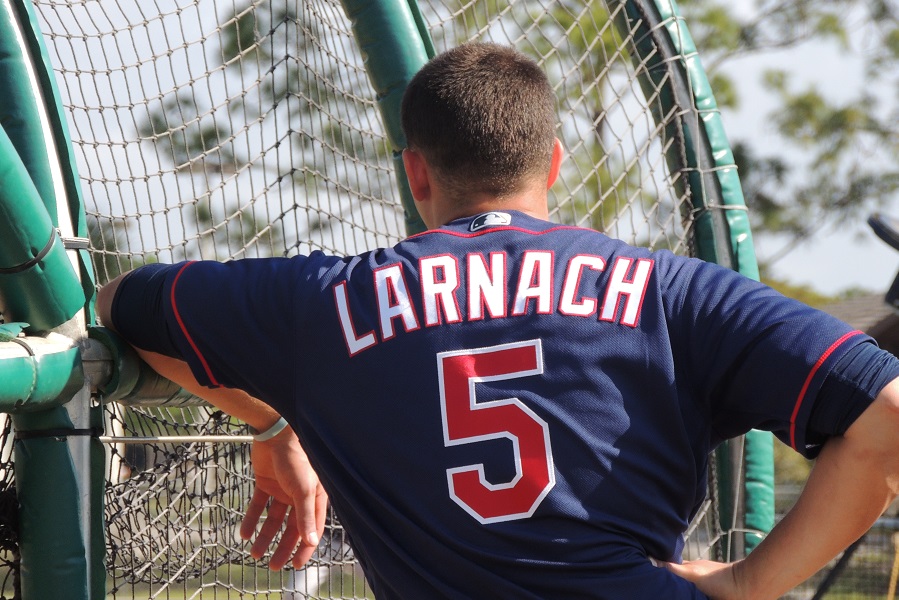 With the news that outfield prospect Trevor Larnach has been called up, I thought it might be fun to look back at an article I wrote on him for the 2020 Twins Prospect Handbook. Larnach had been named Twins Daily's Minor League Hitter of the Year, so we did the below story on him. ------------------------------------------------------------- 2019 Minor League Hitter of the Year: Trevor Larnach The Twins held the 20th pick in the 2018 draft. When it was time to pick, they selected outfielder Trevor Larnach from Oregon State University. He was seen as an advanced college bat from a big-time program, a guy who could potentially move quickly up the system. Larnach had a huge junior season. He hit .348/.463/.652 (1.116) with 19 doubles and 19 home runs. Days after the draft, Larnach played hero in Omaha, at the College World Series with a dramatic, ninth-inning, game-winning home run to keep Oregon State’s title hopes alive. They won the next night as well and his college career ended with a championship. Before spring training 2019, Larnach spoke of his Oregon State experience. “What they instill there is a lot of culture stuff with teammates, and building bonds, and caring about your team more than yourself. When you have that kind of culture set at a certain standard, regardless if you’re at practice or in a game. You’re always working to get better, but you’re working to reach a goal with your teammates because you’ve built such an awesome bond. I was fortunate to learn that from them and to experience that.” And now, following a successful first full season in professional baseball, Larnach continues to reflect posi-tively on his time in Corvallis. “It was my whole experience (at Oregon State) around a bunch of great people. When I was in that environment, everyone worked their (butts) off, and it became contagious. We all had one goal and that drove everyone to be the best they can be. It wasn’t one individual. It was the whole environment, and I was lucky to be a part of it.” Soon after his team left Omaha, Larnach agreed to terms with the Twins. He was sent to Elizabethton to start his professional career. He played 18 games for the E-Twins, really just to get back into the proverbial swing of things. He hit .311/.413/.492 (.905) with five doubles and two homers. He then moved up to Cedar Rapids and played the final 24games of the Kernels season and their playoff run. Hehit .297/.373/.505 (.878) with eight doubles and three homers. That brings us to the 2019 season. Larnach was pushed in spring training and started the season at High-A Fort Myers. In 84 games with the Miracle, he hit .316/.382/.459 (.842) with 26 doubles and six home runs. He was named to the Florida State League All Star team. After the season, he was named the Florida State League’s Player of the Year. Larnach not only led the circuit with a .316 batting average, he was the only qualified hitter to eclipse the .300 mark. He also led the league in slugging percentage at .459 and his .382 on-base percentage ranked third. Hitting is not an easy task in the Florida State League. It is very much known as a pitcher-friendly league.“It’s definitely a challenge. There’s a few things that go into that.’ Larnach explained. “The ball doesn’t fly. You’re playing in big league parks. Generally those parks are a little bit larger because they’re spring training facilities. I’ve seen plenty of people from my team or other teams hit the ball on the screws at 100-plus mph and it doesn’t make it to the warning track where it might be 25-feet over the fence in other leagues. It is what it is, and it prepares you in a way that makes you mentally tough. ”However, being able to handle that kind of adversity wasn’t much of an issue for the Twins prospect. He says that he has always been a guy who thinks as much about the process as he does about the results. “I learned that in college. When I was in high school, I was a lot more individual-based and focused on my numbers. That’ll work at the high school or even at the college level, but I’ve learned that if I truly want to take the pressure off of myself and don’t want to get discouraged by numbers or statistics or even development, you just focus on what you’re doing. That’s the process. That’s always made me feel the best and put things into perspective.” In mid-July, he was promoted to Double-A Pensacola. With the Blue Wahoos, he played in 43 games. In that time, he hit .295/.387/.455 (.842) with four doubles and seven home runs. He noticed a difference in play from the Florida State League to the Southern League. “I thought there were a few things that stood out to me. First, the umpiring was better. Second, the fielders made a lot less errors. If you hit a ground ball, it was almost certainly an out. Sometimes you can get away with that at the lower levels. The pitching, as far as I’m concerned - the stuff, the velo, the types of break that it has - were all pretty similar, but the guys at Double-A can pitch a lot better. They can set you up better. They can throw the ball where they want it better.” Larnach’s approach at the plate might help him overcome some of that improved pitching. If you watch Larnach play enough, you can see that he hits the ball to the opposite field very well. He’s got good power and drives the ball to left and left-center often. “I personally think that you need to be able to use the whole field and cover both sides of the plate. I’m not saying I have it all figured out, but I know that the higher you go, the easier it is for them to find the holes (in your swing), especially in the big leagues. Teams find holes. They find a weak spot. If you want to stay at the highest level, I truly believe that you have to be able to cover both sides of the plate and you’ve got to be able to hit the ball wherever it is pitched.” Larnach played with several other top prospects in Ft. Myers, and when he got to Pensacola, he was on a very strong roster, filled with prospects. The team won and made the playoffs. Asked about the talent that he was able to play with, Larnach spoke to the talent throughout the system. “It’s not just in Double-A. The Twins have players up and down the system from the rookie level to Triple-A, and obviously the big leagues. You look around and you see guys that are really well developed, and they’re really good ballplayers and a lot of them are really good guys too.” It’s about relationships. It’s about culture. Those things that made Oregon State so special to Larnach can also be seen in the teams that he has played for as a professional ballplayer, especially in 2019. At the same time, there is a huge difference between the college game and the pro game. In pro ball, the ultimate goal is to get to the big leagues and there are a lot of steps along the way. “It’s a competition, but you want to build relationships too. You hope that they want to win rings as much as I do. It’s fun. When you’ve got as good of an organization as the Twins do, you really want to compete to the best of your ability so you can make it to your goal of reaching the big leagues.” 2019 is now in the rear view mirror. Larnach is looking forward to 2020. He has given thought to the upcoming season and what some of his goals are. “Process is so important to me. I take a look at what needs to be improved from the last season. I think everyone knows that I was drafted as a 6-foot-4 outfielder who was supposed to be hitting home runs and driving in runs. That’s my main focus, doing the job that I was paid to do.” He then spoke in specifics. “I just want to see improvements in parts of the game that I need to get to the highest level and stay there. Personally, it’s not only being able to drive the ball from left field to center field, but to be able to hit it out of the park from center to right field. It’s something that’s been in development, and I’m feeling really good about now. It didn’t necessarily come within a couple of swings, but it’s taken four years and continues to be put to the test.” And then there is the big goal... “And, of course, trying to make the same goal that I’ve had since I was a little kid.” It’s the same goal that most of us reading this had as a kid too, to get to the big leagues. Larnach has the right perspective and work ethic to get there. “For me, what’s worked... if you do things right on and off the field, everything will fall into place.”
-
Twins Minor League Report (5/5): Saints Come Marching In
Seth Stohs replied to Ted Schwerzler 's topic in Twins Minor League Talk
Thanks for the comments. I did ask Dinkelman about the difference in Wallner between late 2019 and now. We talked about it being at the end of a long college season. However, he also spoke to what Wallner spoke about later, that his swing is more compact, simpler... But he also notes that Wallner takes a vicious cut. He's going to strike out some, but he hits the ball hard.- 21 replies
-
- 2
-

-
- minnesota twins
- st paul saints
- (and 3 more)
-
Twins Minor League Report (5/5): Saints Come Marching In
Seth Stohs replied to Ted Schwerzler 's topic in Twins Minor League Talk
But... those guys didn't go outside the strike zone, which is good too... That is part of it. I look forward to getting home so I can spend time watching more of those games.- 21 replies
-
- 1
-
-
- minnesota twins
- st paul saints
- (and 3 more)
-
Twins Minor League Report (5/5): Saints Come Marching In
Seth Stohs replied to Ted Schwerzler 's topic in Twins Minor League Talk
Probably not... and Royce too... but he's in that conversation, probably just below those two. -
Twins Minor League Report (5/5): Saints Come Marching In
Seth Stohs replied to Ted Schwerzler 's topic in Twins Minor League Talk
Yeah, I think that can happen. He was at the alternate site and only went to Wichita when the season opened, but he (and Hackimer) could certainly be the guys to move up when needed.