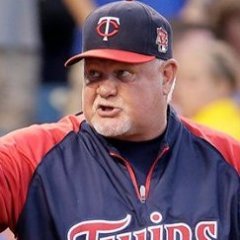
The Minnesota Twins officially unveiled their 2027 regular season schedule, providing fans with their first look at next year's road map. While game times and promotions will come later, the schedule already offers several intriguing storylines, including the earliest Opening Day in franchise history, another road opener, and a summer packed with marquee opponents at Target Field.
Here's a closer look at what stands out from Minnesota's 2027 schedule.
Earliest Opening Day in Twins History
The Twins will begin the 2027 season on Thursday, March 25, when they travel to Kauffman Stadium to face the Kansas City Royals. It marks the earliest Opening Day in franchise history, one day earlier than last season's March 26 opener.
Minnesota will spend the opening week on the road before returning to Target Field for its home opener on Friday, April 2 against the Tampa Bay Rays.
The club will play six games during March, the most the franchise has ever played before the calendar flips to April. It also continues a recent trend, as the Twins will open the season away from Target Field for the fifth consecutive year and for the 14th time in the past 18 seasons.
Target Field Loaded with Summer Marquee Matchups
Fans won't have to wait long for attractive home series. The Twins will play 16 home games during April, welcoming the Washington Nationals and San Diego Padres alongside several American League opponents. Once summer arrives, the home schedule becomes even more appealing.
Between Memorial Day and Labor Day, Minnesota will play 44 of its 81 home games, giving fans plenty of opportunities to catch baseball during the warmest months of the season.
Some of the biggest draws coming to Target Field include the New York Yankees, Boston Red Sox, Chicago Cubs, Toronto Blue Jays, New York Mets, Milwaukee Brewers, Arizona Diamondbacks and San Francisco Giants.
The schedule also includes two separate seven-game homestands in June featuring opponents such as the Los Angeles Angels, Chicago White Sox, New York Yankees and Cleveland Guardians.
Balanced Schedule Continues Across Baseball
Major League Baseball's balanced scheduling format remains in place for 2027, meaning the Twins will once again play every other club in the league.
Minnesota will face each of its four American League Central rivals 13 times, splitting home and road games against the Chicago White Sox, Cleveland Guardians, Detroit Tigers and Kansas City Royals.
The interleague schedule brings 24 National League games to Target Field. Home opponents include the Nationals, Padres, Pirates, Mets, Cubs, Diamondbacks, Brewers and Giants. On the road, the Twins will visit the Los Angeles Dodgers, Cincinnati Reds, St. Louis Cardinals, Colorado Rockies, Atlanta Braves, Philadelphia Phillies and Miami Marlins.
One of the highlights comes during MLB's annual Rivalry Weekend, when Minnesota travels to Milwaukee from July 16-18 before welcoming the Cubs to Target Field the following weekend, July 23-25.
Road Trips and September Finish
The longest trip away from home comes early in the season. Minnesota's toughest stretch will run from May 28 through June 6, a nine-game, 10-day trip that includes stops in Toronto, Detroit and Atlanta.
When September arrives, the Twins will finish the regular season at Target Field. They'll host the San Francisco Giants from Sept. 21-23 before closing the regular season with a three-game series against the Detroit Tigers from Sept. 24-26.
Ending the season at home could prove significant if Minnesota finds itself battling for an American League Central title or postseason berth down the stretch.
Still Waiting on the Details
While the schedule is now official, several pieces of information remain to be announced.
Game times, television schedules, promotional nights, giveaways and ticket sale dates will all be released at a later date. Those announcements typically come throughout the offseason as clubs finalize broadcast schedules and promotional calendars.
For now, Twins fans can begin planning around an early Opening Day, another full slate against every Major League club and a summer schedule filled with some of baseball's biggest attractions.
The Minnesota Twins announced on Thursday that they have claimed right-handed reliever Zak Kent off waivers from the St. Louis Cardinals after he was designated for assignment earlier this week. In a corresponding move, Pablo López was transferred to the 60-day injured list following the internal brace procedure that will sideline him for the entirety of the 2026 season.
Kent is now on his third organization since the start of spring training and his fourth of the offseason after previously bouncing between the Cleveland Guardians, Texas Rangers, and back to St. Louis before landing with Minnesota. He is clearly viewed as a fringe player for the 40-man roster, but the Twins have a bullpen need, and Kent has one minor league option remaining.
The 28-year-old made his big league debut during the 2025 season with Cleveland, logging 17 2/3 innings with a 4.58 ERA to go along with a 21.1 K% and a 10.5 BB%. He spent the bulk of the year at Triple-A, where he posted a 2.84 ERA and struck out an impressive 31.4% of opposing hitters despite a disappointing 13.2 BB%.
Kent does not overpower hitters with velocity as his four-seamer averaged 93.1 miles per hour last season, but his mid-80s slider and low-80s curveball helped generate plenty of swings and misses at the upper levels of the minors. Across parts of four Triple-A seasons, he owns a 3.74 ERA with a 26 K% and a 12 BB%.
Kent is entering what will be his final minor league option year after being granted a fourth option due to injury history and developmental timeline. He now becomes another name in what is shaping up to be a wide-open bullpen competition that currently has Cole Sands, Anthony Banda, Taylor Rogers, and Justin Topa penciled into roles. Other relief options include Liam Hendriks, Eric Orze, and Andrew Chafin. There was a glut of left-handed relievers, so adding a righty to the mix could help to balance the roster.
With López out for the season, Minnesota will need to find value on the margins, and Kent represents the type of low-risk addition that could pay dividends over the course of a long season. If his swing and miss stuff translates consistently at the big league level, the Twins may have quietly added a bullpen arm capable of providing meaningful innings in 2026.
Spring training is entering its final stretch, and the roster decisions are starting to come quickly.
With Opening Day set for March 26 against the Baltimore Orioles at Camden Yards, the Minnesota Twins are beginning to finalize the final pieces of their pitching staff. On Monday, the club reduced its bullpen competition by sending two relievers out of major league camp.
Minnesota reassigned right-handers Julian Merryweather and Grant Hartwig to minor league camp as the organization inches closer to setting its Opening Day bullpen.
Both pitchers entered camp as non-roster invitees looking to pitch their way onto the major league roster. With the calendar now showing mid-March, the Twins are clearly entering the phase of spring where roster battles become more defined.
The moves leave the organization with 45 players still active in big league camp, including 21 pitchers. However, that number does not fully reflect the group competing for Opening Day jobs. Right-hander David Festa is expected to begin the season on the injured list, while right-hander Travis Adams has been limited by elbow inflammation during camp.
If Adams is not ready for the start of the season, the Twins would be left with roughly 13 relievers competing for what is expected to be eight bullpen spots on the 26-man roster.
Merryweather showed flashes early in camp before his progress was halted by injury. The hard-throwing right-hander strained his left hamstring during his first Grapefruit League appearance on February 24. Since then, he has thrown several bullpen sessions but has not yet returned to game action.
Hartwig saw plenty of work this spring, appearing in seven Grapefruit League games. The results were uneven as he allowed eight earned runs on seven hits and two walks across 7 1/3 innings.
For both pitchers, the reassignment does not necessarily close the door on helping the Twins later this season. Injuries and performance fluctuations often lead to bullpen shuffling throughout the year, and strong outings in the minors can quickly put a reliever back on the radar.
For now, though, Minnesota continues narrowing the field. With only days remaining before the season opener in Baltimore, the Twins are quickly approaching the moment when speculation ends, and the final 26-man roster becomes reality.
The Minnesota Twins are making another change behind the scenes. The organization has parted ways with longtime scout and former amateur scouting director Deron Johnson, according to Bobby Nightengale Jr. of the Star Tribune. The Twins eliminated Johnson's senior advisor position, bringing an end to more than three decades with the organization.
Johnson originally joined Minnesota in January 1994 as an area scout covering Northern California. He eventually moved into a larger role as the club's West Coast supervisor before being promoted to scouting director in September 2007.
His tenure leading the amateur scouting department included nine drafts and several notable selections. The first draft under his direction produced Aaron Hicks with the 14th overall pick in 2008. Johnson was also at the helm when Minnesota selected Byron Buxton second overall in 2012.
Other first-round selections made while Johnson served as scouting director included Kohl Stewart, Nick Gordon and Tyler Jay. Not every pick developed into a long-term contributor, but Johnson's fingerprints were on a significant portion of the organization's amateur talent pipeline during that era.
The Twins moved Johnson into a senior advisory role following the 2016 season. Rather than stepping away from scouting, he continued evaluating talent and contributed to professional, international and minor-league scouting efforts. Now, that position has been eliminated.
The timing is notable as Minnesota continues making changes throughout its baseball operations department. The Twins entered the final week of the 2026 season already eliminated from postseason contention, with the organization beginning to look toward what comes next.
Johnson's departure also comes on the same day Minnesota selected the contract of Aaron Sabato, the former first-round pick from the 2020 draft, allowing him to make his major-league debut.
After 32 years with the Twins and a career that included nearly every level of the scouting department, Johnson's departure represents the end of a significant chapter in Minnesota's front-office history.
The Minnesota Twins created space on their 40-man roster on Wednesday morning, placing outfielder Carson McCusker on unconditional release waivers. The move comes just hours before the Rule 5 Draft, where the club is expected to make at least one selection. It is a procedural decision with immediate implications for roster construction, but it also marks the end of a unique and memorable chapter in the organization.
McCusker’s story has been anything but conventional. He joined the Twins as a signing out of the independent leagues, a late bloomer with imposing size and raw power who needed the right environment to refine his game. Minnesota believed there was more in his swing and approach than previous evaluations suggested, and McCusker rewarded that faith with one of the better early-season performances in the system during 2025.
At Triple-A St. Paul last spring, McCusker put together an impressive first half with a 1.048 OPS in April and a .948 OPS in May. He controlled the strike zone better than expected, posted strong on-base numbers, and showed the kind of damage potential that made him a frequent middle-of-the-order presence. His run of production pushed him firmly onto the radar for a big league opportunity, and the Twins eventually called him up during a stretch when they needed additional depth
The opportunity, however, never fully developed. Despite earning his way to the highest level, McCusker saw limited action and never received the extended look some thought he had earned. The Twins used him primarily as a bench option and sporadic pinch hitter, a role that made it difficult for him to build rhythm or make a lasting impression. In 16 games, he went 5-for-29 with 16 strikeouts and no extra-base hits. When the roster became crowded again, he was optioned back to St. Paul and remained there for most of the second half.
Even with minimal major league exposure, McCusker did enough within the organization to maintain interest from clubs abroad. While nothing is finalized, industry speculation suggests he will explore opportunities to play in Asia during the 2026 season. His size, power, and plate discipline make him an intriguing fit for teams in Japan or Korea, where a change of environment could offer consistent at-bats and a more defined role.
For the Twins, Wednesday’s decision reflects the tight roster calculus that comes with balancing present depth and future investment. Opening a spot before the Rule 5 Draft signals that Minnesota sees value in adding an external player it believes can contribute in the near future.
McCusker’s release is a reminder that player development paths are rarely linear and that opportunities often hinge on timing as much as talent. His journey from the independent leagues to the doorstep of a major league job was a success story in itself, even if the Twins chapter concludes earlier than anticipated. Now he will look for the next stage of his career while the Twins move forward into the offseason with another key decision ahead.
The Minnesota Twins are losing another piece of organizational pitching depth. The New York Mets have claimed right-handed pitcher Jack Anderson off waivers, according to MLB.com's Anthony DiComo. Anderson had not previously been reported as removed from Minnesota's 40-man roster, but the Twins evidently designated him for assignment and exposed him to waivers in recent days.
Anderson's departure comes during one of the busiest stretches of the offseason transaction calendar. Teams are beginning to make difficult decisions about their 40-man rosters, and fringe players are often the first to feel the pressure.
November 2nd marks the deadline for the 60-day injured list to go away, forcing teams to find room for players returning to the 40-man roster. The next major date arrives November 17, when organizations must protect eligible prospects from the Rule 5 Draft. Those upcoming decisions leave limited room for players who haven't established themselves as regular contributors at the major league level. For Minnesota, Anderson became expendable as the organization prepares for those roster decisions.
A Short Minnesota Stint
This marks the second time Anderson has been claimed off waivers during the 2026 season. He began the year in the Boston Red Sox organization and made his major league debut in April. His opportunity with Boston was brief, appearing in three games before being sent back to the minors.
Boston eventually placed Anderson on waivers in July, allowing Minnesota to bring him into its organization. The Twins moved him between Triple-A and the big league roster throughout the remainder of the season, giving him occasional opportunities to contribute to the pitching staff.
Anderson's major league numbers were encouraging in a limited sample. Across seven appearances, he allowed three earned runs in 12 1/3 innings. Those results gave Minnesota a useful depth option, although his limited experience made it difficult to determine what kind of role he could handle over a full season.
Anderson has also demonstrated some versatility in the minor leagues. He has worked as both a starter and reliever, accumulating 180 innings across the 2025 and 2026 seasons. During that stretch, he posted a 4.75 ERA while striking out 23.3% of opposing hitters and walking just 6.7%. The strikeout numbers aren't particularly overwhelming, but his ability to limit walks could make him an intriguing organizational option.
Another Bullpen Depth Piece Moves On
The Mets have some flexibility with Anderson because he still has multiple minor league option years remaining. That gives New York the opportunity to keep him as organizational depth without immediately committing a spot in its major league bullpen.
Anderson could spend much of next season at Triple-A, waiting for an opportunity when the Mets need another arm. His experience working in different roles could also make him useful when injuries or workload concerns create openings on the pitching staff. There is also the possibility New York eventually exposes Anderson to waivers again. If he clears, the Mets could potentially retain him as non-roster pitching depth.
For the Twins, this is another example of how quickly the edges of a 40-man roster can change during the offseason. Anderson showed some promise during his brief time in Minnesota, but the organization evidently believes other players deserve those roster spots heading into the winter.
With the Rule 5 Draft deadline approaching, Minnesota will have plenty of additional decisions to make. Anderson is moving on, and the Twins can now focus on which players they want to protect for the future.
The Minnesota Twins checked off another vital offseason box by avoiding arbitration with Ryan Jeffers. According to KSTP’s Darren Wolfson, the two sides agreed to a one-year deal worth $6.7 million, covering Jeffers’ final season of arbitration eligibility.
The number landed almost exactly where industry expectations pointed. MLB Trade Rumors projected Jeffers to earn $6.6 million. With free agency now looming next winter, both sides secured cost certainty while keeping flexibility for what comes next.
That flexibility matters because Jeffers’ name continues to surface in trade speculation. Rumors have linked the Philadelphia Phillies to the Twins catcher if they are unable to come to terms with longtime backstop J.T. Realmuto. Minnesota could theoretically hold Jeffers into the regular season and revisit trade discussions closer to the trade deadline. Still, most teams prefer stability at catcher from the first day of spring training. Catchers need time to build trust with a pitching staff, and that reality often pushes deals earlier rather than later.
While Jeffers is not Realmuto, the gap between the two is smaller than it might appear at first glance. During the 2025 season, Jeffers slashed .266/.356/.397, adding nine home runs and 47 RBI across 119 games. Realmuto produced a .257/.315 /.384 line, along with 12 home runs and 52 RBI in 134 games. The larger body of work still favors Realmuto, who owns a .270/.328/.447 career line over 1,373 games, while Jeffers sits at .239/.321/.419 through 515 contests. Even so, Jeffers has quietly grown into a better-than-average offensive catcher, especially over the last three seasons.
Minnesota has leaned on a tandem behind the plate in recent years, splitting time between Jeffers and Christian Vazquez, who is now a free agent. The Twins have indicated that Jeffers will see more regular work moving forward, though few catchers reach 120 games caught in a season. Depth remains a concern. Alex Jackson and Jhonny Pereda currently profile as the next options, leaving the organization thin at the position with no clear answers knocking on the door in the upper minors.
For now, the arbitration agreement keeps things simple. Jeffers remains the Twins’ top catcher, the payroll stays predictable, and the front office retains options. Whether Jeffers spends all of 2026 in a Twins uniform or becomes a trade chip later on, Minnesota has positioned itself well. Avoiding arbitration was not just about dollars and cents. It was about buying time, and in this case, time may prove to be the most valuable asset of all.
According to KSTP’s Darren Wolfson, the Twins and Trevor Larnach have agreed to terms on a $4.475 million contract for next season, avoiding an arbitration hearing. MLB Trade Rumors had projected Larnach to earn $4.7 million, so the final number comes in just under expectations and gives the Twins a bit of financial clarity as they continue to shape the roster for 2026.
On the surface, avoiding arbitration feels like standard operating procedure. Dig a little deeper, though, and this agreement says more about the Twins’ current roster crunch than it does about a long-term commitment to Larnach. There had been speculation that Minnesota could non-tender the outfielder altogether, mainly because the organization is flush with younger, cheaper alternatives. While $4.475 million is not the most expensive arbitration salary on the roster, it represents roughly five percent of a payroll estimated to land around $100 million in 2026. For this front office, every dollar still matters.
Larnach agreeing to terms with the Twins does not mean his future in Minnesota is secure. In fact, the opposite may be true. The Twins now have six left-handed hitting outfielders on the 40-man roster, and that group includes Larnach, Hendry Mendez, James Outman, Alan Roden, Emmanuel Rodriguez, and Matt Wallner. That list does not even include top prospect Walker Jenkins, who is waiting in the wings at Triple-A and is very much part of the long-term plan.
As things stand, the Twins favor Wallner and Roden for regular roles early in 2026, with Outman serving as the primary backup to Byron Buxton in center field. Rodriguez and Mendez are expected to open the season in the minors, though Rodriguez in particular has the kind of upside that will force the issue if he is healthy and productive. In that context, it is difficult to find a clear path to consistent playing time for Larnach outside of a shared DH role.
With a set salary in place for 2026, Larnach becomes easier to move in a trade than he was during the arbitration guessing game. Cost certainty matters to other clubs, especially those trying to fill a corner outfield need without committing to a long-term deal.
From a performance standpoint, Larnach’s 2025 season was steady but unspectacular. He set a career high with 142 games played and led the team in that category, but his overall production landed just below league average. A 99 OPS+, a .250/.323/.404 (.727) slash line, 17 home runs, 60 RBI, a 9.3 BB%, and a 21.5 K% added up to a 0.1 bWAR. There is value there, particularly in durability, but it is not the kind of profile that brings back a significant return on its own.
The most realistic recent comparison for a potential Larnach deal is the Twins trading Nick Gordon for Steven Okert during spring training in 2024. That type of modest swap feels far more plausible than anything splashy. The challenge will be finding the right partner. Minnesota needs a team that is thin in the corner outfield and deep in bullpen arms, a combination that is not especially common around the league.
In the end, the Twins and Larnach avoiding arbitration is less about stability and more about flexibility. Minnesota gets a known cost on a player who still has some appeal, and Larnach gets paid without the uncertainty of a hearing. Whether he spends that season in a Twins uniform is another question entirely. As the outfield picture continues to crowd itself, this agreement feels like one step toward an eventual resolution rather than the final word.
The Minnesota Twins have spent much of the season searching for answers on the pitching staff. Injuries and inconsistency have forced the organization to move pitchers between the rotation, bullpen, and minor leagues, creating plenty of roster movement along the way.
Kendry Rojas could soon give the Twins another option. Rojas suffered a mild right oblique strain on August 21 during a start for the St. Paul Saints. He exited after just two innings, creating some concern about whether the injury would end his season. However, general manager Jeremy Zoll provided encouraging news over the weekend.
Rojas could throw a bullpen session as early as this week, with the Twins hopeful that he can return to game action by the middle of September. There is one significant change coming, though. The organization doesn't expect him to have enough time to build back up as a starting pitcher.
“Where we're at calendar-wise, not expecting to be able to stretch him back out at this point,” Zoll said. “If he does get back into game action, it'll probably be a two-inning outing for his first go, and we'll go from there.”
That could still be valuable for the Twins.
Rojas Has Already Shown Enough
Rojas has made a strong first impression during his first taste of the major leagues. Across 12 appearances, including four starts, he has posted a 3.34 ERA with 34 strikeouts over 29 2/3 innings. His 26.2% strikeout rate is particularly encouraging. Rojas has shown the ability to miss bats against major-league hitters, and Minnesota has already demonstrated its willingness to use him in different roles.
The biggest concern has been his control. Rojas has issued 22 walks in his limited major-league sample, resulting in a 16.9% walk rate. That's a number the Twins will want to see improve, especially if he's going to work in shorter outings where free passes can quickly create problems.
Still, the walk issues haven't been nearly as pronounced throughout his minor-league career (8.3 BB% in 2026). That gives Minnesota some reason to believe the major-league number isn't necessarily representative of what Rojas will become. More importantly, the Twins have already seen that he can provide length.
Another Multi-Inning Option
Rojas returned to Triple-A following the trade deadline after Minnesota acquired Jeff Hoffman and added A.J. Minter to its pitching staff. Those additions created some difficult roster decisions, and Rojas ultimately went back to St. Paul.
He resumed working as a starter, but that role is unlikely to continue if he makes it back to Minnesota this season. Instead, Rojas could become another multi-inning weapon for a pitching staff that has needed plenty of them.
That type of role would also allow Minnesota to manage his workload carefully. Rather than immediately asking him to handle a starter's workload after an oblique injury, the Twins can ease him back into competition while still getting meaningful innings from his arm.
September rosters aren't what they used to be, but every healthy arm can matter during the final weeks of a season. The key will be making sure the oblique injury doesn't linger. Rojas has already shown he can handle multiple innings in the majors. If his oblique cooperates, the Twins could see what he looks like in shorter outings where he can amp up his velocity.
The Minnesota Twins finally welcomed Cole Sands back from the injured list over the weekend, hoping the right-hander could stabilize a bullpen that has searched for reliable late-inning options all season. Instead, his return lasted just one appearance.
Before Tuesday's game, the Twins placed Sands back on the 15-day injured list with a right elbow strain and recalled right-hander Jack Anderson from Triple-A St. Paul to take his place on the active roster. The move comes just days after Sands completed a lengthy rehabilitation process that had already been interrupted once by another setback.
Another Setback for Sands
Sands had been sidelined since early May with a right forearm strain. Minnesota originally believed the injury would keep him out for only a short period, and he was cleared to begin a rehab assignment in early June. Those plans quickly unraveled. Inflammation returned during the rehab process, forcing the Twins to shut him down and restart his recovery from scratch. After weeks of waiting, Sands finally made it back to the major league bullpen this weekend.
His return could not have gone much worse. Sands recorded just one out while allowing five earned runs, finishing with a -0.14 Win Probability Added (WPA). While the Twins had built enough of a lead to survive against the Athletics, it was evident that something wasn't right.
Now, the club has its answer. Instead of building momentum after months of rehab, Sands is back on the injured list with an elbow strain, creating even more uncertainty around his future.
Anderson Gets Another Opportunity
To replace Sands, the Twins recalled Jack Anderson, who has quietly impressed in his first taste of the majors with Minnesota. After being claimed off waivers from the Boston Red Sox, Anderson has appeared in three games for the Twins. Across 3 1/3 scoreless innings, he has allowed just one hit while striking out four and walking one.
His previous major league experience came with Boston earlier this season, where he logged eight innings over three appearances. Anderson allowed three earned runs on eight hits while recording six strikeouts and only two walks. Although the sample size remains small, it was enough for Minnesota to see something worth developing.
His numbers at Triple-A Worcester were less dominant. Anderson posted a 4.57 ERA while striking out 20.0% of opposing hitters and walking 8.1% before the Twins claimed him.
A Tough Blow for Minnesota's Bullpen
Few relievers seemed more likely to impact Minnesota's postseason push than Sands. After establishing himself as one of the Twins' most dependable bullpen arms over the past two seasons, the expectation was that he would eventually return to reclaim a meaningful role in the late innings. Instead, injuries have limited him to just 13 appearances, and his long-awaited return ended almost as quickly as it began.
Now, with an elbow strain sending him back to the injured list, the outlook becomes much more concerning. Depending on the severity of the injury, Sands may have already thrown his final pitch of the 2026 season.
Major League Baseball dropped another sign that draft season is officially here on Wednesday, announcing updated bonus pools and slot values for all 30 clubs. Minnesota enters the 2026 draft cycle with a total bonus pool of $16,929,600, the fourth-largest in the sport. Only the Pirates, Rays, and White Sox sit ahead of them, putting the Twins in a position to be aggressive, flexible, and maybe even a little opportunistic when July rolls around.
Holding the third overall pick certainly helps. That selection alone carries a slot value of $9,740,100, giving Minnesota a massive chunk of spending power right at the top. It is the kind of pick that can shape an entire draft class, whether the Twins choose to go with the best player available or try to manipulate the board with an underslot deal.
The next key checkpoint comes at pick 43, where the assigned value sits at $2,333,200. That is another meaningful piece of the puzzle, especially for a front office that has not been shy about moving money around the board in recent years. Add in the Competitive Balance Round B selection at 74th overall, valued at $1,138,600, and the Twins suddenly have multiple pressure points to build out a deeper strategy.
Around the league, the headlines start at the very top. The White Sox landed the No. 1 overall pick and with it a record-setting slot value of $11,350,600, the largest since the bonus pool system was introduced in 2012. Despite that, it is the Pirates who control the biggest overall pool at $19,130,700, another record and a reminder that volume still matters as much as position.
This year’s increases were modest but notable. Slot values rose by 2.5% across the board, a reflection of the game’s continued revenue growth. In total, the 30 clubs combine for $358,662,500 in bonus pool money, up from $350,357,700 a year ago.
Of course, teams rarely treat those numbers as strict guidelines. The system is built for creativity. Each pick in the first 10 rounds comes with an assigned value, and exceeding the total pool triggers penalties, but there is plenty of room to maneuver within those boundaries. If a player in the top 10 rounds does not sign, his slot value disappears from the pool entirely, raising the stakes on every negotiation.
That is where things get interesting for teams like Minnesota. Clubs picking near the top often look to save money on their first selection, signing a player for less than slot value and redistributing those savings to later picks. It is a strategy that can turn a strong class into a deep one, especially when paired with extra selections like the Twins have this year.
Recent spending trends suggest teams are more willing than ever to push the limits. Clubs handed out $392,533,711 in signing bonuses in 2025, shattering the previous record set just one year earlier. The Orioles led the way with a staggering $21,150,840, showing just how aggressive teams can be when the right opportunities present themselves.
All of this sets the stage for a fascinating summer. The Twins are not just picking high. They are picking often, and they have the financial flexibility to take risks. In a draft that rarely follows a script, Minnesota has the resources to be creative with their spending.
The Minnesota Twins made it official Friday, selecting the contract of outfielder Walker Jenkins and bringing one of the organization’s most anticipated prospects to the major leagues. The move was reported Thursday, but Minnesota officially announced the promotion Friday.
To make room for Jenkins on the active roster, the Twins optioned outfielder Alan Roden to Triple-A St. Paul. Minnesota also needed to clear a spot on its 40-man roster, designating right-handed pitcher Woo-Suk Go for assignment.
For the Twins, the move marks the arrival of a player who has been viewed as a cornerstone of the organization since he was selected fifth overall in the 2023 MLB Draft. Jenkins has continued to establish himself as one of baseball’s top prospects throughout his professional career. Across multiple minor-league levels, he has compiled a .303/.404/.490 batting line.
His plate discipline has been particularly impressive. Jenkins has posted a 13.4% walk rate while striking out just 15.9% of the time. His 144 wRC+ shows just how productive he has been offensively, as he has performed 44% better than league average.
The 21-year-old also brings plenty of ability beyond the batter’s box. Jenkins has good speed and a strong throwing arm and is considered a capable defender at all three outfield positions. That versatility could give the Twins multiple options for how they use him during the final weeks of the season.
Jenkins’ promotion comes as Minnesota attempts to remain in the American League playoff race. The Twins have struggled to find consistency throughout the season, but the arrival of one of their best young players gives the club another option as it navigates the final month.
There will naturally be an adjustment period for Jenkins as he faces major-league pitching for the first time. However, his minor-league track record gives the Twins plenty of reason to believe he can contribute immediately.
For Roden, the move provides an opportunity to get regular playing time in St. Paul. The Twins acquired Roden as part of last year's trade involving Louis Varland, and he has remained part of the organization's plans despite struggling to establish himself offensively in Minnesota. He has received limited playing time in recent weeks, making just 10 starts in August.
Roden is hitting .254/.333/.313 this season, producing a .647 OPS and an 84 OPS+. Sending him to Triple-A should allow Roden to get consistent at-bats and continue developing rather than spending extended periods on the major-league bench.
The Twins' 40-man roster move ends Go’s brief run with the organization, at least for now. Minnesota took a chance on the 28-year-old right-hander earlier this season after he opted out of his contract with the Detroit Tigers organization. Go joined the Twins hoping to provide another option for a bullpen that has undergone significant changes throughout the season.
Go appeared in four games for Minnesota in July, allowing four runs. He posted a 3.91 ERA between Triple-A Toledo and St. Paul this season, although his numbers were much different between the two stops. Go struggled significantly in Toledo, posting a 12.54 ERA, before pitching better after joining the Saints.
His time in St. Paul also included a 10-game suspension after he was found to have an illegal substance on his glove. Now, Go will head to the waiver wire following Minnesota’s decision to designate him for assignment.
Those roster moves, however, are secondary to the biggest news of the day for the Twins. After more than three years of development, Jenkins has officially reached the major leagues. The former fifth overall pick is at Target Field, giving the organization an opportunity to see one of its most important young players against major-league competition. The next chapter of Jenkins’ career begins now.
The 2026 season did not end where the Minnesota Twins wanted it to, but the organization still has five players receiving recognition from Major League Baseball as All-MLB Team nominees. Kody Clemens, Brooks Lee, Ryan Jeffers, Byron Buxton, and Taj Bradley are all on the ballot. Fans can vote once per day at MLB.com through Friday, October 9, giving Twins fans an opportunity to make their voices heard and reward several players who made significant contributions during the season.
Clemens was one of the year's biggest surprises. He appeared in 145 games and provided a power boost that few could have predicted, launching 27 home runs and driving in 81 runs. His ability to move around the diamond also made him a valuable piece of the roster. Lee supplied plenty of power of his own. The young infielder hit 24 home runs with 83 RBI while batting .253 over 156 games. He spent 110 games at third base, continuing to establish himself as an important part of Minnesota's future.
Bradley arguably has the strongest case among the five nominees. Acquired from the Tampa Bay Rays at the 2025 trade deadline, he took another step forward in his first full season with Minnesota. Bradley went 12-6 with a 3.73 ERA and 205 strikeouts across 178 1/3 innings in 31 starts. He also established personal bests in several categories while becoming a dependable piece of the Twins' rotation.
Jeffers and Buxton were two of Minnesota's most valuable players when healthy. Jeffers hit .256 with a .353 on-base percentage, 14 home runs and 56 RBI in just 92 games. His season was interrupted by a broken left hamate bone that kept him on the injured list from May 19 until July 10, making his production even more impressive.
Buxton hit 25 home runs and posted an .830 OPS in 93 games. Unfortunately, his season ended prematurely because of a right hip impingement, and he has not played since late August.
How the Voting Works
The All-MLB Team includes a first team and second team, with each featuring a catcher, every infield position, three outfielders, a designated hitter, five starting pitchers and two relief pitchers. Selections are made without regard to league.
Fans and a panel consisting of media members, broadcasters, former players and other officials each have an equal say in the final results. The winners will be announced November 11 at the MLB Awards in Las Vegas.
The Minnesota Twins had an unusual roster decision to make following Thursday’s Field of Dreams Game, and the solution was a familiar one. The club designated third catcher Alex Jackson for assignment, bringing its 40-man roster down to 39 players.
The timing of the move was dictated by the unique circumstances surrounding Thursday’s matchup with the Philadelphia Phillies. Both teams were allowed to carry a 27th player for the game, essentially giving them the same roster flexibility they would have during a doubleheader. Minnesota used that extra spot to activate Byron Buxton from the 10-day injured list.
That temporary roster advantage disappears Friday. The Twins needed to get back to a standard 26-man roster, and Jackson was the player caught in the numbers game. Because he is out of minor-league options, Minnesota could not simply send him back to Triple-A St. Paul without first exposing him to waivers.
In many ways, this move has been coming for quite some time. Jackson was called up in May after Ryan Jeffers suffered a hamate fracture. He provided depth behind Victor Caratini while Jeffers recovered, giving Minnesota three catchers on the roster for a stretch of the season. Once Jeffers returned around the All-Star break, however, Jackson's role became increasingly difficult to justify.
The Twins have a strong catching tandem with Jeffers and Caratini, and this is a team attempting to maximize every available roster spot during a playoff push. Jackson had not started a game since July 30 and had only one plate appearance in August before Thursday. There simply wasn't much opportunity available.
Jackson's surface-level numbers this season were actually respectable. He hit .303 with one home run across 69 plate appearances, but the underlying numbers tell a much different story. He struck out 23 times while drawing just one walk, highlighting the same plate-discipline concerns that have followed him throughout his professional career.
The former sixth overall pick has now appeared in parts of seven MLB seasons, but he has never been able to establish himself offensively. Across 189 career games, Jackson owns a .174/.252/.305 slash line and has struck out in nearly 40% of his plate appearances. That makes it difficult for a contender to carry him as a third catcher when there are only so many opportunities to get him into the lineup.
The next step will be placing Jackson on waivers, which should happen within the next couple of days. There is a chance he goes unclaimed and returns to Triple-A St. Paul. However, catching depth wears thin at this late point in the season and another team could need a veteran backup option.
It would be great for Jackson to stick in the organization as depth, but the big-league roster was suffering with him collecting dust on the bench.
Spring training optimism is built on bullpens, backfields, and best-case scenarios. Reality tends to show up somewhere between the trainer’s room and the long toss line. On Thursday, Minnesota got a dose of both hope and concern when head athletic trainer Nick Paparesta provided updates on three critical arms that could shape the trajectory of the pitching staff not just for this season but beyond.
The biggest update came for Pablo Lopez, who underwent Tommy John surgery on Wednesday. Importantly, Lopez received the repair version of the procedure with an internal brace rather than a full ligament reconstruction. The repair process generally shortens recovery by 1 to 2 months, significantly altering his return timeline.
If the 2027 season begins on schedule, Lopez should be tracking toward a return near the start of the year. That alone represents a meaningful win given the alternative. However, the looming possibility of a labor stoppage could further change the equation. Should a lockout delay Opening Day, Lopez might realistically be ready when games resume, allowing Minnesota to regain its ace without missing meaningful time.
Meanwhile, Joe Ryan continues progressing after experiencing back tightness over the weekend while warming up for what would have been his first spring start. Ryan has resumed long toss and is scheduled to throw a bullpen session this coming weekend. That outing will serve as the next checkpoint in determining how his body responds before the Twins chart out a clearer ramp-up plan.
There is also an international wrinkle. It remains undecided whether Ryan will participate in the upcoming World Baseball Classic, and how he rebounds from the bullpen session could factor heavily into that decision. Minnesota has long preached the importance of managing workloads early in the year, and this situation may force a more conservative approach.
The most concerning news may belong to David Festa, who is being shut down for a couple of weeks due to a shoulder impingement. Festa received an injection in the shoulder, and the pause immediately puts the start of his season in jeopardy. Paparesta noted that the issue is unrelated to the thoracic outlet syndrome that ended Festa’s 2025 campaign, which is certainly encouraging, but the timing remains problematic.
Minnesota has not publicly suggested any long-term role change, yet it is fair to wonder whether a move to the bullpen could ultimately be the best path forward for Festa. Shoulder concerns layered on top of last year’s thoracic outlet syndrome history make durability in a starting role increasingly difficult to project over a full-season workload.
Taken together, these updates offer a snapshot of the balancing act that defines modern pitching staffs. Lopez provides optimism for the future. Ryan represents cautious day-to-day monitoring in the present. Festa embodies the uncertainty that often forces organizations to reconsider development plans on the fly. For a Twins club that has leaned heavily on its pitching depth in recent years, how each of these timelines unfolds could quietly determine how aggressive the front office needs to be before Opening Day and how sustainable the rotation will look once the games begin to matter.
The Twins welcomed an important piece back to their rotation on Saturday, activating Taj Bradley from the 15-day injured list ahead of Minnesota’s matchup against the Boston Red Sox. Bradley is projected to start on Saturday after missing just over two weeks with a pectoral issue.
To clear a roster spot, the Twins designated veteran reliever Luis Garcia for assignment, marking another abrupt stop in what has become a turbulent 2026 season for the longtime right-hander.
Bradley’s IL move was backdated to May 6, allowing the Twins to bring him back after only a slightly extended minimum stay. The organization appeared to take a cautious approach with the injury from the start, and Bradley only needed one rehab outing with Triple-A St. Paul before being deemed ready to return.
Outside of the brief injury interruption, Bradley has been one of the steadier arms in Minnesota’s rotation this season. Through eight starts covering 47 innings, the 25-year-old owns a 2.87 ERA while striking out 26.1% of opposing hitters. His walk rate sits at 8.5%, a touch higher than ideal, though still manageable considering the swing-and-miss ability he brings to the mound.
Advanced metrics suggest some regression could eventually come, as Bradley’s 3.48 FIP points to a little help from an elevated 84.3% strand rate. Even so, the Twins have gladly taken the production. With injuries testing the club’s pitching depth throughout the first two months of the season, Bradley has helped stabilize a rotation that has rarely been at full strength.
Meanwhile, Garcia’s tenure with the Twins may already be finished. Minnesota signed the 39-year-old to a minor league contract after he was cut loose by the New York Mets in April. The Twins selected his contract not long after, hoping the veteran could provide innings in a taxed bullpen, but the results never materialized.
Across nine appearances with Minnesota, Garcia struggled to a 10.38 ERA over 8 2/3 innings. Combining his time with both the Mets and Twins this year, he posted a 9.00 ERA with six walks and six strikeouts in 15 total innings.
Financially, the move carries little risk for Minnesota. Garcia signed a one-year, $1.75 million contract with New York during the offseason, leaving the Mets responsible for nearly all of the remaining salary. The Twins only owed him a prorated portion of the league minimum while he occupied a spot on the active roster.
Given both his performance and contract situation, Garcia appears likely to clear waivers. If that happens, free agency would probably be more appealing than accepting an outright assignment to Triple-A.
Now, he heads back into roster limbo once again as the Twins continue searching for stability behind a pitching staff that has already been forced to absorb plenty of turnover this season.
Liam Hendriks announced his retirement this week after a 14-year Major League career that included three All-Star selections, back-to-back AL Reliever of the Year awards, and a remarkable comeback from cancer. For the Minnesota Twins, however, Hendriks’ retirement also offers a reminder of what might have been.
The Twins signed Hendriks as an international free agent in 2007, and the Australian right-hander eventually reached the majors with Minnesota in 2011. Unfortunately, the version of Hendriks the Twins saw was not the one who would eventually become one of baseball’s best relievers.
From 2011 through 2014, Hendriks bounced between the Twins, Royals, and Blue Jays while making 39 appearances, including 34 starts. Across 188 2/3 innings, he posted a 5.92 ERA. Minnesota eventually moved on, and Hendriks continued searching for a role that would unlock his considerable talent.
That answer came in Toronto. In 2015, the Blue Jays moved Hendriks into the bullpen full-time. The results were immediate. He posted a 2.92 ERA with a 27.2% strikeout rate and a 4.2% walk rate across 64 2/3 innings. Suddenly, the pitcher who had struggled to establish himself as a starter looked like a legitimate weapon coming out of the bullpen.
The Blue Jays traded him to Oakland that offseason, and Hendriks eventually developed into one of the premier closers in the sport. From 2019-20, he posted a 1.79 ERA with a 38% strikeout rate and a 5.7% walk rate over 110 1/3 innings.
That success earned Hendriks a three-year, $54 million contract with the White Sox before the 2021 season. He rewarded Chicago by becoming an elite closer and earning consecutive All-Star selections. He would make three All-Star teams overall and win AL Reliever of the Year honors in both 2020 and 2021.
Of course, Hendriks' career became about much more than baseball. He battled non-Hodgkin's lymphoma in 2023, returned to the mound later that season, and won AL Comeback Player of the Year. Tommy John surgery and additional elbow problems eventually limited his ability to continue his career.
Hendriks finishes with a 3.88 career ERA, a 26.7% strikeout rate and 6.0% walk rate over 663 2/3 innings. As a reliever, he posted a 3.16 ERA.
For the Twins, there is an obvious what-if attached to Hendriks' career. Minnesota had the pitcher first. What it never found was the role that allowed him to thrive.
Hendriks needed a move to the bullpen to become the pitcher he was always capable of being. The Twins never gave him that opportunity before moving on, leaving them to watch from afar as their former international signing developed into an All-Star closer.
His career ultimately became a remarkable story of perseverance, reinvention and resilience. For Minnesota, it also remains a reminder that sometimes the biggest challenge isn't finding talent. It's figuring out where that talent belongs.
There are growing pains that come with any new technology, and Major League Baseball’s Automated Ball Strike challenge system is no exception. On Thursday, the Minnesota Twins found themselves in the middle of one of the most talked-about moments yet in the early days of ABS, a call so close that it is now fueling debate across the sport about what the strike zone should actually be.
In the bottom of the second inning, Royce Lewis stepped to the plate against Jack Flaherty with a runner on first base. The count moved to 3-1, and Flaherty delivered an 91.3 mph fastball that was ruled a ball by the home plate umpire. Lewis began his routine jog to first base, shedding his gear as if the walk was already secured.
Detroit catcher Jake Rogers tapped his helmet, signaling for a review. Within seconds, the Hawk Eye system took over and delivered its verdict. The call was overturned. Strike two.
Not just a strike, but the closest confirmed strike yet under the system, according to Codify Baseball. Hawk Eye showed that the tiniest sliver of the baseball clipped the strike zone, enough to flip the call and send Lewis back into the box. Instead of standing on first base, Lewis was suddenly in a 3-2 count, and Flaherty finished the at-bat with another fastball that Lewis swung through for strike three.
It is exactly the type of moment ABS was designed to handle, but it is also the type of moment that exposes how different a rulebook strike zone can feel compared to the one players and fans have grown used to seeing.
The debate picked up quickly. MLB analyst Ryan M. Spaeder voiced frustration with how the system currently interprets the zone. He suggested a 50-50 rule, where at least half the baseball must cross into the strike zone to be called a strike. His argument centered on the idea that the current system effectively expands the zone beyond its traditional 17-inch width. When accounting for the baseball's full diameter, Spaeder argued, the zone can be closer to 22.8 inches wide.
That interpretation has raised eyebrows, especially for hitters who now must account for pitches that barely graze the edge rather than clearly enter the zone. From a hitter’s perspective, the difference between a ball and a strike has never been thinner, literally.
Still, not everyone sees a problem. There is a strong contingent across the league that believes this is exactly what ABS is meant to accomplish. For pitchers, a pitch that clips the zone is a perfect pitch, and the system rewards that precision without bias or inconsistency. In a sport that has long struggled with inconsistent strike zones from umpire to umpire, ABS offers a level of consistency previously unattainable.
Royals reliever Matt Strahm even pushed back on Spaeder’s idea publicly, noting that if baseball is going to start redefining what counts as a strike based on partial entry, then the same logic would need to apply elsewhere. He suggests that the foul line/pole shouldn’t be fair then.
For the Twins, the moment was more frustrating than philosophical. What looked like a routine walk turned into a strikeout, and a potential scoring opportunity disappeared just as quickly as it appeared. It is the kind of swing that can change an inning, or even a game, and it underscores how impactful the challenge system can be in high-leverage spots.
At the same time, it is hard to argue that the system got the call wrong. By definition, it got it exactly right.
That is where the tension lies as baseball continues to adapt. The ABS system is doing what it was designed to do, but it is also forcing players, analysts, and fans to reconsider what they expect the strike zone to look like. The human element has not disappeared, but it is now being checked by a level of precision that leaves little room for interpretation.
Moments like this one involving Lewis are likely to keep popping up as the season unfolds. Each will add another layer to the conversation about fairness and consistency.
For now, the early returns suggest that while there may be flaws to iron out, the overall reception to ABS has been positive. Players are adjusting, fans are learning, and the league is gathering valuable feedback in real time. The strike zone may not look the way it used to, but it has never been more exact.
The Minnesota Twins have some important decisions to make behind the plate this offseason. Ryan Jeffers is coming off another productive season, but the organization allowed him to reach free agency without agreeing to a long-term extension. That decision doesn't necessarily mean his time in Minnesota is over.
According to Dan Hayes of The Athletic, the Twins could still explore bringing Jeffers back on a multiyear contract. Hayes offered some insight into Minnesota's thinking, writing, “Even though the club didn’t re-sign Jeffers ahead of free agency, don’t be surprised if the Twins pursue him while he explores his options.”
That possibility makes sense for a team looking to improve its roster without creating another significant hole.
Jeffers Remains an Important Part of the Catching Market
Minnesota made Jeffers one of eight players across Major League Baseball to receive a qualifying offer this offseason. The offer is a one-year contract worth $23.15 million, giving Jeffers a decision to make before the November 17 deadline.
If he accepts, Jeffers would return to Minnesota on a lucrative one-year deal. However, he is expected to decline the offer and explore his options on the open market. If he signs with another team, the Twins would receive draft-pick compensation.
Jeffers enters free agency as the top available catcher in a relatively thin market. Teams looking for an established option behind the plate won't have many alternatives with his combination of experience and offensive production. That could create a competitive market for his services, even if the qualifying offer makes his free agency more complicated.
Many national outlets recently projected several possible contract outcomes for Jeffers. Those estimates ranged from a three-year contract worth $45 million to a four-year agreement totaling $75 million. The difference between those projections is significant, and Minnesota will need to determine how much it values keeping its veteran catcher.
A Potential Fit With Caratini and Lackey
The Twins already have some pieces in place behind the plate. Victor Caratini provides an experienced option, and Minnesota could pair him with another established catcher rather than relying on an inexperienced player to handle a significant workload.
Re-signing Jeffers would give the Twins a familiar option who understands the pitching staff and has already established himself within the organization. He wouldn't need an adjustment period with a new coaching staff or teammates. That familiarity can be valuable, especially for a pitching staff looking to establish consistency.
There is also a longer-term consideration involving Vahn Lackey, Minnesota's first-round selection in the 2026 MLB Draft. Lackey represents another potential catching option for the organization down the road, but he isn't someone the Twins should need to rush through the minor leagues. A multiyear agreement with Jeffers could provide stability while Lackey continues developing. Minnesota could maintain a productive catching tandem now without forcing its top young catching prospect into the majors before he is ready.
The financial side will ultimately determine whether a reunion makes sense. The Twins have indicated they need to be more competitive with their payroll, but that doesn't mean they will spend without considering long-term value. A three-year agreement might be easier to justify than committing to four seasons at the higher end of the market.
Hayes' reporting suggests Minnesota hasn't completely closed the door on Jeffers. The two sides didn't reach an agreement before free agency, but negotiations can continue as the market develops. The Twins have a clear need behind the plate, and Jeffers is arguably the most straightforward solution. If his asking price remains within a reasonable range, Minnesota could still find a way to bring him back.
The Minnesota Twins continue to battle through injuries as the calendar pushes deeper into May. With the season past the quarter mark, staying healthy becomes even more important for a club trying to get closer to a .500 record.
Some updates offered optimism this weekend, while others created additional uncertainty. Byron Buxton appears close to returning after progressing through baseball activities, but Taj Bradley’s rehab outing at Triple-A St. Paul raised more questions about his timeline. Minnesota also provided updates on several pitchers working their way back from arm injuries.
Byron Buxton Progressing Toward Return
Buxton continues to trend in the right direction after dealing with right hip flexor soreness. The Twins consider him day to day, and the recent updates suggest a return may not be far away. Buxton reportedly came through a workout on May 16 without issues and returned to on-field work before the game again on May 17. That is an encouraging sign considering how important he has been to Minnesota’s lineup this season.
When healthy, Buxton changes the complexion of the roster. His defense in center field remains above-average, and his power production has helped stabilize the middle of the lineup. Minnesota has understandably taken a cautious approach because hip and lower body injuries can quickly become lingering concerns for a player whose game depends heavily on explosiveness. The fact that he continues to increase baseball activities is a positive development for the Twins moving forward.
Taj Bradley’s Rehab Outing Raises Concerns
Bradley remains on the 15-day injured list with right pectoralis muscle inflammation after being placed there retroactive to May 6. The Twins hoped Bradley would take a significant step forward during his rehab start with Triple-A St. Paul on Sunday. Instead, the outing ended much earlier than anticipated. Bradley failed to make it out of the second inning after throwing 31 pitches in the frame before being removed from the game.
On Sunday’s episode of Inside Twins, general manager Jeremy Zoll explained that the organization wanted Bradley to complete roughly four innings while staying near 65 pitches. Because he was unable to reach those benchmarks, his timetable for returning to Minnesota remains unclear.
That development is notable because the Twins have leaned heavily on their rotation early in the season. Bradley was expected to play a meaningful role for the pitching staff, but the club now appears likely to proceed carefully until he demonstrates he can handle a normal workload again.
Laweryson continues progressing in his recovery from a right forearm strain that landed him on the injured list back on April 9. Laweryson made a rehab appearance with Triple-A St. Paul on Saturday and delivered a clean inning. He allowed no hits, walked one batter, and did not record a strikeout.
For a pitcher returning from a forearm issue, simply getting through an outing healthy is often the biggest objective. The Twins will likely continue gradually increasing his workload before considering him for activation. According to Zoll, he is expected to make at least two more rehab appearances this week.
Minnesota’s bullpen depth has been tested throughout the season, so getting another healthy arm back into the mix would provide needed reinforcement.
Sands remains sidelined with a mild right forearm strain after going on the injured list retroactive to April 29. The good news is that Sands resumed playing catch on May 12 and May 13 as the Twins began building him back up. At this stage, the organization appears focused on making sure he progresses slowly over the next week before advancing to more intense throwing sessions.
Forearm injuries always create some level of concern for pitchers, which explains why Minnesota has emphasized patience with Sands. Before the injury, he had become an increasingly important option for the Twins in middle relief situations. If his throwing progression continues without setbacks, he could eventually begin mound work later this month.
One of the more encouraging updates involved Abel, who has been sidelined with right elbow inflammation since April 17. Abel was evaluated by noted orthopedic surgeon Dr. Keith Meister, who agreed with previous evaluations that the issue stems from posterior elbow impingement. Most importantly for the Twins, there were reportedly no concerns involving the forearm or the ulnar collateral ligament.
That distinction matters significantly because UCL damage often carries the possibility of Tommy John surgery. Instead, Abel has already resumed light throwing and started playing catch on Wednesday. Minnesota can now focus on rebuilding his arm strength rather than worrying about a more serious structural issue.
Injuries remain one of the defining storylines for the Twins during the opening months of the season. The organization received positive news regarding Byron Buxton and Mick Abel, while Taj Bradley’s shortened rehab outing introduced additional uncertainty to the pitching staff picture.
As Minnesota attempts to stay competitive through the middle months of the season, getting healthy contributors back on the field could be a major factor in whether the club can gain momentum in the standings.
The revolving door in the Minnesota Twins bullpen kept spinning on Tuesday. Minnesota optioned right-hander Woo-Suk Go to Triple-A St. Paul and recalled Jack Anderson, the organization's newest bullpen addition. It's another move that highlights the reality of the Twins' season: they're still searching for anyone capable of providing consistent innings out of one of baseball's least reliable bullpens.
Go's latest opportunity came to an abrupt end after Monday's outing, when he surrendered three runs on four hits while recording just three outs. It was another reminder that, despite the intriguing upside that made him worth acquiring, the results simply weren't there.
When Minnesota initially acquired Go, the club was required to place him on the active roster because of a clause in his contract. That requirement never meant the Twins had to keep him in the majors indefinitely, and after four appearances, they decided it was time for him to continue working at Triple-A.
The numbers made that decision relatively straightforward. Over four innings with Minnesota, Go allowed four earned runs on eight hits while posting a 5-to-2 strikeout-to-walk ratio. The strike-throwing wasn't necessarily the issue. Instead, opposing hitters consistently squared him up.
A 53.5% hard-hit rate paired with a 94.9 mph average exit velocity tells the story. Big league hitters were making loud contact and that's a difficult formula for any reliever to survive, especially one trying to establish himself with a new organization.
The Twins clearly still believe there's something to work with. Otherwise, they wouldn't have targeted him in the first place. But for now, Triple-A offers a better environment to make adjustments without the pressure of protecting late leads in the American League playoff race.
His departure opens the door for another fresh arm. Minnesota claimed Anderson from the Boston Red Sox organization just over a week ago, and Tuesday marks his first opportunity with his new club.
The 27-year-old already checked one milestone off his list this season by making his major league debut with Boston. He also represented Great Britain during the World Baseball Classic, where he threw three innings, allowing one earned run while striking out three.
In limited major league action with the Red Sox, Anderson logged eight innings across three appearances, allowing three runs on eight hits with six strikeouts and only two walks. It's a small sample, but one that showed enough promise for Minnesota to take a chance. His Triple-A numbers were more modest, posting a 4.57 ERA while striking out 20.0% of opposing hitters and walking 8.1%.
Anderson isn't going to overpower hitters. His fastball sits just above 90 mph, but his arsenal relies more heavily on movement than velocity. He leans on an 81.4 mph sinker and an 80.9 mph slider, giving hitters a different look than many of the power arms found throughout today's game.
Whether that profile translates consistently at the major league level remains to be seen. For the Twins, though, this isn't about finding the next All-Star closer. It's about finding competent innings.
The bullpen has been one of the organization's biggest weaknesses throughout the season, forcing the front office to cycle through waiver claims, internal promotions, and role changes in hopes of uncovering a reliable contributor. Anderson becomes the latest pitcher to receive that opportunity.
Sometimes those moves produce unexpected success stories. Other times, they're simply placeholders until someone else earns the next chance. Minnesota hopes Anderson falls into the first category.
For now, the latest bullpen shuffle reflects where the organization is today: rebuilding relief depth one roster move at a time.
The Twins have spent much of the 2026 season searching for answers in the bullpen. On Monday, they added another intriguing arm to the mix, acquiring right-handed reliever Taylor Rashi from the Arizona Diamondbacks in exchange for cash considerations.
Minnesota had room on its 40-man roster after designating outfielder James Outman for assignment over the weekend, making the move relatively simple from a roster-management standpoint. Rashi also has minor league options remaining, giving the Twins flexibility to stash him at Triple-A St. Paul while evaluating whether he can become a contributor at the major league level.
The move fits a familiar pattern. Rather than investing heavily in relief pitching, the Twins have spent the season collecting arms with intriguing traits and hoping one or two emerge as reliable options. Earlier additions such as Yoendrys Gómez and Justin Lawrence followed a similar blueprint. Minnesota's front office has taken a quantity-over-certainty approach after dismantling much of its bullpen depth at last year's trade deadline.
Rashi is the latest name to join that list. At 30 years old, he isn't a traditional prospect, but he has shown enough flashes to warrant attention. Over parts of the last two seasons, Rashi has appeared in 13 major league games, posting a 5.40 ERA while striking out nearly 30% of opposing hitters across 20 innings. The results have been uneven, but the ability to miss bats has remained consistent.
His work at Triple-A Reno this season has been far more impressive. Rashi owns a sparkling 1.03 ERA in 26 1/3 innings while holding opposing hitters in check throughout the year. He has paired that success with a solid 25.5% strikeout rate, though his tendency to issue walks remains a concern after posting a walk rate near 12%.
Those command issues, combined with a lack of overpowering velocity, likely explain why Arizona was willing to part ways with him despite dealing with its own bullpen challenges. Rashi's fastball typically sits around 91 mph, well below the league average for modern relievers. Instead of relying on velocity, he attacks hitters with a deep secondary mix that includes a slider, curveball, and splitter.
For the Twins, the appeal is easy to understand. Minnesota's bullpen has struggled for much of the season and currently ranks among baseball's least effective groups in ERA. While the relief corps has shown improvement during the past month, the underlying numbers still reveal concerns. The Twins continue to battle one of the highest walk rates in the league, creating frequent traffic on the bases and placing additional stress on the pitching staff.
Recent success stories such as Gómez and Anthony Banda have demonstrated that imperfect relievers can still provide value when deployed correctly. The Twins have leaned heavily into matchup-based bullpen management, searching for favorable situations rather than relying on established late-inning options.
Rashi now becomes the newest candidate in that experiment. The acquisition is unlikely to generate headlines, and there is no guarantee he ever throws a meaningful inning at Target Field. However, teams rarely build bullpens through blockbuster moves alone. Sometimes a successful relief unit is assembled through a series of small transactions that uncover unexpected contributors.
The Twins are hoping Rashi becomes the next name on that list.
The Minnesota Twins made all the rumored moves official. Minnesota announced Friday that it has selected the contract of top prospect Kaelen Culpepper while also recalling right-handed pitcher Zebby Matthews from Triple-A St. Paul. To make room on the active roster, infielder Tristan Gray has been optioned.
The Twins also placed right-hander Joe Ryan on the 15-day injured list with a mild left glute strain. His IL stint can be backdated to Wednesday, meaning he would be eligible to return on August 20, although that’s an off day for the Twins.
Culpepper's promotion gives the Twins another opportunity to see one of their most highly regarded young players at the major-league level. The former first-round pick has continued to work his way toward becoming a regular contributor in Minnesota, and his debut comes at a time when the club is trying to keep pace in the American League playoff race.
The move also required Minnesota to clear a spot on its 40-man roster. Right-handed reliever Taylor Rashi was designated for assignment to make room for Culpepper. Minnesota acquired Rashi from the Arizona Diamondbacks in a cash transaction in June after Arizona had designated him for assignment. At the time, the Twins were searching for additional bullpen options, but Rashi never made a major-league appearance for the organization.
He instead spent his time with Triple-A St. Paul, where he logged 17 innings and posted a 4.76 ERA. Rashi struck out 28.7% of the batters he faced while walking 11.3%. The Twins have added several other bullpen options since acquiring Rashi, making his path to the majors even more difficult. Minnesota acquired Jeff Hoffman, Tommy Nance and A.J. Minter in separate moves during the deadline period, significantly changing the makeup of its relief corps.
Ryan Lands on Injured List
The bigger concern for Minnesota is what Ryan's absence means for the rotation. Manager Derek Shelton told reporters that Ryan would be placed on the injured list after being diagnosed with a mild left glute strain. The Twins had also sent Ryan for testing on his back earlier this week, but the glute issue appears to be the primary culprit.
The timing is unfortunate for a pitcher who had been one of Minnesota's best performers during the first half. Ryan earned his second career All-Star selection. Since returning from the break, however, something has clearly been off.
His first start of the second half was particularly rough. Ryan surrendered an MLB-record six home runs against a Cleveland lineup that was the AL’s worst home run hitting team. The Twins subsequently pushed his next start back because of arm fatigue.
Across his last three starts, Ryan has allowed 17 runs over 15 1/3 innings while striking out just 10 of the 73 hitters he has faced. Minnesota has lost each of those three games. His velocity has also dipped. Ryan's four-seam fastball averaged just 92.1 mph in Tuesday's start at Kauffman Stadium. That was his lowest average in a start since early May and well below his 93.4 mph average for the season.
Matthews Gets Another Opportunity
With Ryan unavailable, the Twins will turn back to Matthews. The right-hander has been recalled from St. Paul and is scheduled to start Friday's series opener against the Milwaukee Brewers. Matthews had recently been pushed out of Minnesota's starting rotation following the club's acquisition of Dean Kremer from Baltimore. Among the Twins' regular starters, Matthews had posted the weakest results, carrying a 5.22 ERA across 81 innings.
His final start before being optioned was actually one of his better performances of the season. Matthews struck out a career-high 10 batters in a 5-3 victory over Seattle, although he still allowed three runs over five innings and surrendered his 16th home run of the season. Now, he'll have another opportunity to show that he can turn those encouraging peripherals into better overall results.
For a Twins team trying to remain in the postseason picture, Ryan's health will obviously be the biggest factor. But Matthews has an important opportunity in front of him, while Culpepper gets another chance to establish himself in the majors. It's another significant roster shuffle for a Minnesota club that has undergone plenty of changes over the past several weeks.
The Twins continued their arbitration housekeeping on Thursday by reaching an agreement with Bailey Ober, avoiding a hearing and keeping one of their longest tenured starters in the fold for the 2026 season.
According to KSTP’s Darren Wolfson, Minnesota and Ober settled on a $5.2 million deal that covers the upcoming season. Ober remains under team control through 2027, meaning he will be arbitration eligible one more time before potentially reaching free agency. MLB Trade Rumors projected Ober to earn $4.6 million, so the right-hander came out ahead in the process, earning a notable raise despite a down year.
That dip in production was real. Ober endured the toughest season of his big league career in 2025, never quite getting right after dealing with a lingering hip injury. Even with time off, the issue persisted, and Ober ultimately tried to pitch through it. The results reflected that struggle. His fastball velocity dipped, his margin for error shrank, and hitters punished more mistakes than they had in previous seasons.
Over 146 1/3 innings, Ober posted a 5.10 ERA and a 1.30 WHIP, numbers that looked jarring compared to his typically steady profile. Home runs were a significant problem (1.8 HR/9), and the lack of velocity made his trademark command-based approach far less effective. Still, the Twins clearly believe there is enough of a track record to justify the investment, as his second year of arbitration eligibility brings a $1.65 million raise and a continued spot in the rotation.
Assuming health, Ober remains a key part of Minnesota’s pitching plans. The rotation is expected to be anchored by Pablo Lopez and Joe Ryan, with Ober firmly in that next tier if he looks anything like his pre-2025 self. His ability to eat innings, limit walks, and deliver reliable starts has been invaluable when he is right.
That said, the margin for error is thinner than it once was. Behind the projected top three sits a wave of young arms eager to make their mark. Simeon Woods Richardson showed he belongs. Zebby Matthews is knocking on the door. Mick Abel, Taj Bradley, and David Festa all bring varying degrees of upside and urgency. The competition is real, and it is not going away.
Even deeper down the pipeline, help could arrive by midseason. Kendry Rojas continues to develop into an intriguing option. Marco Raya and Connor Prielipp have the stuff to force the issue if they aren’t moved to bullpen roles. Andrew Morris has quietly put himself on the radar as well. Minnesota’s organizational pitching depth means performance will matter more than pedigree.
For Ober, the path forward is straightforward. He must show that the hip injury is behind him and that his velocity and command have returned. If he does, the Twins have a mid-rotation starter on a reasonable salary who can stabilize things behind Lopez and Ryan. If not, the pressure from below will only intensify.
Thursday’s agreement is a vote of confidence, but it is not unconditional. The Twins avoided arbitration and secured cost certainty, while Ober earned a raise and another opportunity to prove that 2025 was the exception, not the new rule. How he responds will go a long way in shaping Minnesota’s rotation not just in 2026, but beyond.
The Minnesota Twins made a pair of expected decisions as the offseason officially gets underway. According to The Athletic’s Dan Hayes, the club declined its side of mutual options for starting pitcher Joe Ryan and first baseman Josh Bell, allowing both players to enter the next phase of their respective contract situations.
While neither decision comes as a major surprise, the two players have very different paths forward. Ryan remains under team control for another season, while Bell is free to explore opportunities with other organizations.
Joe Ryan Remains Under Team Control
Minnesota declined its portion of a $13 million mutual option with Ryan. However, this doesn't mean the right-hander is headed to free agency just yet. He remains arbitration-eligible for one more season before becoming a free agent following the 2027 campaign. MLB Trade Rumors projects Ryan to earn $9.6 million through arbitration. That would represent a significant salary increase, but it would still give Minnesota a relatively affordable opportunity to retain one of its most important starting pitchers.
Ryan has established himself as a reliable rotation presence since making his major league debut in 2021. His combination of strike-throwing ability, swing-and-miss stuff, and willingness to attack hitters has made him an important part of Minnesota's pitching staff.
He also brings considerable value because of his ability to miss bats. Ryan's fastball and splitter combination has helped him become one of the more recognizable pitchers in the organization's rotation. His consistency has made him a valuable trade asset, and his name has surfaced in discussions about Minnesota potentially reshaping its roster.
Ryan experienced some ups and downs during the 2026 season. He was particularly effective during the first half, posting a 3.17 ERA and 1.01 WHIP. However, his performance dipped after the All-Star break, when he recorded a 4.99 ERA and 1.22 WHIP.
That second-half performance adds another layer to Minnesota's decision-making process. The Twins have to determine whether Ryan fits into their plans for 2027 or whether his remaining year of team control makes this an appropriate time to explore his trade value.
Either way, declining the mutual option doesn't close the door on Ryan returning to Minnesota. The arbitration process gives the organization another opportunity to keep him in the rotation without committing to a long-term contract.
Josh Bell Heads to Free Agency
Minnesota also declined its option on the $10 million mutual option with Bell, making the veteran first baseman a free agent. Bell signed a one-year contract last offseason that guaranteed him $7 million. The mutual option gave both sides the opportunity to continue the relationship in 2027, but neither had much incentive to exercise it. Bell walks away with his $5.5 million salary, a $250,000 signing bonus, and a $1.25 million buyout.
There wasn't anything particularly earth-shattering about his 2026 performance. Across 154 games, Bell hit .255 with a .738 OPS. He endured another slow start before finishing with a 106 OPS+, putting him slightly above league-average offensive production.
Bell launched 21 home runs, just one shy of his 2025 total. He has remained a fairly consistent offensive contributor since 2023, making him a potentially attractive option for teams seeking an experienced first baseman or designated hitter. Now 34, Bell posted 0.7 fWAR in 2026. FanGraphs valued that production at approximately $5.6 million, making another short-term contract a reasonable possibility.
Two Different Offseason Paths
The Twins' decisions create flexibility without necessarily signaling the end of their relationship with Ryan. He remains an important piece of the 2027 rotation, although his trade value could make him an intriguing offseason conversation.
Bell's departure is more straightforward. Minnesota can look elsewhere for first-base production while Bell searches for another opportunity. Neither mutual option was particularly appealing for the organization, making these decisions relatively easy ways to begin the offseason.