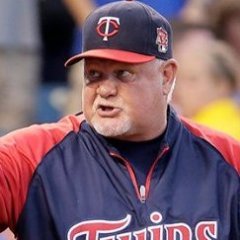
The Minnesota Twins made another round of spring roster cuts, optioning both Ryan Kreidler and Eric Wagaman to Triple-A as Opening Day draws closer. While neither move comes as a complete surprise, the decisions help clarify how the bench picture is forming under new manager Derek Shelton.
Kreidler’s path to the roster always felt like a narrow one. Claimed off waivers from the Pittsburgh organization in October, he brought some familiarity for Shelton, who previously spent time with the Pirates. That connection made him an intriguing under-the-radar candidate to win a backup middle infield role, especially given his defensive versatility.
Ultimately, the bat did not provide enough support for the glove. Kreidler appeared in 17 spring games and went 6-for-39, good for a .154 average, with one home run and an 11-to-3 strikeout-to-walk ratio. The broader offensive track record paints a similar picture. Across 89 career big-league games, he owns a .383 OPS, which translates to an 11 OPS+. That level of production makes it difficult to justify a roster spot unless the defensive value is elite, and even then, there are limits to how much a team can carry offensively.
Wagaman’s case is a bit different, but the result is the same. Acquired in early January in a trade that sent left-handed reliever Kade Bragg to Miami, Wagaman brought a more balanced offensive profile. He logged 140 games for the Marlins last season and hit .250/.296/.378 (.674). His 28 doubles and nine home runs helped him post an 86 OPS+, suggesting he can at least provide some pop off the bench.
This spring, Wagaman showed flashes of that ability, going 10-for-39 with one home run and a 13-to-5 strikeout-to-walk ratio in 18 games. Still, without the same defensive upside as Kreidler, he needed to clearly separate himself offensively. That did not quite happen, leaving him on the outside looking in as the Twins finalized their bench mix.
All signs now point to Orlando Arcia securing a spot on the Opening Day roster. The veteran infielder and former All-Star brings a longer track record and the ability to handle shortstop behind Brooks Lee. Even with a difficult 2025 season that saw him post a 42 OPS+ and -1.2 rWAR across 76 games between Atlanta and Colorado, Minnesota appears willing to bet on experience and defensive reliability in a reserve role.
There is still time for things to shift at the margins, but this decision signals a clear preference from the Twins coaching staff. They are prioritizing stability up the middle while keeping additional depth in Triple-A should injuries or performance issues arise.
In the end, both Kreidler and Wagaman remain part of the organizational picture. Each offers a different skill set that could become useful over the course of a long season. For now, though, the message is simple. The Twins are narrowing their focus, and the Opening Day roster is beginning to come into view.
With the calendar turning toward the final week of spring training, the Minnesota Twins continue to narrow down their roster. On Tuesday, the club reassigned three more non-roster position players to minor league camp, signaling that decisions are becoming more real with each passing day.
Outfielders Kala’i Rosario and Kyler Fedko, along with infielder Tanner Schobel, were the latest cuts. Rosario and Fedko were among a group of Twins prospects announced for the team’s Spring Breakout game on Thursday. The moves come just ahead of an off day on Wednesday, March 18, and leave the Twins with 21 position players remaining in big league camp. That group still includes a handful of non-roster invitees, but the competition is clearly tightening.
Rosario may have made the strongest impression of the trio this spring. The 23-year-old went 5-for-15 in Grapefruit League action, showing some pop with a home run and driving in four. He also drew three walks, though the seven strikeouts highlight the continued development needed in his offensive approach. A fifth-round pick in 2020, Rosario finished last season at Double-A and remains an intriguing power bat in the system.
Fedko, 26, brings versatility with experience at both first base and the outfield, but his spring numbers did not jump off the page. He collected three hits in 23 at-bats while striking out eight times. After splitting last season between Double- and Triple-A, he looks ticketed to provide organizational depth at the upper levels.
Schobel, a 2022 second-round pick, also flashed some ability despite limited opportunities. The 24-year-old recorded two hits in 15 at-bats, including a home run, while working three walks. He reached Triple-A last season, and the Twins have continued to challenge him with aggressive assignments since drafting him.
At this stage of camp, these moves are less about performance and more about roster realities. The Twins need to allocate at-bats and innings to players still competing for Opening Day roles, and that often means sending promising but not quite ready contributors back to the minor league side.
None of Rosario, Fedko, or Schobel was expected to break camp with the major league club, but all three remain firmly in the picture for 2026. Each should factor into Triple-A depth at St Paul, positioning themselves as potential call-up options when injuries or roster needs inevitably arise during the season.
Spring training is entering its final stretch, and the roster decisions are starting to come quickly.
With Opening Day set for March 26 against the Baltimore Orioles at Camden Yards, the Minnesota Twins are beginning to finalize the final pieces of their pitching staff. On Monday, the club reduced its bullpen competition by sending two relievers out of major league camp.
Minnesota reassigned right-handers Julian Merryweather and Grant Hartwig to minor league camp as the organization inches closer to setting its Opening Day bullpen.
Both pitchers entered camp as non-roster invitees looking to pitch their way onto the major league roster. With the calendar now showing mid-March, the Twins are clearly entering the phase of spring where roster battles become more defined.
The moves leave the organization with 45 players still active in big league camp, including 21 pitchers. However, that number does not fully reflect the group competing for Opening Day jobs. Right-hander David Festa is expected to begin the season on the injured list, while right-hander Travis Adams has been limited by elbow inflammation during camp.
If Adams is not ready for the start of the season, the Twins would be left with roughly 13 relievers competing for what is expected to be eight bullpen spots on the 26-man roster.
Merryweather showed flashes early in camp before his progress was halted by injury. The hard-throwing right-hander strained his left hamstring during his first Grapefruit League appearance on February 24. Since then, he has thrown several bullpen sessions but has not yet returned to game action.
Hartwig saw plenty of work this spring, appearing in seven Grapefruit League games. The results were uneven as he allowed eight earned runs on seven hits and two walks across 7 1/3 innings.
For both pitchers, the reassignment does not necessarily close the door on helping the Twins later this season. Injuries and performance fluctuations often lead to bullpen shuffling throughout the year, and strong outings in the minors can quickly put a reliever back on the radar.
For now, though, Minnesota continues narrowing the field. With only days remaining before the season opener in Baltimore, the Twins are quickly approaching the moment when speculation ends, and the final 26-man roster becomes reality.
On X/Twitter, Danny Gallagher describes himself as an Expos historian with 11 books about the franchise.
On Friday morning, he posted a tweet about former Twins closer Jeff Reardon. The tweet shows a picture of the 70-year-old following the surgery. He's still got his signature beard. He has his blanket or robe on but his chest. You can see the large incision down the center of his chest and electrodes stuck in various places around his chest. I won't show that photo here as I would imagine not everyone would want to see it. (Gallagher notes in a subsequent tweet that the photo came from Reardon's Facebook page).
Reardon spent three of his 16 major league seasons with the Minnesota Twins. He joined the team right before the start of the 1987 season. Six weeks into his Twins career, he had a 10.80 ERA. However, over the remainder of the season, he had a 3.03 ERA. Overall, he went 8-8 with a 4.48 ERA and 31 saves.
He pitched in four World Series games that season and gave up no runs over 5 2/3 innings. In Game 7, Frank Viola gave up two runs in the second inning. That was it. He gave up two runs on six hits over eight innings. But when the Twins had a 4-2 lead over the Cardinals after eight innings Viola had thrown 95 pitches, and a case could be made for him to go out for the ninth. However, Tom Kelly later said that they were going to do what they did all year which was go to Reardon in that situation. Reardon got Tom Herr to fly out to centerfield. Curt Ford pinch hit and popped up to third base. And we all love seeing Willie McGee grounding to Gary Gaetti at third base. The Gold Glove winner threw across the diamond to Kent Hrbek. The Twins were World Champions. The image of Hrbek leaping into the air, and the bench racing out to the middle of the diamond where teammates embraced in celebration.
Reardon spent two more seasons with the Twins. In 1988, he was at his best and made an All-Star appearance. He went 2-4 with a 2.47 ERA and had 42 saves. In 1989, he went 5-4 with a 4.07 ERA and 31 saves.
The Terminator, as he was affectionately nicknamed, made his big-league debut with the Mets in 1979. He was traded to the Expos during the shortened 1981 season. He was an All Star for Montreal in 1985 and 1986. In February of 1987, he came to the Twins with catcher Tom Nieto in exchange for LHPs Neal Heaton and Yorkis Perez, RHP Al Cardwood, and former first-round pick catcher Jeff Reed.
Following the 1989 season, he became a free agent and signed a four-year contract with the Red Sox and made one All-Star appearance for Boston. In August of 1992, he was traded to the Atlanta Braves.
Then things got weird for The Bearded One. In 1993, he signed with the Reds. In 1994, he signed with the New York Yankees. Both teams did not allow players to have beards, so Reardon shaved and was left with only his mustache.
When he retired in 1994, Reardon was the All-Time leader with 367 Saves.
Join us in wishing Jeff Reardon good health following his quadruple bypass surgery.
The Minnesota Twins and Royce Lewis avoided arbitration on Thursday, agreeing to a one-year contract for the 2026 season. According to KSTP’s Darren Wolfson, Lewis will earn $2.85 million, slightly below the $3 million projection from MLB Trade Rumors. For a player whose recent seasons have been defined by both brilliance and frustration, the Twins have been hyping him up this winter.
No one needs to be reminded what Lewis is capable of. He remembers it. Twins fans certainly remember it. Even his new manager remembers it.
At his healthiest, Lewis has been one of the most dynamic, most dangerous, and best players in baseball. He keyed the Twins' run to the postseason with a tremendous second-half surge in 2023, and before a late slump in 2024, he was driving them toward another apparent playoff berth. Few players in the organization have shown that kind of ability to change the direction of a season.
Since late 2024, Lewis has searched not only for health but for consistent form at the plate. If he can recapture the magic of his first 100 or so big league games, the entire outlook for the 2026 Twins would change. He slashed .309/.372/.548 (.920) in 58 games in 2023 and was slugging .685 in 23 games before the All-Star break in 2024. When Lewis is right, the lineup looks different. Pitchers approach him differently. Games feel shorter.
“I truly believe if I play at the level that I’ve shown before, that I can be one of the best hitters in the league, on any team,” Lewis said.
The Twins are likely to run back much of the same roster in 2026. Any real optimism for a rebound rests on the young core producing closer to its ceiling. That group includes Brooks Lee and Matt Wallner, but it starts with Lewis.
“This guy has a chance to be a superstar,” said Twins manager Derek Shelton.
Lewis’ struggles have come from a complicated mix of factors, with health chief among them. He suffered a hamstring injury in Spring Training in 2025 and now believes he returned too quickly. That decision led to a slow start at the plate, and just as he appeared to be finding his timing again, he aggravated the injury and missed more time. When Lewis finally had an extended stretch of health in the second half of 2025, the consistency still did not fully return.
Soon after being hired, Shelton traveled to Texas to visit Lewis. The gesture resonated.
“We definitely vibed really well,” Lewis said. “He came out to Texas to see me, and honestly I told him that meant my whole year. I was blown away that he came out to see me. I didn’t realize that I was that important to him and to the organization. I felt like I was starting to lose that kind of feeling, and I just felt like a different vibe at the end of last year, parts of last year, but he definitely corrected that. And we’re still keeping in touch.”
Even during an uneven 2025, Lewis showed signs that matter. Defensively, he looked smooth and athletic down the stretch. He began running again, stealing bases and trusting his body. From a physical standpoint, he finally started to resemble the player the Twins envisioned when they drafted him first overall.
Now comes the hard part. Staying healthy. Finding rhythm. Letting confidence snowball instead of doubt. None of that is guaranteed. The Twins still believe in Lewis, and 2026 is the most critical season in his young career.
According to KSTP’s Darren Wolfson, the Twins and Trevor Larnach have agreed to terms on a $4.475 million contract for next season, avoiding an arbitration hearing. MLB Trade Rumors had projected Larnach to earn $4.7 million, so the final number comes in just under expectations and gives the Twins a bit of financial clarity as they continue to shape the roster for 2026.
On the surface, avoiding arbitration feels like standard operating procedure. Dig a little deeper, though, and this agreement says more about the Twins’ current roster crunch than it does about a long-term commitment to Larnach. There had been speculation that Minnesota could non-tender the outfielder altogether, mainly because the organization is flush with younger, cheaper alternatives. While $4.475 million is not the most expensive arbitration salary on the roster, it represents roughly five percent of a payroll estimated to land around $100 million in 2026. For this front office, every dollar still matters.
Larnach agreeing to terms with the Twins does not mean his future in Minnesota is secure. In fact, the opposite may be true. The Twins now have six left-handed hitting outfielders on the 40-man roster, and that group includes Larnach, Hendry Mendez, James Outman, Alan Roden, Emmanuel Rodriguez, and Matt Wallner. That list does not even include top prospect Walker Jenkins, who is waiting in the wings at Triple-A and is very much part of the long-term plan.
As things stand, the Twins favor Wallner and Roden for regular roles early in 2026, with Outman serving as the primary backup to Byron Buxton in center field. Rodriguez and Mendez are expected to open the season in the minors, though Rodriguez in particular has the kind of upside that will force the issue if he is healthy and productive. In that context, it is difficult to find a clear path to consistent playing time for Larnach outside of a shared DH role.
With a set salary in place for 2026, Larnach becomes easier to move in a trade than he was during the arbitration guessing game. Cost certainty matters to other clubs, especially those trying to fill a corner outfield need without committing to a long-term deal.
From a performance standpoint, Larnach’s 2025 season was steady but unspectacular. He set a career high with 142 games played and led the team in that category, but his overall production landed just below league average. A 99 OPS+, a .250/.323/.404 (.727) slash line, 17 home runs, 60 RBI, a 9.3 BB%, and a 21.5 K% added up to a 0.1 bWAR. There is value there, particularly in durability, but it is not the kind of profile that brings back a significant return on its own.
The most realistic recent comparison for a potential Larnach deal is the Twins trading Nick Gordon for Steven Okert during spring training in 2024. That type of modest swap feels far more plausible than anything splashy. The challenge will be finding the right partner. Minnesota needs a team that is thin in the corner outfield and deep in bullpen arms, a combination that is not especially common around the league.
In the end, the Twins and Larnach avoiding arbitration is less about stability and more about flexibility. Minnesota gets a known cost on a player who still has some appeal, and Larnach gets paid without the uncertainty of a hearing. Whether he spends that season in a Twins uniform is another question entirely. As the outfield picture continues to crowd itself, this agreement feels like one step toward an eventual resolution rather than the final word.
Now we know the full picture of why the Minnesota Twins are calling up two of their top pitching prospects.
In a big blow to the starting rotation, the Twins will be placing right-hander Mick Abel on the 15-day injured list with right elbow inflammation. The move will be made before Tuesday's series opener against the New York Mets.
On Sunday, news broke that left-handers Kendry Rojas and Connor Prielipp were joining the team in New York. One part of the equation as to whose roster spots they would take was another left-hander, Kody Funderburk, is set to go on the paternity list. Rojas and Prielipp are both already on the 40-man roster.
The Abel injury answers the other half of that.
Abel, 24, has appeared in four games, including three starts, this season with a 3.98 ERA. He has been especially sharp in his last two starts, tossing 13 shutout innings against the Detroit Tigers and Boston Red Sox. He struck out 16 in those two games, including 10 Tuesday vs. the Red Sox.
Abel joins star right-hander Pablo Lopez, who is out for the season after having his right UCL repaired in late February.
In his latest article, Bobby Nightengale reported that the Twins had talks with the Mariners at the trade deadline, but a deal never came together because Seattle was unwilling to include two of their best prospects. Minnesota’s ask? Two top-100 prospects.
Nightengale also noted that the Twins actually preferred 18-year-old catcher Eduardo Tait over Phillies shortstop prospect Aidan Miller. The hesitation with Miller, ranked #17 in baseball by MLB Pipeline, came from concerns about his ability to stick at shortstop long-term. Miller, currently in Double A, has posted a .740 OPS this season. The Twins felt Tait carried more upside and made him their request from Philadelphia instead.
Major League Baseball wasted no time announcing the 2025 Gold Glove winners less than 24 hours removed from one of the best World Series in recent memory.
While no current Minnesota Twins were finalists (was Buxton snubbed??), two former Twins first basemen were up for the award. On Sunday evening, it was announced that Ty France beat out Carlos Santana and Vladimir Guerrero Jr. for his 1st career Gold Glove.
France, signed by the Twins last February, is not typically known for his glove, but something changed in 2025. After posting six consecutive seasons of a negative Outs Above Average (OAA) to start his career, France produced 10 OAA this season between the Twins and Toronto Blue Jays. The number ranked in the 96th percentile across baseball, per Baseball Savant. Additionally, his defense provided a Run Value of 7, which was second best of all first basemen, one behind Matt Olson of the Atlanta Braves.
From MLB.com, Established in 1957, the Gold Glove Award honors the best defensive player at each position in each league. The voting process is made up of MLB managers and coaches (75%) and the sabermetrics community (25%). Managers and coaches vote only within their own league and cannot vote for players on their own teams.
The Twins are in need of a first baseman. Despite his hitting woes, should they look to bring back France? Let us know in the comments!
There are nights when the conversation after a game centers on a big swing or a dominant pitching performance. Then there are nights like this one, where the spotlight shifts squarely behind the plate.
On Sunday, home plate umpire Hunter Wendelstedt had a difficult outing in the matchup between the Cincinnati Reds and Minnesota Twins, missing 22 ball and strike calls over the course of the game. Notably, sixteen of those calls went against Cincinnati, including four blown strikeouts, ultimately creating a +2.78 run value in favor of Minnesota. Despite that imbalance, the Reds walked away with a 7-4 win in 10 innings, overcoming both the Twins and a strike zone that never quite settled in.
Missed calls occur in every game, but this game's total and several key mistakes significantly affected the outcome and further highlight debates on umpire reliability. It was also the seventh game this season in which an umpire has missed 20 or more ball-and-strike calls, continuing a trend that has kept the automated ball-strike system in the conversation around the league.
The Calls That Mattered Most While the total number is eye-opening, a few specific moments carried the most weight in terms of run expectancy.
In the top of the fourth inning, with one out and a runner on first, Bailey Ober appeared to lose a full count battle against Spencer Steer. A pitch ruled a strike should have been ball four, ending the at-bat and putting another runner aboard. Instead, the Reds lost that opportunity.
An inning later, Ober benefited again. Facing Matt McLain with two outs and a runner on second in a 1-2 count, a pitch off the plate was called strike three to end the inning. That erased a chance for Cincinnati to extend the frame and potentially push across a run.
Minnesota was not entirely immune. In the bottom of the seventh, Connor Phillips appeared to punch out Trevor Larnach on a full count with two outs and nobody on. Instead, the pitch was called a ball, resulting in a walk that prolonged the inning.
Still, the overall trend was clear. The majority of impactful misses leaned in Minnesota’s direction. To Cincinnati’s credit, the game did not spiral. Even with the inconsistencies, the Reds continued to grind through at-bats and leaned on timely hitting to keep things close. They also successfully used a challenge in extras, a fitting end on a night where the strike zone had been under scrutiny from the first inning on.
For Minnesota, this is a frustrating kind of loss. The numbers suggest they were on the favorable side of the missed calls, yet they still could not convert that advantage into a win.
Games like this highlight a larger issue. Even when external factors tilt in a team’s favor, execution still determines the outcome. The Twins had opportunities, some aided by the strike zone, but could not deliver the knockout blow.
Umpiring will always be part of the game’s human element, but nights like this add fuel to the ongoing debate about consistency and potential technological solutions. When 22 calls are missed, and the imbalance is this pronounced, it becomes impossible to ignore.
Major League Baseball’s ABS system has brought changes to the game, and teams are still ironing out its wrinkles. With only a limited number of challenges available, every decision carries weight.
It did not take long for players to realize that this system is not just about accuracy, it is also about strategy. On Tuesday night, Victor Caratini may have given the clearest example yet of how gamesmanship can play a role in this new era.
Catchers have traditionally built their value around pitch framing, subtly moving their glove to influence an umpire’s call. The ABS system changes that dynamic. With the ability to challenge pitches, framing becomes less essential in the traditional sense. But that does not mean it is irrelevant. In fact, Caratini showed it can still be a weapon, just in a different way.
With Andruw Monasterio at the plate, Caratini received a pitch that clearly went through the bottom half of the strike zone. Instead of presenting it cleanly, he exaggerated his glove movement well outside the zone. The visual suggested a clear ball, even though the pitch itself was a strike.
That was the trap. Monasterio took the bait and called for a challenge, convinced the pitch had missed. Moments later, the review confirmed what Caratini already knew. The pitch was a strike. The Red Sox lost a challenge, and Monasterio was left with a long, quiet walk back to the dugout.
It was a small moment in the game, but one that could have larger implications. Challenges are a finite resource, and burning one on a pitch that was never close is a costly mistake. By manipulating perception, Caratini essentially gave his pitcher an advantage without throwing another pitch.
This kind of thinking is exactly what many expected when ABS was first implemented. Players and coaches are constantly looking for edges, and this is simply the latest example.
Aaron and John talked about this scenario playing out on Wednesday’s mailbag episode of Gleeman and the Geek. Aaron agreed that it could be something that is seen more regularly this season. However, John had a tough time imagining the situation playing out the way it did for Monasterio.
There is also a psychological layer to it. Hitters trust their eyes and instincts, but when a catcher presents a pitch in a misleading way, it introduces doubt. In a system where players can challenge calls, that doubt can turn into a costly decision.
For Minnesota, it was another example of doing the little things right in a win over Boston. Now, fans will have to wait and see if any other batters fall for a similar tactic.
Spring training is always about optimism, but it is also about information. The Minnesota Twins added a healthy dose of both on Friday when they announced their internal non-roster invites for major league camp. These are players already in the organization but not on the 40-man roster who will get a chance to share fields, lockers, and moments with the big-league group in Fort Myers.
The headliners are impossible to miss. Walker Jenkins and Kaelen Culpepper are two of the most important position players in the system, and both arrive with plenty of helium. Jenkins continues to look like the rare prospect who forces timelines to move, not because of need but because of undeniable talent. He finished last season at Triple-A after posting a 154 wRC+ at Double-A.
Culpepper took a massive step forward last season, showing he can impact the game with his bat while sticking at shortstop. In 113 games, he posted a 138 wRC+. The organization named him the minor league player of the year, and he enters 2026 as a consensus top-100 prospect. His presence, along with Jenkins's, guarantees that early-morning workouts will draw extra eyes.
The list also rewards performance: Kala'i Rosario and Kyler Fedko were among the system’s most productive hitters last year. Spring training is typically where that type of momentum earns recognition. Rosario brings loud contact (25 homers, 131 wRC+) and improved plate discipline, while Fedko made his mark on the bases (38 steals, 130 wRC+). Neither is expected to break camp, but both gain from time around the major league staff early.
Beyond the marquee names, this group offers a little of everything. Trent Baker and Cory Lewis provide rotation depth and a chance to evaluate arms against higher-level competition, while Christian MacLeod continues his push back into the picture after showing signs of life last season. Meanwhile, Ricardo Olivar and Noah Cardenas give the catching group extra reps and flexibility during long camp days.
On the position player side, Aaron Sabato, a former first-round pick, remains one of the more fascinating cases in the system. The power is real, and spring training offers another opportunity to show progress in the rest of his game. Tanner Schobel and Patrick Winkel are solid organizational performers who do many things well and help keep the environment competitive.
Non-roster invites rarely tell a complete story on their own, but together these players offer clues about the Twins’ current priorities. By bringing in their best prospects, recent standouts, and valuable depth, the Twins reinforce that spring training isn’t just about preparing the Opening Day roster; it’s also about developing the next wave by giving them firsthand experience of what it takes to succeed.
In the latest update of the sale of the Minnesota Twins, Charley Walters is citing industry sources who say "the [Minnesota] Twins have an offer on the table."
He goes on to say that "Major League Baseball is expected to guarantee the Twins' debt reportedly more than $400 million."
So, why isn't this bigger news? Well, it's not been confirmed outside of an "industry source" and it's in the "Don't print that" section of the article linked in the tweet above. At this point, it's just a rumor.
What does it mean that MLB is "expected to guarantee the Twins' debt?" Well, that answer is also a bit unclear, but our own @Peter Labuza did some speculating and digging saying "If I had to guess, MLB would "buy" the debt and then have the team pay MLB rather than the Pohlad's...?" He goes on to cite the Debt Service Rule from the Atlanta Braves public filings:
"Each MLB Club is subject to certain MLB imposed restrictions on its ability to incur indebtedness in amounts that exceed specified thresholds. In particular, each MLB Club is generally required to keep outstanding indebtedness minus a certain amount of excludable indebtedness at or below 8.0x available cash flow (or in the case of MLB Clubs which have a new stadium, at or below 12.0x available cash flow), with the amount of excludable indebtedness for fiscal year 2023 set at $125 million and for each of fiscal years 2024 through 2026 set at $100 million. This is referred to as the Debt Service Rule. MLB Clubs must certify compliance with the Debt Service Rule annually and the failure of an MLB Club to comply during two consecutive fiscal years may lead to certain remedial measures being imposed by the Commissioner of Baseball, including, but not limited to, prohibitions on the incurrence of additional indebtedness and repayment of outstanding indebtedness."
Moreover, using the NFL as an example, Labuza says "[NFL] owners can "borrow" from the league at a cheaper interest rates than banks, etc."
On the other hand, @John Bonnes speculates at a more simple explanation, asking "rather than come up 1.5B cash, [maybe prospective owners] can come up with 1.1B cash and take on the $400M loan gradually?"
While it's our speculation and educated guesses on our end, it helps provide a little bit of clarity on a somewhat vague and unclear statement from Walters piece.
Do you have any insight on the matter? Please share in the comments!
With the World Series nearing its end, teams will soon be allowed to complete trades. With that, you can expect to hear rumors surrounding the Minnesota Twins, who could look to shed more salary by dealing one or both of their top starting pitchers.
Jen McCaffrey, who covers the Boston Red Sox for The Athletic, is already stoking the stove in a recent mailbag article. The team that made a late push at the deadline to acquire the 29-year-old Ryan is expected to add to their starting rotation this offseason and will likely be calling the Twins again.
While they may pursue more elite options, such as Detroit Tigers ace Tarik Skubal, they could also opt for more of a number two type like Ryan. At the deadline, Dan Hayes suggested the Twins would be looking for two top-50 prospects in return - "one with a mid-ceiling and one more of a lottery ticket." McCaffrey goes on to speculate that a package including one of shortstop Franklin Arias or outfielder Jhostynxon "The Password" Garcia, plus 2025 first-rounder right-hander Kyson Witherspoon, would be a good "start" to a potential deal.
Arias, the Red Sox's top prospect and 24th in all of baseball (per MLB Pipeline), started the 2025 season in Single-A Salem before being promoted to High-A Greenville Drive and eventually Double-A Winchester. He posted a .278 AVG with eight home runs, 66 RBI, and 12 stolen bases over 479 at-bats in the minors.
Garcia split his 2025 season between the minor and major leagues for the Red Sox organization. In the minors, he hit 21 home runs and drove in 75 RBI. He appeared in 5 games for the Red Sox, recording one hit (a double) over seven at-bats with two walks. He ranks as the 85th best prospect in baseball and third in the organization.
Witherspoon, who didn't appear in a game for the Red Sox organization, finished his NCAA season with a 2.65 ERA and 124 strikeouts across 95.0 innings for the Oklahoma Sooners. He was named a Golden Spikes Award Semifinalist and a Consensus First Team All-American. He is currently the 89th prospect in baseball and 4th fourth-best prospect in the organization, according to MLB Pipeline.
Who do you think the Twins should look to land if they tango with the Red Sox? Let us know in the comments!
Rick Renick, a former Minnesota Twins player and a key member of the coaching staff during the franchise’s first World Series championship, died Saturday, January 31, at the age of 81. Renick was living in Sarasota, Florida, at the time of his passing. His baseball life touched the Twins organization across multiple generations.
Renick’s connection to Minnesota began on the field. Signed out of Ohio State University in 1964, he climbed the Twins minor league system and made his major league debut on July 11, 1968, at Metropolitan Stadium. The assignment was not an easy one, as he faced Detroit Tigers left-hander Mickey Lolich, who had led the American League in shutouts the previous season. Renick responded in memorable fashion, homering in his first major league at-bat and becoming the first Twins player to do so.
Primarily a third baseman and left fielder, Renick played five seasons with the Twins from 1968 through 1972, appearing in 276 games. He finished his Twins career as a .221 hitter with 20 home runs and 71 RBI, and his best season came in 1970 when he set career highs with seven home runs, 25 RBI, 81 games played, and a .708 OPS. That season also coincided with a division title, giving Renick his first taste of an AL West championship.
By 1973, Renick’s playing days in the majors had come to an end, but baseball was far from done with him. He transitioned into coaching, first as a coach in the Twins farm system before moving on to a long and winding second career that included stops with the Kansas City Royals, Montreal Expos, Chicago White Sox, Pittsburgh Pirates, and Florida Marlins. Along the way, he also managed nine seasons in the minor leagues and earned American Association Manager of the Year honors twice at Triple-A Nashville.
Renick’s most enduring legacy in Minnesota came in 1987. After Ray Miller was fired late in the 1986 season, Tom Kelly took over as interim manager and was later retained for the following year. When assembling his staff, Kelly passed over ownership’s preferred candidate and instead chose Renick, his former minor league teammate who was then working in the Expos organization. Renick became the lone new coach on the staff, taking over duties at third base.
The Twins defied expectations and captured their first division title since 1970, the last time Renick himself had been part of a championship team in Minnesota.
The magic did not stop there. Minnesota went on to defeat the Detroit Tigers in the American League Championship Series and then beat the St. Louis Cardinals to secure the first World Series title in franchise history. Renick’s aggressive instincts at third base and his work with hitters were part of a coaching staff that maximized a roster few believed could reach that height.
Renick remained with the Twins through the 1990 season, but after a last-place finish that year, he was let go by General Manager Andy MacPhail. He declined an opportunity to stay in the organization at the minor league level and instead continued his career elsewhere, returning to the majors in various roles through 2002.
In total, Renick spent 13 seasons as a major league coach and left an imprint on multiple organizations. Still, his place in Twins history is unique. He was there for two AL West titles separated by 17 years, first as an underestimated utility player and later as a trusted voice on a championship coaching staff.
Renick is survived by three sons, including Josh Renick , who was drafted by the Twins in 2001 and later played for the St. Paul Saints. His wife, Libby, passed away last March at the age of 80. For the Twins, Renick will be remembered as someone who helped guide one of the most improbable and beloved teams in franchise history to the top of the baseball world.