



John Bonnes
-
Posts
6,791 -
Joined
-
Last visited
-
Days Won
4
Content Type
Profiles
News
Minnesota Twins Videos
2026 Minnesota Twins Top Prospects Ranking
2022 Minnesota Twins Draft Picks
Minnesota Twins Free Agent & Trade Rumors, Notes, & Tidbits
Guides & Resources
2023 Minnesota Twins Draft Picks
The Minnesota Twins Players Project
2024 Minnesota Twins Draft Picks
2025 Minnesota Twins Draft Pick Tracker
2026 Minnesota Twins Draft Tracker: Picks & Bonuses
Forums
Blogs
Events
Store
Downloads
Gallery
Everything posted by John Bonnes
-
 Aaron and John talk about billionaire Justin Ishbia pulling out of talks to buy the Twins and pivoting to the White Sox, Dave St. Peter officially stepping down as team president, good news on Brock Stewart, DaShawn Keirsey trying to impress, and the domino effects of ABS challenges. You can listen by downloading us from iTunes, Spotify, Stitcher, iHeartRadio, or find it at GleemanAndTheGeek.com. Or just click this link. View full article
-
-
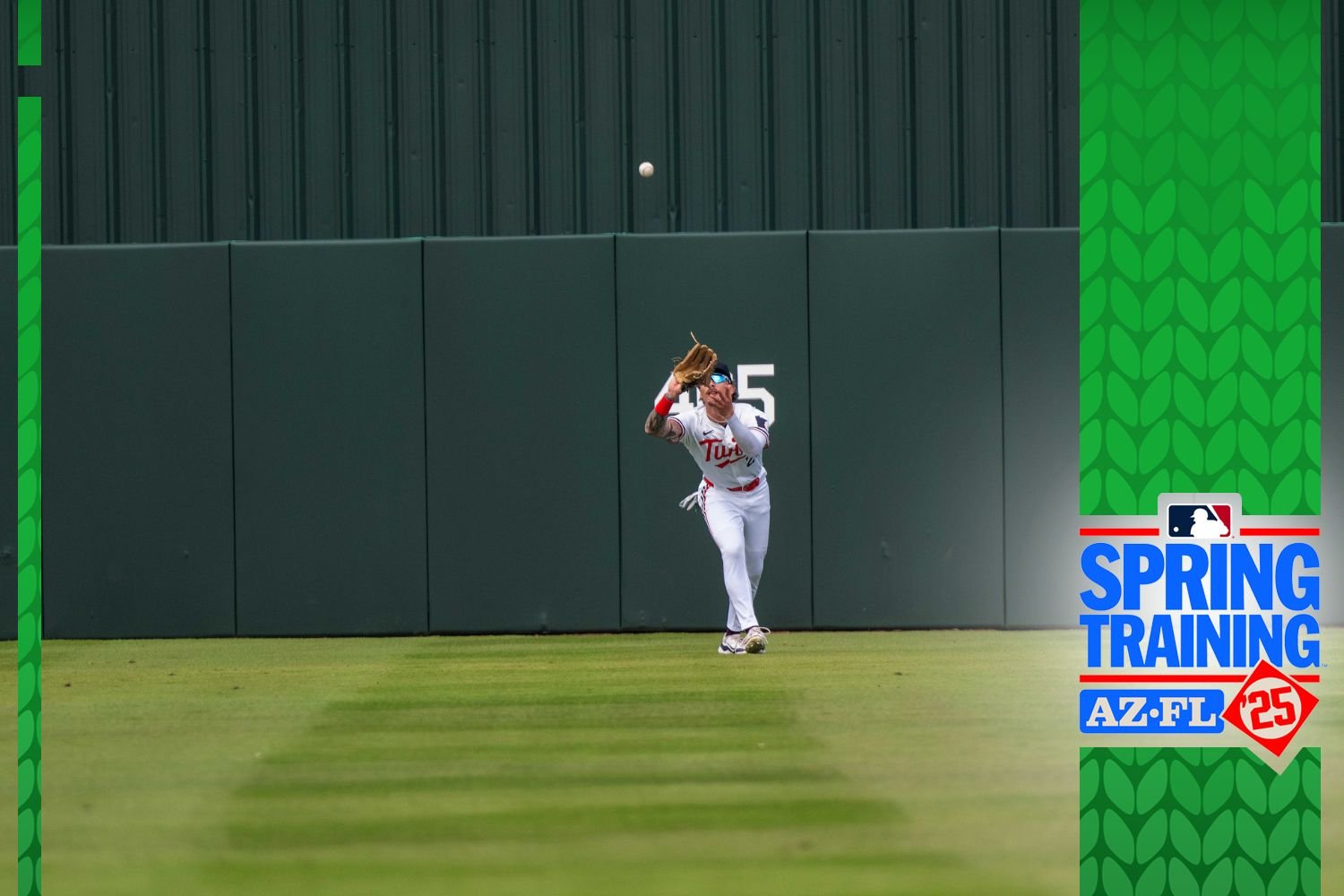
The Twins' lineup was the most interesting part of Wednesday’s 4-0 road victory over the Detroit Tigers. Image courtesy of © Chris Tilley-Imagn Images Virtually the entire lineup was filled with hopefuls; guys who could find themselves playing with the Twins or with St. Paul’s Saints for most of the season. It included eight players that are essentially batting for three roster spots. Leading off was Edouard Julien at first base, where he was playing for the first time this spring. He’s only played there five times in his MLB career, and only twenty-eight times in his minor league career. But manager Rocco Baldelli said before the game that Julien is likely to find himself playing first base nearly as much as he plays second base this spring. Ultimately, Julien’s bat is going to make or break his spot on the roster, but having some positional flexibility would provide a left-handed hitting option to pair with Ty France and Jose Miranda at first base. Batting second was Mickey Gasper, playing second base. Gasper has only played second base fourteen times: six times last year with the Red Sox, and eight times this winter with Criollos de Cagua in the Puerto Rican Winter League. He’s never played it in the minors, playing mostly first base. During the regular season, Baldelli would probably have Gasper and Julien switching spots. But this spring, the Twins need to see if Gasper can handle second base, since that flexibility might be needed for a bench role. Batting third was catcher Jair Camargo. The only thing that has kept Camargo off the Twins' roster the last two years is that Ryan Jeffers and Christian Vazquez have been unnaturally healthy for catchers, starting all 324 games over the last two seasons. He’s an IL-stint (or a cost-cutting trade) away from making the roster and seeing significant playing time. The cleanup hitter was Miranda, who is most likely to find himself playing for the Twins. “But Jose is going to be in a position where he’s going to go out there, earn his at-bats, earn his opportunities like many other guys on our roster.” Those aren’t my words, they’re Baldelli’s when asked about Miranda’s role last week. Miranda played third base in this game, a position the Twins would like to have Royce Lewis get 600 at-bats, if he can stay healthy. When talking about earning at-bats, Baldelli made it clear he wasn’t just talking about Miranda. “You could probably turn to two or three or four other players who have done some good things at the major-league level and ask a similar question and it would made sense,” he continued. Which brings us to the fifth batter today, Brooks Lee, who was playing shortstop. Like almost everyone above him in this lineup, that’s not the position the Twins would like to see him play - he’s probably competing for second base - but he needs to get time there in case something happens to Carlos Correa. Batting sixth was Austin Martin, playing center field. Martin didn’t look great in center field last year, and the Twins should have both Byron Buxton and Harrison Bader above him on the depth chart. But the Twins are convinced Martin can be an excellent defensive outfielder if he gets more time there, so we’ll see him there a lot this spring. His more likely role during the season would be a corner outfield spot, perhaps starting versus left-handed pitchers over left-handed hitting Matt Wallner or Trevor Larnach. The eighth batter, left-handed hitting DaShawn Keirsey Jr, is somewhat blocked on the roster by the same four players as Martin, which is too bad because he’s had a pretty outstanding 24+ hours. Tuesday, he made a fantastic catch against the right field wall to preserve a tie versus the Yankees and then followed it with a game-winning hit. Wednesday, he made a diving catch in the right-field gap and started the Twins scoring with a home run to left field. Finally, in between those two, batting seventh, was Mike Ford , getting at-bats at designated hitter. Like Julien, the left-handed hitting first baseman would also need to find his way on the roster as a left-handed hitting option for France or Miranda. This was a lineup full of players that are guaranteed nothing this year. They almost all played positions where they are being tested, or where the team hopes they won’t have to play. They also traveled 2.5 hours each way on a bus to get at-bats to face Tarik Skubal, the reigning AL Cy Young winner who showed off a 100+ mph pitch in the first inning. But it is also a lineup filled with promise, much of it young promise, that could determine the fate of the Twins offense this year. View full article
-
 Virtually the entire lineup was filled with hopefuls; guys who could find themselves playing with the Twins or with St. Paul’s Saints for most of the season. It included eight players that are essentially batting for three roster spots. Leading off was Edouard Julien at first base, where he was playing for the first time this spring. He’s only played there five times in his MLB career, and only twenty-eight times in his minor league career. But manager Rocco Baldelli said before the game that Julien is likely to find himself playing first base nearly as much as he plays second base this spring. Ultimately, Julien’s bat is going to make or break his spot on the roster, but having some positional flexibility would provide a left-handed hitting option to pair with Ty France and Jose Miranda at first base. Batting second was Mickey Gasper, playing second base. Gasper has only played second base fourteen times: six times last year with the Red Sox, and eight times this winter with Criollos de Cagua in the Puerto Rican Winter League. He’s never played it in the minors, playing mostly first base. During the regular season, Baldelli would probably have Gasper and Julien switching spots. But this spring, the Twins need to see if Gasper can handle second base, since that flexibility might be needed for a bench role. Batting third was catcher Jair Camargo. The only thing that has kept Camargo off the Twins' roster the last two years is that Ryan Jeffers and Christian Vazquez have been unnaturally healthy for catchers, starting all 324 games over the last two seasons. He’s an IL-stint (or a cost-cutting trade) away from making the roster and seeing significant playing time. The cleanup hitter was Miranda, who is most likely to find himself playing for the Twins. “But Jose is going to be in a position where he’s going to go out there, earn his at-bats, earn his opportunities like many other guys on our roster.” Those aren’t my words, they’re Baldelli’s when asked about Miranda’s role last week. Miranda played third base in this game, a position the Twins would like to have Royce Lewis get 600 at-bats, if he can stay healthy. When talking about earning at-bats, Baldelli made it clear he wasn’t just talking about Miranda. “You could probably turn to two or three or four other players who have done some good things at the major-league level and ask a similar question and it would made sense,” he continued. Which brings us to the fifth batter today, Brooks Lee, who was playing shortstop. Like almost everyone above him in this lineup, that’s not the position the Twins would like to see him play - he’s probably competing for second base - but he needs to get time there in case something happens to Carlos Correa. Batting sixth was Austin Martin, playing center field. Martin didn’t look great in center field last year, and the Twins should have both Byron Buxton and Harrison Bader above him on the depth chart. But the Twins are convinced Martin can be an excellent defensive outfielder if he gets more time there, so we’ll see him there a lot this spring. His more likely role during the season would be a corner outfield spot, perhaps starting versus left-handed pitchers over left-handed hitting Matt Wallner or Trevor Larnach. The eighth batter, left-handed hitting DaShawn Keirsey Jr, is somewhat blocked on the roster by the same four players as Martin, which is too bad because he’s had a pretty outstanding 24+ hours. Tuesday, he made a fantastic catch against the right field wall to preserve a tie versus the Yankees and then followed it with a game-winning hit. Wednesday, he made a diving catch in the right-field gap and started the Twins scoring with a home run to left field. Finally, in between those two, batting seventh, was Mike Ford , getting at-bats at designated hitter. Like Julien, the left-handed hitting first baseman would also need to find his way on the roster as a left-handed hitting option for France or Miranda. This was a lineup full of players that are guaranteed nothing this year. They almost all played positions where they are being tested, or where the team hopes they won’t have to play. They also traveled 2.5 hours each way on a bus to get at-bats to face Tarik Skubal, the reigning AL Cy Young winner who showed off a 100+ mph pitch in the first inning. But it is also a lineup filled with promise, much of it young promise, that could determine the fate of the Twins offense this year.
- 69 comments
-
- 10
-

-
- jose miranda
- edouard julien
- (and 5 more)
-
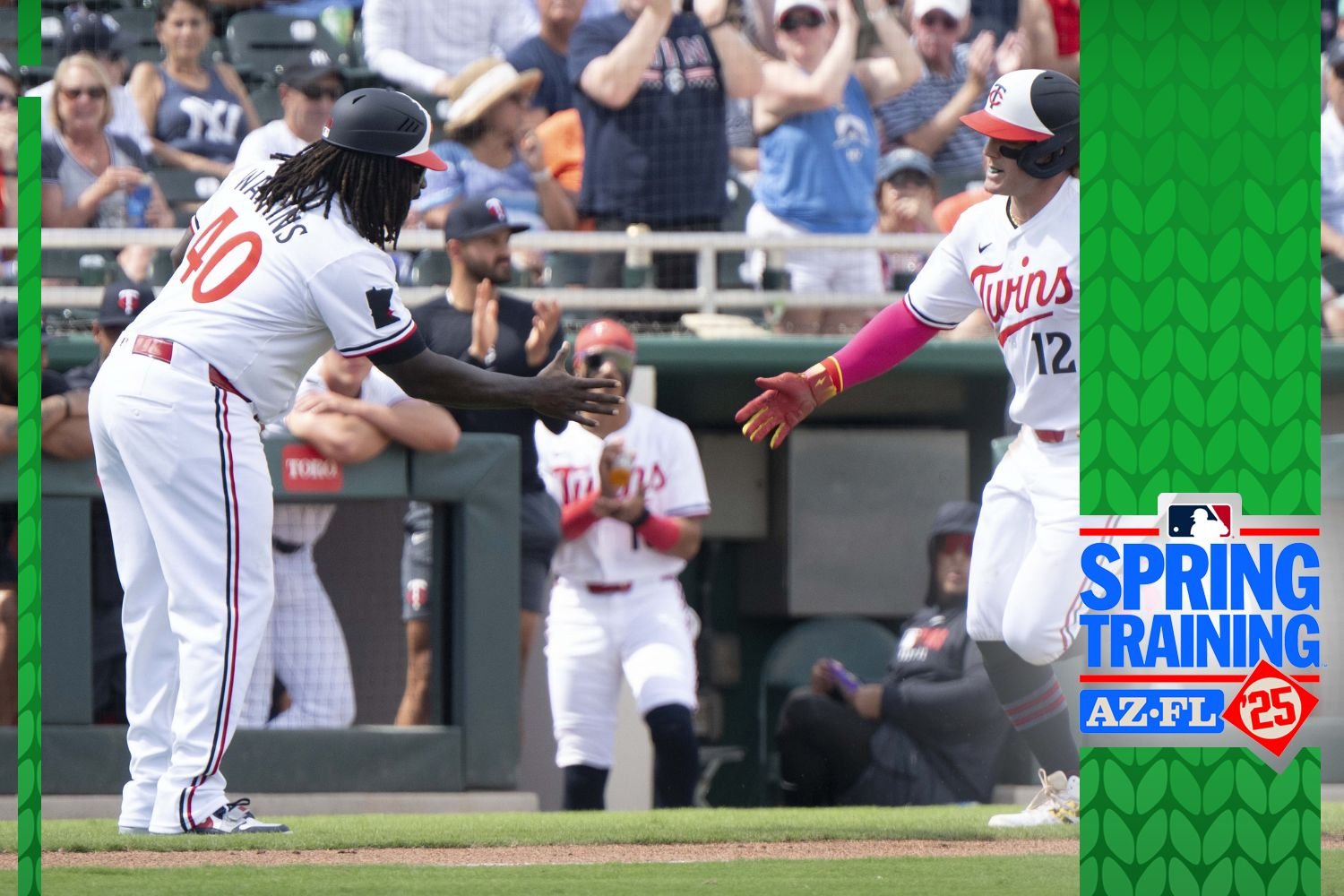
Frank Sinatra’s “Fly Me To The Moon” played on the Hammond Stadium speaker as Twins outdielder Harrison Bader walked up to the plate. Is that his walkup music? “No, it’s not,” Bader said after the game. “But I appreciated it.” Image courtesy of © Chris Tilley-Imagn Images Maybe that’s because he appreciates smooth crooners, but more likely it was because he sent a slider from Yankees right-hander Allan Winans to the moon—or at least beyond the left field wall. It might as well have been to the moon. The Twins and Yankees hit plenty of home runs Tuesday, but all except Bader’s took the easy route, to right field, where wind gusts exceeding 20 mph were carrying the ball. Harrison Bader’’s shot was into the teeth of that same wind. The solo shot, paired with an earlier home run by fellow Twins newcomer Ty France, gave the Twins a 2-1 lead over the Yankees in the third inning. The team lost that lead when Michael Tonkin yielded three runs in the fifth inning, but tied it up again at 4-4 on a home run by Matt Wallner, and won the game in the ninth thanks to a walkoff hit by DaShawn Keirsey Jr. The moonshots were fun to see, especially because manager Rocco Baldelli revealed after the game that Wallner and France were only in the lineup because yesterday’s game was rained out and the skipper wanted to get them some at-bats. But do they matter? Considering the three guys involved, maybe. Wallner had a miserable spring training last year that led into a miserable April, which led to a demotion to St. Paul. France had a miserable midseason that led to him bouncing around the league and being stuck with a non-guaranteed contract. And Bader went from starting center fielder on the Mets to searching for backup jobs on the free-agent market. So yeah, a jolt of early success might matter quite a bit to these guys. Or maybe it was just about a windy day in Fort Myers. Or a classical banger of a song played at the right time. Could it play a future role for him? “I’m looking for [a permanent walkup song],” said Bader. “We’ll see.” We Saw Simeon Wood Richardson’s Velocity Simeon Woods Richardson started his 2025 season where he left his 2024 season, mixing pitches, being effective, and throwing in the mid-90s. Last year, Wood Richardson averaged 93.1 on his four-seam fastball, and he already averaged a tick over 92.5 with the twelve he threw in yesterday’s start. He also went through his full repertoire of pitches, though he gave up a home run on a wind-aided fly ball in the second inning. Unlike last year, Woods Richardson didn’t come to training camp a month early this year, needing his body to recover from a career-high 127 innings he threw last year between Triple A and the majors. He was pretty clearly gassed by the end of the season, posting a 5.91 ERA after Jul. 23 after posting a 3.27 ERA up to that point. So what should we expect this year? “Refine, revamp, and keep it going,” said Woods Richardson when asked his goals for training camp earlier this week. “Nothing really changes on the prep part. No real changes on the mechanical part. It’s just kind of just revamp and rego this year.” So far, so good. We Did Not See Jhoan Duran’s Velocity (Yet?) It is not unusual for pitchers to have something less than their midseason velocity in their first couple outings of the spring. But Durán’s reduced velocity last year was a story, and there were reports earlier this camp that he was showing big velocity in some early sessions. But we didn’t see it Tuesday. Duran threw 14 pitches in a scorelss inning, and six of them were his four-seam fastball, which averaged 100.5 mph last year. Objectively, that’s wonderful, except that it averaged 101.8 mph in 2023. Today, the fastest was 99.6 mph. Don’t hit the panic button. Just like we suggested not to hit the panic button just because Justin Topa gave up a run in Saturday’s game. Especially because… Topa Had A Clean Outing Three batters faced, one strikeout, no hits, no walks and his velocity was as expected. But what might matter is that the sweeper that he relied on to get out of his last outing got two outs, one on a swinging strike. We’ll keep an eye on that. View full article
-
 Maybe that’s because he appreciates smooth crooners, but more likely it was because he sent a slider from Yankees right-hander Allan Winans to the moon—or at least beyond the left field wall. It might as well have been to the moon. The Twins and Yankees hit plenty of home runs Tuesday, but all except Bader’s took the easy route, to right field, where wind gusts exceeding 20 mph were carrying the ball. Harrison Bader’’s shot was into the teeth of that same wind. The solo shot, paired with an earlier home run by fellow Twins newcomer Ty France, gave the Twins a 2-1 lead over the Yankees in the third inning. The team lost that lead when Michael Tonkin yielded three runs in the fifth inning, but tied it up again at 4-4 on a home run by Matt Wallner, and won the game in the ninth thanks to a walkoff hit by DaShawn Keirsey Jr. The moonshots were fun to see, especially because manager Rocco Baldelli revealed after the game that Wallner and France were only in the lineup because yesterday’s game was rained out and the skipper wanted to get them some at-bats. But do they matter? Considering the three guys involved, maybe. Wallner had a miserable spring training last year that led into a miserable April, which led to a demotion to St. Paul. France had a miserable midseason that led to him bouncing around the league and being stuck with a non-guaranteed contract. And Bader went from starting center fielder on the Mets to searching for backup jobs on the free-agent market. So yeah, a jolt of early success might matter quite a bit to these guys. Or maybe it was just about a windy day in Fort Myers. Or a classical banger of a song played at the right time. Could it play a future role for him? “I’m looking for [a permanent walkup song],” said Bader. “We’ll see.” We Saw Simeon Wood Richardson’s Velocity Simeon Woods Richardson started his 2025 season where he left his 2024 season, mixing pitches, being effective, and throwing in the mid-90s. Last year, Wood Richardson averaged 93.1 on his four-seam fastball, and he already averaged a tick over 92.5 with the twelve he threw in yesterday’s start. He also went through his full repertoire of pitches, though he gave up a home run on a wind-aided fly ball in the second inning. Unlike last year, Woods Richardson didn’t come to training camp a month early this year, needing his body to recover from a career-high 127 innings he threw last year between Triple A and the majors. He was pretty clearly gassed by the end of the season, posting a 5.91 ERA after Jul. 23 after posting a 3.27 ERA up to that point. So what should we expect this year? “Refine, revamp, and keep it going,” said Woods Richardson when asked his goals for training camp earlier this week. “Nothing really changes on the prep part. No real changes on the mechanical part. It’s just kind of just revamp and rego this year.” So far, so good. We Did Not See Jhoan Duran’s Velocity (Yet?) It is not unusual for pitchers to have something less than their midseason velocity in their first couple outings of the spring. But Durán’s reduced velocity last year was a story, and there were reports earlier this camp that he was showing big velocity in some early sessions. But we didn’t see it Tuesday. Duran threw 14 pitches in a scorelss inning, and six of them were his four-seam fastball, which averaged 100.5 mph last year. Objectively, that’s wonderful, except that it averaged 101.8 mph in 2023. Today, the fastest was 99.6 mph. Don’t hit the panic button. Just like we suggested not to hit the panic button just because Justin Topa gave up a run in Saturday’s game. Especially because… Topa Had A Clean Outing Three batters faced, one strikeout, no hits, no walks and his velocity was as expected. But what might matter is that the sweeper that he relied on to get out of his last outing got two outs, one on a swinging strike. We’ll keep an eye on that.
-
Join Us in Fort Myers for Twins Daily's "Beers with the Beat Writers"
John Bonnes posted an article in Twins Daily
 Step up to the plate this Friday (2/28) from 7-10 PM for Twins Daily’s Beers with the Beat Writers! A quintet of Twins spring training beat writers—John Bonnes (Twins Daily), Dan Hayes (The Athletic), Matthew Leach (MLB.com), and Phil Miller & Bobby Nightengale (Star Tribune)—will be at Palm City Brewing to talk Twins after a long and boring offseason. You can also take advantage of special prices! Enjoy $5 pours of the brand new Twins D-ALE-y Pale Ale and special pricing on one of Phil Miller’s favorite Palm City hazy IPAs, Subtropic. With plenty of Palm City’s other great beers on tap, it's the perfect evening to socialize with the beat writers and other Twins fans. Join us at Palm City Brewing at 7887 Drew Circle, Suite 130, Fort Myers, FL 33967, and make it a night to remember!
-
Let's get a head start on the season with a preseason meetup. Step up to the plate this Friday (2/28) from 7-10 PM for Twins Daily’s Beers with the Beat Writers! A quintet of Twins spring training beat writers—John Bonnes (Twins Daily), Dan Hayes (The Athletic), Matthew Leach (MLB.com), and Phil Miller & Bobby Nightengale (Star Tribune)—will be at Palm City Brewing to talk Twins after a long and boring offseason. You can also take advantage of special prices! Enjoy $5 pours of the brand new Twins D-ALE-y Pale Ale and special pricing on one of Phil Miller’s favorite Palm City hazy IPAs, Subtropic. With plenty of Palm City’s other great beers on tap, it's the perfect evening to socialize with the beat writers and other Twins fans. Join us at Palm City Brewing at 7887 Drew Circle, Suite 130, Fort Myers, FL 33967, and make it a night to remember! View full article
-
It’s great to have baseball back, but our excitement often means reading too much into spring training’s game results. That said, there are things to notice beyond the box score, so here are some observations from the Twins' 3-1 win over the Atlanta Braves on Saturday afternoon. Zebby Matthews’ Velocity Twins fans who don’t know the full story of Twins pitcher Zebby Matthews might view the 6.69 ERA he posted in his rookie year as disappointing. They are overlooking his meteoric rise – from Eighth round draft pick to the majors in two years, which was fueled by an increase in velocity. Apparently, he’s not done yet. Last year, Matthews’ four-seam fastball averaged 94.9 mph. In yesterday’s first spring outing – where velocities are usually lower – he threw 14 four-seam fastballs. The slowest was 95.4 mph. The fastest was 97.3 mph and the average of those pitches was 96.5 mph. He did all this while registering 19 strikes in the 29 pitches he threw. It was not unexpected. “So far this spring, I've been sitting around 95, 97. So, can't really complain too much about that,” said Matthews after the game. “Feel like we're in a good spot.” “We” includes the Twins, since they will likely have him stashed in St. Paul as the #2 option if the Twins need to swap out a member of their starting rotation. That depth is something the team lacked last year when they rushed him to the majors. It’s also something that can come in handy if the team needs to make some deals during the season or at the trade deadline to aid their pursuit of regaining the AL Central crown. Automatic Balls Strikes (ABS) In the first inning, Matthews gave up a lead-off double, but got out of the inning thanks to catcher Christian Vazquez challenging a “ball” call by the umpire. The call was changed to a strike upon further review, and that third strike call ended the inning. Matthews was not so sure. “I was like, I might be away a little bit,” said Matthews. “But no, we clipped the zone. So that was cool to see.” MLB is using spring training games as a testing ground for a “challenge” system for Automatic Balls & Strikes or ABS. Within seconds after the umpire’s call, the catcher, batter, or pitcher may challenge it. The challenge is announced, and almost immediately, the pitch is put on the scoreboard, allowing fans to see it from various angles and zoom in on it to see if it edges the zone. In the case of Matthews’ pitch, the edge of the ball touched the strike zone. That’s a strike. Last year in Triple-A, the average challenge took 17 seconds, and yesterday’s crowd cheered for the dramatic result. Matthews’ reaction also shows another aspect: that pitchers might not be in the best position to challenge. Twins’ manager Rocco Baldelli talked earlier this week about how the team might handle these when they come to real MLB games. “You’re going to see the catchers using opportunities to challenge behind the players, and the hitters should do it,” said Baldelli. “The pitchers are not in a position to do this as well as those other guys. They’re just not. It’s been proven that’s the case.” The team worked with the system starting on Thursday in live BP. Everyone was encouraged to try it to gain experience. In games, a team can challenge calls until they miss two; then, they cannot challenge calls for the rest of the game. But in spring training games, Baldelli isn’t worried about the penalties for challenging too many. These games don’t count, and he feels it’s important for players to become comfortable with the process by using it. Justin Topa Gives Up A Run But…. Justin Topa pitched the third inning of Saturday’s game and gave up the Twins only run on three singles to his first four batters. Twins fans didn’t see Topa much last year due to a knee injury and other setbacks, so I expect I’ll get some questions about today’s performance. Here’s what I saw. One of the singles was hard hit. One was a soft hit. The three singles came on three different pitch types: cutter, sinker, and changeup. His sinker and cutter had about the same velocity as they had in 2023 when he was with Seattle. And he got out of the inning by relying on a sweeper for six of the last eight pitches he threw. The results weren’t great, but I also didn’t see any red flags. Luke Keaschall is Already Hitting Like Matthews, Twins infield prospect Luke Keaschall launched himself up the prospect charts last year (landing at #3 on Twins Daily’s list) before having to shut down his season for Tommy John surgery. We likely won’t see him ready to play in the field until mid-March, but driving in two runs off the first pitch he sees this spring is encouraging. Because, also like Matthews, he could end up having a role on the team before the end of the year. View full article
-
 Zebby Matthews’ Velocity Twins fans who don’t know the full story of Twins pitcher Zebby Matthews might view the 6.69 ERA he posted in his rookie year as disappointing. They are overlooking his meteoric rise – from Eighth round draft pick to the majors in two years, which was fueled by an increase in velocity. Apparently, he’s not done yet. Last year, Matthews’ four-seam fastball averaged 94.9 mph. In yesterday’s first spring outing – where velocities are usually lower – he threw 14 four-seam fastballs. The slowest was 95.4 mph. The fastest was 97.3 mph and the average of those pitches was 96.5 mph. He did all this while registering 19 strikes in the 29 pitches he threw. It was not unexpected. “So far this spring, I've been sitting around 95, 97. So, can't really complain too much about that,” said Matthews after the game. “Feel like we're in a good spot.” “We” includes the Twins, since they will likely have him stashed in St. Paul as the #2 option if the Twins need to swap out a member of their starting rotation. That depth is something the team lacked last year when they rushed him to the majors. It’s also something that can come in handy if the team needs to make some deals during the season or at the trade deadline to aid their pursuit of regaining the AL Central crown. Automatic Balls Strikes (ABS) In the first inning, Matthews gave up a lead-off double, but got out of the inning thanks to catcher Christian Vazquez challenging a “ball” call by the umpire. The call was changed to a strike upon further review, and that third strike call ended the inning. Matthews was not so sure. “I was like, I might be away a little bit,” said Matthews. “But no, we clipped the zone. So that was cool to see.” MLB is using spring training games as a testing ground for a “challenge” system for Automatic Balls & Strikes or ABS. Within seconds after the umpire’s call, the catcher, batter, or pitcher may challenge it. The challenge is announced, and almost immediately, the pitch is put on the scoreboard, allowing fans to see it from various angles and zoom in on it to see if it edges the zone. In the case of Matthews’ pitch, the edge of the ball touched the strike zone. That’s a strike. Last year in Triple-A, the average challenge took 17 seconds, and yesterday’s crowd cheered for the dramatic result. Matthews’ reaction also shows another aspect: that pitchers might not be in the best position to challenge. Twins’ manager Rocco Baldelli talked earlier this week about how the team might handle these when they come to real MLB games. “You’re going to see the catchers using opportunities to challenge behind the players, and the hitters should do it,” said Baldelli. “The pitchers are not in a position to do this as well as those other guys. They’re just not. It’s been proven that’s the case.” The team worked with the system starting on Thursday in live BP. Everyone was encouraged to try it to gain experience. In games, a team can challenge calls until they miss two; then, they cannot challenge calls for the rest of the game. But in spring training games, Baldelli isn’t worried about the penalties for challenging too many. These games don’t count, and he feels it’s important for players to become comfortable with the process by using it. Justin Topa Gives Up A Run But…. Justin Topa pitched the third inning of Saturday’s game and gave up the Twins only run on three singles to his first four batters. Twins fans didn’t see Topa much last year due to a knee injury and other setbacks, so I expect I’ll get some questions about today’s performance. Here’s what I saw. One of the singles was hard hit. One was a soft hit. The three singles came on three different pitch types: cutter, sinker, and changeup. His sinker and cutter had about the same velocity as they had in 2023 when he was with Seattle. And he got out of the inning by relying on a sweeper for six of the last eight pitches he threw. The results weren’t great, but I also didn’t see any red flags. Luke Keaschall is Already Hitting Like Matthews, Twins infield prospect Luke Keaschall launched himself up the prospect charts last year (landing at #3 on Twins Daily’s list) before having to shut down his season for Tommy John surgery. We likely won’t see him ready to play in the field until mid-March, but driving in two runs off the first pitch he sees this spring is encouraging. Because, also like Matthews, he could end up having a role on the team before the end of the year.
- 46 comments
-
- 19
-
-

-
Aaron and John talk about the early Twins tidbits from spring training involving Ty France, Jose Miranda, Brock Stewart, Louie Varland, Royce Lewis, Brooks Lee, Chris Paddack, Harrison Bader, and more. You can listen by downloading us from iTunes, Spotify, Stitcher, iHeartRadio, or find it at GleemanAndTheGeek.com. Or just click this link. View full article
-
Gleeman & The Geek: 7 Takeaways From the First 7 Days of Twins Camp
John Bonnes posted an article in Podcasts

-
FORT MYERS - Ty France is looking for a simple fix and a simple fit. He thinks he found it with the Twins. Image courtesy of © Albert Cesare/The Enquirer / USA TODAY NETWORK For the first time in his career, Ty France navigated the free agency process. The resulting contract – a non-guaranteed deal worth $1M – reflects the ups and downs that free agency holds for the majority of MLB players. But long before he signed on the dotted line, the 30-year-old first baseman felt early on that the Minnesota Twins were the right fit. “They run a lot of different lineups out and play a lot of matchups,” France explained. “They had Carlos [Santana] here last year, who did a great job, and lost him in free agency. Saw an opening there.” Finding the right fit was important because France is trying to rebound from back-to-back difficult seasons. The easy explanation for his 2024 numbers—a triple slash of .234/.305/.365—is a hairline fracture in his heel that he suffered early in June last year. Before the injury, his OPS was 734. Following that, he posted a 621. “I don’t want to put all the blame on that,” said France. “There was a lot that went into it.” Instead, France focuses on a more self-inflicted problem. After struggling in 2023, he tried a swing overhaul heading into 2024. It didn’t work, and he admitted he let panic dictate his adjustments. “So my first four years in the big leagues had really, really good, strong seasons. Then in ’23, numbers dipped a little bit, and I shouldn't have, but I panicked a little because I wasn't used to that, you know, kind of production,” reflected France. “So I was like, ‘Okay, how can I get back to being my old self’ … and kind of got lost.” France dove into mechanics and analytics but soon realized that wasn’t his style. “There was a lot of it - the analytical side - where I tried to tap into, that I shouldn't tap into,” he said. “I should just worry about being a baseball player and hitting the ball.” Determined to rediscover his natural approach, France worked this offseason with former Twins infielder Denny Hocking. He also reflected on lessons from his youth when he worked with “Coach Gwynn.” That is Hall of Famer Tony Gwynn. “He was very big on simplifying things,” France said. “When I’m at my best, I’m not focused on analytics. I’m just simplifying hitting.” This can lead to another lesson that Gwynn taught him that France had to relearn: baseball should be fun. “One of the things that I think kind of got lost the last year or two was he always preached, ‘This is a game, you’ve got to have fun,’” France said. “And the last year or two hasn’t been fun baseball for me. I think my time in Cincinnati last year, having that reset, I found that joy again.” Towards that end, France insists he will not put extra pressure on himself, even though he’s playing on a non-guaranteed contract. “I’m not going to go out here and try and be something I’m not,” he said. “I’m going to go out and play my game. And if it aligns, great. If it doesn’t, it is what it is.” The way Twins manager Rocco Baldelli talks about him, France need not worry about being left off the roster. Baldelli talks about him as if he’s already the everyday first baseman. “He’s going to play a lot,” Baldelli said Saturday afternoon. “That’s really the best way of saying it. The kind of hitter that he is, yeah, this isn’t a platoon situation. I think he’s going to play.” For that reason, regardless of the amount or the terms of the contract they offered him, the Twins seem to be a great fit. Now he needs to show he’s a great fit for them as they try to recover from last season’s collapse. He knows just how he’s going to do it. “When I simplify hitting and get back to being myself, I’m a pretty good hitter,” he said. “I’m just going to go out this year and play baseball instead of worrying about all the mechanical stuff.” View full article
-
 For the first time in his career, Ty France navigated the free agency process. The resulting contract – a non-guaranteed deal worth $1M – reflects the ups and downs that free agency holds for the majority of MLB players. But long before he signed on the dotted line, the 30-year-old first baseman felt early on that the Minnesota Twins were the right fit. “They run a lot of different lineups out and play a lot of matchups,” France explained. “They had Carlos [Santana] here last year, who did a great job, and lost him in free agency. Saw an opening there.” Finding the right fit was important because France is trying to rebound from back-to-back difficult seasons. The easy explanation for his 2024 numbers—a triple slash of .234/.305/.365—is a hairline fracture in his heel that he suffered early in June last year. Before the injury, his OPS was 734. Following that, he posted a 621. “I don’t want to put all the blame on that,” said France. “There was a lot that went into it.” Instead, France focuses on a more self-inflicted problem. After struggling in 2023, he tried a swing overhaul heading into 2024. It didn’t work, and he admitted he let panic dictate his adjustments. “So my first four years in the big leagues had really, really good, strong seasons. Then in ’23, numbers dipped a little bit, and I shouldn't have, but I panicked a little because I wasn't used to that, you know, kind of production,” reflected France. “So I was like, ‘Okay, how can I get back to being my old self’ … and kind of got lost.” France dove into mechanics and analytics but soon realized that wasn’t his style. “There was a lot of it - the analytical side - where I tried to tap into, that I shouldn't tap into,” he said. “I should just worry about being a baseball player and hitting the ball.” Determined to rediscover his natural approach, France worked this offseason with former Twins infielder Denny Hocking. He also reflected on lessons from his youth when he worked with “Coach Gwynn.” That is Hall of Famer Tony Gwynn. “He was very big on simplifying things,” France said. “When I’m at my best, I’m not focused on analytics. I’m just simplifying hitting.” This can lead to another lesson that Gwynn taught him that France had to relearn: baseball should be fun. “One of the things that I think kind of got lost the last year or two was he always preached, ‘This is a game, you’ve got to have fun,’” France said. “And the last year or two hasn’t been fun baseball for me. I think my time in Cincinnati last year, having that reset, I found that joy again.” Towards that end, France insists he will not put extra pressure on himself, even though he’s playing on a non-guaranteed contract. “I’m not going to go out here and try and be something I’m not,” he said. “I’m going to go out and play my game. And if it aligns, great. If it doesn’t, it is what it is.” The way Twins manager Rocco Baldelli talks about him, France need not worry about being left off the roster. Baldelli talks about him as if he’s already the everyday first baseman. “He’s going to play a lot,” Baldelli said Saturday afternoon. “That’s really the best way of saying it. The kind of hitter that he is, yeah, this isn’t a platoon situation. I think he’s going to play.” For that reason, regardless of the amount or the terms of the contract they offered him, the Twins seem to be a great fit. Now he needs to show he’s a great fit for them as they try to recover from last season’s collapse. He knows just how he’s going to do it. “When I simplify hitting and get back to being myself, I’m a pretty good hitter,” he said. “I’m just going to go out this year and play baseball instead of worrying about all the mechanical stuff.”
-
Aaron and John talk about the Twins signing Harrison Bader and Danny Coulombe just before the start of spring training, which roster battles to watch during camp, why adding anyone else might mean trading away someone like Willi Castro, and the latest details on the new TV setup. You can listen by downloading us from iTunes, Spotify, Stitcher, iHeartRadio, or find it at GleemanAndTheGeek.com. Or just click this link. View full article
-

-
Congratulations to this year's winner of the Byron Buxton's Injury History MLB Outfielder Fellowship. Image courtesy of © Joe Camporeale-Imagn Images The Minnesota Twins have agreed to sign center fielder Harrison Bader per Jon Heyman. Bader adds another useful skill set for the team, bringing in a right-handed hitting veteran outfielder known for his defense and speed. Bader, 30, was available this late in free agency partially because he held out for a full-time starting opportunity much longer than the market gave him reason to. Coming off a difficult season in which he batted .236/.284/.373 for the Mets, he was never likely to find an everyday job. His 143 games played were a career-high, but in many of those contests, he was a pinch-hitter or a late-game defensive sub; he started only 108 games, all in center field. He hit 12 home runs and stole 17 bases, but the skills didn’t quite match the tools. As a complementary piece and a fourth outfielder, though, he still has considerable value. When he first came up with the Cardinals, he was one of the best defensive center fielders in baseball. In 2019 and 2021, he was worth 15 and 18 Defensive Runs Saved, respectively. He’s thickly built and has already lost a step out there, such that he’s closer to average in center these days, but he’s still a plus in either corner. He retains above-average speed and a plus arm. That’s perfect for the Twins, because in addition to being ballast against a Byron Buxton injury, Bader could be a platoon partner for either of Trevor Larnach and Matt Wallner. He’s a career .249/.315/.461 hitter against left-handed pitchers, so he would provide the same kind of right-handed power the Twins could have gotten from the likes of Randal Grichuk and Ramón Laureano, each of whom signed Tuesday for very similar amounts in other places. Unlike either of them, though, Bader offers that ability to play center field without becoming a glaring problem. He’s been less reliable against righties. Throughout his career, Bader has been a streaky hitter, struggling against right-handed pitching (.669 career OPS) but occasionally running into enough power to be playable against them, anyway. He also stole 17 bases in 2022, 20 in 2023 and 17 last year, so he brings a speed weapon the team has been lacking, as well. The Twins had a league-low 65 steals in 2024; they need this infusion of sheer athleticism. Injuries have often limited his production, but in 2024, he managed to stay on the field for a full season. In the past, he’s been sidelined by groin, hamstring, and oblique strains, a hairline fracture in his ribcage, and plantar fasciitis, so the risk is that he’s shelved at the very time when he’s needed to fill in for a downed Buxton. It’s reassuring, though, that he put together his most durable season to date in his most recent one. The Mets gave Bader 437 plate appearances last year; the Twins can probably offer a little less than that for 2025. This move dramatically raises their floor, because it shields them against either Buxton’s prolonged absence or regression and platoon vulnerability from Larnach or Wallner. He’s a clear upgrade, for this role, over Austin Martin. The only lingering question is whether this move will force the team to cut money elsewhere. If adding Bader is the difference between being able to keep Christian Vázquez or Willi Castro and not being able to, it changes the equation. For now, though, it’s a savvy pickup. UPDATE: According to Dan Hayes of The Athletic, the deal is worth $6.25 million in total, with incentives that can take it considerably higher. A chunk of that will be pushed out to 2026 as the buyout on that mutual option—a reminder, those are hardly ever exercised by both parties—but this is a substantial investment in Bader by a team still operating under some level of payroll constraint. It's a show of real faith. Matthew Trueblood contributed to this story. View full article
-
BREAKING: Twins Agree to One-Year Deal With Outfielder Harrison Bader
John Bonnes posted an article in Twins
 The Minnesota Twins have agreed to sign center fielder Harrison Bader per Jon Heyman. Bader adds another useful skill set for the team, bringing in a right-handed hitting veteran outfielder known for his defense and speed. Bader, 30, was available this late in free agency partially because he held out for a full-time starting opportunity much longer than the market gave him reason to. Coming off a difficult season in which he batted .236/.284/.373 for the Mets, he was never likely to find an everyday job. His 143 games played were a career-high, but in many of those contests, he was a pinch-hitter or a late-game defensive sub; he started only 108 games, all in center field. He hit 12 home runs and stole 17 bases, but the skills didn’t quite match the tools. As a complementary piece and a fourth outfielder, though, he still has considerable value. When he first came up with the Cardinals, he was one of the best defensive center fielders in baseball. In 2019 and 2021, he was worth 15 and 18 Defensive Runs Saved, respectively. He’s thickly built and has already lost a step out there, such that he’s closer to average in center these days, but he’s still a plus in either corner. He retains above-average speed and a plus arm. That’s perfect for the Twins, because in addition to being ballast against a Byron Buxton injury, Bader could be a platoon partner for either of Trevor Larnach and Matt Wallner. He’s a career .249/.315/.461 hitter against left-handed pitchers, so he would provide the same kind of right-handed power the Twins could have gotten from the likes of Randal Grichuk and Ramón Laureano, each of whom signed Tuesday for very similar amounts in other places. Unlike either of them, though, Bader offers that ability to play center field without becoming a glaring problem. He’s been less reliable against righties. Throughout his career, Bader has been a streaky hitter, struggling against right-handed pitching (.669 career OPS) but occasionally running into enough power to be playable against them, anyway. He also stole 17 bases in 2022, 20 in 2023 and 17 last year, so he brings a speed weapon the team has been lacking, as well. The Twins had a league-low 65 steals in 2024; they need this infusion of sheer athleticism. Injuries have often limited his production, but in 2024, he managed to stay on the field for a full season. In the past, he’s been sidelined by groin, hamstring, and oblique strains, a hairline fracture in his ribcage, and plantar fasciitis, so the risk is that he’s shelved at the very time when he’s needed to fill in for a downed Buxton. It’s reassuring, though, that he put together his most durable season to date in his most recent one. The Mets gave Bader 437 plate appearances last year; the Twins can probably offer a little less than that for 2025. This move dramatically raises their floor, because it shields them against either Buxton’s prolonged absence or regression and platoon vulnerability from Larnach or Wallner. He’s a clear upgrade, for this role, over Austin Martin. The only lingering question is whether this move will force the team to cut money elsewhere. If adding Bader is the difference between being able to keep Christian Vázquez or Willi Castro and not being able to, it changes the equation. For now, though, it’s a savvy pickup. UPDATE: According to Dan Hayes of The Athletic, the deal is worth $6.25 million in total, with incentives that can take it considerably higher. A chunk of that will be pushed out to 2026 as the buyout on that mutual option—a reminder, those are hardly ever exercised by both parties—but this is a substantial investment in Bader by a team still operating under some level of payroll constraint. It's a show of real faith. Matthew Trueblood contributed to this story.
-
No longer can anyone say the Minnesota Twins haven't spent money this winter. They have a lefty in the bullpen and a fully guaranteed big-league deal on the books, and look, it's even a familiar face. Image courtesy of © Tommy Gilligan-Imagn Images The Twins signed left-handed reliever Danny Coulombe to a one-year, $2.5-million deal Tuesday, multiple sources told Twins Daily. It's a move to balance the bullpen, and it does little or nothing to deepen whatever pressure the team already felt to clear some salary this winter. Our sweet southpaw baby has returned home! Coulombe originally signed with the Twins as a 30-year-old free agent way back in December of 2019, and despite limited appearances in the majors, kept re-signing with the team annually through 2022. He was generally effective with the team from 2020 through 2022 but also dealt with injuries, such as a torn labrum in his left hip that limited him to just 10 games in that last season. He appeared healthy and effective in spring training of 2023 but was crowded out of the bullpen. (“We have to keep a spot open for Emilio Pagan. This will be the year he turns it around!”) Since he had no options left, the Twins traded him to Baltimore - where he became their best left-handed reliever. (Meanwhile, Jovani Moran appeared in 43 games for the Twins with a 5.31 ERA.) In his two years with the Orioles, he pitched 81 innings with a 2.56 ERA, though he did miss a good chunk of the latter half of last year with yet more injury issues; this time he had bone chips removed from his elbow. But he returned before the end of the year and made five scoreless appearances—six, if you also count an appearance in the playoffs. It was somewhat surprising, then, that the Orioles declined a $4-million option they had on Coulombe, which made him a free agent. Or, maybe it wasn’t a surprise, given the contract he received from the Twins is for less. The fascinating question here will be whether the Twins let Coulombe continue with the same pitch mix that brought him so much success in Baltimore. While with Minnesota, he did what Twins pitchers do, basically, leading with a four-seam fastball rather than his sinker: When he got to Baltimore, though, the Orioles raised his arm slot, gave him a cutter, committed him to his nascent sweeper at the expense of his tighter slider, scrapped the change, and voila! He got more ground balls, was around the zone more, and generally got better at everything. Given that he only threw 91 in the first place, it made all kinds of sense to keep hitters on the defensive with two other flavors of fastball—only, the Twins don't really do that. They're very four-seam-focused. Does this reunion with a remade old friend signal an openness to a different way of mixing pitches and attacking hitters? And even if so, can the 35-year-old Coulombe stay healthy pitching this way? His arm angle was around 50° during his time with the Twins; the O's cranked it up to an exceptionally overhand 56°. There are no guarantees here, except the $2.5 million and a roster spot for Coulombe. He does give them upside from the left side, after they traded Morán and let Caleb Thielbar walk as a free agent this winter, but physical and performance question marks loom. His arrival probably also makes the right-handed portion of the bullpen that much more crowded, as some combination of the following are fighting for the remaining seven spots after Coulombe's: Griffin Jax, Jhoan Durán, Cole Sands, Brock Stewart, Jorge Alcalá, Justin Topa, Louie Varland, Michael Tonkin, and Rule 5 pick Eiberson Castellano. I’ll save you some finger-counting: that’s nine names. This team already had lots of depth. Now, they also have better balance, and the warm, fuzzy feeling of having spent some of the Pohlad family's money, after all. UPDATE: Mark Feinsand of MLB.com reports the deal as being worth $3 million, rather than $2.5 million. As he indicates, too, we've heard there are performance bonuses involved in the deal, so maybe the difference is more semantic than anything. We'll continue to check into the details as they emerge, but either way, the deal leaves the team some room to navigate from here—as long as they turn around after signing Coulombe and clear some of the deadweight payroll they've been shopping around all winter. View full article
-
BREAKING: Twins Sign Left-Handed Reliever Danny Coulombe to One-Year Deal
John Bonnes posted an article in Twins
 The Twins signed left-handed reliever Danny Coulombe to a one-year, $2.5-million deal Tuesday, multiple sources told Twins Daily. It's a move to balance the bullpen, and it does little or nothing to deepen whatever pressure the team already felt to clear some salary this winter. Our sweet southpaw baby has returned home! Coulombe originally signed with the Twins as a 30-year-old free agent way back in December of 2019, and despite limited appearances in the majors, kept re-signing with the team annually through 2022. He was generally effective with the team from 2020 through 2022 but also dealt with injuries, such as a torn labrum in his left hip that limited him to just 10 games in that last season. He appeared healthy and effective in spring training of 2023 but was crowded out of the bullpen. (“We have to keep a spot open for Emilio Pagan. This will be the year he turns it around!”) Since he had no options left, the Twins traded him to Baltimore - where he became their best left-handed reliever. (Meanwhile, Jovani Moran appeared in 43 games for the Twins with a 5.31 ERA.) In his two years with the Orioles, he pitched 81 innings with a 2.56 ERA, though he did miss a good chunk of the latter half of last year with yet more injury issues; this time he had bone chips removed from his elbow. But he returned before the end of the year and made five scoreless appearances—six, if you also count an appearance in the playoffs. It was somewhat surprising, then, that the Orioles declined a $4-million option they had on Coulombe, which made him a free agent. Or, maybe it wasn’t a surprise, given the contract he received from the Twins is for less. The fascinating question here will be whether the Twins let Coulombe continue with the same pitch mix that brought him so much success in Baltimore. While with Minnesota, he did what Twins pitchers do, basically, leading with a four-seam fastball rather than his sinker: When he got to Baltimore, though, the Orioles raised his arm slot, gave him a cutter, committed him to his nascent sweeper at the expense of his tighter slider, scrapped the change, and voila! He got more ground balls, was around the zone more, and generally got better at everything. Given that he only threw 91 in the first place, it made all kinds of sense to keep hitters on the defensive with two other flavors of fastball—only, the Twins don't really do that. They're very four-seam-focused. Does this reunion with a remade old friend signal an openness to a different way of mixing pitches and attacking hitters? And even if so, can the 35-year-old Coulombe stay healthy pitching this way? His arm angle was around 50° during his time with the Twins; the O's cranked it up to an exceptionally overhand 56°. There are no guarantees here, except the $2.5 million and a roster spot for Coulombe. He does give them upside from the left side, after they traded Morán and let Caleb Thielbar walk as a free agent this winter, but physical and performance question marks loom. His arrival probably also makes the right-handed portion of the bullpen that much more crowded, as some combination of the following are fighting for the remaining seven spots after Coulombe's: Griffin Jax, Jhoan Durán, Cole Sands, Brock Stewart, Jorge Alcalá, Justin Topa, Louie Varland, Michael Tonkin, and Rule 5 pick Eiberson Castellano. I’ll save you some finger-counting: that’s nine names. This team already had lots of depth. Now, they also have better balance, and the warm, fuzzy feeling of having spent some of the Pohlad family's money, after all. UPDATE: Mark Feinsand of MLB.com reports the deal as being worth $3 million, rather than $2.5 million. As he indicates, too, we've heard there are performance bonuses involved in the deal, so maybe the difference is more semantic than anything. We'll continue to check into the details as they emerge, but either way, the deal leaves the team some room to navigate from here—as long as they turn around after signing Coulombe and clear some of the deadweight payroll they've been shopping around all winter.
-
Aaron and John host Twins Daily's 2025 Winter Meltdown and interview Minnesota Twins players Ryan Jeffers and Simeon Woods Richardson, and Twins TV play-by-play announcer Cory Provus. You can listen by downloading us from iTunes, Spotify, Stitcher, iHeartRadio, or find it at GleemanAndTheGeek.com. Or just click this link. Ryan Jeffers, Simeon Woods Richardson and Cory Provus were great guests for the Twins Daily Winter Meltdown. Hear what they had to tell Gleeman, The Geek, and the hundreds of Twins fans on Saturday night. View full article
-
 Ryan Jeffers, Simeon Woods Richardson and Cory Provus were great guests for the Twins Daily Winter Meltdown. Hear what they had to tell Gleeman, The Geek, and the hundreds of Twins fans on Saturday night.
- 2 comments
-
- 1
-
-
- simeon woods richardson
- ryan jeffers
- (and 1 more)
-
Aaron and John talk about the Twins' lack of offseason activity, rumblings of the Pohlads moving closer to selling the team, the local broadcast plans for 2025, trading for former top prospect Diego Cartaya, and parsing quotes about the payroll. You can listen by downloading us from iTunes, Spotify, Stitcher, iHeartRadio, or find it at GleemanAndTheGeek.com. Or just click this link. View full article
-

-
Aaron and John talk about Max Kepler, Carlos Santana, and Caleb Thielbar officially leaving the Twins as free agents, how Mickey Gasper and Mike Ford could fit into the lineup plans, why giving up on Jovani Morán seems odd, and starting a cricket podcast. You can listen by downloading us from iTunes, Spotify, Stitcher, iHeartRadio, or find it at GleemanAndTheGeek.com. Or just click this link. View full article


