



John Bonnes
-
Posts
6,784 -
Joined
-
Last visited
-
Days Won
4
Content Type
Profiles
News
Minnesota Twins Videos
2026 Minnesota Twins Top Prospects Ranking
2022 Minnesota Twins Draft Picks
Minnesota Twins Free Agent & Trade Rumors, Notes, & Tidbits
Guides & Resources
2023 Minnesota Twins Draft Picks
The Minnesota Twins Players Project
2024 Minnesota Twins Draft Picks
2025 Minnesota Twins Draft Pick Tracker
2026 Minnesota Twins Draft Tracker: Picks & Bonuses
Forums
Blogs
Events
Store
Downloads
Gallery
Everything posted by John Bonnes
-
 This year’s Winter Meltdown includes two free 612 Brew craft beers, a free Winter Meltdown pint glass, drink specials, a Pick & Shovel prize pack, autographed prizes and swag from Pizza Luce. We’ll also have a panel discussion with our new Twins beat writers - Betsy Helfand of The Pioneer Press, Do-Hyoung Park of MLB.com and Dan Hayes of The Athletic. Plus, we are very excited to have Michael Cuddyer join the Meltdown as our special guest. Cuddyer played in the major leagues for 15 years, including 11 with the Minnesota Twins from 2001 through 2011. He was a two-time All-Star, Silver Slugger Award winner and even received MVP votes. He ranks 12th all-time in home runs for the Twins. He was elected to the team's Hall of Fame in 2017 and now serves as a special assistant in the front office. You won’t want to miss this event. Twins Daily’s Winter Meltdown will be January 26th from 5:00-7:30 at Brother’s Bar & Grill. You’ll be in town going to TwinsFest anyway, so stop by and bask in the warm glow of the hot stove with other Twins fanatics. Again: tickets go on sale at Twins Daily at 8:00 on Tuesday the 15th right here for $40.
 -
 Besides prizes, this year’s Winter Meltdown will include giveaways, including swag from Pizza Luce, who will have a promotional table to check out. That’s on top of the two free 612 Brew craft beers, the free pint glass, drink specials, Pick & Shovel prize pack, and autographed prizes. Tickets go on sales Tuesday at 8AM on Twins Daily. You’ll also get to meet our new Twins beat writers and special Twins guest…..…who is going to be named on Monday. But here’s today’s hint, to go along with the ones from Wednesday, Thursday, Friday and yesterday. Hint 5: He pitched for the Twins. With those five hints, you should be able to whittle down the Twins alumni to just one name, but if you don’t want to work that hard, we’ll announce him tomorrow. You won’t want to miss it. Twins Daily’s Winter Meltdown will be January 26th from 5:00-7:30 at Brother’s Bar & Grill. You’ll be in town going to TwinsFest anyway, so stop by and bask in the warm glow of the hot stove with other Twins fanatics. Again: tickets go on sale at Twins Daily at 8:00 on Tuesday the 15th for $40. Click here to view the article
 -
 …who is going to be named on Monday. But here’s today’s hint, to go along with the ones from Wednesday, Thursday, Friday and yesterday. Hint 5: He pitched for the Twins. With those five hints, you should be able to whittle down the Twins alumni to just one name, but if you don’t want to work that hard, we’ll announce him tomorrow. You won’t want to miss it. Twins Daily’s Winter Meltdown will be January 26th from 5:00-7:30 at Brother’s Bar & Grill. You’ll be in town going to TwinsFest anyway, so stop by and bask in the warm glow of the hot stove with other Twins fanatics. Again: tickets go on sale at Twins Daily at 8:00 on Tuesday the 15th for $40.
 -
Every year the Winter Meltdown has included great prizes, and this year is no different, which is one reason we expect tickets to sell out fast after they go on sale here Tuesday at 8AM. This year, Fan HQ is providing both a Jose Berrios signed baseball and an autographed item from our Twins special guest, who is….…going to be named on Monday. But here is today’s hint, to go along with the ones from Wednesday, Thursday and Friday: Hint 4: He had Tom Kelly as a manager. You’ll not only get to attend the Meltdown with our special mystery guest, but could win an autographed item from him from Fan HQ. With two Twin Cities locations, Fan HQ has all the sports gear you need and the autographed items you want, plus great events like a chance to meet Bo Jackson next Saturday the 19th Plus, they’ll be also giving away an autographed Jose Berrios baseball. But there is much more. If you haven’t been following along, Twins Daily’s Winter Meltdown will be January 26th from 5:00-7:30 at Brother’s Bar & Grill. You’ll be in town going to TwinsFest anyway, so stop by, have a couple of free 612 Brew craft beers, get a free pint glass, buy a Routine Pop Fly, win a Pick & Shove prize pack, meet the new Twins beat writers, hang with special guests, and bask in the warm glow of the hot stove with other Twins fanatics. Tickets go on sale at Twins Daily at 8:00 on Tuesday the 15th for $40. Click here to view the article
-
 …going to be named on Monday. But here is today’s hint, to go along with the ones from Wednesday, Thursday and Friday: Hint 4: He had Tom Kelly as a manager. You’ll not only get to attend the Meltdown with our special mystery guest, but could win an autographed item from him from Fan HQ. With two Twin Cities locations, Fan HQ has all the sports gear you need and the autographed items you want, plus great events like a chance to meet Bo Jackson next Saturday the 19th Plus, they’ll be also giving away an autographed Jose Berrios baseball. But there is much more. If you haven’t been following along, Twins Daily’s Winter Meltdown will be January 26th from 5:00-7:30 at Brother’s Bar & Grill. You’ll be in town going to TwinsFest anyway, so stop by, have a couple of free 612 Brew craft beers, get a free pint glass, buy a Routine Pop Fly, win a Pick & Shove prize pack, meet the new Twins beat writers, hang with special guests, and bask in the warm glow of the hot stove with other Twins fanatics. Tickets go on sale at Twins Daily at 8:00 on Tuesday the 15th for $40.
 -
The Winter Meltdown is for gathering, and we especially appreciate those attendees that connect with others. So this year, we’ll reward some attendee with a monster gift basket from Pick & Shovel, just for finding the guts to talk to strangers. Plus, we’re happy to announce one of our baseball panels. But you can’t win if you don’t attend, so make sure you’re here on Tuesday morning at 8:00 AM to get some of the limited tickets.Attendees will be invited to play a mixer game. Those that complete the challenge will be entered for a Pick and Shovel Gift Basket, featuring well over $100 in free merchandise. Pick and Shovel is known for their creative and original designs organic to Minnesota sports, and baseball in particular. They'll also have a table at the event, so you can peruse and purchase your favorite items. Download attachment: pick_and_shovel_900.jpg And speaking of new people, besides our special Twins guest, we’ll have a panel of new Twins beat writers, so we can all get to know them. Betsy Helfand of The Pioneer Press, Do-Hyoung Park of MLB.com and Dan Hayes of The Athletic will all join us on stage to talk a little about how they became Twins beat writers and give us their insights on this year's team. Later, we’ll have our special guest. We dropped hints on Wednesday and Thursday who it is, so check those out. Today’s hint: Hint 3: He played at least one season with the Twins at Target Field. Twins Daily’s Winter Meltdown will be January 26th from 5:00-7:30 at Brother’s Bar & Grill. You’ll be in town going to TwinsFest anyway, so stop by, have a couple of free 612 Brew craft beers, get a free pint glass, a Routine Pop Fly, meet some special guests, and bask in the warm glow of the hot stove with other Twins fanatics. Tickets go on sale at Twins Daily at 8:00 on Tuesday the 15th for $40. We’ll announce more soon, so stop by Twins Daily to get all the news and collect all the hints. Click here to view the article
-
Meltdown Countdown: Pick & Shovel Prize Pack + Panel Announced
John Bonnes posted an article in Twins
 Attendees will be invited to play a mixer game. Those that complete the challenge will be entered for a Pick and Shovel Gift Basket, featuring well over $100 in free merchandise. Pick and Shovel is known for their creative and original designs organic to Minnesota sports, and baseball in particular. They'll also have a table at the event, so you can peruse and purchase your favorite items. And speaking of new people, besides our special Twins guest, we’ll have a panel of new Twins beat writers, so we can all get to know them. Betsy Helfand of The Pioneer Press, Do-Hyoung Park of MLB.com and Dan Hayes of The Athletic will all join us on stage to talk a little about how they became Twins beat writers and give us their insights on this year's team. Later, we’ll have our special guest. We dropped hints on Wednesday and Thursday who it is, so check those out. Today’s hint: Hint 3: He played at least one season with the Twins at Target Field. Twins Daily’s Winter Meltdown will be January 26th from 5:00-7:30 at Brother’s Bar & Grill. You’ll be in town going to TwinsFest anyway, so stop by, have a couple of free 612 Brew craft beers, get a free pint glass, a Routine Pop Fly, meet some special guests, and bask in the warm glow of the hot stove with other Twins fanatics. Tickets go on sale at Twins Daily at 8:00 on Tuesday the 15th for $40. We’ll announce more soon, so stop by Twins Daily to get all the news and collect all the hints.
 -
There will be more specials, giveaways and prizes at this year’s Winter Meltdown than ever before, but we also have fewer tickets available than ever before, so make sure you’re here on Tuesday morning at 8:00 AM. Today we can announce Three Olives will be offering a cocktail at a special price. Plus, another hint about our main guest.Three Olives has supported Twins Daily’s events several times over the past few years, and this year they’ll be offering a premium vodka cocktail called the “Routine Pop Fly” for the price of a rail drink. Besides drink specials, we'll have a special panel talking Twins and special guest Twins alum. Plus, every guest gets a free pint glass AND two free 612 Brew craft beers with which to fill it. Over the next few days, we’ll let you in on more goodies, including who our special guest will be. Yesterday we gave out our first hint. Since we got a guess of Glen Perkins in the comments, today’s hint will be: Hint 2: He was on the Twins team that went 71-33(!) over their last 104 games of the season. Twins Daily’s Winter Meltdown will be January 26th from 5:00-7:30 at Brother’s Bar & Grill. You’ll be in town going to TwinsFest anyway, so stop by, have a couple of beers, get a free pint glass, a Routine Pop Fly, meet some special guests, and bask in the warm glow of the hot stove with other Twins fanatics. Tickets go on sale at Twins Daily at 8:00 on Tuesday the 15th for $40. We’ll announce more soon, so stop by Twins Daily to get all the news and collect all the hints. Click here to view the article
-
 Three Olives has supported Twins Daily’s events several times over the past few years, and this year they’ll be offering a premium vodka cocktail called the “Routine Pop Fly” for the price of a rail drink. Besides drink specials, we'll have a special panel talking Twins and special guest Twins alum. Plus, every guest gets a free pint glass AND two free 612 Brew craft beers with which to fill it. Over the next few days, we’ll let you in on more goodies, including who our special guest will be. Yesterday we gave out our first hint. Since we got a guess of Glen Perkins in the comments, today’s hint will be: Hint 2: He was on the Twins team that went 71-33(!) over their last 104 games of the season. Twins Daily’s Winter Meltdown will be January 26th from 5:00-7:30 at Brother’s Bar & Grill. You’ll be in town going to TwinsFest anyway, so stop by, have a couple of beers, get a free pint glass, a Routine Pop Fly, meet some special guests, and bask in the warm glow of the hot stove with other Twins fanatics. Tickets go on sale at Twins Daily at 8:00 on Tuesday the 15th for $40. We’ll announce more soon, so stop by Twins Daily to get all the news and collect all the hints.
 -
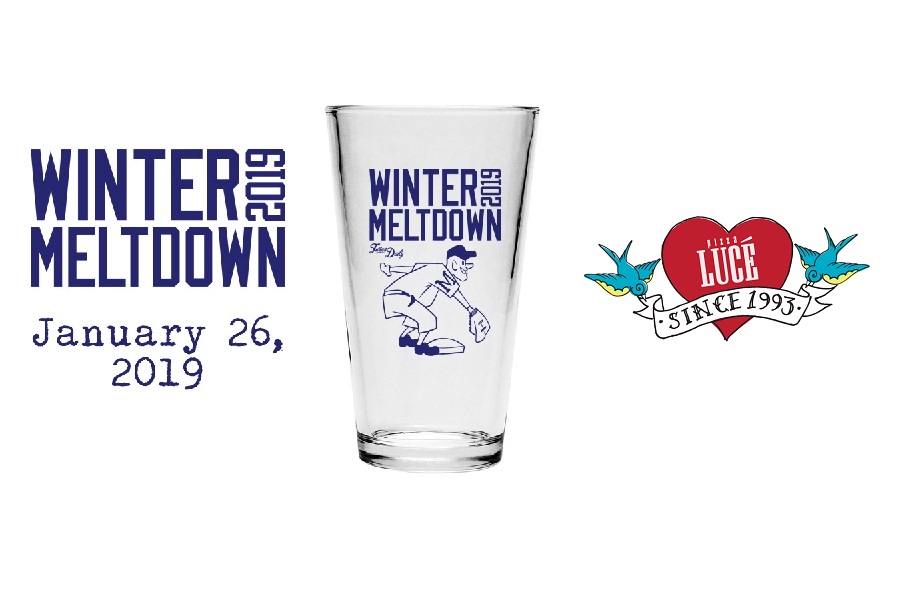
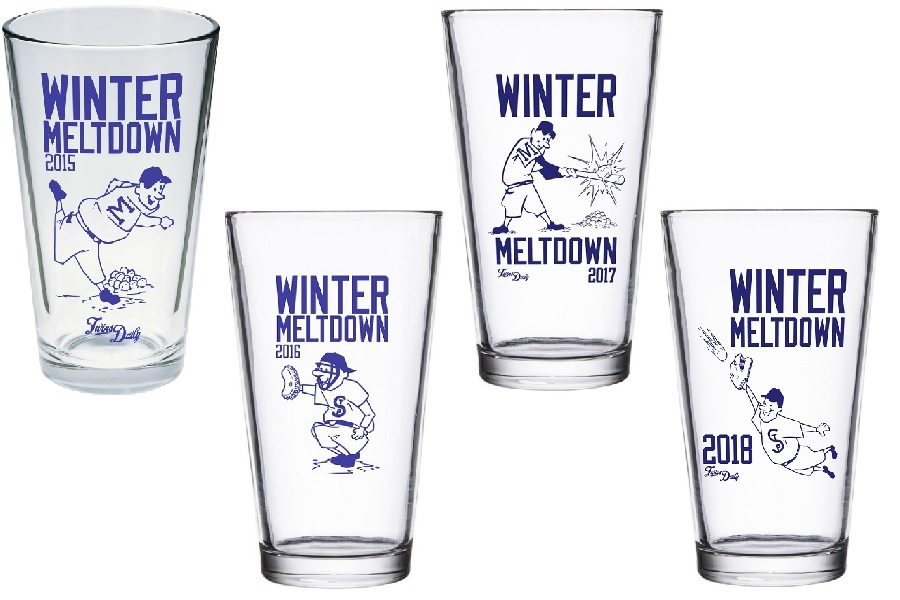
This year’s Winter Meltdown is going to be crazier than ever so you’ll want to grab some of the few remaining tickets on Tuesday morning at 8:00. In the meantime, we will unveil a host of new giveaways and prizes for those lucky enough to get a ticket. Plus, we’ll start giving hints as to who this year’s special guest will be.Today we can display this year’s Winter Meltdown pint glass, sponsored (as it has every year) by 612 Brew and designed by our own Brock Beauchamp. Every guest gets a free pint glass AND two free 612 Brew craft beers with which to fill it. But that’s not all - not by a long shot. Over the next few days, we’ll let you in on all the goodies in store, including who our special guest will be. Until that big reveal, we’ll help you narrow the field a bit with some hints. Hint 1: He’s an MLB All-Star. Twins Daily’s Winter Meltdown will be January 26th from 5:00-7:30 at Brother’s Bar & Grill. You’ll be in town going to TwinsFest anyway, so stop by, have a couple of beers, get a free pint glass, meet some special guests, and bask in the warm glow of the hot stove with other Twins fanatics. We’ll announce more soon, so stop by Twins Daily to get all the news and collect all the hints. Download attachment: winter-meltdown-2015-2018.jpg Above: previous years' designs Click here to view the article
-
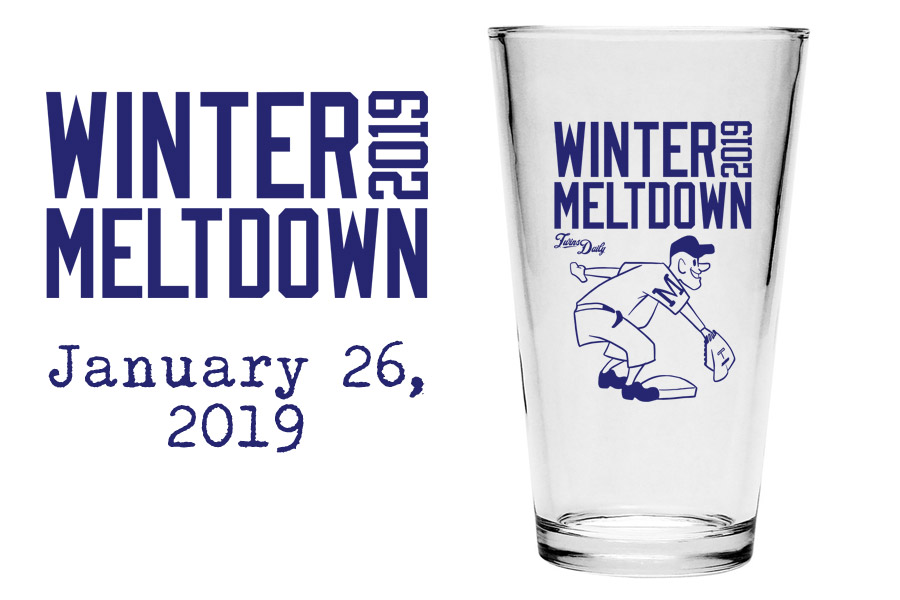 Today we can display this year’s Winter Meltdown pint glass, sponsored (as it has every year) by 612 Brew and designed by our own Brock Beauchamp. Every guest gets a free pint glass AND two free 612 Brew craft beers with which to fill it. But that’s not all - not by a long shot. Over the next few days, we’ll let you in on all the goodies in store, including who our special guest will be. Until that big reveal, we’ll help you narrow the field a bit with some hints. Hint 1: He’s an MLB All-Star. Twins Daily’s Winter Meltdown will be January 26th from 5:00-7:30 at Brother’s Bar & Grill. You’ll be in town going to TwinsFest anyway, so stop by, have a couple of beers, get a free pint glass, meet some special guests, and bask in the warm glow of the hot stove with other Twins fanatics. We’ll announce more soon, so stop by Twins Daily to get all the news and collect all the hints. Above: previous years' designs
 -
Aaron and John talk about projecting Nelson Cruz, the shrinking reliever market, games by Robert Kasak, Adalberto Mejia's odds of snagging a rotation spot, Ron Gardenhire's anniversary, losing Aaron Slegers, and mailbag questions from listeners. You can listen by downloading us from iTunes, Stitcher, iHeartRadio or find it at GleemanAndTheGeek.com. Or just click this link. Sponsored by Simple Contacts, Mack Weldon, RxBar & 612 Brew. Click here to view the article
-
 http://traffic.libsyn.com/gleemangeek/ep_406_FINAL.mp3 Sponsored by Simple Contacts, Mack Weldon, RxBar & 612 Brew.
 -
Aaron and John discuss the Minnesota Twins signing slugger Nelson Cruz. You can listen by downloading us from iTunes, Stitcher, iHeartRadio or find it at GleemanAndTheGeek.com. Or just click this link. Click here to view the article
-
 http://traffic.libsyn.com/gleemangeek/ep_405_FINAL.mp3
 -
Buxton, the FO, and how to handle players
John Bonnes commented on beckmt's blog entry in Views from the road
Thank you for posting this. The Profar case is an interesting comp, though his shoulder injury makes everything harder to compare, especially regarding the return they got in a trade. I don't think we're talking about something similar with Buxton, unless the toe injury is recurring or the migraines are a concussion symptom or something else chronic. (Or at least I hope this is the case.) The main point here seems to be that the move sours the relationship with Buxton, which is probably true. The question is how that affects things when or if Buxton has the power in their dynamic. Ironically, this team hopes that shift happens, as it would mean Buxton is becoming the player they expected. I don't see Byron becoming a "me-first" guy, or at least not any more than any other ballplayer is. His head is on straight. But I suspect the relationship between him and the Twins no longer has a lot of fuzziness around it. It's now a business relationship, and the Twins certainly did their part to move it in that direction with their decision. Buxton has every right to treat it as such, and would be wise to do so. -
Aaron and John talk about the Twins walking a fine line between patient and inactive, retiring Joe Mauer's number, Target Field vs. Metrodome payroll numbers, the latest on Nelson Cruz and free agent pitching help, the Winter Meltdown selling out, and mailbag questions from listeners. You can listen by downloading us from iTunes, Stitcher, iHeartRadio or find it at GleemanAndTheGeek.com. Or just click this link.http://traffic.libsy...3?dest-id=74590 Sponsored by Robinhood. Click here to view the article
-
 http://traffic.libsyn.com/gleemangeek/Episode_404_FINAL.mp3?dest-id=74590 Sponsored by Robinhood.
 -
Aaron and John talk about Nelson Cruz and Edwin Encarnacion rumors, the Twins' remaining bullpen and rotation options, Byron Buxton's first public comments since September, Tyler Jay going unpicked in the Rule 5 draft, Lance Lynn getting a three-year deal, and lots of mailbag questions from listeners. You can listen by downloading us from iTunes, Stitcher, iHeartRadio or find it at GleemanAndTheGeek.com. Or just click this link. Sponsored by Able Brewery + Seedhouse, Animales BBQ, Sota Stick and Away Travel. Click here to view the article
-
 http://traffic.libsyn.com/gleemangeek/ep_403_final.mp3 Sponsored by Able Brewery + Seedhouse, Animales BBQ, Sota Stick and Away Travel.
 -
Sorry, the presale tickets have sold out. We'll release a portion of full price tickets when we announce the special guest. Thank you so much for your support, and Happy Holidays! How about an intimate holiday gathering with … Joe Nathan? LatTroy Hawkins? Scott Erickson? These are just a few of the special guests at Twins Daily’s Winter Meltdown, and this year we’re limiting the size to half of last year’s sellout crowd. Plus, you can buy presale tickets for just $25 (regular $40) through 12/25. We are offering this quietly, to people that visit the site in the dead of winter.The Meltdown is Saturday, Jan 26th, from 4:30-7:30. That's the same night you'll be in town anyway, going to Twins Fest. It'll be at Brothers Bar in downtown Minneapolis, just two blocks from Twins Plaza. It includes a pint glass (you can see previous years’) and two free 612 Brew beers. Plus, you could have met all of the above guests and many more at our Meltdowns. (We're not letting the cat out of the bag yet who are special guests are this year until after the new year.) There will also be some sweet raffle and game prizes, and lots of time to talk Hot Stove and order some of Brothers great food. Finally, this year we’ll be donating proceeds to a local non-profit, which we’ll also announce soon. Warning: These sell out. So even if your holiday shopping is done, you might want to grab some ASAP. Or let your family know that THIS is what you really want. Or buy a pack and give your friends, family and coworkers a night to remember in the dead of winter. We'll see you there. BUY HERE NOW. Click here to view the article
-
 The Meltdown is Saturday, Jan 26th, from 4:30-7:30. That's the same night you'll be in town anyway, going to Twins Fest. It'll be at Brothers Bar in downtown Minneapolis, just two blocks from Twins Plaza. It includes a pint glass (you can see previous years’) and two free 612 Brew beers. Plus, you could have met all of the above guests and many more at our Meltdowns. (We're not letting the cat out of the bag yet who are special guests are this year until after the new year.) There will also be some sweet raffle and game prizes, and lots of time to talk Hot Stove and order some of Brothers great food. Finally, this year we’ll be donating proceeds to a local non-profit, which we’ll also announce soon. Warning: These sell out. So even if your holiday shopping is done, you might want to grab some ASAP. Or let your family know that THIS is what you really want. Or buy a pack and give your friends, family and coworkers a night to remember in the dead of winter. We'll see you there. BUY HERE NOW.
 -
Aaron and John talk about the Twins signing All-Star second baseman Jonathan Schoop and utility infielder Ronald Torreyes, what the current payroll looks like, what's next on the offseason to-do list, agreeing with Ricky Nolasco about late-night pizza, and arguing about really dumb stuff. Click here to listen.http://traffic.libsy...3?dest-id=74590 Sponsored by Casper Mattresses and Tin Whiskers Brewery. Click here to view the article
-
 http://traffic.libsyn.com/gleemangeek/Episode_402_final.mp3?dest-id=74590 Sponsored by Casper Mattresses and Tin Whiskers Brewery.
 -
The Winter Meltdown is sold out, but you can still get tickets AND honor Joe Mauer AND support a good cause. Just join Joe, Twins Daily writers and Twins players and staff in fighting some terrible diseases by attending the 2019 Diamond Awards. John and other Twins Daily writers will host exclusive Twins Daily table(s), PLUS each attendee gets a VIP ticket to the Winter Meltdown two nights later. Yes, even if you got shutout for Winter Meltdown tickets, you can get one free. Here’s how.First, buy tickets to the 2019 Diamond Awards. Then, in the comments section, tell them you want to be at the Twins Daily table (or, like last year, tables). It’s usually awesome, but this year might be a once-in-a-lifetime event. Joe Mauer will be receiving a few awards and you can be sure the Twins will give him a classic sendoff. But also receiving awards will be Eddie Rosario, Jose Berrios, Kyle Gibson, Max Kepler, Corey Koskie and Jack Morris. It’ll be a star-studded event. Download attachment: Invitation.jpg It’s the night before Twins Fest, Thursday January 24th starting at 5:30 at The Depot. You can get all the information, here. Tickets are $150 each but the proceeds go to the University of Minnesota to cure some pretty terrible diseases, like ALS (Lou Gehrig’s disease), ataxia, multiple sclerosis, muscular dystrophy, and Parkinson’s disease. It is a great cause and a fantastic time and Twins Daily would love to share it with you. We would love to get a big group together and talk a lot of baseball or get your thoughts on the site. So to sweeten the pot, we’ll also give you a free VIP ticket to the Winter Meltdown on January 26th even though they sold out yesterday. This is truly a special opportunity to attend one of the Twins premier annual events that celebrates their team and their fans. (Actually, it’s a special opportunity to attend TWO such events.) Plus, it’s an exceptional cause and a chance to see the best of the Twins on one of the coldest weekends of the year. Let’s recharge our batteries and get ready for a great weekend and a great year together. If you have any questions or concerns, use the comments. But please click the link below and give it a try this year. You won’t regret it. BUY TICKETS OR LEARN MORE HERE Click here to view the article

