



Bill Parker
-
Posts
64 -
Joined
-
Last visited
Content Type
Profiles
News
Minnesota Twins Videos
2026 Minnesota Twins Top Prospects Ranking
2022 Minnesota Twins Draft Picks
Minnesota Twins Free Agent & Trade Rumors, Notes, & Tidbits
Guides & Resources
2023 Minnesota Twins Draft Picks
The Minnesota Twins Players Project
2024 Minnesota Twins Draft Picks
2025 Minnesota Twins Draft Pick Tracker
2026 Minnesota Twins Draft Tracker: Picks & Bonuses
Forums
Blogs
Events
Store
Downloads
Gallery
Everything posted by Bill Parker
-
All good points (except the one that brings up Frank Howard as though I didn't devote an entire paragraph to him in the article--read the column, as Ken Rosenthal says). Markos' point is pretty close to where I was trying to go. There's no reason to think he won't be fine for the next year or two. He's just SO big, SO young--and likely to just keep getting bigger--he could quickly (within the next 2-3 years) become a Dunn-level disaster out there. I suspect there'll be a time down the road when Sano will be starting the All-Star Game at first for the ninth straight year and people will say "did you know he used to play in the OUTFIELD?" and laugh, like how Mike Morse came up as a shortstop and Miguel Cabrera played some short and second in the minors.
- 74 replies
-
- 3
-

-
- miguel sano
- yasiel puig
- (and 3 more)
-
Miguel Sano: Can a Staggeringly Huge Monster-Man Cut it in the Outfield?
Bill Parker posted a blog entry in Bill Parker
Miguel Sano is listed by Baseball-Reference at 260 pounds. This LEN3 article has him at 263. If you've ever seen him up close, you know that Miguel Sano's true weight is probably something closer to thirty-seven billion pounds. It's also possible that he has no weight, but rather that the Earth's weight is measured in terms of the effect Sano's gravitational pull has on it. He's a large man, is what I'm saying. He's one scary, seriously oversized muscle with a face. That's an unusual-enough thing for a third baseman to be, but it's all but unheard of for an outfielder, which is what the Twins keep insisting Sano is now. Outfielders are tall, but lithe, and quick -- the best ones a bit more slight, the plodders a bit bigger, but near enough to none this big. Not to put too fine a point on it, but seriously, he's really very large -- "just" 6'4", but almost impossibly thick for an outfielder. Click on the link above and scroll down to the photo of Sano reaching for a ball in the outfield, about halfway down. There's definitely a part of you that just says "no, nah, nope, that's not how it works" -- right? That's not an outfielder, playing the well-known baseball game position that is outfield. That's Travis Hafner or David Ortiz or Ryan Howard shagging balls in batting practice to give the guys a quick laugh. Now, none of that is to say he can't play out there. Sano is by all accounts an extremely athletic guy, quicker than he looks. He certainly has a strong arm, and his pro career has included 33 steals in 47 tries and about a triple for every hundred plate appearances. He certainly could be just fine out there. What I'm wondering is: has it ever happened before, with any success? There's no good way to figure that out, really. Weight is essentially the only proxy we have, yet it's a terrible thing to go by, for a long list of reasons. The biggest such reason is probably that players' weights can change dramatically over time, so a player's "listed weight" has very little meaning. Take, for example, four-time All-Star Carlos Lee: Baseball-Reference lists him at 270, which was no doubt accurate toward the end of the line, when Lee was almost exclusively a first baseman for the Astros. This card from his rookie season, though -- when he was roughly the same age Sano is now -- has him at 210. Lee was by no means a small man, and spent much of his career as an outfielder quite a bit above that 210, but wasn't Sano's size. So acknowledging those limitations, what do we know, or what can we guess at? It turns out there have only ever been 21 seasons of 140 games or more by players who Baseball-Reference lists at 260 pounds or more and who played at least half their games in the outfield: that list is here, sorted by Baseball-Reference's fielding runs. Eleven of those 21 were by Carlos Lee, and we've established why that doesn't really work--though he had some surprisingly good years with the glove, if you feel like looking that way for hope anyway. Another third of those seasons, seven more of them, were by Adam Dunn, and that's not good. That's not good at all. Dunn (who, like Sano, was an athletic minor leaguer, twice stealing more than 20 bases, and even going 19-for-28 once early in his big-league career) is listed as 6'6", 285. He was listed at 240 as a rookie, too, so it's not a pure Carlos Lee ballooning scenario, even though that's still 20 pounds lighter than Sano, at a similar age--and is famously one of the worst outfielders, and one of the worst players at any position, ever to regularly put on a glove. The -43.0 fielding runs he put up in 2009 stands as the worst mark of all time by any player, ever, and his -26.0 in 2007 is the 12th worst among outfielders, and at ages 29 and 27, respectively. If we're looking for reasons for any hope for Sano the corner outfielder, we're going to have to find a better comp than Dunn. The only other 260-plus regular outfielder -- owner of the remaining three of those 21 seasons -- is Dmitri Young, Delmon's much older, much heavier, much better brother. Young is listed at a whopping 295, though he, too, has a pre-rookie card that lists his weight (at age 20) at 210, so it's likely that even Young wasn't quite Sano-sized when he got his start. It also strikes me as a different kind of weight--Young was doubtless an incredible athlete, but carried considerably more fat and less muscle than Sano, on a shorter frame. For what it's worth, Young had a mixed record, but was far from a total disaster in the field (until the very end, when he was pushing 300). Young was also hurt quite a bit. It's not a close comparison, and, I think, also not a desirable one, though it's better than Dunn on that front. We can reduce the weight minimum to 250, and get these 17 more seasons. Seven are by Matt Holliday, and I'm not sure that works--he's listed at 250 even, so 10-15 pounds lighter than Sano, and just seems like a different creature: this is a picture of him headed into his near-MVP 2007, for instance, and he looks like the kind of person Sano could swallow in one bite. At approximately Sano's age, Holliday's baseball card listed him at 235. Another of our new comps is born DH Jack Cust, who the A's ran out there 83 times as a 29-year-old in 2008. Let us never speak of this again. Seven of the seasons were by the great Frank Howard, who certainly never won any awards for his defense, but could acquit himself well enough (and hit SO well) that he stayed more or less out there for 12 years. At the same time, though, Howard was 6'7", three inches taller than Sano's listed height; an unholy beast, to be sure, but in a different way than Sano is one. Howard was much closer to the stereotypical outfielder build, just...enlarged. Finally, there's Yasiel Puig, who it shocked me to learn is listed at 6'2" and 255. Puig certainly doesn't give off that same old-world-god vibe Sano does, though I've never seen them together, so who's to say? Puig's athleticism is well known, and he's put up a total of 14 fielding runs in his career, even more or less holding his own in center when necessary. If you think Puig compares to Sano, that's an awfully encouraging comparison. It sure seems to me that they're different styles of athlete with vastly different frames, but what do I know? So here's what's interesting and worrisome: I'm not sure the game has ever seen anything quite like the hulking superhuman monster that is Miguel Sano trying to patrol the outfield on a daily basis. There are similarities here and there with Puig, and Howard, and Dunn (gulp), and Young, but none of them quite fit, for one reason or another. Fair or not, Sano's body just screams "1B/DH," and most teams and managers just wouldn't even think (or not much) about sticking him out there. This is kind of uncharted territory. That said, I don't expect a disaster. Learning the position and instincts are more important than any of this, but I think he can do it. I don't know that it's a long-term solution -- he's likely to keep getting more first-baseman-like as he goes, as history has shown -- but for a year or two, it doesn't seem crazy to think it might work out just fine. Regardless, though, no one as bulky as Sano, in the way Sano is-- and likely no one already so bulky when they were so young -- has ever attempted to play anything like a full season in the outfield. This is a whole new unknown sort of thing we're dealing with here. That's kind of fun, right? -
Miguel Sano is listed by Baseball-Reference at 260 pounds. This LEN3 article has him at 263. If you've ever seen him up close, you know that Miguel Sano's true weight is probably something closer to thirty-seven billion pounds. It's also possible that he has no weight, but rather that the Earth's weight is measured in terms of the effect Sano's gravitational pull has on it. He's a large man, is what I'm saying. He's one scary, seriously oversized muscle with a face. That's an unusual enough thing for a third baseman to be, but it's all but unheard of for an outfielder, which is what the Twins keep insisting Sano is now. Outfielders are tall, but lithe, and quick -- the best ones a bit more slight, the plodders a bit bigger, but near enough to none this big. Image courtesy of Brad Rempel, USA Today Miguel Sano is listed by Baseball-Reference at 260 pounds. This LEN3 article has him at 263. If you've ever seen him up close, you know that Miguel Sano's true weight is probably something closer to thirty-seven billion pounds. It's also possible that he has no weight, but rather that the Earth's weight is measured in terms of the effect Sano's gravitational pull has on it. He's a large man, is what I'm saying. He's one scary, seriously oversized muscle with a face. That's an unusual enough thing for a third baseman to be, but it's all but unheard of for an outfielder, which is what the Twins keep insisting Sano is now. Outfielders are tall, but lithe, and quick -- the best ones a bit more slight, the plodders a bit bigger, but near enough to none this big. Not to put too fine a point on it, but seriously, he's really very large -- "just" 6'4", but almost impossibly thick for an outfielder. Click on the link above and scroll down to the photo of Sano reaching for a ball in the outfield, about halfway down. There's definitely a part of you that just says "no, nah, nope, that's not how it works" -- right? That's not an outfielder, playing the well-known baseball game position that is outfield. That's Travis Hafner or David Ortiz or Ryan Howard shagging balls in batting practice to give the guys a quick laugh. Now, none of that is to say he can't play out there. Sano is by all accounts an extremely athletic guy, quicker than he looks. He certainly has a strong arm, and his pro career has included 33 steals in 47 tries and about a triple for every hundred plate appearances. He certainly could be just fine out there. What I'm wondering is: has it ever happened before, with any success? There's no good way to figure that out, really. Weight is essentially the only proxy we have, yet it's a terrible thing to go by, for a long list of reasons. The biggest such reason is probably that players' weights can change dramatically over time, so a player's "listed weight" has very little meaning. Take, for example, four-time All-Star Carlos Lee: Baseball-Reference lists him at 270, which was no doubt accurate toward the end of the line, when Lee was almost exclusively a first baseman for the Astros. This card from his rookie season, though -- when he was roughly the same age Sano is now -- has him at 210. Lee was by no means a small man, and spent much of his career as an outfielder quite a bit above that 210, but he wasn't Sano's size. So acknowledging those limitations, what do we know, or what can we guess at? It turns out there have only ever been 21 seasons of 140 games or more by players who Baseball-Reference lists at 260 pounds or more and who played at least half their games in the outfield; that list is here, sorted by Baseball-Reference's fielding runs. Eleven of those 21 were by Carlos Lee, and we've established why that doesn't really work--though he had some surprisingly good years with the glove, if you feel like looking that way for hope anyway. Another third of those seasons, seven more of them, were by Adam Dunn, and that's not good. That's not good at all. Dunn (who, like Sano, was an athletic minor leaguer, twice stealing more than 20 bases, and even going 19-for-28 once early in his big-league career) is listed as 6'6", 285. He was listed at 240 as a rookie, too, so it's not a pure Carlos Lee ballooning scenario, even though that's still 20 pounds lighter than Sano, at a similar age--and is famously one of the worst outfielders, and one of the worst players at any position, ever to regularly put on a glove. The -43.0 fielding runs he put up in 2009 stands as the worst mark of all time by any player, ever, and his -26.0 in 2007 is the 12th worst among outfielders, and at ages 29 and 27, respectively. If we're looking for reasons for any hope for Sano the corner outfielder, we're going to have to find a better comp than Dunn. The only other 260-plus regular outfielder -- owner of the remaining three of those 21 seasons -- is Dmitri Young, Delmon's much older, much heavier, much better brother. Young is listed at a whopping 295, though he, too, has a pre-rookie card that lists his weight (at age 20) at 210, so it's likely that even Young wasn't quite Sano-sized when he got his start. It also strikes me as a different kind of weight--Young was doubtless an incredible athlete, but carried considerably more fat and less muscle than Sano, on a shorter frame. For what it's worth, Young had a mixed record, but was far from a total disaster in the field (until the very end, when he was pushing 300). Young was also hurt quite a bit. It's not a close comparison, and, I think, also not a desirable one, though it's better than Dunn on that front. We can reduce the weight minimum to 250, and get these 17 more seasons. Seven are by Matt Holliday, and I'm not sure that works--he's listed at 250 even, so 10-15 pounds lighter than Sano, and just seems like a different creature: this is a picture of him headed into his near-MVP 2007, for instance, and he looks like the kind of person Sano could swallow in one bite. At approximately Sano's age, Holliday's baseball card listed him at 235. Another of our new comps is born DH Jack Cust, whom the A's ran out there 83 times as a 29-year-old in 2008. Let us never speak of this again. Seven of the seasons were by the great Frank Howard, who certainly never won any awards for his defense, but could acquit himself well enough (and hit SO well) that he stayed more or less out there for 12 years. At the same time, though, Howard was 6'7", three inches taller than Sano's listed height; an unholy beast, to be sure, but in a different way than Sano is one. Howard was much closer to the stereotypical outfielder build, just...enlarged. Finally, there's Yasiel Puig, who it shocked me to learn is listed at 6'2" and 255. Puig certainly doesn't give off that same old-world-god vibe Sano does, though I've never seen them together, so who's to say? Puig's athleticism is well known, and he's put up a total of 14 fielding runs in his career, even more or less holding his own in center when necessary. If you think Puig compares to Sano, that's an awfully encouraging comparison. It sure seems to me that they're different styles of athlete with vastly different frames, but what do I know? So here's what's interesting and worrisome: I'm not sure the game has ever seen anything quite like the hulking superhuman monster that is Miguel Sano trying to patrol the outfield on a daily basis. There are similarities here and there with Puig, and Howard, and Dunn (gulp), and Young, but none of them quite fit, for one reason or another. Fair or not, Sano's body just screams "1B/DH," and most teams and managers just wouldn't even think (or not much) about sticking him out there. This is kind of uncharted territory. That said, I don't expect a disaster. Learning the position and instincts are more important than any of this, but I think he can do it. I don't know that it's a long-term solution -- he's likely to keep getting more first-baseman-like as he goes, as history has shown -- but for a year or two, it doesn't seem crazy to think it might work out just fine. Regardless though, no one as bulky as Sano, in the way Sano is-- and likely no one already so bulky when they were so young -- has ever attempted to play anything like a full season in the outfield. This is a whole new unknown sort of thing we're dealing with here. That's kind of fun, right? View full article
-
Miguel Sano: Can A Staggeringly Huge Monster-Man Cut It In The Outfield?
Bill Parker posted an article in Twins
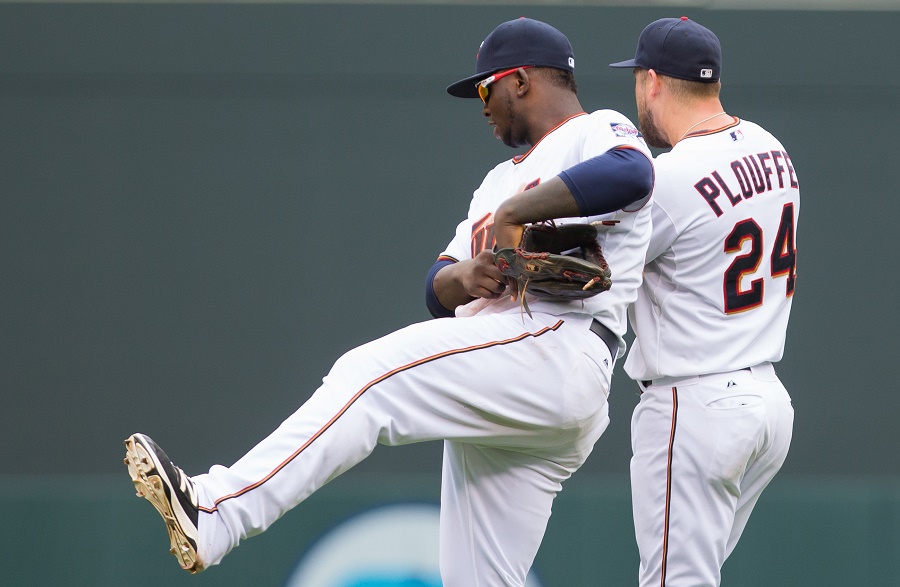 Not to put too fine a point on it, but seriously, he's really very large -- "just" 6'4", but almost impossibly thick for an outfielder. Click on the link above and scroll down to the photo of Sano reaching for a ball in the outfield, about halfway down. There's definitely a part of you that just says "no, nah, nope, that's not how it works" -- right? That's not an outfielder, playing the well-known baseball game position that is outfield. That's Travis Hafner or David Ortiz or Ryan Howard shagging balls in batting practice to give the guys a quick laugh. Now, none of that is to say he can't play out there. Sano is by all accounts an extremely athletic guy, quicker than he looks. He certainly has a strong arm, and his pro career has included 33 steals in 47 tries and about a triple for every hundred plate appearances. He certainly could be just fine out there. What I'm wondering is: has it ever happened before, with any success? There's no good way to figure that out, really. Weight is essentially the only proxy we have, yet it's a terrible thing to go by, for a long list of reasons. The biggest such reason is probably that players' weights can change dramatically over time, so a player's "listed weight" has very little meaning. Take, for example, four-time All-Star Carlos Lee: Baseball-Reference lists him at 270, which was no doubt accurate toward the end of the line, when Lee was almost exclusively a first baseman for the Astros. This card from his rookie season, though -- when he was roughly the same age Sano is now -- has him at 210. Lee was by no means a small man, and spent much of his career as an outfielder quite a bit above that 210, but he wasn't Sano's size. So acknowledging those limitations, what do we know, or what can we guess at? It turns out there have only ever been 21 seasons of 140 games or more by players who Baseball-Reference lists at 260 pounds or more and who played at least half their games in the outfield; that list is here, sorted by Baseball-Reference's fielding runs. Eleven of those 21 were by Carlos Lee, and we've established why that doesn't really work--though he had some surprisingly good years with the glove, if you feel like looking that way for hope anyway. Another third of those seasons, seven more of them, were by Adam Dunn, and that's not good. That's not good at all. Dunn (who, like Sano, was an athletic minor leaguer, twice stealing more than 20 bases, and even going 19-for-28 once early in his big-league career) is listed as 6'6", 285. He was listed at 240 as a rookie, too, so it's not a pure Carlos Lee ballooning scenario, even though that's still 20 pounds lighter than Sano, at a similar age--and is famously one of the worst outfielders, and one of the worst players at any position, ever to regularly put on a glove. The -43.0 fielding runs he put up in 2009 stands as the worst mark of all time by any player, ever, and his -26.0 in 2007 is the 12th worst among outfielders, and at ages 29 and 27, respectively. If we're looking for reasons for any hope for Sano the corner outfielder, we're going to have to find a better comp than Dunn. The only other 260-plus regular outfielder -- owner of the remaining three of those 21 seasons -- is Dmitri Young, Delmon's much older, much heavier, much better brother. Young is listed at a whopping 295, though he, too, has a pre-rookie card that lists his weight (at age 20) at 210, so it's likely that even Young wasn't quite Sano-sized when he got his start. It also strikes me as a different kind of weight--Young was doubtless an incredible athlete, but carried considerably more fat and less muscle than Sano, on a shorter frame. For what it's worth, Young had a mixed record, but was far from a total disaster in the field (until the very end, when he was pushing 300). Young was also hurt quite a bit. It's not a close comparison, and, I think, also not a desirable one, though it's better than Dunn on that front. We can reduce the weight minimum to 250, and get these 17 more seasons. Seven are by Matt Holliday, and I'm not sure that works--he's listed at 250 even, so 10-15 pounds lighter than Sano, and just seems like a different creature: this is a picture of him headed into his near-MVP 2007, for instance, and he looks like the kind of person Sano could swallow in one bite. At approximately Sano's age, Holliday's baseball card listed him at 235. Another of our new comps is born DH Jack Cust, whom the A's ran out there 83 times as a 29-year-old in 2008. Let us never speak of this again. Seven of the seasons were by the great Frank Howard, who certainly never won any awards for his defense, but could acquit himself well enough (and hit SO well) that he stayed more or less out there for 12 years. At the same time, though, Howard was 6'7", three inches taller than Sano's listed height; an unholy beast, to be sure, but in a different way than Sano is one. Howard was much closer to the stereotypical outfielder build, just...enlarged. Finally, there's Yasiel Puig, who it shocked me to learn is listed at 6'2" and 255. Puig certainly doesn't give off that same old-world-god vibe Sano does, though I've never seen them together, so who's to say? Puig's athleticism is well known, and he's put up a total of 14 fielding runs in his career, even more or less holding his own in center when necessary. If you think Puig compares to Sano, that's an awfully encouraging comparison. It sure seems to me that they're different styles of athlete with vastly different frames, but what do I know? So here's what's interesting and worrisome: I'm not sure the game has ever seen anything quite like the hulking superhuman monster that is Miguel Sano trying to patrol the outfield on a daily basis. There are similarities here and there with Puig, and Howard, and Dunn (gulp), and Young, but none of them quite fit, for one reason or another. Fair or not, Sano's body just screams "1B/DH," and most teams and managers just wouldn't even think (or not much) about sticking him out there. This is kind of uncharted territory. That said, I don't expect a disaster. Learning the position and instincts are more important than any of this, but I think he can do it. I don't know that it's a long-term solution -- he's likely to keep getting more first-baseman-like as he goes, as history has shown -- but for a year or two, it doesn't seem crazy to think it might work out just fine. Regardless though, no one as bulky as Sano, in the way Sano is-- and likely no one already so bulky when they were so young -- has ever attempted to play anything like a full season in the outfield. This is a whole new unknown sort of thing we're dealing with here. That's kind of fun, right?
 -
My disagreements with this are pretty limited. I think the signings of Nolasco, Hughes and Santana showed that they did have a plan, and that the other potential signings you describe (which you call "higher upside," leaving out that they'd also just be hugely more expensive and thus higher-risk) are the kinds you take the plunge on when you're much closer to the target than the Twins have ever felt they were. Lester and Zimmermann aren't guys you sign hoping that their upside develops along with the team, they're established stars you sign to push you over the top. (Granted, the Cubs kind of did something like that with Lester, but they had a unique situation the Twins really can't replicate.) Next year, most likely, would be the offseason when that sort of move would make the most sense to me.
- 85 replies
-
- 3
-
-
- phil hughes
- ervin santana
- (and 3 more)
-
Mike would never drop a mic. How could he be sure you'd always hear him talking?
- 85 replies
-
- 6
-
-
- phil hughes
- ervin santana
- (and 3 more)
-
On The Twins' Cheapness And Showing Your Work
Bill Parker replied to Bill Parker's topic in Twins Daily Front Page News
Maybe, but I hope not! As the part you quoted reflects, I thought 2015 was a great time for the Blue Jays to go for it, including signing Martin to that deal that will hurt quite a bit in 2017 and '18. The 2016 Twins probably aren't where the 2015 Blue Jays were, but the 2017 or 2018 Twins very well might be, if Buxton and Sano take their expected steps forward and a few things fall into place. There's just no justification at all for seeing this as a convenient excuse to keep kicking the can down the road. Among other things, why would I do that? I'm just a fan, myself. I'm not getting any of the money the Pohlads are saving. I'm just in favor of them spending it wisely, and not just so the fans can see that they're spending it. -
On The Twins' Cheapness And Showing Your Work
Bill Parker replied to Bill Parker's topic in Twins Daily Front Page News
Not at all. This, the first paragraph of it, is just a basic misunderstanding of how baseball works. Spending money on the free agent market to try to be good this year, with a few exceptions (among them what they've tried to do with the Santana, Hughes and Nolasco contracts), HURTS your chances to be competitive in the following years. See, again, the 1999-2001 Devil Rays. You need the young, cheap players in place before spending makes any sense. It's not a self-fulfilling prophecy, it's a matter of setting realistic expectations. On your second paragraph, this site has existed since 2012, so there's never been a time when you could have come here when it would have made sense for anyone to say anything different. I think if Buxton and perhaps Meyer had shown more last year, this could have been the offseason when you'd finally hear that. As it is, strong possibility for 2017? -
On The Twins' Cheapness And Showing Your Work
Bill Parker replied to Bill Parker's topic in Twins Daily Front Page News
Absolutely true, that was a lazy comparison on my part. Literally very lazy, as in I didn't bother to look up the Nolasco and Santana deals. $9 million is still plenty, though, as the rest of your other comment illustrates. -
On The Twins' Cheapness And Showing Your Work
Bill Parker replied to Bill Parker's topic in Twins Daily Front Page News
Which gets back to my other point, which is that spending that money on a chance that you might be better than you think NOW almost always has consequences for the future. You can't typically JUST spend the money you're sitting on this year, you're also committing to paying that player (usually the same or a larger amount) in future years, when he won't be as good and/or as good a fit. To cherrypick a couple of yjjj54's cherrypicked examples above, you could've signed one of Brian McCann or Russell Martin, two catchers who signed at or over 30 to five-plus year deals that, by the end of them, will be paying them $17 and $20 million a year, respectively, and who have already shown signs of decline. And as it turned out, he might have been enough of an improvement over Suzuki to help get you to the postseason in 2015. But he'll still be around in 2018, and at $17 or $20 million, he'll probably still be your starting catcher in 2018, even though there's no reason to believe he'll be any better then than Suzuki is now. So you've stuck yourself with what will probably be a bad catcher at best or a total $20 million loss at worst, at a time when you expect to have Buxton, Sano, Berrios et al. at or near their peak. There are times in the competitive cycle when that kind of tradeoff makes a lot of sense--I think Martin was a great move for the Blue Jays, given where they were at the time--but the Twins coming into 2015 just weren't at that level. It would've been a dumb gamble that happened to pay off, for now. Again, that's not to say there aren't moves that *would* have been a good idea, I just think the combination of sandbun's and yjjj54's recent comments provide a really good illustration of how "you never know--that's why you spend that money" is, generally speaking, a disastrous attitude in baseball. -
On The Twins' Cheapness And Showing Your Work
Bill Parker replied to Bill Parker's topic in Twins Daily Front Page News
No, that's not what I'm saying at all. The point is that those teams knew ahead of time that they were going to be (about) that bad. You could have forgiven some aggressive spending in 2011, for instance. There wasn't any--Nishioka and bringing back Thome and Pavano was about it--but you could understand if they did, even though ultimately they lost 99 and there could really have been no saving them, because they were coming off that 94-win 2010. Once the collapse happened, though, it was clear there was really no way out that didn't involve a big ol' rebuild. Chasing after short-term boosts from 2012-2014 would've been fruitless, as they knew it would be, and the results bear that out. What I'm arguing is that coming into 2015, it looked a bit better, but not all that much different than it did coming into 2012-14. What actually happened was very unexpected, and probably a bit lucky. So yeah, it's cheating to look at the 2015 results and try to retroactively make decisions for them, when no one could reasonably have expected those results. -
On The Twins' Cheapness And Showing Your Work
Bill Parker replied to Bill Parker's topic in Twins Daily Front Page News
"That's not how it works. That's not how any of this works..." -
On The Twins' Cheapness And Showing Your Work
Bill Parker replied to Bill Parker's topic in Twins Daily Front Page News
Revere is an odd pick, since he's on his third team since they let him go and certainly hasn't flourished anywhere, and he brought back Trevor May, who figures to be a key piece for the next couple years. The Hardy trade was one of the worst I've ever seen (and looked just as inexcusably bad at the time), though he's signed two at-market contracts with the Orioles since then, so I'm not sure that has any impact on the 2016 squad. I can't think of any talent they've lost since 2011 or 2012 that I thought they should have kept. Letting Cuddyer and Kubel walk were no-brainers, and Revere and Span brought back good (at least at the time) returns and would certainly be gone by now at any rate. Maybe I'm missing somebody... -
On The Twins' Cheapness And Showing Your Work
Bill Parker replied to Bill Parker's topic in Twins Daily Front Page News
Who, though? Honest question, because I can't think of any, but that doesn't mean they're not out there. Generally, relievers that go on reasonable one-year deals do so because they're as likely to blow up completely as they are to repeat their past success, and if they were that sure of a thing, they'd get more money over more years. But maybe that guy was out there somewhere. -
I want to talk about the Twins and payroll, and how we talk about the Twins’ payroll. It’s been about a month since Jack Moore wrote the excellent and scathing The Minnesota Small-Market Con over at Baseball Prospectus Milwaukee. The points it makes are numerous and wide-ranging -- the most important, I think, is “if the billionaire Pohlads had been willing to take a short-term loss, they could have made their way out of the Metrodome years earlier without taking the public for such a ride" -- but being published as it was in the latter part of an offseason in which fans have watched the team take very few substantial visible steps toward getting better, most seemed to take it as a chance to complain about the team's unwillingness in recent years to spend on free agents. Image courtesy of Brad Rempel, USA Today I want to talk about the Twins and payroll, and how we talk about the Twins’ payroll. It’s been about a month since Jack Moore wrote the excellent and scathing The Minnesota Small-Market Con over at Baseball Prospectus Milwaukee. The points it makes are numerous and wide-ranging -- the most important, I think, is “if the billionaire Pohlads had been willing to take a short-term loss, they could have made their way out of the Metrodome years earlier without taking the public for such a ride" -- but being published as it was in the latter part of an offseason in which fans have watched the team take very few substantial visible steps toward getting better, most seemed to take it as a chance to complain about the team's unwillingness in recent years to spend on free agents. And I get it. Having taken the public for said ride and secured a stadium that is maybe the most appealing in baseball, the Twins (per Cot’s Contracts) ended their first two seasons in Target Field with top-ten payrolls, but then fell back to 13th in 2012, and haven’t been out of the 20s since. While attendance predictably declined from 2011 to 2015, it seems a safe bet that they could generally have spent more money than they did in those years and still turned a nice profit. The problem I’ve always had, though, is that this (at the most) is generally where the fan’s analysis stops. They could have spent more money, but they didn’t, and they should have. The obvious next questions that gets left on the table, though, are “on what?” and “why?”: what could that money have gotten them, and what makes it a good idea? The 2011 Twins had a $115 million payroll and were coming off a 94-win, first-place year, but with injuries to almost literally everyone -- only Danny Valencia and Michael Cuddyer would play as many as 120 games for the Twins in 2011 -- they lost 99, finishing a whopping 28 games out of a wildcard spot, and it was pretty clear their window had slammed shut. They lost 96 in both 2012 and 2013 (22 and 26 games out of the playoffs, respectively), and 92 (18 out) in 2014. Their season-ending payroll declined, meanwhile, from 9th in 2011, to 13th, to 24th. But, again, what could and should they have spent more money on, and what could we have expected it to bring them? In a league in which the very best player might be worth about nine wins and four is a typical All-Star, the Twins would’ve had to add the equivalent of four or five All-Stars, two Mike Trouts, or some combination thereof (assuming each of them takes the place of true replacement-level players, to boot) in order to have had any chance at a postseason berth in any of those years. That’s not the kind of thing that’s ever happened via free agency--teams have tried, typically with disastrous consequences (check out the turn-of-the-century Devil Rays sometime). But what if the postseason isn’t the goal? What about just putting a marginally more entertaining product on the field? I question whether that’s a thing, personally--it’s the competing that draws the crowds, the Timberwolves are as entertaining as a bad basketball team can get right now and not drawing substantially more than their terribly depressing squads of the last couple years did--but I get that, too. It’s not as though a team puts those savings in an interest-bearing account and adds them to the pot for next year. They would, in a perfect world, but they don’t; those savings go to the owners, and the next year’s budget is its own thing. So to the extent you’re concerned only about this season, yes, you as a fan should want the team to spend as much money as they can possibly get away with, because that money’s gone for your purposes after the season either way. The problem with that is that the one-year deal for a good (or even just “entertaining”) player exists in baseball only when that player comes with huge risks. Most free agents worth signing as anything more than filler in this game demand commitments of three years, or four or five or more. Most free agents are also in their 30s, which means almost without exception that they’re likely to get worse over those three to five years, not better. What that means is that most of the free agents the Twins could’ve signed to make them marginally better or more fun in 2013 or 2014 would still be getting paid as Twins in 2016, and would be less good or fun now than they were then (but probably making at least as much money). When you don’t expect to win, you probably shouldn’t (and can’t, to field a team that avoids challenging the ‘62 Mets) stop spending entirely. But your focus in spending, way ahead of getting better for the now, has to be to avoid hamstringing the team in future seasons, when -- if your prospects pan out and you’re not too bogged down by aging players’ contracts -- you might be positioned to spend to fill more immediate needs and make a run at it. In that light, I tended to think the Twins’ spending from 2012 through 2014 was just about perfect--a weird thing for me to say, as I’ve never been one to go easy on the front office (Tony Batista and Ruben Sierra? Seriously?). In 2012, there was just a long, black-dark road ahead, and nothing to do but fill a couple of the gaps to try to be interesting and wait it out. And that’s exactly what they did, bringing in Josh Willingham (who worked) and Ryan Doumit (who didn’t) to fill in for the departing Michael Cuddyer and Jason Kubel, and otherwise just stayed put and take their lumps. Heading into 2014, with Byron Buxton, Miguel Sano and others now on their way, it made sense to take a look at some relatively low-risk, 30-or-younger free agents who could reasonably be expected to be contributing at about the same level a couple years down the line, and they did that, bringing in Phil Hughes (who I’d argue worked) and Ricky Nolasco (who thus far clearly hasn’t), along with more stopgaps like Mike Pelfrey and Kurt Suzuki. For whatever else the Twins have done right or wrong, this is exactly how a non-contending team should spend its money. Should they have spent more of it? Perhaps--but it’s on the one arguing they should to identify where they should’ve spent it and why. Whining that they’re cheap and run by billionaires just doesn’t cut it; they’re losing ninety-plus either way. Show your work. I’ve left out 2015 so far, of course, and that’s a tough one because we know how it ends: the Twins win 83 games, surprising everyone, and miss the wildcard play-in game by just three wins. They entered the last week with a real shot, and as it turns out, even one modest upgrade in the offseason could have gotten them there. That’s cheating, though: the Twins didn’t know how it would end, and I really think they were looking at 2016 or 2017 as their next legitimate chance, and so they stayed the course, bringing in 32-year-old Ervin Santana to add to their stable of average starters who seem likely to still be about average by the next time they thought they’d be competitive. Were there moves that not only could have put them over the top as things turned out, but that they should have made in December or January 2014-15, knowing and believing what they reasonably did then? Maybe! But I’d like to know what those specifically were. (Note also that a first half from Santana might itself ultimately have put them in the playoffs.) So that gets us to today. I’ve been as frustrated as anyone with the lack of activity: Byung-Ho Park is certainly interesting, but hardly fills a glaring need, and there’s not much else that’s even worth mentioning. It feels much like a team with two third basemen and three or four 1B/DH types, which seems to suggest moves to be made, and I would’ve loved to see them land, say, Darren O’Day, an elite reliever who signed a four-year deal to stay with the Orioles similar to the ones the Twins gave Santana and Nolasco. But: O’Day is 32 years old, and at his very best -- at any modern reliever’s best -- is worth about three wins. The Twins had a lot of luck last year, and while I’m looking forward to seeing what they can do in 2016, there’s good reason to believe they’re not quite there yet, with or without the upgraded bullpen. If, as Baseball Prospectus’ PECOTA expects, they go 79-83 and miss the playoffs by seven games, O’Day probably wouldn’t have made a difference, and neither would most anyone else. And then what about in 2018, when Buxton and Sano are MVP candidates, but O’Day is 35 and ineffective, while his $9 million salary helps prevent you from signing that year’s Darren O’Day, who could be the difference between an LDS loss and a world championship? I have no answers. I thought they should have done more this offseason, and I sure hope that they do well enough that there’s a worry it might come back to bite them. But too often, we collectively seem to want the team to spend more money without considering a.) the limits of what that spending can actually do, or b.) the risks down the road of imprudently committing money now. Fans can complain that the team is cheap all they want -- and why not, it’s just baseball, it’s all in fun, you do you -- but without an idea of how they should spend that extra money, why they should and what might happen if it goes bad, all it is is whining for whining’s sake. Seems to me it’s more fun, more instructive, and, at least in this case, harder to argue with the plan, if you show your work. View full article
-
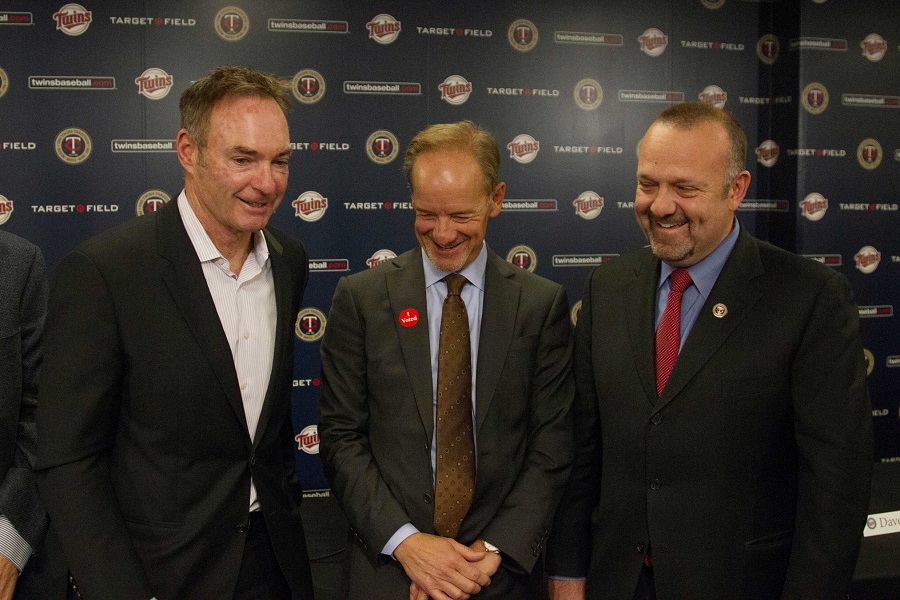 And I get it. Having taken the public for said ride and secured a stadium that is maybe the most appealing in baseball, the Twins (per Cot’s Contracts) ended their first two seasons in Target Field with top-ten payrolls, but then fell back to 13th in 2012, and haven’t been out of the 20s since. While attendance predictably declined from 2011 to 2015, it seems a safe bet that they could generally have spent more money than they did in those years and still turned a nice profit. The problem I’ve always had, though, is that this (at the most) is generally where the fan’s analysis stops. They could have spent more money, but they didn’t, and they should have. The obvious next questions that gets left on the table, though, are “on what?” and “why?”: what could that money have gotten them, and what makes it a good idea? The 2011 Twins had a $115 million payroll and were coming off a 94-win, first-place year, but with injuries to almost literally everyone -- only Danny Valencia and Michael Cuddyer would play as many as 120 games for the Twins in 2011 -- they lost 99, finishing a whopping 28 games out of a wildcard spot, and it was pretty clear their window had slammed shut. They lost 96 in both 2012 and 2013 (22 and 26 games out of the playoffs, respectively), and 92 (18 out) in 2014. Their season-ending payroll declined, meanwhile, from 9th in 2011, to 13th, to 24th. But, again, what could and should they have spent more money on, and what could we have expected it to bring them? In a league in which the very best player might be worth about nine wins and four is a typical All-Star, the Twins would’ve had to add the equivalent of four or five All-Stars, two Mike Trouts, or some combination thereof (assuming each of them takes the place of true replacement-level players, to boot) in order to have had any chance at a postseason berth in any of those years. That’s not the kind of thing that’s ever happened via free agency--teams have tried, typically with disastrous consequences (check out the turn-of-the-century Devil Rays sometime). But what if the postseason isn’t the goal? What about just putting a marginally more entertaining product on the field? I question whether that’s a thing, personally--it’s the competing that draws the crowds, the Timberwolves are as entertaining as a bad basketball team can get right now and not drawing substantially more than their terribly depressing squads of the last couple years did--but I get that, too. It’s not as though a team puts those savings in an interest-bearing account and adds them to the pot for next year. They would, in a perfect world, but they don’t; those savings go to the owners, and the next year’s budget is its own thing. So to the extent you’re concerned only about this season, yes, you as a fan should want the team to spend as much money as they can possibly get away with, because that money’s gone for your purposes after the season either way. The problem with that is that the one-year deal for a good (or even just “entertaining”) player exists in baseball only when that player comes with huge risks. Most free agents worth signing as anything more than filler in this game demand commitments of three years, or four or five or more. Most free agents are also in their 30s, which means almost without exception that they’re likely to get worse over those three to five years, not better. What that means is that most of the free agents the Twins could’ve signed to make them marginally better or more fun in 2013 or 2014 would still be getting paid as Twins in 2016, and would be less good or fun now than they were then (but probably making at least as much money). When you don’t expect to win, you probably shouldn’t (and can’t, to field a team that avoids challenging the ‘62 Mets) stop spending entirely. But your focus in spending, way ahead of getting better for the now, has to be to avoid hamstringing the team in future seasons, when -- if your prospects pan out and you’re not too bogged down by aging players’ contracts -- you might be positioned to spend to fill more immediate needs and make a run at it. In that light, I tended to think the Twins’ spending from 2012 through 2014 was just about perfect--a weird thing for me to say, as I’ve never been one to go easy on the front office (Tony Batista and Ruben Sierra? Seriously?). In 2012, there was just a long, black-dark road ahead, and nothing to do but fill a couple of the gaps to try to be interesting and wait it out. And that’s exactly what they did, bringing in Josh Willingham (who worked) and Ryan Doumit (who didn’t) to fill in for the departing Michael Cuddyer and Jason Kubel, and otherwise just stayed put and take their lumps. Heading into 2014, with Byron Buxton, Miguel Sano and others now on their way, it made sense to take a look at some relatively low-risk, 30-or-younger free agents who could reasonably be expected to be contributing at about the same level a couple years down the line, and they did that, bringing in Phil Hughes (who I’d argue worked) and Ricky Nolasco (who thus far clearly hasn’t), along with more stopgaps like Mike Pelfrey and Kurt Suzuki. For whatever else the Twins have done right or wrong, this is exactly how a non-contending team should spend its money. Should they have spent more of it? Perhaps--but it’s on the one arguing they should to identify where they should’ve spent it and why. Whining that they’re cheap and run by billionaires just doesn’t cut it; they’re losing ninety-plus either way. Show your work. I’ve left out 2015 so far, of course, and that’s a tough one because we know how it ends: the Twins win 83 games, surprising everyone, and miss the wildcard play-in game by just three wins. They entered the last week with a real shot, and as it turns out, even one modest upgrade in the offseason could have gotten them there. That’s cheating, though: the Twins didn’t know how it would end, and I really think they were looking at 2016 or 2017 as their next legitimate chance, and so they stayed the course, bringing in 32-year-old Ervin Santana to add to their stable of average starters who seem likely to still be about average by the next time they thought they’d be competitive. Were there moves that not only could have put them over the top as things turned out, but that they should have made in December or January 2014-15, knowing and believing what they reasonably did then? Maybe! But I’d like to know what those specifically were. (Note also that a first half from Santana might itself ultimately have put them in the playoffs.) So that gets us to today. I’ve been as frustrated as anyone with the lack of activity: Byung-Ho Park is certainly interesting, but hardly fills a glaring need, and there’s not much else that’s even worth mentioning. It feels much like a team with two third basemen and three or four 1B/DH types, which seems to suggest moves to be made, and I would’ve loved to see them land, say, Darren O’Day, an elite reliever who signed a four-year deal to stay with the Orioles similar to the ones the Twins gave Santana and Nolasco. But: O’Day is 32 years old, and at his very best -- at any modern reliever’s best -- is worth about three wins. The Twins had a lot of luck last year, and while I’m looking forward to seeing what they can do in 2016, there’s good reason to believe they’re not quite there yet, with or without the upgraded bullpen. If, as Baseball Prospectus’ PECOTA expects, they go 79-83 and miss the playoffs by seven games, O’Day probably wouldn’t have made a difference, and neither would most anyone else. And then what about in 2018, when Buxton and Sano are MVP candidates, but O’Day is 35 and ineffective, while his $9 million salary helps prevent you from signing that year’s Darren O’Day, who could be the difference between an LDS loss and a world championship? I have no answers. I thought they should have done more this offseason, and I sure hope that they do well enough that there’s a worry it might come back to bite them. But too often, we collectively seem to want the team to spend more money without considering a.) the limits of what that spending can actually do, or b.) the risks down the road of imprudently committing money now. Fans can complain that the team is cheap all they want -- and why not, it’s just baseball, it’s all in fun, you do you -- but without an idea of how they should spend that extra money, why they should and what might happen if it goes bad, all it is is whining for whining’s sake. Seems to me it’s more fun, more instructive, and, at least in this case, harder to argue with the plan, if you show your work.
 -
I want to talk about the Twins and payroll, and how we talk about the Twins’ payroll. It’s been about a month since Jack Moore wrote the excellent and scathing The Minnesota Small-Market Con over at Baseball Prospectus Milwaukee. The points it makes are numerous and wide-ranging -- the most important, I think, is “f the billionaire Pohlads had been willing to take a short-term loss, they could have made their way out of the Metronome years earlier without taking the public for such a ride” -- but being published as it was in the latter part of an offseason in which fans have watched the team take very few substantial visible steps toward getting better, most seemed to take it as a chance to complain about the team’s unwillingness in recent years to spend on free agents. And I get it. Having taken the public for said ride and secured a stadium that is maybe the most appealing in baseball, the Twins (per Cot’s Contracts) ended their first two seasons in Target Field with top-ten payrolls, but then fell back to 13th in 2012, and haven’t been out of the 20s since. While attendance predictably declined from 2011 to 2015, it seems a safe bet that they could generally have spent more money than they did in those years and still turned a nice profit. The problem I’ve always had, though, is that this (at the most) is generally where the fan’s analysis stops. They could have spent more money, but they didn’t, and they should have. The obvious next questions that get left on the table, though, are “on what?” and “why?”: what could that money have gotten them, and what makes it a good idea? The 2011 Twins had a $115 million payroll and were coming off a 94-win, first-place year, but with injuries to almost literally everyone -- only Danny Valencia and Michael Cuddyer would play as many as 120 games for the Twins in 2011 -- they lost 99, finishing a whopping 28 games out of a wildcard spot, and it was pretty clear their window had slammed shut. They lost 96 in both 2012 and 2013 (22 and 26 games out of the playoffs, respectively), and 92 (18 out) in 2014. Their season-ending payroll declined, meanwhile, from 9th in 2011, to 13th, to 24th. But, again, what could and should they have spent more money on, and what could we have expected it to bring them? In a league in which the very best player might be worth about nine wins and four is a typical All-Star, the Twins would’ve had to add the equivalent of four or five All-Stars, two Mike Trouts, or some combination thereof (assuming each of them takes the place of true replacement-level players, to boot) in order to have had any chance at a postseason berth in any of those years. That’s not the kind of thing that’s ever happened via free agency--teams have tried, typically with disastrous consequences (check out the turn-of-the-century Devil Rays sometime). But what if the postseason isn’t the goal? What about just putting a marginally more entertaining product on the field? I question whether that’s a thing, personally--it’s the competing that draws the crowds, the Timberwolves are as entertaining as a bad basketball team can get right now and not drawing substantially more than their terribly depressing squads of the last couple years did--but I get that, too. It’s not as though a team puts those savings in an interest-bearing account and adds them to the pot for next year. They would, in a perfect world, but they don’t; those savings go to the owners, and the next year’s budget is its own thing. So to the extent you’re concerned only about this season, yes, you as a fan should want the team to spend as much money as they can possibly get away with, because that money’s gone for your purposes after the season either way. The problem with that is that the one-year deal for a good (or even just “entertaining”) player exists in baseball only when that player comes with huge risks. Most free agents worth signing as anything more than filler in this game demand commitments of three years, or four or five or more. Most free agents are also in their 30s, which means almost without exception that they’re likely to get worse over those three to five years, not better. What that means is that most of the free agents the Twins could’ve signed to make them marginally better or more fun in 2013 or 2014 would still be getting paid as Twins in 2016, and would be less good or fun now than they were then (but probably making at least as much money). When you don’t expect to win, you probably shouldn’t (and can’t, to field a team that avoids challenging the ‘62 Mets) stop spending entirely. But your focus in spending, way ahead of getting better for the now, has to be to avoid hamstringing the team in future seasons, when -- if your prospects pan out and you’re not too bogged down by aging players’ contracts -- you might be positioned to spend to fill more immediate needs and make a run at it. In that light, I tended to think the Twins’ spending from 2012 through 2014 was just about perfect--a weird thing for me to say, as I’ve never been one to go easy on the front office (Tony Batista and Ruben Sierra? Seriously?). In 2012, there was just a long, black-dark road ahead, and nothing to do but fill a couple of the gaps to try to be interesting and wait it out. And that’s exactly what they did, bringing in Josh Willingham (who worked) and Ryan Doumit (who didn’t) to fill in for the departing Michael Cuddyer and Jason Kubel, and otherwise just stayed put and take their lumps. Heading into 2014, with Byron Buxton, Miguel Sano and others now on their way, it made sense to take a look at some relatively low-risk, 30-or-younger free agents who could reasonably be expected to be contributing at about the same level a couple years down the line, and they did that, bringing in Phil Hughes (who I’d argue worked) and Ricky Nolasco (who thus far clearly hasn’t), along with more stopgaps like Mike Pelfrey and Kurt Suzuki. For whatever else the Twins have done right or wrong, this is exactly how a non-contending team should spend its money. Should they have spent more of it? Perhaps--but it’s on the one arguing they should to identify where they should’ve spent it and why. Whining that they’re cheap and run by billionaires just doesn’t cut it; they’re losing ninety-plus either way. Show your work. I’ve left out 2015 so far, of course, and that’s a tough one because we know how it ends: the Twins win 83 games, surprising everyone, and miss the wildcard play-in game by just three wins. They entered the last week with a real shot, and as it turns out, even one modest upgrade in the offseason could have gotten them there. That’s cheating, though: the Twins didn’t know how it would end, and I really think they were looking at 2016 or 2017 as their next legitimate chance, and so they stayed the course, bringing in 32-year-old Ervin Santana to add to their stable of average starters who seem likely to still be about average by the next time they thought they’d be competitive. Were there moves that not only could have put them over the top as things turned out, but that they should have made in December or January 2014-15, knowing and believing what they reasonably did then? Maybe! But I’d like to know what those specifically were. (Note also that a first half from Santana might itself ultimately have put them in the playoffs.) So that gets us to today. I’ve been as frustrated as anyone with the lack of activity: Byung-Ho Park is certainly interesting, but hardly fills a glaring need, and there’s not much else that’s even worth mentioning. It feels much like a team with two third basemen and three or four 1B/DH types, which seems to suggest moves to be made, and I would’ve loved to see them land, say, Darren O’Day, an elite reliever who signed a four-year deal to stay with the Orioles similar to the ones the Twins gave Santana and Nolasco. But: O’Day is 32 years old, and at his very best -- at any modern reliever’s best -- is worth about three wins. The Twins had a lot of luck last year, and while I’m looking forward to seeing what they can do in 2016, there’s good reason to believe they’re not quite there yet, with or without the upgraded bullpen. If, as Baseball Prospectus’ PECOTA expects, they go 79-83 and miss the playoffs by seven games, O’Day probably wouldn’t have made a difference, and neither would most anyone else. And then what about in 2018, when Buxton and Sano are MVP candidates, but O’Day is 35 and ineffective, while his $9 million salary helps prevent you from signing that year’s Darren O’Day, who could be the difference between an LDS loss and a world championship? I have no answers. I thought they should have done more this offseason, and I sure hope that they do well enough that there’s a worry it might come back to bite them. But too often, we collectively seem to want the team to spend more money without considering (a) the limits of what that spending can actually do, or ( the risks down the road of imprudently committing money now. Fans can complain that the team is cheap all they want -- and why not, it’s just baseball, it’s all in fun, you do you -- but without an idea of how they should spend that extra money, why they should and what might happen if it goes bad, all it is is whining for whining’s sake. Seems to me it’s more fun, more instructive, and, at least in this case, harder to argue with the plan, if you show your work.
-
Ryan On Suzuki: He Took The Post
Bill Parker replied to Nick Nelson's topic in Twins Daily Front Page News
Pierzynski was almost exactly as bad in 2014 as Suzuki was in 2015, and will be 39. A strict platoon between the two wouldn't be that bad if every other reasonable possibility fell through, I suppose. -
The Case for (Jim) "Kitty" Kaat
Bill Parker replied to Seth Stohs's topic in Twins Daily Front Page News
I wouldn't be opposed to the retired number thing (I mean, I don't care much either way, but even if I cared, I'd probably be in favor of Kaat getting one...and Radke, for that matter). He contributed about as much to the Twins as Oliva did, and probably as much as or more than Hrbek, depending on how you value the World Series contributions. He's even much closer to HOF level than I would've thought going into this, and I wouldn't even be upset if he got in there (I'd be a bit upset that he got in ahead of Minoso, Allen, Tiant, or Boyer, but he's got a case, anyway). My only point was that he wasn't a better Twin than Blyleven -- who's probably one of the top 20 pitchers of all time -- not to disparage Kaat in any way. -
The Case for (Jim) "Kitty" Kaat
Bill Parker replied to Seth Stohs's topic in Twins Daily Front Page News
I don't think this holds up. Obviously, Kaat's Twins career was longer, but not by a *ton* -- he pitched about 15% more innings with the team than Bert did. It's more like Bert's NON-Twins career was longer than Kaat's, but I don't think that makes a difference here. And I'm not sure how it works out that Kaat was better during their Twins careers alone; they have identical 3.28 ERAs with the team, but Kaat got the benefit of the pitchers' era, so Bert's 3.28 is better than Kaat's (119 ERA+ to 112). And while you're right that Blyleven didn't strike out many guys by today's standards, the key point is that "it was a different game back then": he was in the top 6 in the league in strikeouts per 9 every year during his first Twins stint, and in total strikeouts every year but the first; Kaat was on the list for total K four times because he threw so many innings, but finished 10th in K/9 once and that's it. I think it's clear enough from the basic numbers, but if you want to look at WAR, Bert has Kaat beat for their Twins careers to the tune of 49-32 by Baseball-Reference (but a much narrower 57-51 by Fangraphs). And as to the argument that Blyleven had some of his best years elsewhere, both of them actually had two great years elsewhere -- Blyleven 1984 with Cleveland and 1989 with California, Kaat 1974-75 with those annoying Chicagoans. There's room to argue how MUCH better Bert really was than Kaat (and every other pitcher in team history), but I think it's really very hard to argue that anyone but Bert is #1. The scale is hugely different, but in my opinion Bert is the best Twins pitcher almost as clearly as Walter Johnson is the best pitcher in franchise history. -
Kennys Vargas Is One Reason To Keep Watching
Bill Parker replied to Parker Hageman's topic in Twins Daily Front Page News
I will end you, Hageman. -
Article: Trade Glen Perkins
Bill Parker replied to Twins Fan From Afar's topic in Twins Daily Front Page News
Jeez, chopper0080. I can be an awfully negative person myself, but how do you even get out of bed in the morning? Perkins and Suzuki are not older players -- both are in the middle of their primes and could very likely help a contending team 2 or even 3 seasons from now -- and selling Perkins right now wouldn't necessarily even be "selling high," as he's performed much better than his 2.83 ERA suggests. There are dozens of other flaws in your thinking, IMO, but it's making me too depressed to talk about them. -
Article: Trade Glen Perkins
Bill Parker replied to Twins Fan From Afar's topic in Twins Daily Front Page News
I can't believe I'm about to be the positive one here, but "as the team slowly but surely heads to a fourth straight 90-loss campaign"? They're on pace to lose 87-88. They certainly could lose 90, or they could get just a little bit hot and finish over .500. I know that's not the point of the piece, just struck me as a weird thing to say (and more than once). Mostly, though, I think this piece is way too down on the Twins' chances in the near future. The Twins' rotation by mid-2015 could be Hughes, Meyer, May, Gibson, Berrios. Buxton and Sano could both still be in the lineup every day by sometime in May, and I think Arcia's going to turn into a terrific hitter and Mauer's bat will come back strong after the concussion is about 18 months behind him. This could suddenly be a very good team in 2015, and to write 2016 off right now seems kind of ridiculous. And what I think this article kind of ignores is that while dominant relievers can come from anywhere (Wade Davis?!), there aren't any guarantees, and known quantities like Perkins, who also happen to be one of the 5 or so best in baseball at what they do, are still quite valuable and hard to come by. And Perkins' deal is insanely cheap, for what he gives you, and will continue to be insanely cheap for four more years. If it were a $12 million/year Joe Nathan sort of deal, then yeah, maybe save some money and take a bit of a gamble on turning up a great reliever somewhere else before you need one. As it is, though, he's costing you next to nothing in baseball terms, and some team would have to really want Perkins (like, a package centered around a near-MLB-ready, top-100 type of prospect) before I thought it made any sense at all. -
Article: What Did The Twins Get In Kohl Stewart?
Bill Parker replied to Parker Hageman's topic in Twins Daily Front Page News
Brad Radke was absolutely one of the best pitchers of his relatively short time (obviously not on the Maddux/Johnson/Clemens/Martinez level, but those guys are usually once-a-generation). So incredibly underrated. I wrote a whole book chapter about this, actually... -
Haha, I give up. I'm just going to repeat my request from the message to Jim above: please find me examples of teams that lost around 100 games two years in a row, then spent a bunch of money, and it ended up as anything but a disaster for the team. Even just one example would really be something.
