



Seth Stohs
-
Posts
25,912 -
Joined
-
Last visited
-
Days Won
109
Content Type
Profiles
News
Minnesota Twins Videos
2026 Minnesota Twins Top Prospects Ranking
2022 Minnesota Twins Draft Picks
Minnesota Twins Free Agent & Trade Rumors, Notes, & Tidbits
Guides & Resources
2023 Minnesota Twins Draft Picks
The Minnesota Twins Players Project
2024 Minnesota Twins Draft Picks
2025 Minnesota Twins Draft Pick Tracker
2026 Minnesota Twins Draft Tracker: Picks & Bonuses
Forums
Blogs
Events
Store
Downloads
Gallery
Everything posted by Seth Stohs
-
2017 Fort Myers Miracle Roster Preview
Seth Stohs replied to Seth Stohs's topic in Twins Daily Front Page News
He's like 3-4 years older, so that's the big part. He also was just starting last year after spending the full season in Cedar Rapids the night before. He struggled in Ft. Myers last year as well, though he ended strong in 1-2 starts in Chattanooga.- 20 replies
-
- 1
-

-
- lachlan wells
- luis arraez
- (and 3 more)
-
2017 Fort Myers Miracle Roster Preview
Seth Stohs replied to Seth Stohs's topic in Twins Daily Front Page News
We have a minor league forum that's been updated as I've learned about releases. And I'll post an Extended Spring Training roster early next week.- 20 replies
-
- 1
-
-
- lachlan wells
- luis arraez
- (and 3 more)
-
Adopt-A-Prospect 2017 Draft Day 2 (starts now)
Seth Stohs replied to Seth Stohs's topic in Twins Minor League Talk
You've got him... -
Adopt-A-Prospect 2017 Draft Day 2 (starts now)
Seth Stohs replied to Seth Stohs's topic in Twins Minor League Talk
You can still draft today... Lots of good prospects still eligible. In fact, people can start taking TWO players now. -
Adopt-A-Prospect 2017 Draft Day 2 (starts now)
Seth Stohs replied to Seth Stohs's topic in Twins Minor League Talk
You've got him. -
Adopt-A-Prospect 2017 Draft Day 2 (starts now)
Seth Stohs replied to Seth Stohs's topic in Twins Minor League Talk
You've got him. -
Starting now, you can draft a second player (or a first player, if you didn't yesterday)... Here is a list of who has already been selected... it will be followed by a list of players you can draft today. Here are the players who were "Adopted" yesterday: NIck Burdi - Steve Lien Stephen Gonsalves - gocgo LaMonte Wade - goulik Wander Javier - Bob Sacamento Alex Kirilloff - Bob Sacamento Niko Goodrum - Ben Noble Fernando Romero - Dance with Disco Dan Zack Granite - Willihammer Luis Arraez - bluechipper Lewin Diaz - Shane Wahl Day 2 Draft Eligibles... Tyler Jay Adalberto Mejia Kohl Stewart Travis Blankenhorn Mitch Garver Felix Jorge JT Chargois Daniel Palka Engelb Vielma Ben Rortvedt Jake Reed Lachlan Wells Tanner English Mason Melotakis Trevor Hildenberger Aaron Slegers John Curtiss Jermaine Palacios Randy Rosario Jaylin Davis Brandon Lopez Edgar Corcino Tom Hackimer Cody Stashak Eddie Del Rosario Alan Busenitz Aaron Whitefield Zander Wiel Dereck Rodriguez... You can begin drafting now... Starting at noon, you can take a second player today if there are still some eligible.
-
Adopt-A-Prospect 2017 Draft (begins at 9 am CT)
Seth Stohs replied to Seth Stohs's topic in Twins Minor League Talk
Day 2's draft will start in a couple of minutes in a new thread. -
Adopt-A-Prospect 2017 Draft (begins at 9 am CT)
Seth Stohs replied to Seth Stohs's topic in Twins Minor League Talk
UPDATE: A new thread will be posted in a little bit, and Round 2/Day 2 of the 'draft' will take place starting at 9:00 a.m. central today. It will include players not drafted today, and another 10 or so. Here are the players who were "Adopted" yesterday: NIck Burdi - Steve Lien Stephen Gonsalves - gocgo LaMonte Wade - goulik Wander Javier - Bob Sacamento Alex Kirilloff - Bob Sacamento Niko Goodrum - Ben Noble Fernando Romero - Dance with Disco Dan Zack Granite - Willihammer Luis Arraez - bluechipper Lewin Diaz - Shane Wahl -
In the offseason, the Twins made changes in their front office, adding Derek Falvey and Thad Levine. More changes were made in the coaching staff with Jeff Pickler, James Rowson and Jeff Smith joining the big league team. But there have been several other changes in the organization, specifically in the minor leagues. Last August, the Twins added a key instructor in the minor league ranks when Rick Eckstein was named the Twins minor league hitting coordinator. I caught up with the former big league hitting coach in Ft. Myers to find out what his job entails and some of his philosophies. But first, here a little more background about Eckstein. As you know, he is the older brother of former Angels shortstop David Eckstein. He played ball at the University of Florida under Coach Gary Henderson. In 2008, he was the hitting coach for the US team at the Olympics in Beijing. He spent parts of five seasons as a hitting coach for the Washington Nationals. He had a front office job with the Angels. He left that to become the hitting coach at Kentucky, under Henderson. Image courtesy of Seth Stohs, Twins Daily In the offseason, the Twins made changes in their front office, adding Derek Falvey and Thad Levine. More changes were made in the coaching staff with Jeff Pickler, James Rowson and Jeff Smith joining the big league team. But there have been several other changes in the organization, specifically in the minor leagues. Last August, the Twins added a key instructor in the minor league ranks when Rick Eckstein was named the Twins minor league hitting coordinator. I caught up with the former big league hitting coach in Ft. Myers to find out what his job entails and some of his philosophies. But first, here a little more background about Eckstein. As you know, he is the older brother of former Angels shortstop David Eckstein. He played ball at the University of Florida under Coach Gary Henderson. In 2008, he was the hitting coach for the US team at the Olympics in Beijing. He spent parts of five seasons as a hitting coach for the Washington Nationals. He had a front office job with the Angels. He left that to become the hitting coach at Kentucky, under Henderson. And last August, he became the Twins minor league hitting coordinator. So, the obvious first question to Eckstein was, what was it about the Twins minor league hitting coordinator job that appealed to you. According to the 44-year-old, “When the job was presented to me, it was the opportunity to bring my beliefs and thoughts about hitting, and bring it to the organization.” Eckstein sees the big picture. Having now worked in the organization through the Instructional League, a full offseason and now big league and minor league spring training camps, he sounds glad to be with the Twins. “What I’ve come to find out, working with the staff here, there’s a lot of good people. There are a lot of good things happening. To be a piece to that puzzle was something that I look forward to and have enjoyed so far.” But what is his job? What is a minor league hitting coordinator? In his own words, Eckstein said, “As the minor league coordinator, my job - as it was described to me - is to bring a sound philosophy into the organization that mirrors what they were looking for.” Eckstein interviewed for the Twins minor league leaders. He said, “Through the interview process, I talked about what I believe in. The things I believe in and how I teach and how to get the desired results that you’re looking for within the confines of the organization, Brad Steil, Joel Lepel, the guys in the organization that are over the minor leagues look for.” Tanner English listening to instruction from Eckstein. Eckstein has been a part of the organization’s new hitting philosophy. He was part of the Twins “hitting summit” in January where hitting coordinators and hitting coaches all met together to discuss their hitting goals, philosophies, terminology and more. Eckstein and Twins hitting coach James Rowson have to be on the same page and communicate despite different roles. “James (Rowson) is our major league hitting coach, and he has his sound principals too, so being part of major league camp and listen to him work and work with the guys was great. But his job is to tend to 12 to15 hitters and make sure that they’re performing at the major league level.” Things are a little bit different in the minor leagues. Sure, each affiliate has its own hitting coach who tends to the 12 to 15 hitters on its roster at any given time. But minor league development comes with its own challenges. Eckstein described the challenge. “On the development side, it’s a little bit different. The challenge is different. You’re putting in a philosophy with really young kids who don’t have the experience that the major leaguers have, obviously. So now your philosophy has to be really grounded and really catered toward what we feel is important about hitting. Dealing with a major leaguer, you’re constantly just trying to fine-tune things to keep them tuned up, so to speak, with things he has already developed and worked on throughout his career. So I love the challenge of working with the kids that don’t necessarily have the experience yet, and putting in their heads what we feel is very important when it comes to hitting.” When I was in Ft. Myers, late one morning most of the four full-season work groups were at lunch, maybe an hour or so before a spring game. The ewxtended spring training work group’s hitters, some of the youngest and least experienced in the organization, were on Bill Smith Field taking a round of batting practice. I observed. Eckstein instructing between batting practice pitches. Eckstein watched the first couple of rounds, and then he threw a couple of rounds. He was vocal and energetic. He was consistently teaching. He was challenging the young hitters to think. “Attack the ball out front.” “I don’t care where you hit it, get the bat head out and hit it hard.” “Don’t try to do too much. Do you.” Truth be told, as I watched batting practice and listened to the words and lessons from Eckstein, I was pumped up. I wanted to get out there and take a round of cuts (though I would have needed the Twins training staff after it). You can see why he’s been described as passionate and full of energy. He truly enjoys what he does. So how does an organization or a minor league coordinator develop a hitting philosophy while not wanting to create a cookie-cutter hitter (something that had been an accusation of Twins minor league hitters in the past). Eckstein responded, “Obviously I believe in technique, but really, what we’re trying to do is create the concepts that allow us to understand what’s important about hitting, and then we can use our uniqueness and our athleticism to get us in those positions the way we want to. So whether it’s a higher leg kick, or more of a knee lift, or a very simple load, you can vary in our system. You have the freedom to be who you are and express your talent. Then over time, we’re going to teach you how you do it, how to make you more efficient at doing it, and the things that encompass being ready to hit.” During that session, he brought the hitters together and used (and explained) BABIP (batting average on balls in play). He told them that if they’re aggressive, and if they attack, but at the same time minimize strikeouts, BABIP tells them they’re likelihood of getting a hit or doing something to help the team. Asked about his thoughts on the analytics of the game today, Eckstein said he loves them. “I love understanding the numbers. I love understanding how the analytics have really pushed us into an area of knowing the game to a level at such detail, if you will.” But how much of that information can or should be explained to hitters. Some like it. Others don’t. For some, hearing more might make them think too much. But when you’re trying to explain concepts, sometimes those numbers can help. Eckstein explained the discussion with the hitters. “The players don’t need to know a lot of that information. When I referenced batting average on balls in play, it was simply because we were working on our two-strike approach, and I wanted the young men to understand the value of understanding how to be in a good position to where you can better put balls in play with two strikes and how to go about that, and when you do across the board, the batting average says you’re going to hit closer to that .300 average if you eliminate the strikeout. So, it was more of a reference point to say, Men, if we can have a process that allows us to compete better, and allows us to get the barrel in and to the front side of the zone and stay through it. Where the ball goes is irrelevant compared to having a process that allows us to put it in play and hopefully put it in play harder. In effect, if we can eliminate the strikeout, which technically isn’t going to happen across the board, but if you have a process that allows you to understand your barrel and understand the importance of what contact says, you give yourself a better chance to do the things you want to do as a hitter. Eckstein chatting with minor leaguers Jorge Munoz and Andre Jernigan As we know, the pitchers go into each game with a plan, and as you get closer to the big leagues, opponents’ pitchers and catchers have very detailed individual game plans for each hitter. Oh, and their pitches tend to be better, more crisp, sharp. There has to be a short term and a long-term plan to combat that. “There’s a point where contact made too deep is not good. So there is a hitting area. Where is your hitting area? You’ve got to know that. What is a pitcher trying to do to you? He’s trying to throw off your rhythm and timing. He’s trying to make contact much deeper, if not non-existent, that’s what a pitcher is trying to do. So, we’re trying to combat that with our philosophy. We’re trying to combat that and get players to understand that there’s a difference between getting a hit and hitting. There are a lot of players in this game that can eventually find a hit and get a hit. Does that mean they were a good hitter? So there’s a difference there.” It’s all about process. We talk about that on our site a lot. We talk about it in our daily lives. Not everything you do is going to provide great results, but we have to think about developing a sound process and think long term. It’s really the same with hitting, especially in the development stages. “There’s a difference between being able to hit, and getting a hit. We’re trying to define that for the players and make them understand that there’s a mind set and a process, and we’re trying to cultivate that. We’ve kind of gotten off to a good start in that direction and we’ve still got work to do.” The Twins big league lineup has five regulars that are 25 and under, but player development’s job is to keep pushing players to the big leagues who are ready to compete. Rick Eckstein and his philosophies, along with the minor league hitting coaches, will have a big role in that. -------------------------------------------------------------------------- I also caught up with Twins minor league pitching coordinator Eric Rasmussen. The 65-year-old pitched eight seasons in the big leagues for St. Louis, San Diego and Kansas City. In 1991, he joined the Twins minor league coaching staff, starting in the GCL. He held pitching coach duties for Ft. Myers (12 years) and New Britain (one year). This is his ninth season in his current position. Asked what his job as minor league pitching coordinator entails, Rasmussen said, “We set objectives for each pitcher through the year, what they need to accomplish and how they’re going to get better and move level-to-level, and get ready for the big leagues. Once that’s established, and we talk this over with each coach because they know the players very well, between me and Brad Steil and each pitching coach. And it’s up to the coaches to carry out the plan. It’s my job to oversee the whole thing and make sure that things are getting done and keep good communication going.” ---------------------------------------------------------------------------- Eckstein and Rasmussen will likely do some traveling throughout the minor league season. They are likely to visit each affiliate a couple of times each and continue to work with the players and the coaches. View full article
-
Get To Know: Twins Minor League Hitting Coordinator Rick Eckstein
Seth Stohs posted an article in Minor Leagues
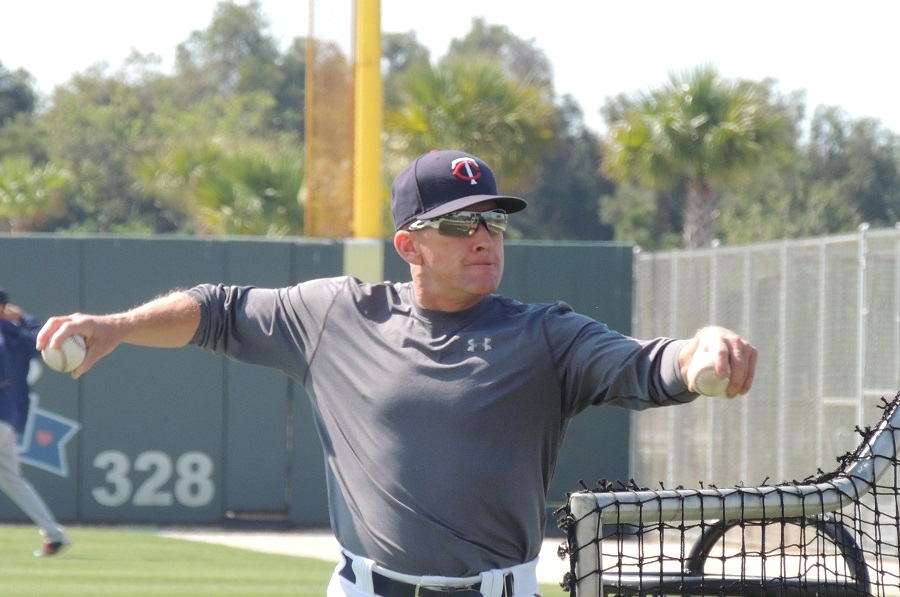 And last August, he became the Twins minor league hitting coordinator. So, the obvious first question to Eckstein was, what was it about the Twins minor league hitting coordinator job that appealed to you. According to the 44-year-old, “When the job was presented to me, it was the opportunity to bring my beliefs and thoughts about hitting, and bring it to the organization.” Eckstein sees the big picture. Having now worked in the organization through the Instructional League, a full offseason and now big league and minor league spring training camps, he sounds glad to be with the Twins. “What I’ve come to find out, working with the staff here, there’s a lot of good people. There are a lot of good things happening. To be a piece to that puzzle was something that I look forward to and have enjoyed so far.” But what is his job? What is a minor league hitting coordinator? In his own words, Eckstein said, “As the minor league coordinator, my job - as it was described to me - is to bring a sound philosophy into the organization that mirrors what they were looking for.” Eckstein interviewed for the Twins minor league leaders. He said, “Through the interview process, I talked about what I believe in. The things I believe in and how I teach and how to get the desired results that you’re looking for within the confines of the organization, Brad Steil, Joel Lepel, the guys in the organization that are over the minor leagues look for.” Tanner English listening to instruction from Eckstein. Eckstein has been a part of the organization’s new hitting philosophy. He was part of the Twins “hitting summit” in January where hitting coordinators and hitting coaches all met together to discuss their hitting goals, philosophies, terminology and more. Eckstein and Twins hitting coach James Rowson have to be on the same page and communicate despite different roles. “James (Rowson) is our major league hitting coach, and he has his sound principals too, so being part of major league camp and listen to him work and work with the guys was great. But his job is to tend to 12 to15 hitters and make sure that they’re performing at the major league level.” Things are a little bit different in the minor leagues. Sure, each affiliate has its own hitting coach who tends to the 12 to 15 hitters on its roster at any given time. But minor league development comes with its own challenges. Eckstein described the challenge. “On the development side, it’s a little bit different. The challenge is different. You’re putting in a philosophy with really young kids who don’t have the experience that the major leaguers have, obviously. So now your philosophy has to be really grounded and really catered toward what we feel is important about hitting. Dealing with a major leaguer, you’re constantly just trying to fine-tune things to keep them tuned up, so to speak, with things he has already developed and worked on throughout his career. So I love the challenge of working with the kids that don’t necessarily have the experience yet, and putting in their heads what we feel is very important when it comes to hitting.” When I was in Ft. Myers, late one morning most of the four full-season work groups were at lunch, maybe an hour or so before a spring game. The ewxtended spring training work group’s hitters, some of the youngest and least experienced in the organization, were on Bill Smith Field taking a round of batting practice. I observed. Eckstein instructing between batting practice pitches. Eckstein watched the first couple of rounds, and then he threw a couple of rounds. He was vocal and energetic. He was consistently teaching. He was challenging the young hitters to think. “Attack the ball out front.” “I don’t care where you hit it, get the bat head out and hit it hard.” “Don’t try to do too much. Do you.” Truth be told, as I watched batting practice and listened to the words and lessons from Eckstein, I was pumped up. I wanted to get out there and take a round of cuts (though I would have needed the Twins training staff after it). You can see why he’s been described as passionate and full of energy. He truly enjoys what he does. So how does an organization or a minor league coordinator develop a hitting philosophy while not wanting to create a cookie-cutter hitter (something that had been an accusation of Twins minor league hitters in the past). Eckstein responded, “Obviously I believe in technique, but really, what we’re trying to do is create the concepts that allow us to understand what’s important about hitting, and then we can use our uniqueness and our athleticism to get us in those positions the way we want to. So whether it’s a higher leg kick, or more of a knee lift, or a very simple load, you can vary in our system. You have the freedom to be who you are and express your talent. Then over time, we’re going to teach you how you do it, how to make you more efficient at doing it, and the things that encompass being ready to hit.” During that session, he brought the hitters together and used (and explained) BABIP (batting average on balls in play). He told them that if they’re aggressive, and if they attack, but at the same time minimize strikeouts, BABIP tells them they’re likelihood of getting a hit or doing something to help the team. Asked about his thoughts on the analytics of the game today, Eckstein said he loves them. “I love understanding the numbers. I love understanding how the analytics have really pushed us into an area of knowing the game to a level at such detail, if you will.” But how much of that information can or should be explained to hitters. Some like it. Others don’t. For some, hearing more might make them think too much. But when you’re trying to explain concepts, sometimes those numbers can help. Eckstein explained the discussion with the hitters. “The players don’t need to know a lot of that information. When I referenced batting average on balls in play, it was simply because we were working on our two-strike approach, and I wanted the young men to understand the value of understanding how to be in a good position to where you can better put balls in play with two strikes and how to go about that, and when you do across the board, the batting average says you’re going to hit closer to that .300 average if you eliminate the strikeout. So, it was more of a reference point to say, Men, if we can have a process that allows us to compete better, and allows us to get the barrel in and to the front side of the zone and stay through it. Where the ball goes is irrelevant compared to having a process that allows us to put it in play and hopefully put it in play harder. In effect, if we can eliminate the strikeout, which technically isn’t going to happen across the board, but if you have a process that allows you to understand your barrel and understand the importance of what contact says, you give yourself a better chance to do the things you want to do as a hitter. Eckstein chatting with minor leaguers Jorge Munoz and Andre Jernigan As we know, the pitchers go into each game with a plan, and as you get closer to the big leagues, opponents’ pitchers and catchers have very detailed individual game plans for each hitter. Oh, and their pitches tend to be better, more crisp, sharp. There has to be a short term and a long-term plan to combat that. “There’s a point where contact made too deep is not good. So there is a hitting area. Where is your hitting area? You’ve got to know that. What is a pitcher trying to do to you? He’s trying to throw off your rhythm and timing. He’s trying to make contact much deeper, if not non-existent, that’s what a pitcher is trying to do. So, we’re trying to combat that with our philosophy. We’re trying to combat that and get players to understand that there’s a difference between getting a hit and hitting. There are a lot of players in this game that can eventually find a hit and get a hit. Does that mean they were a good hitter? So there’s a difference there.” It’s all about process. We talk about that on our site a lot. We talk about it in our daily lives. Not everything you do is going to provide great results, but we have to think about developing a sound process and think long term. It’s really the same with hitting, especially in the development stages. “There’s a difference between being able to hit, and getting a hit. We’re trying to define that for the players and make them understand that there’s a mind set and a process, and we’re trying to cultivate that. We’ve kind of gotten off to a good start in that direction and we’ve still got work to do.” The Twins big league lineup has five regulars that are 25 and under, but player development’s job is to keep pushing players to the big leagues who are ready to compete. Rick Eckstein and his philosophies, along with the minor league hitting coaches, will have a big role in that. -------------------------------------------------------------------------- I also caught up with Twins minor league pitching coordinator Eric Rasmussen. The 65-year-old pitched eight seasons in the big leagues for St. Louis, San Diego and Kansas City. In 1991, he joined the Twins minor league coaching staff, starting in the GCL. He held pitching coach duties for Ft. Myers (12 years) and New Britain (one year). This is his ninth season in his current position. Asked what his job as minor league pitching coordinator entails, Rasmussen said, “We set objectives for each pitcher through the year, what they need to accomplish and how they’re going to get better and move level-to-level, and get ready for the big leagues. Once that’s established, and we talk this over with each coach because they know the players very well, between me and Brad Steil and each pitching coach. And it’s up to the coaches to carry out the plan. It’s my job to oversee the whole thing and make sure that things are getting done and keep good communication going.” ---------------------------------------------------------------------------- Eckstein and Rasmussen will likely do some traveling throughout the minor league season. They are likely to visit each affiliate a couple of times each and continue to work with the players and the coaches.
-
Twins Sign Chris Anderson (Centennial HS)
Seth Stohs replied to Seth Stohs's topic in Twins Minor League Talk
Something silly that also needs to stop is this thinking that the Twins should stay away from Minnesota players or front office people or anything who has any relatives that ever lived in Minnesota. It's an old narrative. And limiting themselves would be not signing a player because of where he is from... -
Twins Sign Chris Anderson (Centennial HS)
Seth Stohs replied to Seth Stohs's topic in Twins Minor League Talk
My guess is that they'll keep him in Extended Spring Training for awhile and just see where he is at, work with him, get him into some EST games when they get going... and I would think that he would start in Ft. Myers, maybe even Cedar Rapids just to regain some success. But he's still just 24. He's less than 4 years from being a first-round pick for some reason, that reason being velocity or stuff or something. Maybe they can find it. There's no risk in bringing him in. No risk... potentially some minimal reward. And, it's very likely that the Twins were one of several teams to talk to him (I assume)... the fact that he's from Minnesota probably gave the Twins an advantage... I'm guessing the Twins offer to him wasn't more than others. And yes, I would say the same thing if it were another 1st round pick from 2012, 2013, 2014, regardless of where they were from. -
Adopt-A-Prospect 2017 Draft (begins at 9 am CT)
Seth Stohs replied to Seth Stohs's topic in Twins Minor League Talk
You've got him... and based on this first round of Adopt-A-Prospect, several of the remaining players will be part of the group tomorrow. -
Adopt-A-Prospect 2017 Draft (begins at 9 am CT)
Seth Stohs replied to Seth Stohs's topic in Twins Minor League Talk
He's yours. -
According to the below tweet from Darren Wolfson, the Twins have signed RHP Chris Anderson. Anderson went to high school at Centennial HS in Circle Pines, MN. He went to Jacksonville University and became a first-round pick (18th overall) of the Dodgers in 2013. The Dodgers released him earlier this week, and the Twins have signed him. He definitely hasn't been great. Last year, he struggled to a 4.81 ERA between High-A and Double-A. He also posted an 11.88 ERA in 6 starts in the AFL. But obviously there is some talent there. It costs the Twins almost nothing to sign him. Maybe they can find a way to get him right. For me, that's always worth the chance. They could also control his rights for the 2017, 2018 and 2019 seasons, so they can still be patient with him.
-
They are twin brothers from Australia. Lachlan will start the season with the Twin High-A affiliate (Ft. Myers) while Alex will start the season in the Orioles' Low-A affiliate. The article talks about their sports life before signing (cricket), their decisions to sign and everything else. Very well done. Good quotes from Mike Radcliff on Lachlan. http://www.espn.com/mlb/story/_/id/19077987/alex-lachlan-wells-20-year-old-twin-pitching-prospects-making-progress-long-trip-australia-majors
-
2017 Fort Myers Miracle Roster Preview
Seth Stohs replied to Seth Stohs's topic in Twins Daily Front Page News
That was a new one to me... I'll see what I can find out.- 20 replies
-
- 1
-
-
- lachlan wells
- luis arraez
- (and 3 more)
-
2017 Fort Myers Miracle Roster Preview
Seth Stohs replied to Seth Stohs's topic in Twins Daily Front Page News
Due to injuries, he got pushed up to Ft. Myers too quickly last season. That didn't help. But then he got hurt too, and obviously that derails things.- 20 replies
-
- 1
-
-
- lachlan wells
- luis arraez
- (and 3 more)
-
Adopt-A-Prospect 2017 Draft (begins at 9 am CT)
Seth Stohs replied to Seth Stohs's topic in Twins Minor League Talk
sounds good. -
Adopt-A-Prospect 2017 Draft (begins at 9 am CT)
Seth Stohs replied to Seth Stohs's topic in Twins Minor League Talk
got him. -
Adopt-A-Prospect 2017 Draft (begins at 9 am CT)
Seth Stohs replied to Seth Stohs's topic in Twins Minor League Talk
You've got him! -
A year ago, the Miracle had an overall record of 78-61, and yet they did not make the playoffs as they did not win their division in each half. Manager Jeff Smith took the job of Twins first base coach, and a familiar face returned to lead the Miracle in 2017. While this team may not have a lot of the big-name prospects, there is a lot of talent on the roster and it should be a competitive team again. Image courtesy of Seth Stohs (Top L to R: Dereck Rodriguez, Luis Arraez, Lewis Thorpe, Bottom L to R: Lachlan Wells, Cody Stashak, Randy Rosario) A year ago, the Miracle had an overall record of 78-61, and yet they did not make the playoffs as they did not win their division in each half. Manager Jeff Smith took the job of Twins first base coach, and a familiar face returned to lead the Miracle in 2017. While this team may not have a lot of the big-name prospects, there is a lot of talent on the roster and it should be a competitive team again. Today we look at the Ft. Myers Miracle players and coaching staff. We try to figure out a solid everyday lineup, and discuss the top prospects. Feel free to share any thoughts you may have on the team or roster, and ask as many questions as you would like. COACHING STAFF The last time Ft. Myers fans saw Doug Mientkiewicz in a Miracle uniform, he was leading the team to the 2014 Florida State League championship. He was moved up to Chattanooga where he helped the Lookouts to the 2015 Southern League championship. In 2017, he is back in his home state of Florida with the Miracle. In his four seasons as a minor league manager, he has an impressive 312-239 record. With the retirement of Jim Dwyer, the Miracle will have a new hitting coach for the first time since 2006. Dwyer had been a coach in the Twins system dating back to 1991. Steve Singleton takes over as the team’s new hitting coach after spending 2016 with the GCL Twins. He reached AAA with the Twins during his six seasons as a player in the organization. Henry Bonilla will be in his second season as the team’s pitching coach. It is his sixth season as a coach in the organization. He pitched in the Twins organization for seven minor league seasons. ROSTERS Here is a look at the Ft. Myers Miracle Opening Day roster. 16 of the players spent at least some time with the Miracle last year. One player, Randy Rosario, is on the 40-man roster. HITTERS Catchers: Kevin Garcia, Brian Navarreto, AJ Murray (DL), Infielders: Trey Vavra, Zander Wiel, Luis Arraez, Sean Miller, Nelson Molina, Alex Perez, Chris Paul, Brian Olson (DL), Outfielders: Daniel Kihle, Max Murphy, Rafael Valera PITCHERS Starting Pitchers: Randy LeBlanc, Dereck Rodriguez, Cody Stashak, Keaton Steele, Lachlan Wells, Andro Cutura (DL-elbow), Henry Centeno (DL) Relief Pitchers: Sam Clay, Jonny Drozd, Anthony McIver, Alex Muren (DL), Williams Ramirez, Randy Rosario, Michael Theofanopoulos, Todd Van Steensel, Nick Anderson (DL), Cameron Booser (DL), Michael Cederoth (DL), Henry Centeno (DL) POTENTIAL LINEUP 2B - Luis Arraez SS - Nelson Molina 1B - Trey Vavra DH - Zander Wiel 3B - Chris Paul CF - Daniel Kihle RF - Max Murphy C - AJ Murray LF - Rafael Valera TOP PROSPECTS Luis Arraez - He can flat-out hit. He has hit everywhere he’s played, including the Venezuelan Winter League. His .347 average led the Midwest League a year ago. Lachlan Wells - The Australian posted a 1.77 ERA in 12 starts (71.1 innings) as a 19-year-old last year. Pitched for Team Australia in the WBC. Randy Rosario - Rosario has a strong showing in big league spring training, but he was also moved to the bullpen full time and will start with the Miracle. Cody Stashak - Not a big guy, but Stashak just gets the job done well. He sits 91-92 with a fastball. He has good control of three good pitches. Under-the-radar prospect. Nelson Molina - had a breakout season in 2016, hitting .300 with a strong OBP in Cedar Rapids. STORIES TO WATCH The Australian starter Lachlan Wells will be fun to watch. Wells is 20. He put up strong numbers as a 19-year-old in Cedar Rapids. Wells, along with fellow Australian (who should pitch for the Miracle sometime in 2017) could be Top 10 Twins prospects by season’s end. And who knows, maybe Todd Van Steensel will help secure a couple of their wins. What can Luis Arraez do in the Florida State League. He doesn’t have a lot of power, but will he continue to be able to post incredible batting average with the bigger ballparks? As a prospect, however, he’ll have to improve his defense. But again, the batting average will be something to watch. Alex Muren missed the entire 2016 season due to Thoracic Outlet Syndrome surgery. He will start the season on the DL, but he’s one reliever who could advance quickly to Chattanooga when ready and needed. The same can be said of Van Steensel and Randy Rosario. A lot was made of Tyler Jay’s move to the bullpen. The club’s decision to move Randy Rosario was made less than a week earlier, and Rosario was happy about that. Before spring training, the organization also decided to move another left-handed starter, Sam Clay, to the bullpen. He was a reliever in college and really struggled with command. He should see an improvement in stuff and velocity with the move, but he’ll have to improve his control. Dereck Rodriguez was the Twins 6th round pick in 2011 out of high school. He spent three years as a hitter. He has now spent the last three seasons as a pitcher, the last two as a starter. He moved up to Ft. Myers for the final two months of last season, and then he pitched out of the bullpen throughout the offseason in the Puerto Rican Winter League. Can he take a step forward on the mound again in 2017? Enough for the Twins to add him to the 40-man roster after the season? Please feel free to discuss this roster. Ask lots of questions and check back often. What stories will you be following? View full article
- 20 replies
-
- 1
-
-
- lachlan wells
- luis arraez
- (and 3 more)
-
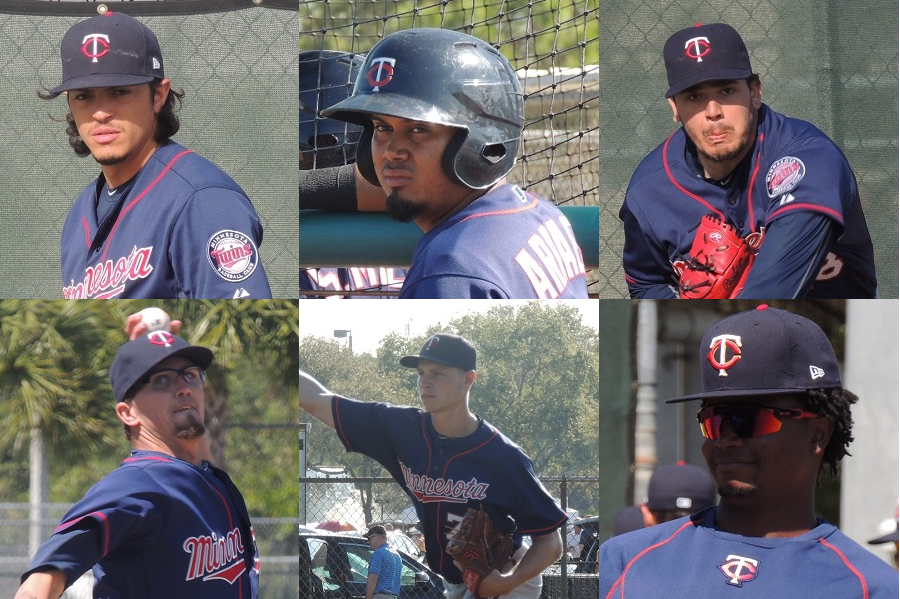 Today we look at the Ft. Myers Miracle players and coaching staff. We try to figure out a solid everyday lineup, and discuss the top prospects. Feel free to share any thoughts you may have on the team or roster, and ask as many questions as you would like. COACHING STAFF The last time Ft. Myers fans saw Doug Mientkiewicz in a Miracle uniform, he was leading the team to the 2014 Florida State League championship. He was moved up to Chattanooga where he helped the Lookouts to the 2015 Southern League championship. In 2017, he is back in his home state of Florida with the Miracle. In his four seasons as a minor league manager, he has an impressive 312-239 record. With the retirement of Jim Dwyer, the Miracle will have a new hitting coach for the first time since 2006. Dwyer had been a coach in the Twins system dating back to 1991. Steve Singleton takes over as the team’s new hitting coach after spending 2016 with the GCL Twins. He reached AAA with the Twins during his six seasons as a player in the organization. Henry Bonilla will be in his second season as the team’s pitching coach. It is his sixth season as a coach in the organization. He pitched in the Twins organization for seven minor league seasons. ROSTERS Here is a look at the Ft. Myers Miracle Opening Day roster. 16 of the players spent at least some time with the Miracle last year. One player, Randy Rosario, is on the 40-man roster. HITTERS Catchers: Kevin Garcia, Brian Navarreto, AJ Murray (DL), Infielders: Trey Vavra, Zander Wiel, Luis Arraez, Sean Miller, Nelson Molina, Alex Perez, Chris Paul, Brian Olson (DL), Outfielders: Daniel Kihle, Max Murphy, Rafael Valera PITCHERS Starting Pitchers: Randy LeBlanc, Dereck Rodriguez, Cody Stashak, Keaton Steele, Lachlan Wells, Andro Cutura (DL-elbow), Henry Centeno (DL) Relief Pitchers: Sam Clay, Jonny Drozd, Anthony McIver, Alex Muren (DL), Williams Ramirez, Randy Rosario, Michael Theofanopoulos, Todd Van Steensel, Nick Anderson (DL), Cameron Booser (DL), Michael Cederoth (DL), Henry Centeno (DL) POTENTIAL LINEUP 2B - Luis Arraez SS - Nelson Molina 1B - Trey Vavra DH - Zander Wiel 3B - Chris Paul CF - Daniel Kihle RF - Max Murphy C - AJ Murray LF - Rafael Valera TOP PROSPECTS Luis Arraez - He can flat-out hit. He has hit everywhere he’s played, including the Venezuelan Winter League. His .347 average led the Midwest League a year ago. Lachlan Wells - The Australian posted a 1.77 ERA in 12 starts (71.1 innings) as a 19-year-old last year. Pitched for Team Australia in the WBC. Randy Rosario - Rosario has a strong showing in big league spring training, but he was also moved to the bullpen full time and will start with the Miracle. Cody Stashak - Not a big guy, but Stashak just gets the job done well. He sits 91-92 with a fastball. He has good control of three good pitches. Under-the-radar prospect. Nelson Molina - had a breakout season in 2016, hitting .300 with a strong OBP in Cedar Rapids. STORIES TO WATCH The Australian starter Lachlan Wells will be fun to watch. Wells is 20. He put up strong numbers as a 19-year-old in Cedar Rapids. Wells, along with fellow Australian (who should pitch for the Miracle sometime in 2017) could be Top 10 Twins prospects by season’s end. And who knows, maybe Todd Van Steensel will help secure a couple of their wins. What can Luis Arraez do in the Florida State League. He doesn’t have a lot of power, but will he continue to be able to post incredible batting average with the bigger ballparks? As a prospect, however, he’ll have to improve his defense. But again, the batting average will be something to watch. Alex Muren missed the entire 2016 season due to Thoracic Outlet Syndrome surgery. He will start the season on the DL, but he’s one reliever who could advance quickly to Chattanooga when ready and needed. The same can be said of Van Steensel and Randy Rosario. A lot was made of Tyler Jay’s move to the bullpen. The club’s decision to move Randy Rosario was made less than a week earlier, and Rosario was happy about that. Before spring training, the organization also decided to move another left-handed starter, Sam Clay, to the bullpen. He was a reliever in college and really struggled with command. He should see an improvement in stuff and velocity with the move, but he’ll have to improve his control. Dereck Rodriguez was the Twins 6th round pick in 2011 out of high school. He spent three years as a hitter. He has now spent the last three seasons as a pitcher, the last two as a starter. He moved up to Ft. Myers for the final two months of last season, and then he pitched out of the bullpen throughout the offseason in the Puerto Rican Winter League. Can he take a step forward on the mound again in 2017? Enough for the Twins to add him to the 40-man roster after the season? Please feel free to discuss this roster. Ask lots of questions and check back often. What stories will you be following?
-
Adopt-A-Prospect 2017 Draft (begins at 9 am CT)
Seth Stohs replied to Seth Stohs's topic in Twins Minor League Talk
I have no objection...
