



Matt Braun
-
Posts
1,393 -
Joined
-
Last visited
-
Days Won
1
Content Type
Profiles
News
Minnesota Twins Videos
2026 Minnesota Twins Top Prospects Ranking
2022 Minnesota Twins Draft Picks
Minnesota Twins Free Agent & Trade Rumors, Notes, & Tidbits
Guides & Resources
2023 Minnesota Twins Draft Picks
The Minnesota Twins Players Project
2024 Minnesota Twins Draft Picks
2025 Minnesota Twins Draft Pick Tracker
2026 Minnesota Twins Draft Tracker: Picks & Bonuses
Forums
Blogs
Events
Store
Downloads
Gallery
Everything posted by Matt Braun
-
Jim Pohlad sure has an interesting burner account
-
Countless different pitchers throughout the years have proven that there are many ways to get a hitter out. Not everyone can be Gerrit Cole in the way that he just obliterates batters with a bazooka fastball. For Trevor Hildenberger, it seemed that he found a shtick that could work in the majors until suddenly, its effectiveness ended.Now, this is where I must admit that I am heavily biased towards pitchers that throw sidearm/submarine. I love the somewhat goofy dichotomy between the ultra serious hitter and the dude on the mound scraping his knuckles on the ground in order to be as effective as possible. Plus, it seems like they all have cool names (Darren O’ Day, Chad Bradford, Dan Quisenberry, you get the idea). So in 2017 when this fresh faced reliever named “Trevor Hildenberger: gets called up and does this to his very first batter: You can bet that I am now fully invested in his future at the big league level. Hildenberger was astounding in 2017, rarely do you ever see a reliever with an elite groundball rate (58.8%) and great peripherals also (2.92 xFIP). Hildenberger was in the top 15 for relievers with at least 40 innings pitched in 2017 for both of those stats respectively and it seemed like the Twins had a future elite reliever. 2018 started in a similar way for Hildenberger as he held a 2.06 ERA in late June and had only allowed more than one run in a single outing just once. That is, until the game from hell on June 30th. Recall, if you will, the series against the Cubs in 2018 where Willians Astudillo made his major league debut, every game ended up in a shootout, and players dropped so much due to the heat that the ending outfield was Logan Morrison-Willians Astudillo-Robbie Grossman. Beyond that butcher of a defense was a nightmare outing for Hildenberger in which he walked four batters, gave up four hits, allowed five earned runs, and only got one out. His ERA on the season shot up from that 2.06 mark to 3.18 and he hasn’t been the same pitcher since. It would be dramatic for me to imply that a single outing was the turning point in a career but perhaps the outing was more of a symbolic pivot in which the Cubs became the first team to make it apparent that Hildenberger was beatable. The numbers are incredibly eye-opening as in 81 ⅓ major league innings before the outing his ERA/FIP/xFIP slashline was 2.66/3.44/3.26 and his groundball rate was 54.5%. Starting with that outing through his most recent appearance on September 21st in 2019 his slashline becomes 9.72/5.12/4.41 with a groundball rate of just 40.9% over 50 innings. I think I speak for most Twins fans when I ask; “what the hell happened”? The first thing to look at is his pitch mix which is a fairly standard sinker, slider, and changeup combo with the occasional over-the-top four-seam fastball to keep hitters on their toes. His slider has never been that good by pVAL (pitch value) but his sinker/changeup combo was what allowed him to be dominant to start his career which leads me to believe that somehow that combo has gotten worse. His changeup pVAL was still elite in 2018 but his fastball quality went into the toilet despite gaining a small tick of velocity. Why could this be? Well, let’s take a gander at some heatmaps and oh: There’s a significant shift more towards the outside of the plate vs righties and inside vs lefties. The general stereotype is that lefties love it down and in and perhaps throwing more outside to righties allows them to get extended and hit the ball harder than when he was going in earlier in his career. Granted, this may not be “the” thing but it certainly is “a” thing, pitching is more complicated than just a single pitch losing its location. No matter what, Hildenberger does not have much room for error if he wants to continue his major league career. He’ll likely start the year at AAA and be one of the first arms called upon when the inevitable bullpen shuffle occurs but any success is far from guaranteed and all anyone can hope for is that the Trevor Hildenberger of old is still somewhere in there. Click here to view the article
-
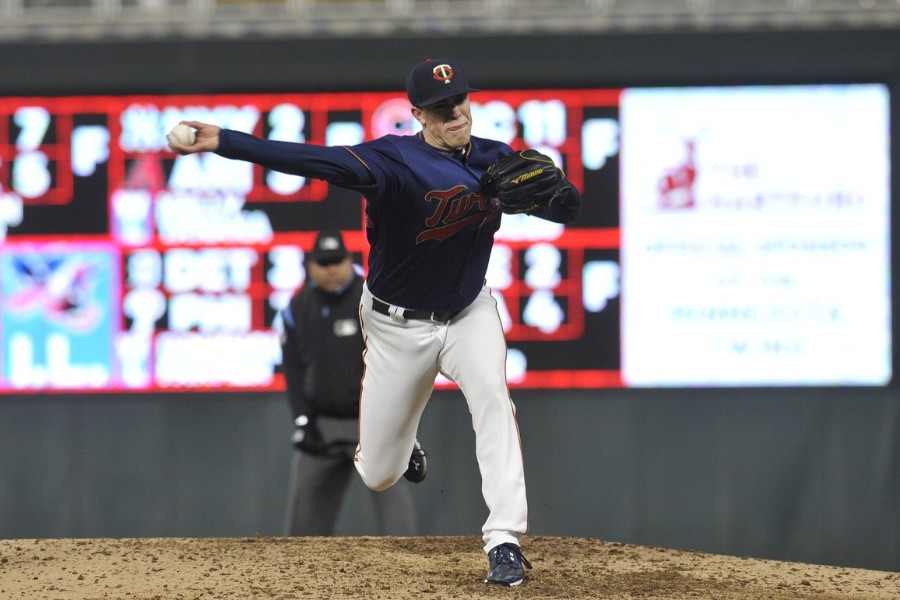 Now, this is where I must admit that I am heavily biased towards pitchers that throw sidearm/submarine. I love the somewhat goofy dichotomy between the ultra serious hitter and the dude on the mound scraping his knuckles on the ground in order to be as effective as possible. Plus, it seems like they all have cool names (Darren O’ Day, Chad Bradford, Dan Quisenberry, you get the idea). So in 2017 when this fresh faced reliever named “Trevor Hildenberger: gets called up and does this to his very first batter: https://twitter.com/matthew_btwins/status/1195053143567912960 You can bet that I am now fully invested in his future at the big league level. Hildenberger was astounding in 2017, rarely do you ever see a reliever with an elite groundball rate (58.8%) and great peripherals also (2.92 xFIP). Hildenberger was in the top 15 for relievers with at least 40 innings pitched in 2017 for both of those stats respectively and it seemed like the Twins had a future elite reliever. 2018 started in a similar way for Hildenberger as he held a 2.06 ERA in late June and had only allowed more than one run in a single outing just once. That is, until the game from hell on June 30th. Recall, if you will, the series against the Cubs in 2018 where Willians Astudillo made his major league debut, every game ended up in a shootout, and players dropped so much due to the heat that the ending outfield was Logan Morrison-Willians Astudillo-Robbie Grossman. Beyond that butcher of a defense was a nightmare outing for Hildenberger in which he walked four batters, gave up four hits, allowed five earned runs, and only got one out. His ERA on the season shot up from that 2.06 mark to 3.18 and he hasn’t been the same pitcher since. It would be dramatic for me to imply that a single outing was the turning point in a career but perhaps the outing was more of a symbolic pivot in which the Cubs became the first team to make it apparent that Hildenberger was beatable. The numbers are incredibly eye-opening as in 81 ⅓ major league innings before the outing his ERA/FIP/xFIP slashline was 2.66/3.44/3.26 and his groundball rate was 54.5%. Starting with that outing through his most recent appearance on September 21st in 2019 his slashline becomes 9.72/5.12/4.41 with a groundball rate of just 40.9% over 50 innings. I think I speak for most Twins fans when I ask; “what the hell happened”? The first thing to look at is his pitch mix which is a fairly standard sinker, slider, and changeup combo with the occasional over-the-top four-seam fastball to keep hitters on their toes. His slider has never been that good by pVAL (pitch value) but his sinker/changeup combo was what allowed him to be dominant to start his career which leads me to believe that somehow that combo has gotten worse. His changeup pVAL was still elite in 2018 but his fastball quality went into the toilet despite gaining a small tick of velocity. Why could this be? Well, let’s take a gander at some heatmaps and oh: There’s a significant shift more towards the outside of the plate vs righties and inside vs lefties. The general stereotype is that lefties love it down and in and perhaps throwing more outside to righties allows them to get extended and hit the ball harder than when he was going in earlier in his career. Granted, this may not be “the” thing but it certainly is “a” thing, pitching is more complicated than just a single pitch losing its location. No matter what, Hildenberger does not have much room for error if he wants to continue his major league career. He’ll likely start the year at AAA and be one of the first arms called upon when the inevitable bullpen shuffle occurs but any success is far from guaranteed and all anyone can hope for is that the Trevor Hildenberger of old is still somewhere in there.
 -
Devin Smeltzer’s fastball averaged 89.1 mph at the major league level in 2019. It isn’t much these days, and likely one of the reasons why he has been overlooked so far in his professional career. Fortunately for Smeltzer, he also has great command and stones big enough to be on Easter Island.Smeltzer was able to cruise through the minor league system in 2019 and eventually make his MLB debut thanks in part to the two characteristics mentioned in the previous paragraph. The majors proved to be another challenge in itself for Smeltzer but he was able to pitch to the tune of a 3.86 ERA and 4.58 FIP over his first 49 innings. Unfortunately for Smeltzer, however, is the fact that this upcoming offseason will likely push him out of the major leagues. The starting rotation is as barren as a bar at noon but the Twins have talked up their plans to step on the gas and acquire impact arms. Whether that happens or not will be seen in time but each starter gained will be another obstacle in the way of Smeltzer in 2020. If the Twins decided to stay in-house for a rotation spot or two then Smeltzer finds himself in trouble yet again as his 2019 performance was behind Randy Dobnak and he doesn’t have the prospect status or strikeout potential of Lewis Thorpe. Throw on top the likely inevitable move back to a starting spot for Brusdar Graterol and well, you see the obstacles in Smeltzer’s way. Where Smeltzer may find a niche is in the bullpen in a relief role. Now, I have always been a fan of teams getting creative with how they use relievers and I believe that Smeltzer has a unique opportunity to become a multi-inning threat out of the bullpen. What draws me to this is his splits when going through a lineup for the first time. As a starter, he had a 20.4 K-BB% when going through the lineup for the first time and as a reliever, he had a 17.1 K-BB% when going through the lineup for the first time. For context, a 20.4 K-BB% would put him above names like Robbie Ray and Patrick Corbin and a 17.1 K-BB% was exactly the same number José Berríos had on the year. Granted, the starters I’m comparing him to did this over all situations, but doesn’t it sound nice to say that Smeltzer was as effective as Patrick Corbin*? *Actual statisticians can still be damned He’s great when going through the lineup for the first time, which is nice, are there any downsides? Yes there are, voice in my head, thank you. Smeltzer was one of those weird pitchers who actually had reverse splits at the major league level. Lefties slashed .316/.395/.474 against him with a wOBA of .373, that isn’t good. I know just about nothing as far as pitching goes but if I had to guess what the issue was, I would narrow it down to two things: 1. His sequencing to lefties needs to be adjusted 2. He possibly needs to better develop his slider which he only threw 5.6% of the time at the major league level Either way, his ability to mow down hitters when facing them for the first time makes me believe that Smeltzer can be a powerful weapon out of the bullpen in a multi-inning “Andrew Miller” role. Rosters will expand to 26 players next season and the added man may prove to be helpful for a pitcher on the cusp like Smeltzer. If he is to be a big part of the 2020 Twins, it would not surprise me if it is in a creative role out of the bullpen. No matter what, expect some silky smooth changeups and Jack Morris to say that Smeltzer is “pitching, not throwing” ... whatever that means. Please share your thoughts in the comments below. Not registered? Click here to create an account. To stay up to date, follow Twins Daily on Twitter and Facebook. MORE FROM TWINS DAILY — 3 Creative Ways for Twins to Leverage Their Spending Flexibility — Mitch Garver, Nelson Cruz Win 2019 Silver Slugger Award — 2020 Offseason Handbook Now Available for Download Click here to view the article
-
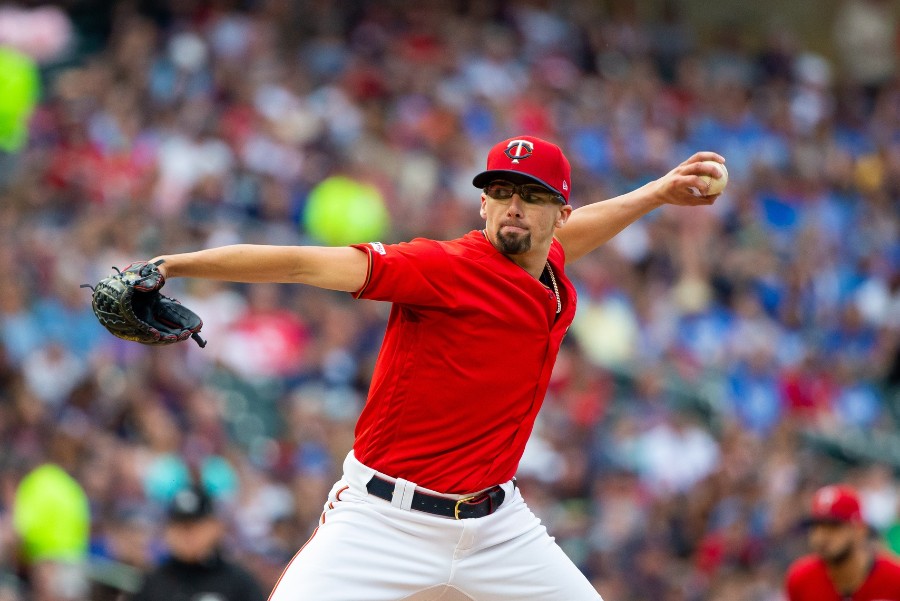 Smeltzer was able to cruise through the minor league system in 2019 and eventually make his MLB debut thanks in part to the two characteristics mentioned in the previous paragraph. The majors proved to be another challenge in itself for Smeltzer but he was able to pitch to the tune of a 3.86 ERA and 4.58 FIP over his first 49 innings. Unfortunately for Smeltzer, however, is the fact that this upcoming offseason will likely push him out of the major leagues. The starting rotation is as barren as a bar at noon but the Twins have talked up their plans to step on the gas and acquire impact arms. Whether that happens or not will be seen in time but each starter gained will be another obstacle in the way of Smeltzer in 2020. If the Twins decided to stay in-house for a rotation spot or two then Smeltzer finds himself in trouble yet again as his 2019 performance was behind Randy Dobnak and he doesn’t have the prospect status or strikeout potential of Lewis Thorpe. Throw on top the likely inevitable move back to a starting spot for Brusdar Graterol and well, you see the obstacles in Smeltzer’s way. Where Smeltzer may find a niche is in the bullpen in a relief role. Now, I have always been a fan of teams getting creative with how they use relievers and I believe that Smeltzer has a unique opportunity to become a multi-inning threat out of the bullpen. What draws me to this is his splits when going through a lineup for the first time. As a starter, he had a 20.4 K-BB% when going through the lineup for the first time and as a reliever, he had a 17.1 K-BB% when going through the lineup for the first time. For context, a 20.4 K-BB% would put him above names like Robbie Ray and Patrick Corbin and a 17.1 K-BB% was exactly the same number José Berríos had on the year. Granted, the starters I’m comparing him to did this over all situations, but doesn’t it sound nice to say that Smeltzer was as effective as Patrick Corbin*? *Actual statisticians can still be damned He’s great when going through the lineup for the first time, which is nice, are there any downsides? Yes there are, voice in my head, thank you. Smeltzer was one of those weird pitchers who actually had reverse splits at the major league level. Lefties slashed .316/.395/.474 against him with a wOBA of .373, that isn’t good. I know just about nothing as far as pitching goes but if I had to guess what the issue was, I would narrow it down to two things: 1. His sequencing to lefties needs to be adjusted 2. He possibly needs to better develop his slider which he only threw 5.6% of the time at the major league level Either way, his ability to mow down hitters when facing them for the first time makes me believe that Smeltzer can be a powerful weapon out of the bullpen in a multi-inning “Andrew Miller” role. Rosters will expand to 26 players next season and the added man may prove to be helpful for a pitcher on the cusp like Smeltzer. If he is to be a big part of the 2020 Twins, it would not surprise me if it is in a creative role out of the bullpen. No matter what, expect some silky smooth changeups and Jack Morris to say that Smeltzer is “pitching, not throwing” ... whatever that means. Please share your thoughts in the comments below. Not registered? Click here to create an account. To stay up to date, follow Twins Daily on Twitter and Facebook. MORE FROM TWINS DAILY — 3 Creative Ways for Twins to Leverage Their Spending Flexibility — Mitch Garver, Nelson Cruz Win 2019 Silver Slugger Award — 2020 Offseason Handbook Now Available for Download
 -
A majority of the discourse surrounding the offseason for the Twins will be focused on the starting rotation. Of course, this makes sense as José Berríos can’t throw 1,000 innings by himself, but for this article, I am more interested in the relief pitching side of the pitching staff.Here are a few relievers who will be available on the market who would make great additions to the Twins’ bullpen: Drew Pomeranz The Giants moved Pomeranz to the bullpen after an ineffective stint as a starter in the first half of 2019 and he became death, destroyer of worlds because of it. After throwing a fastball with an average speed of ~92 MPH as a starter, his velocity jumped to the point where it was ~95 in the month of September. His curveball saw a similar boost as it went from sitting ~81 MPH as a starter to ~84 MPH when he was used fully out of the bullpen in September. The end result was a plain cartoonish strikeout rate of 47.2% as a reliever that came with a modest walk rate of 7.6%. Pomeranz will be 31 heading into 2020 and with Taylor Rogers already firmly cemented in the bullpen, the Twins could decide to make any left-handed hitter want to crawl back into the dugout with another nasty lefty reliever in the back-end of their bullpen. Héctor Rondón You may know Rondón as the guy who threw as many innings in Game 7 of the World Series as Gerrit Cole, but he is more than just that. Rondón signed with the Astros in 2018 after an OK year with the Cubs and surprise surprise, he did much better. 2018 saw a career high in swinging strike % for Rondón as the Astros worked their magic with him and it seemed like his career was back on the upswing. 2019 was less kind to Rondón as his K% dropped to the lowest rate since his rookie season, his swinging strike% was at a career low, and his zone% was also at a career low. His average fastball velocity dropped a hair from 97.2 MPH in 2018 to 96.7 MPH in 2019 but his stuff still seems to be all there. Rondón will be 32 to start the 2020 season and it wouldn’t surprise me if a change of scenery sparks a bounce-back season for the flame-throwing reliever. Hopefully that scenery is the aesthetic of Target Field. Collin McHugh McHugh is another Astros reliever set to become a free agent this winter but why not pick up the parts dropped by the development machine that is Houston? McHugh also had a rougher 2019 than 2018 as he struggled out of the gate in a starting rotation role and missed time with some elbow problems. While a pitcher with elbow problems is a bigger red flag than someone being a Cowboys fan, I can’t help but look at McHugh’s 2018 season and imagine what a full, healthy season back in the bullpen will look like. McHugh’s 2018 was the stuff of legends as the righty put up a 1.99 ERA and 2.72 FIP over 72 1/3 innings pitched. His swinging strike% was a career high 13.3% and nearly 1/3 (33.2%) of all batters who faced McHugh went back to the dugout with a strikeout on their ledger. Maybe McHugh just needs a fresh start somewhere else to regain his old self and Minnesota should be open to allowing McHugh to flourish. Tony Cingrani Cingrani never threw a pitch in the majors in 2019 due to injury but had been phenomenal since being traded to the Dodgers at the trade deadline in 2017. After holding a career FIP of 4.62 with the Reds, Cingrani knocked it down all the way to 2.11 over his 42 innings with the Dodgers. His strikeout rate jumped and his walk rate plummeted which is a pretty good combo if you’re a pitcher. You can read more here if you want to know specifically what the Dodgers changed about his game to make him more effective. In any case, Cingrani could prove to be a forgotten reliever this offseason and potentially get lost in the shuffle of other relievers with bigger names. The Twins might be wise to take a close look at this lefty looking to get healthy again in 2020. Please share your thoughts in the comments below. Not registered? Click here to create an account. To stay up to date, follow Twins Daily on Twitter and Facebook. MORE FROM TWINS DAILY — OffseasonHandbook Preview: Everything You'll Find Inside — How the Washington Nationals Built Their World Series Roster — 3 Pitchers Who Complement the Twins Defensive Strengths Click here to view the article
- 6 replies
-
- 1
-

-
- hector rondon
- collin mchugh
- (and 3 more)
-
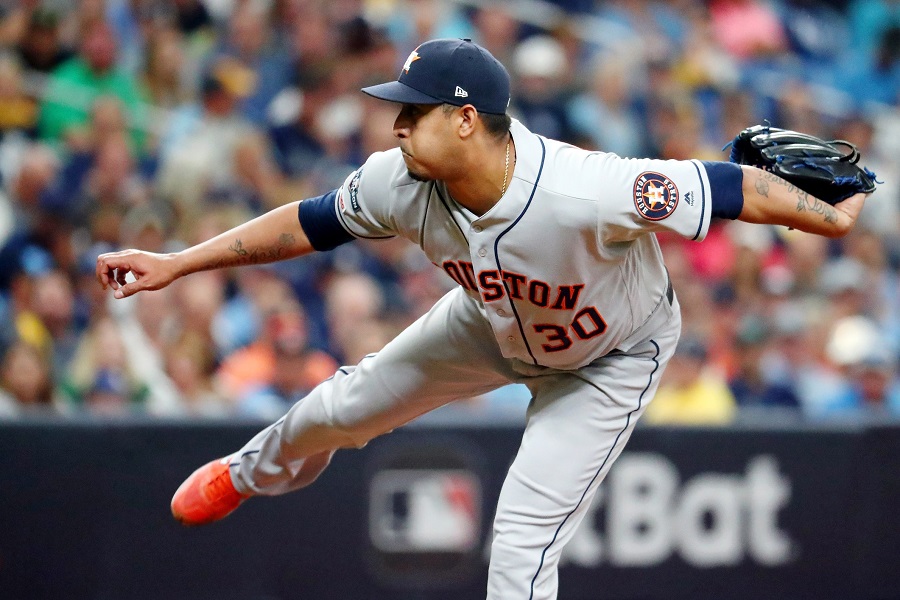 Here are a few relievers who will be available on the market who would make great additions to the Twins’ bullpen: Drew Pomeranz The Giants moved Pomeranz to the bullpen after an ineffective stint as a starter in the first half of 2019 and he became death, destroyer of worlds because of it. After throwing a fastball with an average speed of ~92 MPH as a starter, his velocity jumped to the point where it was ~95 in the month of September. His curveball saw a similar boost as it went from sitting ~81 MPH as a starter to ~84 MPH when he was used fully out of the bullpen in September. The end result was a plain cartoonish strikeout rate of 47.2% as a reliever that came with a modest walk rate of 7.6%. Pomeranz will be 31 heading into 2020 and with Taylor Rogers already firmly cemented in the bullpen, the Twins could decide to make any left-handed hitter want to crawl back into the dugout with another nasty lefty reliever in the back-end of their bullpen. https://twitter.com/matthew_btwins/status/1189992958524715008 Héctor Rondón You may know Rondón as the guy who threw as many innings in Game 7 of the World Series as Gerrit Cole, but he is more than just that. Rondón signed with the Astros in 2018 after an OK year with the Cubs and surprise surprise, he did much better. 2018 saw a career high in swinging strike % for Rondón as the Astros worked their magic with him and it seemed like his career was back on the upswing. 2019 was less kind to Rondón as his K% dropped to the lowest rate since his rookie season, his swinging strike% was at a career low, and his zone% was also at a career low. His average fastball velocity dropped a hair from 97.2 MPH in 2018 to 96.7 MPH in 2019 but his stuff still seems to be all there. Rondón will be 32 to start the 2020 season and it wouldn’t surprise me if a change of scenery sparks a bounce-back season for the flame-throwing reliever. Hopefully that scenery is the aesthetic of Target Field. https://twitter.com/matthew_btwins/status/1189997947607343104 Collin McHugh McHugh is another Astros reliever set to become a free agent this winter but why not pick up the parts dropped by the development machine that is Houston? McHugh also had a rougher 2019 than 2018 as he struggled out of the gate in a starting rotation role and missed time with some elbow problems. While a pitcher with elbow problems is a bigger red flag than someone being a Cowboys fan, I can’t help but look at McHugh’s 2018 season and imagine what a full, healthy season back in the bullpen will look like. McHugh’s 2018 was the stuff of legends as the righty put up a 1.99 ERA and 2.72 FIP over 72 1/3 innings pitched. His swinging strike% was a career high 13.3% and nearly 1/3 (33.2%) of all batters who faced McHugh went back to the dugout with a strikeout on their ledger. Maybe McHugh just needs a fresh start somewhere else to regain his old self and Minnesota should be open to allowing McHugh to flourish. https://twitter.com/matthew_btwins/status/1190002824584683520 Tony Cingrani Cingrani never threw a pitch in the majors in 2019 due to injury but had been phenomenal since being traded to the Dodgers at the trade deadline in 2017. After holding a career FIP of 4.62 with the Reds, Cingrani knocked it down all the way to 2.11 over his 42 innings with the Dodgers. His strikeout rate jumped and his walk rate plummeted which is a pretty good combo if you’re a pitcher. You can read more here if you want to know specifically what the Dodgers changed about his game to make him more effective. In any case, Cingrani could prove to be a forgotten reliever this offseason and potentially get lost in the shuffle of other relievers with bigger names. The Twins might be wise to take a close look at this lefty looking to get healthy again in 2020. https://twitter.com/matthew_btwins/status/1190006483104124928 Please share your thoughts in the comments below. Not registered? Click here to create an account. To stay up to date, follow Twins Daily on Twitter and Facebook. MORE FROM TWINS DAILY — Offseason Handbook Preview: Everything You'll Find Inside — How the Washington Nationals Built Their World Series Roster — 3 Pitchers Who Complement the Twins Defensive Strengths
 -
Front Page: The Uncertain Future Of Nick Gordon
Matt Braun replied to Matt Braun's topic in Twins Daily Front Page News
Nick Gordon has played nine innings at 3rd base in his professional career. -
On June 5, 2014, the Twins appeared to have made a move that would greatly impact their future middle infield for years to come. On that day, they drafted Nick Gordon out of Olympia High School in Orlando, Fla. Gordon was a fantastic high school player who hit .505 and pitched to a 0.78 ERA over 35 2/3 innings in his last year of high school baseball. Also armed with great baseball genes through his father Tom Gordon who was a three-time All-Star over the 21 years he pitched in MLB. Also, his brother Dee Gordon is a two time All-Star himself and current player for the Seattle Mariners. It seemed like Nick Gordon was destined to be an important piece on the Twins for years.Early on as a prospect, Gordon’s skills were disputed by a number of different evaluators as some thought his glove wouldn’t be able to play at SS and he would never hit for enough power to play at a high level. Some saw his jack-of-all-trades type of skill set as being able to could develop as he continued on through the minors. In MLB.com’s write-up for Gordon in 2014, they detailed him as having “...the actions and arm to stick at shortstop…” with...plus speed [that] plays well on the bases.” They go on to describe him as utilizing “...a solid left-handed swing and uses the whole field to hit.” His talent and ability was enough to land him at 37 on their top 100 prospect list that year. For the first few years, Gordon held his own as he put up a modest 101 wRC+ in rookie ball in 2014 and a 104 mark in 2015 at Low-A. While certainly far from setting the world on fire, simply holding your own in the beginning of professional baseball is noteworthy in itself. Especially considering that Gordon had not yet hit 20-years-old after his 2015 season in Low-A. Both 2016 and '17 helped Gordon’s prospect status a bit more as he bumped his wRC+ totals on the year up to 112 in 2016 at High A and 117 at AA, respectively. What was probably the most important development for Gordon was that he set a new career high for ISO (isolated power) in his 2017 season at AA as he finally broke through the .100 level and ended with a .139 mark on the season. While ISO is far from being an end-all, be-all statistic, there is a certain threshold that most hitters need to reach to be considered a quality batter in the day and age of power. Just four qualified hitters in 2019 in MLB held an ISO below .100 and the names near the bottom of the list don’t inspire much confidence at all, so Gordon adding some power seemed to be a big step forward for him. Things took a turn for the worse in 2018 for Gordon’s baseball career. After destroying AA to start the year, Gordon was promoted to AAA where he hit for a paltry 52 wRC+ over 410 plate appearances. Around this time is the doubters spoke even louder and prospect evaluators quickly knocked Gordon down into a lower pool of players at the 40 FV level. Gordon was able to bounce back in 2019 at AAA as he hit for a 102 wRC+ with the highest ISO of his career but in a league where offense reigned supreme, these numbers were hardly eye-popping and the damage was already done to his prospect status. Luis Arráez leapfrogged Gordon, and at the age of 22, he hit better at the major league level than Gordon did at AAA. Now with Arráez most likely penciled in at 2B for the future, Jorge Polanco locked in at SS for a number of years, and Miguel Sanó at 3B at least for the near future, the potential for any starting position for Gordon seems unlikely. Throw in that Royce Lewis will presumably make his debut soon and now Gordon is sitting on the outside looking in on a Twins team that has probably passed him by. On Oct. 24, the day this article will go up, Gordon will celebrate his 24th birthday, but it could very well be his last one in the Twins’ system. Already armed with a full infield and with some glaring needs in the starting rotation, Gordon looks to be a potential trade chip over the offseason instead of the future infielder that we were promised years ago. Please share your thoughts in the comments below. Not registered? Click here to create an account. To stay up to date, follow Twins Daily on Twitter and Facebook. MORE FROM TWINS DAILY — Miguel Sano Finally Met Expectations in 2019 — Handbook Preview: Glen Perkins Reviewing Relievers — Handbook Preview: Dan Hayes on Recharging the Batterymate Click here to view the article
-
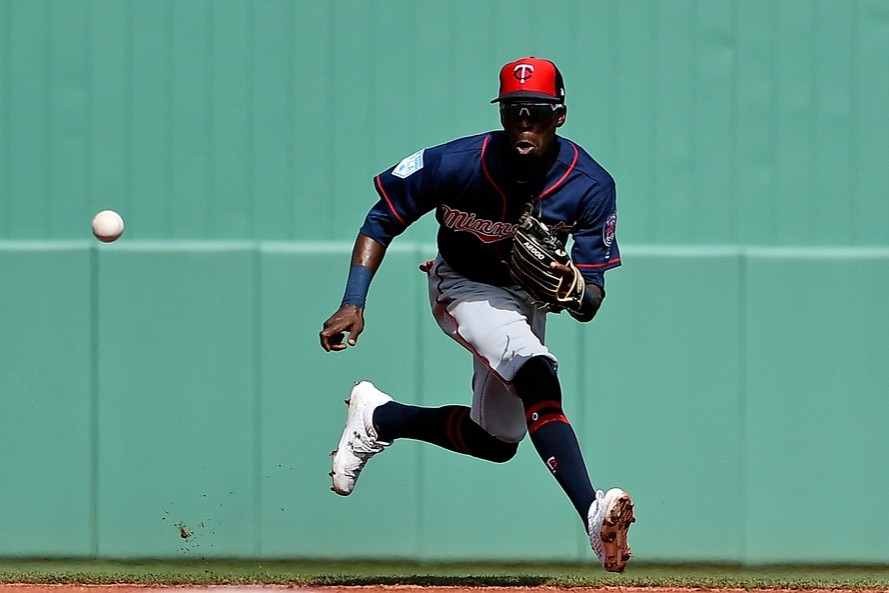 Early on as a prospect, Gordon’s skills were disputed by a number of different evaluators as some thought his glove wouldn’t be able to play at SS and he would never hit for enough power to play at a high level. Some saw his jack-of-all-trades type of skill set as being able to could develop as he continued on through the minors. In MLB.com’s write-up for Gordon in 2014, they detailed him as having “...the actions and arm to stick at shortstop…” with...plus speed [that] plays well on the bases.” They go on to describe him as utilizing “...a solid left-handed swing and uses the whole field to hit.” His talent and ability was enough to land him at 37 on their top 100 prospect list that year. For the first few years, Gordon held his own as he put up a modest 101 wRC+ in rookie ball in 2014 and a 104 mark in 2015 at Low-A. While certainly far from setting the world on fire, simply holding your own in the beginning of professional baseball is noteworthy in itself. Especially considering that Gordon had not yet hit 20-years-old after his 2015 season in Low-A. Both 2016 and '17 helped Gordon’s prospect status a bit more as he bumped his wRC+ totals on the year up to 112 in 2016 at High A and 117 at AA, respectively. What was probably the most important development for Gordon was that he set a new career high for ISO (isolated power) in his 2017 season at AA as he finally broke through the .100 level and ended with a .139 mark on the season. While ISO is far from being an end-all, be-all statistic, there is a certain threshold that most hitters need to reach to be considered a quality batter in the day and age of power. Just four qualified hitters in 2019 in MLB held an ISO below .100 and the names near the bottom of the list don’t inspire much confidence at all, so Gordon adding some power seemed to be a big step forward for him. Things took a turn for the worse in 2018 for Gordon’s baseball career. After destroying AA to start the year, Gordon was promoted to AAA where he hit for a paltry 52 wRC+ over 410 plate appearances. Around this time is the doubters spoke even louder and prospect evaluators quickly knocked Gordon down into a lower pool of players at the 40 FV level. Gordon was able to bounce back in 2019 at AAA as he hit for a 102 wRC+ with the highest ISO of his career but in a league where offense reigned supreme, these numbers were hardly eye-popping and the damage was already done to his prospect status. Luis Arráez leapfrogged Gordon, and at the age of 22, he hit better at the major league level than Gordon did at AAA. Now with Arráez most likely penciled in at 2B for the future, Jorge Polanco locked in at SS for a number of years, and Miguel Sanó at 3B at least for the near future, the potential for any starting position for Gordon seems unlikely. Throw in that Royce Lewis will presumably make his debut soon and now Gordon is sitting on the outside looking in on a Twins team that has probably passed him by. On Oct. 24, the day this article will go up, Gordon will celebrate his 24th birthday, but it could very well be his last one in the Twins’ system. Already armed with a full infield and with some glaring needs in the starting rotation, Gordon looks to be a potential trade chip over the offseason instead of the future infielder that we were promised years ago. Please share your thoughts in the comments below. Not registered? Click here to create an account. To stay up to date, follow Twins Daily on Twitter and Facebook. MORE FROM TWINS DAILY — Miguel Sano Finally Met Expectations in 2019 — Handbook Preview: Glen Perkins Reviewing Relievers — Handbook Preview: Dan Hayes on Recharging the Batterymate
 -
I explained it more in a video I have that I might drag up but if you're wondering why I had Buxton as my number 1, here it is: Really it came down to the level of play the team had with Buxton on the field and with him off it. With Buxton, they played at an astonishing level as you can see by their record and without him they were just solid. He is the backbone of this team in my opinion and is the most irreplaceable player on the squad and that is what I define value to be.
-
An unusual event occurred on Sept. 8. No, it wasn’t that the Vikings won their season opener. No, it wasn’t the fact that it was National Grandparent’s Day. And no, it wasn’t that I listened to the Shrek soundtrack while driving home that day. On Sept. 8, Cody Stashak walked his first (and so far, only) batter of the season in MLB. It was a full count and even looking at the video, the pitch seemed like a pretty solid strikeout pitch, Yu Chang just had a good take.Walks are by no means unique in any game as pitchers sometimes lose command in a given plate appearance or hitters have some especially good takes. But for Stashak, that walk is the only one he allowed in the 25 innings he pitched at the major league level this year. This gave him a BB/9 on the year of 0.36 and a BB% that was an astonishing 1% in 2019. For comparison, Josh Tomlin and Chris Martin both held the lowest BB% by a qualified reliever in 2019 with a 2.3% mark. Right around when he was called up, Stashak talked about what his focus was for pitching in MLB: A straight-to-the-point answer, yes, but sometimes flippancy is the most effective way at communicating a game plan and for Stashak, his game plan was executed to perfection. Before I move on, just know that I am about to bastardize the concept of sample size and draw from evidence that is not completely whole given that Stashak has just 25 innings to his name at the major league level. But, there is no statistician that can currently reach me and strangle me to death before I do this so I will continue on until forced otherwise. “Just throw strikes” is a bit of a buzz phrase in baseball mostly yelled by angry middle-aged men who would crap themselves if they ever got buzzed by an average heater. Never mind the fact that every pitcher, ever, knows that he needs to throw strikes or that not throwing strikes may actually be the superior plan. No, throwing strikes to some is the greatest thing since sliced bread, or Radiohead’s “Kid A”. Throwing strikes seems to be almost an addiction for Stashak, something he just can’t help himself from doing. He led the league in rate of pitches in the strike zone (minimum 20 innings) at 52.3%. A rookie throwing strikes at such a rate is almost unheard of and Stashak’s zone% in 2019 would put him 13th among all rookie relievers with at least 20 IP since 2010. Is that too contrived? Well, Stashak’s zone% is also seventh best among all rookie pitchers with at least 20 IP over the last three years. Stashak has been more than just a strike-thrower, though. If you’re looking for swing-and-miss ability. Stashak's 17.1% swinging strike rate ranked 15th among all pitchers with at least 20 IP in 2019 and was the highest of any Twin. Somewhat predictably, his odds of getting a swing on a pitch outside of the zone (O-Swing %) was the 12th highest in MLB among pitchers with at least 20 IP (38.6% was oddly enough right behind Randy Dobnak who had a 39.2% rate). What makes Stashak so deadly is that he has been formed in the mold of a modern reliever in that he matches a high fastball with a slider low and away to right-handed hitters. Stashak’s fastball has two less inches of drop compared to league average fastballs and his slider has four more inches of horizontal break compared to league average sliders. Less drop on his fastball gives it that “rising” effect that some hitters talk about and makes it a great pitch up in the zone while the extra horizontal slider movement makes his breaker especially effective when thrown outside to righties. Stashak was a strike-throwing machine who could get his stuff by hitters with ease even when not throwing pitches in the zone and without elite velocity (average fastball velo was 91.8 MPH). He understands what he has to do in order to get hitters out with his stuff and he has the precise ability to execute that plan. There aren’t many players who I can give a comp with as most relievers these days tend to hold a higher velocity. But as long as Stashak continues throwing fastballs up and sliders low, he should be able to get hitters out at the major league level. While he was not much of a prospect, Stashak has solidified himself in a major league bullpen and will look to be an important piece for the Twins going forward. Click here to view the article
-
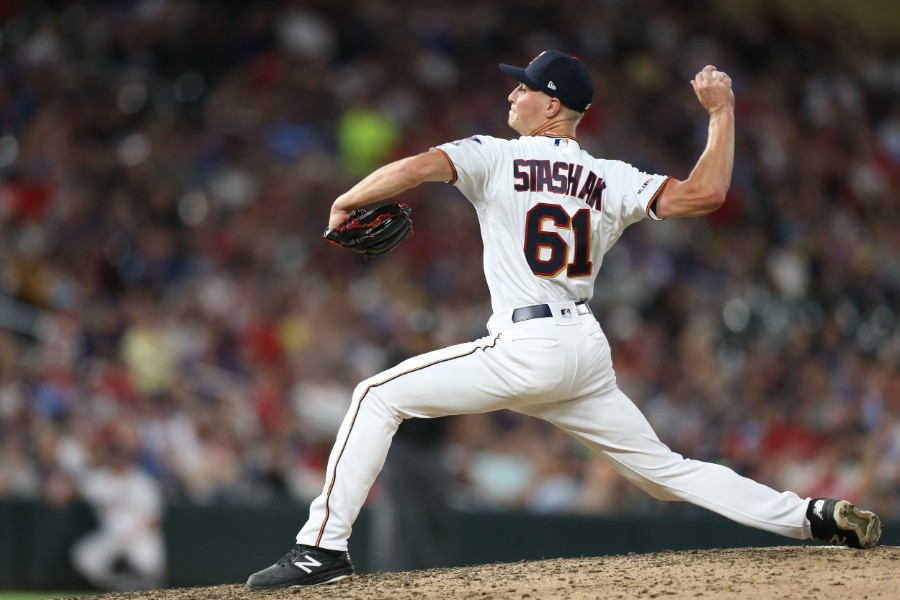 Walks are by no means unique in any game as pitchers sometimes lose command in a given plate appearance or hitters have some especially good takes. But for Stashak, that walk is the only one he allowed in the 25 innings he pitched at the major league level this year. This gave him a BB/9 on the year of 0.36 and a BB% that was an astonishing 1% in 2019. For comparison, Josh Tomlin and Chris Martin both held the lowest BB% by a qualified reliever in 2019 with a 2.3% mark. Right around when he was called up, Stashak talked about what his focus was for pitching in MLB: https://twitter.com/dohyoungpark/status/1153432879394934786 A straight-to-the-point answer, yes, but sometimes flippancy is the most effective way at communicating a game plan and for Stashak, his game plan was executed to perfection. Before I move on, just know that I am about to bastardize the concept of sample size and draw from evidence that is not completely whole given that Stashak has just 25 innings to his name at the major league level. But, there is no statistician that can currently reach me and strangle me to death before I do this so I will continue on until forced otherwise. “Just throw strikes” is a bit of a buzz phrase in baseball mostly yelled by angry middle-aged men who would crap themselves if they ever got buzzed by an average heater. Never mind the fact that every pitcher, ever, knows that he needs to throw strikes or that not throwing strikes may actually be the superior plan. No, throwing strikes to some is the greatest thing since sliced bread, or Radiohead’s “Kid A”. Throwing strikes seems to be almost an addiction for Stashak, something he just can’t help himself from doing. He led the league in rate of pitches in the strike zone (minimum 20 innings) at 52.3%. A rookie throwing strikes at such a rate is almost unheard of and Stashak’s zone% in 2019 would put him 13th among all rookie relievers with at least 20 IP since 2010. Is that too contrived? Well, Stashak’s zone% is also seventh best among all rookie pitchers with at least 20 IP over the last three years. Stashak has been more than just a strike-thrower, though. If you’re looking for swing-and-miss ability. Stashak's 17.1% swinging strike rate ranked 15th among all pitchers with at least 20 IP in 2019 and was the highest of any Twin. Somewhat predictably, his odds of getting a swing on a pitch outside of the zone (O-Swing %) was the 12th highest in MLB among pitchers with at least 20 IP (38.6% was oddly enough right behind Randy Dobnak who had a 39.2% rate). What makes Stashak so deadly is that he has been formed in the mold of a modern reliever in that he matches a high fastball with a slider low and away to right-handed hitters. Stashak’s fastball has two less inches of drop compared to league average fastballs and his slider has four more inches of horizontal break compared to league average sliders. https://twitter.com/matthew_btwins/status/1184942051198001152 Less drop on his fastball gives it that “rising” effect that some hitters talk about and makes it a great pitch up in the zone while the extra horizontal slider movement makes his breaker especially effective when thrown outside to righties. https://twitter.com/matthew_btwins/status/1184946993489051648 Stashak was a strike-throwing machine who could get his stuff by hitters with ease even when not throwing pitches in the zone and without elite velocity (average fastball velo was 91.8 MPH). He understands what he has to do in order to get hitters out with his stuff and he has the precise ability to execute that plan. There aren’t many players who I can give a comp with as most relievers these days tend to hold a higher velocity. But as long as Stashak continues throwing fastballs up and sliders low, he should be able to get hitters out at the major league level. While he was not much of a prospect, Stashak has solidified himself in a major league bullpen and will look to be an important piece for the Twins going forward.
 -
This Cody Stashak hill sure is a lonely one to be on I guess
-
This 2019 season was a very interesting one for the Minnesota Twins for a number of reasons. There are many ways to dissect what went right and what went wrong, but more than anything, this season dished out some crucial lessons that the Twins will need to understand if they plan on having more success going forward. Let's review the four major concepts that stuck out to me.1. The position player core is solid The question of the off-season last year was whether or not Byron Buxton and Miguel Sanó would be a part of the Twins future, and if they were, then to what degree? That question was partly answered as Sanó hit for a career high 137 wRC+ and put up a career high fWAR of 2.7 despite just playing 105 games. His defense at third base remained rough, but there should be no more disputes about his bat playing at the major league level. Buxton’s answer to the question may not be as murky as split pea soup, but it isn’t as clear as the Twins would like. Buxton’s on-field play was fantastic, as he put up 2.7 fWAR in just 87 games played. But it’s that “87 games played” that again raises concern, considering that this was another season where he struggled to stay healthy. Buxton’s talent level will force the Twins to stick with him, but another injury-plagued season may lead them to look elsewhere. Beyond those two players there were a few others who were overlooked like I was when they picked teams for dodge ball during gym class. These players put up seasons that were actually better than the two players who were the focus of the off-season. This is where I struggled, because while they had great seasons, I just got nailed in the spleen within three minutes, and you know what? Let’s just forget it. Anyways, players like Max Kepler, Jorge Polanco, and Mitch Garver sat on the back burner over the off-season with the two former players receiving the spotlight only when they signed extensions during the start of spring training. Perhaps they should have been focused on more as Kepler broke out with a 4.4 fWAR season, Polanco had a 4.0 fWAR season, and Garver turned into Mike Piazza and put up 3.9 fWAR in just 93 games. Now also armed with Luis Arráez at second base, who looks to be Tony Gwynn 2.0, the Twins have a formidable core of young position players all either in pre-arbitration, just starting arbitration, or already extended for a number of years. The next step will be to figure out whether Eddie Rosario has a future on the team, as he put up his worst full season fWAR total with his bat and defense both regressing. With Alex Kirilloff and Trevor Larnach looking to make a potential impact soon, Rosario may be on the move as the Twins look to upgrade their starting pitching. 2. A flexible bullpen is a good bullpen Take a good look at the names in the bullpen to start the season and the names that were there in the end and try not to get a hearty chuckle out of it. Of all the pitchers on the Twins’ ALDS roster, only Taylor Rogers and Trevor May started the season with the major league team. Players like Zack Littell, Cody Stashak, and Tyler Duffey joined the team from Triple A and made major impacts over the season before eventually finding themselves on a postseason roster. On the flip side, relievers like Matt Magill, Blake Parker, and Adalberto Mejía were on the team during the start of the season but were all victims of the DFA hammer as they were not effective enough in the Twins’ eyes and were shown the door. But more than their sporadic effectiveness was the ultimate sin of not having any minor league options remaining. These days, the 25-man roster is stretched to the point where it becomes more of a 28-man roster, as relievers with options are shipped to the minors in return for more relievers with options as teams simply can’t employ enough fresh arms at the same time under the current roster rules. The end result was almost a clean sweep as the Twins rid themselves of arms without options in favor of young relievers. With those new players in the mix, the Twins’ bullpen peaked. The Twins’ bullpen ranked second in the majors in reliever fWAR from August until the end of the season thanks in part to addition Sergio Romo and great performances from those aforementioned young relievers. Now the Twins have a solid core of Taylor Rogers, Trevor May, Tyler Duffey, Cody Stashak, and Zack Littell with an opportunity to mold their bullpen into something more. 3. The starting rotation is never complete Perhaps no part of the team in 2019 was more in sync with the general plot of a Michael Bay movie than the starting rotation. At times it was flashy and awe-inspiring, at others it was dull and joyless. In total, it was a decent 5/10 that I would like to never see again. From the start of the season until June, the Twins’ starting rotation was third in baseball with a 3.55 ERA, and while there were some peripherals that suggested regression, it seemed like they had the tools to succeed. There was a lull in the middle of the season and then from August onward the Twins ranked 19th in baseball by starting pitching ERA. Reasons for this included the Michael Pineda suspension, the regression of Martín Pérez, and the health issues Kyle Gibson faced. Jake Odorizzi and José Berríos remained anchors in the rotation, but the deck of starting pitching cards shuffled consistently. Devin Smeltzer, Lewis Thorpe, and Randy Dobnak did their best to glue it together down the stretch. Ultimately it was too little too late and the weakness reared its ugly head during the postseason, as Dobnak started Game 2 of the ALDS. It went quite poorly. The Pineda suspension could not have been anticipated and was possibly the worst-case scenario for the rotation, but it brings us back to the eyebrow-raising decision made when the Twins did nothing before the trade deadline to upgrade a rotation that was starting to show signs of breaking down. Not only that, but when the draft pick compensation was removed from Dallas Keuchel, the Twins decided to hold their ground. Not too long afterward, a quality starter quickly went from a luxury to a necessity. Going forward, the Twins should act more swiftly in regard to rotation concerns and build depth to handle such events. 4. Clubhouse chemistry is crucial This one is about 70% speculation on my part simply because I have never been in the Twins clubhouse and have no clue what the personal relationships are like there. From watching the team play, listening to Rocco Baldelli and Nelson Cruz, and seeing how the players responded to adversity, however, it appears the 2019 Twins team was a close-knit bunch who got along quite well. Contrast that with the 2018 team that employed two notably salty dogs in Lance Lynn and Logan Morrison, who both seemed none too pleased about how their respective free agencies went. Throw on top of that a few trades that saw some favorites leave town and, well, it seemed that the clubhouse chemistry was like oil and water. This year, however, story after story poured out about how well the group got along and how cohesive they were on a day-to-day basis. From Rocco’s calm stoicism to Derek Shelton and “LAF” to Nelson Cruz’s naps and then to Marwin González facetiming Michael Pineda and Byron Buxton while celebrating the division title, each report indicated that this was a group playing together instead of for themselves and that may have been a major reason for success. Wherever this is stemming from, hopefully the team chemistry is systemic and something that continues even as old players leave and new players join. Now armed with this knowledge, it will be interesting to see how the front office runs the off-season. I'd ask for more but we all know what hope brings us Minnesota sports fans. Click here to view the article
-
4 Crucial Lessons to Take Away from the 2019 Minnesota Twins Season
Matt Braun posted an article in Twins
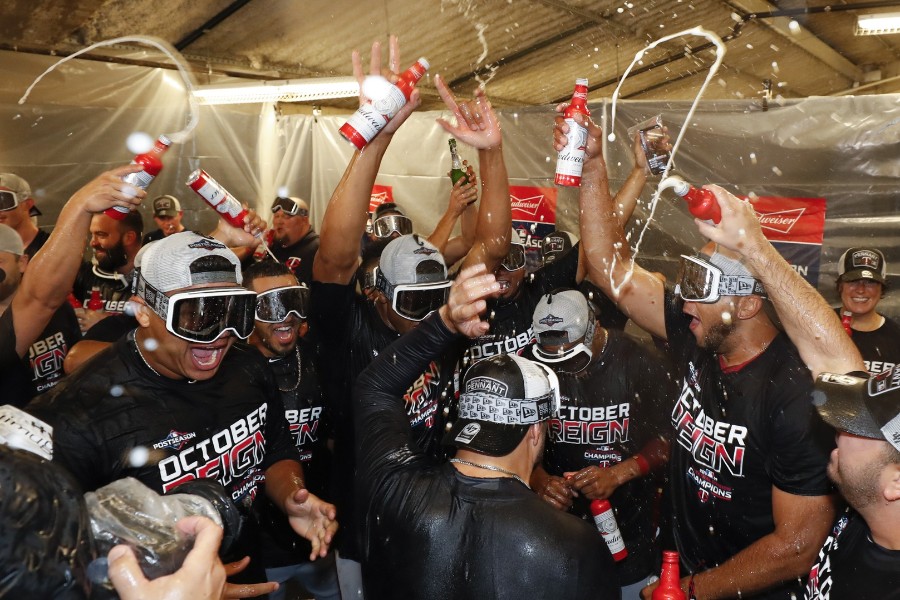 1. The position player core is solid The question of the off-season last year was whether or not Byron Buxton and Miguel Sanó would be a part of the Twins future, and if they were, then to what degree? That question was partly answered as Sanó hit for a career high 137 wRC+ and put up a career high fWAR of 2.7 despite just playing 105 games. His defense at third base remained rough, but there should be no more disputes about his bat playing at the major league level. Buxton’s answer to the question may not be as murky as split pea soup, but it isn’t as clear as the Twins would like. Buxton’s on-field play was fantastic, as he put up 2.7 fWAR in just 87 games played. But it’s that “87 games played” that again raises concern, considering that this was another season where he struggled to stay healthy. Buxton’s talent level will force the Twins to stick with him, but another injury-plagued season may lead them to look elsewhere. Beyond those two players there were a few others who were overlooked like I was when they picked teams for dodge ball during gym class. These players put up seasons that were actually better than the two players who were the focus of the off-season. This is where I struggled, because while they had great seasons, I just got nailed in the spleen within three minutes, and you know what? Let’s just forget it. Anyways, players like Max Kepler, Jorge Polanco, and Mitch Garver sat on the back burner over the off-season with the two former players receiving the spotlight only when they signed extensions during the start of spring training. Perhaps they should have been focused on more as Kepler broke out with a 4.4 fWAR season, Polanco had a 4.0 fWAR season, and Garver turned into Mike Piazza and put up 3.9 fWAR in just 93 games. Now also armed with Luis Arráez at second base, who looks to be Tony Gwynn 2.0, the Twins have a formidable core of young position players all either in pre-arbitration, just starting arbitration, or already extended for a number of years. The next step will be to figure out whether Eddie Rosario has a future on the team, as he put up his worst full season fWAR total with his bat and defense both regressing. With Alex Kirilloff and Trevor Larnach looking to make a potential impact soon, Rosario may be on the move as the Twins look to upgrade their starting pitching. 2. A flexible bullpen is a good bullpen Take a good look at the names in the bullpen to start the season and the names that were there in the end and try not to get a hearty chuckle out of it. Of all the pitchers on the Twins’ ALDS roster, only Taylor Rogers and Trevor May started the season with the major league team. Players like Zack Littell, Cody Stashak, and Tyler Duffey joined the team from Triple A and made major impacts over the season before eventually finding themselves on a postseason roster. On the flip side, relievers like Matt Magill, Blake Parker, and Adalberto Mejía were on the team during the start of the season but were all victims of the DFA hammer as they were not effective enough in the Twins’ eyes and were shown the door. But more than their sporadic effectiveness was the ultimate sin of not having any minor league options remaining. These days, the 25-man roster is stretched to the point where it becomes more of a 28-man roster, as relievers with options are shipped to the minors in return for more relievers with options as teams simply can’t employ enough fresh arms at the same time under the current roster rules. The end result was almost a clean sweep as the Twins rid themselves of arms without options in favor of young relievers. With those new players in the mix, the Twins’ bullpen peaked. The Twins’ bullpen ranked second in the majors in reliever fWAR from August until the end of the season thanks in part to addition Sergio Romo and great performances from those aforementioned young relievers. Now the Twins have a solid core of Taylor Rogers, Trevor May, Tyler Duffey, Cody Stashak, and Zack Littell with an opportunity to mold their bullpen into something more. 3. The starting rotation is never complete Perhaps no part of the team in 2019 was more in sync with the general plot of a Michael Bay movie than the starting rotation. At times it was flashy and awe-inspiring, at others it was dull and joyless. In total, it was a decent 5/10 that I would like to never see again. From the start of the season until June, the Twins’ starting rotation was third in baseball with a 3.55 ERA, and while there were some peripherals that suggested regression, it seemed like they had the tools to succeed. There was a lull in the middle of the season and then from August onward the Twins ranked 19th in baseball by starting pitching ERA. Reasons for this included the Michael Pineda suspension, the regression of Martín Pérez, and the health issues Kyle Gibson faced. Jake Odorizzi and José Berríos remained anchors in the rotation, but the deck of starting pitching cards shuffled consistently. Devin Smeltzer, Lewis Thorpe, and Randy Dobnak did their best to glue it together down the stretch. Ultimately it was too little too late and the weakness reared its ugly head during the postseason, as Dobnak started Game 2 of the ALDS. It went quite poorly. The Pineda suspension could not have been anticipated and was possibly the worst-case scenario for the rotation, but it brings us back to the eyebrow-raising decision made when the Twins did nothing before the trade deadline to upgrade a rotation that was starting to show signs of breaking down. Not only that, but when the draft pick compensation was removed from Dallas Keuchel, the Twins decided to hold their ground. Not too long afterward, a quality starter quickly went from a luxury to a necessity. Going forward, the Twins should act more swiftly in regard to rotation concerns and build depth to handle such events. 4. Clubhouse chemistry is crucial This one is about 70% speculation on my part simply because I have never been in the Twins clubhouse and have no clue what the personal relationships are like there. From watching the team play, listening to Rocco Baldelli and Nelson Cruz, and seeing how the players responded to adversity, however, it appears the 2019 Twins team was a close-knit bunch who got along quite well. Contrast that with the 2018 team that employed two notably salty dogs in Lance Lynn and Logan Morrison, who both seemed none too pleased about how their respective free agencies went. Throw on top of that a few trades that saw some favorites leave town and, well, it seemed that the clubhouse chemistry was like oil and water. This year, however, story after story poured out about how well the group got along and how cohesive they were on a day-to-day basis. From Rocco’s calm stoicism to Derek Shelton and “LAF” to Nelson Cruz’s naps and then to Marwin González facetiming Michael Pineda and Byron Buxton while celebrating the division title, each report indicated that this was a group playing together instead of for themselves and that may have been a major reason for success. https://twitter.com/Carlson_MnTwins/status/1177252799450624001 Wherever this is stemming from, hopefully the team chemistry is systemic and something that continues even as old players leave and new players join. Now armed with this knowledge, it will be interesting to see how the front office runs the off-season. I'd ask for more but we all know what hope brings us Minnesota sports fans.
 -
So, after nine years of waiting (and mainly losing), the Twins reach their first playoff series since the inaugural season of Target Field. A great number of things have occurred since that series in 2010 including the death of Osama Bin Laden, the official ending of the Iraq war, and about 20 terrible Godzilla movies. Naturally, the team that awaits the Twins this year is the same team that has knocked them out of the playoffs the last three times the Twins have made it and five of the last six times that the Twins have reached the playoffs. I don’t need to say the team by name as even just thinking about them sends a cold chill down the spine of any Twins fan, but hopefully this year will be different. Of course, I had to go with The Strokes for my artist reference but instead of “Is This It” (which is way more doubtful in tone), I decided to switch it to “This Is It” because again, I make the rules.Brief Overview: Strip away the jerseys, the locations, and the history, and these are two remarkably similar teams. The Twins ended up finishing the season with just one more homer than the Yankees in order to be officially dubbed the home run champ of MLB, but the Yankees look to be their match in just about every offensive category. Conversely, both teams have rock solid bullpens and suspect starting pitching, giving us a match-up that will certainly be interesting to watch as it unfolds. What They Do Well: When talking about the 2019 Yankees, the most immediate topic is their great offense. Not only did they give the Twins a run for their money in the home run chase, they actually ended up a single point ahead of them in team wRC+ (117 to 116). One point of difference is essentially meaningless but the Yankees’ feat is especially impressive when you consider that Giancarlo Stanton barely played, Aaron Judge missed some time, Aaron Hicks is now out for the year, Didi Gregorius played just 82 games, and Edwin Encarnación has struggled with his own injuries since being traded to the Yankees. The depth players such as Gio Urshela and Cameron Maybin have been the backbone to a Yankees offense that has almost never been at full strength and it is in those players especially where the Yankees lineup goes from good to elite. The other great strength for the Yankees is found in their bullpen. Not entirely surprising as they have had a death bullpen for about three years now and it seemed like they were well on their way to a historic one in 2019. While they never quite reached that height, the Yankees’ bullpen sits at second in baseball by fWAR and their collection of relievers is one of just three groups with a total fWAR over seven (Rays ahead of them at 7.6, Twins below them at 7.3). Needless to say, they will be relying heavily on this group in each game and it won’t be surprising at all if each Yankees starter has a short leash. What They Do Not Do Well: We have covered their offense and relief pitching so far and both have been great, there has to be somewhere where they falter, right? Indeed there is, as their starting pitching fWAR was good for 17th in all of baseball with their 10.6 mark being exactly as good as the Tigers. Now, this isn’t crap-all-over-the-Tigers week because I’ve already done that about three times this year, but being tied with that team in anything is never a good sign. The Yankees boast a solid 1-2 punch of James Paxton and Masahiro Tanaka, but the quality of starters drops immediately and the volatility goes through the roof. Thanks to Domingo Germán losing postseason eligibility due to his domestic violence incident, the next two starters become J.A. Happ and his 5.34 FIP and Luis Severino who has thrown all of 12 innings in MLB this season. This is where the Twins will have an opportunity to take advantage and possibly put up runs quickly. Hilariously, the Yankees have the sixth lowest number of stolen bases in MLB this year. This is funny because the Twins have by far the lowest total at just 28 swiped bags (second lowest is the Cubs at 45). While this is less “what do they not do well” and more “what are they not even trying to do”, it still is notable that the Yankees will mainly stick to hitting for power when it comes to scoring runs in the series and the Twins will most definitely follow suit. Individuals Of Note: For a team historically known for cartoonish evil and throwing money at anyone that walked, the modern Yankees are somewhat the reverse of that as they are full of players either developed internally or targeted from other teams in order to improve when they join New York. The shining example of this in 2019 is D.J. LeMahieu who was finally freed from the oppressive confines of Coors Field when he signed a somewhat modest deal with the Yankees this last offseason. The result is a massive 5.4 fWAR season that saw him top his career high for wRC+ with a 136 mark. LeMahieu will likely serve as the leadoff hitter and his .375 OBP in 2019 will serve the Yankees well in this series. There are currently just two players currently on the Yankees who were with them when they last played the Twins in a playoff series. One is C.C. Sabathia who might not make the ALDS roster and the other is Brett Gardner who continued to defy age as he put up yet another solid season for the Yanks. His 115 wRC+ was his highest since 2012 and he set a new career high in isolated power with a .253 mark that absolutely destroyed his last career high. Somehow, he remains a thorn in the side of other teams and I can assure you that he will be a pest in this series as well. There are four names the Twins and their fans need to know; Adam Ottavino, Tommy Kahnle, Zack Britton, and Aroldis Chapman. These four horsemen of the apocalypse stand as the most trusted relievers in Aaron Boone’s back pocket and they will be called on in whatever situation presents itself. Chapman has been melting faces for awhile so I don’t think I need to talk about him too much as has Zack Britton who has somewhat suspect peripherals (3.74 FIP) but a cartoonishly high ground ball rate of 77.2% and a past history of success. Tommy Kahnle is the “Jekyll and Hyde” member of the bullpen as he was all sorts of awful last year but is back to dominating this year to the tune of a 3.33 FIP thanks in part to his 90 MPH changeup (for real). Adam Ottavino is the newcomer who has video game-like movement on his pitches but is also known for walking his fair share of batters with a career BB/9 of 4.02 and a 2019 BB/9 of 5.43. This is the kind of stuff the Twins will have to navigate through in order to beat the Yankees and I can guarantee that a number of games in the series will come down to which bullpen didn’t falter that day and which one did. Recent History: The Twins and Yankees played two series this season and the Yankees won both 2-1 giving them the season series at 4-2. Although, every game except for one was within three runs and the one game that wasn’t was the Twins’ lone win in Yankee Stadium this year. Pitching Match-ups: Friday: Berríos vs Paxton Saturday: TBD vs Tanaka Monday: TBD vs Severino No pitching matchups have been announced as of writing this article on Wednesday night. The matchups will be updated as the announcements are made. Ending Thoughts: Well, here it is! This is the reason why we pour so much energy into following a team over the off season and during the long season. There really is nothing quite like postseason baseball and it gets even better when the team that you root for is one of the few that will play. For the Twins, this is the result of a multi-year effort full of botched moves and fired personnel as the 2019 team finally broke through to win the division in epic fashion. From here on out, everything will be under a microscope as each mistake and clutch play will be amplified under the pressure that is the postseason. Will the Rocco Baldelli-fronted Twins finally slay the Yankee dragon that haunted the Ron Gardenhire squads of the past or will the Twins’ incredible run be cut short? Frankly, I’m not someone that can see into the future, but the pessimism of the past cannot bring me down as I predict that the Twins will indeed win a playoff series against the Yankees. See Also Looking at When Odorizzi Should Pitch in the Playoffs Yankees' Weaknesses: The Lineup Attacking the Heart of the Yankees Order: Part 1 Damage Control: Pitching is Minnesota's Primary Advantage in ALDS How Minnesota Can Punch Against Paxton The Only Twins-Yankees History That Might Actually Matter Click here to view the article
-
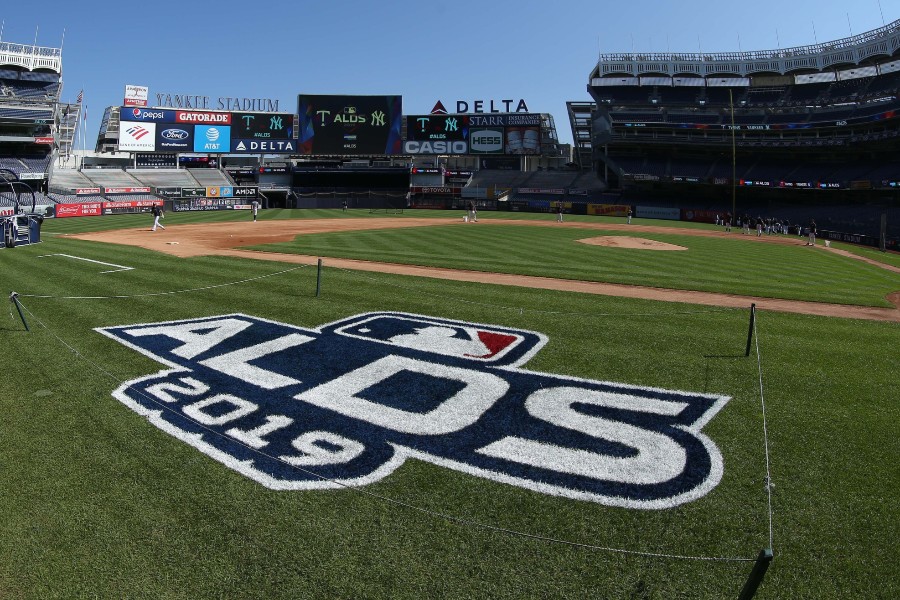 Brief Overview: Strip away the jerseys, the locations, and the history, and these are two remarkably similar teams. The Twins ended up finishing the season with just one more homer than the Yankees in order to be officially dubbed the home run champ of MLB, but the Yankees look to be their match in just about every offensive category. Conversely, both teams have rock solid bullpens and suspect starting pitching, giving us a match-up that will certainly be interesting to watch as it unfolds. What They Do Well: When talking about the 2019 Yankees, the most immediate topic is their great offense. Not only did they give the Twins a run for their money in the home run chase, they actually ended up a single point ahead of them in team wRC+ (117 to 116). One point of difference is essentially meaningless but the Yankees’ feat is especially impressive when you consider that Giancarlo Stanton barely played, Aaron Judge missed some time, Aaron Hicks is now out for the year, Didi Gregorius played just 82 games, and Edwin Encarnación has struggled with his own injuries since being traded to the Yankees. The depth players such as Gio Urshela and Cameron Maybin have been the backbone to a Yankees offense that has almost never been at full strength and it is in those players especially where the Yankees lineup goes from good to elite. The other great strength for the Yankees is found in their bullpen. Not entirely surprising as they have had a death bullpen for about three years now and it seemed like they were well on their way to a historic one in 2019. While they never quite reached that height, the Yankees’ bullpen sits at second in baseball by fWAR and their collection of relievers is one of just three groups with a total fWAR over seven (Rays ahead of them at 7.6, Twins below them at 7.3). Needless to say, they will be relying heavily on this group in each game and it won’t be surprising at all if each Yankees starter has a short leash. What They Do Not Do Well: We have covered their offense and relief pitching so far and both have been great, there has to be somewhere where they falter, right? Indeed there is, as their starting pitching fWAR was good for 17th in all of baseball with their 10.6 mark being exactly as good as the Tigers. Now, this isn’t crap-all-over-the-Tigers week because I’ve already done that about three times this year, but being tied with that team in anything is never a good sign. The Yankees boast a solid 1-2 punch of James Paxton and Masahiro Tanaka, but the quality of starters drops immediately and the volatility goes through the roof. Thanks to Domingo Germán losing postseason eligibility due to his domestic violence incident, the next two starters become J.A. Happ and his 5.34 FIP and Luis Severino who has thrown all of 12 innings in MLB this season. This is where the Twins will have an opportunity to take advantage and possibly put up runs quickly. Hilariously, the Yankees have the sixth lowest number of stolen bases in MLB this year. This is funny because the Twins have by far the lowest total at just 28 swiped bags (second lowest is the Cubs at 45). While this is less “what do they not do well” and more “what are they not even trying to do”, it still is notable that the Yankees will mainly stick to hitting for power when it comes to scoring runs in the series and the Twins will most definitely follow suit. Individuals Of Note: For a team historically known for cartoonish evil and throwing money at anyone that walked, the modern Yankees are somewhat the reverse of that as they are full of players either developed internally or targeted from other teams in order to improve when they join New York. The shining example of this in 2019 is D.J. LeMahieu who was finally freed from the oppressive confines of Coors Field when he signed a somewhat modest deal with the Yankees this last offseason. The result is a massive 5.4 fWAR season that saw him top his career high for wRC+ with a 136 mark. LeMahieu will likely serve as the leadoff hitter and his .375 OBP in 2019 will serve the Yankees well in this series. There are currently just two players currently on the Yankees who were with them when they last played the Twins in a playoff series. One is C.C. Sabathia who might not make the ALDS roster and the other is Brett Gardner who continued to defy age as he put up yet another solid season for the Yanks. His 115 wRC+ was his highest since 2012 and he set a new career high in isolated power with a .253 mark that absolutely destroyed his last career high. Somehow, he remains a thorn in the side of other teams and I can assure you that he will be a pest in this series as well. There are four names the Twins and their fans need to know; Adam Ottavino, Tommy Kahnle, Zack Britton, and Aroldis Chapman. These four horsemen of the apocalypse stand as the most trusted relievers in Aaron Boone’s back pocket and they will be called on in whatever situation presents itself. Chapman has been melting faces for awhile so I don’t think I need to talk about him too much as has Zack Britton who has somewhat suspect peripherals (3.74 FIP) but a cartoonishly high ground ball rate of 77.2% and a past history of success. Tommy Kahnle is the “Jekyll and Hyde” member of the bullpen as he was all sorts of awful last year but is back to dominating this year to the tune of a 3.33 FIP thanks in part to his 90 MPH changeup (for real). https://twitter.com/PitchingNinja/status/1166306014020415490 Adam Ottavino is the newcomer who has video game-like movement on his pitches but is also known for walking his fair share of batters with a career BB/9 of 4.02 and a 2019 BB/9 of 5.43. https://twitter.com/PitchingNinja/status/1168264275644862470 This is the kind of stuff the Twins will have to navigate through in order to beat the Yankees and I can guarantee that a number of games in the series will come down to which bullpen didn’t falter that day and which one did. Recent History: The Twins and Yankees played two series this season and the Yankees won both 2-1 giving them the season series at 4-2. Although, every game except for one was within three runs and the one game that wasn’t was the Twins’ lone win in Yankee Stadium this year. Pitching Match-ups: Friday: Berríos vs Paxton Saturday: TBD vs Tanaka Monday: TBD vs Severino No pitching matchups have been announced as of writing this article on Wednesday night. The matchups will be updated as the announcements are made. Ending Thoughts: Well, here it is! This is the reason why we pour so much energy into following a team over the off season and during the long season. There really is nothing quite like postseason baseball and it gets even better when the team that you root for is one of the few that will play. For the Twins, this is the result of a multi-year effort full of botched moves and fired personnel as the 2019 team finally broke through to win the division in epic fashion. From here on out, everything will be under a microscope as each mistake and clutch play will be amplified under the pressure that is the postseason. Will the Rocco Baldelli-fronted Twins finally slay the Yankee dragon that haunted the Ron Gardenhire squads of the past or will the Twins’ incredible run be cut short? Frankly, I’m not someone that can see into the future, but the pessimism of the past cannot bring me down as I predict that the Twins will indeed win a playoff series against the Yankees. See Also Looking at When Odorizzi Should Pitch in the Playoffs Yankees' Weaknesses: The Lineup Attacking the Heart of the Yankees Order: Part 1 Damage Control: Pitching is Minnesota's Primary Advantage in ALDS How Minnesota Can Punch Against Paxton The Only Twins-Yankees History That Might Actually Matter
 -
Welcome to the final regular-season series of the year! It’s been a fun ride that started with tracking spring training performances and story lines that will soon end with a division title and a dance with another team in the ALDS. At this point, the only thing that the Twins could possibly gain by winning games is potential home-field advantage in the World Series against the Atlanta Braves. But, we are all baseball addicts at heart, so we shall follow each game like normal but without the agony that comes from the potential division implications a loss holds. Also of note; this is the final series in the managing career of Ned Yost who announced recently that he would be retiring after this season. I’m sure Ned will have a hard time buying his own drinks in public as he brought KC their first championship since 1985 when the Royals won it all in 2015.Brief Overview: As one of the 100-loss teams in MLB, the Royals have quite nearly been as bad as the Twins have been good. Having four teams with 100 losses certainly can’t be healthy for the league, but until tanking loses its incentives, this will most certainly continue. Do not get it twisted at all, this is a tanking team who would probably appreciate it if the Twins helped their cause by moving them up draft boards by beating them once or twice or thrice this weekend. What They Do Well: Ah, yes, I again reach the point where I have to dig up something random that a bad team is good at, what fun. “Well” is certainly subjective here, but the Royals’ offense strikes out at the 14th lowest rate in baseball. Yes, this is where I must go for content. Anyway, their 23.0% K rate is actually somewhat impressive given their offensive woes, leading me to believe that their issue is more what they are doing with those balls in play than it is just putting the ball in play. For reference, Kris Bryant is striking out at a 22.9% rate in 2019 but he also has about .120 points of slugging on the Royals which helps him be more valuable as a hitter. Do not expect the Royals to be an impressive hitting squad but be ready for an offense that won’t strike out quite as much as the Tigers. Was that not trivial enough for you? Well get a load of the Royals’ pitching staff and their 44.0% ground ball rate which is the eighth highest in MLB. Looking at the other teams around them, there doesn’t seem to be a great amount of correlation between GB % and the quality of the pitching staff. There are some great individual pitchers who hold a similar rate of ground balls, but again, there are other factors at play when deciding the quality of a pitcher or the pitching staff as a whole. Anyway, do not be surprised if the Twins hit a few more ground balls this series than usual even given the Twins’ massive fly ball tendencies. What They Do Not Do Well: Unfortunately, Tom would get mad at me if I just put “everything” here and left, so I’ll actually drop some knowledge here. The Royals’ pitching staff holds the third lowest K/9 in baseball as their 7.80 K/9 is much like Weezer, a better fit in the late 90’s. Their lack of ability to miss bats has probably been the leading reason for their poor pitching as a whole and they remain one of the few teams under a 8.00 K/9, and the teams around them are mostly teams you do not want to be associated with as far as pitching quality. But it’s OK, they make up for not being able to strike batters out by walking too many batters. Their team BB/9 of 3.72 is the fourth highest in baseball and much like the other number, you don’t want to be among the other teams that surround the Royals for their walk rate. Expect a hefty number of base runners and balls put in play against the Royals in this series. Individuals Of Note: I’m almost tempted to say that no one is notable as I have already covered everyone that is and this team is just SO BORING, at least make being bad somewhat fun. You guys already know about Jorge Soler, Whit Merrifield, Hunter Dozier, and all of those guys, so I feel like focusing on some of the lesser known players on this team. RHP Kyle Zimmer is a pretty notable player as he was a former first-round pick by the Royals who has had quite the career so far. Zimmer struggled with injuries to start his professional career before eventually being DFA’d by the Royals in March of 2018. He would rejoin, leave, then re-rejoin the Royals that year and in early 2019. Zimmer was one of the many pitchers who has trained at the Driveline baseball program in Kent, Washington and with help from them, Zimmer made it the majors in 2019 and is averaging 96.5 MPH on his fastball. Sticking with relievers, the longtime starter, Ian Kennedy, transitioned to the bullpen in 2019 and has been phenomenal there as his 3.06 FIP is the 18th best among qualified relievers. Kennedy has been the de facto closer for the team but given that there may not be many save opportunities in the series, Kennedy could be used in different situations as needed. At any rate, the Royals do have a stud reliever to call upon if they find themselves needing outs late. Recent History: The Twins and Royals just played a four-game series at Target Field last weekend and the Twins took three of four from the Royals. Overall, the Twins are 12-4 against the Royals this season. Recent Trajectories: The Twins are 11-5 over their last five series while the Royals are 5-10 over their last five series. Pitching Match-ups: Friday: Berríos vs Skoglund Saturday: TBD vs Sparkman Sunday: Odorizzi* vs López *MLB.com says Odorizzi but this could be subject to change Ending Thoughts: If there was ever a series the forces of the world couldn’t care about, it would be this one. The Royals have nothing to play for besides their own pride and the send-off for Ned Yost while the Twins can only improve themselves in one niche area with gaining possible home-field advantage over the Braves in the World Series. Considering what was on the line during some other recent series, this feels like nothing. I am interested in the starting pitching matchups as the Twins may shuffle some players around in order to figure out how to potentially run an ALDS rotation. Indifference aside, I’m feeling like the Twins take two of three as the Royals win the final game in order to properly send Ned Yost into retirement. Click here to view the article
-
 Brief Overview: As one of the 100-loss teams in MLB, the Royals have quite nearly been as bad as the Twins have been good. Having four teams with 100 losses certainly can’t be healthy for the league, but until tanking loses its incentives, this will most certainly continue. Do not get it twisted at all, this is a tanking team who would probably appreciate it if the Twins helped their cause by moving them up draft boards by beating them once or twice or thrice this weekend. What They Do Well: Ah, yes, I again reach the point where I have to dig up something random that a bad team is good at, what fun. “Well” is certainly subjective here, but the Royals’ offense strikes out at the 14th lowest rate in baseball. Yes, this is where I must go for content. Anyway, their 23.0% K rate is actually somewhat impressive given their offensive woes, leading me to believe that their issue is more what they are doing with those balls in play than it is just putting the ball in play. For reference, Kris Bryant is striking out at a 22.9% rate in 2019 but he also has about .120 points of slugging on the Royals which helps him be more valuable as a hitter. Do not expect the Royals to be an impressive hitting squad but be ready for an offense that won’t strike out quite as much as the Tigers. Was that not trivial enough for you? Well get a load of the Royals’ pitching staff and their 44.0% ground ball rate which is the eighth highest in MLB. Looking at the other teams around them, there doesn’t seem to be a great amount of correlation between GB % and the quality of the pitching staff. There are some great individual pitchers who hold a similar rate of ground balls, but again, there are other factors at play when deciding the quality of a pitcher or the pitching staff as a whole. Anyway, do not be surprised if the Twins hit a few more ground balls this series than usual even given the Twins’ massive fly ball tendencies. What They Do Not Do Well: Unfortunately, Tom would get mad at me if I just put “everything” here and left, so I’ll actually drop some knowledge here. The Royals’ pitching staff holds the third lowest K/9 in baseball as their 7.80 K/9 is much like Weezer, a better fit in the late 90’s. Their lack of ability to miss bats has probably been the leading reason for their poor pitching as a whole and they remain one of the few teams under a 8.00 K/9, and the teams around them are mostly teams you do not want to be associated with as far as pitching quality. But it’s OK, they make up for not being able to strike batters out by walking too many batters. Their team BB/9 of 3.72 is the fourth highest in baseball and much like the other number, you don’t want to be among the other teams that surround the Royals for their walk rate. Expect a hefty number of base runners and balls put in play against the Royals in this series. Individuals Of Note: I’m almost tempted to say that no one is notable as I have already covered everyone that is and this team is just SO BORING, at least make being bad somewhat fun. You guys already know about Jorge Soler, Whit Merrifield, Hunter Dozier, and all of those guys, so I feel like focusing on some of the lesser known players on this team. RHP Kyle Zimmer is a pretty notable player as he was a former first-round pick by the Royals who has had quite the career so far. Zimmer struggled with injuries to start his professional career before eventually being DFA’d by the Royals in March of 2018. He would rejoin, leave, then re-rejoin the Royals that year and in early 2019. Zimmer was one of the many pitchers who has trained at the Driveline baseball program in Kent, Washington and with help from them, Zimmer made it the majors in 2019 and is averaging 96.5 MPH on his fastball. Sticking with relievers, the longtime starter, Ian Kennedy, transitioned to the bullpen in 2019 and has been phenomenal there as his 3.06 FIP is the 18th best among qualified relievers. Kennedy has been the de facto closer for the team but given that there may not be many save opportunities in the series, Kennedy could be used in different situations as needed. At any rate, the Royals do have a stud reliever to call upon if they find themselves needing outs late. Recent History: The Twins and Royals just played a four-game series at Target Field last weekend and the Twins took three of four from the Royals. Overall, the Twins are 12-4 against the Royals this season. Recent Trajectories: The Twins are 11-5 over their last five series while the Royals are 5-10 over their last five series. Pitching Match-ups: Friday: Berríos vs Skoglund Saturday: TBD vs Sparkman Sunday: Odorizzi* vs López *MLB.com says Odorizzi but this could be subject to change Ending Thoughts: If there was ever a series the forces of the world couldn’t care about, it would be this one. The Royals have nothing to play for besides their own pride and the send-off for Ned Yost while the Twins can only improve themselves in one niche area with gaining possible home-field advantage over the Braves in the World Series. Considering what was on the line during some other recent series, this feels like nothing. I am interested in the starting pitching matchups as the Twins may shuffle some players around in order to figure out how to potentially run an ALDS rotation. Indifference aside, I’m feeling like the Twins take two of three as the Royals win the final game in order to properly send Ned Yost into retirement.
 -
This is now the third-to-last series before the season is officially over and it also is the final home series and that, my friends, is a pretty sad thing to type out. The not sad thing is that the Kansas City Royals are bad and have no reservations regarding their awfulness. It makes for a good opportunity for the Twins to stack some wins but it also makes it really hard for yours truly to think of something interesting to say about a team that has almost nothing. Oh, I have also decided to break my self-imposed and non-existent rules regarding my title names because good lord, there is almost no good music from Missouri. My options were basically Chuck Berry and Scott Joplin and I don’t feel like listening to ragtime for the better part of an hour so I went with Semisonic because it’s a series in Minnesota, they're from Minnesota, and that’s good enough for me.Brief Overview: Let's start with a number: 97. Is that the amount of passing yards Kirk Cousins had last Sunday or the amount of losses the 2019 Royals have already suffered? It feels like the former but it is actually the latter as KC continues to lose without a care in the world. With two teams already at 100 losses on the season, the Royals look to make the prestigious club just a bit bigger as their tank continues to run throughout the Central. What They Do Well: As with most teams that are bad, they must be good in some way that makes them actually pretty annoying to play against. The Royals do this by being fourth in MLB in stolen bases with 110 swiped bags. Along with this, they have four players with steal totals in the double digits so their speed comes from a variety of players. Although, Billy Hamilton is no longer on the team so their total speed is weakened a touch but still remains a potent threat. What else is really annoying? Playing good defense. Can you guess what the Royals do well? Yep, their UZR/150 is ninth in MLB so expect a well-rounded group that won’t give away many free outs. A lot of their great defense comes from their middle infield duo of Nicky Lopez and Adalberto Mondesi, both grading out well along with some good outfield defense from a number of players who could make hitting fly balls a less fun adventure than it usually is. What They Do Not Do Well: I’ll make this quick because I don’t have the time to write a proper thesis here. Probably the most immediately egregious aspect of the Royals is their starting pitching, as currently they are fifth to last in MLB for starting pitching fWAR. That by itself is terrible but also consider that both of their top two starters, Brad Keller and Jakob Junis, have been shut down for the rest of the year. This leaves Danny Duffy as their best remaining starter and a trail of sadness follows him down the list of KC starters. It will be interesting to see how they string together innings during this series given this deficit. Alright, well, they can’t pitch, but can they hit? No! Their team wRC+ of 83 is third to last in MLB and also tied for Tim Laudner’s career mark. They have an interesting core of Hunter Dozier, Jorge Soler, Whit Merrifield, and Adalberto Mondesi, but the drop-off after those players is immediate and quite frightening. Alex Gordon is just below the average mark at 93 but it gets uglier than the color palette in Solo: A Star Wars Story after that. So much so that I’ll leave it up to the imagination of the reader in order to make this article more pleasant. Individuals Of Note: Take a gander at the home run leaderboard for 2019 and you’ll see a lot of names like Pete Alonso, Eugenio Suárez, Mike Trout … Jorge Soler??? Yes, the once uber-prospect for the Cubs has figured it out in 2019 and is mashing baseballs like they owe him money. He’s been especially spicy recently as his wRC+ in August was 173 and in September it has been 172 so he is swinging a bat made of pure lava. Hunter Dozier is another one of the players that make up the interesting hitting core of the Royals and he has had a peculiar season in 2019. His wRC+ on a month-to-month basis resembles an upside down pyramid as he cratered fairly hard in June but has since recovered. His overall wRC+ is 129 but he has also struck out more and walked less in the second half compared to the first half, possibly a sign of decline. Flip over to the reliever section of FanGraphs and do a little scrolling down the K% list and you’ll find Scott Barlow there at 37th among qualified relievers by K%. That total would be the third highest in the Twins’ bullpen (behind Tyler Duffey and Taylor Rogers), but Barlow is a random reliever who has been a better strikeout artist than guys like Roberto Osuna and Joe Kelly in 2019 and he deserves some credit because being a middle reliever on the 2019 Royals is a worse fate than being a cartel leader in Breaking Bad. Recent History: The Twins and Royals last played a three-game series at Target Field in early August and the Twins swept the Royals. Overall, the Twins are 9-3 against the Royals this season. Recent Trajectories: The Twins are 8-7 over their last five series while the Royals are 7-8 over their last five series. Pitching Matchups: Thursday: Gibson vs Montgomery Friday: TBD vs Skoglund Saturday: Berríos vs Sparkman Sunday: Pérez vs López Ending Thoughts: Kansas City is a movable object and while the Twins haven’t quite been an unstoppable force recently, this is still a series they should win. Don’t be fooled by the Royals’ recent record as most of their wins have come from the likes of Detroit, Miami, and Chicago, although they just played a respectable series against Oakland to their credit. I still don’t see this series getting out of hand unless some series shenanigans ensue so I’ll call for the Twins to take three of four and then be on my way. Click here to view the article
- 16 replies
-
- 1
-
-
- jorge soler
- hunter dozier
- (and 3 more)
-
 Brief Overview: Let's start with a number: 97. Is that the amount of passing yards Kirk Cousins had last Sunday or the amount of losses the 2019 Royals have already suffered? It feels like the former but it is actually the latter as KC continues to lose without a care in the world. With two teams already at 100 losses on the season, the Royals look to make the prestigious club just a bit bigger as their tank continues to run throughout the Central. What They Do Well: As with most teams that are bad, they must be good in some way that makes them actually pretty annoying to play against. The Royals do this by being fourth in MLB in stolen bases with 110 swiped bags. Along with this, they have four players with steal totals in the double digits so their speed comes from a variety of players. Although, Billy Hamilton is no longer on the team so their total speed is weakened a touch but still remains a potent threat. What else is really annoying? Playing good defense. Can you guess what the Royals do well? Yep, their UZR/150 is ninth in MLB so expect a well-rounded group that won’t give away many free outs. A lot of their great defense comes from their middle infield duo of Nicky Lopez and Adalberto Mondesi, both grading out well along with some good outfield defense from a number of players who could make hitting fly balls a less fun adventure than it usually is. What They Do Not Do Well: I’ll make this quick because I don’t have the time to write a proper thesis here. Probably the most immediately egregious aspect of the Royals is their starting pitching, as currently they are fifth to last in MLB for starting pitching fWAR. That by itself is terrible but also consider that both of their top two starters, Brad Keller and Jakob Junis, have been shut down for the rest of the year. This leaves Danny Duffy as their best remaining starter and a trail of sadness follows him down the list of KC starters. It will be interesting to see how they string together innings during this series given this deficit. Alright, well, they can’t pitch, but can they hit? No! Their team wRC+ of 83 is third to last in MLB and also tied for Tim Laudner’s career mark. They have an interesting core of Hunter Dozier, Jorge Soler, Whit Merrifield, and Adalberto Mondesi, but the drop-off after those players is immediate and quite frightening. Alex Gordon is just below the average mark at 93 but it gets uglier than the color palette in Solo: A Star Wars Story after that. So much so that I’ll leave it up to the imagination of the reader in order to make this article more pleasant. Individuals Of Note: Take a gander at the home run leaderboard for 2019 and you’ll see a lot of names like Pete Alonso, Eugenio Suárez, Mike Trout … Jorge Soler??? Yes, the once uber-prospect for the Cubs has figured it out in 2019 and is mashing baseballs like they owe him money. He’s been especially spicy recently as his wRC+ in August was 173 and in September it has been 172 so he is swinging a bat made of pure lava. Hunter Dozier is another one of the players that make up the interesting hitting core of the Royals and he has had a peculiar season in 2019. His wRC+ on a month-to-month basis resembles an upside down pyramid as he cratered fairly hard in June but has since recovered. His overall wRC+ is 129 but he has also struck out more and walked less in the second half compared to the first half, possibly a sign of decline. Flip over to the reliever section of FanGraphs and do a little scrolling down the K% list and you’ll find Scott Barlow there at 37th among qualified relievers by K%. That total would be the third highest in the Twins’ bullpen (behind Tyler Duffey and Taylor Rogers), but Barlow is a random reliever who has been a better strikeout artist than guys like Roberto Osuna and Joe Kelly in 2019 and he deserves some credit because being a middle reliever on the 2019 Royals is a worse fate than being a cartel leader in Breaking Bad. Recent History: The Twins and Royals last played a three-game series at Target Field in early August and the Twins swept the Royals. Overall, the Twins are 9-3 against the Royals this season. Recent Trajectories: The Twins are 8-7 over their last five series while the Royals are 7-8 over their last five series. Pitching Matchups: Thursday: Gibson vs Montgomery Friday: TBD vs Skoglund Saturday: Berríos vs Sparkman Sunday: Pérez vs López Ending Thoughts: Kansas City is a movable object and while the Twins haven’t quite been an unstoppable force recently, this is still a series they should win. Don’t be fooled by the Royals’ recent record as most of their wins have come from the likes of Detroit, Miami, and Chicago, although they just played a respectable series against Oakland to their credit. I still don’t see this series getting out of hand unless some series shenanigans ensue so I’ll call for the Twins to take three of four and then be on my way.
 -
This is now like the third or fourth time I’ve had the pleasure of writing a series preview for Cleveland and combining that with the current frustrations that ache the Twins might have resulted in the most sarcastic preview I have written so far. Not to say that all my articles aren’t already attempts at out-doing myself as far as that goes, but you get the idea. Luckily for me, Dave Grohl was apparently born in Ohio so that opens up the door to like 18 bands to reference and somehow I think I chose the objectively worst one, which isn’t an insult but more of an observationBrief Overview: Like a bad case of the flu, the Indians just refuse to go away as they continue to fight tooth and nail until the end of the season for the AL Central crown. The Twins still continue to occupy the throne, but chinks in their armor have been revealed lately in the form of the Pineda suspension and the Buxton injury that will knock him out for the rest of 2019. Throw in all of the injuries to, uhhh, gestures broadly, and the armor is so non-existent that everyone can see the Hello Kitty underwear underneath it. What They Do Well: At times, credit needs to be given where it is due and the Indians deserve a lot of credit for how they have played the Twins this season. The season record is 9-7 in favor of Cleveland as they have outscored the Twins by four runs. Is this a good indicator of whether a team is good or not? Not necessarily, keep in mind that the Rockies actually lead the season series against the Dodgers and the Dodgers ended up in the World Series while the Rockies ended in the not-World Series. The Indians are also an excellent team as far as fielding goes as their UZR/150 is the highest in MLB. I don’t have the time to explain what UZR is (you can read about it here if you so please), but even given the generally large room for error in advanced fielding metrics, I can easily buy that they are an elite fielding team. Because of this, the Twins will likely find themselves having balls be caught that might have been hits in other scenarios which will most certainly be frustrating to watch. What They Do Not Do Well: I’m not sure what to make of this, but the Indians’ pitching staff gives up the least amount of ground balls in the AL as their 39.9 GB% is only higher than the Marlins among all of MLB. To the extent of my understanding, having a high or low GB% isn’t inherently a bad or good thing as much as it is an indication of how that staff pitches. There are good pitching staffs who get a low amount of ground balls and there are bad pitching staffs that get a lot of them, just expect a lot of fly balls as this Cleveland pitching goes up against the offense that hits more fly balls than anyone else in baseball. I mentioned it last week but their bullpen since the start of August still has not been good. Their bullpen has been worth just .1 fWAR since then and part of their issues has stemmed from the 12th worst BB/9 rate among other MLB bullpens over that time. Specifically, only one of their relievers has been worth more than .1 fWAR (Óliver Pérez) and multiple members who were once key cogs have since fallen off the metaphorical cliff. Seriously, walk around Cleveland and you’ll see multiple “Have you seen this man?” posters plastered around with Brad Hand’s face on them. Individuals Of Note: The Indians recently called up a reliever named James Karinchak who is perfectly normal besides his cartoonishly high K percent of 59.2%. For context, the highest recorded K% for a qualified reliever is Aroldis Chapman’s 2014 season in which he struck out 52.5% of all batters he faced, meaning that Karinchak is in uncharted territory with his strikeouts. Keep an eye out if he comes into a game this series because the whiffs may be strong enough to cool the first few rows of fans. It appears that the Twins will get to face both Shane Bieber and Mike Clevinger in this series. I’ve talked about Mike Clevinger and his wanna-be Steven Tyler act, but let’s focus on the Biebs for this one. Bieber was a top prospect for a bit as he made his name as a strike-throwing machine with refined mechanics. As usual, the Indians worked their magic on suga-Shane over here and the result in 2019 has been an elite starter of the old-school variety as the 24-year-old is third in the majors in innings pitched in 2019. Beyond just soaking up innings like a rather large sponge, Bieber has upped his strikeouts to an impressive level as his K% is eighth among all qualified starters in MLB. Recent History: The Twins and Indians last played at Target field just a few days ago and theIndians took the series 2-1. The Indians also own the season series at 9-7. Recent Trajectories: The Twins are 10-6 over their last five series while the Indians are also 10-6 over their last five series. Pitching Match-ups: Friday: Odorizzi vs Civale Saturday: TBD vs Clevinger Sunday: Berríos vs Bieber Ending Thoughts: This is the final chance for the Twins to exert their status on the Indians as well as it the Indians final chance to knock the Twins down a few pegs. Yes, the Twins are banged up pretty well right now, but no one is going to feel bad for them, especially the team that is getting ready to host them. No matter what, the Twins will be guaranteed to have a lead in the division after the series, but some things will need to change quickly for their division leader status to match up with how they have played over the last two series. At least one win is mandatory and anything more than that pretty solidly sets the Twins up to take the division heading into the Charmin ultra-soft part of the schedule. What do I predict? Hmmm, you know, this is a tough one to get a read on because nothing would be more hilariously baseball than the C-list Twins going into Cleveland and sweeping. I’ll just say that they take two games and head on my way. Click here to view the article
-
 Brief Overview: Like a bad case of the flu, the Indians just refuse to go away as they continue to fight tooth and nail until the end of the season for the AL Central crown. The Twins still continue to occupy the throne, but chinks in their armor have been revealed lately in the form of the Pineda suspension and the Buxton injury that will knock him out for the rest of 2019. Throw in all of the injuries to, uhhh, gestures broadly, and the armor is so non-existent that everyone can see the Hello Kitty underwear underneath it. What They Do Well: At times, credit needs to be given where it is due and the Indians deserve a lot of credit for how they have played the Twins this season. The season record is 9-7 in favor of Cleveland as they have outscored the Twins by four runs. Is this a good indicator of whether a team is good or not? Not necessarily, keep in mind that the Rockies actually lead the season series against the Dodgers and the Dodgers ended up in the World Series while the Rockies ended in the not-World Series. The Indians are also an excellent team as far as fielding goes as their UZR/150 is the highest in MLB. I don’t have the time to explain what UZR is (you can read about it here if you so please), but even given the generally large room for error in advanced fielding metrics, I can easily buy that they are an elite fielding team. Because of this, the Twins will likely find themselves having balls be caught that might have been hits in other scenarios which will most certainly be frustrating to watch. What They Do Not Do Well: I’m not sure what to make of this, but the Indians’ pitching staff gives up the least amount of ground balls in the AL as their 39.9 GB% is only higher than the Marlins among all of MLB. To the extent of my understanding, having a high or low GB% isn’t inherently a bad or good thing as much as it is an indication of how that staff pitches. There are good pitching staffs who get a low amount of ground balls and there are bad pitching staffs that get a lot of them, just expect a lot of fly balls as this Cleveland pitching goes up against the offense that hits more fly balls than anyone else in baseball. I mentioned it last week but their bullpen since the start of August still has not been good. Their bullpen has been worth just .1 fWAR since then and part of their issues has stemmed from the 12th worst BB/9 rate among other MLB bullpens over that time. Specifically, only one of their relievers has been worth more than .1 fWAR (Óliver Pérez) and multiple members who were once key cogs have since fallen off the metaphorical cliff. Seriously, walk around Cleveland and you’ll see multiple “Have you seen this man?” posters plastered around with Brad Hand’s face on them. Individuals Of Note: The Indians recently called up a reliever named James Karinchak who is perfectly normal besides his cartoonishly high K percent of 59.2%. For context, the highest recorded K% for a qualified reliever is Aroldis Chapman’s 2014 season in which he struck out 52.5% of all batters he faced, meaning that Karinchak is in uncharted territory with his strikeouts. Keep an eye out if he comes into a game this series because the whiffs may be strong enough to cool the first few rows of fans. It appears that the Twins will get to face both Shane Bieber and Mike Clevinger in this series. I’ve talked about Mike Clevinger and his wanna-be Steven Tyler act, but let’s focus on the Biebs for this one. Bieber was a top prospect for a bit as he made his name as a strike-throwing machine with refined mechanics. As usual, the Indians worked their magic on suga-Shane over here and the result in 2019 has been an elite starter of the old-school variety as the 24-year-old is third in the majors in innings pitched in 2019. Beyond just soaking up innings like a rather large sponge, Bieber has upped his strikeouts to an impressive level as his K% is eighth among all qualified starters in MLB. Recent History: The Twins and Indians last played at Target field just a few days ago and theIndians took the series 2-1. The Indians also own the season series at 9-7. Recent Trajectories: The Twins are 10-6 over their last five series while the Indians are also 10-6 over their last five series. Pitching Match-ups: Friday: Odorizzi vs Civale Saturday: TBD vs Clevinger Sunday: Berríos vs Bieber Ending Thoughts: This is the final chance for the Twins to exert their status on the Indians as well as it the Indians final chance to knock the Twins down a few pegs. Yes, the Twins are banged up pretty well right now, but no one is going to feel bad for them, especially the team that is getting ready to host them. No matter what, the Twins will be guaranteed to have a lead in the division after the series, but some things will need to change quickly for their division leader status to match up with how they have played over the last two series. At least one win is mandatory and anything more than that pretty solidly sets the Twins up to take the division heading into the Charmin ultra-soft part of the schedule. What do I predict? Hmmm, you know, this is a tough one to get a read on because nothing would be more hilariously baseball than the C-list Twins going into Cleveland and sweeping. I’ll just say that they take two games and head on my way.
 -
I have absolutely no clue how I overlooked Dobnak on my ballot but somehow I did and I deserve to be mocked for it so lay it on me.
- 23 replies
-
- 8
-
-
- randy dobnak
- jordan balazovic
- (and 3 more)
